The Indian revolutionaries on foreign lands

INDIA:

Indian revolutionaries in Kabul where they announced a government in exile

On 24 April 1918, Ram Chandra was shot dead by Ram Singh in a courtroom in San Francisco, USA. A few moments later, a policeman shot Ram Singh. Who were these Indians? Ram Chandra and Ram Singh were the leaders of a revolutionary Ghadar Party in the USA. They were planning to wage a war against the British Empire with the help of the German government. Ram Singh suspected Chandra of being a traitor and thus he killed him on the last day of the trial.

Though Muslims and Sikhs were also accused of being part of the conspiracy, for some reason the case was famously called the Hindu German Conspiracy case. The German High Commissioner had allegedly provided the revolutionaries with money and arms.

Rabindranath Tagore was also featured in the charge sheet. It was accused that he took money from the revolutionaries in the USA and handed it over to the Japanese government to arrange for arms. It was the costliest court case ever argued in the USA till that time.

Indian revolutionaries had always used foreign territories to wage war against the British Empire. In 1845, Haji Imdadullah Muhajir Makki of Saharanpur went on the Haj with a plan to stay there. He wanted to teach at Makkah. Another Indian and his senior Maulana Ishaq met him in Makkah and asked him to return to India and wage a war against the English East India Company rule. Ishaq was one of the many Indian ulemas, who lived in Makkah and Medina to preach anti-colonialism among the pilgrims.

Imdadullah returned to India, planned a revolt in coordination with several leaders, and joined the War of Independence in 1857. He liberated Shamli for a few weeks before the English recaptured it. Thousands of his followers were killed in the battle and he moved to Makkah.

Imdadullah lived for 30 more years and used Makkah as a base to preach nationalism among Haj pilgrims from India and create links among different colonized nationalities.

Shyamji Krishna Varma, an Arya Samaj leader, established India House in London to train educated revolutionaries for the freedom struggle. V.D. Savarkar, Virendranath Chattopadhyay, Haider Raza, Ali Khan, Bipin Chandra Pal, and Acharya were a few prominent Indian revolutionaries trained at this hostel. They were given fellowships to study in England. Asaf Ali, who later argued the case of Bhagat Singh in court, was also associated with the India House. Savarkar’s book describing events of 1857 S inspired a generation of revolutionaries.

Madan Lal Dhingra was one of the most prominent revolutionaries from this house. He assassinated an English official after which the house had to be closed down. Savarkar was arrested and sent to Andamans. After that, these revolutionaries shifted bases to Berlin, Paris, etc.

Indians, especially Punjabis, living in the USA formed the Ghadar Party in 1913. Ghadar is a term used for the War of Independence of 1857. The party aimed to re-enact the scenario by making the Indian sepoys of the English army rebel.

The revolutionaries contacted Germany and Turkey for money and arms. A date doe revolt was fixed in India for the revolt. Hundreds of the revolutionaries came back to India in 1915, Rash Behari Bose, Jatin Bagha, and M N Roy were also working for the success of the plan. A traitor told the British about the plan. Hundreds of revolutionaries were caught and hanged in what came to be known as First Lahore Conspiracy. Kartar Singh Sarabha was one of the more famous among those hanged. Jatin Bagha was killed. Ras Behari Bose and M N Roy had to leave the country.

The Ghadar Party succeeded in causing a mutiny in Singapore. In February 1915, Indian soldiers killed English officers and captured the island country. It took two days and the help of the Russian and Japanese armies to recapture Singapore from the British. More than four dozen Indians were killed by a firing squad in a public execution. At least 40 of the killed soldiers were Muslims from Haryana.

Raja Mahendra Pratap was an Arya Samaj activist from Hathras. As the war started he travelled to Turkey and Germany where the Sultan and Kaiser respectively gave him letters of authority to form a provisional government of India at Kabul. He reached Afghanistan with a Ghadarite, Barkatullah, where Maulana Ubaidullah Sindhi, a Deobandi scholar, was waiting for them. A provisional government with Pratap as the President, Barkatullah as the PM, and Ubaidullah as the Home Minister was formed in Kabul.

A plan to raise an army was also chalked out. Maulana Mahmood Hasan, a Deobandi scholar, and Maulana Husain Ahmad Madani were coordinating the efforts from Makkah. Letters written on silk cloth were used to communicate which were uncovered by British intelligence. Maulana Mahmood and Madani were arrested from Makkah and sent to Malta as prisoners of war. Hundreds of others were also arrested in what came to be known as the Silk Letter Conspiracy.

The war had ended. M. N Roy, Andul Rab, and MPT Acharya established a military school in Tashkent in the USSR. It trained mostly Muslims who migrated to Afghanistan after a fatwa asked them to in 1915. The people trained here took part in major revolutionary activities in India later on. Mian Akbar Shah is well known for his role in the famous escape of Netaji Subhas Chandra Bose from Kolkata (Calcutta) to Peshawar. He is supposed to be the most important person to have planned and executed the escape in 1941.

Ubaidullah went to the USSR and traveled to several countries before settling at Makkah in the 1930s. He used it as a ground to preach like Maulana Ishaq and Imdadullah before him. In 1938 he returned to India and met Netaji Subhas Chandra Bose. He planned future armed action with Netaji and gave him several contacts with Japan and Germany. Japan already had his old comrades in Raja Mahendra Pratap and Rash Behari Bose.

Around the same time Sardar Ajit Singh, an uncle of Bhagat Singh, and Iqbal Shaidai organized an army in Italy. They had been active in foreign lands since the last World War.

The story of Netaji forming an army in Germany and later leading Azad Hind Fauj formed by Ras Behari Bose in Japan is well-known and needs no retelling.

source: http://www.awazthevoice.in / Awaz, The Voice / Home> Stories / by Saquib Salim / August 11th, 2023
Karkala’s Ayesha Banu – Ray of hope for many destitute

Karkala (Udupi District) , KARNATAKA:

Karkala :

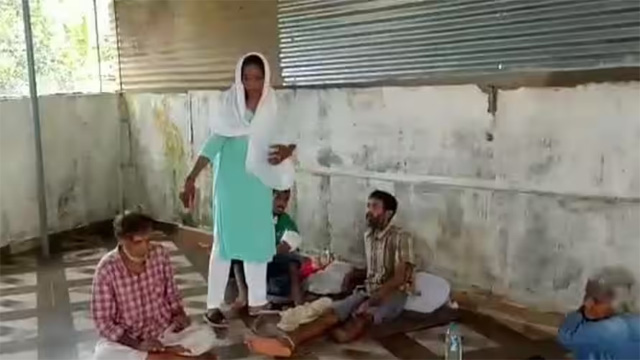
There is no barrier of religion for love, compassion and humanity. Ayesha Banu of the city of Karkala is one such ray of hope for the destitute. She takes care of more than 75 homeless people.

Ayesha not only brings the homeless people to her own ashram but also feeds them and gives them medical treatment. She has people from Maharashtra, Assam and West Bengal residing in her home for the shelterless people. They are given a stomach full to eat, dress to wear and place to sleep.

Ayesha was working in a private hospital when she was young. Her family used to provide ambulance service. One day in a rare situation, Ayesha had to take an orphan young girl to her home as there was no one to take care of her. This came to the public’s knowledge and they started calling her to accommodate orphans known to them. Within no time, the house got filled with destitute. Now she has made a centre for orphans called Suraksha on her own land.

Ayesha spends her whole time in the service of these orphans. Some people give her donations. Rest she herself spends from her savings. Many organizations have recognized her service and have felicitated her in the past eight years. Ayesha has two daughters. She says that she will serve the orphans till her last breath.

Ayesha stands tall in today’s world of hate mongering and selfishness.

source: http://www.daijiworld.com / DaijiWorld.com / Home> Top Stories / by Daijiworld Media Network – Karkala (MS) / August 12th, 2023

Aslam, Bhai’s three doctor daughters have brought pride to the family, Teli community

Safala (Palghar), MAHARASHTRA:

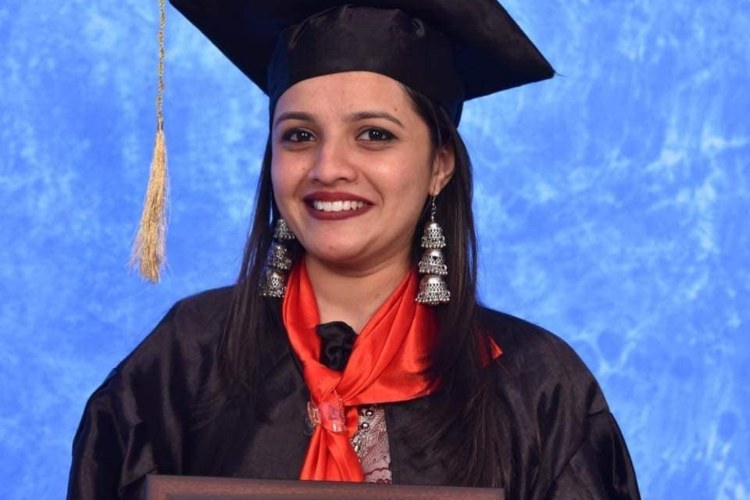
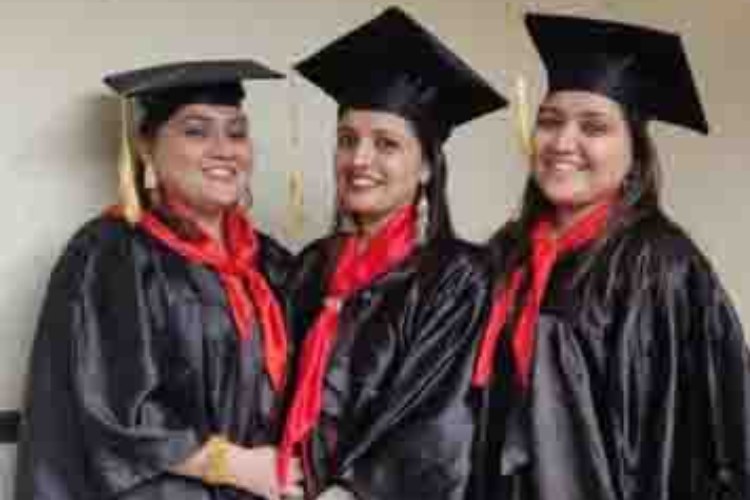
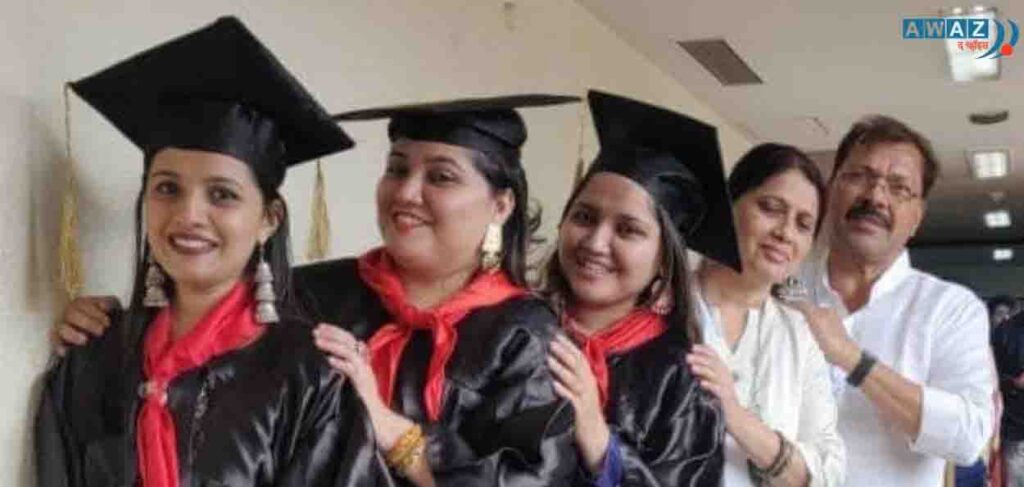
Aslam Bhai, his wife Sabia and their three doctor daughters : Aliya. Ayesha, Saddika

The monsoon session of the Maharashtra State Legislature is underway in Mumbai. The world has accepted the work of great scholar and social reformer Savitribai Jyotirao Phule, who laid the foundation of women’s education in India. The struggle of Savitribai and her husband Mahatma Phule for women’s education is extraordinary. Opposition MLAs in both Houses demanded that a case be registered against those who used indecent language against Savitribai and Mahatma Phule. lam

Aslam Bhai was ecstatic and top of the world.

“She is the second daughter in your family who has become a doctor, isn’t it?” Aslam Bhai said, “Apart from Aaliya, I also have twin daughters Ayesha and Siddika. Saddika has completed her BDS (Bachelor of Dentistry Science degree from Pune and is now working as a dentist.

Aaliya, the youngest of his daughters, he said, completed her MBBS degree with distinction in Gynecology and Obstetrics from Lokmanya Tilak Medical College, Mumbai. She did her post-graduation in psychiatry at KEM Medical College, Mumbai.

Aslam Bhai was speaking with pride and happiness. Alia’s future husband Dr. Imtiaz Kazi is also a doctor by profession and has done MS Ortho from KEM College.

Aliya, Aslam Bhai’s third daughter

This will probably be the first incident of all three daughters of a middle-class family of Teli Muslim (traditional business of oil) community becoming doctors. Aslam Bhai looked very happy with the success of his three daughters. His wife Sabia also has a big contribution to this success.

Aslam Bhai’s dream of becoming a doctor himself could not be fulfilled due to poverty. Despite having a good knowledge of cricket and being proficient in the game, Aslam Bhai could not even become a cricketer due to financial reasons. But Aslam’s parents and Sabia Shaikh’s grandmother were modern-minded. He believed that girls should go for higher education. Due to this vision, all three girls of this Marathi Muslim family have become doctors setting an example for the community.

Education surely is the cure for most of the problems of Indian Muslims. Through quality professional skills and higher education, the family, community, and ultimately the country can be taken on the path of progress and Aslam Bhai and Sabiya have proved this. Of course, Ayesha, Siddika, and Alia have achieved this position after a lot of hard work. 

Aslam Bhai’s parents are small farmers. His father Yunus Mian worked in a small company in Andheri, Mumbai. His mother, Kulsoom, used to sell fish while doing housework and contribute to the household expenses of the large family of four sons, two daughters, and a mother-in-law. On days the couple had to go without food but they never compromised with the education of their daughters. The boys completed their school and college studies, but Aslam could not become a doctor for financial reasons. 

His father felt sorry for this till the end. Aslam Bhai took charge of his family by taking small and big contracts for construction works.

Aslam Bhai was married to Sabia, a girl from a cultured family in Andheri. They had three daughters – twins – Ayesha and Siddika and the youngest Aaliya. Despite the financial constraints, Aslam and Sabia dreamed of providing higher education to their daughters. The daughters also worked hard to fulfill the dreams of their parents.

The Sheikh family is proud of the Marathi soil here, the motherland of Palghar district. Aslam Bhai also got help from friends for the higher education of his three daughters. Aslam Bhai says that Hitendra Thakur, first mayor Rajiv Patil, Ajiv Patil, Milind Bhate, Ramesh Koti, Unmesh Kulkarni, and their family members helped him a lot.

All three girls wanted to become cricketers like their father. All three love cricket very much. He also knew that due to the economic condition, his father’s dream of becoming a doctor has been shattered. Seeing the trend of girls’ intelligence, Aslam Bhai and Sabia worked hard to make them doctors, and they succeeded. Now seven-eight girls in this area are pursuing medical studies and consider these three as their role models.

The girl learned and moved on. It is said that if a girl learns, she can improve her generation. In this context, the three doctor daughters of Aslam Bhai and Sabia Bhabhi have the potential to become role models in the Muslim community. A family from the Marathi Muslim Teli community showed how necessary and important women’s education is. This will be the first instance in the Muslim community of Maharashtra that all three daughters in the same family are doctors. That’s why society should express heartfelt gratitude towards this Sheikh family. Hats off to the entire family for their success!

After joining the Times Group in Mumbai, I came to know for the first time about the Teli Samaj, a part of the Muslim community. Rabad, Shahapur, Bhiwandi, Thane City, Palghar, Jawhar, Dahanu, Safale, Sonawe, Dahisar, Manor, Shirgaon, Tarapur Chinchani, Wada, Mathane, Vedhi, Kore, Edwan, Satpati, Mumbai suburb and city, as well as Vidarbha and Muslim Teli Samaj, is found in some areas of Marathwada. Earlier there was a Balutedari system in the village. This community used to do the business of extracting oil from oilseeds. Due to business, this society had the art of mixing with all the castes and religions of the village. Later, the mechanization of oil production took place. And the traditional oil business of this society was destroyed. As a result, people started looking for jobs in the service sector. Some became drivers of vehicles to transport passengers, many started a chicken and egg business, and some became butchers.

No person from the Muslim Teli community could reach the top of politics. That’s why the value of this society in politics is zero. According to OBC movement leader Shabbir Ansari, the Muslim Teli community is now entering higher education. Circumstances teach everything. The son of a rickshaw puller from the same community in Jalna district has become the youngest IAS in the Indian Administrative Service. So Mirza Abdul Karim Naqvi’s daughter Maryam has started 32 libraries for children through the Reading Culture Movement in Aurangabad. Ayesha, Siddika, and Aliya have taken this trend forward. 

Islam is probably the first religion to recognize the independent existence of women and their identity. Islam gave many rights and privileges to women. But the self-styled protectors of patriarchal culture in the name of religion have denied these rights and created a different tradition. Muslim women have been given the right by religion to do business to earn money and maintain the family.

Prophet Hazrat Muhammad’s first wife Hazrat Khadija had her own business. She was one of the richest women in Mecca. After the establishment of Islam, she became the first female follower. And even after accepting Islam, his business continued. Other women of the society also followed this tradition. The first book on the Prophet descended in the Cave of Diamonds in Mecca on the 26th day of Ramazan. It only talked about reading and gaining knowledge. Allah gave the message to get knowledge. And this message applies to both men and women.

The author is a senior Journalist. The article was transcribed from Marathi by Sameer Skeikh

source: http://www.awazthevoice.in / Awaz, The Voice / Home> Story / by Awaz The Voice / by Sameer Maniar, Mumbai / August 09th, 2023

SDPI bags president’s post in Talapady Panchayat with BJP’s support

Talapady (Ullal Taluk, Dakshina Kannada District), KARNATAKA:

Ullal: 

In a notable development, SDPI backed T. Ismail spearheaded the Talapady Gram Panchayat elections held on Thursday and assumed the president post with the support of BJP, while the BJP’s Pushpavathi Shetty was elected to the post of Vice-President unopposed.

In the meantime, Satyaraj, who also contested for the post of President, was defeated after the BJP supporters supported the SDPI backed member Ismail.

In the Panchayat, out of a total of 24 members, 13 of them were backed by the BJP, while one was backed by the Congress and 10 of them were backed by the SDPI. However, on the poll day, Congress backed Vaibhav Shetty and SDPI backed Habeeba D.B. were absent. Resulting in a tough tussle between T. Ismail and Satyaraj both competing for the post of President.

Meanwhile, both Ismail and Satyaraj were in a tie, with equal number of votes. However, later as per the election officer’s directions, the winner T. Ismail was decided based on the process of drawing lots. Even though the number of BJP supporters was higher, two of them voted for the SDPI backed leader, resulting in a tie.

source: http://www.english.varthabharati.in / Vartha Bharati / Home> Karavali / by Vartha Bharati / August 10th, 2023

Remembering Mohammed Baig Ehsas – A chronicler of Hyderabad

Hyderabad, TELANGANA:

Mohammed Baig Ehsas was one of the most progressive and prolific Urdu writers of recent times. He made a name for himself through his many short stories that revolve around the heritage, history, tradition and people of Hyderabad. He famously won the Sahitya Akademi Award (Urdu) in 2017 for his short story collection Dakhma. He turned 75 on Thursday.

Baig Ehsas was born in 1948, merely months before Hyderabad’s annexation by India, which was marked by several administrative, ecological and infrastructural changes. Baig Ehsas was first-hand witness to this transformationof the city of Hyderabad. His works are a reflection of the same. His award-winning collection Dakhma, published in 2015 portrays just that.

Dakhma is a collection of 11 short stories, with a central theme that revolves around the lives of the people of Hyderabad after the city’s ascension to India.

The short story Dakhma, after which the collection is named, revolves around the death of Sohrab, a Parsi, and the narrator’s fears surrounding Sohrab’s last rites.

A Dakhma or a Tower of Silence is a circular raised structure used for Parsi death rituals. The corpse is placed at the top of the structure, to subject it to decomposition by natural processes and eaten away by vultures. It is believed that vultures only arrive upon the death of the righteous. But vultures had stopped frequenting the city, owing to the changing landscapes and conforming of rituals. Yet, vultures flock to Sohrab’s corpse as soon as he is laid there, much to the narrator’s relief.

Dakhma, full of nostalgia, captures the anxieties of Hyderabadis in the face of changing times. Baig Ehsas intertwines the past and present of the Parsi community in Hyderabad with flawless storytelling and imagery that draws the reader in, keeping them hooked to the book.

Curfew, another famous stories from the collection centres around a woman who gets trapped, unable to contact her husband due to the sudden imposition of a curfew. The story, hauntingly allegorical, details the suffocating and anxiously tense situations endured by the citizens during state curfews.

Apart from Dakhma, some of his other noted short story collections include Khosha-e-Gandum and Hanzal, both published in 1979, containing stories set in the backdrop of Hyderabad, chronicling the lives of people of the city, as is often the theme of Biag Ehsas’ stories.

Dakhma was so highly rated among Urdu literary critics, that in 2020, the Allahabad University’s Urdu Department included the story in their MA Urdu syllabus.

The same year, select stories from the collection Dakhma were translated into English by S M Fasiullah’s book Shades of the City. Apart from Fasiullah, HCU Professor Tutun Mukherjee and former OU English Literature Professor Khalid Qadri also contributed to the process of translation.

Baig Ehsas’ short stories aren’t merely of literary value, they are accounts, parts of Hyderabad’s heritage and tehzeeb, pieced together; a looking glass into the history and culture of the city and the transformation the city went through.

I believe Baig Ehsas’ works should be viewed as a documentation of the evolution of Hyderabad. This is one of the most important reasons, apart from his literary prowess, that brought him the national acclaim. Baig Ehsas’ works brought much needed attention to the stories of the South, which have often found themselves bereft of recognition or acknowledgement at a national level.

And, honestly the writer’s national acclamation is nothing short of extraordinary. He was one of the most progressive Urdu writers in recent times.

Born and raised in Hyderabad, Baig Ehsas was among the first batch of scholars to complete their Ph D from the then newly found Urdu Department of the University of Hyderabad. His doctoral thesis, submitted in 1984, shone light on the life and works of progressive writer and playwright Krishen Chander.

He served two terms as the Head of Department of Urdu Studies at Osmania University after completing his PhD. Post this he served as Professor and later, Head of the Department of Urdu, UoH, before retiring in 2013.

Up until his passing, Baig Ehsas was as an executive member of Idara-e-Adabiyaat-e-Urdu and the editor of Sab Ras, a monthly published by the Idara.

Baig Ehsaas had honours bestowed on him that not many have been lucky enough for. His 2017 Sahitya Akademi Award for Dakhma marked him as the first Hyderabadi in 20 years to win the award. Gian Singh Shatir had won it in 1997.

In 2016, the Telangana Urdu Academy presented him with the Makhdoom Award. He was also the recipient of the Jashn-e-Adab award for Excellence in Fiction.

During the pandemic, Baig Ehsas fell victim to the COVID-19 virus after which his health started deteriorating. Eventually, Baig Ehsas, passed away in September 2021 following cardiac arrest; leaving behind a remarkable legacy.

Baig Ehsas’ works and contribution to Urdu have all but immortalised him. So long as those who love and promote Urdu remain, Baig Ehsas’ name will never be forgotten.

source: http://www.siasat.com / The Siasat Daily / Home> Featured News / by Fatima Fareeha / August 11th, 2023

SEED, Quran Foundation, Award Scholarship Worth 73.9 Lakh to MANUU Students

INDIA:

Maulana Azad National Urdu University students receive a scholarship worth 73.9 lakh from SEED 

Support for Educational & Economic Development (SEED), a non-profit organisation dedicated to assisting and uplifting the underprivileged, has awarded scholarships totaling 73,90,000 rupees to students at Maulana Azad National Urdu University (MANUU), a central university in Hyderabad, India known for providing higher education opportunities to students of Urdu backgrounds.

The recipients were selected based on their performance and financial backgrounds. The scholarship was sponsored by SEED with the support of two other Hyderabad based non-profit organisations — the Quran Foundation and the Helping Hand Foundation. SEED has provided 586 scholarships to MANUU students across all campuses.

Danish, a journalism student at the university, expressed gratitude to SEED saying, “This scholarship will greatly assist me. Such scholarships boost students’ confidence and enable them to focus on their education rather than financial problems.” 

Another student, who wished to remain anonymous, stated, “I lost my father during COVID, and this scholarship is a real help for me to pursue my aspirations.”

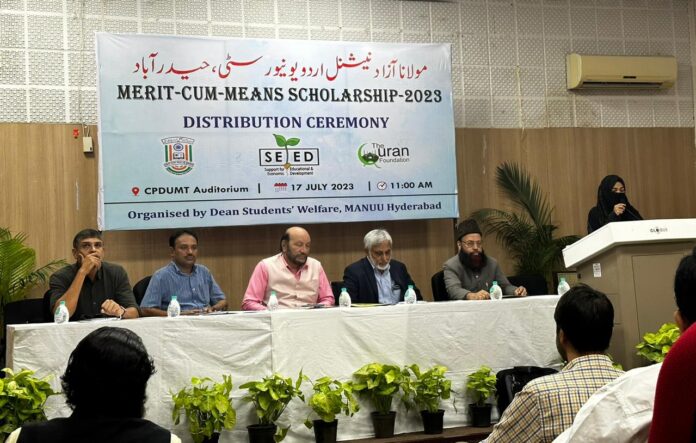
The scholarship distribution ceremony 2023 took place on 17 July at the university campus. 

The Vice Chancellor, Prof. Syed Ainul Hasan, expressed his displeasure with the discontinuation of the NSP scholarship for MANUU students. He stressed MANUU students’ talent and potential and stated that the management is actively working to offer them the best possibilities and platforms to demonstrate their abilities. 

The Executive Director of SEED, Mr. Syed Mazheruddin Hussaini, addressed the students, emphasising the value of hard effort in their academic journey. He also urged them to concentrate on improving their soft skills and communication abilities in order to face future work obstacles. 

“It is the students’ responsibility to improve their careers through self-confidence, hard work, sincerity, and effective time management.” He then presented a 73,90,000 rupees cheque to the Vice Chancellor.

The Registrar, Prof. Ishtiaque Ahmed, commended Prof. Syed Alim Ashraf for facilitating the SEED scholarship for MANUU students. 

Mujtaba Hasan Askari, Founder of the Helping Hand Foundation, addressed the students and encouraged them to strive for success in life. “Success can only be achieved through education,” he said.

Overall, the SEED scholarship initiative in collaboration with the Quran Foundation demonstrates a valuable commitment to supporting the educational aspirations of MANUU students, empowering them to overcome financial barriers and achieve their academic goals. 

source: http://www.twocircles.net / TwoCircles.net / Home> Education / by Musheera Ashraf, TwoCircles.net / July 18th, 2023

Zaheeruddin Ali Khan: A journalist and philanthropist in boundless relationship

Hyderabad, TELANGANA:

 Zaheeruddin Ali Khan

Hyderabad: 

A journalist. A Telangana protagonist. A regular figure at protest meetings. A pensive figure at conferences. A concerned citizen whose heart beats for the poor. A secularist to the core. A force to reckon with. Sure.

That gives a word picture of Zaheeruddin Ali Khan, former Managing Editor, The Siasat. In his 62 years, he was more than just a friendly, smiling face. He epitomised the essence of selflessness and compassion. He touched many lives, particularly of Muslim boys and girls, struggling for quality education. In his later years he took on the mighty Wakf mafia and showed by example what protection and conservation really means. Quiet, firm, and unrelenting. His passing away has brought the curtains down on a multifaceted career.

As I sit down to pen a few words about my friend of 30 years, I am at a loss for words. Zaheer Bhai, as he was affectionately called, was so talented and versatile that it is impossible to describe all his traits. But suffice it is to concentrate on just one aspect: his love and care for the well-being of the community. More than a journalist he was a social worker – a true humanitarian. He espoused causes that are not essentially part of a newspaper job. He went the extra mile to help people, especially during times of strife. Zaheer sab was there to lend a hand, be it the Gujarat massacre, the Mumbai riots, or the Bihar floods. He raised money through the Siasat Millat Fund and mobilised resources to help the affected. He was always at the forefront, ready to ease pain and suffering. This compassionate trait earned him a special place in the hearts of people. His innate sense of empathy touched countless lives and brought a ray of hope to despairing souls.

Zaheer Sab’s philanthropy was not limited to just emergency situations. He was always ready to support the needy and destitute. People made a beeline to his office for all sorts of things. Some would come to him seeking a job, some for educational support, and few others for help in corrections to Aadhaar cards and things like that. He lent an ear to everyone patiently and did the best he could.

For him, education was the master key to success. He believed it to be the best investment one could make. And all through his life, he tried to open the doors of opportunities through education to the poor and underprivileged. Women empowerment was a cause dear to his heart. Realising the difficulty the community faced in marrying girls in view of rising dowry demand, Zaheer bhai came up with the idea of ‘Do-ba-do’ (face-to-face) programme. This unique programme helped many families find a suitable match for their daughters without having to run around.

Though I knew Zaheer bhai for a long time, I drew close to him after my retirement from The Hindu newspaper. He wanted me to write for Siasat.com, a news portal set up by him. After initial hesitation, I agreed. He interacted with me on a day-to-day basis discussing story ideas. Like many others, I was touched by his boundless energy and infectious smile. I met him at a book release programme at the P.S. Telugu University on Saturday evening. We chatted together. But I never knew that it would be our last meeting.

The love and respect commanded by Zaheer bhai was evident from the huge turnout of people at his funeral prayers at the Shahi Masjid on Tuesday morning. Rest in peace Zaheer bhai. Your efforts to transform lives will continue to have a ripple effect.

source: http://www.siasat.com / The Siasat Daily / Home> Featured News / by JS Ifthekhar / August 08th, 2023

Seeni and Shameina’s journey of love and change continues in Alice Springs

Madurai, TAMIL NADU / Alice Springs (Arrernte, Northern Territory), AUSTRALIA:

Seeni and Shameina's journey of love and change continues in Alice Springs  - ABC News
Shameina Ibrahim and Seeni Mohammed are excited about their future in Alice Springs.(Supplied)

Growing up in Madurai in South India, Seeni Mohammed had always aspired to call Australia home.

“Australia looks after me really well … and I’m happy here with my family and wife, and good culture. And everyone is welcoming,” he said.

Mr Mohammed, 27, believes that “everything is awesome” now that he has obtained his citizenship.

Seeni Mohammed sits excitedly waiting to receive his citizenship.
Mr Mohammed is delighted to be an Australian citizen.(ABC Alice Springs: Evan Wallace)

His wife Shameina Ebrahim, 28, has a firsthand understanding of how significant the transition is for her husband.

“Citizenship might not seem a huge deal for some people but living in that position … as a family, and witnessing the struggle, I can personally say we’re so happy and proud of this moment,” she said.

Ms Ebrahim was born in Darwin to a migrant family from Southern India.

In 2018, the pair met through a mutual friend, and married the year after.

As a married couple, Ms Ebrahim has revisited some of the challenges that her own family experienced in navigating the shift to Australian life.

Mayor Matt Paterson stands with Seeni and Shameina in front of national flags.
Mr Mohammed had his citizenship conferred by Alice Springs Mayor Matt Paterson.(ABC Alice Springs: Evan Wallace)

“I’ve always been grateful for my parents making that hard choice and leaving their friends and family to get a better life for their kids,” she said.

“So seeing that growing up and also then going through it with my partner as well … it’s insightful.

“But you know, at the same time, it is rewarding because it keeps me humble.”

Making the transition

After marrying in 2019 at a wedding in India attended by over 1,000 people, the couple have prioritised respect and commitment in navigating married life.

Mr Mohammed has appreciated how a shift in values between India and Australia has shaped their relationship.

“Here everyone is equal, everyone has to have the same rights, everyone has the same part in everything. So that’s quite different,” he said.”Give value for men’s and women’s [rights], give respect to them. And give the words value so the life will be smooth.”

Seeni and Shameina stare lovingly with anticipation into one another's eyes at their wedding
Ms Ebrahim and Mr Mohammed married in India at a ceremony attended by 1,000 people.(Supplied)

For Ms Ebrahim, the transition hasn’t been without its “struggles”.

“Every life has its challenges, whether it be adapting to a new lifestyle, or transitioning from single life to being married … it really depends who you’re doing it with, your personalities need to be compatible,” she said.

“I can’t say that it was easy … we argue all the time, we’re not perfect or anything, but in that we’ve just learned to be supportive of each other.

“In sickness or in health, he’s kept his vows.”

Moving to the red centre

After living in Melbourne together for three years, the couple made the switch to Alice Springs when an exciting career opportunity emerged for Ms Ebrahim to work at the Central Australian Women’s Legal Service.

With the majority of Ms Ebrahim’s cases focusing on domestic violence, family law and housing insecurity, the young lawyer describes her daily life as “chaotic”.

At the same time, she has relished the opportunity to connect with the community.

Seeni and Shameina sit relaxing in Melbourne with a drink.
Ms Ebrahim says respect and commitment has been crucial in navigating married life.(Supplied)

Ms Ebrahim’s commitment to women’s rights has been reaffirmed by her positive experiences as a Muslim in Australia.

Growing up in Darwin, Ms Ebrahim started wearing a headscarf when she was 16 and has welcomed the response.

“I haven’t faced that much backlash in the community,” she said.

“I’ve been accepted and as a legal professional, I’m always out and about. I might be the odd one out, but you know, everyone’s been so loving and accepting.”

Seeni and Shameina stand playfully in front of house
Mr Mohammed and Ms Ebrahim lived in Melbourne together after marrying in 2019.(Supplied)

The inclusive and welcoming approach she experienced has extended to the couple’s time in Alice Springs.

“The community really supports you here,” Mr Mohammed said.

“It doesn’t matter about their background, or what ethnicity they’re from — they’re really supportive people, lovely people here.”

A future in Alice Springs

With Mr Mohammed’s goal of citizenship complete, they are now considering starting a family of their own on Arrernte country.

“We have fallen in love with Alice Springs,” Ms Ebrahim said.

“We came for better weather … and after falling in love with the town, we do see a future here and potentially raising a family as well as developing our own careers.

Seeni and Shameina stand positively after the citizenship ceremony
Ms Ebrahim and Mr Mohammed are considering starting a family in Alice Springs.(ABC Alice Springs: Evan Wallace)

Regardless of how long the couple stay in the Northern Territory, Ms Ebrahim is excited to continue building a future with a man who she loves “wholeheartedly”.

For Mr Mohammed, the feeling is very much mutual.

“I love her so much,” he said.

“I should say thanks to the god.”

source: http://www.abc.net.au / ABC News / Home> ABC Alice Springs / by Evan Wallace / March 25th, 2023

Patturumal completes 100 episodes

KERALA:

Patturumal completes 100 episodes - Times of India

Popular reality show ‘Patturumal’ completes 100 episodes.

The Mappilappattu reality show is gaining attention with the exceptional performances of its 15 contestants.

Judged by popular singers Anwar Sadath, Shabnam Riyas, and Sajala Salim, the show is hosted by Rameeja Mansoor.

Kickstarted by Kerala Minister Muhammed Riyas, the show has managed to keep up the spirit without any elimination to date.

Popular Mappilappattu reality show, ”Patturumal’ has successfully completed the 100 episodes milestone. Hosted by Rameeja Mansoor, the twelfth season of the reality show features 15 singers from different walks of life.

Celebrating the 100 episodes victory, the team had a cake cutting on the floor. In the special episode, the team was seen having a blast too.

Patturumal completes 100 episodes - Times of India

‘Patturumal’ is one of the much-loved shows on Malayalam TV. ..

After the successful 11 seasons, the show premiered its 12th season in March. Despite being a reality show, ‘Patturumal’ is widely accepted for being a platform for Mappilappattu talents. For the unversed, Mappilappattu is a genre of Muslim folklore music which is predominant in the Malabar region of Kerala.

Over the years, ‘Patturumal’ has contributed many talents to the music industry. Singers Rehna, Sajila Salim, Kannur Shafi, and others gained popularity with this reality show. Interestingly, the show also marked the TV debut of Star Magic host Lakshmi Nakshathra.

source: http://www.timesofindia.indiatimes.com / The Times of India / Home> News> TV> Malayalam / by etimes.in / July 25th, 2023

Haemolymph: Movie portrays Muslim teacher crushed by Indian state

Mundra, MAHARASHTRA:

Bollywood industry have been criticised by viewers for its Islamophobic portrayal. Be it woke series like Family Man or commercial flicks Batla House and Sooryavanshi, Muslims are always portrayed as sleeper cells, terrorists or smugglers. Films always acted as an integral compound for the Hindutva nationalist project. Only a few films stood as exception. This year, May 27 witnessed a unique release.

An industry, which parroted the state narrative of Muslim being the terrorists dared to tell the story of an innocent Muslim teacher Wahid Shaikh who was falsely implicated in 7/11 Mumbai train blast and spent almost nine years in jail to satisfy the ‘collective conscience’ of the state. Haemolymph movie, directed by Sudarshan Gamare, got released in more than 120 theatres across India in its initial phase. 

“The title Haemolymph, loosely translated as the ‘blood of the ant’ symbolises how the life of a common can be easily crushed by the authorities similar to how an ant can be easily crushed,” the director Sudarshan Ghamare said to Maktoob.

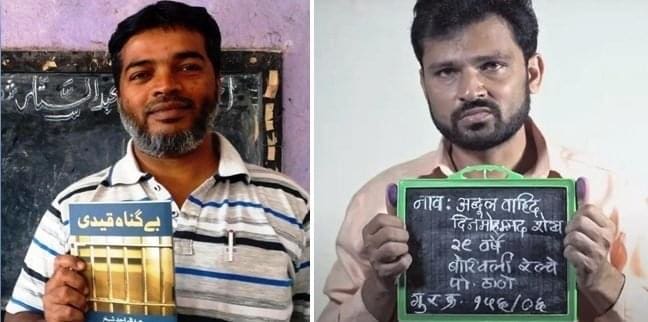
Wahid Shaikh, a primary school teacher respected in the neighbourhood, got picked from Mundra as an accused in the 7/11 Mumbai train blasts of 2006. Shaikh had to spend almost nine years in jail to prove his innocence. Of the 13 accused charge sheeted by the Mumbai Anti-Terrorism Squad, Wahid was the only one to be acquitted of all charges. 

Wahid Shaikh was not excited when he got a call from Sudarshan Gamare asking permission to make a biopic on him. ”Many people had contacted me telling their interest to make movie on my life. But all of them got dropped in the midway. I guess nobody had the courage to tell my story,” said Wahid Shaikh. 

Sudarshan Gamare got hooked to Wahid’s story after reading NDTV journalist Sunetra Choudhury’s book “Behind Bars” which featured a chapter on Wahid Sheikh . After completing the book, Gamara read Beguna Qaidi( Innocent prisoner), a book wrote by Wahid Shaikh on his experience inside the jail. The book was a documentation of the torture, fabricated charges, forced confessions, prejudice from the investigative agencies and jail authorities and the deep rooted Islamophobia.

“His life story was very horrifying. I can empathise with his pain and I felt so guilty after reading his story. I realised that this is an important story and it need to be shared with the public,” Sudarshan Gamare said.

Gamare discussed the story with his friend Riyaz Anvar, who later played the lead role of the film, and decided to meet Wahid. 

The filmmakers met Wahid at a hotel in Mumbai and had a long chat with him. Later, they travelled to Wahid’s home in Mumbra, talked to his friends and family. The team went through the chargesheet of 20,000 pages and the copy of the judgement. They referred all the case-related documents available in public domain and the articles written on the case. The crew even contacted Mumbai Police and the family of victims of the bomb blast to extract their version on the incident.

”It took us almost 15 months to finalise the script; 11 months for research and 4 months to write the screen play. Wahid gave suggestions through out the process,” the director and the screenwriter Sudarshan Gamare said. 

“It was really a difficult task to show nine year’s story in two hours.  I had to recollect many important incidents happened in those nine year period for the movie. Many unpleasant memories flashed through my mind. It reminded me of the grave injustice done to me. It was not an easy task to revisit those traumatic experience. But I want people to understand what happens to innocent people like me in Indian prisons,” said Shaikh.

The lead actor Riyas Anwar, who was with the crew since the research stage, described the process as an emotional journey.

Riyas talked with Wahid for hours and prepared notes on Wahid’s life, interests, habits etc. “The character preparation started from the very soul of Abdul Wahid Sheikh.  I started interacting with the people he was close to. Practised writing with the  left hand. I wore the type of clothes Wahid loves to wear and travelled in crowded local trains. We sat for hours outside the Arthur road jail to get an idea on what Wahid might have gone through,” said Riyas. 

“The film is a labour of love by my friends. It’s the debut project of cinematographer Rohan Mapuskar and editor Hemant Mahajan. I and three other friends started the production house, Ticketbari. Later, Adiman studio and AB Films Entertainment joined the production,” the director said.

Wahid Shaikh said that there are hundreds of similar stories to be told. “A state sponsored terrorism exists in this country. Most of the victims are Muslims. Be it a blast in a temple or Masjids, Muslim youth were picked as suspects. SIMI, ISIS, Al Qaeda are used as excuses to vilify Muslims,” Shaikh said to Maktoob.

Following his acquittal, Wahid Shaikh, with the help of rights activists, retired judges and lawyers, started an organisation – The Innocence Network. 

The organisation mainly works on prisoner rights and exonerates prisoners wrongfully accused by providing pro bono legal services.

“We organised a tribunal in Delhi in 2017 which demanded compensation for the acquitted prisoners. The network organises lectures on Mumbai bomb blast anniversaries and advocates for prison reliefs,” Shaikh said. 

Wahid Shaikh, the teacher who wrote major chunk of his book Begunah Qaidi inside the Arthur Road prison, pointed the deep rooted Islamophobia in the state institutions and the  effects of the war on terror following the 9/11 attack as the reason behind the wrongful incarceration of Muslim youths.

“The Home ministry of the Union government maintains a war book. It contains name and other details of all Muslims arrested or charged in terrorism related cases in India. My name is still in the book. I got to during a hearing with the National Human Rights Commission,” Shaikh said. 

source: http://www.maktoobmedia.com / Maktoob / Home> Features> Film & TV India /by Ashfaque EJ