Tag Archives: Kerala Muslims

In Death, Kerala Muslim Doctor Gives a New Lease of Life to Three Patients Through Organ Donation

Bhopal, MADHYA PRADESH / Thiruvananthapuram, KERALA :
A 42-year-old Muslim Ayurvedic doctor from Kerala, Sajna S.A., who had been working in Bhopal for the past six months, passed away after suffering a severe brain haemorrhage (subarachnoid haemorrhage). She was admitted to a private hospital in Bhopal on May 15 after her condition became critical.

Despite intensive medical care, her condition worsened, and doctors later declared her brain-stem dead.

Family Agrees to Organ Donation After Counselling

Following the diagnosis, doctors and transplant coordinators counselled the family about the possibility of organ donation. After careful discussion, her family agreed to donate her organs, turning a moment of personal loss into an act of life-saving generosity.

Hospital authorities said the entire process followed the guidelines of the National Organ and Tissue Transplant Organisation (NOTTO), which regulates organ donation and transplantation procedures in the country.

What is Brain-Stem Death

Doctors explained that brain-stem death is a medically and legally recognised form of death. It refers to the irreversible loss of all brain functions, including those that control breathing and consciousness. Even if a ventilator keeps the heart beating, recovery is not possible.

Medical experts said such cases allow organ donation under strict protocols, as the organs remain viable for transplantation for a limited time.

Organs Transplanted to Save Lives

According to hospital officials, Sajna’s liver and one kidney were transplanted into patients admitted at the same hospital in Bhopal. Her second kidney was sent to another private hospital, where it was used for a patient in urgent need.

Dr S.K. Trivedi, Director of Bansal Hospital, said the family showed remarkable compassion during a difficult time.

“When asked if they had any preference regarding the recipient’s religion or identity, her husband said, ‘Give it to whoever needs it,’” he stated.

Doctors confirmed that all three organs helped save the lives of two patients.

Emotional Farewell With Full Honour

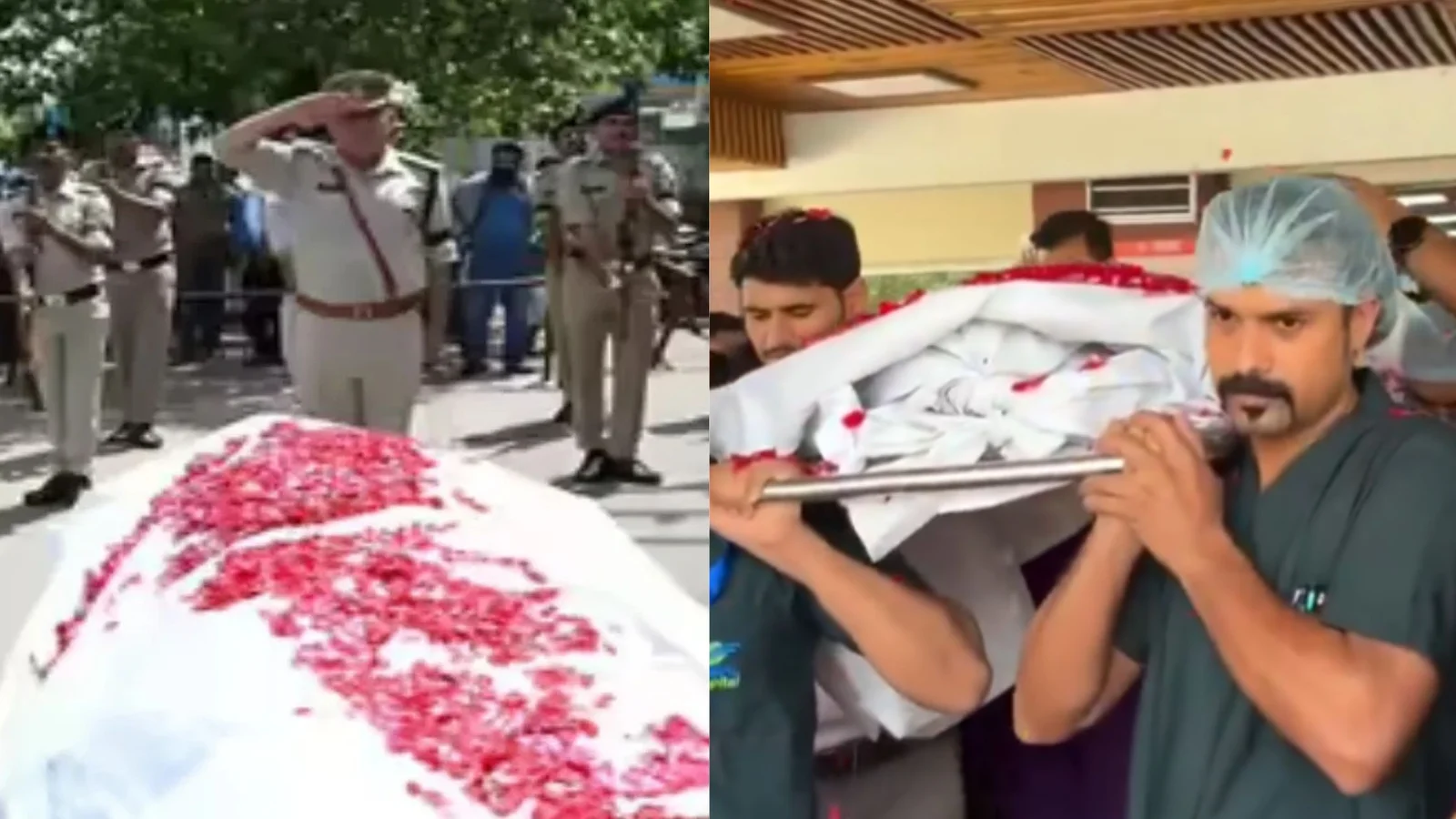
After the organ retrieval procedure, Sajna S.A.’s body was given a respectful farewell. Police personnel and hospital staff paid their tributes as part of the state’s recognition of organ donors.

Her body was later transported to Thiruvananthapuram for final rites in her hometown.

Hospital staff, local administration officials, and representatives from various organisations honoured the family for their decision, describing it as an example of humanity and compassion.

Debate and Public Response

The incident has drawn widespread attention on social media, where many users praised the family’s decision, calling it an example of “humanity beyond religion.”

Some users wrote that “humanity is the greatest religion,” while others highlighted the act as an example of interfaith harmony and selflessness.

Medical experts also said the case highlights the importance of organ donation awareness, especially in brain-stem death cases, where timely decisions can save multiple lives.

source: http://www.theobserverpost.com / The Observer Post / Home> India> Indian Muslims> Positive Story / by The Observer Post / May 29th, 2026
Kerala Polls 2026: New Assembly to have 35 Muslim MLAs

KERALA :

The newly elected 140-member Kerala Assembly will have a total of 35 Muslim MLAs, according to the Election Commission data released after counting of votes Monday May 04, 2026.

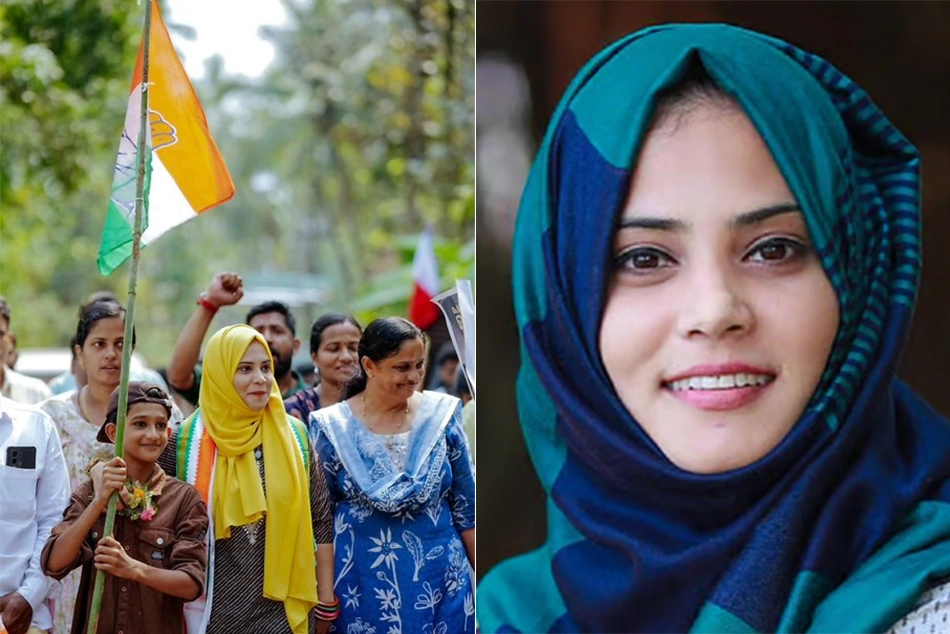
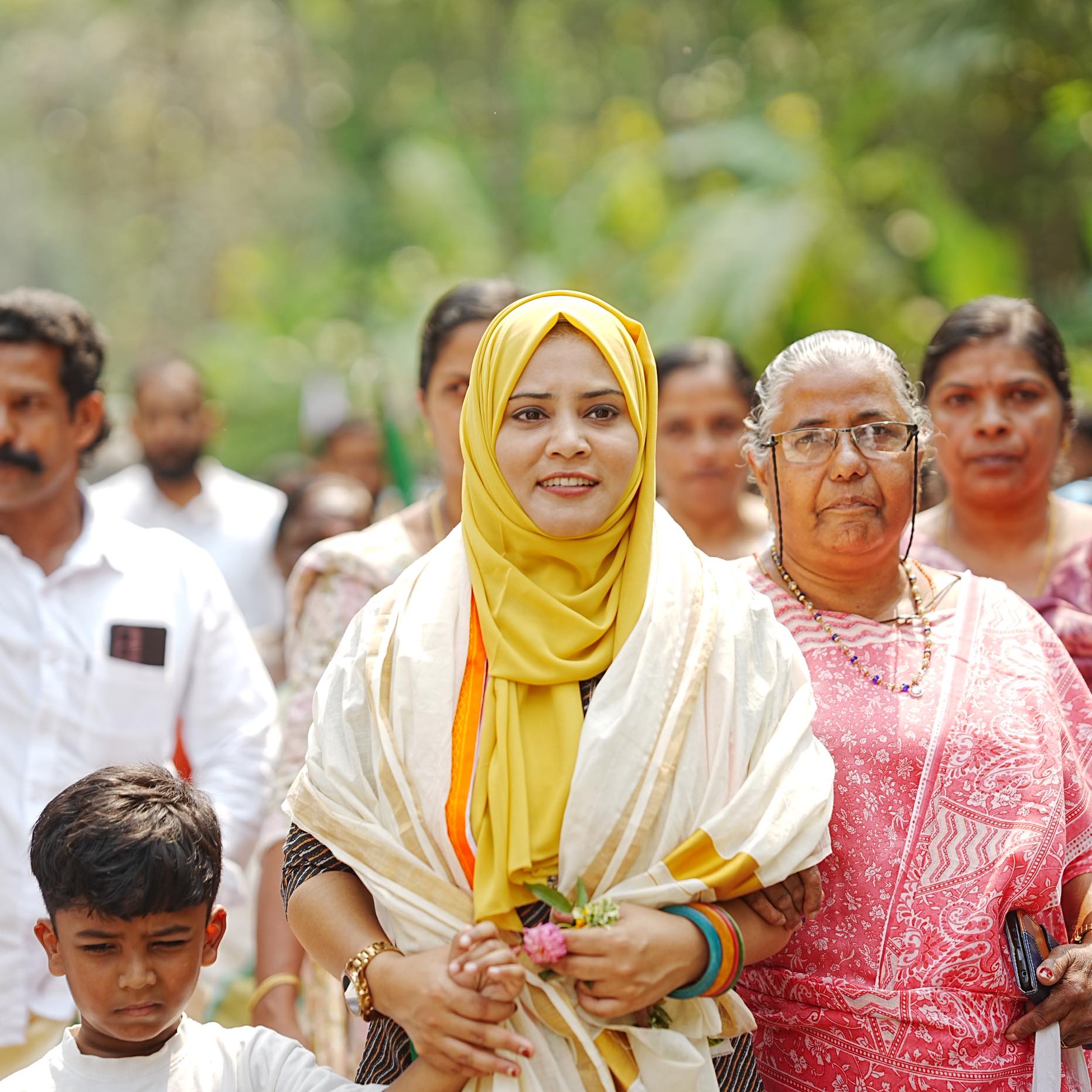
Among the IUML MLAs, who have won the 2026 Keralam state elections, is also Fathima Thahiliya. Fathima is IUML’s first woman MLA.

Kerala Assembly Election Results 2026: 

The newly elected 140-member Kerala Assembly will have a total of 35 Muslim MLAs, according to the Election Commission data released after counting of votes Monday May 04, 2026.

The number of Muslim MLAs in the Kerala assembly formed after the 2026 state polls is 03 more than the last time when 32 Muslims had won.

As many as 22 Muslim MLAs elected to the Kerala assembly are from the Indian Union Muslim League (IUML). The IUML had fielded 27 candidates in the 2026 elections – 22 of them have got elected. Among the IUML MLAs, who have won the 2026 Keralam state elections, is also Fathima Thahiliya. Fathima is IUML’s first woman MLA.

The IUML had won 15 seats in the 2021 Kerala Elections . The IUML had in 2016 elections won 18 seats, and the assembly had a total of 29 Muslim MLAs.

Other Muslim MLAs elected to the Kerala assembly are 08 from Congress (5 more than 2021), 04 from the CPI-M (05 less than 2021), and 01 from CPI (Kerala).

List of Muslim MLAs in Kerala

Following is the complete list of Muslims MLAs in Kerala along with the constituencies they represent.

Congress

  1. ADV. T SIDDIQUE (KALPETTA)
  2. ARYADAN SHOUKATH (NILAMBUR)
  3. K.P NOUSHAD ALI (PONNANI)
  4. ANWAR SADATH (ALUVA)
  5. MOHAMMED SHIYAS (KOCHI)
  6. ADV. SHANIMOL OSMAN (AROOR)
  7. M. M. NASEER (CHADAYAMANGALAM)
  8. MUHAMMED SUDHEERSHA S (VAMANAPURAM)

CPI (M)

  1. P.A MOHAMED RIYAS (BEYPORE)
  2. P.MAMMIKUTTY Muhammed (SHORNUR)
  3. A C MOIDEEN (KUNNAMKULAM)
  4. N. K. AKBAR (GURUVAYOOR)

Indian Union Muslim League (IUML)

  1. A K M ASHRAF (MANJESHWAR)
  2. KALLATRA MAHIN Abdul Khader Haji (KASARAGOD)
  3. PARAKKAL ABDULLA (KUTTIADI)
  4. ADV. FATHIMA THAHILIYA (PERAMBRA)
  5. ADV. FYZAL BABU (KOZHIKODE SOUTH)
  6. M.A. RAZAK MASTER (KUNNAMANGALAM)
  7. P K FIROS (KODUVALLY)
  8. C K KASIM (THIRUVAMBADI)
  9. T.P. ASHRAFALI (KONDOTTY)
  10. P.K.BASHEER (ERNAD)
  11. ADV. M. RAHMATHULLA (MANJERI)
  12. NAJEEB KANTHAPURAM (PERINTHALMANNA)
  13. MANJALAMKUZHI ALI (MANKADA)
  14. P.K. KUNHALIKUTTY MUHAMMAED HAJI (MALAPPURAM)
  15. K.M. SHAJI (VENGARA)
  16. T V IBRAHIM (VALLIKUNNU)
  17. P M A SAMEER (TIRURANGADI)
  18. P K NAVAS (TANUR)
  19. KURUKKOLI MOIDEEN (TIRUR)
  20. PROF. ABID HUSSAIN THANGAL (KOTTAKKAL)
  21. ADV. N. SAMSUDHEEN (MANNARKKAD)
  22. ADV. V E ABDUL GAFOOR (KALAMASSERY)

CPI (Kerala)

MUHAMMED MUHASSIN (PATTAMBI)

Kerala Assembly Elections 2026: Final Result

In Kerala, the opposition UDF led by the Indian National Congress has removed from the power the Left-led LDF. The LDF was in power in Kerala since 2016.

As per the final result of the 2026 Kerala Assembly Polls announced by the Election Commission of India (ECI) the UDF has won 89 of the total 140 seats.

The LDF won a total of 35 seats – 57 less than its tally in 2021. On the other hand, the BJP has won just 03 seats – all for the first time.

source: http://www.ummid.com / Ummid.com / Home> 2026 Kerala Assembly Election Result / by ummid.com news network / May 04th, 2026

Fathima Thahiliya, Indian Union Muslim League’s first woman MLA, defeats LDF convenor in Left baston

Peruvayal (Kozhikode), KERALA :

Fathima Thahiliya has faced cyberattacks and online abuse since her candidature in Perambra Assembly constituency was announced, including sexually derogatory, and communal remarks.

Fathima Thahiliya, a 34-year-old advocate and postgraduate in law from the University of Calicut, won the high-profile Perambra Assembly constituency, defeating the senior leader of the Communist Party of India (Marxist), T. P. Ramakrishnan.

Thahiliya got 81429 votes, winning the strongly contested seat with 5087 margin.

Born in Peruvayal in Kozhikode, Thahiliya rose through student politics before entering electoral politics, serving as a leader in the Muslim Students Federation and later as a councillor in the Kozhikode Corporation. 

She completed her B.A. LL.B from Government Law College, Kozhikode, and an LL.M from Government Law College, Thrissur, and currently practises as an advocate at the Calicut District Court. 

She also serves as a State Secretary of the Muslim Youth League, marking her steady rise within the Indian Union Muslim League. 

Representing the Indian Union Muslim League, Thahiliya is among the 2  women candidates fielded by the party, making her contest particularly significant in a constituency long considered a Left stronghold. 

Her candidature drew widespread attention across Kerala, not only because of the high-stakes electoral battle but also due to the controversies that unfolded during the campaign.

Fathima Thahiliya faced significant cyberattacks and online abuse soon after her candidature in Perambra Assembly constituency was announced, with her social media pages flooded with sexually coloured and derogatory comments, including vulgar remarks and personal attacks. 

Much of the abuse targeted her identity as a young Muslim woman wearing a hijab, and questioned her capability to contest elections.

Thahiliya stated that such attacks were not new to her, noting that she had faced similar cyber harassment during earlier local body elections in Kozhikode. 

Another controversy, the “Kauminte Kutti” row, erupted after allegations that campaign vehicles linked to the Left Democratic Front made announcements referring to Fathima Thahiliya as a “community candidate.” 

The United Democratic Front alleged that attempts were made to communalise the election by portraying her through her religious identity, with campaign messages that sparked political backlash and complaints to the Election Commission. 

Despite these challenges, Fathima Thahiliya emerged as a strong contender and went on to win the Perambra Assembly constituency, marking a significant shift in a traditionally LDF-dominated seat. 

source: http://www.maktoobmedia.com / Maktoob Media / Home> India>South India / by Maktoob / May 04th, 2026

Nilambur Ayesha: The woman who defied bullets, built a stage of resistance

KERALA :

At a time when the stage was closed to women from conservative Muslim households, Ayesha walked into the spotlight at 16, confronting hostility that ranged from social ostracism to outright violence.

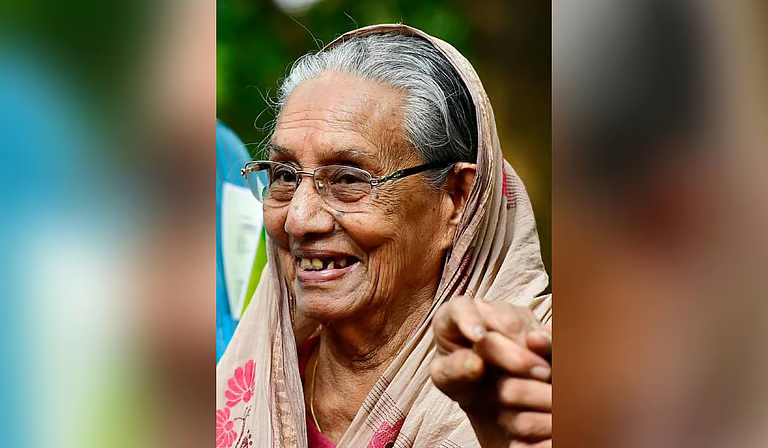
Nilambur Ayesha, Kerala’s first Muslim woman theatre artist.(Photo | Special Arrangement)

Malappuram :

Nilambur Ayesha, the indomitable force who shattered barriers to become the state’s first Muslim woman theatre artist, steps into her ninth decade with a legacy forged in courage, resistance and uncompromising artistry. Her life is not merely a story of performance, but a defiant march against religious orthodoxy that sought to silence her.

At a time when the stage was closed to women from conservative Muslim households, Ayesha walked into the spotlight at just 16, confronting hostility that ranged from social ostracism to outright violence. For generations of Malayalis, the very mention of drama evokes her name, a testament to a contribution that redefined Malayalam theatre.

Born into a once-prosperous family in Nilambur, Ayesha’s early life was marked by upheaval. Her father’s sudden death pushed the family into crisis. At 13, she was forced into marriage with a man decades older. The relationship lasted only days, leaving her to raise an infant daughter alone. She survived by selling rice and grinding grain, battling poverty with relentless determination.

It was in these harsh circumstances that playwright E K Ayamu invited her to act in a play staged by the Nilambur Yuvajana Kala Samithi. Backed by her brother Manu Muhammed but opposed by her mother, Ayesha chose the stage over submission. “No one who cannot save us has the right to punish us,” she declared, stepping into a world that would test her endurance at every turn.

The backlash was swift and brutal. When she first performed at Farooq Lakshmi Talkies under the banner of the Communist movement, it sent shockwaves through society. A Muslim woman on stage was seen as an act of rebellion. Stones were hurled at her during a performance in Nadapuram, leaving her bleeding, yet she refused to abandon the stage. In Manjeri, gunfire erupted during a play, narrowly missing her. In another incident, she was assaulted inside a make-up room. Each attack was meant to break her spirit. None succeeded.

Ayesha recalls those years with unflinching clarity. “I can never forget that. My first play was ‘Ijjh Nalla Mansan Aakan Nokku’. There was fierce opposition. The shooting incident when I was 16 was part of that. But I was not ready to give up and go back,” she said. “The Communist movement was always with me.”

Her journey extended beyond theatre into cinema, where she carved a notable presence. She acted in films such as Kandam Becha Kottu, Kavyamela, Kuttikkuppayam, Olavum Theeravum and Paleri Manikyam. She also performed with leading drama troupes, including K T Mohammed’s Kalinga Theatre, and took on demanding roles, including four characters in Kurangu Rasayanam.

Hardship followed even at the peak of her artistic journey. Driven by financial distress, she worked as a domestic worker in Riyadh, Saudi Arabia, for 19 years. Yet, she returned to the stage with renewed resolve, eventually performing in more than 29,000 shows.

Ayesha’s life has since entered academic discourse, studied by undergraduate students as part of their curriculum. Her journey, documented in Basheer Chungathara’s work, stands as a powerful narrative of resistance and artistic integrity.

Her achievements have been widely recognised. She received the Kerala Sangeetha Nataka Akademi Award for Best Actress in 2002, the SL Puram Sadanandan Award for overall contribution, and the Kerala State Film Award for Second Best Actress in 2011. The film Ayesha, starring Manju Warrier, draws inspiration from her life in the Gulf.

Reflecting on her journey, Ayesha says, “Whatever cinema has captured of my life has given me joy. It feels like my life has been accepted.”

Her legacy is now being celebrated in a three-day tribute organised by the Moyinkutty Vaidyar Mappila Kala Academy in Kondotty. The ‘Navathi Adharam’ celebrations opened with a film festival featuring works connected to her life and career. The final day included the screening of a documentary and a gathering of theatre workers, culminating in a felicitation where CPM state secretariat member M Swaraj honoured the veteran artist.

Ayesha did not merely perform on stage. She fought for her place on it, and in doing so, redrew the boundaries of art, courage and freedom.

source: http://www.newindianexpress.com / The New Indian Express / Home> Kerala / by Lakshmi Athira / May 04th,2026

Blindness No Barrier: Jaseela Jannath P Secures 397th Rank in UPSC

Vadakara (Calicut, formerly Kozhikode) KERALA :

Calicut :

Some victories are seen with the eyes, but Jaseela’s is one that truly fills the heart. Defying all odds and turning her personal challenge into an inspiration for differently-abled UPSC aspirants, visually impaired 30-year-old Jaseela Jannath P from Vadakara, Calicut, has secured the 397th rank in the UPSC Civil Services Examination.

This marks Jaseela’s fourth attempt at the exam. Her optional subject, Sociology, reflects her deep passion for social issues, honed through her M.A. in Social Work with a Women-Centred Practice specialisation from the Tata Institute of Social Sciences (TISS), Mumbai. Prior to focusing on her UPSC preparation, Jaseela worked as a Project Associate at Prajaahita Foundation in Kozhikode from July 2021 to March 2022, contributing to community development initiatives.

Jaseela credits much of her success to the one-year UPSC preparation journey covering Prelims, Mains, and interview guidance at Xylem IAS, where she joined the civil services batch in March 2025. Speaking about her learning approach, Jaseela relied on audio-based learning methods, voice-to-text tools, and peer-led discussions to navigate and master the vast syllabus.

“Blindness tested me, but it never defined me. With the right support, including personalised mentorship, innovative tech-aided learning modules, and a supportive community, I was able to crack it,” she said. Looking ahead, Jaseela aspires to serve and empower people facing challenges similar to her own.

Apart from her academic pursuits, she has also established herself as an eloquent public speaker and secured A grades in Mimicry, Vanchippattu (boat song), Folk Song, and Malayalam Recitation at school youth festivals.

Jaseela is the daughter of the late Kunhabdulla P and homemaker Sainaba.

Including Jaseela, a total of 29 students from Xylem IAS have secured ranks in the examination.

source: http://www.businessnewsthisweek.com / Business News This Week / Home> Education / by Neel Achary / March 06th, 2026

Meet Fathima Shehza: CA Intermediate January 2026 Topper

Angadipuram Village (Perinthalmann Taluk, Malappuram District), KERALA :

Fathima Shehza K has topped the ICAI CA Intermediate January 2026 exam the result of which has been declared on Sunday March 08, 2026.

CA Inter Topper January 2026: 

Fathima Shehza K has topped the ICAI CA Intermediate January 2026 exam the result of which has been declared on Sunday March 08, 2026.

As per the results announced by Institute of Chartered Accountants of India (ICAI), Fathima Shehza K secured the All India Rank 2 (AIR 2) in the Chartered Accountancy (CA) Intermediate examination held in January 2026.

Fathima Shehza scored a percentage of 84 per cent with a score of 504 out of the total 600 marks. Fathima Shehza missed the Top Rank by just 4 marks which went to Kanhiya Lal.

Kanhiya Lal bagged 508 out of the total 600 marks and secured the All India Rank 1 (AIR 1) in CA Inter January 2026 exam.

Fathima Shehza is a resident of Perintalmann, Kerala whereas Kanhiya Lal hails from Ellenabad, Haryana.

Faridabad’s Vanya Bansal has secured the 3rd rank with 83 per cent and 498 marks.

Who is Fathima Shehza?

The CA Inter January 2026 Topper, Fathima Shehza is a resident of Angadipuram – a small village of Perintalmann Talka in the Muslim dominated Malappuram district of Kerala.

Fathima had earlier also topped the ICAI CA Foundation exam in January 2025. She had scored 356 marks in CA Foundation exam held for January 2025 session, and had emerged All Kerala Topper.

Talking to media after topping the CA Foundation Exam last year, Fathima had said her target was even higher. “Topping Kerala state is not my target. My dream is to secure the top rank at all India level”, she had said last year.

She is a student of Profinz College – also called Profinz Perinthalmanna, a prominent Commerce (CA, CMA, ACCA, CS) coaching institute in Perinthalmanna, Malappuram district.

After clearing CA Foundation and Intermediate exams, Fathima is is now eligible to start her articleship (practical training) while preparing for CA Final.

ICAI CA Intermediate Result January 2026

Institute of Chartered Accountants of India (ICAI) declared the CA Inter Jan 2026 result on Sunday March 8, 2026.

A total of 1,05,526 candidates had appeared in the CA Inter Jan 2026 Group 1 exams. Out of them, 14,733 candidates cleared the exam, registering a pass percentage of 13.96. CA Inter Group II exam saw a pass percentage of 15.54, with 10,798 candidates clearing the exam out of 69,477 who appeared.

ICAI conducts these exams twice a year, in January and July.

The CA Intermediate January 2026 examinations were conducted in multiple shifts across centres in India and abroad. As per the official schedule, Group I exams were held on January 6, 8 and 10, while Group II exams were conducted on January 15, 17 and 19, 2026.

Candidates who appeared for the exam can check their results on the official websites at icai.nic.in and icai.org.

source: http://www.ummid.com / Ummid.com / Home> Education & Career / by ummid.com news network / March 09th, 2026

Kerala schoolboy’s bravery brings three back from the brink of death

Mankada Village (Malappuram District), KERALA :

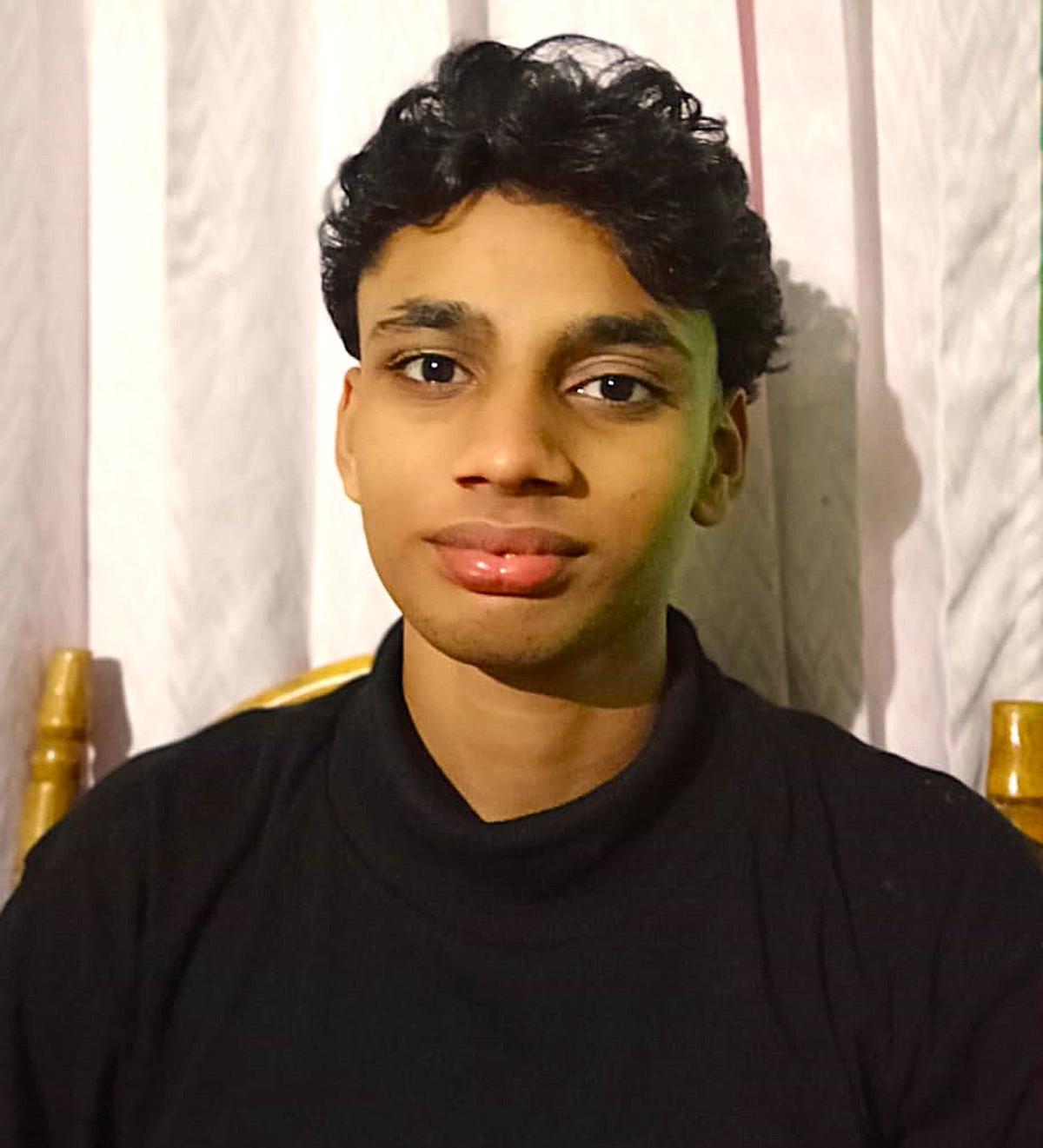
Mohammed Shamil C

That Sunday afternoon still lingers in Mohammed Shamil’s mind: the loud cries for help and the rush to save lives. Without hesitation, he dived into a murky village pond and brought three girls back to life from the brink.

One of them needed CPR, and he gave her the breath of life with the little knowledge he learned from school. Now, Shamil is hailed as a hero and showered with felicitations, trophies and mementoes – more than three dozen in less than two weeks.

Schools and clubs invite him to share his story, inspiring others to act in moments of crisis. For the Class 12 boy, it is about saving lives and not seeking praise.

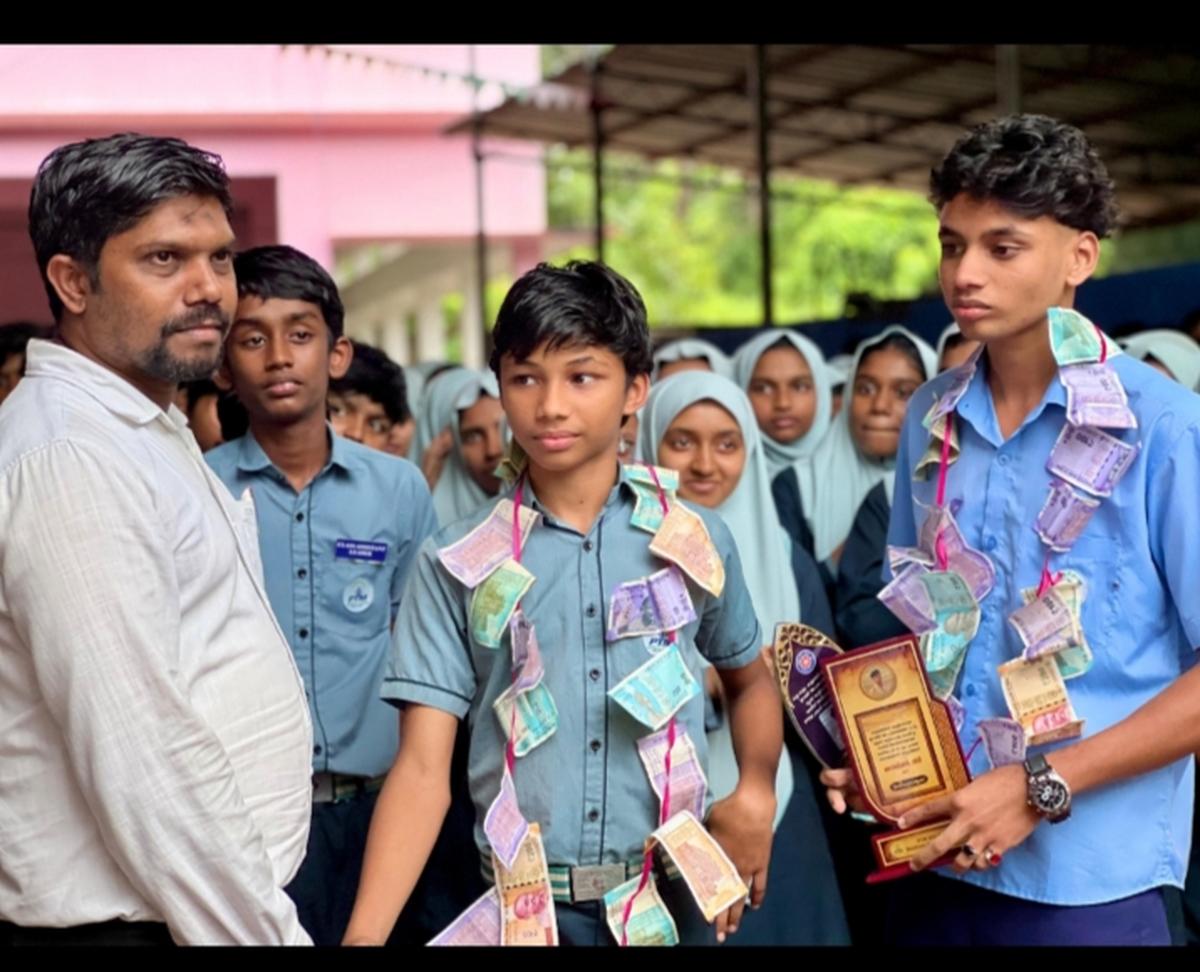
Mohammed Shamil (right) and his younger brother Mohammed Shehin being felicitated with currency garlands at their school. | Photo Credit: SAKEER HUSSAIN

On July 13, around 2 p.m., Shamil’s peaceful afternoon at his Puthanveedu home at Mankada near Manjeri was disrupted. His mother Shahida had just received a distressing alert from ASHA worker Hafsath Palliyalthodi that three girls were drowning in a nearby pond.

Shahida’s frantic cry propelled Shamil into action. He sprinted 200 meters to the pond and plunged into the muddy waters, where two girls were desperately struggling to stay afloat while the third had already slipped underwater.

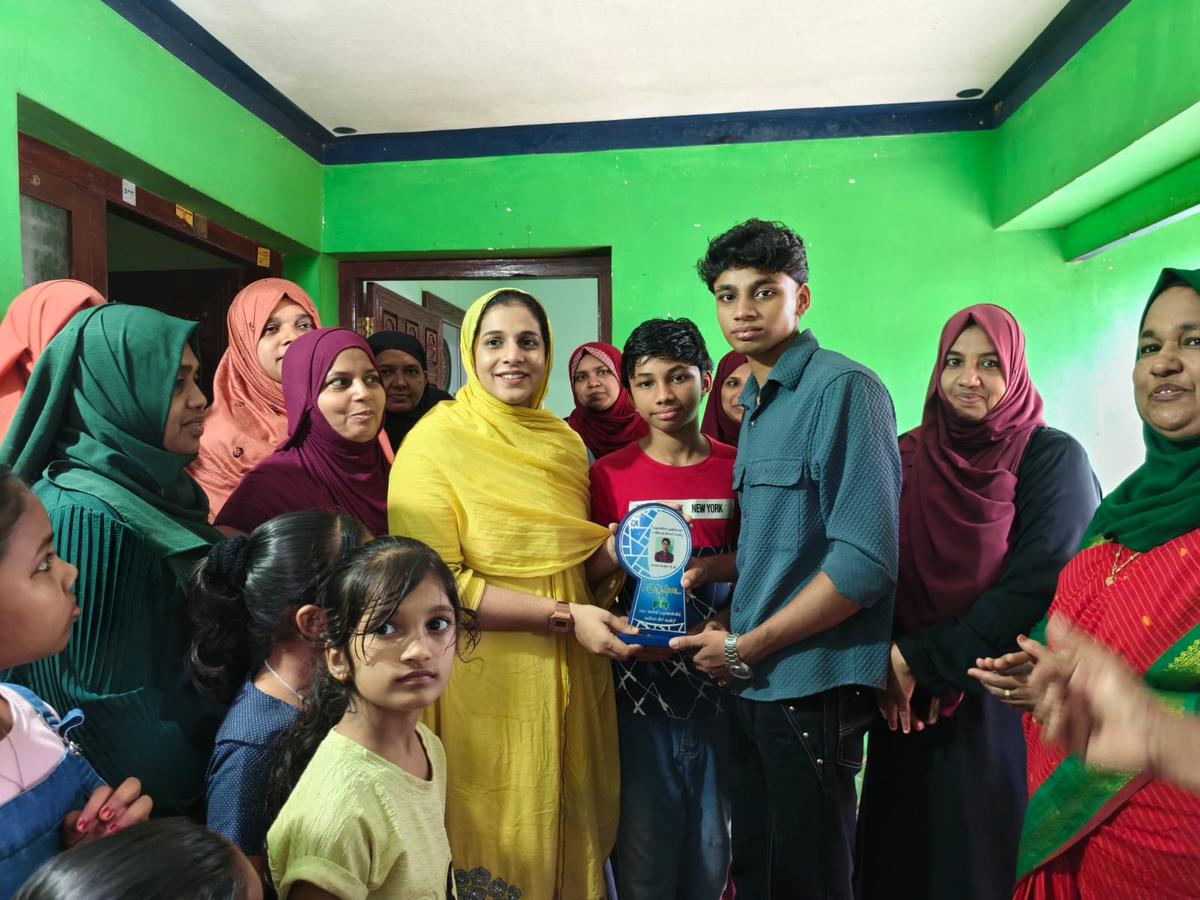
Muslim Youth League national secretary Najma Thabsheera felicitating Mohammed Shamil. | Photo Credit: SAKEER HUSSAIN

With careful precision, Shamil rescued the two girls. He was mindful of not putting himself in danger. “When one girl raised her hand, I did not grab it,” he said. “Instead, I caught her dress from behind and pulled her to safety.”

Just as Shamil thought it was over, the rescued girls broke down in tears, revealing that one more person was still submerged underwater. “That moment sent shivers down my spine,” Shamil recalled. “Initially, I was unsure what to do, but I took a few deep breaths and dived multiple times in a desperate attempt to rescue the last one.”

Fire and Rescue Services officers felicitating Mohammed Shamil. | Photo Credit: SAKEER HUSSAIN

The pond was over two meters deep, with murky water, making it difficult to locate the missing girl. As more people arrived, Shamil dove in three times before finally pulling out the 12-year-old girl with the help of his younger brother, Mohammed Shehin, who is a class 8 student.

She was not breathing, and her face was pale. Shamil used his school biology knowledge to do chest compressions. When she showed signs of life, he gave her mouth-to-mouth resuscitation. Within minutes, she started breathing again. The girl was then rushed to the hospital.

Shamil’s parents, Shahina and Ashraf, beamed with pride as they looked at the table filled with trophies and mementoes. The recognition came from all corners – the Fire and Rescue Services, local clubs, the MLA, the district, block, and grama panchayats.

Shamil, once just a student, has become a symbol of hope and bravery for the people of Mankada. “I just did what needed to be done,” he humbly said.

source: htttp://www.thehindu.com / The Hindu / Home> News> India> Kerala / by Abdul Latheef Naha / July 25th, 2025

Muslim Man Keeps Century Old Jewish Store Alive in Kochi

Kochi, KERALA :

Kochi:

A video by American author Aija Mayrock has drawn global attention to a small embroidery shop in Jew Town, Mattancherry. The store stands as one of the last working links to the once thriving Cochin Jewish community of Kerala.

The shop belonged to Sarah Cohen, born in 1925. She was among the last Jews who lived permanently in Jew Town. Her store sold hand embroidery and souvenirs and became a known landmark in the area. After large scale emigration in the mid twentieth century, many Jewish homes and businesses shut down. This shop stayed open.

Thaha Ibrahim, a Muslim man, now runs the store. As a child, he sold goods on the street near Cohen’s shop. She later hired him and taught him embroidery and shop management. He assisted her for decades, handling customers, production, and daily operations.

Before her death in 2019, Cohen asked Ibrahim to continue the shop and preserve its character. He agreed. Today, the store functions under the same name and layout. It closes on Saturdays in respect of the Jewish Sabbath. Candles are lit on Friday evenings. Cohen’s photographs and belongings remain displayed inside.

Ibrahim has stated he remains Muslim. He sees his role as protecting the legacy entrusted to him.

Historians note that Jews lived in Kerala for over two thousand years. Although the community declined sharply after 1948, synagogues and heritage sites in Kochi still reflect that history. This small embroidery shop now stands as a living record of shared trust and continuity.

source: http://www.radiancenews.com / Radiance News / Home> Latest News> Report / by Radiance News Bureau / February 21st, 2026

Visiting Lord Ayyappa’s Muslim friend Vavar during the Sabrimala pilgrimage

Sabarimala (Pathanamthitta District), KERALA :

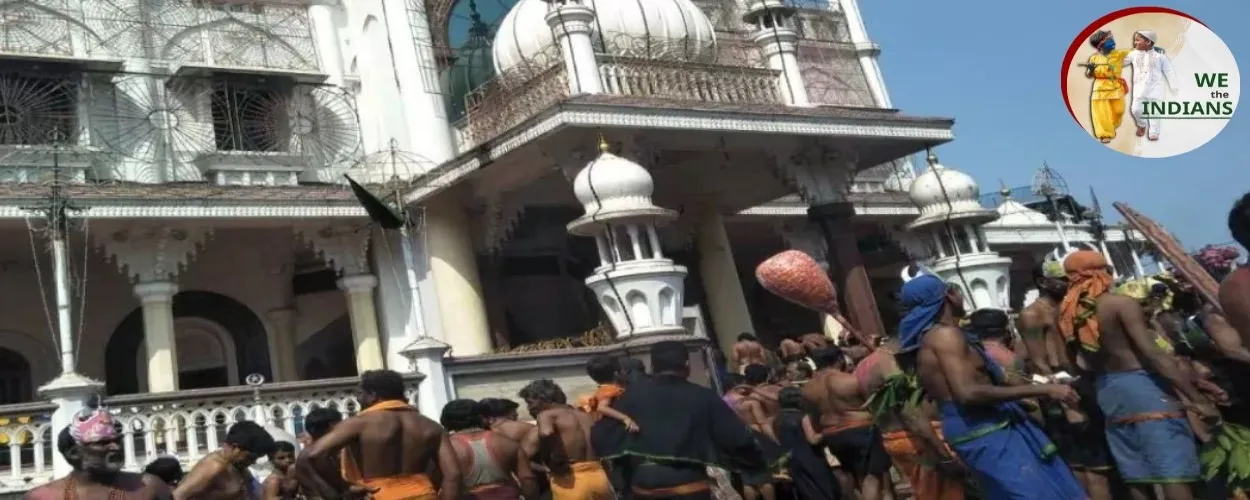
Pilgrims on way to Ayyappa shrine in Sabrimala at Vavar mosque, Erumeli, Kerala

I had waited to go to Sabarimala, a hilltop shrine dedicated to Lord Ayyappa in Kerala’s Pathanamthitta district, for a long time. Lord Ayyappa, the deity of truth and righteousness, is described as the son of Shiva and Mohini (the female avatar of Vishnu). He was said to have been adopted by the local king of Pandalam.

Ungorgettable Experiences

As a youngman, Ayyappa abdicated the crown and renounced the palace to vanish into the forests of Sabarimala to live a celibate and ascetic life. It’s in deference to Ayyapa’s celibacy that women are not allowed there till they turn 55.

After a 41-day mandatory fast, I joined my sister and her husband for the pilgrimage. The pilgrims wear black clothes and carry a bundle containing a couple of coconuts filled with ghee and other offerings for the deity.

We carried the bundle on our heads at the start of the four-kilometre uphill trek. We were not supposed to remove it before reaching the shrine.

At the crack of dawn, after breaking coconuts at the local shrine to ward off all obstacles, we left for the shrine.I was thrilled at the thought of visiting some of my favourite temples and shrines on the route, some of which I had only heard of but never visited.

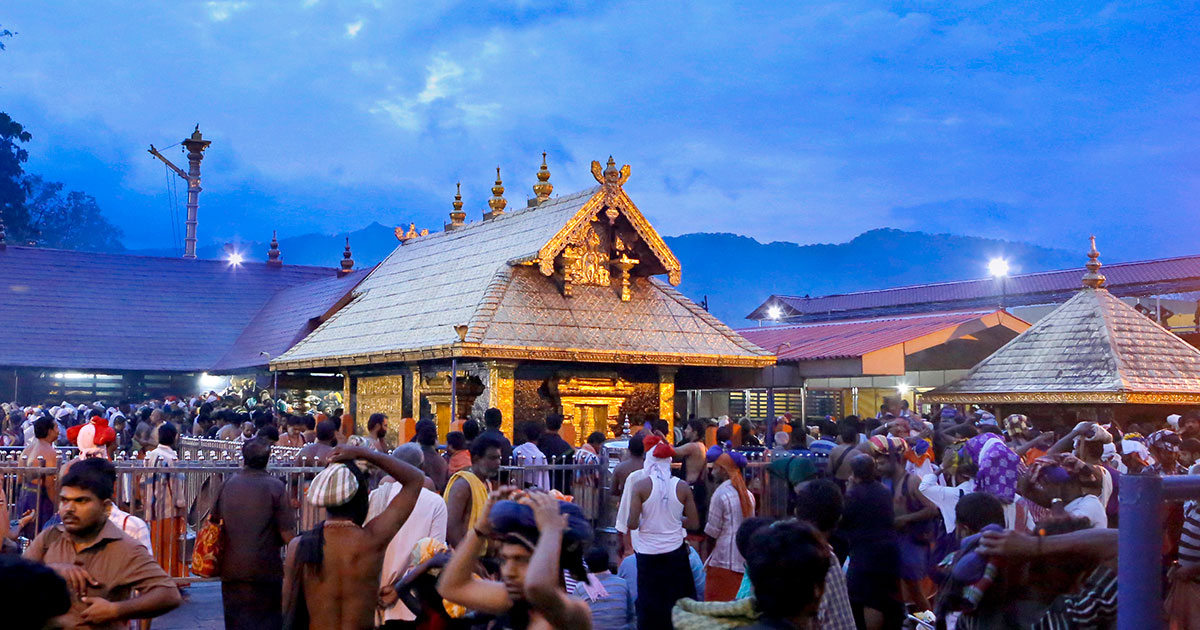
Lord Ayyapa temple at Sabrimala

Holding our heavy bundles (kettu) on our heads, we stopped at Chottanikakara, Vaikom, and Ettumanoor shrines.

Soon we were at Erumeli. According to legend, Ayyappa defeated the demoness Mahishi (sister of Mahishasura) here. The name Erumeli is comes from Eruma-kolli—“the place where the buffalo-demon was slain.”

At Erumeli, the road streamed with pilgrims, mostly men and children, all clad in black. They had bright colours smeared on their faces, held colourful feather arrows, and danced to drum beats as part of a ceremonial dance called Petta thullal to mark the victory of the warrior Ayyappa over enemies and bandits. 

We too swayed lightly, trying to shake off our inhibition-clad egos.   

Holding arrows, wild leaves, and smeared in bright colours, we walked towards a temple there dedicated to a deity called Shastha. Shastha is an ancient protective warrior deity worshipped in Kerala even before the incarnation of Ayyappa. Ayyappa is considered a modern avatar of Sastha and is now almost synonymous with Sastha.

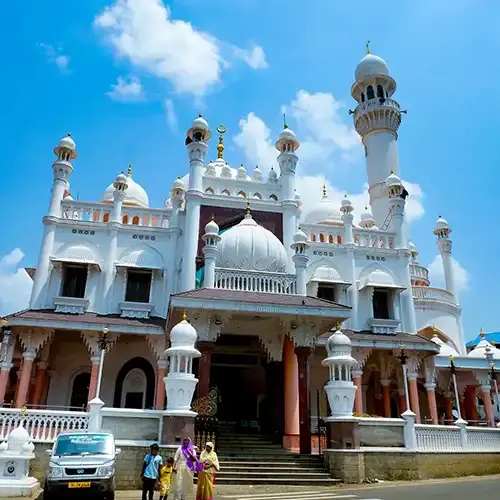
Vavar Juma Mosque, Erumeli

As we walked towards the temple, I was surprised. Were we at the threshold of a temple or a mosque? I saw taps for the ritual cleansing ceremony (wuzu) and a handful of Muslims saying namaz through the glass windows. It was a mosque.

We lined up respectfully outside the mosque. It was Vavar Palli (Vavar mosque), my brother-in-law explained. 

Vavar was a close associate of Ayyappa. Their friendship is celebrated in folklore and devotional movies. Vavar was a Muslim, and thus the story gets significant.

“Vavar Swami may have worshipped at the mosque. That is why he is associated with the mosque,” Nasruddin Musaliyar, who traces his lineage from Vavar, explained to me when I spoke to him a few days later.

I felt pure joy at seeing Hindus offering respect outside a mosque and making offerings before worshipping the Shastha temple. After breaking a coconut at the Shastha temple, we began our long trek towards the Ayyappa shrine on Sabarimala.

It took us four or five hours, followed by a long five-hour wait in the crowd. Anyway, we had darshan in the morning. When we came out of the temple, another surprise awaited.

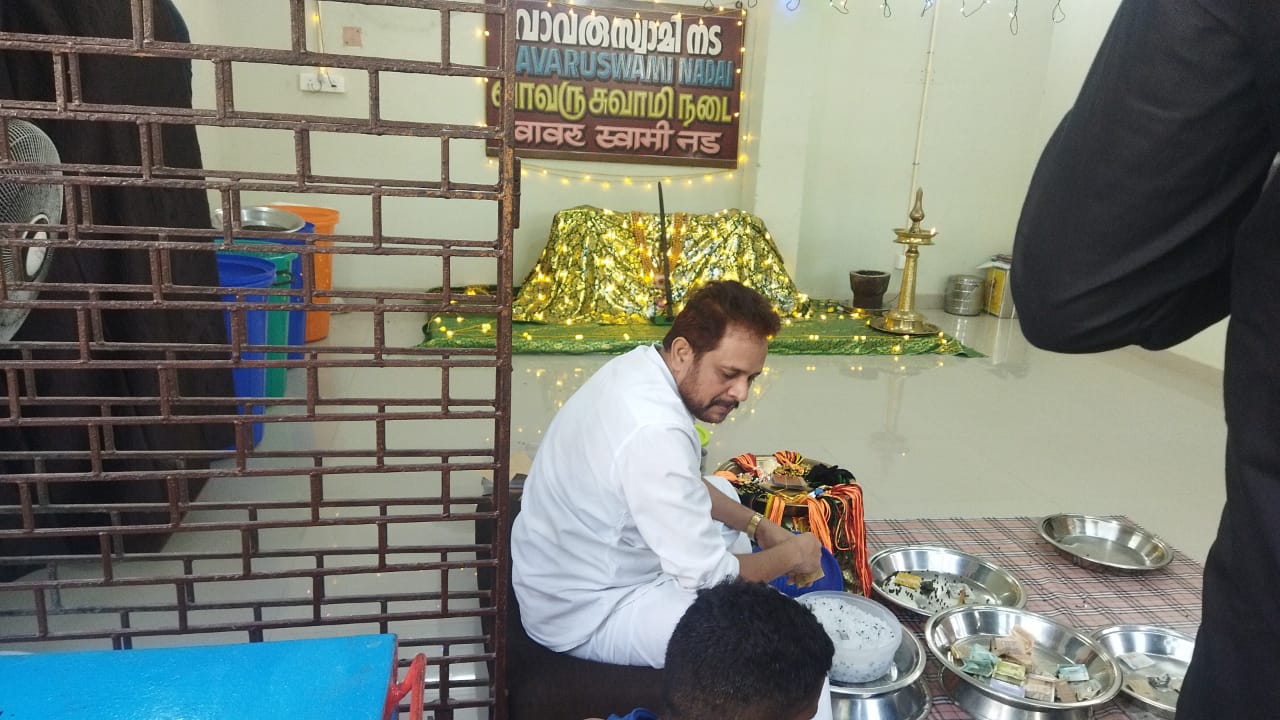
The shrine dedicated to Vavar Swamy

I found myself standing outside a small shrine just outside the Ayyappa temple. It was like a dargah, but I was told that it was called Vavarpadi, or the threshold of Vavar, a memorial to Ayyappa’s friend.

Pilgrims stopped to offer prayers and accept prasad of sugar candy and pepper. The man giving the prasadam said he was a descendant of Vavar and managed his tomb. He gave me his father’s number and asked me to speak to him for details about the shrine.

Nasruddin Musaliyar said that Vavar was part of a group of Arab settlers who were close to Lord Ayyappa.”This shows that the highest authority at that time accepted Vavar despite his different faith or origin,” Musaliyar said.

“Vavar Swami’s tomb and a mosque at Erumeli, where Vavar is said to have prayed, just cry out loud to us today that two faiths can co-exist and respect each other. All religions believe that there is one God. And that almighty wants to tell us that Hindus, Christians, and Muslims can co-exist in harmony,” he added.

Emotions well up as Mursliyar says that neither Ayyappa nor Vavar had asked anyone to build shrines and pray to them. These shrines represent the principle that they did not see any difference between man and man.

Author (left) with her sister and brother-in-law on the way to Sabrimala

Shrines and differences are man-made. “The Muslims don’t worship at Vavars shrine as they believe only in Allah,” he said.

There is no evidence that Vavar was buried there, though the royal records claim so. This shrine is symbolic, he says.

Ayyappa is believed to have renounced the throne, family, and palace to live as an ascetic in Sabarimala’s forests and merged with Sastha. He loved and honoured Vavar, expecting his devotees to do the same. In these times of religious tensions, such traditions continue thanks to a deity who rejected differences of caste and religion and loved everyone as human beings.

After darshan at Sabarimala, pilgrims feel lightheaded as they have all offered their heavy burdens at the shrine.

Perhaps they have removed something else also besides the kettu —the thought of differences itself.

They go as Hindus to worship a Hindu god but return feeling more than just a Hindu…a more complete human being, who embraces all differences.

source: http://www.awazthevoice.in / Awaz, The Voice / Home> Stories / by Sreelatha Menon / December 29th, 2025

CONNECTA Cultural Exhibition: Reclaiming Human Bonds in an Age of Separation

Kannur, KERALA :

Kannur:

On a January evening, the busy town square of Kannur changed in a big way.  Usually, the square is crowded with people rushing about their daily work. But on this day, it became a calm and welcoming space. People slowed down, reflected, and spoke with one another. They discussed daily habits, shared ideas, learned about different cultures, and understood what others believe in.

This transformation happened because the CONNECTA Cultural Exhibition was inaugurated. The event was organised by the Dialogue Centre Kerala.

A Call to Kindness and Togetherness

The inauguration was not a routine ceremony. It was a strong message inviting people to show kindness and build unity. CONNECTA reminded everyone that all human beings are connected in many ways. This message is especially important today, when people often focus more on differences than shared values.

CONNECTA highlighted common issues, lifestyles, and moral values that unite people, regardless of faith, culture, or background.

CONNECTA is built on three key ideas: Faith, Culture, and Dialogue. These elements can help heal divisions in society. The organisers carefully selected displays that encouraged visitors to reflect and engage in meaningful conversations. Alongside this, the exhibition included many cultural activities that brought people together.

Every display in CONNECTA carried a clear message: faith and culture should unite people, not separate them. The exhibition emphasised that belief systems and traditions are meant to build understanding and harmony.

We live in a world where disagreements are common and often lead to conflict. CONNECTA offers a hopeful vision. It encourages people to recognise differences, respect them, and even celebrate them. According to CONNECTA, diversity is not a weakness; it is what makes us truly human and is something to value.

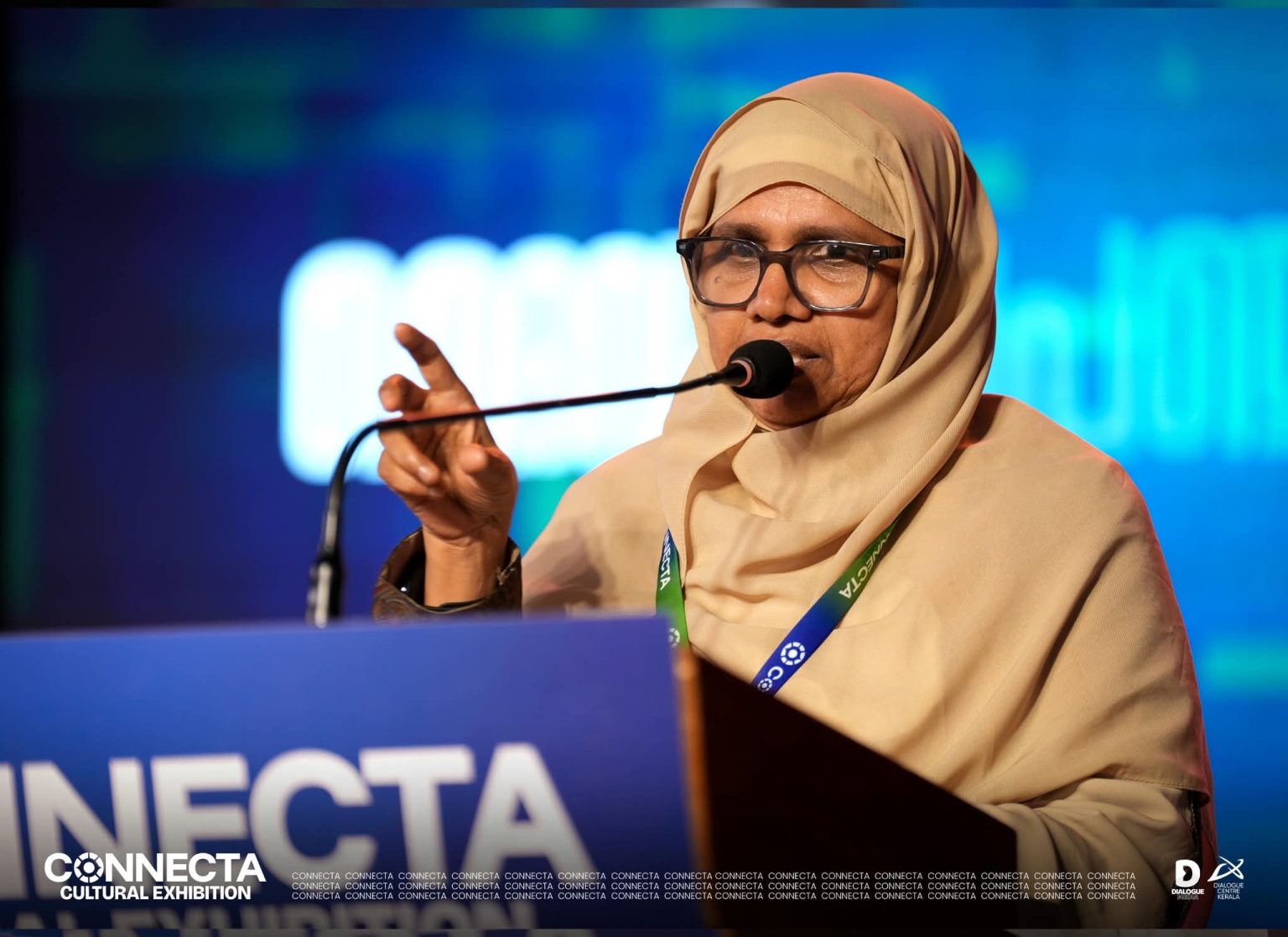
Message from Ms. A. Rahmathunnissa

Ms. A. Rahmathunnissa, National Secretary of Jamaat-e-Islami Hind and Executive Member of All India Muslim Personal Law Board, addressed the gathering. She spoke about the deep importance of the exhibition’s theme and thanked everyone who worked together to make CONNECTA possible.

She began by highlighting the disturbing patterns that exist in today’s society. She noted that messages of disconnection, isolation, and separation are being heard again and again, shaping attitudes in ways that lead people to demonise one another, push others to the margins, and cut themselves off from the collective. In such a context, the call to connect people becomes not just relevant, but essential. Rebuilding bonds, restoring trust, and bringing people together is the urgent need of our time.

She pointed out that people today are growing increasingly distant from one another. In such times, exhibitions like CONNECTA are deeply needed, as they help rebuild human connections and strengthen relationships. CONNECTA, she said, reminds us to care for one another and to restore lost bonds.

CONNECTA as a Way of Life

Ms. Rahmathunnissa explained that CONNECTA represents a way of living. It encourages personal responsibility, peaceful coexistence, and moral awareness. CONNECTA serves as a guide for ethical and spiritual living, teaching people how to act with integrity and live in harmony with others.

She described CONNECTA as a path rooted in responsibility, social balance, and moral consciousness – principles that can help people lead meaningful lives.

Ms. Rahmathunnissa expanded CONNECTA as an acronym and explained its meaning as

C – Contemplate the signs of God in the universe

She encouraged people to reflect on nature, culture, and humanity. The variety we see in the world is a sign of God’s wisdom. Diversity is not accidental; it is part of the Creator’s design. Differences in creation reflect God’s intention and should be appreciated.

O – Open hearts to compassion and empathy

True faith, she said, softens the heart. It helps people feel compassion for others. Compassion allows us to see others not as strangers, but as fellow travellers sharing the same journey of life.

N – Nurture relationships with all creatures

Human beings have a duty to care for everyone, not just those close to them. Every person, animal, and living being deserves kindness and respect. Caring for the Earth and its creatures is a core human responsibility.

N – Navigate the path of balance and harmony

Extremes can damage communities. Balance creates unity. Harmony grows when justice, mercy, and wisdom work together. This balance strengthens society and brings people closer.

E – Embrace the interconnectedness of all things

No one lives in isolation. Each person’s life is linked to others. Communities thrive because of these connections, even when we are not always aware of them.

C – Cultivate gratitude and mindfulness

Gratitude keeps people aware of what truly matters. Mindfulness reminds us that our words and actions have consequences. Together, gratitude and awareness help people act responsibly and thoughtfully.

T – Transmit love, peace, and kindness

These values are not just beliefs; they must be practised. People must actively live these values and share them through their actions every day.

A – Awaken to our role as ambassadors of God on Earth.

Being ambassadors of Allah, it is our duty to consider everyone and take everyone together.

A Timely and Lasting Message

Ms. Rahamathunnisa expressed hope that CONNECTA would inspire people to practise kindness and responsibility. The exhibition encourages gratitude toward the Creator and care for one another.

CONNECTA promotes dialogue, shared values, empathy, and understanding – qualities essential for harmony in a diverse society. By encouraging connection over isolation and compassion over fear, CONNECTA calls on humanity to honour one another and the Creator who gave life to all.

[The writer is Assistant Secretary, Jamaat-e-Islami Hind, Media In-Charge Women’s Department]

source: http://www.radiancenews.com / Radiance News / Home> Latest News> Report / by Rabia Basri / February 06th, 2026