The emperor of oleander blossoms

INDIA :

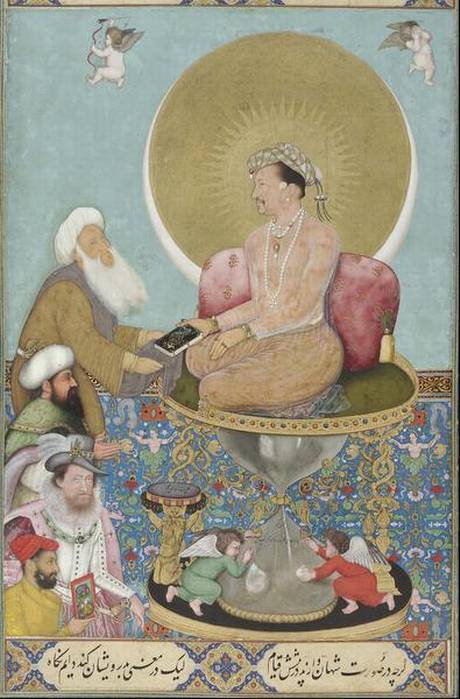
Colourful life: Jahangir preferring a Sufi sheikh to kings, a miniature painting by Mughal artist Bichitr, ca. 1620 | Photo Credit: Wiki Commons

Were the Mughals the most literary dynasty that ever ruled India?

The Mughals have garnered many adjectives over the centuries. Once, when the world looked in awe at the power and wealth of Hindustan, they were simply ‘Great’. More recently, as Hindustan locks itself in a manic tussle with its past, they are ‘foreign’ or ‘invaders’, often both. Perhaps it’s time for a calming epithet: the Mughals were, without question, literary.

The first of them, Babur, is known for defeating Ibrahim Lodi in Panipat, but almost equally renowned for his autobiography. It’s not that kings hadn’t written before. Julius Caesar was composing accounts of his Gallic campaigns in 1 BC. The earliest autobiography — an account of a person’s life, not a record of events — was St. Augustine’s Confessions, written circa 400 AD. Babur, living a millennium later and a world away, invented the form for himself with Baburnama, the first personal memoir in Islamic literature. And he did it with flair — “both a Caesar and a Cervantes”, as Amitav Ghosh has described him — writing with lucid ease, whether of the pangs of his first love or his battle strategies. (The first autobiography in an Indian language, incidentally, may be Ardhakathanak (‘Half Life’) by Banarasidas, a Jain merchant who wrote in Braj Bhasha, and in verse, in the 17th century.)

The urge to write

In the centuries after Panipat, the Mughal empire grew into a global superpower, then shrunk to a wretched speck. The last Mughal ruled little besides the Red Fort, but he did preside over an efflorescence of Urdu poetry: Ghalib, Momin and Zauq shone bright in his court, and Bahadur Shah ‘Zafar’ was no mean poet himself. Imprisoned and exiled after the Uprising of 1857, the frail emperor would write Na wo taj hai na wo takht hai, na wo shah hai na dayar hai (‘No crown remains no throne remains, neither ruler nor realm remains’). The urge to write, however, that remained: Bahadur Shah is said to have etched his verses on the walls of his prison, with charcoal, when he was denied paper and pen.

Babur may not have been entirely displeased. In a letter to his son, Humayun, Babur offers equally urgent advice on how to rule and how to write. The unfortunate Humayun is ticked off on both counts: his desire for solitude is “a fatal flaw in kingship”, and his prose is convoluted. “Who has ever heard of prose designed to be an enigma?” writes Babur, exasperated. Humayun must write, instead, “with uncomplicated, clear, and plain words”.

Father and son

Humayun was unable to meet his father’s exacting standards, both as ruler (he lost the fledgling empire) and as writer (even if he did die in a library), but the literary gene stayed with the dynasty. It blossomed in Gulbadan, one of Babur’s daughters, who wrote the Humayun-nama; it gestated in Akbar, who was as famously illiterate as he was fond of commissioning histories and translations; and, most notably, it flowered in Jahangir, whose literary talents equalled, if not exceeded, his great-grandfather’s.

William M. Thackston, who has translated the Baburnama, admits that despite its many surprises and charms, the memoirs can sometimes lag a bit: the “reader may skip or skim at will”. The Jahangirnama, on the other hand, flows like a breeze — so much as to attract the criticism to which ‘popular’ writing is prone. Thackston, who has also translated the Jahangirnama, writes that while much of this work is “fascinating…for the general reader” much is also “of little or no historical significance”. Fun to read, that is, but inadequately serious. As Jahangir himself is often accused of being: lightweight.

Playful tone

It’s true enough that the Jahangirnama is marked by a sometimes startling whimsy. Once, marching with his nobility along a rivulet, its banks overgrown with oleanders, Jahangir had them all arrange the blossoms on their turbans so that “an amazing field of flowers was… made!” Another time, having caught a dozen-odd fish, Jahangir released them all with pearls pinned to their noses. Even when he is writing of seemingly sober matters, Jahangir can’t help a certain playfulness.

Near the beginning of the book, for example, Jahangir lists a set of decrees that he issued when he became emperor. Among these worthy orders — abolishing certain taxes and punishments, building wells and hospitals — was one that banned the manufacture and sale of alcohol.

Here, however, Jahangir adds a caveat: he has been drinking — and has often been drunk — since he was 18. Later, he offers a detailed account of his alcoholism and de-addiction (his hands shook so much, others poured the liquor down his throat; a doctor told him he wouldn’t last six months; he diluted his arrack with wine and raised his spirits with opium) — a remarkable confession made even more so by the fact that Jahangir makes it immediately after describing the “great persistence” it took for him to get his son, Shahjahan, to down a birthday drink.

A drinking problem is not all the emperor disclosed. The Jahangirnama also contains a frank account of murder; or, at least, an order to murder, which led to the ambush and assassination of Akbar’s friend and biographer, Abu’l Fazl.

Murder most murky

The plot is murky and tangled, but in brief it was thus: as prince, Jahangir felt threatened by Abu’l Fazl’s influence over the emperor, Akbar, and so had him killed. It was a ruthless decision, and reveals a man of steely ambition under the drunken haze and oleander blossoms.

It’s an ambition that’s often overshadowed by Jahangir’s acute sense of beauty and delight in nature. He could describe the weather such that you can feel it, “the air was so fine, a patch of cloud was screening the light and heat of the sun, and a gentle rain was falling”. Spring flowers in Kashmir would make his heart “burst into blossom”.

Among the best-known passages in the Jahangirnama are those about the mating, nesting and eventual parenthood of Jahangir’s pet saras cranes, Laila and Majnu. So intense is his joy in their rituals — “I immediately ran out to watch” he writes of the dawn on which they mated; then of how Majnu would guard his mate all night, and scratch her back with his beak at dawn to relieve her of nesting duties — that one gets the sense Jahangir would have sat on those eggs himself, if he could.

Writers’ prerogative

It’s passages like this that prompted Henry Beveridge, editor of a 19th-century translation of the Jahangirnama, to declare that Jahangir would have been a “better and happier man” as the “head of a Natural History Museum”. And yet, would the head of a museum have commissioned the painting of Inayat Khan? This, too, is a story in the Jahangirnama. A hard-drinking nobleman appeared before Jahangir, asking for sick leave.

Inayat Khan was emaciated beyond belief. “How can a human being remain alive in this shape?” the emperor exclaimed. Jahangir let Inayat Khan go home, gave him a generous grant, but also, he summoned his painters. Like the extinct dodo, of which Jahangir’s atelier has produced the most authentic record, so the painters now created a terribly vivid portrait of a dying man.

Such single-mindedness is, of course, the prerogative of emperors — and also, perhaps, of writers. Both to rule and to narrate requires a certain distance, even coldness. In fact, of late, Jahangir’s writings, and therefore his rule, are being re-evaluated.

The historian Corinne Lefèvre, for example, does not read the Jahangirnama as a record of imperial fancies, but finds it “a masterpiece of… imperial propaganda”. Jahangir himself suggested as much when he ordered copies of his book sent to other kings as a “manual for ruling”.

Unlike his father, Jahangir did not create the intricate foundations of a nation-state. Unlike his son, Jahangir did not build the Taj Mahal. No lasting administrative reforms, no carved blocks of marble, it’s a book that Jahangir left us to read. Just words.

No wonder he’s so open to interpretation.

The writer’s most recent book is Jahangir: An Intimate Portrait of a Great Mughal.

source: http://www.thehindu.com / The Hindu / Home> Books – The Lead / by Parvati Sharma / November 09th, 2018
View from the other side

NEW DELHI :

“Urdu Adab Mein Ghair Ka Tasawwur” explores the concept of the other in Urdu literature

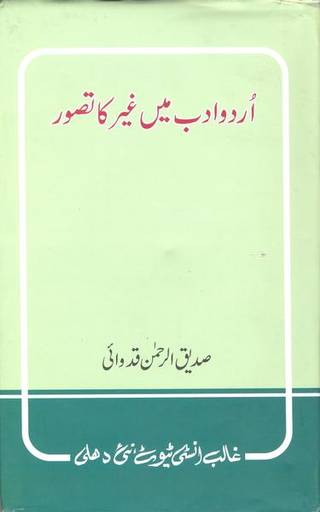
The biggest ‘other’ is not the one whose religious beliefs, cultural practices and social convictions and the mode of expression – language – stand poles apart but it is the one who is deeply revered and worshipped and people seek his blessing all the time. It refers to the almighty who remains inaccessible to all those who adore Him. Man cannot reach to Him though he feels His presence everywhere. The multiple and contradictory referents of the term “other” constitute literary texts which set people free from the humdrum of life. These poignant and pithy observations are offered by a widely- acclaimed fiction writer of Urdu, Khalid Javed in his article “Lafz-e-Ghair – Falsafiyana Tanazur Mein” (the Other in Philosophical Perspective) which is carried by an astutely produced anthology, “Urdu Adab Mein Ghair Ka Tasawwur” (The concept of the other in Urdu Literature) published by the Ghalib Institute, New Delhi recently.

The book, carrying 18 articles, presented in an international seminar on the concept of the other and aptly edited by Professor Siddiqur Rehman Kidwai, explains how the much-debated and hatred filled notion of the other is perceived and presented in various genres of Urdu literature. The articles also discuss how this concept is creatively depicted by prominent Urdu authors and poets such as Meer, Ghalib, Daagh, Momin, Manto, Premchand, Qurratulain Hyder, NM Rashid, Meeraji, Akhtarul Iman and Shahryar, etc.

Delineating invisible power

Khalid Javed, whose two novels – “Maut Ki Kitab” and “Naimat Khana” created waves in Urdu literature, asserts that every invisible power is essentially the other, no matter it is God or Devil. Invisible but all-pervasive power conjures up ecstasy and fear simultaneously and it gives birth to “Myth” and “Faith”. According to the ancient Indian philosophy, ‘ego’ is the other as Atma is the essence of existence and Khalid Javed rightly asserts that people completely unaware of their inner self or Atma, take the body, sensory organs and intellect for their existence. When one attains enlightenment, he realises that a marked sense of distance exists between the inner self and its ill-conceived outer manifestations.

Describing the term as the most commonly used tool of political subjugation, Siddiqur Rehman Kidwai points out that the process of othering is conveniently adopted by the people who consider themselves rescuers who assert that they are committed to empowering all those who are at the receiving end.

In his brilliantly structured address, “Formation of the Other – Strategy and Kinds”, noted Urdu critic Qazi Afzal Hussain says that the concept of other portrayed in literature hardly endorses what is being projected by the social scientists.

The collective other created by the power that – be is not acceptable as it unfailingly produces hate literature. In literature, the other is a foil for creativity that refuses to divide men into caste, colour, linguistic and religious categories and in the creative world, political affiliations and ideologies hardly have any significance. Qazi Afzal brilliantly concludes by saying that if a literature does not respect the sensibilities of others , it loses value and it fails to ensure the transcendence of life.

A well- author known fiction writer Zakia Mashadi points out that uneasy co-existence, no matter how old it is, sets in motion the process of subjugation which in the final reckoning perpetuates an intense feeling of impotent rage among people who are being marginalised – unconditional emulations is the most lethal form of othering as it wipes out every trace of self -identity

Dalit novel in Urdu

Can a religious text that espouses the cause of equality can be used as a formidable tool for not granting the right to worship to the subalterns? Yes it is being used for administering severe punishment to those belonging to the downtrodden class and who have been denied and this sums up the poignant narrative produced by a prominent Urdu Novelist Ghazanfar in his novel “Divya Vani” which is perhaps first full-length Dalit novel in Urdu

LucidWritingsMPOs14nov2018

Lucid writings

Many prominent authors such as Anis Ashfaq, Qazi Jamal, Ziauddin Shakaib, Ali Ahmad Fatimi, Abul Kalam Qasmi, Khalid Qadri, Deepak Budiki, Sarwarul Huda, Mushraff Alam Zauqi, Abubakar Abbad and Javed Danish took pains in delineating various manifestation of the other in easy to understand the idiom.

The articles covering across a huge sweep of the time attempt to understand various shades of vexation of the pain of those whose sufferings remains unheard. It is the book that acquaints the readers with varying and enticing perspectives on the dominant discourse of our times.

source: http://www.thehindu.com / The Hindu / Home> Books> Authors / by Shafey Kidwai / August 17th, 2018

FORTUNE COOKIE: The secret recipes of Avadh’s Taluqdars

UTTAR PRADESH / Gurgaon, HARYANA   :

Salma Husain has quietly been digging up culinary gems

When Salma Husain arrived in Delhi in 1964 to take up a translator’s job in the Persian section of the National Archives of India, she was the first young woman from her community to move out of her parental home and pursue a career when she was still unmarried.

Salma apa, as she’s known among her younger colleagues, has never worn this fact as a badge of honour — I have known her well for 20 years, but I just learnt about it.

She doesn’t need to, for Salma apa, encouraged by the former boss of ITC Hotels, Habib Rehman, has quietly been digging up culinary gems lost in old Indo-Persian manuscripts, stumbling upon such beauties at the British Library as the Nuskha-e-Shahjahani, a cookbook dating back to Emperor Shahjahan (that was when red chillies were still not common, nor were tomatoes, and brinjals were popular because of their ubiquity).

The repertoire of Persian scholar and food historian Salma Husain extends from the humble Dabi Arvi Ka Salan to Avadh’s 'national dish', Shaami Kababs (above), without which no royal dastarkhwan is considered complete
The repertoire of Persian scholar and food historian Salma Husain extends from the humble Dabi Arvi Ka Salan to Avadh’s ‘national dish’, Shaami Kababs (above), without which no royal dastarkhwan is considered complete

You’ll find the accumulated fruits (or orchard, I would say) of the long hours she has invested in locating old cookbooks and recreating recipes from royal memoirs and the accounts of foreign travellers in her anecdote-studded cookbook, The Emperor’s Table.

With Flavours of Avadh, though, Salma apa has produced for the first time a cookbook that goes beyond the much-travelled by-lanes of Aminabad, Lucknow, and travels across the kitchens of the taluqdars who defined (and refined) the culture of region after 1857.

Salma apa’s journey starts at the dastarkhwan of Rajkumar Muhammad Amir Naqi Khan of the Mahmudabad family, whose stunningly attractive wife, Kulsum Begum from Hyderabad, has had Delhi and Mumbai eating out of her hands during her stints with the ITC.

It moves on to Kotwara, a principality 160km from Lucknow bordering Nepal in the Lakhimpur Kheri district. Kotwara is famously associated with the filmmaker and fashion designer Muzaffar Ali, whose kitchen in his Gurgaon home is presided over by Rehana, the family’s retainer for six decades.

The Flavours of Avadh story hits the Grand Trunk Road and meanders into the principality of Tirwa in Kannauj district, whose most illustrious ruler, Durga Narain Singh, travelled extensively across Europe in the years before World War II and came home with a French chef to preside over his kitchen.

The story returns to Lucknow, where we meet the colourful Nawab Jafar Mir Abdullah in his lair, Sheesh Mahal; moves to Sitapur, which was awarded by a grateful British Raj to the Kapurthala family for leading the operation against the sepoys behind the historic siege of the Lucknow Residency; and has a Kharbooze Ki Kheer at the Lucknow home of the Zaheer family of old Congress leaders, whose most illustrious member was Syed Nurul Hasan, the erudite historian and Indira Gandhi’s education minister who introduced the 10+2 system.

Itt ends at Shakarganj, the ancestral home of the descendants of Baba Farid, the most famous of whom was the late Dr Abdul Jalil Faridi, a sought-after medical practitioner and popular MLA with a famous sense of humour.

From these blue-blooded families, Salma apa has collected old recipes to put together a fascinating collection. Of course, you can’t have an Avadhi cookbook minus recipes of such celebrity dishes as the Galawat ke Kabab, Kundan Qaliya, Murgh Mussallam, Dumpukht Gosht and Ande Ka Halwa. Salma apa has them all.

What makes her cookbook special, though, is its ability to cater to our appetite for the exotic. We have, for instance, the Mahmudabad house favourite, Dhungare Baigan (smoked brinjals with yoghurt, onions and Serrano chillies), or the Tirwa family’s Subz Mewa Malai Pulao, where ghee, cream and hung yoghurt are used as generously as seasonal vegetables, or the Ananas ke Paranthe (layered pineapple paranthas) served by the Sheesh Mahal family for breakfast during winter, or the Gajar ka Bharta perfected by Sitapur’s cooks, or Baba Farid ki Meethi Khichri, which has been cooked at Shakarganj on every death anniversary of the mystic saint.

Salma apa has made sure that we’ll see Avadhi cuisine in an entirely different light.

source: http://www.dailymail.co.uk / Mail Online India / Home> India / by Sourish Bhattacharyya / February 26th, 2015

Breaking it down with Hasan Minhaj

Aligarh, UTTAR PRADESH / Davis, California,  U.S.A. :

HasanMinhajMPOs12nov2018

Ending 2018 with his highest note so far, the Indian American comedian hopes to reinvent the late night talk show with the Patriot Act

Like most Indians abroad, Hasan Minhaj appreciates the value of a good lota. The “manual transmissions of bidets”, as the Indian American comedian calls them, features hilariously in episode two of his Netflix show, Patriot Act with Hasan Minhaj. The sophomore instalment took on Saudi Arabia’s crown prince Mohammed bin Salman. Like most other late night hosts, the 33-year-old too focussed on the atrocious hit on journalist Jamal Ahmad Khashoggi, who was dismembered by 15 assassins inside the Saudi consulate in Istanbul. But unlike anyone else, Minhaj worked a surprising, yet seamless, segue to a much lighter topic: imploring his audience to treat their bodies with the same respect as they would a pair of expensive albeit soiled Air Jordans. You would not use only toilet paper to clean them, right? So Minhaj laid down some “booty hygiene tips”.

Political comedy high

The Patriot Act — the latest to jostle for eyeballs among the oh-so-crowded pecking order of late night political comedies — dropped on the streaming giant’s website three weeks ago. A “woke TED talk”, as he puts it, the 20-something-minute show highlights a single topic with a generous dollop of humour. Contrarily, Minhaj’s peers — from Late Night with Seth Meyers to The Late Show with Stephen Colbert — devote a mere segment of an entire episode to news. “There’s a lot of tweet chasing that’s happening right now and I think this show is one of the few in the marketplace that provides insight and an in-depth look at really big issues,” he says. “But I think it’s awesome for me to do a huge geopolitical deep dive and then also do a different run on lotas.”

So far three episodes have aired, each featuring a wildly-gesticulating Minhaj in his trademark performance style. He goes through a gamut of emotions on stage, embodying sass, wide-eyed wonder and even outrage, while talking a mile a minute. The carefully-planned tirades are only amplified by an incredibly cool set, thanks to production/set and lighting designer Marc Janowitz. Surrounded by screens that double as walls, Minhaj stands on a stage that projects in 4K high-def. As images and graphics whoosh in and out, the comedian deftly uses every inch of space available, capturing his audience’s attention. Take, for instance, this writer’s personal highlight of episode three, Amazon, featuring Bill Gates’ possible worst nightmare. The founder of Microsoft, along with former CEO Steve Ballmer, proudly stars in a parody of the 1998 cult comedy, A Night at the Roxbury, replete with shiny disco suits. “Bill Gates wants us to forget that video so bad, he’s trying to end malaria,” sasses Minhaj to audience cackles.

Deeper focus

Despite the many jibes and comic tangents, he stresses that the focus is always on large political and cultural topics that often do not get covered in mainstream news cycles. “This is a news-driven show. It starts with news, facts and a take that comes from our senior news team,” says Minhaj, about his colleagues who comprise former reporters from illustrious publications like The New York Times and The Associated Press. “They’re print journalists who’ve spent years cutting their teeth on hard news. They’ve been waiting for the opportunity to put [news] in a format that is easily digestible.”

___________________

Minhaj’s late night picks

  • The Daily Show with Trevor Noah
  • Last Week Tonight with John Oliver
  • Late Night with Seth Meyers
  • The Late Show with Stephen Colbert
  • Full Frontal with Samantha Bee

___________________

Once the dossiers of information are collected, a unique peg is established. Minhaj has declared that the Patriot Act needs to be simultaneously current and with a long shelf-life. A paradox, if we have ever heard one. But he is confident he will successfully pull it off. Take, for example, the episode on Affirmative Action, which was actually about meritocracy and the rising anti-black sentiments in the Asian community.

As an [Indian] American, I can have a unique perspective on that,” he says. “India has programmes like that too, where there are seats reserved for under-represented groups. It is a heavily debated thing that’s both topical and evergreen.” Similarly, Amazon was about understanding monopolies and anti-trust laws; important issues that will not vanish any time soon. “Every single headline that we talk about ties into a larger fundamental question,” he emphasises, adding that whenever possible, he would like to run the topic through the prism of his own experiences. “I want it to be both broad in terms of its topical subject matter, but niche in terms of ‘this is how I feel about it’.”

Rise to the top

Before Minhaj brought us Patriot Act, he appeared on The Daily Show from to 2014 to 2018, first working with Jon Stewert and then Trevor Noah. As the show’s senior correspondent, he gave us gems like ‘Halal Things Considered’, a segment that addressed racism against Muslims. It was spurred from an incident where a woman was denied a canned beverage aboard an airplane for fear she would transform it into a weapon. Another memorable bit was highlighting American ignorance when a wave of racial intolerance and Islamophobia was hurled against the Sikh community. Among a collage of images which included a Sikh person, several US citizens picked the least likely representation of a member of the community. Often, they even chose a bird instead of an actual human being.

But what skyrocketed his rising fame was his set at the 2017 White House Correspondents’ Association Dinner. US President Donald Trump, who famously boycotted the event, was the ‘elephant not in the room’ according to Minhaj. “The leader of our country is not here,” he ribbed. “And that’s because he lives in Moscow. It is a very long flight. It’d be hard for Vlad [Putin] to make it. Vlad can’t just make it on a Saturday.” His likening of the President to the HBO show Game of Thrones’ vicious King Joffrey and the dinner akin to the Red Wedding bloodbath elicited a lot of applause.

Desi by heart

Later that year, Minhaj released his Netflix special, Homecoming King, recorded in his hometown of Davis, California. The hour-something show cemented his definitive rise to become one of America’s best comedians. With savage anecdotes and other poignant stories, Minhaj hung his heart out for the world. “I think audiences are really savvy. It’s an insult if you try to put on a front or present a different version of yourself,” he says, about the need to be vulnerable on stage. “I want people to feel like I’m speaking to them and hanging out with them.”

___________________

The Daily Show ticket

  • Racism got Minhaj his senior correspondent gig and the chance to work with Jon Stewert. Revved up by an episode of HBO’s Real Time with Bill Maher — where he talked about containing Muslims — Minhaj wrote an original piece for his audition. But it was the horror on guest Ben Affleck’s face at the time that really encouraged the comedian. His bit, titled ‘Batman vs Bill Maher’ (Affleck played the DC superhero in a slew of films), impressed Stewart. Minhaj even included a joke about host’s then latest film, Rosewater(2014), cinching the deal

_________________

In this vein, we got to know Minhaj was slapped in a department store aisle after his father checked that no one witnessed it. Plus, his encounter with the eternally-beloved Hindi phrase “log kya kahenge” when seeking his father’s blessing to marry a Hindu woman. “I can kick it with all my American friends, but the Indianness is entrenched in who I am,” says Minhaj, who danced to ‘Saajan Ji Ghar Aye’ from Kuch Kuch Hota Hai at his wedding. He also travelled back home from New York to Sacramento a few months ago to watch Dangal with his dad, Najme Minhaj. “What’s beautiful about art is that it travels very quickly,” he laughs. “My baby [dances] to the latest Bollywood hits. I am kheema roti, dal chawal and rajma chawal.”

As the first comedian of Indian descent to pull off something like the Patriot Act, Minhaj is expected to end Netflix’s bad romance with talk shows. They have cancelled Chelsea Handler’s Chelsea, The Joel McHale Show with Joel McHaleand Michelle Wolf’s The Break citing low viewership. Fortunately for Minhaj, the streaming giant has already ordered 29 more episodes, giving him plenty of time to hone his act. In an endless sea of similar formats, his series aims to push the boundaries of political comedy and we really like what we have seen so far.

Streaming now on Netflix.

source: http://www.thehindu.com / The Hindu / Home> Entertainment / by Deborah Cornelious / November 09th, 2018

The truth about the Nizam and his gold

HYDERABAD :

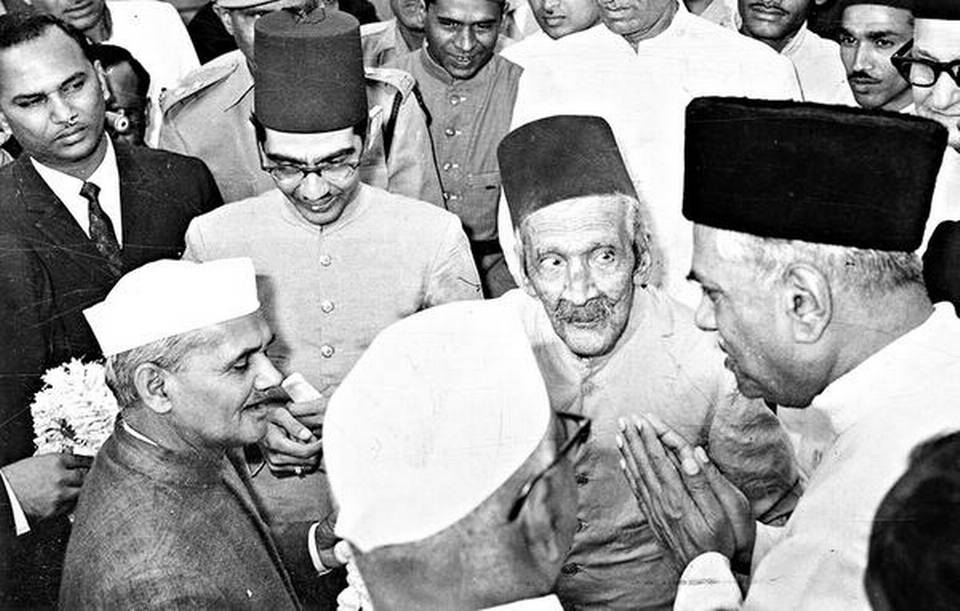
Key deposit: Nizam Mir Osman Ali Khan, centre, with Lal Bahadur Shastri and others in Hyderabad. | Photo Credit: The Hindu Archives

RTI queries bust myth of 5,000 kg gift for national defence

A series of Right To Information applications have busted an urban legend that Nizam Mir Osman Ali Khan of Hyderabad  donated 5,000 kg of gold to the National Defence Fund in the aftermath of the 1965 war with Pakistan.

The Prime Minister’s Office, under which the National Defence Fund functions, responded to this reporter’s RTI query that it has no information of any such donation.

According to popular lore, Nizam Mir Osman Ali Khan is said to have given 5,000 kg of gold to Prime Minister Lal Bahadur Shastri during his visit to Hyderabad in 1965. The Prime Minister was touring the country to raise funds to steady the post-war economy. The story goes that after donating the gold, the Nizam asked only that the boxes containing the precious metal be returned.

In fact, the Nizam invested 4.25 lakh grams (425 kg) of gold in the National Defence Gold Scheme, floated in October 1965 with a generous 6.5% interest, to tide over the economic crisis.

The Hindu report

A report in The Hindu of December 11, 1965, from Hyderabad, corroborates the less glamorous version of the Nizam and his gold. As The Hindu reports:

The Prime Minister, Mr. Lal Bahadur Shastri and the Nizam of Hyderabad exchanged a few words to-day at the airport when the ageing ex-ruler came to greet India’s Prime Minister…

Addressing a public meeting later in the evening, Mr. Shastri congratulated the Nizam on his investing 4.25 lakhs grams of gold in gold bonds which was valued at about Rs. 50 lakhs. The investment contained old gold mohors (coins) whose value was more depending on their antiquity. “We do not want to melt these gold mohors but send them to foreign countries to obtain a higher value. We may get a crore of rupees,” he said.

The report also mentions a donation of 1.25 lakh grams of gold from the Tirumala Tirupati Devasthanams and a purse of ₹8 lakh in cash from Telegu film stars to the government.

The October 1965 National Defence Gold Bonds had the additional benefit of being an amnesty scheme. “The provisions of the gold control or customs regulations will not apply with respect to gold in any form tendered as a subscription to the gold bonds and no proceedings will be instituted… Further, where such gold has been acquired out of income which has not been disclosed under the Income-Tax Act … such income, or the wealth represented by the corresponding assets, will not be liable to tax under these enactments in assessments,” said the press note from the government.

Secret beneficiary?

While the Nizam’s investment was a smart move, mystery shrouds the beneficiary of the investment. The RBI rejected an RTI query on the investment as well as the final beneficiary, citing Section 8(1)(j) of the RTI Act: “unwarranted invasion of the privacy.”

Najaf Ali Khan, one of the grandsons of Nizam Osman Ali Khan, said he was unaware of the payout. “This is news to me. I don’t know who has claimed it. The Nizam had created 52 trusts but I am not aware of any trust receiving this money,” he said.

source: http://www.thehindu.com / The Hindu / Home> News> Cities> Hyderabad > Sunday Special / by Serish Nanisetti / Hyderabad – November 11th, 2018

Kashmir’s papier mache art: Pulp fiction

JAMMU & KASHMIR :

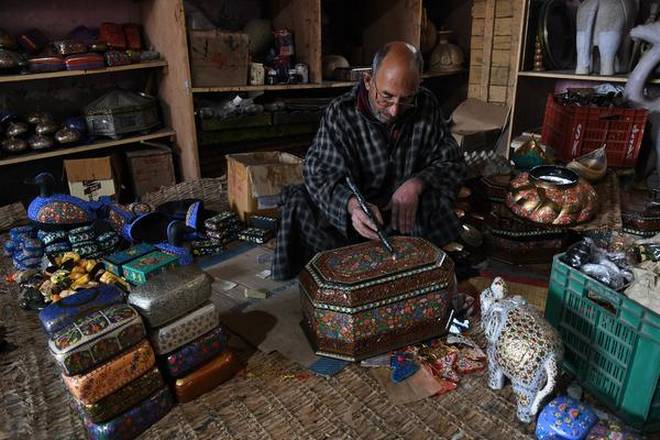
PaperMacheMPOs12nov2018

Kashmir’s papier mache art is a story in itself.

The credit goes to the Shia community of Kashmir for keeping alive papier mache art — colourful, exquisite, highly decorative and delicate — in the Valley since the 14th century. “This wealth has been handed down to me by my father who inherited it from my grandfather and so on. The colours and the shapes we carve from paper is what adds meaning to our lives,” says Zahid Rizvi, 40, a papier-mache artisan at Zadibal in Srinagar.

Over the centuries, the Shia community, now forming about 14% of the Valley’s population, has been perfecting the art. Historians believe that papier mache became popular as an art in the 15th century. Legend has it that a Kashmiri prince was sent to a jail in Samarkand in Central Asia, where he acquired the fine art, which is often equated with patience and endurance. The Muslim rulers of India, particularly Mughal kings, were fond of this art and were its patrons.

The process begins with soaking waste paper in water for days till it disintegrates and then mixing it with cloth, paddy straw and copper sulphate to form pulp. The pulp is put into moulds and given shape and form. Once it dries, the shape is cut away from the mould into two halves and then glued together. It is polished smooth with stone or baked clay and pasted with layers of tissue paper. Now, it is completely the baby of an artisan. After applying a base colour, the artisan draws a design. The object is then sandpapered or burnished and is finally painted with several coats of lacquer. The art got a major boost from the government in 2016, when the Nawakadal girls’ college in Srinagar introduced it in the craft curriculum. Saleem Beg, who heads the Kashmir chapter of the Indian National Trust for Art and Cultural Heritage, believes the future of papier mache lies in elaborate murals.

(Text by Peerzada Ashiq and photos by Nissar Ahmad)

source: http://www.thehindu.com / The Hindu / Home> News> States> Other States / by Peerzada Ashiq & Nissar Ahmad / November 11th, 2018

Farooq, Sravan sworn in as Ministers

NDHRA PRADESH :

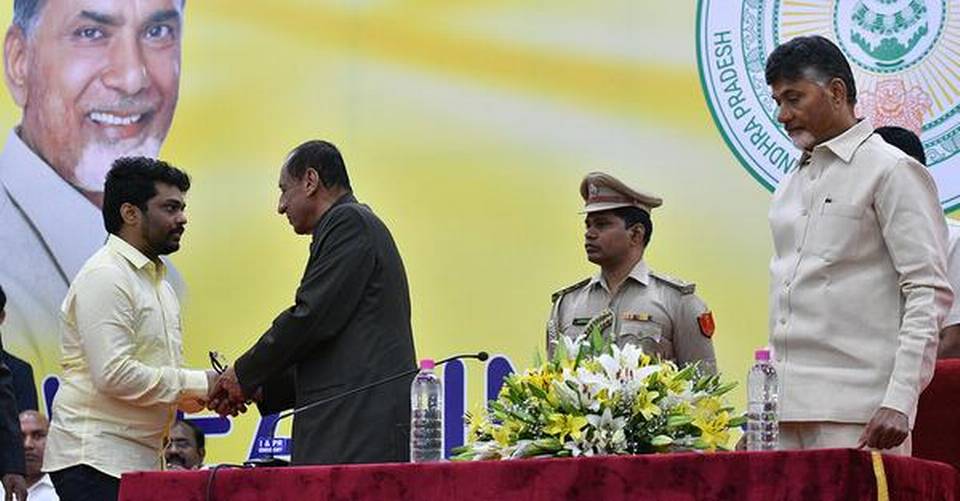
Governor E.S.L. Narasimhan conveying his wishes to Kidari Sravan Kumar after swearing in as Minister, at Praja Vedika near Vijayawada on Sunday. (Right) N. Md. Farooq swearing in as Minister. | Photo Credit: CH_VIJAYA BHASKAR

Chief Minister promises to strive for the welfare of the minorities and tribals

N. Md. Farooq and Kidari Sravan Kumar were sworn in as Ministers by Governor E.S.L. Narasimhan at Chief Minister N. Chandrababu Naidu’s residence in Amaravati on Sunday.

This takes the strength of the Cabinet to 26.

The decision to give representation to the minorities and tribals in the Cabinet seems to have been taken with an eye on the 2019 elections. Mr. Sravan is the son of Araku MLA, Sarveswara Rao, who had been killed by the Maoists recently.

Portfolios

Sources in the CMO said that Mr. Farooq was allocated the subjects of Minority Welfare, Health, APMSIDC, Food Safety and NTR Health University and Mr. Sravan Kumar given the responsibility of Tribal Welfare, Primary Health, Family Welfare, Vaidya Vidhana Parishad, Drug Control and Ayush ministries. Sources also said that Minister for Social Welfare Nakka Ananda Babu was given then additional responsibility of Cinematography.

However, an official announcement is yet to come on the allocation of the portfolios. Addressing the media after the swearing-in ceremony, Mr. Naidu said all the Ministers should cooperate with the new members of the Cabinet. “Mr. Sravan is an IIT graduate. He is preparing for the civil services. Instead of becoming a civil servant, he has become a Minister. We will groom him into a good leader. We will also offer Group-I post to Mr. Sravan’s brother and help his sister become a doctor,” Mr. Naidu said. Abraham, son of former MLA Siveri Soma who was also killed along with Sarveswara Rao, was appointed member of the SC, ST Commission.

Mr. Naidu said he would strive for the welfare of the minorities and tribals.

He said Mr. Farooq had vast political experience and was an efficient leader. Mr. Farooq had earlier served as a Minister and Chairman of the Legislative

source: http://www.thehindu.com / The Hindu / Home> News> States> Andhra Pradesh / by Appaji Reddem / Vijayawada – November 12th, 2018

A masjid for all, with a noble purpose

Hyderabad, TELANGANA :

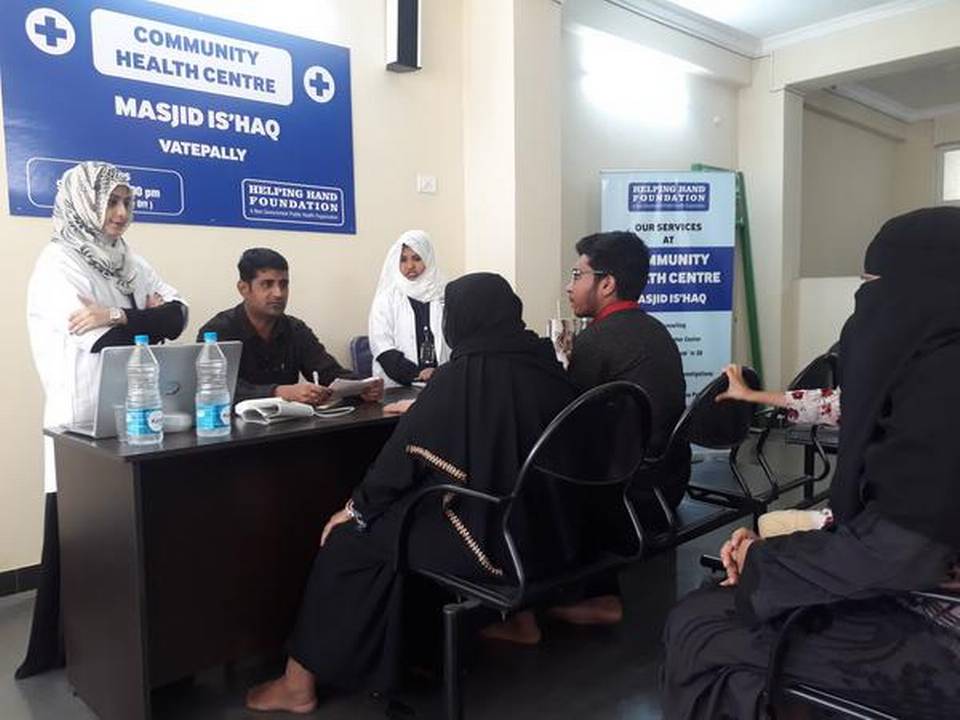
For the needy: Patients consulting a doctor at Masjid Ishaq at Achireddy Nagar in Old City on Saturday

Masjid Ishaq throws open a clinic for urban slum-dwellers

From the outside, the Masjid Ishaq at Achireddy Nagar in Old City looks like any other mosque. It has a mihrab, or a niche in a wall form where the Imam leads the prayer, and musallis or congregants are seen performing their ablutions and praying on the rows of prayer mats. But a closer look reveals that there is something more to this place of worship than meets the eye. In perhaps a first for the area, the masjid has thrown open a clinic for urban slum-dwellers, irrespective of caste, gender or religion.

The clinic is a collaborative effort of the Masjid Managing Committee, headed by brothers Fayaq Khan and G.M. Khan, and Helping Hand Foundation (HHF), an NGO.

“We wanted to dedicate a space inside the masjid for the clinic where people from weaker sections of all religions can come for free treatment and guidance on healthcare. While the masjid was constructed two years ago and sees around 400 people on Fridays, the clinic is new and is spread over approximately 1,000 square feet. Since HHF has been working in the field of healthcare, we agreed to work with them,” says Fayaq Khan. According to HHF founding trustee Mujtaba Hasan Askari, the clinic has been informally functioning for about 10 days now. It was launched on Saturday. The clinic runs from 9 a.m. to 4 p.m., except on Fridays and Sundays.

Mr. Askari says, “A counsellor-doctor and nurse will be available at the clinic. It will also serve those who need home care. Several people are unable to go to hospitals, say for changing bandages and other minor treatments. The clinic will look after such cases as well.”

Apart from home care, Mr. Askari says the clinic also offers free physiotherapy, wound management and maternal care.

While free healthcare services are provided here, the larger aim, he says, is to ‘link’ patients to government hospitals and the government healthcare system. Thus, the clinic would also serve as a ‘referral centre’. Patients would be transported to the area hospitals or larger ones, depending on the nature of the case.

“Many urban slum-dwellers cannot afford to pay for the trip to hospitals, leave alone pay for medication. Apart from our two vehicles, we have engaged local auto-rickshaw drivers to transport patients,” Mr. Askari says.

source: http://www.thehindu.com / The Hindu / Home> News> Cities> Hyderabad / by Syed Mohammed / Hyderabad – November 10th, 2018

Revolutionary heroes

MYSORE :

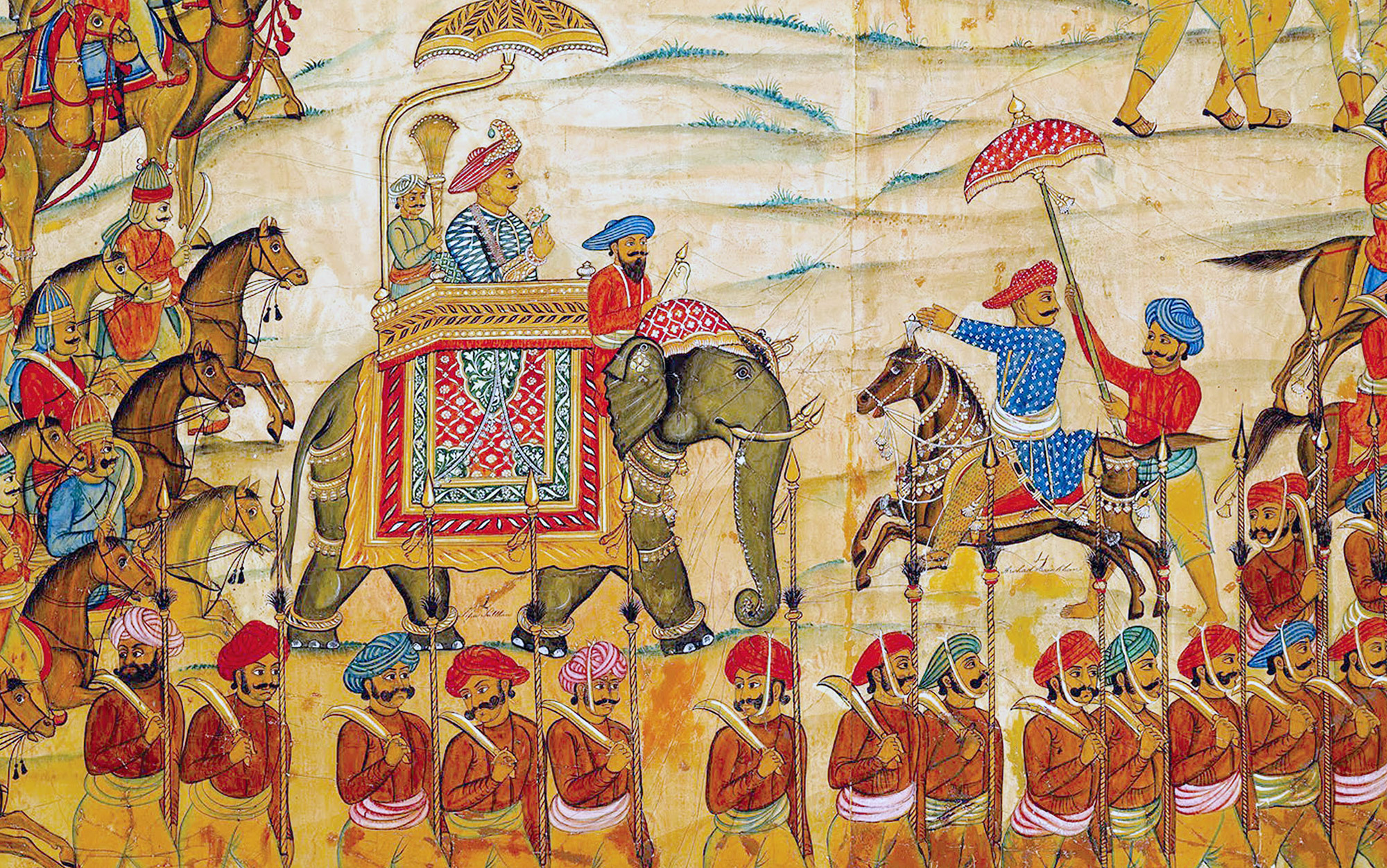
Tipu Sultan, son of Haider Ali, on an elephant in a detail from 'The Battle of Pollilur', 1780, a mural at Daria Daulat Palace, Seringapatam. Photo by Bridgeman Iages
Tipu Sultan, son of Haider Ali, on an elephant in a detail from ‘The Battle of Pollilur’, 1780, a mural at Daria Daulat Palace, Seringapatam. Photo by Bridgeman Iages

If the sultan of Mysore had had a bit more luck, George Washington might be known as the Haider Ali of North America

If the sultan of Mysore had had a bit more luck, George Washington might be known as the Haider Ali of North America. As the ruler of Mysore, a kingdom in what is now southwestern India, Haider fought a series of wars with Great Britain in the latter half of the 18th century, at the onset of the Age of Revolution. While Haider was fighting his last battles against the British, Washington was leading the forces of the nascent United States from the harsh winter at Valley Forge to the final victory at Yorktown.

The circumstances of Haider’s childhood did not seem to mark the young man out for greatness. Born around 1720, Haider soon lost his father, a mercenary officer who died on campaign. Haider followed his father’s path, becoming an officer for the Wodeyar dynasty that ruled Mysore. After many years of service, he grew indispensable to the ruling family, sidelining it entirely by the 1760s. It was a dangerous time to come to power in South Asia. The British East India Company was expanding its power throughout the Subcontinent, at the expense of rulers from Bengal in the east to Haider’s neighbours in the south. Allied with France, however, Haider held off the British advance for another two decades, dying in 1782, just a year before the US triumphed in its own rebellion against Britain.

Haider and Washington never communicated directly with one another, but they fought against a common enemy, and shared a common ally. Like the Mysoreans, the American rebels were members of a global coalition funded by the French government, which saw both uprisings as a chance to humble Britain. In the Seven Years’ War (1756-1763), Britain had ended nearly a century of conflict with its imperial rival in North America by seizing France’s vast territories in Canada and the Mississippi River Valley. Some French observers tried to minimise the extent of the defeat. Voltaire dismissed loss of North America as ‘a few acres of snow’. Yet French policymakers were well aware that Britain had greatly increased its power. Too weak to confront it again on its own, the French government wove a network of alliances, playing on resentments against Britain’s growing control of global trade and rapidly expanding empire. Beginning in the mid-1770s, it sent money and military advisors to both Mysore and the US, aiming to avenge its defeat by stoking colonial rebellions against Britain.

The alliance with France proved critical to the survival of the fledgling US. The memory of French aid, and particularly of the dashing Marquis de Lafayette’s assistance to Washington, has for more than two centuries served as a symbolic origins story of close Franco-American relations. During the Revolutionary War, however, Americans saw themselves not just as allies of France, but as part of a coalition that included Mysore.

Even after the US made peace with Britain in 1783, the American fascination with Haider and his son and successor, Tipu Sultan (1750-1799) lived on. Mysore’s rulers became familiar references in American newspapers, poems and everyday conversation. Yet, within a generation, Americans lost their sense of solidarity with the Indian Subcontinent. Mysore remained under British control, written out of the story of the American Revolution. The US turned its attention to the interior of North America, and to becoming an imperial power in its own right.

Even before the Revolutionary War, American interest in South Asia was lively. In fact, Americans’ rebellion against Britain in part grew out of the connections between America and the Subcontinent. Before the 1770s, Americans were cheerleaders, rather than critics, of British imperialism. The Philadelphia-born poet Nathaniel Evans (1742-1767) commemorated the victory of the East India Company at the Battle of Plassey in 1757, in which Robert Clive had seized control of Bengal:

The world to British valour yields
How has bold Clive, with martial toil
O’er India born his conqu’ring lance?

Sharing in Britain’s glory in this way seemed natural to Americans, who were proud to be part of the British Empire. The East India Company’s growing influence in Bengal enabled it to export large quantities of South Asian goods, particularly textiles, to American ports such as Boston and Charleston. Colonial elites displayed them in their homes with pride, signs that they were part of a global British empire growing rich from the spoils of the Subcontinent.

While Americans were free to purchase these imperial commodities, they were not free to join British merchants in South Asia. Britain’s colonies served to provide the motherland with raw materials. They were not supposed to have direct economic relations with each other, but rather to send their exports to the great trading centre of London. New England merchants in particular resented being pushed to the side of the mercantile system. Following military victories by the East India Company in South Asia, the company’s economic power within the British Empire, including North America, grew even greater, and so too did New England merchants’ resentment.

In 1773, the British government issued the Tea Act, a bill in effect subsidising the East India Company so it could sell tea to North America more cheaply than any other company. The Tea Act was meant to save the Company’s struggling finances, which were sinking under the cost of its expensive wars. By allowing the Company to sell its tea without paying the heavy taxes normally due on tea exports to the colonies, British officials thought they could help the Company while also keeping Americans happy. Because of the taxes levied on it, tea was expensive in the colonies, and tea-loving New Englanders often resorted to buying theirs on the black market. If the Company no longer had to pay these taxes, it could pass the savings on to thirsty American consumers.

Seeing themselves as victims of Britain’s imperial oppression, Americans sympathised with the empire’s other victims: South Asians

The colonists, however, did not respond as the British expected. By granting the East India Company an exemption from the tax, Parliament had confirmed that the tax on tea, passed without Americans’ consent, was there to stay for all other merchants. And the smugglers that the British government hoped to cut out of the tea business were influential members of New England society. On 16 December 1773, economic self-interest combined with principled opposition to taxation inspired a group of protestors to attack a Company shipment of tea, dumping its contents into the ocean.

The Boston Tea Party marked Americans’ growing opposition to British rule, and the beginning of a new perspective on South Asia. The British government retaliated by stripping Massachusetts of its right to self-government. Outraged colonists met in 1774 to form the First Continental Congress. The following year, armed conflict between colonial militias and British soldiers broke out at Lexington and Concord, and the American Revolution was underway. Americans started to see themselves as victims of Britain’s imperial oppression. They were soon sympathising with the empire’s other victims, particularly South Asians.

The American revolt against Britain quickly took on international dimensions. In 1776, the Continental Congress declared independence, transforming the former British colonies into the United States of America. American agents were soon busy seeking international recognition and goodwill from countries including Morocco, the Netherlands and, most importantly, France, Britain’s imperial rival. Within a year, the French government began sending aid to the fledgling US. A year later, in 1778, France and the US officially became allies.

The Continental Congress recognised that it was not France’s only partner against Britain, and looked for ways to cooperate with Mysore, France’s South Asian ally. In 1777, on the advice of Thomas Conway, an Irish-born French military advisor, the American patriots contemplated sending troops to join the French military expedition to the Subcontinent. The provisional American government lacked the resources for such a scheme, so instead it encouraged American privateers to attack the East India Company’s shipping to weaken Britain’s economic grasp on South Asia.

Different state governments also made friendly gestures toward Mysore. In 1781, the Pennsylvania legislature commissioned a warship named theHyder-Ally, an eccentrically spelled tribute to the Sultan of Mysore. This ship sailed the North Atlantic only, far from the Indian Ocean. Its existence, however, demonstrated the affinity American elites felt for Mysore’s cause. Philip Freneau, an ally of Thomas Jefferson and one of the country’s leading poets, wrote a poem in honour of the Hyder-Ally and its namesake, the sultan of Mysore:

From an Eastern prince she takes her name,
Who, smit with freedom’s sacred flame
Usurping Britons brought to shame,
His country’s wrongs avenging.

Clearly, nothing prevented these 18th-century Americans from seeing faraway Asian peoples as exemplars of liberty.

Despite Freneau’s optimistic vision, freedom’s sacred flame did not save South Asia. By the early 1780s, it was becoming clear that Britain would lose the war. Many Americans happily imagined a post-war world in which the East India Company would no longer be a significant force. Britain, however, managed to hold on to its territory in the Subcontinent, resisting the combined forces of Mysore and France.

France’s military support for Mysore and the US helped drive it into crippling debt and push French society toward its own, more radical revolution. Meanwhile, Britain’s finances survived the conflict intact, allowing it to continue an aggressive policy in the Subcontinent after 1783. The cash-strapped French, however, could maintain only a token military presence in the region. The situation left Mysore’s new ruler, Tipu Sultan, to his own devices. He resisted mounting pressure from the British for nearly two decades, succumbing only in 1799. He died beneath the walls of his citadel as he fought a last-ditch battle against the East India Company.

The American government adjusted to the new realities of South Asian politics. New England merchants eagerly sought to trade directly with the Subcontinent. In the first years after the end of the Revolutionary War, they relied on the French colony of Pondicherry on the southeastern coast of the Subcontinent as a port. They soon realised however that they could not enter the region’s most lucrative markets without the permission of the British East India Company. They lobbied for the establishment of American consulates to foster goodwill for American interests. Responding to their pressure, the US government created its first consulate in South Asia in 1792, in Calcutta. Two years later, in Madras, they added another. American consuls in the region were responsible only for relations with the Company. They had no contacts with independent South Asian states such as Mysore, which the American government, like the French, left to fend for itself.

Only recently an enemy of the British empire, America had won independence and become Britain’s junior partner in empire

On a state level, American interest in Mysore disappeared. But many Americans remained fascinated by Haider Ali and Tipu Sultan. When Tipu sent a team of ambassadors to Paris in 1788, in an unsuccessful attempt to restore the Franco-Mysorean alliance, Jefferson, then the American minister to France, reported on the event with keen interest. Like Jefferson, a wide range of Americans were eager to learn more about Mysore. American newspapers of the 1780s and ’90s reported on the country’s desperate struggle with Britain. American textbooks, including Jedidiah Morse’s influential The American Universal Geography (1793), included sections on Mysore. Haider and Tipu seem to have approached the status of household names. In Williams vs Cabarrus (1793), a lawsuit brought before a circuit court in North Carolina, the two parties disputed a wager made on a horse race. One of the horses was named ‘Hyder Ali’ in tribute to Mysore’s former ruler.

Even in the wake of Tipu’s final defeat, in 1799, his struggle for an independent Mysore continued to echo in the imagination of Americans. In his sermon on 4 July 1800, John Russell, a Baptist minister in Providence, warned his audience about the dangers of British imperialism. While many Americans, such as Alexander Hamilton, advocated for closer ties to Britain, Russell insisted that Britain could not be trusted. The ultimate example of British injustice, he argued, was its conquest of Mysore. Deeply moved by what he saw as Tipu’s heroic resistance, Russell told his congregation of Tipu’s death at the hands of British soldiers: ‘here the full heart must have vent… [Tipu Sultan] defended his power with a spirit which showed he deserved it. His death was worthy of a king.’

For Russell, Tipu’s end ought to warn America about the mortal dangers of empire. By the early 19th century, however, America had embarked on its own imperial project. American missionaries fanned out across North America, travelled to the Levant, and poured into South Asia, writing glowing reports back home on the work that the British were doing to ‘civilise’ the world, including the Subcontinent. Only recently an enemy of the British empire, America had won independence and become Britain’s junior partner in empire.

American diplomats, merchants and missionaries in South Asia accepted Britain’s empire in South Asia, working alongside it to profit from local trade or proselytise to potential converts. Over the following decades, foreign policy officials, commercial interests and religious groups pushed for the US to acquire a colonial empire of its own. Just like the British empire Americans had once rebelled against, the US became an imperial power, with colonies stretching from Puerto Rico and Guantánamo in the Caribbean to the Philippines in the Pacific.

Today, with military bases in more than 70 countries across the globe, the US remains an empire. Yet, the generation of Americans who fought for independence from Britain and laid the foundations of America’s identity saw the US as an anti-imperial cause and nation. The founding generation and the children of the founders were fascinated with Mysore and its leaders because they thought Haider Ali and Tipu Sultan embodied American values of resistance to empire and aspiration to freedom. If later generations of Americans had continued to see Haider and Tipu as heroes, had continued to identify with underdogs and anti-imperial causes, then the US, and indeed the world, might look quite different today.

source: http://www.aeon.com / Aeon / Home> Essays / by Blake Smith / Edited by Sam Haselby / December 07th, 2016

___________

Blake Smith is a postdoctoral fellow at the European University Institute in Florence, Italy. His research, focusing on the French East India Company, has appeared in scholarly journals such as French Cultural Studies and the Journal of the Economic and Social History of the Orient, as well as popular media such as The Wire and The Appendix.

Nazar Nasir: Breaking gender stereotypes in Kashmir through crochet

Srinagar, JAMMU & KASHMIR :

Nazar Nasir
Nazar Nasir

Srinagar:-

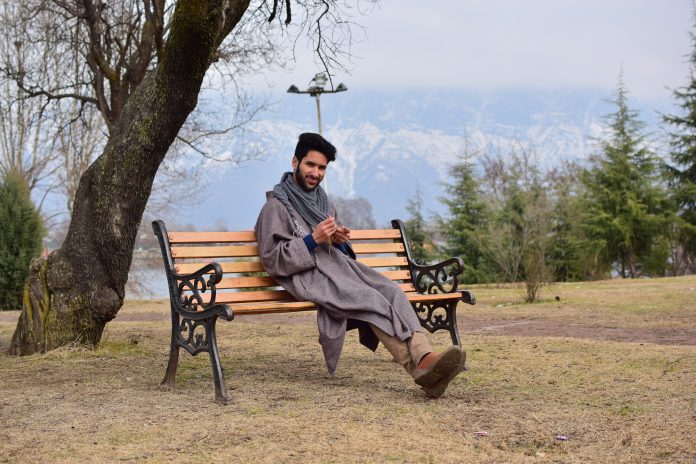
At the age of 19, Nazar Nasir decided to share the idea of him knitting and crocheting with his family members. Their reaction was exactly as he had expected. He was told in blunt words that this line of work didn’t suit males. But Nazar had made up his mind and decide to live his dreams despite the resistance.

Crocheting has been a well-known art amongst Kashmiris but it has been mostly pursued by the women for decades. It is for the very first time that a male while breaking some rigid stereotypes has made a business out of it. Nazar, who wet up Knotty Crafts, is gaining a huge following not only in the Valley but outside the state too.

A resident of downtown, Srinagar, Nazar is a student of literature. Apart from being a student, he keeps himself busy with crochet. He is the first and the only male who crochets from Kashmir.

Crocheting is a process of creating fabric by interlocking loops of yarn, thread, or strands of other materials using a crochet hook.

It all started two years ago when his sister brought a crochet hook and some yarn from her aunt and while she was wiggling the hook with the yarn strand, Nazar was so fascinated that he brought himself a hook and some yarn and started experimenting and has never stopped since then.

Crochet02MPOs10nov2018

From being just a mere experimental hobby, his passion for crocheting kept increasing and he turned it into a part-time business.

“For me, crocheting is not just a small business, but an escape from the world as I almost forget my being while crocheting. It’s so healing and so peaceful to me that I can work non-stop without worrying about anything else,” Nazar says during a conversation with TwoCircles.net.

“In a society where knitting and crocheting are considered too feminine a profession to be taken up by men, it was very difficult for me to do something that women usually do here,” he adds.

But paying no need for criticism, Nazar made-up his mind and started crocheting. It has been almost two years now and his business is flourishing day by day.

“People always talk and they say what they have to say, but today those who criticized me are always there for appreciation,” he says.

Nazar says he has been attracted to different forms of art for as long as he remembers.“I first learnt how to crochet and then I got deeper into the world of craft and taught myself to knit, to do macramé and to weave and I’m always learning new things,” Nazar says.

Nazar made his work public through social media apps like Facebook and Instagram and is getting a tremendous response.

CrochetMPOs10nov2018

“I earned a huge customer base within two years with the help of social media,” Nazar says.

He says he is blessed to be a part of such a big maker community in this age “I can’t describe how perfect I feel being a part of it. I will always try to explore and create more interesting things,” he says.

For people, it’s unusual to see a boy in this field of craft but Nazar says he is proud to call himself, ‘The only male crocheter of Kashmir’.

source: http://www.twocircles.net / TwoCirlcles.net / Home> Indian Muslim> Lead Story> TCN Positive> Youth / by Auqib Javeed, TwoCircles.net / November 09th, 2018