Nagma Shaikh played a key role in leading Bandra Packers to a solitary 1-0 win against I.C. United in a closely fought women’s league match of the BWFA Football League 2014, conducted by Bandra West Football Association.
The sprightly striker Nagma scored the all-important winning goal to ensure Packers pocketed the full three points.
In other women’s action, Sea View SC riding on Neha Ture’s twin strikes and a goal apiece from Jennifer Rayar and Priyanka Singh romped to an easy 4-0 victory over Magic Bus to notch up their second victory of the tournament.
source: http://www.freepressjournal.com / The Free Press Jounal / Home> Sports / by Free Press Journal Sports Desk / August 19th, 2014
Young sports achievers are juggling practice, exercise, diet and the occasional indulgence to stay on top of the game
It’s common knowledge that players keep a grueling routine of regular practice schedules, fitness regimen and strict diet. Now add studies to that, and you can imagine how young college-going sportspersons juggle different routines to stay on top of their game — both on the field and off it.
Says sports psychologist Janki Rajapurkar: “Good academic performance helps youngsters build confidence. It also makes the transition after retirement from sports easier. Meanwhile, sports hone life skills like discipline, responsibility, and coping with wins and losses. So, skills you learn on the field are helpful in academics too.”
HIBA FAQUIH, 20,
FOOTBALLER
The student of Bachelors of Business Administration, Symbiosis Centre for Management Studies, started playing competitive football when she was 16. She’s played for Maharashtra at the national level. And her top honours include Player of the Match at the All India Women’s Football Tournament last year, when Maharashtra beat Orissa, and again in the Inter-District Tournament organised by Pune District Football Association earlier this year. She also won Best Player of the Tournament at Symbiosis Inter-Institute Football Tournament for 2014 and 2015.
The grind: Faquih, who idolises Diego Maradona and Alex Morgan, trains Mondays to Fridays from 4pm to 7pm and on Saturdays from 1.30pm to 4pm. “I also hit the gym every morning for an hour,” she says.
“When I started playing, I used to get stressed when exams clashed with practice,” recalls Faquih, who now handles her schedule much better. “Now I have a fixed schedule and rarely miss my practice due to studies,” she says, adding that she even plays during exams because it acts as a stress buster.
But playing for four to five hours a day must leave little time for a social life? “Yes, I keep missing dinner plans, birthday bashes, but no regrets,” smiles Faquih. And does she miss pigging out on her favourite food too, thanks to her diet chart? “Following a diet was the hardest part because I love junk food and sweets. I don’t mind extra hours of training, but I need my daily dessert. Although with time I have reduced the quantity, but I still indulge,” admits the youngster, whose diet chart advises a balance of carbs like pasta and protein like meat, with nutrition bars thrown in as snacks.
Sisters and St. Mira’s College students Yamani and Fauzia Meherally have made their parents and college proud by consistently winning top honours in table tennis.
While Yamani most recently won the under- 21 district championship in 2014, Fauzia won the PYC Gymkhana 2015 tournament, beating Yamani. “I have a more aggressive game than her,” says Fauzia, a Class 12 pass-out.
Yamani has been playing state and district level tournaments from 2004 and Fauzia has played three national-level games at Vijaywada in 2008, Chennai in 2009 and Indore in 2010. Yamani shares, “My biggest win was when I defeated Maharashtra no 2 Senhora D’souza at Aurangabad in 2012 in the quarter-finals of the state championship.” Fauzia’s biggest win was when she won a national-level bronze at Vijaywada.
The grind: The duo trains with their father and practises for four hours daily. “We strictly avoid junk food and make sure we do exercises like running, cycling and stretches every day.” The only time the duo misses out on training is during exams or if they are not well. While Yamani, a Commerce student, admits that she misses out on outings, Fauzia insists that she does not like outings or parties.
And do they cheat on their diet? Confesses Fauzia sheepishly, “I love chaat, so once in a while I just go for it.” In almost the same breath, she reveals her elder sister’s fondness for chocolates and how she feasts on them secretly.
KALYANI OAK, 21,
SWIMMER
“I was introduced to swimming by my father when I was seven,” says the Electronics and Communication Engineering student of Cummins College of Engineering for Women. “My first competitive swim was when I was 10. ‘Go and have fun’, my parents told me and I did just that. I still do,” says the youngster.
Oak won a gold and a silver at the CBSE swimming nationals in Jaipur in 2007 and a bronze the next year at Nagpur. Most recently, this January this year, she won a gold at COEP’s national inter-collegiate meet. Oak is also a three-time individual championship winner (from 2012-2015) in the state-level inter-college meet organised by Cummins College.
The grind: Oak, earlier, used to train for 1.5 hours each in the morning and evening, but now, due to academic commitments, swims for 1.5 hours each day, six days a week. She also practises yoga for four days a week.
“Swimming has never taken a toll on my studies. In fact, it has always refreshed me. After a nice swim, chatting with my friends and team-mates at the pool, I find myself being able to focus more on my studies,” says the youngster, who loves writing short stories.
According to her, swimming is a great aerobic exercise and works on every part of the body. As a short distance swimmer though, she had to focus on building power and speed that comes from regular practice, which starts at 5.30 am. The only time Oak skips swimming is during exams. “Otherwise, I drag myself out of bed, no matter what. So there’s hardly any room for parties or late nights,” she says, adding that her solution was to make friends at the pool.
As a vegetarian, Oak has to focus on her protein intake. “Since I don’t eat meat, I try to make up for it with pulses, milk and egg,” says Oak, adding sheepishly: “I have a sweet tooth, so I hog on barfis and chocolates especially when I am out with friends or family. That is the only time I let myself go.”
NEHA KANTHE, 21,
TAEKWONDO PLAYER, ROWER
A state-level Taekwondo player, Kanthe has also won top spots in national-level rowing competitions. Kanthe’s first Taekwondo match was a district-level competition in 2007, where she won bronze. She went on to win gold at the School Games Nationals Goa in 2010. Apart from that, she also bronze in the junior national championship in Jharkhand in 2011. However, a ligament injury in 2013 put an end to her martial art stint. But the youngster quickly channeled her energy into rowing, and how.
The first race Kanthe competed in was Challengers Sprint Nationals in Kolkata in 2014 in the single scull category making it to quarter finals. The Mechanical Enginnering student of COEP, who ended fourth in the single scull category at the 73rd ARAE International Regatta, Colombo, Sri Lanka, 2014, and came sixth in the coxless fours category in the 35th National Games, Kerala, 2015, won two gold medals in the single and double scull category at the Maharashtra Rowing Association State Championship this year, Nasik, this year.
The grind: Rowing requires pace, hard work, stamina, and a lot of consistency. So Kanthe practises for two hours each in the morning and evening, six days a week. When she’s not rowing, she exercises on the ergometer or indoor rower.
Ask her if her commitment to the sport takes a toll on her studies and she promptly replies: “It helps me relax and increases my concentration. The only thing it takes a toll on is my social life. Most of the times I am the missing member in parties and hang-outs.” But on the other hand, the sport has won her the attention of her friends and teachers. “Teachers know me personally and I have a lot of friends. They all help me when I miss classes for races,” she smiles.
█ Campus looks to bring into its fold trends, ideas and achievements, which make college campuses worth their while. This is the space where achievements of the youth will be highlighted and their quest for knowledge projected. Share your feedback and Campus ideas on punemirrorcampus@gmail.com
source: http://www.punemirror.indiatimes.com / Pune Mirror / Home> Pune> Campus / by Siddhant Ghatge / May 25th, 2015
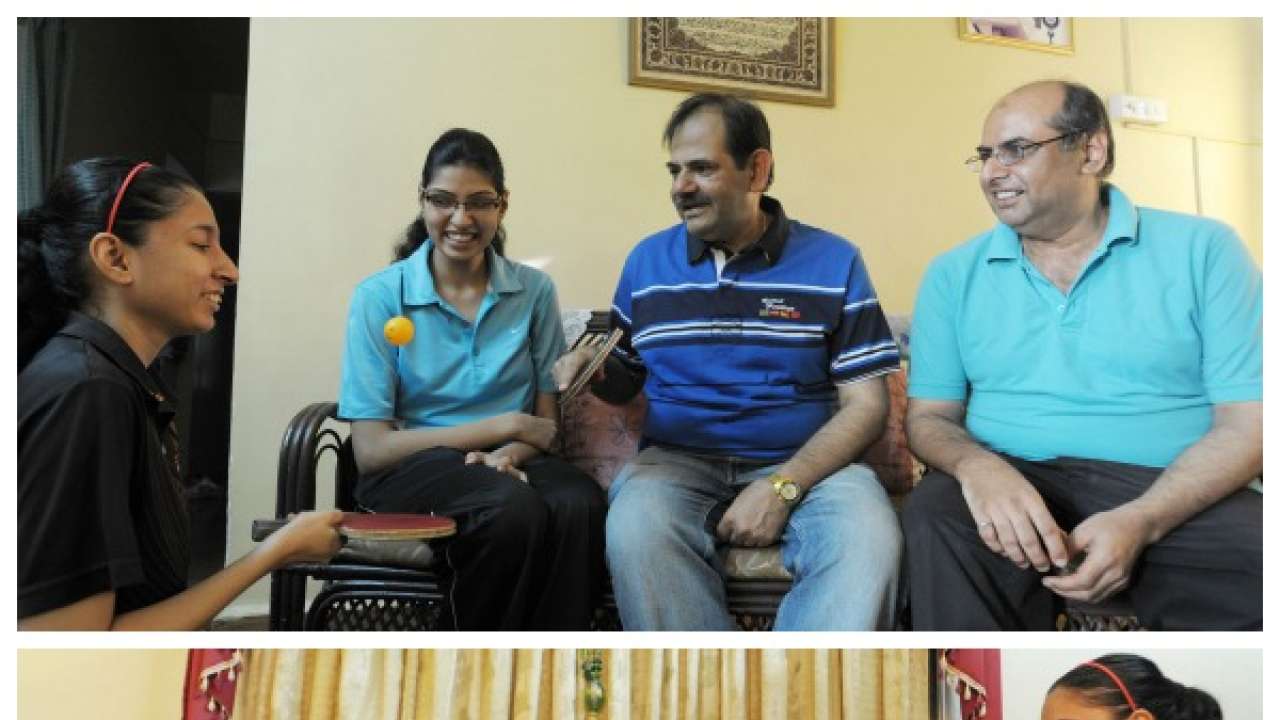
(L to R) Yusuf,Yamani,Iqbal,Fauzia in their house at Kalyani Nagar – Snehil Sakhare, DNA
Pune:
Four members from a family spanning two generations, are united by one fuelling passion — table tennis. The Meherally family, originally from Goa, settled in Pune in 1996 with a unique passion for Table- tennis in a cricket crazy country.
Iqbal Meherally(49) and his brother Yusuf (51) started playing Table-Tennis to pass time, and eventually entered the arena on a professional level, while representing Damodar College at Margao, Goa.“My brother and I bought a table and started playing table-tennis to pass time when it rained. We started enjoying the game so much that it became our passion.
We represented Goa during our college days. I won in during my first year in college, came in second by the second year and semi-finalist in third year,” said Iqbal.He had been ranked 7th in India, in the sub-junior category back in 1978. Iqbal had been among the top three table tennis players in Goa, and his brother Yusuf made it to the top five between 1975-88.“We discontinued playing table tennis in 1988 to make time to establish our new business, a colour lab in Goa,” said Iqbal.
His love for table tennis was rekindled in 2003, when his daughters started showing interest in the game. He is now coaching them, as they play for St Mira, Pune.
His elder daughter, Yamani (19), has played in different competitions since 2005-2012, she quit in 2007 for her education. Apart from her college, Yamani also played in Open State Level Matches.On having her own father as the coach and younger sister as an opponent, Yamani said, “My father is very professional on the field. He does not allow any excuses or spare us if we make mistakes, just like any other coach.
When my sister and I face each other on field, we are opponents and compete against each other and give our best each time.”
Fauzia (17) the youngest of the family is already a big name in the game. In her three Nationals until now, she has bagged bronze in the first and was among top players in Maharashtra A. In her second Nationals she qualified for the quarters, and was in Maharashtra B and was captain of her team in third.
Fauzia wants to continue playing professionally till she can, she is planning to become a professional coach in future just like her father.“On field, our father is a different person. He is strict and does not tolerate lethargy and mistakes on field. We follow a strict routine of four hours practice and a one-hour fitness training on holidays and two-hour practice and one-hour fitness training regularly,” said the girls.
source: http://www.dnaindia.com / DNA / Home> Pune / by Priyanka Kumari / June 16th, 2014
Karan Singh, Janaradhan Diwedi and Parvez Hashmi will retire on January 27
Debates were becoming rare and disruptions more frequent, four time Rajya SabhaMP Karan Singh, rued even as he bade farewell to the upper house along with two other Congress MPs Janaradhan Diwedi and Parvez Hashmi.
In a speech peppered with Sanskrit shlokas and Urdu verses, Mr. Singh said, “Parliamenthas evolved over these 50 years but not all the changes have been positive I must say. I used to remember when I went to the Lok Sabha for the first time. There were brilliant debates by Hiren Mukherjee, Madhu Limaye, Nath Pai, Atalji and here Bhupesh Gupta. Those were the debates now seem to me becoming rare, and disruptions are becoming more frequent.”
He called upon the members to introspect. He said he had come to Delhi as an idealistic young man of 36 and was retiring as an ‘idealistic old man’’. “I have implicit faith that the county will overcome all its challenges as long as we remain faithful to our Constitution and civilisational values,” Mr Singh said.
Speakers from both sides showered praise on them for their contributions. All the three retiring MPs were elected from Delhi. The farewell was held today, the last day of the Winter Session. Their actual retirement date of January 27 would fall in the inter-session period.
Ghulam Nabi’s praise
Leader of the Opposition and senior Congress leader Ghulam Nabi Azad said his veteran party colleague Karan Singh had become the head of Jammu and Kashmir at the age of 18 and was probably world’s youngest person to hold such a post.
Mr. Dwivedi, who completed three terms as the Rajya Sabha MP, said generally farewell became like an “obituary reference” but today [Friday] was different.
Mr. Hashmi was not present in the house.
source: http://www.thehindu.com / The Hindu / Home> News> National / by Special Correspondent / New Delhi – January 05th, 2018
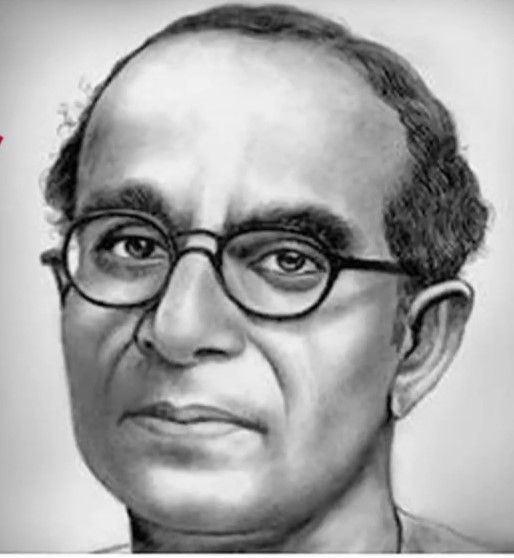
Both “Quit India” and “Simon Go Back” slogans were coined by a lesser-known hero of India’s struggle for freedom, Yusuf Meherally. Here’s his untold story.
India’s fight against colonial rule was a long drawn out battle that gained momentum in several phases since it started in the early 20th century. Examples of these phases are the Non-Cooperation movement of 1920-22 and the Civil Disobedience movement of 1930-32. However, the one rallying call that gave the country its ultimate push towards complete independence was “Quit India”.
By far the strongest and most vociferous appeal made by the Indian National Congress (INC), “Quit India” asked the British, loud and clear, to leave India once and for all. Interestingly, contrary to popular belief, it wasn’t Mahatma Gandhi who coined this iconic slogan.
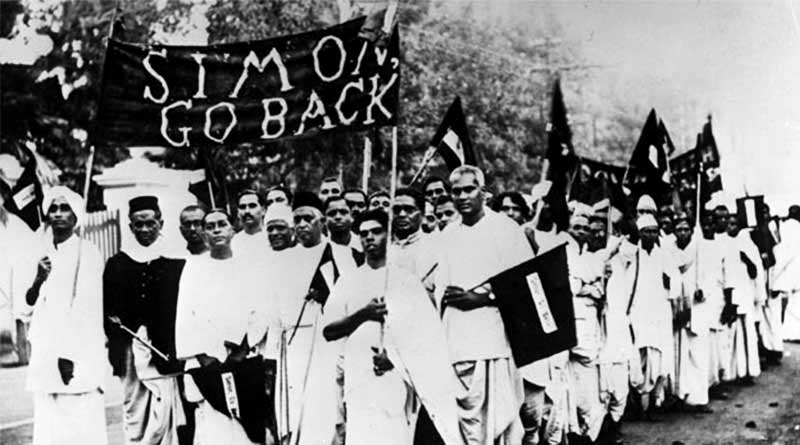
Both “Quit India” and “Simon Go Back” slogans were coined by a lesser-known hero of India’s struggle for freedom, Yusuf Meherally.
The son of a well-to-do businessman, Yusuf Meherally was born in Bombay on September 3, 1903. Fifty years earlier, his great-grandfather had established one of Bombay’s first textile mills and the family had prospered ever since.
As a young boy, Meherally was curious about the nationalist movements developing around him. While he was in high school, he would spend much time reading about the revolutionary movements of the different nations and the role youth had played in them. Having witnessed his family’s upper class prejudices all his life, the sensitive boy was also deeply affected by the struggles of the working class.
Having soon become a staunch supporter of the freedom struggle, young Yusuf was looked upon as an embarrassing renegade by his pro-British family. Unaffected by their disapproval, he joined the movement immediately after finishing his schooling from Bharda High School.
After earning a B.A. in History and Economics from Elphinstone college, he was studying law at the Government Law College in February 1928 when Simon Commission reached Bombay. A group of seven British Members of Parliament, the Simon Commission had arrived in India to suggest constitutional reforms but didn’t have a single Indian member. This unfair and insulting decision had led to much anger and disappointment among Indians.
Having founded the Bombay Youth League the very same year, Meherally immediately organised a protest against the Simon Commision. He had initially planned an ambitious expedition on boats to meet the members at sea itself, but the plan was leaked and the police took stringent steps to prevent it from happening.
Undaunted, Meherally and other young men dressed up as coolies to get access to the Bombay port where they greeted the members of the commission with black flags and the slogan “Simon Go Back”. The resolute demonstrators were lathi-charged thrice but they did not budge an inch. As the news of the demonstration spread like wildfire, establishments across the city began observing spontaneous hartals.
Overnight, Meherally’s courage and slogan were on everyone’s lips, including Mahatma Gandhi’s. Not only had he dared to shout his slogan to the face of a powerful British politician, he had also defied the directions of his political seniors who counselled inaction.
Threatened by his growing popularity and radical views, the British debarred him from practising law to the consternation of his family. The rarity of this action can be seen from the fact that though several nationalist leaders were lawyers, none of them had been barred from practising law.
Two years later, when the Civil Disobedience movement was launched, Meherally and his band of young volunteers worked tirelessly to keep the morale of the public up in face of the severe repressive measures that the British unleashed.
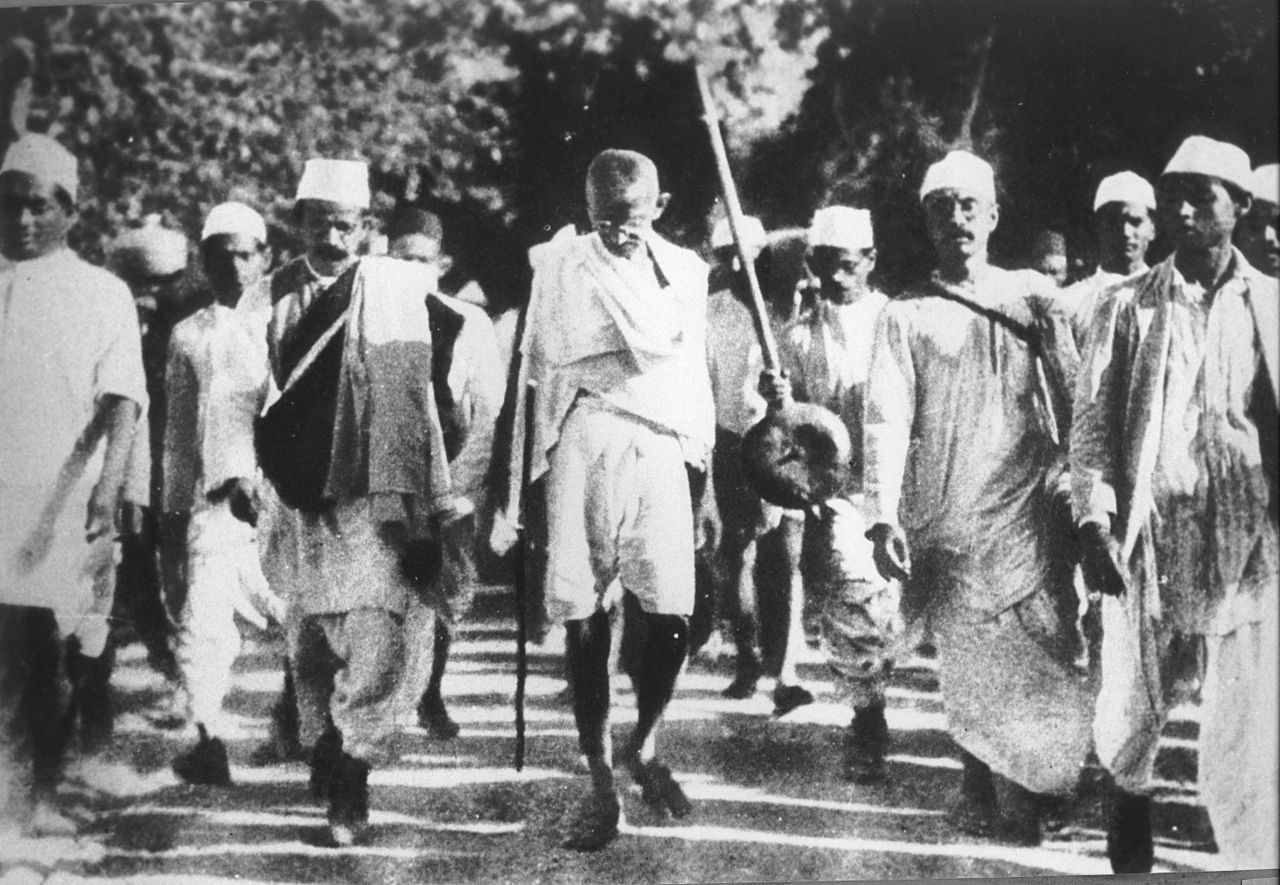
As INC’s prominent leaders courted imprisonment and went to jail during the Salt Satyagraha, Meherally kept the movement running till he himself was arrested in 1930 and sentenced to four month’s imprisonment.
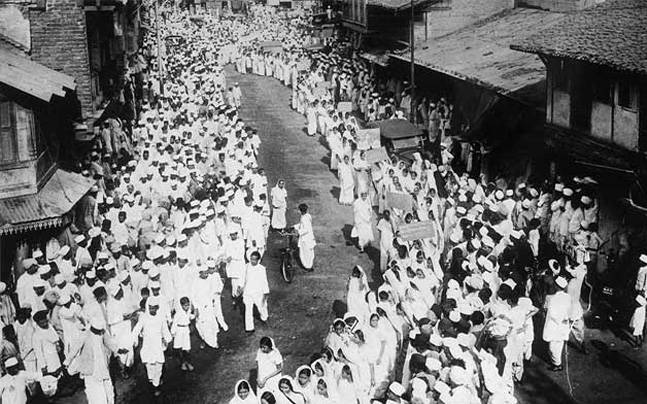
Gandhi during the Salt March, March 1930
In 1932, Meherally was again arrested for conspiracy and sentenced to a two-year term in the Nasik prison. It was here that he met and interacted with the radical socialist leaders of the freedom struggle.
After his release in 1934, he joined hands with Jayaprakash Narayan, Asok Mehta, Narendra Dev, Achyut Patwadhan, Minoo Masani and others to found the Congress Socialist Party. The organisation hoped to transcend communal divisions through class solidarity and bring about economic empowerment through decentralized socialism (i.e farmer co-operatives and trade unions).
In 1938, Meherally led the Indian delegation to the World Youth Congress in New York before attending the World Cultural Conference taking place in Mexico. Here, he was struck by the lack of literature on contemporary issues in India when compared to the West. Determined to fill this gap, he authored a series of books titled ‘Leaders of India‘ that focused on current topics and translated them to Gujarati, Hindi and Urdu.
Here is an excerpt from the foreword he wrote:
“The rise of the pamphlet and the booklet as a powerful weapon for the spread of ideas has been truly remarkable. During my visits to these continents (US and Europe) I was greatly impressed by the part that such brochures play in moulding public opinion. In Europe and America there exists a wealth of topical literature that is in striking contrast to its scantiness in India.
The Current Topics Series of Padma Publications is an attempt to meet this need. The idea is to publish every few months a booklet on a subject of topical or special interest having regard to present-day controversies and their bearing on the future. The series will not be restricted to political questions only. Every title will be published in a pleasing format, at a price within the reach of all.”
In the next few years, Meherally was arrested several times for defying prohibitory orders and participating in Individual Satyagraha (launched by Gandhi to affirm one’s right of speech and oppose the British decision to involve India in World War II without the consent of its people).
In 1942, he was still in Lahore Jail when he was nominated by INC for the election to Bombay Mayoralty.This nomination was personally backed by Sardar Vallabhbhai Patel who knew that Meherally belonged to that rare breed of leaders for whom personal gratification meant ensuring the well-being of fellow countrymen.
Released from prison to participate in the elections, Meherally won comfortably, becoming the youngest Mayor in the history of Bombay’s municipal corporation. During his tenure, he became immensely popular among the public due to his dedication towards ensuring effective civic service.
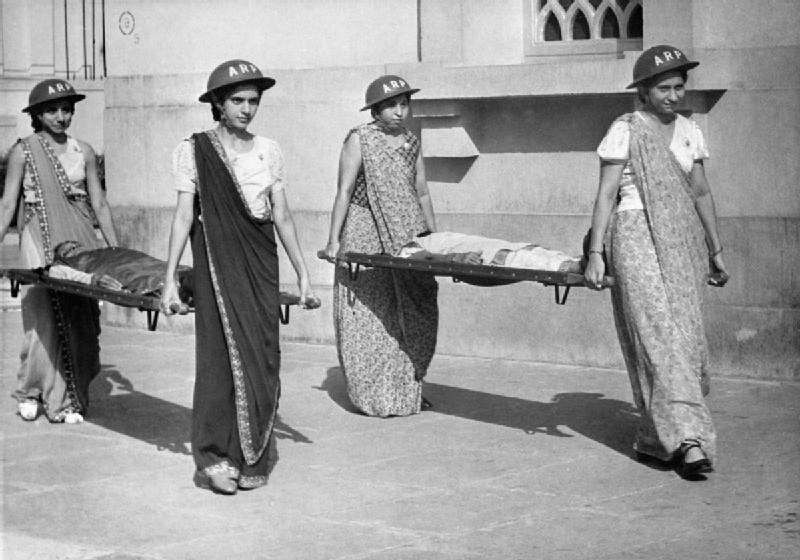
One of Meherally’s first steps as a mayor was to introduce a quick dispatch system for files and deal with slacking officials with an iron hand. Other than personally attending to citizens’ complaints on civic issues, he took the unprecedented decision of refusing to pay municipal money for the British Government’s Air Raid Precautions (ARP) scheme.
The ARP scheme was a programme initiated for the protection of civilians from the danger of air raids. It included the organisation of ARP wardens, messengers, ambulance drivers and rescue parties who would liaison with police and fire brigades in case of an air raid.
Earlier, Bombay’s municipal corporation used to pay Rs 24 lakh to the British government for the ARP scheme but an adamant Meherally argued that the defense of the city should be in the hands of those who would remain on the scene no matter what and not the British who would probably withdraw in case of an attack (just like they had done in Malaya and Burma).
This led to the organisation of the People’s Volunteer Brigade in Bombay and the city became the only one in India where the municipal corporation was allowed to run the ARP scheme.
Indian women training for air raid precautions (ARP) duties in Bombay, 1942. IND 1492 Part of WAR OFFICE SECOND WORLD WAR OFFICIAL COLLECTION No 9 Army Film & Photographic Unit
All this while, he continued being involved in the country’s fight for freedom. On July 14, 1942, INC’s working committee had met at Wardha and demanded complete independence, failing which a massive civil disobedience movement would be launched.
Soon after, at a meeting in Bombay, Gandhi conferred with his closest associates on the best slogan for the movement. C Rajagopalachari suggested ‘Retreat’ or ‘Withdraw’ but it didn’t find much favour with the leader. It was Meherally who then came up with the succinct phrase — ‘Quit India’ — that got Gandhi’s approval.
In preparation for the nationwide movement, Meherally published a booklet titled Quit India (that sold out in a matter of weeks) and got over a thousand ‘Quit India’ badges printed to popularise the slogan. On August 8, 1942, Gandhi delivered his powerful Quit India speech at Mumbai’s Gowalia Tank Maidan. The next day, he was arrested along with practically the entire INC leadership.
Realising that these arrests had created a vacuum in the communication between the leadership and the masses, Meherally immediately mobilized his socialist colleagues – Aruna Asaf Ali, Ram Manohar Lohia and Achyut Patwardhan – to take charge of the Quit India movement while hiding underground, just before he himself was caught and put in prison.
It was during this last tenure in prison that Meherally suffered a debilitating heart attack. The prison authorities offered to shift him to St George Hospital for special treatment but the principled man demanded that two other ailing freedom fighters should also get the same facilities. When the authorities refused, he chose to remain in prison.
Over the following few months, freedom fighters across India responded with waves of civic rebellion despite the violent backlash from the British authorities. While the Quit India Movement did not result in immediate attainment of freedom, it did indeed create the massive pressure that resulted in India bidding farewell to the British just three years later.
By the time he was released in 1943, Meherally’s health had deteriorated sharply but he continued to contribute to the cause of Indian independence. The selfless leader was over the moon when his beloved motherland finally unshackled the chains of colonialism and awoke to freedom on August 15, 1947.
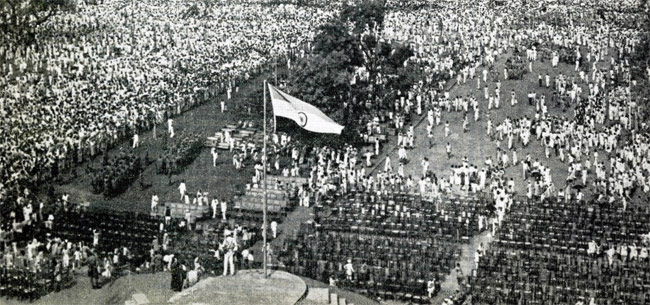
Independence day of India, August 15, 1947
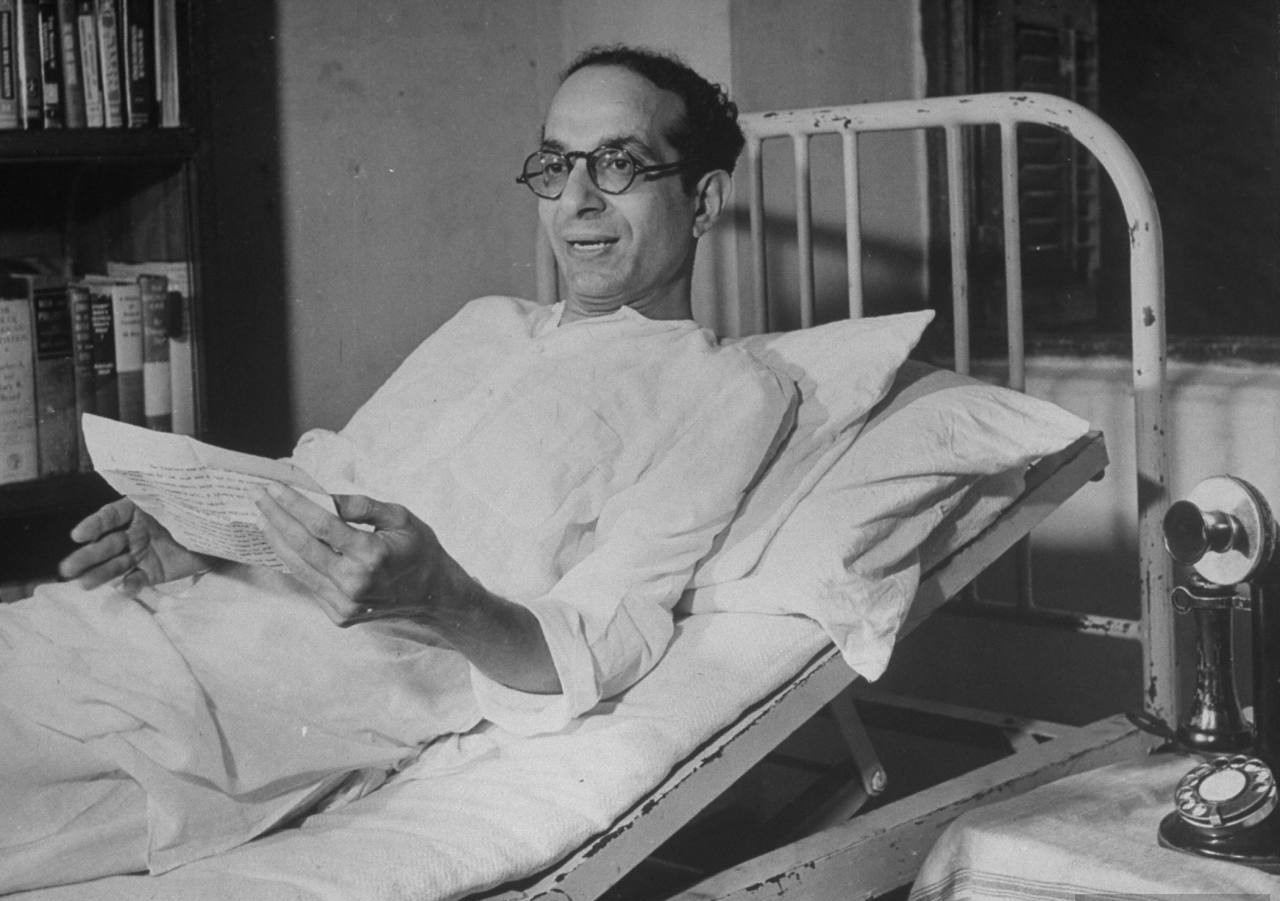
However, the years of struggle had taken its toll, rendering him weak and bed-ridden, though only physically and not in spirit. Even from his hospital bed, he continued to work to highlight India’s vibrant diversity and rich heritage.
In October 1949, Meherally organised a one-of-its-kind exhibition that displayed more than 200 pictures and paintings that traced the evolution of India’s freedom struggle since 1857. He also organised several cultural and literary events at Bombay’s famed Kala Ghoda, inviting Indian personalities who were legends in their respective fields.
On July 2, 1950, Yusuf Meherally passed away at the age of 47, his death rousing the same passion in the public as his slogans. Shocked at the loss of their beloved leader, all of Bombay was in collective mourning. The next day, as the clock struck noon, buses, trams and trains across the city stopped for a few minutes.
Almost all schools, colleges, shops, factories and mills remained shut. The Bombay Stock Exchange, an iconic symbol of the city’s financial strength, witnessed no trading though officially open for business. The city that never stopped, Bombay stood still in the memory of the man who had literally given his lifeblood for the city’s well-being and the country’s cause.
source: http://www.thebetterindia.com / The Better India / Home> Freedom Fighter> History> Lede / by Sanchari Pai / September 28th, 2017
Kolanur Village (Konaraopeta Mandal) , ANDHRA PRADESH :
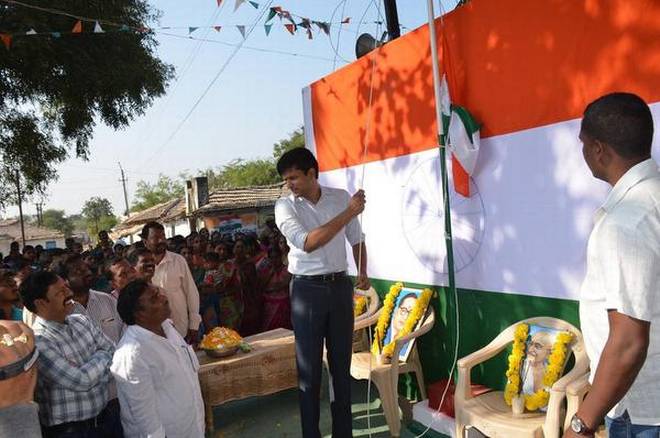
Collector D. Krishna Bhaskar hoisting the National Flag to launch the reciting of national anthem everyday in the interior Kolanur village of Konaraopeta mandal on Monday. Photo: By arrangement | Photo Credit: Byarrangement
It’s also a move to pay tributes to soldiers who lost their lives while discharging duties, says Abdul Rasheed
In order to inculcate the values of patriotism, a village sarpanch belonging to the Muslim community launched a novel campaign of singing the national anthem everyday in the interior Kolanur village of Konaraopeta mandal on Monday.
Buoyed over the successful singing of national anthem in Jammikunta town of Karimnagar district since last Independence Day, village sarpanch Abdul Rasheed has decided to implement the singing of Jana Gana Mana in the village everyday from the New Year, at 8 a.m.
Collector D. Krishna Bhaskar formally launched the programme in Kolanur village on Monday by hoisting the national flag at the gram panchayat office. All the villagers — including children, women and elders, participated in the programme and recited the anthem by saluting the national flag.
Mr. Bhaskar lauded the villagers and sarpanch for taking up the programme. Taking a cue from Kolanur villagers, the Collector wanted other villages to take up the patriotic programme.
Village Sarpanch Abdul Rasheed said that he had taken up the programme to educate villagers on the importance of freedom struggle and supreme sacrifices made by freedom fighters.
“The daily singing of the national anthem is also a way to pay respect and tribute to the soldiers who lost their lives while discharging duties on the borders,” he maintained.
DPRO Mamidla Dasaratham, District Grandhalaya Samstha chairman Akunuri Shankaraiah, DRO Shyam Prasad Lal, MPP Laxmi and others were also present.
Korutla joins the initiative
Meanwhile, now it is the turn of the Korutla Kirana Merchants association members to hoist the national flag and sing the anthem daily in the Korutla town of Jagtial district from Monday.
The association members installed 33 public address systems in the town to ensure that the anthem is audible to all people in the town at 9 a.m.
The town entered the Telugu book of records for hoisting 101 national flags to launch the programme. Korutla legislator K Vidyasagar Rao, Municipal chairman S. Venugopal, DSP Malla Reddy, public representatives and philanthropists hoisted the flags along the National Highway. Telugu book of records founder Chintapatla Venkatachary handed over the certificate to Korutla Kirana Merchants association president Chidrala Ashok on the occasion.
Meanwhile, inspired by patriotic zeal of Kolanur villagers, two other villages in the Konaraopeta mandal have come forward to launch the daily singing of the national anthem in Marthanpeta and Suddala villages.
source: http://www.thehindu.com / The Hindu / Home> News> States> Telangana / by K.M. Dayashankar / Rajanna-Sircilla – January 02nd, 2018
IN 1942, a daughter was born to Fathema Ismail, the sister of cotton king and Congress financier Umar Sobhani, and Mohammad Hasham Ismail, a government of India trade commissioner posted in Mombasa. She was fondly named Usha – after the Goddess of dawn – in the expectation of a new dawn as the city and the country was immersed in the Quit India movement. Fathema Ismail was closely involved with Kulsum Sayani (the mother of Ameen Sayani) in women’s education and the establishment of All India Village Industries Association. When Usha turned three the family discovered that she had polio.
“Amma was dejected with the news, but at the same time she was determined to get the best treatment for me,” recalls Usha Cunningham who is now based in New York. She recalls the turbulent years where India fought and finally achieved freedom from the British, which ran parallel to her own fight with polio. Patel Manzil at Nepean Sea Road, where Usha grew up was a safe haven for underground activists. “Aruna khaala (Aruna Asaf Ali) and other leaders would live under assumed names in our house. My mother’s nationalist leanings were well-known but as my father was a trade commissioner, we escaped scrutiny.”
In her search for a doctor, Fathema was referred to Dr M G Kini, an orthopaedic surgeon based in Madras. “Dr Kini was a crusty, old man who first declined to accept my case. Amma would literally sit outside his residence and accost him in the morning, afternoon and evening when he would travel between his house and clinic. He ultimately agreed and we stayed in Madras for around eight months,” recalls Cunningham. Under Dr Kini’s guidance Usha showed tremendous improvement.
The Madras visit also marked the beginning of Fathema’s discovery about the lack of facilities for children afflicted with polio. Soon her husband Mohammad was transferred to Iran from Mombasa, but she stayed in India. After Madras, the next stop was Pune, where, Fathema had gathered, there were some facilities for rehabilitating injured soldiers at the British Army Hospital. “There were three British physiotherapists who would treat the injured soldiers with the help of a few trained Indian assistants. Amma requested similar training and after some reluctance was allowed access,” remembers Cunningham.
What worked in her favour was the fact that Fathema had gone to Vienna to study medicine in 1920 after finishing her schooling, but had to return due to a financial crisis in the family. For three years she had stayed alone in Vienna absorbed in her studies. Decades later, those three years of study helped facilitate a better understanding of the process of rehabilitation. More than two years of treatment and therapy changed Cunningham’s life. From “totally paralysed”, she regained remarkable mobility in her right leg. Little did she know that she would soon become an exemplar of how patients with polio need not be confined within the walls of their house – ignored and neglected.
Fathema was now determined to start a facility for the countless poliostricken children and their parents. Her experience and observation in Madras and Pune gave her the confidence to start a clinic in Bombay (as it was known then). But finding a suitable space amidst a financial crunch plus low awareness of the disease were formidable hurdles. She also had to ensure she had enough medical equipment to attend to the children. The war had ended and the imminent departure of the British meant that the Army hospital in Pune faced an uncertain future.
In 1946 she had established the Society for the Rehabilitation of Crippled Children (SRCC) but despite her pleadings, the hospital was not willing to share or sell the equipment. She then convinced two of the Indian assistants to get the various equipment and kits transferred to Bombay while the hospital was winding up. “She promised them jobs and convinced them of the immense good this would do for the poor patients,” recalls Cunningham, the excitement in her voice palpable as she recounted her mother’s exploits.” Not many people know that six truckloads of machinery were taken out from Pune,” she says.
These surreptitiously transported kits formed the base for a polio clinic that was opened in May 1947 in the empty Chowpatti premises offered by Dr A V Baliga, who was going to the United States on a study tour. After few months the Bombay government gave space in the empty barracks at Marine Drive as the clinic’s immense popularity led to a waiting list. In the wake of Independence, Bombay and India, had woken up to the need of rehabilitating the differentlyabled. Medical journals and international aid organisations took note of Fathema Ismail’s enterprise.
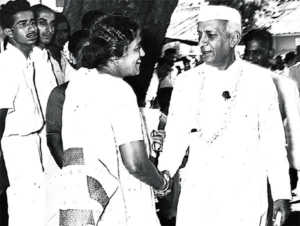
Fathema Ismail and Jawaharlal Nehru at the opening of her clinic in the military barrack at Marine Drive in 1947
In 1951, she visited the United States on the state department’s invitation for a four-month tour of various hospitals, and the same year went to Europe to attend international conferences. She was now determined to open a full-fledged hospital. “She caused quite a headache to Prime Minister Nehru as she demanded a plot near the race course at Haji Ali. It was a prime location and Nehru would say ‘Fati, why only that plot? I can request the Bombay government to give some other place’. But Amma was insistent. The racecourse was frequented by the rich and the famous and one of the reasons for the request was that she wanted larger society to be fully aware and responsive to the problem of polio.”
The result was a children’s orthopaedic hospital, which opened in 1952 and was inaugurated by Nehru, which continues to operate to this day. After roughly 30 surgeries and years of therapy, Cunningham who is now 75 years old, has no regrets. “I have climbed mountains, ran a business in Delhi, shifted to America, got married, have a caring husband and daughter. This is what Amma wanted. Similarly she convinced several industrialists to offer training for the handicapped at her centres so that they could get employment.” In 2011, India announced that it had eradicated polio but the foundation stone for this incredible campaign was laid by a lady who had the grit and determination to envision a polio-free society over 70 years ago.
source: http://www.ahmedabadmirror.indiatimes.com / Ahmedabad Mirror / Home> Others> Sunday Read / by Danish Khan, Ahmedabad Mirror / August 20th, 2017
An amazing collection of artefacts, inscriptions and photographs are on display at the refurbished tourist information centre and museum opened by the Archaeological Survey of India on the fort premises here on Wednesday.
The museum had been closed for two years for restoration.
The old museum housed in the Royal Bath room inside the Turkash Mahal complex has been moved to the Awwal Talukdar office near the front gate, opposite Rangeen Mahal.
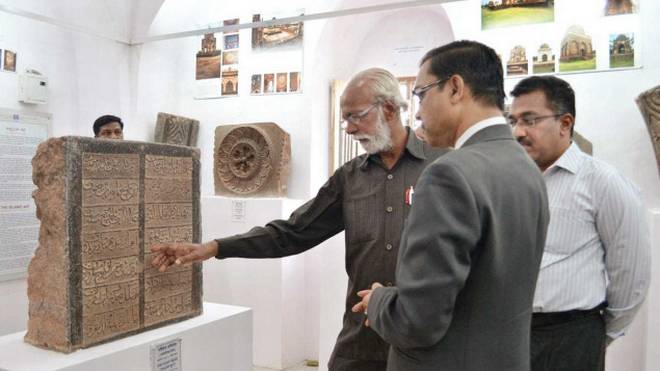
It has tools used by hunters in Neolithic times that were found in 11 archaeological sites in Bidar district. Stone tablets dating from the 1st century; inscriptions that speak of the genealogy of Hassan Gangu Behman, the founder of the Bahmani dynasty; and a space saving tablet that has an inscription on one side and a design on the other, are among the exhibits.
The weapons section is full of guns of various shapes and sizes, cannon balls and thorns and grenades. Metal armour, swords, and khanjars are on display.
Of special interest are implements used by doctors in the 14th century, ornaments made from sea shells, terracotta tiles and painted wall hangings.
It also has artefacts found in neighbouring sites of Sannati, Maski, Kalaburagi, Vijayapura and Basavakalyan.
Archaeologist Prasanna Kumar took visitors and students around the museum and explained the significance of the artefacts. He spoke of sculptors used soap stone to carve female figurines to symbolise that beauty fade away over time, like the rock it was carved on. Abdul Samad Bharati read Persian and Arabic inscriptions to the delight of young visitors.
A.M.V Subrahmanya, Superintending Archaeologist, ASI, pointed out that some Madanika busts found in Basavakalyan and other sites in Bidar district were older than those found in Belur and Halebid.
A 30-minute audio guide about Bidar would be prepared to help tourists, he said. He also said work would start on an interpretation centre and sound and light show in Bidar fort.
The ASI is working with various government departments to draft a proposal to be sent to the UNESCO seeking heritage city status to Bidar- Kalaburagi and Vijayapura, he said.
Hanchate Sanjiv Kumar inaugurated the museum and asked youth to take pride in their history. Prakash Nikam, Superintendent of police, asked youth to desist from defacing monuments. “If we don’t etch on the walls at home, why should we do so on the walls of monuments that are national treasures?” he said
source: http://www.thehindu.com/ The Hindu / Home> News> States> Karnataka / by Rishikesh Bahadur Desai / Bidar – February 05th, 2016
Historian Abdul Samad Bharati showing the stone inscription to visitors in the Bidar ASI museum.— File Photo: T. Gopichand
History textbooks in the State say that Allauddin Hasan Gangu, founder of the Bahmani dynasty, began his life as the slave of a Brahmin in New Delhi. However, other versions of history strongly claim that he hailed from Iran and served in the army of the medieval Delhi kings.
The latest evidence that argues against the slave-to-king theory is a stone inscription unveiled at the Archaeological Survey of India museum in Bidar that opened last month.
The inscription of two sets of seven lines, with neatly carved rectangular borders, starts with hailing King Ahmed Shah Bahmani and how his rule brought prosperity to the region. It speaks of how he was the ninth king of the Bahmani Sultanate founded by Allauddin Hasan Gangu Bahmani . It identifies Hasan Gangu as a descendant of the legendary warrior Esfandiyar Goshtap. It describes him as a proud son of a Bahmani village in Iran. “Experts have dated this tablet between 1350 and 1550,” said Prasanna Kumar, archaeologist with the Bidar ASI office.
“For long, scholars have argued with evidence that Allauddin was a general in Mohammad Bin Tughlaq’s army. He founded the Bahmani Kingdom in Kalaburagi, after rebelling against the Delhi kings in 1347. But, we continue to teach the legend that Allauddin was a slave who became a king by chance. This is unfortunate,” said Abdul Samad Bharati, historian and author of the book ‘Historic monuments of Bidar’. He hoped the Bidar inscription would help change the minds of history writers. “There are two other documents that refute the theory about Allauddin’s humble beginnings, a book published by University of Dhaka that speaks of the life and contribution of the hero and medieval era historian Abdul Mallik Esami, who said Allauddin was an Iranian, who joined the Delhi army,” he said.
International scholars also feel the same. “The whole story of Hasan Gangu being a slave to Gangadhar Shastri is a legend that is not supported by any primary source,” said Sara Mondini, art history scholar from Ca’ Foscari University of Venice, who is on a tour of Ashtur near Bidar. Helen Philon, historian of the Deccan Heritage Foundation, says history books need to accommodate changes over the years. “Farishta, a court historian of the Bijapur Adilshahis accorded legitimacy to such legends and hearsay in the 17 th century. Most historians and writers seemed to have believed Farishta, without considering theories that offered alternative explanations,” she said.
Ashwath Narayana, professor of history in Bangalore University, and a member of the Karnataka state textbook review committee, said history textbooks should change with the emergence of new sources. “If history is an attempt at truth-telling, new research should prompt us to change the way it is written. We will study this inscription and make suitable changes to the history of the Deccan, if need be,” he said.
A stone inscription unveiled at the ASI museum in Bidar is evidence that negates the slave-to-king theory in history textbooks.
source: http://www.thehindu.com/ The Hindu / Home> News> States> Karnataka / by Rishikesh Bahadur Desai / Bidar – April 04th, 2016
Lessons in conservation at the Sibtainabad Imambara
As a young girl, when I was studying in Lucknow, I would often go to Hazratganj to buy storybooks. Browsing through the collection in the market and buying a book would be the highlight of every week. I only had my eyes on the bookshops and never on the name of the market or the dilapidated gateway, which had once been impressive but now looked the worse for wear.
Even on subsequent trips as an adult, I never bothered to think about it till the day a Lucknow-based heritage activist and lawyer, Syed Mohammad Haider Rizvi, invited me to speak at an inter-faith assembly in Sibtainabad Imambara.
As a devout follower of Imam Hussain, I had visited almost every Imambara in Lucknow for the majlis, or assemblies, to commemorate his sacrifice, but never this one. I wondered why I hadn’t even know it existed. I soon found out.
Origin of the Imambara
Amjad Ali Shah was the fourth Nawab of Awadh and ruled from 1842 to 1847. Since he had a religious bent of mind, as a child he learnt Islamic values of faith and piety. His piety as a ruler earned him the sobriquet of Hazrat. The famous Hazratganj of Lucknow is named after him and that’s the area where he chose to build an Imambara which would also house his mausoleum.
It was started in 1847 and completed after his death by his son Nawab Wajid Ali Shah. It was named Sibtainabad as the two Shia imams Hasan and Hussain (grandsons of the Prophet) are known collectively as Sibtain.
When I entered, I found myself inside a huge open area from where I could see a compound with a beautiful Imambara, a congregation hall for assemblies where Imam Hussain is mourned.
The Imambara architecture comprises a main hall (with additional halls depending on the size) where the mourners gather, a raised shahnasheen (platform) where the taziyas and alams (replicas of the shrine of Imam Hussain and his standard) are kept. A pulpit would be kept on one side for the speakers who would speak of the tragedy of Karbala.
The reason I had never been to this Imambara when I was living in Lucknow soon became clear. Once a beautiful Imambara covered with fine carpets, silk curtains, priceless art treasures and exquisite chandeliers, it was vandalised in 1857 during the First War of Independence. Nawab Amjad Ali Khan lay buried here in a vault under the central hall, forgotten by all.
It was even used as a church by the British officers till 1860, while the Christ Church was being built, and Lord Canning attended a service in the building.
In 1919, it was declared a protected monument by the Archaeological Survey of India (ASI). Despite this, it was sold by one Sultan Bahadur in 1921, who claimed to be a descendant of Nawab Amjad Ali Khan, to the Lucknow Improvement Trust (LIT). The LIT, in turn, allotted the surrounding land for residential purposes. The Imambara fell into disuse and disrepair.
The main Imambara post-1947 was used as a workshop and storehouse for furniture as well as by the government census office. A motor workshop had sprung up outside.
In 2008, Rizvi was appointed the joint mutawalli by the Shia Waqf Board and he started the long fight to free it from encroachment and illegal occupation. He took recourse to judicial avenues and slowly, with the help of Right to Information applications and public interest litigations, he succeeded. Then came the task of restoration, which was undertaken by the ASI.
The splendour inside
The approach to the Imambara is through the gateway and into an open space which gives way to an enclosed court. The Imambara stands on a high platform and its arched façade looks very impressive, with its delicate floral stucco and stained glass doors. The inner walls, which had got blackened with neglect and abuse, have been lovingly restored, and its green and white paintings and stucco work are exquisite. The roof and “its beams, which formed a vault over the grave of the late king, had collapsed in a heap of rubble,” according to a 1945 report. It once again supports beautiful glass chandeliers.
A recurring motif on the archways inside the halls is a painting of the Prophet’s celestial steed, the ‘buraq’, that carried him to heaven on the night of ascension. The master mason, Ansaruddin, traced out the designs and restored the paintings and stucco work very carefully.
Preservation of our heritage is our fundamental duty as it is an important source of history of the era in which these buildings were built. If other ‘lost monuments’ received such dedicated and methodical renovation, they could also be rehabilitated and restored to us.
source: http://www.thehindu.com / The Hindu / Home> Opinion> Columns / by Rana Safvi / November 26th, 2017