Cinema buffs of a certain vintage still wax eloquent about Mumbai’s erstwhile Alexandra Cinema’s hammy film title translations. On its marquee, Alfred Hitchcock’s ’39 Steps’ was dubbed ‘Ek Kum Chaalis Lambe’, ‘Double Impact’ became ‘Ram Aur Shyam’ and ‘Bruce Lee – The Legend’ morphed into the quintessentially-Bombaiya ‘Dadaon Ka Dada — Bruce Lee’.
By the early 2000s, however, Alexandra Cinema had graduated from showing Hollywood fare to B and C-grade films interspersed with adult films. It was a time when local residents asked school bus drivers to switch routes so that impressionable school kids weren’t exposed to the “dirty” posters.
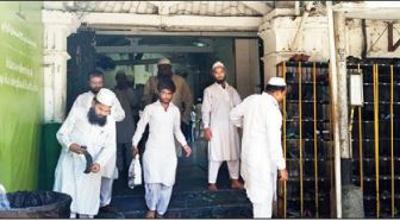
Then about three years ago, in a startling about-face, the cinema hall took on a new avatar as a mosque-cum-Islamic institution. Today, the Dolby Digital speakers, which once blared item numbers, call the faithful to prayer and the audience’s catcalls have given way to an imam chanting Quranic verses five times a day.
The transformation began in 2011, when south Mumbai-based builder Rafiq Dudhwala bought the sprawling 15,000sq ft property for several crores and donated it to an Islamic NGO, Deeniyat, which deals in printing, distribution and the sale of Islamic books to Urdu and Arabic schools across the country. The huge structure stands bang opposite the Maharashtra College at Belasis road near Mumbai Central’s Nagpada junction.
At one time, scores of cinema halls dotted this 3km radius. Ardeshir Irani, who began his career as an exhibitor in the early days of Indian cinema, opened Alexandra Cinema in 1921 along with co-owner Abdulally Esoofally, another tent showman-turned-movie magnate.
From the outside, the theatre looks the same but its interiors have been transformed.
Dudhwala declined to comment on the transformation but the change was welcomed by residents of surrounding Muslim-dominated areas like Clare road, Nagpada, Agripada and Mumbai
source: http://www.timesofindia.indiatimes.com / The Times of India / News Home> India / by Ahmed Ali, TNN / April 03rd, 2016
Prime Minister Narendra Modi today gifted Saudi King Salman bin Abdulaziz a gold-plated replica of Kerala’s Cheraman Juma Masjid, believed to be the first mosque built in India by Arab traders around 629 AD.
“PM @narendramodi gifted His Majesty King Salman bin Abdulaziz Al Saud a gold-plated replica of the Cheraman Juma Masjid in Kerala,” the prime minister’s office tweeted.
The mosque in Karala’s Thrissur district is believed to be the first mosque built in India by Arab traders around 629 AD.
“Cheraman Juma Masjid is symbolic of active trade relations between India and Saudi Arabia since ancient times,” it said.
According to oral tradition, Cheraman Perumal was the Chera King and a contemporary of the Holy Prophet who went to Arabia and embraced Islam after meeting the Holy Prophet at Mecca, the PMO said.
Before he died in Oman due to some illness on the way back to India, he wrote letters asking the local rulers, to whom he had handed over his empire, to extend all help they could to Arab merchants who were planning to visit India.
The mosque has an ancient oil lamp that is always kept burning and believed to be over a thousand years old. People from all religions bring oil for the lamp as an offering.
Many believe that the mosque is a testimony to Islam’s arrival to India long before the Mughals came in from the northwest.
Modi, who is on a two-day visit to Saudi Arabia, was today received at the Royal Court here by King Salman.
He is the fourth Indian Prime Minister to visit Saudi Arabia after Manmohan Singh in 2010, Indira Gandhi in 1982 and Jawaharlal Nehru in 1956.
source: http://www.ptinews.com / Press Trust of India / Home> International / by Manash Pratim Bhuyan / Riyadh – April 03rd, 2016
Mohammed Tanzil Ahmad, who has been with the NIA ever since the organisation was formed in February 2009, had been investigating many cases especially related to the banned terror outfit Indian Mujahideen.
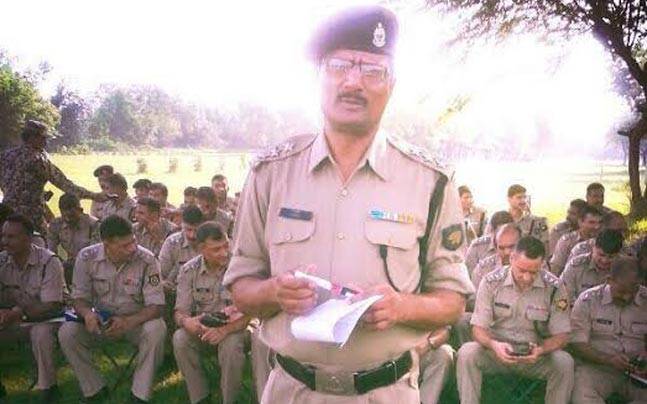
National Investigation Agency officer Mohammed Tanzil Ahmad. (ANI photo)
National Investigation Agency (NIA) officer Mohammed Tanzil Ahmad, who was shot dead by two unidentified motorbike-borne assailants in Uttar Pradesh’s Bijnor, has been given martyr status today.
NIA IG Sanjiv Kumar Singh announced that all provisions shall be provided to the deceased officer’s family. The Border Security Force (BSF) has granted Rs 20 lakhs to Ahmad’s family.
Mohammad Tanzil’s last rites were performed late in the evening amid Inquilab Zinadabad slogans, raised by locals. Delhi Chief Minister Arvind Kejriwal paid tribute to the NIA officer.
Six teams comprising of officials of the Anti-Terrorism Squad (ATS) and the National Investigation Agency (NIA) have been formed to probe into the brutal attack.
Mohammad Tanzil’s last rites were performed late in the evening. (photo: ANI)
The NIA IG refused to comment on Tanzil Ahmad’s involvement in cases pertaining to terrorist outfits like the Islamic State, Indian Mujahideen or Students Islamic Movement of India (SIMI).
An assistant commandant with the BSF, Tanzil Ahmad was on deputation with the NIA. A Bijnor native, Ahmad was posted as an inspector-rank officer at the NIA headquarters in New Delhi.
Home Minister Rajnath Singh said that he has been apprised of the incident and that a comprehensive report is being prepared.
“Whatever’s necessary is being done. We are talking (to NIA officials),” Singh said.
45-year-old Ahmad, who has been with the NIA ever since the organisation was formed in February 2009, had been investigating several cases related to the banned terror outfit Indian Mujahideen. His superiors termed him as a thorough professional in intelligence gathering as well as investigation.
Superintendent of Police (Bijnor) Subhash Singh Baghel said, Ahmad came to Bijnor on Friday to attend his niece’s marriage. Ahmad’s family lives in Sahaspur village in Bijnor.
At around 8.00 pm on Saturday evening, Ahmad and his family left their home for the marriage function organised at Bandhan Guest House at Sohara village, which is around nine kilometers from their residence.
“After attending the function, Tanzil and his family were returning home at around 1.00 am. When their vehicle was around 300 meters away from their residence, two youths on a motorcycle waved their hand. When Tanzil stopped his car, they fired several rounds and escaped. Tanzil and his wife were in the front seat, while his two children, 14-year-old daughter and a 12-year-old were in the back seat,” the SP said.
Hearing the sound of gunshots, locals rushed to the spot and one of them informed the Bijnor police. A police team was rushed to the spot and the officer along with his wife were rushed to a nearby hospital, where doctors referred them to Moradabad. Tanzil Ahmad was declared dead by doctors upon reaching the Moradabad hospital while his wife was referred to Delhi.
source: http://www.indiatoday.intoday.in / IndiaToday.in / Home> News> India / Arunava Chatterjee / New Delhi – April 03rd, 2016
Trust plans to take it up with the govt to issue a stamp and coin in the king’s name besides building a fitting memorial in his honour.
The Trust plans to host an international seminar on the relevance of the king in today’s world.
Hyderabad:
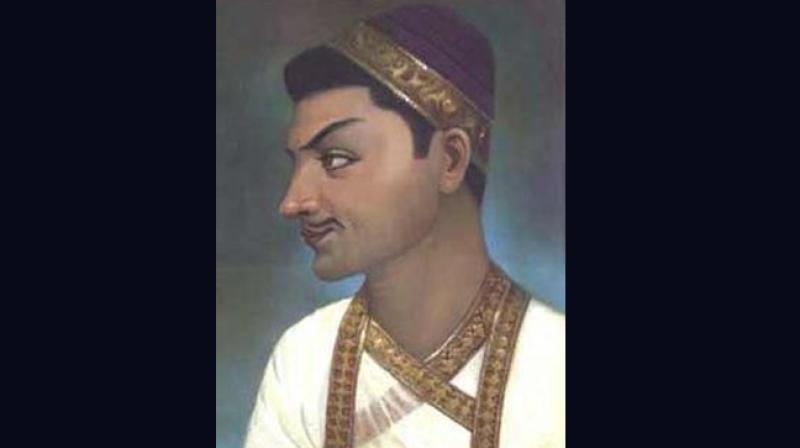
The Deccan Heritage Trust is planning to host year long celebrations to mark the 450th birthday of Muhammad Quli Qutub Shah, the founder of Hyderabad city, which falls on April 4, 2016. The Trust plans to host an international seminar on the relevance of the king in today’s world.
According to Dr Mohammed Safiullah, historian and expert on Hyderabad, the Trust plans to take it up with the government to issue a stamp and coin in the king’s name besides building a fitting memorial in his honour.
source: http://www.deccanchronicle.com / Deccan Chronicle / Home> Nation> Current Affairs / Deccan Chronicle / April 03rd, 2016
State skipper Vinay Kumar and right-handed batsman Robin Uthappa bagged a grand double at the Karnataka State Cricket Association annual awards ceremony on Saturday.
Uthappa won the best batsman award in Ranji Trophy and Syed Mushtaq Ali tournaments while Vinay picked up the best bowler’s honour in Ranji Trophy and Vijay Hazare Trophy.
D Nischal of Jawahar Sports Club, who amassed 989 runs, was adjudged the best batsman in Group I, Division tournament for Sir Mirza Ismail Shield. Anand Doddamani of Bangalore Ocassionals, who picked up 48 wickets was named the best bowler.
“I congratulate all the teams and award winners. It’s a good sign that we have completed all the league tournaments on time,” said KSCA Secretary Brijesh Patel, speaking on the occasion.
The award winners:
Ranji Trophy: Best batsman: Robin Uthappa; Best bowler: R Vinay Kumar.
Vijay Hazare One-Day: Best batsman: Manish Pandey; Best bowler: R Vinay Kumar.
Syed Mushtaq Ali T20: Best batsman: Robin Uthappa; Best bowler: KC Cariappa.
U-14 inter-school BT Ramaiah Shield (Division III): Best batsman: Jasper (Mallya Aditi International School). Best bowler: PM Dharshan (Sri Sai Ram Vidyamandir).
U-14 inter-school BT Ramaiah Shield (Division II): Best batsman: P Abheek (Vidyaniketan Public School). Best bowler: S Yashas (Vidyaniketan PS).
Best bowler: Shray Singh (Delhi Public School, East). U-16 inter-school (Division III): Best batsman: M Danish (KV, Hebbal). Best bowler: Stany (Baldwin Boys).
U-16 inter-school (Division II): Best batsman: Udbhav Gaurav (Jain IRS). Best bowler: Satvik Gunda (Jain IRS).
Under-16 inter-school (Division I): Best batsman: Shubhang Hegde (Vidyaniketan School). Best bowler: Shubhang Hegde (Vidyaniketan School).
U-14 inter-zonal: Best Batsman: Gautam Dileep. Best bowler: SM Shamanth.
U-16 inter-zonal: Best batsman: Aadarsh Prajwal. Best bowler: Shubhang Hegde.
U-19 inter-zonal: Best batsman: Nikin Jose. Best bowler: G Naveen
Under-23 inter-zonal SA Srinivasan Memorial: Best batsman: Sumanth Bharadwaj. Best bowler: Likith Bannur
Safi Darashah: Best batsman: Abishek Reddy. Best bowler: Mitrakant Yadav
Under-16 inter-club: Best batsman: Sai Prajwal (Jawahar SC). Best bowler: Rishi Bhansali (Jawahar SC).
Under-19 inter-club: Best batsman: V Abhiram (Swastic Union CC-2); Best bowler: BM Shreyas (Jawahar SC).
Under-14 inter-club: Best batsman: BN Yashwant (Swastic Union CC-2). Best bowler: Vishruth Dev (Herons CC).
Group I, Division V for JB Mallaradhya Shield: Best batsman: Vinay (Kengeri Cricketers). Best bowler: Suhas (Engrades CC).
Group I, Division IV for Metro Shield: Best batsman: Yere Goud (Visweswapuram CC-2). Best bowler: Pranav Bhatia (Dolphins).
Group I, Division III for Sri Nassur Memorial Shield: Best batsman: KV Darshan (Friend XI). Bestbowler: Latif Patel (City Cricketers).
Group I, Division II: Best Batsman: B Tanu (Jayanagar Colts). Best Bowler: Vinu Prasad (Swastic Union 2).
Group I, Division I: Best Batsman: D Nischal (Jawahar SC (1)). Best Bowler: Anand Doddamani (Bangalore Occasionals).
YS Ramaswamy Memorial: Best Batsman: SadiqKirmani (Malleswaram Gymkhana). Best Bowler: B Naveen (FUCC).
KSCA Inter-club T20 for Group I: Best Batsman: CM Gautam (Swastic Union). Best Bowler: Dikanshu Negi (Jawans CC).
Group II, Division III: Best Batsman: Keerthi (BWSSB). Best Bowler: Kemparaju Gowda (ITI SC).
Group II, Division II: Best Bats
man: Nihar Shilar (BEML RC). Best Bowler: IG Anil (RBI).
Special Tournament for Zonal Champions and top teams of Group I: Winners: Swastic Union CC (2).
Inter-collegiate Women’s Tournament: Best Batswoman: Pooja Panchal. Best Bowler: G Divya. Winners: Jain College.
Inter-zonal U-19 Women’s Tournament: Best Batswoman: Sanjana Batni. Best Bowler: Harshitha Jha.
Women: U-16: Best batswoman: Vrinda Dinesh; Best bowler: Shreyanka Patil.
U-19: Best batswoman: Shubha Satish; Best bowler: C Prathyusha.
U-23: Best batswoman: G Divya; Best bowler: C Prathyusha.
Senior women (one-day): Best batswoman: Karuna Jain; Best bowler: C Prathyusha.
Senior women (T20): Best batswoman: G Divya; Best bowler: Akanksha Kohli.
Boys: U-14: Best batsman: Prithvi Sadanand; Best bowler: M Shamanth.
Men: U-16. (Vijay Merchant Trophy): Best batsman: Sudhanshu Sonkar; Shubhang Hegde.
U-19 (Vinoo Mankad Trophy): Best batsman: B.R. Sharath; Best bowler: Vyshak V.
U-19 (Cooch Behar): Best batsman: BR Sharath & Sujith Gowda; Best bowler: Likith Bannur.
U-23 (C K Nayudu): Best batsman: D Nischal; Best bowler: Prasidh Krishna.
U-25 (P S Ram Mohan Rao Trophy): Best batsman: K N Bharath; Best bowler: Mitrakanth Yadav.
Justice B Kemal Pasha on Saturday said he did not believe that heads of religious institutions could influence voters.
He was speaking to reporters after inaugurating the birthday celebration of veteran journalist K M Roy, and releasing the latter’s book ‘Ananyanayi’ here on Saturday.
“I don’t believe that people would caste vote as directed by religious heads. If a person close to me tells me to vote for a particular candidate, I would think twice. People of the State have the ability to take decisions on their own. They will think before casting their vote,” said Pasha, adding that Malayalis would vote for candidates who are fit, without considering religious and social factors.
“The supreme authority of the nation is not the President, Prime minister or the Chief Justice, but its citizens who caste vote.
People should have the rectitude to express their interest, otherwise life has no meaning,” he said, adding that one should always speaks with sincerity.
source: http://www.newindianexpress.com / The New Indian Express / Home> Cities> Kochi / by Express News Service / April 03rd, 2016
Ustad Jainul Abedin’s talent is indisputable but is yet toget his due.
The coveted “Sangeet Bharati” title was bestowed on Ustad Jainul Abedin, in a devotionally charged ambience at Sree Satyananda Devayatan on the final day of the 115th birth anniversary of Thakur Satayananda. “Sur-yoga is the easiest way to reach God,” was the philosophy of Thakur who groomed Archana Puri Maa, his spiritual daughter, to lead the way through her divine creativity in the arena of music and literature. She, as the beacon of the Devayatan, converted it as the haven of music where eminent musicians offer their music and receive blessings; Abedin being one of them who also encourages his disciples to begin their melodic journey with divine sanctions.
An ardent admirer of the young Ustad, Maa did the honours and listened to his melodious renderings that once again proved that he remains a devout devotee of his Ustad, the late Latafat Hussain Khan and his unalloyed Agra Gharana tradition replete with the elaborate alap. The latter’s intangible beauty, carefully avoided now by almost all Agra exponents, pulsates with piety in Abedin’s musically rich voice and lingering notes which have no trace of the gruff utterances associated with the gharana. All this makes the slow segment of his alap a real treat!
But Agra is far away from the modern abstract-ism a la Indore gharana. Conversely, it is incorrigibly tangible. Abedin’s warm persona unfurls petal by petal during his typically gharana-based “extrovert” style of handling the jod segment of the alap, the bol-baant (lyrics-based rhythmic divisions), the bol-banav (melodic improvisation of the lyrics), the bold and powerful taans, the varied patterns of rhythm-play, the saath-sangat (simultaneous improvisation) and sawal-jawab (dialogue) with the tabla and make his presentations remarkably charming.
Despite being blessed with all the virtues of a great musician, what keeps him under-rated and out of star-studded concert stages; so much so that at a recent all India congregation of Agra gharana representatives in Bhopal did not see him participating while many pedestrians found entry.
Abedin refuses to be despondent and gracefully accepts all as his “destiny”. His attitude reminds one of a sportsman’s spirit or a farmer’s resilience. Curiously, he is both! Born at Bashirhat, far away from Kolkata, he belongs to a family of well to do landlords; loves fishing and is passionate about cricket. Inspired by his latent talent, several eminent musicians groomed him. Hailed as a child prodigy, he started performing successfully in concerts and competitions since the early age of 9. He stood first at a talent search contest organised by the ITC Sangeet Research Academy in 1978.
This was destiny which saw him as one of SRA’s earliest scholars at the tender age of 11. Away from home rigorous taaleem in the true guru-shishya tradition from the legendary Ustad Latafat Hussain Khan, followed by training under Pandits Vijay Kichlu and Sunil Bose after the Ustad’s demise, ensured that he learn the true nuances of the Agra gharana gayaki. Growing up in an enviable musical atmosphere amidst some of the greatest luminaries of music world, Abedin also received invaluable guidance from Pandit K G Ginde and Vidushi Dipali Nag.
But destiny prolonged the usual change of voice of the starry-eyed young teen and there came a plateau in his ascending career which, due to the unprecedented success of SRA’s ‘first flush’, placed him in the second row. Though he featured in almost all the major festivals and various ITC Sammelans in India; toured Canada, USA and Bangladesh; successfully conducted workshops in India and various cities in Bangladesh, worked with the prefect’s department of his Alma Mater, the stigma of the ‘second best’ never left him; even if requests came solely for Jainul Abedin’s recitals, they would get spurned for mysterious reasons! When he started enjoying teaching, some of his brilliant disciples were placed under other ‘seniors’!
Destiny it is; especially because Abedin still remains a village-boy at heart and refuses to fight the system by maligning names of his ‘elders’or ‘friends’. Instead, he is blissfully devoted to his music, independently giving taaleem to innumerable students, giving concerts regularly and conducting successful workshops both in India and Bangladesh. He is also an examiner for Hindustani classical music of various universities. His social organisation “South Kolkata Music and Art Foundation” whose primary activities are to help aged musicians, is presently working on building an old-age home for distressed artistes. The divine blessings in the form of “Sangeet Bharati” will see him through ultimately, he knows!
source: http://www.thehindu.com / The Hindu / Home> Friday Review / by Meena Banerjee / March 11th, 2016
The Nizam of Hyderabad’s Rs 310 crore lying locked up in a UK bank due to a dispute between India, Pakistan and his family for the last 68 years is likely to be opened soon. According to government sources, the final arguments in the case continued for five days in the High Court Chancery in London and judgment has been reserved.
“The case came up for hearing in Justice Henderson’s court on March 2, 3, 4, 7 and final argument was on March 17. We are hopeful that a judgment in the case will be pronounced soon,” a source said.
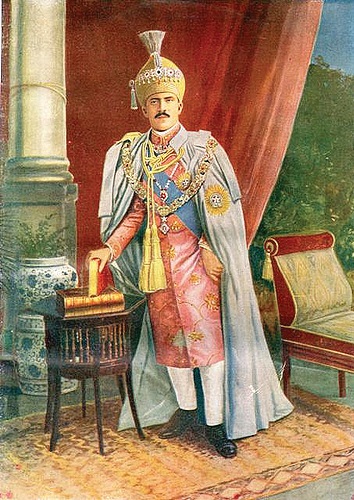
Mir Osman Ali Khan, the last Nizam of Hrderabad
The dispute has its genesis in a 1948 transfer of GBP 1 million from Nizam Mir Osman Ali Khan’s account in Westminster Bank (now NatWest Bank) to the account of then Pakistan’s High Commissioner to the UK, Ibrahim Rahimtoohla. The fund was allegedly transferred by the nizam’s finance minister without Khan’s knowledge. After the State of Hyderabad was annexed to India, the nizam brought a civil action against his finance minister and Rahimtoohla for illegal transaction.
House of Lords after Pakistan claimed sovereign immunity. In subsequent years, attempts to resolve the issue through diplomatic channels failed due to conflicting claims of beneficial entitlement to the funds by three parties: Pakistan, India and the nizam’s heirs. The bank also made it clear that it will not release the money unless the British court passes an order directing it to do so. The government ofIndia had also participated in discussions with Pakistan since 1958 at various levels. According to sources, it figured in almost all foreign secretary-level meetings between India and Pakistan.
“The last such meeting was held on July 5, 2012, but no out of court settlement was reached. Pakistan was not too keen to even respond to our positive approach,” the source said.
On April 3, 2013, the Pakistan High Commissioner to the UK proposed to initiate a civil action against the bank for releasing the money, which is now worth Rs 310 crore, saying it indisputably has the legal title over the nizam’s money. On November 23, 2013, it again approached the court serving a notice of discontinuance of the proceedings, which the court had observed as abuse of legal process.
“In serving the notice of discontinuance, Pakistan was abusing the process of the court. The abuse lay in seeking to achieve a tactical advantage, which would place Pakistan in a better position than that to which it had already voluntarily submitted by bringing its action against the bank,” the court’s observation on January 16, 2015, stated.
Claims have also been put forward over the years by or on behalf of members of the Nizam’s extended family.
Though the bank refused to release the money without an order from the English court, it continued to send bank statements to the Pakistan High Commissioner to the UK, solicitors for the High Commissioner for India in London and nizam’s heirs.
The money trail
■ The nizam’s Rs 310 crore is locked up in NatWest Bank
■ In 1948, the nizam’s finance minister transferred GBP 1 million to the account of then Pakistan’s High Commissioner to the UK without permission
■ The Nizam brought a civil action against his finance minister
■ The money is claimed by Pakistan, India and the nizam’s heirs
source: http://www.newindianexpress.com / The New Indian Express / Home> The Sunday Standard / by Yatish Yadav / March 27th, 2016
Abou Ben Adhem is a poem by Leigh Hunt. Some may say it is old hat. But, for ever its philosophy is relevant; in truth in today’s world of war, strife and self-obsession among people.
Abou Ben Adhem wakes up from his deep, peaceful sleep and sees an angel writing in a book. What are you writing?, asks Abou Ben Adhem.
The angel says, “The names of those who love the Lord.”
“And is mine one?, asks Abou
“Nay, no so,” says the Angel
Then Abou, humbly says, “I pray thee, then, write me as one that loves his fellow men.”
The Angel writes so and vanishes.
The next night, the angel appears again and shows the names whom God had blessed. And lo! Ben Adhem’s name led all the rest. This, even though Abou Ben Adhem, instead of saying “he loved the Lord” he had said he “loved his fellow men.” It simply means in this world it is more important to love fellow men rather than merely loving God. We all know what is happening in West Asia as a result of loving God too much and fellow men less.
Last evening, I was witness to a number of Abou Ben Adhems on the vast stage of Kalamandira. The occasion was the first award presentation to those who have “Loved their fellow men,” to use the words of Abou Ben Adhem, by the partners of city’s Ganesh Beedi Works under the auspices of their Charitable Trusts in the name of their parents M. Govinda Rao and D. Ramabai. It is known as Ramaagovinda Puraskar-2016.
Yesterday, I was caught in a web struggling to decide to which of the three programmes I was invited I must go — one wedding, a dinner at Palace in connection with MRC election and the function at Kalamandira. I decided on Kalamandira and happier for that. A memorable awards function indeed, made more memorable by the cultural event ‘Miracle on Wheels’ a performance by the specially-abled youngsters on wheelchairs par excellence.
There was yoga on wheels, Dashavathara on wheels, Bhagavad Gita on wheels and more. Performing with clock-work precision, timing of movement well synchronised as they criss-crossed the stage while the audience wowed wonder-struck. The accompanying music and song, mostly verses from Hindu Mythology, held the audience spellbound.
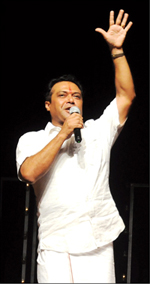
Dr. Syed Salauddin Pasha
The innovator-choreographer of this extraordinary show by the specially-abled performers was Dr. Syed Salauddin Pasha, a Kannadiga from Anekal near Bengaluru, now settled in Delhi. I learn he is a follower of Sufism. No wonder he came on the stage wearing a dhoti and a white manila bush coat, crimson nama glowing vertically on his broad forehead. He looked younger for his fifty years. But for his name you wouldn’t know he is a Muslim.
It was revealed by himself that as a student he was given a Quran by his parents and sent to school but he would go to his Brahmin friend’s house and return as Pasha Iyer ! From what he spoke from the stage it was clear that he has mastered both Islamic studies, Hindu Mythology and religion. He was so eloquent in chanting the sacred verses the audience applauded him with clapping ever so often.
Star of Mysore had published about his achievements on Saturday, 19th March, 2016. If Karnataka Government has not recognised him with a Rajyotsava Award or some other award, he indeed deserves one because he is a Kannadiga who speaks impeccable Kannada with ease and eloquence and wants to shift to Bengaluru for good for love of his roots.
Be that as it may, I must conclude this column by appreciating two anecdotes one of the awardees, Sanskrit scholar Lakshmisha Tolpadi, narrated to underscore two values of idealism in our lives:
There was a guest who had come to the house at lunch time but there was no rice ready to cook. There was paddy, though. The housewife, being alone in the house and believing in the ideal ‘Athithi Devo Bhava’ (Guest is Divinity incarnate) requested the guest to wait till she cooked food.
She then starts pounding the paddy. Realising that the clinking sound of her bangles in her hands would betray her pounding of the paddy which would make the guest know that she was taking extra trouble, she quietly removes all the bangles, makes rice out of paddy, cooks food and serves the guest.
Moral: Let not others know the trouble you take or trauma you undergo while helping others. Never say ‘I suffered so much to help you.’ Such help is no help; just craving for appreciation or sympathy. It makes the beneficiary disgusted with himself for being the cause for another’s inconvenience and makes one guilty of troubling others.
Another anecdote relates to one Pakru, an old, poor nonagenarian, known for his knowledge of Tulu Language, a dialect in Dakshina Kannada. Once one Venkataraju, a research scholar collecting Tulu words and vocabulary, went to see Pakru in order to write an article in the newspaper. Venkataraju took a photograph of Pakru using flash. Pakru innocently asked Venkataraju, “What are you doing? What is that flash of light?’’
When told that he was taking his photograph for publishing in newspaper, Pakru innocently said, ‘‘Why photograph when I am here in your presence.”
This kind of innocence of the noble and a simple person, the modern man of education can’t understand, said Lakshmisha Tolpadi.
This incident reminded me of what my friend M.P. Prabhakaran in New York had written in his latest book, sent to me last week, titled ‘‘My Thirty-Day European Odyssey’’ about a similar situation.
Prabhakaran lands in Stockholm airport. He sees a larger-than-life picture on the wall of a statue of Birger Jarl, the founder of Stockholm. It had an imaginative, tourist-friendly caption: ‘Welcome to my hometown.’ Prabhakaran was not sure if he could take a photograph of it for security reasons and asks a fellow traveller, a local person, if he could take a photograph.
He asked: “How long are you going to be in Stockholm?”
“Three days,” said Prabhakaran.
“Then go to the City Hall one day. The statue of Birger Jarl you are seeing in this picture is there in front of the city hall. Instead of taking a photograph of a photograph of the statue, why not take a photograph of the statue itself?”
e-mail: kbg@starofmysore.com
source: http://www.starofmysore.com / Star of Mysore / Home> Abracadabra….Abracadabra… / by K. Ganapathy / March 30th, 2016
In a significant development, All-India Muslim Women Personal Law Board president Shaista Ambar met RSS chief Mohan Bhagwat here on Tuesday.
Ambar said she was present at a function in the Post-Graduate Institute area where Bhagwat was visiting. She sought an appointment with the Rashtriya Swayamsevak Sangh (RSS) chief that was immediately granted.
“He was very gracious and in his address he spoke of nation building and character development,” she said.
Ambar also said she requested Bhagwat to visit the mosque which they have got constructed, and he readily agreed to do so.
source: http://www.newindianexpress.com / The New Indian Express / Home> Nation / by IANS / March 29th, 2016