Tag Archives: Adv Aman Alam – Supreme Court of India

The Rajas who shaped Indian history: The legacy of Prof Mahmudabad’s family

UTTAR PRADESH :

The family of Ali Khan Mahmudabad, the Ashoka University professor whose social media post on Operation Sindoor set off a storm, footprint on Indian history stretches back to the medieval period.
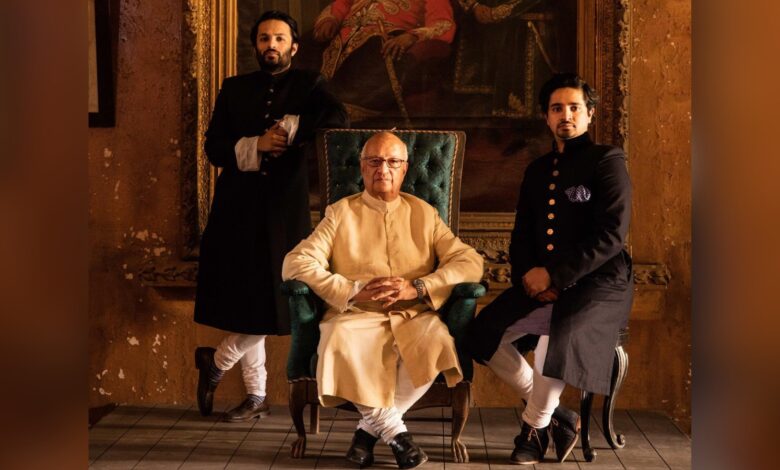
 Prof Ali Khan Mahmudabad, his father Raja Mohd Amir Mohd Khan (centre) and brother Rajkumar Amir Hasan Khan. Image courtesy: Mahmudabad Estate

The Supreme Court on March 16 closed the case against Prof Ali Khan Mahmudabad, the Ashoka University historian and columnist, after the Haryana government declined to grant sanction for his prosecution for his social media post on Operation Sindoor, a decision the court had itself nudged the state towards in an earlier order. 

A Division Bench comprising Chief Justice of India (CJI) Suryakant and Justice Joymalya Bagchi had, in its order of January 6, asked the Haryana government to consider refusing sanction as a “one-time magnanimity.” The state obliged, bringing to an end a case that had drawn global attention to questions of free speech and academic freedom in India. 

The matter had originated in a social media post made by Prof Mahmudabad in connection with Operation Sindoor of 2025. It snowballed rapidly after he received summons from the Haryana State Women’s Commission on May 12, 2025. The Supreme Court had granted him interim bail on May 21. 

The man behind the case

Prof Mahmudabad holds a doctorate and a master’s degree from the University of Cambridge and teaches history and political science at Ashoka University. Also known by his courtesy title “Raja of Mahmudabad,” he is the latest in a long and storied line – a family whose footprint on Indian history stretches back to the medieval period. 

During the Nawabi rule in Awadh and later under the British, the Rajas of Mahmudabad were among the largest Taluqdars, or feudal landholders, of the region, controlling over 400 villages and extensive urban properties across Lucknow, Sitapur, Lakhimpur Kheri and Nainital. 

The family’s most visible legacy is the Mahmudabad Fort in Sitapur, a 19th century structure built in the Indo-Saracenic style that counts among the largest private residences in the world. It has hosted royalty, diplomats, political leaders and intellectuals from across the globe. Its library holds thousands of rare books and manuscripts in English, Hindi, Urdu, Sanskrit, Persian and Arabic – including handwritten copies of the Quran, the Bhagavad Gita and the Mahabharata, some dating to the 16th century. 
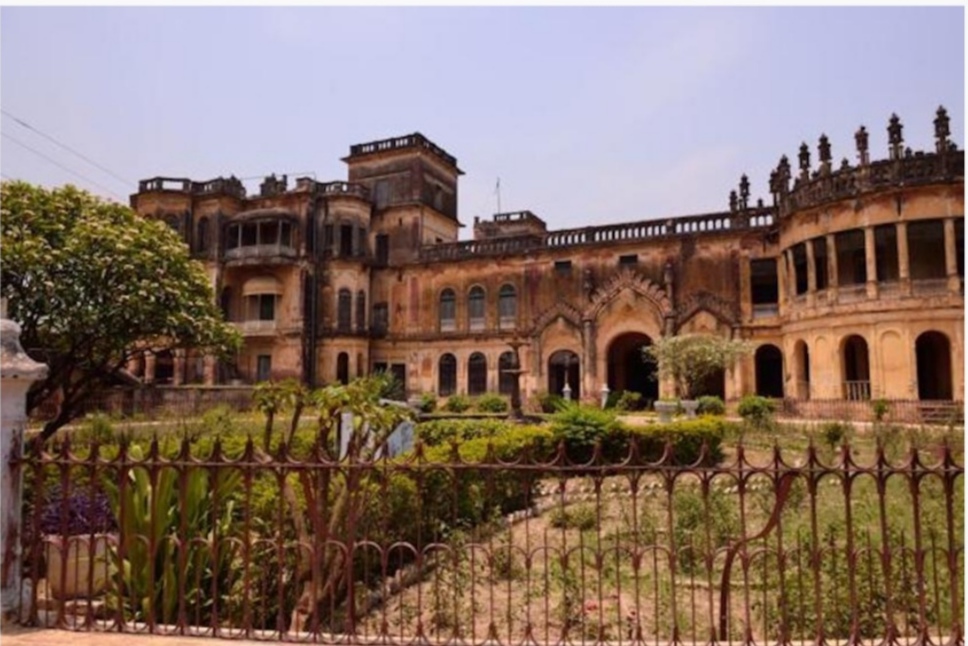
Mahmudabad Fort. Image courtesy: Mahmudabad Estate

The fort’s kitchens, too, have kept alive culinary traditions that have largely disappeared elsewhere. The original mud fort on the site was set ablaze by the British during the Revolt of 1857 and later rebuilt. 

The family’s syncretic character runs deep. Its charitable endowments include temples, one gifted to the Udasin Sect founded by Sri Chand, son of Guru Nanak, replicas of the Muslim shrines of Najaf and Karbala in Iraq and a caravanserai built to shelter travellers. 

Revolt of 1857 and after

The family’s political legacy is equally significant. During the Revolt of 1857, Muqim-ud-Daula Raja Nawab Ali Khan commanded several thousand rebel troops before being killed by British forces – the same forces that burned down his 16th century fort. His role has been documented in historical accounts of the period and in the Urdu novel “Aghaz-e-Sahar” by Khan Mahbub Tarzi, translated into English by Prof Mahmudabad himself under the title “The Break of Dawn.” 

His son, Amir-ud-Daula Raja Sir Mohammad Amir Hasan Khan, served on the Legislative Council of the Lieutenant Governor of the North Western Provinces. Lucknow’s Amir-ud-Daula Public Library and Amir-ud-Daula Islamia Degree College are named after him. 
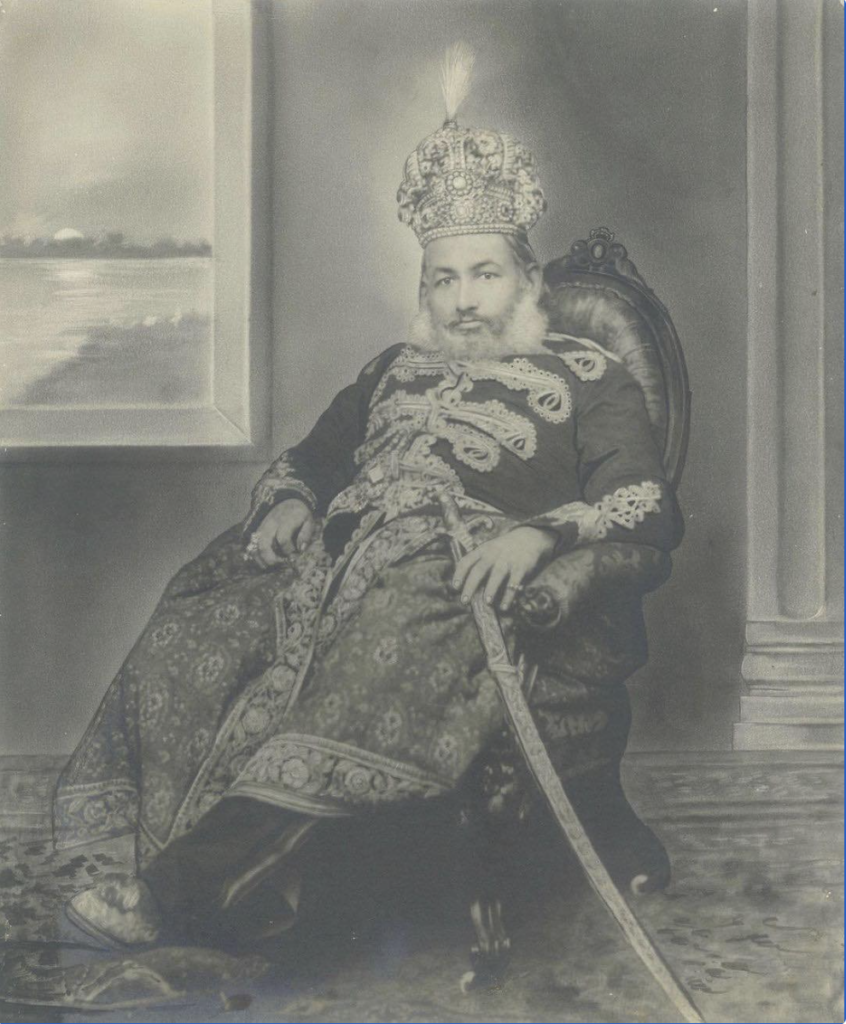
Amir-ud-Daula Raja Sir Mohd Amir Hasan Khan. Image courtesy: Mahmudabad Estate

His son, Prof Mahmudabad’s great-grandfather Maharaja Sir Mohammad Ali Mohammad Khan was a pioneer of education who played a central role in establishing both Lucknow University and the Aligarh Muslim University, serving as the latter’s first Vice-Chancellor from 1920 to 1923. A residential hostel, Mahmudabad House, in Aligarh Muslim University’s Sir Shah Sulaiman Hall is named after him. He also served as the Home Member of the Governor of UP’s Executive Council.
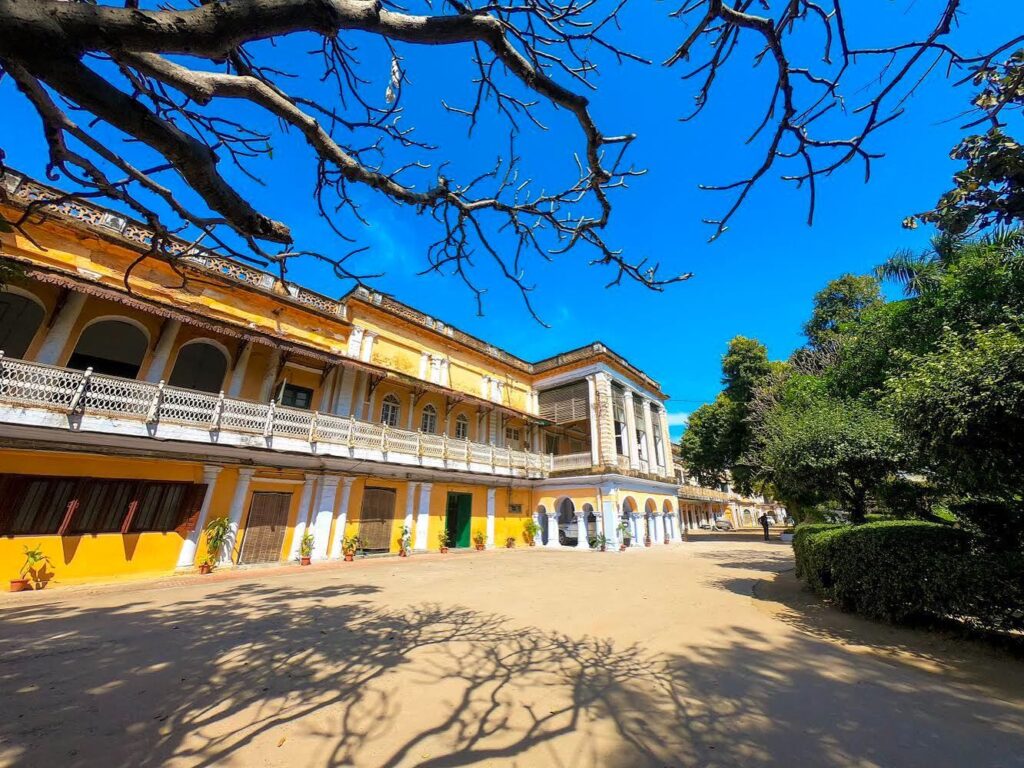
Mahmudabad House in Lucknow. Image courtesy: Mahmudabad Estate

A close friend of Motilal Nehru, he was instrumental in the signing of the Lucknow Pact of 1916 and served on the Imperial Legislative Council, the Council of State and the United Provinces Legislative Council. Lucknow’s Butler Palace, named after former UP Governor Sir Spencer Harcourt Butler, was built by him. 
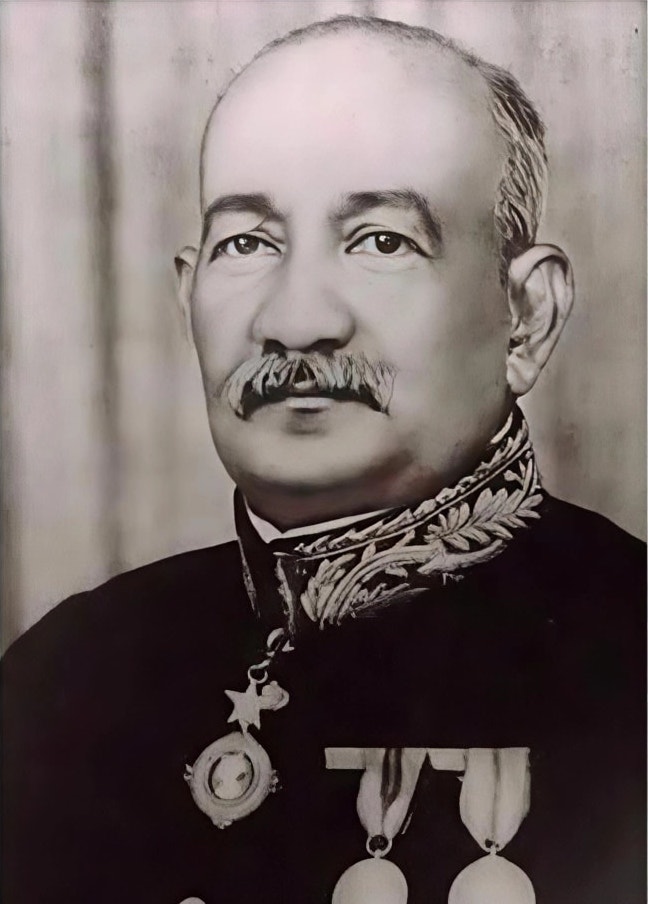
Maharaja Sir Mohammad Ali Mohammad Khan

Prof Mahmudabad’s father, Raja Mohammad Amir Mohammad Khan, was also a Cambridge graduate and an occasional professor of astrophysics at Imperial College London and the Institute of Astronomy at Cambridge. He was elected twice to the UP Legislative Assembly on a Congress ticket, in 1985 and 1989. 

When he passed away in October 2023, thousands joined his funeral procession across religious lines, and schools, markets and commercial establishments across the area shut down in mourning. 

A vindication, and a reminder

Prof Mahmudabad’s Lucknow home, Mahmudabad House – part of the historic Qaiserbagh Palace complex – continues to serve as a gathering place for intellectual and cultural exchange, much as the family’s spaces have for centuries. 

The closure of his case, then, is more than a personal reprieve. Coming at a time of heightened scrutiny over free expression in India, it is being seen as a reaffirmation, however fragile, of the right to speak, question and dissent. 

(Aman Alam is a student Barrister at the University of London and an Advocate in the
Supreme Court. He has been a former Law Clerk-cum-Research Associate to a Supreme Court judge. He is also a Fellow of the Royal Asiatic Society of Great Britain and Ireland)

source: http://www.siasat.com / The Siasat Daily / Home> Featured News / by Aman Alam, Guest Contributor March 27th, 2026

From Bulandshahr To Privy Council: A Woman’s Legal Battle In 19th Century British India

INDIA :

As the world celebrated International Women’s Day on 8th March, it would be relevant to mention Khanzadi Begum’s case, a property rights dispute in 19thcentury British India, which originated from District Bulandshahr, and culminated before the Privy Council in England. The dispute pertained to the colonial Government’s attempt to revoke a sanction that had previously been granted, raising questions about the limits of executive discretion. During the Revolt of 1857, a large section of nobility and landed gentry, i.e., Taluqdars and Zamindars in the Bengal Presidency (which included North-Western Provinces, the earlier name of United Provinces or U.P.) and the Princely State of Oudh (Awadh) took up arms against the East India Company. When the British regained control in 1858, a severe crackdown followed against the rebels, wherein persons convicted of ‘mutiny’ were executed, and their lands were confiscated en masse under the Forfeiture Act, 1857[1]. This retributive and deterrent exercise of forfeiture gave birth to innumerable claims arising out of the seized lands. By way of Act IX of 1859, Courts of Special Commission were set up in the Lower and North-Western Provinces of the Bengal Presidency for adjudication of these claims.

Khanzadi Begum was born in District Bulandshahr to Sheikh Muhammad Abdullah Khan, landed proprietor of “Khanpur Estate” which sprawled Bulandshahr, Meerut, Budaun and Moradabad districts. He died in 1852, leaving behind a son named Abdul Latif Khan and two daughters Bibi Mariam and Khanzadi Begum. Abdul Latif Khan allotted five villages (out of his father’s estate) to his sister Bibi Mariam for her maintenance, but couldn’t make such an allotment for Khanzadi Begum. Meanwhile, in the aftermath of the Revolt of 1857, Abdul Latif Khan was convicted of ‘mutiny’, which led to confiscation of his properties in 1860 under the 1857 Act. In 1860, Khanzadi Begum petitioned the Court of Special Commission against the Government, claiming her inherited share in her deceased father’s estate. The Court rejected her claim to the full share, but passed a decree assigning five villages in District Bulandshahr for her maintenance, which were to be equal in area, Government (revenue) assessment and income of her Bibi Mariam’s villages, along with awarding mesne profits. The Government authorities allowed her to choose five villages. Accordingly, in August, 1860, consequent to the sanction obtained from the Sadar Board of Revenue, the Collector handed over to her the possession of these villages, her name was entered in Government records and she was paid mesne profits. A few months later, in October, the Sadar Board wrote to the Government, expressing a doubt about the Court of Special Commission’s decree. Pursuant to this, the Lieutenant-Governor Sir George Frederick Edmonstone, KCB, ordered that the Court of Special Commission was not empowered to pass the decree for maintenance (a cause which was not sued) when it had rejected Khanzadi Begum’s claim for her full share in the property. The Lieutenant-Governor was also of the view that the villages allotted to her were more than the value of Bibi Mariam’s villages. Consequently, Khanzadi Begum was ousted in January, 1862.

Being aggrieved by her unlawful dispossession at the hands of the Government, Khanzadi Begum initiated execution proceedings before the Court of Special Commission, which came to be dismissed, and the dismissal was affirmed in appeal on the ground that the decree was not properly carried out. She then filed a fresh suit before the District Judge, seeking declaration and possession of the property along with mesne profits. The said suit was, however, also dismissed. The court, accepting the Provincial Government’s contentions, took a view that the Court of Special Commission only declared that Khanzadi Begum (i.e., the Plaintiff) should receive a suitable maintenance from her ancestral property, and it neither conferred any specific proprietary right nor could she acquire any such right unless the Government had sanctioned a particular property, which was never done.

In 1866, Khanzadi Begum challenged the District Judge’s decision before the newly formed High Court for North Western Provinces, which had recently replaced the Sadar Diwani Adalat and now sat in its place in Agra, before being shifted to Allahabad in 1875. A Bench comprising Chief Justice Sir Walter Morgan and Justice Sir F. B. Pearson allowed the appeal[2] and the District Judge’s verdict was overturned. While examining in detail the facts of Khanzadi Begum’s case, the High Court pointed out that the Court of Special Commission had granted her a right to maintenance in her ancestral property only after her claim for inheritance of her share in the ancestral property was dismissed in view of her family’s custom of male primogeniture, and such a declaration was, in the High Court’s view, conferred a substantial right to maintenance and was not a mere recommendation. As for the Government’s objection that the Court of Special Commission exceeded its jurisdiction under Act IX of 1859 by adjudicating upon a fresh cause of action (of maintenance), the High Court was of the view that the Court of Special Commission followed its summary procedure under Act IX of 1859 and even if it had proceeded irregularly, the decree could not be said to be a nullity, more so when its validity was never challenged, and it was long after the decree had been satisfied, that the Government made any objection to it. As per the High Court’s interpretation, in order to comply with the decree, the Government ought to have itself selected the villages to be granted to Khanzadi Begum, or should have sanctioned the selection made by her. The Government’s primary justification for dispossessing Khanzadi Begum was that the grant of five villages made to her by the Sadar Board of Revenue in compliance of the Court of Special Commission’s decree, was done without obtaining proper sanction from the Government. In simple words, the Government’s stance tried to distinguish itself from the Sadar Board of Revenue, even though it was very much an arm of the Government. As a matter of fact, the Government’s real intention behind dispossessing Khanzadi Begum was the apprehension that the villages allotted to her actually yielded much more profits than the amount specified by the Court of Special Commission. The High Court completely rejected both these contentions. Firstly, it was observed that the correspondence between local revenue officers and the Sadar Board revealed that the villages were to be selected on the basis of fixed annual revenue demand of the government (called “Jama”) and not as per the actual profits. Secondly, it was held that the Government’s sanction had already been expressed through the Sadar Board of Revenue on 20th July 1860 when it assigned the lands to Khanzadi Begum in satisfaction of the Court of Special Commission’s decree, and contention regarding refusal of sanction was disproved by official correspondence. The sanction was acted upon and Khanzadi Begum obtained possession of the five villages and held them until her dispossession in January, 1862. The High Court then pointed out that the sanction was not questioned until a year after it was granted in 1860, and held that now the Government could not interfere in any manner, once it had granted a ‘full and intelligent sanction’ (through the Sadar Board) and the same had been acted upon. The High Court referred to Privy Council’s 1861 judgment in The Collector of Masulipatam v. Cavaly Vencata Narrainapah[3] which was a case arising from the Sadar Diwani Adalat at Madras, wherein it was held “…the acts of a Government officer bind the Government only when he is acting in the discharge of a certain duty within the limits of his authority, or, if he exceed that authority, when the Government in fact, or in law, directly, or by implication, ratified the excess”. It was, however, held that in the present case the Sadar Board and the Revenue Authorities had not exceeded their authority, and thus, the Government was bound by their acts. The appeal was decreed with costs. Khanzadi Begum was represented in the High Court by Maulvi Fariduddin Ali, Maulvi Samiullah Khan and Shah Asad Ali, while the Government was represented by Lala Man Rai.

As the Government was unsatisfied with the High Court’s judgment, the matter reached the Privy Council as the Secretary of State for India filed an appeal on the Government’s behalf. The judgment was delivered on 1st March 1870[4], a 4-judge Bench comprising Sir James Colville, Sir R. Phillimore, Lord Justice Giffard and Sir Lawrence Peel rejected the Government’s appeal. The Privy Council was of the opinion that there was “no ground whatever for this appeal”, as the Government had not stated in its pleadings (or otherwise) that the decree of the Court of Special Commission was improper or non-binding. It was noted that on the date of the decree, the Government was in possession and the Collector was empowered to carry out the decree and handover possession (to Khanzadi Begum). Moreover, the Government did not raise any objection whatsoever in the Civil Court against Khanzadi Begum’s claim ‘except as to a certain particular portion of the land’, and, consequently, ‘her title was confirmed by the decree of a competent Court’. Resultantly, the Privy Council, while dismissing the appeal with costs, made strong observations against the Government that it ‘was much in the wrong in taking possession as they did, and that this appeal never ought to have been brought’. The Government was represented in the Privy Council by Mr. Forsyth QC and Mr. Merivale QC, while Khanzadi Begum was represented by Sir Roundell Palmer QC and Mr. Leith.

Khanzadi Begum’s case arose during a period when statutory protections were still evolving under the colonial rule. The High Court for North Western Provinces, after holding the Government liable, awarded exemplary costs of around Rs. 3,645[5], much higher than given standards of the day. Later, while putting a quietus to the issue, the Privy Council also came down heavily upon the Government. Although, not explicitly articulated in these terms, the reasoning given by the courts indicates the doctrine of estoppel, as the Government was not allowed to arbitrarily revoke its sanction.

This decision is an early instance of application of rule of law in reviewing executive action.

  1. Act XXV of 1857 ↑
  2. Mussumat Khanzadee vs The Collector of Bolundshahur, Case No. 33/1866, 2nd July 1866 ↑
  3. (1859-61) 8 Moo I.A. 529 @ 554 ↑
  4. The Secretary of State for India in Council v. Mussamat Khanzadi, (1811-72) 4 IR 306 ↑
  5. Report of the Legal Remembrancers, North-Western Provinces, for 1866-67. Government Press, Allahabad, 1867 ↑

Author Aman Alam is an Advocate At Supreme Court of India & student Barrister at University of London, U.K and Musa Munir Khan is an Advocate practising at High Court of Delhi. Views are personal.

source: http://www.livelaw.in / LiveLaw.in / Home> Articles / by Aman Alam & Musa Munir / March 16th, 2026