Tag Archives: Ahmed Khan

The Rich Legacy of Mughal Era Drinks: How Muslims Preserved Royal Recipes

INDIA :

From rose syrup to mango panna, Indian Muslims continue the Mughal tradition of crafting cooling summer drinks originally developed by royal physicians.
New Delhi :

Muslims in India proudly carry forward the centuries-old tradition of crafting refreshing drinks that originated in the Mughal era, a time when royal physicians invented syrups not only for their enduring taste but also for immense health benefits.

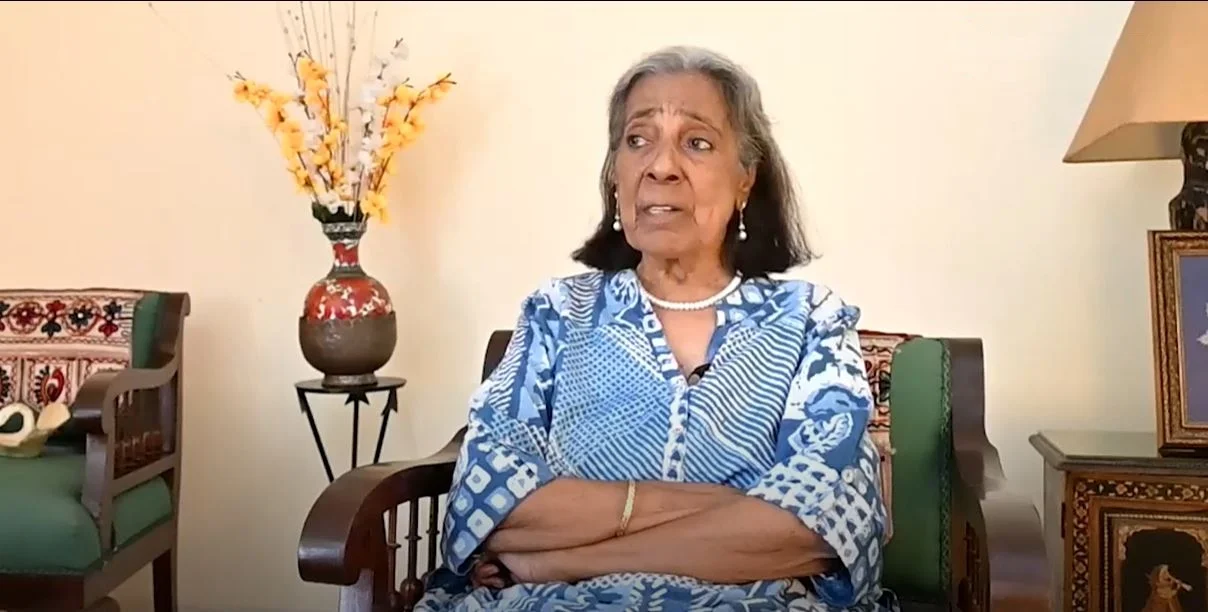
Salma Hussain, a researcher who has studied Mughal food and drink habits for over fifty years, explained: “Most of the drinks were invented by the royal physicians, who sometimes prepared drinks for medicinal purposes and sometimes for a refreshing taste, and they were very popular.”

She shared how the art of making these drinks flourished under royal patronage, especially during the reign of Empress Noor Jahan, whose influence in the royal kitchen brought many innovations. “Noor Jahan had creative talent. Under her leadership, excellent syrups were developed. The food was also good, tasty. She especially supervised the royal kitchen,” she told Clarion India recently.

Salma recalled an interesting anecdote from the Mughal court: “Once Queen Noor Jahan was strolling in the garden. Rose flowers were in full bloom. Noor Jahan’s mother, Ismat Ara Begum, used to make perfumes from these flowers. Noor Jahan called the royal physician and said many medicines were made from flowers; why cannot a syrup be extracted from the roses? ‘Many people drink in the name of medicine, but you should make something that will relieve us from the heat and be refreshing, and we will also enjoy it.’”

This simple request from the queen gave birth to the now-famous rose syrup, a cooling drink cherished across the Indian subcontinent to this day.

According to Salma, syrups were not limited to rose alone. “Syrups started to be made from roots, like khus syrup; Panna from mango. Similarly, vine syrup came up. Pomegranate syrup was made by cooking sour and ripe fruit, both said to be very beneficial for the skin,” she said. These drinks were especially popular among the royals, famous for their passion for beauty and health.

Salma further highlighted how Indian Muslims and Mughal royalty took special care to combat the intense Indian heat. “The heat in India was extreme, like today’s heat. Kings also used to cool drinks. Emperor Akbar started ordering ice from the mountains.”

The knowledge of cooling drinks extended to using yoghurt, lemon, and various salts to make beverages like shikanji and lassi, which remain popular today. 

“Rose syrup was made from flowers, custard from custard. Jamun syrup was made from fruits, vine syrup was made from mango syrup. Yoghurt was used a lot then. We learned how to make raita from it. They used to cool the yoghurt or mix it in water and make a drink,” she said.

She also pointed to the influence of neighbouring cultures: “A syrup came from Turkey, Aryan, which is the buttermilk we drink today. Almonds were used to make a lot of syrups. It is said that in Iran, almonds were put in hot water and savoured.”

Salma stressed the importance of these drinks beyond refreshment. “There are some unsubstantiated stories about drinks, but all of them seem appropriate, such as the first among the sages who made syrup; his name was Fitha Ghoras. Sage Fitha Ghoras was the first to give a medicinal drink the form of a syrup, like a decoction, etc. Over time, the trade in syrup gradually started and all kinds of syrups started being made.”

She also mentioned that in 1906, Hakim Abdul Majeed (founder of Hamdard) made the spirit-enhancing syrup. The same refreshing syrup is still alive, and we drink it to relieve the heat.

The purity and quality of ingredients were also important to the Mughals. Salma explained: “The water mixed in the syrup was from the Ganges, although the Yamuna River was closer to Delhi. Its water was not used because of the belief that it caused diseases.”

Water management was taken seriously: “The Mughals used to inspect water tanks. Special officers were assigned to procure and preserve the Ganges water.” 

This careful tradition of preserving royal recipes and using pure ingredients continues in India’s Muslim communities, who keep the memory of Mughal cuisine alive through generations.

Local historian Ahmed Khan commented, “These drinks are not just a part of our culture, they connect us to our glorious past. They remind us of the wisdom of our ancestors and the care they took in making life enjoyable and healthy.”

As the summer sun blazes, families across the subcontinent continue to enjoy these time-honoured drinks, a tribute to the enduring legacy of the Mughal era and the Indian Muslim custodians who have preserved these traditions.

source: http://www.clarionindia.net / Clarion India / Home> Editor’s Pick> Indian Muslims / by Mohammed Bin Ismail / May 26th, 2025
Ahmed Khan: I did not want to be a slave of Friday

Mumbai, MAHARASHTRA :

AhmedKhanMPOs24mar2018

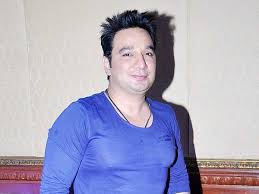
He made his directorial debut in 2004 with ‘Lakeer’, but Ahmed Khan said soon after his second film, ‘Fool n Final’, he decided to take a break from direction as he did not want his creativity to be a “slave of Friday”.

The choreographer, who will be returning to the director’s chair with ‘Baaghi 2″, said he decided to take up the project as he wanted to work with lead actor  Tiger Shroff and producer Sahid Nadiadwala .

“I was quite done with direction. I did not want to be a slave of ‘Friday’. I had an ongoing career in choreography and I also produced two films in between. I had ad films to do.

“Almost every year I was offered three-four films, the offers were good but somehow I did not feel like doing it or was caught up with other work. After over nine years I got offer from Nadiadwala, who is like my elder brother and Tiger was there too, so I said yes,” Ahmed told .

The makers recently released the remixed version of ’90s chartbuster track ‘Ek Do Teen” from ‘Tezaab’. Actor Jacqueline Fernandez has recreated the dance number, which originally featured  Madhuri Dixit .

Ahmed said the song is his personal favourite and he wanted to popularise it again by bringing out the new version

“It is my personal love for the song and so we got it. Now that we have taken the song people should appreciate it. Today’s audience generation now knows about ‘Ek Do Teen’.

“I am not saying we have done a great job, even we are doing business as it is a hit song so we have taken it. At the same time see the benefit, we are taking it to another generation, giving it a life,” he adds.

The upcoming action venture, which is a sequel to the 2016 hit ‘Baaghi’, is produced by Sajid under his banner. Also featuring Disha Patani, the film will hit the theatres on March 30.

Ahmed, who started his career in Bollywood as a child artiste, said if not movies he would have pursued a career in martial arts.
“If I would not have been a choreographer or a filmmaker I would have been a martial artist teacher. I am a black bet in Taekwondo, Taichung, I have done MMA.

“I have gone for tournaments. I have broken all parts of my body. Two-and-half-years back I was kicked in my neck and I got tinch of a vertigo and after that I stopped. I wanted to increase my level but my wife stopped me saying I need to relax now,” he said

source: http://www.timesofindia.indiatimes.com / The Times of India / News> Entertainment> Hindi> Bollywood> News / by PTI / March 24th, 2018

Life at a funeral

Bengaluru, KARNATAKA / Kolkata, WEST BENGAL  :

AhmedKhanMPOs29aug2017

As Ahmed Khan is laid to rest, kin feel blessed to belong to the same family as the football great; contemporaries remember him as a humble man who loved the game

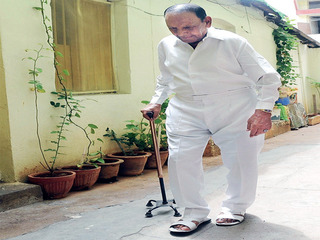
Amjad Khan sat quietly sipping chai, unmindful of the cacophony raised by a line of four-wheelers jostling for space on the narrow, single-laned Mackan Road. His brother Ahmed, arguably India’s greatest footballer who passed away on Sunday, had just been laid to rest and the mourning — for now — was over. The multitude, that had turned out to pay their respects and attend the funeral, had departed and house #75 — the house of ‘Ahmed, the Olympian’ — was slowly returning to ‘normal’.

A smile spread across Amjad’s face when he was asked about his brother. With every sip of chai that he took, Amjad’s eyes took on an even more vacant look as his mind went back in time. “What makes a man great? This is how I analyse it,” Amjad, also a former India international, said. “You could say Ahmed played up to 1958, right? Public memory is generally short. We watch a good movie and don’t remember it a month later. But if people remember this man, after 60 years of his playing career, then he must have done something extraordinary.”

There was pride in Amjad’s every breath. It was the predominant feeling shared by those in house #75. A feeling that stemmed from simply being associated with the bloodline of India’s greatest dribbler, fondly nicknamed ‘the Snake Charmer’ by the English media. Even Mannan, a grandson who was born decades after Ahmed hung up his boots, said he was “proud to just be born in the same family as Ahmed”.

Inside the house, Mannan proudly pointed to Ahmed’s trophies, a collection that was put on display just above the freezer box that contained Ahmed’s remains only hours ago. Numerous tributes by East Bengal, Ahmed’s club in Kolkata, were laid out. “The Padmashri has lost a bit of its sheen today because it was never awarded to Ahmed,” Amjad remarked on the conspicuous lapse of the Central government’s attention to a man who had bagged the gold in the 1951 Asian Games.

Among India’s greatest football heroes, Ahmed is right up there. As an inside-left (withdraw striker), Ahmed played in two Olympics (1948 and 1952) and won every domestic trophy that was up for grabs with East Bengal. “You know the thing about cotton? Whatever you throw on cotton, it never bounces back. That was Ahmed’s dribbling prowess,” Amjad said. “My father used to say that if Ahmed had not become a footballer, he would have become India’s best athlete. You know, when he was studying in the St Aloysius School in the city, he never used to carry books to the school. Instead, he used to take a small ball, a tennis ball, and practise dribbling on his way to school and back. That explains his gift.”

Ahmed was part of the deadly ‘Panchapandavas’ of EB, a forward line also comprising P Venkatesh and PB Saleh on the flanks, Apparao as the inside right and Dhanraj in the centre. When asked whether the gold medal was Ahmed’s top moment as a player, Amjad laughed. “That was just okay,” he said. “Have you heard of Sahu Mewalal, the guy who scored the winner at the 1951 Asian Games? Every year in Calcutta, where he used to play for Railways, he was the top-scorer of the league. Dhanraj wanted to overthrow Mewalal and asked Ahmed to do something for him. In one game, this gentleman (Ahmed) dribbled past everyone, even the goalkeeper, and called Dhanraj to the post to tap it in. That year, Dhanraj became the top-scorer. Scoring goals was Ahmed’s wish when he was playing.”

I Arumainayagam, the 1962 Asian Games gold medallist from the other time that India ruled globally, called Ahmed an inspiration. “We used to learn from watching him play,” he said. “We used to name ourselves ‘Ahmed’, ‘Dhanraj’, ‘Basheer’ and emulate their style. We, of course, couldn’t play as well as they did, but they influenced us greatly.”

More than anything, Ahmed was a fine human being. The 1952 Helsinki Olympics showed that. India were humiliated 1-10 by Yugoslavia and Ahmed repents that he was able to score only one goal in that game. Outside the Olympics, he often used to skip practice sessions while playing for East Bengal which made people wonder at his talent. He also preferred to play barefoot, shunning boots when the occasion afforded it. He was also fond of playing cards and often drew players from rival club Mohun Bagan into a round after a football game. During one such game, he was up against Sailen Manna, Bagan’s top defender of that era. “Manna was trying to convince Ahmed to play for Bagan,” SS Shreekumar, a former journalist and Ahmed’s friend, said. “This was in a room packed with footballers from Bagan and their supporters who were watching them. Eventuall, Ahmed agreed to play for Bagan. The entire room was stunned on hearing it. But Ahmed had one condition.

Manna asked him what it was. He told Manna that he will have to play for EB and the room burst into laughter.”

Shreekumar wonders what could have been had Ahmed accepted an offer to play for Swedish club IFK Göteborg. “He was named East Bengal’s best forward of the millennium,” Shreekumar said. “But when IFK Göteborg contacted Ahmed, his father asked him to consult his club, East Bengal. Jyotish Chandra Guha, a former secretary of EB who had scouted Ahmed, was worried about losing him. He downplayed Ahmed’s future in Sweden by suggesting it would be too cold and that the locals might put him down because he would be the only Indian there.”

While the tributes kept pouring in, Amjad’s tea was done. But the smile remained. “There are two things which makes football interesting – scoring goals and dribbling,” he added. “Ahmed found it interesting because of the second reason.”

Today, Ahmed Khan is no more. But ‘Ahmed Khan Olympian’ will live on forever.

source: http://www.bangaloremirror.indiatimes.com / Bangalore Mirror / Home> Sports> Football / by Aravind Suchindran, Bangalore MIrror Bureau / August 29th, 2017