Tag Archives: Amir Subhani – IAS

Zakat Conference in Patna Advocates for Institutionalized Charity to Combat Poverty

Patna, BIHAR :

Patna:

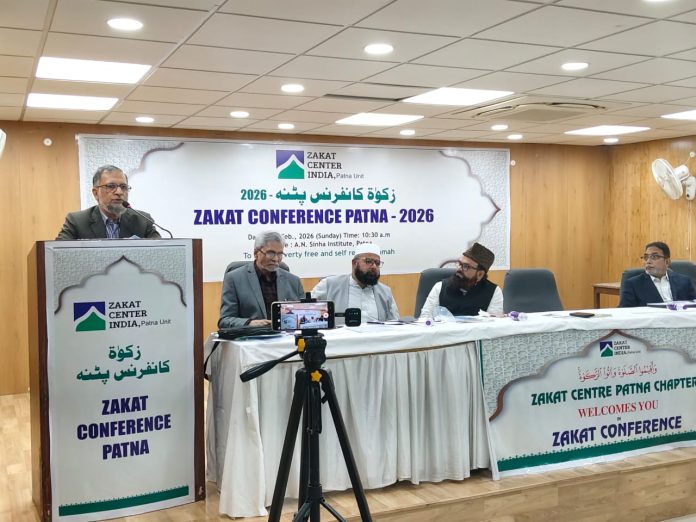
The Zakat Centre India (ZCI), Patna, hosted a high-profile conference at the A.N. Sinha Institute of Social Science, bringing together community leaders, scholars, and financial experts to discuss the transformative potential of organized Zakat. The event highlighted a shift from individual giving to a structured “social security” model aimed at empowering marginalized sections through transparency and professional management.

Chief guest Amir Subhani, retired IAS officer and former Bihar Home Secretary, said Zakat is a core element of the Islamic economic system and a guarantee of social security for the weak and poor. He observed that economic inequality exists in every society and cannot be erased by force, noting that the collapse of communism proved such models unsustainable. A degree of inequality, he suggested, can foster mutual dependence, gratitude, cooperation, and empathy among social groups.

Subhani compared faith-based welfare with state-led systems in Europe, Canada, Australia, and the Netherlands, where governments provide extensive social security through taxes. While India has welfare schemes, he said they remain inadequate given widespread poverty. He noted that the estimated Zakat pool forms a significant “corpus”, yet is largely distributed informally, often without verification.

An institutionalized system, he stressed, ensures proper assessment of eligibility, scale of need, and appropriate assistance. Students, aspiring entrepreneurs, and destitute individuals such as widows and the elderly all require tailored support. Organized networks can investigate cases effectively, making collective Zakat more impactful than isolated charity.

Reflecting on ZCI’s work, Subhani said many of his initial concerns about fund allocation and beneficiaries were addressed during the program. He expressed confidence in the Centre’s transparency, especially as it is led by a Chartered Accountant, and suggested issuing payment receipts to strengthen donor trust.

He emphasized coupling financial aid with mentorship. Many poor recipients, he noted, spend business funds on urgent consumption needs and lack entrepreneurial skills. Recalling government Entrepreneurship Training programs for street vendors—where he observed strong Muslim participation—he highlighted practical guidance such as customer interaction, negotiation, body language, repeat business strategies, and digital payments. Financial assistance, he concluded, should be paired with structured guidance.

Keynote speaker Maulana Rizwan Ahmad Islahi described Zakat as central to maintaining social balance in Muslim society. Dr. Rizwan Ahmad Rafiqui of ZCI Delhi stressed organized collection and distribution to maximize impact. CA SS Quadri outlined management protocols and transparency measures, while Advocate Mohammad Naushad presented the annual report. The program opened with Quran recitation and concluded with a vote of thanks by Quamar Warsi.

source: http://www.radiancenews.com / Radiance News / Home> Latest News> Report / by Sami Ahmad / February 16th, 2026
Minority welfare: Bihar govt-run coaching centres help minority students clear exams, get jobs

Patna, BIHAR :

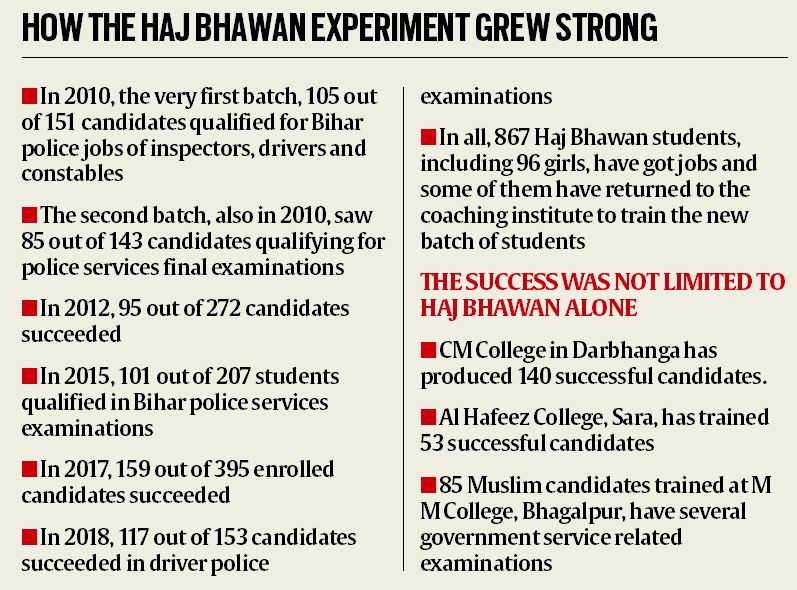
Since 2010, 867 candidates, including 96 girls, have joined the police; 46, including 12 girls, cleared BPSC.

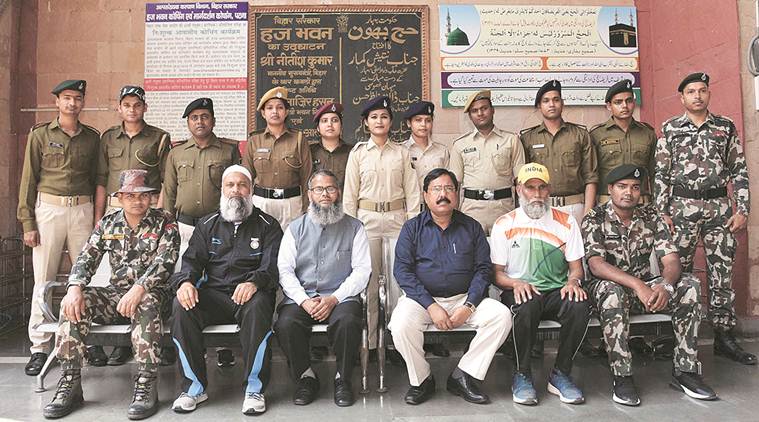
Trainers and successful students at Haj Bhawan coaching centre in Patna. (Express Photo)

Even though Muslims account for 17 per cent of Bihar’s population, according to a senior official, they make up only 2.5 per cent of the state’s police and less than 4 per cent of the other services. A decade ago, these numbers were even lower. And it was to remedy this lack of representation that Bihar’s Minority Welfare Department started a pilot programme to train Muslim students and help them clear different types of public services examinations.

Amir Subhani, Additional Chief Secretary of the Minority Welfare Department, said “As Haj Bhawan had been lying largely unused after pilgrimage season, we came up with the idea of utilising the vast space with a devoted coaching centre for minority boys and girls who needed some kind of motivation to do well in life. Chief Minister Nitish Kumar promptly approved the idea. It is very good to see girls not just coming out of their homes but also showing their increasing preferences for uniformed services. It is a success story under construction. We are trying to replicate it in maximum possible places”.

Since 2010, the Haj Bhawan Coaching and Guidance Cell has been providing almost free coaching to Muslim boys and girls in preparing for prelims, mains and interview stages of competitive examinations in Bihar.

Bihar, Bihar Muslim population, Bihar Minority Welfare schemes, Muslim students, muslims Bihar public services examinations, Nitish Kumar, indian express

 For the first four years, until 2013, it provided coaching only for police services test. Later, it included coaching for BPSC examinations as well. Haj Bhawan Guidance and Coaching Cell, under the nodal agency of Maulana Mazharul Haque Arabic and Persian University, selects Muslims students for training and coaching them in two different ways. One, it screens students that seek its help. Two, it calls deserving students that have cleared one stage or the other in an examination and helps them realise their dream.

Over the past decade, the Haj Bhawan experiment has gone from strength to strength (see box). What’s more, over the last couple of years, the Minority Welfare Department has been replicating the Haj Bhawan coaching model in other districts such as Darbhanga, Bhagalpur  and Ara. Further, it plans to expand this initiative to at least 10 more districts in the coming 3-4 years to attract Muslims girls and boys from rural areas.

“While a candidate coming for physical training is given free residential, fully centralised air-conditioner set-up, a student coming for mains coaching, has to pay Rs 3,500 per month. The centre has a rich library, two big classrooms and separate prayer halls for boys and girls,” said Mohammed Rashid Hussain, coordinator of Haj Bhawan Coaching and Guidance Cell. He said that Bihar’s Minority Welfare Minister Mohammed Khursheed (also known as Firoz Ahmad) contributes in his personal capacity as well by organising a lunch for students on special occasions.

EXPLAINED

Why was special training needed

Muslims, who account for 17% of Bihar’s population, are grossly under-represented in police and administrative services. Since 2010, the state government has been trying to remedy this by providing coaching facilities to the poor yet deserving students and helping them achieve their dream of serving in the government

The public area of the entire Haj Bhawan centre is under CCTV surveillance. Estimated per capita government cost on a student in one season is about Rs 20,000. But there is no fixed cap on the expenditure as it is a demand-driven scheme.

Most of the students in Haj Bhawan come from economically weak backgrounds. Boys and girls coming to study here have similar tales of poverty, struggle and lack of opportunities. Take, for instance, Akbar Ali who hails from Ara where his father runs a small bicycle repair shop. “I am the first boy from my village to come to Patna,” said Ali.

Students who have benefitted describe the initiative as a slow but silent revolution. Shabana Aazmi from East Champaran, who qualified as a constable in 2016 after receiving coaching, said that since becoming the first policewoman from her village, she is regarded as a role model and, in the last four years, many more girls have started preparing for competitive examinations.

source: http://www.indianexpress.com / The Indian Express / Home> Governance / by Santosh Singh / Patna, March 09th, 2020

Bihar: IAS officer Amir Subhani back as Principal Secretary Home

Patna, BIHAR :

Patna :

The new government in Bihar headed by Chief Minister Nitish Kumar today brought back senior IAS officer Amir Subhani to the Home department as Principal Secretary.

Amir Subhani has been brought back as Principal Secretary, Home in place of Sudhir Kumar Rakesh, Chief Secretary Anjani Kumar Singh told PTI.

The Election Commission had on September 12 ordered the removal of Subhani, a 1987-batch IAS officer from the Home department and had appointed 1983-batch IAS officer Sudhir Kumar Rakesh in his place.

But, with the elections ending and Nitish Kumar returning as the CM, Amir Subhani, a trusted officer of Kumar, was brought back to the Home department.

The Chief Secretary said Sudhir Kumar Rakesh has returned to the Panchayati Raj department.

Subhani would also retain his present posting in the General Administration department (GAD).Except for a brief period during the end of Jitan Ram Manjhi’s tenure and recently on order of the Election Commission, Subhani has occupied post of Home department with Nitish Kumar at the helm of affairs in the state.

Both the Home department and the GAD are with Chief Minister Nitish Kumar.

source: http://www.economictimes.indiatimes.com / The Economic Times / ET Home> News> Politics and Nation / PTI / November 23rd, 2015