Tag Archives: Arabic Calligrapher of India

Calligraphy and a message deep within

Vijayapura (formerly Bijapur) / Kalaburagi (Gulbarga), KARNATAKA :

Around 40 artists from all faiths are on a campaign to preserve the Islamic art, and build communal harmony
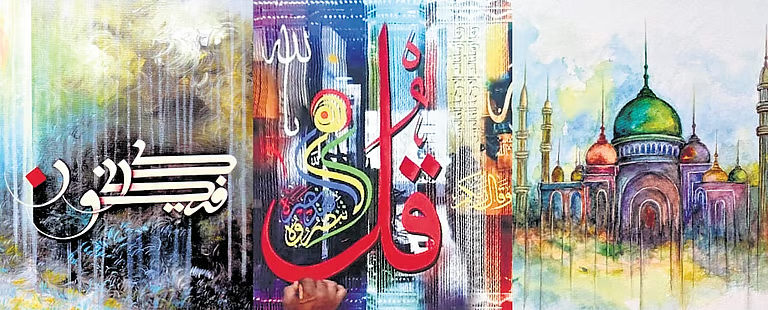
Calligraphy paintings created by various artists

Vijayapura :

When veteran artist Dr Subbayya Neela was invited to join a campaign to spread communal harmony through the ancient but fading art of Islamic calligraphy, he could not hide his delight. For him, the idea was not merely about preserving an art form, but about exploring the potential of art to transcend barriers of faith and culture.

“I have always believed that art knows no religion or boundaries. Art has the power to touch the hearts of people across communities. That is why, when I was approached to contribute to this unique initiative, I immediately agreed. I prepared a few pieces of Arabic calligraphy that were later exhibited in different places as part of the campaign,” recalled Dr Neela.

Among his works was a calligraphic representation of the Arabic phrase ‘Allahu Akbar’, which means ‘God is Great’. “I was given the liberty to interpret the phrase through my own artistic imagination, while maintaining the sanctity of the verse. It was both a responsibility and a joy,” he said.

Dr Neela is among 40 artists from across Karnataka, both Hindus and Muslims, who have joined this movement that began in Kalaburagi in 2020. The campaign was conceived not only to preserve Islamic calligraphy, which has been steadily losing ground, but also to foster unity at a time when society is fractured along communal lines.
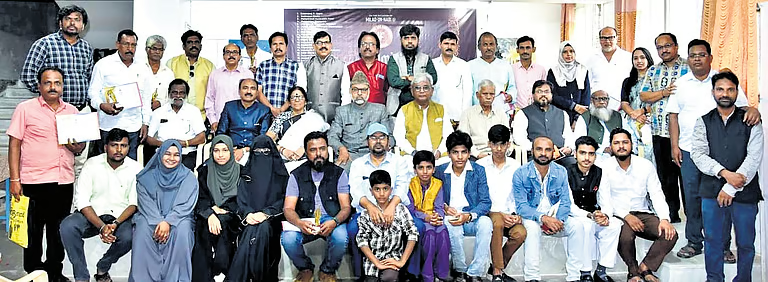
The group of artists who joined the campaign

The Initiative

It was the brainchild of noted artist Mohammed Ayazuddin Patel, a veteran painter from Kalaburagi and recipient of the Lalit Kala Akademi Award. “When hatred and intolerance seemed to be gaining ground in society, we felt the need to bring people together. We thought of reviving Arabic and Islamic calligraphy because it embodies both artistic beauty and deep spiritual messages. At the same time, it offered us a platform to involve artists of all faiths to work together for harmony,” he explained.

Ayazuddin was soon joined by another respected artist, Rehman Patel, and together they expanded the circle of participants. What started with around 15 artists, junior and senior, has now grown into a diverse collective of 40, half of whom are Hindus. These artists work closely with their Muslim counterparts to ensure accuracy in Arabic writing, while retaining artistic freedom.

The campaign, in many ways, draws inspiration from the history of the Deccan itself. Rehman Patel points out that after the decline of the Chalukyan dynasty, many local artisans and craftsmen found themselves unemployed. With the arrival of Muslim rulers in the region, particularly in erstwhile Bijapur and Gulbarga, these artisans were drawn into projects that fused Persian and Turkish influences with local Indian traditions.

“The architecture of that time was a collaboration. While designs came from foreign artists, the actual construction was executed by local Hindu craftsmen. The result was Indo-Persian art, a blend of Indian and Islamic architecture that still stands testament to cultural harmony,” he said. Arabic and Islamic calligraphy flourished during this period, adorning monuments and manuscripts, but over the centuries, as tastes and practices changed, the art form began to fade. “Our campaign is an attempt to not only revive this vanishing tradition but also to remind people of the harmony that once defined this land,” he added.

Preserving sacredness

A key aspect is the selection of verses from the Quran. The organizers have been deliberate in choosing verses that emphasize unity, peace and brotherhood, values that are not confined to one faith but resonate universally. “The artists are given complete freedom to use their imagination while ensuring that calligraphy remains the focal point. We guide them on the technicalities of Arabic script, but artistic interpretation is entirely theirs,” explained Ayazuddin. “This way, we safeguard the sacredness of the verses while allowing creativity to flourish.”

For many Hindu artists like Basavaraj Totad and Rajani Talwar who are involved in it, it has been a learning experience. Working with Arabic characters is not easy, and ensuring accuracy requires constant collaboration. Yet, this very collaboration has built bonds of trust and friendship. “It is heartening to see artists from different backgrounds sit together, discuss and create something so meaningful,” said Ashok Hiremath, an artist from Bidar.

To showcase their work and reach a wider audience, the collective has organized exhibitions, usually coinciding with Id-Milad, the birth anniversary of Prophet Mohammed. So far, five exhibitions have been held, each drawing large crowds from different faiths. “The response has been overwhelming,” Ayazuddin said. “We have seen people from all communities attend and appreciate the art. Many told us that such initiatives give them hope that religious harmony is still alive in our society, and voices of hate and division are not as strong as they seem.”

The exhibitions are not limited to calligraphy, but also feature paintings and photographs of ancient monuments from the Deccan region, tying the campaign to the cultural and architectural heritage of Karnataka. “This serves two purposes. It connects people with their shared history, and encourages them to protect and preserve monuments that are our national heritage,” said Rehman Patel.

Messages beyond borders

For the participating artists, the project is as much about personal conviction as it is about art. Dr Neela believes the messages of peace from saints and prophets have universal appeal. “Prophet Mohammed spread the message of peace, which can be accepted by anyone, anywhere in the world,” he said.

“If art can be used as a language of unity, it should not remain confined to one place. Art has always been a reflection of society. If society is fractured, art can heal and unite. That is what we are trying to do through this campaign,” Ayazuddin said.

source: http://www.newindianexpress.com / The New Indian Express / Home> Good News / by Firoz Rozindar / September 14th, 2025
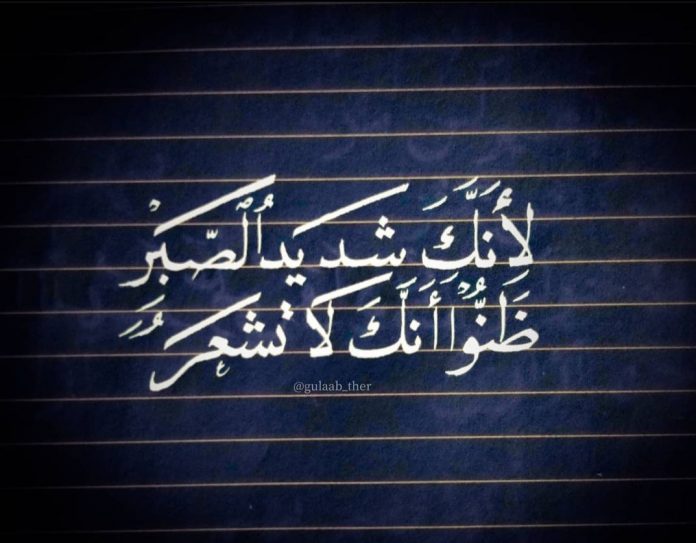
ART SCAPE – The legendary writing art dying a slow death

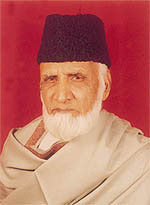
Calligrapher Syed Manzoor Uddin

Calligraphy. Aware of this word? Or heard it somewhere? It is an art, now a rare art almost on the brink of extinction. It is an art of writing a decorative language that begins from right to left for instance, Urdu Arabic, Persian, Pashto, Kashmiri and Sindhi.

The art, ‘kitabat’ as it is commonly known, owes its origin to a period before the Mughal reign in India. At that time, a town called ‘Bayana’ in Rajasthan had an entire mohalla, ‘Katibaan’ (meaning calligraphers who write books only), whose residents’ vocation was calligraphy. The art saw its golden times during the Mughal era.

Emperors Babar, Jahangir, Darashikoh, Alamgir, Aurangzeb and the last Emperor-in-exile Bahadur Shah Zafar were not only experts in calligraphy but they also ordered that it was a must-learn art, an order that was first carried out in their own homes.

It is also said that Aurangzeb brought home the bacon by writing the Quran in calligraphy. Once, when his aging wife requested him to keep a maid for her, as she was unable to do the household chores alone, the emperor was believed to have replied, “How do you expect me to hire a maid for you with such a low income?”

For the people hailing from the upper strata, learning this art or ‘funne khattati’ was considered a proud privilege. They would use the language primarily for writing beautiful, artistic letters to their near and dear ones and also for incorporating this skill in various other forms of art.

Once, Muradabad was also considered a hub for calligraphic works for it had various printing houses for the purpose.

The art was used later to write books of literature and religion by various calligraphers, so also epitaphs and engraved writings on the monuments all over the world. On the three gates of the wonder of the world, the Taj Mahal, Surah Yaseen (a surah, which is considered as the heart of the Quran) is inscribed in splendid calligraphy. Similarly, in all monuments, which are a remarkable example of Mughal architecture, calligraphy in the form of writings on its various facets can be witnessed till today. These calligraphers were invited from different parts of the world. Most of them find their names mentioned at the end of their creation in all these structures.

Earlier, several pens or ‘kalam’ of 7–8 inches with different width, made up of wood and ‘sarkanda’ (cow dung) were used to write artistically. Its ink too was home-made. Kanpur was considered to be the hub for such ink-making, where it was a small scale industry. As the art saw new developments, so did its pens. Now, America and China are the main pen nib makers and Germany has replaced the wood pen with steel one.

The art started witnessing its decline in early 90s, when it was learnt that China and Pakistan had created a software that would replace the art to merely a mechanical work and render many jobless. The threat has come true in many aspects. Sadly enough despite having a glorious history, this legendary art is dying a slow death.

Seventy-nine-year-old Syed Manzoor Uddin is a renowned name in the field, who has to his credit around 600 books written on history, literature, prose, poetry and religion in Urdu, Arabic, Persian, Sindhi, Pashto and Kashmiri and who has countless works done and distributed in Bahrain, Sharjah, Dubai, Pakistan, Iran and Turkey. He says, “In the days of yore, a ‘khushnavees’ (calligrapher) would be awarded even a palace by the kings and queens for their work in the field. Now, those who want some work to be done in calligraphic style, refuse to pay even Rs 25 for such an arduous work.”

Syed Manzoor has written coronation/invitation, (sahra) for the Shah of Iran, rare letters of the world’s who’s who, addresses of ex-prime ministers of India, and poems for the showman Raj Kapoor’s elder daughter on her wedding and several such works. He has now stopped practising this art. He owes the reason to his age and the invasion of computer that has almost destroyed this art. “I have served the artistry for more than five decades. The hopeless times have done a great injustice to this rare writing form. Now, I don’t feel like working,” he reasons.

With the onset of computers, the art has suffered a setback mainly because the computers do not have softwares that could parallel the manual skill. Moreover, the graphic designers mainly do not have a good command of Urdu. Hence, the work they do on the computer is full of grammatical mistakes, Syed Manzoor observes.

Unfortunately, for such an art, there is no recognition in the form of any award. Most awards instituted by one or the other organisations, have now been withdrawn.

Take for example, the Information and Broadcasting Unit of Press Trust of India had a National Award for printers and designers that included calligraphers also. But the practice saw its last year in 1988.

Similarly, Ghalib Institute also had an award for the same and 15 years back this award was also withdrawn.

The Urdu Academy, however, still gives an award in this category that carries a citation and Rs 11,000. This year it is awarding, Mohd Yusuf, a calligrapher of repute though his work does not diversify in other languages as of Syed Manzoor.

An ailing and aged Mohd. Yusuf, who did India proud through many of his works, is now living in penury with his several family members in a small room, enough only for two men in old Delhi. While many calligraphers, for whom it was the only source of earning sometime back, now sit on pavements in the vicinity of Jama Masjid and get just a measly amount for their labour of love.

The art of calligraphy has mainly suffered because of lack of promoters. “Only in last November, the Ministry of Human Resource and Development had organised an Urdu Kitab Mela at Lal Qila ground. It turned out to be a major fiasco for this form of art. Even the rent for the ground, Rs 3,000, could not be recovered in the 11-day fete. Only two persons turned up all these days. And they too thought that a sum of Rs 25 was high for getting their names written in a calligraphic style. Even someone from the famous Rajshri Production bargained for a rare pen, used in the art and managed to buy it for just Rs 3,” recalls Syed Salahuddin, the disciple and son of Syed Manzoor.

Here, slogans were shouted against Mr Hamidullah Bhatt of Qaumi Council, who was blamed for not doing enough publicity for an art though he received a package for it. The condition of dying art was witnessed at the fete by Civil Aviation Minister Shahnawaz, Chief Minister Sheila Dikshit and HRD minister M M Joshi.

Salahuddin asks, “When a doctor can be awarded for operating upon the Prime Minister. There is an award for Hussain’s brush; even for a best citizen. Then why not for a calligrapher? Why not my father and guru, who burnt the midnight oil to prepare 600 books and countless other works for many ministries all over the world. Why can’t he be recognised for his contribution to the art?” Ironically, Salahuddin, who wants to carry forward this artistic legacy, finds no sponsors for it. He also tries hard to get an award for his aged father from the government.

Although a few organisations and individuals are doing some work in the domain, that is not sufficient. For example, Urdu Academy still provides a two-year course on calligraphy that includes computer calligraphy in its second year. While in the first year, the manual expertise in the Urdu language and design is taught so that they do not commit errors that today’s so-called computer calligraphers are committing. But, unfortunately the learners there come only from the aged and financially week backgrounds, who learn the art only to make fast bucks. In fact, the academy pays a scholarship of Rs 150 to teach this art!

“I see several grammatical and other mistakes in Urdu newspapers and names of roads, lanes, bazaars in Urdu are mostly wrong because the language is not known to those who get the work done on computers by inefficient people,” moans Syed Manzoor. However, he is happy about the Urdu software that has come in the market now as he is reminded of what Dr Zakir Husain’s said once, “The language that does not have its type face, dies its own slow death.”

A reputed calligrapher, Anees Siddiqui is known to be compiling a dictionary of calligraphers in India.

The art, however, still needs a helping hand. Will the recognition ever come to the dying art and its artists? Will the proud heritage of India be saved? Only time will tell.

source: http://www.tribuneindia.com / Tribune India / Home> Culture> Artscape / February 22nd, 2002

Meet Sobia Mushtaq, a self-taught calligrapher from Kashmir

Bandipora District (Kashmir) /JAMMU & KASHMIR :

During Sultan Husain Shah’s reign, Mir Ali Haft Qalam came to Kashmir from Iran. He was a noted calligrapher. Bestowed with the title of Haft Qalam, Mulla Bakir Kashmiri was another famous court calligrapher of emperor Shah Jahan. Numerous Kashmiri calligraphers carried the legacy of calligraphy and passed it on to generations. Sobia Mushtaq is one such passionate lover of calligraphy.

Kashmir, which is often referred to as the land of Sufi saints, has always been famous for its rich culture and heritage. The values brought in by the scholars and saints hold great importance in the lives of the Kashmiri people. According to the Archeological Survey of India, one such art method i.e. calligraphy was introduced to Kashmir by the scholar saint Sharaf-ud-Din Bulbul in the fourteenth century A.D.

Despite the ongoing conflict and its severe impact on the mental health of the people, Kashmiri people continue to flourish with their centuries-old craft.

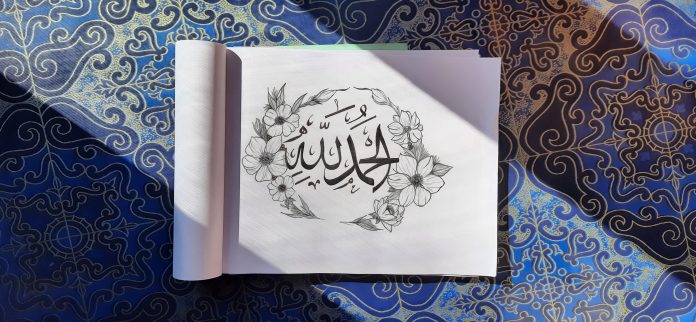
“The roots of Arabic calligraphy are strongly embedded in Kashmir. They connect us to our spiritual being,” says Sobia Mushtaq, a 23-year-old young calligrapher from the Bandipora district of North Kashmir. “Arabic Calligraphy is a way of connecting to God,” she adds.

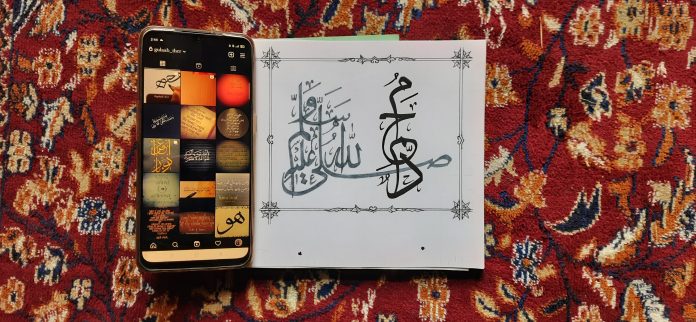
Sobia started doing calligraphy when she was in 7th standard but had to leave it as studies took most of her time. Sobia says she was always passionate about the art of calligraphy. She completed her post-graduation in English last year and is currently preparing for competitive exams. After completing her PG, she decided to take up the art and started posting her calligraphy works on social media.

Soon people began to like her calligraphy and she started getting orders. She happily says, “People like my work and my family has always encouraged me to carry on with this artwork”. Whatever little money Sobia makes from her work, she buys pens, paint, ink and papers.

“Sobia has a thirst to learn everything about calligraphy. We are proud of her work,” says her sister. “She is passionate about her work. That is what brings sharpness in her writing,” her sister adds.

Sobia mainly does Arabic calligraphy. She used to make sketches but calligraphy is her main passion.

“Calligraphy enriches faith, connects me to the Quran. It helps me to strengthen my faith and draws me closer to Allah,” she says.

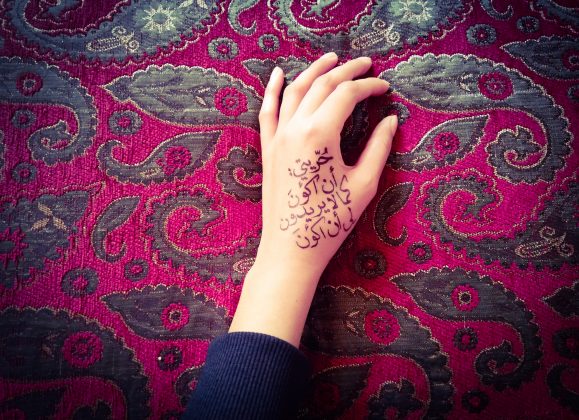
Sobia does name calligraphy, she likes to do calligraphy of resistance poetry, but her passion is in Arabic calligraphy.

With the emergence of technology, every design is a click away but, “what makes one a good calligrapher is practice and willpower.” Sobia opines, “The calligraphed artwork has its charm.” For Sobia, the smell of ink brings the hidden essence to the art.

Sobia, being a self-taught calligrapher says that she learns by practice and by seeing videos online but she is against plagiarism of artwork. “One should come up with something new. I have imitated and used the traditional techniques to convert them into modern calligraphy,” she said.

In one of the statements issued by the Archeological Survey of India, during Sultan Husain Shah’s reign, Mir Ali Haft Qalam came to Kashmir from Iran. He was a noted calligrapher. Bestowed with the title of Haft Qalam, Mulla Bakir Kashmiri was another famous court calligrapher of emperor Shah Jahan. Numerous Kashmiri calligraphers carried the legacy of calligraphy and passed it on to generations.

Arabic script and Kashmiri script are similar. “I write Arabic and with a slight change I write Kashmiri,” Sobia says while sharing her aspiration to do wall calligraphy in future. She wants to do calligraphy on the walls, tombs and shrines in Kashmir.

For Sobia, Arabic calligraphy is the best example of learning by doing.

Among many cultural artefacts that Mughal’s introduced in Kashmir, calligraphy is one of them. “These things are a part of our culture. Calligraphy is flourishing now and the young generation is inclined towards this art,” says Sobia.

The famous Spanish painter Pablo Picasso once said, “If I had known there was such a thing as Islamic Calligraphy, I would never have started to paint. I have strived to reach the highest levels of artistic mastery, but I found that Islamic Calligraphy was there ages before I was.”

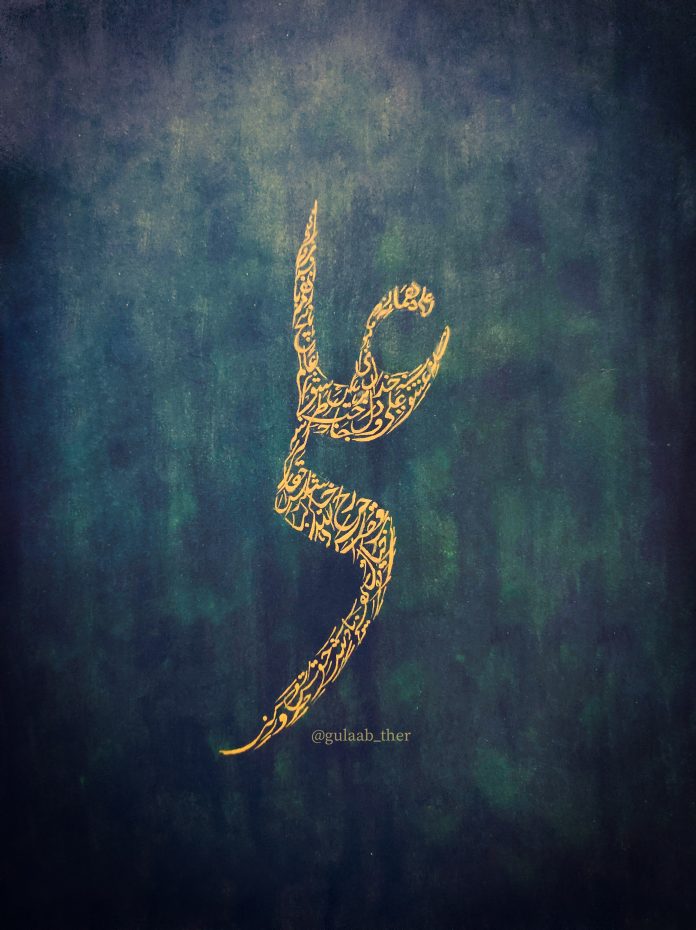
Sobia says she does dual calligraphy combining modern backgrounds with Islamic calligraphy.

Frequent internet shutdowns in Kashmir have impacted every aspect of Kashmiri people’s lives.

“Under lockdown, we were not able to get our material and we were not able to deliver orders on the proper time, ran from ink and other items,” Sobia says.

Talking about the other side of the internet shutdowns, Sobia says that it helped her to focus more on her work. “This seclusion, without the internet, helped me to devote myself to this art,” she says.

Sobia wants the younger generation of Kashmiris to learn this art. “It tells us about our faith. Whenever I write down any verse, I search for the meaning and try to understand it before writing. This is how it enhances my faith,” she says.

The pens like kamish, bamboo, celi, java handam are expensive and none of them are available in her district. She usually orders her pens from a store in Srinagar, the summer capital of Kashmir. Elkhatt Store in Srinagar is the store that provides pens and ink for calligrapher lovers. Sobia proudly says that she started with a set of Rupees 200 basic pens and she still uses them.

“Tools don’t make an artist but the artist makes the tools,” Sobia says. Sobia lives in Bandipora and she hardly gets the paper there. Either she orders online or goes to Srinagar to get her calligraphy equipment.

“If one has the will they can do good calligraphy with the basic available resources. When people DM me asking about my art and the technique used, I happily share with them,” she says.

“The artists don’t reveal their secrets, but I think they should reveal the secrets so that this art could flourish and more people may come forward. If they share their art and secrets their art will propagate otherwise that will be confined to themselves. All it takes the practice and technique to handle the brush and tools,” she adds.

Sobia wants to open a calligraphy store one day. “It is important to get orders. This enhances confidence and also helps to get resources,” she says.

source: http://www.tcnpositive.net / TwoCircles.net / Home>TCN Positive / by Musheera Ashraf, TCNpositive.net / March 05th, 2021