Tag Archives: Dr Mukhtar Ahmed Ansari – Chancellor – Jamia Millia Islamia

Abbas Ansari Carries on His Family’s Political Legacy in Mau with Aplomb

Mau, UTTAR PRADESH :
Mau /New Delhi :

In a significant development in Uttar Pradesh politics, MLA Abbas Ansari has regained his legislative seat following the Allahabad High Court’s stay on his conviction in a hate speech case. The ruling has brought temporary stability to the Mau constituency, ending months of uncertainty surrounding the young leader, whose political journey has both been eventful and turbulent.

The High Court stayed the sentence handed down by the MP-MLA special court which had convicted Ansari for making hate speech. Following the court’s decision, the Uttar Pradesh Assembly secretariat reinstated his membership, averting a potential by-election in the constituency. Political analysts observed that this development sent a clear message about judicial fairness and the resilience of regional political dynasties.

Speaking on his reinstatement, Abbas Ansari expressed relief and gratitude, stating, “I am grateful to the judiciary for its fair judgment. My focus remains on serving the people of Mau and continuing my family’s legacy of public service.” The decision not only reinforced his political position but also stabilised the local political landscape, which had been in flux since his initial disqualification.

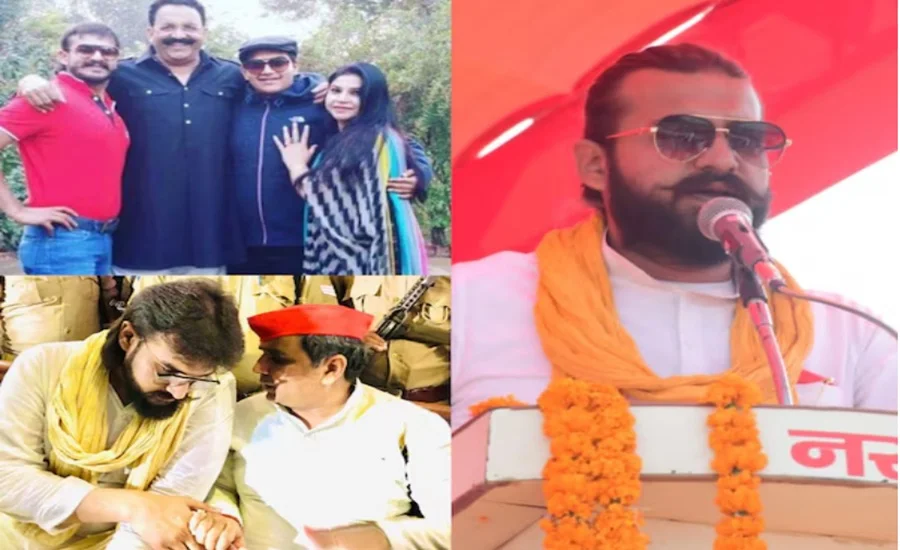
Abbas Ansari’s entry into politics is deeply rooted in his family’s longstanding political and social influence in eastern Uttar Pradesh. Born on 12 February 1992, he is the eldest son of the late Mukhtar Ansari, a five-time MLA from Mau whose influence extended across both the Muslim community and the broader electorate. Mukhtar Ansari’s death on 28 March 2024 in Banda due to a heart attack attack left a political vacuum, which Abbas Ansari has stepped in to fill.

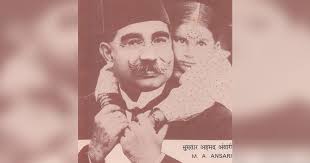
Abbas’s grandfather, Dr Mukhtar Ahmad Ansari, was a prominent figure in India’s freedom struggle and held leadership positions in both the Indian National Congress and the All India Muslim League. Dr Ansari also made significant contributions to Muslim education and was among the founding members of Delhi’s Jamia Millia Islamia University.

The political engagement of Abbas Ansari’s extended family further underscores the depth of his inherited influence. His uncles, Afzal Ansari and Sibgatullah Ansari, remain active in regional politics, with the former representing Ghazipur as a Member of Parliament for the Samajwadi Party and Sibgatullah having served twice as an MLA after a career as a teacher. Even Abbas’s great-grandfather, Subhanullah Ansari, held leadership roles in municipal governance. This multigenerational involvement has cemented the family’s influence in the political and social fabric of eastern Uttar Pradesh.

Before entering the political arena, Abbas Ansari distinguished himself as a national-level shooting champion. He specialised in skeet and shotgun shooting and won his first gold medal at a national championship in 2011. Over the years, he became a three-time national champion and represented India at international competitions, including the Shooting World Cups held in Germany and Finland. His dedication to sport, discipline, and achievement in competitive shooting reflect qualities that he later channelled into his political career.

Abbas completed his schooling at GD Goenka World School in Gurugram in 2011 and subsequently earned a degree in Business Management. In 2016, he decided to leave his sports career behind to enter politics, joining the Bahujan Samaj Party (BSP). His sports background helped him build an image of a young, energetic, and disciplined leader, appealing especially to the youth in eastern Uttar Pradesh.

Abbas Ansari’s first political challenge came in the 2017 Uttar Pradesh Assembly elections when he contested from Ghosi on a BSP ticket at the age of 25. Despite losing to BJP’s Fagu Chauhan, the experience provided him with insights into electoral strategy and grassroots politics. In 2022, Abbas shifted to the Suheldev Bharatiya Samaj Party (SBSP), an ally of the Samajwadi Party, and contested from Mau, a constituency traditionally held by his father. He campaigned vigorously, emphasising continuity, public service, and development. “The legacy of my father is a responsibility I carry with pride,” he remarked during the campaign.

The electorate responded positively. Abbas Ansari won the Mau Sadar seat by a margin of 38,116 votes over BJP’s Ashok Singh, officially stepping into the political shoes of his father. At the time of filing his election affidavit, he declared assets worth approximately ₹9.2 crore and stated he had no loans. Although he faced 13 criminal cases, including some linked to family controversies, his sports-oriented image and engagement with youth voters helped him establish credibility across communities.

Abbas Ansari’s political career has been marked by legal turbulence, similar to the experiences of his father. In November 2022, soon after his electoral victory, the Enforcement Directorate (ED) arrested him on charges of money laundering linked to family businesses. He was denied bail and remained incarcerated until 2024, serving time in Chitrakoot and later Kasganj jails. Reports emerged that even while imprisoned, he managed certain business dealings using his wife Nikhat Ansari’s phone and remained in communication with associates.

In May 2025, a special MP-MLA court sentenced him to two years for a hate speech made in March 2022, which led to his immediate disqualification under the Representation of the People Act. This development created uncertainty in Mau, with speculation about by-elections. However, in March 2025, the Supreme Court granted him interim bail in a separate case under the Uttar Pradesh Gangsters and Anti-Social Activities (Prevention) Act, 1986, allowing him temporary relief.

Compounding these challenges, Abbas’s mother, Afshan Ansari, faced multiple criminal cases, prompting authorities to freeze millions in family bank accounts. Afshan remains at large, with a police reward of ₹50,000 announced for her arrest. Despite these challenges, Abbas Ansari maintained a focus on his legislative responsibilities and public image.

The most recent and pivotal development came on 20 August 2025 when the Allahabad High Court dismissed the hate speech conviction and stayed the sentence. This allowed Abbas Ansari to resume his duties as MLA from Mau Sadar. On Monday (8 September), the Uttar Pradesh Assembly secretariat officially restored his membership, effectively halting discussions of a by-election and stabilising the political situation.

Political analyst Shamsher Ali commented, “Abbas Ansari’s reinstatement reflects both judicial fairness and the significant support he continues to enjoy in his constituency. It also demonstrates the resilience of political dynasties in eastern Uttar Pradesh.”

Abbas Ansari’s declared net worth has attracted public and media attention, especially after his reinstatement. According to his 2022 election affidavit, Abbas and his wife Nikhat possess substantial movable and immovable assets. His movable assets included cash, vehicles, jewellery, and firearms valued at over ₹1.12 crore combined. Specifically, Abbas held ₹1,75,000 in cash, a vehicle worth ₹28.89 lakh, gold and diamond jewellery worth ₹12.5 lakh, and firearms valued at ₹43 lakh. His wife Nikhat had ₹75,000 in cash and jewellery valued at ₹19.7 lakh.

In addition, Abbas owns five plots and houses across Mau, Ghazipur, and Lucknow, with a total declared value of ₹8.05 crore. Notably, he had no bank loans at the time of declaration, making the total worth of his declared assets free of debt. Abbas has consistently emphasised transparency in public life, stating, “I have always declared my assets honestly. The people of Mau have the right to know about their representative’s background.”

Beyond politics, Abbas Ansari and his family have been active in social welfare initiatives, especially focusing on education, health, and community development in eastern Uttar Pradesh. Local resident Ayesha Siddiqui said, “The Ansari family has always supported our community. Even amid controversies, Abbas has worked quietly to help families in need, particularly with education and healthcare.” The Ansari family’s social contributions, particularly for Muslim communities, have strengthened their connection with constituents beyond electoral politics.

Despite a career marked by legal and political challenges, Abbas Ansari’s future in Mau politics appears promising. With his legislative membership restored, he can now focus on constituency development, youth engagement, and addressing social welfare issues. Abbas stated, “My priority is the development of Mau. I want to focus on education, infrastructure, and opportunities for youth. Politics is challenging, but I am committed to serving my people with honesty and dedication.”

From national shooting champion to young legislator navigating complex legal, social, and political challenges, Abbas Ansari’s journey illustrates both the opportunities and obstacles faced by political heirs in India. His reinstatement also provides reassurance to Mau voters and the wider Muslim community, who continue to see him as a committed and capable leader.

Abbas Ansari’s story is one of resilience, inherited responsibility, and personal achievement. With a declared net worth of over ₹9 crore, a storied political lineage, and ongoing engagement in public service, he remains a significant figure in eastern Uttar Pradesh politics. The Allahabad High Court’s decision has stabilised his career, allowing him to pursue both legislative work and social initiatives without immediate legal uncertainty. Local observers remarked, “Abbas Ansari’s reinstatement is not just a personal victory; it is a moment of reassurance for Mau’s voters and the larger Muslim community in the region, who see in him a leader committed to their welfare.” Moving forward, his ability to balance political, legal, and social responsibilities will determine the consolidation of his father’s legacy and his long-term impact on the region.

source: http://www.clarionindia.net / Clarion India / Home> Editor’s Pick> Politics / by Mohammad Bin Ismail / September 10th, 2025

Hakim Ajmal Khans last resting place: in a forgotten corner of Delhi

NEW DELHI :

Hakim Ajmal Khan a philanthropist, freedom fighter, famous hakeem and nationalist is a well known personality.

So I was very surprised when I was told that his grave was I one corner of The Hazrat Rasool numa compound in Panchkuian Road of Delhi

Now it’s a slum

In between a whole row of beds tucked away in one forgotten corner sleeps one of the greatest leaders of our Freedom movement. Revered by Muslims and Hindus alike.

Yes it was Hakim Mohammad Ajmal Khan. I checked up his dated on the net to find they were correct.

The lady who lives there then showed me many graves of Hakeems from his family scattered around the beds and chores of daily life.

Amita Paliwal a Delhi historian and keen heritage lover informs me this is probably the famous Doctor’s lane where Bernier apprenticed to learn Unani medicine.

It may have been famous then but it’s forgotten now and I don’t know why his very rich trust( he had gifted most of his income to charity) and rich family doesn’t do something about it.

You can read more about him below I have taken it from

He was the founder of the Jamia Millia Islamia in Delhi. He is the only person to have been elected President of both the Indian National Congress and the Muslim League, as well as the All India Khilafat Committee.Hakim Ajmal Khan was born in 1863 to the illustrious Sharif Khani family of Delhi, family that traces its lineage to court physicians who served the Mughal emperor Babur, the founder of the Mughal Empire in India.

Khan studied the Qur’an and traditional Islamic knowledge including Arabic and Persian in his childhood, before studying medicine at home, under the tutelage of his relatives. All of whom were well-known physicians.

His grandfather Hakim Sharif Khan sought to promote the practice of Tibb-i-unani or Unani medicine and for this purpose, had setup the Sharif Manzil hospital-cum-college that was known throughout the subcontinent as one of the finest philanthropic Unani hospitals that charged no fees from poor patients.

Once qualified, Hakim Ajmal Khan was appointed chief physician to the Nawab of Rampur in 1892. Soon he met Syed Ahmed Khan and was further appointed a trustee of the Aligarh College, now known as the Aligarh Muslim University.

Hakim Ajmal Khan took much interest in the expansion and development of the indigenous system of medicine, Tibb-i-Yunani, or Unani. Khan’s family established the Tibbiya school in Delhi, in order to expand the research and practice of Unani.

As his family of Hakims served as doctors to the British rulers of India, in his early days Hakim Khan supported the British. He was part of a deputation of Muslims that met the Viceroy of India in Shimla in 1906 and even supported the British during World War I. In fact, the British Government awarded him the titles Haziq-ul-Mulk and Qaiser-e-Hind for his contribution to the expansion of the Unani system of medicine.

But once the British government changed its stance and sought to derecognize the practice of Indian schools of medicine such as Ayurveda and Unani, this turn of events set Hakim Ajmal Khan gathering fellow physicians on one platform to protest against the Raj.

Actually, Hakim Ajmal Khan’s political career commenced with his writing for the Urdu weekly Akmal-ul-Akhbar, which was founded in 1865-70 and run by his family.

Subsequently, when the British clamped down on the freedom movement and arrested many Muslim leaders, Hakim Ajmal Khan solicited Mahatma Gandhi’s assistance and together they joined others to start the Khilafat movement. He was elected the President of the Congress in 1921, and joined other Congress leaders to condemn the Jallianwala Bagh massacre. He was imprisoned for many months by police authorities. Hakim Khan’s pursued his political career side-by-side his medicinal and educational endeavours. Often, the interests overlapped.

Hakim Ajmal Khan resigned from his position at the AMU when he realized that its management would not endorse the Non-Cooperation Movement launched by the Indian National Congress. He envisaged a place of learning that would be free of government control. He worked towards this aim with the help of other Muslim luminaries. Together, they laid the foundations of the Jamia Millia Islamia (Islamic National University) in Aligarh in 1920, in response to Mahatma Gandhi’s call for Indians to boycott government institutions. The JMI subsequently moved to Delhi and slowly grew to be the prestigious university it is today.

Ajmal Khan served as its first Chancellor until his death. He was a key patron of the university, financially bailing it out of sticky situations throughout the rest of his life.

In fact, Hakim Ajmal Khan also established the Tibbia College for higher studies in medicine. Realizing the need for private funding, he simultaneously established a commercial venture the Hindustani Dawakhana to manufacture Unani and Ayurvedic medicines and issued a diktat that doctors practicing in the Sharif Manzil could only recommend medicines from the Dawakhana. The Dawakhana is known to have patented 84 magical herbal formulas.

Tibbia College is presently located Delhi’s Karol Bagh area. As a mark of respect to this man, Karol Bagh’s most popular part is still called Ajmal Khan Road.

Hakim Ajmal Khan died in 1927. In the ensuing years, both the Sharif Manzil and the Dawakhana have languished for want of upkeep and restoration.

Although Hakim Khan renounced his government awards during the freedom movement, Indians who appreciated his work and held him in high esteem conferred upon him the title Masih-ul-Mulk (Healer of the Nation).

Freedom fighter, educationalist and beyond doubt, the greatest contributor to Unani medicine in India in the 20th century: Hakim Ajmal Khan.

Dr. Khan died of heart problems on December 29, 1927. He was succeeded in the position of JMI Chancellor by Dr. Mukhtar Ahmed Ansari.

Rana Safvi is the author of the book “Where Stones Speak”.

source: http://www.twocircles.net / TwoCircles.net / Home> Articles / by Rana Safvi / May 08th, 2016

Dr Mukhtar Ahmad Ansari: A Committed Nationalist, Founder and 2nd Chancellor of Jamia Millia Islamia

Yusufpur- Mohammadabad (Ghazipur) , UTTAR PRADESH / NEW DELHI :

As Jamia celebrates 100 years of its foundation, we extend our gratitude to Dr Mukhtar Ansari for his contribution

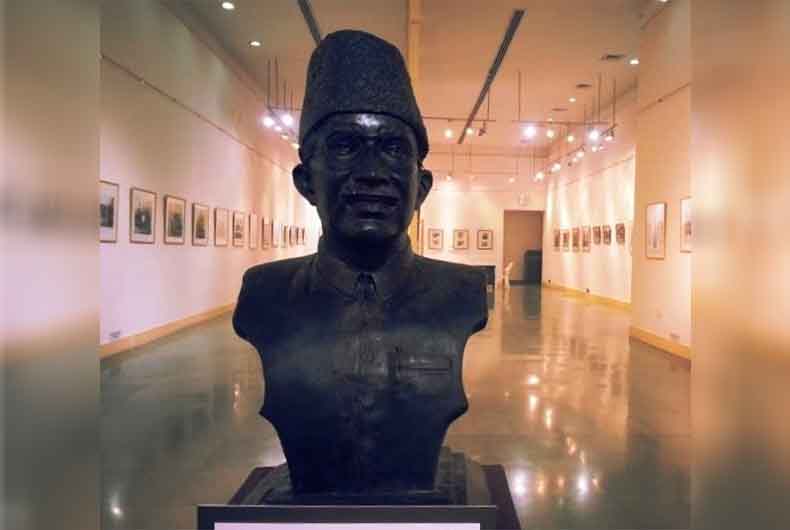
Dr M A Ansari’s bust during a photo-exhibition at M.F. Husain Art Gallery, JMI on 24 Dec. 2014. (Photo Courtesy: Aniket Dikshit)

The three most important persons who, undoubtedly, not only played the most significant role in the foundation of Jamia Millia Islamia, but also shifted it from the makeshift arrangement of Aligarh to Delhi’s Karol Bagh on 7 July, 1925, are Hakim Ajmal Khan, Abdul Majeed Khwaja and Dr Mukhtar Ahmad Ansari.

In view of upheavals faced in Aligarh, Jamia was shifted but problems existed. The problems that made many think that Jamia will not survive long. However, the trio’s efforts were no way trivial. They set the future course of Jamia as ‘an institution with a difference.’

Mukhtar Ahmad Ansari’s consistent efforts bore fruits. Not only did Jamia get its first house in Karol Bagh in 1931, it was also shifted to a much bigger plot of land of its own in 1936 in its present location in South Delhi’s Okhla, then a ‘non-descript village’ where now it has a panoramic sprawling campus.

However, the journey was not as simple as it might look to a casual viewer. Within those ten years, much sweat and blood went in to nurse the tender sapling whose seed was sown in Aligarh on 29 October, 1920. Dr Ansari’s contribution through all these years is one of the most unforgettable and astonishingly stout chapters in the history of Jamia Millia Islamia.

Born on 25 December, 1880 in Yusufpur-Mohammadabad, Ghazipur in eastern Uttar Pradesh, son of Haji Abdur Rahman and Ilahan Bibi, Mukhtar Ahmad Ansari, received primary and secondary education at Ghazipur and Allahabad, then studied medicine and graduated from Madras Medical College. He went to England from where he achieved M.D. and M.S. degrees. He earned the Master of Surgery degree from the University of Edinburgh in 1910. Being a top-class student and a pioneering surgeon he worked in some well-known hospitals of England where “he had a successful medical career”.

Dr Ansari had everything – money, fame, fortune, and life that could be lived luxuriously. This brief background is provided to underscore the significance of his passion, devotion and commitment not just for Jamia but for the country’s struggle for freedom as those were the years of heightened activism for independence during which Dr Ansari – through his active involvement in and unwavering support for freedom, emerged as a committed nationalist leader.

From England, Dr Ansari returned to India in 1910 and started medical practice at Delhi. His contact with leaders like Motilal Nehru, Hakim Ajmal Khan and Pandit Jawaharlal Nehru rekindled in him the desire to take part in the country’s political developments.

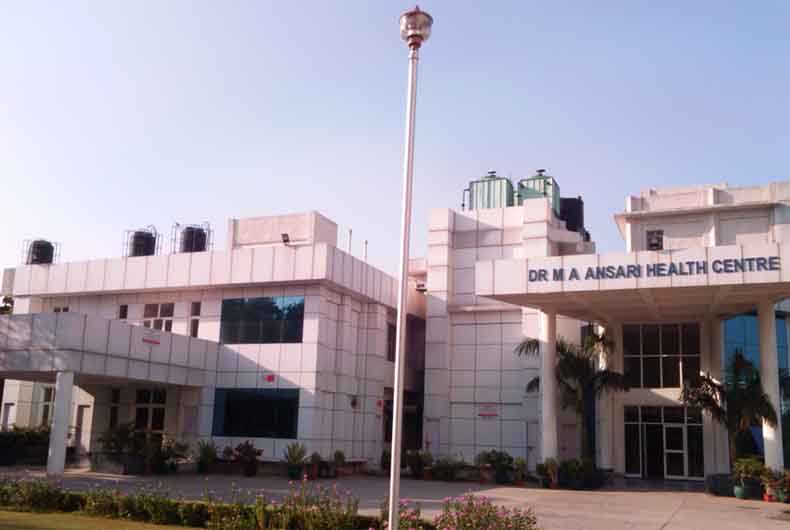
Dr M A Ansari Health Centre, Jamia Millia Islamia. (Photo: Manzar Imam)

During the Balkan Wars of 1912-13, he led a Medical Mission to Turkey to provide medical aid to the Turkish army. “The mission”, according to Dr. Burak Akçapar, Ambassador of the Republic of Turkey to India, “not only established two field hospitals, but also did other humanitarian and political work.”

This was among his first political works which won the hearts and minds of the Turkish public and leaders which created a deep bond between Turkey and Jamia. Many Turkish leaders and prominent literary figures visited Jamia. The series of ‘Extension Lectures’ that began was his brainchild. It was on his invitation that famous Turkish scholars Dr Husein Raouf Bey (1933) and Ms Halide Edib (1936) and Dr Behadjet Wahbi of Cairo (1934) then delivered their lectures at Jamia.

His role in the Khilafat Movement was pivotal and his presence both in the Congress and Muslim League was equally felt. His Delhi house ‘Darus-Salam’ was a meeting point for leading Congressmen. For many years he was General Secretary of Congress and remained a member of the Congress Working Committee all through his life.

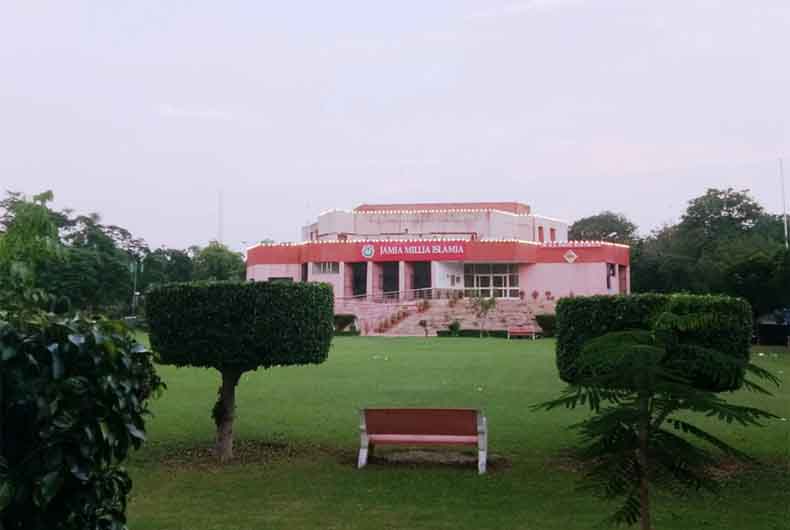
Dr M A Ansari Auditorium, Jamia Millia Islamia. (Photo: Manzar Imam)

Dr Ansari was the leader of the Khilafat delegation of 1920 which went to meet the Viceroy. He was also a member of the second delegation of Khilafat which went to England and other countries of Europe under the leadership of Maulana Mohammad Ali Jauhar. He was also president of the Delhi Khilafat Committee. During his presidential address at the Nagpur session of Muslim League in 1920 he demanded Swaraj.

When his name was proposed for the Secretary of the Foundation Committee of Jamia during its foundation, he requested not to appoint him for the post as it would require regular visits to Aligarh. Nevertheless, his interest in the activities of Jamia persisted.

Dr Ansari was among the front leaders of the Congress and was made its president in 1927. According to Prof Zafar Ahmad Nizami his name for the president of Congress was proposed at the instance of Mahatma Gandhi in 1924 who believed that “only he could make the efforts of Hindu-Muslim unity successful.”

Although Dr Ansari could not live long to see Jamia blossom into a beautiful university or see India breathing in freedom from the strangulating slavish life under the colonial rule, he had played his gigantic role both as a freedom seeker and as a founder of Jamia. He was a prominent member of the sixteen-member Foundation Committee formed on 29 October, 1920 to establish Jamia which would become a historic institution and the first one to be set up in response to call for boycott of the British Indian government-run, aided and supported academic institutions.

According to The British Medical Journal:

“As leader of the Congress movement, though at first opposed to the teaching of Gandhi on civil disobedience, he actively associated himself later with the various non-cooperative movements, and served at least one term of imprisonment.”

When it comes to Jamia as also to some other movements that were the currency of the 1920’s and 1930’s, it is very difficult to dissociate the trio of Hakim Ajmal Khan, Maulana Mohammad Ali Jauhar and Dr Mukhtar Ahmad Ansari, the “great Muslim trio of Indian politics”, as they were quite befittingly called so. However, each person has certain unique and individual personality traits and characteristics which separate him from others.

According to Dr Hamida Riaz (1988, p.119), Dr Ansari had a great passion for education. Initially, he highly appreciated Western education and culture and would keep himself completely away from what did not interest him. However, on the call of Mohammad Ali Jauhar, he participated in the medical delegation that went to Turkey and did a tremendous service. In a way, the beginning of international politics in India was made by Dr Ansari’s delegation.

Together with Hakim Ajmal Khan, Motilal Nehru and Maulana Azad, Dr Ansari formed a non-sectarian “Indian National Union.” He had opposed the Rowlatt Bill and participated in Home Rule and Non-Cooperation movements. In 1929, Dr Ansari formed the All India Muslim Nationalist Party. Besides Jamia, he was also associated with the foundation of Kashi Vidyapith, Benaras.

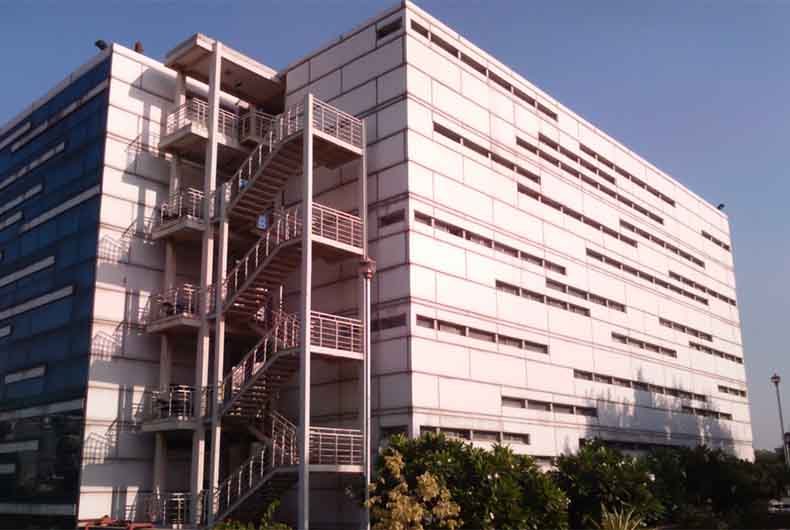
Faculty of Dentistry, Jamia Millia Islamia. (Photo: Manzar Imam)

Riaz (p.121) writes that all through his life he [Dr Ansari] “stayed away from sectarian groups” and continued his efforts to forge “Hindu-Muslim unity”. His wife Shamsun Nisa Begum too, was committed to the cause of women uplift.

Dr Ansari actively participated in the Jamia’s establishment, nurtured it, and, following the demise of Hakim Ajmal Khan in December 1927, served as its second Chancellor from 1928 to 1936. The financial needs that Hakim Sahab used to carry had fallen on his shoulder which he discharged diligently.

The “Ajmal Khan Fund”, set up exclusively for the purpose, was a result of his efforts. At a critical juncture when Jamia faced great financial crisis a Board of Trustees was created. Dr Ansari was appointed its chairman. It was at Gandhiji’s indication that industrialist Jamnalal Bajaj (1889-1942) was made its treasurer. Other bodies were also formed in which he was there.

As Chancellor of Jamia, Dr Ansari could not be an employee and Life Member of the ‘Anjuman Talim-e-Milli’. However, he extended all his support to all the bodies and continued to serve Jamia all his life. Remembering the services of Hakim Ajmal Khan and Dr Mukhtar Ahmad Ansari during a lecture in Jamia on 26 August 2014, former VC and renowned historian Prof Mushirul Hasan (d. 10 December 2018), terming the duo as the “real founders” of Jamia, had said, “Ansari raised money for Jamia and Hakim Ajmal Khan provided nobility and support.”

As mentioned earlier, Dr Ansari did not live long after Jamia was shifted to its present place in the national capital. He passed away on 10 May, 1936 and buried in the Jamia graveyard.

A radio speech which Dr Zakir Hussain had prepared for the 1936 Foundation Day of Jamia, which Dr Ansari could not hear as he passed away before it, sheds enough light both on the impact Dr Ansari had on Dr Zakir Husain and on his character and sphere of activity. It read:

[Dr Ansari] set out for a journey from which no one looks back…Dr Sahab’s personality was a fountain of blessings…a mainstay for anyone in times of need. His heart was a refuge where many would seek solace for their heartfelt grief.

As in life, in death too, he did not part ways from Jamia, writes Ghulam Haider, as he became the first among the founders of Jamia, to find his resting abode in Jamia Nagar where he was laid to rest three months before the primary madrasa of Jamia moved in.

Dr Mukhtar Ahmad Ansari, who died near Delhi on May 10th, at the age of 56, had been a member of the British Medical Association since 1909, and had gained distinction in India as a medical practitioner as well as in politics. In view of his services and to keep his memory as a prominent physician, Jamia has named its health centre and a big auditorium after him.

It was his sincerity for the national cause and his passionate commitment for Jamia that whenever Gandhiji would come to Jamia, he would definitely pay a visit to his grave. As Jamia celebrates 100 years of its foundation, we extend our gratitude to its architect for nurturing it with his consistent remedial care, unflinching commitment and great sacrifices!

[Sources: Celebrating India : Reflections on Eminent Indian Muslims 1857-2007, Meher Fatima Hussain (2009, Manak Publications, New Delhi), “Dr. Mukhtar Ahmed Ansari”, The British Medical Journal (Vol. 1, No. 3933 (May 23, 1936) p.1082, Mohammad Ali Jauhar, authored and published by Hamida Riaz (1988, Nagpur), Nuqoosh-e-Jamia (Jamia ki Kahani Jamia Walon ki Zabani or the Story of Jamia from Jamiites) by Ghulam Haider (2012, Maktaba Jamia Limited in collaboration with National Council for Promotion of Urdu Langue, New Delhi), www.jmi.ac.in.

Manzar Imam is a Ph.D. Candidate at Maulana Mohammad Ali Jauhar Academy of International Studies, Jamia Millia Islamia. He can be reached at manzarimam@rediffmail.com. The above article is ummid.com special series titled ‘Founders of Jamia Millia Islamia’. Read the first part here. To read the second article of the series click here. To read the 3rd article of the series, click here.]

source: http://www.ummid.com / Ummid.com / Home> India / by Manzar Imam, ummid.com / October 28th, 2020

Remembering the freedom fighter who grafted animal testicles onto humans to help build India

UTTAR PRADESH / NEW DELHI :

Dr Mukhtar Ahmed Ansari was a staunch Congressman and author of a book titled ‘Regeneration in Man’. Wednesday marks his 81st death anniversary.

Dr Mukhtar Ahmed Ansari was a freedom fighter who also grafted animal  testicles onto humans

India’s political leadership during the British Raj was dominated by lawyers and journalists. A noted exception was Dr Mukhtar Ahmed Ansari (1880-1936), one of Delhi’s richest men, who dexterously balanced his busy medical practice with a deep involvement with politics.

Ansari was a close companion of Gandhi and an icon of the Khilafat movement. The few scholars who have studied his life have focused solely on his role as a Congress leader, and on his skills on the negotiating table of high politics. His exploits with the scalpel have been ignored. More than 80 years after he died, on May 10, 1936, it is remarkable that forget any serious study, there is hardly any discussion about the hundreds of operations he conducted in India in which he grafted animal testicles – from bulls, monkeys and sheep – onto human beings.

Adviser to princes

Dr Ansari studied at Queen’s Collegiate school in Benares and at the Muir Central College in Allahabad (which was later incorporated into Allahabad University). He later joined the Nizam College in Hyderabad where he was given a scholarship in 1900 to study medicine in the UK. After earning a medical degree at the University of Edinburgh, he worked in London at Charing Cross hospital, the Lock Hospital and St Peter’s Hospital. He returned to India in 1910, and set up his practice in Calcutta before shifting to Delhi.

He acted as medical adviser to the princes of Alwar, Rampur, Joara and Bhopal. His two older brothers were well-known hakims, who practised the traditional unani system of medicine. They were close to the scholars at the respected Islamic school in Deoband. His own circumstances and family background proved crucial in his positioning as a key functionary during the Khilafat movement of 1919. This movement was launched by Indian Muslims to urge the British government to preserve the authority of the Turkish Sultan as Caliph of Islam with the disintegration of the Ottoman Empire after World War I.

A new science

Along with his political activity, Ansari turned his mind to a matter that has obsessed physicians for centuries: the quest for medical interventions to help ageing clients produce heirs. In the early 20th century, medical journals in Europe and America were increasingly documenting cases of xenotransplantation – the transplantation of living cells, tissue or organs from one species to another. It was through such articles that Ansari became interested in this field.

In his role as a medical practitioner, Ansari was also constantly faced with a large number of patients suffering from a “real or imaginary decline in their mental, physical and sexual powers”. His brothers attempted to treat such with traditional medicines. But Ansari looked to Europe for possible answers.

In 1921, 1925 and 1932 he visited Vienna, Paris, Lucerne and London and spent a considerable amount of time in laboratories, hospitals and clinics. He met and observed urologist Dr Robert Lichenstern, Eugen Steiach, Dr Serge Voronoff  – all of whom are considered pioneers in the field of grafting animal testicles onto humans. He also collected vast amounts of literature on the subject, sourcing books and journals from Germany, France, Switzerland, Austria and the US.

This procedure may now be ridiculed but in the Roaring Twenties there was quite the rush of men wanting to undergo these regenerative surgeries. Ansari offered a treatment to his clientele in India that was only available to the elite in the West.

Rejuvenating the nation

According to Ansari, there were a few key reasons why the people of India suffered from poor health. These included unhygienic surroundings, poverty and the lack of medical facilities, as well as seclusion and segregation of the sexes, and rules confining the choice of marriage partner to a limited circle.

In his 1927 presidential address to the Congress in Madras, he dwelt on the problem of healthcare in India.

He said:

“Sixty percent of the revenues of India is absorbed by the Military Department in the name of Defence of the country but the government ought to know that there can be no defence of the country when people are allowed to exist in such a state of utter physical degeneration. The real defence lies in tackling the problem of manhood and improving the general health of the nation.”

In the last decade of his life, Ansari conducted such testicle grafting operations on around 700 people. These included property agents, merchants, jewellers, bankers, provincial civil servants, sportsmen and labourers.

In a letter to Aziz Ansari, his cousin, the doctor wrote that Eugen Steinach “urged me to publish my researches (sic) and not to hide my light under the bushel”.

Ansari meticulously noted down around 440 cases of grafting that he had done. He monitored or kept in touch with these individuals for a period of three to four years after the surgery. In one case, he wrote that a wrestler whose testicles were badly damaged by an opponent and lost his “sexual power” for eight years underwent grafting and found that his sexual appetite was restored. In another case, a man in his early 50s, who was a heavy drinker and had contracted sexual diseases in his 30s, found his health to be deteriorating drastically. After Ansari grafted slices of a bull’s testicles onto the man’s gonads, he gained weight, became healthy, and started leading a normal life with a new wife. Through such case studies, Ansari emphasised that his surgeries resulted in the rejuvenation of patients, which added to the productivity of the nation.

He gave Gandhi a copy of his book Regeneration in Man, who read it with great interest in one day. Describing it as evidence of “research and great labour”, Gandhi, whose aversion to western medical practices is well known, asked his friend: “What is revival of youth worth if you cannot be sure of persistent physical existence for two consecutive seconds?”

But for the short, well-built, moustachioed doctor who played the role of Othello in a play while a student at the University of Edinburgh, these procedures were part of a larger vision for a “universal campaign against the disability of old age”.

source: http://www.scroll.in / Scroll.in / Home / by Danish Khan / May 10th, 2017