Tag Archives: Dr Salim Ali

Ali Hussain, the Unsung Bird Catcher Who Saved India’s Wings and Won Global Praise

Patna, BIHAR :

Born a bird trapper, Ali Hussain from Bihar became a guardian of India’s birds, working alongside top scientists and proving how traditional Muslim knowledge can serve the world’s wildlife
New Delhi / Patna :

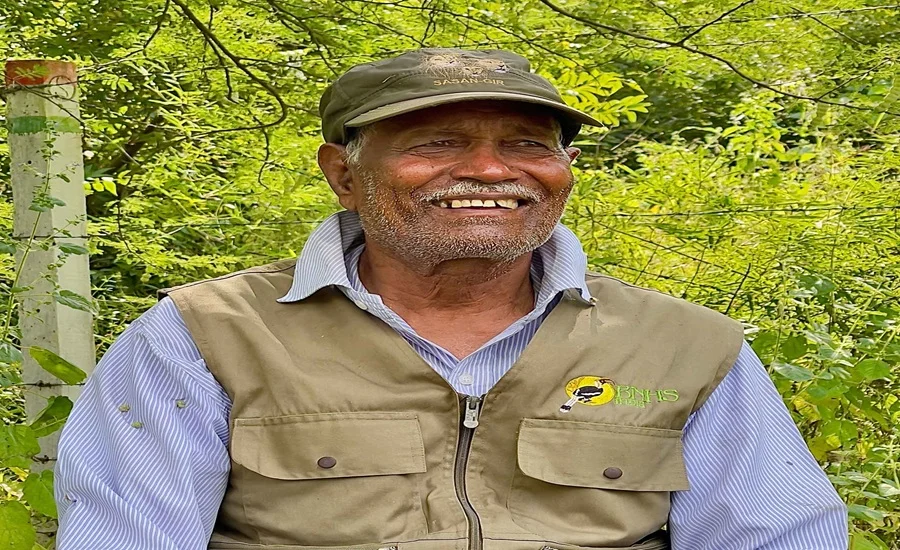
 When people first saw Ali Hussain walking through the fields of Bihar with bamboo cages and handmade nets, many thought he was just another bird catcher, and many called him that for years. But few understood what really made him special.

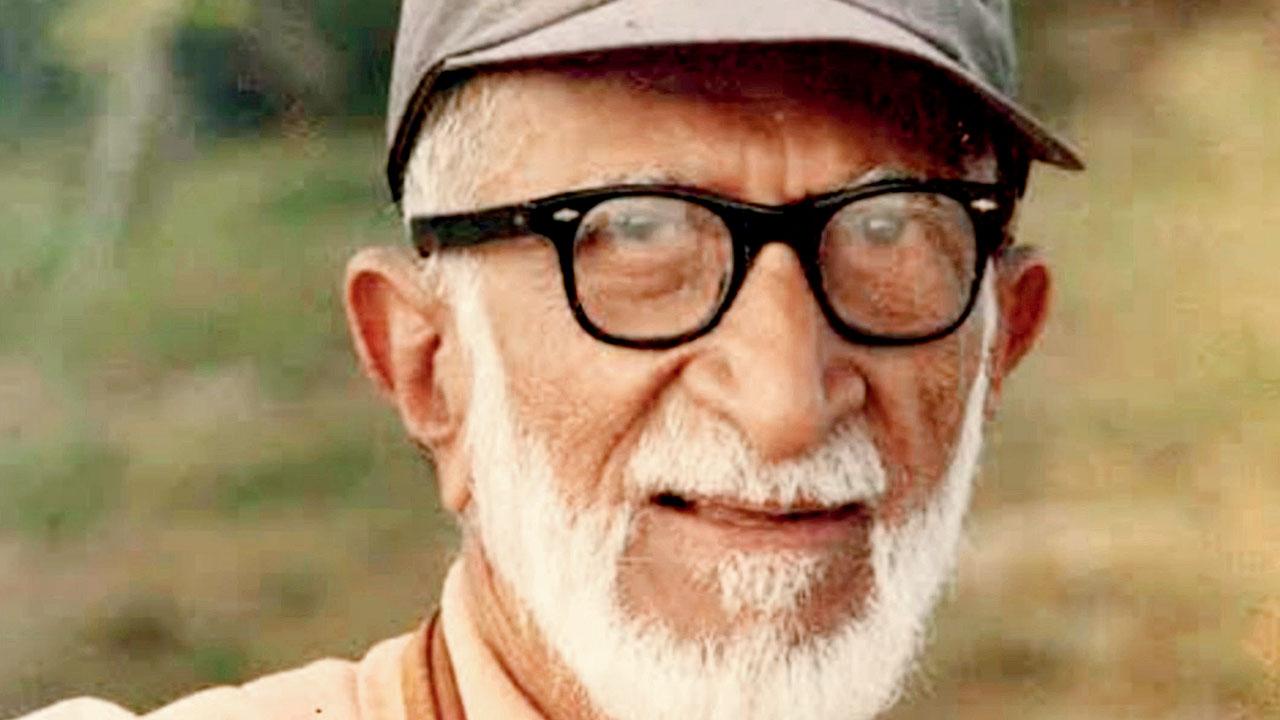
Ali Hussain, a quiet man from a family of traditional bird trappers, was more than what the eye could see. Behind his soft smile and weather-worn hands was a lifetime of wisdom passed down over generations. He had learnt to follow bird calls, understand their movements, and craft traps not to harm them, but to study and help them survive.

In the early 1960s, Hussain’s life changed forever. He met Dr Salim Ali, India’s most famous ornithologist, often called the “Birdman of India.” It was the start of a deep friendship and a shared mission. Instead of catching birds for trade, Hussain began working with scientists to catch birds for research and conservation.

“I had never met anyone like him,” Dr Salim Ali had once told colleagues at the Bombay Natural History Society (BNHS). “He handled birds like a doctor treats a child. Gently, with care. He knew more about them than many of us.”
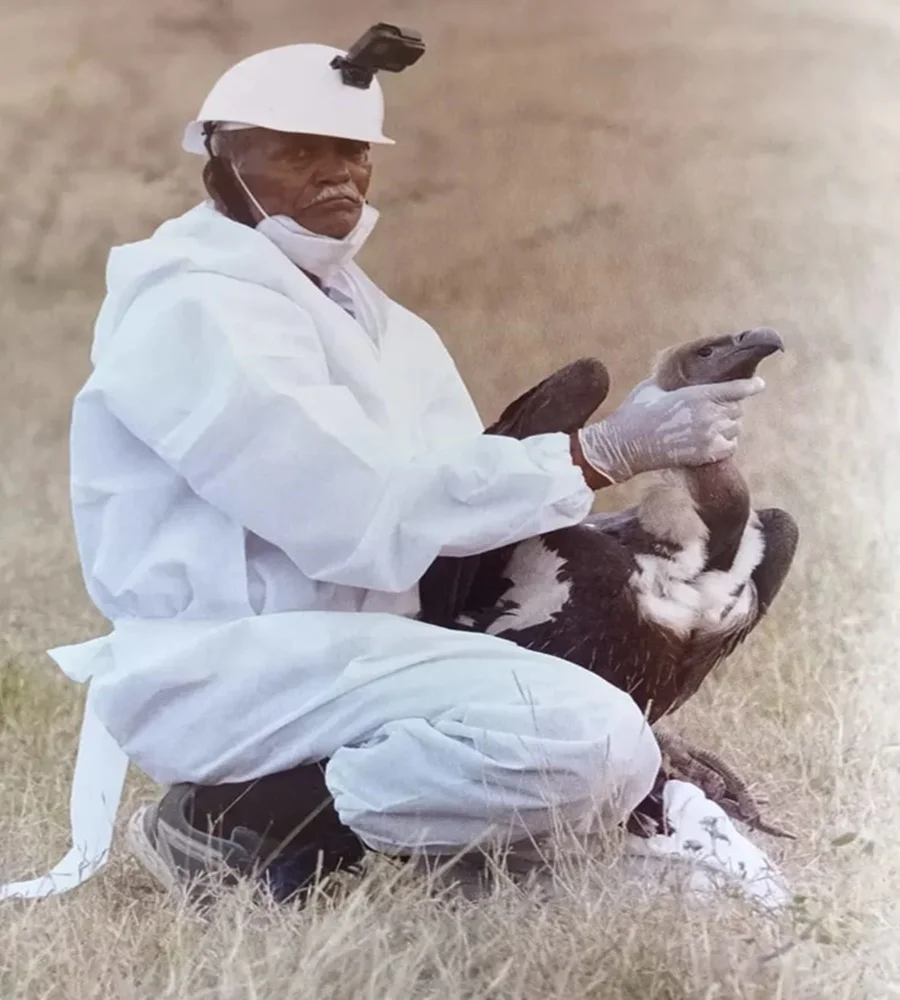
Ali Hussain helps capture and tag a vulture in Gir National Park. – Photo: Wildlife Division, Sasan-Gir, Gujarat

Hussain began travelling with BNHS teams across India, using his age-old skills to help ring thousands of birds. These rings, placed on birds’ legs, allowed scientists to track their migration and breeding patterns. And each bird was returned safely to the sky.

His fame didn’t stop in India. In the 1990s, American scientists from the Whooping Crane Recovery Programme invited him to the US. The whooping crane is one of the rarest birds in the world. Catching them was almost impossible until Hussain arrived there.

In just a few weeks, he safely captured 10% of the entire population without harming a single bird.

One American official said, “We were shocked. He caught birds we couldn’t even get close to. And they were all unharmed. It was a masterclass.”

For years, conservation efforts across the world relied mostly on modern technology — drones, satellites, and lab studies. But Ali Hussain showed that indigenous knowledge also has value.

“He never went to school,” said Mohammed Salim, one of his sons. “But he could read nature like a book. He knew where birds would land just by feeling the wind.”

His Muslim identity and simple lifestyle never stopped him from working with international scientists. In fact, it reminded many that people from rural and minority communities have a lot to offer when they are trusted and respected.

Even in his 80s, Ali Hussain never stopped helping. Young researchers from across India still come to his home in Patna, Bihar, asking him how to catch birds safely. His sons, trained under him, now assist with bird studies and continue the family’s work.

“Abba used to say, ‘Don’t hurt what sings. We’re here to protect, not harm,” recalled his eldest son, Iqbal Hussain.

For them, bird trapping was never about money. It was about respect — for life, for tradition, and for the Creator’s creation.

Despite his international praise, Ali Hussain was rarely honoured by Indian government bodies. No national award. No Padma Shri. No headlines on TV. Many believe this is because he was poor, Muslim, and from Bihar.

“People like him don’t fit the official image of a ‘scientist’,” said Prof Neelima Ghosh, an ornithologist from Delhi University. “But make no mistake, he taught us what our books couldn’t.”

Foreign universities invited him. Wildlife departments in the US and UK mentioned him in reports. Yet in India, he was mostly seen as “just a bird catcher.”

Ali Hussain’s connection with birds wasn’t just scientific — it was spiritual.

In many interviews, he said he felt that protecting birds was part of his faith as a Muslim. Islam teaches kindness to all living creatures, and he took that to heart.

“Birds pray too,” he once told a young researcher. “If we harm them, we stop their prayer.”
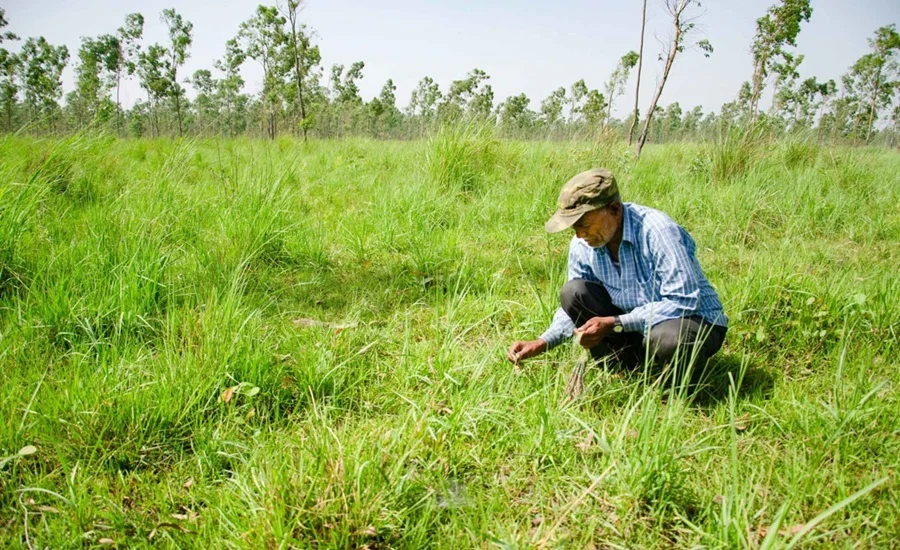
Ali Hussain sets traps to capture the Bengal florican in Pillibhit Tiger Reserve. Photo: Asad Rahmani taken from roundglas sustain

Today, his sons — Iqbal, Rashid, and Shafiq — run workshops on bird ringing and safe trapping. They continue to work with scientists from India and abroad.

“We grew up watching him work,” said Rashid. “He never rushed. He would wait for hours just to catch one bird the right way. Now we are doing the same.”

They are also trying to collect and record his trapping methods, which risk being lost as modern technology takes over. Many young Muslims from Bihar and West Bengal now visit the Hussain family to learn these skills.

In a country where Muslims are often shown in a bad light or made to feel like outsiders, Ali Hussain’s story is a powerful reminder of their quiet contributions. He didn’t protest, shout, or demand attention. He just kept working, helping both birds and humans.

“Ali Hussain should be in our school books,” said Dr Ramesh Gupta, a conservation writer. “Not because he was a Muslim, but because he was a great Indian.”

But maybe he deserves to be remembered because he was a Muslim too — a man who used his traditional knowledge, passed from father to son, to help save the very species others hunted.

He was not a scientist in the traditional sense. He didn’t wear a lab coat or speak English. He didn’t write research papers or held press conferences.

But to every bird that flew free because of him, and every student who learnt the gentle art of trapping from him, he was a scientist of the highest order.

He belonged to a generation of Muslims whose knowledge came from the land, who learnt by watching, listening, and respecting life around them.

India may not have celebrated him fully in his lifetime. But the birds did. And that’s something to think about.

source: http://www.clarionindia.net / Clarion India / Home> Editor’s Pick> Featured> Indian Muslims / by Mohammed Bin Ismail / July 08th, 2025

Book review. Living with Birds: The memoir of One of India’s Greatest Ornithologists

UTTAR PRADESH :

A memoir about birds, conservation and much more.

I first met Asad Rahmani in the late 1990s, when he was the director of the prestigious BNHS (Bombay Natural History Society), and did a few conservation-linked stories after talking to him. But I had been hearing a lot about him before that from my friend Rajat Bhargava, who had been mentored by Rahmani at AMU (Aligarh Muslim University), and would sing his praises day in and out. Rahmani encouraged Rajat to do research on the Finn’s Baya and later on the Green Munia.

It was Rajat who alerted me about Dr Rahmani’s memoirs Living with Birds. I owe him thanks because it is a captivating read – not only is it a fascinating personal history of an unusual man and the milieu he grew up in, but also packs in so much about conservation, the importance of science, birds, their habitat and the challenges they faced. Through Rahmani’s birding trips, the reader also gets to armchair travel to a great many places from Kashmir to Lakshadweep.

In wildlife circles, Rahmani is synonymous with the endangered Great Indian Bustard, a bird for which he undertook a padayatra. His love for bustards even took him abroad to Morocco and later to Saudi Arabia, where as an expert he was called to see if he could be part of a team to find the Arabian bustard, which had been declared extinct in 1977.

Idyllic childhood

The early part of the book is devoted to his childhood, which sounds idyllic, growing up as he did in large homes in several UP towns ranging from Meerut, Rampur, Badaun, and Saharanpur as his father was a district judge.

His early days reminds you of Gerald Durrell’s My Family and Other Animals, what with six siblings, two German Shepherds, a mountain goat (the Himalayan goral), parakeet, fish, poultry, toads, larvae that turn into dragonflies, and many more. Rahmani had his nose buried in books or spent time observing the natural world and doing accidental experiments. For instance, he rescued a peahen’s eggs and placed them under a domestic hen and the confusion that ensued when the pea-chicks hatched and mama hen had a hard time is really funny.

From a young age Rahmani could stand up to authority, and make his own decisions — evident when he refused to accompany his family when they were invited to dinner at the Nawab of Rampur’s palace (his Left-leaning sensibility was offended), or when he stood his ground against his father who wanted him to study engineering and even wasted a year, before being allowed to take up biology, or the way he took on a warden at AMU for shooting a peacock. An atheist, he also went through a hippie phase (minus the drugs) when the movement was at its peak in India.

The conservation work

If the childhood chapters are fascinating the meat of the book – Rahmani’s conservation work on birds and their habitats – is pure gold. You get a ringside view of the discussions and exchanges between him and stalwarts like JC Daniels, Dr Salim Ali and many others. Rahmani is generous in the way he highlights the works of several conservationists, and also affectionately his students. Yes, Rajat figures and I chuckled to see Rahmani did not spare some of his exasperating habits. His admiration for Indira Gandhi also shines through as he highlights how no other PM was as concerned about wildlife as her.

You get a whole bunch of fascinating information on the Floricans (the Lesser and the Bengal), the swiftlet, the hornbill, etc. The chapter on the vulture crisis especially resonated with me as I remember the huge discussions when the raptors declined in Delhi and surrounding areas.

Parallely, you get a picture of the big events in India. The way Rahmani links the events, the fear of Skylab falling, the solar eclipse of 1980 when everyone fearfully stayed indoors while he himself went into the field to see how birds responded to the eclipse is compelling. When Indira Gandhi was assassinated, Rahmani and Salim Ali were in Nannaj, chasing the Great Indian Bustard where news reached them, and he describes the anguish that Salim Ali felt very movingly.

A word about the publishers is in order. This book is published jointly by Juggernaut and Indian Pitta, India’s first dedicated book imprint for bird and nature lovers and conservationists. The deft touch of Anita Mani, the founder of Indian Pitta is evident. While this book will enthral bird lovers, there is much in it to fascinate the general reader too.

Check out the book on Amazon.

About the book :

Title: Living with Birds: The memoir of One of India’s Greatest Ornithologists / Author: Asad Rahmani / Publisher: Juggernaut/ Indian Pitta / Price: ₹599

source: http://www.thehindubusinessline.com / Business Line, The Hindu / HOme> Books> Book Review / by Chitra Narayanan / December 01st, 2024

Dive into Dr. Salim Ali’s world at Bombay Natural History Society’s exhibition

Mumbai, MAHARASHTRA:

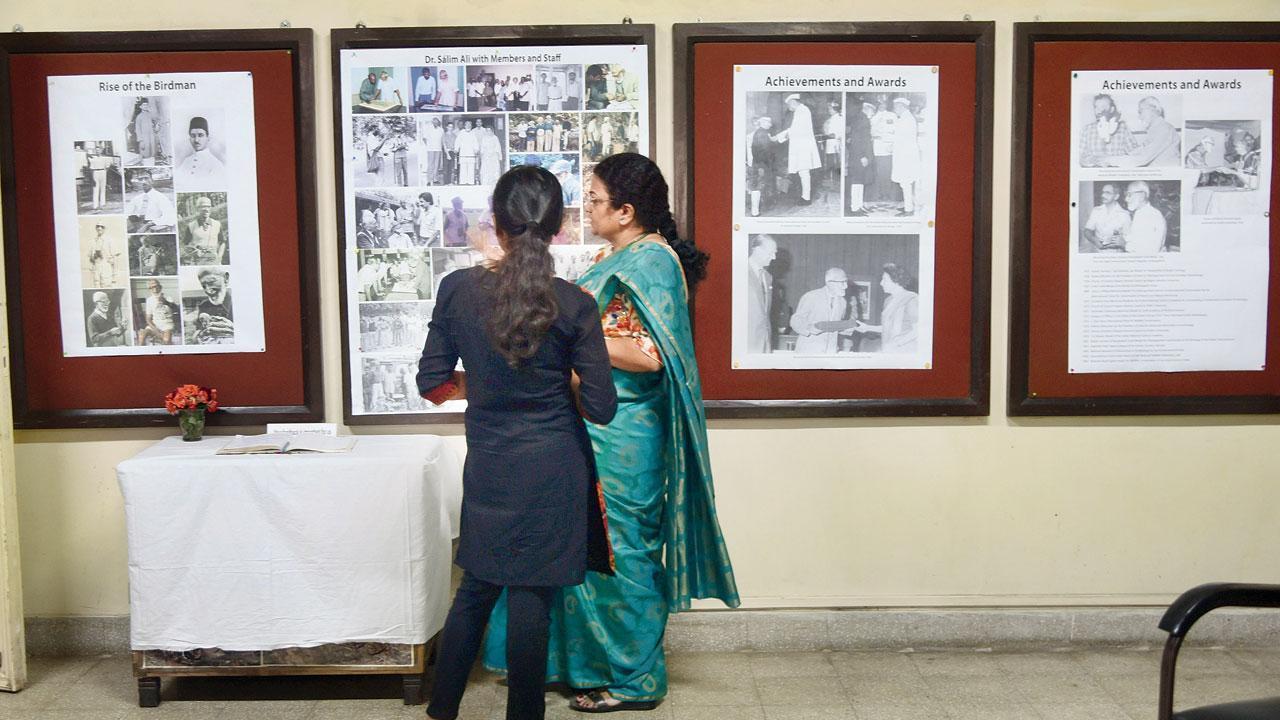
The ongoing exhibition on iconic birder Dr Salim Ali at Bombay Natural History Society offers rare insight into the meticulous life of the man who shaped India’s avian conservation programme.

Dive into Dr. Salim Ali's world at Bombay Natural History Society's exhibition
Barure (in saree) guides a visitor

In the quiet landmark of Hornbill House at Fort, a buzz is slowly developing. On International Bird Week (November 5 to November 12), the Bombay Natural History Society (BNHS) is celebrating one of the pioneers of Indian ornithology, Dr Salim Ali, with an exhibition from his personal archives. Today might be the last opportunity to peek into the life of a man whose efforts paved the way for conservation study in the country.

Dr Salim Ali. File pic
Dr Salim Ali. / File pic

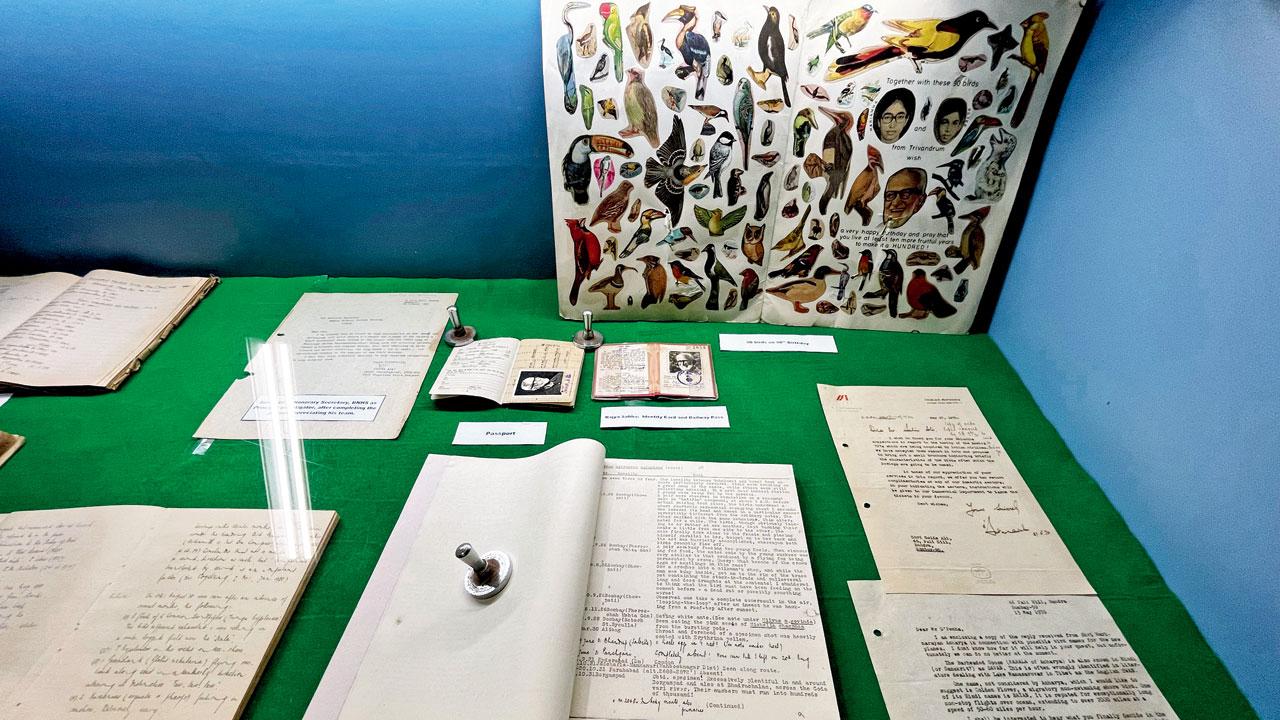
“Research and conservation were two very important facets of his life,” shares Kishor Rithe, director, BNHS. The exhibition brings to fore his professional expanse and personal meticulousness. The collection was brought together by curator and BNHS librarian, Nirmala Barure. The work began in 2014, she reveals. “The process is still ongoing since it is such a monumental record of correspondence, research and notes over a period of 60 years,” Barure remarks.

The tape recorder used by Dr Ali to record bird sounds

The theme for the exhibition, Rithe adds, is a focus on the layman. It includes correspondence to prime ministers, policy makers, as well as people on the ground — from forest officials to students and villagers. Barure points out that the correspondence also has some touching personal moments.

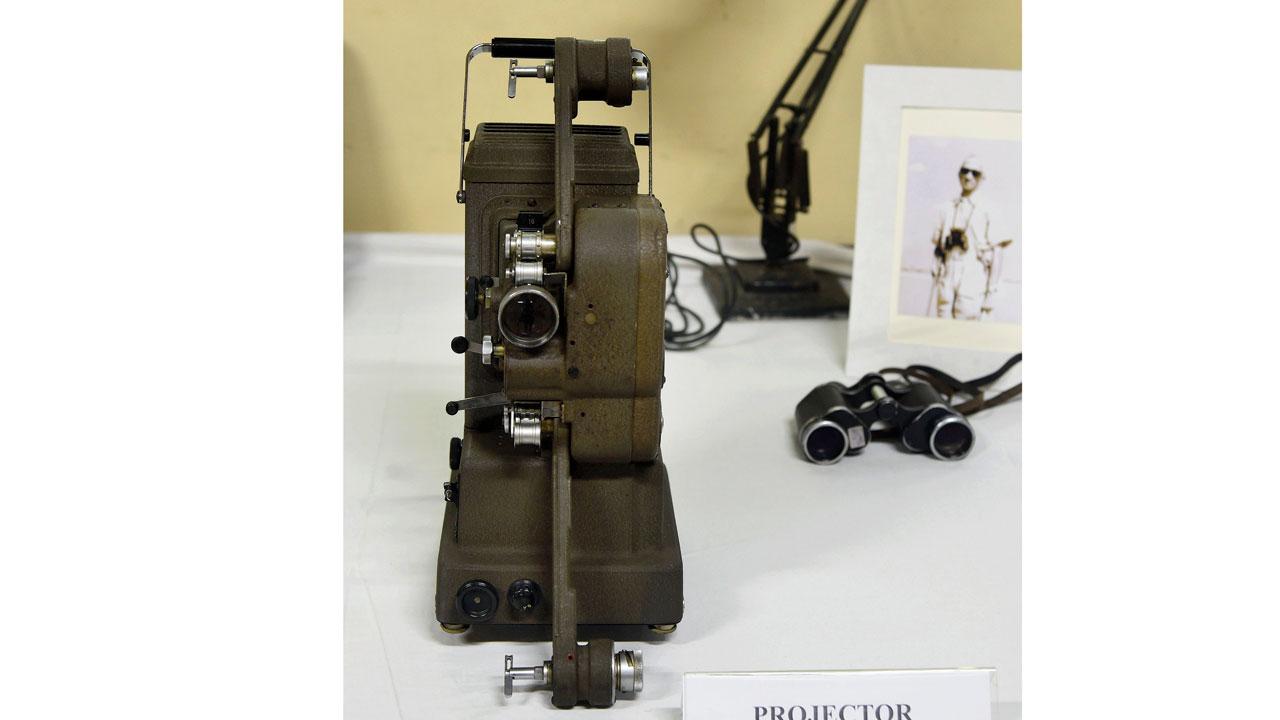
His filming equipment. Pics/Atul Kamble

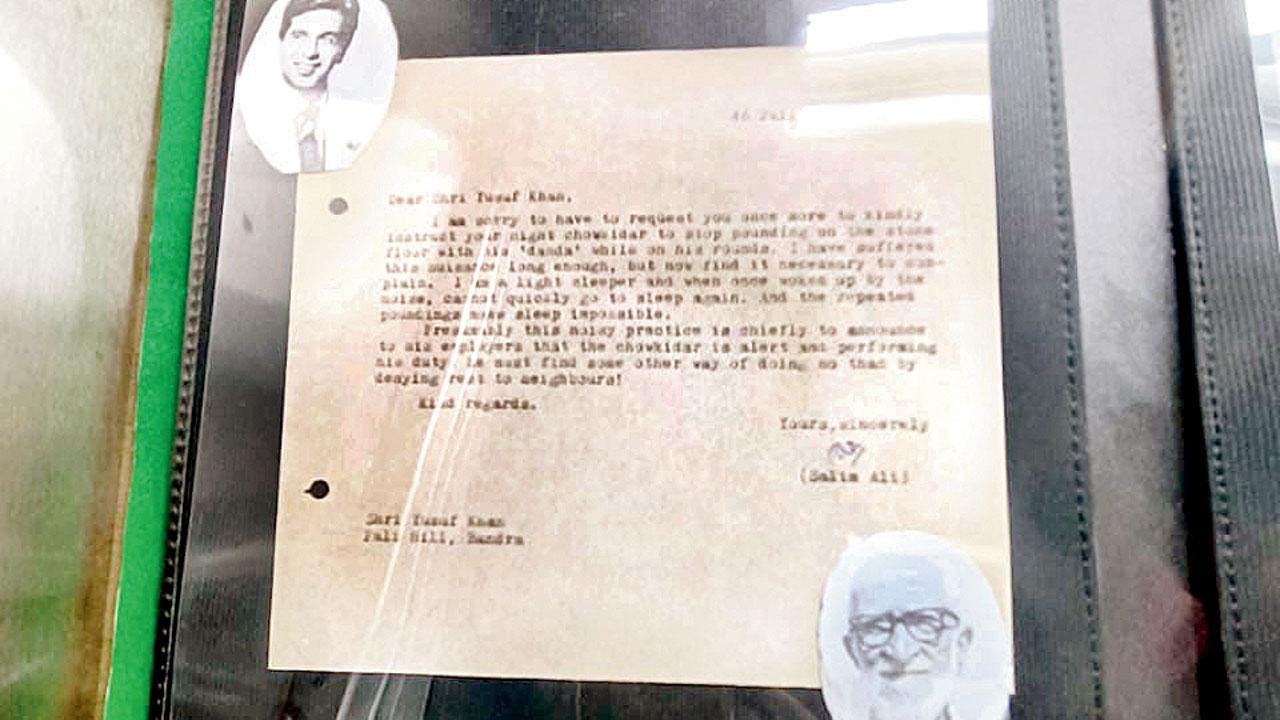
“There are greeting cards from Mrinalini Sarabhai, and a commendation letter from the famed botanist Ethelbert Blatter of St Xaviers’ College,” she notes. One of the more remarkable objects was a complaint written by Dr Salim Ali to a Bandra neighbour — Yusuf Khan aka Dilip Kumar — complaining about the noise the latter’s watchman made in the night.

A letter written by Dr Salim Ali to Dilip Kumar from 1975

Then, there is his equipment — from typewriters and cameras to telescopes and lenses. “While technology has advanced, this equipment is proof of how challenging it was for the early pioneers to make audio visual records and document their studies,” Rithe notes. Among the equipment on display is a rare find of 16mm films, shot by Dr Ali during his many journeys, that were preserved by the Smithsonian Institution in Washington DC.

Dr Ali’s portable typewriter

The society is already in the process of dedicating a space to honour Dr Ali’s collection. Rithe shares, “This year, we plan to begin renovation work on the space, and will dedicate some part of it to Dr Salim Ali’s collection. This exhibition is just a rehearsal of those plans.” For now, visitors would want to hurry to Hornbill House to catch a glimpse of the rare treasure trove. 

A collection of Dr Ali’s correspondence

On: Today; 10 am to 5 pm
At: BNHS, Hornbill House, opposite Lion Gate, Fort.
Call: 9594953425 
Log on to: bnhs.org

Kishore Rithe
Kishore Rithe

source: http://www.mid-day.com / mid-day.com / Home> Mumbai Guide News> Things to do News/ Article / by Shriram Iyengar (shriram.iyengar@mid-day.com) / November 10th, 2023

Ornithologist Salim Ali’s Forgotten Radio-casts Now Come ‘Alive’ in Book

Mumbai, MAHARASHTRA :

Ornithologist Dr. Salim Ali’s forgotten radio-casts now come ‘alive’ in a book. /
In memory of Ornithologist Dr Salim Moizuddin Ali.

Dr Salim Moizuddin A. Ali (November 12, 1896-June 20, 1987) was the first Indian to conduct systematic bird surveys across undivided India and even later, and then penned several bird books which popularised ornithology in the sub-continent.

Mumbai :

In a unique initiative, the forgotten radio broadcasts of legendary ornithologist, the late Dr Salim Ali have been compiled and brought ‘alive’ in a book form, which will be released on November 12, marking the 125th birth anniversary of the ‘Birdman of India’.

Dr Salim Moizuddin A. Ali (November 12, 1896-June 20, 1987) was the first Indian to conduct systematic bird surveys across undivided India and even later, and then penned several bird books which popularised ornithology in the sub-continent.

The book — “Words For Birds” — edited by renowned author Tara Gandhi, comprises all the 35 broadcasts of Dr Ali on All India Radio (AIR) — from British India to Independent 1980s — probably unheard of by most people in the current century.

“I had worked with Dr Salim Ali for long… I have even worked on his other papers and documents and I came across these broadcasts that are well-preserved by BNHS,” the book editor Gandhi told IANS briefly, as the book awaits official release.

It will be unveiled as part of the ongoing 125th birth anniversary celebrations of the great ornithologist conferred with the Padma Vibhushan (1976), at the Bombay Natural History Society (BNHS, founded 1883), said Education Officer Raju Kasambe.

The 35 talks that comprise “Words For Birds” were broadcast over 45 years, between 1941-1985, revealing Dr Ali’s exceptional skills both as an oral communicator and a passionate bird propagandist.

“The object of these talks is really to interest listeners, in the first instance for the healthy pleasure and satisfaction bird watching affords rather than for its intrinsic scientific possibilities,” the ornithologist had said of his radio transmissions.

The enthralling radiocasts, in a story-telling style, cover a wide range — bird habits and habitats, risks they face, the crucial role of avian in nature’s cyclic processes, how they benefit agriculture, unseen or little understood contributions to the economy, etc.

On his passion, Dr Ali said how 50 years ago bird watching in India was nowhere as popular, or indeed respectable, as it has become now, and in his younger days he would time and again fall in with persons who left him with a feeling, as they withdrew, that they were inwardly tapping a pitying finger on their foreheads.

“Their first glimpse of me very often was, it is true, of a distinctly shabby khaki-clad individual of the garage mechanic type, wandering leisurely and rather aimlessly about the countryside and surreptitiously peeping into bushes, and holes in tree-trunks and earth banks…” said the legend modestly.

Though he had focussed mainly on birds in his radio talks, it is evident that he was interested in all forms of wildlife and contemporary conservation issues, too, with each talk reading like a short essay, and the reader can even glance randomly through it to be immensely educated and entertained.

Dr Ali’s best-sellers from his massive collection include “Book Of Indian Birds” and the monumental 10-volume “Handbook of the Birds of India and Pakistan” (co-authored with S. Dillon Ripley), “The Birds of Kutch”, “Indian Hill Birds”, “Birds of Kerala”, “The Birds of Sikkim”, and his autobiography, “The Fall of a Sparrow”.

The book editor Gandhi was guided by Dr Ali for MSc (Field Ornithology), and she works for biodiversity conservation, conducts surveys to document birds and other wildlife in India.

Besides scientific and popular articles on nature and ecology, she has penned several books like “Birds, Wild Animals and Agriculture: Conflict and Coexistence in India” and edited the two-volume “A Bird’s Eye View: The Collected Essays and Shorter Writings of Salim Ali”.

Published by Black Kite and Hachette, “Words For Birds” (256 pg/Rs.599) will soon be available from BNHS and Amazon platforms. — IANS

source: http://www.clarionindia.net / Clarion India / Home> India> Life> Books / November 05th, 2021