Tag Archives: Farhan Israeli

How Imam Hussain’s Blessed Cap reached Jaipur’s historic mansion

Jaipur, RAJASTHAN:

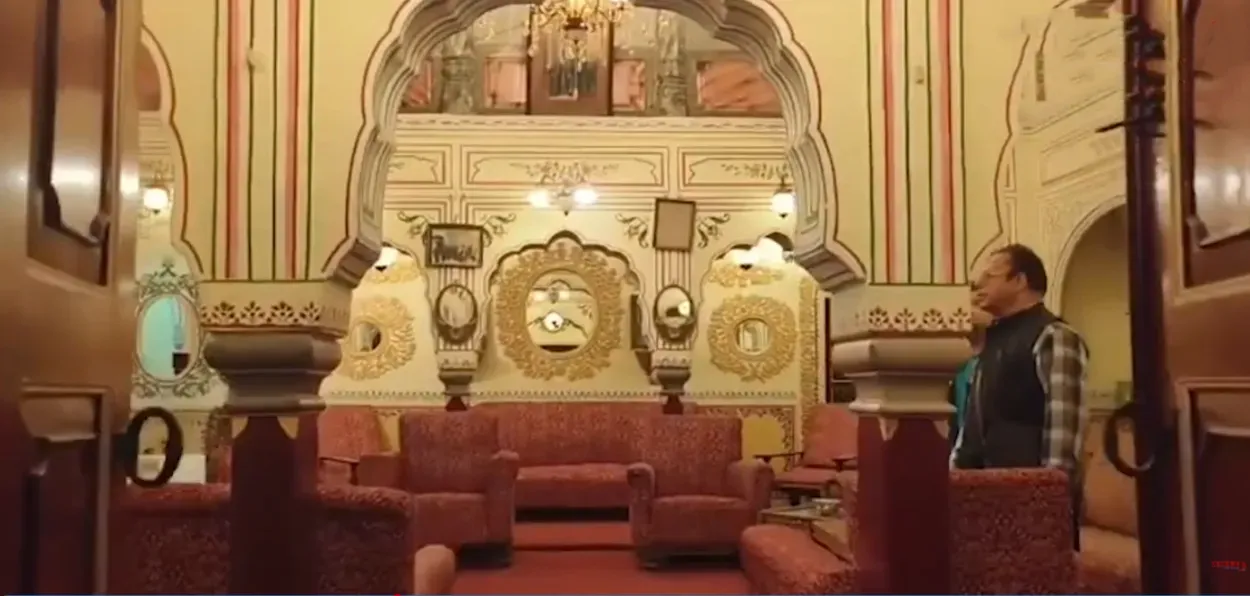
Inside the Salim Manzil, Jaipur

In the bustling streets of Jaipur at Haldio Ka Rasta, Johari Bazar, time suddenly seems to stand still. Amidst ancient stone walls, arched doorways and the stillness of history, stands the Salim Manzil, a majestic building which is a living legacy of more than two centuries.

The mansion houses a relic – a cap of Imam Hussain, the grandson and son-in-law of the Prophet Muhammad; it adds to its importance.

The story behind the ‘blessed cap’ reaching the haveli is interesting and part of its rich history.
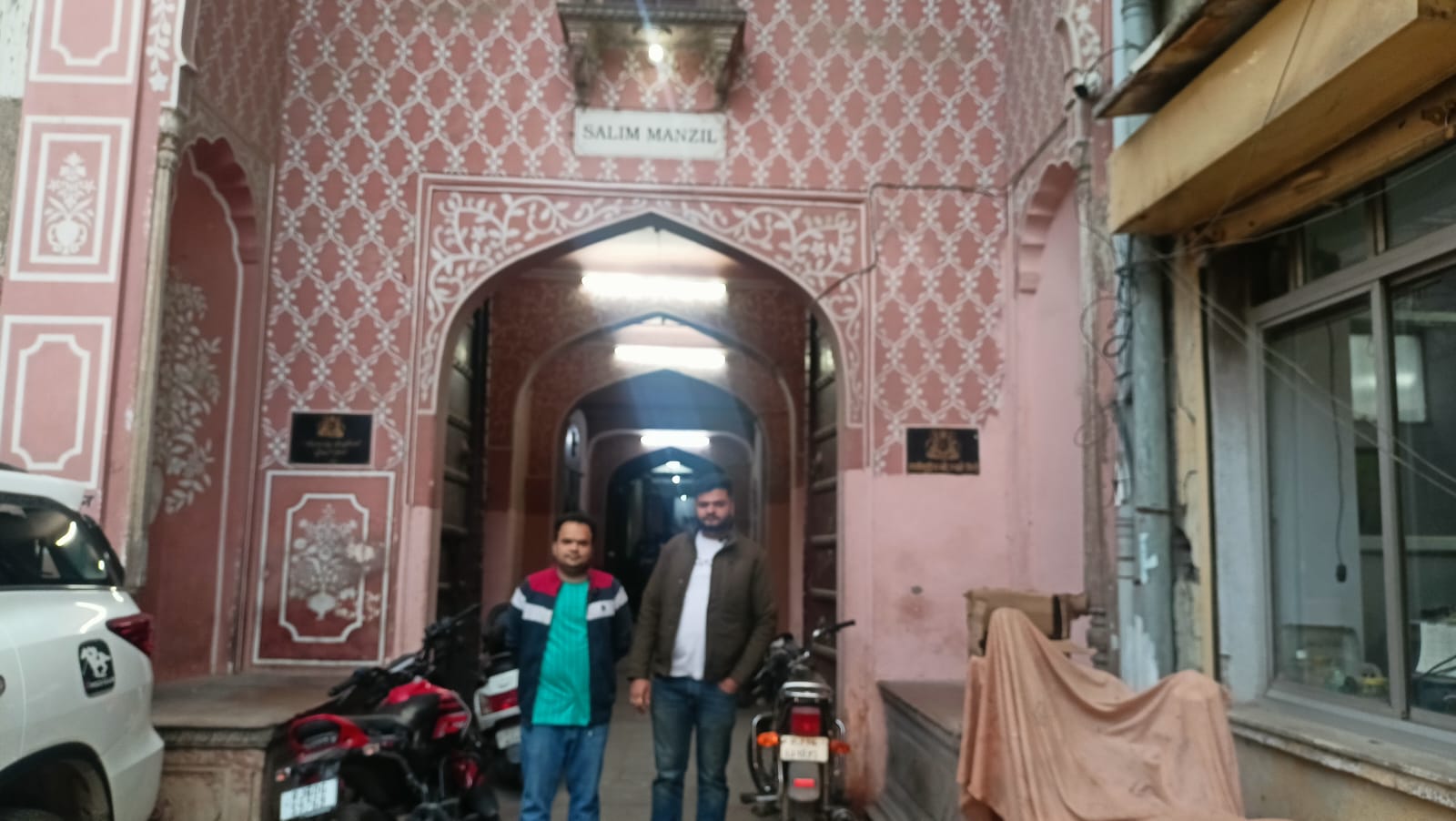
The entrance to Salim Manzil

In the early 17th century, an ancestor of today’s inmates of Salim Manzil treated an Iranian king. The King wanted to reward him with gold, silver and valuable gifts, but he declined the offer and instead requested the cap of Hazrat Imam Hussain.

The King presented the relic and a certificate with the royal seal to him as a reward.

Since 1876, this blessed hat has been preserved in Saleem Manzil in a special glass-framed box kept in a hall called “Kala-e-Mubaraq”.

Every year on the 9th and 10th of Muharram, it is opened to the public. In those days, Salim Manzil is turned into a pilgrimage centre, and its air filled with spirituality.
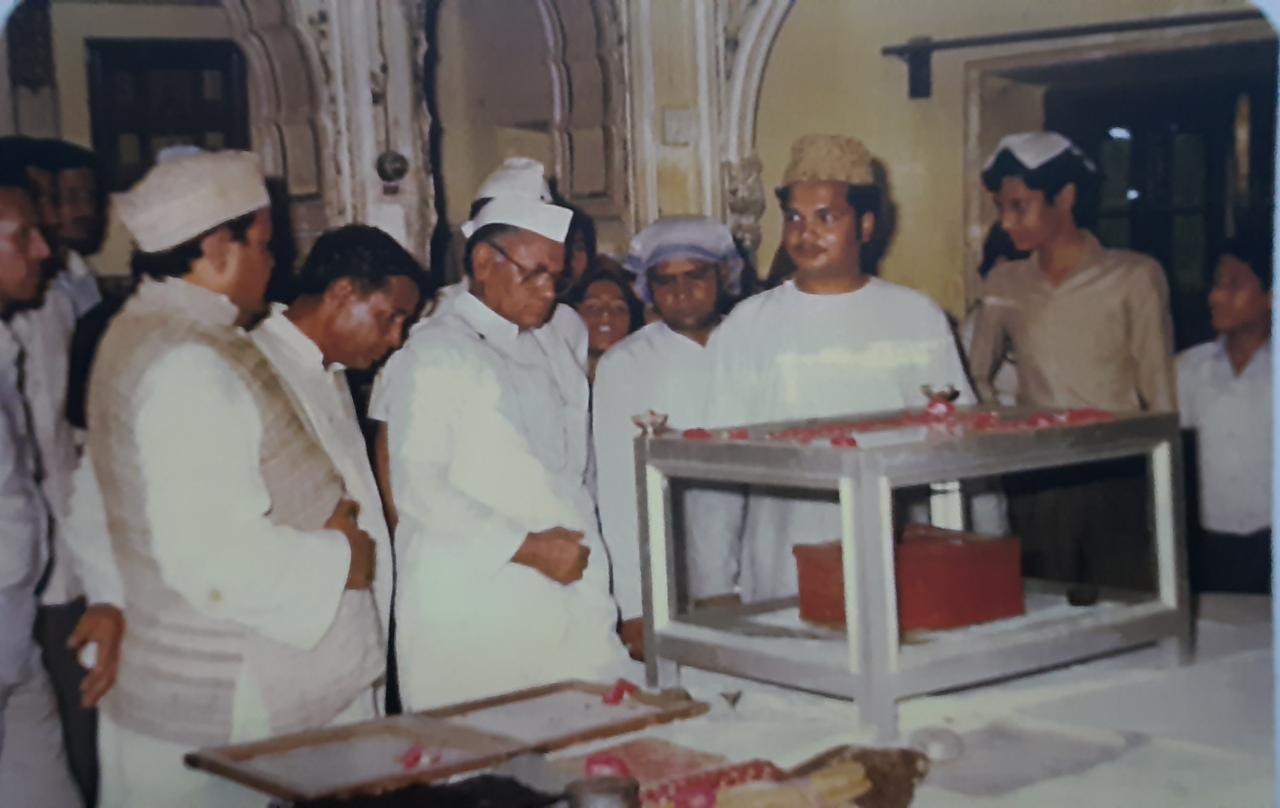
People viewing the Blessed Cap of Hazrat Imam Ali

Today, Moinuddin Khan, 33 and his younger brother, Hussamuddin Khan, 27, are living in the mansion. The two brothers are not only maintaining this legacy, but also modernising its upkeep and display of artefacts.

Moinuddin Khan says that his ancestors came to Jaipur from Delhi around 1812 AD. At that time, Maharaja Jagat Singh of Jaipur State granted them a fiefdom and honour to his elder brother, Hakim Wasil Ali Khan.

This honour was for Wasil Ali Khan’s academic and medical expertise, and he was admitted to the Royal Court.  One of the ancestors was the head of the intelligence department of Jaipur State, a sensitive position. He was responsible for the State’s security, political activities and gathering information needed for administration.
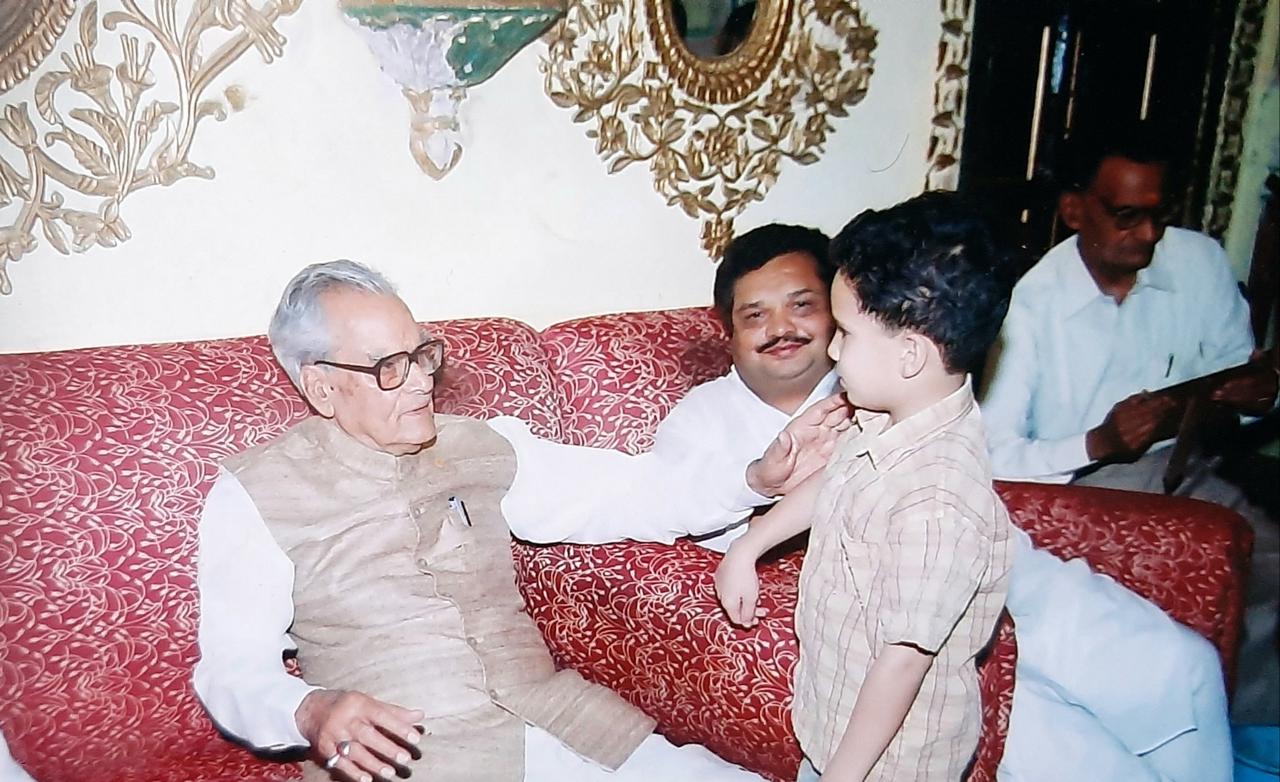
Bharion Singh Shekhawat with the inmates of Salim Manzil

Later, his son, Salim Ali Khan, worked in the same position.

The construction of Saleem Manzil began in 1867, and it was completed within three years. Spread over an area of ​​about a bigha, the building was gifted by the Maharaja of Jaipur. Even today, the haveli’s traditional Rajasthani carvings, arches, high ceilings and lattice windows are a testimony to the architectural craftsmanship of that era.

Over time, many havelis were converted into commercial hotels, but Saleem Manzil retained its original identity. The family also received offers to convert it into a hotel, but they preferred to preserve the spirit of the heritage rather than market it. 

Visitors inside the Salim Manzil

The mansion has been used as a set by many filmmakers for movies and web series. Moinuddin says he acted for the role of Sri Krishna in one of the web series. “We have a strong foundation in religion, but we also remain connected with art and dialogue.”

A large hall is decorated, the rooms are filled with the fragrance of perfume and roses, and the pilgrimage begins with Milad Sharif.

Devotees from Gujarat, Maharashtra and other parts of the country also arrive here. In those days, Shia Muslims read prayers and distribute Tabarak.

Moinuddin says that we consider it more of a trust than an inheritance. It is both an honour and a responsibility for us.

Many important persons have visited Salim Manzil. They include President Giani Zail Singh, Chief Ministers Haridev Joshi and Shiv Charan Mathur, Bhairav ​​Singh Shekhawat (Vice President), Natwar Singh (Minister), Najma Haibabullah (Rajya Sabha Chairperson), and Supreme Court Justice Gyan Sudha Mishra.

Head of the family, late Naseemuddin Khan, popularly known as Pyare Mian, founded the All-India Hakeem Ajmal Khan Memorial Society to perpetuate his family’s legacy of Unani medicine and social service.

Today, Moinuddin and Husamuddin Khan are trying to connect this heritage with modern dialogue. They are planning to build a new hall for better management of the pilgrimage during Muharram.

They are sharing information about this heritage with the world through social media and digital means for transparency.

Amid myriad historic monuments of Jaipur, Salim Manzil is unique since it not only preserves the relics of history but is also a pilgrimage centre.

source: http://www.awazthevoice.in / Awaz, The Voice / Home> Stories / by Farhan Israeli, Jaipur / February 21st, 2026
Wasifi family brings Tonk’s calligraphy to the global stage

Tonk, RAJASTHAN :

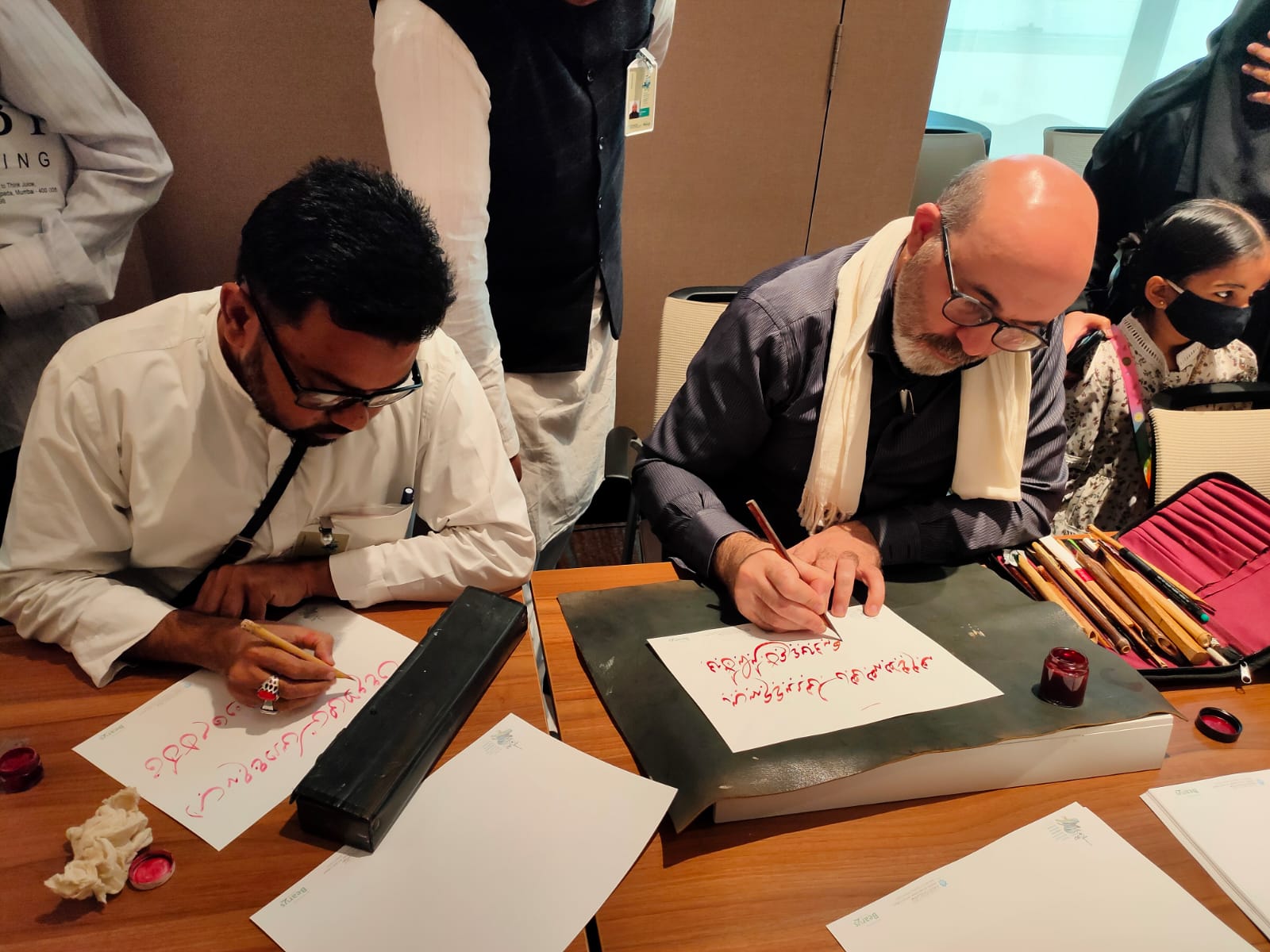
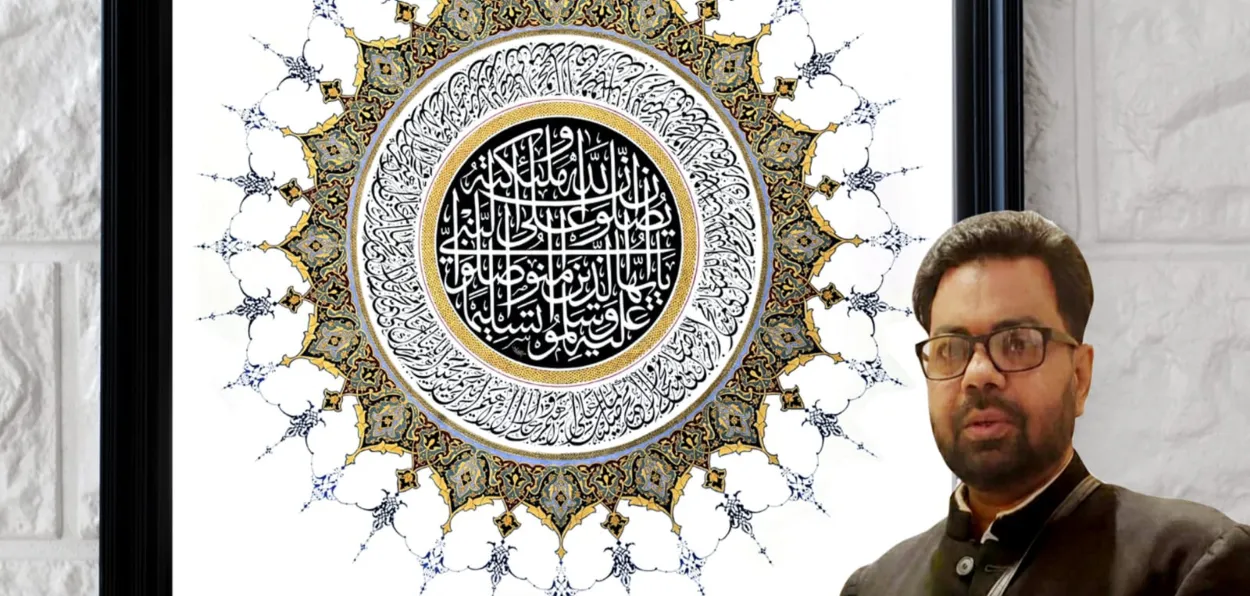
Qari Mutiullah Wasifi with his prize winning work

Qari Mutiullah Wasifi, a calligrapher from Tonk, a city in Rajasthan, won the second prize in the International Islamic Calligraphy Competition, organised by the Islamic Art Society in New York, USA.

This recognition comes amid the rise of digital fonts and artificial designs globally.

Qari Mutiullah Wasifi competed with more than 4000 artists from around the world. On this occasion, Qari said his success at an international forum is not sudden. Over the past four years, India’s presence in this competition has been consistent, and the Wasifi family has made it to the top every time.

In 2022, Qari Mutiullah Wasifi received the first prize. A year later, his son Haris Wasifi secured second place. In 2024, Haris won the first prize.

This year, the first prize was bagged by Egypt, the second by India, the third by Pakistan, and the fourth by Turkey. The award includes a certificate, a memento, and a cash prize. However, for the Wasifi family, the real honour is the recognition that comes with representing India.

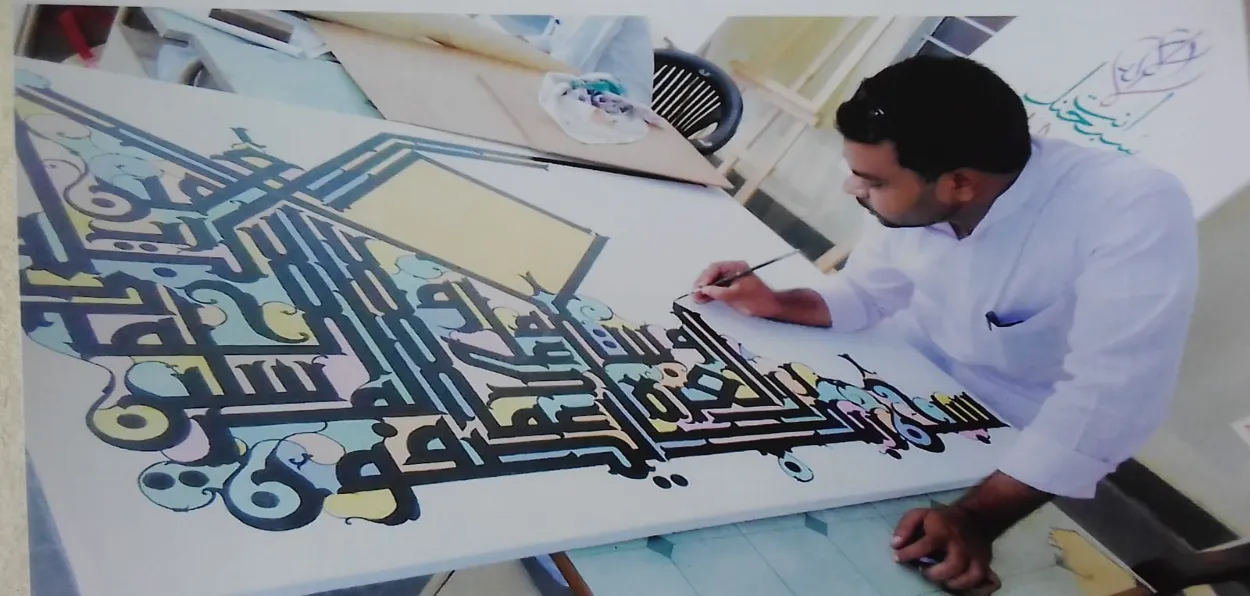
Qari Mutiullah Wasifi at work

Qari Mutiullah Wasifi’s journey didn’t begin at an art college. His first school was his own home. His late father, Qari Salimullah Wasif Furqani, was a renowned calligrapher, reciter of the Quran, and a scholar. He had a command of Arabic, Persian, and Urdu.

His calligraphy of the Quran was his speciality. As a child, Mutiullah watched his father sit for hours, writing. The sharpness of the pen, the curves of the letters, and the measured amount of ink used were not mere play for him, but a matter of discipline.

For formal education, he enrolled at the Maulana Abul Kalam Azad Arabic-Persian Research Institute (APRI) in Tonk. He completed a four-year diploma course, recognised by the National Council for Promotion of Urdu Language (NCPUL), Delhi. This is the same institution that has made Tonk a centre for Arabic and Persian studies.

Tonk is generally known for its madrasas, books, and Islamic education. But this city has also witnessed a well-established tradition of calligraphy. During the Nawab era, calligraphers from Iran and Central Asia taught locals the art.

Institutions like Maulana Abul Kalam Azad Arabic Persian Research Institute (APRI) have preserved this legacy. This institution has trained many calligraphers who have made a name for themselves in India and abroad. Qari Mutiullah Wasifi is an important link in this chain.

Wasifi told Awaz-the Voice that for him, calligraphy is not just a means of decoration, but a part of worship. To date, he has handwritten 27 copies of the Holy Quran. Some of these Qurans are written in extremely fine script, while others are adorned with gold and silver.

Qari Mutiullah Wasifi with a competitor

He has also undertaken unique projects, such as writing the entire Quran on a single large sheet of paper. This work requires years of practice and patience. The placement of each letter is crucial, and even a single mistake can ruin the entire work.

One of Qari Mutiullah Wasifi’s lesser-known yet important contributions is related to the preservation of manuscripts — completing the half-done copies of the Holy Quran and rare books in Arabic, Persian, and Urdu. So far, he has completed approximately 500 incomplete Qurans and hundreds of old books.

He has undertaken projects for private collectors, libraries, and research institutions. This effort breathes new life into books that might otherwise have been lost to oblivion.

Wasifi’s art is not limited to paper. He has done calligraphy on cloth, leather, wood, metal, grains of rice, lentils, marble, hair, and even inside bottles. This art is not only a test of manual dexterity but also of concentration and balance.

Wasifi participated in the international calligraphy competition organised by the Islamic institution “Irtika” in Istanbul, Turkey, in 2022. This institution organises a prestigious global calligraphy competition every two years, in which renowned calligraphers from around the world participate.

In 2023, he also participated in the international calligraphy competition organised by Fujairah Company in Dubai (UAE). This competition is known for its distinguished jury and global participation.

Wasifi says that if workshops, exhibitions, and competitions are considered together, his participation in national and international events, both within and outside India, totals approximately 30.

Wasifi thinks it’s not his achievement, but a means of showcasing the Indian calligraphy tradition at the international level.

According to him, such platforms provide artists with opportunities to learn, test themselves, and connect with calligraphers from around the world. He has also received several honours at the national level.

He has also participated in international exhibitions and workshops in places like Bengaluru, Udaipur, Aligarh, Diggi Palace in Jaipur, and the Lalit Kala Akademi in Delhi.

In the Wasifi family, this art has been passed down from one generation to the next. Qari’s eldest son, Haris Wasifi, is an internationally acclaimed calligrapher. The second son, Abbas Wasifi, is a Hafiz and Qari (one who has memorised the entire Quran and recites it with proper pronunciation) and is pursuing his education at Nadwatul Ulama, Lucknow.

The daughter, Sidra Wasifi, is an Alima (a female religious scholar) and teaches calligraphy to young girls. This family is not only preserving art but also discipline and heritage.

Qari Mutiullah Wasifi has established ‘Bazm-e-Wasif‘ in memory of his father. His dream is to create a special library and museum of calligraphy in Tonk, where his and his father’s manuscripts can be safely preserved. He says that despite the lack of resources, his resolve remains unwavering. His goal is to ensure that this calligraphic heritage of Tonk reaches future generations.

source: http://www.awazthevoice.in / Awaz, The Voice / Home> Stories / by Farhan Israeli, Tonk (Rajasthan) / January 29th, 2026