Bhopal, MADHYA PRADESH :
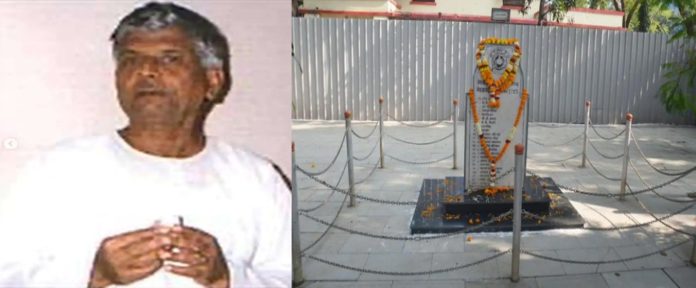
FORGOTTEN HERO OF BHOPAL GAS LEAK TRAGEDY: The saviour Ghulam Dastagir, the Deputy Station Superintendent at Bhopal Railway Junction who saved thousands of lives on December 2 and 3 went unrecognised and was buried in the history.
Much has been said and written about the fateful Bhopal Gas Leak Tragedy in 1984 that claimed around 5,479 lives while affecting over six lakh people with serious skin disorders. However, the saviour Ghulam Dastagir, Deputy Station Superintendent at Bhopal Railway Junction, who saved thousands of lives on December 2 and 3,1984 went unrecognised and was buried in history.
Ghulam Dastagir’s case isn’t an isolated one as thousands of Muslim freedom fighters who sacrificed their lives for the cause of Indian freedom struggle were more often than not either concealed or forgotten by the Union Government on one pretext or the other. This scribe flipped through the pages of history to zero in on the world’s deadliest industrial tragedy which sent shockwaves among the people across the globe.
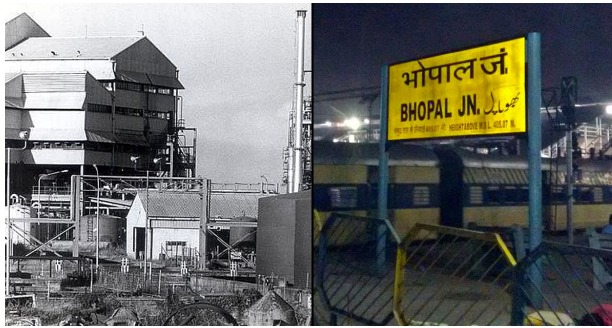
Even after four decades after the Union Carbide Factory gas leak episode, the scars still remain in the hearts of the victim families. What is irking is the fact that a memorial erected at Bhopal Railway Junction for 23 railway men, who lost their lives while rescuing people, have been inscribed but there is hardly any mention about Ghulam Dastagir who played a pivotal role in the rescue operations on the dreadful day.
Sources from various news portals revealed that a deadly gas leak from the Union Carbide factory engulfed the Bhopal city, killing thousands and injuring many more. Amidst the chaos and panic, one man acted swiftly and bravely to save lives: Gulam Dastagir, Deputy Station Superintendent at Bhopal Railway Junction. Few people know that during the Bhopal gas tragedy, a heroic stationmaster risked his own life to save others. But for him the causalities in the catastrophe would have been much higher.
On the fateful night of December 2, 1984, Ghulam Dastagir found himself in the midst of routine paperwork. Little did he know that this night would forever alter the course of his life. As the Bombay-Gorakhpur Express was due to arrive, Dastagir’s routine took a drastic turn when he sensed something was amiss. His swift action would soon prove to be the difference between life and death for many. Upon stepping out of his office, Dastagir experienced burning eyes and a bitter throat – a tell-tale sign that something was terribly wrong. Shockingly, he discovered the lifeless form of Dhurva, the station superintendent, in his cabin. Acting swiftly, Dastagir communicated with nearby stations to halt incoming trains, potentially saving countless lives. Despite the looming danger, he ordered the immediate departure of the Gorakhpur-bound train, ensuring the safety of its passengers.
As the deadly gas claimed the lives of 23 station staff members, including Dastagir’s own son, he and his team worked tirelessly to manage the crisis. Despite struggling to breathe, Dastagir remained composed, coordinating medical help, and providing a ray of hope in the face of impending doom. The station became a scene of chaos as large crowds desperately sought escape from the poisonous air, and Dastagir’s leadership became a beacon of strength.
While Dastagir’s selfless actions spared countless lives, the tragedy took a heavy toll on him personally. The toxic gas led to health issues, with a lump forming in his throat, and subsequent years were marked by frequent hospital visits. The heavy personal cost included the loss of his son to the gas and another developing a permanent skin infection. Despite the challenges, Dastagir continued to exhibit resilience until his demise in 2003.
At Bhopal Junction, a memorial stands in honour of 23 railway personnel who lost their lives on that tragic night. Unfortunately, Ghulam Dastagir’s name doesn’t grace the memorial, as his demise occurred nearly two decades later. However, during those critical hours in December 1984, Dastagir exemplified the truth in Gerard Way’s famous quote, proving that heroes emerge from ordinary people who rise to extraordinary challenges.
Meanwhile, Netflix’s series, “The Railway Men” made headlines based on the Bhopal gas tragedy of 1984. Amidst the widespread acclaim for the show, this review reflects on one of the unsung heroes of that tragic night – the deputy station master of Bhopal railway station, Ghulam Dastagir. His extraordinary actions saved lives and offered a glimmer of hope in the face of an unimaginable disaster.
Shadab Dastagir, youngest son of late Dastagir, while speaking to a media in 2023, said that his father’s heroic role in the entire episode on Bhopal Railway Junction on the night intervening December 2 and 3, 1984, has mainly remained unsung.
“Little official acknowledgment and appreciation came his way in these four decades. And now when an OTT series has been made on the episode, it is upsetting that we were never consulted about the actual happenings,” he told The Week.
“I have watched the teaser and the official trailer and I can make out that the character being portrayed by Kay Kay Menon is based upon my father. But then we are highly apprehensive as to how much close to truth the character has been made,” Shadab, who is into the family business of chemicals and fertilisers, said.
He also mentioned that the family had already sold out the copyright of a script on Dastagir’s life and work – based on narration by his father himself during his lifetime – to a production house called Small Box Media. The Mumbai-based production house was planning a full-length movie based on the script when YRF cut in with the miniseries.
A forgotten hero whose sense of duty and commitment saved countless lives, Dastagir’s story deserves to be recognised and remembered by his fellow countrymen.
[The author is former Indian Express and Deccan Chronicle chief]
source: http://www.radiancenews.com / Radiance News / Home> Focus> Social Service / by M Rafi Ahmed / September 02nd, 2025