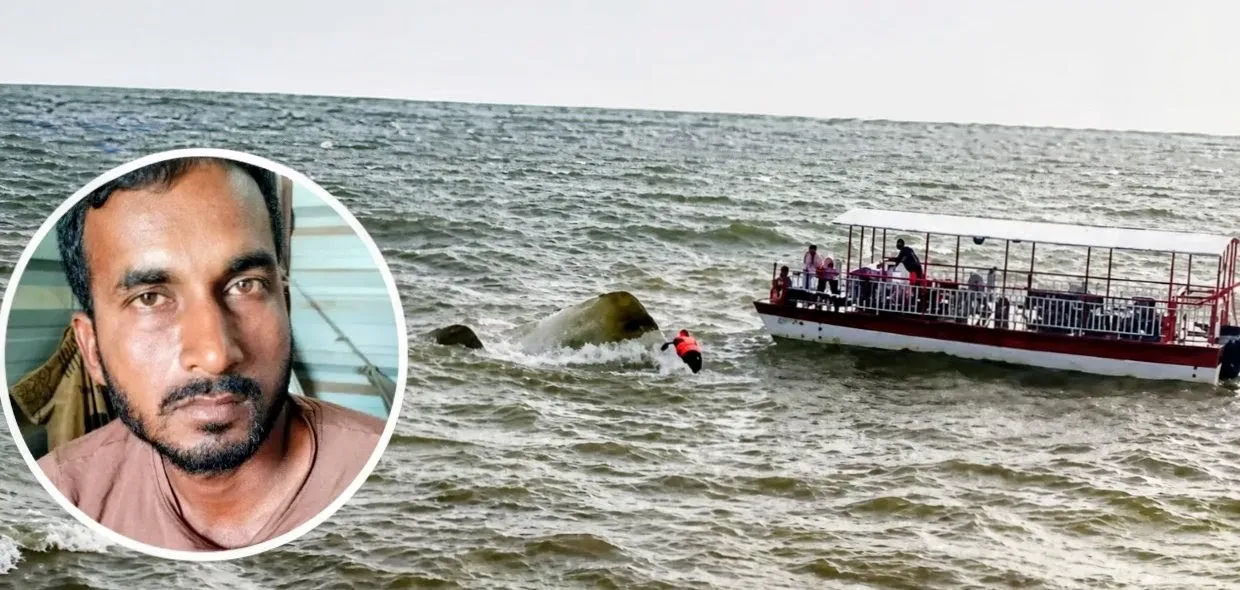
Nine people have died so far in the Bargi Dam accident in Jabalpur, Madhya Pradesh, while relief and rescue operations are underway. As soon as the accident was reported, a labourer was the first to start the rescue operation. Before the rescue team arrived, Ramzan, who was busy constructing a bridge, risked his life to save the lives of many people and did this work with great courage.
In fact, a bridge construction work was going on a short distance from where the accident took place near Bargi Dam. When the workers saw the cruise ship sinking, a laborer immediately jumped into the water without any resources to save the people and started the rescue work.
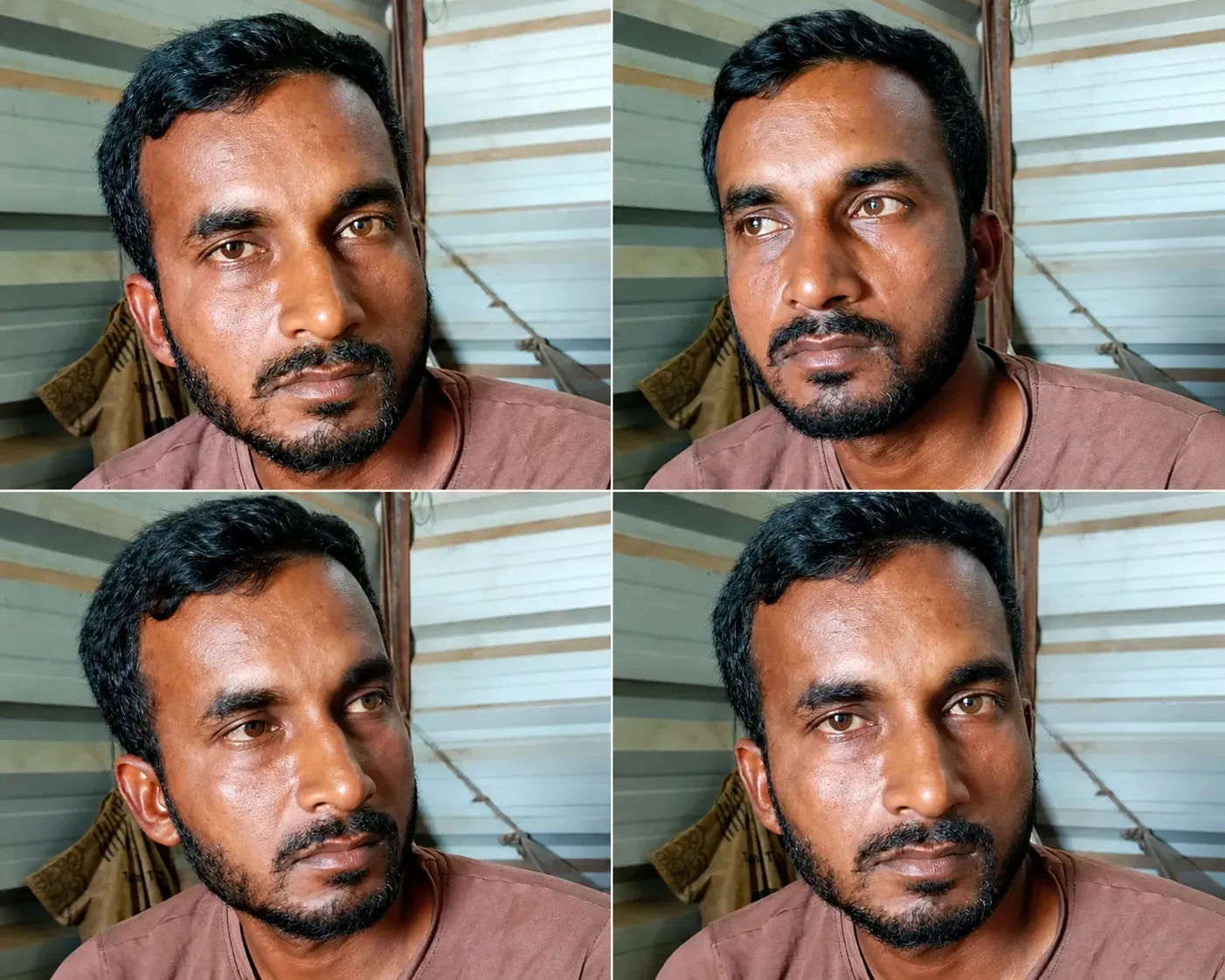
Ramzan, a resident of West Bengal, said that he saw the cruise ship sinking with his own eyes. He immediately took a rope and jumped into the dam from a height of about twenty-five feet. He pulled out six people, four of whom survived while two could not survive.
After visiting the scene, the Chief Minister of Madhya Pradesh announced that those who tried to save the drowning people would be given a reward of Rs 51,000 each.
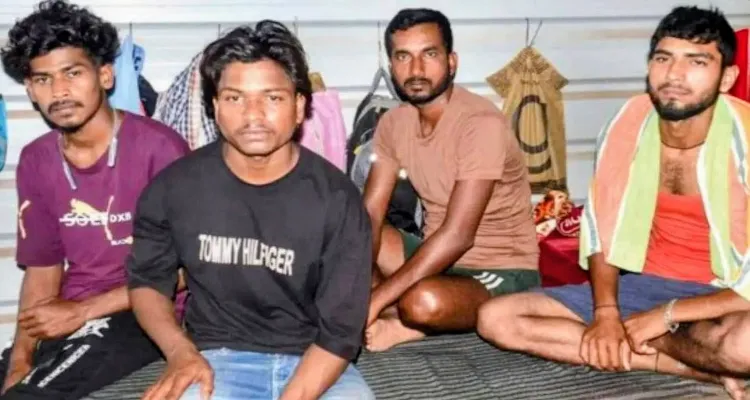
Bandar Kumar Yadav, who was present at the scene, said that he was a resident of West Champaran and about thirty-five workers were working there. Seeing the cruise ship going out of control, he called out to the pilot to stop and asked his colleagues to bring a rope, but the pilot did not listen and went ahead, after which the cruise ship sank.
After that, several workers and colleagues went into the water to help Rajkumar from Bihar and Shewanath from Gorakhpur said that the cruise had already capsized before they reached it. Some passengers had already fallen into the water and were pulled out by the workers.
Those working on a project under the central government’s Jal Jeevan Mission, were just a short distance from the spot where the cruise ship capsized. They responded within moments and immediately formed a makeshift rescue team.
Armed with only ropes, the workers, displaying extraordinary courage and human spirit, jumped into the raging waves and were able to safely pull out about a dozen passengers in the critical initial moments of the accident, as described by locals.
Among these selfless heroes was 22-year-old Ramzan from West Bengal, whose daring leap was one of the most iconic scenes of the rescue. He tied a rope to his body and jumped from a cliff about 25 feet high, swimming through the stormy waters to reach the stranded passengers.
“I saw the boat sinking and didn’t waste a moment,” Ramadan said, speaking to The Times of India. “I immediately picked up a rope and jumped into the water. He was able to pull out six people, four of whom survived while two could not be saved.”
The accident occurred on Thursday when a cruise ship capsized in a dam due to strong winds and a storm.
Twenty-five people were rescued safely in the incident, while nine bodies have been recovered. Police are investigating the matter.
source: http://www.awazthevoice.in / Awaz, The Voice / Home> Stories / by Aasha Khosa / May 03rd, 2026
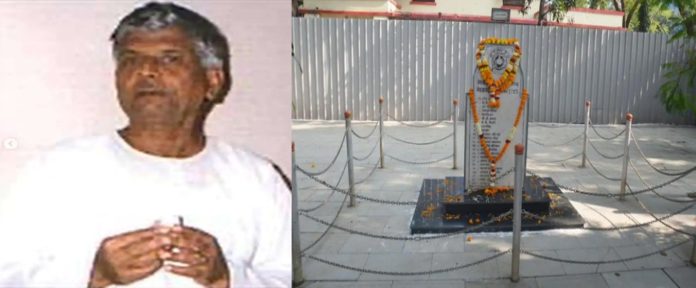
Santosh kumar and his father touching the feet of Guru Habib Master
This is the story of a family’s love and gratitude toward their guru. Thirty years ago, Habib Mastar, a teacher, had guided the family to send their son to school. This changed the family’s destiny as, today, the child is a Police officer in Madhya Pradesh.
Santosh Kumar Patel, Sub-Divisional Police Officer (SDOP) in Ghatigaon, Gwalior district, shared a video on social media that won the hearts of thousands. He said he learned that his father’s old guru, 90-year-old Habib Mastar, was alive and living in Satna.
Hearing this, Santosh immediately set out with his father to meet him. When they arrived at his home, Santosh and his father touched his feet and sought his blessings.
It was evening, and Habib Sir was preparing to pray and break his fast. But as soon as he saw his former disciple, he dropped his plans and blessed them both by placing his hand over their heads.
Santosh Kumar and his father with Habib Mastar and his family
This scene was not just a meeting between a guru and his disciple, but a beautiful example of humanity and respect.
Today, Santosh Kumar has millions of followers on social media, where he inspires young people to change their lives through hard work and honesty. But within this success story, there’s also a chapter that conveys a message of humanity and brotherhood.
Santosh Kumar Patel was born into a poor family in Devgaon, near Ajaygarh tehsil in Panna district, Madhya Pradesh. His father was a mason, and his mother worked as a farm labourer. He spent his childhood in a small hut with a leaking roof. Even food was scarce, and at times the small child would go to bed without enough food in his stomach.
As a child, Santosh also helped his family. Sometimes he would collect tendu leaves, sometimes work in the fields, and sometimes carry bricks with his father. Despite all this, Santosh was very clear about getting an education.
At this stage, Habib Ali Sir entered his life. Habib was posted as a teacher in the local school. He would cycle 20 kilometres to reach the village.
Santosh says that Habib Marsab didn’t teach him, but he played a role in sending him to school. Village children often ran away from school, but Habib Sir would waylay them and take them to school, saying, “Only education can change your life.”
This small effort one day became a huge change.
Santosh explains that his father had briefly attended school under Habib Sir. Like most other village kids, he soon quit and took to grazing cattle. But those few days of study instilled in him the importance of education.
Many of Habib Mastars students became teachers, and some secured government jobs.
Santosh believes that such teachers are the true strength of society. After meeting Habib Marsab, Santosh wrote an emotional message:
“The one who transcends caste and religion and lights the lamp of education is a true guru.” His story demonstrates that the true religion of a true teacher is education. A small initiative by a Muslim teacher transformed the life of a poor family, and today, that family has become an inspiration for society.
The story of DSP Santosh Kumar Patel teaches us two important lessons. First, education and hard work can transform the life of any poor child.
source: http://www.awazthevoice.in / Awaz, The Voice / Home> Stories / by Amir Iqbal / March 11th, 2026
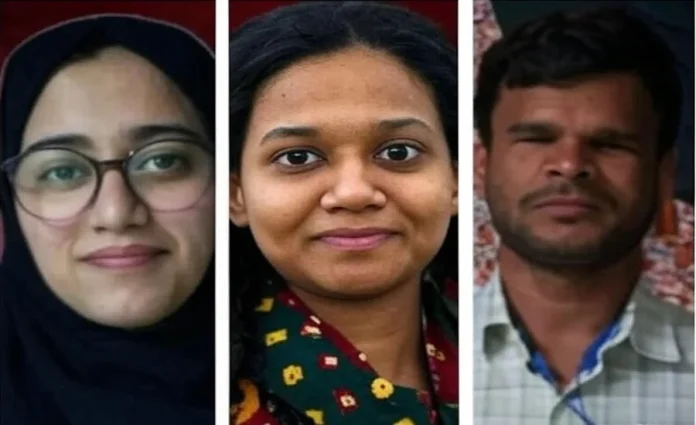
Muslim students have made a strong mark in this year’s Jawaharlal Nehru University (JNU) student union elections, with Danish Ali, Hafsa Bukhari, and Mohammad Aslam among the winners. The elections saw the Left alliance secure all four top posts, defeating the ABVP. Aditi Mishra was elected President, K Gopika Babu as Vice President, Sunil Yadav as General Secretary, and Danish Ali as Joint Secretary.
Danish Ali, a research scholar at the Centre for Historical Studies, defeated ABVP’s Anuj to win the Joint Secretary seat. Coming from Narsinghpur, Madhya Pradesh, Danish belongs to a family of educators. She was active in student mobilisations during the 2019 CAA protests and said her victory belongs to all students who value justice and democratic rights.
Hafsa Bukhari from Poonch, known for her hijab-wearing identity, also won a councilor seat. Her election is seen as a step forward for women’s representation and Muslim inclusion on campus. Alongside her, Mohammad Aslam, a visually impaired PhD scholar from Bihar, earned a councilor position. Despite his challenges, Aslam has consistently spoken up for equality, disability rights, and social justice.
Faculty members at JNU described their wins as a reflection of courage, resilience, and commitment to equality. Students across the university have welcomed the outcome, seeing it as a mandate for inclusivity and democratic engagement.
source: http://www.radiancenews.com / Radiance News / Home> Latest News> Report / by Radiance News Bureau / November 08th, 2025
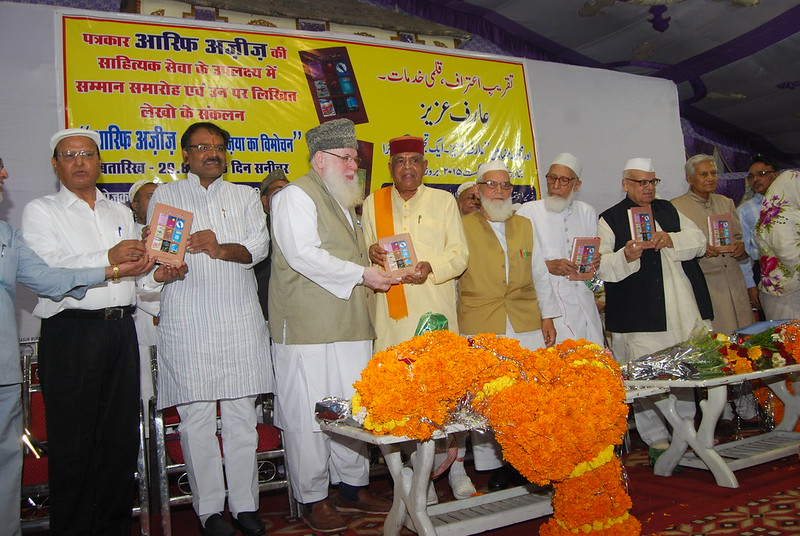
When a journalist is eulogized in a function by speakers after speakers wherein a book critically analysing his works and personality is being released then it is but natural that tears of joy start rolling down the journalist’s cheeks.
Such was the case with the well-known Urdu journalist Arif Aziz of Bhopal when at the fag end of the function of releasing the book on him entitled “Arif Aziz – Ek Tajzia” (Arif Aziz – An Analysis) here he was asked to speak after the dignitaries on the dais one by one lauded his journalistic and literary services spanning over 40 years. He was overwhelmed by the occasion as the cup of love was brimming or even overflowing. When he rose to address the assemblage he found his voice virtually chocked and eyes welled up with tears. He was seen sobbing involuntarily while standing mute for a minute or two as volunteers ran helter-skelter to fetch water so that he could wet his parched throat. Another volunteer fetched a tissue paper to help him wipe off his tears and gain composure to be able to speak a few words on the occasion.
Arif Aziz, the “Son of the Soil”, struggling for words told the jam-packed Hindi Bhavan auditorium in a chocked voice that whatever has been said about his works and personality is an exaggeration. He is not an iconic figure to be showered such praises upon him by his well-wishers.
“Whatever I did in my life as a journalist I did it with all my honesty and sincerity and saw to it that the profession to which he belonged does not get blotted by his actions”, he added.
He gave credit for his success to his journalist colleague Ashfaque Mashhadi Nadwi. The book concept on him is the brain child of Ashfaque Mashhadi and Urdu litterateur Dr. Akhlaque Asar. It was brought into reality by another journalist colleague Inamullah Khan Lodhi and Arif Aziz’s daughter Mardia Arif, who is also a writer in her own right, as they painstakingly compiled the write-ups and essays on him, he revealed.
“Hajji Mohammad Haroon, president of Jamiat-e-Ulma-e-Hind, Madhya Pradesh unit, placed the icing on the cake by organising such a grand function for me that I did not deserve”, he remarked.
Without any doubt the book releasing function was a glamorous and glittering with eminent writers, columnists cutting across language barriers, and famed personalities who graced the occasion.
Arif Aziz’s friends, well-wishers and relatives also thronged the venue in large numbers to make it a most memorable occasion. Not only this outstation relatives, fans and Urdu lovers in large numbers too made it a point to attend the function to make it a memorable one. Apart from Delhi people from Indore, Sagar, Vidisha, Ashta, Sironj, Sehore etc. participated in the function. The representatives of a number of literary organisations and individuals poured out their love for Arif Aziz on the occasion and mobbed him with bouquets, garlands and gifts. Congress MLA Arif Aqueel draped him with a shawl around his shoulders to honour him. About a dozen tiny-tots also did not lag behind and felicitated him with flowers.
It is noteworthy that as the function was moving along telephonic congratulatory messages of Arif Aziz’s friends and fans from across the border poured in hailing his exemplary journalistic journey.
It has been seen that one’s services are usually extolled after one’s death but Arif Aziz is fortunate enough that his untiring efforts were recognized in his lifetime and he saw this all with his own eyes.
The 384 pages book “Arif Aziz — Ek Tajzia” is a voluminous bunch of essays on the personality, services and dedication of authentic, revered writer and Urdu journalist Arif Aziz. It has been compiled by journalist Inamullah Lodhi and Mrs. Mardiya Arif.
The function of the release of the book was organised under the aegis of Maulana Barkatullah Bhopali Education and Social Welfare Society, Bhopal with its president Hajji Mohammad Haroon and his team leaving no stone unturned to make the occasion of the book release a big and a grand success.
Arif Aziz is Special Correspondent of “Nadeem”, the oldest Urdu daily of Bhopal. He is a voracious writer and has authored nine books on various subjects. Daily columns written by him are reproduced by over a dozen national and international Urdu newspapers. He has written over 20,000 articles in the last 40 years of his journalistic life. He has been decorated with All India Hakeem Syed Qamarul Hasan Award of Madhya Pradesh Urdu Academy and 30 other national and state level awards.
The books authored by Arif Aziz include: 1. Nabz-e-Dauran — Anthology of more than 70 essays on Political, Social & Current topics (1994); 2. Zikr-e-Jameel — Comprising of 38 Bio-Sketches published by Madhya Pradesh Urdu Academy, Bhopal (1995); 3. Qadr-o-Qeemat — Anthology of more than 45 critical essays and research papers (1997); 4. Talash-o-Ta’assur — 19 Critical and research papers (1999); 5. Masajid-e-Bhopal — Historical facts of the mosques of world & especially of Bhopal (2003); 6. Had-de-Nigah — An Anthology of 51 Essays on political science & current topics ((2004); 7. Suraj, Chand, Sitare — comprising of 47 Bio-Sketches published by M.P. Urdu Academy, Bhopal (2004); 8. Musafir-e-Haram — Hajj Pilgrimage description (2006) and 9. Azad Hind Mein Urdu Sahafat — from 1947 to 2006 under the project of Makhanlal Chaturvedi Patrkarita Vishvidhayalaya, Bhopal (2010).
The function was presided over by renowned theologian (Aalim-e-Deen), Hazarat Maulana Mohammad Saeed Mujaddadi (popularly known as Peer Saeed Miyan), Rector Dar-ul-Uloom, Taj-ul-Masajid, Bhopal while the chief guest on the occasion was Aziz Qureshi, ex-Governor of Uttrakhand, Uttar Pradesh and Mizoram.
Other guests and dignitaries who participated in the function included: BJP-ruled Madhya Pradesh Home Minister Babulal Gaur; BJP Lok Sabha member from Bhopal Alok Sanjar; Congress MLA Arif Aqueel; Urdu litterateur Prof. Afaq Ahmad; Dr. Tariq Zafar, Vice Chancellor Bhoj Open University, Bhopal; Dr. Khalid Mehmood, ex-Head of Urdu Department, Jamia Millia Islamia, Delhi; Barkatullah University Arabic Prof. Hassan Khan; Maulana (Dr.) Iqbal Masood Nadwi (Islamic Centre, Canada); Senior journalists Masoom Moradabadi (Editor, Urdu daily Jadid Khabar, & fortnightly Khabardaar Jadid, Delhi); Siraj Naqvi, (Rashtriya Sahara, Delhi) and Rajkumar Keswani (Bhopal). Introduction about the book was presented by Prof. Afaq Hasan Siddiqui.
Hazarat Maulana Mohammad Saeed Mujaddadi, Aziz Qureshi, Babulal Gaur, Alok Sanjar, Prof. Afaq Ahmad, Dr. Khalid Mehmood, Alok Sanjar, Dr. Tariq Zafar, and Hajji Mohammad Haroon released the book amidst thunderous applause.
Masoom Moradabadi, Editor of Urdu daily Jadid Khabar & fortnightly Khabardaar Jadid, Delhi, while lauding Arif Aziz and his works strongly pleaded that the veteran journalist be honoured with the Padam Shree award for his yeoman services in the field of Urdu journalism for the last 40 years. He compared him with legendry India’s Freedom Struggle’s first journalist martyr Moulvi Muhammad Baqir, who was editor of Delhi Urdu Akhbar and a great advocate of Hindu Muslim unity. Freedom Fighter Maulvi Baqir was arrested for revolt and without being tried, on September 16, 1957 was tied to the mouth of a canon and was publicly blown up in front of the Khooni Darwaza in Delhi.
Siraj Naqvi, another senior journalist of Rashtriya Sahara, Delhi, also urged that Arif Aziz must be decorated with the Padam Shree award in recognition of his services by the government of the day.
Dr. Tariq Zafar, Vice Chancellor of Bhoj Open University, read out a citation in recognition of Arif Aziz’s services and presented it to him.
Speaking as a chief guest on the occasion Aziz Qureshi while extolling the contribution of Arif Aziz in Urdu journalism and literature lamented that after India’s Independence in 1947 Urdu language has languished due to government’s apathy which history will never forgive. Without batting an eye lid he said that in a calculated move after Independence a campaign was launched to wipe out Urdu. He revealed the campaign was started by the then Union Home Minister Pandit Govind Ballabh Pant, who was responsible for the establishment of Hindi as an official language of the Central government and a few states while dumping Urdu into oblivion. The process started from Uttar Pradesh and is still continuing despite court’s order declaring Urdu as second official language in the state.
In another revelation on the occasion Qureshi informed that after the first war of independence in 1857 the ruler of Bhopal Begum Sikandar Jahan had declared Urdu, in place of Persian, as the official language of her government for the convenience of her Hindu subjects. In the development of Urdu language the contributions of Hindus cannot be ignored, he added.
Maulana Saeed Mujaddadi while presiding over the function blessed Arif Aziz for fulfilling his responsibilities with all sincerity. He prayed he would continue to strive to serve the Muslim community through his journalistic efforts and the Almighty Allah (S) will guide him in all his endeavours.
Home Minister Babulal Gaur, special guest on the occasion, also lauded Arif Aziz’s simple life, his write-ups on social issues and dedication to Urdu journalism. He said he never indulged in yellow journalism for material gains.
At the outset Hafiz Qari Hashim Ansari recited verses from the Holy Quran. Urdu poets Iqbal Baidaar and Zafar Naseemi rendered poetic tributes in praise of Arif Aziz which was applauded by the audience. Khalique Siddiqui and jeweller Sheetal Bhai Soni presented gifts to him on the occasion. In the end Adv. Mohammad Kaleem proposed a vote thanks.
source: http://www.twocircles.net / TwoCircles.net / Home> India News> Indian Muslim> Literature> Top Story / by Pervez Bari, TwoCircles.net / September 04th, 2015
Bicharpur Village (Shahdol District), MADHYA PRADESH :
Once known for illegal liquor, Bicharpur village in Madhya Pradesh is now a football hub, producing around 45 national players.
Learn how coach Raees Ahmed’s efforts kickstarted this transformation.
Almost a decade ago, Bicharpur — a village in the tribal-dominated Shahdol district of Madhya Pradesh — was notorious for its rampant production of illicit liquor and narcotics. The primary source of income for many families was the production of liquor from the locally available mahua fruit.
“In this village, every house has been making kachhi shat (mahua liquor) for generations. They did not consider it wrong or illegal since it was deeply ingrained in their culture for a long time. Even children, regardless of their ages, were involved in this work. In fact, the villagers, including children, consumed liquor regularly; it was like their everyday tea and the medicine for any disease,” Raees Ahmed tells The Better India.
However, today the village has undergone a remarkable transformation, emerging as a hub for the rising stars of football . It has produced around 45 state and national-level football players — including Sanya Kunde, Rajni Singh, Laxmi Sahis, Anil Singh Gond, and Hanuman Singh.
Because every household in the village has a football player, it has come to be known as the ‘Mini Brazil’ of Madhya Pradesh. The journey of Bicharpur village from its miserable state to ‘Mini Brazil’ was orchestrated by former footballer and coach Raees Ahmed.
An unlikely football hub
Raees says that the Shahdol division has been a football hub for nearly three generations. The tribal children grew up playing football but without any formal training. Raaes, who has been playing football since the age of 10, was one of them.
“We used to learn football by seeing players in tournaments. But we did not have any formal training or guidance in the sport,” says the 53-year-old who grew up following Diego Armando Maradona — a professional football player from Argentina.
Earlier, the tribal children grew up playing football but without any formal training.
When Raees was in Class 8, he recalls, he played in the ‘under 19’ category at the national level. He went on to play football professionally at the national level seven times during his career. After graduating with a Bachelor of Arts in 1995, he secured a job as a sports teacher at a higher secondary school in Shahdol.
Then in 1997, he took formal training from the National Institute of Sports (NIS) in Kolkata. “To be a player and to be a coach are two different things. Since I was a national-level player, I thought I was an expert, but I was under the wrong impression. There [at NIS], I realised I had very limited knowledge. I realised if I had known these professional techniques, I could have played at the international level,” he says.
Coming back home, Raees went back to his old job. A couple of years later in 2001, he visited the nondescript village of Bicharpur, roughly three kilometres from his workplace.
“I saw many children in this village playing football. They had the fitness of an athlete but lacked training and techniques. They did not know how to pass the football and when to hit the ball to score a goal. After speaking to them, I realised that they did not know much about the outside world, and suddenly, I remembered my childhood!” he adds.
That day, Raees decided to be the support he desired when he was a child.
Where there’s a will…
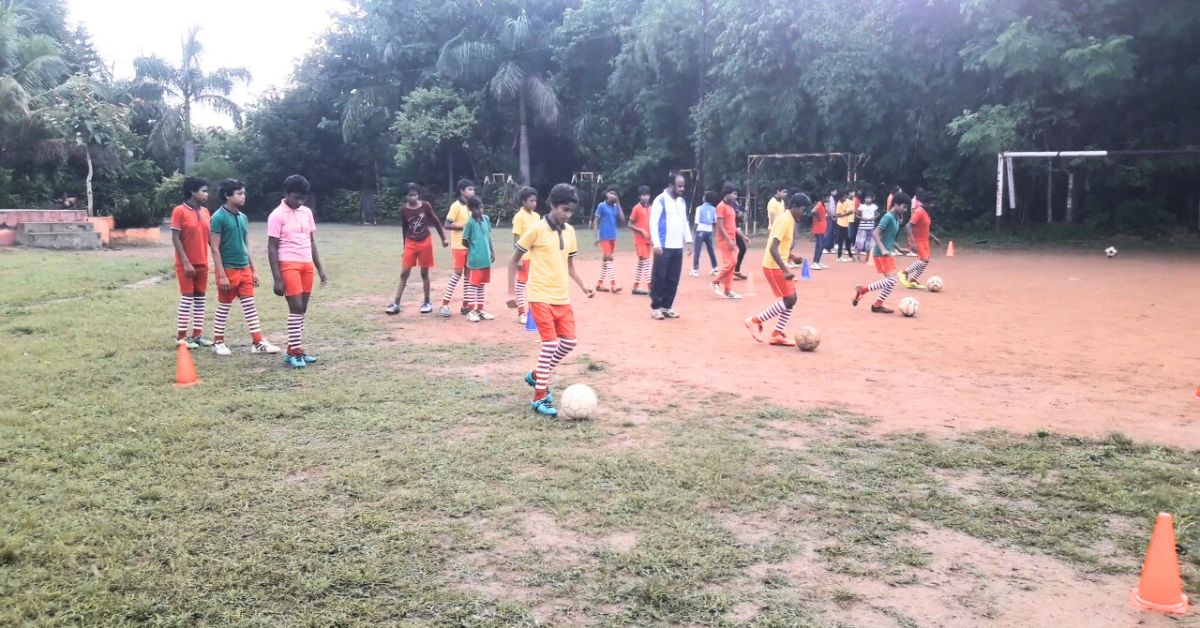
Every evening, post his office hours, Raees would set out for the village on his bicycle. He started training children in the age group of 8–12 years. But there was no formal set up for the ground and tribal children lacked basic amenities like shoes and jerseys. “Initially, I would dedicate half of my salary to arrange basics for them,” he says.
Raees says, Shahdol divisional commissioner Rajeev Sharma established at least 1,200 clubs in all villages across the Shahdol division.
Seeing a good response from the children, the coach also encouraged them to quit the mahua work if they wanted to seriously dedicate themselves to building a career in sports. “These children helped their families quit nasha khori (alcoholism) and switch to other works like labour jobs,” he informs.
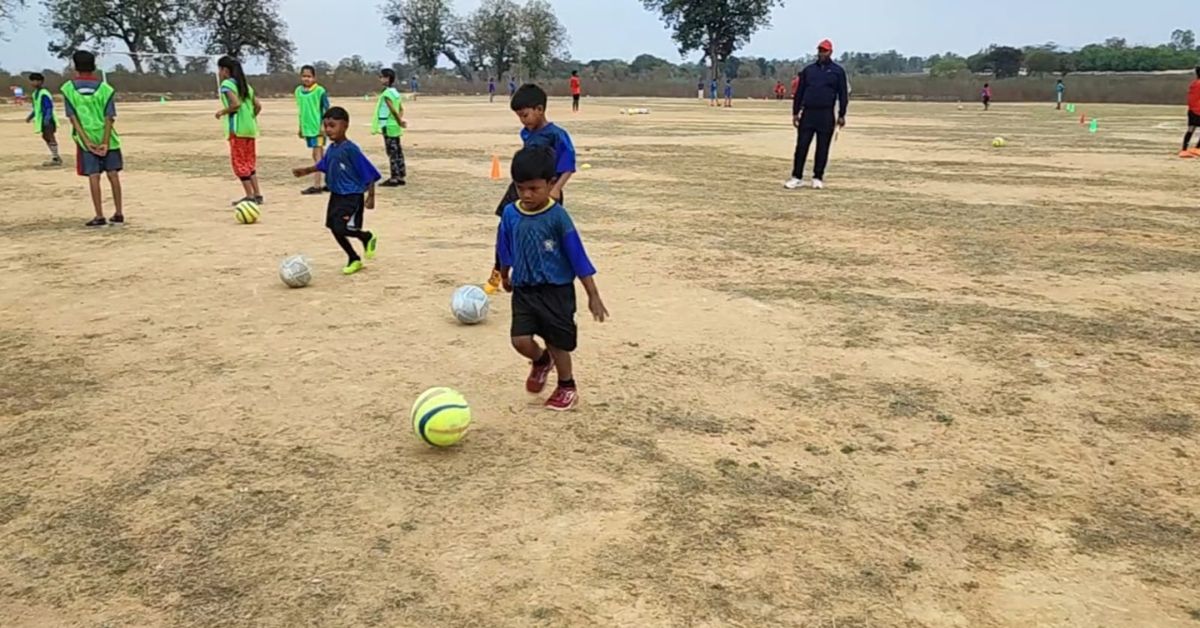
Raees adds that by 2003, these children started playing in the ‘under 14’ category at the state and national level, and by 2004, girls also started participating in the sport. So far, the coach has trained at least 1,500 children, and of these, 45 have made it to the state and national level competitions.
One of his students, Laxmi Sahees, has been playing football since she was 12. She would tag along with her brothers to the football ground after school. She tells The Better India, “Initially, we went out of curiosity and for fun, but soon, we became so interested that we would rush to the ground for daily practice after finishing all household work.”
She continues, “Raees Sir told us about the tournaments for the women’s team. And within a year, in 2007, I participated in the national level competition and was selected in the first round. We competed with Kerala, Tamil Nadu, and UP and reached the quarter-finals.”
“Football has given me an opportunity to learn about the outside world. If I had not been into football, I guess I would have been married off at an early age and had a few kids like my elder sisters,” adds the 27-year-old who, so far, has played at nine national level competitions.
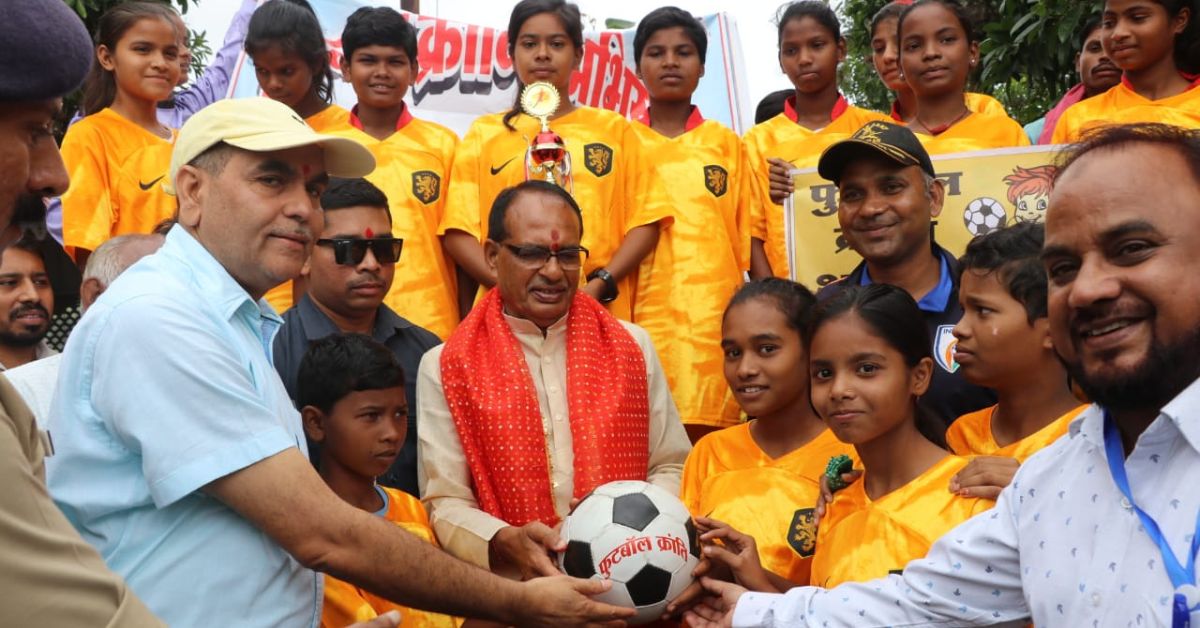
Raees and his students with Chief Minister Shivraj Singh Chouhan.
Currently, Laxmi coaches 40 students from Bicharpur and nearby villages. In the recent Khelo MP Youth Games 2023, her students bagged gold.
Laxmi’s coach sir is extremely proud of her and her students. “It is a matter of extreme pride to be able to compete and be a state champion coming from a small village,” remarks Raees.
Over the years, Raees says, Shahdol divisional commissioner Rajeev Sharma also recognised the talent in Bicharpur and established at least 1,200 clubs in all villages across the Shahdol division. “Today, 80 to 85 football tournaments are organised in the division every year. By 2022, there had been a noticeable improvement in the local people’s quality of life. They now enjoy facilities like electricity, a professional ground, and an open gym. Additionally, the government provides a dedicated budget for the sport in the area,” he adds.
Recently, Prime Minister Narendra Modi also highlighted the budding footballing talent of Bicharpur on Mann Ki Baat. “Just imagine — a tribal area, which was known for illicit liquor and was infamous for drug addiction, has now become the ‘football nursery’ of the country. That is why it is said, ‘Where there is a will, there is a way’. There is no dearth of talent in our country, but there is certainly a need to find and nurture them,” said the PM.
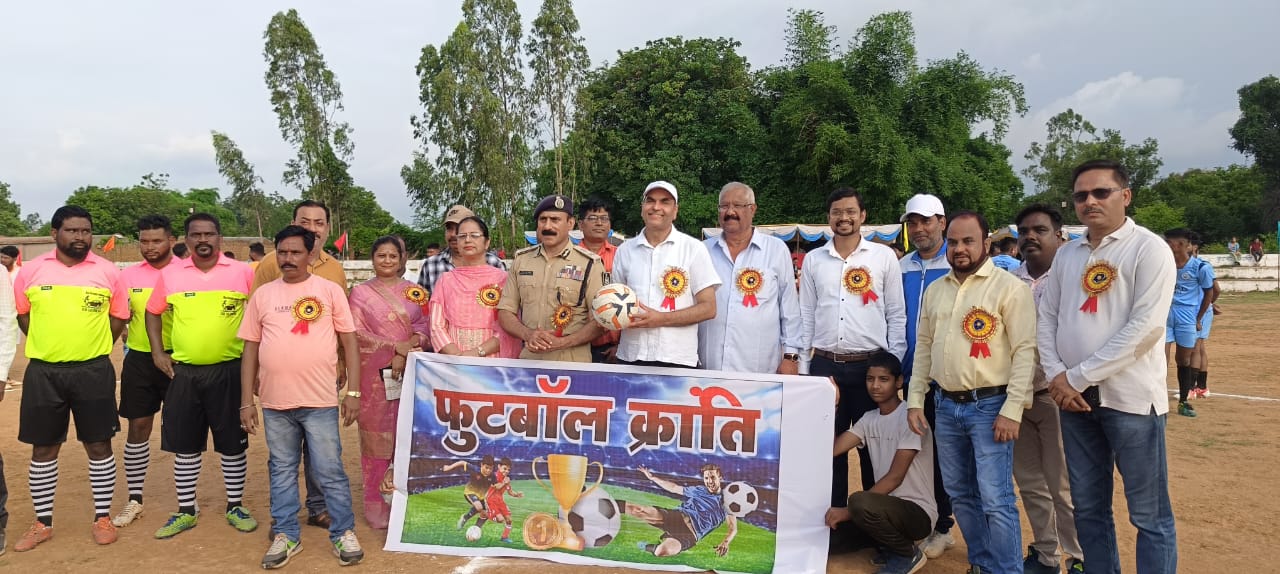
मध्य प्रदेश के शहडोल में फुटबॉल क्रांति नाम के एक कार्यक्रम ने यहां के युवाओं की जिंदगी बदल दी है। इसने न सिर्फ उन्हें नशे के चंगुल से बाहर निकाला है, बल्कि देश को कई प्रतिभावान खिलाड़ी भी दिए हैं। pic.twitter.com/AVSeAVcTs2
Raees still coaches students in the division, and now he’s joined by national players from Bicharpur who are mentoring new talent in the Shahdol division. For him, the village’s transformative journey has been emotionally inspiring.
“Whenever I watch my students on TV, competing against other skilled players, I feel nervous throughout the match. When our students win, it is not just their victory but also a win for me as their coach. It brings happy tears to my eyes. Now, my students are also training other children, and the happiness cannot be expressed in words. Over the past few years, the entire village’s atmosphere has transformed. We hope to produce many more national players from the entire Shahdol division,” says Raees.
Edited by Pranita Bhat; All photos: Raees Ahmed.
source: http://www.thebetterindia.com / The Better India / Home> English> Stories> Football> Rural India / by Shivani Gupta / October 09th, 2023
FORGOTTEN HERO OF BHOPAL GAS LEAK TRAGEDY: The saviour Ghulam Dastagir, the Deputy Station Superintendent at Bhopal Railway Junction who saved thousands of lives on December 2 and 3 went unrecognised and was buried in the history.
Much has been said and written about the fateful Bhopal Gas Leak Tragedy in 1984 that claimed around 5,479 lives while affecting over six lakh people with serious skin disorders. However, the saviour Ghulam Dastagir, Deputy Station Superintendent at Bhopal Railway Junction, who saved thousands of lives on December 2 and 3,1984 went unrecognised and was buried in history.
Ghulam Dastagir’s case isn’t an isolated one as thousands of Muslim freedom fighters who sacrificed their lives for the cause of Indian freedom struggle were more often than not either concealed or forgotten by the Union Government on one pretext or the other. This scribe flipped through the pages of history to zero in on the world’s deadliest industrial tragedy which sent shockwaves among the people across the globe.
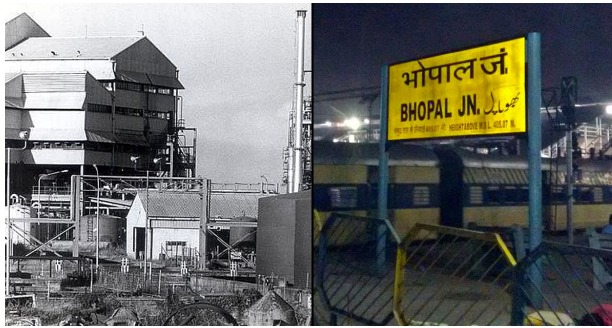
Even after four decades after the Union Carbide Factory gas leak episode, the scars still remain in the hearts of the victim families. What is irking is the fact that a memorial erected at Bhopal Railway Junction for 23 railway men, who lost their lives while rescuing people, have been inscribed but there is hardly any mention about Ghulam Dastagir who played a pivotal role in the rescue operations on the dreadful day.
Sources from various news portals revealed that a deadly gas leak from the Union Carbide factory engulfed the Bhopal city, killing thousands and injuring many more. Amidst the chaos and panic, one man acted swiftly and bravely to save lives: Gulam Dastagir, Deputy Station Superintendent at Bhopal Railway Junction. Few people know that during the Bhopal gas tragedy, a heroic stationmaster risked his own life to save others. But for him the causalities in the catastrophe would have been much higher.
On the fateful night of December 2, 1984, Ghulam Dastagir found himself in the midst of routine paperwork. Little did he know that this night would forever alter the course of his life. As the Bombay-Gorakhpur Express was due to arrive, Dastagir’s routine took a drastic turn when he sensed something was amiss. His swift action would soon prove to be the difference between life and death for many. Upon stepping out of his office, Dastagir experienced burning eyes and a bitter throat – a tell-tale sign that something was terribly wrong. Shockingly, he discovered the lifeless form of Dhurva, the station superintendent, in his cabin. Acting swiftly, Dastagir communicated with nearby stations to halt incoming trains, potentially saving countless lives. Despite the looming danger, he ordered the immediate departure of the Gorakhpur-bound train, ensuring the safety of its passengers.
As the deadly gas claimed the lives of 23 station staff members, including Dastagir’s own son, he and his team worked tirelessly to manage the crisis. Despite struggling to breathe, Dastagir remained composed, coordinating medical help, and providing a ray of hope in the face of impending doom. The station became a scene of chaos as large crowds desperately sought escape from the poisonous air, and Dastagir’s leadership became a beacon of strength.
While Dastagir’s selfless actions spared countless lives, the tragedy took a heavy toll on him personally. The toxic gas led to health issues, with a lump forming in his throat, and subsequent years were marked by frequent hospital visits. The heavy personal cost included the loss of his son to the gas and another developing a permanent skin infection. Despite the challenges, Dastagir continued to exhibit resilience until his demise in 2003.
At Bhopal Junction, a memorial stands in honour of 23 railway personnel who lost their lives on that tragic night. Unfortunately, Ghulam Dastagir’s name doesn’t grace the memorial, as his demise occurred nearly two decades later. However, during those critical hours in December 1984, Dastagir exemplified the truth in Gerard Way’s famous quote, proving that heroes emerge from ordinary people who rise to extraordinary challenges.
Meanwhile, Netflix’s series, “The Railway Men” made headlines based on the Bhopal gas tragedy of 1984. Amidst the widespread acclaim for the show, this review reflects on one of the unsung heroes of that tragic night – the deputy station master of Bhopal railway station, Ghulam Dastagir. His extraordinary actions saved lives and offered a glimmer of hope in the face of an unimaginable disaster.
Shadab Dastagir, youngest son of late Dastagir, while speaking to a media in 2023, said that his father’s heroic role in the entire episode on Bhopal Railway Junction on the night intervening December 2 and 3, 1984, has mainly remained unsung.
“Little official acknowledgment and appreciation came his way in these four decades. And now when an OTT series has been made on the episode, it is upsetting that we were never consulted about the actual happenings,” he told The Week.
“I have watched the teaser and the official trailer and I can make out that the character being portrayed by Kay Kay Menon is based upon my father. But then we are highly apprehensive as to how much close to truth the character has been made,” Shadab, who is into the family business of chemicals and fertilisers, said.
He also mentioned that the family had already sold out the copyright of a script on Dastagir’s life and work – based on narration by his father himself during his lifetime – to a production house called Small Box Media. The Mumbai-based production house was planning a full-length movie based on the script when YRF cut in with the miniseries.
A forgotten hero whose sense of duty and commitment saved countless lives, Dastagir’s story deserves to be recognised and remembered by his fellow countrymen.
[The author is former Indian Express and Deccan Chronicle chief]
source: http://www.radiancenews.com / Radiance News / Home> Focus> Social Service / by M Rafi Ahmed / September 02nd, 2025
Shezah Fatima, Sumbul Khan, Tarannum Rangrez and Mohammed Ashhad are four Muslims who have figured in the MPBSE Madhya Pradesh 10th List of Top 10 for the year 2025 released along with the result Tuesday.
[Representative image by Grok 3]
MP Class 10 Result 2025:
Madhya Pradesh SSC 2025 Toppers List: Shezah Fatima, Sumbul Khan, Tarannum Rangrez and Mohammed Ashhad are four Muslims who have figured in the MPBSE Madhya Pradesh 10th List of Top 10 for the year 2025 released along with the result Tuesday.
Shezah Fatima from Jabalpur bagged a total of 498/500 marks and secured the 3rd rank in Madhya Pradesh.
On the other hand, Sumbul Khan of Sagar district and Tarannum Rangrez of Damoh district bagged a total of 496/500 and secured the 5th rank in the MPBSE 10th Toppers List 2025.
Also in the Madhya Pradesh SSC Merit List 2025 is Mohammed Ashhad. Ashhad bagged 495 out of the total 500 marks and stood 6th in whole of Madhya Pradesh.
The state topper in the MPBSE SSC 2025 board exam is Pragya Jaiswal of Singrauli district. She has scored 500 out of 500 marks i.e. 100% marks to secure the top rank in the MP Class 10 board exams 2025 held from February 27 to March 19, 2025.
MPBSE 10th Toppers 2025
The top three students in the Madhya Pradesh board SSC Merit List 2025 are:
Rank 1: Pragya Jaiswal from Singrauli (500 marks)
Rank 2: Ayush Dwivedi from Rewa (499 marks)
Rank 3: Shezah Fatima from Jabalpur (498 marks)
Girls have preformed excellently well across the board.
According to the 10th result announced today, a total of 212 students have featured in the Madhya Pradesh SSC Merit List 2025. Notably, 144 of them are girls.
MP 10th Result 2025 – Top 10 Districts
Narsinghpur district has topped in terms of pass percentage in both MP 10th exam, followed by Mandla district. The list of top 10 districts are:
Narsingpur 92.73% of regular students pass
Mandla 89.83%
Balaghat 88.07%
Anooppur 87.66%
Neemuch 87.29%
Shajapur 86.22%
Sehore 85.54%
Hoshangabad 84.08%
Dewas 84.05%
Jhabua 83.88%
MPBSE 10th 2025: Division wise Result
Over 4 lakh students have passed MP 10th SSC 2025 exam with 1st division.
First division: 4,290,42 students
Second division: 1,821,72
Third division: 2,200
Pass division: 0
Details of Regular Students
Registered: 8,100,19
Absent: 5,087
Appeared: 8,049,32
Cancelled: 125
Withheld: 39
Result declared for: 8,047,68
Pass: 6,134,14
Failed: 1,91,354
Pass percentage: 76.22 per cent
The state has registered an overall pass percentage of 76.22%. It is the best result in the past 15 years, the MP board said.
Steps to Check MP board Class 10 HSC Result 2025
Click here to go official MPBSE official website: “mpresults.nic.in“.
Click on “HSC (Class 10th) Exam Result 2025”.
Enter roll number and name.
Click on “Submit”.
The results will be displayed on the screen.
Save the results and take a print out for further reference.
The students can check their MPBSE Class 10 or HSC results 2025 along with Class 12th HSSC Vocational Exam 2025 on the official website www.mpresults.nic.in, mpbse.mponline.gov.in, mpbse.nic.in, ExamResults.net, MPEducation.net indiaresults.com results.mpeducation.net, knowyourresult.com.
MP Board Previous Year Toppers
In 2024, the MP board Class 10 exam, the state had registered an overall pass percentage of 58.10%.
In 2023, the MP Board Class 12 Exams were held from March 2 to April 01, 2023, at various test centers across the state.
A total of 7,29,426 students had registered for the Class 12 MP Board exams. Out of them 7,27,044 appeared in the exam and 4,01,366 (55.20%) were declared passed. The pass percentage of boys in 2023 was 51.91% and that of the girls stood at 58.69%.
Narayan Sharma (488 marks), Gaurav Mourya (486 marks), Ritin Lodhi (486 marks) and Prachi Patel (485 marks) were toppers in Science stream.
On the other hand, the MP Board Class 10 Exams last year were held from March 1 to March 27, 2023, at various test centers across the state.
A total of 8,20,014 students had registered for the Class 10 MP Board exams. Out of them 8,15,364 appeared in the exam and 5,15,955 (63.29%) were declared passed. The pass percentage of boys in 2023 was 60.26% and that of the girls stood at 66.47%.
source: http://www.ummid.com / Ummid.com / Home> Education & Career / by ummid.com news network / May 06th, 2025
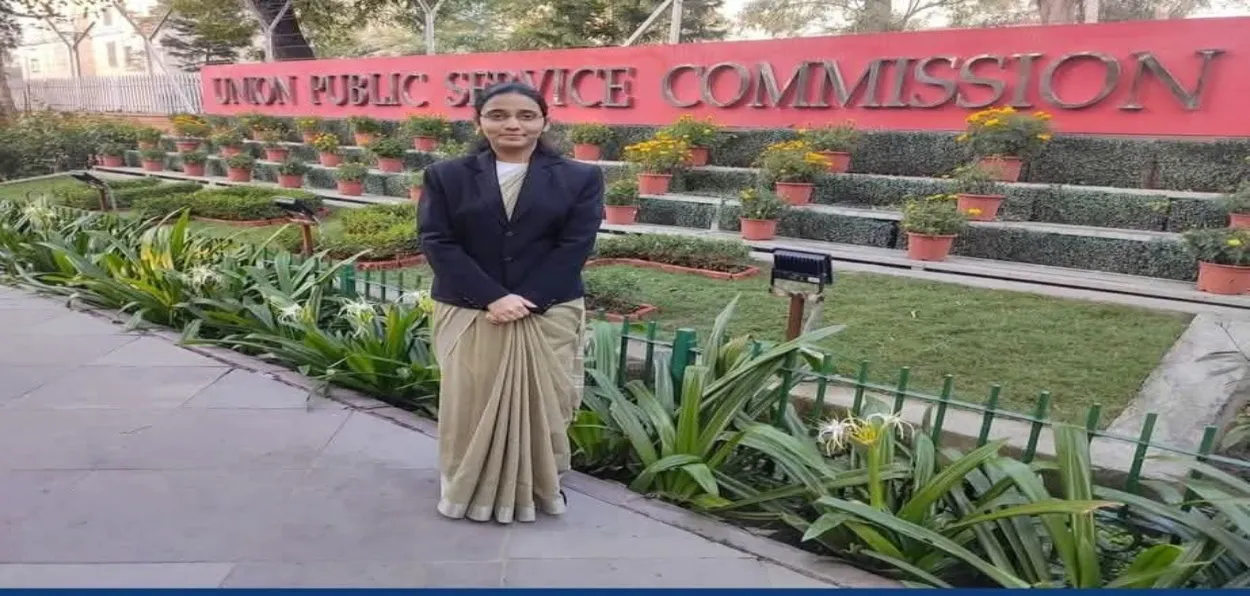
Farkhanda Qureshi of Balaghat, Madya Pradesh, outside UPSC office in Delhi
Farkhanda Qureshi was in her eighth grade when she saw district Collector B. Chandrasekharan son a local Television channel. This visual ignited a dream in her mind; she too wanted to become a civil servant. Today this Muslim woman from from Balaghat, a small town of Madhya Pradesh, has realized her dream which she nurtured over the years with passion, hard work, overcoming failures and perseverance.
Farkhanda Qureshi has secured 67th rank in the UPSC 2024 Civil Services Examination and would soon join the Lal Bahadur Shashtri National Academy for Administration, Dehradun, for training to become an Indian civil servant.
“I had decided that one day I will also become a collector and work for society.” She credits her success in her fourth attempt to her family’s support.
She started preparing for UPSC in 2021. Despite failures, she did not give up. She says, “My parents did not let me break down; they motivated me and told me that I will get success one day. Had they not supported me, I would have probably given up in the first or second attempt,” she told the told media persons.
Farkhanda believes that for a tough exam like UPSC, studying for 18 hours is not necessary, but consistency and strategy are. “I studied for 6 to 8 hours every day, but I studied every day. Old year papers, standard books, current affairs and newspapers were an important part of my preparation.”
Farkhanda Qureshi flanked by her parents Nikhat Anjum and Abdul Malik Qureshi
Farkhanda, who completed her 10th from St. Mary’s School and 12th from Methodist Mission, says, “Being from a small town like Balaghat has never been my weakness. I believe that if the youth here get the right direction and resources, they can make a name for themselves across the country.”
Farkhanda considers her father Abdul Malik Qureshi, who is a lawyer, and her mother Nikhat Anjum Qureshi, a homemaker, her heroes and credits her success to them.
Her father said, “Today people recognize me by my daughter’s name, nothing can give me greater happiness than this.”
There is a festive atmosphere in the area, the collector congratulated Farkhanda and and wished her a bright future. The local mosque committee (Anjuman( also felicitated her and called her inspiration for the Muslim youth.
Out of the 1,009 candidates recommended by UPSC this year, 26 are Muslims, though none made it to the Top 25.
Iram Choudhary (Rank 40) and Farkhanda Qureshi (Rank 67) are the highest-ranking Muslim candidates in the merit list. A total of 97 Muslim candidates were selected for the interview stage, and the success rate stands at 2.57%, lower than previous years.
source: http://www.awazthevoice.in / Awaz, The Voice / Home> Stories / by Abdul Wasim Ansari, Balaghat, Bhopal (name error edited) / April 26th, 2025
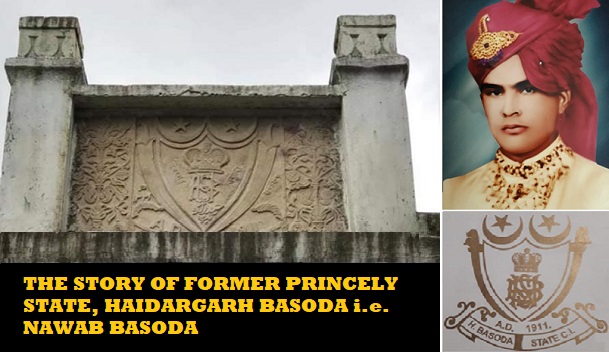
Once it was a princely state, today it’s a dot on the map of Madhya Pradesh. Haidargarh-Basoda, a principality, remained in existence for nearly two centuries in the centre of India.
It was also known as Nawab Basoda and is known for its unique history. However, after independence when the state merged and lost its identity, not even made a district and relegated to the status of a town, the place lost focus and its heritage and traditions could not be properly documented.
However, it’s well known in history that Nawab Diler Khan was the founder of the State that later got divided into Haidargarh Basoda, Kurwai and Muhammadgarh. The original princely state* had come into being in the year 1713 AD, [and was later carved into three separate states]. Mughal power was weakening after nearly 190 years.
It was during the reign of Emperor Farrukhsiyar, the great grandson of Aurangzeb, that Nawab Diler Khan managed to establish his principality in this region. The death of Nawab Diler Khan is recorded in the year 1732. After him, it was his son Nawab Izzat Khan who succeeded.
However, Nawab Izzat Khan and his younger brother Ahsan Ullah Khan had the territory divided. The latter, Nawab Ahsan Ulla Khan also divided his state into two parts, one of which was known as Haidagarh Basoda or Nawab Basoda. The Basoda state came into being in early 1750s.
After Nawab Ahsan Ulla Khan’s death in 1790, his son Nawab Wakaullah Khan remained the chieftain but he died five years later. His wife was regent and the minor son Nawab Asud Ali Khan became the ruler when he attained the rightful age. It was during this period that the first war of independence or mutiny [as British termed it] took place.
Nawab Asud Ali Khan passed away in 1864. He was succeeded by his son Nawab Omar Ali Khan who was an author and a traveller. He went across the world and wrote about his visits. He passed away in 1895. He was succeeded by his son Nawab Mohammad Haidar Ali Khan.
It was during this period that the state became known as Haidargarh. Then, Nawab Masood Ali Khan became Nawab and after a three year stint, state got merged when India became independent. The title remained. After 1971, privy purses were abolished. He passed away in 1976.
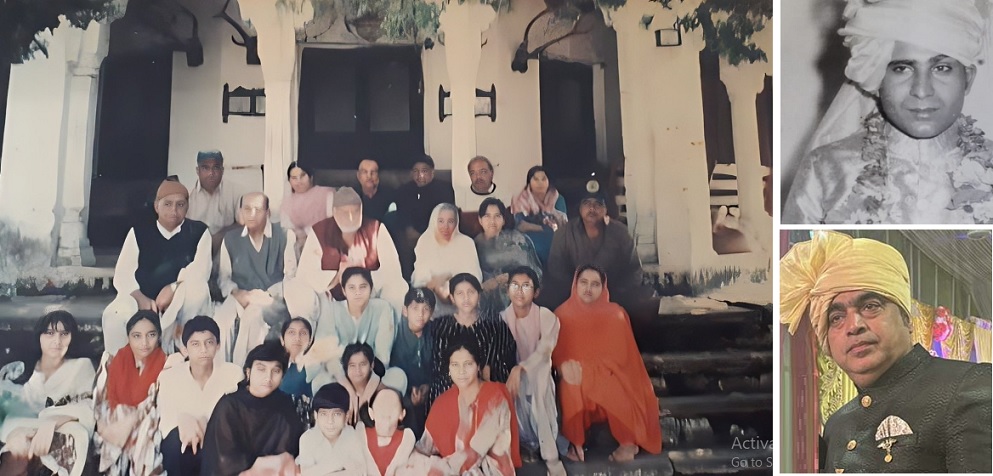
“After our grandfather Nawab Masood Ali Khan, his son Nawab Kiswhar Ali Khan succeeded him”, says Siddiq Ali Khan, a descendant of the family. ‘My father Anwar Ali Khan is the younger brother of Kishwar Ali Khan”, he further says. How the family coped with the state was merged?
“Most of the members of our clan took care of the lands. Apart from this, some of us are in different professions”, says Khan, who lives in Bhopal. “We had agrarian land and hence the family got engaged in it, though some took jobs and became doctors, engineers. One of our uncles, Bakhtiyar Ali Khan, studied in Cambridge school in Bhopal. My father has also been in politics”, Siddiq Ali Khan, further adds.
The Haidargarh Basoda state [now Haidergarh] was spread over an area of over 103 sq km i.e. 40 sq miles. Now, it is located near Gyaraspur town in Vidisha district adjoining Bhopal. Haidargarh, now spelt Haidergarh Basoda, is a civic body. The fort and the family’s ancestral palace still stand as testimony to the fact that this small panchayat was once was a principality with a rich history.
[*Originally Nawab Diler Khan established a state in 1713 AD that was later carved into three separate states and Basoda came into being in 1753]
source: http://www.newsbits.in / NEWS Bits / Home> Heritage / by Shams Ur Rehman Alavi / February 15th, 2023
Majid Hussain of Burhanpur tops JEE Mains with 99.99 Percentile
Seventeen-year-old Majid Mujahid Hussain from Burhanpur, Madhya Pradesh, has brought immense pride to his community by emerging as the state’s top scorer in the Joint Entrance Examination (JEE) Mains 2025. Securing an impressive 99.99 percentile, his remarkable achievement has sparked celebrations among his family, teachers, and well-wishers.
Majid’s journey to success began in Year 11 when he started preparing rigorously for the highly competitive exam. Enrolling in a coaching institute, he dedicated himself entirely to his studies, making significant sacrifices along the way.
Reflecting on his preparation, Majid shared, “For two years, I focused solely on my goal. I even refrained from attending weddings and festivals to make the best use of my time.” His unwavering dedication and discipline played a crucial role in his outstanding performance.
Expressing his gratitude, Majid acknowledged the support of his family, particularly his father, who provided him with invaluable guidance, and his teachers, whose unwavering encouragement helped him stay motivated. Speaking to news agency INS, he said, “My family has played a crucial role in my success.
He said, my father provided me with the best possible guidance, and my teachers offered their unwavering support. Now, my aim is to achieve a high rank in JEE Advanced and pursue engineering at a premier institute.”
Majid’s mother, Sakina Hussain, was overwhelmed with joy upon hearing about her son’s remarkable accomplishment. “I am extremely proud that my son has topped Madhya Pradesh with 99.99 percentile. His hard work has paid off, and this is just the beginning of his journey,” she said. Encouraging other students, she advised them to stay motivated and not lose hope despite challenges.
His success has been widely celebrated, not just by his family but also by his teachers and the local community. Many have lauded his commitment and perseverance, with his school principal calling him a “brilliant and dedicated student who always had his eyes set on his goals.”
The National Testing Agency (NTA) recently announced the JEE Mains 2025 results, and Majid’s achievement has set a new benchmark for students across Madhya Pradesh. His story serves as an inspiration to aspiring engineers, demonstrating that with perseverance, dedication, and a strong support system, success is within reach.
As Majid now sets his sights on JEE Advanced, his journey continues to motivate young minds striving to excel in engineering. His achievement is not just a personal triumph but a moment of collective pride for his family, teachers, and the entire Burhanpur community.
With Agencies Inputs
source: http://www.muslimmirror.com / Muslim Mirror / Home> Indian Muslim> Positive Story / by Muslim Mirror / February 14th, 2025