Tag Archives: Imran Inamdar

Jahangir Shaikh: A guardian of unclaimed dead bodies

Solapur, MAHARASHTRA :

For most people, social activities is defined as work carried out by people with the aim of alleviating the living conditions of those people in a community suffering from social deprivation. They strive for helping the poor and deprived people to live a better life. By this definition, it also implies that social work is for the living.
But what about people who are dead?

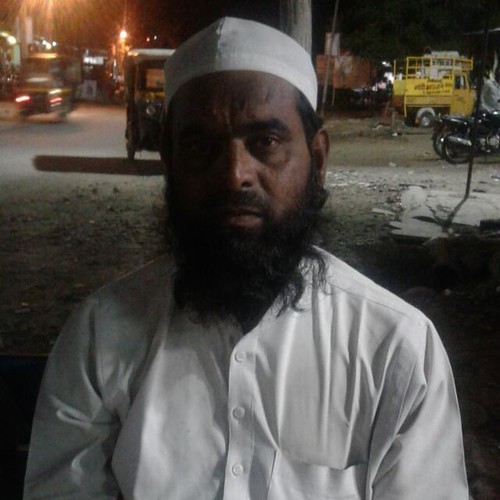
This question, and the answer to it, is what makes Jahangir Shaikh, a 47-year-old resident of Solapur, an exception. His social activity starts after he finds an unclaimed dead body. Once he discovers an unclaimed body, he assumes its guardianship and lays the body to its final abode.

“Initially I started to give gusl (bath) to unclaimed Muslim bodies on the request of Police. Later, I started doing it for people of other religions too”, Jahangir shares his journey of the past ten years; about a cause rarely undertaken by people.

Jahangir, a devout Muslim, first received a phone call in 2007 from a Muslim policeman who knew he can give gusl to unclaimed dead body. Jahangir had rushed to the spot and completed funeral right of a fellow Muslim.

“That was the first instance after which devotion for performing last right of unclaimed body arose inside me and thereafter I made it a duty to attend such bodies”, he recalls.

Jahangir’s strange choice of social work iniitally caught people by surprise, but he never doubted his commitment. “People disliked my work and they would treat me as an inferior individual but that did not stop me from carrying out the work that I supposed as my duty. I would pray to the almighty to strengthen me so that people’s objections do not hold me back,” Jahangir says, when talking about the initial days.

His family also strongly objected to this kind of work but he managed to convince them to allow him to continue doing it.
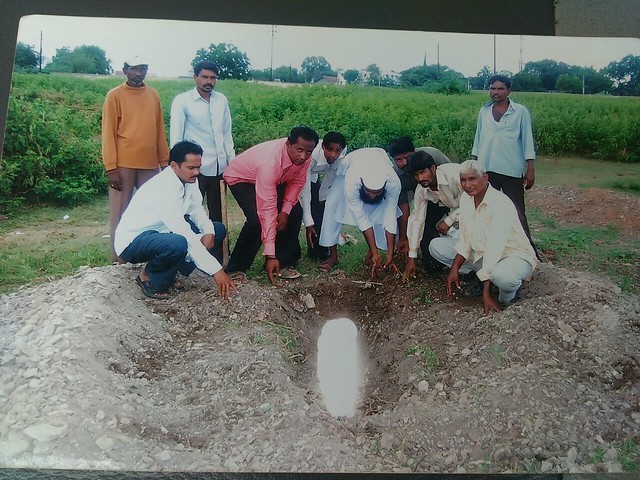
“I told them that I don’t do it for earning money; burying these bodies gives me pleasure as I became a guardian for them. They felt awkward initially, but gradually they got accustomed “, Jahangir explains how he convinced his family.

Till today Jahangir has performed last rites of as many as 1,600 people, out of which 1,400 were non Muslims. As he is used to of giving gusl, he is also called by people for giving gusl to their relatives. In return, they give him hadiya (gift).

But one might wonder; what is his main profession and source of living? For that, he cooks food in social functions. However, he is always on his toes when he gets to know about any unclaimed dead body either at a hospital or the police station.

Jahangir’s dedication to what he called his ‘duty’, and his sincerity towards this soon made him famous in Solapur. He started receiving phone calls from police stations and hospitals for burying unclaimed bodies. His amazing sense of kindness towards the unattended also moved many people; a few years ago, a young Muslim businessman Salman Shaikh took notice of his noble service and donated a second-hand Ambulance to help him carry out the work more efficiently.

“I was impressed with his dedication towards the work. The charred and blood-soaked bodies that a normal man don’t even look at, he would offer them a bath and bury them”, a bewildered Salman explains why he donated ambulance to him.
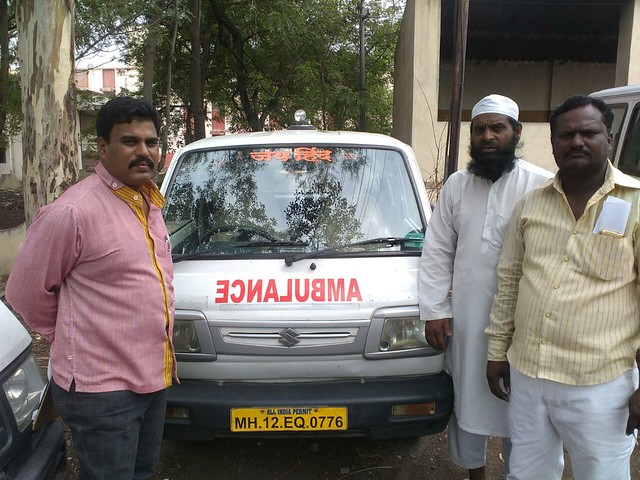
However, a couple of years after he got the ambulance, it met with an accident while carrying a body of little girl. This damaged the vehicle substantially and Jahangir too was injured in the accident. However, this did not break his determination and he bought two ambulances on loan and again started his service to the community. He got support from his son, who took a loan to buy an ambulance for Jahangir.

With some likeminded friends, he also formed the Baitul maal Shifa Committee through which he raises fund by collecting zakat (compulsory charity) or sadqa (voluntary charity) from people. However, he does not use this fund for performing last rites. Instead, he and friends pay money from their pockets for funerals and use the fund raised for poor patients admitted in hospitals.

“We use collected fund to help patients in buying medicines and other medical expenses”, Jahangir says with cheerful face.

When asked if police or hospitals pay him for carrying and burying bodies, he says, “They give Rs 300 but we give this money to the boys who help in carrying bodies to ambulance and dig holes for burial.”

For other expenses related to performing last rites: kafan (white cloths) and attar (perfume), Jahangir and his friends spend money from their own pocket.

His dedication has led to many people offering him voluntary service whenever needed. Currently, his Shifa committee has some active members: Gulam Shaikh, Zainuddin Nadaf, Sameer Shaikh, Daula Kumthe, Babulal Phaniband, Rashid Chaudhari and Shakila Shaikh are always ready to join hands with Jahangir.

Irfan S.M, a social activist and an educational personality from Solapur has nothing more than praises for Jahangir for his distinguished work.

“He is into this task of voluntary work and selfless service to humanity, it is really remarkable. Thousands of people are engaged in different social and religious activities but this is unique. There should be one Jahangir in every city”, Irfan says.

Imran Inamdar contributed to this story

source: http://www.twocircles.net / TwoCircles.net / Home> Indian Muslim> Youth / by A Mirsab, TwoCircles.net / October 07th, 2016
Bakhtiyar Tangsal, eminent journalist from Solapur, is no more

Solapur, MAHARASHTRA :

Solpaur (Maharashtra): 

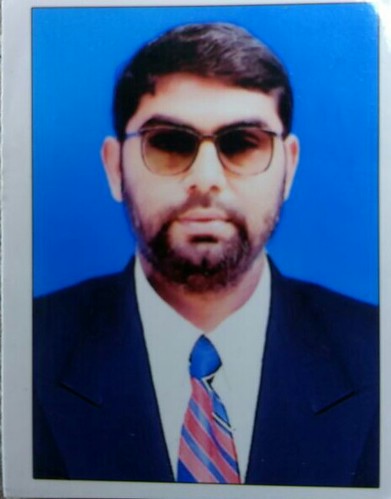
Bakhtiyar Ibrahim Tangsal, a senior English journalist, social worker and an Urdu poet from Solapur district passed away on Tuesday at the age of 54. Tangsal was suffering from a kidney disease for the last four years.

Tangsal forayed into the field of Journalism in late 90s, when the number of Muslims in the field of journalism, especially the ones educated in Urdu-medium schools, was extremely low.

Tangsal broke many barriers by joining Indian Express and proved himself in a very short time and started emerging as an outstanding journalist of the district. He also worked with Navbharat Times and Financial Express.

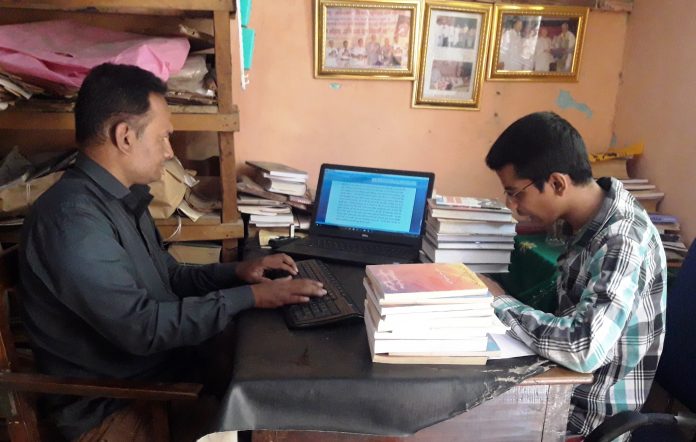
Tangsal was also a well-known Urdu poet and in 2013, when he was suffering extensively, he started publishing Urdu Daily ‘ Solapur Milaap’. Although he was running it successfully, his health and dialysis process couldn’t allow him to run it further. He always wanted muslims youth to choose journalism as a career or at least do it as part time job or hobby. In 1996 he started free journalism classes to train 20 youths to become journalists. Unfortunately, only two students: Ziyauddin Momin and Imran Inamdar remained in touch with him till his last breath.

He was equally popular in other community people and journalist community too.Today’s strong NGO of reporters ,Solapur dist shramik Patrakar Sangh.(Working journalist association) is the result of his efforts . He was the founder president of the same.

Mahmud Nawaz, a young teacher and a social worker, said it was a huge loss for the community. “He was not only a good journalist, but a great social worker too. He promoted young talents, providing them with all kinds of assistance. His role during 2002 riots and establishing relief committee was really remarkable,” said Nawaz.

source: http://www.twocircles.net / TwoCircles.net / Home> Indian Muslim> Youth / by Imran Inamdar, TwoCircles.net / October 07th, 2016
Our youths have to change the direction of thinking : Salman Taj Patil IPS

Solapur, MAHARASHTRA :

Salman Taj Patil

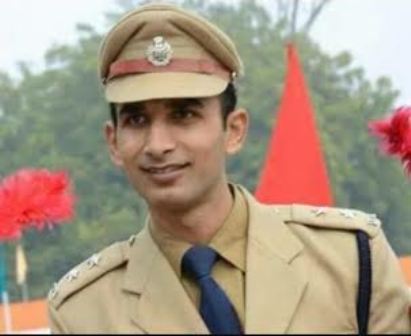
In 2012 Salman Taj Patil cracked the UPSC exam in first attempt and became the first Muslim IPS officer from Solapur.  In this candid conversation with Imran Inamdar the 31 year old talks of issues concerning the Muslim community, of the state of education among Muslims and of his own preparation for UPSC a few years ago.

How did you manage to achieve this feat?

I immersed myself into the preparation completely. There was only one aim in my mind and that was to crack UPSC. My parents provided very good emotional support and my father Mr. Jafar Taj always encouraged me saying that ‘you are too energetic and brilliant, you can easily crack UPSC, just focus on your studies and be consistent.’

Who is your role model and Why?

 Being a Muslim obviously Prophet Mohammed (PBUH) is my role model. He has showed us the complete way of life. My parents are also firm pillars of support for me. They are always there to guide me.

How to study to appear for UPSC exam?

The preparation starts at school level. Reading news papers, taking part in extracurricular activities, essay writing, debate competition play a key role. One needs to be updated about all current events. Critical analysis is also very important and it improves and polishes writing skill. Practice makes a man perfect. Nobody comes to the world with all the knowledge and skills. Effort, positive atmosphere, focus and support of near and dear ones matters most.

Why are Muslim youths far behind in cracking UPSC exam?

This is very important question. In my opinion our educational infrastructure and negative mentality are fully responsible for this. It has been hammered that qualifying this exam is very difficult or nearly impossible for minority community youth. This type of thinking is damaging and we should come out from this depressing thinking. It is a very fair competition. Achievement is a result of hard work only.  It’s time to change our direction of thinking.  When we focus and work hard Allah also helps us.

How do you feel serving as an IPS officer?

It’s a wonderful experience. In fact working as a police officer is a great social work itself where one gets an opportunity to help the oppressed, put criminal behind bars and provide safety and security to women and children. For this service we are getting salary from the government and will surely get Ajar (reward) from Allah too.

Sachar committee reports reveal tremendous decline of Muslims in India in all walks of life. What are the reasons behind it?

We are ourselves responsible for this backwardness. We don’t follow the path of Prophet Mohammed (PBUH) and teachings of Quran which shows the complete way of life. We don’t read, and think over it. ‘Iqra’ which means read was the very first Quranic word to be revealed. How many of us follow the same? Education should be on our top priority specially girls’ education.

During studies what did you do to relieve stress?

I used to study for about 10 to 12 hours a day. That was hectic so I played cricket with friends and took a walk in the park to get myself mentally fresh again. And horse riding is also my hobby.

source: http://www.muslimmirror.com / Muslim Mirror / Home> Exclusive Reports> Indian Muslim> Interviews / by admin / June 26th, 2016

How a research centre in Solapur is trying to remind Indians of their common, secular history

Solapur, MAHARASHTRA :

In recent times, the country’s past has become an extremely polarising point for its citizens. Many people have been brainwashed to believe that the advent of Islam in India and the subsequent period of Muslim rule across major parts of India was a period of dark ages.

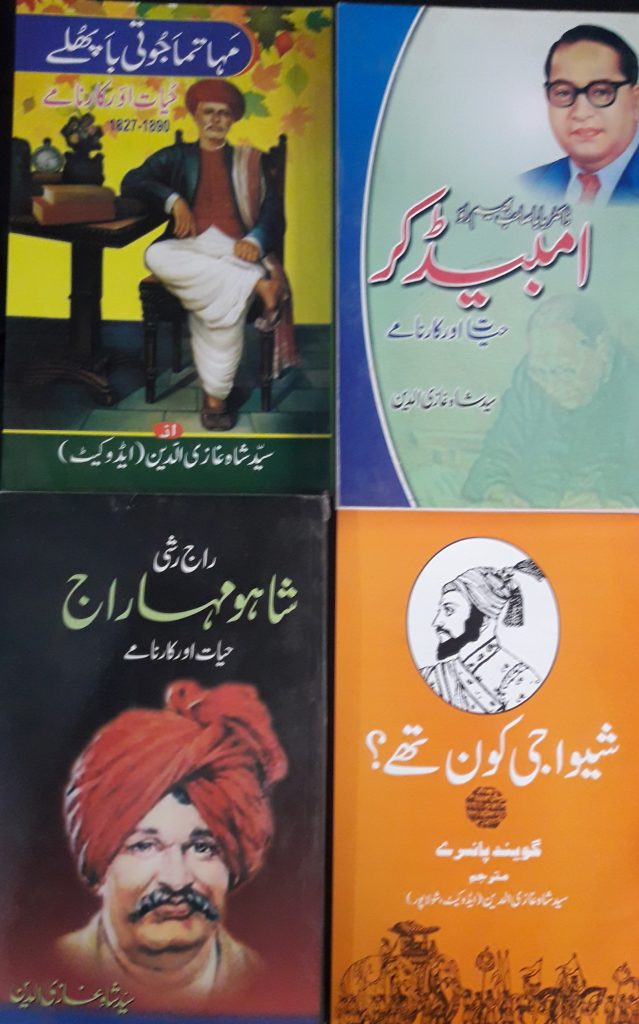
However, it is also no secret that many scholars have convincingly argued otherwise, and now a Solapur-based Research Centre is doing the same. Named after pioneering activist Advocate Sayed Shah Gaziuddin, the centre is publishing books in Marathi and Urdu languages to help people understand and value the secular fabric of the nation.

The inspiration for this works comes from the life and works of Advocate Sayed Shah Gaziuddin, who strongly believed in social binding and communal harmony and always wanted Muslims to be aware of the social conditions of India.

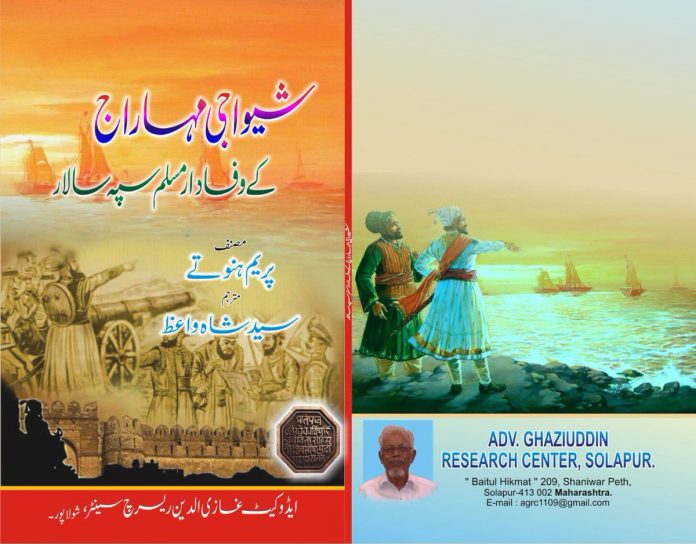
Through his Urdu books, he introduced life and work of many social reformers, including Jyoti Ba Phule, Shahu Maharaj, Dr. B.r Ambedkar and Chhatrapati Shivaji. Dr. Ambedkar Hayat aur Karname ( Life and work of Dr Ambedkar) and Urdu translation of Govind Pansare’s Marathi Book “Shivaji Kon Hota” ( Who was Shivaji) are masterpieces of his literary work.

After Adv. Gaziuddin passed away in January 2014 at the age of 79, some of his like-minded friends decided to establish a research centre to continue his vision and mission. In January 2015, the centre came into existence and started extending its literary services. Taking a cue from the works of Gaziuddin, his friends also started working on similar projects.

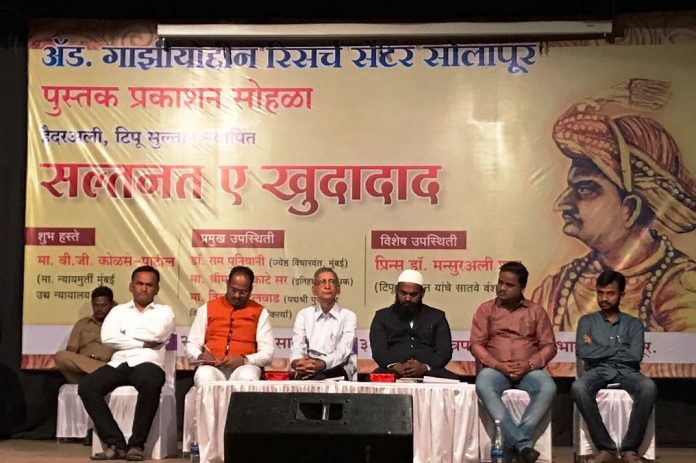
Sarfaraz Ahmed’s Marathi book on Tipu Sultan became popular in a very short time, with the book selling over 10,000 copies in a year. The fourth edition of the book is now ready to hit the market. Apart from a book on Tipu Sultan, Ahmed has also written Marathi books on Haider Ali, scholars of Medieval India.

Also, Prem Hanvate’s “ Shivranche Muslim Sainik” ( Muslim soldiers of Shivaji ) was translated into Urdu by Sayed Wayez, the English book of Sayed Dawood “The Administration of the Deccan during Aurangzeb” has been translated into Urdu by Sayed Ismail.

In total, ten books have been published till now and work on some more books are in full swing, with ten young people also volunteering with the centre.

Talking about the centre, Vice president of the centre Ram Gaikwad said, “Late Adv. Gaziuddin was a dedicated progressive activist he has done a superlative job of bringing out the real history of social reformers of the majority community. His History research helps us in spreading brotherhood among Marathas and Muslims.

For the last ten years, I am also a part of his historical research panel and fortunately got an opportunity to continue this social work under his name.”

According to founder member and young historian Sarfaraz Ahmed identity of each and every community is based on its iconic personalities and social character is based on its history. “We carry out publication work by collecting donations from members. All the members from across Maharashtra are volunteers and they are all the under 30.

I must thank Sayed Ismail (Osmanabad) Sahil Shaikh (Sangli) Asif Mujawar (Latur), Kaleem Azeem (Pune) Prof. Mujeeb Kazi (Ambajogai) our President Samiullah Sheikh, Secretary Adv. Mahboob Kotimbre, Vice President Ram Gaikwad, Sayed Shah Wayez and our advisors B.G Kolse Patil, Shrimant Kokate, Sayed Iftikhar and M.I sheikh for their contributions.”

source: http://www.twocircles.net / TwoCircles.net / Home> Indian Muslim> Lead Story / by Imran Inamdar, TwoCircles.net / August 13th, 2018

A Physics Project: Two 11th Graders Build Affordable Electric-Powered Car

Bicholim Town, GOA:

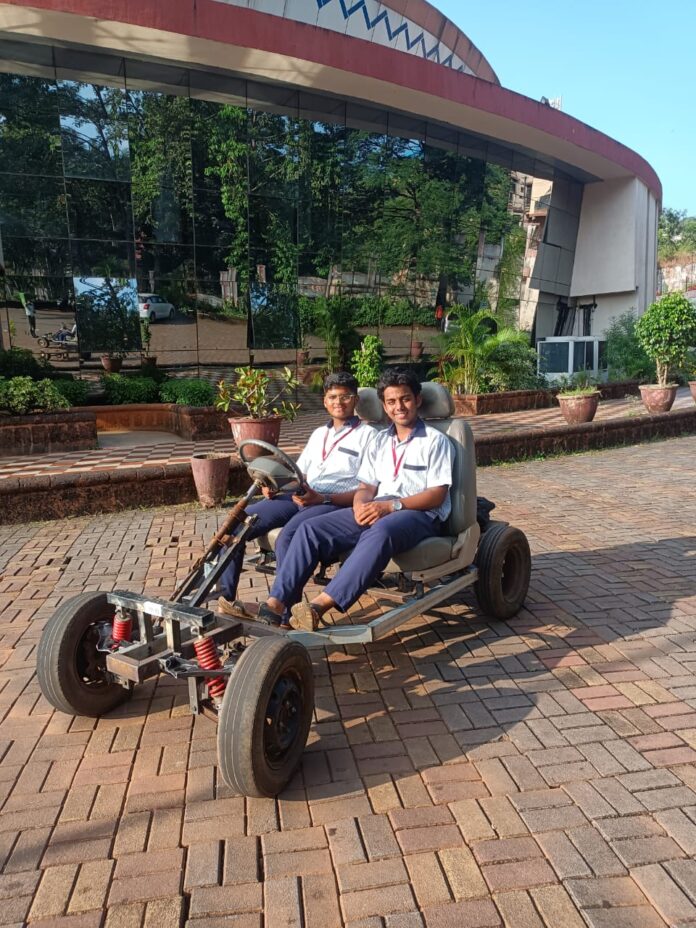
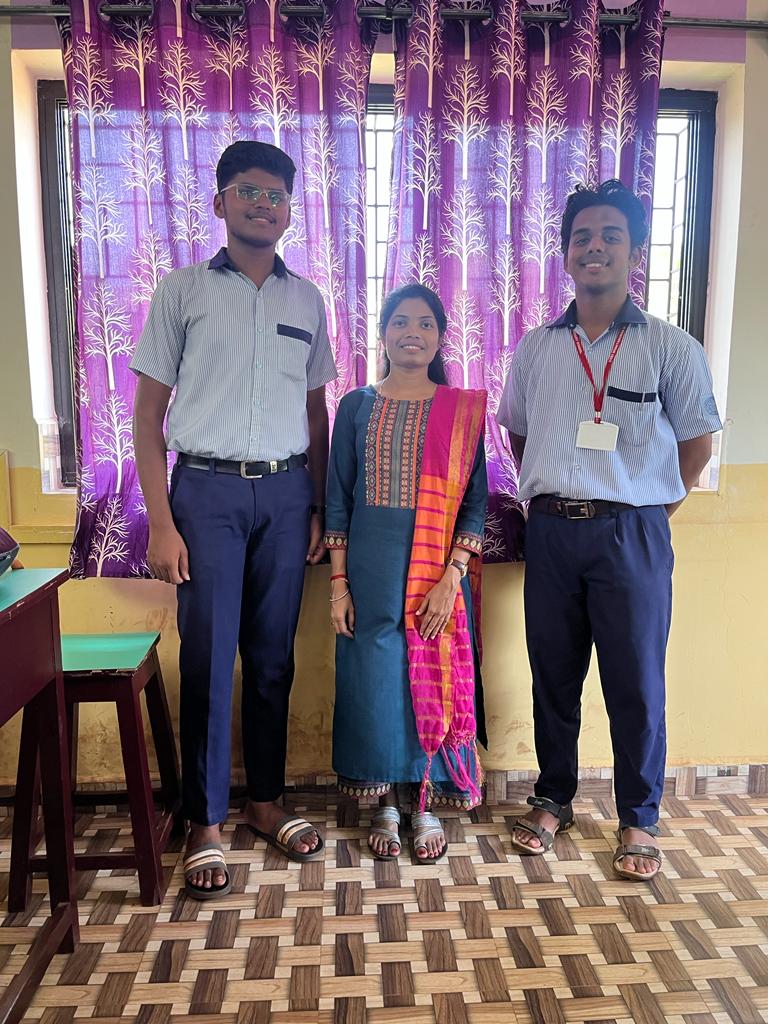
Mohammad Sehab Beig and Muhammad Shaan Sheikh with their car

Mohammad Sehab Beig and Muhammad Shaan Sheikh, two classmates from Shantadurga Higher Secondary School in Goa’s Bicholim town, were assigned a 20-mark physics assignment for 11th grade. The two youngsters, together with their friend Moun Mamlekar, a commerce student, worked for a month to develop an electric car powered by a lead acid battery.

The car gained attention when it was displayed at Delhi’s Ravindra Bhavan as part of ‘The Western India Science Fair Competition’. The electric car is powered by a lead acid battery rather than a lithium battery, which reduces its cost significantly.

From a Physics Project To Developing an EV

Sheikh and Beig had been friends since childhood and used to repair remote-controlled cars when they broke down, so when their physics teacher, Deviya Gaonkar, assigned them a physics project to build something innovative worth 20 points, the boys seized the opportunity to demonstrate their talent for building things. 

Shaan & Sehab with their teacher Deviya Gaonkar

“When our teacher assigned us the project and specified that we may design anything related to physics, our initial goal was to build an engine, but we later decided not to limit ourselves to just engines. So, taking a step forward, we decided to build an entire car,” Sheikh told Two Circles.

The motive for developing an electric car aligns with the growing demand for sustainable transportation options, as electric vehicles dramatically reduce air pollution and greenhouse gas emissions, thereby addressing environmental concerns.

Mamlekar, whose family owns an automobile garage, assisted Sheikh and Beig with the technical aspects of the project. 

They showed the model to their teacher, Goankar, and after receiving a positive response, they began collecting the parts and materials required to build the car. 

Specifications of the Electric Car

After working tirelessly for a month, the duo completed the automobile, which includes a brushless DC motor that converts electrical energy into mechanical energy and a 48-volt lead-acid battery system connected in series with four 12-volt batteries. Its standout feature is its strong load-bearing capacity, which can support up to one tonne of weight. 

Charging the vehicle is achieved by connecting it to a power source compatible with the lead-acid battery setup. While charging periods may be longer than with advanced lithium-ion batteries, the lead-acid configuration remains a practical option. In terms of speed, the automobile can reach a maximum of 60-70 kilometers per hour, demonstrating its ability to cover moderate distances efficiently, making it suitable for diverse urban and suburban commuting needs. 

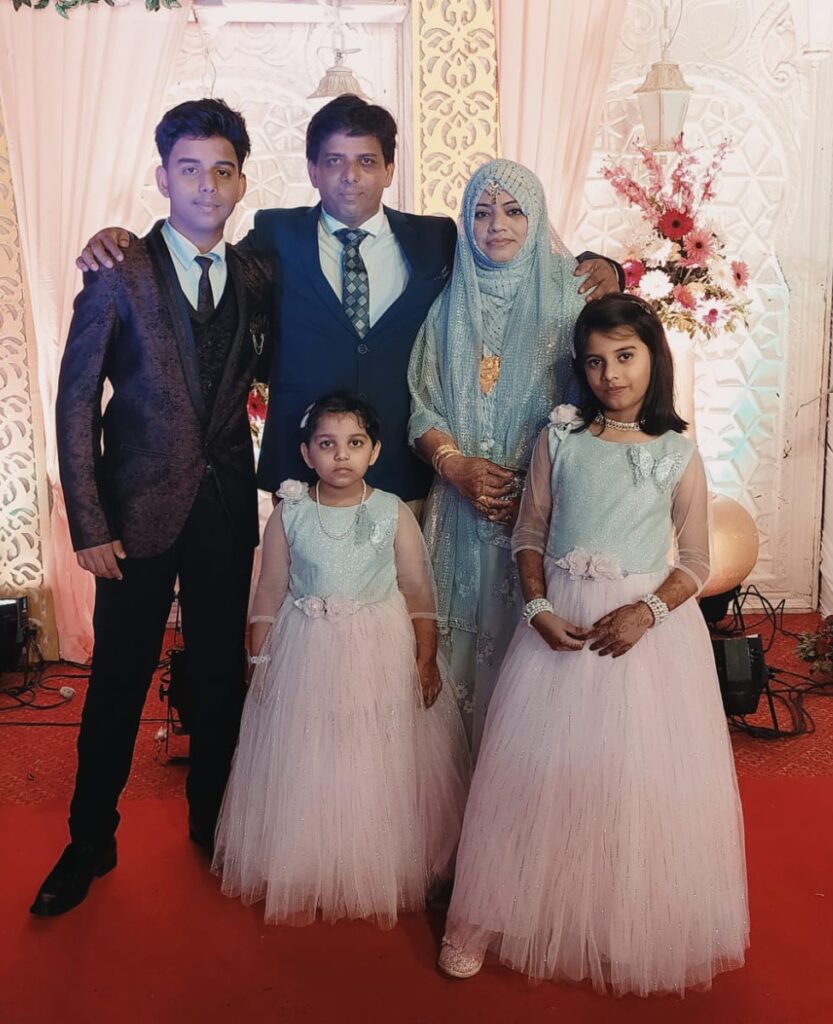
Shaan with his family

Hindrances Along the Way

Building the electric car was a difficult endeavour, and they faced discouragement from others. Gaonkar, their physics teacher, stated that many people discouraged them from building the car, but they persevered and completed it. 

The two spent over INR 70,000 on making the car, which they received from their parents and several well-wishers. 

They have also attempted to raise funds to upgrade their automobile to ones that can be auto-charged while in motion but have had little success. The project is only two alternators away from being self-sufficient in terms of charging.

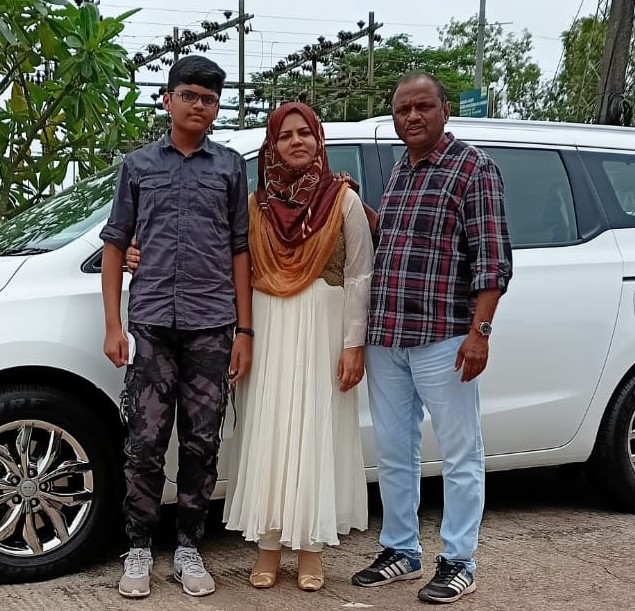
Sehab with his family

‘Parents Have Always Been a Huge Support’

Sheikh’s mother is a chemist, and his father is a businessman; both are very supportive of their son’s project. 

Beig’s mother, Mubina Beig, who runs a pre-primary school in town, helped them in finding spare parts for the car. 

“My parents have always been a huge support when it comes to my inclination towards experimenting with things,” he stated.

A Career in Innovation

This is not the duo’s first innovative design. Sheikh created a small solar vehicle a few years ago, while Beig made a generator in fifth grade and a hydraulic crane in eighth grade.

Speaking about their goals, Beig stated that he wants to pursue a career in science and research to enhance his curiosity and innovative tendencies, whilst Sheikh is interested in a career that allows him to blend science and compassion to contribute to the well-being of others.

They intend to submit their design to vehicle manufacturers. “If a compelling proposition arises, we are open to collaboration,” Sheikh said.

Imran Inamdar is an independent reporter based in Goa, India.

source: http://www.twocircles.net / TwoCircles.net / Home> India News / by Imran Inamdar, TwoCircles.net / January 16th, 2024

Solapur : Renowned cardiologist Dr. Amjad Basheer Sayed dedicates his newly built hospital to Covid patients

Solapur, MAHARASHTRA :

Solapur (Maharashtra) :

The second wave of Covid-19 is badly hitting the entire country and  over two lakhs people are being  tested positive for Covid every day.

Maharashtra state is considered as the worst hit state from this pendamic  in which about 60k being tested positive for Covid  every day,with 607933 active cases this virus has already claimed  60824 lives.

The virus is spreading across the state.Mortality rate is increasing by each passing day ,non availability of beds in the hospitals, shortages of oxigen, ICU, ambulance and medicine has become a comon phenomenon.

Solapur district  has 13,876 active cases till  date and 2,077 people have succumbed to the deadly virus so far.

In such pathetic condition Dr.Amjad Basheer Sayed  a young cardiologist from Solapur district  has come forward with his newly constructed hospital (Noble Heart care and research centre) with the facility of 35 beds to curb the  panicking circumstances by treating the patients who are otherwise supposed to be treated in overcrowded hospitals.

Currently over 20 doctors and paramedics are treating patients are being treated under Dr. Amjad’s supervision.

Speaking to Muslim Mirror Dr.Amjad Sayed said that “we all know very well how Covid patients are increasing and need of the hospitals is arising , how patients are suffering and crying for treatment ,how relatives of the patients are struggling to get beds in the hospital for Covid care.

“Considering the problems of Covid victims  I decided to  start Covid care center in my hospital. I immediately applied for the same to local authorities and got the permission.Now with the grace of Almighty  25 patients are being treated in my hospital, ” said Dr. Amjad.

An Urdu medium student  Dr. Amjad Sayed, is a well-known  cardiologist of the District .He is associated with five big hospitals and serving Covid patients since past 14 month tirelessly.

“This humanitarian gesture of Dr. Ajmal cannot be expressed in one sentence. it’s a huge contribution towards the humanity ” said Darshana Gaikwad, a social activist.

She further said that coming forward with the newly constructed hospital which was  not even inaugurated formally is laudable. I feel proud that doctor like Amjad sir lives in my city who has pain for their countrymen and ready to save lives round the clock.

“This contribution of Dr. Amjad will always be remembered, I  extended best wishes to him and his team ” added Darshana.

source: http://www.muslimmirror.com / Muslim Mirror / Home> Featured / by Imran Inamdar / April 21st, 2021