From humble beginnings in Moradabad to restoring historic monuments, manuscripts, and paintings, Maimunah Nargis blends traditional techniques with eco-friendly materials
New Delhi :
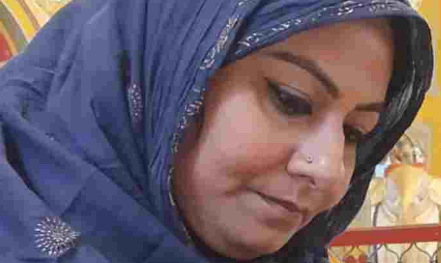
Art conservation is a field that not only preserves history but also connects generations to their cultural roots. Among the pioneers in this domain is Maimunah Nargis, India’s first Muslim woman art conservator. Her journey is a testament to passion, determination, and resilience, transforming scattered fragments of history into living heritage.
From childhood, Maimunah nurtured an interest in fine arts, which later became both her profession and life’s calling. After completing her schooling, she enrolled in Fine Arts at Aligarh Muslim University (AMU), but facing challenges in gaining admission to the MFA programme, she opted for a one-year diploma in Museology, a decision that became a turning point in her life. This course took her to New Delhi’s National Museum, where a three-month internship allowed her to experience history beyond books, touching and restoring priceless artefacts firsthand.
In 2002, Maimunah began her career as a curator at Jaigarh Fort in Jaipur, gradually establishing herself in the field of art conservation despite societal and professional hurdles. Wearing a hijab, she often faced doubts from clients, who would sometimes withdraw projects even after they had been approved. Reflecting on these challenges, she said, “This was a lesson for me, not a loss.”
Despite taunts when she left AMU for Delhi, her parents’ unwavering support gave her the courage to pursue her dreams, and her mother even accompanied her to the exam centre, demonstrating faith in her daughter’s ambitions.
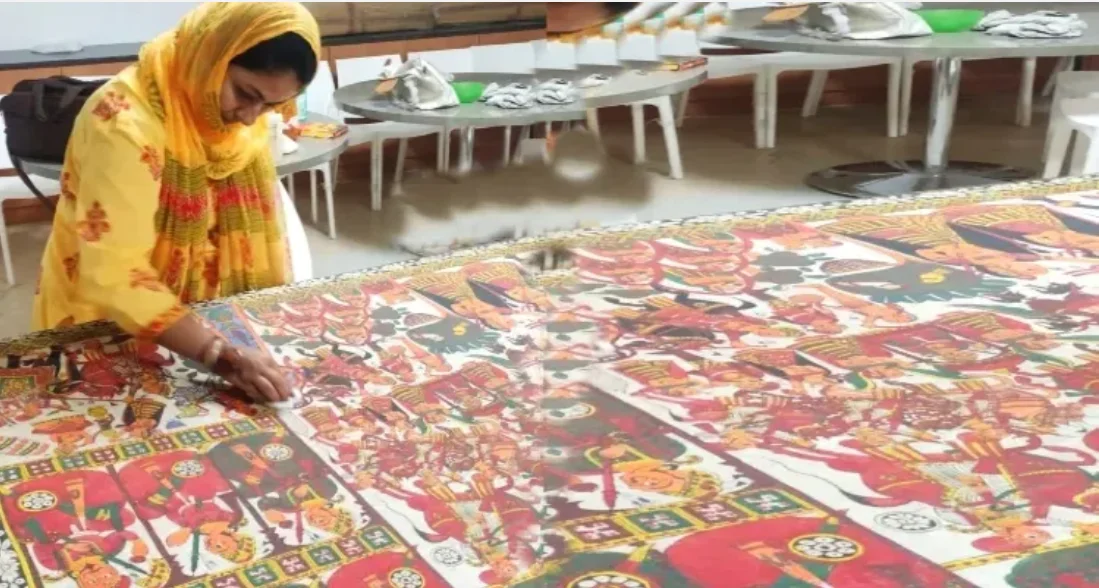
Over the years, Maimunah has undertaken numerous landmark projects. She rebuilt the 400-year-old wooden chariot of the Lodwar Jain temple in Jaisalmer, which had been destroyed by termites, using traditional materials without the help of a carpenter. She reassembled broken statues from the 6th to 13th centuries in Akbar’s Fort, Ajmer, ensuring the joints remained invisible. She restored a 400-year-old Sanskrit manuscript in gold and ink at Kota Museum, and meticulously conserved the painted ceilings of 11 rooms in Garh Palace, Jhalawar, preserving three of them without removing a single piece or causing any damage.
Her work has also reached modern spaces such as Jaipur and Mumbai airports, where she restored a 5,000-square-foot canvas painting on Maratha history, and at Rashtrapati Bhavan, she preserved historic pictures on wooden doors. At the National Museum, she safeguarded historical books including Baburnama, Akbarnama, Shahjahanama, and Jahangirnama, and brought decayed artworks and royal garments back to life.
Maimunah’s approach to conservation goes hand in hand with her respect for the environment. She has often highlighted that cement lasts only 30 years, whereas traditional Indian plaster made of red clay and lime, being both eco-friendly and cost-effective, could endure for thousands of years. She applied these methods while constructing a building in Dehradun on the site of a 400-year-old mansion and a modern farmhouse in Gurgaon.
Her dedication has earned her three national and 28 state awards, as well as recognition from institutions such as Kurukshetra and Jammu University. Her dreams include building a heritage resort in Madhya Pradesh using traditional materials and restoring a 500-year-old temple in Mathura, aiming to help India rediscover its cultural roots and architectural heritage.
Hailing from Bhajoi in Moradabad, Uttar Pradesh, Maimunah grew up in a simple household but with ambitious dreams. Her father, a UP Police officer, always encouraged her, fostering the confidence to pursue an unconventional career path. Today, she resides in Jaipur, remaining hands-on in her work, kneading lime and plastering walls herself. She proudly states, “I am the only Shia Muslim woman art conservator in the country, and this is my identity.” Maimunah Nargis’s life story demonstrates that with passion, courage, and perseverance, a woman can overcome societal barriers, make history, and inspire generations. She has become more than a name; she is a symbol of culture, dedication, and empowerment.
source: http://www.clarionindia.net / Clarion India / Home> Editor’s Pick> Indian Muslim / by Clarion India / September 21st, 2025
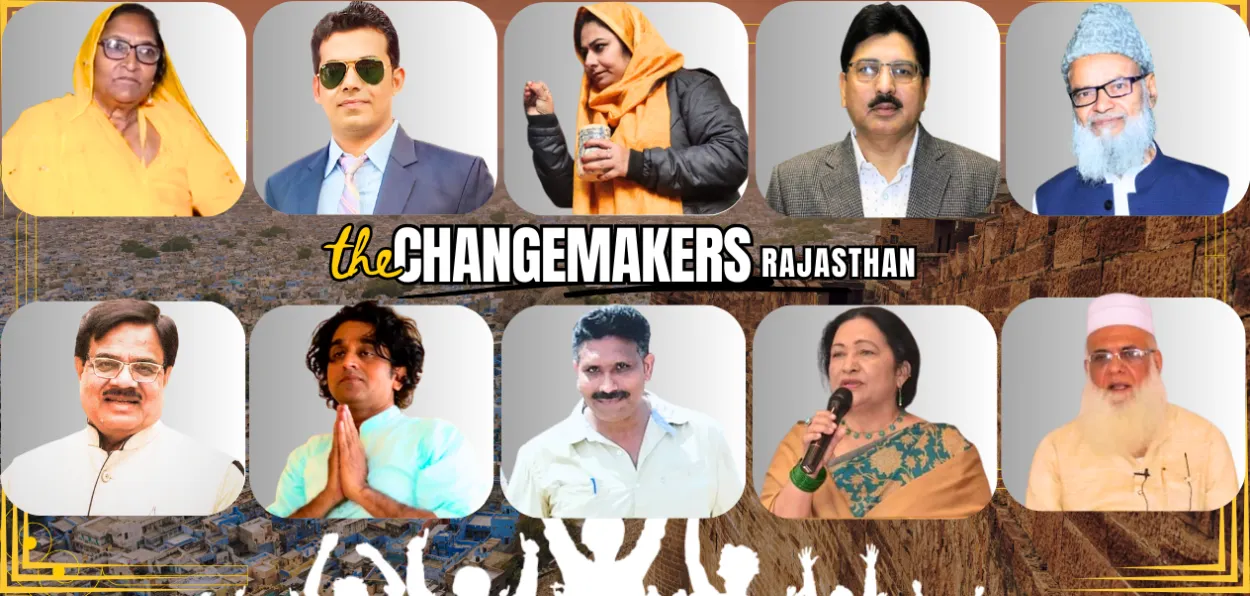
Rajasthan is known for its sandy deserts, historical monuments, especially forts, vibrant culture, and above all, its brave people, some of whom are inspiring others and changing society for the better. Under our series ‘The Changemakers’, Awaz-The Voice, brings you ten such personalities of Rajasthan, who have done extraordinary and pioneering work. Batool Begum: A living legacy of musical heritage.
Batool Begum: Woman who took traditional music to the world
One name that resonates in the streets of Jaipur is that of Batool Begum. Born in Kerap village of Nagaur district, Rajasthan, this extraordinary singer is a living legacy of Indian classical music. Batool developed a deep passion for music in her childhood. Despite facing social and economic challenges, she continued her singing.
Her melodious voice and her passion for music not only earned her recognition as an artist but also proved that talent can break all barriers. Her art is a source of inspiration for her community and the entire Rajasthan.
Abdul Salam Johar: A lac bangle maker who received global recognition
The vibrant spirit of India’s Pink City, Jaipur, doesn’t only emanate from its colours and people but also from the traditional handicrafts that are made and sold here. Bangles worth lakhs are made in these streets, which are a symbol of the traditional beauty and hard work of thousands of its people.
Abdul Salam Johar is one such artist who not only preserved the traditional art of the State but also brought about a social change in a major way. Coming from the Manihar community, Johar was born in a family with little means, but his dreams were extraordinary. Seeing the struggles of his grandfather Hafiz Mohammad Ismail and parents Haji Abdul Aziz and Hajjan Qamar Jahan, he made hard work, dedication, and social service the main mantra of his life.
He began his journey from his ancestral shop ‘Indian Kangan and Colour Store’ located in Tripolia Bazaar of Jaipur, and today his wares are being sold under brands ‘Johar Design’, ‘Johar King’ and ‘Indian Crafts’ in the global markets. He is not only a successful entrepreneur, but also a social reformer who took his community and traditional art to new heights.
Abdul Latif ‘Arco’: A confluence of business and social service
Abdul Latif, who lives in Chini ki Burj in the capital Jaipur, and is known as ‘Arko’ in Rajasthan, is one such special personality. Born in a small village of Chomu in 1946, Abdul Latif’s father, Rahmatullah, and mother, Hafijan, taught him hard work, honesty, and the passion to help people, which became the basis of his life.
His company, Abdul Razzaq & Company (ARCO), is today a big name for social service along with electric motors, fans, and coolers. Apart from this, his hotel, ARCO Palace, is a symbol of his hard work and foresight. Abdul Latif’s story is not just of a businessman, but of a person who chose to work as a changemaker by combining his business and social responsibilities.
Qazi Nishat Hussain: A new voice breaking stereotypes
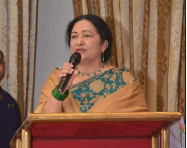
The voice rising from a small office located in the narrow streets of Johri Bazaar in Jaipur, the capital of Rajasthan, is today inspiring society to change. This voice is of Nishat Hussain, Rajasthan’s first Muslim female Qazi, social worker, and a strong advocate of the rights of Muslim women.
Her life journey is an example of courage, struggle, and change, which not only made thousands of women aware but also gave them a new direction to live.
Born in Sitabari Mohalla of Karauli district, Nishat’s childhood was spent in an environment of communal harmony. His family was the only Muslim family in the neighbourhood. There were three temples in front of her house. She says, “We did not know who was a Hindu and who was a Muslim.” In a backward area like Karauli, where girls’ education was not given importance, Nishat created history. She became the first Muslim girl in the district to pass the tenth standard, that too as the only Muslim student among 1200 girls. Today, she has become a torchbearer of the rights of Muslim women.
Captain Mirza Mohtasim Baig and Ruby Khan: An Inspiring couple in social service
An inspirational couple, Captain Mirza Mohtasim Baig and his wife Ruby Khan, hail from Jaipur. Captain Mirza is the first Muslim pilot of Rajasthan and has been operating national and international flights for the last 25 years. At the same time, his wife Ruby is an active social worker and politician.
Both believe that if one wants to bring change in society, then he has to take the initiative. Together, they had organised medical camps, documentation camps, free ration distribution, and offered financial help to families in the marriage of their daughters. The couple is an epitome of change brought about by spirited people.
Dr. Arif Khan: The village scientist who created history
Thirty-four years ago, a child was born in the small village of Masani in the Hanumangarh district of Rajasthan. Today, he is Dr. Arif Khan, a scientist who has brought laurels to India. In his village, most of the people toiled in the fields. His father, Advocate Farid Khan, wanted his son to become a doctor. His mother and grandfather also had the same dream. But there were few schools in Masani, and the path to making dreams come true was difficult. Still, Arif had a passion to do something extraordinary in his life.
With his hard work and dedication, he became a bio-scientist and brought glory to his family and village. His research on milk and food products brought a wave of change. His story proves that if the intentions are strong, then even a boy from a small village can become a scientist and make the country feel proud.
Mainuna Nargis: First Shia Muslim woman in art conservation
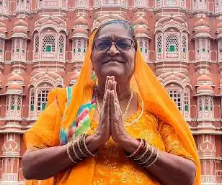
In a vast country like India, art conservation is important since it not only preserves history but also connects future generations to our heritage. Mainuna Nargis, the country’s first and so far the only Shia Muslim woman art conservator, does the same work. Born in Bahjoi, a small town in Moradabad district of Uttar Pradesh, Maimuna’s childhood was ordinary, but her dreams were extraordinary. Rajasthan has now become Mainuna’s second home.
Her father, a Policeman in UP, always encouraged her. After studying Fine Arts from Aligarh Muslim University (AMU), she did a diploma in Museology, which became the most decisive turning point in her life. Maimuna’s story is not just of professional success, but a story of passion, struggle, and self-confidence, which revived the broken pieces of history.
Yoga Guru Naeem Khan: Global journey from music to yoga
The life journey of Yoga Guru Naeem Khan, who rose from the streets of Jodhpur, the cultural capital of Rajasthan, to spread his spiritual aura on international platforms, is a unique example. He rose from a common man to a global yoga guru and presented yoga as a universal energy beyond religion, culture, and boundaries.
Naeem Khan was born in a family where music was in every breath. His grandfather, Ustad Umardin Khan, was the court musician of the Jodhpur royal family, while his maternal uncle was Padma Bhushan-awarded Sarod player Ustad Sultan Khan. However, with changing times, that traditional flame of music started to fade. Naeem and his brother got involved in business, but yoga gave Naeem a new direction, and he took it to a global platform.
Syed Anwar Shah: A man who introduced girls to education
Thirty years ago, a dream was born in a small room in Jaipur, which has today become the light of education for thousands of girls. This is the story of Syed Anwar Shah, whom people fondly call Master Anwar Shah. He not only dreamt of his daughter’s education, but also made it a means of progress for the daughters of society.
Today his educational institution, Al-Jamia-tul Alia, is spreading the message of knowledge and Islamic ethics not only in Jaipur, but also in the whole of India and abroad. After completing his M.A. in Public Administration from Rajasthan University in 1980, he dedicated his entire life to the welfare of society and the service of education. In 1995, when his daughter Alia was born, he decided to set up an institution for the education of girls, which would impart both worldly and divine teachings.
Today, his effort has become a boon for thousands of families.
Padma Shri Shakir Ali: Patron of Miniature Painting
It’s no exaggeration to say that Jaipur is the art capital of Rajasthan. And in the field of miniature painting, the name of Syed Shakir Ali comes to the fore spontaneously. This genre of painting is an identity of the state of Rajasthan.
Padma Shri awardee Syed Shakir Ali is not only a great practitioner of this art, but he is also the guardian of that heritage, which is an integral part of the cultural identity of Rajasthan. Born in 1956 in Jalesar village of Uttar Pradesh, Shakir Ali’s family soon settled in Jaipur, where his art got a new direction.
Today, he has given recognition to this traditional art of Rajasthan not only in India but also on international platforms.
source: http://www.awazthevoice.in / Awaz, The Voice / Home> The Changemakers / by Aasha Khosa, ATV / September 14th, 2025