Tag Archives: Maulana Abul Hasan Ali Miyan Nadvi

Jamia Mohammadia: Islamic and Modern Studies Rule Here With Equal Power

Malegaon, MAHARASHTRA :

Jamia Mohammadia Mansoora, as this complex is named by its founders, is not only an education hub but also a symbol depicting state-of-the art combination of Islamic and modern Indian culture.
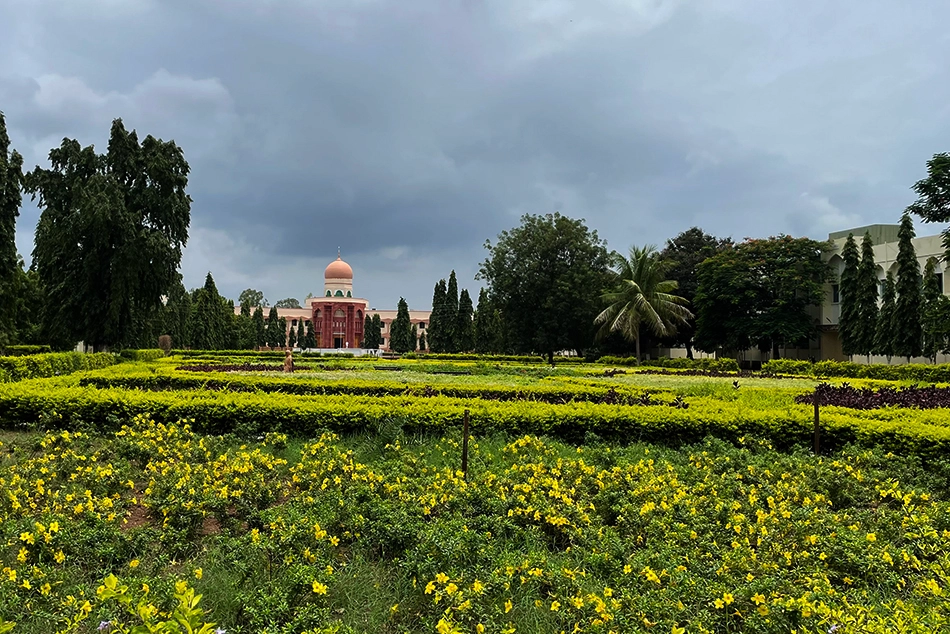
Sultan Manzil (Photo: ummid.com)

Malegaon, despite an appalling history of negligence by successive governments at the centre and state, still has the tag of being a town of literate, erudite and cultured masses firmly intact.

True to this identity, the first thing that greets the people entering the town from the western side on the Mumbai-Agra National Highway and touching the banks of Girna River is the grand educational complex.

Mansoora, as this complex is named by its founders, is not only an education hub but also a symbol depicting state-of-the art combination of Islamic and modern Indian culture.

Lush green lawns, buildings of class architecture, classrooms with modern amenities, model computer rooms – one each for boys and girls, well-equipped laboratories, library with valuable collection of rare books, hostel with suitable lodging, playground – enough not only for cricket but also for games like basketball and football, giant mosque with separate arrangement for women having a capacity exceeding 5000 people and what not. The campus stretched on 56 acres of land has everything that parents would love to have for the education of their children.

Moreover, Mansoora is perhaps the only place in India having a dedicated mosque for girl-students where they not only offer prayers five times a day but also it is they who lead the prayers every day. Above all, they have a unique syllabus for study that not only masters them in Islamic as well as Modern subjects but also train them in meeting the emerging challenges.

The brainchild of Maulana Mukhtar Ahmad Nadvi, who with the help of his friend Saith Mohammad Khaleel of Malegaon initially, and single-handedly later on, turned the Mansoora into a model not only for those working eagerly on Madrasa modernization but also for many schools and educational institutions in India where quality education and desired results have become scarce.

The Beginning

King Abdul Aziz University of Saudi Arabia had organised an International Conference in 1975. The theme of this conference was to deliberate on the possibilities to amend the existing Madrasa syllabus followed at the time by most of the Islamic institutions and bring them in line with the modern requirements. Besides Muslim scholars and Ulema from all across the world, Maulana Mukhtar Ahmad Nadvi and noted Muslim scholar Maulana Abul Hasan Ali Miya Nadvi were also invited to the conference. The deliberations on the all-important issue in the conference kept Maulana Mukhtar Ahmad Nadvi impatient throughout the way back to India. He consulted on the matter with Maulana Ali Miya Nadvi and then tirelessly began searching for options to establish a Model Madrasa in India.

Masjid Aisha of Mansoora is the largest Mosque in Malegaon (Photo: ummid.com)

At this juncture, Maulana Mukhtar Nadvi met his friend Saith Mohammad Khaleel of Malegaon in Mumbai. The two men, though living miles away from each other, had many things in common. While Maulana Mukhtar Ahmad Nadvi had the vision and plan to convert his dream into a reality, Saith Mohammad Khaleel had the required resources in plenty.

Simultaneously, Saith Mohammad Khaleel proved a powerful backer and a great motivator for Maulana Nadvi. The combination worked and what Muslim leaders and Islamic scholars dreamt at King Abdul Aziz University, Saudi Arabia in 1975, became a reality in 1979 thousands of miles away in Malegaon.

Mansoora

A man with a vision, Maulana Mukhtar Ahmad Nadvi was also a master in doing things in novel ways. Hence for his dream Education Institute – running on a unique syllabus based on Islamic as well as Modern Education pattern and stretched on 56 acres of land touching the banks of Girna River along the Mumbai-Agra road in Malegaon – chose Mansoora as its name.

Mansoora, as Maulana Mukhtar Nadvi used to recall, in the 9th century was a historic locality in Baghdad. Iraq’s capital Baghdad during that time was the source of wisdom, knowledge and erudition, and a preferred destination for scholars and academicians. People from all across the globe seeking knowledge and wisdom used to converge at Baghdad. In the heart of the city and centre of all academic activities in Baghdad was Mansoora. A thousand years later, Mansoora took rebirth in Malegaon – a small town in North Maharashtra predominated by Muslim population.

A Model Curriculum

For the Curriculum and Syllabus to be followed at Jamia Mohammadia for boys and Kulliyah Aisha Siddiqua for girls – as he named the first two institutions founded by him in Malegaon – Maulana Mukhtar Ahmad Nadvi worked on two levels.

Realising that the existing Dars-e-Nizami – normally followed by the Mada’ris (plural of Madrasa) in India – is not sufficient to meet the emerging challenges and requirements of even the Islamic studies, he after consulting renowned academicians and scholars of the time, introduced suitable and needful amendments in it.
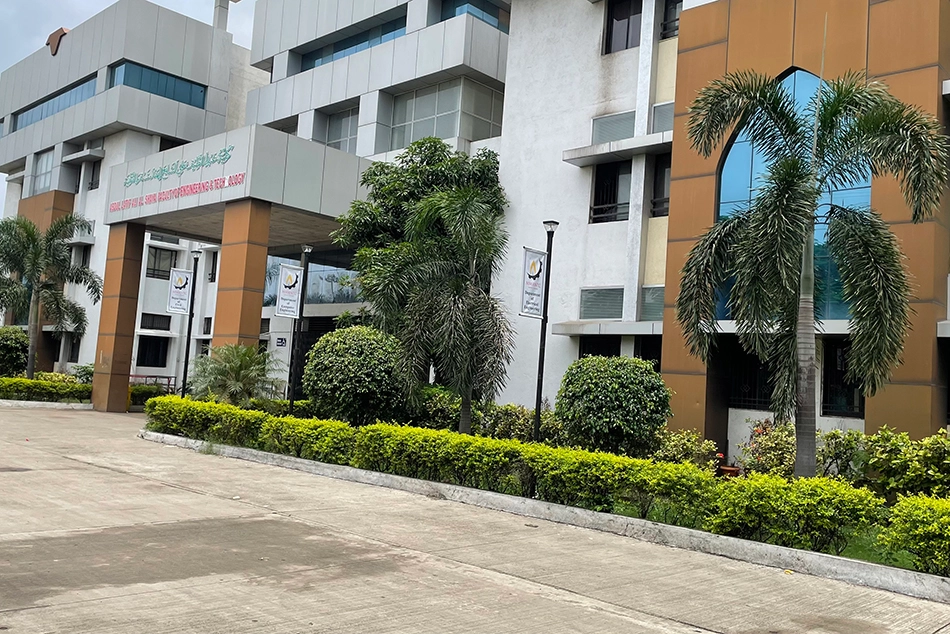
Abdul Latif Ali Al Shaya Faculty of Engineering, Mansoora (Photo: ummid.com)

At the same time, he introduced the modern subjects like Science and Mathematics, and also the languages like English, Hindi and Marathi for students that included boys and girls both. Finally, the curriculum that came into being out of his efforts was a perfect combination of Islamic and Modern Education pattern.

Simultaneously, he meticulously worked for obtaining the all-important affiliation and recognition from the state education board, and also from the Indian and foreign universities. Thanks to the determination, commitment and speed with which he worked, both of his institutes were very soon recognised by the Mahrashtra State Secondary Board and also by Jamiah Islamia, Madinah Munawwarah, Saudi Arabia and Jamia Millia Islamia, New Delhi.

Mansoora: A Force to Reckon With

Due to the hard-work it needed on the part of the students as well as the teachers, the curriculum was really tough when introduced in the beginning. However, once it was on the roll, results started pouring in consistently and with surprising rewards. The Jamia students – both boys and girls, soon found them not only scoring excellently in Islamic studies but also coming with flying colors in state board exams.
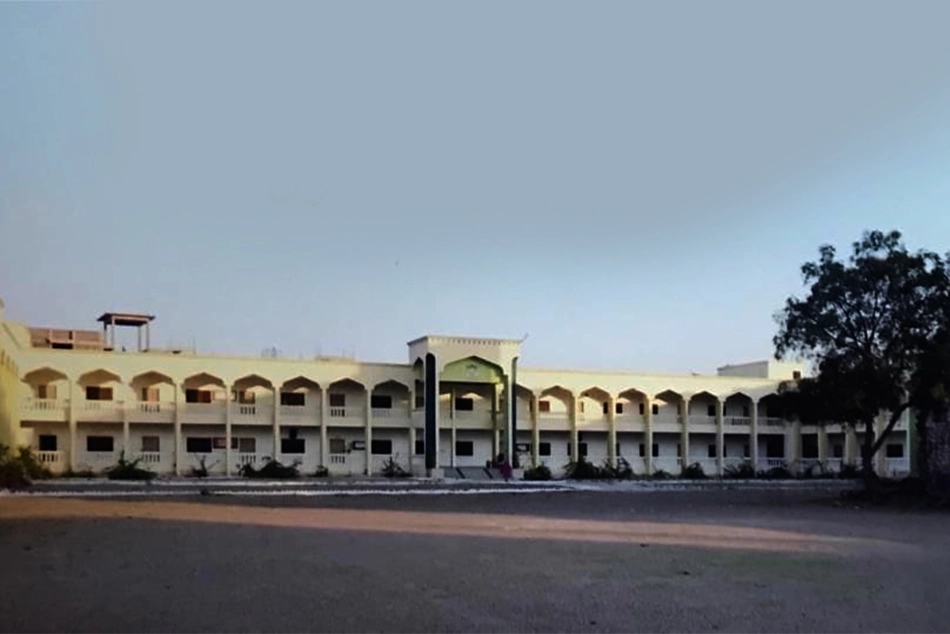
Kulliyah Aisha Siddiqua for girls

However, the brightest moment for Mansoora came in 2008-09 when one of its students Abdur Rehman along with sixteen others created history at Jamia Islamia Madinah Munawwara, Saudi Arabia. While Abdur Rehman topped his faculty and bagged student of the year award, sixteen others from Mansoora cleared the University exams with distinction. The results were so impressive that Jamiah Islamia sent its Head of the Education Department to Mansoora. He specially traveled from Saudi Arabia to Malegaon to have a personal and first-hand account of the way students are taught.

JMES Goes National

After he succeeded in his mission, Maulana Mukhtar Ahmad Nadvi invited people from various places – specially those who were part of the deliberations with him at King Abdul Aziz University in 1975 – to have the first hand experience of what was dreamt in that conference. At the same time, while extending all supports, he urged them to replicate the model in their localities.
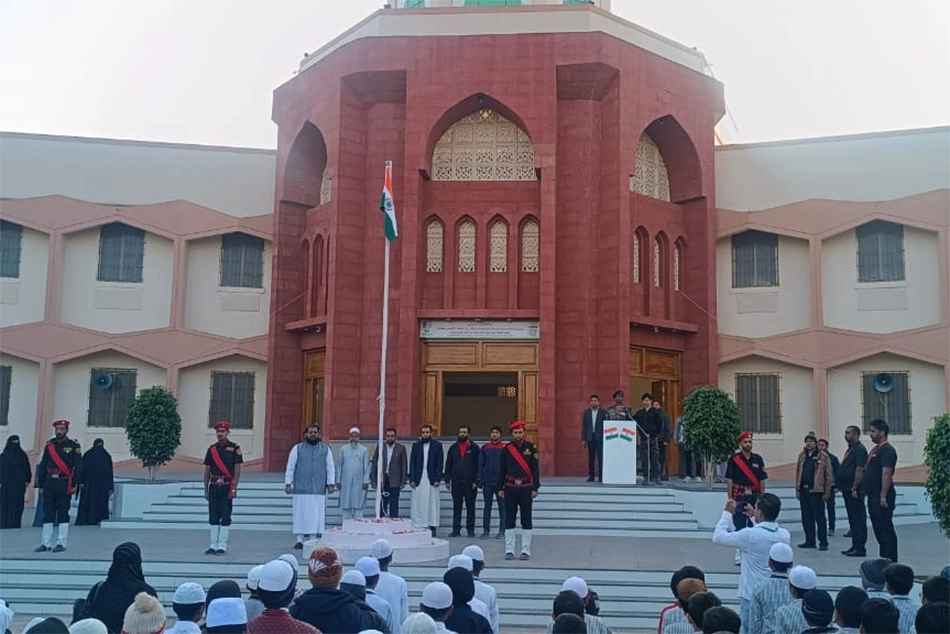
Independence Day Celebrations at Jamia Mohammadiya Mansoora, Malegaon

However, when he found some of them wary and some others hesitant, he took it upon himself to do the job. Soon JMES spread its wings to other parts of the country and established branches at Maunath Bhanjan, Aakot, Dhule, Bangalore, Mahesla and Mewaat – all running on the Mansoora pattern and affiliated to the respective state boards.

Future Ambitions

The Mission was partly accomplished. Maulana Mukhtar Ah Nadvi died September 9, 2007. Behind him he left, besides Mansoora in Malegaon and a chain of education institutes spread all across the country, an able and equally ambitious son Arshad Mukhtar. At the helm of the affairs now, Arshad is smartly following his father’s footsteps. His dream is to convert Mansoora into a big University – capable of offering every subject that exists on the earth.

——————————

[The writer, Aleem Faizee, is Founder Editor of ummid.com. Aleem Faizee has also worked as a Researcher at Tata Institute of Social Sciences (TISS) and with Action Aid for its research work published as “BROKEN PROMISES -A study on the socio-economic status of Indian Muslims: Seven years post Sachar”. His research work “Mollywood: The Rise and Fall of a Subaltern Cinema” is part of the book “Creative Industries in India” published by Routledge India of Taylor and Francis Group, London. A prolific writer, Aleem Faizee has also wrote for The Times of India as a Freelance Journalist for over 10 years. The above article was originally published on January 22, 2010.]

————————–

source: http://www.ummid.com / Ummid.com / Home> Education & Career / by Aleem Faizee, ummid.com news network / August 20th, 2025
Nehru, Muslims and India’s Freedom Movement

INDIA:

A new book questions political wisdom about competitive communalism before and after Independence.

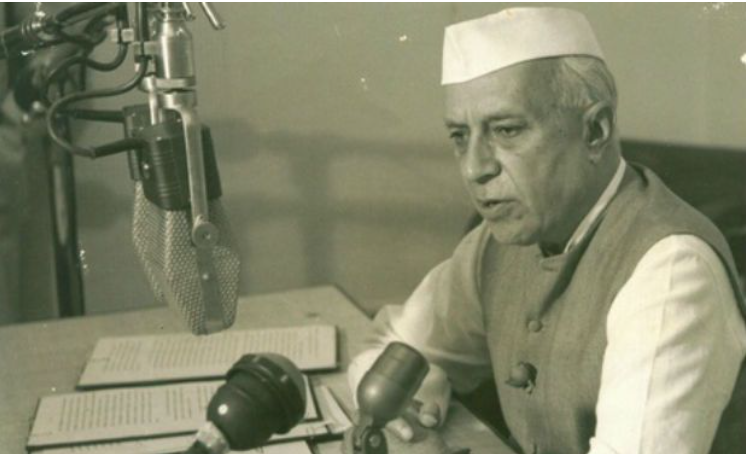
Former Prime Minister Jawaharlal Nehru. Image Courtesy: PTI

The prevailing political wisdom of the day is to chastise Jawaharlal Nehru, his Congress party, and their inclusive vision for the republic. Given this, one is caught in a fix if a published work subjects the Congress-Nehruvian performance to criticism. The republican and constitutional vision of India, and its plans and goals were outcomes of a prolonged anti-colonial mass agitation, which multiple ideological and identitarian political formations joined, complemented and contested.

Besides the aligned or contending forces, intellectuals and activists of various 19th and 20th-century hues also provided inputs. Privileged Muslims articulated some strands, including the exclusionary right-wing politics of communal separatism. Though represented by the Muslim League, and its sole spokesman MA Jinnah, they straddled nearly every shade of political articulation, ranging from Left to Centre, from those who advocated separatism to its vociferous opponents.

Unfortunately, the academic and popular domains popularise Muslim separatism more than their resistance to separatism. Academic studies also focus too much on Uttar Pradesh (earlier the United Provinces of Agra and Awadh). Gyanesh Kudaisya (2002) characterised this province as India’s heartland in terms of population and geographic size but also narrative-making for the Indian polity.

The former landed elites of the Muslims of this region, whom David Lelyveld (1978) called the “Kutchery Milieu”, were in the forefront and mainstay of the Muslim League. An important Muslim League leader from Lucknow, Chaudhry Khaliquzzaman (1889-1973), candidly and proudly proclaimed this in his 1961 memoir, Pathway to Pakistan. Quoting Maulana Azad, he writes, “All students of Indian politics know that it was from the U.P. that the League was reorganised. Mr Jinnah took full advantage of the situation and started an offensive which ultimately led to Pakistan.” Interestingly, in the late 1930s, Khaliquzzaman was the mayor of Lucknow and allied at least once with the Hindu Mahasabha. After Partition, it took him a long time to migrate to the other side of the border.

Against this backdrop, Aishwarya Pandit’s Claiming Citizenship and Nation: Muslim Politics and State Building in North India, 1947-1986, published by Routledge in 2021, is a critical intervention. She writes, “Given the demographic dominance of U.P. Muslims in some constituencies, the threat of revival of ‘Muslim communalism’ continued to impact their politics. In the colonial period, the United Provinces had remained central to Muslim politics around issues of representation, minority safeguards and language.”

Pandit disagrees with Kudaisya and proposes in her introductory chapter that the Uttar Pradesh Congress opposed the Centre’s move to “introduce minority and cultural safeguards after 1947”. Her book examines the intersections of law, identity and property and notes region-specific Muslim—and anti-Muslim—politics and articulations. Notably, she includes in her work the tensions that prevailed within the Muslim community over contemporary concerns.

Pandit says the new Muslim leadership that emerged after independence articulated the weaknesses of Nehruvian secularism, particularly concerning their religious, cultural and identitarian concerns. Further, from the mid-1970s onward, “Fatwa and Ulema politics acquired the centre stage”. Her study ends in 1986, a period that, according to her, “signaled the continuation of Hindu counter mobilisation, which set in the 1950s around the [Babri] Masjid-[Ram] Temple issue [of Ayodhya], the issue of minority appeasement and personal law and also coincided with the dipping fortunes of the Congress party in Uttar Pradesh”.

In her effort to discover reasons for the Congress party’s decline in Uttar Pradesh, she argues that Muslims here [and in Bihar] “made some surprising alliances including those with the Jan Sangh in the 1960s and 70s”. Pandit attempts to absolve Muslims of the responsibility for this, and “challenges the widespread view that Muslims acted as a secure and stable ‘vote-bank’ for the Congress after independence”.

This is where the book would provoke many to raise a few questions that have been left unasked or unanswered. Terminating the study in 1986—and not a few years later—may have excluded the author from raising some crucial questions. Hindu counter-mobilisation got massive support from the Shah Bano issue that raged from May 1985 to April 1986, other than the ‘nationalisation’ of the local Ayodhya dispute, which Pandit chooses not to examine. Scholars, even those not inclined to the right, often sidestep Muslim contributions to communalising narratives that fed Hindu majoritarianism, weakening India’s fragile pluralist secularism.

On 15 January 1986, at a Momin Conference session at the Siri Fort Auditorium in Delhi, then prime minister Rajiv Gandhi announced his intention to amend the law to nullify the Supreme Court’s April 1985 verdict in favour of Shah Bano. Driven out of her home in 1975, 43 years after her marriage, Bano had approached the courts seeking maintenance. Given instant triple divorce in 1978—inside a trial court in Indore—the case moved from the High Court to the Supreme Court. In May 1986, the Rajiv Gandhi-led government passed the Muslim Women (Protection of Rights on Divorce) Act following strident Muslim protests in January that year against the progressive judicial verdict that granted Shah Bano alimony. The law passed in Parliament reversed the maintenance the court had said she was entitled to.

The Urdu memoir, Karwan-e-Zindagi, published in 1988 by Maulana Abul Hasan Ali Miyan Nadvi (1914-1999), makes the conservative Muslim approach to this issue pretty clear. In Volume 3, Nadvi triumphantly writes about how he persuaded Rajiv Gandhi not to accept the proposition that many Islamic countries had reformed their personal laws. He rejoices in accomplishing his effort to stymie similar reforms in India. He says his arguments had a particular psychological impact on Rajiv Gandhi—“Woh teer apney nishaaney par baitha—My arrow hit its target”. Nadvi includes a candid confession: “Our mobilisation to protect the Shariat in 1986 complicated the Babri Masjid issue and vitiated the atmosphere in a big way—“Iss ney fiza mein ishte’aal wa izteraab paida karney mein bahut bara hissa liya,” he writes.

Nadvi admits in his memoir that he had promised to Rajiv Gandhi he would persuade the Waqf Boards to make an endowment available to maintain abandoned women. But this issue remains unaddressed until today. Aishwarya Pandit, rather than exploring the clergy politics of Lucknow’s Nadvi, jumps over to Delhi’s “Imam” Bukhari and his demagoguery and rhetoric.

Nadvi’s politics of 1985-1986 needs to be read with Nicholas Nugent, who writes in his book, Rajiv Gandhi: Son of a Dynasty, published by BBC Books in 1990, that the Congress High Command decided in early 1986 to play the Hindu card like the Muslim women’s bill played the Muslim card. Nugent writes, “Ayodhya was supposed to be a package deal…a tit for tat for the Muslim women’s bill…Rajiv played a key role in carrying out the Hindu side of the package deal by such actions as arranging that pictures of Hindus worshipping at the newly unlocked shrine be shown on television.”

On 1 February 1986, within an hour of the Faizabad district court judgment, the lock of the Babri Masjid was opened. The “deal” between the Prime Minister, the Muslim clergy and the Momin Conference’s Ziaur Rahman Ansari, who died in 1992, had been struck a month earlier. Ansari’s biography, Wings of Destiny, written by his son Fasihur Rahman and published in 2018, refers to this series of events. Yet, nagging questions remain: who wanted the locks opened and why? After all, elections were four years away, and Rajiv Gandhi did not have a direct electoral stake in the event, except for a few reverses in by-elections for the Congress party.

A sizeable section of Hindus was peeved after Nehru reformed, though more symbolically than substantively, Hindu Personal Laws in the 1950s, but left out Muslim Personal Laws. This aspect is brought out by Reba Som in February 1994, in “ Jawaharlal Nehru and the Hindu Code: A Victory of Symbol over Substance ?

Put another way, what the votaries of Hindutva call Muslim appeasement is the State appeasing the conservative and patriarchic Muslim clergy. Quite often, liberal and left scholars and activists hold the position that reforms must emerge from within the Muslim communities. Nevertheless, competitive communalism adversely affected the Congress party in the electoral sphere. First, the ex-Socialist forces, comprising the backward classes and Dalits, replaced Congress with the Bharatiya Janata Party. Pandit disappoints on this count in her sixth chapter despite delving into primary archival sources on all issues raised in her immensely readable book.

In the third chapter, Pandit discusses Hindi-Urdu battles and blames the ruling Congress for the deficits in State support for Urdu. She misses out that the protagonists of Urdu in Uttar Pradesh also share some blame for the idioms and methods of political mobilisation they didn’t employ for the Urdu cause. Selma K. Sonntag (1996) provides a more informed comparative assessment of the Urdu politics of Bihar and Uttar Pradesh.

Besides Urdu and personal laws, another central controversy has been the minority status of the centrally-funded Aligarh Muslim University. Pandit touches upon this subject but leaves out too much. She does not concern herself with the academic performance or research at the university, which has refrained from examining Muslim concerns such as communal strife, caste among Muslims, patriarchy, and Muslim under-representation. Just a few months before his unfortunate death in 2010, Omar Khalidi candidly raised these issues. Could these deficits possibly have contributed to the disjunctions between State and society as also between India’s Muslims and the Aligarh Muslim University?

Quite often, the ruling party had to yield to pressures from Muslim conservatives and reactionaries, perhaps because despite massive funding to the university, it did not foster enough progressive Muslim opinion-makers and leaders. If true, this would limit the university’s contribution to resisting competitive communalism and can explain why the support base of the ruling Congress deserted it, eventually leading to the rise of what scholars such as Edward Anderson, Christophe Jaffrelot and Deepa Reddy call Neo-Hindutva.

Possibly because of this omission, this book does not help figure out why Uttar Pradesh Muslims could not throw up the kind of ‘Pasmanda movement’, or the short-lived Left-inspired gender movement Tehreek-e-Niswan, which emerged in adjacent Bihar in the 1990s.

Why Muslims in Uttar Pradesh failed to strengthen post-independence movements for citizenship rights and confined themselves to emotive religious, cultural and identitarian issues is a vital but unanswered question. Thus, this book ignores this pertinent question: to claim citizenship, and for the secularization of the state and society, how to strike a balance with rights for religious communities? This approach of the author doesn’t allow her to deal, even when discussing Muslim assets, with why Uttar Pradesh Muslims did not employ their wealth for capacity-building of their community, as South Indian Muslims did and still do, in the spheres of education, and health? Why did they remain highly dependent upon the State?

Notwithstanding these limitations of perspective, Pandit’s considerably well-researched book delves into untapped and under-tapped primary sources. Her analysis of a wide range of evidence and her articulation is lucid. True to its claim, it is a valuable contribution toward understanding post-independence Uttar Pradesh.

The author teaches modern and contemporary Indian History at Aligarh Muslim University. The views are personal.

source: http://www.newsclick.in / News Click / Home> India> Politics / by Mohammad Sajjad / February 20th, 2023