Tag Archives: Maulana Anzar Shah Kashmiri

 Maulana Abdul Majid Daryabadi 

Dariyabad (Barabanki), UTTAR PRADESH / NEW DELHI :
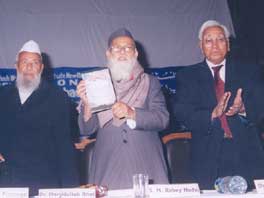
Maulana Rabey Nadwi releasing a book on Daryabadi; to his right stands Maulana Anzar Shah Kashmiri and to his left is Haryana governor, Akhlaqur Rahman Qidwai

New Delhi:

Delhi’s Shah Waliullah Institute and National Council for the Promotion of Urdu Language (NCPUL) jointly organised a national seminar on the life and services of Maulana Abdul Majid Daryabadi, a famous writer and mufassir of the Qur’an, on 15 January at Rajinder Bhawan, New Delhi.

Haryana governor, Dr Akhlaqur Rahman Qidwai presided over the seminar. Prominent among those who attended were Maulana Syed Rabey Hasani Nadwi, Maulana Anzar Shah Kashmiri, Maulana Wali Rahmani, Dr Hamidullah Bhat and Mohsina Qidwai.

Maulana Nadwi in his speech said that Maulana Daryabadi was a philosopher, researcher, man of letters, critic, and a man of high moral values who worked for the betterment of the nation. Maulana Daryabadi was the editor of Sidq-e Jadeed. India has been the cradle of different cultures and civilisations. We should move forward on the principles laid down by Maulana Abdul Majid, that is unity in diversity, which has been an important feature of our country. Maulana Daryabadi rendered unmatched services to the country, community and religion and we should benefit from his views and lofty ideals, he added.

Dr Akhlaqur Rahman Qidwai praised the services of Shah Waliullah Institute. He said that Maulana Daryabadi’s philosophy was relevant even today. He hoped that both the country and the community would continue to benefited from his views and writings.

The participants presented 17 scholarly papers on different aspects of the life and services of Maulana Daryabadi. Maulana Mohammad Wali Rahmani, Khwaja Hasan Sani Nizami, Dr Hashim Qidwai, Prof. Yaqubur Rahman and Prof. Siddiqur Rahman Qidwai presented papers among others.

Dr Hashim Qidwai, Mohsina Qidwai and Habiba Qidwai talked about their close relationship and shared moments with Maulana Daryabadi and narrated some incidents of his great life.

Dr Hamidullah Bhatt and Khawaja Hasan Sani Nizami assured their cooperation to the Shah Waliullah Institute in any project undertaken on Maulana Daryabadi. 

Scholars who presented papers felt that though they had covered many aspects of Maulana Daryabadi’s life, yet there were many other aspects of his life that needed to be studied.

Two books, one written by Maulana Ataur Rahman Qasmi in Urdu, Imam Shah Waliullah and his Philosophy and Ideology and the other, Muslim Personal Law and Uniform Civil Code authored by (late) Maulana Minnatullah Rahmani, were released at the seminar. Shah Waliullah Institute organised an exhibition of books published by it.  «

source: http://www.milligazette.com / The Milli Gazette / Home> 1-15th February 2005
Whiff of breeze from Deoband

Deoband, UTTAR PRADESH :

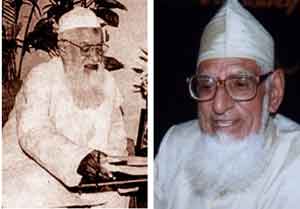
  Asad Madani (left) and Salim Qasmi

The quarter-century-old feud in Deoband seems to be coming to an end.

Stalwarts of Deoband, Maulanas As’ad Madani and Salim Qasimi have realised the futility of the dispute which led to a split in the world-famous Darul Uloom making way to two institutions, the old and a new one identified as “Waqf”. Personality clash between the two revered clans which dominated Darul Uloom, the then rector Qari Tayyib and scion of Maulana Husain Ahmad Madani, led to violent clashes in 1982 when firearms and knives were used to settle scores and the Madani group took over the institution allegedly with Indira Gandhi’s tacit support to Maulana Madani who was a Congress MP (Rajya Sabha) at the time.

The other group licked its wounds, moved on and built a new institution with same name and philosophy while the personality clash continued with disastrous results for the Muslim community in India and abroad which highly revered Deoband and many followed it too in matters of faith.

The split seemed final until recently when Maulana As’ad Madani was suddenly hospitalised during Haj, and on 28 January Urdu newspapers carried a report based on Jamiatul Ulama-e Hind sources that Maulana Madani is hospitalised in a critical condition in the King Fahd Hospital in Madinah.

Maulana Salim Qasimi took the initiative and phoned his archrival to enquire about Maulana Madani’s health and arranged for a meeting to pray for his health. This touched Maulana Madani deeply and on his return to India a few days later he wrote on 31 January to Maulana Qasimi thanking him and adding, “It is a fact that Hazrat Nanotwi, may his secret be sanctified, is the basis of this group. We do not equal even the dust beneath his feet. Whatever differences arose in the past were ill-fated. Let all that was said, done and occured be forgiven and not left for the Hereafter.” 

Maulana Qasimi reciprocated the feeling and said in his reply on 9 February that these sentiments are a reflection of his own old wishes. He added that “Prestige of the [Deoband] group lies in an end to hurting the way of the great past leaders and ending the disputes altogether. In my view, at the last leg of my life, it is my shared wish and effort that you and me should not leave behind for the new generation this unblessed heritage. Rather we should prepare to meet Allah the Almighty according to the tradition of the ancestors based on unity, accord, theoretical and practical unity and shared sincere wishes to serve knowledge and faith.”

Thus a new phase was inaugurated in the recent sad history of Deoband. The two groups, whose influence runs to many countries around the globe, were not even on talking terms only a few weeks ago. A number of meetings over tea and dinner have been held since between the two groups. According to a report, Maulana Anzar Shah Kashmiri, an important member of the Qasimi group, has gone to the extent of saying to Maulana Madani that “everything is now placed in your hands.” 

According to sources, both sides have agreed in principle to withdraw dozens of court cases which both sides had slapped against each other. A number of meetings have been held on various levels. Some resistance remains within both groups. The best outcome would be to merge the two darul ulooms into one (they stand facing each other) and both administrations absorbed into one. Even if vested interests prevent this desired outcome, the old enmity will give way to cooperation and mutual respect which in turn will be good omen for the entire Indian Muslim community. «

source: http://www.milligazette.com / The Milli Gazette Online / Home / by Zafarul-Islam Khan / 16-31 March 2025 / print edition

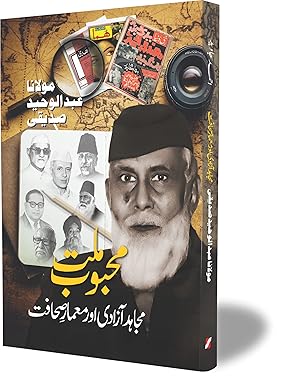
Maulana Abdul Waheed Siddiqui Mujahide-Azadi aur Meyma’re-Sahafat

DELHI :

The alternative historiography and discovery of real heroes of the society is always important in any age or any society.

The compilation and publication of “Maulana Abdul Waheed Siddiqui: Mujahide-Azadi Aur Meyma’re-Sahafat” is the result of this realisation.

The book and authors have tried to explore his personality and achievements in the broader context of history and developments of his times.

The contents of the book are documentary in nature.

The commentaries of Maulana Imdad Sabri are the personal observations and experiences of an eminent scholar and historian of Urdu journalism.

Similarly, the articles by Maulana Anzar Shah Kashmiri of Daryl Ulum Deoband, Mr. Parwana Rudaulavi , a senior journalist, Maulana S M Wali Rahmani, Dr. Khalique Anjum, Mr. G D Chandan, Mr. Shariful Hasan Naqvi, Sardar Rachpal Singh, Maulana A M Siddiqui Rahi, Ms. Surayya Siddiqui and Mr. Shahid Siddiqui are observations and experiences of those who saw and experienced him closely. These are also opinions of eminent critics and experts of language, literature, journalism, politics and history.

History and biographies open the windows of experiences and observations to human beings, and gives them the ability to discover themselves, understand their surroundings, see the impact of situations and events, look inside them and build future paths. History is the name of the waves and splashes of water in the river of time from which people emerge and nations are formed.

Maulana Abdul Waheed Siddiqui, the journalist and freedom fighter is a milestone, a bridge and a delicate and difficult chapter of modern Indian history, which holds many lessons, for present and future generations.

Maulana was a visionary, a man with deep roots in Muslim culture and religious ethos but with a very modern and enlightened outlook.

He laid the foundations of free press in post independence India. He gave the confidence to Indian Muslims to stand up and fight for their rights under the Constitution and not.

source: http://www.amazon.in