Patna, BIHAR :
Patna:
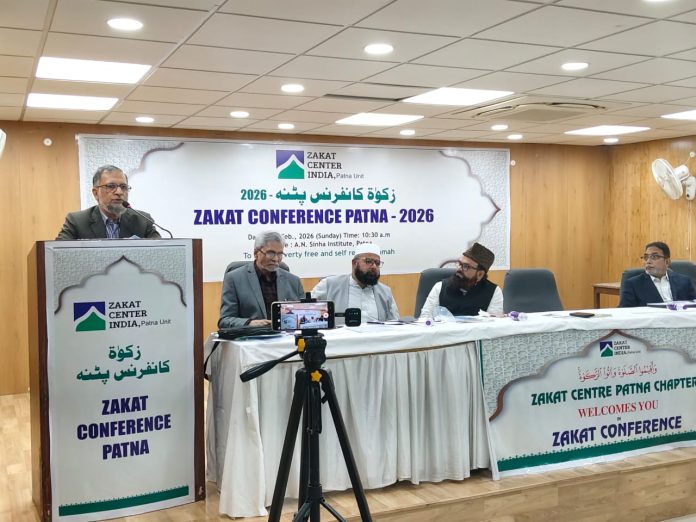
The Zakat Centre India (ZCI), Patna, hosted a high-profile conference at the A.N. Sinha Institute of Social Science, bringing together community leaders, scholars, and financial experts to discuss the transformative potential of organized Zakat. The event highlighted a shift from individual giving to a structured “social security” model aimed at empowering marginalized sections through transparency and professional management.
Chief guest Amir Subhani, retired IAS officer and former Bihar Home Secretary, said Zakat is a core element of the Islamic economic system and a guarantee of social security for the weak and poor. He observed that economic inequality exists in every society and cannot be erased by force, noting that the collapse of communism proved such models unsustainable. A degree of inequality, he suggested, can foster mutual dependence, gratitude, cooperation, and empathy among social groups.
Subhani compared faith-based welfare with state-led systems in Europe, Canada, Australia, and the Netherlands, where governments provide extensive social security through taxes. While India has welfare schemes, he said they remain inadequate given widespread poverty. He noted that the estimated Zakat pool forms a significant “corpus”, yet is largely distributed informally, often without verification.
An institutionalized system, he stressed, ensures proper assessment of eligibility, scale of need, and appropriate assistance. Students, aspiring entrepreneurs, and destitute individuals such as widows and the elderly all require tailored support. Organized networks can investigate cases effectively, making collective Zakat more impactful than isolated charity.
Reflecting on ZCI’s work, Subhani said many of his initial concerns about fund allocation and beneficiaries were addressed during the program. He expressed confidence in the Centre’s transparency, especially as it is led by a Chartered Accountant, and suggested issuing payment receipts to strengthen donor trust.
He emphasized coupling financial aid with mentorship. Many poor recipients, he noted, spend business funds on urgent consumption needs and lack entrepreneurial skills. Recalling government Entrepreneurship Training programs for street vendors—where he observed strong Muslim participation—he highlighted practical guidance such as customer interaction, negotiation, body language, repeat business strategies, and digital payments. Financial assistance, he concluded, should be paired with structured guidance.
Keynote speaker Maulana Rizwan Ahmad Islahi described Zakat as central to maintaining social balance in Muslim society. Dr. Rizwan Ahmad Rafiqui of ZCI Delhi stressed organized collection and distribution to maximize impact. CA SS Quadri outlined management protocols and transparency measures, while Advocate Mohammad Naushad presented the annual report. The program opened with Quran recitation and concluded with a vote of thanks by Quamar Warsi.
source: http://www.radiancenews.com / Radiance News / Home> Latest News> Report / by Sami Ahmad / February 16th, 2026