Tag Archives: Meo Muslims

Mewat, Haryana: The birthplace of Tablighi Jamaat and the Mewati Gharana of Indian Classical Music

HARYANA :

Arshad Shaikh digs into some amazing facts about the Mewat region in the Indian state of Haryana, which was recently in the news for the wrong reasons. Meo-Muslims have been targeted by cow-vigilantes and anti-social elements. Communal violence rocked the region last week.  Six people lost their lives, scores were seriously injured, thousands were arrested and many houses were controversially demolished. The Hindu-Muslim violence in the Mewat region was extensively covered by the media, however, not many know about some of the amazing facts of this region and how it is emblematic of the denial and deprivation that Muslims have suffered in post-Independence India.

Mewat (now officially re-named as Nuh) is a Muslim-majority district in the state of Haryana. The Mewat district was established in 2005, through the incorporation of regions from Gurgaon district and the Hathin Block of Faridabad district.

Nonetheless, in 2008, the Hathin sub-division underwent restructuring with the formation of Palwal district. In 2016, Mewat district’s name was changed to Nuh, given that Mewat represents a cultural area that extends across Haryana, Rajasthan, and Uttar Pradesh states. Mewat (Nuh) is located in the southern part of Haryana. It is one of the 22 districts of Haryana.

The region is bordered by the Aravalli Range to the north, the Gurgaon district to the northeast, the Alwar district of Rajasthan to the south, the Bharatpur district of Rajasthan to the southwest, and the Palwal district of Haryana to the west.

The following Table compares the district of Mewat (now known as Nuh) with the entire state of Haryana:

VariableHaryanaNuh districtComparison
Area44,212 sq km
(17,070 sq miles)
1,860 sq km
(720 sq miles)
4.2% of the state
Population25,351,4621,089,2634.2% of the state
% of Rural population65.12%95.36%Shows the degree of neglect by successive governments
% of Urban population34.88%4.64%
Sex ratio (number of females per 1000 males)926/1000907/100019 less than state sex ratio (this is surprising, given that Mewat is a Muslim-majority district and Islam strictly prohibits any preference for male children)
Literacy75.55%54.08%21% behind the state, again highlights a problem that poses a challenge to both the government and the community
Hindu versus Muslim populationHindu (87.46%)Muslim (7.06%)Hindu (20.3%) Muslim (79.2%)Mewat is one of the few districts in India with a Muslim population close to 80%
Languages spokenHindi – 47.9%
Haryanvi – 37.1%
Punjabi – 7.3%
Bagri – 2.1%
Mewati (1.66%)
Urdu (1.48%)
Number of Railway Stations2113Ferozepur Jhirka, Punhana and Tauru

Legislature: Mewat has three Haryana Vidhan Sabha constituencies:  Nuh, Ferozepur Jhirka and Punhana. All three are parts of the Gurgaon Lok Sabha constituency.

Roads: There are currently 5 national highways in the Mewat region of Haryana. The Delhi Mumbai Expressway will pass through the Mewat region. This expressway will connect Delhi and Mumbai via Manesar, Gurugram, Sohna, Nuh, and Palwal.

History: Mewat was once a princely state, ruled by the Meo Rajputs. The Meos are a Muslim Rajput tribe who are believed to have migrated to the region from Rajasthan in the 12th century. In the 16th century, Mewat was conquered by the Mughal Empire. The Mughals ruled Mewat for over 300 years, until the decline of the Mughal Empire in the 18th century.

In the 18th century, Mewat was conquered by the Maratha Empire. The Marathas ruled Mewat for about 50 years, until the British East India Company conquered Mewat in 1803. The British ruled Mewat until Indian Independence in 1947. After Independence, Mewat became a part of the state of Haryana.

Here are some not-so-well-known facts and “figures” from the Mewat region in India:

Raja Hasan Khan Mewati, a Khanzada Rajput ruler, held dominion over Mewat as a Muslim leader. He succeeded his father, Raja Alawal Khan, in a dynasty that had governed the Mewat State for approximately two centuries. He undertook the reconstruction of the Alwar Fort during the 15th century. In a significant historical event, he allied himself with 5,000 compatriots from the Rajput Confederation and participated in the Battle of Khanwa. Tragically, he met his demise on the battlefield, confronting the Mughal forces commanded by Babur.

Firuz Khan Mewati was a Mughal commander who served under the emperor Bahadur Shah I. He was born in Mewat in the 17th century and is known for his bravery and military prowess. He was also a skilled diplomat and administrator.

The Tablighi Jamaat was established in 1926 by Maulana Muhammad Ilyas al-Kandhlawi, in the Mewat region. According to community historian Siddique Ahmed Meo (as reported in the Hindustan Times) – “People from Mewat would travel to Delhi for work and halt for lunch near the masjid in Nizamuddin, before proceeding ahead with the journey. Maulana Ilyas took notice of the labourers and enquired about them one day. Through conversations with the Meos, he realised that while they were Muslims, they did not have a good understanding of Islamic practices.

“Driven by his interactions with Meos in Nizamuddin, Maulana Ilyas visited Ferozepur Namak in Mewat for the first time in 1925. He started surveying the region and over subsequent visits, he came to the understanding that Meo-Muslims needed to be introduced to Islamic practices and brought back into the fold. A panchayat was called in Nuh and a charter consisting of names of 103 people was shared. Some 31 proposals aimed at laying the groundwork for the Jamaat were passed in that panchayat. Finally, in 1926, the Jamaat started undertaking trips to reach out to people and spread the message of Islam.”

The Mewati Gharana is a Hindustani classical music tradition that was founded in the late 19th century by Ustad Ghagge Nazir Khan. The gharana is named after the Mewat region of India, where Ustad Ghagge Nazir Khan was born and raised. The Mewati Gharana is known for its emphasis on purity of tone, intricate taans, and expressive singing.

The gharana also has a unique style of khayal singing, which is characterised by its use of subtle ornamentation and its focus on the emotional content of the lyrics. Some of the most famous vocalists of the Mewati Gharana include Pandit Jasraj, Pandit Maniram, and Pandit Pratapnarayan. Pandit Jasraj is considered one of the greatest khayal singers of all time, and he helped to popularise the Mewati Gharana around the world.

Mewati Martial Art is a traditional martial art that originated in the Mewat region of India. It is a combination of wrestling, boxing, and stick fighting. Mewati martial arts are known for its emphasis on self-defence and its focus on using the opponent’s strength against them. Mewati martial art was further developed in the 17th century, when the Mewat region was ruled by the Mughals. This led to a fusion of Mewati martial arts with Mughal martial arts, which resulted in the development of the modern form of Mewati martial arts.

source: http://www.radiancenews.com / Radiance News / Home> Amazing Facts / by Arshad Shaikh / Radiance News Bureau / September 01st, 2023
First Private University For Meo Muslims Coming Up In Rajasthan’s Mewat Region On A Young Lawyer’s Initiative

Mewat, RAJASTHAN:

For representation purposes only. Photo: India Tomorrow.

Jaipur:

A private university catering to the educationally backward Meo Muslim community residing in the Mewat region, falling in the Alwar and Bharatpur districts of Rajasthan, is coming up with the promise to impart higher and technical education. This will be the first university to be established in Mewat, which made headlines recently over the gruesome murder of two youths from Bharatpur’s  Ghatmika village by the cow vigilantes in Haryana.

The university will be named after the late Barkatullah Khan, a senior Congress leader, who was the first Muslim Chief Minister of Rajasthan from July 1971 to October 1973. He died in office after serving as the Chief Minister for over two years. A private member’s Bill for the establishment of the university is likely to be tabled and passed in the ongoing budget session of the Rajasthan Assembly.

A piece of land measuring 208 hectares at Chawandi Kalan village in Alwar district’s Tijara tehsil has been allotted to the university on token money. The initiative is the brainchild of a young lawyer from Tijara’s Tapukara village, Yusuf Khan, who has been working for education among the girls belonging to the Muslim and other marginalised communities under the banner of his organisation, the Missile Man’s Vision Foundation.

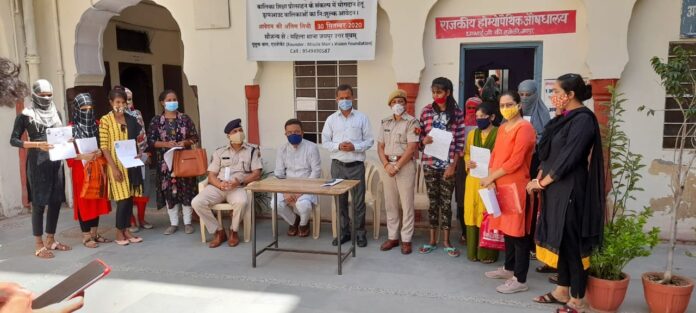
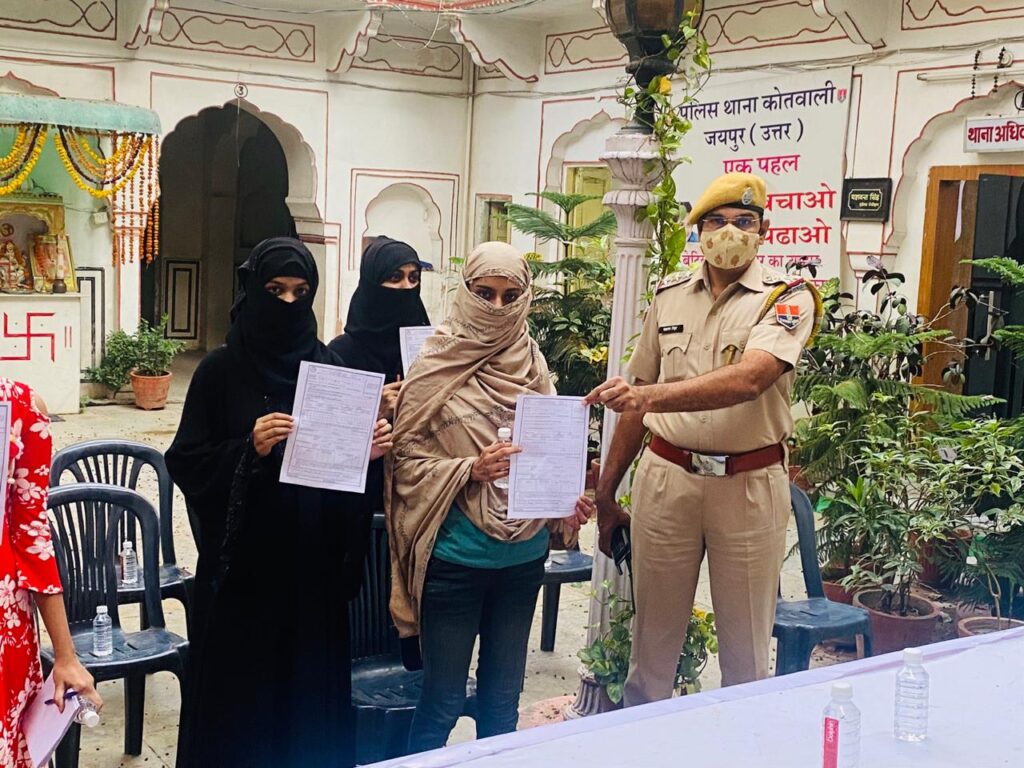
Thirty-four-year-old Khan undertook a project with the help of Jaipur police to enrol girls for distance education in the state capital’s  Walled City during the COVID-19 pandemic. Khan is also a claimant for the Congress party’s ticket from the Tijara constituency in the State Assembly election due in December 2023. Incidentally, the late Barkatullah Khan was also elected to the Assembly from the Tijara seat.

A trust, named as the Missile Man’s Vision Education Trust, has been formed for running the university. While the 17-member trust comprises some prominent academicians and other professionals, the proposed university will offer courses in some new, innovative and interdisciplinary subjects such as disaster management, pharmacy, environment, climate change, sports and engineering.

Thousands of young children in over 790 villages of Rajasthan’s Mewat region fail to reach up to the secondary level in their education for a variety of reasons, while the rural areas of the two districts lack the basic facilities of infrastructure, sanitation, healthcare and connectivity. Besides the Alwar and Bharatpur districts, the Mewat region is spread across a large area in neighbouring Haryana and Uttar Pradesh as well.

Khan said that the backward condition of his native place had prompted him to launch an initiative that would benefit large sections of the population of the region. The Congress MLA from Jaipur’s Kishanpole seat, Amin Kagzi, who is also the Chairman of the Rajasthan State Haj Committee, will move the private member’s Bill for the university’s creation in the State Assembly. Chief Minister Ashok Gehlot is scheduled to lay the foundation stone in Chawandi Kalan village in May this year.

The Congress Government in the state has promised to extend all possible support for the establishment of the university and provide grants for its functioning. However, the ruling party may expect some political favours from the Meo Muslim population in return, especially in the wake of the parties such as All-India Majlis-e-Ittehadul Muslimeen (AIMIM) trying to make inroads into the region.

Khan has a track record of promoting the cause of education among Muslims. During the covid-induced lockdown, Khan helped a large number of girls in the Walled City of Jaipur, who had dropped out of schools, in resuming their studies through the State  Government’s ‘Shiksha Setu’ programme, in which they were taught at home for X and XII classes through the Rajasthan State Open School. As many as 17 police stations took the responsibility to pay their fee and supply study material to them.

Khan pointed out that over 750 of these girls were continuing with their formal education and had appeared in examinations. The scheme is run by the Directorate of Women’s Empowerment through its Rs. 1,000-crore Indira Mahila Shakti Nidhi established in 2019-20. Girls in the Muslim- dominated localities, who dropped out of schools for doing household chores or taking care of younger siblings, have mainly benefited from the initiative.

The lawyer has helped in extending the scheme’s benefit through field functionaries and Anganwadi workers in the Mewat region as well during the current academic session by getting about 10,000 dropout girls enrolled in the open school. Besides, the Missile Man’s Vision Foundation, established in memory of former President A.P.J. Abdul Kalam, has covered 132 villages for the distribution of sanitary pads to adolescent girls under the flagship “Udaan” scheme.

Khan, who has been practising as a lawyer in the Rajasthan High Court for six years, said that the educational intervention would herald a new era of empowerment of both adolescent girls and boys from the Meo Muslim community. The establishment of the university will encourage children to complete their school education and join the institution of higher learning, besides prompting the State Government’s Education Department to improve the poorly equipped primary and middle schools in the region.

source: http://www.indiatomorrow.net / India Tomorrow / Home> Education / by India Tomorrow Correspondent / February 28th, 2023

Why is Ghaseda village celebrating Mewat day today?

Mewat, RAJASTHAN /HARYANA/ UTTAR PRADESH:

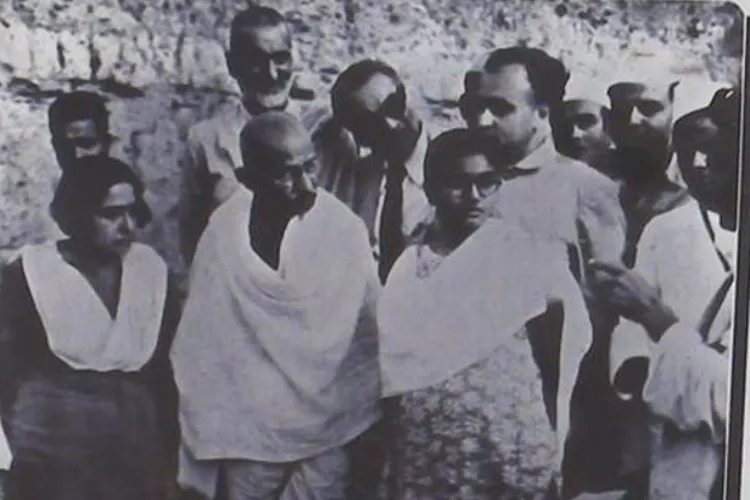
Mahatma Gandhi with other freedom fighters

December 19 is celebrated as ‘Mewat Day’, for it was on this day in 1947, soon after the partition of India, that Mahatma Gandhi’s appeal to the Meo Muslims living in what is today the border areas of Haryana, UP, and Rajasthan, made them shun their desperation to move to Pakistan.

The community members were all packed with some belongings after facing harassment and violence at the hands of officials in the post-partition mayhem that had gripped both India and Pakistan. Lakhs of Mewatis got together and declared they would go to Pakistan when Mahatma Gandhi came on the scene.  He assured to protect the life and property of Mewatis and give them full respect.

At the time of the partition of India, Mewat, Gurgaon, and Faridabad of Haryana were ruled by the British, and Alwar, Bharatpur of Rajasthan by the kings. At the time of partition, like other parts of the country, Mewat also saw communal violence.

At this stage freedom fighters Abdul Hai, Himmat Khan, and a few other Muslim leaders came to know of a conspiracy to force Mewati Muslims to leave India for Pakistan and they met Mahatma Gandhi and invited him to visit Mewat.

Mahatma Gandhi reached Ghaseda village of Mewat on 19 December 1947. He was accompanied by many leaders including the then Chief Minister of Punjab Gopi Chand Bhargava, Ranbir Singh Hooda, father of former Chief Minister Bhupinder Singh Hooda.

Mahatma Gandhi’s speech on 19th December 1947 in the village of Ghaseda before lakhs of Mewatis is historic. He said, “Today my sayings do not have the same power as it would have earlier.

“But what I say any as much impact as it would have earlier, today not a single Muslim would need to leave the Indian Union, nor would any Hindu-Sikh be required to leave their homes in Pakistan and seek refuge in the Indian Union.

A sorrowful Bapu said: “My heart is filled with sorrow after hearing what is happening here. All around arson, looting, killing, coercive religious conversion and kidnapping of women, and demolishing temples, mosques and gurudwaras is madness. If this is not stopped, both communities will be annihilated.”

Historian Siddiq Ahmed Meo, who has 10 books on the history of Mewat to his credit, says, “Gandhiji also read out the complaints sent to him by Mewati Muslim representatives to the assembled crowd.”

He assured the Mewatis that they would be given full respect. If any government official commits any atrocity with the Mewatis, then the government will take strict action against him. Gandhiji said, “I will be happy if my words can console you a little.”

He expressed grief over the Muslims who were expelled from the princely states of Alwar and Bharatpur.

Gandhiji said in his speech, “A time will come in India when all hatred will be buried in the ground and both societies will be able to live in peace.”

Mewat’s social worker Fajruddin Besar says, after Gandhiji’s assurances, the Muslims reversed their decision. “If they were not stopped at that time, there would be not a single Muslim in Haryana and Rajasthan today.” He says Gandhiji did a big favour to the Muslims by stopping them from going to Pakistan. “Today, Muslims in India are living a life of more peace and respect than in Pakistan. In Pakistan, there is always fighting among Muslims.”

In 2007, chief minister Bhupinder Singh Hooda declared Ghaseda an ideal village and renamed it Gandhi Gram Ghaseda. He also released about Rs 10 crore for development works in the village.

This year Congress leader Rahul Gandhi will also reach the village on December 22 and celebrate Mahatama Gandhi’s visit to the village on that day.

source: http://www.awazthevoice.in / Awaz, The Voice / Home> India / by Yunus Alvi, Nuh (Haryana) / December 19th, 2022

Why the Meo Muslims in Mewat remember Mahatma Gandhi in December every year

Ghasera Village (Mewat) , HARYANA  :

In 1947, Gandhi visited a village in the region to urge the Muslims living there not to leave the land of their forefathers for Pakistan.

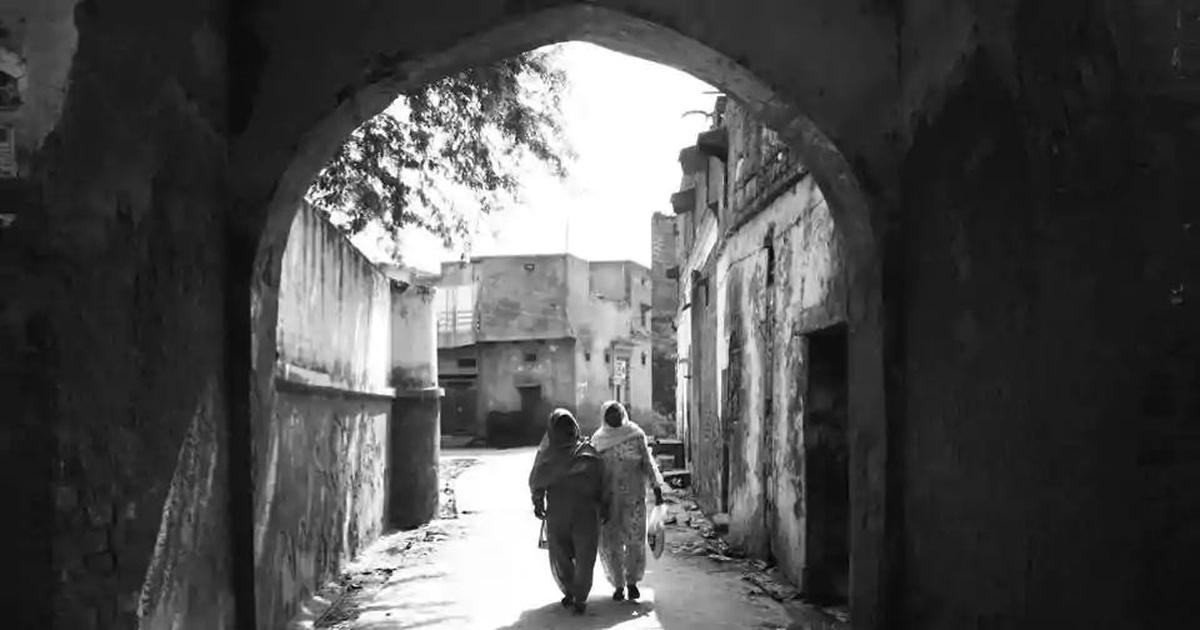
One of Ghasera fort's four entrance gates – and the only one standing – in Haryana's Ghasera village. | HT
One of Ghasera fort’s four entrance gates – and the only one standing – in Haryana’s Ghasera village. | HT

Every December 19 since 2000, Meo Muslims in Haryana have been commemorating Mahatma Gandhi’s visit to Ghasera village in Mewat district as Mewat Diwas.

On this day, the Meos, who have long been the target of a campaign of communal violence unleashed by Hindutva groups, gather at Ghasera village to recall how Gandhi had called the Meos “Iss desh ke reed ke haddi” or the backbone of India.

The Meos are a large community found in the Mewat region, which is spread across the states of Uttar Pradesh, Haryana and Rajasthan. They profess Islam but also follow several Hindus customs.

During his visit, Gandhi had assured the community that they would not be forced to leave India. He also asked those who wanted to leave to stay on in the land of their forefathers. A month later, Gandhi was assassinated in Delhi

Gandhi’s assassination came as a blow to the Meos. “The Meos who had been convinced to stay once again started feeling they would have to leave,” said local historian Siddique Ahmad, who belongs to the Meo community and has written extensively about Mewat’s connection to Gandhi. “The women of Mewat used to sing a song – ‘Bharosa utth gaya Mevan ka, goli lagee hai Gandhiji kay chathee beech.’” The Meos have lost their trust, now that a bullet has pierced Gandhiji’s chest.

At the village, now sometimes referred to as Gandhigram Ghasera, Deen Mohammed, a key organiser of Mewat Diwas explains how the commemmoration began. “We felt the need to commemorate this occasion every year because our children must know our past,” he said. “There are people who call Mewat mini-Pakistan and us Pakistanis, but try as they may, the truth is that this is our land, we have shed blood for it and Gandhiji was with us in this fight. The world should be reminded of that.”

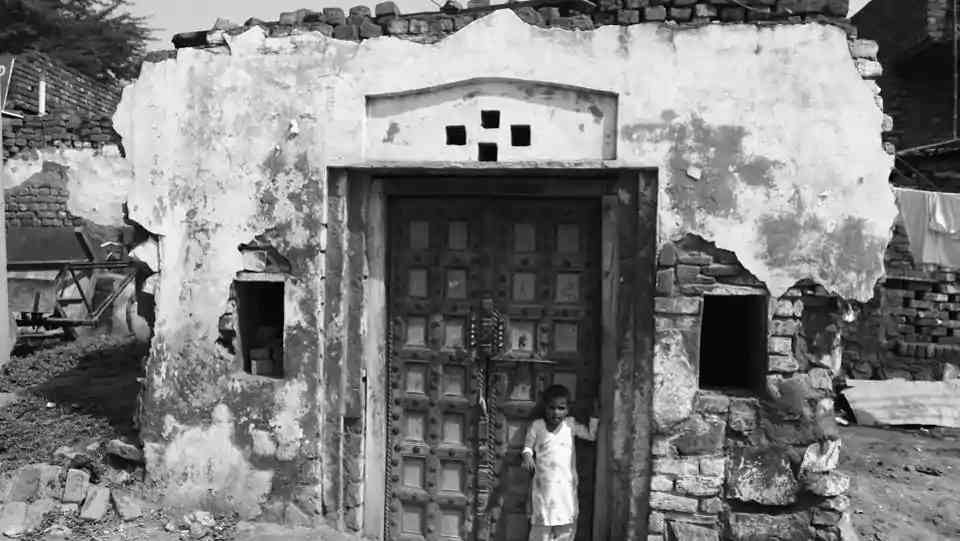
Haryana's Ghasera village. (Photo: HT).
Haryana’s Ghasera village. (Photo: HT).

‘Ethnic cleansing’

“The Meos believe that one of the reasons for Gandhi’s assassination was that he managed to ensure that a large population of Muslims residing near Delhi was stopped from leaving,” said Ahmad, sitting in his study in Banarsi village in Mewat district. “This angered men like [Gandhi’s assassin Nathuram] Godse.”

Ahmad conceded that there were others reasons for Gandhi’s assassination such as his insistence that Pakistan be paid the arrears promised to it under the terms of the division of assets and liabilities between India and Pakistan, but insisted that his visit to Mewat was also a reason.

To buttress his argument, he cited an oft-repeated but never confirmed story that the pistol involved in the assassination was supplied by the Alwar royal family, which had once ruled over parts of Mewat region.

As Ahmad related the story of how the Meos were affected by Partition, the reasons for their respect for Gandhi and their distrust of the princely families of Alwar and Bharatpur became clear. (Both Alwar and Bharatpur lie in present-day Rajasthan.) In 1933, after the royal family of Alwar imposed heavy taxes, the Meos launched a successful agitation that led to the British deposing the Alwar king and taking over the administration of the state.

“The king of Alwar was already angry with the Meo farmers for an agitation they had led against him and one that got him dethroned so he already had great animosity against the Meo,” said Ahmad. “The Raja of Bharatpur wanted to create a Jatistan that would stretch from Nuh in Haryana to Bharatpur.”

Ahmad’s accounts of the violence during Partition are backed by historians like Shail Mayaram who have worked extensively on the history of the region. Mayaram noted in a 2000 article :

“[In 1947] the Meos are subject to one of the first exercises of ethnic cleansing. This is euphemistically (and literally) called safaya (to clean). Thirty thousand Meos are killed in the princely state of Bharatpur alone. And this is an official figure. No figures are available for the numbers killed and displaced in Alwar. But the total Meo population in the two princely states is nearly 200,000. Overnight, the Meos are slaughtered or evicted by multi-caste mobs referred to as dhars. Their villages are razed to the ground. Only those allowed to stay have been subject to shuddhi (so-called purification, in fact, a euphemism for a conversion rite). The violence is hardly spontaneous. It is completely organised by the princely states and orchestrated by the organisations of what are today referred to as the ‘Hindu Right’. Certain national level leaders belonging to the Congress are also among its supporters/participants.”

Those who survived the violence fled to camps that were mushrooming across Nuh, Rewari and Sohna, which were then in Punjab. These were “waiting camps” where people would live till the time they were made to cross over to Pakistan. “Everyone wanted the Meos to go to Pakistan,” said Ahmad. “The rulers of Alwar and Bharatpur, of course, the Hindu Mahasabha, every right-wing Hindu organisation, but even the Congress.”

The land of their forefathers

That the Meos resisted the pressures to leave in the midst of such madness speaks of their love for their land. Ahmad pointed to a record of a famous panchayat held at the time, where community leaders declared that the Meos would not leave their homeland.

According to him the idea to ask Gandhi to intervene initially came when Abdul Hai, the secretary of the All India Mev Panchayat, spoke to the Communist leader PC Joshi. Joshi is believed to have said that only Gandhi could bring peace. Led by the most respected and cherished leader of the Meos, Chaudhary Yasin Khan, a delegation met Gandhi on September 20, 1947, at Birla House in Delhi. “The Meos told Gandhiji that we would prefer to die than go to Pakistan,” said Ahmad.

In the ballads sung by the Meo mirasins (folk singers), Gandhi is said to have ended that meeting with a statement that “he too would prefer to die with those who never want to die in their motherland and were unwilling to leave her”.

Gandhi may well have been killed for expressing sentiments such as this. But the Meos refused to leave. It is a battle they still fight against the intellectual descendants of those who unleashed the violence against the community during Partition. One of the ways they resist is by annually invoking the memory of Gandhi and the promise he made to them.

The author was supported by Karwan-e-Mohabbat fellowship for this article.

source: http://www.scroll.in / Scroll.in / Home> History Revisited / by Radhika Bordia / January 30th, 2019