Tag Archives: Mewati Muslims

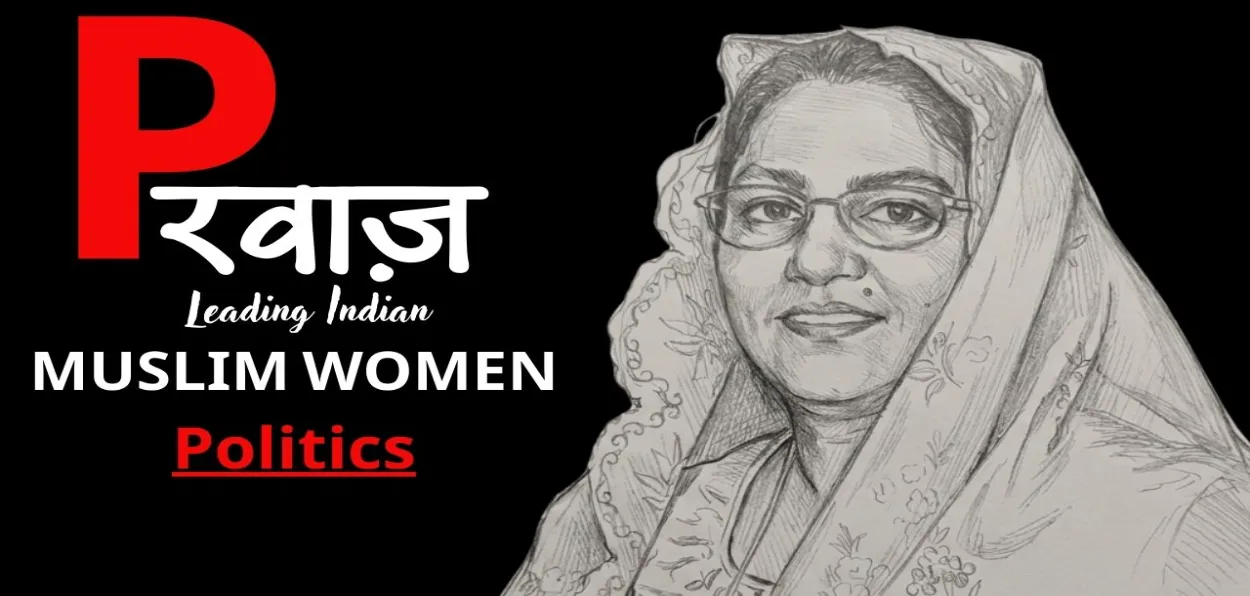
Zahida Khan: The first woman legislator from Mewat is an inspirational figure

Mewat, RAJASTHAN :

Zahida Khan

From Alwar in Rajasthan to the Mewat belt stretching across Nuh–Palwal, Faridabad in Haryana and the Mathura–Kosi region of Uttar Pradesh, Zahida Khan’s name is a source of inspiration for Mewat.

The first woman MLA from Mewat, Zahida, left her legal practice to enter politics. Today, she is not only a political leader but also a prominent face of Muslim politics in Rajasthan. Her political journey spans from courtrooms to the legislative assembly and the cabinet, and her influence is now clearly felt in the corridors of power.

Zahida Khan carried forward a rich social and political legacy. Her family has a long and distinguished history in Mewat’s politics. From her family, a few names —Chaudhary Mohammad Yasin Khan, Chaudhary Tayyab Hussain – are well known for their contribution to the region’s social and political life. Zahida Khan is the youngest of her four siblings, yet her work has set a new benchmark across the region.
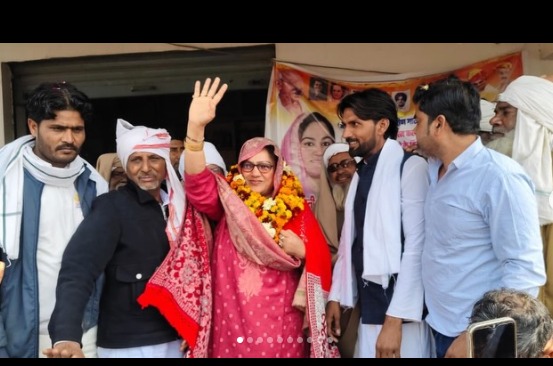
Zahida Khan at a public rally

Zahida Khan, 58, has inherited public life from her family. Her grandfather, Chaudhary Mohammad Yasin Khan—revered in Mewat as Baba-e-Qaum—launched a campaign for education in 1921. He founded the Brain Mew High School, which later became Yasin Mew Degree College.

He dreamed of bringing the Mew community into the national mainstream through education. Yasin Khan was a member of the United Punjab Legislative Council and later a member of the Punjab Legislative Assembly. He also holds the record of being elected unopposed as an MLA in 1957.

During Partition, he opposed the migration of the Mew community to Pakistan and invited Mahatma Gandhi to boost their morale. This is why the Mew community today stands confidently in India.
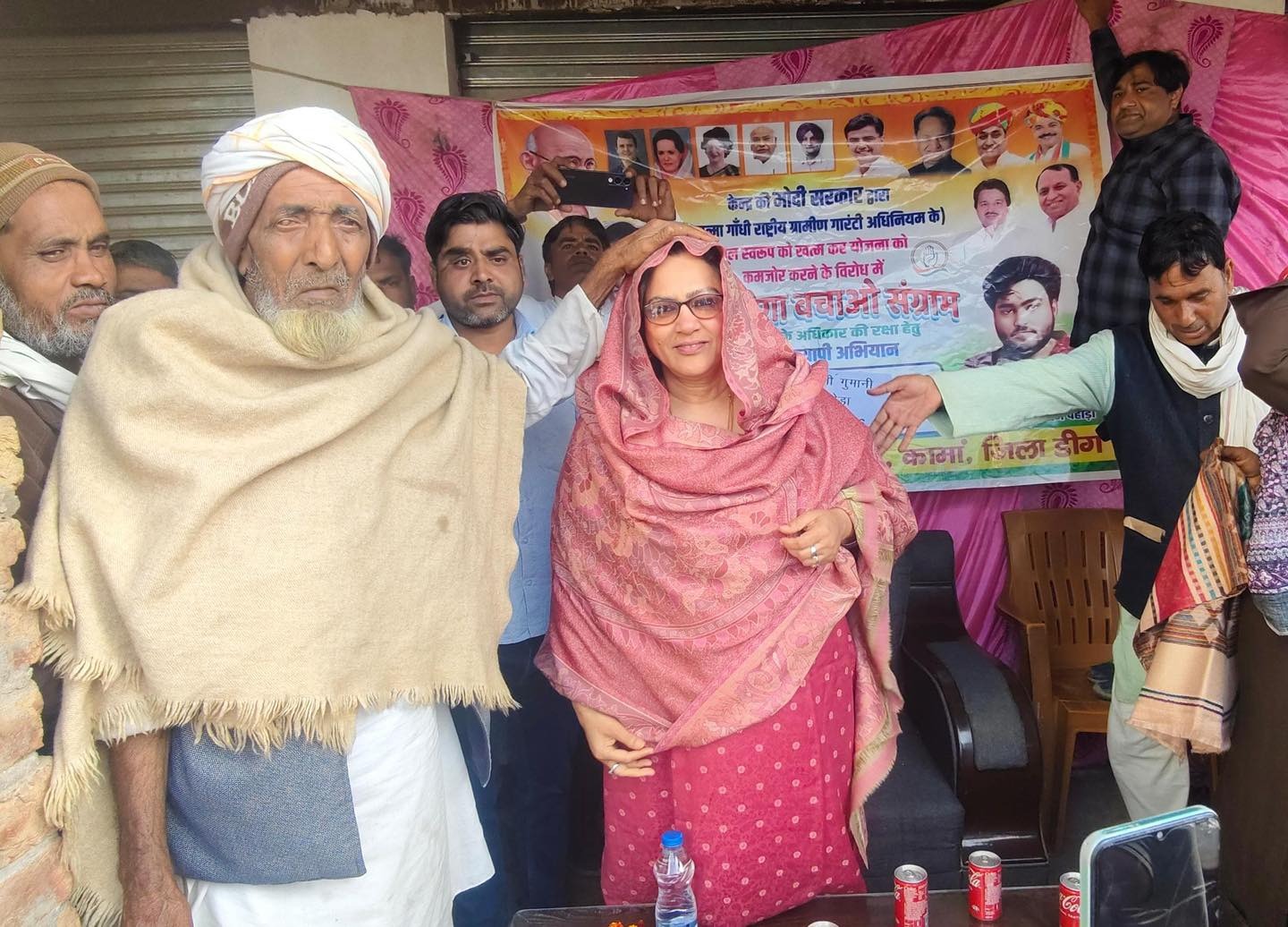
Zahida Khan being blessed by an elderly person

Zahida’s father, Chaudhary Tayyab Hussain, was among the rare Indian politicians who served as a minister in three states—Punjab, Haryana, and Rajasthan. He was an MLA from the Nuh and Taoru regions, served as Chairman of the Waqf Board, and was a strong advocate of education, minority rights, and social justice. His vision and leadership played a key role in organising and developing Mewat.

Zahida’s brother, Zakir Hussain, is the Administrator of the Haryana Waqf Board and has earlier served three terms as MLA from Nuh and Taoru.

Her younger brother, Fazal Hussain, has contested assembly elections from the Tijara region in Rajasthan. Her elder sister is a gynaecologist, and her brother-in-law is an ENT specialist.

 Zahida received her early education at JMC School in Delhi and completed her graduation from MDU Rohtak. She earned her LLB degree from Delhi University and practised law at the Delhi High Court before entering Rajasthan politics.

In 2000, when her father, Chaudhary Tayyab Hussain, was a minister in the Gehlot government, panchayat elections were held. The Kama Panchayat Samiti seat was reserved for women. With unanimous support from the local community, Zahida was chosen as the most suitable candidate. She was elected unopposed as Chairperson of the Kama Panchayat Samiti—an achievement that remains a record to this day.
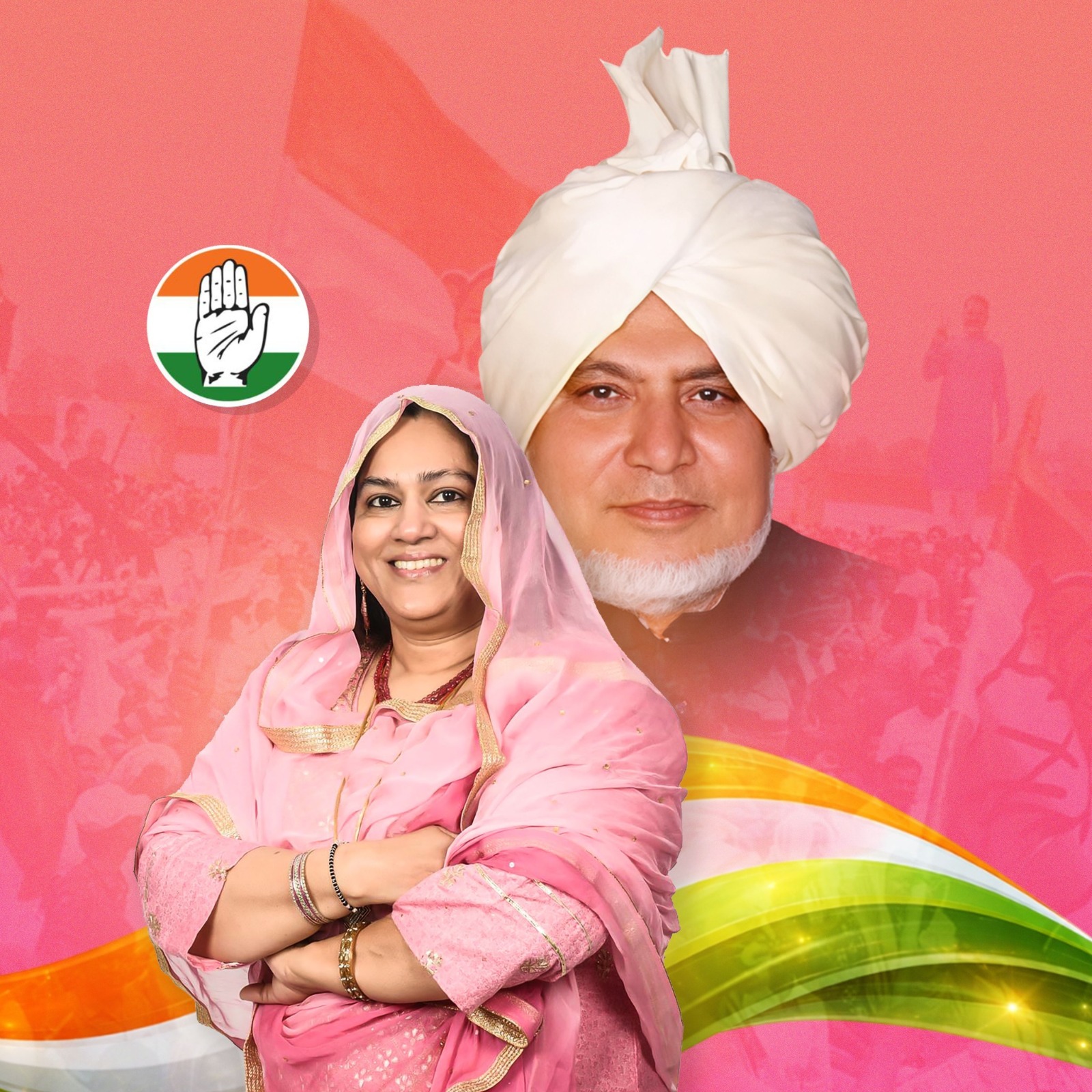
Zahida Khan standing in front of her father’s image

From the outset of her political career, Zahida prioritised social development and education, with a special focus on girls’ education. After her father died in 2008, she contested the state assembly elections on a Congress ticket and won, and became Mewat’s first woman MLA. She was again elected in the 2018 assembly elections. During this period, she served as Rajasthan’s Education Minister and handled portfolios including Education, Science and Technology, Art and Culture, and Printing and Stationery.

Zahida Khan has prioritised education and social justice. She has served as an AICC member, a Rajasthan PCC office-bearer, and General Secretary of the All India Women’s Congress. Her brother Zakir Hussain has furthered the family’s political tradition by serving three terms as MLA in Haryana and Mewat.

Zahida Khan’s husband, Jalees Khan, an electrical engineer by training, chose entrepreneurship over a job. He supports her political work and also manages family responsibilities. He says, “After Chaudhary Tayyab Hussain’s demise, there was consensus in both families—ours and the entire Chaudhary family—that Zahida Khan should enter politics from Kama.”

Zahida’s daughter is a doctor, and her son Sajid Khan is a law graduate. Sajid was elected unopposed as Pradhan of the Pahari Panchayat Samiti. He also manages the family business while fulfilling political responsibilities.
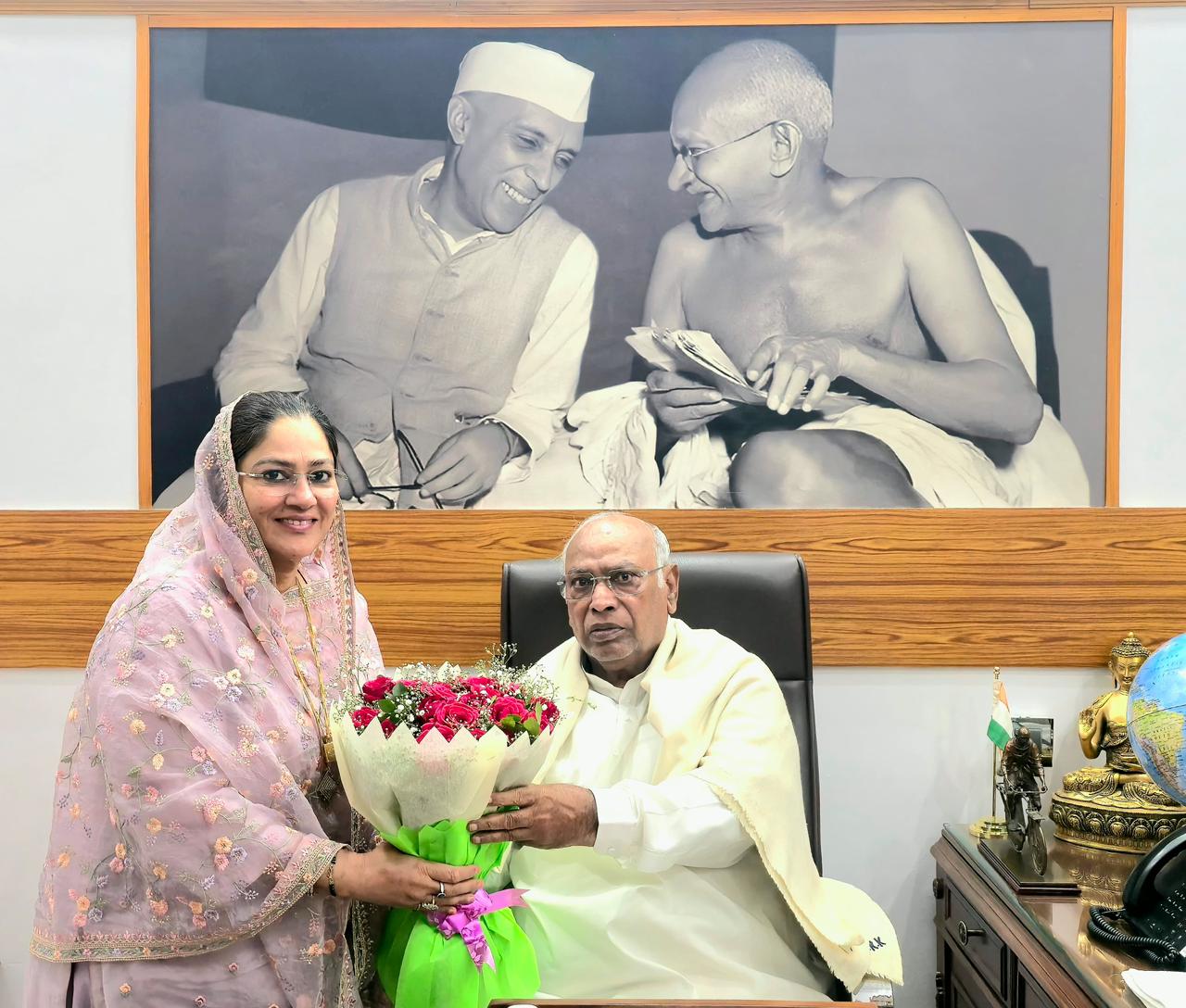
Zahida Khan with Congress President Malikarjun Kharge

The family has given Zahida a complete “free hand,” enabling her to carve out a distinct identity in politics. Because of her work style, assertiveness, clarity, and integrity, people often see a reflection of her father in her.

Former minister Zahida Khan says, “In today’s times, it has become extremely difficult to work in politics with clarity and fairness. Over the past 15–20 years, the political environment has changed significantly, and good people are hesitant to enter politics. Politics is no longer just a medium of service; it has also become linked to business. People now view it from a commercial perspective, which is deeply distressing and worrying for democracy.”

In the history of Mewat’s social and political consciousness, the contribution of a few families has been immensely significant. Without them, the region’s history would be incomplete. Yasin Khan’s emphasis on education, Tayyab Hussain’s political leadership, and Zahida Khan’s women-led politics—this three-generation legacy has become Mewat’s identity.

Zahida Khan’s political journey conveys the message that dedication to service and society is the essence of true politics. Under her leadership, the people of Mewat are moving forward on the path of education and development. This family exemplifies placing service above power, principles above position, and society above politics.

Mewat’s identity—education, politics, and women’s leadership—is the result of three generations of effort and struggle. This is not just the story of one family, but the story of an entire region’s social and political awakening that has fought for education, rights, and self-respect for decades. By carrying forward this legacy, Zahida Khan has opened new paths for women and society in modern politics.

While a lack of clarity and fairness is often felt in today’s politics, leaders like Zahida Khan prove that principles and service to society must remain politics’ core purpose. Her contribution and leadership for Mewat are truly inspiring. Yasin Khan’s educational vision, Tayyab Hussain’s foresight, and Zahida Khan’s women-led leadership together tell the story of making Mewat socially and politically empowered.

source: http://www.awazthevoice.in / Awaz, The Voice / Home> Stories> Leading Muslim Women / by Younus Alvi, Alwar, Rajasthan / March 11th, 2026
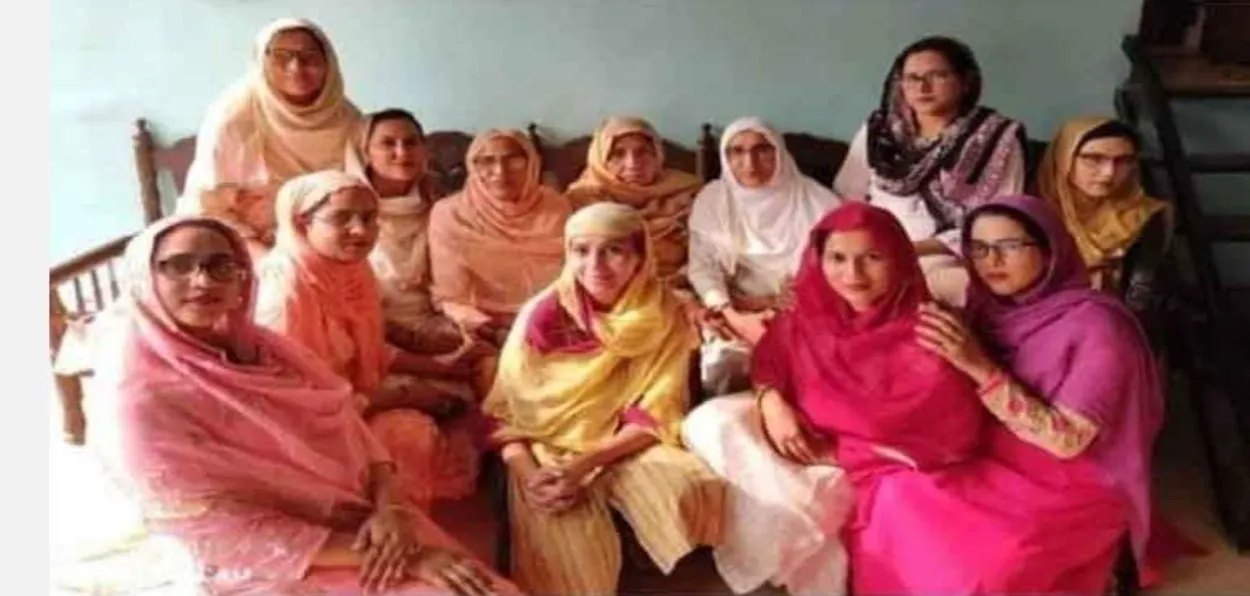
Nuh’s Niyaz Khan and his 11 daughters who swam against the tide for education

Nuh, HARYANA:

11 daughters of Niyaz Khan

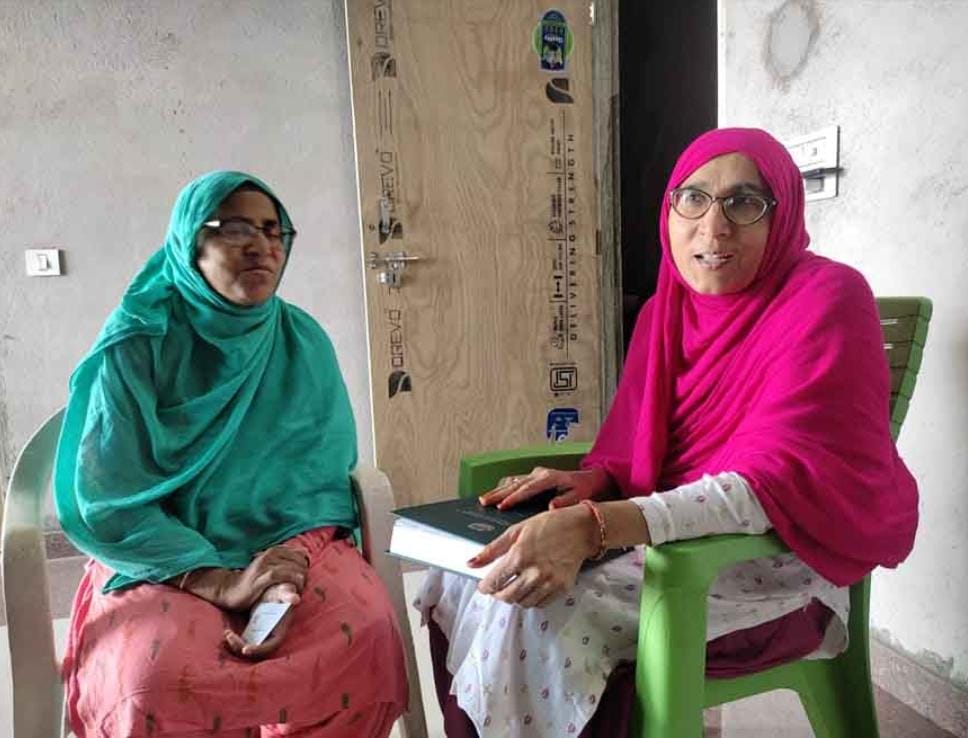
When I met Shabnam and her elder sister Nafisa after a flight of 37 steps of a half-built high-rise building on the Nuh-Tawadu road, I couldn’t gauge the high spirits of these two women, their nine sisters, and late father Niyaz Khan in our brief meeting.

Niyaz Khan, a former revenue officer in the Punjab Waqf Board, has left this world, but he is remembered for bringing about the change in the mindset of Muslims in Nuh through his act of giving a good education to all his 11 daughters.

Not only he educated his daughters but 8 of them became teachers and are carrying on the mission of spreading education in one of the most backward areas of India.

In a conversation with Awaz-The Voice, Shabnam says, “I and my sisters who are teachers make efforts to ensure that girl students in our respective schools do not give up on their studies midway and drop out of school. We also make extra efforts to see that besides retaining the numbers, more girls are enrolled in the school.”

Shabnam says that to retain girl students they call the parents of students to school to make them aware of the importance of education.

Shabnam, who worked in an NGO for a long time before joining the government school, says, “Due to my experience with an NGO, I face lesser difficulties in this job (retaining girl students in school) in comparison to other sisters. My experience of working on child education in an NGO is helping me.”

She says that increasing the number of students helps in upgrading schools. Shabnam is now TGT i.e. Trained Graduate Teacher in Rithoda vuillage. The primary school where she worked earlier has since been converted into a middle school.

Shabnam and Nafisa

Shabnam’s elder sister Nafisa says that many parents come to consult her and all her teacher-siblings. They ask them how to ensure a good future for their daughters. “Many times strangers stop them at the bus stand for paying compliments and telling us that they want their daughters to be like us.”

Nuh remains one of the most backward districts of Haryana, where women are struggling to rise amidst diehard patriarchy, old-fashioned thoughts, rampant illiteracy, and a lack of basic facilities. The dropout rate of girl students is the highest in the state.

Although there are many schools and colleges in Nuh, it has no university and women must go outside for higher education.

Asif Ali Chandaini, General Secretary of Mewat Vikas Manch, says, about 70 to 80 percent of the population of the district survives by doing petty and menial jobs. In such a situation, parents have financial constrains, and safety of daughters as issues in their minds while deciding on educating their daughters. In the end they prefer to keep their girls at home.

Defying such conservative traditions in the decade of nineties, Niyaz Khan decided to send his daughters for higher education.

Nafisa, the eldest of the sisters, who spoke with Awaz-the voice said their father had a transferable job. As long as the family was living outside Mewat, he did not face any problems in educating his daughters. However, after he met with an accident, took voluntary retirement and shifted permanently to Nuh in 1993, he faced stiff opposition to sending his daughters to colleges and universities.

Her father was a resident of Chandaini village, about four kilometers from Nuh. The people there are progressive and clear about the aware of education.

Praising her father and grandfather, Shabnam says, “Both were very great people. Dada (paternal grandfather) never stopped us from going to college and school. In the nineties, when the environment was worse than what you see today, he not only continued to give higher education to his daughters but also sent them out of Nuh for studies.”

Shabnam has also studied law; her husband is a practicing advocate in Sohna.

Despite the regressive environment around them, Niyaz Khan’s eight daughters became teachers. They are employed in government schools. Shabnam says teaching was their choice.

Shabnam has five children. One of her daughters has a Master’s degree in Fine Arts from Banaras. Her other children are also into masters and other higher education courses.

Nafisa’s elder son is pursuing a Ph.D. in Physics.

Shabnam and Nafisa say that they care least about others’ opinions when it comes to their children’s education. “Our children are moving forward by choosing their careers. We are only supporting them,” they said almost in unison.

 According to Nafisa, the children of the younger sisters are also pursuing education at different levels.

She tells that things are changing for Mewati Muslims on the education of girls. However, the change is quite slow.

Nafisa says that there is a trend of girls dropping out after fifth or eighth standard and being sitting at home.

Many parents prefer to send their daughters to Maktab, local Madrasa, instead of sending them to school.

Shabnam’s disciple Mohammad Rafiq, who has done his Ph.D. on the topic of Mewat’s female Sarpanch, says that the picture of Mewat can change if the authorities present these eleven sisters as ‘role models’.

The 11 sisters becoming the face of women’s education and empowerment can bring down the dropout rate significantly. However, both the sisters do not agree on this.

They feel the thrust on women’s education has to begin from their homes of Muslims.”Everything cannot be left to the government; the politicians of Mewat have to show willpower,” Shabnam says.

She said once she invited the local politicians to a meeting of Urdu teachers, but none of them came. She also this was the most discouraging since most of them are her relatives.

Despite this, they do not show any special seriousness towards education.

Niyaz Khans’s daughters:

Nafisa: JBT & B.Ed, Govt Teacher

Shabnam: MA, LLB, JBT, government teacher

Afsana: JBT, MA, B.Ed.

Farhana: JBT, MA, B.Ed. government teacher

Shahnaz: JBT, MA, B.Ed teacher in private school

Ishrat: B.A

Nusrat: Lecturer in JBT, MA, MEd and employed in a Polytechnic

Ana: JBT, MA B.Ed, Govt Teacher

Razia: MBA and working in private sector

Nazia: Diploma in Architecture, works in private sector

Bushra: MA, B.Ed

source: http://www.awazthevoice.in / Awaz, The Voice / Home> Stories / by Malick Asghar Hashmi / May 04th, 2023

Why is Ghaseda village celebrating Mewat day today?

Mewat, RAJASTHAN /HARYANA/ UTTAR PRADESH:

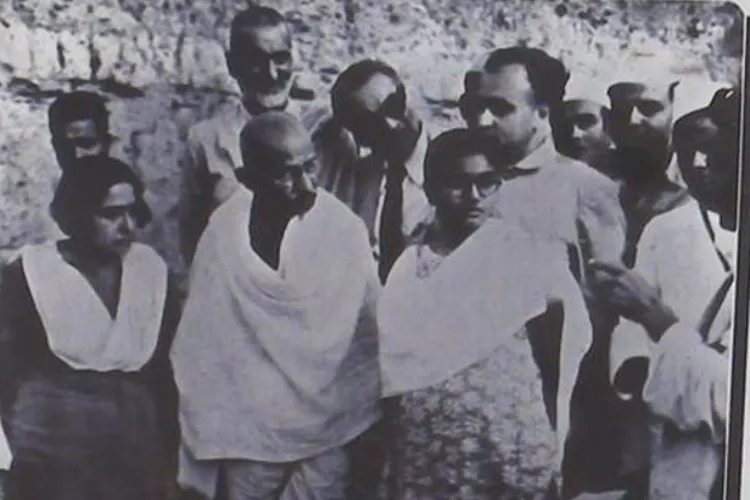
Mahatma Gandhi with other freedom fighters

December 19 is celebrated as ‘Mewat Day’, for it was on this day in 1947, soon after the partition of India, that Mahatma Gandhi’s appeal to the Meo Muslims living in what is today the border areas of Haryana, UP, and Rajasthan, made them shun their desperation to move to Pakistan.

The community members were all packed with some belongings after facing harassment and violence at the hands of officials in the post-partition mayhem that had gripped both India and Pakistan. Lakhs of Mewatis got together and declared they would go to Pakistan when Mahatma Gandhi came on the scene.  He assured to protect the life and property of Mewatis and give them full respect.

At the time of the partition of India, Mewat, Gurgaon, and Faridabad of Haryana were ruled by the British, and Alwar, Bharatpur of Rajasthan by the kings. At the time of partition, like other parts of the country, Mewat also saw communal violence.

At this stage freedom fighters Abdul Hai, Himmat Khan, and a few other Muslim leaders came to know of a conspiracy to force Mewati Muslims to leave India for Pakistan and they met Mahatma Gandhi and invited him to visit Mewat.

Mahatma Gandhi reached Ghaseda village of Mewat on 19 December 1947. He was accompanied by many leaders including the then Chief Minister of Punjab Gopi Chand Bhargava, Ranbir Singh Hooda, father of former Chief Minister Bhupinder Singh Hooda.

Mahatma Gandhi’s speech on 19th December 1947 in the village of Ghaseda before lakhs of Mewatis is historic. He said, “Today my sayings do not have the same power as it would have earlier.

“But what I say any as much impact as it would have earlier, today not a single Muslim would need to leave the Indian Union, nor would any Hindu-Sikh be required to leave their homes in Pakistan and seek refuge in the Indian Union.

A sorrowful Bapu said: “My heart is filled with sorrow after hearing what is happening here. All around arson, looting, killing, coercive religious conversion and kidnapping of women, and demolishing temples, mosques and gurudwaras is madness. If this is not stopped, both communities will be annihilated.”

Historian Siddiq Ahmed Meo, who has 10 books on the history of Mewat to his credit, says, “Gandhiji also read out the complaints sent to him by Mewati Muslim representatives to the assembled crowd.”

He assured the Mewatis that they would be given full respect. If any government official commits any atrocity with the Mewatis, then the government will take strict action against him. Gandhiji said, “I will be happy if my words can console you a little.”

He expressed grief over the Muslims who were expelled from the princely states of Alwar and Bharatpur.

Gandhiji said in his speech, “A time will come in India when all hatred will be buried in the ground and both societies will be able to live in peace.”

Mewat’s social worker Fajruddin Besar says, after Gandhiji’s assurances, the Muslims reversed their decision. “If they were not stopped at that time, there would be not a single Muslim in Haryana and Rajasthan today.” He says Gandhiji did a big favour to the Muslims by stopping them from going to Pakistan. “Today, Muslims in India are living a life of more peace and respect than in Pakistan. In Pakistan, there is always fighting among Muslims.”

In 2007, chief minister Bhupinder Singh Hooda declared Ghaseda an ideal village and renamed it Gandhi Gram Ghaseda. He also released about Rs 10 crore for development works in the village.

This year Congress leader Rahul Gandhi will also reach the village on December 22 and celebrate Mahatama Gandhi’s visit to the village on that day.

source: http://www.awazthevoice.in / Awaz, The Voice / Home> India / by Yunus Alvi, Nuh (Haryana) / December 19th, 2022