From rose syrup to mango panna, Indian Muslims continue the Mughal tradition of crafting cooling summer drinks originally developed by royal physicians.
New Delhi :
Muslims in India proudly carry forward the centuries-old tradition of crafting refreshing drinks that originated in the Mughal era, a time when royal physicians invented syrups not only for their enduring taste but also for immense health benefits.
Salma Hussain, a researcher who has studied Mughal food and drink habits for over fifty years, explained: “Most of the drinks were invented by the royal physicians, who sometimes prepared drinks for medicinal purposes and sometimes for a refreshing taste, and they were very popular.”
She shared how the art of making these drinks flourished under royal patronage, especially during the reign of Empress Noor Jahan, whose influence in the royal kitchen brought many innovations. “Noor Jahan had creative talent. Under her leadership, excellent syrups were developed. The food was also good, tasty. She especially supervised the royal kitchen,” she told Clarion India recently.
Salma recalled an interesting anecdote from the Mughal court: “Once Queen Noor Jahan was strolling in the garden. Rose flowers were in full bloom. Noor Jahan’s mother, Ismat Ara Begum, used to make perfumes from these flowers. Noor Jahan called the royal physician and said many medicines were made from flowers; why cannot a syrup be extracted from the roses? ‘Many people drink in the name of medicine, but you should make something that will relieve us from the heat and be refreshing, and we will also enjoy it.’”
This simple request from the queen gave birth to the now-famous rose syrup, a cooling drink cherished across the Indian subcontinent to this day.
According to Salma, syrups were not limited to rose alone. “Syrups started to be made from roots, like khus syrup; Panna from mango. Similarly, vine syrup came up. Pomegranate syrup was made by cooking sour and ripe fruit, both said to be very beneficial for the skin,” she said. These drinks were especially popular among the royals, famous for their passion for beauty and health.
Salma further highlighted how Indian Muslims and Mughal royalty took special care to combat the intense Indian heat. “The heat in India was extreme, like today’s heat. Kings also used to cool drinks. Emperor Akbar started ordering ice from the mountains.”
The knowledge of cooling drinks extended to using yoghurt, lemon, and various salts to make beverages like shikanji and lassi, which remain popular today.
“Rose syrup was made from flowers, custard from custard. Jamun syrup was made from fruits, vine syrup was made from mango syrup. Yoghurt was used a lot then. We learned how to make raita from it. They used to cool the yoghurt or mix it in water and make a drink,” she said.
She also pointed to the influence of neighbouring cultures: “A syrup came from Turkey, Aryan, which is the buttermilk we drink today. Almonds were used to make a lot of syrups. It is said that in Iran, almonds were put in hot water and savoured.”
Salma stressed the importance of these drinks beyond refreshment. “There are some unsubstantiated stories about drinks, but all of them seem appropriate, such as the first among the sages who made syrup; his name was Fitha Ghoras. Sage Fitha Ghoras was the first to give a medicinal drink the form of a syrup, like a decoction, etc. Over time, the trade in syrup gradually started and all kinds of syrups started being made.”
She also mentioned that in 1906, Hakim Abdul Majeed (founder of Hamdard) made the spirit-enhancing syrup. The same refreshing syrup is still alive, and we drink it to relieve the heat.
The purity and quality of ingredients were also important to the Mughals. Salma explained: “The water mixed in the syrup was from the Ganges, although the Yamuna River was closer to Delhi. Its water was not used because of the belief that it caused diseases.”
Water management was taken seriously: “The Mughals used to inspect water tanks. Special officers were assigned to procure and preserve the Ganges water.”
This careful tradition of preserving royal recipes and using pure ingredients continues in India’s Muslim communities, who keep the memory of Mughal cuisine alive through generations.
Local historian Ahmed Khan commented, “These drinks are not just a part of our culture, they connect us to our glorious past. They remind us of the wisdom of our ancestors and the care they took in making life enjoyable and healthy.”
As the summer sun blazes, families across the subcontinent continue to enjoy these time-honoured drinks, a tribute to the enduring legacy of the Mughal era and the Indian Muslim custodians who have preserved these traditions.
source: http://www.clarionindia.net / Clarion India / Home> Editor’s Pick> Indian Muslims / by Mohammed Bin Ismail / May 26th, 2025
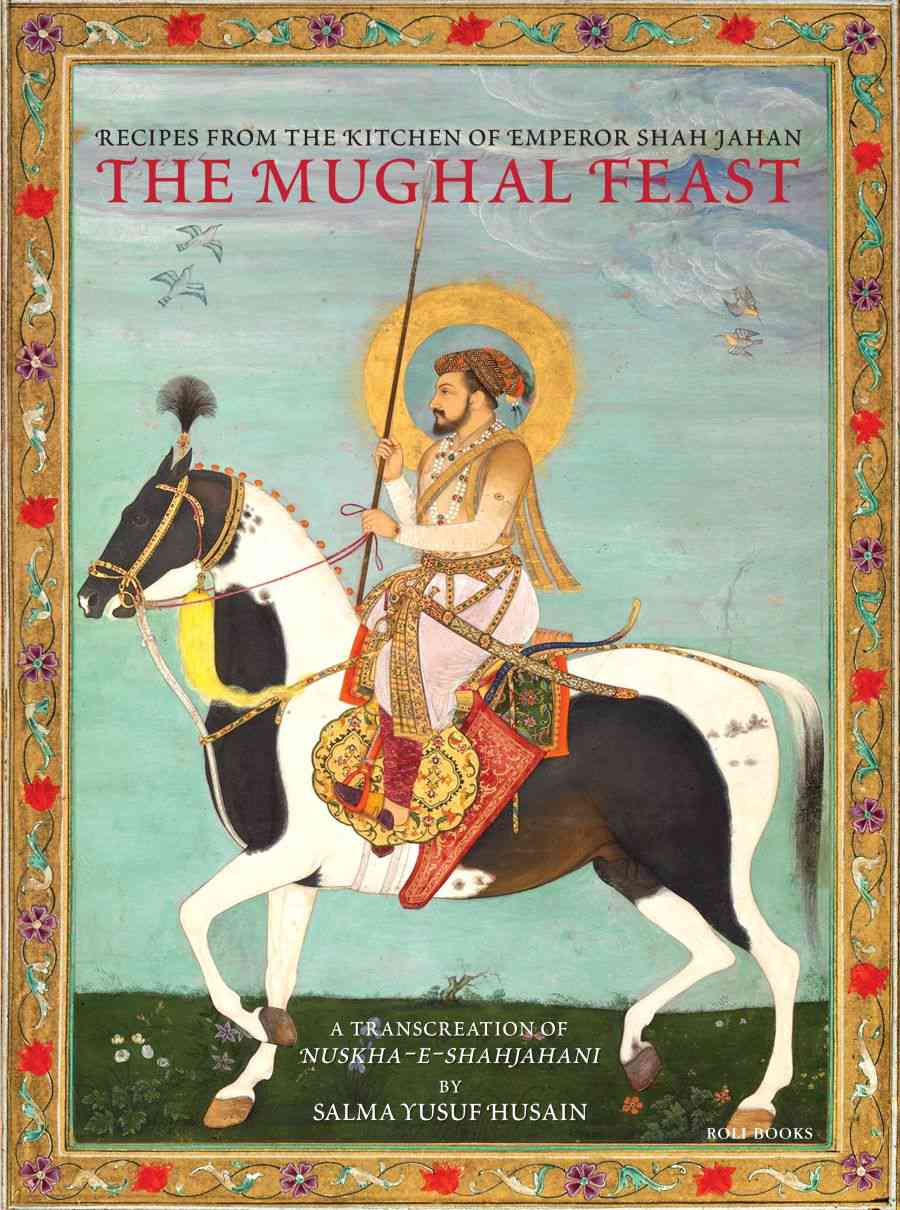
‘The Mughal Feast’ by Salma Yusuf Husain recreates the Persian recipe book ‘Nuskha-e-Shahjahani’, providing a glimpse into a bygone era of pomp and show.
Mughal Emperor Shah Jahan in his court | Google Cultural Institute/Wikimedia Commos Licensed under CC BY Public Domain Mark 1.0].
The silver twilight of Mughal civilization began with Shah Jahan. Delhi was now a sanctuary of an urbane, sophisticated court which had taste, even elegance. By early 1730 the city had absorbed various elements from neighbouring regions and witnessed a mingling of international as well as national strains and an interchange of ideas, customs and food.
The Portuguese relationship with the Mughals had already been established a long time back, along the trade routes. Hence the imperial kitchens, besides Indian ingredients, saw an additional ingredient brought by the Portuguese – the chilli. The chilli was very similar to the long pepper, already in use, and therefore did not look too unfamiliar to royal chefs, but had the hot taste. Other vegetables like potatoes and tomatoes also appeared on the scene and the food of the Red Fort became rich in colour, hot in taste, and varied as compared to the bland food of its ancestors. Qormas and qaliyas, pulaos and kababs, and vegetables in different garb, besides European cakes and puddings, adorned the table.
Cooking and serving food in the royal kitchens was a riot of colours, fragrances, experiments, table manners and protocols. The emperors usually ate with their queens and concubines, except on festive occasions, when they dined with nobles and courtiers. Daily meals were usually served by eunuchs, but an elaborate chain of command accompanied the food to the table. The hakim (royal physician) planned the menu, making sure to include medicinally beneficial ingredients. For instance, each grain of rice for the pulao was coated with silver warq, which aided digestion and acted as an aphrodisiac. One account records a Mughal banquet given by Asaf Khan, the emperor’s wazir, during Jahangir’s time to Shah Jahan – though no outsider had ever seen any emperor while dining except once when Friar Sebastian Manriquea, a Portuguese priest, was smuggled by an eunuch inside the harem to watch Shah Jahan eat his food with Asaf Khan.
Once the menu was decided, an elaborate kitchen staff – numbering at least a few hundred – swung into action. Since a large number of dishes were served at each meal, an assembly line of staff undertook the chopping and cleaning, the washing and grinding. Food was cooked in rainwater mixed with water brought in from the Ganges for the best possible taste. Not only the cooking but the way the food was served is interesting to note – food was served in dishes made of gold and silver studded with precious stones, and of jade, as it detected poison. The food was eaten on the floor; sheets of leather covered with white calico protected the expensive carpets. This was called dastarkhwan. It was customary for the emperor to set aside a portion of food for the poor before eating. The emperor began and ended his meal with prayers; the banquet ran for hours as Shah Jahan liked to enjoy his food, spending long hours at dastarkhwan.
With the passage of time, indigenization in the cooking style became obvious and certain Indian ingredients, like Kashmiri vadi, sandalwood powder, suhaga, betel leaves, white gourd, and batasha, and fruits like mango, phalsa, banana, etc., were used to give different flavours to dishes.
The arrival of every dish was a ceremony and history will never forget the pomp of those times, along with the flavours which remain only in the pages of handwritten manuscripts of those days, such as Nuskha-e-Shahjahani. Not only the imperial kitchens of the emperor, but also the bazaars of the city were charged with the smoke of different kababs, and the environment was filled with the fragrance of nahari, haleem, qormas and qaliyas. The array of breads was dazzling. Festive occasions were never complete without baqarkhani, kulchas and sheermals. Sharbat ke katore and kulfi ke matke added colour to the scenario. The city of Shah Jahan was a paradise of food with the creations of local and foreign chefs.
This luxurious way of serving and preparing food continued only till the time Shah Jahan ruled, as his son Aurangzeb did not believe in luxury, pomp and show. Unfortunately, the last years of this great emperor were unhappy. Deposed by his son Aurangzeb, Shah Jahan was imprisoned in Agra Fort and remained there for eight years until his death in 1666. Legend has it that Aurangzeb ordered that his father be allowed only one ingredient of his choice, and Shah Jahan chose chickpeas. He chose them because they can be cooked in many different ways. Even today, one of the signature dishes of North Indian cuisine is Shahjahani dal, chickpeas cooked in a rich gravy of cream.
QALIYA KHASA DO-PIYAZAH
LAMB COOKED WITH ONIONS, GREEN GRAM AND VEGETABLE | Serves: 4-6
INGREDIENTS
Lamb, cut into medium-sized pieces 1 kg
Green gram (moong dal), washed, soaked for ½ hour ¼ cup / 60 gm
Ghee 1 cup / 250 gm
Onions, sliced 1 cup / 250 gm
Salt to taste
Coriander (dhaniya) seeds, pounded 4 tsp / 20 gm
Ginger (adrak), grated 4 tsp / 20 gm
Beetroots (chuqander), peeled, cut into medium-sized pieces 3 cups / 750 gm
Turnips (shalgam), peeled, cut into medium-sized pieces 3 cups / 750 gm
Carrots (gajar), scraped, cut into cubes 3 cups / 750 gm
Rice paste 4 tsp / 20 gm
Saffron (kesar) 2 gm Freshly ground to a fine powder: Cinnamon (dalchini) ½ tsp / 3 gm
Cloves (laung) ½ tsp / 3 gm
Green cardamoms (choti elaichi) ½ tsp / 3 gm
Black peppercorns (kali mirch), ground 1 tsp / 5 gm
METHOD
1. Heat 100 gm ghee in a pan; sauté the onions and lamb with 2 tbsp water. Add the salt, pounded coriander seeds and grated ginger; cook, on medium heat, until the lamb is tender.
2. Add the beetroots, turnips, carrots and green gram with enough water to cover; cook the vegetables on low heat.
3. When the vegetables and lamb are fully cooked and at least 1 cup water remains in the pan, remove the pan from the heat and separate the lamb pieces and vegetables from the stock.
4. Temper the stock with the remaining ghee. Return the vegetables and lamb to the stock and bring to a boil. Add the rice paste and mix well.
5. Add the freshly ground spices and mix.
6. Transfer into a serving dish and serve garnished with saffron.
NARANJ PULAO
ORANGE-FLAVOURED LAMB CURRY COOKED WITH RICE | Serves: 6-8
INGREDIENTS
Oranges 4 big / 6 small
Rice 4 cups / 1 kg
Yoghurt (dahi), whisked 1 cup / 250 gm
Lemons (nimbu) 2
Sugar 2 cups / 500 gm
Saffron (kesar) ¼ tsp
Ghee 1 cup / 250 gm
Salt to taste
Dry fruits as needed
Green coriander (hara dhaniya), chopped as needed For the yakhni: Lamb, cut into pieces 1 kg
Ghee 1 cup / 1250 gm
Onions, sliced 1 cup / 250 gm
Ginger (adrak) 4 tsp / 20 gm
Salt to taste
Cinnamon (dalchini), 2 sticks 1˝
Green cardamoms (choti elaichi) ½ tsp / 3 gm
Coriander (dhaniya) seeds, crushed 4 tsp / 20 gm
Cloves (laung) ½ tsp / 3 gm
METHOD
1. Peel the oranges carefully so that the case remains intact. Remove the segments and keep aside. Sprinkle salt inside the case and float them in whisked yoghurt for an hour. Remove the cases from the yoghurt and wash with cold water. Boil the orange cases for a minute. Remove and keep aside.
2. In another pan filled with water, squeeze the juice of one lemon and boil the orange cases again. In case lemon is not available, boil in thin yoghurt liquid, simmer to make them tender.
3. Make yakhni with the lamb pieces and all the ingredients mentioned. Temper the stock with cloves.
4. Parboil the rice and keep aside.
5. Prepare a sugar syrup of one-string consistency; keep aside.
6. Remove the seeds and the skin of each segment and coarsely chop and mix with the yakhni. Take 1 tbsp cooked rice and mix it with saffron. Cook on low heat and simmer for 5 minutes. Remove and keep aside.
7. In a separate pan, spread the yakhni, evenly pour 3 tbsp syrup and simmer, when the syrup is absorbed, spread the rice and pour some ghee. Cover the pan and put on dum. While serving, transfer the pulao into a serving dish and place the orange cases over it. Fill one case with almond halwa, another with pistachio halwa, another with saffron and orange rice and another with salted minced lamb*. Garnish all with dry fruits and chopped coriander.
*You can buy almond halwa, pistachio halwa and salted minced lamb at a grocery store, or make them separately. You can also choose your fillings as per your liking.
GURAK KABAB
CHICKEN STUFFED WITH MEAT AND SLOW-COOKED ON CINNAMON BED | Serves: 4
INGREDIENTS
Chicken, cleaned, washed, skinned 2 (700-800 gm each)
Onion juice ½ cup / 125 ml
Ginger (adrak) juice ¼ cup / 60 ml
Salt to taste
Vegetable oil 3 tbsp / 45 ml
Lamb, minced 400 gm
Onion, medium-sized, sliced 1
Coriander (dhaniya) seeds, crushed 1 tbsp / 15 gm
Ginger (adrak), chopped 1 tbsp / 15 gm
Saffron (kesar), dissolved in milk 1.5 gm
Yoghurt (dahi), whisked ¼ cup / 60 gm
Cinnamon (dalchini) sticks to cover the bottom of the pan 8-10
Ghee ½ cup / 125 gm
Black gram (urad dal) flour ½ cup / 125 gm Freshly ground to a fine powder: Cloves (laung) 1 tsp / 5 gm
Cardamom (elaichi) 1 tsp / 5 gm
Black peppercorns (sabut kali mirch) 1 tsp / 5 gm
METHOD
1. Prick the chicken all over with a fork.
2. Marinate the chicken with onion juice, ginger juice and salt; rub well inside and outside the chicken and keep aside for 30 minutes.
3. Heat the oil in a pan; add the minced meat, onion, crushed coriander seeds, chopped ginger and salt. Stir and cook until the meat is tender.
4. Smoke the cooked mixture.
5. Fill the chicken with the minced lamb and tie both legs with twine to keep the shape of the chicken intact.
6. Mix the saffron and ground spices with the yoghurt.
7. Apply the yoghurt and saffron mixture all over the chickens evenly.
8. Spread the cinnamon sticks on the bottom of the pan. Place the chicken on the cinnamon bed and pour the ghee around.
9. Make a semi-hard dough of black gram flour. Cover the pan and seal with this dough.
10. Place the pan on low charcoal heat and cook on dum for 4 hours.
11. Remove the cover, take the chicken out, cut into four pieces and serve over the mince.
BAQLAWA
LAYERED SQUARES GARNISHED WITH PISTACHIOS | Yield: 10
INGREDIENTS
Egyptian lentil 1 cup / 250 gm
Ghee 1 cup / 250 gm
Ginger (adrak) 4 tsp / 20 gm
Salt 8 tsp / 40 gm
Wholewheat flour (atta) 4 cups / 1 kg
Kid fat 4 tsp / 20 gm
Sugar 2 cups / 500 gm
Pistachios (pista), pounded 8 tsp / 40 gm Freshly ground to a fine powder:
Cinnamon (dalchini) ½ tsp / 3 gm
Cloves (laung) ½ tsp / 3 gm
Green cardamoms (choti elaichi) ½ tsp / 3 gm
METHOD
1. Boil the lentil until soft. Remove from heat and drain. Fry the lentil in little ghee with ginger and salt. Then add enough water to cook the lentil, ensuring that it is not mashed and each grain looks separate. Sprinkle the ground spices and smoke the mixture.
2. Knead the flour into a hard dough (in summer one part ghee and two parts kid fat is used while in winter the proportions should be equal).
3. Divide the dough equally into small portions. Roll each portion out into a thin poori, apply ghee and dust with dry flour, sprinkle the lentil mixture lightly and cover with another poori. Repeat the process with 5-7 pooris.
4. Shape them into squares and secure the edges with water.
5. Heat the ghee in a pan; deep-fry the squares. Remove and keep aside to cool.
6. Make a sugar syrup and soak the fried squares in it. When the syrup is absorbed, sprinkle pounded pistachios.
Excerpted with permission from The Mughal Feast: Recipes from the Kitchen of Emperor Shah Jahan, a transcreation of Nuskha-e-Shahjahani by Salma Yusuf Husain, Roli Books.
source: http://www.scroll.in / Scroll.in / Home> Magazine> Book Excerpt / by Salma Yusuf Husain / May 18th, 2019

![Mughal Emperor Shah Jahan in his court | Google Cultural Institute/Wikimedia Commos Licensed under CC BY Public Domain Mark 1.0].](http://www.mpositive.in/wp-content/uploads/2019/05/MughalCookBook01MPOs18may2019.jpg)