Award named after N.R. Madhava Menon, father of modern legal studies in India
C.K. Sahala Farsana, student of the Nehru Academy of Law, Lakkidi, and first-rank winner of Calicut University in five-year LLB examination, has won this year’s N.R. Madhava Menon Memorial Award for the best law student.
The award has been given by the Victims Information, Sensitisation, Welfare and Assistance Society (VISWAS), an organisation providing succour for the victims of excesses and crimes.
Ms. Farsana was adjudged the best student considering her academic and non-academic performance, especially her leadership in social work. She had won prizes in quiz, debate, and essay competitions held in several parts of the country.
Kalyani Balachandran from Al Ameen Law College, Kulappully, was adjudged the runner-up. M. Shabas from V.R. Krishnan Ezhuthachan Law College, Elavenchery, and Amrit M. Nair from Al Ameen Law College, Kulappully, won consolation prizes.
Former district judge M.R. Balachandran Nair, former diplomat Sreekumar Menon, and Deputy Director of Prosecution K. Sheeba constituted the judging committee.
Principal district judge B. Kalam Pasha gave away the awards instituted in the memory of N.R. Madhava Menon, who was widely considered the father of modern legal studies in India. Menon was a former Vice Chancellor of the National Law Universities and former director of the National Judicial Academy.
VISWAS secretary P. Premnath, vice presidents B. Jayarajan and R. Devikripa, joint secretaries Deepa Jayaprakash and N. Rakhi spoke.
source: http://www.thehindu.com / The Hindu / Home> News> National> Kerala / by Staff Reporter / Palakkad – January 10th, 2022
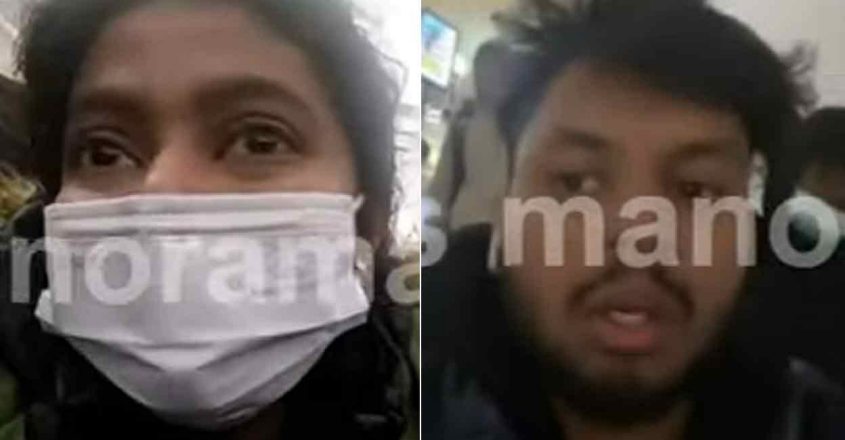
Hasna Iqbal (left) and Muhammed Nahid. Screenshots/ Manorama News
“They may shoot us,” said Hasna Iqbal, a Malayali student stranded in Kharkiv, the northeastern Ukrainian city that is under immense shelling from Russian forces on Wednesday.
Talking to Manorama News from the Vokzal metro station in Kharkiv at 3.45 pm (7.15 pm IST), the second-year medical student in Ukraine said they are unsure of what might happen next.
The student’s response comes hardly an hour after the Embassy of India in Kyiv issued a couple of advisories asking Indian citizens in Kharkiv to exit the city immediately.
The Embassy had reportedly acted in a haste based on Russian inputs. Vladimir Putin’s forces had been launching heavy attacks on the northeastern city the last two days.
“I don’t know what the Indian government wants us to do. Here there is a curfew from 4 pm to 6 am. If we are found outside during the curfew, they will shoot out,” Hasna said, braving tears. “There is heavy shelling and on top of it, we can hear gunfires.”
According to the Ministry of External Affairs, Kharkiv has, possibly, the biggest concentration of Indians in Ukraine. “At least 1,000 Indians are here,” Hasna said.
“Many have left by foot holding Indian flags. We don’t know what has happened to them. Things are getting worse here,” she said.
“Some of us reached the railway station at 6 am and three trains have left since. But not an Indian was allowed to board. They are giving preference to Ukrainians,” said Hasna.
“We’ll be here and hope to be safe, Insha Allah,” she added.
‘They aimed guns at us’
Another Malayali student Muhammed Nahid, who spoke to Manorama soon after, said they have not been contacted by the Embassy yet today.
“We reached the railway station at 5 am. They are boarding Ukrainians. They (Ukrainian forces) point guns at us and fired into the sky. We don’t know what to do,” said Nahid.
“We are still hanging around hoping we may be able to board a train somehow. We are running out of water and food,” he added.
source: http://www.onmanorama.com / OnManorama / Home> News> Kerala / by Onmanorama Staff / March 02nd, 2022
Payal Panwar, a final year medical student who returned to her Kotdwar home in Uttarakhand, said the stranded students need help of the Indian government and the Indian embassy people more.
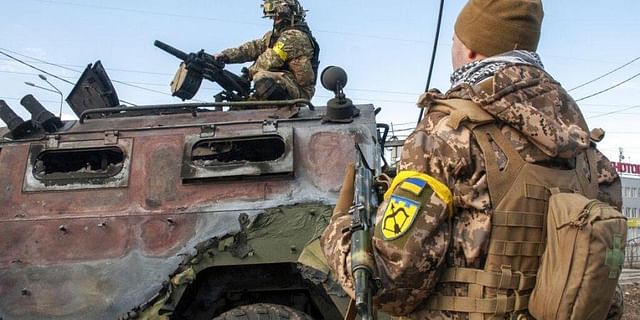
Ukrainian soldiers inspect a damaged military vehicle after fighting in Kharkiv, Ukraine, Sunday, Feb. 27, 2022. (Photo | AP)
Indore / Aurangabad / Dehradun :
Depleting food stocks and long queues for water are adding to the trauma of stranded Indian students in war-hit Ukraine awaiting evacuation amid reports of some being roughed up by security personnel and spending freezing nights out in the open.
As Indian and Ukrainian authorities on Monday described the situation as “complex” and “very difficult” in terms of evacuation of people, the students, joined by their parents, appealed to the Indian government to expedite efforts to evacuate them.
Russia launched its attack on Ukraine last Thursday.
“I want my son in front of my eyes as soon as possible,” said Kamini Sharma, who is praying for the safe return of Vibhor Sharma (22), a resident of Indore in Madhya Pradesh.
Vibhor is pursuing a medical course at the Ternopil National Medical University.
Payal Panwar, a final year medical student who returned to her Kotdwar home in Uttarakhand, said the stranded students need help of the Indian government and the Indian embassy people more while they are still inside Ukraine rather than when they have moved out of the war-torn country.
“The problems end when you cross the borders but while you are inside Ukraine it is really difficult with food supplies running out and no cash in ATMs. Stranded students need the help of Indian authorities while they are still inside Ukrainian borders,” said Payal, who studies in Ivano-Frankivsk city in western Ukraine.
Recounting her ordeal, she said around 60-70 Indian students had to book a bus and also walk a distance of 8-10 km in freezing cold to reach the Romanian border to get out of Ukraine.
Many ATMs could not dispense cash and long queues of men and women waiting for their turn for food supplies were seen at several points, she said.
Though happy and relieved to be reunited with her parents, Payal and her parents are worried about her brother who was still stuck in Kharkiv.
An Indian student who managed to reach the Kyiv train station said Ukrainian guards were not allowing students to board trains and also beating up people and made a fervent appeal to the Indian embassy to evacuate them as soon as possible.
“It’s getting difficult for us to stay here,” Ansh Pandita told PTI, as scores of Indian students, including women, sat huddled together at the teeming Vokzal railway station in the Ukrainian capital, holding a large tricolour aloft so they could be recognised in the crowd and also so no one from the group gets lost.
The group of about 100 students managed to reach the station but no one could board a train.
“Ukrainian soldiers are not allowing us to board the train to Hungary. In fact, they are not allowing any international resident to get out,” Pandita, a student of Taras Shevchenko National Medical University in Kyiv, said over the phone from the station.
“We requested them to at least allow the girls to go but that request too fell on deaf ears.”
The opposition Congress also alleged that Indian students were assaulted by security personnel on the Ukraine-Poland border.
“Students are crying out for help, requesting the Modi government to intervene but to no avail.
We saw a video last night on the Ukraine-Poland border where students are being beaten up,” party spokesperson Ragini Nayak told reporters.
India managed to accelerate its efforts to get its nationals out of Ukraine in the last 24 hours, though the situation on the ground continues to be “complex and fluid” in terms of evacuation of people, the Ministry of External Affairs (MEA) said.
It said a total of 1,396 Indians were brought back home in six flights as part of the evacuation mission and the total number of Indians who have left Ukraine since India issued the first advisory earlier this month is around 8,000.
An estimated 20,000 Indian nationals, mainly medical students, reside in Ukraine.
As the battle for Kharkiv rages on, at least three students from Maharashtra pursuing medicine in the city located in northeast Ukraine, narrated how they had to stand in long queues for a can of water, drink soda, stay in bunkers, and risk their lives to fetch food items amid bomb blasts.
Hritik Bapulohar, a first-year medical student from Palghar, said he had reached Kharkiv city only a couple of months back.
“We can hear bomb explosions as they are taking place in a periphery of around 500 metres from where we are currently staying in Kharkiv. We are struggling even for basic needs. As many as 500 students are staying in two bunkers for the past four days. When the curfew was lifted some of them left the hostel. The situation is worsening fast. I appeal to the Indian government to evacuate us urgently,” he told a Marathi news channel.
Bapulohar’s senior Aishwarya Patil, who hails from Sangli, said drinking water stocks have exhausted at their Kharkiv hostel.
“We are currently using soda water for drinking. After standing in queues stretching up to 2 km, we can get a can of five-litre water. Food prices have tripled since the war began. We are taking huge risks by stepping out to purchase food items. We are hiding as bomb blasts are happening here. During nights, we are given an hour for cooking by authorities. We cook using mobile flashlights,” she said.
Shivanjali Yadav, also from Sangli, said students and other Indians are asked to stay in bunkers in Kharkiv even though we don’t have much food and water with us.
“The students trapped in a bunker in the Kharkiv region are facing difficulties in arranging food, water. Some of them have fallen sick in freezing temperatures, few blankets, and dipping oxygen. There are also no transportation facilities available for them,” said one of the students who returned to Odisha.
Several students wanting to return to India from Ukraine had to spend two days under the sky in severe cold weather at the Romanian border after travelling by bus and then walking for 25 km, a mother of one of the students said.
“My son somehow boarded a bus from Ternopil to reach Romania. But, on the way, he had to get down from the bus due to some problem and the border was still far away,” the Indore-based Kamini Sharma, told PTI.
The woman said her son along with several other Indian students walked for 25 km to reach the border of Romania.
“But, these students, gathered at the Romanian border, had to stay under the open sky for two days in the harsh winter weather as they were not allowed to enter Romania immediately,” she said quoting the phone conversation with her son.
Sharma said she has now come to know that clearance has been given for the entry of these Indian students into Romania on Monday morning.
Ukrainian Ambassador Igor Polikha said his country is helping the stranded Indians and extending assistance in their evacuation notwithstanding the “very difficult” ground situation.
Polikha said he himself reached out to some of the Ukrainian border guarding commanders requesting them to assist the Indians who are trying to exit the country through land borders.
“The situation is very difficult and complex. My resources are limited. We are victims of aggression. Still, we are trying to help people including those from other countries,” he told a media briefing in Delhi.
Polikha said the circumstances at the Ukraine-Poland border crossing are challenging as lakhs of people including diplomats, foreigners and Ukrainian citizens are queuing up to exit the war-hit country.
Trapped inside a bunker in Kharkiv city of Ukraine, Assoiun Hussain (25), who hails from Kerala, told PTI over phone on Monday that he only had a loaf of bread in the last 48 hours.
He said the bunkers are freezing 24X7 and are overcrowded, adding that they also lack basic amenities like water or bathrooms with doors.
“We bought four to five bedsheets and arranged them together for makeshift beds. We are sleeping near railway tracks and on platforms. Our jackets are worn out because it is very cold here. The conditions are quite bad here,” Hussain said.
Indian students trapped in Ukraine have also alleged racial discrimination against them by the locals.
Recently, videos showing Indians being attacked did the rounds of social media.
In one of the videos shot during night time, a student wheeling his suitcase behind him is kicked by a guard in uniform.
In another video, students claimed that they were being thrown off the train parked at a railway station in Kyiv and beaten with sticks.
Manogya Bora (19), who recently returned from the Poland border to Lviv, alleged that Indians are being subjected to racist attacks and students were beaten up.
“People here are telling us to go back to Ukraine. The situation is much worse for boys. I have seen boys being beaten up,” she said.
Talking further about the pitiable conditions in the bunkers, Hussain said, “I received a loaf of bread today. I did not get food yesterday. The Ukrainian authorities are providing food and medicine, including insulin and food for babies. However, priority is given to Ukrainians not Indians.”
“We are only getting what is left after distributing to Ukrainians,” he said.
The student said getting food from outside is not a cakewalk with continuous shelling underway.
Moreover, no food supplies are available in the market, he added.
“There is only one supermarket and there is nothing in there — only juices and water. We have self-respect, we cannot beg them. The Ukrainian authorities allowed us to go out to get fod because some locals complained that because of us, they are running out of food fast,” he said.
“I tried going out today, but ran back as there was continuous shelling,” Hussain added.
Kharkiv is among the Ukrainian cities where the situation is dire with continuous shelling.
Thousands have taken refuge in metro bunkers to protect themselves.
Recently, a nine-storey residential tower was hit, killing an elderly woman, while about 60 people survived after hiding in the basement.
21-year-old Shana Shaji of Kerala said there is continuous shelling.
“It appears as if the building will fall apart,” she said.
Thousands of Indian students are stranded in Ukraine after the Russian Army launched a brutal offensive last week.
With the war now entering the fifth day, the Indian government has been carrying out evacuations of its citizens from Romania and Hungary — neighbouring countries of Ukraine.
When asked about the evacuation process, Hussain said the embassy has asked the students to reach the western border at their own risk.
“It is not possible for us to reach borders. There is heavy shelling outside. In trains and buses, the priority is being given to Ukrainians,” he said.
Gujarat native Ronak Sherasiya, an MBBS student in Ukraine, was meant to take a morning flight out of Kyiv on Thursday, on way to India, but fate has so far brought him only out of the conflict-hit eastern European country.
The 18-year-old, a first year student at the Bukovinian State Medical University (BSMU) in Chernivtsi, a beautiful town in western Ukraine, about 500 km from capital Kyiv, told PTI over phone that he had “finally crossed the Ukrainian border and was now in Romania”.
“I was part of a group of students who travelled in a bus provided by our university. We alighted a little before the border, and then walked. We reached Ukraine-Romania border on February 25 at around 4 pm (local time). There were about 2,000-3,000 people, mostly Indians at the border. It was a massive crowd, and only a couple of MEA officials, so processing took time. After waiting for hours, we finally crossed the border and entered Romania at about 6 am (local time) on February 26,” he said.
“We are now lodged in a sports complex on the Romanian side, but airport is still far away. We have been provided food, and WiFi connectivity has also been provided, but only limited number of people can join at a time. We are biding our time to fly out of Romania to India,” Sherasiya said.
Asked about various videos circulating on social media about alleged misbehaviour by security forces at some border area, he said, “Things are chaotic at the border area.”
“Ukrainian army personnel were asking people to move back, but when the commotion grew, some of the security personnel started firing in the air,” he claimed.
source: http://www.newindianexpress.com / The New Indian Express / Home> Nation / by PTI / February 28th, 2022
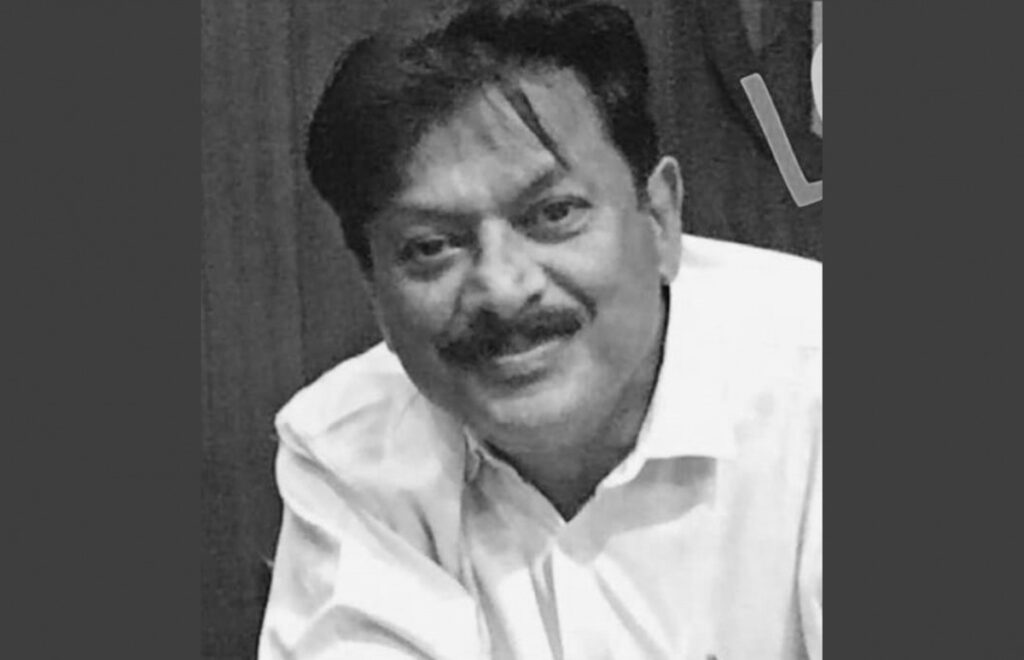
Senior Indian journalist P A Mubarak, 66, passed away on Friday night in hospital. He was undergoing treatment post Covid-19 complications for last two months.
He was the former Qatar correspondent for Chandrika daily in India. He worked with the Ministry of Commerce and was running his own business own company after leaving the ministry.
He was an active presence in Indian community activities over the years and has been general secretary of Kerala Muslim Cultural Centre (KMCC) and Pravasi, Indian expat organisations in Qatar.
He wife Najiya succumbed to Covid-19 in Qatar on April 30.
He is survived by two daughters Nadia Shameen and Fatima Mubarak and sons-in-law Muhammad Shameen (Etisalat, Dubai) and Parvez Vallikkad (Doha, Qatar Foundation).
The burial will be held this evening at Abu Hamour cemtary.
source: http://www.thepeninsulaqatar.com / The Peninsula / Home> Doha Today> Community / October 27th, 2021
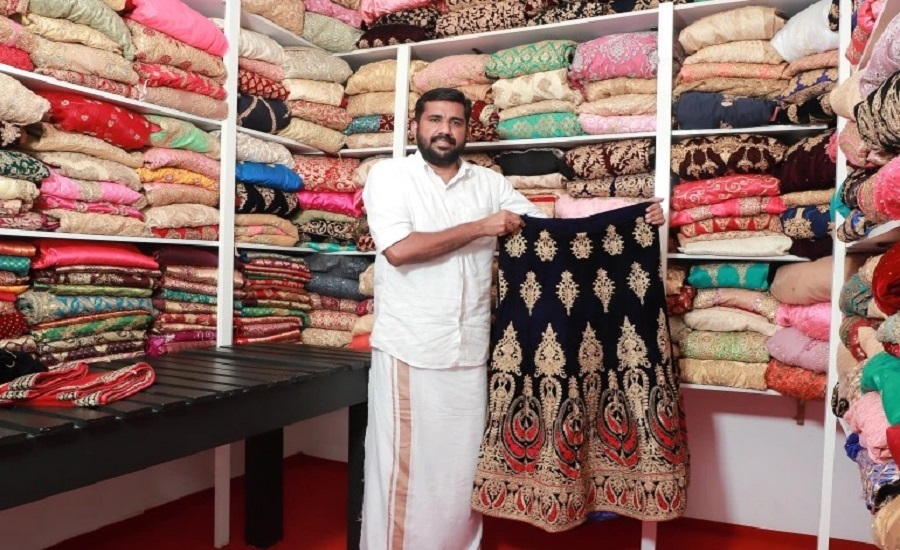
Dress Bank: Started in April 2020 and so far Nasar Thootha has gifted free wedding costumes to around 300 underprivileged brides.
Nasar Thootha runs the charity called “dress bank” in which he collects used dresses from the rich and passes on the same to those in need.
New Delhi :
A Taxi driver from Kerala’s Malappuram is running a charity of providing expensive wedding dresses to the brides unable to afford them for free.
Nasar Thootha, who hails from Thootha village of Malappuram District, runs the charity programme called “dress bank” in which he collects used dresses from the rich and passes on the same to those in need. He took the initiative in April 2020 and so far gifted free wedding costumes to around 300 underprivileged brides.
Last year, Nasar, who returned from Saudi Arabia where he employed in a supermarket, invited the people through the social media to pass on their idle used wedding dresses to him for the cause. As his request spread far and wide, dresses started landing on his doors.
“Wedding attires are all about vanity. They are worn for a few hours and then never come out of the cupboards. Realising this, many families came forward to support our cause,” Nasar was quoted by Al-Jazeera as saying.
He receives all these donated dresses from across the state with the help of friends and charity organisations. He cleans and packs them to keep them into distribution racks.
“With God’s grace,” said Nasar, I personally don’t have to invest any money on the dress bank. I am just a channel through which women who need them the most receive them from kind donors”.
His initiative has met with massive success as he has around a thousand dresses in stock, which range in prices from Rs 3000 to 50000 rupees. Not just Kerala, people from neighboring states of Tamil Nadu and Karnataka also started donating dresses.
“The bride and her parents can directly visit the Dress Bank and select the dress item that she needs irrespective of its cost. We never ask them to return the dress after use,” he told The News Minute.
Talking about the inspiration behind the initiative, Nasar said, “After returning from Saudi Arabia, I was helping state agencies rehabilitate the poor and homeless. During that period, I met many families who were struggling to arrange wedding dresses for their daughters, which are usually expensive. So I decided to help them”.
Nasar, who has four children, parents, and a handicapped sister, was helped by the family members in his work. Initially, he started the work from home. Later, a friend gave him a shop to carry on with his charity work.
Apart from the dress bank, he runs an ambulance for patients. He does not charge those who are unable to rent an ambulance.
source: http://www.clarionindia.net / Clarion India / Home> Features> India / by Team Clarion / January 24th, 2022
Captain has high expectations for his side before opener against Canada in St Kitts
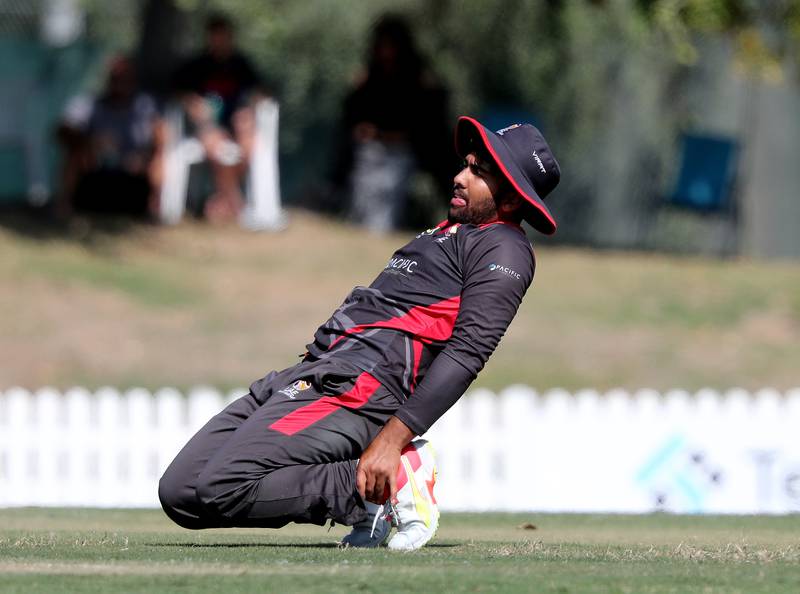
UAE captain Alishan Sharafu in action against Pakistan during the Under 19 Asian Cup at the ICC Academy, Dubai, in December. Chris Whiteoak/ The National
The Covid-enforced dearth of international cricket in 2021 was keenly felt by all of UAE’s leading players, but none more so than CP Rizwan.
The Kerala-born batsman must have thought he had finally cracked international cricket when he scored an uplifting century in a one-day international against Ireland a year ago.
Alishan Sharafu says the UAEare capable of achieving “great things” at the U19 World Cup in the Caribbean.
The national team start their campaign on Saturday against Canada in St Kitts. They then face pool matches against England and holders Bangladesh next week.
The competition marks just the third time the UAE have appeared on the global scale at U19 level. They had free admission as hosts in 2014, before qualifying on the field to play in South Africa two years ago.
A return to the event was sealed in absentia this time. The qualifying process was derailed by Covid, and the UAE qualified on the basis of their record in recent years.
Sharafu, the side’s captain, is one of three players who also represented the country in South Africa in 2020.
The middle-order batsman is grateful to be returning for another crack at the event, and the chance to avenge the disappointment of last time.
The UAE missed out on the business phase of the competition back then after a storm ruined their shot at chasing a win against hosts South Africa.
“It really hurt when a chance of a lifetime of going through to a Super Eight of the U19 World Cup was taken away but fortunately we’ve been blessed with another opportunity and been given another shot at it,” Sharafu said.
“I feel we have a very, very talented group of boys and a more balanced with our bowling being our strength, especially our spin attack.
“A few of us were at the last World Cup and it’s great to pass on that experience to the newer boys and make them want to do well at this one because not many are blessed with this opportunity.”
Although the age-group players regularly train with their senior compatriots, Sharafu is the only player in the U19 squad to have sampled full international cricket so far.
The Kerala-born teen has played six T20 internationals and one one-day international for the national team to date. He is hoping to bring some of that experience to bear when the U19 event gets under way.
“Being around the men’s setup for a while just adds a confidence booster because the challenges here were already simulated or experienced there,” Sharafu said. “That obviously helps to figure and work out solutions to problems at the U19 level.
“What I want to pass on to my players is to just enjoy the opportunity and challenges, and be positive and believe that we together can achieve great things.”
UAE v Pakistan, U19 Asia Cup in December
video
As well as the benefit of experience of Sharafu, Kai Smith and Ali Naseer, each of whom played last time, the players will also be able to lean on the wisdom of Mudassar Nazar. The 65-year-old coach played nearly 200 times for Pakistan, including touring West Indies.
“Most of them are already relishing the chance to rub shoulders against the best in the world,” Mudassar said of his young charges. “So far the confidence is high. Having Alishan and Kai amongst us is a real bonus. Their experience is of immense value.”
The UAE’s two warm up matches on tour included a hefty win over Papua New Guinea , plus a narrow loss to England. Mudassar believes the UAE have a well-balanced side who are capable of improving on their pool-stage exit two years ago.
“I was not around then but I am fairly confident that this bunch of players will be very competitive,” Mudassar said. “I guess our top order batting is settled but we have plenty of allrounders, which provide us with depth.
“Spin bowling is a real asset with at least five who bowl spin. Pitches in West Indies are helpful to spinners. We should be able to defend any reasonable total.”
source: http://www.thenationalnews.com / The National / Home> Sport> Cricket / by Paul Radley / January 14th, 2022
Ali Shan Sharafu smashes first century in the format in the country.
Dubai
Ali Shan Sharafu has a penchant for records, it seems and he seems to be making it a habit.
The 17-year-old, one of the UAE’s rising stars, smashed a century to set a new record in T10 cricket in the UAE.
Sharafu, who has represented the UAE at the Under-19 level and also the senior National team, conjured a ruthless 146 from just 42 deliveries, during which he hit 14 sixes and 11 boundaries.
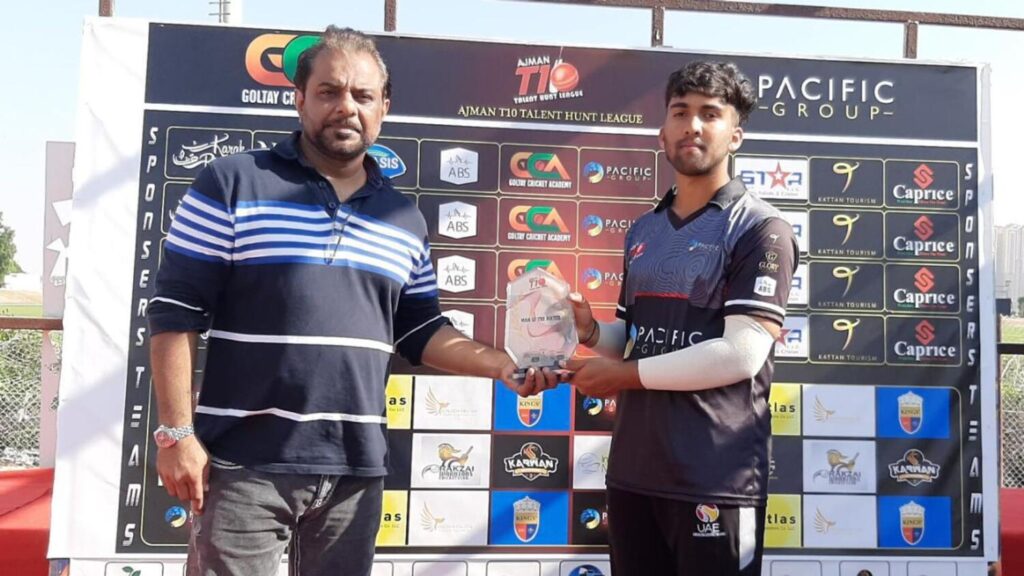
The knock came about in the Ajman T10 Talent Hunt League at the Eden Garden Ajman while representing Pacific Goltay against Spartan.
And Sharafu, who played in the Under-19 World Cup held in South Africa this year, became the first centurion in the format in the UAE. He eclipsed big-hitting Australian Chris Lynn’s mark of 91 from just 30 balls, scoring for the Maratha Arabians against Team Abu Dhabi in the Abu Dhabi T10 League last season.
Sharafu broke his own record in the Under-19 UAE Academy League last month. The Cricket School Of Excellence pupil had cracked 155 against Maxtalent Cricket Academy to put the 151 he had scored against Young Talents Cricket Academy in 2018, to shade.
“It feels really, really nice to have another record,” Sharafu told the Khaleej Times on Friday.
“I actually never imagined that someone could get to a 100 in T10 because the highest in the format was 91 by Chris Lynn. So, I thought that would be the maximum a batsman could get to,” he added.
Sharafu said that his approach to T10 was similar to other formats but added that the batsman had to be in attacking mode from the first ball.
“It was a challenge at the start. It is such a short format and you have to get going from ball one. I always try to be an aggressive batsman so there is nothing changing in the approach but it is just that you have less time to react in a T10 game than other formats,” felt Sharafu.
The Ajman T10 Talent Hunt League, held under the auspices of the Ajman Cricket Council, will see the top performers being referred to the Players Management Council of the Abu Dhabi T10 League. The League is scheduled to be held from January 28, 2021 to February 6.
And Sharafu is hoping for an opportunity to rub shoulders with international stars to aid his cricketing journey.
“It will be really exciting to get an opportunity and you will get to learn from them, just sharing a dressing room with such big names. This is the stepping stone and this is where I wanted to be at,” said Sharafu.
james@khaleejtimes.com
source: http://www.khaleejtimes.com / Khaleej Times / Home> Sports> Cricket / by James Jose / December 04th, 2020
Kanthapuram says most of Waqf properties in Kerala belonged to Sunnis, and most of them were donated to Waqf with the purpose of conducting prayers for the dead and for ‘dars’ in mosques
Kerala Muslim Jamaat (KMJ) president Kanthapuram A.P. Aboobacker Musliyar has demanded that the government initiate a move to salvage the dispossessed Waqf properties in the State.
“As per the Waqf rules, a Waqf property can be used or managed only as per the will of the person who has bequeathed the property for Waqf. Many dispossessions and encroachments have taken place in violation of the Waqf rules,” said Mr. Kanthapuram, who also holds the title of the Grand Mufti of India.
He was inaugurating a State-level campaign by the Jamaat called ‘Vigil is the Strength’ in Thiruvananthapuram on Tuesday.
Mr. Kanthapuram said that most of the Waqf properties in the State belonged to Sunnis, and most of them were donated to Waqf with the purpose of conducting prayers for the dead and for ‘dars’ in mosques.
“Many such properties are now being used against their donors’ will. Many mosques and Waqf properties have been appropriated and encroached upon,” he said.
Pressure exerted
Although Sunnis used to bring the matter to the attention of the authorities, those in the Waqf Board were found to have been exerting pressure on the authorities to take biased decisions, he said, adding that “this cannot be allowed any longer.”
The Waqf Board and its ancillary systems should help retrieve the lost Waqf properties in the State, he said. “At the same time, the board should carry out programmes meant for the development of the Muslim community in the State,” he added.
Senior KMJ functionary Sayyid Thwaha Thangal presided over the function. Minister for Road Transport Antony Raju delivered the keynote address. N. Ali Abdullah presented the subject. Congress leader K.S. Sabarinathan, KMJ secretary A. Saifuddin Haji, Rahmatullah Saqafi, P.A. Mohammed Kunhu Saqafi and Devarshola Abdussalam Musliyar spoke.
source: http://www.thehindu.com / The Hindu / Home> News> States> Kerala / by Staff Reporter / Malappuram – December 15th, 2021
Forgotten amidst waves of bad news, including geopolitical conflicts, environmental disasters and the global pandemic, is the humanitarian crisis caused by a civil war that began in 2014 in the fabled country of Yemen. For several centuries, the southern Arab country was a bridge between Kerala and lands to the west such as West Asia, Africa and Europe.
It was enterprising merchants from modern-day Yemen who began to make use of the monsoon winds to come to Muziris. The word monsoon comes from the Arabic mawsim, which means season. These businessmen lived a pretty globalised lifestyle by splitting their time between the Malabar Coast and southern Arabia at a time when there were no identity cards, passports, visas or even a concept of a nation-state. Some of these Arabs chose to settle down in the Malabar Coast and marry local women.
In a paper for the Indian History Congress in 1976, noted historian S M Mohamed Koya was able to trace the origins of the Malabar Muslim community.
“Some of these Arabs may have come from Hijaz, Oman and Bahrain. However, they were chiefly businessmen from Yemen and Hadramaut and many .Mappila families, particularly those known as ‘tangal’ families trace their origin to this area,” Mohamed wrote.
Interestingly enough, at the time of their migration to India, these merchants probably spoke Hadramautic, a language that belongs to the Old South Arabian subgroup of Semitic. “A large number of Mappila families find their origin in the interior Hadramaut town of Tarim, a wealthy town dominated by Sayyids which was once the intellectual and religious centre of Hadramaut,” Mohamed, who was a professor at the University of Calicut for decades, added.
In the paper, Mohamed stressed the fact that the traders started coming to India well before the advent of Islam, but their presence and established relations with the people of Malabar helped spread the religion in Kerala. “As pre-Islamic traders, the Arabs provided a friendly situation that facilitated the introduction of Islam and as Muslims, they introduced the faith,” he wrote.
Ponnani’s Makhdum family
Ponnani, a historic town that was once a major trading port, is also linked to Yemen. The town, at the peak of its glory, was home to the revered Makhdum family of Islamic theologians. Under Zain-ud-Din Makhdum and his grandson Zain ud-Din Makhdum II, Ponnani became a major centre of Islamic studies and is believed to have attracted students from Java, Sumatra, the Malay Peninsula and Ceylon.
It was also in this coastal town that the Arabi Malayalam or Ponnani script was invented. Since only 28 letters of Arabic orthography were available for 53 phonemes of Malayalam, additional letters established for Persian were used for this script.
Several old Mappila folk songs and works of literature were written in the Ponnani script, which stayed popular among Kerala’s Muslim community until the middle of the 20th century.
It has been on the wane since Indian independence and is taught mainly in a few madrassas in northern Kerala and the Lakshadweep Islands. There is no clear evidence though that this script has a Yemeni connection, but it was the script of choice for the Makdhum theologians.
This brilliant article by Kozhikode-based journalist Nijeesh Narayanan provides insights into the script, which is now in serious peril.
Zain ud-Din Makhdum II’s Tuhfat Ul Mujahideen chronicles the struggles between the people of the Malabar Coast and the colonial Portuguese. The book, originally written in the Ponnani script, describes the fierce resistance put up by the Kunjali Marakkar’s navy along with the Zamorin of Calicut against the Portuguese.
Culinary and cultural impact
There is little doubt that Yemeni elements have given an extra layer of depth to Kerala cuisine. Meen Pathiri and Irachi Pathiri are the results of Malayali and southern Arabic cuisine coming together.
Another dish that found its way from Hadraumat in Yemen to Kerala is Mandi or the famous Malabar Biriyani. Interestingly enough, the Yemeni version of the dish is usually made with chicken or lamb, and not with beef. If the Yemenis did bring Saltah, their delectable stew and the national dish, to Kerala, it did not manage to survive in its original form in the state, although many Malabari families have their own variations with different names.
Professor Mohamed in his paper wrote about how the mingling of the Yemeni immigrants with Malayalis has enriched the society of Kerala. He wrote, “Culturally the Malayalis were as far removed from the Arabs as the high topical scenery of Kerala is removed from the austere landscape of Arabia. But once wedded, the offspring of that union, the Mappilas have remained loyal to both parents.”
Before Yemen slipped into its latest civil war, there was a small and vibrant Malayali community in the country. One can only hope that the geopolitical puppet masters that have brought so much misery to the country allow it to once again live in peace. It is only when peace returns to the country that its millennia-old links to Kerala can be traced and re-established.
(The writer is the author of ‘Globetrotting for Love and Other Stories from Sakhalin Island’ and ‘A Week in the Life of Svitlana’).
source: http://www.onmanorama.com / OnManorama / Home> Lifestyle> Column / by Ajay Kamalakaran / June 28th, 2021