Tag Archives: Positive News of Muslims of Tamil Nadu

Focus on communal harmony

Salem, TAMIL NADU :

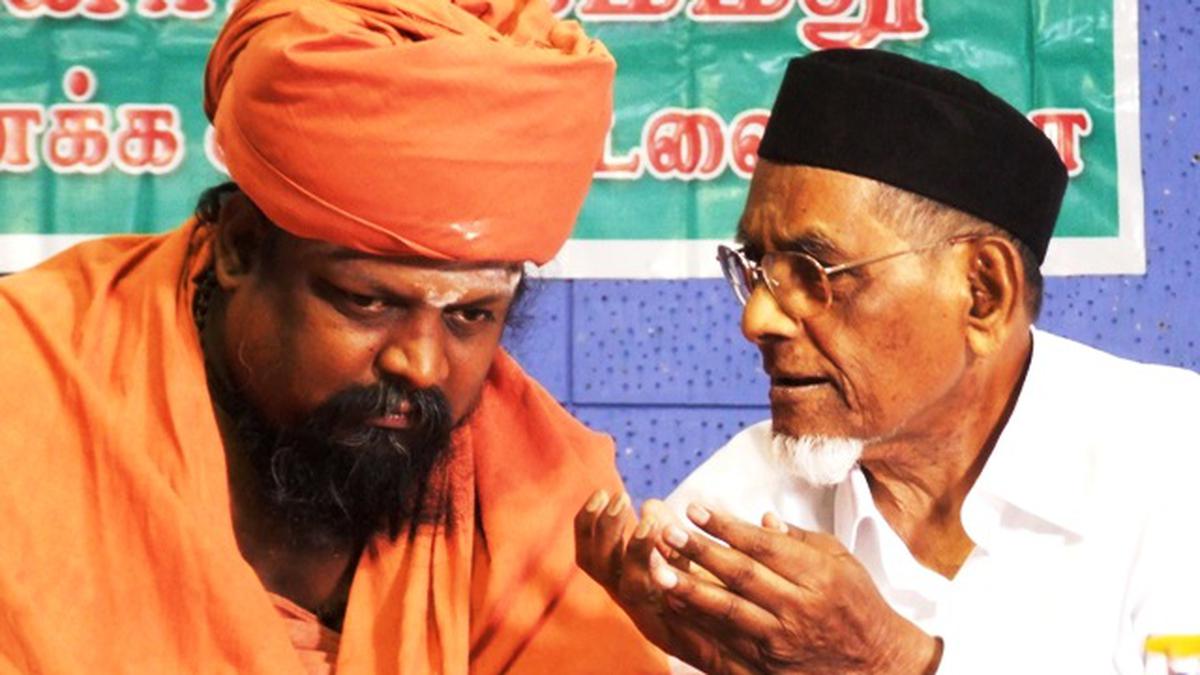
The Margazhi Peruvizha Committee functioning in the city has set a worthy example for communal harmony for other associations to emulate by inviting scholars of other faiths to address the Margazhi and Navarathri festival programmes.

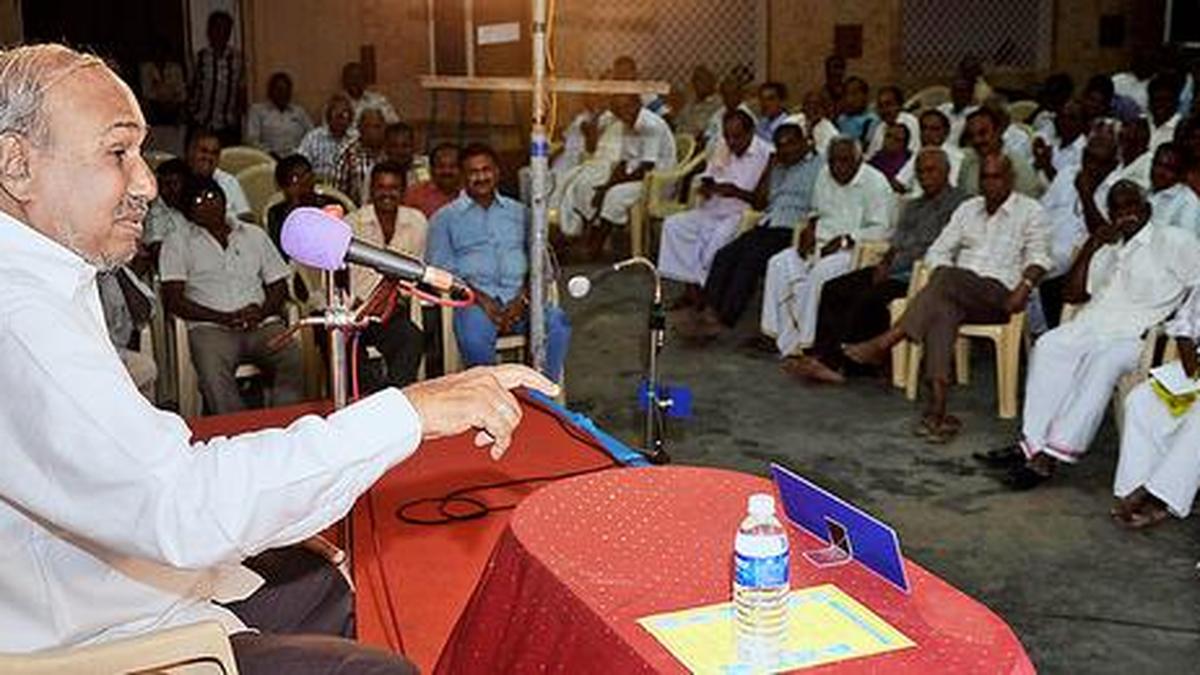
T.M. Abdul Khader, an eminent Tamil scholar and former Head of the Department of Tamil, Islamia College, Vaniyambadi, is a regular at the Margazhi and Navarathri festival programmes here for the past 15 years at a stretch, along with the scholars of other faiths.

The Margazhi Peruvizha Committee has been organising special discourses, lecture programmes and poets’ symposium etc for the past 33 years without any break during the Margazhi and Navarathri festivals.

The committee members have been ardent followers of Vallalar, a famous Tamil saint and one of the greatest poets, who endeavoured to eliminate caste and promote a society sans religious and caste considerations.

The committee has been organising programmes to create awareness on the religious practices which had negative impact on the entire society. It invited scholars of all religious faiths from across the country and also from Sri Lanka to address its members.

According to A.K. Palaniappan, president of the Margazhi Peruvizha Committee, the Navarathri festival is celebrated for 10 days and the Margazhi festival for about a month every year.

The committee has made it a point to invite like-minded scholars from all faiths to participate in their programmes. “Kavikko” Abdul Rahman and Periyar Dasan, who later converted to Islam, have addressed the Margazhi gatherings in the past.

Mr. Palaniappan said that Prof. Khader has been attending the Margazhi and Naravathri programmes for the past 15 years. His lectures always evoked good response and the jam-packed hall on Saturday when he spoke on the topic ‘Bothimarathu Kilaiyil Poonthamizh’ (Tamil on the branch of Bothi tree) was an ample proof of his popularity with the local audience, he said.

Prof. Khader also presided over the poets’ symposium on the topic ‘Kodugalal or Kolam’ on Sunday evening.

Mr. Palaniappan said Jegath Gaspar Raj, a Chennai-based Catholic priest and founder of the “Tamil Maiyam”, will be addressing the gathering on January 5.

Politicians including Vaiko and Nanjil Sampath have also addressed these festivals.

Another highlight of both the festivals organised by the committee is the equal importance given to women. Many women scholars are regular in delivering special addresses at these meetings.

Uma Devarajan of Salem, N. Vijayasundari of Tiruchi, Devi Gunasekaran of Salem, Desa Mangaiyarkarasi of Chennai, and M. Uma Maheswari of Coimbatore are among the list of speakers for this year’s meetings.

source: http://www.thehindu.com / The Hindu / Home> Today’s Paper / by Syed Muthahar Saqaf / January 02nd, 2017

Standing tall with the new minaret

Salem, TAMIL NADU :

The latest addition at the historic Jamia Masjid, Salem, is the nine-tier tower

The historic Jamia Masjid on the southern banks of River Tirumanithar in the heart of Salem city has got a 135 ft. tall ‘minaret.’ This is said to be one of the tallest minarets to be constructed in a mosque in South India in the recent past.

The minaret is a significant feature of mosques across the world, and is one of the earliest characteristics of Islamic architecture. The ‘muezzin,’ a person who announces the call of prayer, usually delivers the ‘azaan’ from the minarets.

Jamia Masjid in any town or city is considered as the chief mosque. They are known as congregational mosques, as Muslims gather in large numbers to offer prayers on Fridays and during Ramzan, Bakrid and other festivals.

Rich past

Jamia Masjid in Salem city, standing on about 1.5 acres of land, has a rich past. It is one of the oldest mosques in the state and was said to have been built by the Mysore ruler Tipu Sultan (1750 – 1799), popularly known as the Tiger of Mysore, more than two centuries ago. Tipu Sultan, who had visited the Salem region on various occasions, is said to have offered prayers in this mosque. He has also donated inams (properties) for this mosque. The British regime, which understood the importance of this Jamia Masjid, also extended assistance to this mosque and gave ‘inams’.

This Jamia Masjid is built on the lines of the North Indian mosques. The prayer hall of this grand mosque stands on an elevated ground and is decorated with tall, elaborate granite pillars. On Fridays, this masjid gets more worshippers from the town and neighbouring areas of Salem.

According to S.R. Anwar, the Muthawalli of the Jamia Masjid, the minaret has nine small tiers ranging between 10 ft. and 20 ft. The cornice (metal kalasam), atop the minaret was made in Kumbakonam. A silver cone and crescent decorate this metal structure.

Anwar says that this Jamia Masjid plays a stellar role in promoting communal harmony in the entire western belt and has been held in high esteem by everyone.

S. Veerappan, an expert architect from Kamanayakkanpatti, led a team which was in-charge for the construction of this minaret. His name is engraved on the inaugural stone. “It is a great honour that my name is on the tablet stone of the mosque,” says Veerappan. “This highlights the mutual respect and goodwill that the people from different communities have for each other,” he adds.

The new minaret was inaugurated recently by A. Anwar Raajha, MP and Chairman of Tamil Nadu Wakf Board, in the presence of MPs V. Panneer Selvam, P.R. Sundaram and K. Kamaraj.

source: http://www.thehindu.com / The Hindu / Home> Today’s Paper> Features> Friday Review / by Syed Muthahar Saqaf / July 06th, 2018

Tamil scholar Nainar Mohamed passes away

Tiruchirapalli, TAMIL NADU / Texas, U.S.A :

Thavathiru Kundrakudi Ponnambala Adigalar having a word with C. Nainar Mohamed (right). File Photo: R.M. Rajarathinam

Renowned Tamil scholar, writer and former Principal of Jamal Mohamed College, Tiruchi, C. Nainar Mohamed passed away at his daughter’s residence at Texas in USA on Wednesday night. He was 85.

Popularly known as ‘Perum Pulavar’, a title conferred on him by late Kundrakudi Adigalar, Nainar Mohamed served as the Head of the Department of Tamil of Jamal Mohamed College for a record 32 years, and its Principal for four years in the 1980s. After retiring from the college service, he served as professor at Tamil University, Thanjavur for five years.

 He launched the Tamizhaga Pulavar Kuzhu along with late K.A.P. Viswanatham and served as its secretary for 28 years. He also set up the Islamia Ilakkiya Kazhagam. A leading figure in Tiruchi Tamil Sangam, he continued to remain as its deputy Minister till now.

The Madurai Kamaraj University honoured him with ‘Tamil Chemmal’ award and the Ulaga Tirukkural Peravai with ‘Tirukkural Neri Thondral’ and ‘Kural Gnayiru’ awards. Through the Islamia Ilakkiya Kazhagam, he organized five International Tamil Literary conferences, which brought to light the richness of the Islamic Tamil literary works to the world. 

A regular in world Tamil conferences, he has authored many books.

He is survived by wife Hasina Nainar, four sons and a daughter.

source: http://www.thehindu.com / The Hindu / Home> News> Cities> Tiruchirapalli / by Syed Muthahar Saqaf / July 24th, 2025

Dr Ameer Althaf’s ‘Athaatchigal’ Book Release Next Sunday @ Podanur

Coimbatore, TAMIL NADU :

From Accounts Manager to Accomplished Author

Former NTC official Ameer Althaf, who played with numbers as accounts manager at the central government organisation had a passion for penning books.


And his creativity came to the fore with his maiden book on 300 year long history of Coimbatore Muslims in 2014.


Taking the next step, Ameer took up intensive research on Holy Quran. His seven year effort bore fruits with his four part book ‘Athaatchigal Thirukkuran Kalai Kalanjiam’ which has lots of interesting info which he collected during his indepth study visiting universities in Mecca, Medina and Malaysia. No doubt, this creative work is his magnum opus. Moreover, this book is a must in the book shelf of every household.


Retired apex court judge F M Ibrahim Kalifullah and former Madras High Court judge K N Basha will release the book in the presence of leading luminaries of Coimbatore and experts in their chosen domain from across the globe.


The event sponsored by Dhaanish Ahmed Institute of Technology (DAIT) and Al Azhar Educational Trust is to be held at Podanur Thendral Mahal on Oct 20 evening.


Interestingly, Ameer’s research papers on Holy Quran were presented and published in global forum like Umma-al Qura University in Mecca, King Fahad University in Madina, University Malaya, Islamic Science University Malaysia besides universities in Istanbul, Jordan, Qatar, Mali.


His four decade central government service and three decade research on Holy Quran made him go places across the globe. Significantly, he became to be known as International Holy Quran researcher.


Others who are part of the event includes Moulavi Alhaj M A Abdur Rahim, president, Coimbatore-Nilgiris-Tirupur district Jamathul Ulema Sabai, Moulavi Alhaj M A Mohammed Imdhadi, president, Coimbatore city Jamathul Ulema Sabai, social activist Aloor Shanavas, Coimbatore district United Jamaath president Alhaj A R Basheer Ahamed, Tamil Nadu Haj organisors association president Alhaj A Mohamed Rafeek, Iqra Educational Trust president Alhaj H E Iqbal Sait, Project Manager in Kuwait Haji M A Azad will address the audience at the book release event.


Himayathul Muslimeen Sunnath Jamaath, Podanur secretary Haji KTS Riyas Kapoor will propose the vote of thanks.

Other dignitaries who will speak at the event include Holy Quran translator Prof Mohamed Khan baqavi, TN state Jamathul Ulema deputy general secretary Moulavi Alhaj K M Ilyas Riyaji, Chennai Anna Salai Makkah Masjid chief imam Moulana M Mohammed Mansoor Kasimi, Madras University HoD Arabic, Persian and Urdu Dr A Zakir Hussain Baqavi and senior network consultant, Abudhabi Dr Mohamed Ibrahim.

source: http://wwwkovaimetro.in / Kovai Metro / Home> Coimbatore / by Shefa Rafi / October 13th, 2019

From Forest Guard to DSP, Lalgudi Muslim Youth Shines

Sathamangalam (Lalgudi Block, Tiruchirapalli ), TAMIL NADU :

Achieving his childhood dream of becoming a police officer became a reality as to the quote of American journalist and author William F Longgood – “Dreams and Dedication are a powerful combination.”

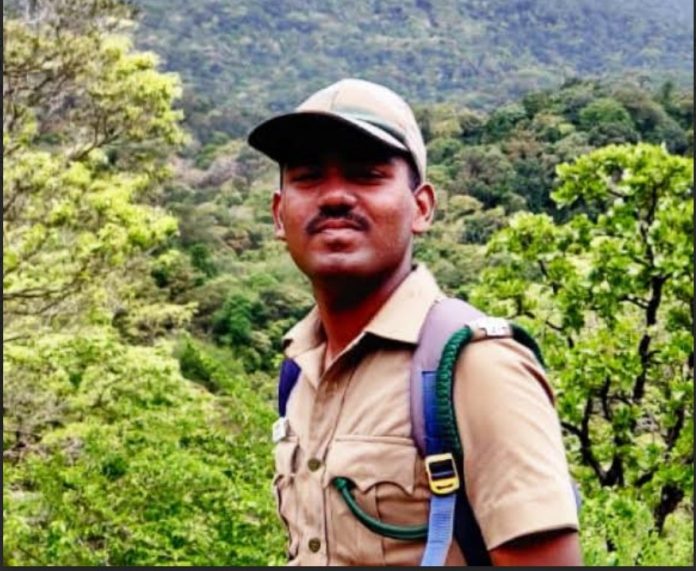
Meet 28-year-old S Mohamed Siddiq, serving as a Forest Guard in the Tamil Nadu Forest and Wildlife Crime Control Bureau (WCCB) based in Rockfort city, who cracked the TNPSC Group I services exam to get his dream job of DSP.

Thanks to Coimbatore based Nature Conservation Society (NCS) president N I Jalaluddin for sharing the info about the promising youngster from Sathamangalam village in Lalgudi, who made the Tamil Nadu Forest Department proud after he romped home to victory in getting a gazetted post in the Tamil Nadu Police Department. Truly speaking, he is all set to don the role of safeguarding the public while enforcing laws similar to his present job of preventing illegal wildlife trade and coordinating the law enforcement agencies besides significantly contributing to the preservation of biodiversity.

Sharing his happiness with this scribe, Siddiq said that he had his school education at Government Higher Secondary School in his native Lalgudi and added that he completed his BE Mechanical from Anna University Trichy campus (2017 batch). Without giving any second thought, he joined the Tamil Nadu Forest Department as Forest Guard and is serving for the past seven years. However, his mind revolved around getting into the police department.

Making his maiden attempt for Group I services through TNPSC in 2019, Siddiq said that he miserably failed and added that he made his second try only to get disappointed. Sadly, he missed in his third attempt too. Putting up a brave face, he tried his fourth attempt with confidence. Hard work with dedication fetched him fruitful results in clearing the TNPSC Group I services exam with Rank 91.

Asked about the interview, he said that the duration was for forty minutes with four members of the board asking him why he chose when he was already in a department service. To his preferred choice of DSP post, he was asked how he would handle a riot like situation for which he gave an impressive answer. Besides, questions related to new laws, Russia-Ukraine war, Saivam and Vainavam featured in the interview.

His parents – Shahul Hameed who is actively involved in farming in Sathamangalam village and mom Tajunnisa, a home-maker – while not to speak of his spouse Kowsar Firdous, a BSc computer science grad were on cloud nine after coming to know about his success in TNPSC Group I services. Likewise, his sister Shamim and Shabir expressed happiness for emerging victorious in getting his dream job of DSP.

While filing this story, this scribe got an info about a Forest Guard Himanshu Pant in Uttarakhand cracking the Uttarakhand Subordinate Service Selection Commission (UKSSSC) as English Language Teacher in the Government school. On the contrary, Pramod from Mandya District, who aspired to become a lecturer after completing his MA Political Science from University of Mysore in Karnataka landed in the post of Forest Guard as he failed to get his dream job. Great are those who, despite being armed with a degree, choose to get into the forest department as Forest Guards. And they kept trying even while serving with confidence to excel in their line of interest.

source: http://www.radiancenews.com / Radiance News / Home> Features> Focus / by M Rafi Ahmed / Radiance News Bureau / May 11th, 2025

Mushawarat ex-president Navaid Hamid honoured with Qaide Millat Award

NEW DELHI :

Navaid Hamid

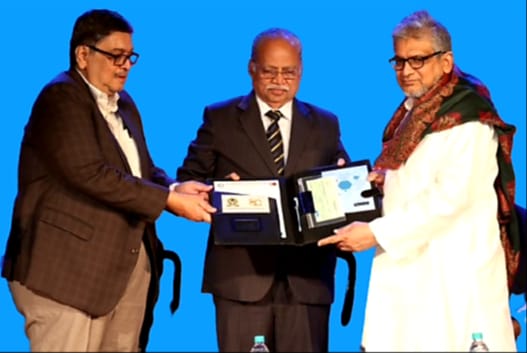
Former president of the All India Muslim Majlis-e-Mushawarat (AIMMM) and general secretary of the Movement for Empowerment of Indian Muslims (MOEMIM), Navaid Hamid, honoured with the Qaide Millat Award.

The award was presented by former Madras High Court judge, Justice KN Basha at an event held at a grand ceremony at the Music Academy on Saturday.

Renowned human rights activist John Dayal, and founder of the Sadbhavana Mission, distinguished scientist Professor Vipin Kumar Tripathi, were also honoured by the southern Indian institution, Qaide Millat Educational and Social Trust (Chennai).

The annual award is given for probity in political/public life and consists of a certificate of appreciation, a cash prize of five lakh rupees, and shawl.

Congratulating the awardees on the occasion, Justice Basha said he felt honoured and privileged to present the awards to individuals who serve as beacons of light amidst the darkness of the current environment while M G Dawood Miyakhan, general Secretary of the trust, said “the awardees are based on their unblemished track record of integrity in political and personal life in India”.

Retired CSI Bishop Dr V Devasagayam said while facilitating the awardees “we are here to recognise your services, support your initiatives and to wish that you continue your fight in spite of all the odds”.

The event was presided over by the president of the Qaide Millat Trust, Qazi Dr Salahuddin Muhammad Ayub, while announcement the awards and introduction of awardees were made by the Trust’s general secretary.

On this occasion, Dr S Sadiq, former Vice-Chancellor of Madras University, and retired CSI Bishop Dr V Devasagayam, were also honoured. General Secretary Dawood Miyan Khan, Treasurer S Mushtaq Ahmed, and Principal of Qaide Millat College, Dr MA Thawab, presented certificates of honour, prize, and shawls to the dignitaries.

The announcement of the 2024 Qaide Millat Award was made in February 2025. The award jury comprised Dr Vasanti Devi (former Vice-Chancellor), Dr V Devasagayam (former Bishop), Paneerselvam (Readers’ Editor, The Hindu), and Dawood Miyan Khan (general secretary, QEST).

Born on June 23, 1963, in the walled city of Delhi, Navaid Hamid has been associated with the All India Muslim Majlis-e-Mushawarat since the late 1980s. He served as its President from 2016 to 2023. A graduate in English from Zakir Hussain College, University of Delhi, Navaid Hamid has been actively involved in political and social work since his student days at the university.

During the UPA Government (2004–2014), he was appointed as a member of the National Integration Council for two terms. He is the founding secretary of the South Asian Council for Minorities (SACM) and also serves as the national general secretary of the Movement for Empowerment of Muslim Indians (MOEMIN). He has worked actively to support and uplift marginalized communities.

In 2008, at the Global Minorities Meet held in New Delhi and attended by delegates from 18 countries, Navaid Hamid was elected General Secretary of the Global Minorities Forum for Justice and Peace.

Previously, the Trust has presented the Qaide Millat Award to eminent personalities, including Teesta Setalvad and Nilakanoo (2015), N. Shankariah and Syed Shahabuddin (2016), Manik Sarkar and Muhammad Ismail (2017), Vice President of India Dr. Hamid Ansari and Aruna Roy (2018), AG Noorani and Thiru V mavalavan (2019), Harsh Mander and Bilkis Bano (2020), Dr Irfan Habib and Samyukt Kisan Morcha (2021), Thiru Veeramani and The Wire news (2022), N Ram (The Hindu) and Dr Abu Saleh Sharif.

The Qaide Millat award is presented in memory of Qaide Millat Maulvi Muhammad Ismail, a selfless servant of the community, freedom fighter, and a distinguished national leader. His significant contributions to the development of the country and community after independence are widely acknowledged.

As a member of the Constituent Assembly, a Member of Parliament in both the Lok Sabha and the Rajya Sabha, and as the founder-leader of the Indian Union Muslim League, his services are considered unforgettable. He was also among the founding members of the All India Muslim Majlis-e-Mushawarat (AIMMM).

The Qaide Millat Trust instituted this award on the 40th death anniversary of Maulvi Muhammad Ismail, and it is awarded annually to distinguished individuals active in public life.

source: http://www.theokhlatimes.com / The Okhla Times / Home> Local / by The Okhla Times / May 01st, 2025

Cool way to show warmth

Chennai, TAMIL NADU :

In addition to food donations, the initiative also features a charity counter right next to the fridge.

A sign reads ‘Ayyamittu Unn’, a call to “share the food with the needy before you eat”.(Photo | P Ravikumar, EPS)

Chennai :

The lights flicker on as the fridge door opens. A cool burst of air escapes, revealing neatly arranged packets of home-cooked meals, biscuits, and bottled water—the humble bounty waiting for the city’s hungry. There’s no cashier. No question asked. Only a sign reading ‘Ayyamittu Unn’, a call to “share the food with the needy before you eat”.

Launched in 2017 by Dr M Issa Fathima Jasmine, a Chennai-based dentist, ‘Ayyamittu Unn’ has evolved into the city’s very own food-sharing revolution in the last eight years. What started as a single community fridge in Besant Nagar has now spread to 11 locations across Chennai, from Broadway and Mylapore to Kodambakkam, and the most recent addition in Saligramam’s Kaveri Rangan Nagar.

The concept is brilliantly simple: Place a refrigerator in a public, accessible location, allow anyone to donate surplus food and let those in need take what they require. Open daily from 7 am to 8 pm, these fridges accept sealed, fresh, and wholesome items. To ensure safety, strict guidelines are in place: Only packaged or freshly cooked food is allowed, while raw meat, seafood, eggs, alcohol, and half-eaten meals are strictly prohibited. The focus is on ensuring that generosity meets safety without compromise.

In addition to food donations, the initiative also features a charity counter right next to the fridge. Here, residents can donate books, toys, clothes and other essential items for those in need. A register is meticulously maintained for transparency, while a security guard oversees the process to ensure that both food and other donated goods remain in proper condition and are not misused.

In Kaveri Rangan Nagar, it’s a full-blown community affair. The fridge was set up with the active involvement of Dr Sulaikha, a gynaecologist and daughter of social activist MD Ghani. Ghani, who dedicated his life to improving local infrastructure, left behind a legacy of community service that Dr Sulaikha now honours.

In one modest home on KK Salai, a family has generously provided a portion of their premises to house the refrigerator and manage its daily upkeep. Local businesses, too, have thrown in their support; a nearby hotel contributes six breakfast packets every morning, while residents routinely drop off lunch boxes, biscuits, and even occasional sweet treats.

Community effort ensures that the fridge which is affectionately dubbed ‘Akshaya Patra’ never runs empty (Photo | P Ravikumar, EPS)

For many, the fridge is nothing short of a lifeline. “I get food here at least three days a week. My work hours are unpredictable, so I can’t always be here, but when I do manage to come, it saves me from having to buy meals. Earlier, I mostly relied on roadside vendors—this is safer and more reliable,” says R Rengaraj, a loadman working at the Saligramam market. For Rengaraj, and countless others like him, the fridge not only reduces daily food expenses but also provides the reassurance of a proper meal in a city where hunger often goes unnoticed.

Beyond its practical benefits, ‘Ayyamittu Unn‘ taps into something deeper – a sense of community. The initiative is backed by the Public Foundation (an NGO founded by Dr Jasmine), which handles the logistics and coordination. Dr Issa Fathima and Dr Sulaikha sum it up succinctly.

(Photo | P Ravikumar, EPS)

“‘Ayyamittu Unn’ is not just about food – it’s about trust and a collective commitment to social responsibility. Small acts of kindness can create a huge difference.” Community effort ensures that the fridge — affectionately dubbed Akshaya Patra after the legendary vessel that never runs empty — continues to serve as a reliable source of nourishment.

This is a vibrant example of how local solutions can effectively tackle issues like food waste and hunger simultaneously. In a country where a significant amount of edible food is discarded daily, redirecting surplus to those in need is also a step towards environmental sustainability.

As the initiative continues to gain momentum, there are plans to replicate the model in other parts of the city and even in neighbouring districts. This is not charity with strings. It is not aid from a distance; it is how one neighbour looks out for another.

(Edited by Adarsh TR)

source: http://www.newindianexpress.com / The New Indian Express / Home> Good News / by S Kumaresan / edited by Adarsh TR / April 06th, 2025

Indian teenage boy speaks, writes and reads 400 languages

Chennai, TAMIL NADU :

Mahmood Akram’s journey continues to inspire linguists, educators, and students worldwide, proving that dedication and passion can break barriers in education and learning.

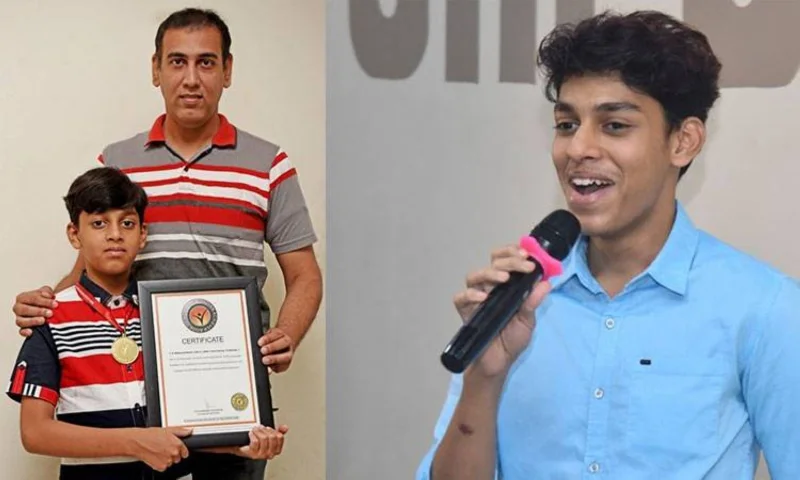
Nineteen-year-old Indian Muslim boy, Mahmood Akram, has astonished the world with his linguistic abilities and achieved what many consider impossible.

With the ability to write, read and type in 400 languages and speak 46 fluently, the Chennai-based Muslim teenager’s journey into languages began at an early age, guided by his father, Shilbee Mozhippriyan, who himself speaks 16 languages, according to media reports.

The young Indian boy believes English isn’t enough for global communication & wants to inspire people of Tamil Nadiu to learn more languages.

Akram’s extraordinary talent became evident when he learned the English alphabet in just six days and Tamil’s 299-character script in three weeks—a feat that typically takes months.

Encouraged by his father, a linguistics expert, he continued to explore languages, surpassing even his mentor’s knowledge by the age of six.

At just eight years old, Akram set a world record as the youngest multilingual typist. By 12, he had impressed German linguists by demonstrating fluency in 400 languages, securing another world record.

“I had struggled because I did not know the language of a particular state or country when I had to move to places like Israel, Spain, due to my job,” shares Shilbee, who also owns a doctorate in cognitive psychology among other degrees.

Akram’s journey continues to inspire linguists, educators, and students worldwide, proving that dedication and passion can break barriers in education and learning.

His passion for languages led him beyond conventional schooling. Unable to find suitable programmes in India, he pursued online studies through an Israeli institution, focusing on Arabic, Spanish, French, and Hebrew.

Inspired by his growing social media following, Akram began teaching languages at 14 through YouTube.

By 2024, he had conducted language workshops in Myanmar, Cambodia, Thailand, and Indonesia, sharing his expertise with students worldwide.

He is pursuing a BA in English Literature and a BSc in Animation at Chennai’s Alagappa University while also studying linguistics at the UK’s Open University.

Despite his academic commitments, he remains dedicated to refining his fluency across languages.

As Akram recalls, “My journey started at the age of four.” “My parents began teaching me Tamil and English alphabets, and I mastered the English alphabet in six days. They were astonished.” His aptitude didn’t stop there. He learnt the 299 alphabets of Tamil in just three weeks, a task that typically takes months.  

source: http://www.gulftoday.ae / Gulf Today / Home> Culture / by Gulf Today Report / February 19th, 2025

The birth of a bank

Chennai, TAMIL NADU:

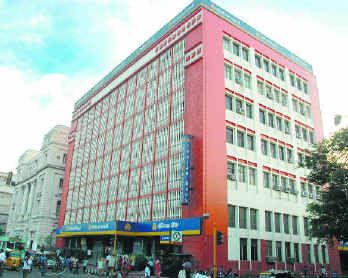
A view of the Indian Bank headquarters on Rajaji Salai / Photo : R. RAGU

The Indian Bank recently launched its commemoration of its 100th year of business. But this month’s centenary is that of the collapse of Arbuthnot & Co., out of whose ruins there arose the Indian Bank.

The story of Arbuthnot’s and the bank that it ran has been narrated in this column before. Late last year, as the centenary year began, one part of it – the legal proceedings that followed – were narrated in detail in “the first full-length book on this spectacular financial catastrophe”, The Fall of Arbuthnot & Co., by Dr. Rangaswamy Srinivasan (EastWest Books). Today, I recall some of the key dates involved in the death of one bank and the birth of a new one.

It was on October 20, 1906, that P. Macfadyen, Arbuthnot’s correspondent and associate in Britain, committed suicide. On October 22, Arbuthnot’s petitioned the court to be declared insolvent and The Hindu reported that “a regular panic had taken hold of (the disappointed Creditors) and a rush was made to the High Court… “

V. Krishnaswami Aiyer, a young vakil at the time, taking his cue from a letter that had appeared in The Hindu, got together eight other like-minded persons and on November 2, 1906, they sent out a circular inviting the public’s views on the possibility of starting “a Native Bank in Madras”. Encouraged by the response they got, they called a public meeting on December 2 that was attended by 28 of the leading citizens of Madras. Out of these and subsequent deliberations emerged The Indian Bank Limited, registered on March 5, 1907 and opening its doors in Parry’s building on August 15th that year.

That Indian Bank was the second Indian bank to be established in Madras.

The first, the Madras Central Urban Cooperative Bank, was established on September 16, 1905. Other Indian banks, however, had been founded in the Madras Presidency before these two. They included the Tanjore Permanent Fund, now the Thanjavur Bank, started in 1901; the South Indian Bank, started in Tirunelveli in 1903; and the predecessor of the present City Union Bank, Kumbakonam, in 1904. Also predating the Indian Bank were the Canara Banking Corporation, Udipi, now the Corporation Bank, and the Canara Hindu Permanent Fund, now the Canara Bank, both started in 1906.

The eight who signed the circular Krishnaswami Aiyer drafted were :

H. Mohamed Abdul Azeez Badshah Saheb, Senior Partner of the firm with the same name and Hony. Consul for Turkey; Muraleedoss; T. Seetharama Chetty, Senior Partner of Moses & Co.; M.A. Kuddus Badshah Saheb; M. Jamal Mohideen and Co.; V. Bashyam Iyengar, High Court vakil and a former Judge of the Court; and P.R. Sundara Iyer, High Court vakil.

When the Bank was floated, its first Directors included four of these signatories – Seetharama Chetty, Azeez Badshah, Muraleedoss (Ramdoss) and Krishnaswami Aiyer.

Their fellow Directors were Lodd Govindoss, C.P. Ramaswami Aiyar, a High Court vakil at the time; Dewan Bahadur M. Adinarayanan Iyer, retired Deputy Settlement Commissioner; and two Nattukottai Chettiars, Rm.M.St. Chidambaram Chettiar and Dewan Bahadur S.Rm.M. Ramaswamy Chettiar, representing the community which substantially funded the Bank.

Ramaswamy Chettiar was the elder brother of Annamalai Chettiar who was to receive the title Rajah and who was to play a major role in the bank in his later years.

Of the 74 Directors of Bank up to nationalisation in 1969, thirty were Nattukottai Chettiars.

source: http://www.thehindu.com / The Hindu – The Metro Plus Chennai, Online edition / October 09th, 2006

Business Badshas

Chennai, TAMIL NADU :

The trade, commerce, politics, and history of south India have been shaped by several powerful individuals and families.

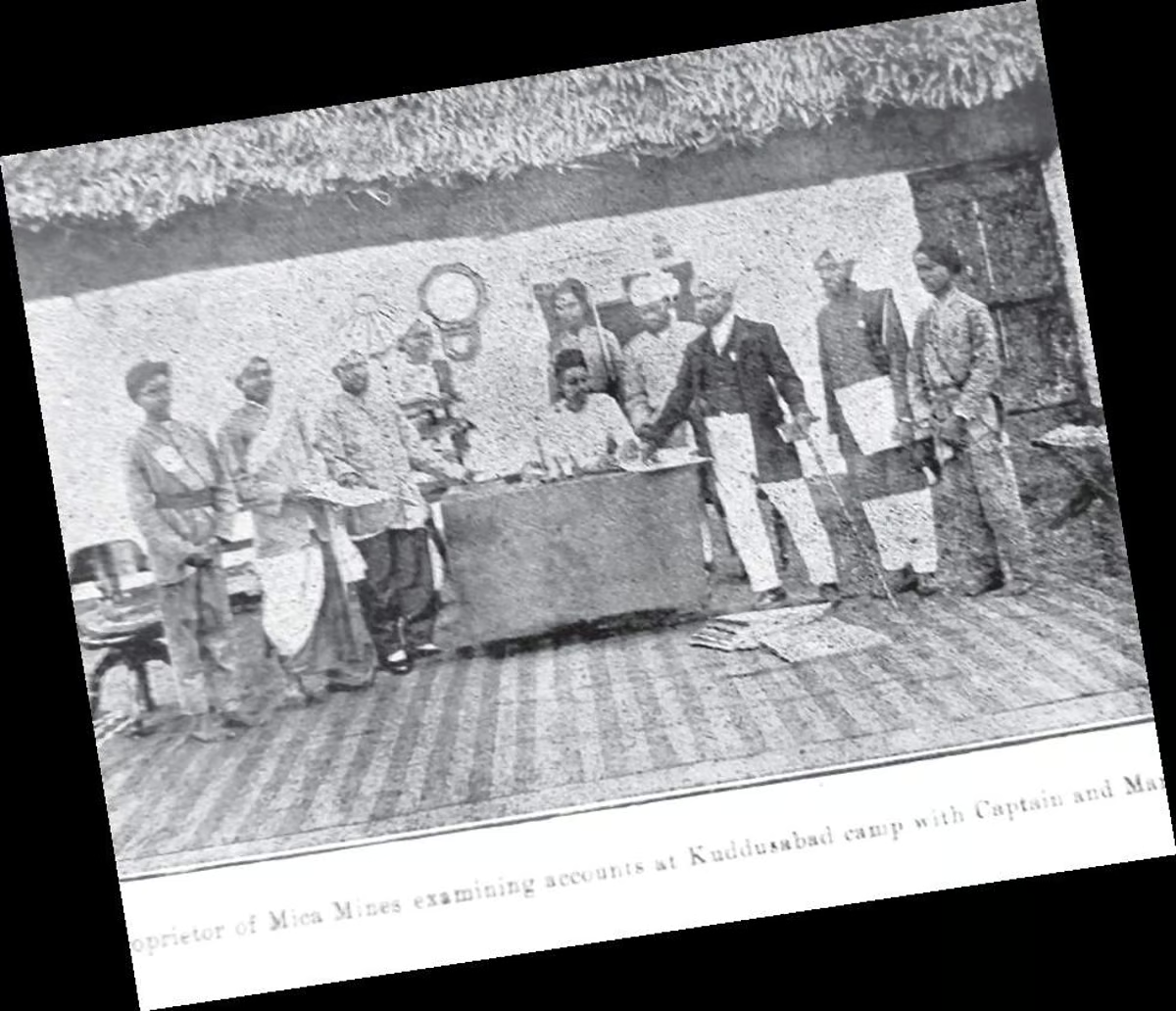
The proprietor of the mica mines examines the accounts at the Kuddusabad camp

Chennai :

The trade, commerce, politics, and history of south India have been shaped by several powerful individuals and families. Among the names that made it to the list, the Badsha family — members of the Urdu Muslim mercantile elite — were one of the leaders in extending business relationships to places like Arabia, Egypt and Japan.

In a tete-a-tete with the fourth-generation descendants, Faiz Badsha Sayeed and Faud Badsha Sayeed, we find out more about perhaps one of the oldest families to establish a strong base in Triplicane, their life in the Madras Presidency and their omnipresence in south Indian history.

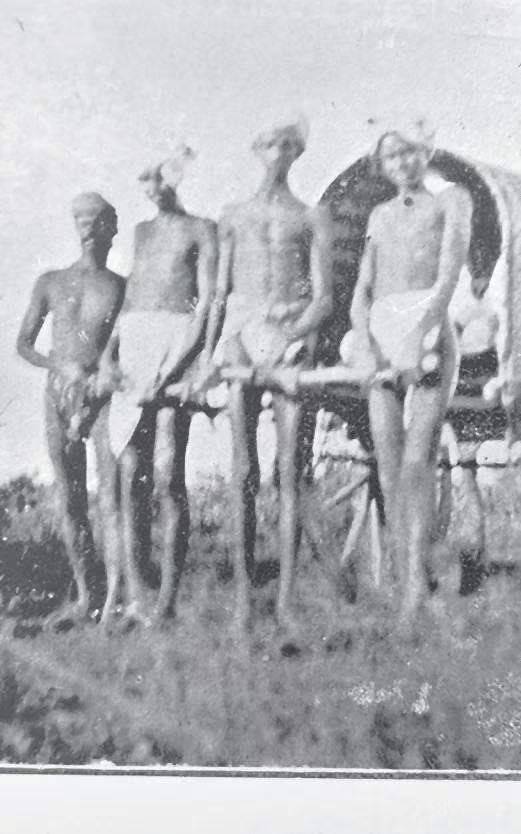
Hand-drawn carts were taken up hills and through jungles to reach the mica mines

 By 1819, Haji Mohammed Badsha Sahib established their family firm — a textile company, Messrs H Mohammed Badsha Sahib & Co.

By the early 20th century, the family also became leading importers of Manchester cotton goods and exported indigo, tamarind, mica and Madras cotton piece goods to Britain. “He was one of the richest businessmen in South…he was also giving and god fearing. If we, his great-grandchildren are doing well in life, I believe it is because of all the good deeds our ancestors did,” he said, adding that his great-grandfather, was also known as ‘Mallikutujar’, the head of merchants.

He hands us a picture of a man clad in a tunic and turban, and says, “That’s our grandfather, MA Khuddus Badsha Sahib, the seventh son of Haji Mohammed Badsha. My grandfather and his brother Abdul Azeez Badsha Sahib, were born in the building located in Vallabha Agraharam Street — the Broadlands lodging house which was previously the Turkish Consulate in Madras. Our great grandfather built it in the 1800s,” shares Faiz with a child-like enthusiasm.

After H Mohammed Badsha Sahib’s retirement in the early 1870s, his sons took over his business. The duo, Abdul Azeez Badsha and Khuddus Badsha, served as the Consul and Vice-Consul at the Turkish Consulate in Madras and were popularly known as the ‘Badsha brothers’ and epitomised leadership. “My grandfather purchased the area constituting Triplicane-Wallajah Road, Khas Mahal – ‘The Old palaces of Nawabs’ while Abdul Azeez Badsha Sahib purchased the entire Gemini complex. Some of the fourth-generation descendants still live in and around the area,” he says.

Faiz shares that Khuddus Badhsa owned a piece of land in Mecca. “Unlike Azeez Badsha, my grandfather never performed the Haj but, he sent my grandmother along with my father to perform the Haj. After they returned, she fell ill and requested my grandfather to build a tap in the zamzam well in Mecca. After a lot of back and forth through telegrams, the tap was finally built and shortly after that, my grandmother passed away. That was probably her last wish,” he says.

He hands us a sheet which reads, ‘No more loyal subject of the King-Emperor or more respected Member of the Mohammadan Community will be the guest of the Madras government at Delhi for the Imperial Coronation Durbar’. “Our grandfather was invited to the Imperial Durbar between the late 19th century and early 20th century. He, along with his brother, actively took part in several organisations and they were philanthropists,” he says. The Government of India even conferred Azeez Badsha Sahib with the title of ‘Khan Bahadur’ in recognition of his public services.

From being the trustee of the Madras Port Trust, vice-president of the South Indian Chamber of Commerce to the vice-president of the South Indian Athletics Association, Khuddus Badsha wore many hats. “He was also one of the founders of the Indian bank,” shares Faud.

Khuddus Badsha bought thousands of acres of land across the south. While some were turned to cultivation lands or passed on to the next generation, most are under court litigation. “After land reforms and the abolition of zamindari system, a huge portion of the land was taken by the government,” he says.


Over the years, the descendants have shown little evidence of their past glory, living a simple and unassuming life. “My father and his siblings took to other professions.

He was a doctor and one of his siblings was a barrister, who was tutored by Dr Radhakrishnan!

We have our daily jobs and live a normal yet happy life. We have learned to work hard and be giving, especially towards those who are less privileged,” shares Faiz.

Mica business
Khuddus Badsha possessed several ‘Shrotriems’, ‘Jaghris’, diamond mines and was a pioneer in the mica industry. He owned mines in Pinnamitta, Chennur and Khuddusabad, a village in Nellore district named after him. “Mica exhibitions were curated, and he also ran a Mica showroom in Triplicane. The Wallajah Mosque compound is where the factory/mica workshop manufactured mica daily basis. We even found bits of Mica in the house’s well,” shares Faiz.

source: http://www.newindianexpress.com / The New Indian Express / Home> Chennai / by Roshne Balasubramanian / September 27th, 2013