Tag Archives: Rahman Khan

Ibrahim Saeed: A Life of Grace, Conviction, and Connection

Mangaluru / Bengaluru, KARNATAKA :

Ibrahim Saeed

When Ibrahim Saeed breathed his last in the quiet hours between May 26 and 27, 2007, it was not merely the passing of a leader – it was the end of an era. For the people of Karnataka, particularly those in the fold of Jamaat-e-Islami Hind (JIH), his death marked the departure of a towering moral force, a bridge-builder, and a man whose words carried the weight of wisdom and the warmth of sincerity.
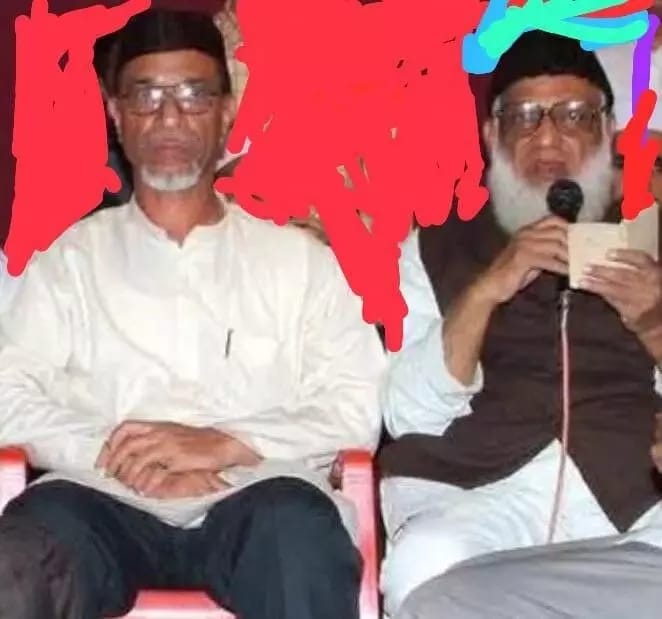
Ibrahim Saeed(L) with Maulana Sirajul Hasan, then Ameer Jamaat-e-Islami Hind

As a former President of JIH Karnataka, Ibrahim Saeed was not just a man of designation – he was a man of deep dedication. He led with humility, served with sincerity, and above all, connected with people at the human level. His leadership was rooted not in authority, but in affection.

A Childhood of Values, A Youth of Vision
Born in coastal Karnataka, Ibrahim Saeed grew up in an environment where religious grounding and intellectual openness walked hand in hand. From an early age, he was drawn to the Qur’an, not merely as scripture to be recited, but as a message to be understood and shared. This foundational attitude remained the hallmark of his life-long da’wah journey.

His eloquence in Kannada and Urdu, coupled with a rare sensitivity to social realities, made him a powerful communicator. He spoke not to impress, but to illuminate. For young Muslims and for non-Muslim listeners alike, he offered Islam not as an ideology to be defended, but as a path of truth, mercy, and justice.

A Da’ee Who Belonged to All
Perhaps the most defining feature of Ibrahim Saeed’s personality was his deep affection for all people, regardless of faith or background. His relationship with non-Muslim brothers and sisters was truly extraordinary. Whether it was participating in interfaith programmes, comforting victims of injustice, or simply walking the narrow streets of Mangalore or Udupi, greeting people with a smile – he was universally loved and respected.

He was never one to see da’wah as monologue. To him, it was dialogue – rooted in respect, empathy, and sincerity. His tone was always soft, yet his message never diluted. Non-Muslim intellectuals and activists often remarked on how deeply they admired his character, and how Islam seemed more beautiful when explained by Ibrahim Saeed.

His inclusive vision of Islam was most evident in the way he reached out to Dalit communities across Karnataka. He would often visit Dalit colonies, organising interactions with men and women in their own neighbourhoods. On one such occasion, a woman asked him plainly, “You are a Muslim. Why do you come to our colony and conduct programmes?” He replied with characteristic humility, “Dalits are the most marginalised communities in India, and Islam teaches that every human being is equal. I want to convey that you and I are the same – no discrimination, no untouchability.”

This brief yet profound exchange summed up the essence of his mission: to live and preach the Qur’anic message of human dignity, social justice, and equality.

Leading Without Holding On
During his tenure as President of JIH Karnataka, Ibrahim Saeed steered the organisation with clarity of purpose and a focus on grassroots empowerment. He built bridges across regions, across communities, and across hearts. His vision was long-term: develop not only structures but people – individuals with integrity, faith, and commitment to social transformation.

What set him apart was his ability to let go. Even as his health declined due to terminal cancer, he made it a point to travel to Bangalore to formally hand over his responsibilities to his successor. It was a gesture that reflected his humility and organisational discipline. He believed in nazam or system, not in personality cults.

Courage in the Shadow of Death
When the diagnosis of Stage IV lung cancer came, he did not flinch. His calm reply – “Alhamdulillah” – shocked even the doctors. He rejected aggressive treatments, choosing instead to accept Allah’s decree and live his remaining days with dignity and devotion.

Despite his declining health, he continued to write, meet people, and offer guidance. He even addressed national-level meetings, delivered Qur’anic lectures in towns like Uppinangady, and met with activists who sought his counsel. His final I’tikaf – spent in the Kutchi Memon Masjid – fulfilled a long-held yearning and marked a full spiritual circle.

His close friends recall that even in moments of physical weakness, his humour remained intact. His conversations were never heavy with sorrow. They were light with grace.

A Funeral Like No Other
When the end came, the grief was personal and collective. People poured in from every district of Karnataka. The Janazah at Central Juma Masjid in Mangalore drew an unprecedented crowd – cutting across class, creed, and political affiliations. Senior leaders like H.D. Kumaraswamy, Mallikarjun Kharge, Jaffer Sharif, and Roshan Baig came to pay their respects. Rahman Khan embraced his son and said what many felt in their hearts: “We’ve lost a rare gem.”

A Legacy of Light
Today, Ibrahim Saeed lives on – not only through his family and writings, but through the countless people he inspired. He lives in the students who remember his compassionate words. He lives in the non-Muslim neighbours who saw Islam’s beauty through his actions. He lives in the members of JIH Karnataka who still consider him a moral guide and fatherly mentor.

In a time when voices grow louder but less sincere, when leadership is often reduced to branding and bravado, the life of Ibrahim Saeed stands as a timeless example of principled activism, prophetic wisdom, and universal compassion.

His passing left a void that perhaps no one can fill – but his legacy lights the path for those who dare to walk it.


[With input from Mohammed Markada and Ameen Hassan]

source: http://www.radiancenews.com / Radiance News / Home> Focus> Pride of the Nation> Personality / by Mohammed Talha Siddi Bapa / May 30th, 2025
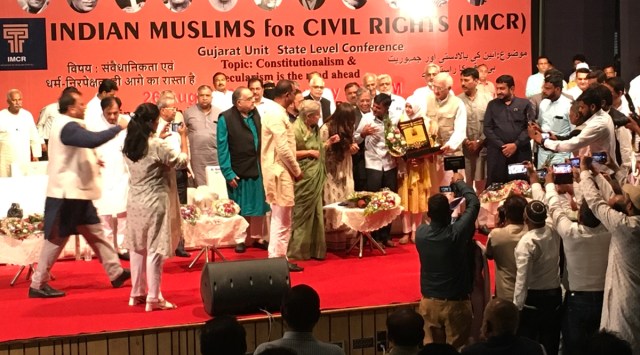
15-year old Schoolgirl Arnazbanu Sipahi who was not called for award ceremony by school despite topping Class X board exams felicitated

Lunava Village (Mehsana District), GUJARAT:

Also present at the event were Gujarat Congress MLAs Amit Chavda and Imran Khedawala, former Congress MLA Gyasuddin Shaikh, AMC leader of Opposition Shehzadkhan Pathan, and late Congress Rajya Sabha MP Ahmed Patel’s daughter Mumtaz Patel.

Indian Muslims for Civil Rights, IMCR Gujarat felicitation ceremony, Arnazbanu Sipahi, Independence Day, Gujarat education news, indian express news
Arnazbanu Sipahi from Mehsana at the IMCR event on Saturday. (Express File Photo)

The Indian Muslims for Civil Rights’ (IMCR) Gujarat unit on Saturday felicitated 15-year-old Arnazbanu Sipahi from Mehsana, who was not called for a felicitation ceremony by her school despite holding the first position in the Class X board exams at her school, on Independence Day.

A former student of K T Patel High School, who had topped her school in Class X state board exams in March, Sipahi has now shifted to a nearby grant-in-aid school for her Class XI studies.

K T Patel High School principal has maintained that the August 15 award ceremony was organised by the school staffers and the school would felicitate Sipahi instead on January 26, next year.

Speaking to The Indian Express , Mehsana District Education Officer A K Modhpatel had earlier said, “I had checked with the school and learnt that the August 15 award ceremony for first three toppers from Class X and XII was organised by the teachers. They had collected funds to motivate school students. The girl and those who were not studying in the school (when the felicitation ceremony was held on August 15), will be awarded on January 26.”

Maintaining that she was “wronged” by the school, the IMCR – at a state-level conference on constitutionalism and secularism held in Ahmedabad  – called Sipahi on stage to felicitate her in the presence of a host of Muslim leaders. Azam Baig, national general secretary (organisational) of IMCR, announced that he would personally fund Sipahi’s education, including higher studies.

Handing her a plaque and a flower bouquet on stage were former IMCR trustee and Congress leader Salman Khurshid, former member of Planning Commi-ssion, Syeda Saiyidain Hameed, as well as Samajwadi Party MLA Abu Azmi, among others.


Addressing the conference on the topic of ‘constitutionalism and secularism and the way forward’, Hameed cited Arnazbanu’s “experience” and the recent viral purported video of a Muslim boy being hit by his classmates upon being goaded by their teacher at a Muzaffarnagar school, as “examples where children are being discriminated against (on religious lines).” “We have to build a common front… work in an organised way (to counter the polarisation)… The Gujarat riots’ blueprint, which is now being attempted to be implemented elsewhere in India, we must not let it succeed.”

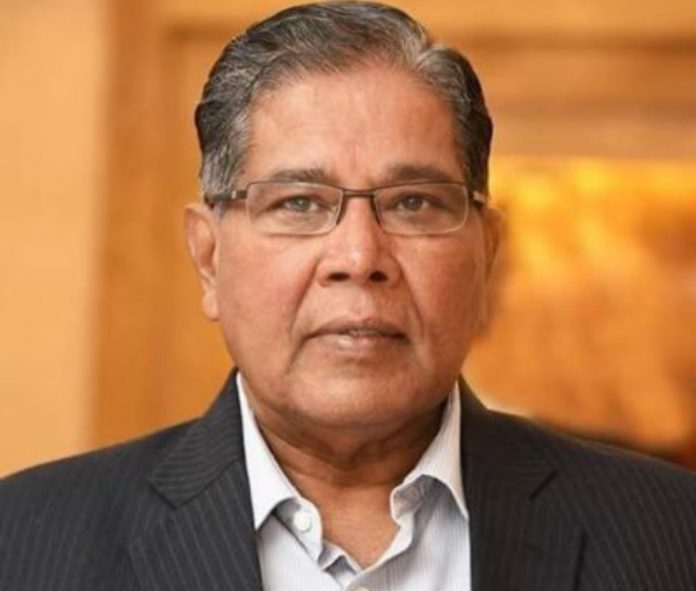
K Rehman Khan, former deputy chairman of Rajya Sabha , urged Muslims to be “givers” and not “seekers”, emphasising that they must empower themselves and “saving the Constitution should be the first priority”. “Only if the Constitution and secularism is saved, can we live a life of dignity,” Khan added.

Former Union minister Salman Khurshid said that “it is not acceptable that rule of law is replaced by rule of bulldozer”. He added that the “public must understand that what is happening today at someone else’s household can also happen at your household”. “We want that the majority speaks for the minority and the minority speaks for the majority,” Khurshid said.

Also present at the event were Gujarat Congress MLAs Amit Chavda and Imran Khedawala, former Congress MLA Gyasuddin Shaikh, AMC leader of Opposition Shehzadkhan Pathan, and late Congress Rajya Sabha MP Ahmed Patel’s daughter Mumtaz Patel.

source: http://www.indianexpress.com / The Indian Express / Home> News> Cities> Ahmedabad / by Express News Service, Ahmedabad (headline edited) / August 27th, 2023

Politician K Rahman Khan selected for IOS Lifetime Achievement Award

Bengaluru, KARNATAKA :

New Delhi:

The Delhi-based Institute of Objective Studies has chosen the veteran politician K. Rahman Khan, a former Union Minister for Minority Affairs and Ex-Deputy Chairman of the Rajya Sabha, to receive its 10th annual Lifetime Achievement Award.

The award was created to honour people who have significantly contributed to society’s growth and development across a range of fields. Rahman Khan’s name has been officially approved by the Institute of Objective Studies’ award committee. Khan was instrumental to the passage of the Waqf (Amendment) Act 2013 and the comprehensive report on auqaf in India prepared by   the Joint Parliamentary Committee under his chairmanship.

Rahman Khan was born on April 5th, 1939 in Mandya, then a part of the Mysore State, and established his credentials as an accountant before entering politics out of a desire to aid the general populace. He was the first Muslim from Karnataka to crack the tough Chartered Accountant examination.  Khan holds a D. Lit., is a fellow chartered accountant, and a business degree.

He was first elected to the Karnataka Legislative Council in 1978, rising to become its chairman in 1982–84 and then the head of the Karnataka State Minorities Commission (at the Cabinet level) in 1993–94. As chairman of the Karnataka Minorities Commission, he made recommendations that resulted in a door-to-door evaluation of minorities’ socioeconomic status that led to 4% of State Government offices and educational institutions being reserved for minorities.

He was first chosen to serve in the Rajya Sabha (Upper House) of Parliament in April 1994 and was again chosen in May 2000. He held the position of Deputy Leader of the Indian National Congress in the Upper House from May 2000 until July 2004. He was chosen to serve as the Deputy Chairman of the Rajya Sabha from 22 July 2004 to 2 April 2006 after being appointed as the Minister of State for Chemicals and Fertilizers in the Union Cabinet. He was chosen to serve a third term in the Rajya Sabha in April 2006. He was appointed minister of union minority affairs in the UPA government in April 2012.

Through his association with the Al-Ameen Education Society of Bangalore, which oversees a number of prominent technical and other educational institutions, he established new standards for higher education for minorities. In addition to founding a respectable institution, he also provided the community with a fresh outlook, inspiring them to build and support educational institutions of their own throughout the preceding 50 years.

His most recent book, The Roadmap for Indian Muslims, is regarded as a significant piece of academic literature. K Rahman Khan will receive the 10th Lifetime Achievement Award this year in recognition of his all-around contributions, according to the Institute of Objective Studies’ award committee. The award ceremony date will shortly be made public.

It should be mentioned that the following people have previously received this award based on remarkable services. Emirate Shariah  Phulwari Sharif  , Patna, former Chief Justice of India AM Ahmadi, Akhlaq Rahman Qidwai,  Prof  B. Sheikh Ali, Maulana(Dr.) Saeedur Rahman Azmi Nadvi, A G Noorani Prof  Akhtar Al Wasey, Prof  Mohsin Osmani Nadvi  and Maulana Hakeem Abdullah Mughaisi.

The Institute of Objective Studies first presented the Lifetime Achievement Award in 2007. Recognizing those who have made outstanding contributions to the domains of law, journalism, science, technology, literature, and other relevant fields is the main goal of this award. In order to motivate the future generation and encourage more people to follow their passions and become authorities in their professions, it is important to support and value their services.

source: http://www.muslimmirror.com / Muslim Mirror / Home> Positive Story / September 06th, 2022