INDIA :
New Delhi :
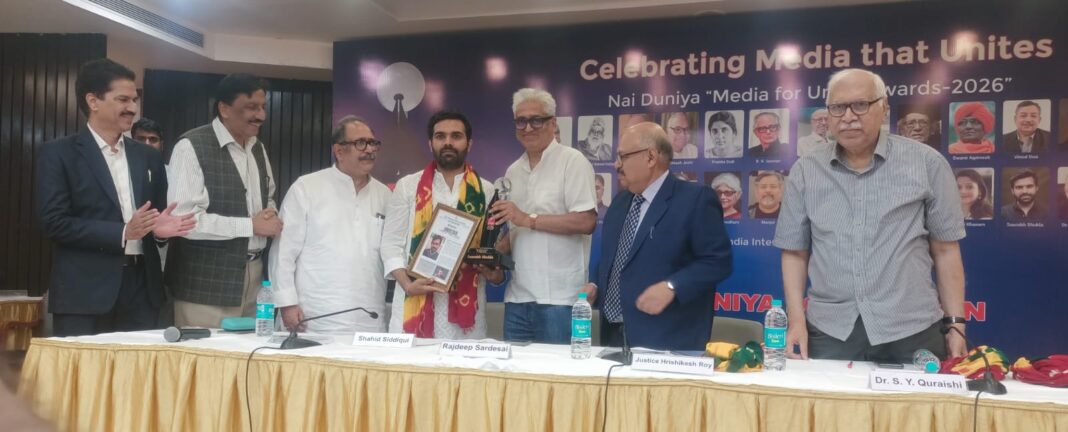
The Nai Duniya Foundation honoured leading journalists, authors, writers and filmmakers at the Media for Unity Awards 2026, held at the India International Centre on Saturday evening. The event celebrated individuals who have demonstrated courage in “speaking truth to power” during what many speakers described as challenging times for Indian media and democracy.
Senior journalist Rajdeep Sardesai, consulting editor and anchor of India Today Television, reflected on the evolving role of journalism amid what he termed a period of “darkness.” He emphasized that even small efforts, “a spark or a candle”, can help keep truth alive. Recalling his early career, Sardesai spoke about the discipline and dedication he learned from legendary cartoonist R. K. Laxman, whose name is correctly spelled as R. K. Laxman. He noted that Laxman’s insistence on constant improvement shaped his approach to journalism.
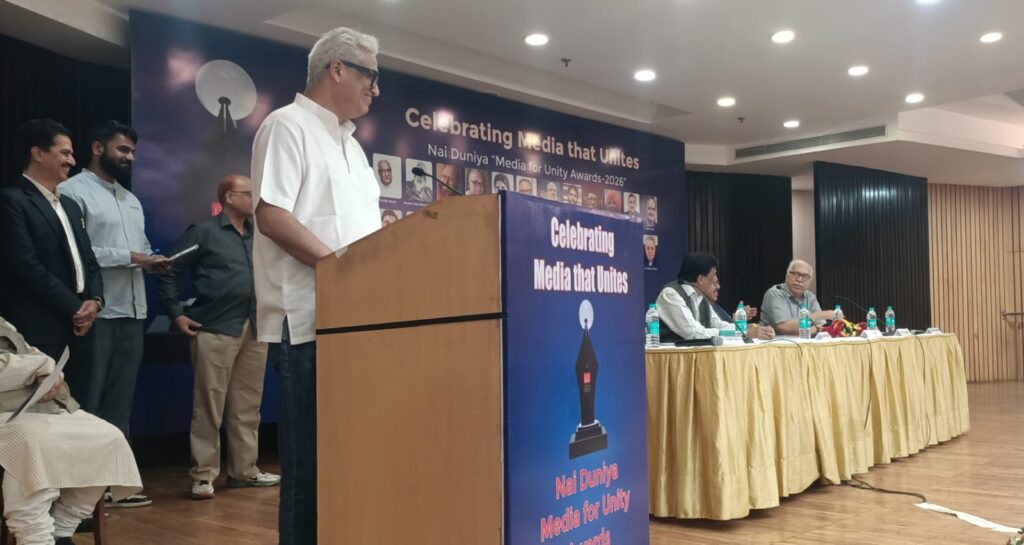
Senior journalist Rajdeep Sardesai speaking at the Nai Duniya “Media for Unity Awards 2026” at the India International Centre in New Delhi on April 18, 2026.
Drawing parallels between past and present, Sardesai remarked that many political realities remain unchanged, pointing to Laxman’s decades-old cartoons that continue to resonate with contemporary audiences. With over three decades of experience, he expressed concern that some voices which once illuminated public discourse are now contributing to its decline. Addressing criticism surrounding “Godi media,” Sardesai maintained that perseverance and faith in eventual change remain essential.
He also highlighted India’s resilience, stressing that no individual or authority is permanent. Sharing an anecdote about a hardworking woman named Elizabeth from Kerala, he underscored the strength of ordinary citizens who sustain the nation through their efforts. Concluding on an optimistic note, Sardesai praised India’s diversity and encouraged young journalists to continue their pursuit of truth despite adversity.
Senior Congress leader Shashi Tharoor, emphasized the media’s vital role in preserving democracy and national unity. He described the current era as a paradox, marked by unprecedented connectivity alongside deep social fragmentation, and argued that the media serves as the “soul of democracy.”
Reflecting on his upbringing as the son of a journalist, Tharoor spoke about the traditional trust placed in media as a reliable source of truth, a trust he believes is now under strain. He warned against the growing trend of sensationalism in television and social media, where debates often devolve into confrontational spectacles rather than meaningful discussions. Such practices, he cautioned, risk reducing complex issues to simplistic binaries and eroding public trust.
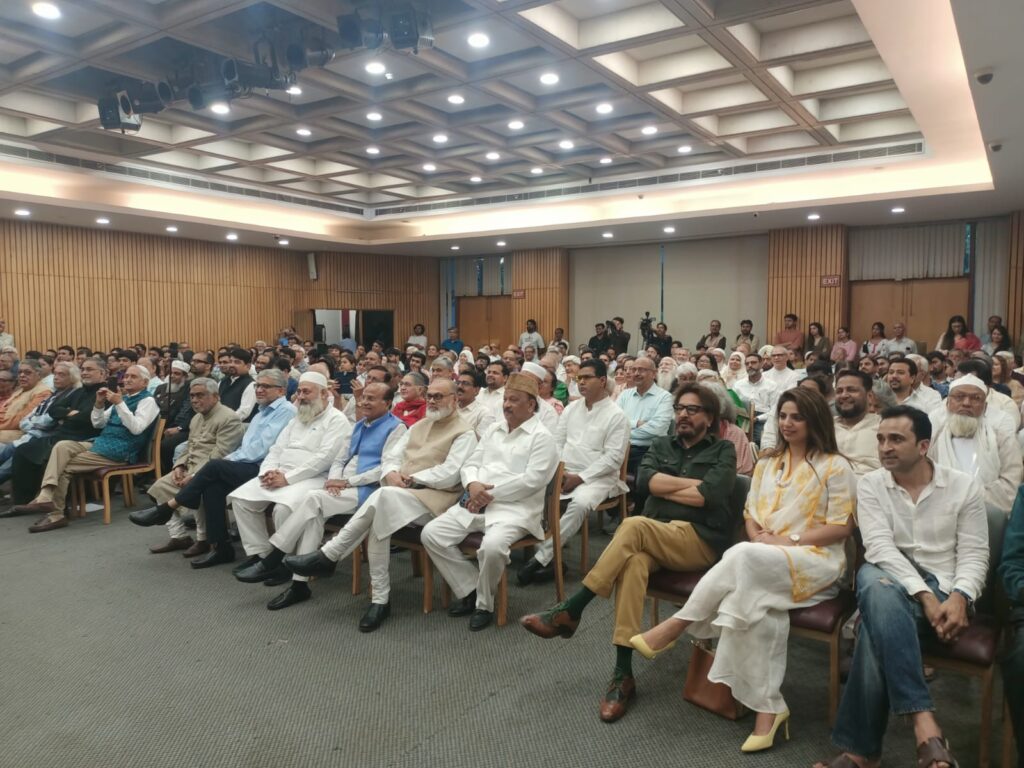
Using his well-known “thali” metaphor, Tharoor highlighted India’s pluralistic identity and stressed that the media must provide a fair platform representing all voices. He reiterated that a free and impartial press is essential to democracy, acting as a watchdog that holds power accountable. He concluded by urging journalists to reclaim their core mission, to inform without inflaming and to unite rather than divide, while praising the awardees for embodying these ideals.
Justice Hrishikesh Roy, who was the chief guest, spoke about the emotional resonance of the awardees’ remarks, stating that such voices are crucial in today’s India. He commended the Nai Duniya Foundation for inspiring individuals and acknowledged the contributions of Shahid Siddiqui, Zubair, and Atul Tiwari in organizing the event. Referring to figures like R. K. Laxman and other speakers, he noted that their words left a deep impact on the audience.
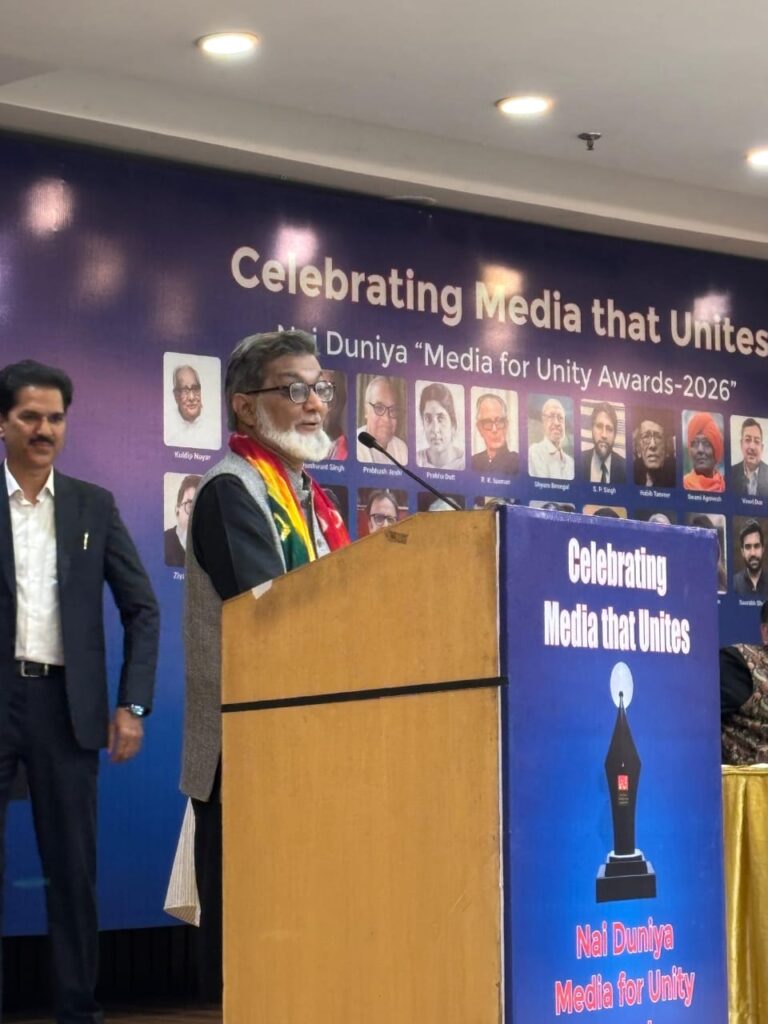
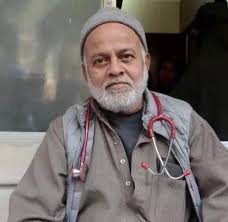
Senior journalist Zia-us-Salam speaking at the Nai Duniya “Media for Unity Awards 2026” at the India International Centre in New Delhi on April 18, 2026.
Justice Roy also highlighted the fairness of the selection process, praising the jury led by S. Y. Quraishi for making thoughtful choices that left little room for dissatisfaction. He concluded with a message of optimism, urging attendees to remain hopeful and appreciative of such initiatives.
Former Chief Election Commissioner S. Y. Quraishi reflected on his long association with the media, recalling his early career in public relations. While acknowledging journalism’s strengths, he expressed concern about its current state in India, particularly the country’s low ranking in global press freedom indices. Although he noted slight improvements recently, he argued that the media has often failed to question those in power, instead focusing disproportionately on the opposition.
Quraishi lamented what he described as a shift from the media’s role as the “fourth estate” to a “fifth column.” Despite this, he expressed hope in journalists like Rajdeep Sardesai and others who continue to uphold democratic values, as well as citizens committed to defending secularism and pluralism. He concluded by appreciating the jury’s careful selection of awardees and thanking the organizers.
Senior journalist Neerja Chowdhury, after receiving the lifetime achievement award, reflected on her early career and the influence of pioneering journalist Prabha Dutt. She recalled Dutt’s fearless reporting, including her coverage of the 1978 Sanjay and Geeta Chopra case, war reporting, and her landmark Supreme Court petition advocating press freedom.
Chowdhury emphasized that today’s journalists face more complex challenges in a polarized society shaped by religious, regional, and political divisions. She stressed that the media must not act as government propaganda but instead hold power accountable and reflect diverse perspectives. Highlighting the importance of dissent, she argued that diversity is essential for creativity and progress. She concluded by reaffirming her commitment to journalism and nation-building.
Senior journalist Saurabh Shukla spoke about the difficulties faced by independent reporters, including arrests, legal harassment, and limited access to timely justice. He pointed out that many journalists struggle to secure bail due to financial and legal constraints and called for the establishment of fast-track tribunals to address such cases promptly.
Shukla also raised concerns about social media trials, surveillance, and professional blacklisting, which he said further complicate the work of journalists. Reflecting on his departure from NDTV, he emphasized the importance of maintaining independence in journalism. He additionally highlighted systemic bias, alleging that Muslim journalists are disproportionately targeted, while noting that his own identity has sometimes shielded him from similar scrutiny.
Despite these challenges, Shukla reaffirmed his commitment to ground reporting and amplifying marginalized voices. The event concluded with a shared sense of concern and hope, as speakers collectively underscored the enduring importance of independent journalism in strengthening democracy and fostering unity in India.
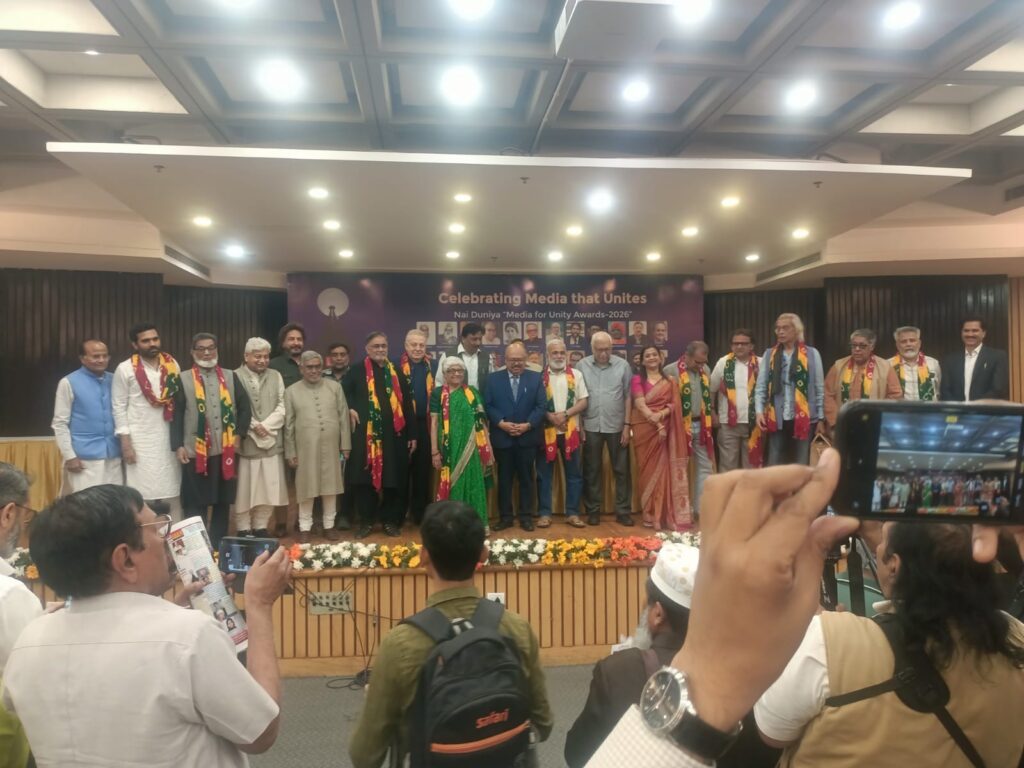
Ziya Us Salam, Associate Editor of The Hindu, Fazil Hussain Parvez, Editor of Gawah, Prof. Purushottam Agarwal, Writer, Vivek Shukla, Journalist, Neerja Chowdhury, Journalist, Manjul, Cartoonist, Sudhir Mishra, Filmmaker, Sandeep Chaudhary, Senior Journalist and Anchor of ABP News, Arvind Gaur, Theatre Director, Rani Khanam, Artistic Director Aamad and Choreographer, Saurabh Shukla, Journalist and Co-founder of The Red Mike and Dr. Waiel Awaad, Senior Journalist and Middle East Analyst were given the Nai Duniya Media for Unity Awards 2026.
1. Kuldip Nayyar Award for English journalism, Ziya-us-Salam, Associate Editor, The Hindu
2. Khushwant Singh Award for the most inspiring book, ‘Mazbooti ka naam Mahatma Gandhi’, by Prof. Purshottam Aggarwal
3. Prabha Dutt Lifetime Achievement Award Neerja Chowdhry
4. Maulana Abdul Waheed Siddiqui Award for Urdu Journalism Fazil Hussain Pervaiz, Editor Gawah
5. Prabhash Joshi Award for Hindi Journalism Vivek Shukla
6. S P Singh Award for Electronic Media Sandeep Chowdhry
7. Swami Agnivesh Award for Social Causes Rani Khanam
8. Shyam Benegal Award for Visual Media Sudhir Mishra
9. Habib Tanvir Award for Theatre Arvind Gaud
10. Vinod Dua Digital Media Award Saurabh Shukla
11. RK Laxman Award for Satire Alok Nirantar
12. Mark Tully Award for a Foreign Correspondent Dr Waeil Awwad
source: http://www.indiatomorrow.net / India Tomorrow / Home> Human Rights > Communalism / by Mohd Naushad Khan / April 19th, 2026