Tag Archives: Rehana Begum

With a 99.97 Percentile, Musa Kaleem of Assam Makes History in NEET UG 2025

South Village (Guwahati), ASSAM :
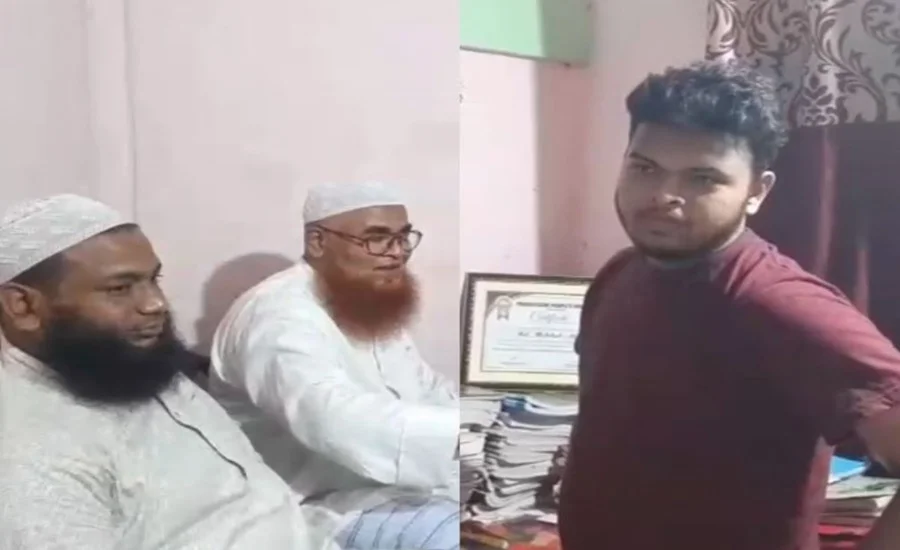
The historic achievement brings pride to his family, the state, and the nation; it proves that dedication, family support, and strong values can lead to exceptional results.

New Delhi / Guwahati :

In a proud moment for Assam and the entire Muslim community, a young boy from the South Village in Guwahati has written his name in the history books. Musa Kaleem, 18, has emerged as the state topper in the National Eligibility cum Entrance Test (NEET-UG) 2025, leaving behind over 42,000 aspirants from Assam. With the 99.97th percentile, Musa’s achievement is not just academic excellence — it is a powerful reminder of the potential of the Muslim youth.

Out of 20.08 lakh students who appeared for the NEET UG exam nationwide, 12.36 lakh students cleared the cut. Among them, Musa stood out in Assam, becoming the number one in the state. Nationally, the top rank went to Mahesh Keshwani of Hanumangarh, Rajasthan. While Mahesh made the nation proud, Musa brought immense joy and hope to Assam by becoming the highest scorer in the state.

Musa’s story begins in Sri Bhumi, Assam, where he was born. His family later moved to South Village in Guwahati. His father, Anwar Hussain, once worked as an engineer in Sri Bhumi. Now, he runs a small cosmetic shop in Guwahati. His mother, Rehana Begum, is a homemaker. Coming from a modest background, Musa’s success becomes even more meaningful.

Speaking to Salam TV, Musa said, “I am very happy. I give all the credit to my parents. Their support never stopped. They stood by me in every moment.”

Musa prepared for the exam at Allen Coaching Institute in Guwahati. Known for his quiet focus and regular study schedule, his teachers describe him as a student who never wasted time. He avoided distractions and remained deeply committed to his goal of becoming a doctor.

At a time when many from the Muslim community face social bias and economic challenges, Musa’s result shines like a ray of hope. His determination sends a clear message: success is possible through effort and discipline, even without wealth or privilege.

Speaking to reporters, Musa said, “My dream is to serve the country. I don’t just want to become a doctor. I want to become someone who helps the poor and stands with those who have no support.”

His words reflect the values many Indian Muslims hold dear—serving humanity, staying humble, and always standing for justice.

Musa’s father, Anwar Hussain, expressed deep happiness over his son’s success. With teary eyes and a proud smile, he said, “I never asked him to run after money. I always told him to become a good human being first. Only then will you become a good doctor.”

His advice is touching. In a world where success is often measured in numbers and bank balances, Anwar Hussain’s simple yet strong message brings back the true meaning of education—character and compassion.

News of Musa’s achievement quickly spread across Assam, especially among the Muslim community. Social media platforms and local mosques were abuzz with congratulations and prayers. From imams to teachers, everyone expressed pride.

Maulana Naseeruddin, an Islamic scholar from Guwahati, said, “This boy has shown what true Islam teaches us—to seek knowledge and to serve mankind. May Allah bless him and make him a source of pride for the community.”

In a time when Muslims are often portrayed unfairly in the media, stories like Musa’s are a reminder of the silent majority who quietly focus on education, ethics, and contribution to the nation.

Local leaders and education officials have praised Musa for his outstanding performance. Assam’s education minister, during a press conference, said, “We congratulate Musa Kaleem. This is a big moment for Assam. He is an inspiration for students across communities and regions.”

Although no government reward has been announced yet, many believe that a talent like Musa deserves both recognition and support for future studies.

For decades, Muslims in India have faced multiple challenges in the field of education—poor access to quality schools, financial constraints, and social discrimination. Yet, despite these odds, young Muslim boys and girls continue to prove their strength.

Educational researcher Dr Sameera Ahmad pointed out, “Musa’s result is part of a quiet revolution. More and more Muslim families are investing in their children’s education, even when they don’t have enough for themselves. This is courage, not just sacrifice.”

Musa Kaleem’s story stands as an answer to those who stereotype Indian Muslims as backward or uninterested in studies. It shows that when given a fair chance, they can lead in merit-based competitions like NEET UG.

Musa plans to join a top medical college to continue his studies. His dream is to work in rural and poor areas where healthcare is still far from reach. He believes that doctors have a duty to serve beyond city hospitals and five-star clinics.

“I want to go where people have no help,” he said. “A real doctor should always be available for the needy.”

This thinking, especially from such a young man, shows maturity and compassion, traits India needs from its future doctors.

Musa Kaleem’s story is not just about topping an exam. It’s a story of dreams, belief, and values. It reminds the country that Indian Muslims are not behind. They are rising, despite hurdles, with dignity and dedication.

The achievement also calls upon society to treat Muslim students fairly, to support their education, and to highlight their success, not just their failures.

As Musa moves forward in his journey to become a doctor, he carries with him the hopes of many—of parents who never gave up, of teachers who believed, and of a community that wants nothing more than peace, respect, and a better future for its children.

“Success will come and go,” Musa said quietly. “But being a good human being is forever.”

source: http://www.clarionindia.net / Clarion India / Home> Indian Muslims / by Mohammad Bin Ismail / June 17th, 2025
Achampet youth gets 57th rank in Civils

Thummanpet (Nagarkurnool District), TELANGANA :

ShahidMPOs29apr2019

Nagarkurnool:

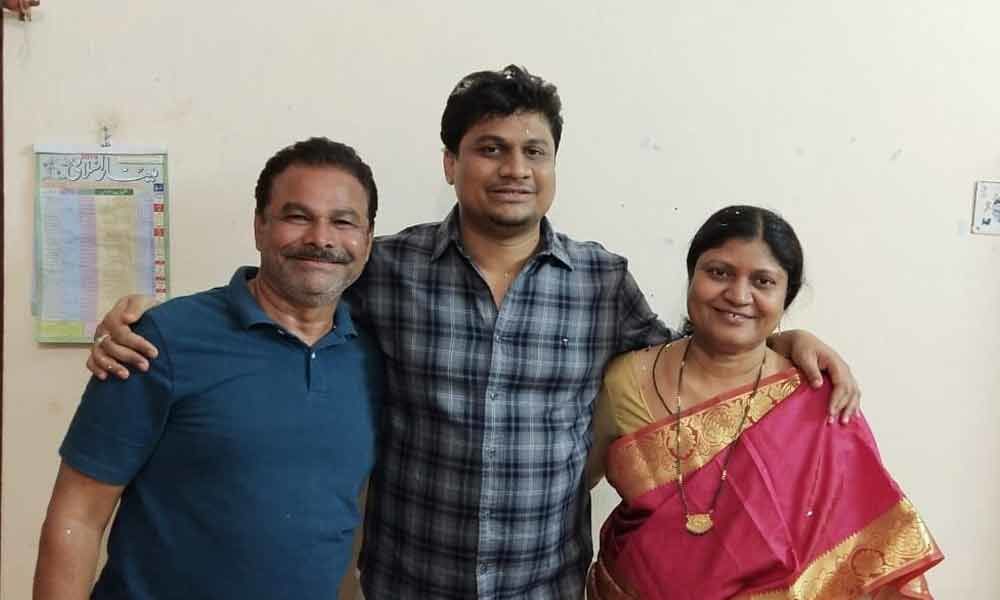
Mohammad Abdul Shahid of Nagarkurnool district secured 57th rank in Civil Services. Shahid is the second person in Telangana to achieve this feat while Karnati Varun Reddy from Miryalaguda achieved 7th rank.

Three months ago, Shahid got selected for Indian Foreign Services (IFS). But as he is more interested in Indian Administrative Services (IAS), he attended the interview for the same later and bagged 57th rank. He made not only his parents proud but also the entire Nagarkurnool district.

Born to Rehana Begum and Anan, Shahid belongs to Thummanpet village of Balmoor mandal under Achampet constituency of Nagarkurnool district. He did his primary education in Achampet and later continued his schooling in Navodaya School at Vattem.

An avid reader and hard worker in studies, Shahid had already set his goal from the beginning to crack civil services and accordingly set his study plans and finally achieved his desired goal.

“It is really a dream come true for me. All this is achievable only because of the continuous support from my parents, teachers and well-wishers, who were always encouraging and boosting my morale.

I thank all those, who has been supporting me and encouraging me in my endeavour,” said Shahid.

source: http://www.thehansindia.com / The Hans India / Home> News> State> Telangana / by Hans News Service / April 07th, 2019

Chikankari Embroidery

Lucknow ,  UTTAR PRADESH :

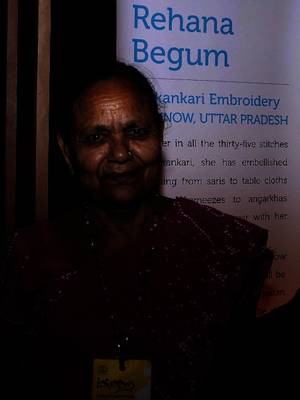
Rehana Begum, a master of Chikankari work. Photo: R. Shivaji Rao | Photo Credit: R. Shivaji Rao

A pantheon of craftsmen and their art are on display at Kaivalam, under way in Chennai. Rashmi R.D. introduces us to some Living Legends of Indian crafts. Meet Rehana Begum

“I learned from my father Shree Hasan Mirza, who received a national award in 1969 for his craftsmanship,” says fifty eight year old Rehana Begum.

Hailing from a long line of chikankari exponents, Rehana Begum began her work with this form of embroidery at the age of thirteen.

Chikankari dates back two centuries. The word chikan is thought to be derived from a Persian word; one theory is that the form travelled to India when its artisans migrated from Persia in search of better patronage. I t is believed that these artisans found a patroness in Mughal Empress Noor Jahan, wife of Emperor Jehangir, and that she did a lot to promote and popularize this craft form.

Rehana Begum works from her home in Thakur Ganj, Napier Road, Lucknow. “We are Lucknowi, born and bred.” Her whole family is involved with making Chikankari embroidery. They work as a group in one room which has become the embroidery room of the house.

“When I was younger we embroidered kurtas, topis, angarkhas jaise nawab log pehn te te (just like the nawabs used to wear). Now we do saris, suits (salwar kameez), ladies tops, whatever the new styles of dressing are in fashion now we embroider.”

Chikankari, she says, was traditionally done only on pure, un-dyed white shazaada cotton or Dhaka ki mulmul, both sourced from Dhaka, Bangladesh. The katcha daagha, the thread used for the embroidery, was also white and procured from Calcutta or Dhaka. Rehana Begum defines Chinkankari in her terms as ‘white on white’ embroidery.

“The first thing I made all by myself was a table cover. It took me one and half years to complete.”

And how long does it take to embroider a sari? “About two years. We usually work six to eight hours a day. My eyes aren’t what they used to be, so now I only do about two hours of embroidery work a day. I spend the rest of the time supervising the work of my apprentices and teaching them the various stitches.”

Rehana Begum takes her inspiration for her embroidery motifs from Mughal architecture. The delicate marble jaali (trellis) pattern of Mughal-style windows and parapet walls is transposed onto the fabric as a fine gossamer trellis of thread work. She also replicates the inlay patterns from Mughal monuments on the fabric she embroiders.

Chikankari has six basic stitches and over thirty-five other traditional stitches used in various combinations based on what the pattern to be embroidered requires. The names of some of these stitches are phanda, chana patti, ghaas patti, bijli, jaali, tepchi, bakhiya, hool, zanzeera, rahet, banaarsi, kharau, keel kangan, bubul and hath kadi. Depending on the type of garment and the pattern to be embroidered the entire process happens in a series of stages over a period of months or even years. Also, the embroidery itself is divided among the artisans, with pairs or groups of three or more specializing in one particular stitch. When one group completes their particular stitch for a garment, it is passed on to the next group to add their specialty stitch. One group may also have mastery of two or more stitches.

The pattern to be embroidered is stamped onto the fabric by hand with a wooden pattern block that has been coated with neel (indigo). The fabric now has the outlines of the designs that will be embroidered into the delicate ‘shadow’ embroidery motifs that are the defining feature of Chikankari.

“I would like to open a shop of my own someday,” Rehana Begum says hopefully. “What we kaarigars (artisans) get at the end of the day, after the shops and agents have taken their percentage—it isn’t much. I’d like to be able to meet directly with people who want to buy our work. Maybe we should have something like a kaarigar market…”

She and her family do travel extensively to participate in national textile fairs and handicraft exhibitions, but though sales are good, the travel costs add up. The price of raw materials has increased too, with good quality cotton and thread getting steadily more expensive.

“I love what I do,” she says emphatically. “There’s no way I could have done this for so long if I didn’t. I get a lot of satisfaction when I finish a piece. I have a large sample swatch that I take with me to exhibitions or when I get called to travel abroad. It took me three years to embroider. When I show it to people they are always amazed by the work. I feel very happy when I see their reactions.”

Rehana Begum has been invited to show case her work in Hamburg (Germany), Ireland, Cuba, Dubai and Muscat (Oman).

In 1976, she was given a State Award from the Uttar Pradesh government, and her work has been on display in the Crafts Museum of Uttar Pradesh. In 2003 she received the Shilp Guru award for her contribution to Chikankari.

“I am excited about coming to Chennai in October. I haven’t been to that city in a long time. I see it as an opportunity to show the international artisans who will be attending this event that Hindustan has great craft talent. They will be able to see what a wealth of kaarigars we have. Jo bhi kaarigar waha maujood honge, hum sab milkar hamare desh ka naam roshan karenge. (All of the artisans who gather for this event, together we will make the name of our country shine).”

source: http://www.thehindu.com / The Hindu / Home> Indian Crafts> Crafts / by Rashmi M.D. / Chennai – October 10th, 2012