The sisters come from a modest background. Their father, Abdul Malik, works as a carpenter, while their mother studied up to Class 9.
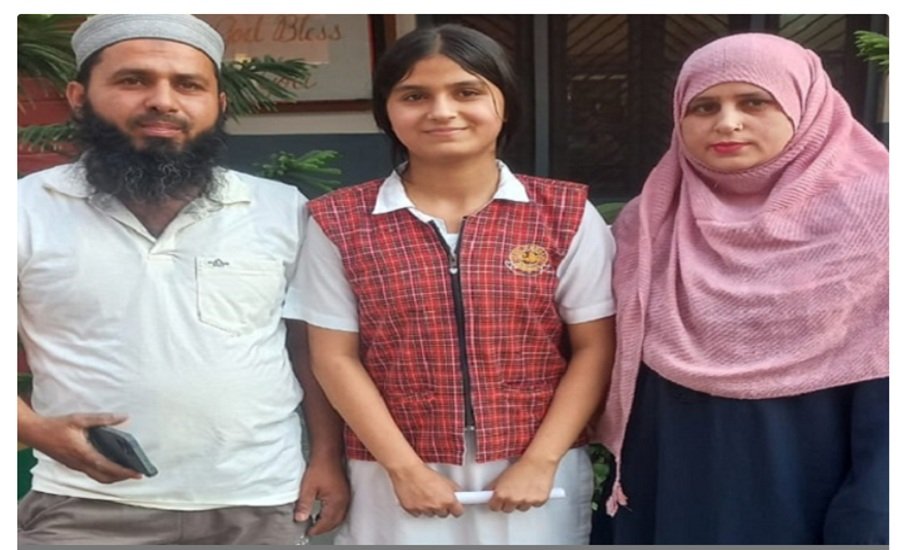
Two sisters from Meerut have drawn attention with their impressive performance in the Uttar Pradesh Madhyamik Shiksha Parishad examinations, securing the top two positions in the district.
Adeeba Malik scored 95.68 per cent in the high school examination to secure first place, while her sister Shifa Malik ranked second with 82 per cent in the science stream.
Their achievement has brought joy to the locality, with residents visiting their home to congratulate the family.
Adeeba attributed her success to discipline and consistency. “I studied for long hours every day and stayed focused. Hard work and a proper routine helped me achieve this result,” she said. She scored full marks in mathematics, her strongest subject.
Notably, she prepared entirely at home without any tuition or coaching support.
The sisters come from a modest background. Their father, Abdul Malik, works as a carpenter, while their mother studied up to Class 9. Expressing his pride, Abdul Malik said, “I could not study much myself, but my daughter is making me proud. There is no difference between a son and a daughter. I want her to study and move ahead.”
The sisters were felicitated at St Joseph Inter College, where teachers and students celebrated their success. Sweets were distributed, and similar celebrations were held at their home.
Family members said the achievement reflects the sisters’ consistent dedication and hard work.
Adeeba aspires to become an IAS officer and serve the country.
Education experts say such success stories are significant, especially in areas where awareness about girls’ education is still evolving and students often face challenges in continuing their studies. The sisters’ achievement is being seen as an inspiring example for others.
source: http://www.clarionindia.net / Clarion India / Home> Editor’s Pick> India> Indian Muslim / by Mohammad Bin Ismail / April 25th, 2026
Usia Village – Kamsarbar (Ghazipur District), UTTAR PRADESH / Kolkata, WEST BENGAL :
The daughter of Kamsarbar village in Uttar Pradesh becomes the first woman civil servant from her area, inspiring Muslim girls across the country
New Delhi :
In a moment of pride for Indian Muslims, especially young women from small towns, Saima Saraj Khan from Kamsarbar in Ghazipur district, Uttar Pradesh, has once again cleared the prestigious Union Public Service Commission (UPSC) Civil Services Examination. This time, she achieved an impressive All India Rank of 135, improving on her earlier success where she secured Rank 165. With this double achievement, Saima joins the rare group of women in the country who have passed the tough exam twice.
Saima, the only daughter among three siblings, hails from Usia village in the Muslim-majority Kamsarbar area of Ghazipur. Her family later moved to Kolkata, where she grew up and studied. Her father, Saraj Ahmad Khan, is a successful businessman and builder, and he played a big role in encouraging her education from childhood. “My father always said education is the biggest power. Once you get it, paths in life open on their own,” Saima recalled.
Most of Saima’s schooling took place in Kolkata. She completed up to Class 8 at St. Paul’s Boarding and Day School in Kidderpore, then did her Class 12 from Ashok Hall Girls Higher Secondary School. She graduated with honours in Sociology from St. Xavier’s College. During her college days, working with an NGO brought her close to real problems faced by people on the ground. “When I met people and saw their struggles, I felt I wanted to help them, even if in a small way. That need for real authority to make change pushed me towards UPSC,” she said.
Saima prepared for the exam at Educate IAS Academy in Kolkata. After clearing prelims in earlier attempts, she also guided other aspirants for some time. Her journey was not easy. She failed three times before her first success in UPSC 2023, which made her the first woman from Kamsarbar to become a civil servant. Each failure tested her deeply. “Every day after those failures, the thought of giving up came. But I had no other plan. All my dreams were tied to UPSC, so I kept going,” she shared.
To focus fully, Saima cut herself off from social media and most social events for four to five years. She rarely visited relatives or attended weddings, limiting outings to occasional meetings with childhood friends once a month. “There was no fixed study time, but I gave as many hours as possible to studies,” she explained.
Her message to other aspirants is clear and practical. “First, be honest with yourself. If you study five hours, focus on quality, not just quantity. Consistency matters most. Don’t worry too much about results—just keep preparing fully.” She also spoke directly to Muslim girls and women: “Dreaming and working to fulfil those dreams is every girl’s right. Women can succeed in any field. Never give up on your dreams.”
Saima’s success brings huge joy to her family, village, and district. People in Ghazipur and beyond see her as a strong example of self-reliance and hard work for Muslim women, where many still face limits on education and careers. Her story shows that with family support and belief in oneself, no goal is too far.
She quoted a line that sums up her journey: “Where there is a will, there is a way.” Saima often repeats that difficulties and failures are part of success. “Don’t let them take over you. Keep pushing.”
Her achievement also connects to Kolkata’s proud history—from Satyendranath Tagore, the first Indian ICS officer from united India, to now Saima becoming the first woman civil servant from Kamsarbar. “Education is the real power,” she stresses, echoing her father’s words from childhood.
As news of her Rank 135 spread, young Muslim girls in Uttar Pradesh and across India are finding fresh hope. Saima proves that with clear goals, steady effort, and strong resolve, women from humble backgrounds can reach the top. In the words of poet Dushyant Kumar that capture her spirit perfectly:
“Kaise aakaash mein suraakh nahin ho sakta
Ek patthar to tabiyat se uchhaalo yaaro”
(How can the sky not have a hole?
Just throw a stone with real courage, friends.)
Saima Khan has thrown that stone with full courage—and broken through barriers for many to follow. Her story is a shining light for education, perseverance, and the power of dreams in the Indian Muslim community.
source: http://www.clarionindia.net / Clarion India / Home> Editor’s Pick> Indian Muslims> Women / by Mohammad Bin Ismail / March 10th, 2026
Educated at Allahabad University, the daughter of a State Bank of India officer credits self-study, family support and disciplined preparation to secure first rank
New Delhi :
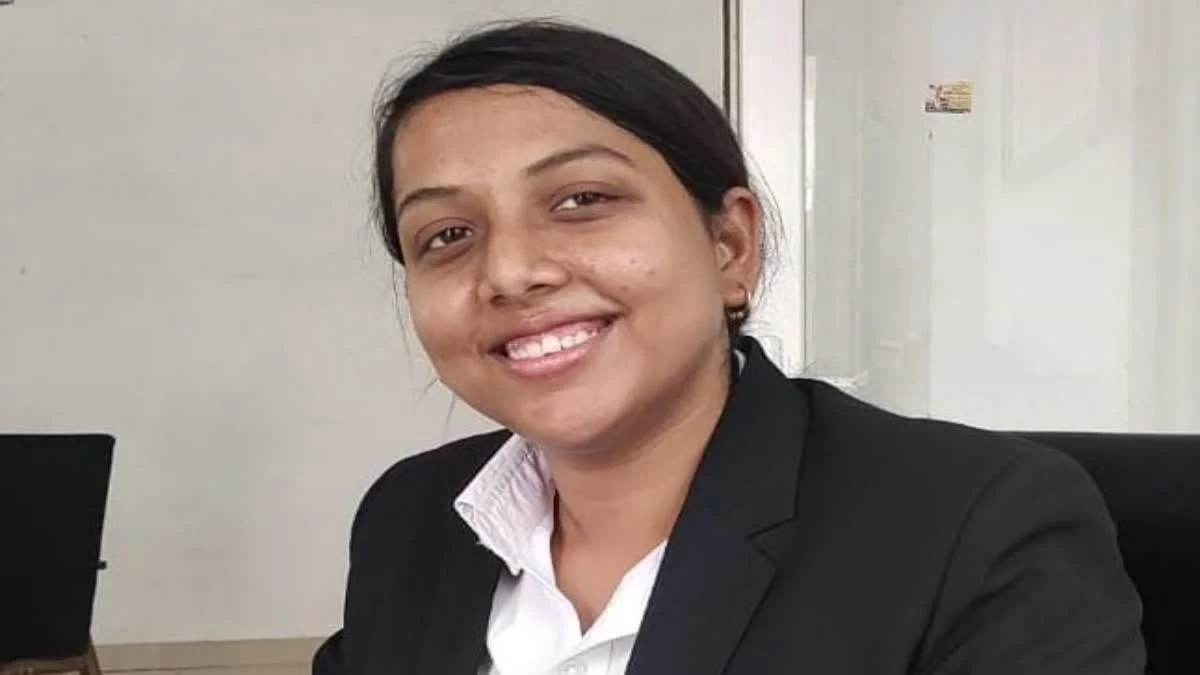
In a story of determination, faith and steady hard work, Anjum Ara from Prayagraj in Uttar Pradesh has secured first rank in the Chhattisgarh Provincial Judicial Service Examination, becoming a judge and bringing pride to her home state. Her success has been widely celebrated in Prayagraj, where neighbours and well-wishers described her achievement as a moment of honour for the city.
Anjum, who comes from an educated Muslim family, said her journey was shaped by a personal loss that changed the direction of her life. Her uncle, whom she lovingly called Bade Abu, served as an Additional District Judge. His death left a deep impact on her and inspired her to choose the path of judicial service. “I used to call him Bade Abu,” Anjum recalled. “After he passed away, I made up my mind that I would become a judge like him and serve society.”
She completed her early schooling at Central Academy in Jhunsi town in Prayagraj District before pursuing her BA and LLB from the University of Allahabad. Reflecting on her university years, Anjum said the Law Faculty played a major role in shaping her approach towards legal studies. “The Law Faculty taught me to understand the law, not just memorise it,” she said. “Our professors focused on practical learning. That helped me a lot in the judicial exams.” She added that because of the strong academic environment at the university, she did not feel the need to rely on costly coaching institutes. “If your basics are clear, you can prepare on your own,” she said.
Her father, Shamim Ahmed, works as an assistant manager at the State Bank of India, while her mother, Akhtari Begum, is a homemaker. Anjum described her parents as her biggest support system. She said her preparation was entirely self-driven and disciplined. “I studied five to six hours every day with full focus,” she explained.
For the mains examination, she focused strongly on judgment writing. She regularly practised answer writing and carefully studied judgments delivered by local courts in Chhattisgarh to understand how decisions are framed. “I practised writing answers regularly. I also studied judgments from local courts in Chhattisgarh to understand how decisions are structured,” she said. She also credited her habit of reading newspapers daily for helping her during the interview stage. “Current affairs helped me respond confidently,” she added.
At home, her family ensured that her studies were never disturbed. “They made sure there was no noise while I studied. They always encouraged me, especially when I failed in the Rajasthan and Delhi judicial exams,” Anjum said. Her father said the family never allowed disappointment to take over. “We always believed in her ability. Failure is part of life. We told her not to lose hope,” he said. Her mother added, “She worked very hard day and night. We only tried to give her a calm environment.”
Before achieving success in Chhattisgarh, Anjum faced setbacks in other states. She admitted that those failures were painful but also important lessons. “Failures taught me where I was lacking,” she said. “Instead of getting upset, I improved my answer writing and strengthened my understanding of the law.” Her perseverance paid off when the results were declared and she secured the top rank in the state.
Residents in Prayagraj expressed pride in her achievement. A neighbour said, “This is a proud moment for the entire area. She has shown that with hard work, anything is possible.” A former teacher from the University of Allahabad said, “Anjum was always sincere and focused. Her success proves that strong academic grounding and discipline make a real difference.”
Now appointed as a judge, Anjum says her goal is to carry out her duties with honesty and integrity. “I want to fulfil my responsibilities towards society through the judiciary with sensitivity,” she said. “Justice should be fair and humane.” Her achievement is being seen as an inspiration, particularly for young women from minority communities who dream of entering the judiciary.
Anjum also shared advice for aspirants preparing for judicial services. She urged students to build a strong grasp of the basic language of law. She advised regular answer writing practice for the mains examination and stressed the importance of understanding how court judgments are read and written. She encouraged students to maintain a routine of five to six hours of focused study daily and not to lose heart in the face of failure. “There is no easy way,” she said. “You have to stay focused and believe in yourself.”
From the classrooms of Prayagraj to securing the top rank in Chhattisgarh, Anjum Ara’s journey reflects discipline, patience and family support. As she prepares to take her place on the bench, many young aspirants now look to her story as proof that steady effort and belief in one’s goal can turn a dream into reality.
source: http://www.clarionindia.net / Clarion India / Home> Editor’s Pick> Indian Muslims / by Mohammad Bin Ismail / February 23rd, 2026
Ilin Fatima, a young Muslim from Ajmer, has made history by becoming the city’s first female Chartered Accountant (CA), marking a milestone for her family and the local Muslim community. Her achievement reflects a blend of strong upbringing, determination, and a steadfast commitment to education.
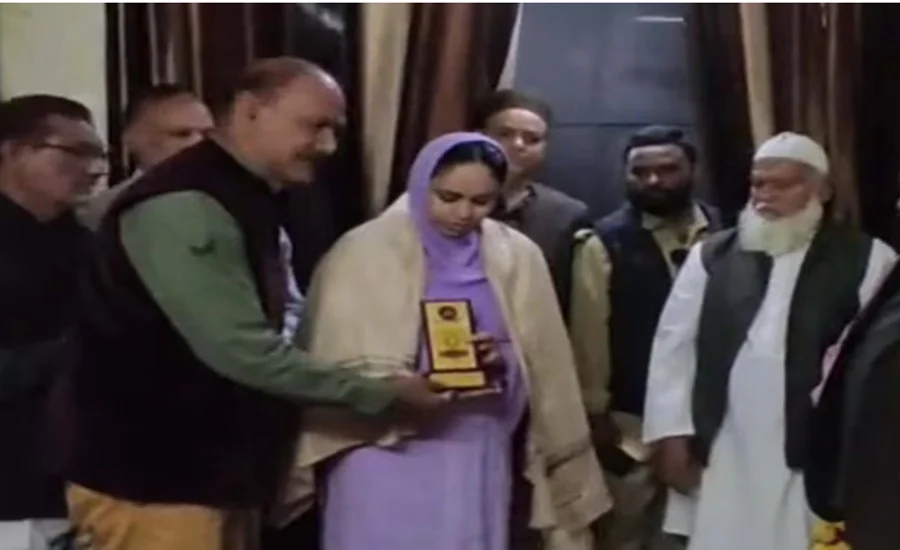
Fatima was welcomed with widespread enthusiasm by the Muslim Welfare and Education Committee of Ajmer in Rajasthan, where she was felicitated for her dedication and resilience. Community members gathered to celebrate, expressing pride not only in her personal success but also in what it signifies for Muslim families across Ajmer and the state.
Her father, Abdul Hameed Khan, spoke about the significance of this accomplishment with deep gratitude to Allah. “I have three daughters, and I ensured they were educated according to Shariah law,” he said. “My daughters have succeeded in both religious and worldly knowledge. I urge every parent to prioritise education for their children. Even if you have to eat half a loaf of bread, make sure your children receive quality education.”
He referred to a Hadith (sayings of Prophet Muhammad) and emphasised the value of knowledge: “Acquire knowledge even if one has to go to China. Education is essential, and people often overlook its importance. My daughter’s success is a reminder of the power and necessity of learning.”
The community’s response has been overwhelming. Leaders and members of various organisations, including Syed Rab Nawaz Jafri, UD Khan, Dr Syed Mansoor Ali, Haji Nafees Ahmed, Advocate Manzoor Ali, Hasan Mohammad, Akram Siddiqui, Farid Hussain, and Aqeel Ahmed of the Ajmer Muslim Welfare and Education Committee have all praised Fatima’s dedication and accomplishment.
A committee spokesperson remarked, “Ilin Fatima’s achievement serves as an inspiration not only to her family but to the entire city. Her commitment to education demonstrates that the progress of daughters is vital for the development of society. When girls are educated, communities prosper, and real success is achieved.”
Ilin Fatima’s historic success is likely to encourage more Muslim families to prioritise education for their daughters, breaking barriers and inspiring future generations. Her journey is a testament to perseverance, faith, and the unwavering support of a family that values both religious and worldly knowledge.
“Her hard work shows that with determination, guidance, and faith, anything is possible,” the committee official added. “She has set an example for all young Muslim girls in Ajmer and beyond.”
As Ilin Fatima steps into her professional career, her story stands as a beacon of hope and a reminder of the transformative power of education within the Muslim community in India.
source: http://www.clarionindia.net / Clarion India / Home> Editor’s Pick> India> Indian Muslim / by Mohammad Bin Ismail / November 10th, 2025
At 59, a motor mechanic in Rajasthan dedicates his life to helping 19,000 poor families, distributing free ration kits and gifts to Hindus and Muslims alike, proving that service knows no religion.
New Delhi / Dungarpur :
In the heart of Dungarpur city in Rajasthan, a remarkable story of selfless service and unity is quietly unfolding. Haji Noor Mohammad Makrani, a car mechanic by trade, has become an inspiring figure of humanity and brotherhood, breaking barriers of religion and caste with his unwavering dedication to the poor and needy.
For many years, Noor Mohammad has devoted himself to social service through the public welfare group “MMB Group,” inspired by the spirit of the Mastan Shah Baba Dargah, where he is actively involved. His mission has touched the lives of over 19,000 families, distributing free ration kits and providing essential support during every festival, including Holi, Diwali, Eid, Bakrid, and Ramadan.
“Service is the biggest religion,” says Noor Mohammad, whose commitment has not waned even at the age of 59. His efforts go beyond just ration distribution; he has donated blood 40 times and regularly distributes clothes, food, and daily necessities to the destitute across Dungarpur. He also cares for animals and birds, ensuring they have food and water.
“Noor Mohammad does not see anyone’s caste or religion. His heart is open to all,” shares Asrar Ahmed, former minister of state, praising the man whose actions unite communities. Non-Muslim residents of Dungarpur also express deep respect and support for him, showing that goodwill crosses all divides.
“As long as I live, I will continue this service,” Noor Mohammad states firmly, embodying the true spirit of brotherhood in a time when such examples are rare.
At the Mastan Shah Baba Dargah, Noor Mohammad regularly collaborates with government officials, social workers, and local leaders to organise public welfare programmes. His work stands as a shining example in an age where division often dominates headlines.
This story of Noor Mohammad Makrani is a reminder that humanity and kindness can prevail over differences. His life’s work inspires many to see beyond religion and caste and to embrace the shared responsibility to care for the less fortunate.
“Noor Mohammad’s service has helped our family during hard times. His help is given without any conditions,” says Rahim Khan, a beneficiary.
“In these times, it’s rare to find someone who works for all communities alike. He truly represents brotherhood,” remarks Suman Patel, a local Hindu resident.
Noor Mohammad’s journey shows that compassion and dedication can build bridges where others see only walls.
source: http://www.clarionindia.net / Clarion India / Home> India> Indian Muslims / by Mohammad Bin Ismail / July 15th, 2025
A Muslim girl from Nashik tops the university in audiology and speech therapy, thanks to hard work, parental support and help from MESCO Educational Trust
New Delhi / Mumbai :
A young Muslim girl from a low-income family in Nashi has brought pride to her community by topping her university exams. Ansari Iqra Marzban, daughter of a taxi driver, secured the highest marks in the audiology and speech therapy course at the Maharashtra University of Health Sciences (MUHS). She was awarded the gold medal for her outstanding performance.
“I had never imagined I would be the university topper. It’s only because of my parents’ duas (prayers) and the help I received that I reached here,” Iqra told Clarion India over the phone.
Iqra comes from a simple home where her father, Marzban Ansari, drives a taxi to support the family. Despite financial struggles, Iqra worked hard and refused to give up on her dream of becoming a medical professional.
She completed her SSC from Anjuman Islam Begum Sharifa Kalsekar Girls English High School and her HSC from Peace Science College in Dadar. Though she failed to clear the NET entrance exam on her first try, she did not lose hope. On her second attempt, she scored 486 marks and gained admission to Topiwala National Medical College (Nair Hospital) in Mumbai.
Her father was overcome with emotion when he learned of her success.
“I had tears in my eyes when I heard she topped the university. We couldn’t afford the course, but Iqra insisted on continuing her education. She’s our pride,” he said.
Iqra’s achievement also shows the silent but strong role of Muslim organisations that help students in need. After getting admission, Iqra faced a major problem — a lack of funds for her studies. That is when MESCO Educational Trust came forward and paid for all her education expenses.
“I had lost hope, but when MESCO came forward, it felt like Allah had opened a door for me,” Iqra said with emotion.
A MESCO official said, “Iqra is one of hundreds of students we help every year. Her achievement proves that with a little help, our children can do wonders.”
Iqra scored 950 out of 1,200 marks in her first and second semester exams — the highest in the state. She received the gold medal and praise from her teachers and classmates alike.
Dr Shaikh Aamir, a faculty member at Nair Hospital, said, “Iqra is a dedicated and humble student. Despite all odds, she kept performing well in class and in exams. We’re proud to have her.”
Iqra’s story is important at a time when Muslims often face discrimination or are shown negatively. Her success proves that Muslim girls can do well when they get the right support.
Iqra had a message for other girls facing struggles: “Don’t give up. Work hard, pray regularly, and look for help from the right places. Allah will make a way.”
She also said more awareness is needed about support systems in the Muslim community. “Many people don’t even know that groups like MESCO are ready to help. Our people should come forward and ask for help when needed,” she added.
Prof Azra Fatima, a social activist and educationist, praised Iqra’s success. “Iqra’s victory is a strong reply to those who say Muslim girls are not interested in education. It’s not interest that’s lacking, it’s opportunity.”
Now, Iqra plans to continue studying and work in speech therapy to help children with speech problems. But for many, her biggest achievement is the inspiration she gives to other Muslim girls.
“We didn’t have money, but we had faith. And today that faith has brought us respect,” said her father.
Iqra’s gold medal is more than a personal victory. It is proof of what Muslim youth can achieve with faith, family support, and community help.
source: http://www.clarionindia.net / Clarion India / Home> Editor’s Pick> India> Indian Muslims / by Mohammad Bin Ismail / June 19th, 2025
The historic achievement brings pride to his family, the state, and the nation; it proves that dedication, family support, and strong values can lead to exceptional results.

New Delhi / Guwahati :

In a proud moment for Assam and the entire Muslim community, a young boy from the South Village in Guwahati has written his name in the history books. Musa Kaleem, 18, has emerged as the state topper in the National Eligibility cum Entrance Test (NEET-UG) 2025, leaving behind over 42,000 aspirants from Assam. With the 99.97th percentile, Musa’s achievement is not just academic excellence — it is a powerful reminder of the potential of the Muslim youth.

Out of 20.08 lakh students who appeared for the NEET UG exam nationwide, 12.36 lakh students cleared the cut. Among them, Musa stood out in Assam, becoming the number one in the state. Nationally, the top rank went to Mahesh Keshwani of Hanumangarh, Rajasthan. While Mahesh made the nation proud, Musa brought immense joy and hope to Assam by becoming the highest scorer in the state.

Musa’s story begins in Sri Bhumi, Assam, where he was born. His family later moved to South Village in Guwahati. His father, Anwar Hussain, once worked as an engineer in Sri Bhumi. Now, he runs a small cosmetic shop in Guwahati. His mother, Rehana Begum, is a homemaker. Coming from a modest background, Musa’s success becomes even more meaningful.

Speaking to Salam TV, Musa said, “I am very happy. I give all the credit to my parents. Their support never stopped. They stood by me in every moment.”

Musa prepared for the exam at Allen Coaching Institute in Guwahati. Known for his quiet focus and regular study schedule, his teachers describe him as a student who never wasted time. He avoided distractions and remained deeply committed to his goal of becoming a doctor.

At a time when many from the Muslim community face social bias and economic challenges, Musa’s result shines like a ray of hope. His determination sends a clear message: success is possible through effort and discipline, even without wealth or privilege.

Speaking to reporters, Musa said, “My dream is to serve the country. I don’t just want to become a doctor. I want to become someone who helps the poor and stands with those who have no support.”

His words reflect the values many Indian Muslims hold dear—serving humanity, staying humble, and always standing for justice.

Musa’s father, Anwar Hussain, expressed deep happiness over his son’s success. With teary eyes and a proud smile, he said, “I never asked him to run after money. I always told him to become a good human being first. Only then will you become a good doctor.”

His advice is touching. In a world where success is often measured in numbers and bank balances, Anwar Hussain’s simple yet strong message brings back the true meaning of education—character and compassion.

News of Musa’s achievement quickly spread across Assam, especially among the Muslim community. Social media platforms and local mosques were abuzz with congratulations and prayers. From imams to teachers, everyone expressed pride.

Maulana Naseeruddin, an Islamic scholar from Guwahati, said, “This boy has shown what true Islam teaches us—to seek knowledge and to serve mankind. May Allah bless him and make him a source of pride for the community.”

In a time when Muslims are often portrayed unfairly in the media, stories like Musa’s are a reminder of the silent majority who quietly focus on education, ethics, and contribution to the nation.

Local leaders and education officials have praised Musa for his outstanding performance. Assam’s education minister, during a press conference, said, “We congratulate Musa Kaleem. This is a big moment for Assam. He is an inspiration for students across communities and regions.”

Although no government reward has been announced yet, many believe that a talent like Musa deserves both recognition and support for future studies.

For decades, Muslims in India have faced multiple challenges in the field of education—poor access to quality schools, financial constraints, and social discrimination. Yet, despite these odds, young Muslim boys and girls continue to prove their strength.

Educational researcher Dr Sameera Ahmad pointed out, “Musa’s result is part of a quiet revolution. More and more Muslim families are investing in their children’s education, even when they don’t have enough for themselves. This is courage, not just sacrifice.”

Musa Kaleem’s story stands as an answer to those who stereotype Indian Muslims as backward or uninterested in studies. It shows that when given a fair chance, they can lead in merit-based competitions like NEET UG.

Musa plans to join a top medical college to continue his studies. His dream is to work in rural and poor areas where healthcare is still far from reach. He believes that doctors have a duty to serve beyond city hospitals and five-star clinics.

“I want to go where people have no help,” he said. “A real doctor should always be available for the needy.”

This thinking, especially from such a young man, shows maturity and compassion, traits India needs from its future doctors.

Musa Kaleem’s story is not just about topping an exam. It’s a story of dreams, belief, and values. It reminds the country that Indian Muslims are not behind. They are rising, despite hurdles, with dignity and dedication.

The achievement also calls upon society to treat Muslim students fairly, to support their education, and to highlight their success, not just their failures.

As Musa moves forward in his journey to become a doctor, he carries with him the hopes of many—of parents who never gave up, of teachers who believed, and of a community that wants nothing more than peace, respect, and a better future for its children.

“Success will come and go,” Musa said quietly. “But being a good human being is forever.”

source: http://www.clarionindia.net / Clarion India / Home> Indian Muslims / by Mohammad Bin Ismail / June 17th, 2025