Bankoot (Banihal) / Srinagar / JAMMU & KASHMIR :
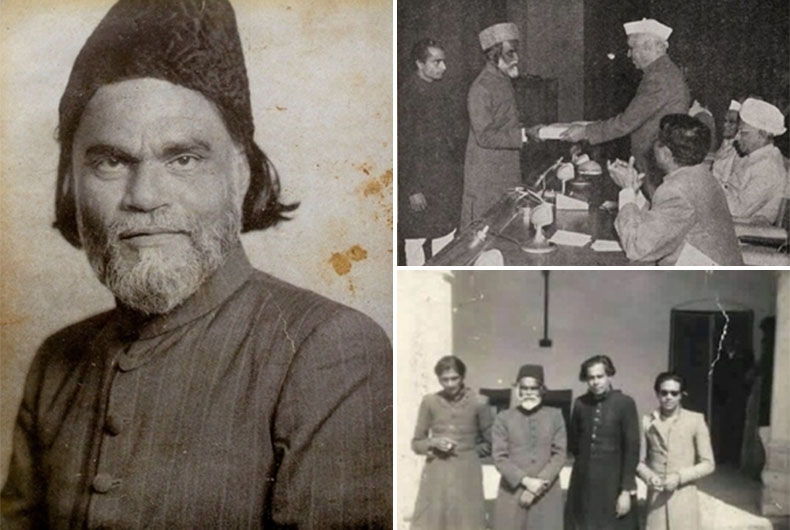
Professor Ghulam Muhammad, widely known by his pen name Marghoob Banihali, was an illustrious scholar, poet, and cultural historian whose literary and academic contributions have left an indelible mark on the landscape of Kashmiri literature and thought.
Born on 5th March 1937 at Bankoot, Banihal, in the erstwhile princely state of Jammu and Kashmir, he emerged as a multidimensional personality whose erudition encompassed not only Kashmiri language and literature but also Persian, Urdu, and English.
Marghoob Banihali’s journey, marked by personal loss, intellectual rigor, and literary innovation, reflects the resilience of a scholar deeply rooted in his cultural milieu yet transcending regional boundaries in his vision.
He passed away on 27th April 2021 at his residence in Srinagar, leaving behind a rich legacy of scholarship, poetry, and cultural reflection. The formative years of Marghoob Banihali were fraught with challenges. He lost his mother at the tender age of eight and his father when he was merely fourteen. The successive losses not only plunged his family into economic hardship but also exposed the young boy to the harsh realities of life at an early age. The family’s business suffered a severe blow, forcing Marghoob to traverse arduous paths—both literal and metaphorical—toward education and personal growth. In March 1954, he undertook a challenging journey to Islamabad to appear for his matriculation examination, traveling around seventy kilometers through snow-clad mountainous terrain. These early experiences of adversity instilled in him resilience, humility, and a deep understanding of human struggles, qualities that would later find expression in his literary and scholarly endeavors.
Marghoob Banihali received his early education under several prominent Kashmiri educators who shaped his intellectual and literary sensibilities. Among these were Haji Ghulam Ahmad Shah, who later became his father-in-law, Hakim Muhammad Hafiz Allah of Rawalpora, Srinagar, and Molvi Ghulam Muhiuddin Kirmani of Pattan Baramulla, who advised him to adopt the pen name “Marghoob.”
Another significant influence in his formative years was Master Ghulam Nabi Geeri, a member of his own family, who provided guidance and support during his early scholarly pursuits. Despite financial constraints, Marghoob pursued his education in a private mode, simultaneously embarking on a teaching career that would span decades. He eventually completed his Masters in Persian and went on to earn a PhD in the same field, laying the foundation for a distinguished academic career.
Professionally, Marghoob Banihali held diverse roles that reflect his commitment to education and literature. He served as headmaster and vice-principal at higher secondary schools and as a Tehsil Education Officer (TEO) before joining the University of Kashmir in 1969 as a lecturer in the Persian Department. His tenure at the university spanned over three decades, during which he contributed to the Department of Kashmiri, the Central Asian Studies Department, and the Iqbal Institute. He retired in 1997 as the Head of the Department of Kashmiri, leaving behind a legacy of mentorship, scholarship, and administrative excellence.
Marghoob Banihali’s literary oeuvre is vast and varied, reflecting his erudition, spiritual depth, and commitment to human values. His writings primarily focus on Islamic subjects, communal harmony, and ethical and cultural reflections. He authored over fifty books in Kashmiri, Urdu, Persian, and English, covering poetry, literary criticism, cultural history, and translations. His first poetic collection, Partavistan, earned him the Sahitya Akademi Award for Kashmiri literature in 1979 and the state Sahitya Akademi Award in 1977, establishing him as a prominent voice in contemporary Kashmiri poetry. His works transcend mere literary expression; they engage deeply with the cultural, spiritual, and philosophical dimensions of Kashmiri society.
Among his notable works is Marghoob Theory, published in English in 1982, which offers a systematic proposal for the improvement and modernization of the Kashmiri script. This work has been lauded by scholars such as Prof. Syed Maqbool, former Director of the Centre for Central Asian Studies, who described it as a scientifically viable and practical method that preserves the connection of Kashmiri with its source languages while making it more accessible to the Kashmiri-speaking populace.
Similarly, Prof. Nazir Ahmad Malik, a distinguished linguist, recognized the significance of this contribution for the development and preservation of Kashmiri language and literature.
Another seminal work, Kashir Bale Apare (1989), provides a detailed account of Kashmiri culture, language, and literature as prevalent in the Pir Panchal region. Through meticulous research, Marghoob Banihali chronicled the evolution of Kashmiri literature, highlighting its linguistic and cultural heritage.
His translations further enriched Kashmiri literary resources; in 1975, he translated Kalilah wa Dimnah into Kashmiri, introducing the classic collection of fables to a broader audience.
He also translated the monograph on the “Nightingale of India” (Bulbul Hind), Sarojini Naidu, thereby familiarizing Kashmiri readers with the Bengali poet Qazi Nazrul Islam. Marghoob Banihali’s engagement with historical and cultural scholarship is exemplified in Qadeem Kashur: Some Glittering Milestones of Ancient Kashmiri (with Special Reference to Shaikhul Alam), published by the Central Institute of Indian Languages, Mysore, in 2001.
This work provides the cultural and linguistic background of Shaikhul Alam’s poetry, situating it within the broader historical and intellectual traditions of Kashmir.
Similarly, his scholarly inquiry into Iqbal’s thought culminated in Kalam Iqbal kay Ruhani, Fikri wa Fani Sarchasmay (2006), a critical exploration of Iqbal’s philosophical, spiritual, and literary dimensions.
He also authored Ikhliqiat Marghoob (2005) and Khas Ihsan, poetic collections that address Islamic themes such as Tawhid, Risalah, and Akhirat, blending devotional fervor with literary sophistication.
His translation of the rare manuscript Noor Namah of Baba Naseebuddin Ghazi into Urdu (published in 2013) further attests to his dedication to preserving and disseminating Kashmir’s spiritual and literary heritage.
“Professor Marghoob Banihali was a cultural beacon of Kashmir, revered in literary and social circles for bridging the region’s historical, linguistic, spiritual, and literary traditions with contemporary scholarship. His work, including his writings, teachings, and translations, deeply engaged with Islamic thought, human values, and communal harmony. Banihali significantly contributed to the Kashmiri language through the Marghoob Theory and rejuvenated Sufi poetic traditions. As a poet, scholar, teacher, and humanist, his legacy is a testament to the power of knowledge and devotion to culture, faith, and humanity, making him a jewel in the crown of Kashmiri literature.”
Marghoob Banihali’s scholarship was not confined to the written word; he was a dedicated teacher and mentor, particularly in the study of Persian poetry of Iqbal.
Associated closely with Aali Ahmad Saroor, whose monumental works on Iqbal he studied and taught, Marghoob enabled research scholars at the Iqbal Institute of Philosophy and Culture to engage with Iqbal’s Persian poetry critically and independently.
By teaching the fundamentals of Persian language and literary analysis, he empowered a generation of scholars to navigate complex texts and philosophical concepts with confidence. In the foreword to Adam Gharay Iqbal (Iqbal’s Humanistic Philosophy), Professor Abdul Haq aptly observed: “Prof Marghoob is a knowledgeable person and a thinker as well. He is truthful, sincere, and honest in thinking, and practical in dealings. His multidimensional personality, combined with his erudition in Urdu, Persian, and Kashmiri literature, provides students and teachers ample guidance.”
A prominent dimension of Marghoob Banihali’s personality was his humility, nobility, and spiritual inclination. Mir Ghulam Rasool Nazki affectionately called him “mahboobi” (my beloved), while Akhtar Mohiuddin described him as an Islamic poet and writer endowed with pure nature (salim al-tabah).
Yusuf Taing, a renowned literary critic, noted that Marghoob Banihali’s poetry, whether in ghazal, naat, nazm, rubai, or manqabat, consistently reflects a profound love for the Prophet Muhammad (SAW), serving as a versified biography of the Prophet and reviving the spiritual essence of Kashmir’s Sufi poetic tradition.
Through works such as Tohfai Tawhid (2017), he rejuvenated the age-old legacy of Kashmiri Sufi poetry, imbuing it with tawhidic thought and devotional depth.
Professor Marghoob was a vital link between Kashmir and Jammu, belonging to the distinguished line of Pir Panchal poets and literary figures, including Kamghar Kashtwari, Rasa Javeedani, Nishat Kashtwari, Janbaz Kashtwari, Bashir Badrwahi, Shahbaz Rajourwi, and Manshur Banhali.
He was described by Bahar Ahmad Bahar as “a movement, a history, and a trendsetter,” and Prof. Ghulam Mohiuddin Hajni famously likened him to “a jewel coming from the sky-rocketing mountains of Pir Panchal.” Mohan Lal Aash extolled him as “a diamond carved out from the high rocks of Pir Panchal,” recognizing his deep understanding of global literary trends, mastery over expression, and devotion to the Rishi philosophy of Hazrat-e-Alamdari in Kashmir. Prof. Waheed-u-Din Malik, former Vice Chancellor of the University of Kashmir, hailed him as “a brilliant scholar of oriental languages, a sincere Kashmiri who undertook the arduous task of bringing out the best of Kashmiri culture and language through creative writings.”
One of Professor Marghoob Banihali’s seminal contributions to Kashmiri linguistics is the Marghoob Theory, a concise yet powerful work in English that chronicles the birth and evolution of the Kashmiri language and proposes a practical framework for its script reform. This work, consisting of around 100 pages, received praise from scholars and linguists alike for its scientific approach, practical applicability, and preservation of linguistic heritage. It has been recognized as a landmark achievement in Kashmiri language studies, providing a bridge between tradition and modernity in the realm of script and literacy.
Throughout his life, Marghoob Banihali exemplified the qualities of a consummate scholar, poet, and humanist. His multidimensional personality combined erudition, humility, devotion, and a profound sense of social and cultural responsibility. He engaged deeply with the literary and spiritual heritage of Kashmir while extending his intellectual reach to encompass Persian, Urdu, and English literature. His literary output, comprising over fifty books, reflects a commitment to ethical values, spiritual insight, and cultural preservation. His translations, critical studies, and original works enriched the literary corpus of Kashmir and created pathways for future scholars to explore the region’s rich literary and philosophical traditions.
Marghoob Banihali’s contributions were recognized with numerous accolades, including the prestigious Sahitya Akademi Award in 1979 for Partavistan, the state Sahitya Akademi Award in 1977, and the Ghalib Award from the President of India in 2008.
Beyond awards, his enduring legacy lies in the generations of students, scholars, and readers he inspired, the rejuvenation of Kashmiri Sufi poetic traditions, and the preservation and propagation of the Kashmiri language and culture.
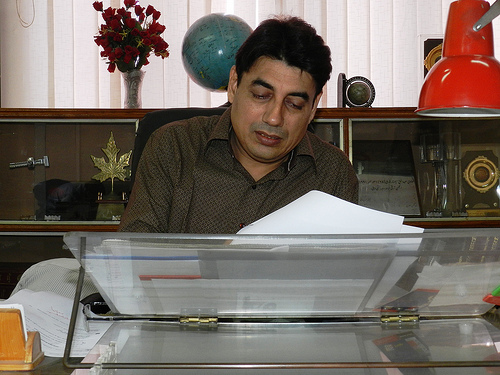
Professor Marghoob Banihali’s life exemplifies resilience in the face of adversity, intellectual curiosity, and unwavering dedication to cultural and spiritual values. His scholarly rigor, poetic genius, and commitment to education rendered him a guiding light in Kashmir’s literary and academic spheres. The impact of his work continues through his sons, particularly Prof. Mushtaq Marghoob, who carry forward his philanthropic and intellectual legacy, ensuring that the torch of knowledge and cultural enrichment remains alight.
In conclusion, Professor Marghoob Banihali was not merely a literary figure or an academic; he was a cultural beacon whose life and work bridged the historical, linguistic, spiritual, and literary traditions of Kashmir with contemporary scholarship. His writings, teachings, and translations reflect a deep engagement with Islamic thought, human values, and communal harmony, while his humility, sincerity, and spiritual devotion rendered him a revered personality in both literary and social circles. He rejuvenated the rich Sufi poetic traditions of Kashmir, contributed to the evolution of the Kashmiri language through the Marghoob Theory, and inspired generations of scholars and poets. As a poet, scholar, teacher, and humanist, Marghoob Banihali remains a jewel in the crown of Kashmiri literature, a legacy that will endure for generations to come. His life is a testament to the power of knowledge, perseverance, and devotion to culture, faith, and humanity. May his soul rest in peace.
(The author a veteran academician is a former Professor and Head Department of Islamic Studies, Kashmir University. The views, opinions and conclusions expressed in this article are those of the author and aren’t necessarily in accord with the views of “Kashmir Horizon”)
hamidnaseem@gmail.com
source: http://www.thekashmirhorizon.com / The Kashmir Horizon / Home> Opinion / by Prof. Hamid Naseem Rafiabadi / October 28th, 2025