Tag Archives: Salma Husain – Author

The Rich Legacy of Mughal Era Drinks: How Muslims Preserved Royal Recipes

INDIA :

From rose syrup to mango panna, Indian Muslims continue the Mughal tradition of crafting cooling summer drinks originally developed by royal physicians.
New Delhi :

Muslims in India proudly carry forward the centuries-old tradition of crafting refreshing drinks that originated in the Mughal era, a time when royal physicians invented syrups not only for their enduring taste but also for immense health benefits.

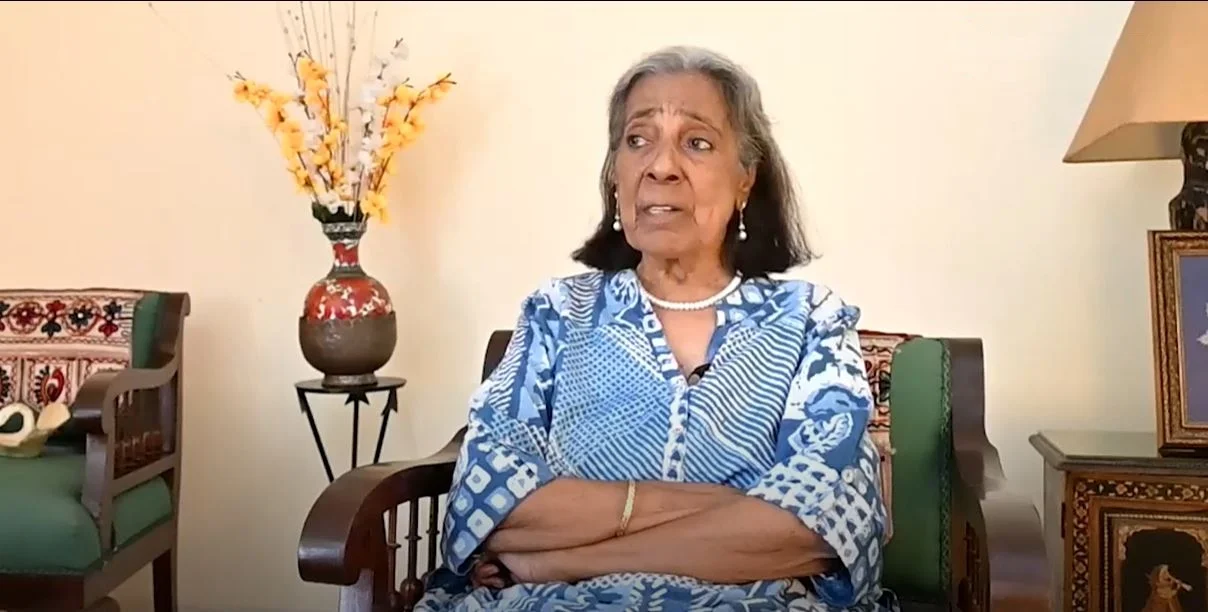
Salma Hussain, a researcher who has studied Mughal food and drink habits for over fifty years, explained: “Most of the drinks were invented by the royal physicians, who sometimes prepared drinks for medicinal purposes and sometimes for a refreshing taste, and they were very popular.”

She shared how the art of making these drinks flourished under royal patronage, especially during the reign of Empress Noor Jahan, whose influence in the royal kitchen brought many innovations. “Noor Jahan had creative talent. Under her leadership, excellent syrups were developed. The food was also good, tasty. She especially supervised the royal kitchen,” she told Clarion India recently.

Salma recalled an interesting anecdote from the Mughal court: “Once Queen Noor Jahan was strolling in the garden. Rose flowers were in full bloom. Noor Jahan’s mother, Ismat Ara Begum, used to make perfumes from these flowers. Noor Jahan called the royal physician and said many medicines were made from flowers; why cannot a syrup be extracted from the roses? ‘Many people drink in the name of medicine, but you should make something that will relieve us from the heat and be refreshing, and we will also enjoy it.’”

This simple request from the queen gave birth to the now-famous rose syrup, a cooling drink cherished across the Indian subcontinent to this day.

According to Salma, syrups were not limited to rose alone. “Syrups started to be made from roots, like khus syrup; Panna from mango. Similarly, vine syrup came up. Pomegranate syrup was made by cooking sour and ripe fruit, both said to be very beneficial for the skin,” she said. These drinks were especially popular among the royals, famous for their passion for beauty and health.

Salma further highlighted how Indian Muslims and Mughal royalty took special care to combat the intense Indian heat. “The heat in India was extreme, like today’s heat. Kings also used to cool drinks. Emperor Akbar started ordering ice from the mountains.”

The knowledge of cooling drinks extended to using yoghurt, lemon, and various salts to make beverages like shikanji and lassi, which remain popular today. 

“Rose syrup was made from flowers, custard from custard. Jamun syrup was made from fruits, vine syrup was made from mango syrup. Yoghurt was used a lot then. We learned how to make raita from it. They used to cool the yoghurt or mix it in water and make a drink,” she said.

She also pointed to the influence of neighbouring cultures: “A syrup came from Turkey, Aryan, which is the buttermilk we drink today. Almonds were used to make a lot of syrups. It is said that in Iran, almonds were put in hot water and savoured.”

Salma stressed the importance of these drinks beyond refreshment. “There are some unsubstantiated stories about drinks, but all of them seem appropriate, such as the first among the sages who made syrup; his name was Fitha Ghoras. Sage Fitha Ghoras was the first to give a medicinal drink the form of a syrup, like a decoction, etc. Over time, the trade in syrup gradually started and all kinds of syrups started being made.”

She also mentioned that in 1906, Hakim Abdul Majeed (founder of Hamdard) made the spirit-enhancing syrup. The same refreshing syrup is still alive, and we drink it to relieve the heat.

The purity and quality of ingredients were also important to the Mughals. Salma explained: “The water mixed in the syrup was from the Ganges, although the Yamuna River was closer to Delhi. Its water was not used because of the belief that it caused diseases.”

Water management was taken seriously: “The Mughals used to inspect water tanks. Special officers were assigned to procure and preserve the Ganges water.” 

This careful tradition of preserving royal recipes and using pure ingredients continues in India’s Muslim communities, who keep the memory of Mughal cuisine alive through generations.

Local historian Ahmed Khan commented, “These drinks are not just a part of our culture, they connect us to our glorious past. They remind us of the wisdom of our ancestors and the care they took in making life enjoyable and healthy.”

As the summer sun blazes, families across the subcontinent continue to enjoy these time-honoured drinks, a tribute to the enduring legacy of the Mughal era and the Indian Muslim custodians who have preserved these traditions.

source: http://www.clarionindia.net / Clarion India / Home> Editor’s Pick> Indian Muslims / by Mohammed Bin Ismail / May 26th, 2025

FORTUNE COOKIE: The secret recipes of Avadh’s Taluqdars

UTTAR PRADESH / Gurgaon, HARYANA   :

Salma Husain has quietly been digging up culinary gems

When Salma Husain arrived in Delhi in 1964 to take up a translator’s job in the Persian section of the National Archives of India, she was the first young woman from her community to move out of her parental home and pursue a career when she was still unmarried.

Salma apa, as she’s known among her younger colleagues, has never worn this fact as a badge of honour — I have known her well for 20 years, but I just learnt about it.

She doesn’t need to, for Salma apa, encouraged by the former boss of ITC Hotels, Habib Rehman, has quietly been digging up culinary gems lost in old Indo-Persian manuscripts, stumbling upon such beauties at the British Library as the Nuskha-e-Shahjahani, a cookbook dating back to Emperor Shahjahan (that was when red chillies were still not common, nor were tomatoes, and brinjals were popular because of their ubiquity).

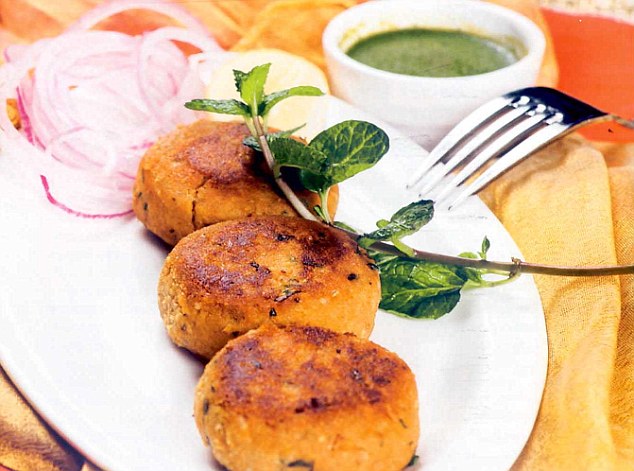
The repertoire of Persian scholar and food historian Salma Husain extends from the humble Dabi Arvi Ka Salan to Avadh’s 'national dish', Shaami Kababs (above), without which no royal dastarkhwan is considered complete
The repertoire of Persian scholar and food historian Salma Husain extends from the humble Dabi Arvi Ka Salan to Avadh’s ‘national dish’, Shaami Kababs (above), without which no royal dastarkhwan is considered complete

You’ll find the accumulated fruits (or orchard, I would say) of the long hours she has invested in locating old cookbooks and recreating recipes from royal memoirs and the accounts of foreign travellers in her anecdote-studded cookbook, The Emperor’s Table.

With Flavours of Avadh, though, Salma apa has produced for the first time a cookbook that goes beyond the much-travelled by-lanes of Aminabad, Lucknow, and travels across the kitchens of the taluqdars who defined (and refined) the culture of region after 1857.

Salma apa’s journey starts at the dastarkhwan of Rajkumar Muhammad Amir Naqi Khan of the Mahmudabad family, whose stunningly attractive wife, Kulsum Begum from Hyderabad, has had Delhi and Mumbai eating out of her hands during her stints with the ITC.

It moves on to Kotwara, a principality 160km from Lucknow bordering Nepal in the Lakhimpur Kheri district. Kotwara is famously associated with the filmmaker and fashion designer Muzaffar Ali, whose kitchen in his Gurgaon home is presided over by Rehana, the family’s retainer for six decades.

The Flavours of Avadh story hits the Grand Trunk Road and meanders into the principality of Tirwa in Kannauj district, whose most illustrious ruler, Durga Narain Singh, travelled extensively across Europe in the years before World War II and came home with a French chef to preside over his kitchen.

The story returns to Lucknow, where we meet the colourful Nawab Jafar Mir Abdullah in his lair, Sheesh Mahal; moves to Sitapur, which was awarded by a grateful British Raj to the Kapurthala family for leading the operation against the sepoys behind the historic siege of the Lucknow Residency; and has a Kharbooze Ki Kheer at the Lucknow home of the Zaheer family of old Congress leaders, whose most illustrious member was Syed Nurul Hasan, the erudite historian and Indira Gandhi’s education minister who introduced the 10+2 system.

Itt ends at Shakarganj, the ancestral home of the descendants of Baba Farid, the most famous of whom was the late Dr Abdul Jalil Faridi, a sought-after medical practitioner and popular MLA with a famous sense of humour.

From these blue-blooded families, Salma apa has collected old recipes to put together a fascinating collection. Of course, you can’t have an Avadhi cookbook minus recipes of such celebrity dishes as the Galawat ke Kabab, Kundan Qaliya, Murgh Mussallam, Dumpukht Gosht and Ande Ka Halwa. Salma apa has them all.

What makes her cookbook special, though, is its ability to cater to our appetite for the exotic. We have, for instance, the Mahmudabad house favourite, Dhungare Baigan (smoked brinjals with yoghurt, onions and Serrano chillies), or the Tirwa family’s Subz Mewa Malai Pulao, where ghee, cream and hung yoghurt are used as generously as seasonal vegetables, or the Ananas ke Paranthe (layered pineapple paranthas) served by the Sheesh Mahal family for breakfast during winter, or the Gajar ka Bharta perfected by Sitapur’s cooks, or Baba Farid ki Meethi Khichri, which has been cooked at Shakarganj on every death anniversary of the mystic saint.

Salma apa has made sure that we’ll see Avadhi cuisine in an entirely different light.

source: http://www.dailymail.co.uk / Mail Online India / Home> India / by Sourish Bhattacharyya / February 26th, 2015