Tag Archives: Saqib Saleem

Anwar Mehdi gave up AMU job to keep Sherwani alive

Aligarh, UTTAR PRADESH :

Mehdi Hassan at work

With a sparkle in his eyes and his hand holding a pair of scissors over a piece of cloth with the precision of a surgeon, on the long cutting board, he paused for a moment, looked up and said, “I was a lecturer in the Department of Mechanical Engineering, but my father’s death changed everything. A mechanical engineer became a tailor to keep his family art and inheritance alive.”

He is Anwar Mehdi, whose tone shows no disappointment or regret at his decision to change careers. This is because not only in Aligarh, he is known across the world as a ‘sherwani expert,’ as he, proudly, carried on the tradition at Mehdi Hasan Tailors – after his father’s name – alive.

Mehdi Hasan Tailors is a brand name and the pride of Aligarh Muslim University for 80 years. It’s also popular across India for its unique sherwani. Several Presidents, Prime Ministers, political and social figures, and Bollywood stars have had their Sherwanis stitched from this place.
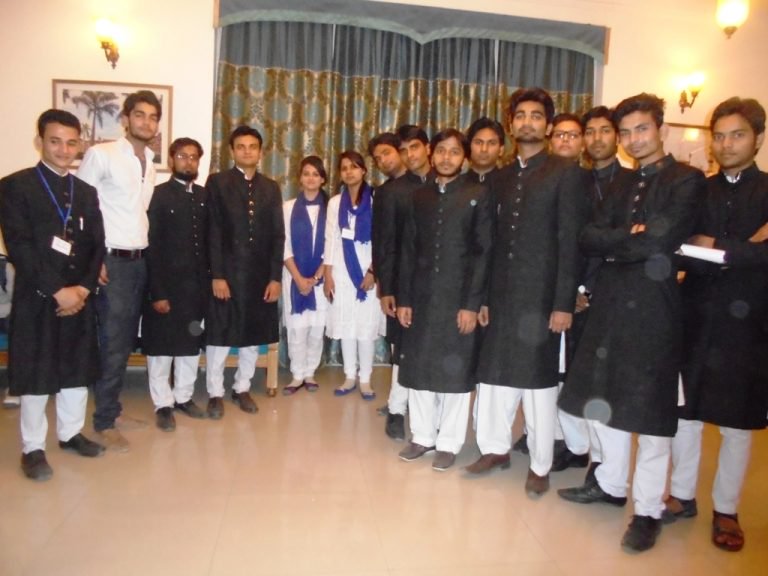
AMU students in Sherwani

Speaking to Awaz-The Voice at Mehdi Hassan Tailors in the Katara Mahal area of ​​Civil Lines, Aligarh, Anwar Mehdi says that his father was an ordinary tailor who went to Mumbai in search of employment around 1944. He met Abdul Rais, an expert sherwani tailor, from whom he learned the art. Before partition, sherwanis were not very common in the country, but wearing sherwanis was a custom in Aligarh Muslim University, so his father came to Aligarh. In 1947, he opened that shop, which is today an iconic tailoring shop.

“I completed my M. Tech. While I had mastered the cutting of sherwani with my father during my student days, I took it over completely after he died in 1995. Although by then I had become a lecturer in the Mechanical Engineering Department, the passion to keep a family art alive took me from the Mechanical Engineering Department to the tailoring shop.”
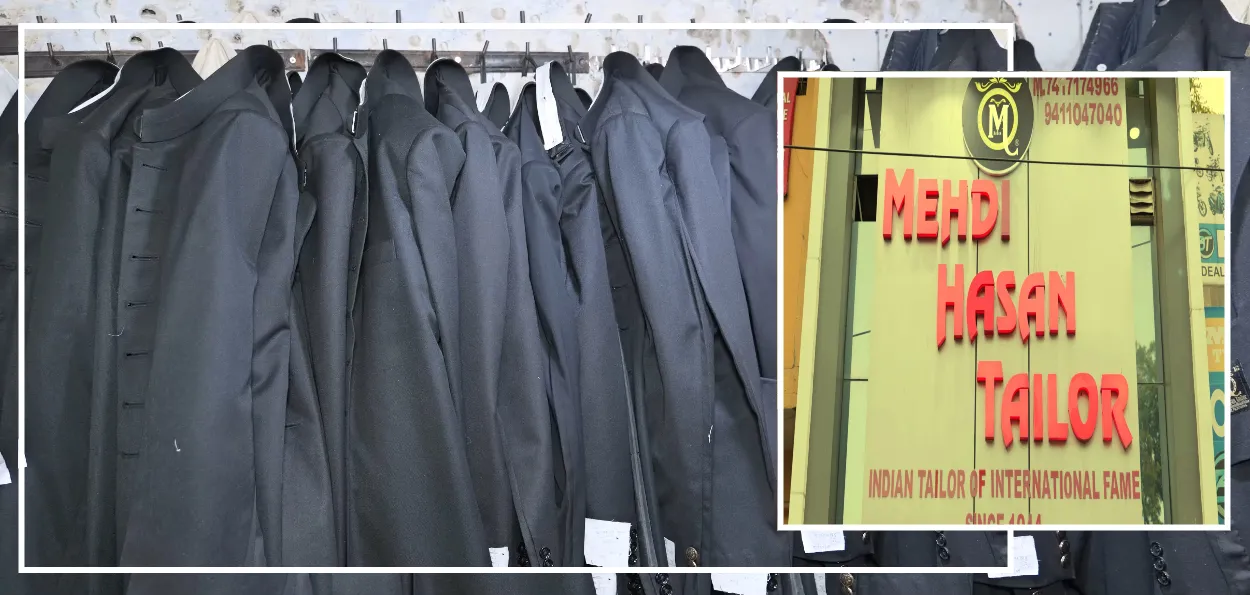
Mehdi Hasan and tailors

Anwar Mehdi said that Sherwani is actually a garment of the Mughal era and later the British, which has its roots in the clothing of the Turkish and Mughal courts. During the Ottoman Empire, the coat and cap of the Turks were very popular. The same style was later changed in India, the coat was lengthened and given a new look, which we know today as “Sherwani”.

He says that from the end of the 19th century until after independence, most of the Nawabs, Rajas, and big landowners of India wore a Sherwani. If you look at their photos, almost all of them will be seen in a Sherwani, the reason being that this garment was considered a symbol of dignity and honour.

According to Anwar Mehdi, as far as Aligarh is concerned, due to the educational environment and the influence of the Muslim elite, the sherwani became a part of educational and cultural prestige. Therefore, it is often said that the “Aligarh sherwani” actually became a symbol of Indian elite culture, be it a doctor, a politician or a scholar. I can say that the sherwani is not a dress, but a symbol of culture, history and identity.

He says that leaders like Pandit Jawaharlal Nehru adopted the sherwani, and later many Presidents of India, Dr Rajendra Prasad, Dr Zakir Hussain and Dr APJ Abdul Kalam also wore it. Anwar Mehdi says that Mehdi Hasan Tailors has the honour of having made sherwanis for many Presidents of the country and other important personalities.
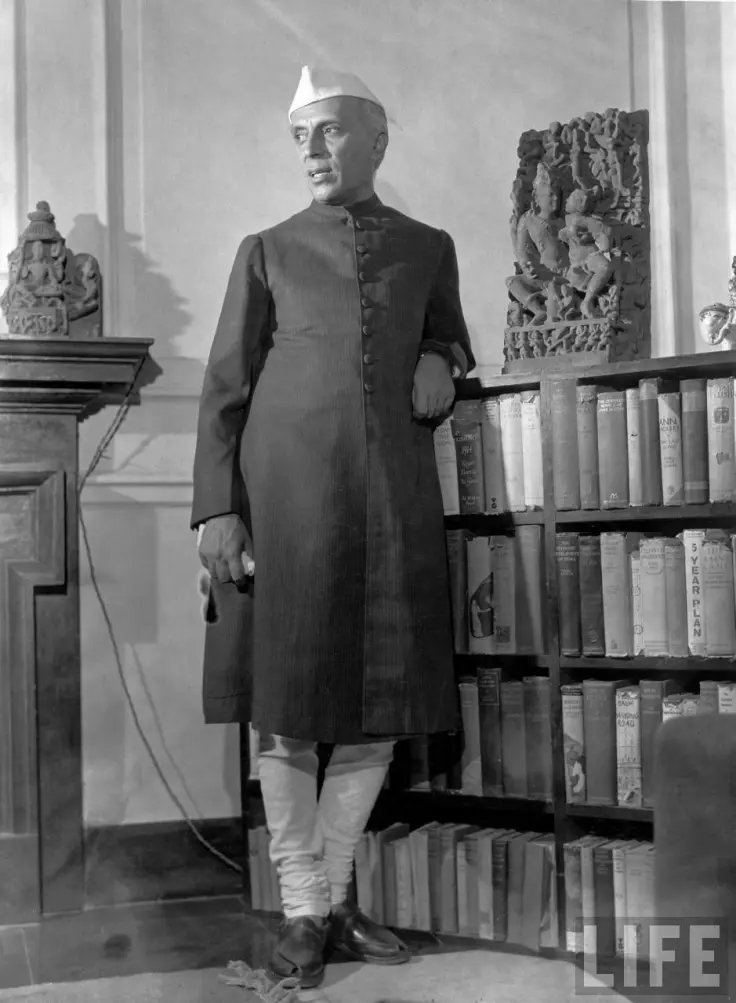
Jawaharlal Nehru in Sherwani

Anwar Mehdi says that not only honoured his enterprise, but also gave it recognition. He recalls making sherwanis for former Presidents VV Giri, R Venkata Raman, Dr APJ Abdul Kalam, late President Pranab Mukherjee, former President Ram Nath Kovind, former Prime Minister Manmohan Singh, Chief Ministers of various states like Mufti Sayeed, ND Tiwari, Farooq Abdullah, besides Governor Arif Muhammad Khan, Syed Sabt Razi, and other members of Parliament. Besides, he has stitched the dress for some judges of the Supreme Court.

When we met him, Anwar Mehdi was busy completing the sherwani orders on time before Sir Syed Day. He said while cutting the black sherwani, “When Dr Zakir Hussain was the Vice Chancellor of Jamia Millia Islamia, my paternal uncle was in the Department of Islamic Studies. He introduced Zakir Hussain to my father. After that, Zakir Hussain became the Governor of Bihar, then the Vice President of the country and finally the President of the Republic of India. During these 18 years, a record 178 sherwanis were sewn for Dr Zakir Hussain. Which is a testament to our quality.”

Speaking of Bollywood, Anwar Mehdi says that Majroh Sultanpuri loved sherwanis. Besides him, Javed Akhtar and Raj Babbar have also been using sherwanis made by him.

Recently, Saif Ali Khan’s sherwani was also made by him. He says that one day, Saif Ali Khan’s mother, Sharmila Tagore, called. She had requested that Saif Ali Khan be in Lucknow, so that he could give measurements for his sherwani. Saif Ali Khan called Mehdi, and he travelled to Lucknow to do the follow-up.

Anwar Mehdi said the youth have the same enthusiasm for this traditional dress as they did in the past. He says that in view of Sir Syed Day, the order from the AMU, where it’s a formal dress, increased. He says that he has seen respect and enthusiasm for the Sherwani in every era. “This is never going to end,” he says.

source: http://www.awazthevoice.in / Awaz, The Voice / Home> Stories / by Mansooruddin Faridi and Saqib Salim (Aligarh) / October 18th, 2025
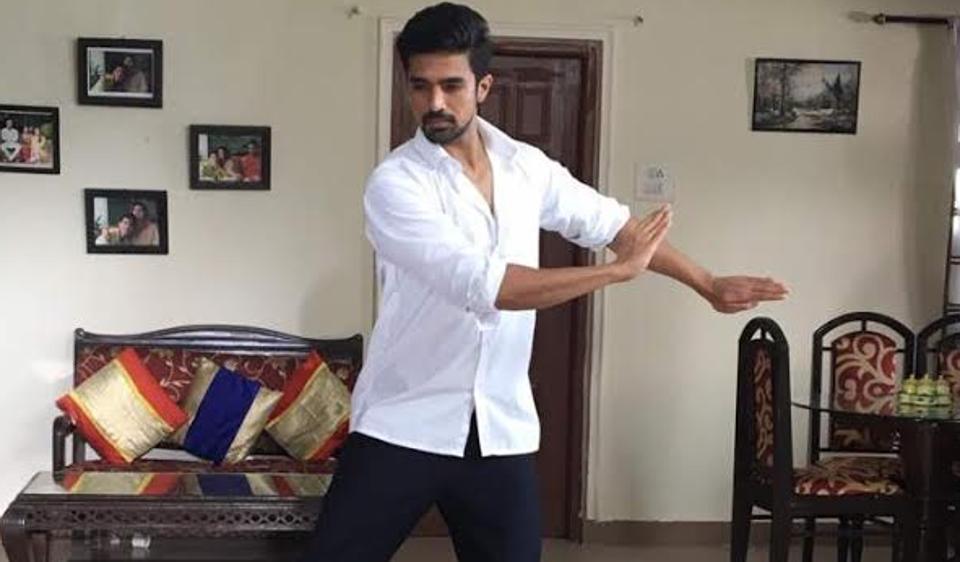
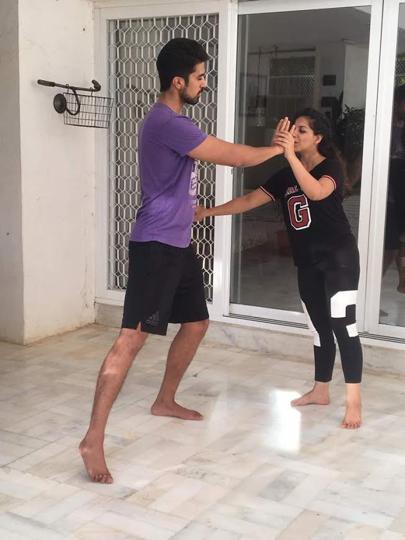
Saqib Saleem learns Kathak for Fathers’ Day special short film, Aamad

NEW DELHI / Mumbai, MAHARASHTRA :

Saqib Saleem practices Kathak for his upcoming short film on Fathers’ Day.

Saqib Saleem is working on a short film that will be released on the occasion of Fathers’ Day this Sunday. The actor has learnt Kathak for the project. 

Bollywood actor Saqib Saleem, who was recently seen alongside Huma Qureshi in Dobaara: See Your Evil, is now learning Kathak, a classical Indian dance form for his next project.

Saqib is working on a short film titled Aamad, where he plays the character of a Kathak dancer.
SaqibSalim02MPOs17jun2017
Though it was very challenging for him, the actor took it in his own stride and put together a genuine effort to learn the dance form from professional Kathak guru and actress Ishita Sharma.
Aamad is about a father who is a Kathak dancer and how his son is embarrassed of his father’s art. The plot explores how they build their relation over a period of time and overcome their personal apprehensions and start a new friendship.
source: http://www.hindustantimes.com / Hindustan Times / Home> Entertainment> Bollywood / HT Correspondent – Hindustan Times / June 16th, 2017

The joys of reverse sweep

NEW DELHI / Mumbai, MAHARASHTRA :

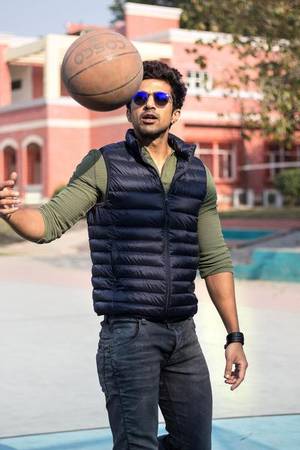
HAVING A BALL Saqib Saleem at Hindu College in New Delhi | Photo Credit: Photo: Abhimanyu Sindhu

In a candid conversation, Delhi boy Saqib Saleem revisits his college days

My encounter with Saqib Saleem happens as he converses, overcome with nostalgia, with his college cricket coach Jai Pal Singh about the good old days. His eyes survey the familiar area of the Hindu College staff room as he leads me to the Sports Complex where he ‘lived, ate and slept’ during his stint as a cricketer. So, he used to play cricket? His coach corrects me and says he still does. “Once a sportsman, always a sportsman.”

“The college has changed a lot, yet the air is unchanged”, remarks the actor seeing the new administrative building cornering the famous Virgin tree. With searching eyes attempting to gather the familiar, he spots Manish pakodewaala where he used to come in the middle of practice to satisfy hunger pangs.

Entering the sports complex, he sits at the higher end of a staircase, good enough to give him a panoramic view of the landscape. Quite seemingly distracted by the urge to relive the experiences of the college, Saqib intently looks at the field reconstructing the space for us.

Composed, yet gushed, his manner is amiable as he talks to some college students in between. He wears aviators concealing his gaze lest I intervene in his reconstruction of a personal journey. Going back in time, Saqib talks about his experience as a college student, his journey to Bollywood and his upcoming film.

Excerpts:

Tell us about your time in college.

College was the best time there could be. I used to come at 7 a.m. and leave at 8 p.m. It had become my second home. Even today I tell my friends in Mumbai that if given a chance to go back in time, I would like to relive the three years of college.

I was the president of Nakshatra, the fashion society of the college. We did fashion shows across different colleges and participated in competitions. I didn’t want to be a model or actor in the beginning but walking the ramp gave me a temporary high. I used to get the best model trophy everywhere. I thought, maybe what I do, people like that, and as a result garnered confidence. It all started with Nakshatra!

You’ve also represented Delhi and Jammu and Kashmir in cricket. Didn’t you want to pursue a career in the sport?

My love for cricket started early. I wanted to be a professional. But as I got exposure, I got a reality check. I saw better talent around me. There is no harm in accepting there are better people. Appreciation for others and recognition gives me the boost to work harder in life. I wanted to figure out something I was best at and could prove my mettle in. I wanted to carve my own niche. Thus the detour happened, Mumbai happened.

Any particular interesting incidents that you’d like to recall from your college life.

There are many. You need to be there on Valentine’s Day in the college to see the spectacle. I was active in university politics as well. My support for candidates used to be agenda-based, irrespective of party affiliations. It is necessary to indulge in campus politics as it completes your college experience. It is a huge learning experience. You get to meet interesting people and learn public dealing.

Although I was a day-scholar, I rented a flat near campus with a few friends which acted as our ‘crash pad’ in case we didn’t want to go back home after a party. I also had plenty of friends in the hostel. The annual college festival Mecca was the best time of the year. You could feel the energy of the college in just three days.

How did you end up going to Mumbai? Did you have anything to fall back on there?

Well, you won’t believe me, but I went there for a girl. I was dating a senior who wanted to be an actress, so she went to Mumbai after college. At that time, I was working with my father managing the restaurants. She called me one night and said that a long distance relationship won’t work. I asked if I could move to Mumbai to be with her. She said yes and I eventually moved hoping to make a career in modelling. But, we broke up in three months. Yes, so that’s how I stayed in Mumbai and ended up being an actor.

How was your experience in the advertisement industry working with different directors and brands?

The experience was very interesting. As an actor, I don’t really enjoy doing ads. But there are some really brilliant ad makers who make your realise your true potential and help you throughout. They make you see things you never really thought you had. My whole education in acting was through advertisements. It taught me how to face the camera. I had no background in theatre or acting. Ads helped me better my craft. People who don’t have any professional background in acting can use the medium of ads to get recognition and move forward.

You’re in the city for the shoot of your upcoming movie, Koroli Loves Sumit. How has the experience been working with Aleya Sen?

Well, I worked with her in a music video called “Tum ho Toh”. Both Taapsee Pannu, my co-actor in the movie and I featured in the video. She offered us the movie after the video. It is exciting and interesting to work with her as she also comes from the advertisement industry, and has a unique style.

I was excited as I was asked to play a Lajpat Nagar gym trainer, a role quite close to my experiences in the city. The movie is a love story about two people who’re not meant to be. It will hopefully hit the screens in the first quarter of next year.

As a new age actor, what advice would you like to give to aspiring actors and people wanting to enter the industry?

You just got to believe in yourself. If you respect yourself, others will respect you as well. There is no rocket science to it. You have to enjoy what you do. If you don’t believe in yourself, no one will. You should always be ready to learn new things and acquire experiences.

source: http://www.thehindu.com / The Hindu / Home> Entertainment> Movies / by Sidharth Yadav / December 17th, 2016

‘My plan is no plan’: Saqib Saleem

NEW DELHI / Mumbai (MAHARASHTRA ) :

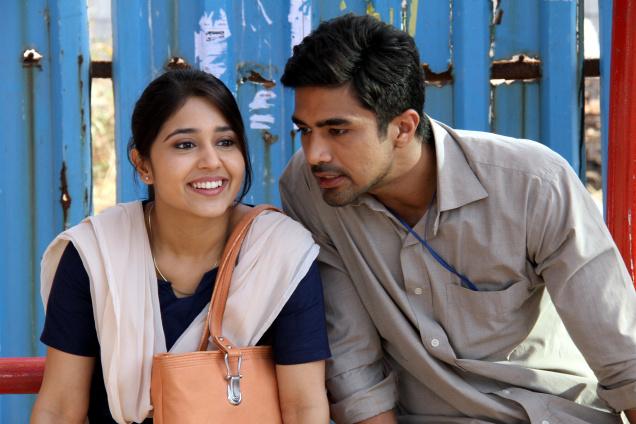
Shweta Tripathi and Saqib Saleem in “Koi Dekh Lega”

Effortlessly straddling between three minute and three hour formats, Saqib Saleem will now don the Indian cricket team’s colours on screen

Fondly remembered as the good-for-nothing son in the comedy Mere Dad Ki Maruti, Saqib Saleem continues to enthral his fans with his performance in Koi Dekh Lega, a part of Love Shots, the Y-Films web series where he plays a visually-impaired lover.

Soon the actor will be essaying the role of an aggressive, contemporary batsman in Rohit Dhawan’s, Dishoom. Saqib who bats for Sohail Khan’s Mumbai Heroes in the Celebrity Cricket League shares his love for the game, how he works to etch his roles real and his three-minute film Koi Dekh Lega.

Edited excerpts from an interview:

It is said that love is blind. Your recent short film Koi Dekh Lega is about being in love and blissfully blind to the world.

When I first read it, I thought it was a sweet and genuine script. Our intention was to try and not let people know that we are playing blind. Yes, if someone catches then great and if not then people come to know in climax. Our intention was to make honest film and celebrate the feeling of love. That love can happen at a bus stop.

Much after the release of the film do we get to know if it was well made or not. When you see the reactions of your audience you get to know how the film was. However, it was really interesting working in the Koi Dekh Lega. The whole idea is you need to tell a story whether it’s in the form of short film, a feature or a TV show. If that’s coming across, you have won the battle.

How challenging it is for an actor to move from three hours to three minutes?

It is very challenging because when you are doing a feature you have lots of time to establish yourself as the character. But, when you do something like Koi Dekh Lega it tests your abilities in just three minutes in which we have to make people understand the character and evoke emotions – where is it coming from and where will it go.

What was it like working with Shweta Tripathi?

I have known Shweta for five years. Films that we were supposed to do did not work out for one or the other reason. So we were really looking forward to do a film together since very long. This time, I called up Shweta and said, ‘Let’s shoot!’ without any discussions as this chance may not turn up again. She is a refined and fabulous actor, who does films and other things for a reason. In Koi Dekh Laga, I was so busy performing that it is only in the final film I got to see her performance. She was undoubtedly amazing.

On inspiration for playing the characters

My plan is no plan! Explore everything that is possible. I do not draw inspiration from someone particular. I just look around and observe people and catch the nuances that will be useful and can be brought into the character. I want to make the character feel more real and relatable with the audience. At times, someone’s action or body language strikes and stays with you and I try to incorporate them. If the ingredients are right, your dish will just turn out to be perfect.

As somebody who has played cricket how tough or easy was it to essay the role in “Dishoom”.

For me, playing a cricketer on-screen was interesting. You’ll see me playing the role of today’s Virat Kohli, Suresh Raina or Rohit Sharma who are doing very well for the country. I have always wanted to be a cricketer and aspired to play as an opening batsman with Sachin Tendulkar. As a daily ritual I used to say to his huge poster, ‘One day I will play with you.’ But, things just don’t go the way you plan and that is when acting happened to me. Someone like me who always wanted to wear an Indian jersey is ready to wear it now in the film. Since I’ve always been a sportsperson it was slightly easy to play this character but the most difficult and important part was to get the body language right. Moreover, Rohit Dhawan is a director who keeps thinking about making things better.

Watch the short film Koi Dekh Lega starring Saqib Saleem and Shweta Tripathi

source: http://www.youtube.com

source: http://www.thehindu.com / The Hindu / Home> Features> MetroPlus / Vidhi Mittal / March 20th, 2016