Tag Archives: Shakir Ali

The Changemakers: 10 stars of Rajasthan who have made society proud

RAJASTHAN :

Changemakers of Rajasthan

Jaipur :

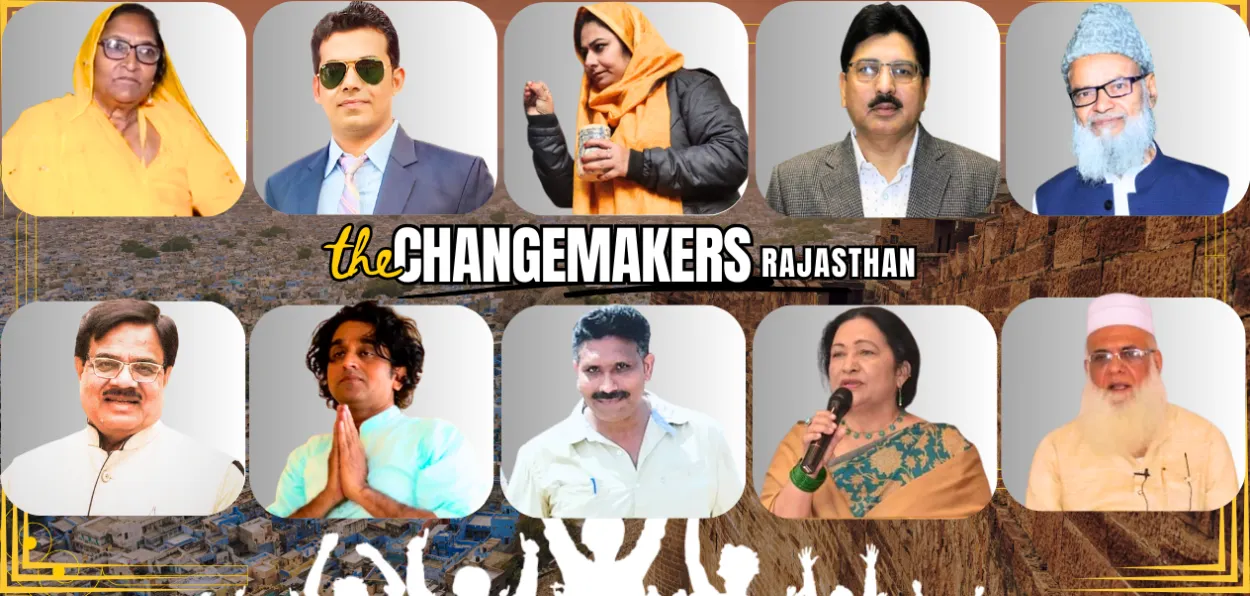
Rajasthan is known for its sandy deserts, historical monuments, especially forts, vibrant culture, and above all, its brave people, some of whom are inspiring others and changing society for the better. Under our series ‘The Changemakers’, Awaz-The Voice, brings you ten such personalities of Rajasthan, who have done extraordinary and pioneering work. Batool Begum: A living legacy of musical heritage.

Batool Begum: Woman who took traditional music to the world
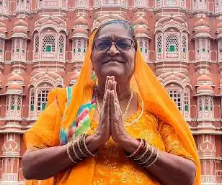
One name that resonates in the streets of Jaipur is that of Batool Begum. Born in Kerap village of Nagaur district, Rajasthan, this extraordinary singer is a living legacy of Indian classical music. Batool developed a deep passion for music in her childhood. Despite facing social and economic challenges, she continued her singing.

Her melodious voice and her passion for music not only earned her recognition as an artist but also proved that talent can break all barriers. Her art is a source of inspiration for her community and the entire Rajasthan.

Abdul Salam Johar: A lac bangle maker who received global recognition

The vibrant spirit of India’s Pink City, Jaipur, doesn’t only emanate from its colours and people but also from the traditional handicrafts that are made and sold here. Bangles worth lakhs are made in these streets, which are a symbol of the traditional beauty and hard work of thousands of its people.

Abdul Salam Johar is one such artist who not only preserved the traditional art of the State but also brought about a social change in a major way. Coming from the Manihar community, Johar was born in a family with little means, but his dreams were extraordinary. Seeing the struggles of his grandfather Hafiz Mohammad Ismail and parents Haji Abdul Aziz and Hajjan Qamar Jahan, he made hard work, dedication, and social service the main mantra of his life.

He began his journey from his ancestral shop ‘Indian Kangan and Colour Store’ located in Tripolia Bazaar of Jaipur, and today his wares are being sold under brands ‘Johar Design’, ‘Johar King’ and ‘Indian Crafts’ in the global markets. He is not only a successful entrepreneur, but also a social reformer who took his community and traditional art to new heights.

Abdul Latif ‘Arco’: A confluence of business and social service

Abdul Latif, who lives in Chini ki Burj in the capital Jaipur, and is known as ‘Arko’ in Rajasthan, is one such special personality. Born in a small village of Chomu in 1946, Abdul Latif’s father, Rahmatullah, and mother, Hafijan, taught him hard work, honesty, and the passion to help people, which became the basis of his life.

His company, Abdul Razzaq & Company (ARCO), is today a big name for social service along with electric motors, fans, and coolers. Apart from this, his hotel, ARCO Palace, is a symbol of his hard work and foresight. Abdul Latif’s story is not just of a businessman, but of a person who chose to work as a changemaker by combining his business and social responsibilities.

Qazi Nishat Hussain: A new voice breaking stereotypes
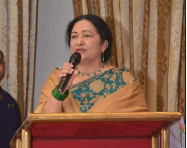
The voice rising from a small office located in the narrow streets of Johri Bazaar in Jaipur, the capital of Rajasthan, is today inspiring society to change. This voice is of Nishat Hussain, Rajasthan’s first Muslim female Qazi, social worker, and a strong advocate of the rights of Muslim women.

Her life journey is an example of courage, struggle, and change, which not only made thousands of women aware but also gave them a new direction to live.

Born in Sitabari Mohalla of Karauli district, Nishat’s childhood was spent in an environment of communal harmony. His family was the only Muslim family in the neighbourhood. There were three temples in front of her house. She says, “We did not know who was a Hindu and who was a Muslim.” In a backward area like Karauli, where girls’ education was not given importance, Nishat created history. She became the first Muslim girl in the district to pass the tenth standard, that too as the only Muslim student among 1200 girls. Today, she has become a torchbearer of the rights of Muslim women.

Captain Mirza Mohtasim Baig and Ruby Khan: An Inspiring couple in social service

An inspirational couple, Captain Mirza Mohtasim Baig and his wife Ruby Khan, hail from Jaipur. Captain Mirza is the first Muslim pilot of Rajasthan and has been operating national and international flights for the last 25 years. At the same time, his wife Ruby is an active social worker and politician.

Both believe that if one wants to bring change in society, then he has to take the initiative. Together, they had organised medical camps, documentation camps, free ration distribution, and offered financial help to families in the marriage of their daughters. The couple is an epitome of change brought about by spirited people.

Dr. Arif Khan: The village scientist who created history
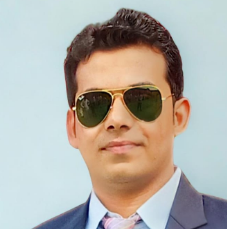
Thirty-four years ago, a child was born in the small village of Masani in the Hanumangarh district of Rajasthan. Today, he is Dr. Arif Khan, a scientist who has brought laurels to India. In his village, most of the people toiled in the fields. His father, Advocate Farid Khan, wanted his son to become a doctor. His mother and grandfather also had the same dream. But there were few schools in Masani, and the path to making dreams come true was difficult. Still, Arif had a passion to do something extraordinary in his life.

With his hard work and dedication, he became a bio-scientist and brought glory to his family and village. His research on milk and food products brought a wave of change. His story proves that if the intentions are strong, then even a boy from a small village can become a scientist and make the country feel proud.

Mainuna Nargis: First Shia Muslim woman in art conservation
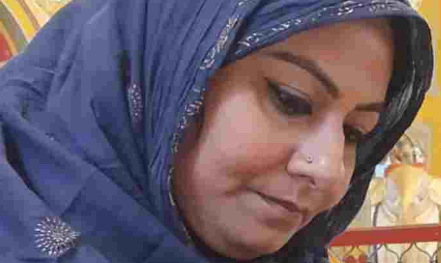
In a vast country like India, art conservation is important since it not only preserves history but also connects future generations to our heritage.  Mainuna Nargis, the country’s first and so far the only Shia Muslim woman art conservator, does the same work. Born in Bahjoi, a small town in Moradabad district of Uttar Pradesh, Maimuna’s childhood was ordinary, but her dreams were extraordinary. Rajasthan has now become Mainuna’s second home.

Her father, a Policeman in UP, always encouraged her. After studying Fine Arts from Aligarh Muslim University (AMU), she did a diploma in Museology, which became the most decisive turning point in her life. Maimuna’s story is not just of professional success, but a story of passion, struggle, and self-confidence, which revived the broken pieces of history.

Yoga Guru Naeem Khan: Global journey from music to yoga

The life journey of Yoga Guru Naeem Khan, who rose from the streets of Jodhpur, the cultural capital of Rajasthan, to spread his spiritual aura on international platforms, is a unique example. He rose from a common man to a global yoga guru and presented yoga as a universal energy beyond religion, culture, and boundaries.

Naeem Khan was born in a family where music was in every breath. His grandfather, Ustad Umardin Khan, was the court musician of the Jodhpur royal family, while his maternal uncle was Padma Bhushan-awarded Sarod player Ustad Sultan Khan. However, with changing times, that traditional flame of music started to fade. Naeem and his brother got involved in business, but yoga gave Naeem a new direction, and he took it to a global platform.

Syed Anwar Shah: A man who introduced girls to education

Thirty years ago, a dream was born in a small room in Jaipur, which has today become the light of education for thousands of girls. This is the story of Syed Anwar Shah, whom people fondly call Master Anwar Shah. He not only dreamt of his daughter’s education, but also made it a means of progress for the daughters of society.

Today his educational institution, Al-Jamia-tul Alia, is spreading the message of knowledge and Islamic ethics not only in Jaipur, but also in the whole of India and abroad. After completing his M.A. in Public Administration from Rajasthan University in 1980, he dedicated his entire life to the welfare of society and the service of education. In 1995, when his daughter Alia was born, he decided to set up an institution for the education of girls, which would impart both worldly and divine teachings.

Today, his effort has become a boon for thousands of families.

Padma Shri Shakir Ali: Patron of Miniature Painting
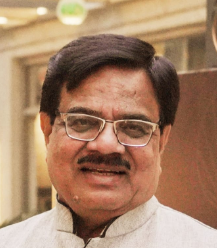
It’s no exaggeration to say that Jaipur is the art capital of Rajasthan. And in the field of miniature painting, the name of Syed Shakir Ali comes to the fore spontaneously. This genre of painting is an identity of the state of Rajasthan. 

Padma Shri awardee Syed Shakir Ali is not only a great practitioner of this art, but he is also the guardian of that heritage, which is an integral part of the cultural identity of Rajasthan. Born in 1956 in Jalesar village of Uttar Pradesh, Shakir Ali’s family soon settled in Jaipur, where his art got a new direction. 

Today, he has given recognition to this traditional art of Rajasthan not only in India but also on international platforms.

source: http://www.awazthevoice.in / Awaz, The Voice / Home> The Changemakers / by Aasha Khosa, ATV / September 14th, 2025
Exhibition in Bhopal on life & work of freedom fighter Khan Shakir Ali Khan

Bhopal, MADHYA PRADESH :

Bhopal: 

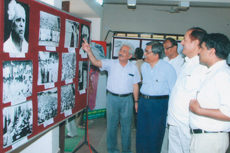
On the occasion of International Day an exhibition on the life and works of Khan Shakir Ali Khan, the great freedom fighter of Bhopal popularly known as Sher-e-Bhopal, was inaugurated in the premises of the regional office of the National Archives of India here on Wednesday.

R. K. Shrivastava, the Administrative Officer Indira Gandhi Rashtriya Manav Sangarahalaya, inaugurated the exhibition by cutting the traditional red-ribbon.

Shahnawaz Khan, nephew of late Shakir Ali, senior journalist Shailendra Shelly along with NAI’s Archivists V. K. Juneja, who is office in-charge NAI regional office, and Muzaffar-e-Islam were present on the occasion. The exhibition is divided into five phases with documents, letters, photographs etc.

Shrivastava speaking on the occasion said that late Shakir Sahab demanded respect from one and all alike for his selfless service towards society. He said Shakir Sahab was symbol of communal harmony as both Hindus and Muslims respected and loved him for his untiring efforts towards poor people especially the labour class.

Shahnawaz Khan revealed that the title of Sher-e-Bhopal was not granted to his uncle Shakir Ali by any government or Nawab of Bhopal but by the common man for his selfless efforts to better their lot.

He was a big hurdle for the communal forces who wanted to engineer Muslim-Hindu riots for their vested interests. When some people wanted to demolish a Jain Mandir in Chowk area of Bhopal he stood at the door of the temple saying demolition could only take place before his dead body and those who had converged for the job had to retreat.

He complimented National Archives for organising such an exhibition to honour the mass leader of his time. He said he was happy to hand over the documents and photographs of his uncle which has been put to very good use.

Shailendra Shelly while paying glowing tributes to the personality of Shakir Ali lamented that Bhopal Municipal Corporation which had announced an award in the name of the great leader about a decade back never implemented it. He said BMC could still honour implement its own announcement. The veteran leader was the voice of the labour class

Juneja conducted the proceedings while Muzaffar-e-Islam proposed vote of thanks. The week long exhibition will close down on May 24. It will remain daily open for public from 10.30 am to 5.30 am in NAI regional office near Polytechnic square.

Khan Shakir Ali Khan (1904-1978) is a person who was more famous by his title Sher-e-Bhopal than his name. He was really a leader of the masses. Throughout in his life he rendered his services to the people, the down-trodden and the poor. He was a true servant of the society. He served both the society and polity of Bhopal. During the time of Nawab, he organized the Labourers of mills and factories under different organizations and Unions and fought for their rights.

To raise their voice many organs and newspapers were published. The most famous was Subh-i-Watan. Unfortunately all such papers were banned. It was not possible for the Government of the day to tolerate such a selfless leader and leave him free to criticize the Government or to fight with the Government on petty issues of rights and liberty of the labourers or to represent such a section of society which has been kept deprived by the destiny himself. The Government thought it right to keep such a mass leader behind the bars most of the time. He was publicly humiliated and even handcuffed like an ordinary man or a thief. He was such a strong man that he did not stop his mission and day by day became stronger and stronger .

Khan Shakir Ali Khan was also a man behind the formation of Praja Mandal besides other at least 15 Unions of Mill and factory labourers. Shakir Ali Khan considered these Unions the real source of strength and inspiration. At one times he was alone on the question of merger of Bhopal with the Union Territory. It was his movement which compelled Nawab Hamidullah Khan, the last ruler of Bhopal state, to hold meetings with the Central Leaders and conclude terms for the merger of Bhopal with the Union Territory. First it was an interim arrangement under which the erstwhile Bhopal state was considered as Part C State for five years and finally it became part of Madhya Pradesh. He is also remembered for his leading role in making Bhopal, the capital of M.P. State. How was he popular that can be judged as he remained a member of Legislative Assembly for consecutive four terms.

On the occasion of International Museum Day, the National Archives of India remembered this great leader by exhibiting his photographs, letters and his own writings.

(pervezbari@eth.net)

source: http://www.ummid.com / Ummid.com / Home> Life & Style / by Pervez Bari /May 20th, 2011

Kolkata Mosque serves humanity, offers free dinners to the hungry

Kolkata, WEST BENGAL :

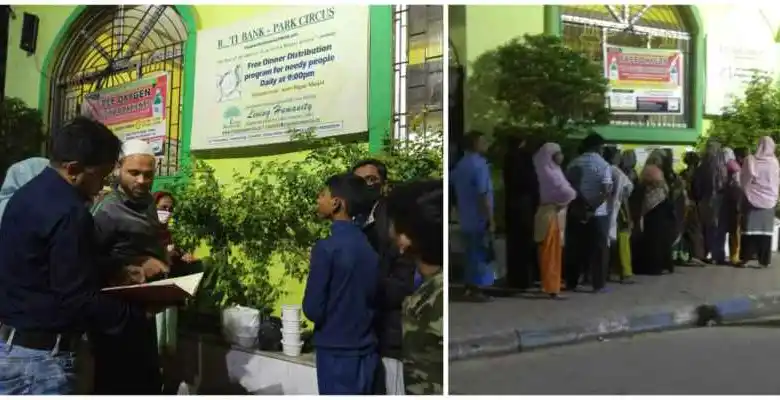
Kobi Bagan Mosque with the support of Roti Bank has been offering free meals and ration kits to the poor for seven years in a row.

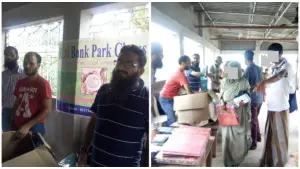
Volunteers of Roti Bank distribute dinners to the needy (file pictures) | Pictures: Arranged

Kolkata:

At a time when mosques across India are being targeted, a mosque in Central Kolkata has chosen to open its door to the hungry, irrespective of one’s faith. Like the langars of Gurudwaras, Kobi Bagan Masjid, Park Circus not has been providing free dinner to the poor but also ration kits for the last seven years.

What began as an experimental Roti Bank way back in 2016 went on to become a centre, which helps the poor and destitute in several ways. It also provided meals and rations during the pandemic and Amphan cyclone in West Bengal.

The initiative is the collaboration between Kobi Bagan Masjid and Living Humanity, a non-government organization (NGO). The mosque located near Aliah University, Beniapukur has offered Living Humanity its premise to provide dinner for the destitute. They now have more than fifty people including non-Muslims among regular beneficiaries.

The idea, a brain-child of Faiz Anwar, a Chartered Accountant and Rashid Jameel, a Software Engineer began running a roti bank, in the hope of ensuring that none in the area go to sleep with an empty stomach.

“Inspired by someone in Aurangabad running a roti bank, I along with a few like-minded friends thought of starting it in Kolkata, So, we began it outside my residence, after taking permission from the police,” Faiz Anwar of Living Humanity told eNewsroom,

However, this was just the beginning of something big. “As numbers grow, we need a bigger space. So we talked to the masjid management, who happily agreed. And, when we interacted with the beneficiaries, it made us realise that providing roti won’t solve the problem. So, we thought of providing free meals and then even went on to provide free rations. Just like, during Ramazan we provide ration kits. We also give monthly ration kits to those who have a family,” recounts Anwar, a chartered accountant by profession and a philanthropist by passion.

CA Faiz Anwar (blue t-shirt) with his team distribute clothes to the beneficiaries | Pictures: Facebook/Roti Bank

On being asked about the poster put up on the walls of Kobi Bagan Mosque that talks about free meals being provided from the premises of the mosque and how they got into a working collaboration with the mosque, he elaborated, “I believe that places like mosques need to be more socially active. It has a role to play in society. We, with this belief, approached the working committee of the mosque with a proposal of using a portion of the mosque premise to distribute meals and ration to those in need.”

Confirming the same was Shakir Ali, a member of the working committee of the mosque, “Yes, we are in an association with Living Humanity, provide the meal and ration which get distributed from our premises.”

However, during the pandemic, when we were confined to our homes, mosques were shut, and then Living Humanity reached out to the areas outside Kolkata that needed help during the lockdown. “Working in close association with Helping Hand we reached out to the pandemic as well as Amphan cyclone-affected people. We worked in Nandigram, Canning Ghutari and Mazdurpara during the pandemic, reaching out to around 5000 families during this time.”

Living Humanity and Helping Hand, founded by Miran Ahmed have done several projects jointly.

“A major work that we did during the pandemic was distribution of free oxygen cylinders. It still runs today from the premises of another mosque Tanti Bagh Ahle-Hadith masjid. There were at least 1000 patients who benefited from the cylinders we had distributed,” said the CA.

After the restrictions were over, they began functioning like earlier, from the Kobi Bagan Mosque.

To avail the free meal or ration, one need not be a Muslim by faith, the food or items are distributed to those in need irrespective of their religious beliefs.

“Some of our beneficiaries are non-Muslims. The idea is to help those in need,” said Anwar.

So, how does it work?

Can anyone take the benefit or do they have a roster?

“Initially, it was a first-come, first-serve policy that we followed. However, we began to notice that we were having follow-up visits by many. So, we began interacting with them and now we have a roster. We hand out coupons to regular visitors. The ration is provided to those, who have more than two family members queuing up for meals. Dinner is available for any single person coming to the mosque in search of food around 9 pm,” said Jameel, the co-founder of Living Humanity.

Talking about the future plans, Anwar added, “We plan to do a lot more social upliftment work through Kolkata Masajid Association. We will try to reach out to a larger section of the society, who are sleeping empty stomach.”

source: http://www.enewsroom.in / eNewsRoomIndia / Home> Bengal> Inclusive India / by Staff Reporter / April 16th, 2023