Tag Archives: Syed Azharuddin

Madrasa 2.0: Moulana Mehdi Hasan and the Dream of IIAD

Deoband, UTTAR PRADESH / DELHI :
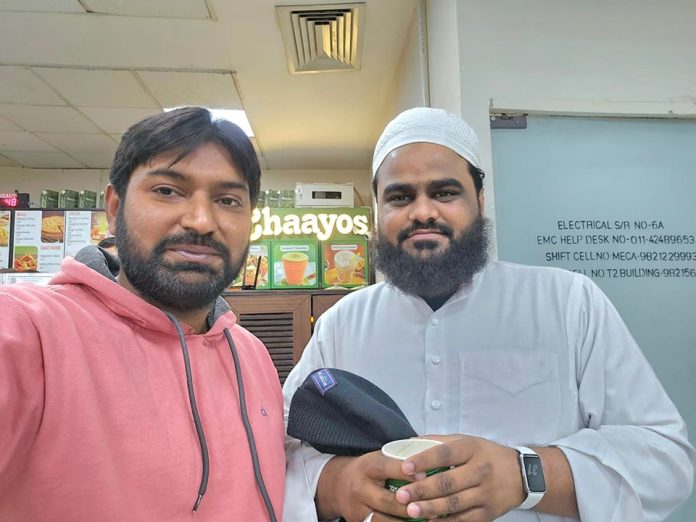
It was a hot, restless afternoon in New Delhi – the kind where the sun presses down with such fury that even the breeze seems to hide. The air was thick with chants, placards, and purpose. Students from across the capital’s universities had gathered in protest – a voice of defiance against the rising wave of mob lynchings sweeping through India, backed by extremist ideologies. Amid the sea of young faces, I noticed a small group that stood out. They were not university students in jeans and t-shirts, but madrasa students in simple white kurtas and skullcaps, holding banners of peace and justice.

They had come all the way from Deoband, a quiet town that has long been a lighthouse of Islamic learning, to stand shoulder to shoulder with victims’ families. Among them was a young scholar whose calm presence carried a certain gravity: Moulana Mehdi Hasan Aini Qasmi.

Our meeting was brief, just a few words exchanged, a handshake perhaps, but something about him stayed with me. I didn’t know then that this quiet madrasa graduate would one day become the face of a remarkable educational revolution in India.

The Seeds of Brotherhood

Two years later, in 2018, the Students Islamic Organisation of India (SIO) held its grand All India Conference in New Delhi, themed “Reclaiming Dignity | Designing the Future.” Among the audience of fiery youth and intellectuals, Mehdi Hasan was invited as a representative of madrasa students – being the President of the Abna-e-Madaris (Old Boys’ Association of Deoband).

When he spoke, his words carried the depth of tradition and the urgency of modern times. After the session, we found ourselves in a long conversation about faith, education, and the future of Muslim youth. That day, a brotherhood was born – one that would travel far beyond Delhi’s conference halls.

Soon, he invited me to Deoband. What began as a visit turned into a revelation. We walked through the majestic gates of Darul Uloom Deoband, met students immersed in their studies, and discussed the evolving role of Islamic education in a rapidly changing India. It was there I saw the spark – Mehdi’s vision was clear: to bridge the gap between traditional Islamic scholarship and the demands of modern society.

From Streets to Seminars

Between 2019 and 2020, our journey turned into a mission. Together, we travelled across India – from the quiet corners of Tripura to the bustling lanes of Telangana – addressing crowds, organising awareness drives, and speaking against hate, Islamophobia, and discrimination.

Then came the storm – COVID-19. India went silent. The streets emptied. Institutions shut their doors. But we refused to stop. Our activism simply changed form. While the world was locked down, we were reaching out – distributing relief, helping stranded students, and connecting youth through virtual spaces.

One late-night discussion during those months became the turning point.

“If people have time,” I said thoughtfully, “why can’t we bring madrasa education online? Why can’t we empower teachers who have no income now? Why can’t we teach our youth skills to survive?”

That one why became a revolution.

Over the next two years, the spark spread like wildfire. Under Mehdi’s leadership, IIAD organised over ten national workshops across India, reaching thousands of students from Aurangabad to Delhi. These workshops covered topics far beyond theology – from Education to Entrepreneurship and Islamic Thought to Social Leadership.

One such event, the Aurangabad Education Expo, became a milestone in connecting madrasa students with mainstream educational opportunities. Through these sessions, IIAD began to carve a new narrative for Islamic learning – one that embraced progress without compromising on principles.

The Birth of an Idea

Our first online programme, “Education to Entrepreneurship,” was meant to be a small initiative – a bridge between learning and livelihood. But the response was beyond imagination. Hundreds of madrasa students and teachers joined from every corner of India.

We realised we had touched a nerve – there was a hunger for knowledge, a thirst for relevance. In 2022, we organised an offline workshop in Bidar at Shaheen Group of Institutions for madrasa students. To our surprise, several attendees were already running small businesses – many of whom had attended our first online sessions back in 2020.

One night, Moulana Mehdi and I sat in deep conversation till Fajr. The sky turned from ink to gold as we reached a decision that would change everything: to start a full-fledged online institute for Islamic education and leadership and the name finalised was “India Islamic Academy Deoband” and now it is a brand in Madaris Circles.

But Mehdi had already taken the first step. Before our official launch, he had begun teaching small groups online – offering a Basic Islamic Foundation Course (3 months) and an Advanced Islamic Studies Course (6 months). Within weeks, the response exploded. Students from across India – and even abroad – joined.

And then, in 2021, the dream took shape.

Multi-Dimensional Mehdi

Many madrasa teachers benefited from IIAD’s programmes and became self-sustained, empowered to teach and earn through digital platforms. Watching this transformation unfold, I became deeply impressed by Moulana Mehdi Hasan’s multifaceted personality.

As a student, he had marched with his friends in protests; later, he organised them. As a social activist, he raised his voice fearlessly and even faced police cases. Through his advocacy work within Muslim organisations, he united madrasa youth under a shared purpose – to stand up for justice, particularly during the anti-CAA movement, where he became a leading voice representing madrasa student unions.

During the pandemic, the COVID-19 crisis his alumni group at Darul Uloom Deoband established a help-desk that handled thousands of calls, distributed oxygen cylinders and fought misinformation – reinforcing his role as a frontline community leader, he turned compassion into action as a social worker, extending relief to the needy.

As a writer and journalist, he penned articles and books that shaped public discourse in Urdu media. And as an entrepreneur, he became the very example he urged others to follow – transforming his vision for empowering madrasa students into a thriving digital institution.

The Rise of IIAD – India Islamic Academy Deoband

The official launch of India Islamic Academy Deoband (IIAD) was not just the founding of an institution; it was the dawn of a new era. For the first time, a madrasa-based initiative had embraced technology to take classical Islamic education to every home.

The story of IIAD began in 2017, when a vision was realised – to bridge authentic Islamic scholarship with modern accessibility. What started as a modest initiative soon blossomed into a movement that redefined faith-based learning for the digital era.

By 2019, IIAD proudly celebrated the first wave of scholars graduating from its inaugural Aalim programme, ready to serve their communities with knowledge and integrity. The academy’s turning point came in 2021, when it launched its Global Digital Campus – a state-of-the-art online learning platform that connected students and scholars across continents.

And by 2024, that vision had grown into a vibrant global community – a growing Ummah of over 5,000 students from diverse countries, all united by the pursuit of knowledge and purpose.

The journey of IIAD stands as a testament to how faith, when paired with foresight and innovation, can transform education and empower generations.

What began with few offline and online courses soon expanded into a vast ecosystem. Today, IIAD offers 15 specialised courses – blending Islamic scholarship with modern subjects like media, leadership, and entrepreneurship. The courses are taught in Urdu and English.

From the official website, one can see how IIAD evolved with a clear mission – to empower the next generation of Muslim scholars, entrepreneurs, and thought leaders. The vision was simple yet revolutionary: “To make Islamic learning accessible, practical, and globally relevant.”

But Mehdi’s ambition didn’t stop there.

The Expanding Vision

He founded the Abna-e-Madaris Educational Trust, a platform that supports social and educational initiatives across India. Through it, he organised relief programmes, training sessions, and mentorship circles for youth.

He also launched Deoband Dastak, an online Urdu news portal that amplifies the voices of the unheard and highlights stories of reform within the madrasa ecosystem. His pen became his sword – through articles, opinions, and books – shaping discourse and reclaiming narratives.

Now, as IIAD moves forward, the academy is preparing to launch a course on Artificial Intelligence for Madrasa Students and a Crash Course on Entrepreneurship, opening doors that were once unimaginable in traditional settings.

To further strengthen academic and intellectual pursuits, Moulana Mehdi established another pioneering platform – the Deoband Educational and Research Foundation (DERF). The foundation aims to promote rigorous scholarship, interfaith dialogue, and academic research rooted in Islamic tradition while engaging contemporary challenges. Through DERF, Mehdi envisions nurturing a new generation of Muslim researchers who can think critically, write powerfully, and contribute meaningfully to global discourse.

A Bridge Between Two Worlds

What makes Moulana Mehdi Hasan Aini Qasmi truly remarkable is not merely what he built – but what he bridged.

For centuries, madrasa and modern education were seen as parallel lines – never meeting. But through his courage, vision, and relentless work, Mehdi made them intersect. He became the bridge, connecting heritage with progress, theology with technology, tradition with transformation.

From joining protests as a young activist to leading educational innovation as an entrepreneur, his journey is not just a personal success story; it is a blueprint for a generation.

Today, when I see students from humble madrasa backgrounds speaking about startups, media literacy, and AI ethics, I see his reflection in every one of them.

He has proven that change doesn’t always come from power or privilege. Sometimes, it begins with a simple idea shared between two friends – on a sleepless night – under a sky just beginning to brighten.

Humanitarian Impact

Beyond education and activism, Mehdi Hasan’s compassion flows into the heart of social service. Through his initiatives and trusts, hundreds of struggling families found hope. 300 families had their kitchens lit through ration kits during Ramadan-ul-Mubarak; 100 families were gifted festive joy on Eid al-Fitr; and 50 Imams and Mu’azzins were honoured with Eid gifts. During Eid al-Adha, 200 households were provided Qurbani meat and essentials, while 15 destitute women received full maternity care with dignity.

Each month, 15 orphaned madrasa students are sponsored, 50 talented youth receive scholarships, and teachers of five Makatib-e-Qurani are paid regular salaries, ensuring that the flame of knowledge never dims.

Even during disasters, his team reached out, sending 100 blankets and supplies to flood victims in Punjab, a testament to his unshakeable belief that service to humanity is service to faith.

And that, perhaps, is the story of Moulana Mehdi Hasan Aini Qasmi – a madrasa graduate who dreamed beyond walls, taught beyond classrooms, and built bridges where there were once only divides.

source: http://www.radiancenews.com / Radiance News / Home> Entrepreneurship> Features> Focus / by Syed Azharuddin / October 23rd, 2025
A Successful Businessman from Madrasa to Manufacturing – Dr. Mohd Aslam

Mumbai , MAHARASHTRA / Lucknow , UTTAR PRADESH :

In 2023, Riyadh was bustling with activity, its skyline shimmering with ambition and progress. It was here, amidst the city’s dynamic rhythm, that an unexpected journey began for me.

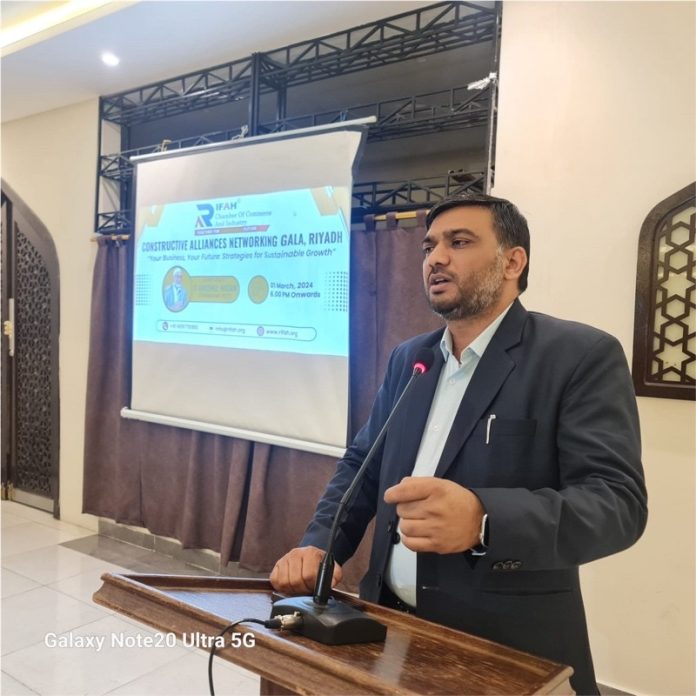
A gentleman added me to a WhatsApp group organised by RIFAH – a platform fostering entrepreneurship and collaboration. The group consisted of a team of businessmen travelling from India to attend the prestigious BIG5 Construct event in Saudi Arabia. My role? To guide and assist the team during their time in Riyadh, ensuring their experience was seamless and fruitful.

The days leading up to their arrival were filled with online discussions, meticulous planning, and an exchange of ideas. The more we interacted, the more my curiosity grew about meeting this group of Indian entrepreneurs in person. Among them, one name stood out – Dr. Mohd Aslam, the founder and CEO of Bakka Bags. His story, I had heard, was extraordinary: a Madrasa student turned BUMS doctor, now a thriving businessman.

When the team finally arrived in Riyadh, I eagerly met each member, but Dr. Aslam was nowhere to be found. I learned that, upon landing, he had immediately travelled to Dammam to visit relatives. The anticipation of meeting him only grew stronger.

The following day, our paths finally crossed. Dr. Aslam’s demeanour was calm yet commanding, his presence exuding both humility and confidence. In our brief but memorable meeting, I began to see glimpses of the journey that had brought him here – a journey of resilience, transformation, and boundless ambition. Little did I know that this encounter would inspire me to delve deeper into his incredible story, one that began in a small Madrasa and led to the bustling streets of Riyadh as a visionary entrepreneur.

Dr. Aslam was unlike any other businessman I had met. Down-to-earth and remarkably humble, he exuded simplicity in both his demeanour and approach. Despite not being a typical “Alig,” he proudly added “Alig” to his name, reflecting his deep connection to Aligarh Muslim University. Within a short span of time, our interactions grew meaningful, and we delved into discussions about his professional journey and his contributions to the Students Islamic Organisation (SIO) during his days at Chaukonia, Aligarh, and AMU.

What struck me most about Dr. Aslam was his genuine passion for balancing his professional success with community service. As I was preparing to re-start my writing journey focusing on young entrepreneurs, I knew his story had to be the first chapter. Our initial conversations laid the groundwork, but it wasn’t until a year later, in 2024, when I returned to India, that we explored his inspiring journey in greater detail.

From Madrasa to University

Dr. Aslam’s educational journey began with home-schooling and continued at Jamia Misbahul Uloom Chaukonia (Siddharth Nagar) branch of Jamiatul Falah, a renowned madrasa in Uttar Pradesh. Here, he gained a strong foundation in Islamic education, actively participated in extracurricular activities, and demonstrated his leadership skills as the editor of the madrasa’s students magazine.

In 2005, he took a significant step forward by enrolling in the Bachelor of Unani Medicine and Surgery (BUMS) programme at AMU. The transition from a traditional madrasa to the dynamic environment of AMU marked a transformative phase in his life. At AMU, he not only pursued academic excellence but also deepened his commitment to creating opportunities for others, laying the groundwork for his future entrepreneurial ventures.

This seamless blend of traditional and modern education shaped Dr. Aslam’s vision and resilience, qualities that would later define his remarkable journey as an entrepreneur and leader.

From AMU to Entrepreneurship

During his time at AMU, Dr. Aslam ventured into student politics, participating in the union election. Though he lost the battle, the experience enriched his understanding of leadership and resilience. Balancing academics and a budding entrepreneurial spirit, Dr. Aslam avoided asking his parents for financial support. Instead, he ventured into selling locks, mobile phones, and other small items. While his lack of business experience led to some losses, these early challenges became valuable lessons in perseverance and adaptability.

Despite the demands of running a side business, Dr. Aslam remained committed to his education. Balancing the two was a challenging feat, but his determination saw him through. In 2011, he completed his BUMS degree and began a six-month internship at a district hospital in Lucknow. It was during this phase of his life that he got married, a significant milestone that brought new responsibilities. For the remaining six months of his internship, he returned to AMU Hospital in Aligarh, continuing to hone his medical skills.

By the end of his internship, Dr. Aslam made a pivotal decision – to forgo higher education in medicine and explore new opportunities. This decision took him on a journey to Mumbai and eventually to Pune, where he enrolled at Symbiosis International University for a one-year postgraduate diploma in Emergency Medical Services (PGDEMS).

This period of his life marked a transition, where he began to blend his medical knowledge with his growing interest in entrepreneurship. The challenges he faced and the decisions he made during these formative years laid the foundation for his future as a successful businessman. Dr. Aslam’s journey is a testament to resilience, adaptability, and the courage to carve one’s path, even in the face of uncertainty.

Breaking Boundaries – The Unconventional Path

After completing his education and internship, Dr. Aslam, along with his wife – also a BUMS graduate – took the bold step of starting a clinic in Mumbai. For six months, they worked tirelessly to serve their patients, but the experience brought ethical dilemmas. Dr. Aslam and his wife were adamant about avoiding malpractices that had seeped into the profession, such as commissions and unethical practices. Staying true to their values, they decided to close the clinic.

However, the closure wasn’t just about ethics. During his time at AMU, Dr. Aslam had developed a strong desire to create employment opportunities for youth, especially in Uttar Pradesh, where unemployment remained a persistent issue. While a clinic could eventually provide such opportunities by growing into a hospital, the process would take years, and the impact would be limited. Driven by this vision of empowering deserving young people through meaningful work, Dr. Aslam made the bold decision to pivot entirely.

He chose to venture into business – a field neither related to his medical education nor rooted in his family’s legacy. It was an uncharted territory, and many saw it as an odd choice. While his wife and brother supported his decision, his father was deeply disappointed. For his father, leaving the noble profession of medicine for business seemed like a step backward, even a betrayal of the path Dr. Aslam had worked so hard to achieve.

Despite this opposition, Dr. Aslam stood firm. His conviction to create a larger social impact through business outweighed the personal and societal expectations tied to his identity as a doctor. This marked the beginning of an extraordinary journey, one that would see him transition from a healer of individuals to a creator of opportunities, taking bold risks to transform lives on a larger scale.

Building Dreams from Scratch

Dr. Aslam’s journey into entrepreneurship began with a bold and unconventional decision: venturing into the manufacturing of trolley bag shells. With no prior experience in business and a dream to create employment opportunities, he poured his heart, soul, and resources into setting up a factory. But reality struck hard. The business suffered massive losses, leaving him burdened with debts and no easy way to turn back.

There were moments of doubt when the thought of returning to the medical profession crossed his mind. Yet, the passion to create jobs and uplift others anchored his resolve. Instead of giving up, Dr. Aslam embarked on a relentless quest for self-improvement. He spent four months scrutinising every mistake, analysing every decision, and making necessary corrections. It was a period of sleepless nights, unyielding effort, and an unshakable belief that his vision could become a reality.

The tide eventually turned. Slowly but surely, the business began to generate profits, marking the start of his success story. The first tangible milestone came 1.5 years later when he purchased his first scooter – a modest yet deeply symbolic achievement. Those who had once criticised his decision to leave medicine and venture into business began to change their opinions, acknowledging the fruits of his perseverance.

From that point, there was no looking back. As the business grew, so did its footprint. From a small 720-square-foot facility, the operation expanded to a 1200-square-foot space in Mumbai East. The journey didn’t stop there; it scaled further to 2400 square feet and eventually to a 3600-square-foot factory. Each expansion was a testament to Dr. Aslam’s determination, resilience, and unwavering commitment to his mission.

Today, his factory stands not only as a symbol of his entrepreneurial success but also as a beacon of hope and opportunity for others – a dream fulfilled through sheer grit and a passion to make a difference. Dr. Aslam’s journey from a struggling start to a thriving business is a story of perseverance, vision, and the courage to defy the odds.

From Businessman to Author then to Mentor

In 2018, while managing his trolley bag manufacturing business, Dr. Aslam ventured into another entrepreneurial endeavour. This second business, which he later handed over to his younger brother, marked another milestone in his journey. Around this time, Dr. Aslam’s association with RIFAH began, a decision that would profoundly shape his trajectory.

Before the onset of the COVID-19 pandemic, he joined RIFAH, a platform for business networking and mentorship. Post-pandemic, he became more active in the organisation and eventually rose to the position of President for Maharashtra state. Under his leadership, RIFAH became a powerful catalyst for his personal and professional growth. Dr. Aslam began exploring international markets, travelling to the UAE, Saudi Arabia, and China to expand and diversify his business ventures.

One of the most pivotal pieces of advice he received during this phase came from experienced business leaders: to hire a consultant to streamline and enhance his operations. Initially, he signed a 12-month contract with a business consultant. Seeing the significant improvements, it brought to his business, he extended the contract for another year. During these two years, Dr. Aslam not only improved his business acumen but also learned strategies and insights that transformed the way he approached entrepreneurship.

Recognising the value of these lessons, Dr. Aslam felt a deep urge to share them with others. “What I’ve learned,” he thought, “should be accessible to every businessman and entrepreneur.” This realisation led him to channel his experiences and knowledge into writing. The result was 30 Business Hacks, a practical guide filled with key strategies and lessons from his journey. The book, written in both English and Hindi, became a testament to his mission of empowering others through knowledge.

Dr. Aslam’s evolution from a struggling entrepreneur to a successful businessman and mentor highlights his unrelenting drive to not only build his own ventures but also inspire and uplift others in the entrepreneurial community. His journey stands as an example of how resilience, learning, and the willingness to share can create ripples of positive change.

BAKKA: A Brand Born of Vision and Persistence

For years, Dr. Mohd Aslam focused on manufacturing raw materials for the luggage industry, quietly building his expertise in the sector. But he wasn’t content to remain behind the scenes. A bold vision began to take shape: creating his own brand of luggage. With this in mind, he registered the name “BAKKA” and launched his very own line of bags.

The journey didn’t stop there. Recognising the potential for growth, Dr. Aslam expanded his operations to include the manufacturing of other accessories used in the luggage industry. This diversification not only brought stability to the business but also ensured its sustainability. Within a short span of time, BAKKA became synonymous with quality and reliability, steadily carving its niche in a competitive market.

To support this growth, Dr. Aslam established a dedicated manufacturing unit in Lucknow for bag production. His two younger brothers took charge of managing the unit, embodying the values of trust and collaboration that he held dear. Dr. Aslam didn’t just involve his immediate family; he became a source of inspiration for his cousins, friends, and even the local youth. Through his own story, he demonstrated that entrepreneurship begins with small steps and can lead to extraordinary achievements.

What started as a one-man operation with a single employee has now grown into a thriving team of 20 dedicated individuals. For Dr. Aslam, this team isn’t just a workforce; they’re family. Together, they’ve built a business rooted in shared goals, mutual respect, and a collective drive for excellence.

Dr. Aslam’s journey with BAKKA is more than a business success story; it’s a movement. From motivating his relatives to guiding general youth, he’s on a mission to show that with determination, resilience, and the right mindset, anyone can transform a small idea into something remarkable. As BAKKA continues to grow, so does Dr. Aslam’s dream of empowering others to embark on their own entrepreneurial journeys and achieve greatness.

This remarkable blend of intellect, humility, and dedication to community welfare makes Dr. Aslam’s story one of inspiration – a journey that began in the quiet corridors of a Madrasa and led to the world of entrepreneurship, where he now stands as the founder and CEO of Bakka Bags.

Dr. Aslam’s journey began as a solitary endeavour, driven by a vision that extended far beyond personal success. With unwavering determination and a commitment to ethical principles, he laid the foundation for a small empire that would stand as a testament to his resilience and purpose. However, his journey was never just about his own achievements; it was equally about empowering others to realise their potential.

One such story reflects his profound impact. Dr. Aslam guided an aspiring entrepreneur to launch a business, which today provides employment to over 16 individuals. This is just one of many lives he has touched. Through mentorship and support, he has been instrumental in nurturing numerous start-ups and young entrepreneurs, enabling them to transform their dreams into reality. His legacy is not merely in the empire he built but, in the lives, he uplifted and the ripple effect of opportunity he created for generations to come.

source: http://www.radiancenews.com / Radiance News / Home> Entrepreneurship> Features> Focus / by Syed Azharuddin, Radiance News Bureau / January 01st, 2025

From 4 to 400, how CS Operations Manager Syed Azharuddin built a team that prioritises Meesho entrepreneurs & helps them succeed

xxxxx

Before Syed Azharuddin joined Meesho in February 2018 to set up the company’s first ever call centre, he wasn’t really a stranger to the brand’s reselling business model. That’s because Azhar’s sister-in-law was already reselling on the app. And today, two years later, some of his other family members are also running their businesses on the app, just like the millions of women across India Azhar is helping, to provide a seamless customer experience on the Meesho app.

Over the course of two years, Azhar, now Manager — CS Operations at Meesho, has built a 400-person strong, end-to-end Customer Operations team.

This in-house call centre we have at Meesho, which also includes email supportinbound support and escalations, ensures that the reseller experience on our platform is optimum. And Azhar along with his trusty army of CX executives, make it happen daily. He has built the team and processes from ground up, starting with just a four-person team two years ago to now managing a pan-India, 400 person strong one. Azhar credits learning how to Take Ownership (a core Meesho value) as the reason for his success here, which is why he loves to instil the same in his teammates too.

So, without much further ado, let’s hear from Azhar about his life at Meesho!

I joined Meesho in 2018 to set up its call centre. Before that Meesho only had chat support in place. Our team was envisioned to be that one stop solution for all reseller problems. However, what started as one line of work has expanded over the last couple of years, and now, be it email escalations, Playstore/Facebook escalations, or any other issue that involves a reseller, my and I usually end up pitching in. Though my responsibilities have increased tremendously, it has been a blessing too. At Meesho, each one of us is encouraged to take ownership, which is why I could see my growth within the company from the beginning.

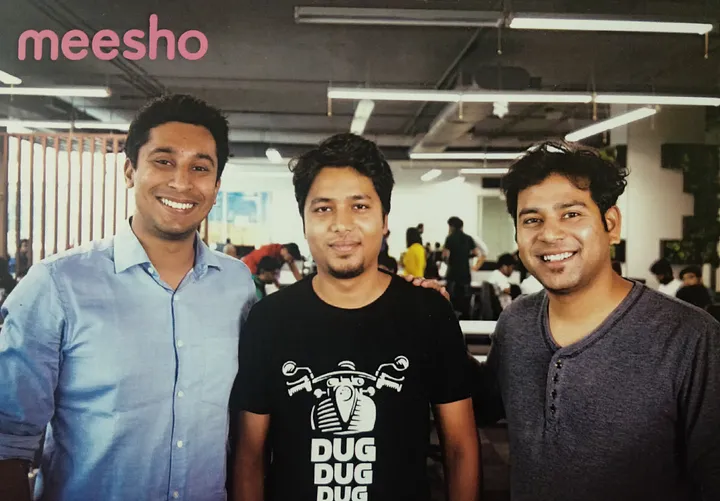
Azhar (centre) flanked by Meesho CEO and Co Founder Vidit Aatrey (left) and CTO and Co Founder Sanjeev Barnwal

Owning it

Once I joined, I was given complete monopoly to set up the call centre and carry out processes and operations the way I wanted to. Thanks to my core domain experience in customer support, I was able to do a good job in setting up processes. Once the call centre proved to be a success story, Meesho went on to add multiple layers to its customer support, and I was right there to take the lead on that as well.

The way customer support works, even challenges like in-bound, email and all time running processes tend to get monotonous, seeing as we can define and stabilise them over time. This is why getting new challenges that come with the opportunity to solve new problems are exciting for me. I also take on new processes and projects such as co-managing qualityimproving cost efficiency, and guiding new resellers on Meesho to grow consistently for this very reason.

Right now, our pan-Indian customer support team has members that speak most if not all Indian languages. From Jammu & Kashmir to Kerala, I am sure I have left no state, when it comes to creating a local team. Based on where volume is coming from, we might add more people for different languages, but there isn’t any language that we have missed out on.

Finding the joys of the job in reseller feedback

Interacting with resellers is where the real satisfaction of the job comes from for me. There have been many resellers who have been associated with Meesho in varying degrees over the years, and when they talk about the business opportunities we are giving them and how satisfied they are, it feels really good to hear that.

Our job is not just to feel the pulse of resellers in terms of how they are doing, but more to understand what problems they are facing. In that process, they also reveal what they like about our work, and that actually puts a smile on our faces. I am reminded of a reseller from Hyderabad, who once rated us as low when asked how likely she was to continue on Meesho. I then called her to understand what was not working for her, and in the process of letting us know where we could improve, she also revealed that she is a single mother and that Meesho gave her a platform wherein she could earn from home.

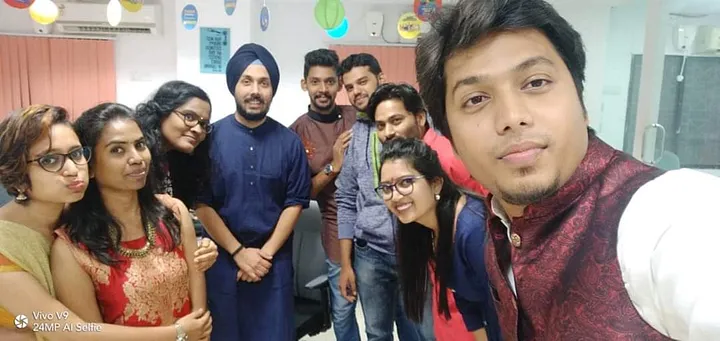
Azhar (extreme right) with his colleagues

Even with the “We Hear You” videos newsletter format where we address reseller concerns every month, there is a bond that we try to build with our resellers, and it was pretty evident that our efforts are making an impact on them.

Customer support 101

In my line of work, it is important to have domain experience to understand what works well and what doesn’t. Moreover, market research helps us always stay ahead of the competition. As a manager, I have also realised that everything within the team comes from your management style. My simple motto has been to inspire my team so that they inspire the ones that report to them.

I have been inspired by my managers at Meesho, and so I believe that when you’re aware of what you have to do, all that you need to do is inspire and motivate your team members. Whether you get something right or wrong comes in secondary, but all of us are determined to consistently raise our targets and achieve them.

It also speaks to one of our core values of Dive Deep and Solve Problems. When you’re in customer experience there are infinite problems and you just have to pick one and solve one, and keep at it. Even my current VP, Harshit Madan (General Manager & VP — Fulfillment and Experience), asks: Aaj kya problem solve kar rahe ho? You pick a problem and try to solve it the best way you can.

Customer support is not merely a 10–7 or Monday-Friday job; sometimes issues will crop up even at night or during weekends, and you have to be always there to help. And I don’t think I have ever had any problems in doing so and neither has my team.

Living the job 24X7

I have several family members working as Meesho resellers as well, including one of my sisters-in-law. However, I keep things very professional and refuse to discuss any Meesho feedback on a personal level. In fact many resellers within my extended family, are not even aware that I work for Meesho.

My time at Meesho has coincided with some of the best parts of my life, including marriage and becoming a father. I have spent two good years here with a great team. I am reminded of yet another core value that my team and I live by, which is Company>Team>Individual. It works out perfectly because I understand the objective that the company has and when this value gets passed on to the team and the team performs well, it comes down to me. Because team is everything!

Want to join Azhar and team Meesho in creating 20 million entrepreneurs in 2020, then we are hiring across roles. Apply here.

source: http://www.medium.com / Medium / Home / by Mangala Dilip, posted in Meesho Tech / January 31st, 2020

Muslim charities aid needy in India amid COVID-19

INDIA :

Charity groups have been trying to ensure that poor do not go to bed hungry amid nationwide lockdown.

File photo

New Delhi :

Muslim charities and other voluntary organizations are helping the poor in India during a nationwide lockdown aimed at curbing the spread of the novel coronavirus.

As of Thursday, the death toll from the coronavirus had reached 423 and the number of positive cases 12,456, according to data compiled by the U.S.-based Johns Hopkins University.

As the Indian government extended the lockdown until early May, the poor and migrant workers who survive on daily wages do not even have enough money to support basic household expenses.

With no work during the last three weeks in the first phase of the shutdown, they have suffered the most sitting idle at home.

Prime Minister Narendra Modi said on Tuesday that implementation of the lockdown would be strictly guaranteed in the coming days to ensure that the virus does not spread to new areas. It means more difficult days for the deprived sections of society.

Laborers and migrant workers were left without food and shelter when Modi suddenly declared a 21-day nationwide lockdown last month. The lockdown was set to end on April 14 but has been extended until May 3.

Helping those in need

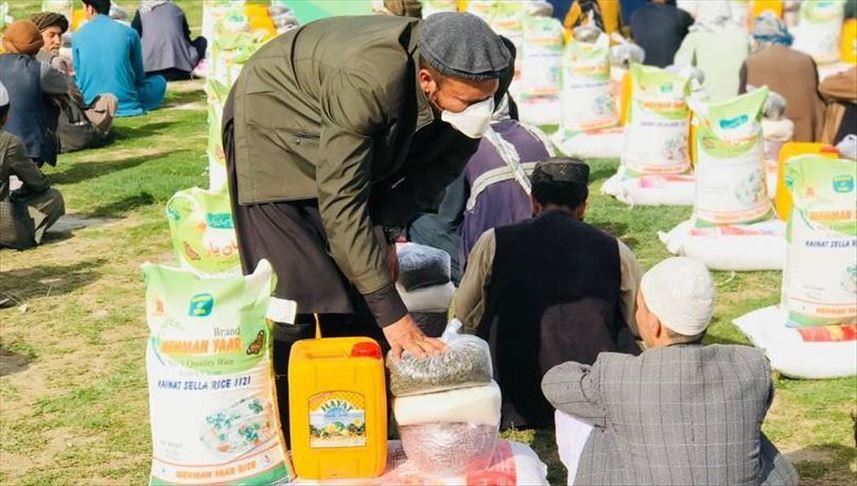
But soup kitchens and charity groups came to their rescue. Apart from various organizations in India, Muslim charity groups and individuals in their personal capacity have been trying to ensure these people do not go to bed hungry.

The Humanitarian Relief Society is involved in relief operations during the lockdown in various districts in the southern state of Karnataka.

Its general secretary, Mohammed Makakada, said they have distributed $200,000 worth of food items to the poor.

“We give food kits to the poor. A single kit contains food items worth around $16 (1,200 rupees). These were given to poor people and migrant workers from other states,” Makakada told Anadolu Agency.

“We plan to continue our relief work until May 3. We are also working with Jamaat-e-Islami Hind, [a Muslim organization], and they are assisting the poor and other migrant workers regardless of their religion,” he added.

The Amoomat Society, another charity based in Hyderabad city in the southern state of Telangana, has been distributing cooked food to around 200 people daily.

Most of them are migrant workers from different states in India who got stuck in Hyderabad due to the sudden lockdown, said the group’s general secretary Khalida Parveen.

“We are giving them ready-to-eat food as they are very poor and don’t have anything to eat. We will continue to offer this food to them, as it will be impossible for them to survive without help,” Parveen told Anadolu Agency.

“Earlier, we faced some problems because of police restrictions. But now they have permitted us to distribute food,” she added.

Students Islamic Organization of India is also helping the needy during these difficult times.

“Being a student organization, initially, we worked to provide food and temporary accommodation to students as the lockdown was sudden and several students were stranded in their rented rooms or hostels and needed support. Later, we decided to help migrant laborers. We continued our work to provide succor to them. We are carrying out relief work in different cities,” said the organization’s general secretary Syed Azharuddin.

Azharuddin said their organization has been providing cooked food as well as rations or food supplies to laborers besides helping them obtain rations being provided by the government.

“We helped around 100,000 laborers, most of them from the states of Bihar, West Bengal and Uttar Pradesh. We are working in 24 states with 1,000 helpline centers and around 10,000 volunteers,” he told Anadolu Agency.

“Till now, we have reached out to about 50,000 families with ration kits, as many state governments announced they would provide help to the workers but delayed in issuing the rice and wheat to the poor,” he added.

Free meal at bread bank

The Roti (Bread) Bank of Bhopal in the central state of Madhya Pradesh to fight hunger is also working diligently to provide food to the needy at this time. The NGO was founded in 2018 by Muslim philanthropist Mohammad Yasir to provide free food to the poor.

Following the lockdown, 500-700 people are having their meals daily at the center.

Yasir said his work increased almost three-fold after the lockdown as so many people have been rendered jobless and depend on the NGO for their meals.

He explained how some people have come forward to help the needy.

“We tell people that while cooking food at their homes, they should prepare some extra food and donate it to us. They give us the food and we give that food to the people visiting us,” Yasir said.

Anyone in need can come and have a meal there.

source: http://www.aa.com.tr / Anadolu Ajansi / Home> Asia Pacific …latest on coronavirus outbreak / by Shuriah Niazi / April 16th, 2020