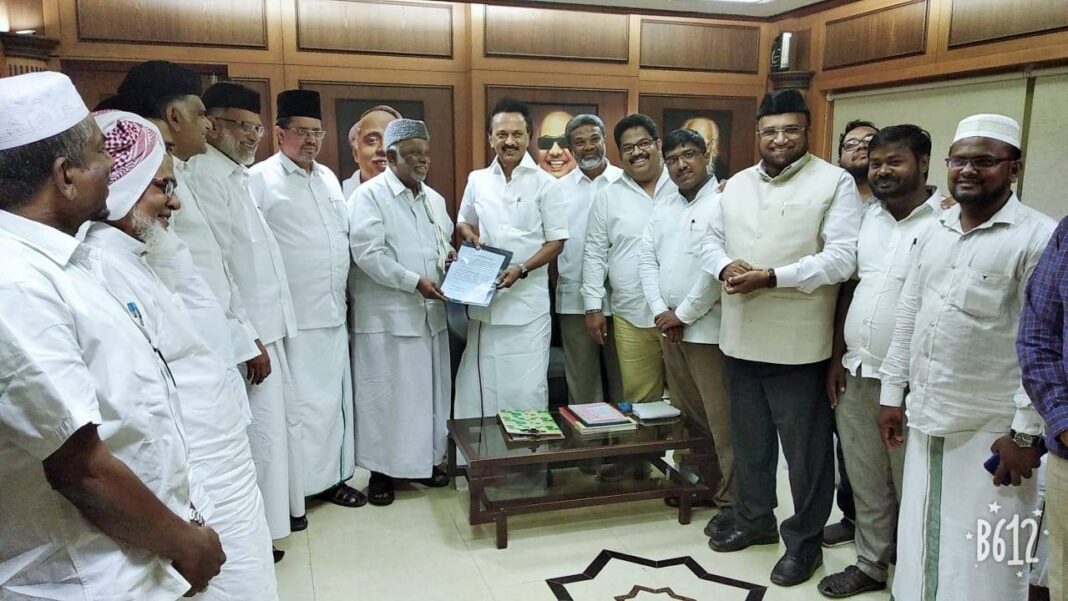
Ahead of the Assembly elections in Tamil Nadu, scheduled for April-May 2026, the Muslim community is emerging as an important player in the poll-bound state, with Chief Minister M.K. Stalin rolling out several welfare initiatives aimed at benefiting them. Stalin has laid emphasis on the ruling Dravida Munnetra Kazhagam’s (DMK) historical ties with Muslims.
Muslims in Tamil Nadu constitute approximately 5.86% of the state’s population. Their number in the state was 42 lakh, as per the 2011 Census, and they primarily belong to the Tamil-speaking Labbai, Marakayar, and Rowther communities. With a history dating back to 7thcentury Arab trade, they are well-integrated, often using Tamil as their native tongue, and exhibit high social, literacy, and economic indicators compared to other regions.
In a powerful message to the ruling Bharatiya Janata Party (BJP) at the Centre, Stalin has claimed that Tamil Nadu is the “only state which is safe for Muslims” and described the DMK as a fortress that protects the minorities in the state. Because of this, incidents like mob lynching could not rear their head in Tamil Nadu, Stalin said at a function at Kumbakonam recently.
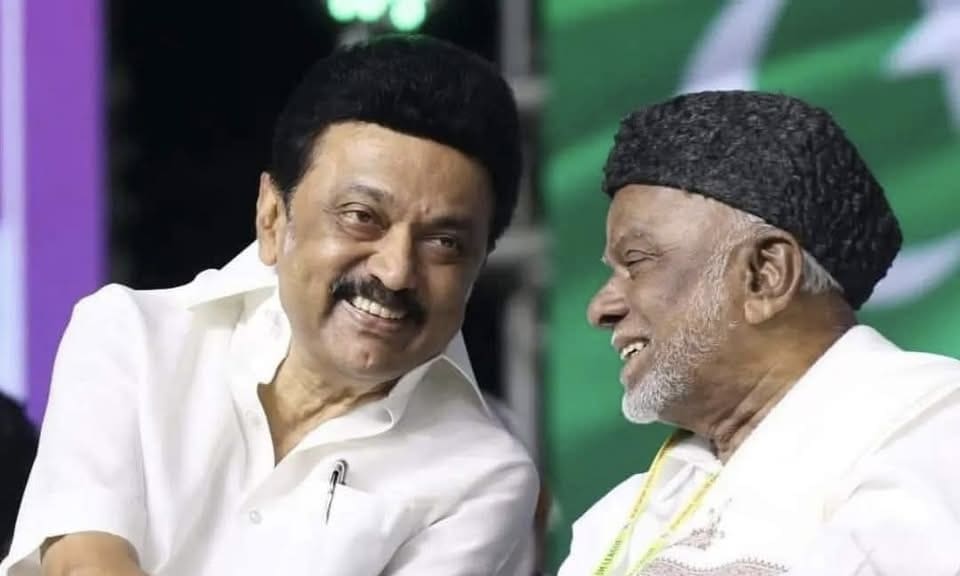
The occasion was the State Mahalla Jamaats Conference organised by Indian Union Muslim League (IUML) near Kumbakonam, in which office-bearers of around 8,000 Jamaats from across the state participated. In his address, Stalin launched a scathing attack on the Central Government, accusing it of using central agencies like the CBI, ED, and IT to intimidate political opponents and the public.
The Chief Minister remarked that he did not need to explain the current situation of the country further, implying a climate of pressure from the Centre. His remarks were indicative of the DMK’s strategy to consolidate minority votes by positioning itself as a primary defender against central interference and communal insecurity.
Stalin accused the Opposition All India Anna Dravida Munnetra Kazhagam (AIADMK) of betraying minority communities to appease central authorities in Delhi. He asserted that only the DMK-led Secular Progressive Alliance has the strength to defeat the anti-people AIADMK-BJP alliance in the upcoming Assembly elections.
Stalin announced five welfare schemes for Muslims on the occasion, including the establishment of a third Waqf Tribunal at Coimbatore and the increase of pension for Ulema registered with Tamil Nadu Waqf Board from Rs. 3,000 to Rs. 5,000, and the family pension from Rs. 1,500 to Rs. 2,500.
Stalin also announced that in the first phase of a scheme, 1,000 Ulema will receive the increased subsidy of Rs. 50,000 for buying two-wheelers. The Ulema play a pivotal role as Islamic scholars in Tamil Nadu’s Muslim societies, acting as guardians and interpreters of religious knowledge and law. They are highly respected for their deep understanding of Islamic theology, Sharia law, and the Hadiths, guiding the Muslim community on matters of faith and practice.
The other announcements included creation of burial grounds in City Corporation areas where there is none, and filling of 10 vacant posts of Urdu language teachers at the government high schools and higher secondary schools. Stalin said the efforts of those who were trying to disturb peace had been in vain, and added that they had formed in their own interest, an alliance of those who are servile by threatening with agencies like ED, CBI and IT.
Pointing at AIADMK’s support to the contentious Citizenship Amendment Act (CAA), 2019, the Chief Minister said the Leader of Opposition, Edappadi K. Palaniswami, has been continuing his betrayal of Muslims. “But for AIADMK’s support, the CAA Bill would have been defeated in the Rajya Sabha,” he said. He further pointed out that the DMK government had courageously declared the CAA would not be implemented in Tamil Nadu.
Stalin also referred to the DMK’s vote against the Triple Talaq Bill and Waqf Amendment Bill. “If the BJP alliance comes to power in Tamil Nadu, it will ruin the developed state. Only the DMK alliance has the courage and strength to stop it from coming to power,” he declared.
Pointing out that the DMK cadre have started their door-to-door campaign, he urged the IUML cadre, particularly the youth and women, to campaign for those who will protect and enable their growth. IUML chief K.M. Kader Mohideen, who presided over the meeting, said his party and members of Mahalla Jamaats will ensure the continuance of the Dravida model of governance.
The key aspects of Muslims in Tamil Nadu include their cultural fusion, social harmony, and concentration in towns like Kayalpatnam, Kilakkarai, Adirampattinam, and Melapalayam. Chennai also has a notable Muslim population, comprising about 9.45% of the capital city’s total population.
The Tamil Muslims are known for a unique synthesis of Tamil culture and Islamic faith, with strong traditions in trade and education, particularly in coastal towns. The community is primarily Sunni, with diverse, well-integrated, and long-settled, as well as some Dakani-speaking groups. The presence of ancient mosques like the Kilakaraj Jumma Masjid, built in 7th century, highlights early Islamic contact through maritime trade, while Tamil Nadu is often described as a model for communal coexistence because of its peaceful Muslim community.
source: http://www.indiatomorrow.net / India Tomorrow / Home> Debate / by India Tomorrow Correspondent / February 03rd, 2026
He has written scores of books in Arabic, English and Urdu. One of his unique books is Attibyan which helps in teaching Qur’an to neo-Muslim brothers and sisters.
New Delhi :
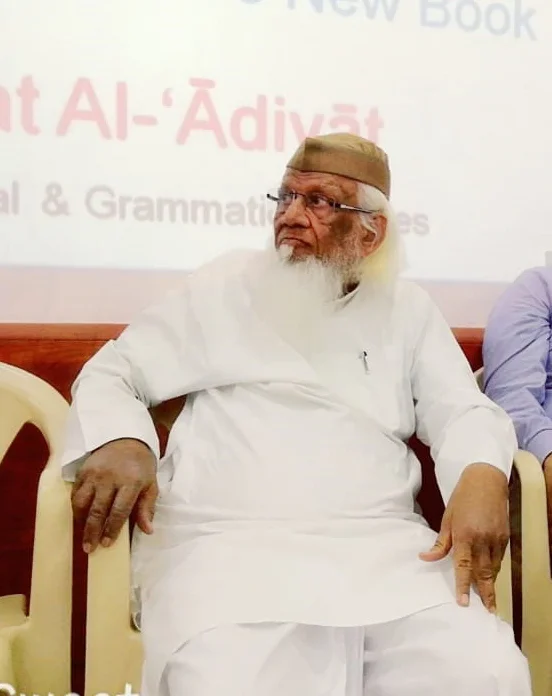
Dr. V. Abdur Rahim, world renowned Islamic scholar, multilinguist, author, teacher and translator passed away in the holy city of Madinah on Thursday.
Author of several popular books on teaching Arabic language, Dr. Abdur Rahim was laid to rest in Jannat al Baqi cemetery near the Prophet’s Mosque after Friday noon prayers, reports reaching here said.
Dr. Abdur Rahim has written scores of books in Arabic, English and Urdu. One of his unique books is Attibyan which helps in teaching Qur’an to neo-Muslim brothers and sisters. The scholar was closely associated with Chennai-based Islamic Foundation Trust (IFT) and a majority of his books have been published by it.
Dr. Abdur Rahim was born in the small town of Vaniyambadi in Tamil Nadu in 1933. After completing his secondary school studies, he joined Presidency College, University of Madras where he majored in English language and literature. He graduated in 1957. In 1964, he joined the prestigious Al-Azhar University in Cairo, from where he completed his M.Phil. and Ph.D. in Arabic philology.
Dr. Abdur Rahim adopted innovative teaching methodologies and pedagogical approaches, which revolutionised the teaching of Arabic. He joined the Islamic University of Madinah in 1969, where he played a pivotal role in the program of teaching Arabic as a foreign language. He also imparted his knowledge at various institutions, including the Islaamic University Omdurman Sudan, Khartoum University Sudan, and Arabic Institutions in Germany, Washington D.C., and British Guyana.
His most significant contribution to Arabic education was the development of the renowned Madinah Arabic Course. This comprehensive series of textbooks and audiovisual materials simplified the complexities of the Arabic language, making it accessible to learners from diverse linguistic backgrounds. His teaching not only facilitated learning but also promoted intercultural dialogue and understanding.
Beyond his teaching endeavors, Dr. Abdur Rahim served as the Director of the translations section at the King Fahad Qur’an Printing Press in Madinah, where he contributed to translating and interpreting the Qur’an into various languages, ensuring its accessibility to people worldwide.
In recognition of his exceptional contributions to Arabic language education, Dr. V Abdur Rahim was honored with the prestigious President of India Award. This recognition celebrated his tireless efforts in promoting Arabic language learning and fostering cultural understanding through linguistic knowledge.
source: http://www.clarionindia.net / Clarion India / Home> India / by Team Clarion / October 21st, 2023
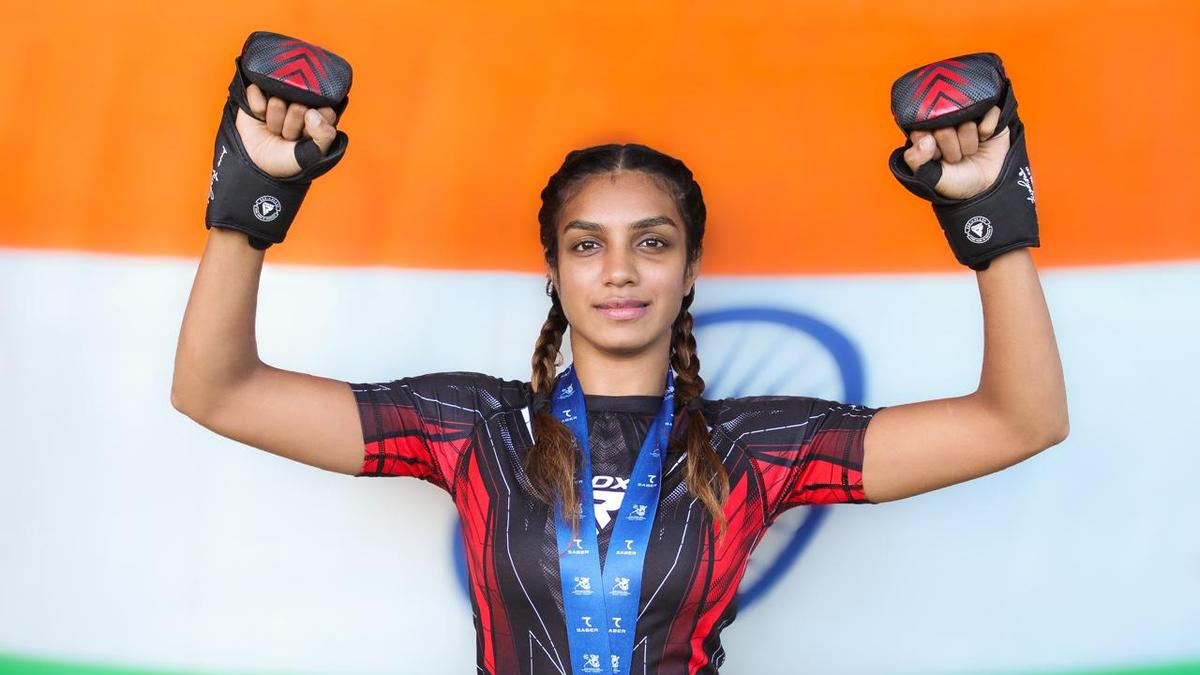
Mixed martial arts were never on the horizon for the 23-year-old from Anna Nagar in Chennai. Even sport wasn’t really part of the picture.
Afshan Fathima defied odds, reaching the final of IMMAF World Championships despite challenges and stereotypes. | Photo Credit: Special Arrangement
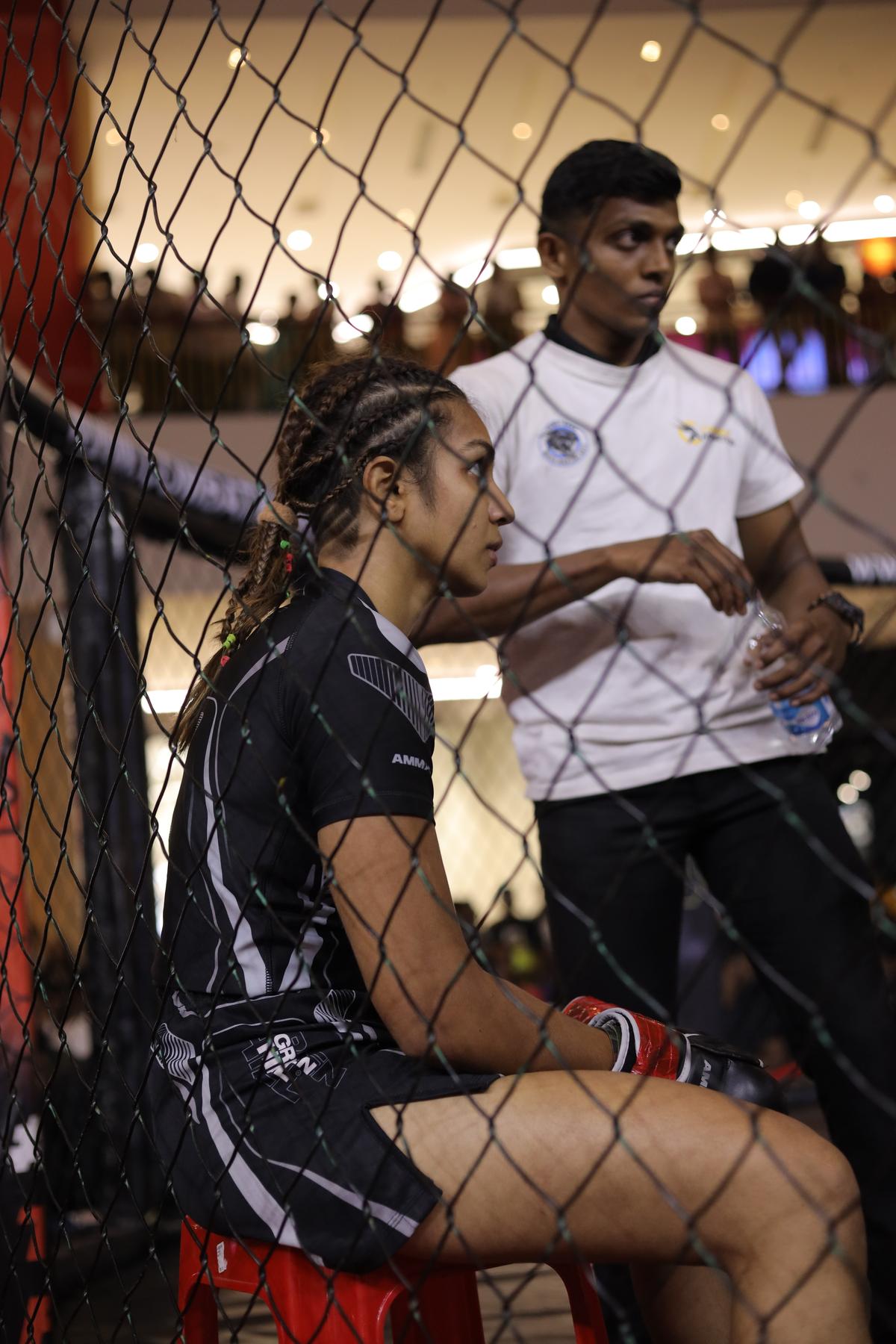
Afshan Fathima walked away from her very first bout of the 2024 IMMAF World Championships in Uzbekistan last week not only with a win but also with a prodigious, rapidly darkening contusion under her eye. Although the injury was caused by an accidental headbutt rather than a punch from her opponent, many thought it meant the end of her campaign in the women’s strawweight division (52.2kg) at her debut World Championship.
“Everyone who saw me thought I wasn’t going to be declared medically fit to take part in the next bout. But I did make it. And then after I won that bout, everyone thought my injury was not going to let me compete in the next bout. After every bout I fought, the other fighters thought I wasn’t going to be able to make the next round because of how big the swelling had got. But I kept doing this. There was no way I was going to quit,” she says.
By the time Afshan’s campaign at the IMMAF World Championships ended, she had gone further than any other Indian – reaching the final –at the premier global amateur competition in mixed martial arts. Amongst her wins, was a guillotine choke submission of Ireland’s Lisa Murtagh who trains at the prestigious SB Gym– with the same team as former UFC champion Connor McGregor – and picked up a decision win over reigning World champion Matilda Bachurina of Kazakhstan in the semifinals.
Afshan however couldn’t return from the competition with the gold medal she had hoped for. She ended up losing the final by a narrow points decision to Isabel Calvo of Spain. “Unfortunately, the day of my final coincided with the start of my period. It was pretty bad. I was puking and had really bad cramps. I wasn’t anything close to 100 percent,” she says. Afshan says she returned from the tournament with mixed emotions. “It stings of course to go so far and fall short in the final but at the same time, I’m a little happy that I at least came this far,” she says.
Few might not have predicted Afshan would get anywhere near where she’s gotten. “Even I wouldn’t,” she says.
Mixed martial arts were never on the horizon for the 23-year-old from Anna Nagar in Chennai. Even sport wasn’t really part of the picture. “There’s no one in my family who has chosen sports as a career,” says Afshan, the eldest of three sisters. That was the case for her as well. It wasn’t as if she wasn’t interested in sport. Some of her earliest memories are of watching WWE pro wrestling matches with her father and uncle. At school, she says she was one of the few children to actually make the most of the games period.
“Most of the other kids would be chatting with each other or catching up on their studies. I was the only one who would pester the games teacher to start a basketball match or something. I was also someone who used to roughhouse with my friends. They’d all tell me I was really strong or that I hit really hard. But I didn’t know what I was going to do with that. While I really wanted to play something, my family only really wanted me to study. My grandmother was a teacher and my aunt was a lecturer. I was also fairly good in studies so I had no option but to focus on my books. Perhaps if I was a bit dull, they might have been more open to the idea of putting me in sports,” she says.
It was only after her school when she began studying for a degree in Electrical Engineering at Hindustan Institute of Technology that Afshan says she finally got the chance to pursue her passion.
“I always wanted to do some sort of fitness activity. So, in my third year of college I joined a crossfit gym. The gym where I trained also had a sign for mixed martial arts classes although they didn’t have any instructors. That was the first time I had heard about mixed martial arts. Although they didn’t have classes at the gym. I did a Google search and found out about Combat Kinetics Chennai and coach Ajit Sigamani,” she says.
At that time, Afshan says she told her parents she was just staying back to play basketball in her college since she knew the alternative would be something they would never agree with.
“I’m from an extremely orthodox Muslim family. Back when I was in school and in college I would wear the burkha. I couldn’t even think of leaving the house if I wasn’t wearing the burkha. While my parents were supportive of my education, they would have drawn the line at my getting into a sport like martial arts. So I used to wear the burkha when I left home. Then, when I went into the gym, I would change into my gear and back into the burkha when I was heading back home. It almost felt like I was living two lives. I tried to balance those two lives as much as possible. I knew I would have to tell my family eventually but I was hoping I could ease them into it,” she says.
It was at the Combat Kinetics Gym though where she felt she truly belonged. “Because I had been somewhat sporty in the past, I didn’t really struggle getting physically in shape. I enjoyed doing all the push ups and pull ups. I absolutely loved actual combat training. A lot of our training in MMA is mixed gender and I sometimes would think just how scandalised my family would be if they walked in on one of our grappling sessions. But, I genuinely didn’t think too much about it when I started. I just got on with it. It wasn’t as though I’d stopped becoming religious or stopped praying but I think it’s what’s inside your heart that counts a lot more than what you are wearing on the outside,” she says.
Afshan says she knew she was someone who was meant to be a fighter when she stepped into the fighting cage for her first sparring session. “In contrast to a lot of the other individuals who were starting out, I was also someone who wasn’t scared of sparring. A lot of beginners are scared of being hit. They close their eyes and turn their head. When they get hit on the face for the first time, they decide, this isn’t what they want to do with their life. But fighting just came naturally to me,” she says.
Over time, Afshan’s parents have come to terms with her choices. | Photo Credit: Special Arrangement
Her biggest fight though would come outside the cage when her parents eventually found out that she was training in mixed martial arts. “My dad freaked out. There was a lot of screaming and shouting. They took away my phone and I wasn’t allowed to leave the house for a week. But I kept insisting that I would go and eventually my parents gave in,” she says.
Over time, Afshan’s parents have come to terms with her choices. “I don’t think my father and mother were personally against my taking up MMA. I think they were more concerned about what the society I came from would think about what I did. I think they first thought it was a weird sort of fad that I had picked up. Initially, as a compromise my father would drive me to the classes and bring me back right after. Later though, I learned how to drive a motorcycle and began to go myself. That gave him the confidence that I was really serious about what I was doing,” she says.
Within a few months of training, Afshan says she was sure combat sports was what she wanted to do with her life. “I can say I was a quick learner. As part of our training, we usually compete in boxing, judo and wrestling competitions. Within a few months of training, my coach entered my name in a district level competition in boxing. Although I was nervous since I hadn’t competed before, I ended up winning. Another few months later, I competed at my first national amateur championships in Lucknow that once again I ended up winning,” she says.
While the gold medal she won in Lucknow earned her some level of respect at home, Afshan knew it will always be hard for her parents to completely come to terms with her career. That was her key to becoming as independent as possible. “My parents have already gone far beyond their comfort zone to even accept that I can be an MMA fighter. Sometimes when they see me in shorts, they will grumble and say they gave me too much freedom. I like to live life on my own terms. I’ve never asked my parents for any money to fund my training or competition. My dad used to be in business but he had to shut that down after he made a lot of losses. I also have two younger sisters, who my parents are responsible for. At first, I used to beg my coach to charge me a nominal fee. I promised I’d pay him back when I started earning. After graduation, I worked in sales for Jaguar India but I realised I wasn’t getting the time to train like I wanted. I then started working as a coach in my MMA gym itself. MMA isn’t a sport where as an athlete you get easily sponsored by the government or private organisations. So, if I have to compete in competitions, I have to raise my own funds,” she says.
Afshan says she had to save up for a year in order to pay for her fight camp, nutrition, travel and competition fees for her first IMMAF World Championships this year.
It’s not been an easy journey and Afshan has to keep herself motivated even when it’s not the easiest to. Within her family, Afshan says she is a bit of a polarising figure. “Just because I’m a fighter doesn’t mean everyone’s opinion has changed. My family is still very conservative. A lot of people wonder why I’m still not married. Both my younger sisters wear the hijab and most of my cousins still wear the burkha. My relatives tell them not to hang around with me because I’m seen as a bit of a bad influence. My mother loves me but she will still come up to me and say that I should retire as a fighter and get married. But she doesn’t understand that I’ve only just started,” she says.
Afshan though doesn’t have any regrets. She’s already looking to her next target – turning professional. “The amateur system is mostly a way to get some sort of experience. I think I’m a fairly well-rounded fighter. The next level for a fighter is to turn professional. My coach and I are still weighing our options. We have some offers but I’m still to decide whether I want to compete for one more World Championship and win a gold or take the jump into professional fighting,” she says.
The professional ranks will be yet another giant step for Afshan to climb. She’s looking forward to it. “There’s this quote I always try to live by. It’s that the mountains you carry are the ones you have to climb. There’s no point taking pressure because of everything that I had to get through to get to where I am. When I look back, I think to myself ‘Wow, I’ve broken so many stereotypes not just for women but for Muslim women in particular. Every once in a while, some woman will come up to me and say she lives through me or that she wants her child to become like me. That gives me a lot of motivation. I’ve faced some hard obstacles. I can deal with next to anything,” she says.
source: http://www.sportstar.thehindu.com / Sportstar / Home> More Sports / by Jonathan Selvaraj / November 21st, 2024
The MK Stalin-led Tamil Nadu government has honoured Indian Union Muslim League (IUML) national president K.M. Kader Mohideen with this year’s Thagaisal Thamizhar Award (Distinguished Tamilian Award).
Chief Minister M.K. Stalin will present the award to Mohideen during the Independence Day celebrations on August 15.
The award carries a cash prize of ₹10 lakh and a citation.
An official release stated that Mohideen was honoured with the award following a meeting of the selection committee chaired by the Chief Minister at the State Secretariat on Friday.
According to the release, Mohideen has dedicated his entire life to the cause of social harmony and has demonstrated a deep understanding of Indian politics.
Born on January 5, 1940, in Thirunallar, Pudukottai district, to Mohamed Hanif and Kasimibibi, Mohideen served as a Member of Parliament from 2004 to 2009 and has authored numerous books.
During his student days, he was inspired by the late leader Quaid-e-Millath Muhammed Ismail and joined the Indian Union Muslim League in 1956. Since then, he has held various key positions in the party, including student wing organiser, youth wing organiser, secretary for educational and cultural affairs, organisational secretary, general secretary, and is currently the State president of IUML in Tamil Nadu as well as the party’s national president.
“Our #DravidianModel government is proud to announce this year’s #தகைசால்_தமிழர் award to Professor Kader Mohideen, a thinker who has dedicated himself to social harmony since the time of the venerable Quaid-e-Millath – the National President of the Indian Union Muslim League – and who has guided hundreds of students to graduation!” Stalin wrote in Tamil.
Since the institution of this award, previous recipients have included CPM leader R. Sankaraiah (2022), centenarian CPI leader R. Nallakannu (2022), Dravidar Kazhagam president K. Veeramani (2023), and former TNCC president Kumari Ananthan (2024).
source: http://www.maktoobmedia.com / Maktoob Media / Home> India> South India / by Maktoob Staff / July 05th, 2025
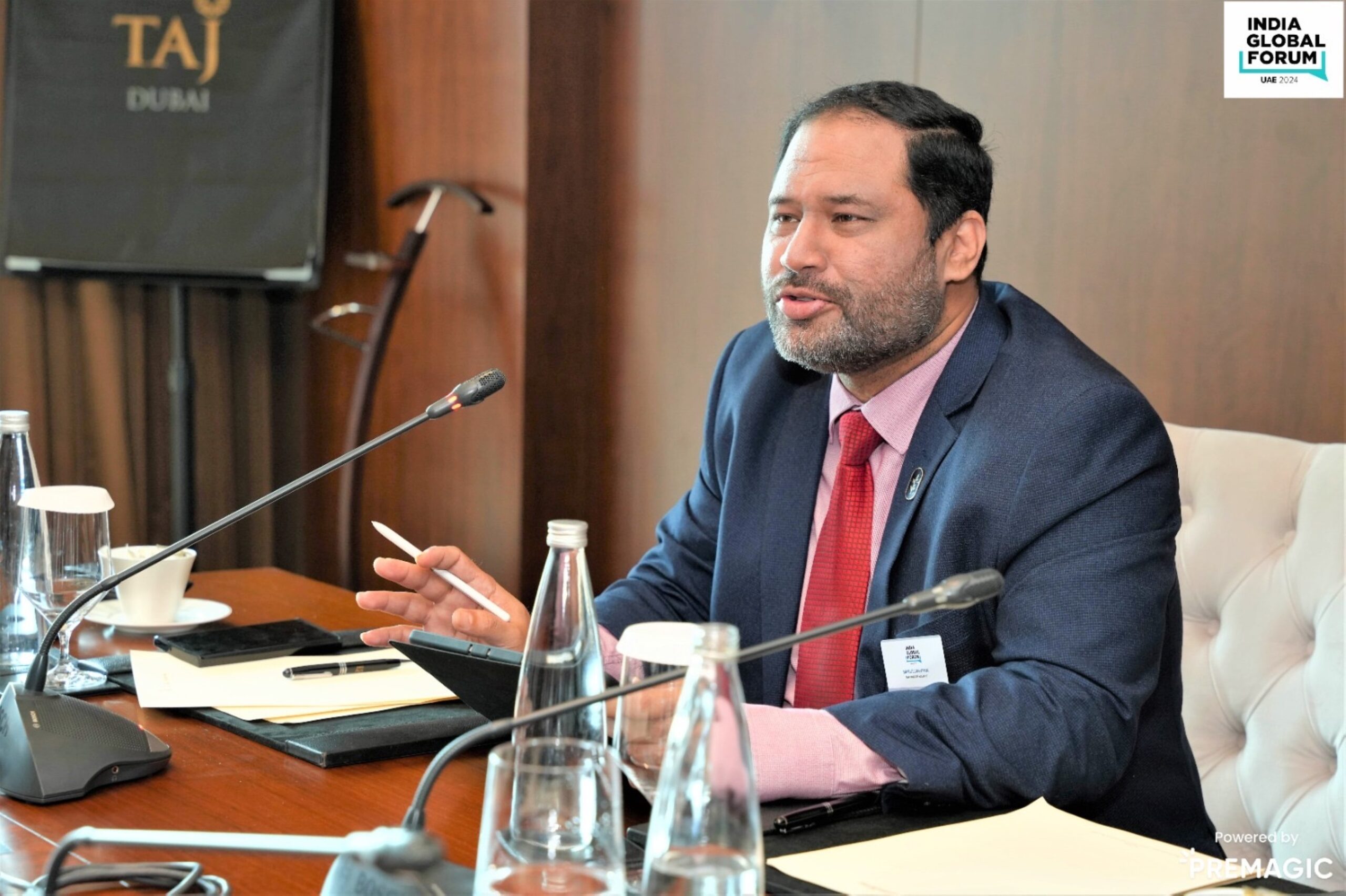
Sustainability is no longer a choice—it’s a way of life. This is an exciting field to explore. With AI, blockchain, IOT and other advanced technologies, we have the tools to build a truly sustainable future, stated by Dr. Samiullah Khan, one of the most influential voices in the UAE’s sustainability movement and Chief Sustainability Officer at Fakhruddin Holdings Dubai. Talking to Gulf Today, he said, “As the world intensifies efforts to combat climate change, sustainability has become more than just a buzzword – it’s a global imperative.”
Dr Khan also known as Dr Sam is a key figure in sustainability summits and discussions, often the first to evaluate innovative sustainability solutions that promise a greener future. For many, sustainability is a practice. For him, it’s second nature – ingrained since childhood in Chennai, India. “Wasting even a grain of rice was unacceptable in our home. Extra food was either shared with those in need or fed to cows, whose dung was used as manure in our garden,” he recalled.
These early lessons shaped his understanding of sustainability and the circular economy. His passion for technology and the environment led him to prestigious institutions such as Anna University, Cambridge University, MIT, Delft and Harvard.
His career began with Tata Motors, where he became among the youngest engineer to lead international operations into Bangladesh and Saudi Arabia and growing Tata’s market share to an impressive 96 per cent in the school bus sector.
After an illustrious 17 years with Tata and five years at SRM University, Sam found his true calling in 2015 as CEO of World Islands, He introduced air-to-water technology, harnessing humidity in the deserts of Dubai to generate clean drinking water, using Solar power – an innovation that gained significant traction in the desert landscape.
Recognised among the 100 Iconic Indians by the Indian Embassy in the UAE, Dr Sam soon became a leading advocate for sustainability, collaborating with individuals, private sector and government, notably with Marwan Bin Jassim Al Sarkal and playing a pivotal role in the “Dubai Can” initiative under the vision of Crown Prince of Dubai Sheikh Hamdan Bin Mohammed Bin Rashid Al Maktoum in initiatives to eliminate plastic bottles in Dubai.
As a Championing Green Innovation post COVID, Dr Khan focused on air quality, energy conservation, water purity, food security, waste management and circular economy.
Under his leadership, Smart Air Handling Units (S.A.H.U.) are being introduced to improve indoor air quality and reduce energy consumption by up to 40% compared to traditional HVAC systems.
The other initiatives included a centralised, organic mineral-enriched hydrogenated, Ionised, Alkaline drinking water system is being developed for healthier hydration as well as a radiant-cooled greenhouse café with hydroponics is being explored to boost UAE’s food security and comprehensive waste management and recycling systems, including composting, are being implemented.
source: http://www.gulftoday.ae / Gulf Today / Home> News / by Jamil Khan, Senior Reporter / June 17th, 2025
Joint celebration: Hindus and Muslims at the valediction of the Panguni Uthiram festival in Namakkal.
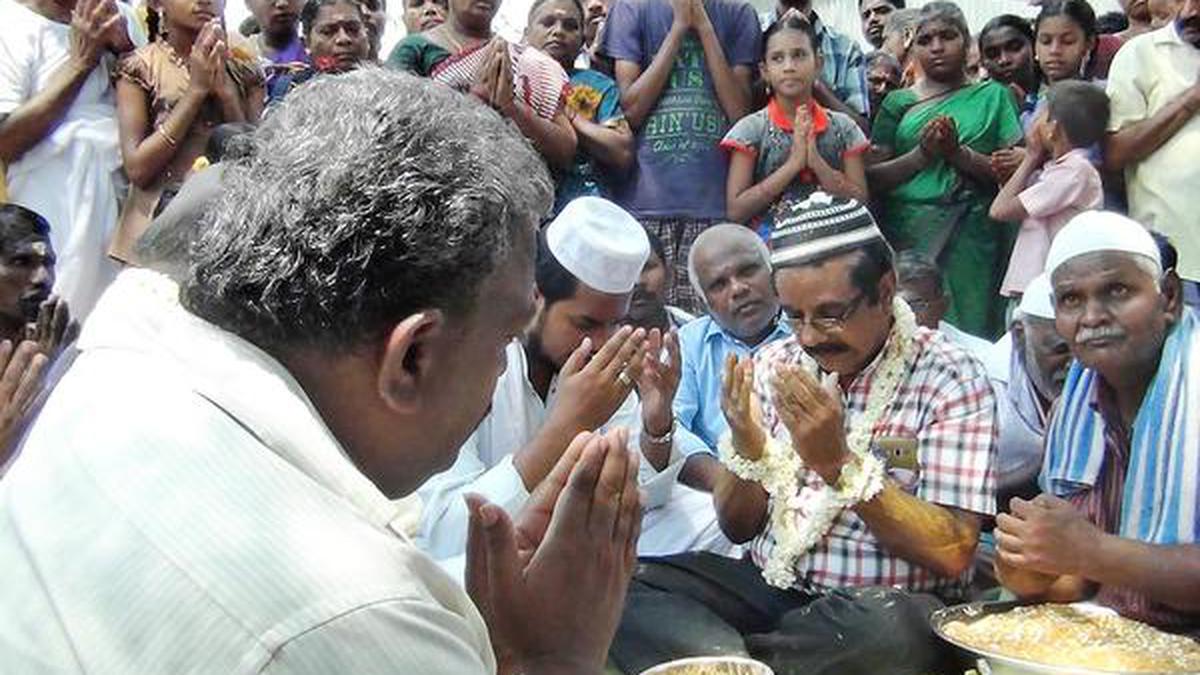
By honouring members of the Muslim community at the annual Panguni Uthiram festival on Wednesday, the Hindus in Gurusamipuram, a small village near Rasipuram, have set a worthy example of communal harmony.
It is a thanksgiving gesture to the Muslims of Rasipuram town, whose forefathers were believed to have cured through prayers many children of the Hindu community of cholera.
This practice has been in vogue for over a century now, the village elders say.
The Panguni Uthiram is a major festival of Arulmigu Sivasubramaniar Temple and is celebrated with usual gaiety every year. It is at the valediction of this festival the Hindus honour the Muslims.
According to K. Thalamuthu, a former school headmaster and president of the Sengunthar Nala Kalvi Arakkattalai, and Devarajan, its treasurer, many children of the weaver community in Gurusamipuram were affected during a cholera outbreak in the village.
On learning about this, the Muslims of Raispuram who used to visit the village for business transactions, offered special prayers by tying a white holy flag to a tree. They smeared sandalwood paste on the doors and walls of each and every house in the village. Following this, all the children were believed to have recovered.
Since then, the residents of the village make it a point to honour the Muslims of Rasipuram at the annual Panguni Uthiram festival.
The organising committee of the festival visited Rasipuram and extended invitation to members of the Muslim community belonging to Achukatti Street Mosque Jamath.
The Jamath members, accepting the invitation, visited the village on Wednesday with fruits and sweets . The Hindus and Muslims holding the holy white flag went through all the streets in the village, when the Muslims smeared sandalwood paste on the doors of all the houses. After tying the flag to the tree, which is popularly known as ‘jhanda’ (flag) tree, they assembled at the Paavadi ground.
The Hindus honoured the visiting Muslims with garlands and vice-versa. Special ‘fathiha’ was recited by the Muslim religious scholar for communal harmony , followed by the distribution of a mixture of jaggery and roasted gram by the visitors.
Later the Muslims took leave.
“This is a worthy gesture practised by our forefathers and we are continuing this tradition in the interest of strengthening the bond between both the communities for decades together,” says Mr. Thalamuthu.
source: http://www.thehindu.com / The Hindu / Home> Today’s Paper> National> Tamil Nadu / by Syed Muthahar Saqaf / April 15th, 2017
The latest addition at the historic Jamia Masjid, Salem, is the nine-tier tower
The historic Jamia Masjid on the southern banks of River Tirumanithar in the heart of Salem city has got a 135 ft. tall ‘minaret.’ This is said to be one of the tallest minarets to be constructed in a mosque in South India in the recent past.
The minaret is a significant feature of mosques across the world, and is one of the earliest characteristics of Islamic architecture. The ‘muezzin,’ a person who announces the call of prayer, usually delivers the ‘azaan’ from the minarets.
Jamia Masjid in any town or city is considered as the chief mosque. They are known as congregational mosques, as Muslims gather in large numbers to offer prayers on Fridays and during Ramzan, Bakrid and other festivals.
Rich past
Jamia Masjid in Salem city, standing on about 1.5 acres of land, has a rich past. It is one of the oldest mosques in the state and was said to have been built by the Mysore ruler Tipu Sultan (1750 – 1799), popularly known as the Tiger of Mysore, more than two centuries ago. Tipu Sultan, who had visited the Salem region on various occasions, is said to have offered prayers in this mosque. He has also donated inams (properties) for this mosque. The British regime, which understood the importance of this Jamia Masjid, also extended assistance to this mosque and gave ‘inams’.
This Jamia Masjid is built on the lines of the North Indian mosques. The prayer hall of this grand mosque stands on an elevated ground and is decorated with tall, elaborate granite pillars. On Fridays, this masjid gets more worshippers from the town and neighbouring areas of Salem.
According to S.R. Anwar, the Muthawalli of the Jamia Masjid, the minaret has nine small tiers ranging between 10 ft. and 20 ft. The cornice (metal kalasam), atop the minaret was made in Kumbakonam. A silver cone and crescent decorate this metal structure.
Anwar says that this Jamia Masjid plays a stellar role in promoting communal harmony in the entire western belt and has been held in high esteem by everyone.
S. Veerappan, an expert architect from Kamanayakkanpatti, led a team which was in-charge for the construction of this minaret. His name is engraved on the inaugural stone. “It is a great honour that my name is on the tablet stone of the mosque,” says Veerappan. “This highlights the mutual respect and goodwill that the people from different communities have for each other,” he adds.
The new minaret was inaugurated recently by A. Anwar Raajha, MP and Chairman of Tamil Nadu Wakf Board, in the presence of MPs V. Panneer Selvam, P.R. Sundaram and K. Kamaraj.
source: http://www.thehindu.com / The Hindu / Home> Today’s Paper> Features> Friday Review / by Syed Muthahar Saqaf / July 06th, 2018
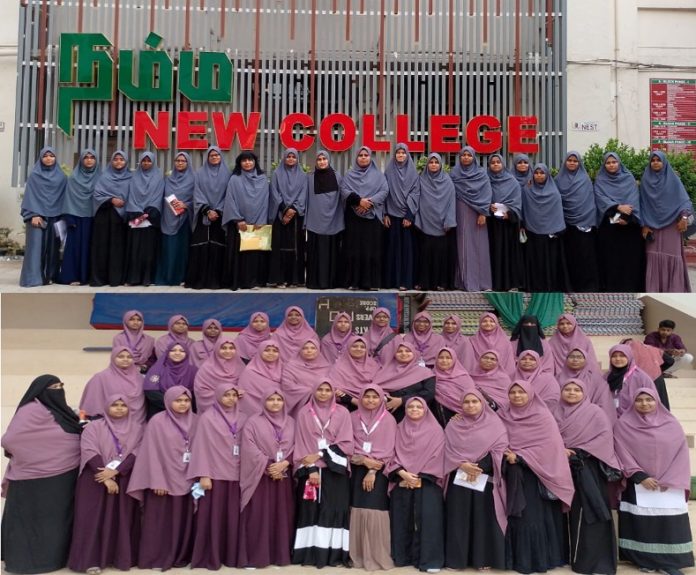
Muslim women-folk with a major chunk of them being home-makers showed keen interest to take up the Afzal-Ul-Ulama degree examinations conducted by the Madras University at The New College premises. Interestingly, this year 93 students from Coimbatore Sundarapuram based Advanced Institute for Modern and Moral Science (AIMMS) wrote their exams with zeal and confidence.
“All I want is education and I am not afraid of no one.” So said Malala Yousafzai, 2014 Nobel Peace Prize Laureate, UN Messenger of Peace and co-founder of the Malala Fund, who is credited to be the youngest education campaigner to address the UN Youth Assembly when she was just 16 years old. No doubt, this had a great impact among the Muslim women across the globe to continue their education breaking the taboo and gender bias.
Taking a cue from “Rabbi Zidni Ilma” which is a powerful Quranic Dua from Surah Taha Verse 114 which means “O My Lord! Increase my knowledge”, the Coimbatore Sundarapuram based Advanced Institute for Modern and Moral Science (AIMMS) under the able guidance of noted Holy Quran researcher, writer, orator and publisher Haji Dr Ameer Althaf, about 93 Muslim women aged between 19 and 55 enthusiastically wrote Afzal-Ul-Ulama examinations with confidence.
With a sharp increase this year (last year 85 students), it only proves to show the awareness among the Muslim women to get educated. About 850 students drawn from different corners of the State (last year 827) took up the exams conducted by the Madras University at The New College premises. All credit goes to AIMMS, the maiden Muslim women community college in Tamil Nadu established in 2005 with the sole objective of helping Muslim women mostly home-makers from lower echelons of the society to pursue their education with the support of their family.
From a humble beginning, AIMMS grew from strength to strength to become one of the much sought-after institutes by Muslim women. As to the revelation of the first word “Iqra” in the Holy Quran meaning ‘To Read’, AIMMS left no stone unturned to impart education to women using modern methods in tune with the emerging trend keeping in view of technological development.
Notably, the Institute is located in a good environment equipped with all latest facilities including powerpoint presentation, modernised Arabic computer lab besides scope for doing MA, MPhil and PhD in Arabic while exempting the women from poor family background from paying fees.
Yet another redeeming feature is guest lectures by experts and resource persons giving useful tips to the students in getting their varied skills honed. Thanks to the wholehearted support extended by the AIMMS trustees.
In today’s globalised world, knowing multiple languages can significantly boost one’s career prospects. And one language that stands out for its potential to expand job opportunities is Arabic since it offers a plethora of opportunities right from becoming an Arabic teacher, translator, software pro, Medical Tourism, Language adviser, Editor, E-publishing, Journalism, Multi Media, Advertisement and Data Collection.
It may be noted that the Arabic language is among the oldest and most spoken in the world, serving as a cornerstone of cultural and historical identity across many nations. It is spoken by more than 550 million people and is the official Arabic language in 25 odd countries, mostly in the Middle East and North Africa. To top it all, Arabic is one among the six languages – English, Chinese, Russian, French and Spanish to be recognised by the UN as the official language.
The zeal to excel through education among the Muslim women is definitely a welcome sign at a time when many success stories were pouring in from several quarters with the first Muslim female to become IAS officer in Maharashtra after clearing the civil services in AIR 142 this year while not to speak of S Ajeetha Begum from Coimbatore who made headlines after cracking civil services to become IPS (2008 batch). Age is never a barrier to those who have the will to learn at any stage. AIMMS women-folk have proved this through dedication and determination.
source: http://www.radiancenews.com / Radiance News / Home> Education> Features> Report / by M Rafi Ahmed / May 07th, 2025
Sathamangalam (Lalgudi Block, Tiruchirapalli ), TAMIL NADU :
Achieving his childhood dream of becoming a police officer became a reality as to the quote of American journalist and author William F Longgood – “Dreams and Dedication are a powerful combination.”
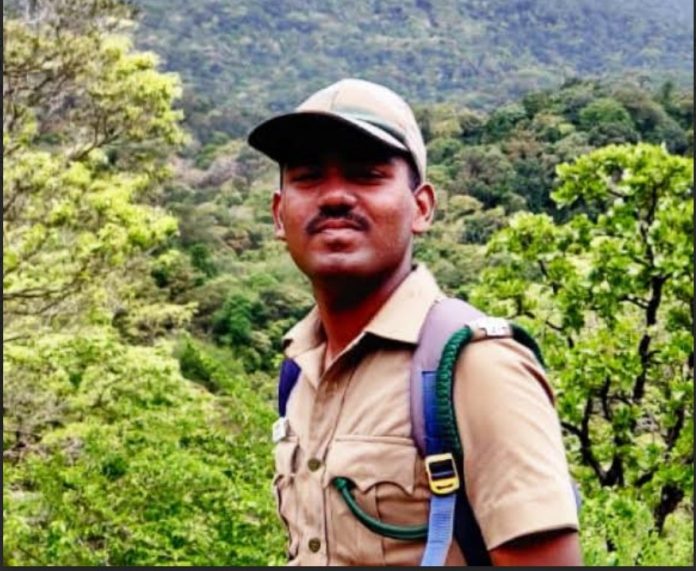
Meet 28-year-old S Mohamed Siddiq, serving as a Forest Guard in the Tamil Nadu Forest and Wildlife Crime Control Bureau (WCCB) based in Rockfort city, who cracked the TNPSC Group I services exam to get his dream job of DSP.
Thanks to Coimbatore based Nature Conservation Society (NCS) president N I Jalaluddin for sharing the info about the promising youngster from Sathamangalam village in Lalgudi, who made the Tamil Nadu Forest Department proud after he romped home to victory in getting a gazetted post in the Tamil Nadu Police Department. Truly speaking, he is all set to don the role of safeguarding the public while enforcing laws similar to his present job of preventing illegal wildlife trade and coordinating the law enforcement agencies besides significantly contributing to the preservation of biodiversity.
Sharing his happiness with this scribe, Siddiq said that he had his school education at Government Higher Secondary School in his native Lalgudi and added that he completed his BE Mechanical from Anna University Trichy campus (2017 batch). Without giving any second thought, he joined the Tamil Nadu Forest Department as Forest Guard and is serving for the past seven years. However, his mind revolved around getting into the police department.
Making his maiden attempt for Group I services through TNPSC in 2019, Siddiq said that he miserably failed and added that he made his second try only to get disappointed. Sadly, he missed in his third attempt too. Putting up a brave face, he tried his fourth attempt with confidence. Hard work with dedication fetched him fruitful results in clearing the TNPSC Group I services exam with Rank 91.
Asked about the interview, he said that the duration was for forty minutes with four members of the board asking him why he chose when he was already in a department service. To his preferred choice of DSP post, he was asked how he would handle a riot like situation for which he gave an impressive answer. Besides, questions related to new laws, Russia-Ukraine war, Saivam and Vainavam featured in the interview.
His parents – Shahul Hameed who is actively involved in farming in Sathamangalam village and mom Tajunnisa, a home-maker – while not to speak of his spouse Kowsar Firdous, a BSc computer science grad were on cloud nine after coming to know about his success in TNPSC Group I services. Likewise, his sister Shamim and Shabir expressed happiness for emerging victorious in getting his dream job of DSP.
While filing this story, this scribe got an info about a Forest Guard Himanshu Pant in Uttarakhand cracking the Uttarakhand Subordinate Service Selection Commission (UKSSSC) as English Language Teacher in the Government school. On the contrary, Pramod from Mandya District, who aspired to become a lecturer after completing his MA Political Science from University of Mysore in Karnataka landed in the post of Forest Guard as he failed to get his dream job. Great are those who, despite being armed with a degree, choose to get into the forest department as Forest Guards. And they kept trying even while serving with confidence to excel in their line of interest.
source: http://www.radiancenews.com / Radiance News / Home> Features> Focus / by M Rafi Ahmed / Radiance News Bureau / May 11th, 2025
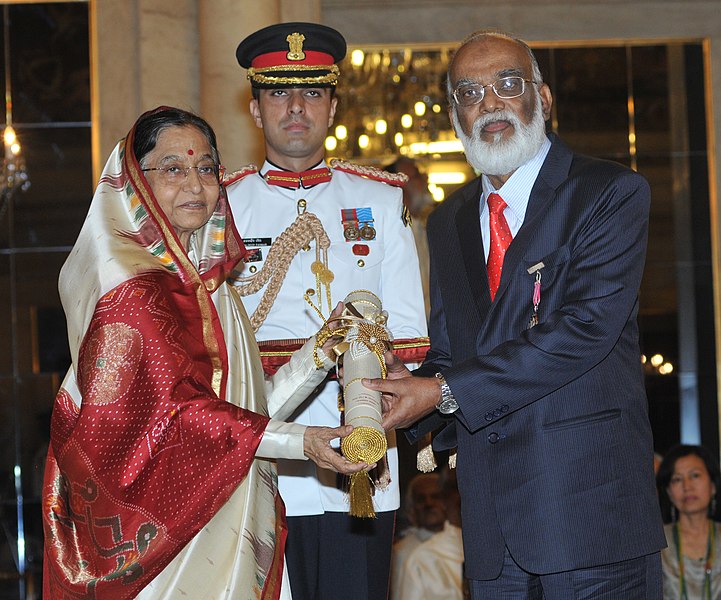
The President, Smt. Pratibha Devisingh Patil presenting the Padma Shri Award to Prof. (Dr.) M. Ahmed Ali, at an Investiture Ceremony II, at Rashtrapati Bhavan, in New Delhi on April 01, 2011./ pix: en.wikipedia.org
Dr. Ahmed Ali can perhaps scale Mount Everest to gain knowledge in surgery, and will come back to serve the poor and needy. That is the thirst he has, and the skill gained by his extra ordinary, photographic memory power.
After obtaining the highest degree in surgery such as M.Ch, he was awarded the prestigious Doctor of Science D.Sc.in surgery.
The Padma Shree Awardees, listed on January 31, 2011, Dr. Ahmed Ali, won the nation’s prestigious award.
A dedicated, and most devoted to his profession, he declined an opportunity, assigned in New York soon after post graduation in gastroenterology and proctology. Surgery is an art to him same as a gifted and a born artist plays with his brush and colors. There is no exaggeration that if it is said that his tournament is surgery.
He visits every month to his native town to impart free service, in addition he gives nutrient suppliments and other vitamins and other additives to less fortunates. He does this as a token of gratitude to the school he studied and for the people who mutually loved.
Born in Ambur in 1940, graduated from Madras Medical College, and after retiring from service, he is concentrating his profession in Mehtha Nursing Home,Chetpet in Chennai.
His only son Dr. Mansoor is a surgical specialist in liver, pancreas, and bile duct (Hepato Pancreato Bilary Specialist) working in Kings Hospital, London UK. Dr. Mansoor is as good as his father, and was the student of Dr. Rela, the world renowned liver specialist.
Ambur, a town in Vellore District in Tamil Nadu is famous for leather industry, as well the elite of the society Ambur Muslim Educational Society, and it is fully devoted in concentrating women’s education and the students performance is par excellent.
Mr. Mecca Rafeeque Ahmed, a renowned leather industrialist, from Ambur also awarded Padma Shree for his industrial achievements.
Dr. Ali was felicitated with standing ovation by different groups elites, but he stood humble and modest.
source: http://www.amityindias.blogspot.com / April 05th, 2011