Srirangapatnam, KARNATAKA :
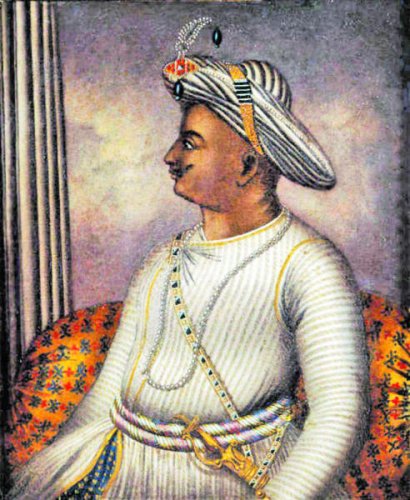
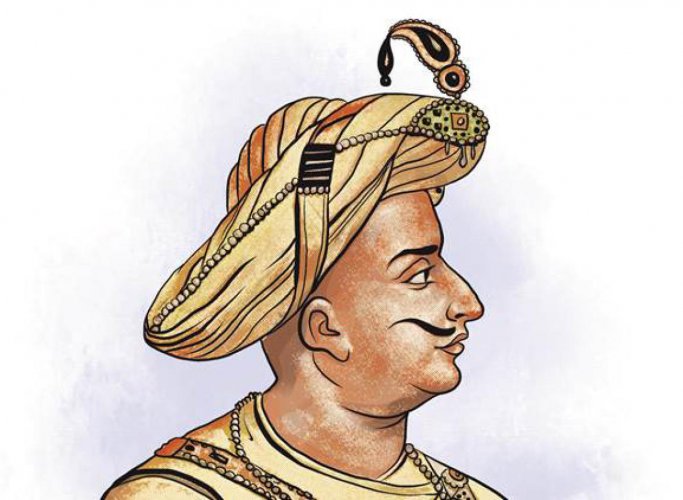
It is an irony that Tipu Sultan, the Tiger of Mysore, whom the current government in Karnataka wants to remove from its history, is celebrated in Britain, France and the US in song, drama, opera, novel, poetry and paintings. A wealth of Tipu’s personal effects, curiosities and artifacts have found way into numerous art galleries and museums in many countries in the West. There’s not a major museum in the UK that does not exhibit some artifact related to Tipu.
The 75th Highlanders were a regiment raised in Scotland to exclusively fight Tipu. Scottish generals like Sir Hector Munro, Baillie, Beatson, Fraser, Gordon, Dunlop and others participated in the wars against Tipu. The Scots, more than the English, were in the forefront of the British forces in all the Anglo-Mysore wars fought by Tipu as well as his father Hyder Ali. That explains the importance of the display of Tipu memorabilia in Edinburgh and Glasgow.
After Tipu was finally defeated and killed in 1799 by the British, under the command of Arthur Wellesley, the future Lord Wellington who 16 years later defeated Napoleon Bonaparte in the Battle of Waterloo, images of Tipu, his capital Srirangapatam (Srirangapatna) and his numerous impregnable forts and fortresses, proliferated throughout Britain. No other Indian ruler ever captured the imagination of the average Englishman as Tipu did. It is said that British housewives would quieten their babies by whispering “else, Tipu Sultan will come and get you.” Even three decades after Tipu’s death, his name was such a terror that when Ram Mohan Roy visited England on a mission from the then Mughal emperor, hostile crowds confronted him in London, mistaking him to be related to Tipu because his headgear resembled Tipu’s iconic turban.
Tipu Sultan, his capital city Srirangapatam, and the wars he fought against the British became favourite subjects for paintings, sketches and etchings by some of the most famous artists of the day in England and Scotland. When Ker Porter, the famous Scottish painter’s Panorama — a single large painting of Tipu — was displayed in Edinburgh, there was euphoria among the public as they rushed to have a glimpse of it. JMW Turner, the renowned British painter, painted portraits of Tipu and scenes of Srirangapatam and other places in Mysore kingdom. Sir David Willkie, another famous painter, was commissioned by the widow of David Baird to paint the poignant “Discovering the body of Tipu Sahib on 4 May, 1799”. It was exhibited in 1838 in the Royal Academy of Arts in London. David Baird had spent several years in Srirangapatam as Tipu’s prisoner, and had his revenge in the final assault on him.
Alexander Allen travelled to India to personally see the hill forts of Mysore kingdom and produced captivating scenes in his paintings. William Darnell Beckford, Holmes, Hunter and many others made several stunning paintings of Tipu and his palaces. Sir Walter Scott, the great Scottish novelist, wrote works of fiction based on Tipu and his times. Charles Dickens, Wilkes Collins and Jules Verne have all depicted themes from Tipu’s life in their novels.
The numerous artifacts of Tipu Sultan, pilfered, looted and spirited away by the British after the fall of Srirangapatam, became collectors’ items. Tipu’s dismantled throne, his numerous swords, daggers, bejeweled sword belts, hookahs, ivory caskets , nutcrackers, gold watches, precious jewels and many other priceless items occupy the pride of place in museums in London, Glasgow, Edinburgh and Wales.
The most awesome of these artifacts is the life-size toy tiger depicted devouring a British soldier. It has cast a spell over generations eve since it was spirited away by Wellesley to England where it was displayed at the Kensington Museum, now known as Victoria and Albert Museum (V& A Museum). This toy tiger in bright yellow strips has in its belly a mechanical pipe organ hidden, which creates wailing shrieks and a loud road when its handle is turned. There was near stampede for months in front of the museum when people flocked to see the wonder toy of Tipu Sultan. The fact that it is kept in an exclusive large room in the otherwise crowded V&A Museum, and with separate security, speaks of the importance that is accorded to this curious Mysore object. A replica of it is at the Scottish National Museum in Edinburgh. It was commissioned in 1999, when the bi-centenary of Tipu’s death was commemorated, as the original one at V&A could not be moved for fear of damaging it in transit.
The most significant of Tipu’s artifacts are at the Edinburgh castle. Inside the castle is the ‘National War Museum’, in which the battle honours of the Scottish Regiments are displayed. Here are seen several swords and arms used by the Scottish generals against Tipu and his Mysore armies. What is interesting are the words Carnatic, Mysore, and Srirangapatam engraved on the granite slabs displayed on the walls.
At a private museum in Powai Castle in Wales, one can see Tipu’s camp tent, made of silk and heavily embroidered, his camp cot made of sandalwood, his hookah and many other personal items, besides two large cannons.
A painting of Tipu with his war rockets hung on a wall at NASA’s Wallops Flight Facility in Virginia in the US was seen by young APJ Abdul Kalam when he was on a visit there in his early years at ISRO, about which he wrote as an inspiration many years later.
At the Edinburgh International Festival (EIF), held annually in August, Tipu’s memories come alive during the closing ceremony’s fireworks display when the Scots burst explosives and fire rockets around the castle to create scenes of their soldiers encountering deadly fires around Tipu’s forts in Nandidurg, Savandurg and other places.
Tipu Sultan, the Tiger of Mysore, died 220 years ago, but his legend continues in the lands of those he fought fiercely against, who appreciate his valour, unyielding spirit and reckless courage. In the land that he defended from them, his memory is sought to be erased from school textbooks.
(The writer is a former Professor of History at the University of Hyderabad)
source: http://www.deccanherald.com / Deccan Herald / Home> Opinion> Comment / by K S S Seshan / November 07th, 2019