All posts by mpositiveone@gmail.com

Rukhshi Kadiri Elias weaves Taajira as network of women who empower each other

Kolkata, WEST BENGAL :
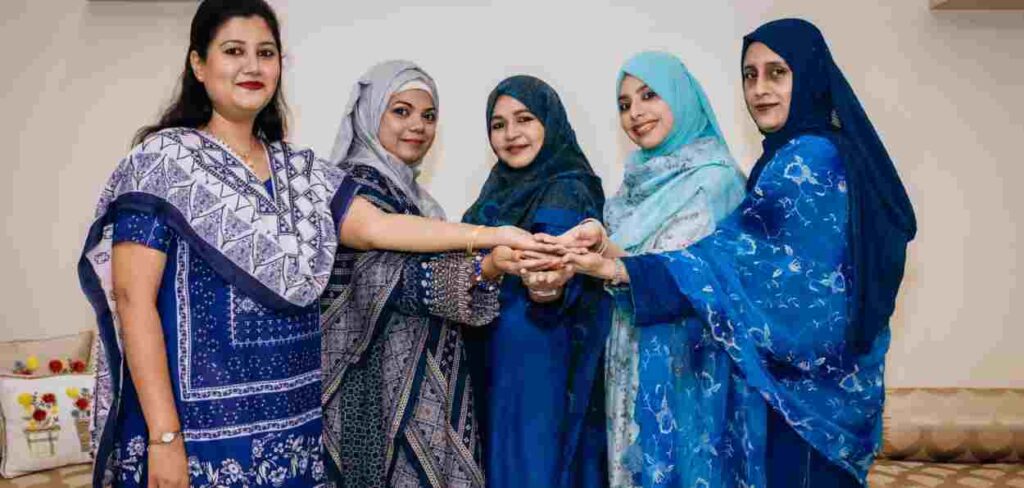
Rukhshi Kadiri Elias (Third from left) with her team of Taajira

“Empower the men to empower the economically empowered women,” jokes Rukhshi Kadiri Elias, an articulate lady with her mellow voice igniting the conversation. She is the founder of Taajira – (The Businesswoman), a massive network of entrepreneurial women creating a revolution, not only in Kolkata but in other places bringing two different kinds of women together, to work together and empower each other.

Warm eyes, glowing skin with her royal demeanour, and her energy kindles hearts, which is probably why she was able to garner a massive community of thousands of women that all started in 2019.

Born and brought up in a caring home, Rukhshi helped her father with his business, looked after his office in his absence attended to his phone calls, and set up his appointments. At that time she was in the college. During her school and college days, she always stood up for friends. 

Good at maintaining humans relationships, she remains in touch with her schoolmates at the Loreto School in Bowbazar and today 35 of her childhood friends are joined in by a WhatsApp Group.

Since 1974, the friends have encouraged each other, and met each other’s emotional needs, and financial difficulties, where some were going through midlife crises. Rukhshi made a special effort to initiate these get-togethers. 
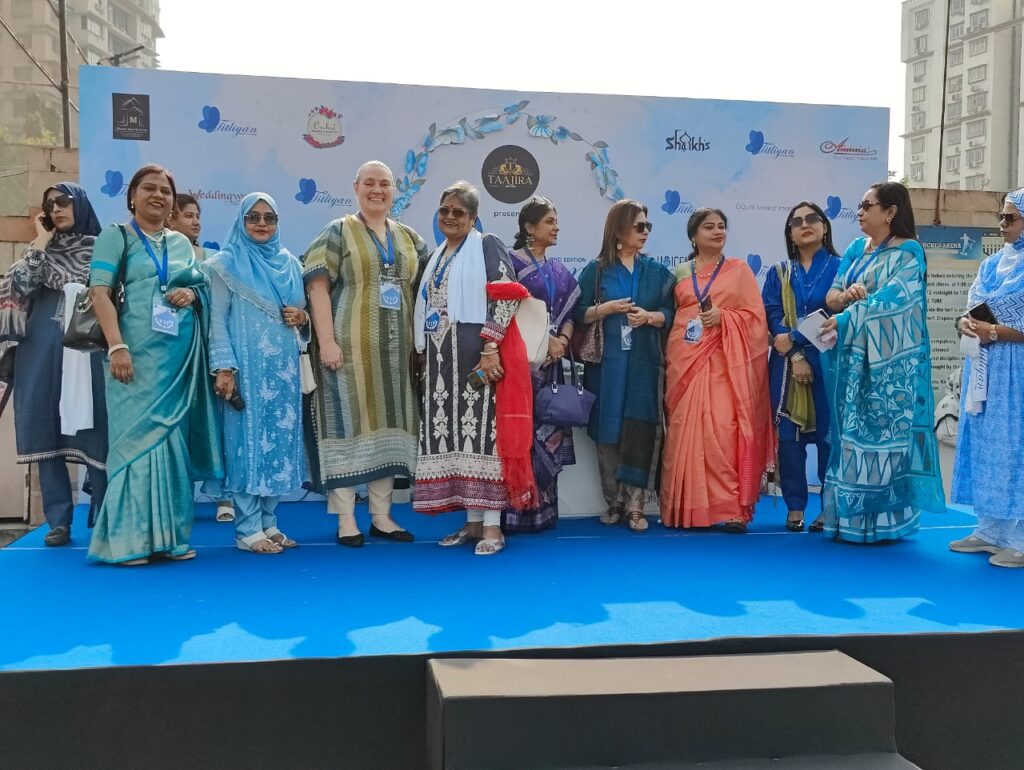
At the Taajira exhibition Titliyaan

Speaking to Awaz-The Voice, she recounts one of Taajira’s inspiring stories, “One incident shook me. One day, a girl reached out to us on Facebook. She was a victim of domestic violence and in a state of shambles. As I shared this with some of the administrators in our group “Taajira-The Businesswoman”, having now reached over 32,000 members, I was hesitant to approve her post publically. Some of the legal advocates said she needed immediate legal help. While that was right, I said that she presently needed strong emotional support, because she would have to pay a lawyer if she went the legal way.

“We decided to reach out to her and we reached her home and counseling made the husband realize his mistake. I finally approved her Facebook post and I was stunned to find a rush of support for this girl from hundreds of other women with similar stories. This was a big eye-opener to me that domestic violence is a huge unspoken issue in many homes. Most of the women do not know their legal rights and continue to live in abusive situations for years, incapacitating their ability to even work.

“After this incident, Anuradha Kapoor who founded Swayam, a feminist organisation dedicated to advancing women’s rights did an online talk on Taajira’s Facebook group which was a great success. The happy end of this girl’s story is through Taajira, she got into a flourishing resin art business and her husband changed realizing his failings, and supports her now, and she is a transformed woman – what a miracle!”

I asked her who her greatest inspiration to start Taajira was, she replied, “Way back then in my college days, Noor Jahan Shakil, President, of All Bengal Muslim Women’s Association used to take me along with her on her outreaches to the slums of Kolkata which jolted me out of my comfort zone. I suddenly realized there was a big world out there where millions were still suffering and living in deplorable unhygienic conditions. She had two centers – one for vocational training, tailoring, and fashion designing, actively involved with Muslim women, bringing them out of the four walls of their homes into the world, and teaching them about hygiene and health. I still connect with them helping them to create events.

“Noor Jahan Shakil is an amazing lady, now way beyond 90 years, still very agile and interested in what we are doing, coming forth with suggestions and it was her life that inspired me to think beyond the limitations of my home.”
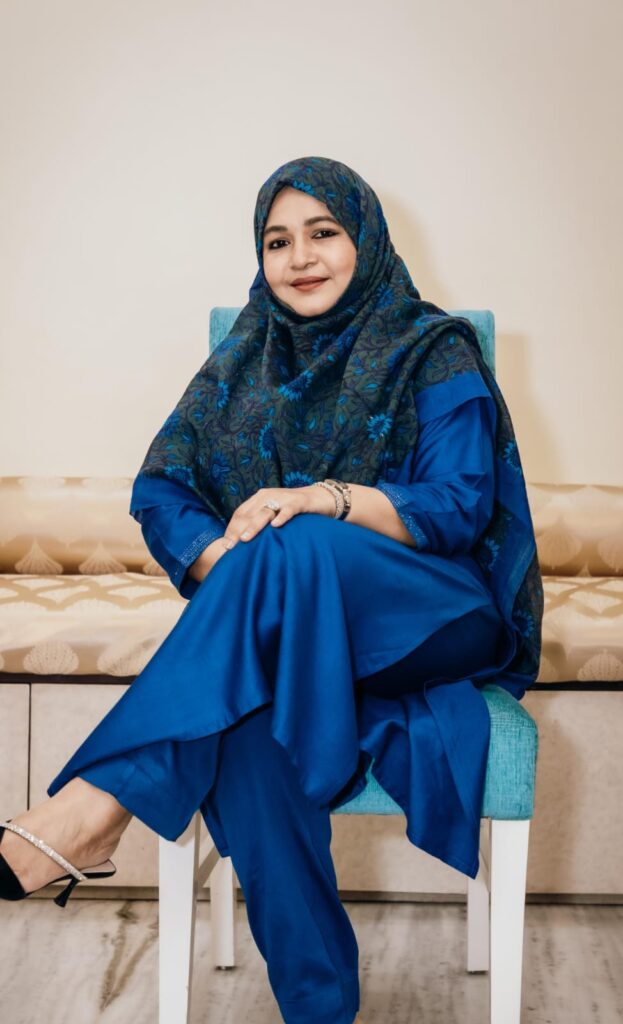
Rukhshi Kadiri Elias

The story of the inception of Taajira was set in 2019 when Rukhshi Kadiri Elias found herself being added to many WhatsApp groups all seeking some sort of sense of identity apart from their homes. It was at that point that Rukhshi said, “Instead of adding me to different WhatsApp groups, let us get together on one platform, let’s set up a Facebook group.” The group aimed to help women set up businesses that networked together because the seller is also the consumer, so in some way, they all needed each other. The biggest challenge of this group was getting women, who were not tech-savvy to learn to use social media and basic skills.

Their first meetings started in Rukhshi’s home, later, went on to be hosted in their newly formed restaurant, and later, also others offered their halls.

There was a conglomeration of all kinds of women from different strata of society with different needs, from restaurant owners to maids.

There are two groups in Taajira, one group is an elite group who made brand names for themselves through Taajira, and the other group is the economically deprived.

The Elite group helps the economically weaker women with startups, not with money but with goods to the other group to help launch their businesses and out of the profits of the retail rates, they pay back the elite group only at the wholesale rates so that they make a large marginal profit.

There are also intense training programs at the Tajara Elite Club where makeup artists, teams, stylists, bridal packages, ladies who make their organic herbal products, sari drapers, henna designers, masseurs, seamstresses, and even taught driving, grooming, polishing, and other crafts.

At their monthly meet, they pair up, and here the weaker women are imparted skills. During the pandemic, garments were sold online, but they now have their showrooms and stores, so the elite group needed salesgirls, managers, accountants, chefs, and other staff.

She said,”50% of our staff from our restaurant Shaikh’s is from Taajira. While we started as a group to financially empower women, even men were getting jobs. Husbands, sons, and brothers as chauffeurs, chefs, cooks, and other such help so the entire family gets help.”

She said, “We have a legal panel with lawyers and advocates, another panel for counselling for those who need emotional help, doctors who help women with their illnesses, lady police officers who help women with their paperwork, food licenses, and advice.

We have a marvelous doctor who runs The Soul Clinic, Dr. Shabtab Elahi who unlocks the healing power of yoga, with her set of yoga trainers, and focuses on weight loss.
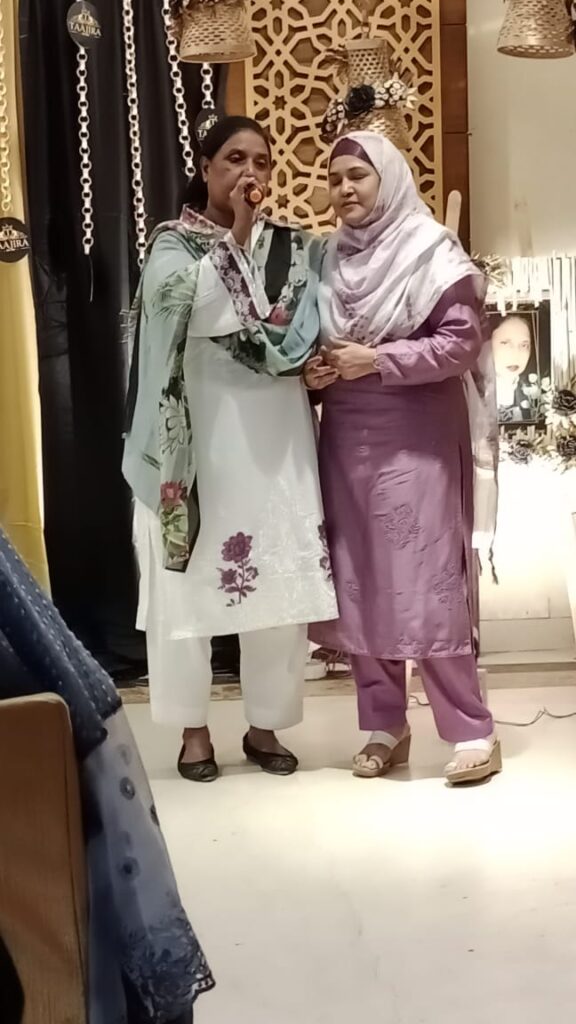
Rukhshi Kadiri Elias with Taajira members

Taajira members from the Wellness Center hold nutritious tea parties with healthy snacks. The focus on hygiene, health, mental well-being, and financial stability is a big boost to Taajira’s growth because we are not just a workforce but a caring community and like a large family with a very personal touch.” 

Mysteriously, as Taajira was established in 2019, it seemed a divinely appointed timing as they helped hundreds of families during COVID-panic-driven days in 2020 and beyond to tide through this rough season and come across safely. She says that Taajira was the only online portal open those days for help to the public. Food was the biggest need during COVID-19, and home-cooked food was delivered directly to homes. Since there was no bread in the markets, the ladies in Taajira started baking bread, making thalis (meals) supplying the ones trapped at home and without food.

In one instance, a member of Taajira from the UAE send an SOS message to Taajira to reach out to her septuagenarian parents stranded without food. The Taajira chef delivered food for free until a maid could look after them. Incredibly, the Taajira team delivered not only food, but also medicines, and other assistance to families, and college students were given money and food. In this great season of caring, Taajira grew to be a more community-focused and family-hearted organization.

Taajira’s recent big venture was Titliyan, an annual big exhibition, held once a year, with 111 stalls in the year 2022 and 175 stalls in 2023 and close to 10,000 people visited it.

Rukhshi said with a note of pride that many exhibition curators are now getting their ideas drawn from Taajira members getting 90% of their income through their wares in these exhibitions. She said, “I am, after this appointment on my way to an exhibition in Khidirpur.” 

Rukhshi’s journey to create Taajira also required her supportive family, husband, and two sons, who incidentally are great sportsmen, swimmers, footballers, and hockey players, and her wonderful daughter-in-law. She proudly shares the addition of her grandson to the home, now six months old whom she is very involved in taking care of while her daughter-in-law, who is a counsellor in Loreto, goes to school.

All family members proudly pat each other’s backs for their accomplishments. Their recent achievement was their famous restaurant, Shaikh’s, a 42-seater lavish but affordable restaurant launched three years back by her sons, with its cutting-edge culinary excellence seated in the Park Circus area in Beckbagan, near Quest Mall, famed for its aromatic rich Indian, Middle Eastern flavors drawing flocks of people.

As a graduate of Fine Arts and a diploma holder in fashion design, she honed her skills to help the processing of Taajira smoothly. Rukhshi says that the journey to making Taajira a reality has only been possible with the assistance and dedication of her panel of moderators, such as Zainab Saigal, Shumaila Khalid, Ifra Nadeem, Sujata Latif, and Sumaiya Munir applauding the strength of networking together. She said, “We have a strength of 33000 women, now, so we need at least six women to herd them!”

An encouraging moment arrived when the globally connected Calcutta University asked Taajira to suggest a few names of their women to train guide and support them technically. These ladies were picked up and it was a good venture of collaboration to bring profit to both. 
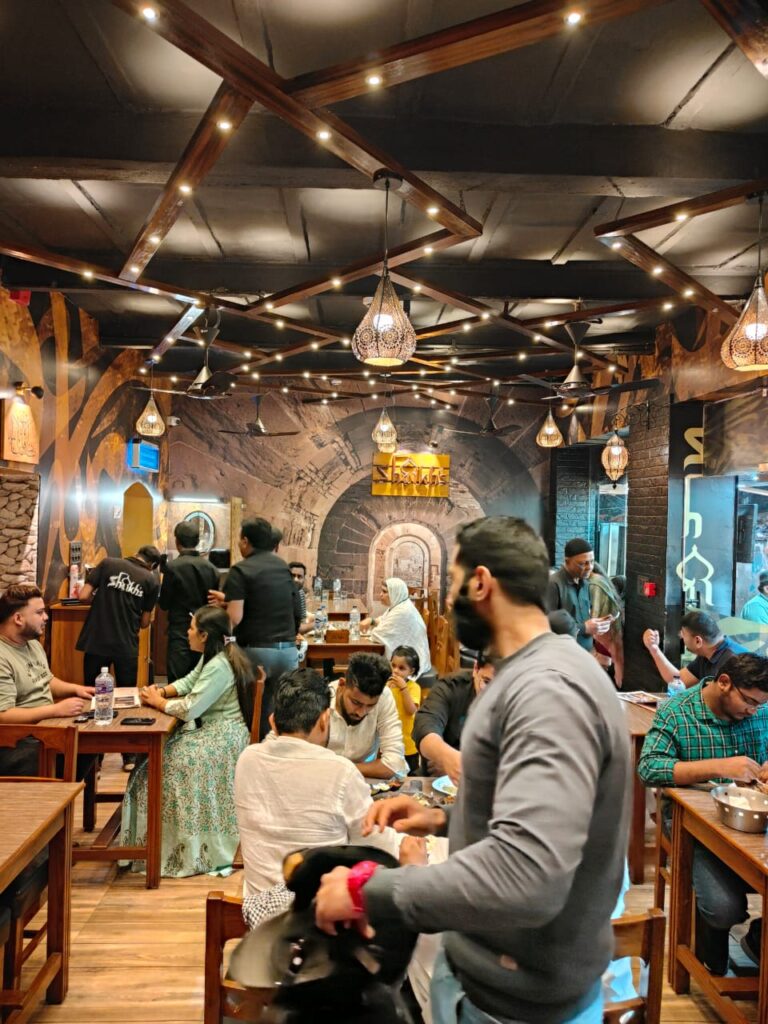
Shaikh’s restaurant

On another occasion, a lady who makes chocolates got a huge order from the American Consulate to supply them with 500 boxes of chocolates during Christmas, another lady got a massive order for jute bags and a lady who makes momos and other delicious nutritious snacks now gets regular orders from The American Consulate, business avenues that transformed their incomes and lives.

Recounting one amusing incident, Rukhshi said, “One day, I received a call from a lady announcing that she wanted to work on an online business, but she was not tech savvy. The lady also mentioned that due to her arthritis and other problems, she was unable to work outdoors but needed the money to maintain herself and pay for her medicines. After giving her some ideas, I asked her, “Ma’am, how old are you?” and she replied brightly, “I’m only 73!” I visited her and got her in touch with an Anglo-Indian seamstress who used to stitch nighties, so the lady was able to get into an online trading business and sell nighties to meet her financial needs.”

While membership to Tajeera is free, there is a fee to join the talk shows. She mentioned that there are women who broke away from Tajeera and started their businesses for their reasons, but this was never the aim of Taajira whose power lay in massive networking to support thousands to lakhs together. She said, “Everything is changing fast. Eating habits changed where people now are more into fast foods, apparels changed from saris to most women now in jeans and kurtis, society is transforming quickly.”

She said, “In a strange twist of fates, the men who once mocked the efforts of Tajeera exclaiming it was a taboo for their women to work outside the home are now accepting women working outdoors, and even standing alongside and helping them, and some are even staying at home and looking after the children while their wives are out selling their wares at grand exhibitions,, isn’t it incredible! Things have changed so much in just a few years. Each day, we are moving towards a brighter light and now society is changing so much that when women don’t work, people ask, “How come you’re not working?”

She said emphatically, “Taajira has two ideologies – to help the poor and to economically empower women and we are starting to network a revolution!”

The day is too short for her and she said, “I still have not arrived, we are still on the way, one target is related to another and then it opens another dimension.” 

Rita Farhat Mukand is an independent writer.

source: http://www.awazthevoice.in / Awaz, The Voice / Home> Story / by Rita Farhat Mukund / February 24th, 2024
Dr Syed Althaf appointed director of Kidwai Memorial Institute of Oncology

Bengaluru, KARNATAKA:

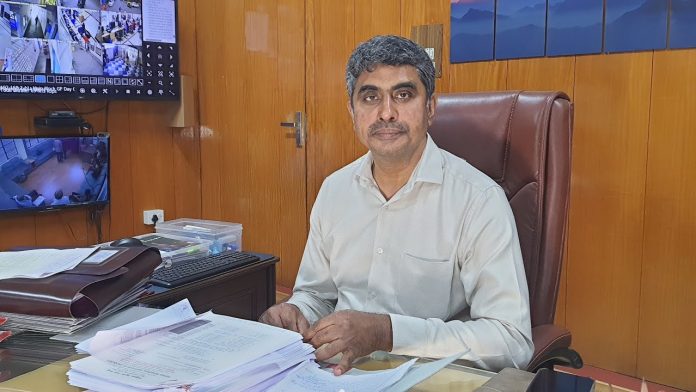
Dr. Syed Altaf, Director Kidwai Cancer Hospital, Bengaluru

Bengaluru :

Dr Syed Althaf, professor and head of the Department of Surgical Oncology, has been appointed as Director of the Kidwai Memorial Institute of Oncology.

The government order was issued by Mohammed Mohsin, Principal Secretary of the Medical Education Department, following a report by the investigating committee headed by Arundhathi Chandrashekar, Commissioner, Department of Treasuries.

The report highlighted that the institute, under Dr Lokesh, misused funds, provided low-quality treatment to patients at much higher costs, lacked necessary medicine stocks, violated the Karnataka Transparency in Public Procurement (KTPP) Act in tender procurements, and committed corruption, among other things.

Dr. Syed Althaf has been practicing as General Surgeon in Karnataka for a considerable amount of time, and is respected by his peers. Whether you’re coming for a simple check-up or a more complex treatment, you will be treated with utmost empathy.

Kidwai Memorial Institute of Oncology is a cancer care hospital here. It is an autonomous institution of the Government of Karnataka and a Regional Cancer Centre funded by the Government of India. It was granted Regional Cancer Center status on 1 November 1980.

Rafi Ahmed Kidwai played a major role in donating 20 acres of the campus land and Rs.100,000 for the radiotherapy machine. It was founded on 26 June 1973. The Government of Karnataka, by an order on 27 December 1979, converted the institute into an autonomous institution.

Rafi Ahmed Kidwai (18 February 1894-24 October 1954) was a politician, an Indian independence activist and a socialist. Kidwai served as a Minister of Communications in the first Cabinet of Independent India.

source: http://www.radiancenews.com / Radiance News / Home> Latest News / by Radiance News Bureau / February 17th, 2023

How Habib Tanvir forged his own unique path in theatre

Raipur, CHHATTISGARH / Mumbai / Bhopal, MADHYA PRADESH:

At The Hindu Lit fest 2024, Sudhanva Deshpande recalls the making of Habib Tanvir’s company Naya Theatre and his plays that are regarded as masterpieces.

Habib Tanvir | Photo Credit: The Hindu Archives

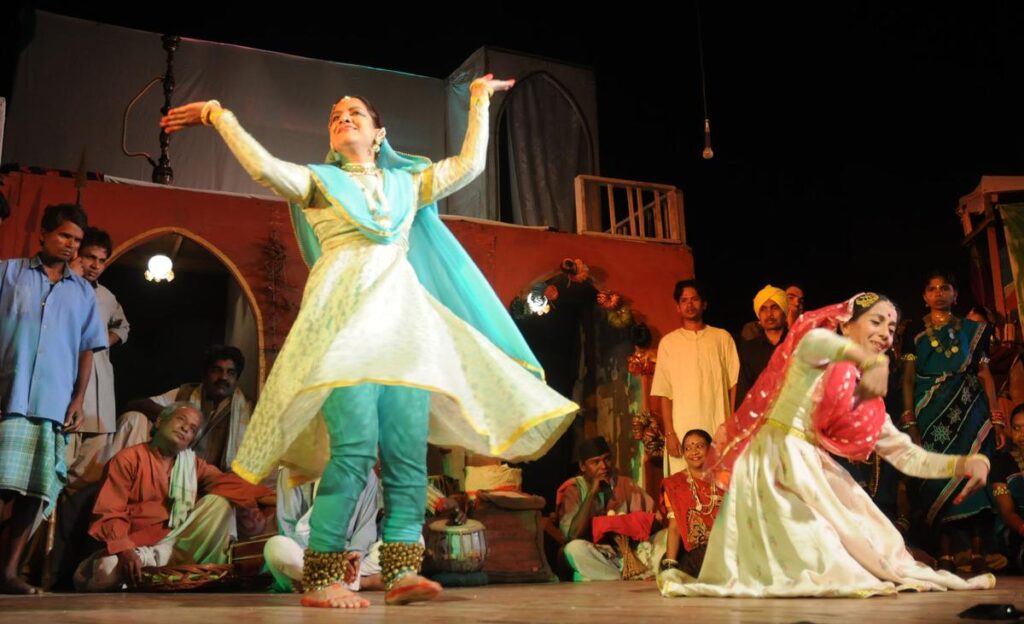
To make theatre that was authentic to its cultural milieu and history while also being thoroughly modern, both in content and form — this was Habib Tanvir’s life’s achievement. His theatre was exuberant, festive, celebratory, funny, moving, thoughtful and reflective. It was progressive and secular, and because it was created by a man with a Muslim name, it was reviled and attacked by Hindutva forces. He worked with rural actors to create plays that appealed to audiences far beyond the rural. In the history of Indian theatre, Habib Tanvir was a singular presence.

Born in Raipur in 1923, he went to Bombay to pursue a career in films in the mid-1940s. But the decisive influence on him at the time was his entry into the Indian People’s Theatre Association (IPTA), where he met and befriended artistes such as Balraj Sahni, Dina Gandhi (later Pathak), Zohra Segal, and M.S. Sathyu. The left-wing perspective of IPTA was to stay with him throughout his life, even though he forged his own unique path in theatre.

A scene from Habib Tanvir’s Agra Baazar staged at ‘Habib Utsav’ in Bhopal on November 21, 2009. | Photo Credit: A.M. Faruqui

The film industry disillusioned him. It worshipped money, not art. He came to Delhi, where he joined Hindustani Theatre, where he met Moneeka Misra, a theatre director trained in the U.S. They fell in love and got married.

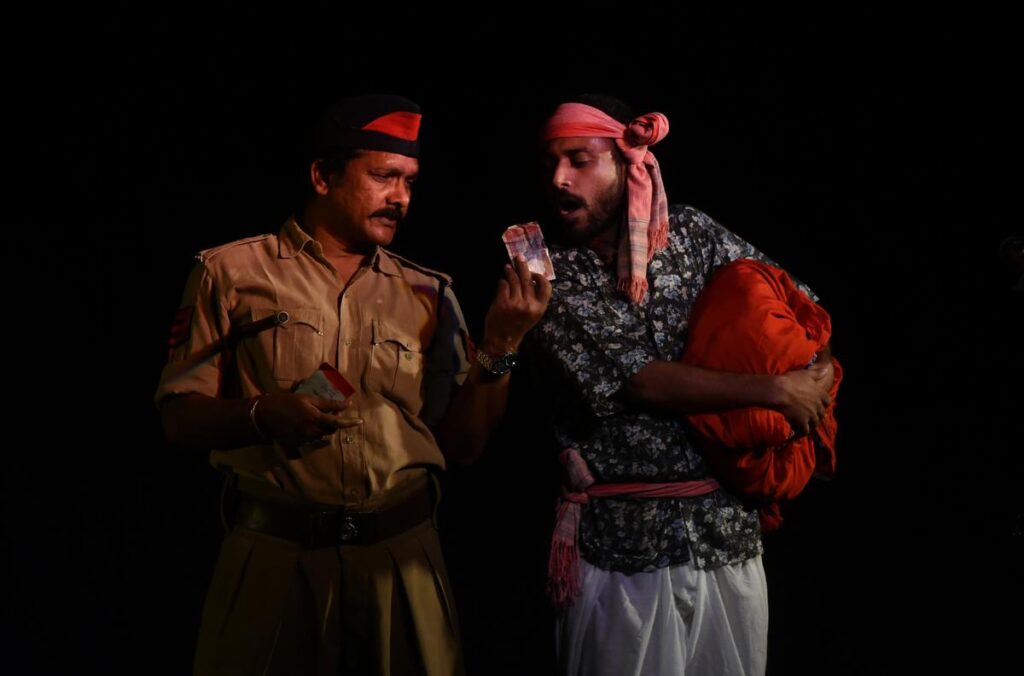
In 1954, Habib Tanvir wrote and directed his first masterpiece, Agra Bazaar, on the life and art of the plebeian 19th-century poet Nazir Akbarabadi. It was an astonishing production, for two reasons. One, the protagonist Nazir never appears in the play — because no biographical information about him was available, even as a large corpus of his poetry had survived, passed on orally from generation to generation. Two, Habib Tanvir asked residents of Okhla village on the outskirts of Delhi to act in the play — his first attempt to make theatre with rural folk.

From Charandas Chor by Naya Theatre. Staged in December, 2019 as a curtain- raiser to the first state conference of Network of Artistic Theatre Activists Kerala (Natak) in Ernakulam. | Photo Credit: Thulasi Kakkat

Soon after, he left for Britain to get formally trained as a director, at the Royal Academy of Dramatic Arts (RADA), and the Old Vic. He was in his thirties, with over a decade of theatre work under his belt. What he learnt in Britain, most of all, was what he needed to reject — the overly regimented theatre of the time, realistic in a photographic sort of way, about middle-class life. He longed for the free-flowing, delightful, irreverent theatre that he had enjoyed as a child in Chhattisgarh. He returned to India and set out to find rural actors.

A scene from Habib Tanvir’s play Mrichchakatika. | Photo Credit: The Hindu Archive

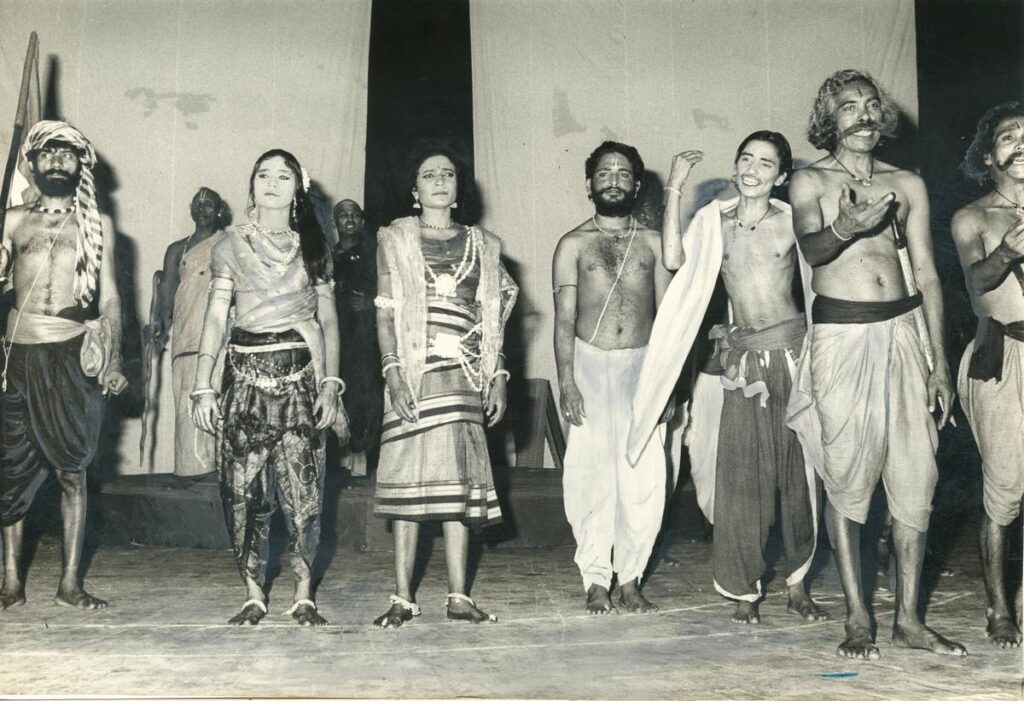
The first lot of six rural actors he picked came with him to Delhi in 1958. They were all more or less unlettered, but masters of the Nacha, the rural theatre of Chhattisgarh. They acted and danced with abandon, sang melodiously in their open, strong voices, were masters of farce, and could also move you to tears. With them, and with Moneeka as his companion, he founded his own company, Naya Theatre, in 1959. They produced play after play, touring the country extensively, but while his plays of the time had spark, real success eluded him.

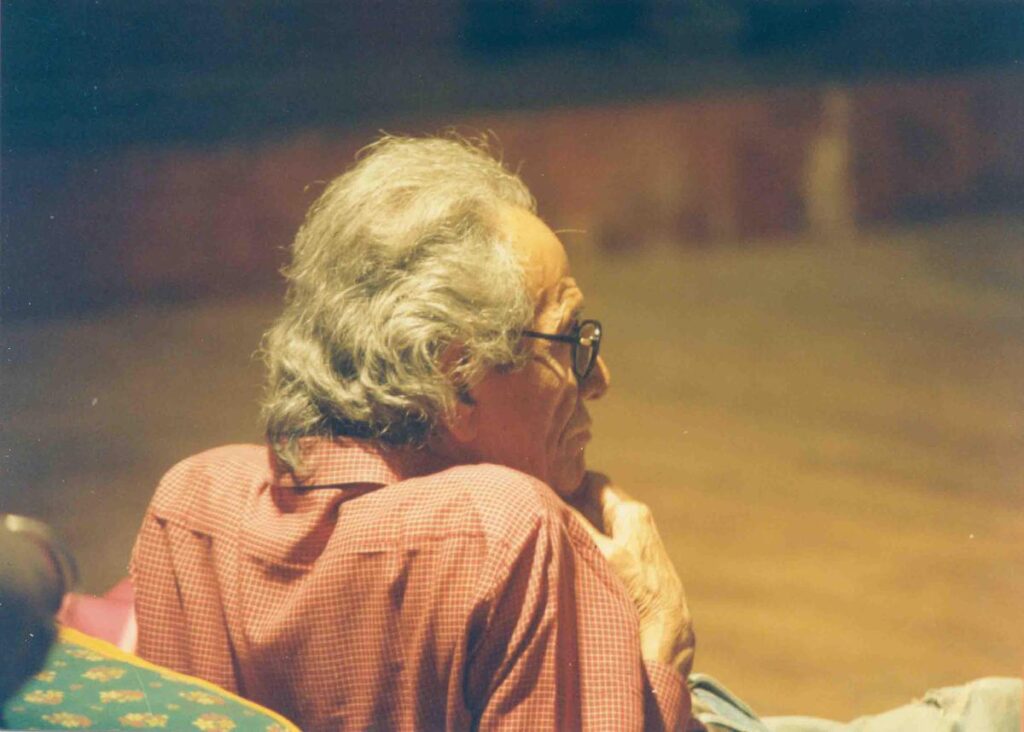
Habib Tanvir watching a play rehearsal. | Photo Credit: Sudhanva Deshpande

It was befuddling. Why were these great actors, who were so delightful when they performed in the villages, so stiff and rigid on the urban stage, he wondered. It took him 15 years, from 1958 to 1973, to figure it out. He was forcing them to speak in Hindustani, a language that was alien to them, and he was ‘directing’ them, telling them where and how to stand, where and when to move, what gestures to use. When he melded together three rural farces into a single play in Gaon ke naon sasural mor naon damad (‘I’m the son-in-law and my in-laws’ house is my village), he asked his actors to speak in Chhattisgarhi and improvise their moves.

It was magic. With their tongues and bodies unshackled, the actors were magnificent. Remarkably, urban audiences, most of whom had no familiarity with Chhattisgarhi, embraced the play. A string of hits followed, many recognised as masterpieces of modern Indian theatre — Charandas Chor (Charan the thief), Mitti Ki Gaadi (Sudraka’s The little clay cart), Bahadur KalarinShajapur Ki Shantibai (Bertolt Brecht’s Good person of szechwan), Hirma ki amar kahani (The immortal tale of Hirma), and Kamdev ka apna, basant ritu ka sapna (Shakespeare’s A midsummer night’s dream).

Habib Tanvir, an artiste-activist, he was committed to the values of secularism and social justice. | Photo Credit: Special Arrangement

Habib Tanvir was a formidable intellectual with deep insights about the Natyashastra and Indian performing traditions, a sophisticated aesthete who soaked up influences from all over the world, and a citizen-activist committed to values of secularism and social justice.

“In India, the economically poorest are the culturally richest, and the economically richest are the culturally poorest,” he would often say. He devoted his life and his art to uplift the culture, and the voice, of India’s poorest. And he did it with unparalleled verve, beauty, and joy.

Sudhanva Deshpande is an actor, director, and organiser with Jana Natya Manch and Editor with LeftWord Books. He has co-directed two documentary films on Habib Tanvir and is the author of Halla Bol: The Death and Life of Safdar Hashmi.

Session at Literature festival

Sudhanva Deshpande’s session at The Hindu Lit Fest, 2024 is titled ‘Recalling Habib Tanvir: Excerpts from the film and a talk’. It will be held on January 26, 3.15 p.m. at Sir Mutha Concert Hall, Harrington Road, Chetpet, Chennai.

source: http://www.thehindu.com / The Hindu / Home> Lit Fest / by Sudhanva Deshpande / January 16th, 2024

Wazeer Ahmad Khan is Asian 65+ Champion

Rampur, UTTAR PRADESH:

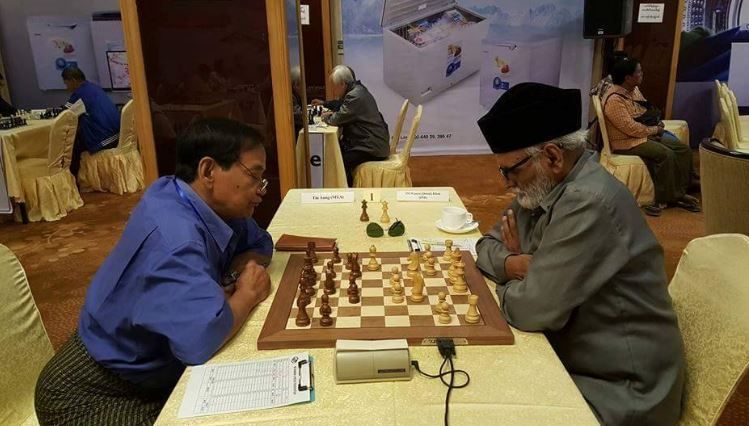
The Myanmar Chess Federation organized the Asian Seniors Championship 2016 from 27 October to 04 November at Hotel Hazel, Mandalay, Myanmar.

The tournament was held in two categories — for players aged above 50 and 65. India’s 69-year-old IM Wazeer Ahmad Khan won the gold in the 65+ category where 18 players competed.

The tournament had 56 players from 12 countries competing for the medals. We have a quick report.

Wazeer Ahmad Khan is Asian Seniors 65+ Champion

69-years-old IM Wazeer Ahmad Khan of Rampur in Uttar Pradesh is the Asian Seniors 65+ Champion. He began the event as the fifth seed…


…but rampaged to a perfect 9.0/9 to claim the title.
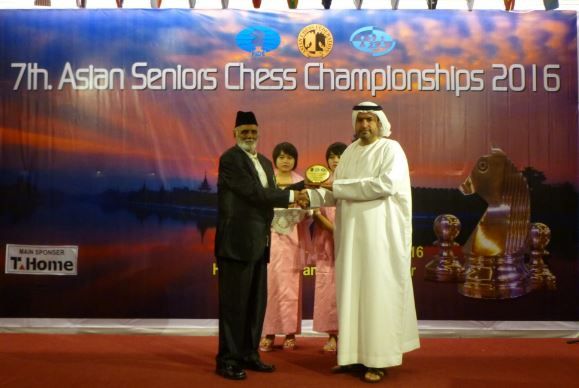
Khan receiving his trophy from the Asian Chess Federation Secretary General Hisham Al Taher.
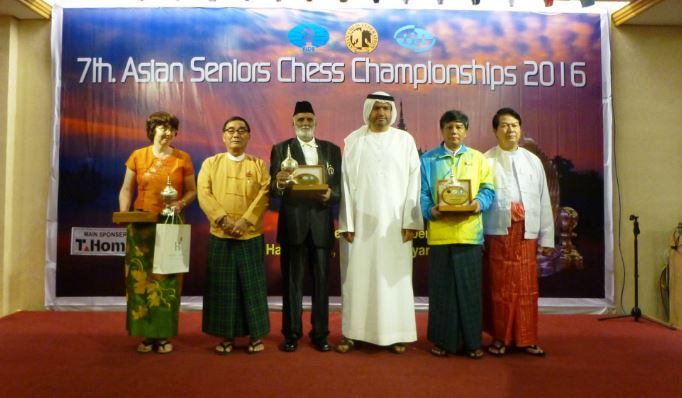
New Zealand’s CM Helen Milligan (2053; extreme left) was declared the women’s champion — she was the only woman competing in the entire 56-player event — while Myanmar’s Myint Han (2281; second from right) won the Asian Seniors 50+ Championship with 8.0/9.

New Zealand’s CM Helen Milligan (2053; extreme left) was declared the women’s champion — she was the only woman competing in the entire 56-player event — while Myanmar’s Myint Han (2281; second from right) won the Asian Seniors 50+ Championship with 8.0/9.

Final Ranking after 9 Rounds (65+)

Rk.SNo NamesexFEDRtgPts. TB1  TB2  TB3 
15IMWazeer Ahmad Khan IND18479,00,049,538,5
214 Saw Kyaw Nyein MYA06,50,047,035,0
31 Gibbons Robert NZL19546,01,045,036,5

Final Ranking after 9 Rounds (50+)

Rk.SNo NamesexFEDRtgPts. TB1  TB2  TB3 
13 Myint Han MYA22818,00,037,5433,0
21IMLodhi Mahmood PAK23407,50,539,5419,0
37IMMohandesi Shahin IRI21997,50,537,5410,5

source: http://www.chessbase.in / Chess Base / Home> India / by Priyadarshan Banjan / December 10th, 2016

UP Government confers Yash Bharti award to 46 people, list includes nine Muslims

UTTAR PRADESH:

Lucknow:

Uttar Pradesh’s highest honour Yash Bharti award was given to 46 personalities on Monday. Among them, nine Muslims were conferred the award by Chief Minister Akhilesh Yadav in presence of Mulayam Singh Yadav. The award is given annually by Culture Department of UP government.

Yash Bharti comes with a cash prize of Rs 11 lakh, citation and a shawl. The awardees are also eligible for a monthly pension of Rs 50,000 for their life.

Yash Bharti award were constituted in 1994 by the then CM Mulayam Singh Yadav but were discontinued between 2007 and 2012 by Mayawati. It has since been revived by CM Akhilesh Yadav.

1. Ustad Ghulam Mustafa Khan
Classical singing
Born- 3 march 1931, Badaun

Belong to Rampur Sahaswa Gharana in classical singing. Conferred honorary citizenship of Baltimore and Maryland in 1986. Padamshri in 1991, Sangeet Natak Academy Award in 2003, Padam Bhushan in 2006 and Rashtriya Tansen Award in 2008.

2. Professor Irfan Habib
Historian
Born-12, August 1931 in Baroda.
D.Phil from Oxford

Chairman, Indian Council of Historical Research 1987-93, 1993-96. Jawaharlal Nehru Fellowship in 1968-70, D.Lit from BHU (2008), Vishwa Bharti (2008), Kalyani Vishwavidyalaya (2009), North Bengal University (1990) and Ravindra Bharti University (1989). Padam Shree in 2005.

3. Dr Nahid Abedi
Sanskrit literature and philoshophy
Born—12 February 1961, Mirzapur
D. Lit from Lucknow University in 2009. Padam Shree awardee.
Several books and papers published in Sanskrit.

4. Iqbal Ahmed Siddiqui
Ghazal singer
Born—November 9, Allahabad

Performed at All India Radio and Doordarshan. Released 17 cassettes. Sang one song in film Rama O Rama.

5. Anwar Jalalpuri
Urdu poetry and writing
Born—6 July 1947

Several awards on Urdu poetry like UP Gaurav Samman, Mati Ratan Samman, Iftikhar-e-Meer Samman etc.

6. Dr Nawaz Deobandi
Poet and educationist
Born—16 July 1956, Saharanpur

Chairman, UP State Urdu Academy. Established Rafiqul Mulk Mulayam Singh Yadav Urdu IAS Study Center in Lucknow. Several awards like Kaifi Azmi award, Dushyant award, Rotary award etc.

7. Aleemullah Siddiqui
Artist
Born—10 June 1953, Lucknow

Artist using stem of wheat plant, painting on cloth etc. Acted in play Dilli Ka Akhirir Mushaira and Main Urdu Hoon.

8. Imran Khan alias Imran Pratapgarhi
Literature
Born—6 August 1987 Pratapgarh.

Internationally acclaimed poet and attended Mushairas in Oman, Bahrain, Dubai, Sharjah etc. Received Urdu Academy award in Saudi Arab, Red Cross Society Orissa’s Vishist Vidyarthi award and Sadbhavna award by Maharashtra Municipal Corporation.

9. Wazeer Ahmed Khan
Chess
Born—4 February 1947, Rampur

Participated in Chess National B competition in 1972, 1980, 1995, 1999, 2004 and 2008. UP Champion in 2004-2005. First prize in Asian Senior competition in Iran in 2015.

source: http://www.twocircles.net / TwoCircles.net / Home> Arts-Culture / by TCN Staff Reporter / March 22nd, 2016

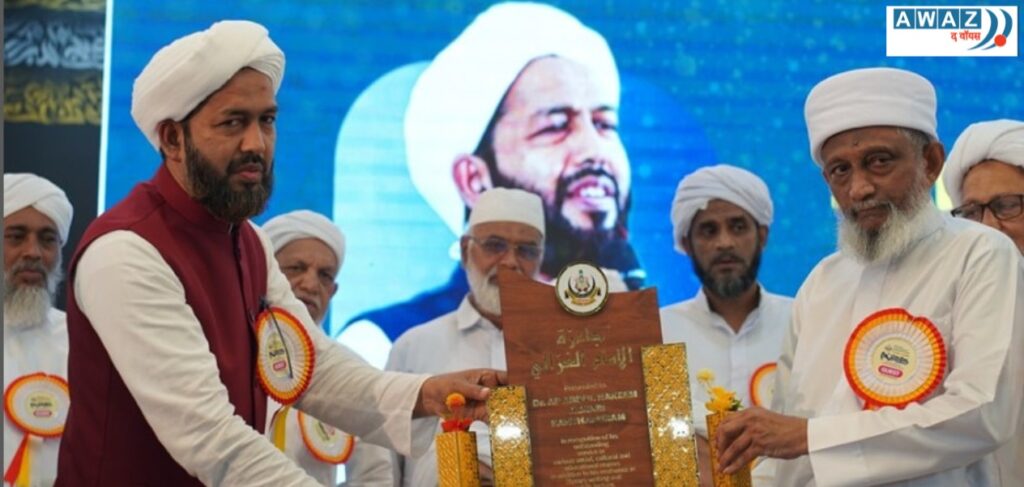
Dr. Muhammad Abdul Hakeem Azhary receives Imam Gazzali Award

Kozhikode, KERALA :

Dr. Muhammad Abdul Hakeem Azhary receiving the prestigious Imam Gazzali Award

New Delhi :

For his tireless endeavors to propel Islamic jurisprudence forward while spearheading transformative social initiatives, Dr. Muhammad Abdul Hakeem Azhary, the Managing Director of Markaz Knowledge City, has been bestowed with the Hujjathul Islam Imam Gazzali Award for the year 2023.

This prestigious honor is presented by the Darul Maarif Islamic Center under the esteemed leadership of Kodambuzha Bava Musliar. Award committee lauds Dr. Azhari’s innovative ideas that have significantly contributed to the resurgence of Ahle-Sunnah principles and played a pivotal role in societal reforms.

Dr. Azhary distinguishes himself as a dynamic force committed to more than replicating established norms, actively identifying and addressing gaps in social reforms, particularly in rural areas across the expanse of India. His visionary leadership has not only garnered global attention but has been instrumental in implementing impactful initiatives to bridge these social divides strategically.

Drawing from his extensive global experiences, Dr. Azhari has tailored his developmental approach for economically challenged communities in pan India. His initiatives transcend geographical boundaries, leaving a lasting imprint on diverse societal sectors, from the tribal regions of Wayanad in the south to Uthrakand in the north.

Under Dr. Azhary’s guidance, Markaz Garden, and its off-campuses scattered across India, alongside the monumental Markaz Knowledge City, have risen as bastions of knowledge and inclusivity. These institutions, underpinned by Islamic teachings, attract individuals from all walks of life, breaking down barriers of caste, sectarianism, and creed, truly embodying the essence of Islam.

Dr. Azhari’s organizational prowess, evident from a relatively young age, is underscored by his appointment as the General Secretary of the SYS. His leadership acumen shone particularly bright when faced with the challenge of Sheik Aboobaker Ahmed’s illness, where he seamlessly steered Markaz towards its mission, exemplifying unwavering commitment

In essence, the conferment of the Imam Hujjathul Islam Gazzali Award upon Dr. Abdul Hakeem Azhary is a testament to his steadfast dedication to the rejuvenation of Islamic religious sciences and his profound impact on societal development. His visionary approach and global perspective breathe new life into the traditional landscape, rendering him a truly deserving recipient of this esteemed accolade.

source: http://www.awazthevoice.in / Awaz, The Voice / Home> Story / by ATV / January 10th, 2024

UPSC Success Story: Meet IAS Officer Who Secured The Highest Marks In Interview Round

Kolkata, WEST BENGAL :

Her hard work paid off and she eventually clinched success on her third attempt. She cleared both her Prelims and Mains and went on to top the interview round as well.

UPSC Success Story: Meet IAS Officer Who Secured The Highest Marks In Interview Round
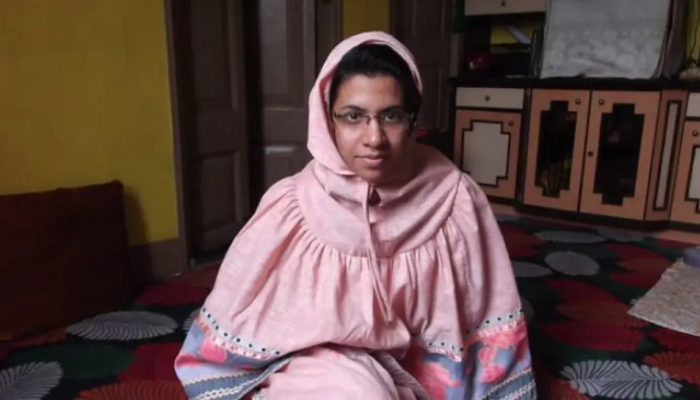
IAS Zainab Sayeed

New Delhi: 

Do you happen to know who holds the prestigious title for achieving the highest marks in the interview round of the UPSC exam over the last decade? If you’re guessing it’s Tina Dabi, Srushti Deshmukh, Kanishka Kataria, or Shruti Sharma, you might be surprised.

It’s none other than Zainab Sayeed who stands as the record-holder for securing the highest marks in the UPSC interview round. This remarkable individual from Kolkata attained an outstanding score of 220 out of 275 marks in the interview segment. Her remarkable achievement took place in 2014 when she successfully navigated the UPSC Civil Services Exam, amassing 731 marks in the main examination.

Zainab clinched the All-India Rank (AIR-107) and to this day remains unparalleled in terms of interview performance. However, Zainab’s journey with UPSC wasn’t without its challenges. She encountered setbacks in her initial two attempts, failing to clear even the Prelims in her first endeavours.

Despite these early setbacks, Zainab refused to be deterred and remained steadfast in her belief in herself. Her relentless dedication and perseverance eventually paid dividends, culminating in her triumphant success on her third attempt. She not only cleared both her Prelims and Mains but also emerged as the top performer in the interview round.

According to Zainab’s account, the interview lasted for approximately 25 minutes and revolved around a diverse array of topics, including current affairs, international affairs, foreign direct investments, and discussions on the European Union.

It’s noteworthy that Zainab hails from Kolkata and completed her graduation in English literature from St. Xavier’s College. Subsequently, she pursued her MA in mass communication at Jamia University, Delhi, graduating in 2011.

Following her post-graduate studies, Zainab made the decision to embark on the rigorous journey of UPSC exam preparation. Despite facing disappointments in 2012 and 2013, she persisted and ultimately tasted success in 2014.

source: http://www.zeenews.india.com / Zee News / Home> India> UPSC Success Story / by Zee Media Bureau, edited by Mahi Mishra / February 13th, 2024

75 years of Independence: Muslim women in India’s freedom struggle

INDIA:

Several Muslim women were an active part of India’s freedom struggle, some of whom emerged from Hyderabad.

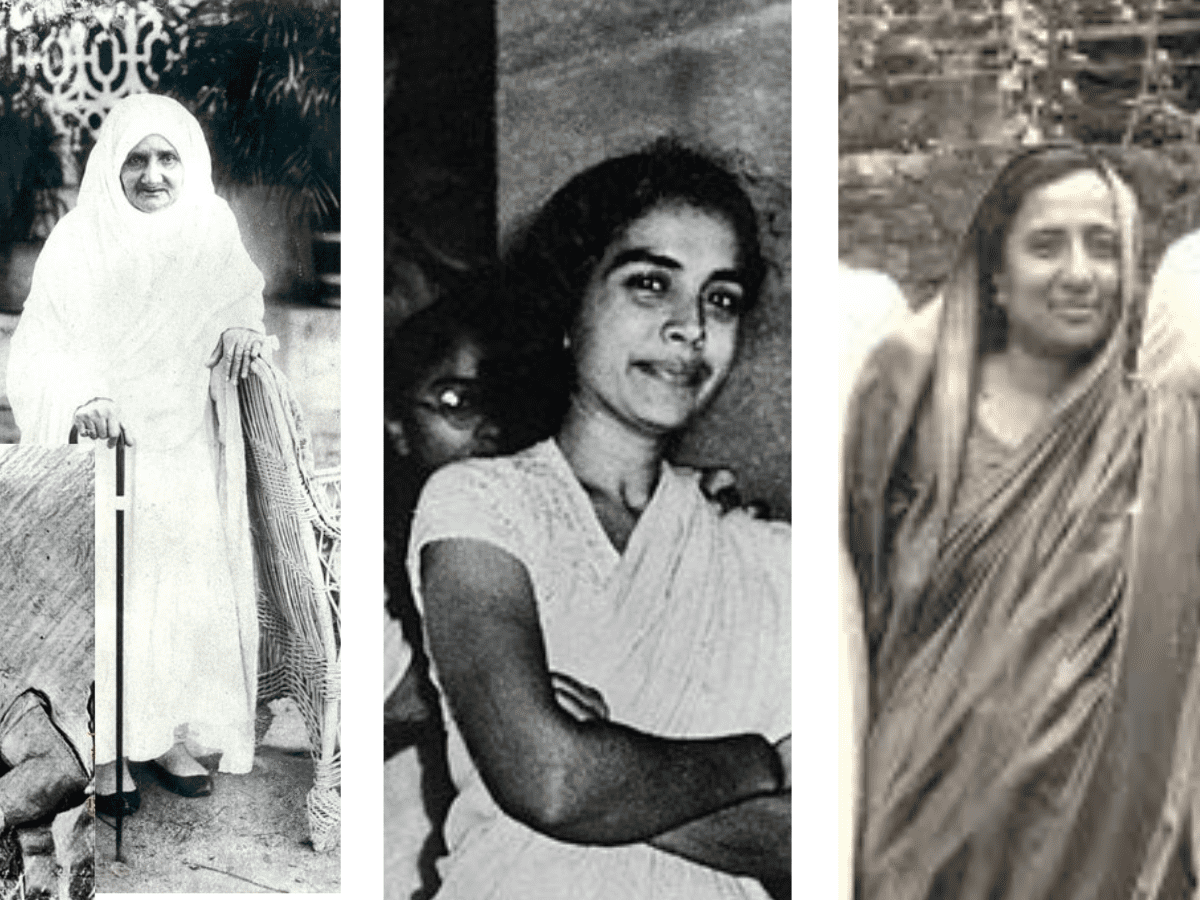
The list includes Abadi Bano Begum, Bibi Amtus Salam, Begum Anis Kidwai, Begum Nishatunnisa Mohani, Baji Jamalunnisa, Hajara Beebi Ismail, Kulsum Sayani, and Syed Fakrul Hajiya Hassan.

As India celebrates 75 years of Independence the country often recalls those that were instrumental in the country’s freedom struggle. But often those who aren’t talked about enough evanesce into the archives of history.

As men who took lead roles in the movement were put behind bars, the women ensured that the movement would not die down and the country attained the freedom a vast majority of it’s residents and citizens enjoy today.

The country’s Prime Minister Narendra Modi in his Independence Day speech, on Monday, hailed women and the part they played during the times including, Rani Laxmibai, Jhalkari Bai, Durga Bhabhi, Rani Gaidinliu and Begum Hazrat Mahal among others.

These are a few among the many names that are a part of the country’s Independence struggle. Apart from Begum Mahal, who made it to the list of the PM’s speech, today, Muslim women have made their mark in Indian history.

Abadi Bano Begum, Bibi Amtus Salam, Begum Anis Kidwai, Begum Nishatunnisa Mohani Baji Jamalunnisa, Hajara Beebi Ismail, Kulsum Sayani, and Syed Fakrul Hajiya Hassan are among those who are often forgotten or lost in public memory.

Abadi Bano Begum (Born 1852- Died 1924)

Abadi Bano Begum was the first Muslim woman who actively took part in politics and was also a part of the movement to free India from the British Raj. Abadi Bano Begum referred to by Gandhi as Bi Amma, was born in 1852, in Uttar Pradesh’s Amroha.

Bi Amman was married to a senior official in the Rampur State, Abdul Ali Khan.

After the death of her husband, Bano raised her children (two daughters and five sons) on her own. Her sons, Maulana Mohammad Ali Jouhar and Maulana Shaukat Ali become leading figures of the Khilafat Movement and the Indian Independence Movement. They played an important role during the non-cooperation movement against the British Raj.

Bi Amma, despite her poor financial condition, from 1917-1921, donated Rs 10 every month to protest against the British Defense Act, after Sarojini Naidu’s arrest.

In 1917, Bano also joined the agitation to release Annie Besant and her sons, who were arrested by the British after their failed attempts to silence her home rule movement in 1917, launched alongside, Bal Gangadhar Tilak.

Despite being a conservative Muslim for the most part of her life Bi Ammah was one of the most prominent faces of Muslim women in India’s freedom struggle.

To get the support of women, Mahatma Gandhi encouraged her to speak in a session of the all-Indian Muslim league, she gave a speech which left a lasting impression on the Muslims of British India.

Bano played an important role in fundraising for the khilafat movement and the Indian Independence movement.

Bibi Amtus Salam (Died 1985)

Mahatma Gandhi’s ‘adopted daughter’ from Patiala Bibi Amtus Salam was a social worker and his disciple who played an active role in combating communal violence in the wake of the partition and in the rehabilitation of refugees who came to India following the partition.

She has on several occasions risked her life by rushing to sensitive areas during the communal riots in Calcutta, Delhi and Deccan.

Bibi Salam was a Muslim inmate of the Gandhi ashram and had over time become an adopted daughter to Gandhi.

After the Noakhali riots, an article published in The Tribune on February 9, 1947, noted that Amtus Salam’s 25-day fast, which was intended to make offenders feel guilty, was one of the most significant outcomes of Gandhi and his disciples’ actions.

To protest the “negligence” of the state authorities in the effort to rescue kidnapped women and children, she sat on an indefinite fast at Dera Nawab in Bahawalpur.

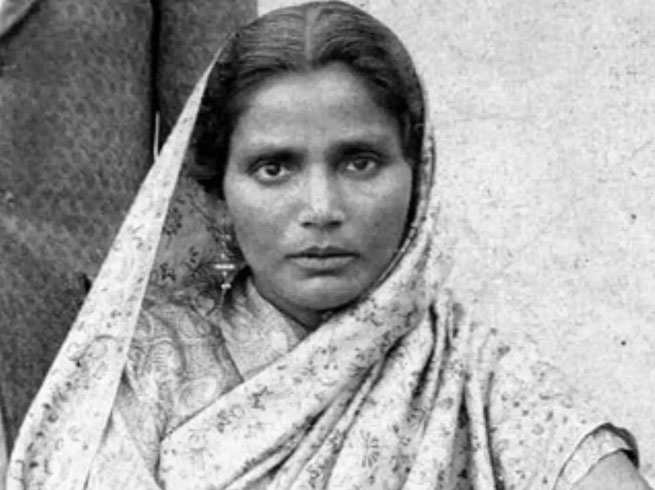
Begum Hazrat Mahal (Born 1820-Died 1879)

An iconic figure of the 1857 uprising, Begum Hazrat Mahal fought against the British East India Company.

Begum, the wife of Nawab Wajid Ali Shah, the ruler of Awadh, refused to accept any favours or allowances from the British. Begum, with the aid of her commander Raja Jailal Singh, battled the British East India Company valiantly.

Muhammadi Khanum, the future Mahal, was born in Faizabad, Uttar Pradesh, in 1830. Gulam Hussain is her father. She had an early understanding of literature. The East India Company’s destruction of mosques and temples to make room for highways served as the catalyst for her uprising.

When the British East India Company invaded Awadh in 1856 and her husband, the last Nawab of Awadh, was exiled to Calcutta, the Begum made the decision to remain in Lucknow along with her son, Birjis Qadir.

On May 31, 1857, they convened in Lucknow’s Chavani neighbourhood to declare Independence and drive the British out of the city.

On July 7, 1857, Begum Hazrat Mahal proclaimed her son, Birjis Khadir, the Nawab of Awadh. She raised 1,80,000 soldiers and lavishly renovated the Lucknow fort as the Nawab’s mother.

She died there on 7 April 1879.

Begum Anis Kidwai (Born 1906- Died 1982)

Story all about freedom fighter Anis Kidwai

A politician and activist from Uttar Pradesh (UP) named Anis Kidwai devoted most of her life to serving the newly Independent India, working for peace and the rehabilitation of the victims of the terrible partition of India.

She represented the Indian National Congress (INC) in the Rajya Sabha from 1956 to 1962, serving two terms as a Member of the Parliament.

Anis Begum Kidwai remained active during the Indian National Movement. Despite gaining independence in 1947, India suffered from country division.

By then, her husband Shafi Ahmed Kidwai had been murdered by communal forces for his efforts to promote amity between Muslims and Hindus and to prevent the split of the country. She was deeply devastated by her husband’s passing.

She visited Mahatma Gandhi in Delhi following her husband’s passing as a result of this unfortunate tragedy.

In order to support and assist the women who were suffering similarly to her as a result of the country’s separation, she began working with women leaders like Subhadra Joshi, Mridula Sarabhai, and others under the direction of Mahatma Gandhi.

She also started rescue camps for the victims and supported them in all respects. They affectionately called her ‘Anis Aapa’. She penned her experiences during the division of the Nation in her book ‘Azadi Ki Chaon Mein’.

Begum Nishatunnisa Mohani (Born 1884- Died 1937)

Begum Nishatunnisa Mohani was born in 1884 in Awadh, Uttar Pradesh, and her notion of ultimate freedom was adopted by Gandhiji.

Married to Moulana Hasrat Mohani, a tenacious independence warrior and the one who gave the phrase “Inquilab Zindabad” its origin. Begum, a fierce opponent of British authority, supported the then-hardliner of the liberation struggle, Bal Gangadhar Tilak.

After his imprisonment for publishing an anti-British piece, she wrote to her husband, Hasrat Mohani, encouraging him and raising his spirits by saying, “Face the risks imposed upon you boldly. Do not give me any thought. No sign of weakness should come from you. ‘Be careful’.”

Later, when her husband was in prison, she took over the publication of his daily, Urdu-e-Mualla, and engaged in various legal disputes with the government.

Baji Jamalunnisa, Hyderabad (Born 1915- Died 2016)

Baji Jamalunnisa, who actively participated in the Telangana armed conflict, passed away in this city on July 22 2016, at the age of 101.

Jamalunnisa Baji was born in Hyderabad in 1915 and was a prominent advocate for racial peace and the independence cause.

She began reading the banned journal “nigar” and progressive literature as a young child after being raised by her parents in a liberal/progressive environment.

Despite being raised in the traditional religious traditions of the Nizam regime, a component of the British Raj, she actively participated in the nationalist movement.

She continued to participate in the independence movement despite the oppressive rule of the Nizam and the British rule over her in-laws’ objections.

Later, she met Maulana Hazrat Mohani (the man who coined the phrase “Inquilab Zindabad” and was known as “Thunder Bolt” in the Freedom struggle), who inspired her to join the anti-imperialist movement in the nation.

She provided sanctuary to freedom fighters trying to avoid being arrested by the Imperial Government while being a communist.

Despite lacking basic higher education, she was fluent in Urdu and English and founded the literary society Bazme Ehabab, which held debates in groups on socialism, communism, and unreasonable customs.

She is buried at the Hazrath Syed Ahmed Bad-e-Pah dargah in First Lancer. She was the sister of Syed Akthar Hasan, a former MLA and the founder of Payam Daily, and was better known as “Baji”.

She was a close friend and member of the Communist Party of Maqdoom Mohiuddin. Baji was also a founding member of the Progressive Writers Association and the Women’s Cooperative Society.

Hajara Beebi Ismail, Andhra Pradesh (Died 1994)

Mohammed Ismail Saheb’s wife, Hajara Beebi Ismail, was a freedom warrior from Tenali in the Guntur district of Andhra Pradesh.

Mahatma Gandhi had a significant impact on the pair, who committed themselves to the Khadi campaign movement. In the Guntur district, her husband Mohammed Ismail opened the first Khaddar Store, earning him the moniker “Khaddar Ismail.”

Tenali served as the Muslim League’s headquarters during that time in the Andhra area, where it was particularly active.

Since Hajara and her husband supported Gandhi, they encountered fierce hostility from the Muslim League. Despite her husband’s repeated arrests for his involvement in the national movement, Hajara Beebi never lost spirit.

Kulsum Sayani (Born 1900- Died 1987)

On October 21, 1900, in Gujarat, Kulsum Sayani was born. She participated in the Indian National Movement and battled against social injustices.

Kulsum and her father met Mahatma Gandhi in 1917. Since then, she has travelled Gandhi’s path. Throughout the Indian National Movement, she advocated for social changes.

Dr. Jaan Mohamad Sayani, a well-known liberation fighter, was the man she wed. She participated actively in a number of events of the Indian Freedom Struggle, with her husband’s backing.

She began working with the illiterate and joined the Charkha Class. She also had a significant impact on the Indian National Congress’s “Jan Jagaran” campaigns, which raised public awareness of social ills.

Sayani’s operations included the suburbs and the metropolis of Mumbai.

Syed Fakrul Hajiya Hassan (Died 1970)

Syed Fakrul Hajiyan Hassan, who not only took part in the Indian freedom fight but also urged her children to do so. She was born into a family that immigrated to India from Iraq. She raised her kids to be freedom fighters who later gained notoriety as the “Hyderabad Hassan Brothers.”

Hajiya wed Amir Hassan, who had relocated to Hyderabad from Uttar Pradesh.

She adopted Hyderabadi culture as a result. Amir Hassan, her spouse, had a senior position in the Hyderabad government. He was required to travel to several locations as part of his employment.

She noticed the suffering of women in India while on her visits. She put a lot of effort into the growth of female children.

She lived in Hyderabad, which was governed by the British, yet she actively engaged in the National Freedom Movement since she was a lady with strong national emotions.

She burned foreign clothing at her Abid Manzil in Hyderabad’s Troop Bazaar in response to the demand of the Mahatma Gandhi. She took part in the non-cooperation and Khilafat movements.

She regarded each soldier in the Indian National Army as one of her children. Along with Smt. Sarojini Naidu, and Fhakrul Hajiya put a lot of effort into getting the heroes of Azad Hind Fouz released.

source: http://www.siasat.com / The Siasat Daily / Home> Featured News / by Marziya Sharif / August 17th, 2022

Freedom fighter’s family preserves 73 year old national flag

Demow (Sivsagar District), ASSAM:

The first national flag hoisted in Demow after independence, 73 years ago has still been preserved well by the family of freedom fighter Commander Mohd. Maulobi Mohd. Hussain.

source: http://www.sentinelassam.com / The Sentinel / Home / by Sentinel Digital Desk / August 14th, 2019

Assam cop Moinul Islam pens poetry, essays on humanism

ASSAM:

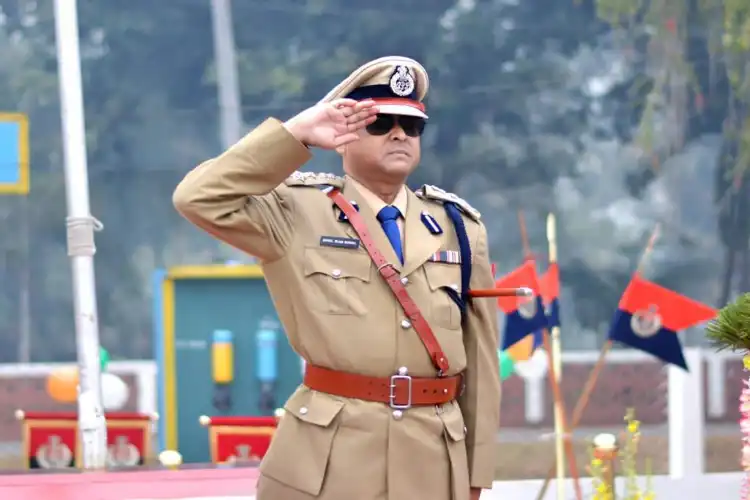
DIG Moinul Islam Mandal on duty

For a cop toughened by years of dealing with criminals, writing soft stories may seem an oxymoron of sorts. But for Moinul Islam Mandal, Deputy Inspector General (DIG), Dergaon Police Training College, there is no antithesis as his writings stem from the core belief that the “Truth will always prevail” and the perception that all religions are in harmony.

Having authored 18 essays that were compiled in a book, Aapun Jibonor Ortho Bisari (Finding the meaning of life). Mandal said that his essays are experiences and ideas that he garnered during his career as a policeman.

“These experiences molded my thought processes. The ideas germinated during my time as a policeman,” he said.

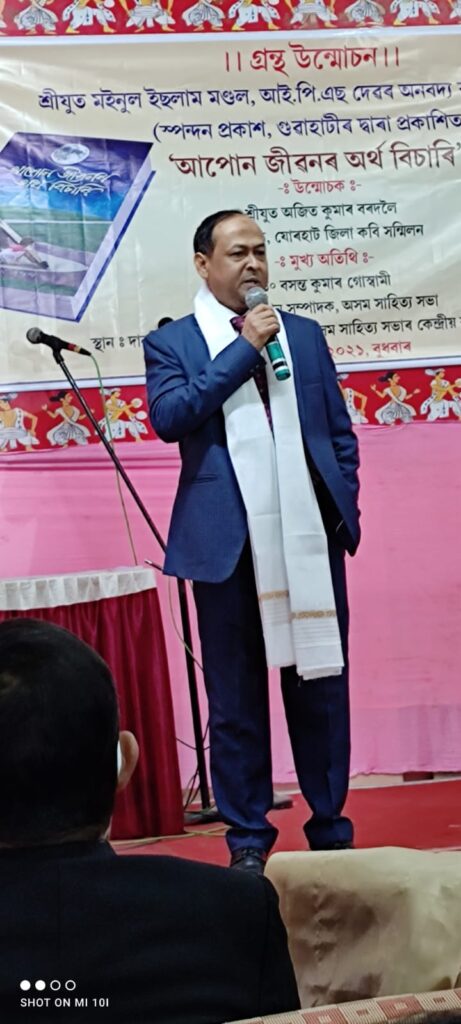
Moinul Islam Mandal during a book release function

Mandal said that most of his essays are based on the premise that the truth would always prevail –and he had attempted to offer both a scientific and philosophical reason behind this in his essays.

Citing an example he said that he had drawn a parallel of the human being with a computer. – “the organs are the hardware, what is imprinted in the brain is the software and our soul is the driver.”

His first essay was on the coronavirus, written during the lockdowns after the pandemic was declared in 2020 and there was plenty of time to write at the Dergaon PTC.

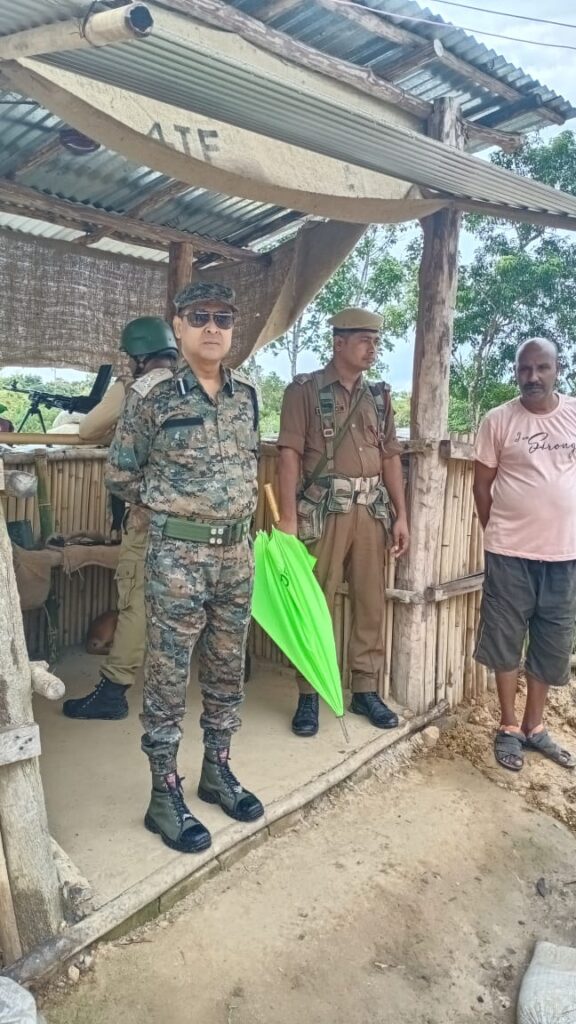
DIG Moinul Islam Mandal during a security operation

Mandal defines the Coronavirus in relation to nature and humans.

“It is about how the universe is run by natural law and that humans are also ruled by this same law. It also depicts how religion cannot be a separate entity from nature but is only an extended part of nature,” he said. This essay received a lot of feedback after it was published in the Asomiya Pratidin, an Assamese language newspaper.

“It encouraged me to write more and he wrote 17 more essays which were published in the newspaper,” Mandal said. And thus from a man who used to dabble in poetry, Mandal evolved into writing in-depth on soul-stirring topics.

Mandal said that he compiled the essays in a book after former IPS officer Pallab Bhattacharyya called him from Delhi to tell him how much he liked one of the essays, The Afghan Snow…   “I thought that over time, these essays would get lost, so I decided to preserve them in a book,” he said.

Explaining the title of the book, he said, “I had my perception of what life is. Likewise, everyone has his or her definition of life, and there are similarities of the thought process, a universality which everyone can relate to that I try to bring out in my writings, ” he said. Six of his essays in the book deal with the oneness of Hinduism and Islam.

Former deputy commissioner Ajit Kumar Bordoloi who released the book along with former Asam Sahitya Sabha president Dr Basanta Goswami said that these essays explore the relationship of religion with man, the Hindu Muslim divide, and the 19th essay in the book, Mussalman ne Muslim Manaxikota, needs the courage to write.

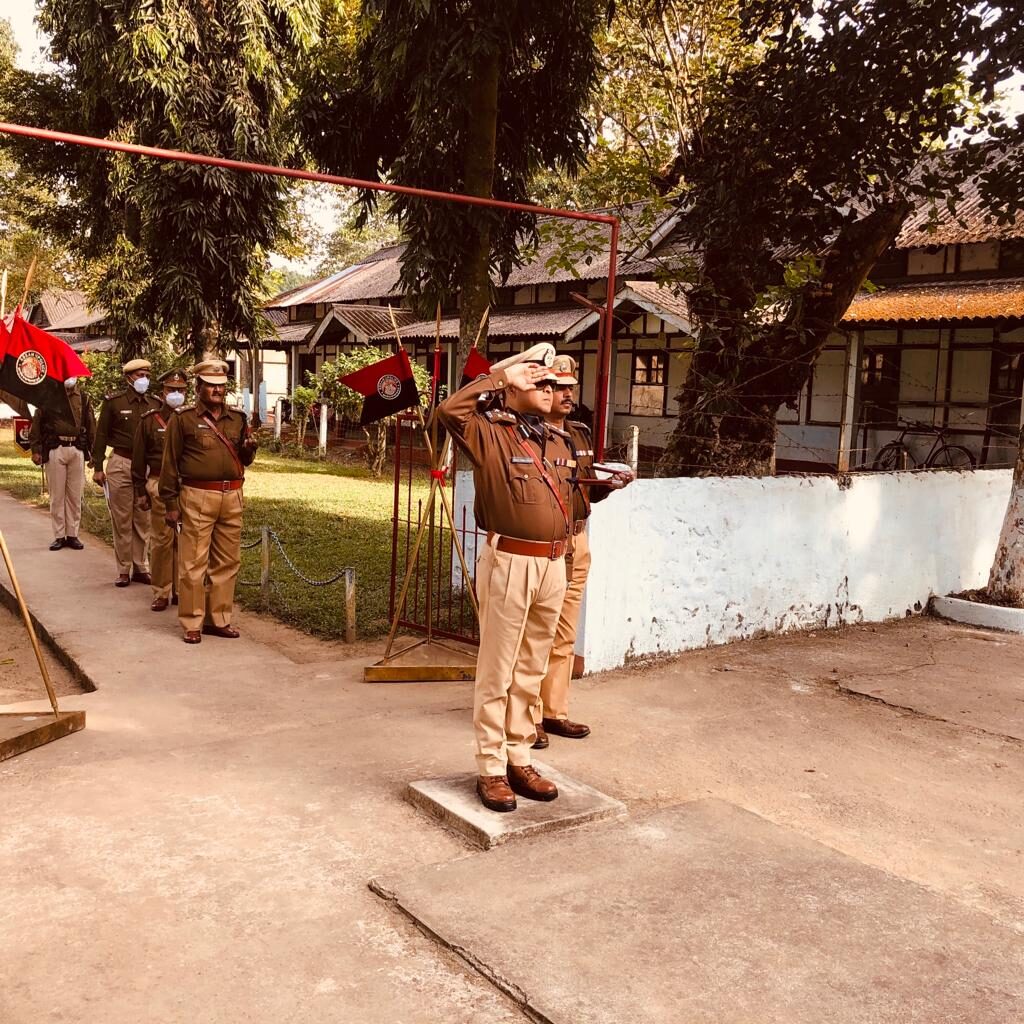
DIG Moinul Islam Mandal saluting the National Flag 

“People are now so involved in the religious rituals and this has polluted religion to such an extent that humanity which forms the basis of all religions has been suppressed to near extinction,” he said.

There is nothing different between Hindus and Muslims. With my knowledge of Islam and on the reading of the Gita I did not find anything that was against humanity. We are all humane and equal human beings. It is only after we divide ourselves into castes, religions, or languages that we become polluted,” he added.

Tracing his journey as a writer, he said that it all began during his college days in the Assam Agricultural University when he used to write poems and put them up on the wall of his hostel room. The other students encouraged me to write in the college magazine.

source: http://www.awazthevoice.in / Awaz, The Voice / Home> Stories / by Smita Bhattacharyya, Jorhat / February 2022