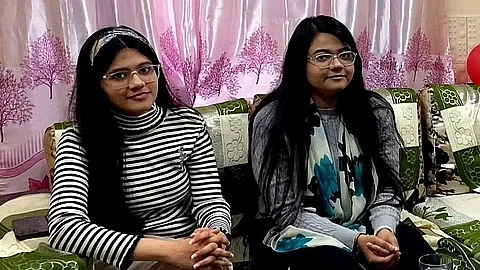
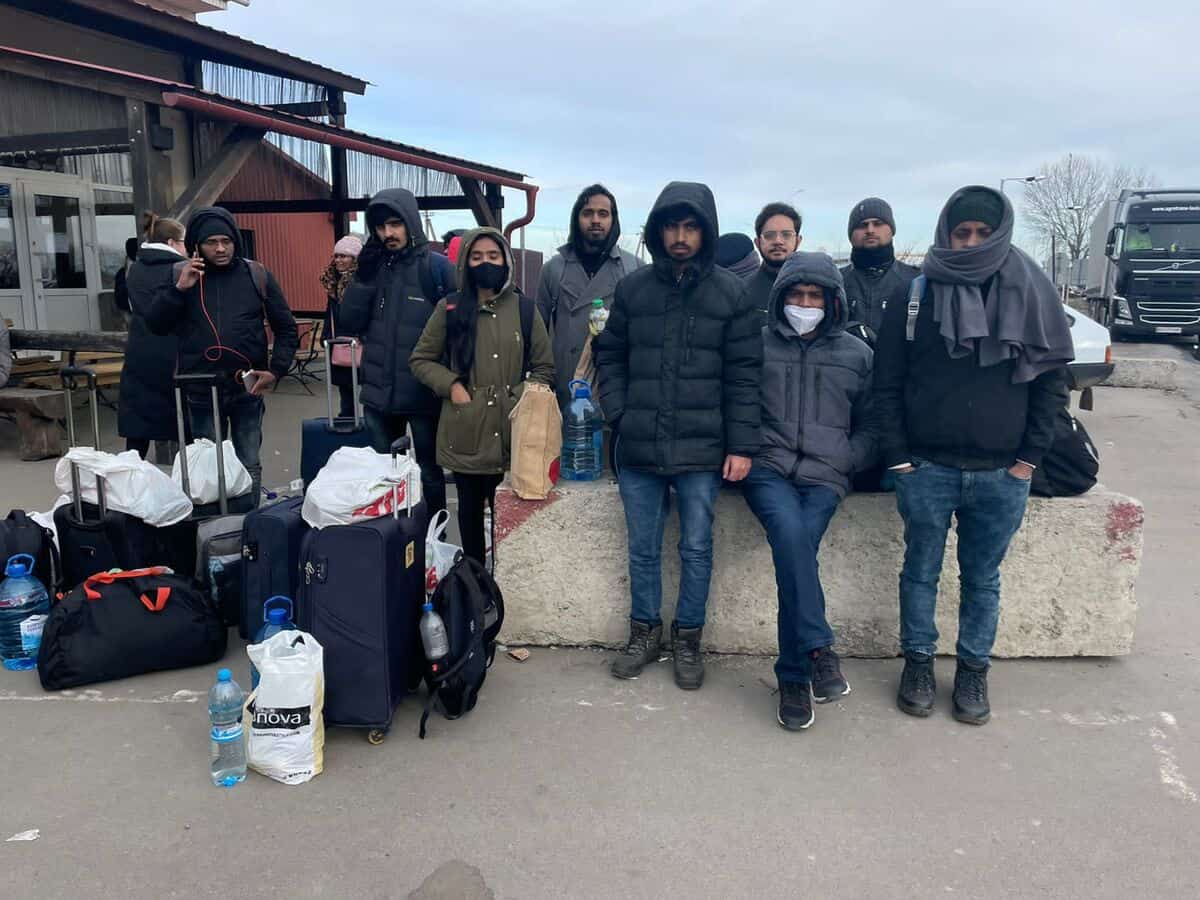
Zenab and Kulsoom, residents of Old Delhi, say they felt completely helpless while returning from Ukraine as they were neither able to speak Ukrainian language nor got any help from Indian authorities.
Zeba and Kulsoom
“We could see three shells falling when we were walking towards the railway station. It was for the first time that we saw death so near,” recollects Zenab, who recently returned from Ukraine’s Kharkiv along with her sister Kulsoom.
These young girls, who saw death from up and close, say they felt completely helpless while returning from Ukraine as they were neither able to speak the Ukrainian language nor got any help from Indian authorities.
The two sisters, residents of Old Delhi, completed their primary education in Dubai before going to pursue further studies in Ukraine. The two young girls stayed together at same hostel and for that they had to fight with the university authorities, but their struggle turned out to be a blessing in disguise as during war they stayed together which was a big relief for both of them.
“I was so tense that they should remain together; even while returning I asked them to hold their hands tightly,” says their mother, Ghazala Salim.
Zenab and Kusoom, who were pursuing MBBS and MBA courses and never witnessed even a street fight during their life, had a horrifying experience of witnessing a full-fledged war. They, along with their friends, stayed in the bunker of a metro station and had to live on one meal a day as there was shortage of both food and money.
“We were allowed to use the washroom only once in 24 hours and we were not allowed to send videos or talk with our parents on mobile as per instructions, as Ukrainian authorities feared that the videos could be used for propaganda by the enemy,” recalls Kulsoom.
They witnessed tanks standing facing their hostel and even saw that certain signs were put on buildings which were to be targeted. The Russian army also hoisted their national flag atop the university.
“Our group finally decided to move out and one of our friends asked everyone to carry only water and food with very few clothes,” says Zenab.
They walked for two hours before reaching the railway station to catch a train for Lviv. Once they reached there, the group faced several problems. “Train authorities were only allowing local people first and after that girls were given permission whereas non locals boys were not allowed to board the train and were even roughed up. Traveling in the train was very suffocating too as it was very crowded,” they recalled.
On way to Lviv, they passed through Ukrainian capital Kyiv where heavy shelling was taking place. When the group reached Lviv, their parents advised them to move towards Romania instead of Poland and Hungary.
“The Romanian people were very nice and cooperative,” recalls Zenab.
Both the sisters said that from Kharkiew to Romania they did not receive any help from Indian authorities except they came to tell us that we have to check in from this point.
These sisters, who went to Kharkiv in December last year, miss studying in the university and want to return as soon as the situation returns to normal.
They said that there was huge a language problem, but otherwise also local people didn’t communicate with foreigners. They used Google Translate for their daily needs but in three months, they grew fond of their institution. “The girls feel terrible watching the news of bombardment in Ukraine, and miss their university a lot,” says Ghazal, the mother of the two girls.
Mohd. Salim, the father of the two sisters, is an engineer and was working in Dubai before he returned to Delhi just after Covid two years back. He is now running an eatery in Delhi and also has a distributorship of cosmetics. “The education is not cheap in these universities, but the education is very good,” he says.
The parents underwent an extremely stressful time for ten days but feel relieved now that their daughters have returned home safely.
“A WhatsApp group of parents was our only source of information from Ukraine as our daughters were so terrified that they just followed the instructions and only messaged that they are safe and not to worry,” says Ghazala.
source: http://www.nationalherald.com / National Herald / Home> India / by S Khurram Raza / March 08th, 2022
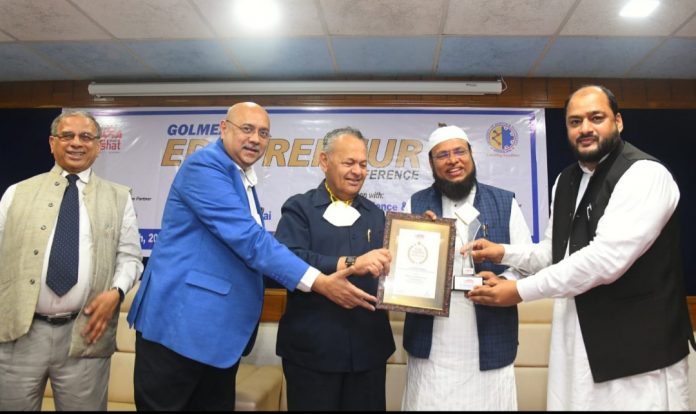
Mahbubul Hoque, Chancellor of USTM receiving Maeeshat Edu Doctor Award-2022 from the hands of P. A. Inamdar, Founder President, Azam Campus, Pune (centre) at Golmez Edupreneur Conference held at USTM on March 10, 2022
9th Mile, Khanapara, Ri Bhoi :
Maeeshat Media Pvt. Ltd, India’s first media outlet dedicated to covering economic activities of minority communities, has given away its 11th edition of business awards at the Golmez Edupreneur Conference held in association with the University of Science and Technology Meghalaya (USTM) here today. Mahbubul Hoque, Chancellor of USTM and P. A. Inamdar, Founder President, Azam Campus, Pune was conferred with Edu Doctor Award-2022 while Dr Abdul Qadeer, Founder Chairman, Shaheen Group, Karnataka was conferred with the Edupreneur of the Year Award.
The keynote address of the conference was delivered by Dr Frank F Islam, Chairman and CEO of FI investment group, USA. The conference has been attended by economic experts, business leaders, entrepreneurs, social workers, and professionals from across India.
Addressing the gathering of entrepreneurs, P. A. Inamdar urged, “Let us not talk about anything negative. We have to talk how much we have achieved and how far we have to achieve for development.” Emphasizing on imparting spoken English in all vernacular medium schools, he said that technology can create a much better environment and contribute to educational progress. He suggested all to think about how to empower neighbourhood small institutions.
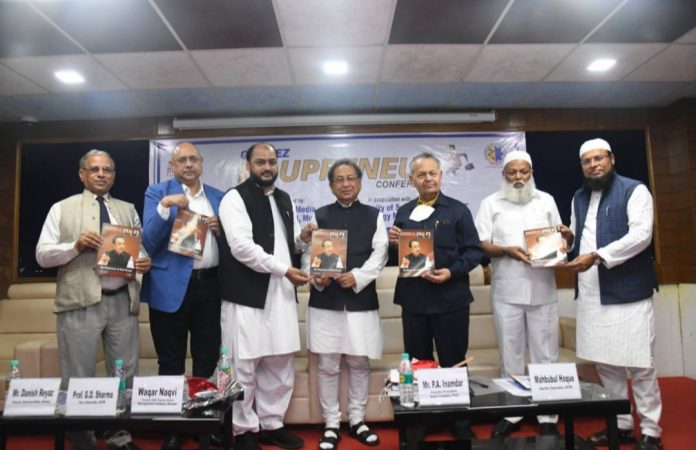
(From left) Prof. G. D. Sharma, VC, USTM, Waqar Naqvi, Managing Partner, RDVLLP Mumbai; Danish Reyaz, Managing Editor, Maeeshat Media; M. Nurul Islam, Founder General Secretary, Al Ameen Mission, Kolkata; P. A. Inamdar, Founder President, Azam Campus, Pune; Dr Abdul Qadeer, Founder Chairman, Shaheen Group, Karnataka and Mahbubul Hoque,
Delivering the keynote address in the inaugural session, Dr Frank F Islam emphasized on the need for edupreneurship in India. “Much has been done for the development of education among the minorities in India, and unfortunately much remains to be done”, he said.
Welcoming the guests, Mahbubul Hoque said that through institution building one can change the environment of a particular place and bring progress to the people of the area. He thanked all the participants for coming over to the North East and for their desire to contribute for the development of the people through promotion of education. “We as Indians have to think for development of every citizen, not simply of the minorities”, he added.
Speaking on the occasion, Prof G. D. Sharma, VC, USTM mentioned about National Education Policy-2020 and said that USTM is preparing 82 teachers for technology oriented courses so that the university becomes a global university through technology. “We have to establish peace in the North East region though the means of education”, he added.
A magazine of Maeeshat Media was released on the occasion by M. Nurul Islam, Founder General Secretary, Al Ameen Mission, Kolkata and other dignitaries.
Some of the distinguished participants in the conference include: Waqar Naqvi, Former CEO, Taurus Asset Management Company, Mumbai; Danish Reyaz, Managing Editor, Maeeshat Media; Munir uz Zaman Deshmukh, Pearls Academy, Aurangabad; Rashid Nayyar; M Mohammed Tahir Madani, M Burhanuddin Qasmi, Director, MMERC, Mumbai; Moulana Mohammad Ilyas Nadvi, GS, AHAN Islamic Academy; Moulana Mutiur Rahman Madni, Founder, Imam Bukhari University, Kishanganj; M Azizurrahman, Founder, TCIS, Malda, Dr Nazibur Rahman, Principal, Kaliachak College, Malda; M Wajihuddin, Assistant Editor, Times of India, Mumbai; Zaya Ahmed from Delhi; Izhar Khan and Affan Ahmed Kamil from Mumbai.
source: http://www.muslimmirror.com / Muslim Mirror / Home> Indian Muslim> Positive Story / by Muslim Media Networks / March 10th, 2022
The Frank and Debbie Islam Incubation Center at AMU mentors the women in their craft, upgrading their skill base and providing them design and marketing support.
Aligarh:
The Frank and Debbie Islam Incubation Center of the Department of Business Administration at Aligarh Muslim University (AMU) is crafting the future of Muslim Women Entrepreneurs in Uttar Pradesh and elsewhere, and definitely the bells should toll for it on the Women’s Day that falls on March 8.
The Frank and Debbie Islam Incubation Center at AMU mentors the women in their craft, upgrading their skill base and providing them design and marketing support. This enables the incubation center to bring applique craftswomen to get trained in entrepreneurial skills to help start their small businesses.
This project was conceived during the world Alumni summit of 2008 when Mr. Ameer Ahmad (MBA1978) and Mr. A.G. Danish (MBA1988) committed Rs. 1 crore and Rs. 10 Lakh respectively for the building project.
The project got a major fillip when Dr. Frank Islam, a Washington-based AMU alumnus originally from Azamgarh and his wife Debbie Driesman, through their Frank Islam and Debbie Driesman, pledged USD 2 million for this project.
In addition to the contribution of Dr. Frank Islam, the project received contributions from other alumni, well-wishers, students, faculty members, and others from India and all over the world.
This building of this innovative project is constructed on a 3-acre plot in the Sir Syed House Complex. The Complex is the new home of the Department of Business Administration and Faculty of Management Studies and Research. The building is a state-of-the-art facility but maintains the architectural legacy of AMU.
The construction began in May 2015 and the foundation stone was laid on 15th February 2016. The Project was completed in a record time of two years, creating a facility of 50000 sq feet, containing an academic block, a faculty-cum-administrative block, a facility block comprising library & IT facilities, and open areas. Phase 1 of this Building was inaugurated on 12 Feb 2017 and it was occupied in June 2017.
Phase 2 of the project is being built with the help of Dr. Nadeem Tarin, another distinguished and committed alumnus of AMU. This phase shall house a seminar hall, an incubation center, additional classrooms, including facilities for executive training.
The additional facilities will broaden the scope of the MBA Department’s offering that has already started two additional Master’s programmes, namely MBA (Islamic Banking and Finance) and MBA (Hospital Management). Another MBA for working executive is due to be started soon. In addition, phase 2 shall provide additional space for other incubating start-ups.
source: http://www.ummid.com / Ummid.com / Home> Business & Economy / by Syed Ali Mujtaba / March 08th, 2022
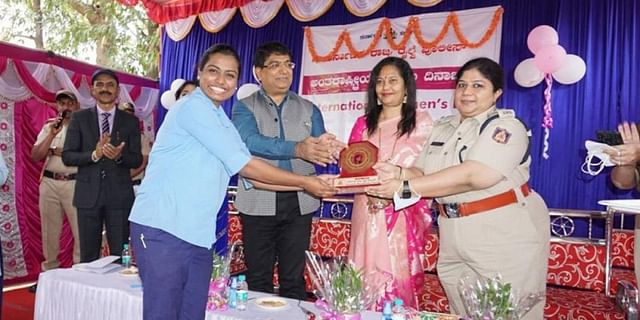
The Government Railway Police (GRP) on International Women’s Day honoured seven women serving as loco pilots and assistant loco pilots in trains operated by the South Western Railway.
One of the loco pilots being awarded by GRP in recognition of their exemplary services.
Bengaluru :
The Government Railway Police (GRP) on International Women’s Day honoured seven women serving as loco pilots and assistant loco pilots in trains operated by the South Western Railway. In recognition of their exemplary services to the Railways, S B Gayatri Krishna, V S Abhirami, C Minu Mubaraka, Nimi Chand, Rangoli Patel, Nimisha Kumari and P Noorul Meharna were honoured.
Additional Director General of Police, Railways, Bhaskar Rao and Superintendent, GRP, DR Siri Gowri were present at the event held at KSR Railway station. M P Omkareshwari, Road Transport Joint Commissioner (Bengaluru Rural), Psychologist Soujayna Vashista, and Senior Divisional Security Commissioner, RPF, Debashmita Chattopadhyay Banerjee, were also present on the occasion.
source: http://www.newindianexpress.com / The New Indian Express / Home> Cities> Bengaluru / by Express News Service / March 09th, 2022
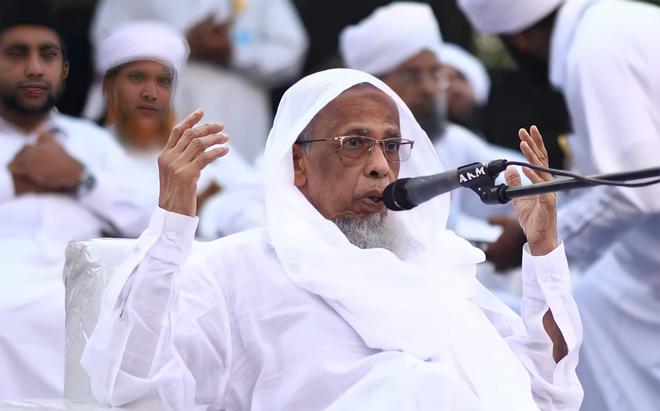
P.T. Kunhammu Musliar, popularly known as Kottur Ustad, leading the opening prayer at a function held to celebrate the 60th year of his teaching career at Kottur near Kottakkal on Monday. | Photo Credit: SAKEER HUSSAIN
Educational institution will be set up to mark 60th year of Kottur Ustad’s teaching career, says Kanthapuram
Veteran Islamic scholar P.T. Kunhammu Musliar, popularly known as Kottur Ustad, was felicitated at a function held to mark the 60 th year of his dars or teaching career at Kottur near Kottakkal on Monday.
His disciples from across the State, many of them veterans including leading fiqh (jurisprudence) scholar Ponmala Abdul Khadir Musliar, attended the function and prayed for their teacher whom they endearingly called Tajul Muhaqqiqin.
Sunni leader and Grand Mufti Kanthapuram A.P. Aboobacker Musliar led a special prayer for Samastha Kerala Jamiyyathul Ulama vice president Syed Hyderali Shihab Thangal, who died on Sunday.
Delivering the keynote address, Mr. Kanthapuram announced that an educational institution named Masalik Attariqa Al Muhammadiyya would be set up at Kottur to mark the 60 th year of Kottur Ustad’s dars.
Kanthapuram A.P. Mohammed Musliar, head of the Department of Fiqh at Markaz Sharia College, inaugurated the function. Samastha Kerala Jamiyyathul Ulama (AP group) president E. Sulaiman Musliar presided over the function. Fiqh scholar Ponmala Abdul Khadir Musliar, Haj Committee chairman C. Mohammed Faizi, and Kerala State Sunni Students Federation general secretary Nizamuddin Faizi spoke.
E. Sulaiman Musliar and Markaz president Syed Ali Bafaqi were also felicitated at the function.
Kottur Ustad, who has been a member of the Samastha Mushawara, the highest body of Islamic scholars, since 1989, led the opening prayer. He is estimated to have more than 20,000 students spread across the country.
He won the Imam Bukhari Award given by the Bukhari Institutions, Kondotty, in 2019. In 2018, he won Madin Academy’s Syed Ahmed Al Bukhari Award for his contributions to the Arabic language. He was the winner of the Imam Gazzali Award instituted by the Darul Ma’arif, Kodampuzha, in 2010.
source: http://www.thehindu.com / The Hindu / Home> News> National> Kerala / by Staff Reporter / Malappuram – March 09th, 2022
A “Hope Registry” has been set up to help people who are in need of kidney transplant but unable to get it due to various reasons.
Fr. Davis Chiramel, found, Kidney Federation of India, is the chief patron of the registry. According to Jawad Ahmed, administrator, many people are forced to depend on dialysis because they are unable to do the transplant owing to lack of matching kidneys or other reasons.
The registry wishes to help these people due to swap transplant method. Both donors and receivers need to register their details. If the donors are incompatible with the recipients, their kidneys are exchanged with another pair. It is like a chain which continues till the first recipient gets a matching kidney. Fr. Chiramel said in a release that this was a legally accepted procedure and it was a first-of-its-kind initiative in the country. It was expected to stop social evils such as organ trade, he said.
Dr. Jawad said that the registration would be free and the cooperation of nephrologists in all the hospitals was being sought.
source: http://www.thehindu.com / The Hindu / Home> News> National> Kerala / by Special Correspondent / March 10th, 2022
As Urdu Day approaches, Hyderabad-based author Jeelani Bano speaks about her bond with the language.
Jeelani Bano(Photo | R Satish Babu)
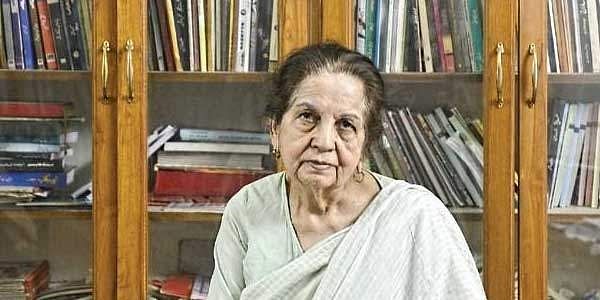
Jeelani Bano, 80, looks frail in her sea green sari with that mop of pepper-and-salt hair. Her demeanour is genteel, but only a talk about her stories on bonded labour, her aapa Ismat Chughtai and Progressive Writers’ Movement lights up her eyes. The decades pass on her soft wrinkled face as she turns pages of her autobiographical book Main Kaun Hoon and takes you back to an era gone by that’s still alive in her Banjara Hills house in Hyderabad, serenely tucked in another time-frame.
As Urdu Day approaches on November 9, she speaks about her association with the language. Many of her stories appear to be of our time. Jagirdari may have gone but capitalistic clutches don’t let go of the bonded slavery. Her story Paththaron ki Barish is heart-wrenching. Bano, who has authored 22 books, says, “A lot of writers of our time revolted against this inhuman system. Something also sparked in me and I wrote such stories. But today also, the situation of daily labourers is the same.”
Her book Aiwan-e-Ghazal, which tells the tales of feudal landlords in Hyderabad, has been translated into 14 languages. She then talks about her dear aapa—Ismat Chughtai—the firebrand writer.
“She was also from Badayun in Hyderabad, where I was born. She was friends with my mother and supported me a lot in writing,” says the 2016 NTR National Literary Award winner showing the letters Chughtai sent to her. Ismat wrote to her, “After marriage, respect your writing as much as you would respect your husband and in-laws.” In ’70s, when Jeelani Bano and her husband Anwar Moazzam, poet and writer, went to Pakistan, famous poets and scholars came to meet them at the border. She shares, “Nobody wants to understand what people of both the nations want. Sarhadein dilon ko nahin baant saktin (Borders can’t divide hearts).”
When once she went to the US, a scholar asked her, “You’re a Muslim woman. How did you get permission to write?” To this, she replied, “Nobody has stopped me from writing. Perhaps you haven’t been to India or else you wouldn’t have asked me this.”
Renowned poets and scholars such as Shakeel Badayuni, Makhdoom Mohiuddin, Jigar Muradabadi and Kaifi Azmi were hosted at her Mallepally home. But, she along with other children weren’t allowed to go to the baithaks. The young Bano would watch these poets, while playing in the courtyard.
source: http://www.newindianexpress.com / The New Indian Express / Home> Magazine / by Saima Afreen / November 05t, 2016
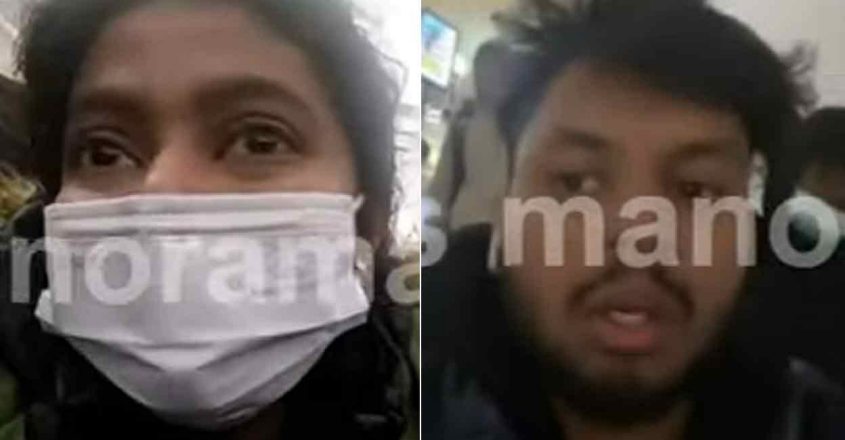
Hasna Iqbal (left) and Muhammed Nahid. Screenshots/ Manorama News
“They may shoot us,” said Hasna Iqbal, a Malayali student stranded in Kharkiv, the northeastern Ukrainian city that is under immense shelling from Russian forces on Wednesday.
Talking to Manorama News from the Vokzal metro station in Kharkiv at 3.45 pm (7.15 pm IST), the second-year medical student in Ukraine said they are unsure of what might happen next.
The student’s response comes hardly an hour after the Embassy of India in Kyiv issued a couple of advisories asking Indian citizens in Kharkiv to exit the city immediately.
The Embassy had reportedly acted in a haste based on Russian inputs. Vladimir Putin’s forces had been launching heavy attacks on the northeastern city the last two days.
“I don’t know what the Indian government wants us to do. Here there is a curfew from 4 pm to 6 am. If we are found outside during the curfew, they will shoot out,” Hasna said, braving tears. “There is heavy shelling and on top of it, we can hear gunfires.”
According to the Ministry of External Affairs, Kharkiv has, possibly, the biggest concentration of Indians in Ukraine. “At least 1,000 Indians are here,” Hasna said.
“Many have left by foot holding Indian flags. We don’t know what has happened to them. Things are getting worse here,” she said.
“Some of us reached the railway station at 6 am and three trains have left since. But not an Indian was allowed to board. They are giving preference to Ukrainians,” said Hasna.
“We’ll be here and hope to be safe, Insha Allah,” she added.
‘They aimed guns at us’
Another Malayali student Muhammed Nahid, who spoke to Manorama soon after, said they have not been contacted by the Embassy yet today.
“We reached the railway station at 5 am. They are boarding Ukrainians. They (Ukrainian forces) point guns at us and fired into the sky. We don’t know what to do,” said Nahid.
“We are still hanging around hoping we may be able to board a train somehow. We are running out of water and food,” he added.
source: http://www.onmanorama.com / OnManorama / Home> News> Kerala / by Onmanorama Staff / March 02nd, 2022
Kapoorpoor Village (Gopalgang District),Bihar, INDIA / UKRAINE :
Rashid was one of the countless students stuck in Ukraine, without any government aid, when the war broke out.
Rashid Rizwan and other Indian students at the Ukraine-Hungary border. (Special arrangement)
Over the last few weeks, users of social media have sifted through, cross-checked and reshared posts and videos of Indian students stuck in Ukraine. However, one video, in particular, stood out. The subject of the video, Rashid Rizwan, a student of medicine in Ukraine’s Ivano-Frankivsk national medical university, can be seen remarking in a video posted a few days ago, “Isse acha toh mar hi jaate,” (We might as well have died instead of suffering this way.)
Even a superficial viewing of the video makes it clear that Rashid was distraught. His eyes, still glassy with leftover tears speak volumes. He asks how long he can cope. (Kitna sambhale khud ko?) As the video progresses, Rashid says, in a shaky, fearful tone that “yahan par puchne wala koi nahi hain. (There is no one here to enquire after our well-being)”
Rashid, who is a native of Gopalganj district of Bihar, was critical of the Citizenship Amendment Act introduced by the Union government in 2019 and in fact protested against it in his university in Ukraine. He also stood in solidarity with the countless victims of the 2020 northeast Delhi riots.
Further, Rashid clarified that he was open to the Citizenship Amendment Act but was uneasy with one community alone being sidelined. “Constitution toh WE the people se shuru hota hain na ma’am? Ab woh WE main Muslims nahi aate kya? (The Constitution starts with We the people no? Does that not include Muslims?)” he asks.
Victim-blaming students stuck in Ukraine
When asked about why he stayed put in Ukraine, when the advisory asked them to leave, Rashid stated that universities in Ukraine demand 100% attendance. If they left without coordinating with the universities, they would lose out on an entire year of education and further waste a huge sum of money.
This was made worse by the fact that Turkish visas were not readily available and the students could not book tickets to India directly. “The flight ticket prices kept soaring. At a point it was between 80,000 and 1,20,000 INR,” says Rashid.
After countless hours of debilitating panic (nearly two days), embassy officials approached Rashid and his companions at the Hungary border, to aid their return to India.
“We were asked to go to the nearest west Ukrainian border and so we obeyed. I, along with a few others was at the Ukraine-Hungary border. Then a new advisory stated that only students who could arrange for cars or buses should move towards the borders of the country. If we knew this in advance, we would have stayed put. Why are we being judged and maligned?” asks Rashid.
Rashid also tried to coordinate with the embassy and the university from February 14 but was met with either a tepid response or no response at all. He also wrote letters to the District Magistrate of Gopalganj and MP Alok Kumar Suman for aid the day Ivano-Frankivsk city was attacked.
A Doctor’s dream:
Towards the end of his narration, this reporter asked Rashid why he chose to become a doctor. He said that there was no doctor in his village for a very long time. “In Kapoorpur village (in Gopalganj district of Bihar), we don’t have a readily accessible doctor. Anyone seeking treatment has to travel 12 kilometres to the nearest dispensary. I wanted to relieve some of the distress caused by poverty,” he simply remarked.
At the time of writing this article, only 3,352 Indian students have returned to India from Ukraine as per government estimates.
source: http://www.siasat.com / The Siasat Daily / Home> News> India / by Anjana Meenakshi/ March 04th, 2022 (edited )
Payal Panwar, a final year medical student who returned to her Kotdwar home in Uttarakhand, said the stranded students need help of the Indian government and the Indian embassy people more.
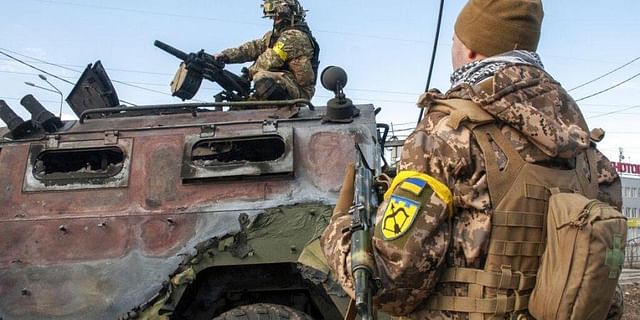
Ukrainian soldiers inspect a damaged military vehicle after fighting in Kharkiv, Ukraine, Sunday, Feb. 27, 2022. (Photo | AP)
Indore / Aurangabad / Dehradun :
Depleting food stocks and long queues for water are adding to the trauma of stranded Indian students in war-hit Ukraine awaiting evacuation amid reports of some being roughed up by security personnel and spending freezing nights out in the open.
As Indian and Ukrainian authorities on Monday described the situation as “complex” and “very difficult” in terms of evacuation of people, the students, joined by their parents, appealed to the Indian government to expedite efforts to evacuate them.
Russia launched its attack on Ukraine last Thursday.
“I want my son in front of my eyes as soon as possible,” said Kamini Sharma, who is praying for the safe return of Vibhor Sharma (22), a resident of Indore in Madhya Pradesh.
Vibhor is pursuing a medical course at the Ternopil National Medical University.
Payal Panwar, a final year medical student who returned to her Kotdwar home in Uttarakhand, said the stranded students need help of the Indian government and the Indian embassy people more while they are still inside Ukraine rather than when they have moved out of the war-torn country.
“The problems end when you cross the borders but while you are inside Ukraine it is really difficult with food supplies running out and no cash in ATMs. Stranded students need the help of Indian authorities while they are still inside Ukrainian borders,” said Payal, who studies in Ivano-Frankivsk city in western Ukraine.
Recounting her ordeal, she said around 60-70 Indian students had to book a bus and also walk a distance of 8-10 km in freezing cold to reach the Romanian border to get out of Ukraine.
Many ATMs could not dispense cash and long queues of men and women waiting for their turn for food supplies were seen at several points, she said.
Though happy and relieved to be reunited with her parents, Payal and her parents are worried about her brother who was still stuck in Kharkiv.
An Indian student who managed to reach the Kyiv train station said Ukrainian guards were not allowing students to board trains and also beating up people and made a fervent appeal to the Indian embassy to evacuate them as soon as possible.
“It’s getting difficult for us to stay here,” Ansh Pandita told PTI, as scores of Indian students, including women, sat huddled together at the teeming Vokzal railway station in the Ukrainian capital, holding a large tricolour aloft so they could be recognised in the crowd and also so no one from the group gets lost.
The group of about 100 students managed to reach the station but no one could board a train.
“Ukrainian soldiers are not allowing us to board the train to Hungary. In fact, they are not allowing any international resident to get out,” Pandita, a student of Taras Shevchenko National Medical University in Kyiv, said over the phone from the station.
“We requested them to at least allow the girls to go but that request too fell on deaf ears.”
The opposition Congress also alleged that Indian students were assaulted by security personnel on the Ukraine-Poland border.
“Students are crying out for help, requesting the Modi government to intervene but to no avail.
We saw a video last night on the Ukraine-Poland border where students are being beaten up,” party spokesperson Ragini Nayak told reporters.
India managed to accelerate its efforts to get its nationals out of Ukraine in the last 24 hours, though the situation on the ground continues to be “complex and fluid” in terms of evacuation of people, the Ministry of External Affairs (MEA) said.
It said a total of 1,396 Indians were brought back home in six flights as part of the evacuation mission and the total number of Indians who have left Ukraine since India issued the first advisory earlier this month is around 8,000.
An estimated 20,000 Indian nationals, mainly medical students, reside in Ukraine.
As the battle for Kharkiv rages on, at least three students from Maharashtra pursuing medicine in the city located in northeast Ukraine, narrated how they had to stand in long queues for a can of water, drink soda, stay in bunkers, and risk their lives to fetch food items amid bomb blasts.
Hritik Bapulohar, a first-year medical student from Palghar, said he had reached Kharkiv city only a couple of months back.
“We can hear bomb explosions as they are taking place in a periphery of around 500 metres from where we are currently staying in Kharkiv. We are struggling even for basic needs. As many as 500 students are staying in two bunkers for the past four days. When the curfew was lifted some of them left the hostel. The situation is worsening fast. I appeal to the Indian government to evacuate us urgently,” he told a Marathi news channel.
Bapulohar’s senior Aishwarya Patil, who hails from Sangli, said drinking water stocks have exhausted at their Kharkiv hostel.
“We are currently using soda water for drinking. After standing in queues stretching up to 2 km, we can get a can of five-litre water. Food prices have tripled since the war began. We are taking huge risks by stepping out to purchase food items. We are hiding as bomb blasts are happening here. During nights, we are given an hour for cooking by authorities. We cook using mobile flashlights,” she said.
Shivanjali Yadav, also from Sangli, said students and other Indians are asked to stay in bunkers in Kharkiv even though we don’t have much food and water with us.
“The students trapped in a bunker in the Kharkiv region are facing difficulties in arranging food, water. Some of them have fallen sick in freezing temperatures, few blankets, and dipping oxygen. There are also no transportation facilities available for them,” said one of the students who returned to Odisha.
Several students wanting to return to India from Ukraine had to spend two days under the sky in severe cold weather at the Romanian border after travelling by bus and then walking for 25 km, a mother of one of the students said.
“My son somehow boarded a bus from Ternopil to reach Romania. But, on the way, he had to get down from the bus due to some problem and the border was still far away,” the Indore-based Kamini Sharma, told PTI.
The woman said her son along with several other Indian students walked for 25 km to reach the border of Romania.
“But, these students, gathered at the Romanian border, had to stay under the open sky for two days in the harsh winter weather as they were not allowed to enter Romania immediately,” she said quoting the phone conversation with her son.
Sharma said she has now come to know that clearance has been given for the entry of these Indian students into Romania on Monday morning.
Ukrainian Ambassador Igor Polikha said his country is helping the stranded Indians and extending assistance in their evacuation notwithstanding the “very difficult” ground situation.
Polikha said he himself reached out to some of the Ukrainian border guarding commanders requesting them to assist the Indians who are trying to exit the country through land borders.
“The situation is very difficult and complex. My resources are limited. We are victims of aggression. Still, we are trying to help people including those from other countries,” he told a media briefing in Delhi.
Polikha said the circumstances at the Ukraine-Poland border crossing are challenging as lakhs of people including diplomats, foreigners and Ukrainian citizens are queuing up to exit the war-hit country.
Trapped inside a bunker in Kharkiv city of Ukraine, Assoiun Hussain (25), who hails from Kerala, told PTI over phone on Monday that he only had a loaf of bread in the last 48 hours.
He said the bunkers are freezing 24X7 and are overcrowded, adding that they also lack basic amenities like water or bathrooms with doors.
“We bought four to five bedsheets and arranged them together for makeshift beds. We are sleeping near railway tracks and on platforms. Our jackets are worn out because it is very cold here. The conditions are quite bad here,” Hussain said.
Indian students trapped in Ukraine have also alleged racial discrimination against them by the locals.
Recently, videos showing Indians being attacked did the rounds of social media.
In one of the videos shot during night time, a student wheeling his suitcase behind him is kicked by a guard in uniform.
In another video, students claimed that they were being thrown off the train parked at a railway station in Kyiv and beaten with sticks.
Manogya Bora (19), who recently returned from the Poland border to Lviv, alleged that Indians are being subjected to racist attacks and students were beaten up.
“People here are telling us to go back to Ukraine. The situation is much worse for boys. I have seen boys being beaten up,” she said.
Talking further about the pitiable conditions in the bunkers, Hussain said, “I received a loaf of bread today. I did not get food yesterday. The Ukrainian authorities are providing food and medicine, including insulin and food for babies. However, priority is given to Ukrainians not Indians.”
“We are only getting what is left after distributing to Ukrainians,” he said.
The student said getting food from outside is not a cakewalk with continuous shelling underway.
Moreover, no food supplies are available in the market, he added.
“There is only one supermarket and there is nothing in there — only juices and water. We have self-respect, we cannot beg them. The Ukrainian authorities allowed us to go out to get fod because some locals complained that because of us, they are running out of food fast,” he said.
“I tried going out today, but ran back as there was continuous shelling,” Hussain added.
Kharkiv is among the Ukrainian cities where the situation is dire with continuous shelling.
Thousands have taken refuge in metro bunkers to protect themselves.
Recently, a nine-storey residential tower was hit, killing an elderly woman, while about 60 people survived after hiding in the basement.
21-year-old Shana Shaji of Kerala said there is continuous shelling.
“It appears as if the building will fall apart,” she said.
Thousands of Indian students are stranded in Ukraine after the Russian Army launched a brutal offensive last week.
With the war now entering the fifth day, the Indian government has been carrying out evacuations of its citizens from Romania and Hungary — neighbouring countries of Ukraine.
When asked about the evacuation process, Hussain said the embassy has asked the students to reach the western border at their own risk.
“It is not possible for us to reach borders. There is heavy shelling outside. In trains and buses, the priority is being given to Ukrainians,” he said.
Gujarat native Ronak Sherasiya, an MBBS student in Ukraine, was meant to take a morning flight out of Kyiv on Thursday, on way to India, but fate has so far brought him only out of the conflict-hit eastern European country.
The 18-year-old, a first year student at the Bukovinian State Medical University (BSMU) in Chernivtsi, a beautiful town in western Ukraine, about 500 km from capital Kyiv, told PTI over phone that he had “finally crossed the Ukrainian border and was now in Romania”.
“I was part of a group of students who travelled in a bus provided by our university. We alighted a little before the border, and then walked. We reached Ukraine-Romania border on February 25 at around 4 pm (local time). There were about 2,000-3,000 people, mostly Indians at the border. It was a massive crowd, and only a couple of MEA officials, so processing took time. After waiting for hours, we finally crossed the border and entered Romania at about 6 am (local time) on February 26,” he said.
“We are now lodged in a sports complex on the Romanian side, but airport is still far away. We have been provided food, and WiFi connectivity has also been provided, but only limited number of people can join at a time. We are biding our time to fly out of Romania to India,” Sherasiya said.
Asked about various videos circulating on social media about alleged misbehaviour by security forces at some border area, he said, “Things are chaotic at the border area.”
“Ukrainian army personnel were asking people to move back, but when the commotion grew, some of the security personnel started firing in the air,” he claimed.
source: http://www.newindianexpress.com / The New Indian Express / Home> Nation / by PTI / February 28th, 2022