Tag Archives: Asaf Ali

Remembering Asaf Ali: A Forgotten Hero of the Freedom Struggle

Seohar Town (Bijnor District), BRITISH INDIA / NEW DELHI :

For too long, a handful of names have dominated the history of the years leading up to 1947 with Gandhi, Nehru, Jinnah, Patel being the most-often cited.
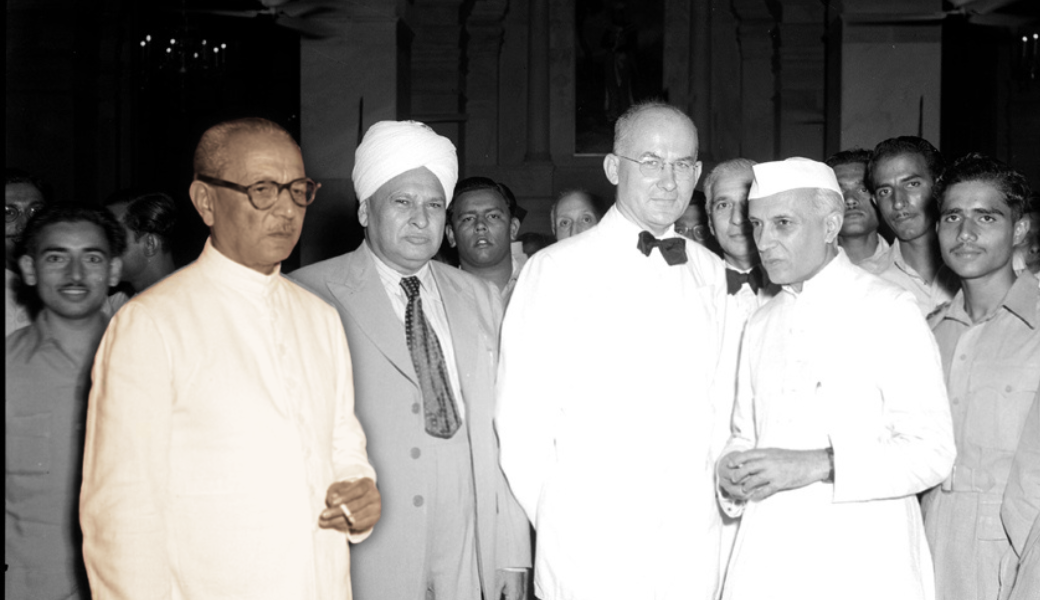
Pandit Jawaharlal Nehru and others at Governor-General‘s Dussehra reception held at Government House, New Delhi on September 29,1949. At extreme left is Asaf Ali, the then Governor of Orrisa. Edited via Canva. Photo: Photo Division, Govt. of India

For several years I worked in a publishing company situated on the bustling Asaf Ali Road, a road that serves as a cordon sanitaire between the squalor of Old Delhi and the (relative) order of New Delhi. Once an important business hub, by the time I went to work there in the late 1980s, this long stretch of colonnaded corridors with a warren of densely-packed offices wore an unmistakably grubby, down-at-heel look. At the head of the road, stood the statue of Asaf Ali in a derelict enclosure near Delhi Gate (or Dilli Gate as the locals pronounced it). The dark statue, generously speckled with startlingly white droppings from the many pigeons that frequent this neighbourhood, looked forlorn, especially so with the shervani-clad, bespectacled figure standing with hands clasped in a peculiarly supplicatory posture.
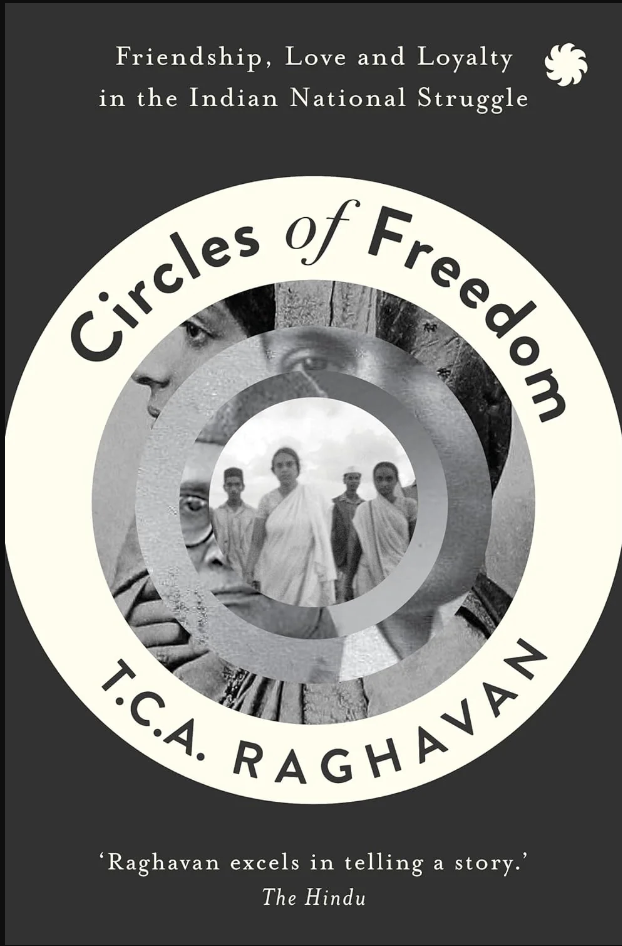
TCA Raghavan, Circles of Freedom: Friendship, Love and Loyalty in the National Freedom Struggle,
Juggernaut (2024)

I must confess that in the four years I worked at Asaf Ali Road and passed this statue twice a day, morning and evening, it evoked no curiosity in me and I knew virtually nothing about Asaf Ali. Perhaps, his wife Aruna Asaf Ali’s name seemed more familiar given that she was still alive and active. I suspect I was not alone in this. For most people in Delhi, Asaf Ali is a forgotten footnote from long-ago history lessons, one of the many ‘obscure’ people who were part of the national freedom struggle. If the situation is so dismal in Delhi, where he had lived and worked, a city that had been home to his ancestors, I suspect it can only be worse in the rest of the country.

In writing Circles of Freedom: Friendship, Love and Loyalty in the National Freedom Struggle, TCA Raghavan corrects an old wrong. For far too long the tall poppies of the freedom movement have overshadowed the countless others who devoted their entire lives to the cause of independence and struggle against colonial rule. For too long, a handful of names have dominated the history of the years leading up to 1947 with Gandhi, Nehru, Jinnah, Patel being the most-often cited.

Over the past decade, with history being rewritten by new, dominant players, new names are being invoked and icons fashioned from often slender resources. In this unseemly clamour for space and recognition, some names have almost slipped through the crevices of the popular imagination, neglected and overlooked by the professional historian or, at best, relegated to the lowest rungs in a carefully crafted hierarchy of heroes. A park or a road named after the lesser-known evokes neither curiosity nor interest in their lives and the place they occupied in the shaping of a young nation. Asaf Ali (1888-1953) is one such person.

Raghavan’s book, however, is not a straightforward biography for it is not about Asaf (as the author calls him) alone. Instead, he chooses to tell his story through five protagonists who were inextricably tied by the threads of friendship and solidarity: Asaf Ali, Sarojini Naidu, Syud Hossain, Syed Mahmud and Aruna Asaf Ali. While Aruna enters this narrative quite late when she marries the much older Asaf, the other four meet in England just before the Great War where the three men have gone to study and Naidu, recuperating from an illness, is the erudite diva, eloquent poet, ardent nationalist and a veritable magnet for impressionable young men dreaming impossible dreams.

Over the next four decades, they meet, write long letters to each other, take a lively interest in each others’ lives and careers but ‘what gave meaning to their lives,’ as Raghavan notes in his conclusion, ‘was the great enterprise they chose to become part of’. And so it was the freedom struggle that not just formed the core of their relationship but also, in effect, shaped their lives. Were it not for this one singular, overwhelming zeal to seek freedom for their country, they could very well have lived other lives: Naidu would have remained a dulcet-voiced poet, both Asaf and Mahmud successful and wealthy barristers, Hossain a journalist and Aruna a do-gooder with no special qualifications. But such were the exigencies of the times that all five were caught up in different ways and different degrees with the national freedom struggle and that singular ‘great fight’ defined their lives.

With three extremely well-received books behind him – Attendant Lords: Bairam Khan and Abdur Rahim – Courtiers and Poets in Mughal India, The People Next Door: The Curious History of India’s Relations with Pakistan and History Men: Jadunath Sarkar, G. S. Sardesai, Raghivir Sinh and Their Quest For India’s Past – Raghavan, a former diplomat, can recreate history with the aplomb of a master story-teller and the meticulousness of a professional historian. Here, he weaves the events of the tumultuous years leading up to Independence with the lives of his five principal characters, keeping Asaf at the centre of his concern. Through Asaf, he teases out the nuances and dilemmas of the moderate Muslims in India who refused to be enamoured by the lures and promises of the Muslim League and remained steadfast in their devotion to the Congress and, by extension, Nehru. 

The extreme deference that the nationalist Muslim leaders displayed towards Nehru is noted; each time a Muslim leader attempted to bring the ‘communal problem’ to Nehru’s notice, the latter would brush aside these concerns by saying, ‘The real problem is a political problem – the conflict between an advanced organisation like the Congress and a politically reactionary organisation like the League.’ Concerns of leaders such as Asaf who believed ‘self determination was preferable to a union that was forced’ were disregarded. Mindful of the suspicion that Muslim leaders within the Congress evoked amongst their colleagues, Raghavan notes, ‘Because he was a Muslim, the impression among some was that he was a fifth columnist for the League’. The coming of independence didn’t make it any easier for those Muslims who chose to stay on in India. Nationalism increasingly began to mean thinking and living in the Congress way and none other. Those who lived or thought another way came to be regarded as anti-national, a phenomena we see repeated in the New India that is Bharat, except that it is the ruling Bharatiya Janata Party that has replaced the ideological hegemony of the Congress.

Different readers will possibly take different things from this book: the broad brush strokes that delineate milestone moments from modern Indian history, Gandhi’s irresistible call to Quit India, the unfurling of the national flag at Gowalia Tank by a young Aruna that catapults her to national fame, the detailed account of jail-life for a group of high-profile, political prisoners inside the Ahmadnagar fortress, a meticulous dove-tailing of accounts from different sources and disparate perspectives to create a bright, colourful and immensely readable patchwork quilt of modern Indian history, and much else in this engrossing book.

I, however, was left with an ineffable sadness and a sense that the more things change, they remain the same – at least for India’s Muslims. Despite his many sterling qualities of heart and mind, despite a fine legal education, Asaf neither made a mark as a lawyer or a politician. Though seemingly destined for greatness, having aided fate by preparing himself assiduously for a life devoted to the larger good, Asaf never quite scaled the heights he aspired to. The few successes that came his way, such as a seat in the Constituent Assembly (from Delhi) or fighting high-profile cases such as those of Bhagat Singh or Shaikh Abdullah, were marred by controversy or a smaller share in the limelight than he felt he deserved. The mantle of statesmanship that should have fallen on him with the passing of Dr Ansari and Hakim Ajmal Khan, both national leaders from Delhi like him, and a seat at the high table that should have been offered to him as a veteran Muslim leader, did not happen.

Given the price paid by far taller leaders in the Congress – such as C. Rajagopalachari and Bhulabhai Desai – for showing initiative and thus offending the party high command, shows the extent to which the Congress, not unlike the League, was becoming a personality-dominated organisation. Asaf’s case was compounded – to use a modern expression – by the optics; his timorousness, his ‘going to pieces’ fretting with worry over his wife during his long years of incarceration, his marital woes, the shadow of mistrust and suspicion that clung to him all his life combined to create a persona that failed to inspire confidence.

For all his loyalty to Nehru, Asaf was not chosen for any cabinet position or placed on any important committee. Instead, he was sent as Ambassador to Washington, brought back to serve as Governor of Orissa and then sent again as Ambassador to Sweden where he died barely a few months into his tenure.

Just as being a moderate Muslim defined Asaf’s public persona, so did his marriage to Aruna. From a political novice she rapidly transformed into a stormy petrel causing immense anxiety, consternation and eventually a sadness in her husband. Raghavan is to be credited for staying steadfastly away from prurient gossip and portraying the changing contours of the marriage objectively: ‘… in fact the relationship had started changing quite early in the marriage and here Aruna’s own political journey was the driving factor.’ Reading between the lines of Raghavan’s carefully crafted text, one picks up the whiff of misogyny in the higher echelons of our national leadership. While acknowledging Aruna’s bravery and patriotism, Gandhi saw her as a ‘perpetual rebel’ and Nehru went so far as to call her ‘hysterical’ on one occasion – something Aruna never forgot.

Incidentally, Gandhi, who was vehemently opposed to inter-religious marriages and had opposed his son Manilal’s relationship with Fatima (a Gujarati Muslim) and Hossain’s alliance with Nehru’s sister Sarup Rani (later known as Vijay Lakshmi Pandit), endorsed Asaf’s marriage to Aruna. Read Circles of Friendship to find out why.

Rakshanda Jalil is a Delhi-based writer, translator and researcher. 

source: http://www.thewire.in / The Wire / Home> Books / by Rakshanda Jalil / August 29th, 2024
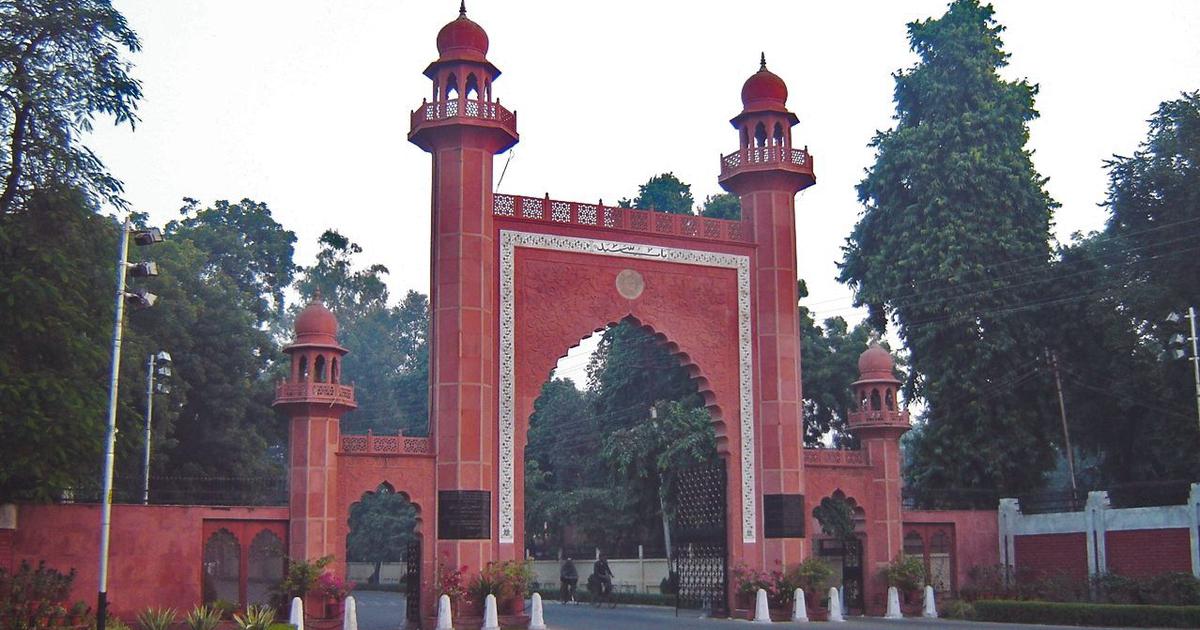
This book asks why the Indianness of Aligarh Muslim University, Jamia Millia Islamia is questioned

NEW DELHI :

‘Between Nation and Community’ cites primary and secondary sources and oral testimonies to understand what India thinks of the two universities.

Bab-e-Sayyad, the entrance to Aligarh Muslim University. | Hhkhan / CC BY-SA 3.0

By sheer serendipity, I happened to begin reading Laurence Gautier’s Between Nation and ‘Community’ immediately after TCA Raghavan’s Circles of Freedom, which locates the life and career of the barrister-politician Asaf Ali in the national freedom struggle and probes the challenges of being a moderate Muslim or a nationalist Muslim within the Indian National Congress. Coming close on the heels of Raghavan’s book, I was struck by the opening line of Gautier’s Introduction: “Can a Muslim university be an Indian university?” Clearly, the doubts and apprehensions, the mistrust and suspicion that afflict Indian Muslims similarly afflict Muslim institutions, including universities that Gautier is at pains to clarify at the very outset were “established by Muslim individuals or organisations, primarily – though not exclusively – for Muslim students.”

Between Nation and ‘Community’: Muslim Universities and Indian Politics after Partition, Laurence Gautier, Cambridge University Press.

Having worked briefly at both Aligarh Muslim University (AMU) and Jamia Millia Islamia (JMI) – a few short months at Aligarh and a few years at Jamia – I can say that there is a Muslimness, an unmistakably Muslim character to both: the time table changes during the month of Ramzan, a long break for the Juma namaz, the presence of several mosques on campus, the opening of academic/formal events with recitations from the Holy Quran, and increasingly the presence of ever more hijab-clad women (this was pointed out by mother who studied at AMU in the 1950s and noted that there were very few women in hijab let alone the full burqa in her time). The question, however, is: Does any of this diminish or detract or take away from the Indianness of these universities or, for that matter, from those who study or work here? That would lead us to the larger question: What is Indianness?

We come back to the question posed by Gautier in her very first line when she goes on to cite Gyanendra Pandey, who has compared Hindu nationalists and nationalist Muslims. Hindus are seen as nationalists by default whereas Muslims are often put to an agni pariksha to prove their nationalist credentials. As Gautier puts it: “Indian Muslims are taken to be primarily Muslims, whatever their political stance might be. Unlike Hindus, their commitment to the nation cannot be taken for granted; it has to be proven, for their Muslimness casts doubt on their Indianness.”

Incidents like Batla House in the Jamia neighbourhood or the anti-CAA protests at both JMI and AMU bolster the argument that these universities are nurseries of disaffected anti-nationalists and prompting a politician to famously declare: “Desh ke gaddaron ko…Goli maaro saalon ko.”

Aligarh Muslim University and Jamia Millia Islamia

While there is much to read and reflect on in this richly detailed book that brings together, seamlessly, many primary and secondary sources and oral testimonies, a few things need to be flagged. One is the obvious differences between AMU and JMI, by now both Central Universities though the two have entirely different histories. The reasons and the circumstances behind their establishment and their distinct “historical character” have cast a long shadow on their growth and development. AMU was set up to provide secular, western education to the Muslim qaum in a campus modelled on the colleges at Oxford and Cambridge, and to “develop a strong bond with the colonial authorities in order to preserve their access to power”.

JMI on the other hand clearly had different ideas right from its inception: “Hers was a voice of rebellion, one that highlighted the dissonances within the supposedly unified Muslim community.” A splinter group of ardent nationalists, led by Maulana Mohamed Ali, broke away from the MAO College to set up a new kind of educational institution devoted to the service of the nation. In the heady days of the Khilafat Movement and the high noon of Hindu-Muslim unity, Gandhi pledged instant support to this new venture, famously declaring to go begging bowl in hand, if need be, to support this nationalistic enterprise.

It’s interesting to note the different treatments meted out to the two universities immediately after independence, and their vastly different public perception. While AMU was given Central University status in 1951, one among three central universities, Jamia – that had once been famously called the “lusty of the freedom movement” – struggled financially. It seems as though it quite suited the Congress government of the day and Nehru in particular – who had close personal ties with several of Jamia’s teachers and was a frequent visitor – to view the Jamia as a quaint space where visitors such as the Shah of Iran would be shepherded to view its projects and schemes.

Even the cover photograph on Gautier’s book written with immense empathy though it is, perhaps unintentionally, reinforces this quaintness with gamine-faced boys dressed like grown-ups in shervani and Gandhi caps against a building designed by the German architect Karl Heinz. There are other photographs in the Jamia archives showing several eminent people earnestly poring over rough-and-ready hand-made charts and diagrams. Overall, the picture that emerges is that it suited everyone to have this quaint, charming, idealistic venture in one’s backyard as long as it showed no great ambitions to grow into anything bigger or grander.

The Jamia too, I suspect, chose to live in a shell of its own making, hiding its light under a bushel, making a virtue of frugality and simplicity and service. It seemed content to allow the world to view it as a curiosity, a whimsical other-worldly place, a retreat from the mainstream; for some, it was even a recalcitrant child bent upon being odd and different from others, especially its older sibling, the AMU. For far too long, the serious students and the professional scholars stayed away from the Jamia choosing to go to AMU instead.

The differences

The Jamia biradari – a word constantly used by Prof Mushirul Hasan, the most faithful chronicler of Jamia’s history – was a close-knit community. Being small, much smaller than the sprawling AMU campus, Jamia fostered from its earliest days a sense of fellowship among its students and teachers. We get a sense of that in the oral testimonies and memoirs of its teachers and students frequently referred to by Gautier: the annual Jamia Mela, the idea of selfless service (be-laus khidmat) reinforced by teachers often voluntarily taking cuts in their salaries, the emphasis on community service and shram daan, the sense of community living, the devotion of not just staff but their families to the “idea” of Jamia, all of which was fostered by the compactness of the campus. Also, Jamia was more democratic in its functioning than AMU, again possibly due to its size. In this, it drew inspiration from early Islamic society. There are instances of school functions starting punctually on the dot when the chief guest, Vice Chancellor Dr Zakir Hussain, happened to be running late.

Then there was the presence of female students from its earliest days – in classes, in reading rooms, even on stage – with the earliest students being daughters and sisters of Jamia teachers and workers. However, as Gautier points out, this was “primarily out of practical considerations, not out of ideological principles” and Mujeeb, a long-serving Vice Chancellor, recognised it as a valuable project only in hindsight. Whatever the reason, Jamia offered new opportunities for women in its feeder schools, Balak Mata centres, teacher training courses, and adult literacy classes.

The presence of women on campus seen as a threat in AMU with Islamist groups gaining ascendancy, was much less so in JMI in the 1970s and 80s when debates on “proper” and “improper” mingling of the sexes began to gain ground between the “conservatives” and “progressives” and questions about the presence of women, especially in cultural programmes, began to be raised. While present in JMI, too, these voices were muted and not as strident as in AMU.

Then, there is the rather obvious difference of location and how that has impacted the development of the two universities: Jamia’s location in Delhi compared to AMU’s approx 180 km away. While in the early years, AMU was far more cosmopolitan than the mosquito-infested neck of the woods beside the Yamuna that was home to Jamia, from the 1980s a perceptible change became visible. The establishment of a working women’s hostel in 1982 by AJ Kidwai was possible in Jamia primarily due to its location, followed by the MCRC. We see that change accentuated in recent years in the changing profile of both staff and students with Jamiabeing more open to change and AMU becoming more closed, more insular, more inward-looking.

source: http://www.scroll.in / Scroll.in / Home> Book Review / by Rakshanda Jalil / September 29th, 2024

English, Urdu books on contribution of Indian Muslims in freedom movement released

NEW DELHI :

Patna: 

In a glittering ceremony, two books on Muslims’ contribution in India’s Freedom movement were launched here in Patna on 17th December. The function was presided over by Harsh Mandar, former IAS officer and human rights defender in the country.

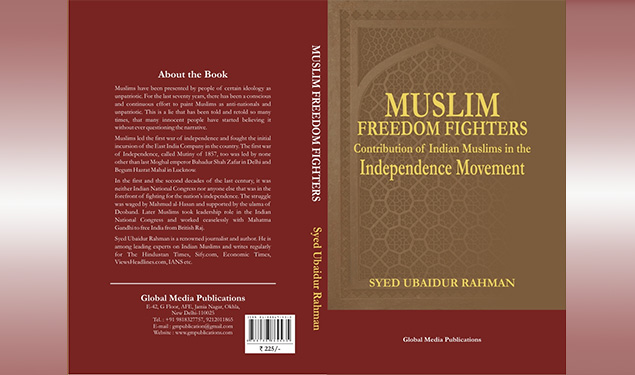
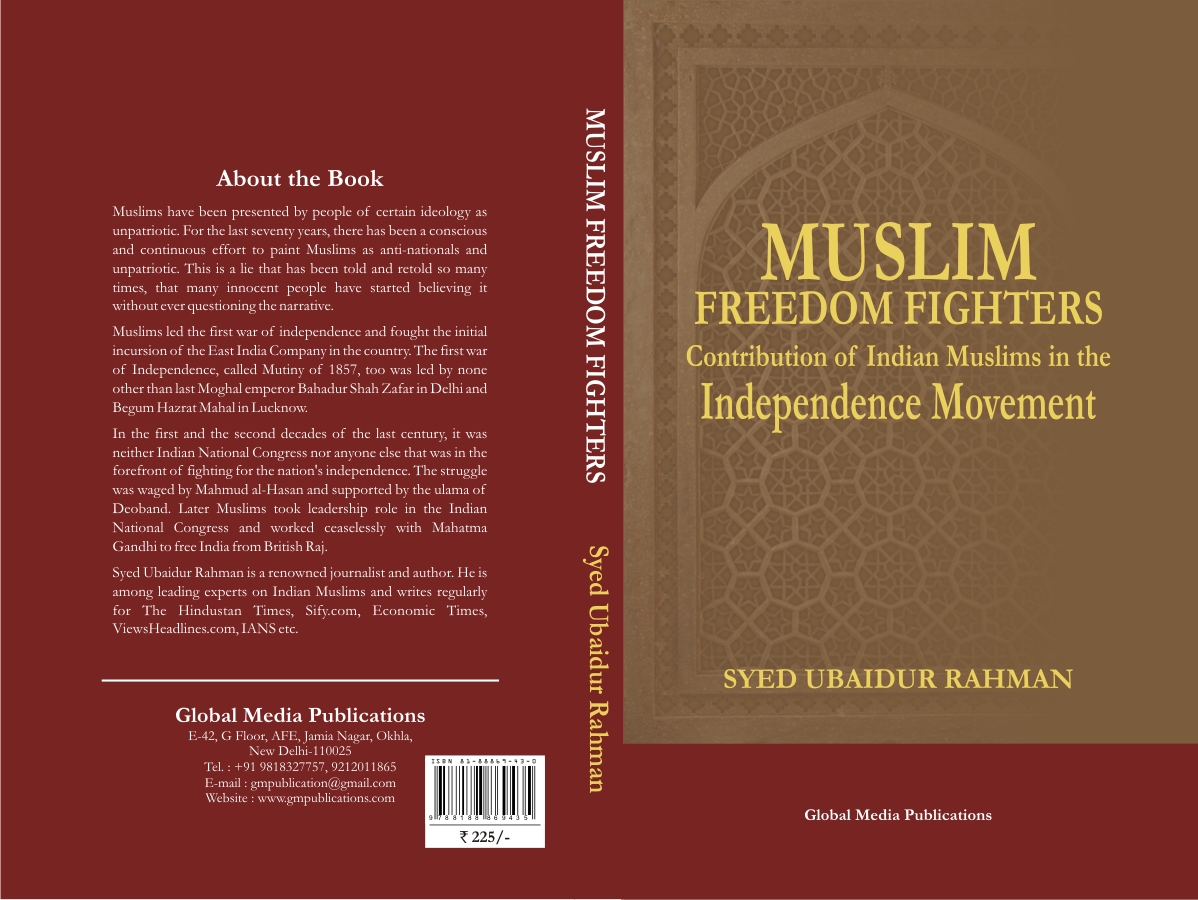
The books ‘Muslim Freedom Fighters: Contribution of Indian Muslims in the Independence Movement’ and its Urdu version ‘Muslim Mujahideen-e-Azadi aur Tehrik-e-Azadi Mein Unki Khidmat’ have been authored by Delhi based author and journalist Syed Ubaidur Rahman.

The two books try to fight the oft-repeated allegations that Muslims are anti-national and have not contributed for the freedom of the nation. The books nail the lie and prove that Muslims not just participated in the freedom movement, they went on to lead the freedom struggle for a long time. The first war of Independence or Mutiny of 1857 was led by Mughal emperor Bahadur Shah Zafar in Delhi and Begum Hazrat Mahal in Lucknow. The Independence Movement in the first two decades of the twentieth century was led by Mahmud Hasan and ulama of Deoband and they had respect and support of everyone including Hindus and Muslims.

If anyone has any doubt about the Muslim contribution in the freedom movement, the fact that the Indian National Congress had as many as nine Muslims as its president till the year 1947 will remove such doubts.

While speaking on the occasion, Harsh Mandar said that the divisive forces in the country are trying to divide the nation on the basis of religion and faith. He said that the danger from such forces for the national fabric and its unity has become grave.

Harsh Mandar added that the threat to the communal amity in the country was never so high as is today as divisive forces are doing every thing to pit one community against the other and create a fear psychosis among the majority community prompting it to turn it against minorities.

Khursheed Mallick, a Chicago based urologist, philanthropist and director of IMEFNA said that the book is a timely reminder to the nation that Muslims and Hindus both sacrificed for the nation and this fact must be clearly told to our young generation. He said Muslims sacrificed heavily for the cause of the freedom of the nation and efforts must be made to tell the history.

Syed Ubaidur Rahman, the author of the two books, while speaking on the occasion said Muslims have been rather loath to write about the sacrifices they have made for the cause of the Independence and freedom. He said Muslims suffered badly throughout the freedom movement. They were the worst suffers in the wake of the mutiny of 1857 and its aftermath when Muslims were hounded across North India and beyond. Tens of thousands of Muslims lost their lives for the freedom.

Syed added that ulama of Deoband played a stellar role in the freedom movement. Unlike the common perception, they were secular to the core and when they established a government in exile in Kabul in 1915, they appointed Raja Mahendra Pratap as its President and Maulana Barkatullah Bhopali as its Prime Minister.

The book documents the lives of forty renowned Muslim freedom fighters including, Shaikhul Hind Maulana Mahmud al-Hasan, Maulana Barkatullah Bhopali, Hakim Ajmal Khan, Maulana Ubaidullah Sindhi, Maulana Abul Kalam Azad, Maulana Mohammad Ali Jauhar, Dr Maghfoor Ahmad Ajazi, Dr Mukhtar Ahmad Ansari, Ashfaqulla Khan, Maulana Hasrat Mohani, Maulana Muhammad Mian Mansoor Ansari, Asaf Ali, Husain Ahmad Madani, Aruna Asaf Ali (Kulsum Zamani), Peer Ali Khan, Saifuddin Kitchlew, Mohammed Abdur Rahiman, Captain Abbas Ali, Abdul Qaiyum Ansari, Prof. Abdul Bari, Moulvi Abdul Rasul, Nawab Syed Mohammed Bahadur, Rahimtulla Mahomed Sayani, Syed Hasan Imam, Sir Syed Ali Imam, M.C. Chagla, Yusuf Meherally, Justice Fazal Ali, General Shah Nawaz Khan, Allama Fazle Haq Khairabadi, Maulana Shaukat Ali, Syed Mahmud, Maulana Mazharul Haque, Badruddin Tyabji, Col Mehboob Ahmed, Begum Hazrat Mahal, Maulana Shafi Daudi, Rafi Ahmed Kidwai, Syed Mohammad Sharfuddin Quadri, Batak Mian

The book launch function was organized at Anjuman Taraqqi Urdu and was presided over by Abdul Qaiyum Ansari, chairman of Anjuman Taraqqi Urdu Bihar.

Name of the Book: Muslim Freedom Fighters: Contribution of Indian Muslims in the Independence Movement
Author: Syed Ubaidur Rahman
ISBN: 81-88869-43-0
Price Rs 225/-
Global Media Publications
E-42, G. Floor, AFE, Jamia nagar, Okhla, New Delhi-110025

source: http://www.ummid.com / Ummid.com / Home> India / by ummid.com News Network / December 12th, 2017

Sify columnist releases book on Indian Muslim freedom fighters

NEW DELHI :

FreedomFightersMPOs22dec2017

Patna:

In a glittering ceremony, two books on the Muslim community’s contribution to the Indian freedom movement were launched in Patna last week. The function was presided over by Harsh Mander, former IAS officer and human rights activist.

The books ‘Muslim Freedom Fighters: Contribution of Indian Muslims in the Independence Movement’ and its Urdu version ‘Muslim Mujahideen-e-Azadi aur Tehrik-e-Azadi Mein Unki Khidmat’ have been authored by well-known Delhi based author and journalist Syed Ubaidur Rahman.

The two books try to fight the oft-repeated allegations that Muslims are anti-national and have not contributed for the freedom of the nation. The books nail the lie and prove that Muslims not just participated in the freedom movement, they went on to lead the freedom struggle for a long time. The first war of Independence or Mutiny of 1857 was led by Mughal emperor Bahadur Shah Zafar in Delhi and Begum Hazrat Mahal in Lucknow.

The Independence Movement in the first two decades of the twentieth century was led by Mahmud Hasan and ulama of Deoband and they had respect and support of everyone including Hindus and Muslims.

If anyone has any doubt about the Muslim contribution in the freedom movement, the fact that the Indian National Congress had as many as nine Muslims as its president till the year 1947 will remove such doubts.

While speaking on the occasion, Harsh Mander said that the divisive forces in the country are trying to divide the nation on the basis of religion and faith. He said that the danger from such forces for the national fabric and its unity has become grave.

Mander added that the threat to the communal amity in the country was never so high as is today as divisive forces are doing every thing to pit one community against the other and create a fear psychosis among the majority community prompting it to turn it against minorities.

Khursheed Mallick, a Chicago based urologist, philanthropist and director of IMEFNA said that the book is a timely reminder to the nation that Muslims and Hindus both sacrificed for the nation and this fact must be clearly told to our young generation. He said Muslims sacrificed heavily for the cause of the freedom of the nation and efforts must be made to tell the history.

Syed Ubaidur Rahman, the author of the two books, while speaking on the occasion said Muslims have been rather loath to write about the sacrifices they have made for the cause of the Independence and freedom. He said Muslims suffered badly throughout the freedom movement. They were the worst suffers in the wake of the mutiny of 1857 and its aftermath when Muslims were hounded across North India and beyond. Tens of thousands of Muslims lost their lives for the freedom.

Syed added that ulama of Deoband played a stellar role in the freedom movement. Unlike the common perception, they were secular to the core and when they established a government in exile in Kabul in 1915, they appointed Raja Mahendra Pratap as its President and Maulana Barkatullah Bhopali as its Prime Minister.

The book documents the lives of forty renowned Muslim freedom fighters including, Shaikhul Hind Maulana Mahmud al-Hasan, Maulana Barkatullah Bhopali, Hakim Ajmal Khan, Maulana Ubaidullah Sindhi, Maulana Abul Kalam Azad, Maulana Mohammad Ali Jauhar, Dr Maghfoor Ahmad Ajazi, Dr Mukhtar Ahmad Ansari, Ashfaqulla Khan, Maulana Hasrat Mohani, Maulana Muhammad Mian Mansoor Ansari, Asaf Ali, Husain Ahmad Madani, Aruna Asaf Ali (Kulsum Zamani), Peer Ali Khan, Saifuddin Kitchlew, Mohammed Abdur Rahiman, Captain Abbas Ali, Abdul Qaiyum Ansari, Prof. Abdul Bari, Moulvi Abdul Rasul, Nawab Syed Mohammed Bahadur, Rahimtulla Mahomed Sayani, Syed Hasan Imam, Sir Syed Ali Imam, M.C. Chagla, Yusuf Meherally, Justice Fazal Ali, General Shah Nawaz Khan, Allama Fazle Haq Khairabadi, Maulana Shaukat Ali, Syed Mahmud, Maulana Mazharul Haque, Badruddin Tyabji, Col Mehboob Ahmed, Begum Hazrat Mahal, Maulana Shafi Daudi, Rafi Ahmed Kidwai, Syed Mohammad Sharfuddin Quadri, Batak Mian .

The book launch function was organized at Anjuman Taraqqi Urdu and was presided over by Abdul Qaiyum Ansari, chairman of Anjuman Taraqqi Urdu Bihar.

Syed Ubaidur Rahman is a New Delhi based writer and commentator. He has written several books on Muslims and Islam in India including Understanding Muslim Leadership in India.

source: http://www.sify.com / Sify.com / Home> SifyNews> National / by SIFY.com / Friday – December 22nd, 2017