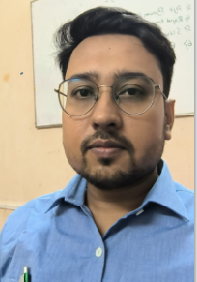
Saad Mohammad Zahirali Patel practicing in the Godavari river
Practicing on the waves of the Godavari River, Saad Mohammad Zahirali Patel is delivering stellar performances in water sports. Since taking up the sport in his 11th grade, he has competed in numerous tournaments and won a trove of medals.
Saad believes that with better infrastructure and government support, he can definitely win a medal for the country in the Asian Games.
Originally from Ahergaon, a village in the Niphad region of Maharashtra, Saad Mohammad comes from a middle-class farming family.
Like other children, his school life was filled with play and fun, but his college years proved to be a turning point for his career. In the eleventh grade, he joined the boat club affiliated with K. K. Wagh College in Pimpalgaon Baswant.
In the seven years since, he has consistently delivered impressive performances.
So far, Saad Mohammad has participated in four All India, six national competitions, one Khelo India event, and six state-level tournaments. He won a gold medal in the 500-meter category at the 2021-22 All India competition held in Chandigarh.
He followed that up with a bronze medal at the same competition in 2023-24. At the national level, his team narrowly missed a medal, finishing in fourth place.
These national competitions taught him a valuable lesson: a single tournament can teach you what hours of practice might not. This realization has driven him to participate in as many competitions as possible.
Saad Mohammad competes in four categories: Single Scull, Double Scull, Four Scull, and Mixed events. At the university level, he was awarded as “Outstanding Athlete of the year 2022-23” by the University. He has secured one gold and one bronze medal.
His journey, both for competitions and year-round training, has been arduous. In the early days, he would work in the fields in the morning before heading for practice. It was a difficult balancing act. Currently, he is in the second year of his post-graduate studies.
Saad Mohammad’s day begins at 5 AM, and he does his workout, followed by practice for four hours. He then goes for practice in the evening.
Saad Mohammad points out that athletes from Maharashtra use “Sunny” or “Cargo” boats in most competitions, while others use modern “Nelo” boats.
“If our state also upgrades our equipment, the number of medal-winning athletes will surely increase.”
source: http://www.awazthevoice.in / Awaz, The Voice / Home / by Arun Malani / August 28th, 2025
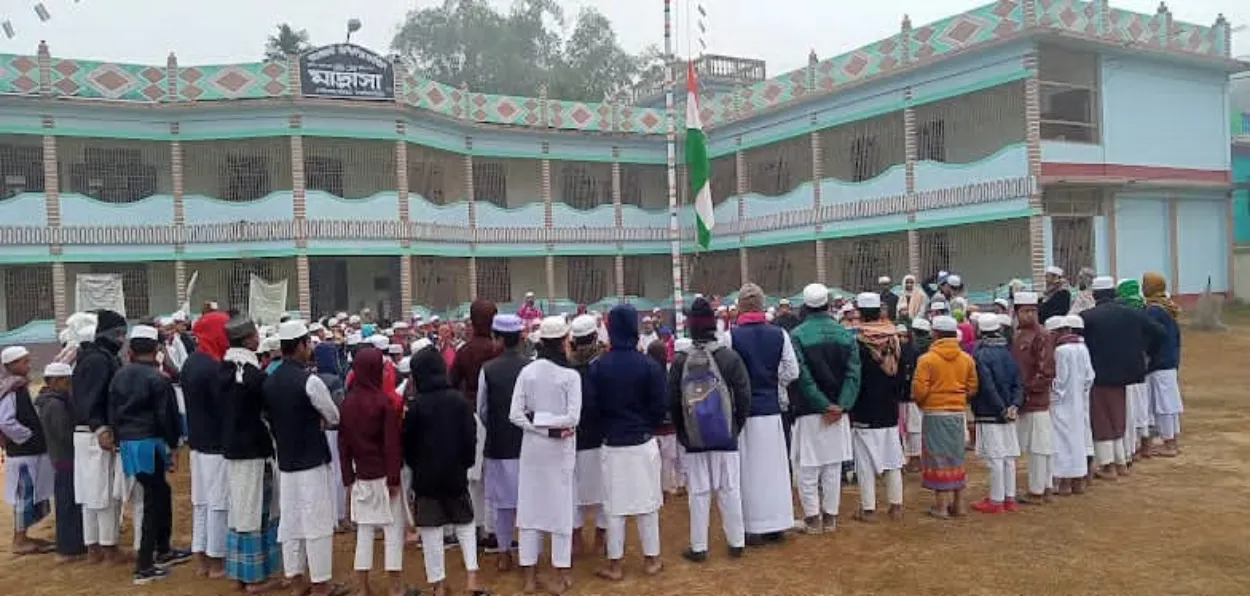
Mohammad Abdullah Zakaria among students in the Madrasa on the Independence Day
Mohammad Abdullah Zakaria, who received his education from Daudarani Siddikia High School, a small village in Sonamura of Sipahijala district of Tripura, has recently cleared the General Duty Medical Officer examination conducted by the Tripura Public Service Commission.
His success again defies the notion that Madrasa education is not relevant to modern times.
Abdullah Zakaria studied in a Madrasa when such institutions were associated only with religious education.
Zakaria, 37, scored 68.8 out of 100 in the TPSC examination and made it to the top 30 in the list of successful candidates.
Zakaria’s father, Nurul Islam, is an Arabic language teacher, and his mother always supported him and is an inspiration to him.
Abdullah received his primary and secondary education in a madrasa and later studied science in a common school. He cleared the tough entrance examination and joined the MBBS course at Tripura Medical College in 2018.
According to Zakaria, the quality of education in government madrassas of Tripura is no less than that of any government school. He received a good education in general subjects along with the Quran, Hadith, and Arabic.
He says Madrasa education not only imparts religious knowledge to students but also helps in character building and social etiquette.
He said, “Patriotism should not be limited to waving the national flag; it must be practiced with one serving the country and working for the welfare of the society.”
Abdullah Zakaria has three siblings. His elder sister is a junior engineer, and his younger sister is also pursuing MBBS from a medical college.
Zakaria is preparing to write another difficult examination to join the MD (Doctor of Medicine) program to become a paediatrician.
Mohammad Abdullah Zakaria’s success is a tribute to the government-affiliated Madrasa education system of Tripura.
source: http://www.awazthevoice.in / Awaz, The Voice / Home / by Nurul Haque, Agartala / August 31st, 2025
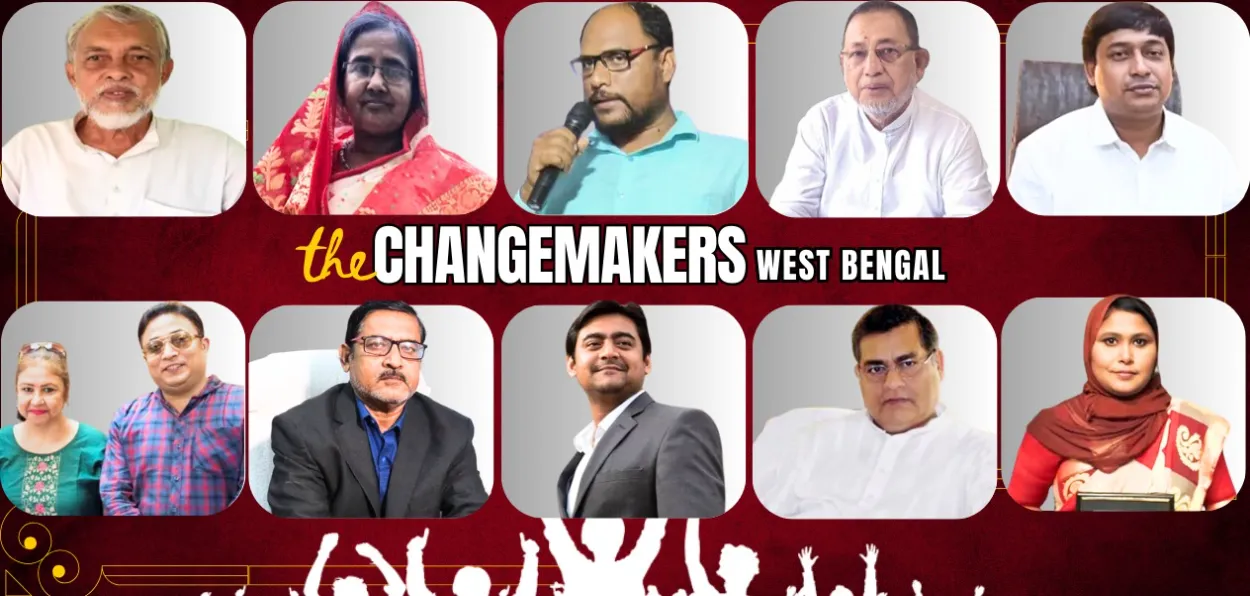
The people of Bengal have a strong tradition of scholarship, literature, and debate. They are known for their deep appreciation of music, poetry, cinema, theatre, painting, and social service. The Changemakers from the Muslim community are only adding to the high values cherished in this region.
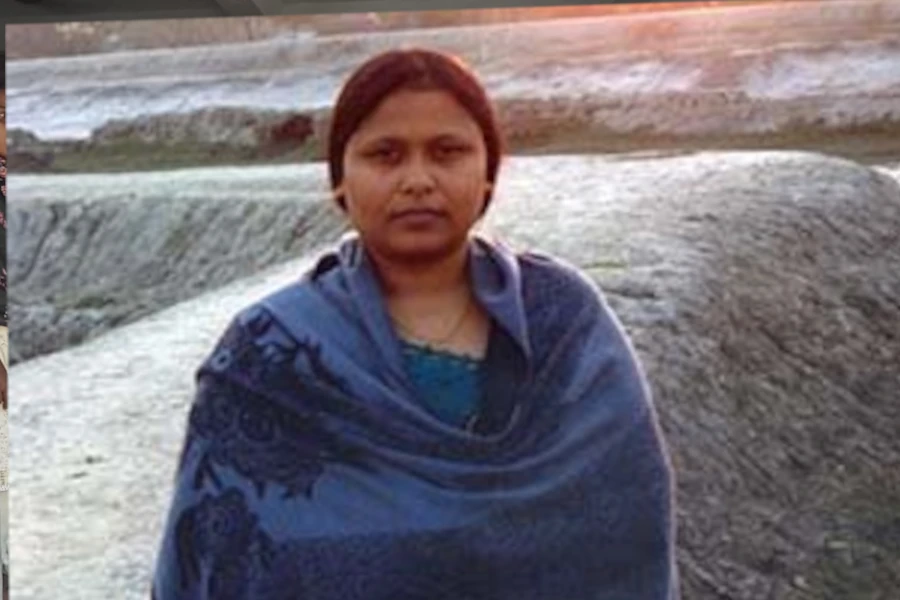
Halima Khatun
Halima Khatun has dedicated herself to uplifting marginalized communities, particularly women. She guides and mentors women who struggle to establish themselves despite adversity. Her first significant intervention was with women from fishing communities in the Sundarbans, standing alongside them, addressing their issues, and consistently supporting their struggles.
Her organization has helped over 700 bidi workers obtain official identification. Many families resort to marrying off young daughters in the hope of survival, a practice Halima fights to prevent. Known for her fearless interventions, she has successfully stopped numerous child marriages, often with police assistance, earning comparisons to a “Dabangg” — a fearless enforcer.
Sattar Master
Abdus Sattar has dedicated the majority of his life to the cause of education. Hailing from the Jhalongi block, he is affectionately known across Shantipur, Domkal, Islampur, and surrounding areas simply as “Sattar Master.”
Abdus Sattar has become a revered figure because of his boundless compassion and dedication to the welfare of others.
Imaran Nahar
Imaran Nahar from Pandua in the Hooghly district is preserving a treasure trove of lost folklore. Over the years, he has documented more than five hundred fairy tales from various sources. In the face of a modern, indifferent society, centuries-old proverbs and oral traditions from rural Bengal are vanishing.
While some proverbs found their way into grammar books, most survived only through spoken tradition. Nahar has painstakingly rescued over three thousand nearly-forgotten Bengali proverbs, reviving a crucial link to cultural memory.
Hafizur Rahman
Hafizur Rahman has set a shining example of humanitarian service. Through his organization, girls from both Hindu and Muslim communities have received training to become self-reliant. Under his guidance, sewing machines have been provided to impoverished girls, fostering interfaith harmony and empowerment.
Yet, Rahman’s work does not stop there. Every last Sunday of the month, his organization hosts doctors to provide free medical checkups, eye tests, and medicine to those in need. He also facilitates local employment initiatives to prevent people from seeking low-wage work far from home, ensuring sustainable livelihoods for the community.
Sheikh Baharul Islam
According to Sheikh Baharul Islam, founder and current editor of Sojag Mancha, the organization has quietly traversed many milestones over the years. When asked about the motivation behind Sojag Mancha, he explains, Sojag Mancha was founded so that we could step forward, even if in a small way, to help those in need.” Islam adds, “Most NGOs remain focused on securing their own survival, but we chose a different path.
We dared to invest our own resources in education, and that courage has made us widely recognized. Guided by selfless service, our organization continues to move forward at lightning speed, driven by the desire to make a difference.”
Golam Faruk
Social worker Golam Faruk began his journey driven by a commitment to human welfare. His organization, Rights for All, has been actively working to make Kolkata cleaner, while also conducting anti-drug campaigns with the support of the South Division of Kolkata Police on International Anti-Drug Day.
Faruk ensures that disadvantaged children have access to educational trips and facilities, while his organization serves as a beacon for justice, inclusion, and human dignity.
Muhammad Nurul Islam
Under the leadership of Muhammad Nurul Islam, a courageous team has chosen the challenging path of spreading education at all levels, often navigating routes where no one has tread before. Their mission is clear: to empower historically marginalized minority communities, transforming them into confident, educated societies.
They aim to uphold quality and excellence in education while continuously supporting talented students who are socially and economically disadvantaged. Guided by principles of fairness, equality, and transparency, they have steadily advanced this cause.
Jahangir Mallik
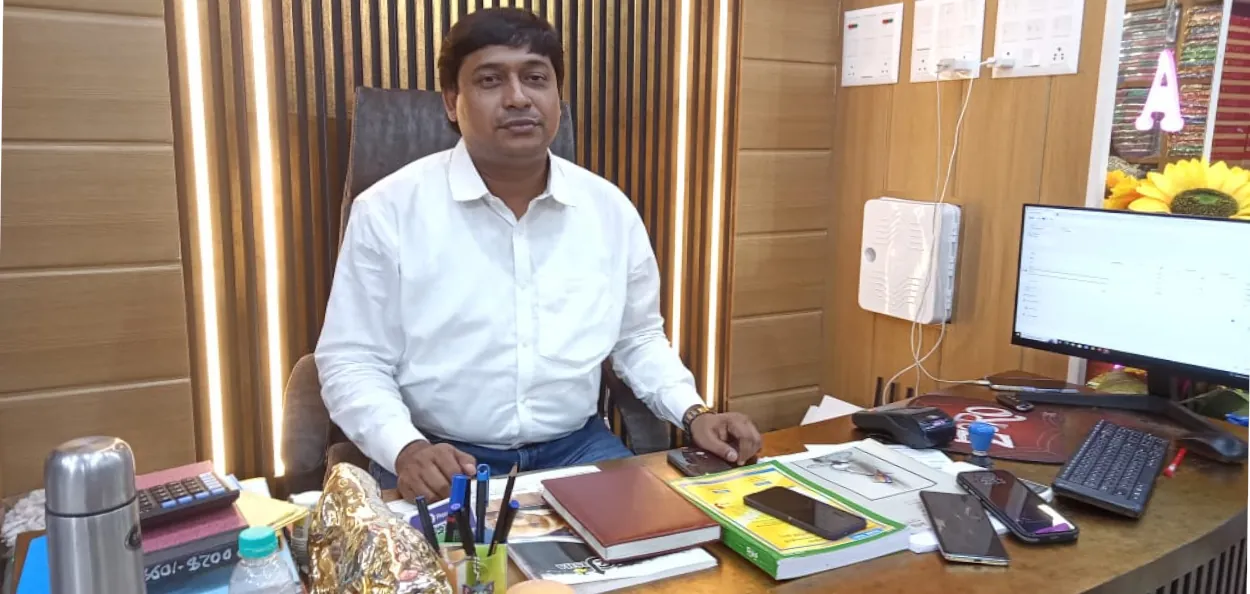
Thanks to Jahangir Mallik, thousands of people can earn their livelihoods directly or indirectly. A native of Bulbulitala in Burdwan, Mallik founded J.M. Bazar in 2019. His roots, however, are deeply entwined with Shantipur. In 2006, he started selling sarees from a small stall in Ghosh Market. Through perseverance, intelligence, and honesty, he now owns two large counters in the same market, having reached remarkable heights by the age of 40.
Despite his success, he has never forgotten his humble beginnings. Driven by social responsibility, he continuously supports those in need. Hundreds of rickshaw drivers earn their daily wages directly through his initiatives, while thousands more depend on him indirectly, demonstrating the remarkable scale of his impact.
Matiar Rahman
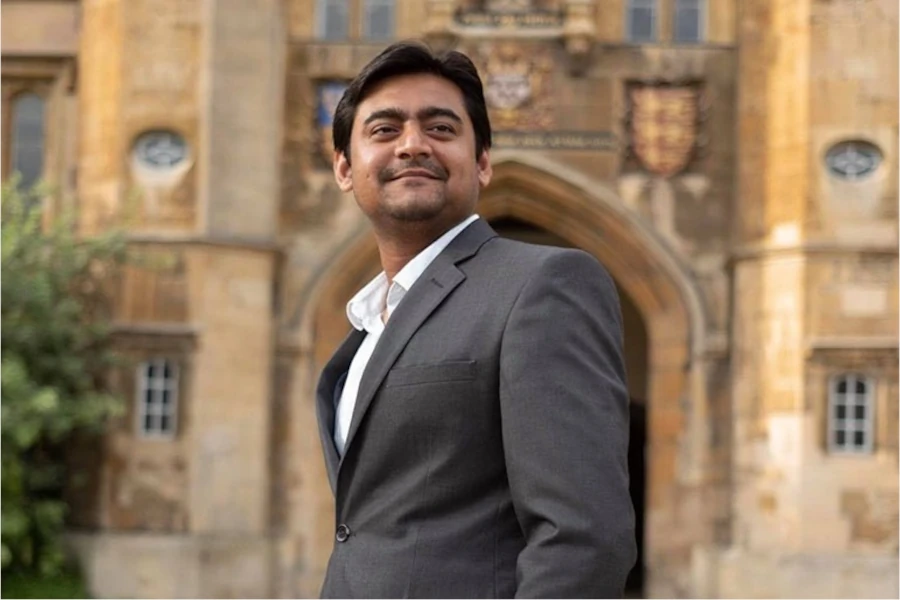
Saving the world from disaster has become the most pressing challenge of our time. Rising to meet this challenge with relentless determination is Bengali scientist Matiar Rahman. A senior scientist at the University of Cambridge, Rahman, together with Shubhajit Bhattacharya, developed the Artificial Leaf — a device that produces liquid fuel and oxygen using sunlight, water, and carbon dioxide.
Published in Nature Energy, this breakthrough transforms atmospheric CO₂ into ethanol, propanol, and other fuels while releasing oxygen. Since the fuels are generated from excess carbon dioxide, the process is net-zero, offering a renewable solution that could play a pivotal role in reducing atmospheric CO₂ in the near future.
Mostaq Hossain
Mostaq Hossain, one of West Bengal’s prominent industrialists and education enthusiasts, is widely recognized for his philanthropy. His initiatives have earned his village a notable place on India’s map. Deeply compassionate and committed to education, Hossain is also devout in his faith.
Through community-run residential schools, he promotes education without discrimination, fostering moral development and social responsibility.
He ensures that knowledge reaches everyone — regardless of religion, class, or background — guiding students to become responsible and empathetic citizens. With limited resources and immense dedication, he has planted the seeds of these ideals across more than 50 residential schools, nurturing the next generation.
source: http://www.awazthevoice.in / Awaz, The Voice / Home / posted by Aasha Khosa / August 30th, 2025
Wangat Village (Ganderbal District),JAMMU & KASHMIR :
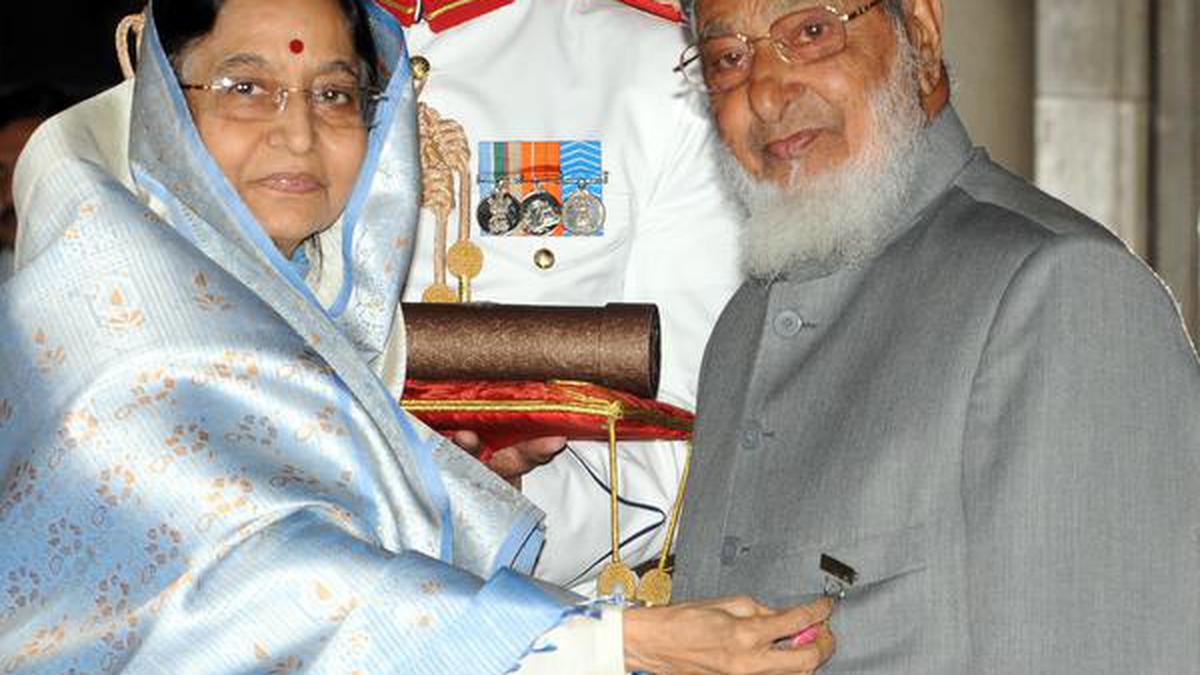
Former President Pratibha Patil presenting the Padma Bhushan Award to gujjar leader Mian Bashir Ahmed, during the presentation of Padma Awards at Rashtrapati Bhavan in New Delhi on May 10, 2008
A former minister in Sheikh Mohammad Abdullah’s cabinet, he was honoured with the Padma Bhushan for his extraordinary service for the Gujjar-Bakarwal community and other downtrodden groups.
Veteran Gujjar leader and Padma Bhushan awardee Mian Bashir Ahmed, a resident of Ganderbal district of Jammu and Kashmir, passed away on Saturday night after a prolonged illness. He was 98.
Ahmed, a resident of village Wangat in Kangan area of the central Kashmir district, breathed his last at about 10 pm, family sources said.
His Nimaz-e-Jinazah (funeral prayers) will be performed on Sunday at Mizar Shrief Baba ji Sahib Larvi located at Baba Nagari Wangat, they said.
Ahmed was the son of top Gujjar leader and saint Mian Nizam Din Larvi and father of former Minister and National Conference (NC) leader Mian Altaf Ahmad.
Born in November 1923, Mian Bashir Ahmed was a minister in Sheikh Mohammad Abdullah’s cabinet. Later, he left politics and started working for Islamic Sufi tradition and to help downtrodden people.
In 2008, he was honoured with the Padma Bhushan award for his extraordinary service for the Gujjar-Bakarwal community and other downtrodden groups.
Condolences to his family poured in from various quarters.
“Just heard about the sad demise of Mian Bashir Sahib, a spiritual leader & a mass leader revered by many especially in the Gujjar community. His demise will be deeply felt by many of us. My condolences to my colleague Mian Altaf Sb & his family,” NC vice president Omar Abdullah said in a tweet.
His party said Ahmed’s death has felt a void that cannot be filled.
“Grieved over the passing of Mian Bashir Ahmad Laaravi, a renowned spiritual leader & political figure. His death has felt a void that can’t be filled. Our condolences go out to Mian Altaf Laaravi, the entire family & Bashir Sb’s admirers. May Allah grant him a place in Jannat,” the NC wrote on Twitter.
Jammu and Kashmir Pradesh Congress committee (JKPCC) expressed profound grief over his passing, describing it as a great loss to the UT.
In his condolence message, JKPCC president Ghulam Ahmad Mir expressed deep sorrow over the passing of the eminent religious scholar, socio-political figure, saying Ahmed was known for his spirituality and social work he rendered to the people of Jammu and Kashmir.
“Saddened to learn about the passing away of Mian Bashir Saheb. I have no words to express my grief,” Mir said.
He expressed deepest condolences to Mian Altaf and other members of the bereaved family and Ahmed’s followers.
Praying for the eternal peace to the departed soul, the JKPCC president said, adding that Ahmed’s guidance and teachings shall continue to inspire generations.
Jammu and Kashmir Peoples Conference chairman Sajad Lone described Ahmed as an inspirational leader.
“Deepest and heartfelt condolences to the family of Mian Bashir Sahab. An inspirational leader, defined by simplicity who had a humbling effect on people he interacted with. May his soul rest in peace,” Lone said.
source: http://www.thehindu.com / The Hindu / Home> News> India> Other States / by PTI / August 15th, 2021
We celebrated the 100th birth anniversary of Prof Rais Ahmed, the former head of the Physics Department, Aligarh Muslim University and the person to whom I owe a great deal for starting me off on my career path in plasma physics research.
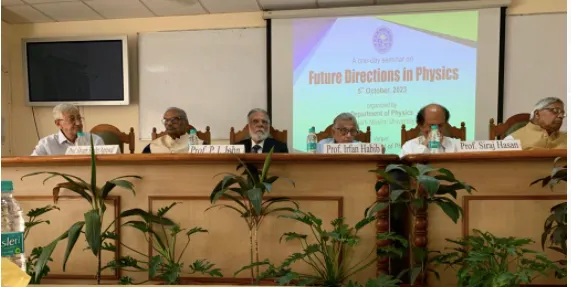
A one-day memorial cum seminar on Future directions in Physics was held at the University on 5th October 2023 Venue. Prof. Irfan Habib, Prof. of History, AMU, Prof. Siraj Hasan (Former Director, Indian Institute of Astrophysics), Prof. Naresh Dadhich (Former Director, IUCAA), Prof. S. K. Singh (Former VC, HNBU), Prof. Wasi Haider and Prof. Shyam Sunder Agrawal (Director General, KIIT Group of Institutions) spoke on the occasion. I spoke about my association with him and the future of Plasma Physics and Thermonuclear Fusion Research in India.
It was a forenoon in July 1964 when I first met Prof Rais Ahmed, who had become the Head of the Department that very year. I had travelled from Kerala seeking an opportunity to do research. He asked me a few questions on Physics, and I suppose I answered them reasonably well. But then he wanted to know why I wanted to pursue research.
I had rather romantic ideas like research leading to new knowledge and our responsibility to seek pure knowledge etc. It was clear that he did not take me seriously as he went on to say that science is what drives social transformation by changing our perception of our relationship with nature. Another observation was about science leading to technology which improves the quality of life.
Our conversation covered many things. I suppose he was gauging my mind and trying to find what kind of person I was. If it was a test, I passed it as he said that I could join for research. He made sure that I had no preference for Nuclear Physics or Spectroscopy, the areas of ongoing work in the department. He talked to me about Plasma Physics as an emerging field and about the work which was going on in Harwell and Oxford on Thermonuclear Fusion Research.
I did not know about Plasma Physics even at an elementary level. However, I was willing to learn and was asked to talk to Prof. D C Sarkar about the thesis work in more detail. I went through an intense learning programme, primarily reading Physical Review and Review of Scientific Instruments. There was no previous laboratory I could walk into and start work and I had to start from scratch. Looking back, I was taking an enormous risk as I had to build an entire laboratory for me to start the thesis work.
I rigged up a Radiofrequency generator with Japanese power tubes scavenged from the Electrical Engineering Department. Prof Venkateswarlu’s lab was full of microwave equipment, which Rais Sab allowed me to borrow. With all this, I set up an experiment and after a struggle of five years, put together a thesis which got me a degree. Almost immediately he gave me a regular job as a lecturer in the department as some vacancies were due to be filled.
As the Head of the Department, he did much to expand research and teaching in Physics in new areas. As Director of Academic Programmes, he organized the Semester System designed to update courses and provide more rigorous instruction to students. He made an alliance with Uppsala University in Sweden for faculty members to do research there. He arranged for PhD scholars to start teaching postgraduate students.
I recalled my interaction with university life during my eight years there. At first, Aligarh gave me a culture shock. My inability to comprehend Urdu was the first barrier to appreciating the culture. The exalted forms of addressing, and the too formal and exaggerated ‘Tehzeeb’, the gestural ‘adaabs’ strewn around were all alien. The food, though delicious, was completely unfamiliar. But the campus was a dream with beautiful buildings, stately halls, verdant lawns, and lush gardens. The library gave me all the books I wanted to read. The accommodation I got at the Sulaiman Hall was quite adequate. The students from central Travancore preferred this. There was a South Indian mess catering our preferred food. Tea at the Paradise restaurant with friends was fun.
Rais Ahmed had interests ranging from his specialization in Electronics to varied areas of science and education. He published over 100 papers on Electronic Circuit Analysis. Analogue Computers. Speech Recognition and Production, and Creative Teaching of Physics. The work he started in the 1970s on speech perception would eventually become an important branch of artificial intelligence and machine recognition of speech.
I recall a symposium he had organized on higher education, where we were asked to be volunteers to help the organization. The attendees were all academics from Universities and IITs and I was fortunate to listen to many of them. The remarkable skill with which Rais Sab generated consensus on many issues which were debated was an eye-opener for me.
In a department seminar, when his student Moonis Ali spoke on the design of an analogue computer system, some of us, ridiculed the idea calling it a paper machine. Rais Sab defended the presentation vigorously, saying that new ideas were what drove science forward and that they had as much importance in science as building new instruments.
His remarkable organizational skills were brought to bear at the prestigious Annual Meeting on High Energy and Nuclear Physics, sponsored by the Department of Atomic Energy. Prof Roy Daniel from TIFR was the coordinator of the meeting, and his being from Kerala, we used to chat about the preparations for the meeting. The participants included bigwigs like Vikram Sarabhai, Prof M G K Menon and Dr Raja Ramanna. The meeting was hailed as very successful thanks to the planning and preparations led by Rais Saheb.
All of us in the department rejoiced when he was made a member of the Science Advisory Committee to the PM, then Mrs Gandhi. After each meeting, he would call all of us to the lawn near the workshop to convey to us the flavour of the meeting. We had the vicarious pleasure of being informed about the thinking in the places of power.
He would call me occasionally to his office to find out how I was doing. In one of these meetings, he advised me to read journals other than those dedicated to pure physics. He cited the Bulletin of Atomic Scientists as an example.
Rais Sab had an abiding faith in Scientific Socialism and felt strongly about the increasing global dominance of the multinationals and about what he saw as a retreat by India from its independent position both in the Economic and Intellectual fields. He had a strong belief that human capital, in the form of expanding knowledge and scientific spirit, held the key to India’s salvation. For this ideal, he worked tirelessly both as an individual and in administrative capacities.
In the 1950’s he was an energetic organizer of the Association of Scientific Workers of India. Once when I asked him about the ethics of unionizing scientific workers, he defended it by saying that collective bargaining need not be about wages and working conditions only. Professional bodies of scientists had a role in influencing public policy.
After I left Aligarh in 1972 to join the Physical Research Laboratory in Ahmedabad, I had occasional interactions with him. He made me a member of the UGC Committee to visit Marathwada University to make an academic assessment. He funded my proposal to have an orientation programme for university teachers in the emerging field of Plasma Physics.
I had an exciting and eventful life contributing to Plasma Physics in India, right from its inception at the Physical Research Laboratory, during the Plasma Physics Programme and its eventual transformation to the Institute for Plasma Research and when India became a proud partner in the ITER project of building the world’s first Thermonuclear fusion reactor in France. I owe a debt of gratitude to Rais Saheb for initiating me into the research path, which made all this possible.
source: http://www.john-pucadyil.medium.com / Medium.com / Home / by John Pucadyil / October 06th, 2023
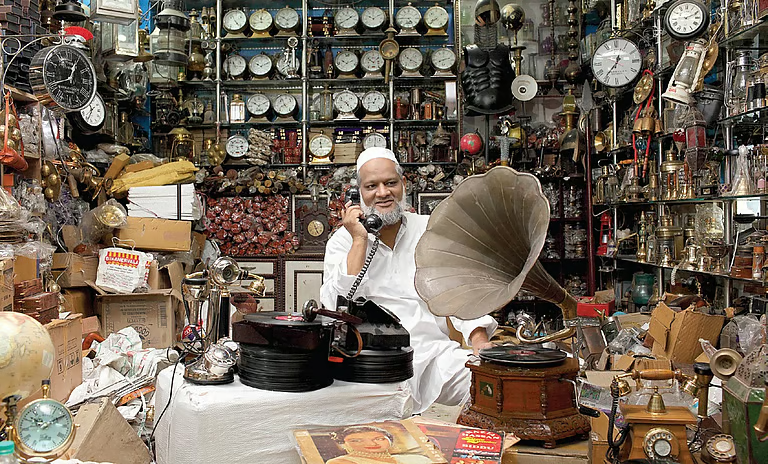
Rais Ahmad is one of the earliest to open for business in Chawri Bazaar in Old Delhi.
Rais Ahmad, 53, Sufia Handicrafts, Chawri Bazaar
Rais Ahmad is one of the earliest to open for business in Chawri Bazaar in Old Delhi. His tiny shop called Sufia Handicrafts is home to a mind-boggling number of miniature to mid-sized antiques. But before you begin to admire any of those, 53-year-old Ahmad takes you by your hand and pulls you towards the corner of the shop where his most precious collectables lay scattered—a side of the shop that’s home to heaps of original old gramophones and records. “So, what do you think about them?” he asks us, adding, “Have you ever seen a collection like this anywhere in Delhi?” Not waiting for our reply, he pulls us towards another corner of the shop where he takes our attention to imitations of the ones we had seen 20 seconds back.
Least to say, he loves his music and listens to Mohammed Rafi on a daily basis, while repairing all the gramophones that have been left behind to be fixed. He proudly tells us that he can set right almost any kind of snag, whether pertaining to manual gramophones or the electric ones.
Besides that, Ahmadji—as he is fondly addressed—stores vinyls in various regional languages, especially Bengali. While an original gramophone can cost you anywhere between `4,000 and `6,000, the imitations start at `1,500. The records, on the other hand, will cost you `100 to `200, and any kind of repair anywhere between `100 and `600, depending on how much it needs to be fixed.
Address: 1775, Main Road, Lal Kuan, Chawri Bazaar. Phone: 9810125493
source: http://www.newindianexpress.com / The New Indian Express / Home> The Sunday Standard / by SS / April 12th, 2015
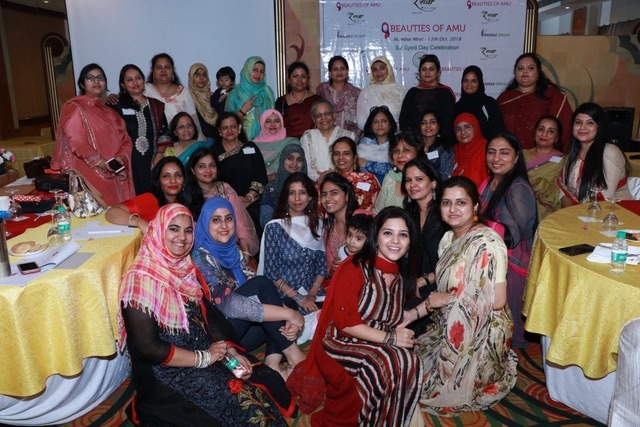
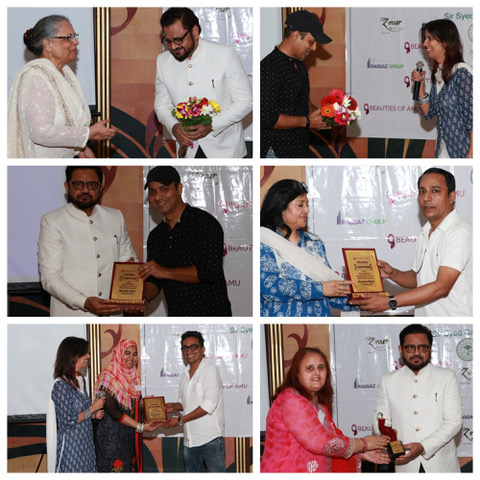
The Aligarh Muslim University Alumni Group formed by female community of this iconic citadel of modern education, known as Beauties of AMU held its Mumbai Meet towards the Sir Syed Day celebrations on 13th October at Hotel Marine Plaza, Mumbai.
Noted philanthropist, business giant and AMU alumni, Raees Ahmad, MD, Rassaz Group was the Guest of Honour at the event. Faridoon Shehryar, a well known Bollywood journalist was among the AMU stars which illuminated the galaxy of AMU achievers at the event. Faraz Haider, director of War Chhod Na Yaar fame attended the meet in capacity of another AMU stars while famous lyricist Arafat Mehmood stole the show with his magical spell of beautiful words in perfect sync with the event.
The event saw a huge turnout including personalities from all walks of life who build up the social circuit of Mumbai.
Sir Syed lived briefly in the city which now boasts of being the financial capital of India, hence it is imperative to take the message to this very city which had alumni association focussing on male alumni.
Since it couldn’t offer much space to the female alumni based in the city for the nostalgic networking over chai. Beauties of AMU took the plunge and brought them all on the same page, allowing them their own space for discussing and dealing with issues of societal concerns.
At the event Mrs Farrukh Sayyeda highlighted the importance of space for women. She said it’s good to be ‘Mrs Somebody’ but anything that gives you self identity is rather more important and brings self-satisfaction. This identity is not necessarily connected to financial income, added Mrs Farrukh (former principal).
Extending the thoughts, Mr Rais Ahmed (Guest of Honor) talked about the role of Sir Syed in Women Empowerment.
Mumbai is more popularly known for the Indian film industry which has considerable contribution from Aligarh, such as Khwaja Ahmad Abbas, Saeed Jafri, Javed Akhtar, Surekha Sikri, Naseeruddin Shah, Dilip Tahil and to name recent additions, there are Anubhav Sinha, Faraz Haider, Faridoon Sheheryaar and Arafat Mehmood.
Alumni of AMU are front runners in every industry in every corner of the country and the world as well, whether it is Frank Islam of USA, who was the member of Barack Obama’s contingent to deliberate with Muslim world, being a key figure in the economy of USA or the pharma giant Cipla’s founder Khalid Hameed, who has served humanity in Africa so well that nobody would ever find an example like it.
Aligarh has come out of its cocoon with the first and second generations and prepares its next generations following the footsteps of Ismat Chugtai and Qurratulain Haider.
Beauties of AMU is playing the catalyst in this inferno which would reassure the paying back to the great institution of Aligarh, which has contributed largely for the cause of nation building.
Felicitation for AMU Achievers in Bollywood
Faridoon Shahryar- An award winning journalist and known face as an anchor for popular chat show Talking Film, Mr Faridoon was felicitated for his achievements. He participated in event with exuded fervor reminiscing his AMU days with a mention of jumping walls and taste of fritters
Mehmood Arafat- Inspired by his father who is a well known trade unionist, political figure, writer and a popular poet of west Bengal, Mr Arafat is a popular Bollywood Lyricist. His famous work includes songs from Loveyatri, Half Girlfriend, Heartless, Housefull 3, Welcome Back, Sarabjit, Kis kis ko pyar Karen, Machine, Jalebi etc. Mehmood Arafat relived the AMU days by reciting a poem filled with complete nostalgia of AMU, Abdullah Hall, Shamshad Market , Kennedy Hall
Faraz Haider is a well known director of war na chod yaar and Nanu ki Jaanu movie fame attended the event and filled the vibes with laughter and fun by recalling an incident where he got a chance to visit Abdullah Hall
Beauties of AMU(BOA) is a social welfare organization formed by female alumni of Aligarh Muslim University that functions to spread awareness about education and empowerment of women of all sections of society.
Started off as a Facebook group in 2017, by Iram Raza, a graduate of Department of Mass Communication, Aligarh Muslim University, Aligarh, this group has done meets in 3 cities (New Delhi, Lucknow, Aligarh) so far and the Mumbai Meet Up towards Sir Syed Day was a part of the reunion initiative of the group in the time span of 1 year.
The organization now plans to hold similar events in other parts of country for reuniting the female alumni of the university living in those cities, spreading out the message of goodness and universality.
BOA has been organizing meet-ups in different cities of India for the female alumni who haven’t been included in the old boys associations, providing them a platform to meet and greet and share happiness and nostalgia of their days at Aligarh furthering the reunions to social causes.
BOA has been instrumental in organising several events that contributed well to the cause of social welfare in general and AMU alumni in particular, that makes it stand apart from other alumni associations concerned with AMU.
source: http://www.muslimmirror.com / Muslim Mirror / Home> Exclusive Reports> Indian Muslim / by Faisal Hasan / October 18th, 202
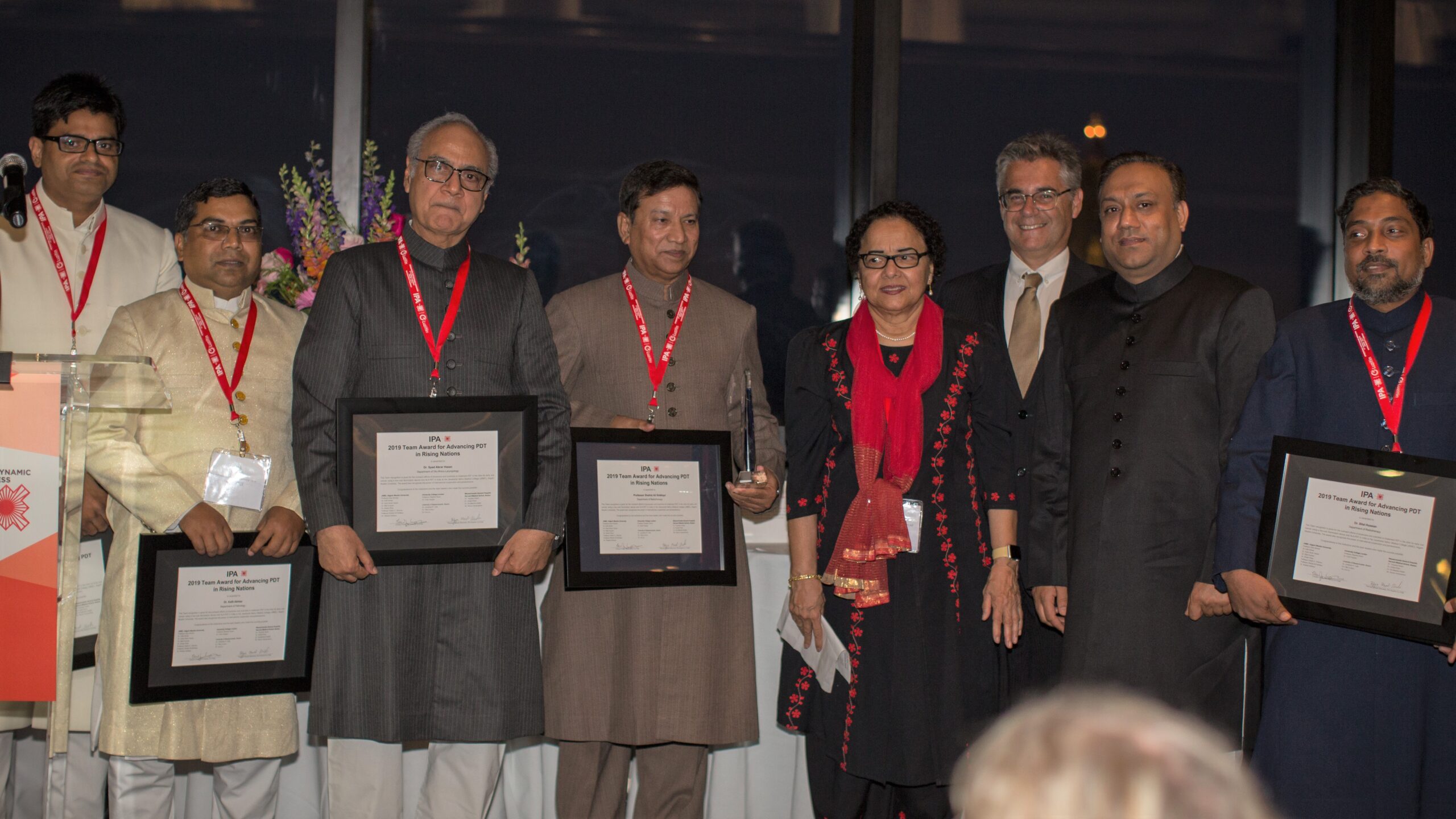
Professors Syed Abrar Hasan (center-left) and Shahid Siddiqui (center) receiving the 2019 Advancing Photodynamic Therapy In Rising Nations Award from Dr. Lothar Lilge (left), IPA Past-President, Dr. Tayyaba Hassan (center-right), and IPA President, Dr. Luis Arnaut (right).
Boston, USA :
At the 17th International Photodynamic Association World Congress in Boston, Massachusetts, Professors Shahid Siddiqui and Syed Abrar Hasan, leading an Indian and international team of PDT clinicians and researchers, were honoured as the 2019 recipients of the IPA award for Advancing Photodynamic Therapy (PDT) in Rising Nations.
The IPA recognizes the joint and considerable efforts of the team over the past three years to establish photodynamic therapy sustainably in the large and growing Indian market. The ‘PDT in India’ initiative is the direct result of the personal efforts, resources and perseverance of Indian Professor Shahid Siddiqui and Professor Syed Abrar Hasan to address the large unmet medical need relating to oral cancer in India. Oral cancer has a high death rate in India, as many people are undiagnosed and do not have access to adequate treatments or healthcare facilities. The Indian contingent of the team include the following clinicians from Jawaharlal Nehru Medical College, Aligarh Muslim University:
Professor Ibne Ahmad
Dr. Kafil Akhtar
Dr. Syed Abrar Hasan
Dr. Bilal Hussain
Dr. Shakir Khan
Professor Satish C. Sharma
Professor Shahid Ali Siddiqui
Dr. Shaista Siddiqui
pix02
From left to right: Dr. Shakir Khan, Dr. Kafil Akhtar, Professor Syed Abrar Hasan, Professor Shahid Siddiqui, Dr. Tayyaba Hassan (IPA Past-President), Dr. Luis Arnaut (IPA President), Dr. Amjad Khan, Dr. Bilal Hussain.
Supporting the Indian clinicians on the team with international PDT expertise are representatives from the University College London, the University of Massachusetts, the Wellman Center for Photomedicine, Massachusetts General Hospital and Harvard Medical School. The international contingent of the team includes the following PDT researchers and clinicians:
Dr. Colin Hopper, University College London
Professor Stephen Bown, University College London
Dr. Jonathan P. Celli, University of Massachusetts, Boston
Dr. Filip Cuckov, University of Massachusetts, Boston
Dr. Hui Liu, University of Massachusetts, Boston
Dr. Tayyaba Hasan, Massachusetts General Hospital, Harvard Medical School, Boston
Dr. Amjad Khan, Massachusetts General Hospital, Harvard Medical School, Boston
Dr. Srivalleesha Mallid, Massachusetts General Hospital, Harvard Medical School, Boston
Mr. Marvin Xavierselvan, Massachusetts General Hospital, Harvard Medical School, Boston
As a result of this international team effort spanning three years, a robust infrastructure for photodynamic treatment has been built and is being maintained at the Jawaharlal Nehru Medical College, Aligarh University, India. Along with the development of PDT infrastructure, PDT equipment/supplier access, and extensive clinician training, patient recruitment processes have been successfully established leading to the ability to better meet the large unmet medical needs in the region. Patients treated to date with PDT have experienced excellent outcomes facilitating accelerating patient acceptance and recruitment rates.
IPA World Congress
The Boston World Congress was the 17th conference held by the International Photodynamic Association, marking 34 years of this global meeting. The IPA World Congresses, held every two years, are the leading PDT meetings bringing together members of the global photodynamic community to advance scientific and clinical research relating to photodiagnosis and photodynamic therapies. The Boston World Congress was led by Congress Chair and IPA President Dr. Tayyaba Hasan, Professor of Dermatology at the Wellman Center for Photomedicine, Harvard Medical School (HMS) and a Professor of Health Sciences and Technology (Harvard-MIT) and had record attendance with representatives from 33 countries. The 2021 IPA World Congress will be hosted in Moscow, Russia and the 2023 IPA World Congress will be held in Shanghai, China.
About Photodynamic Therapy
Photodynamic Therapy (PDT) is a combination therapy involving light activated photosensitizers to diagnose and treat various types and stages of cancers and pre-cancers, macular degeneration and multidrug-resistant infections involving bacteria, viruses and fungi. First developed in the 1980s, PDT has demonstrated superior patient outcomes with considerable cost savings. Over the past 30 years, millions of patients globally have been successfully treated with PDT.
About the International Photodynamic Association
The International Photodynamic Association (IPA) was founded in 1986 to support and endorse the scientific advancement and clinical development of photodynamic therapy and photodiagnosis. With members and associates from over 30 countries, the IPA represents a truly global community consisting of prominent international scientists, clinicians and translational researchers, healthcare professionals and students across academic, hospital, government and private sector organizations. The IPA promotes the study of diagnosis and treatment using light-activated photosensitizers and disseminates scientific information to its members, the research community, and to the community at large. The IPA organizes a biennial World Congress around the world, providing members and non-members a unique opportunity to share and learn more about global developments relating specifically to photodynamic therapy and photodiagnosis.
For further information: ipasecretary@internationalphotodynamic.com
source: http://www.globenewswire.com / GlobeNewsWire / Home / by IPA – International Photodynamic Association / July 11th, 2019
Dariyabad (Barabanki), UTTAR PRADESH / NEW DELHI :
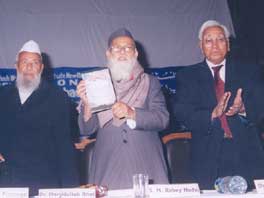
Maulana Rabey Nadwi releasing a book on Daryabadi; to his right stands Maulana Anzar Shah Kashmiri and to his left is Haryana governor, Akhlaqur Rahman Qidwai
New Delhi:
Delhi’s Shah Waliullah Institute and National Council for the Promotion of Urdu Language (NCPUL) jointly organised a national seminar on the life and services of Maulana Abdul Majid Daryabadi, a famous writer and mufassir of the Qur’an, on 15 January at Rajinder Bhawan, New Delhi.
Haryana governor, Dr Akhlaqur Rahman Qidwai presided over the seminar. Prominent among those who attended were Maulana Syed Rabey Hasani Nadwi, Maulana Anzar Shah Kashmiri, Maulana Wali Rahmani, Dr Hamidullah Bhat and Mohsina Qidwai.
Maulana Nadwi in his speech said that Maulana Daryabadi was a philosopher, researcher, man of letters, critic, and a man of high moral values who worked for the betterment of the nation. Maulana Daryabadi was the editor of Sidq-e Jadeed. India has been the cradle of different cultures and civilisations. We should move forward on the principles laid down by Maulana Abdul Majid, that is unity in diversity, which has been an important feature of our country. Maulana Daryabadi rendered unmatched services to the country, community and religion and we should benefit from his views and lofty ideals, he added.
Dr Akhlaqur Rahman Qidwai praised the services of Shah Waliullah Institute. He said that Maulana Daryabadi’s philosophy was relevant even today. He hoped that both the country and the community would continue to benefited from his views and writings.
The participants presented 17 scholarly papers on different aspects of the life and services of Maulana Daryabadi. Maulana Mohammad Wali Rahmani, Khwaja Hasan Sani Nizami, Dr Hashim Qidwai, Prof. Yaqubur Rahman and Prof. Siddiqur Rahman Qidwai presented papers among others.
Dr Hashim Qidwai, Mohsina Qidwai and Habiba Qidwai talked about their close relationship and shared moments with Maulana Daryabadi and narrated some incidents of his great life.
Dr Hamidullah Bhatt and Khawaja Hasan Sani Nizami assured their cooperation to the Shah Waliullah Institute in any project undertaken on Maulana Daryabadi.
Scholars who presented papers felt that though they had covered many aspects of Maulana Daryabadi’s life, yet there were many other aspects of his life that needed to be studied.
Two books, one written by Maulana Ataur Rahman Qasmi in Urdu, Imam Shah Waliullah and his Philosophy and Ideology and the other, Muslim Personal Law and Uniform Civil Code authored by (late) Maulana Minnatullah Rahmani, were released at the seminar. Shah Waliullah Institute organised an exhibition of books published by it. «
source: http://www.milligazette.com / The Milli Gazette / Home> 1-15th February 2005
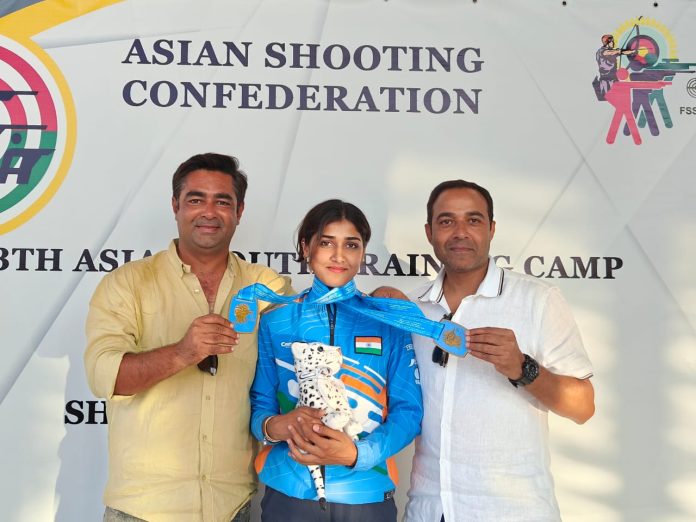
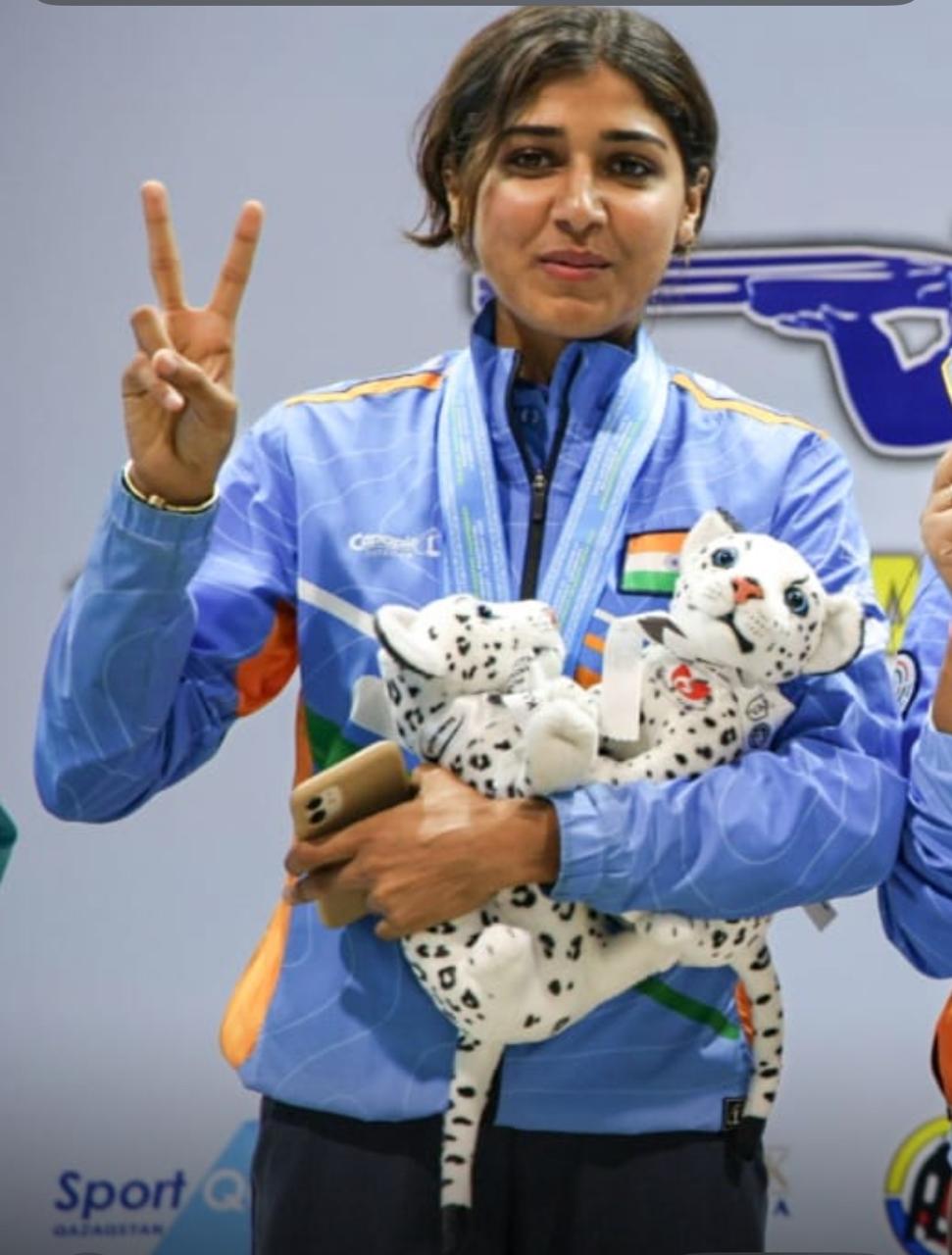
Sabeera Haris receives the gold medal Asian Championship in Kazakhstan
Aligarh:
In a proud moment for the country and for Aligarh, Sabeera Haris a Class XII student of Aligarh Muslim University (AMU), has clinched two gold medals at the 16th Asian Championship, held in Kazakhstan on Tuesday.
Sabeera Haris
Demonstrating outstanding skills and determination, Haris bagged both an individual gold medal and a team gold medal, emerging as one of the top performers of the championship.
In a display of sheer determination and skill, Sabeera scripted a remarkable turnaround in the final match. Starting from the sixth position with a score of 105 points, she fought her way into the top ranks and stunned the field by seizing the No. 1 position.
The highlight of her victory came when she outperformed India’s Addya Katiyal, who was the tournament leader with 113 points and widely regarded as the favourite for the top spot. Sabeera’s consistency, composure under pressure, and tactical brilliance enabled her to dethrone the Indian star and secure a memorable win.
Sabeera’s triumph not only showcased her resilience but also underscored the rising competitiveness of the sport at the global stage. Her victory will be remembered as one of the most thrilling finishes of the tournament.
Congratulating her on this remarkable feat, the Vice Chancellor, Prof. Naima Khatoon said, “It is indeed a proud moment for the university to witness our students progress in sports along with academics and attain international achievement. I am confident that Sabeera will continue to bring laurels to the university and the nation”.
Prof S. Amjad Ali Rizvi, Secretary University Games Committee, said her victory was a testament to her hard work, discipline, and passion for the game.
“Sabeera has brought immense pride to the Aligarh Muslim University but also the nation with her exceptional performance. She is an inspiration for young athletes and a true role model,” said Prof Rizvi.
source: http://www.radiancenews.com / Radiance News / Home> Latest News> Sports / by Radiance News Bureau / August 27th, 2025