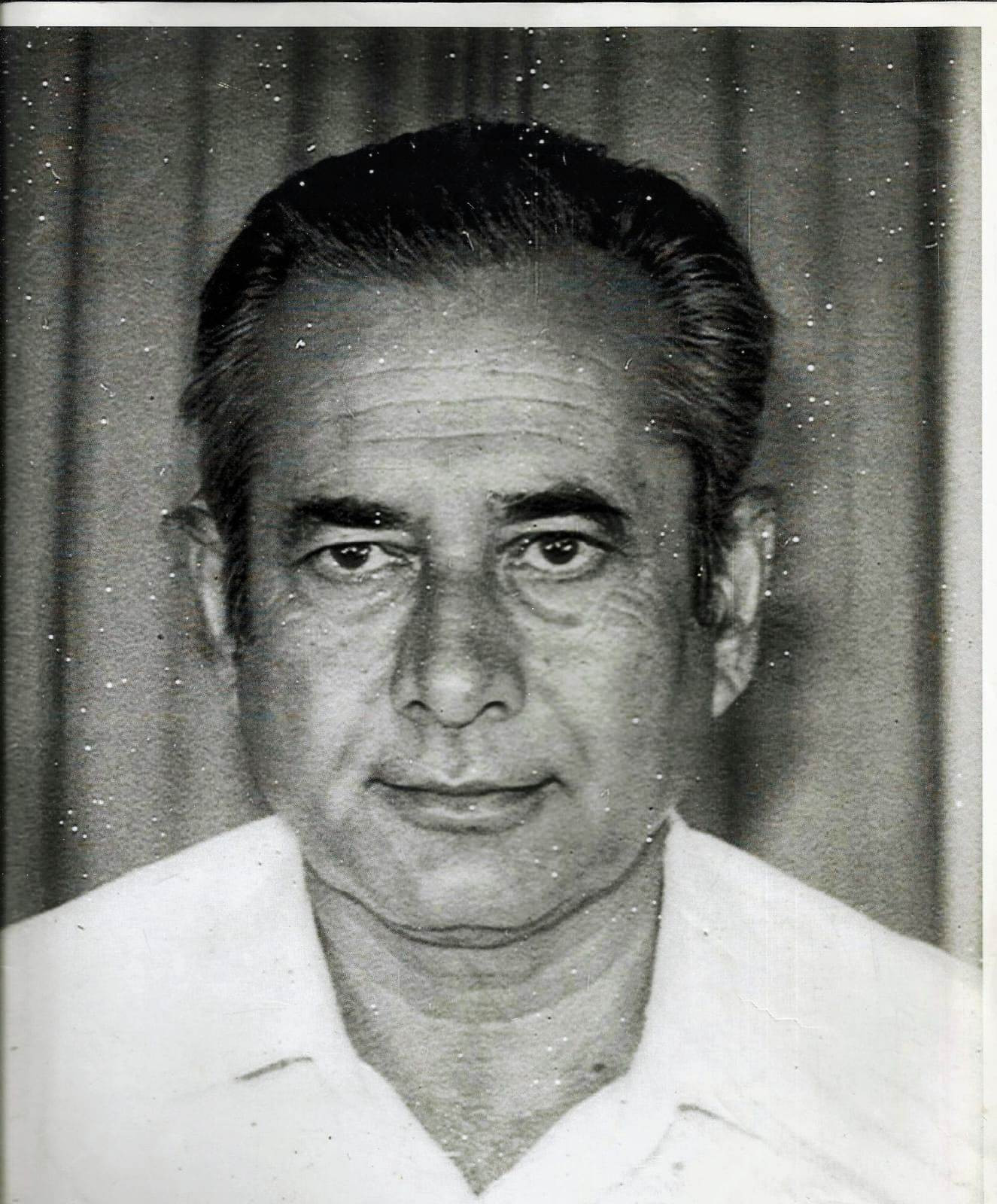
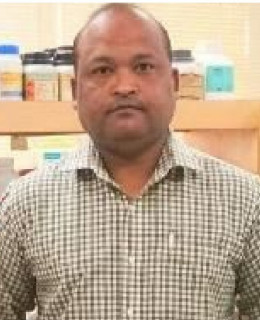
The Faculty of Medicine, Aligarh Muslim University (AMU), condoled the demise of Dr. Syed Wajid Ali Naqvi, former faculty member of the Department of Biochemistry, Jawaharlal Nehru Medical College (JNMC), who passed away Sunday last.
Expressing a deep sense of grief at a condolence meeting of the staff and students of the Faculty of Medicine, the Dean, Prof. Mohammad Khalid conveyed heartfelt sympathies to the bereaved family. Faculty members and students also prayed for eternal peace for the departed soul and strength and patience to the bereaved family to bear the irreparable loss.
A proud Aligarian, Dr. Naqvi had a close association with AMU spanning several decades. He joined the University as an undergraduate student in 1954 and obtained his B.Sc. in Biochemistry and Ph.D. in Biochemistry from AMU. He joined JNMC as a faculty member in 1965 and served until his retirement in 1996.
During his long association with the University, Dr. Naqvi held several academic and administrative responsibilities, including membership of the Academic Council, and served as Warden of Sir Syed Hall and Habib Hall, Acting Provost, Member of the Sports Council and President of the Gymnasium Club.
After his retirement from JNMC, he continued his academic association with medical education, serving on the faculty of ERA’s Lucknow Medical College & Hospital and Al Fateh Medical University, Tripoli, Libya.
The faculty members recalled Dr. Naqvi as a link between generations of Aligarians, having himself been an Aligarian and later becoming the father of four Aligarians. His long association with the University, both as a student and teacher, and his contributions to academic and residential life will be remembered with respect and affection.
source: http://www.amu.ac.in / Aligarh Muslim University / Home / by Public Relations Office / August 11th, 2026
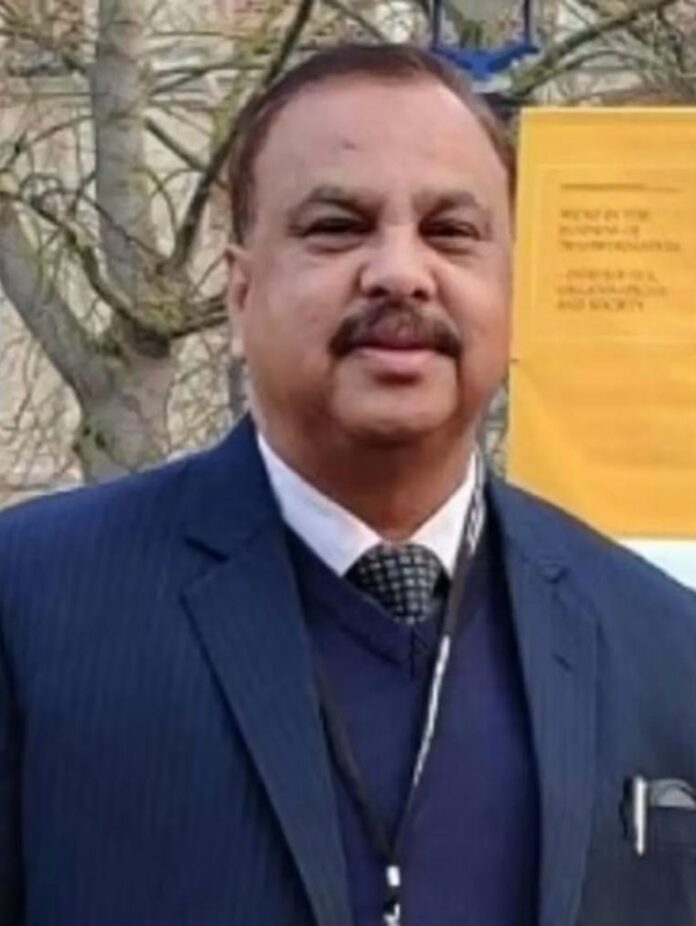
Professor Mohammad Mobin, Department of Applied Chemistry, Faculty of Engineering and Technology, Aligarh Muslim University (AMU), has been conferred the prestigious Professor B.P. Verma Memorial Award for 2025 by the Indian Chemical Society (ICS), recognising his contributions to research, development and innovation in Chemical Sciences and Engineering.
The honour marks a significant achievement in Professor Mobin’s academic career and reflects his sustained efforts towards advancing scientific research and translating innovation into meaningful technological and societal applications.
In a communication dated August 14, 2026, Prof. G. D. Yadav, President, Indian Chemical Society, conveyed the Society’s appreciation of Professor Mobin’s distinguished professional accomplishments, which have enhanced the stature of Chemical Sciences and Engineering and contributed to the advancement of Indian chemical and allied industries and society.
As part of the recognition, Professor Mobin has been invited to deliver the Professor B.P. Verma Memorial Award Endowment Lecture at the 63rd Annual Convention of Chemists (ACC 2026) of the Indian Chemical Society from December 14–16 at Graphic Era University, Dehradun.
Professor Mobin is presently serving as Vice Chancellor of Cluster University of Srinagar on deputation from AMU. His academic and research contributions span Chemical Sciences and Engineering, with particular emphasis on Materials and Corrosion, research innovation and technological development.
The Indian Chemical Society, one of India’s leading professional bodies in chemical sciences, has played a vital role in promoting chemical research, technology and industry while fostering collaboration among academia, research institutions and industry.
The Professor B.P. Verma Memorial Award adds another distinguished recognition to Professor Mobin’s achievements and brings pride to AMU and the wider academic and scientific community.
source: http://www.indiaeducationdiary.in / India Education Diary / Home> Educational News> University News / by iednewsdesk / August 17th, 2026
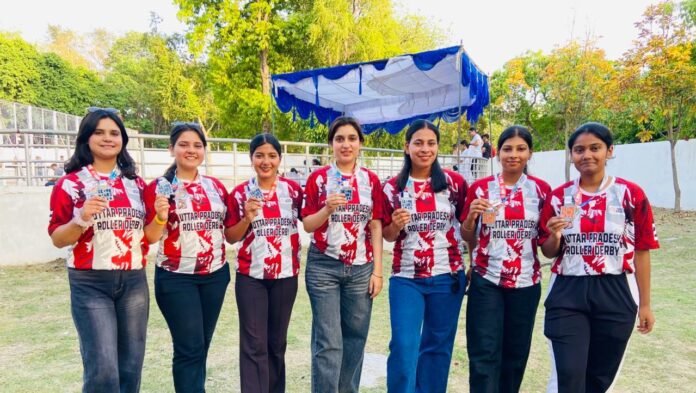
Students of Women’s College, Aligarh Muslim University, brought laurels to the institution as Nabeela Khan (B.Sc. Biochemistry) and Ashfia Khan (B.A. Psychology) secured a silver medal at the Indiaskate National Championship 2026 held from April 23 to 28.
Leading the Uttar Pradesh team, captain Nabeela Khan displayed strong leadership and determination throughout the tournament. In the final against Tamil Nadu, the team delivered a spirited performance, finishing 16–8 to clinch the silver medal.
Both players played a key role in guiding the team to the finals, showcasing excellent coordination, resilience and competitive spirit at the national level.
source: http://www.indiaeducationdiary.in / India Education Diary / Home> National News> University News / by India Education Bureau / May 02nd, 2026
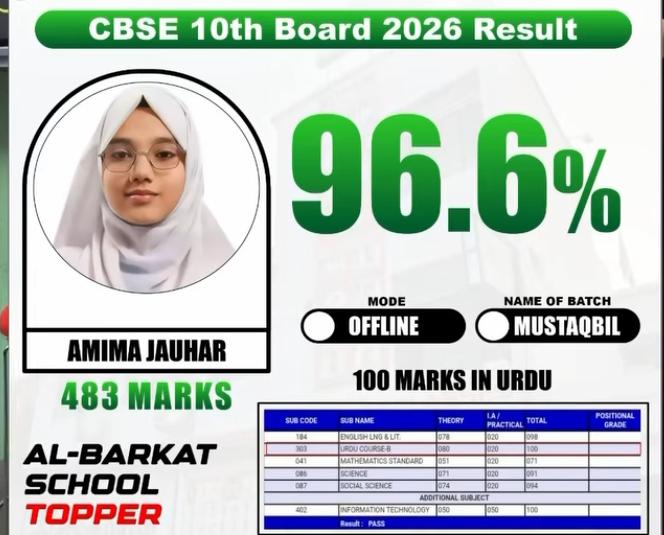
Amima Jauhar, daughter of Mohammad Afaque Jauhar, has emerged as the top scorer of Prestigious Al Barkat Public School, Aligarh, securing an outstanding 96.6% in her CBSE 10th board examinations. Interestingly another student Aleena Akhter also made the school proud by getting the same excellent result.
Amima’s result stood out with a perfect 100 marks in both Urdu and Information Technology, reflecting her exceptional command over languages as well as technical subjects. Her consistent hard work, disciplined study routine, and academic focus have been widely appreciated by teachers and school authorities.
A student of Al Barkat Public School, Amima also received guidance from Image Classes, Aligarh, which played a supportive role in her preparation. Her achievement has brought pride to her family, school, and the Aligarh academic community.
source: http://www.theindianawaaz.com / The Indian Awaaz / Home> Campus / by Indian Awaaz / April 18th, 2026
The Ministry of Environment, Forest and Climate Change awarded a major research project to Professor Atiqur Rahman, Head of the Department of Geography at Jamia Millia Islamia. The project focuses on studying the reduction of urban heat through the presence of water bodies and tree cover. The research carries a funding allocation of Rs 47.46 lakh.
The study will examine three Indian cities located in different climatic zones. These include Kolkata with a warm and humid climate, Bengaluru with a temperate climate, and Udaipur with a semi arid climate.
Urban areas across India face rising temperatures due to the urban heat island effect. Built up surfaces, reduced vegetation, and the loss of water bodies increase surrounding temperatures. These changes intensify heat stress and increase health risks. Low income and marginalized communities face greater exposure to these conditions.
The project aims to measure the role of water bodies and tree cover in lowering urban temperatures. Natural elements such as vegetation and water surfaces support cooling through shade and evaporation. These features help maintain surface energy balance and reduce heat accumulation in cities.
Researchers view these elements as nature based solutions which support climate adaptation in urban environments. The findings will contribute to policies related to urban environmental planning and climate resilience.
The research also supports national climate policy goals. It aligns with the National Action Plan on Climate Change and Sustainable Development Goal 11, which focuses on creating safe and sustainable cities under the Vision Viksit Bharat 2047 initiative.
Professor Rahman has worked on multiple international and national research collaborations. His work covers urban environmental management, climate change, water resources, and disaster management. He has guided thirteen doctoral researchers and produced eighteen books along with two hundred research papers.
source: http://www.radiancenews.com / Radiance News / Home> Latest News> Report / by Radiance News Bureau / March 10th, 2026
Amid our fast-paced lives, there exists a remarkable group of individuals who believe in slow, steady, and consistent efforts to create meaningful change.
These individuals are known as changemakers—people who quietly dedicate themselves to bettering society, far from the spotlight and the noise of daily routine.
They don’t seek fame or recognition. Instead, they focus on making a positive impact in their communities. Often unheard of, these changemakers influence others through their actions, values, and vision for a better world.
Awaz–The Voice is proud to launch a special series starting this Sunday, spotlighting Indian Muslim changemakers of India.
Through their inspiring stories, we aim to shine a light on individuals whose work exemplifies compassion, dedication, and innovation.
Our editorial team has carefully selected these changemakers based on several parameters, including the authenticity of their efforts and the tangible impact they have made.
These are everyday heroes who are addressing pressing social, environmental, and economic challenges—often with limited resources but unwavering commitment.
They are improving access to education, healthcare, and sanitation; they are empowering women, protecting the environment, and uplifting their communities—all without expecting any rewards or recognition. For them, the satisfaction of doing good is reward enough.
Their actions may seem small, but their impact is profound. As the saying goes, “Every drop counts in making an ocean.” Each changemaker is a vital part of the wave of progress that is quietly transforming India.
One of our key criteria in identifying these individuals was whether they are creating tangible change or inspiring others to become changemakers themselves. For us, a changemaker is someone who brings positivity into the world through innovative solutions, leadership, and a commitment to improving lives and systems.
In a world that often celebrates loud success, we believe it’s important to pause and acknowledge those who uphold the highest ideals of humanity. These changemakers serve as a moral compass, reminding us of our own responsibilities to society and to one another.
We begin our series with changemakers from Uttar Pradesh, featuring stories like that of Capt. Saria Abbasi, who dreamt of joining the Indian Armed Forces from a young age. After earning her engineering degree and receiving multiple job offers, she chose instead to follow her dream and joined the Indian Army—becoming a role model for countless Muslim women aspiring to serve the nation. She has done challenging missions like serving at Indo-China border post at Tawang in October 2021.
Rubina Rashid Ali, who lives in Aligarh Muslim University’s campus has become a champion for women earning their livelihood out of applique (ornamental needlework in which pieces of fabric are sewn or stuck). She has stood up for them to ensure that these women from poor backgrounds get the wages they deserve.
The changemakers of India
Dr Farha Usmani, a medical practitioner who hails from Aligarh, went to US to pursue her career in the United Nations Population Fund in 2007. Leaving behind her family was a tough call for her. She is the only Muslim woman to have risen to the position of director in the UNFPA. Today, she is making world policies for women’s health and rights. She is the Vice President of SAFAR, an organization that is responsible for the overall advancement and rights of minority and marginalized women and girls in India.
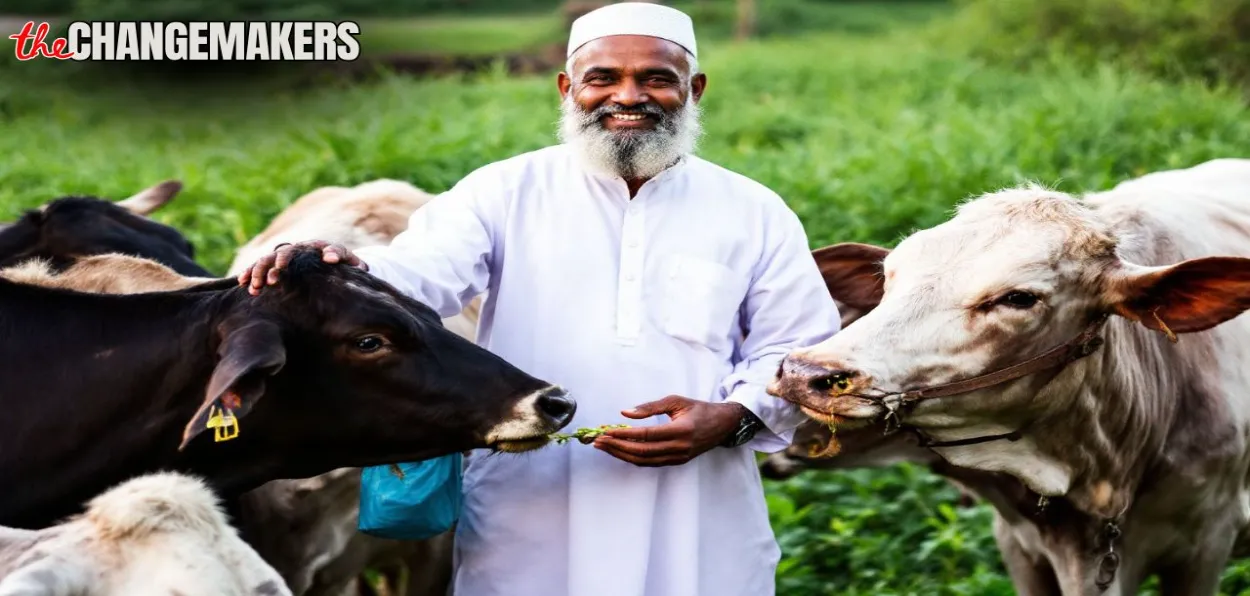
Another inspiring figure is Babban Mian, a businessman who runs a large gaushala (cow shelter) in Bulandshahar, caring for hundreds of cows. Inspired by his late mother’s deep affection for animals, Babban Mian’s work also challenges stereotypes and promotes harmony by offering a different perspective on the Muslim community’s relationship with animal care.
Some of the changemakers will remind you of characters straight from Indian folklore and vernacular literature. People who have been nurtured by Indian civilizational values of compassion and selflessness.
Through these stories and many more, we hope to inspire our readers and celebrate the quiet revolution being led by changemakers who are shaping a better, more inclusive India.
We’d love to hear your thoughts on this series. Write to us at input@awazthevoice.in or engage with us on our social media platforms.
The author is the Editor-in-Chief of Awaz-the Voice portal
source: http://www.awazthevoice.in / Awaz, The Voice / Home> Stories / by Atir Khan, Editor-in-Chief, Awaz-the Voice portal / May 22nd, 2025
Engineers at Aligarh Muslim University have developed a Ferro Cellular Insulated panel to reduce indoor heat during peak summer. The innovation comes from the Civil Engineering Department and offers an energy efficient alternative to brick walls.
The research team includes Prof Abdul Baqi, Dr Mohammad Rehan Sadiq, and research scholar Yasir Khan. They designed the 90 mm corten cement panel using cement and cardboard. A gap between two layers traps air, which works as insulation. The panel keeps indoor temperatures at 25 to 27°C when outdoor heat reaches 40 to 42°C. This means a drop of nearly 15°C.
Researchers say the panel reduces the need for air conditioners and coolers. It also blocks external noise, improving indoor comfort. Dr Sadiq said the team focused on durability and structural strength while introducing a material not widely used in India.
Cost comparisons show long term savings. Building a 10×10 foot room with bricks costs around ₹1 lakh. Using the insulated panel raises the cost to about ₹1.15 lakh. However, annual electricity expenses for a brick room reach around ₹22,651 due to cooling needs. A panel built room requires about ₹10,251 per year. This results in savings of nearly ₹12,400 annually.
Researchers also found electricity use remains lower throughout the year in panel built rooms. The lighter panels reduce structural load, which improves building safety.
The team plans to introduce the technology to the market. With rising temperatures and higher energy demand, this panel offers a practical option for heat prone regions. It also reduces dependence on bricks and mortar, lowering environmental impact.
source: http://www.radiancenews.com / Radiance News / Home> Uncategorized / by Radiance News Bureau / February 12th, 2026
The Council of Science and Technology, Uttar Pradesh honoured Dr. Riaz Ahmad, Lecturer at Department of Zoology, Aligarh Muslim University (AMU), with ‘Young Scientist Award’ yesterday. The award has been given to Dr. Ahmad in recognition of his contributions in the area of Biochemical and Molecular Genetics. Besides cash prize of Rs. 25,000/, award carries a certificate, memento and a shawl.
The award was presented to Dr. Riaz Ahmad by Mr. Abdul Mannan, the State Minister for Science and Technology at the Vigyan Samaroh at Sir C.V. Raman Auditorium in Lucknow.
Dr. Ahmad is also a recipient of prestigious Dr. D. S. Kothari Post Doctoral Fellowship from UGC, Young Scientist Project of DST and Scientist of the Year Award-2009 given by the National Environmental Science Academy.
He has a number of research papers to his name published in various scientific journals of national and international repute.
source: http://www.twocircles.net / TwoCircles.net / Home> Indian Muslim / by TCN News / March 30th, 2010
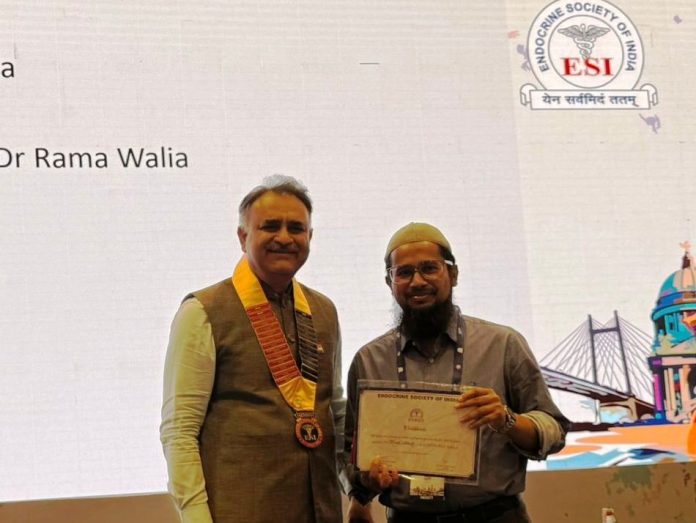
Dr Hamid Ashraf receives the Prestigious A.R. Seth Award for Research on Gestational Diabetes at the 54th Annual Conference of the Endocrine Society of India (ESI), held in Kolkata
Aligarh:
Dr Hamid Ashraf, a distinguished faculty member at the Rajiv Gandhi Centre for Diabetes and Endocrinology, Aligarh Muslim University (AMU), has been honoured with the prestigious A.R. Seth Award at the 54th Annual Conference of the Endocrine Society of India (ESI), held in Kolkata.
The A.R. Seth Award, among the highest recognitions in Indian endocrinology, is conferred annually on researchers and clinicians for outstanding contributions to the understanding and treatment of hormonal and metabolic disorders.
Dr. Ashraf received the award for his pioneering research on maternal health, particularly on identifying early metabolic markers of gestational diabetes mellitus (GDM). His study revealed an alarming trend of dysglycemia in over 40 percent of pregnant women in the region, highlighting the urgent need for reliable predictive markers to ensure early detection and better fetomaternal outcomes.
“This recognition is not mine alone but belongs to the entire team that made this research possible,” Dr. Ashraf said, acknowledging the support of colleagues from the Departments of Obstetrics and Gynecology, and Pediatrics at AMU, along with the contributions of students and patients who participated in the study.
Experts at the conference lauded his findings as a significant step in addressing one of India’s most pressing public health challenges.
source: http://www.radiancenews.com / Radiance News / Home> Pride of the Nation> Awards / by Radiance News Bureau / September 10th, 2025
We celebrated the 100th birth anniversary of Prof Rais Ahmed, the former head of the Physics Department, Aligarh Muslim University and the person to whom I owe a great deal for starting me off on my career path in plasma physics research.
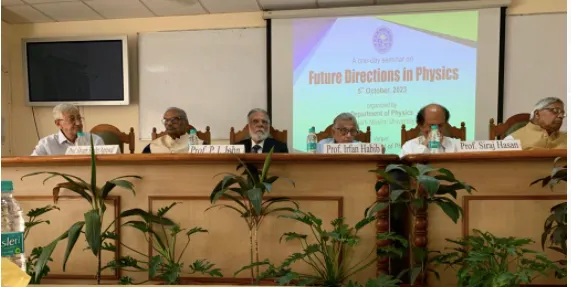
A one-day memorial cum seminar on Future directions in Physics was held at the University on 5th October 2023 Venue. Prof. Irfan Habib, Prof. of History, AMU, Prof. Siraj Hasan (Former Director, Indian Institute of Astrophysics), Prof. Naresh Dadhich (Former Director, IUCAA), Prof. S. K. Singh (Former VC, HNBU), Prof. Wasi Haider and Prof. Shyam Sunder Agrawal (Director General, KIIT Group of Institutions) spoke on the occasion. I spoke about my association with him and the future of Plasma Physics and Thermonuclear Fusion Research in India.
It was a forenoon in July 1964 when I first met Prof Rais Ahmed, who had become the Head of the Department that very year. I had travelled from Kerala seeking an opportunity to do research. He asked me a few questions on Physics, and I suppose I answered them reasonably well. But then he wanted to know why I wanted to pursue research.
I had rather romantic ideas like research leading to new knowledge and our responsibility to seek pure knowledge etc. It was clear that he did not take me seriously as he went on to say that science is what drives social transformation by changing our perception of our relationship with nature. Another observation was about science leading to technology which improves the quality of life.
Our conversation covered many things. I suppose he was gauging my mind and trying to find what kind of person I was. If it was a test, I passed it as he said that I could join for research. He made sure that I had no preference for Nuclear Physics or Spectroscopy, the areas of ongoing work in the department. He talked to me about Plasma Physics as an emerging field and about the work which was going on in Harwell and Oxford on Thermonuclear Fusion Research.
I did not know about Plasma Physics even at an elementary level. However, I was willing to learn and was asked to talk to Prof. D C Sarkar about the thesis work in more detail. I went through an intense learning programme, primarily reading Physical Review and Review of Scientific Instruments. There was no previous laboratory I could walk into and start work and I had to start from scratch. Looking back, I was taking an enormous risk as I had to build an entire laboratory for me to start the thesis work.
I rigged up a Radiofrequency generator with Japanese power tubes scavenged from the Electrical Engineering Department. Prof Venkateswarlu’s lab was full of microwave equipment, which Rais Sab allowed me to borrow. With all this, I set up an experiment and after a struggle of five years, put together a thesis which got me a degree. Almost immediately he gave me a regular job as a lecturer in the department as some vacancies were due to be filled.
As the Head of the Department, he did much to expand research and teaching in Physics in new areas. As Director of Academic Programmes, he organized the Semester System designed to update courses and provide more rigorous instruction to students. He made an alliance with Uppsala University in Sweden for faculty members to do research there. He arranged for PhD scholars to start teaching postgraduate students.
I recalled my interaction with university life during my eight years there. At first, Aligarh gave me a culture shock. My inability to comprehend Urdu was the first barrier to appreciating the culture. The exalted forms of addressing, and the too formal and exaggerated ‘Tehzeeb’, the gestural ‘adaabs’ strewn around were all alien. The food, though delicious, was completely unfamiliar. But the campus was a dream with beautiful buildings, stately halls, verdant lawns, and lush gardens. The library gave me all the books I wanted to read. The accommodation I got at the Sulaiman Hall was quite adequate. The students from central Travancore preferred this. There was a South Indian mess catering our preferred food. Tea at the Paradise restaurant with friends was fun.
Rais Ahmed had interests ranging from his specialization in Electronics to varied areas of science and education. He published over 100 papers on Electronic Circuit Analysis. Analogue Computers. Speech Recognition and Production, and Creative Teaching of Physics. The work he started in the 1970s on speech perception would eventually become an important branch of artificial intelligence and machine recognition of speech.
I recall a symposium he had organized on higher education, where we were asked to be volunteers to help the organization. The attendees were all academics from Universities and IITs and I was fortunate to listen to many of them. The remarkable skill with which Rais Sab generated consensus on many issues which were debated was an eye-opener for me.
In a department seminar, when his student Moonis Ali spoke on the design of an analogue computer system, some of us, ridiculed the idea calling it a paper machine. Rais Sab defended the presentation vigorously, saying that new ideas were what drove science forward and that they had as much importance in science as building new instruments.
His remarkable organizational skills were brought to bear at the prestigious Annual Meeting on High Energy and Nuclear Physics, sponsored by the Department of Atomic Energy. Prof Roy Daniel from TIFR was the coordinator of the meeting, and his being from Kerala, we used to chat about the preparations for the meeting. The participants included bigwigs like Vikram Sarabhai, Prof M G K Menon and Dr Raja Ramanna. The meeting was hailed as very successful thanks to the planning and preparations led by Rais Saheb.
All of us in the department rejoiced when he was made a member of the Science Advisory Committee to the PM, then Mrs Gandhi. After each meeting, he would call all of us to the lawn near the workshop to convey to us the flavour of the meeting. We had the vicarious pleasure of being informed about the thinking in the places of power.
He would call me occasionally to his office to find out how I was doing. In one of these meetings, he advised me to read journals other than those dedicated to pure physics. He cited the Bulletin of Atomic Scientists as an example.
Rais Sab had an abiding faith in Scientific Socialism and felt strongly about the increasing global dominance of the multinationals and about what he saw as a retreat by India from its independent position both in the Economic and Intellectual fields. He had a strong belief that human capital, in the form of expanding knowledge and scientific spirit, held the key to India’s salvation. For this ideal, he worked tirelessly both as an individual and in administrative capacities.
In the 1950’s he was an energetic organizer of the Association of Scientific Workers of India. Once when I asked him about the ethics of unionizing scientific workers, he defended it by saying that collective bargaining need not be about wages and working conditions only. Professional bodies of scientists had a role in influencing public policy.
After I left Aligarh in 1972 to join the Physical Research Laboratory in Ahmedabad, I had occasional interactions with him. He made me a member of the UGC Committee to visit Marathwada University to make an academic assessment. He funded my proposal to have an orientation programme for university teachers in the emerging field of Plasma Physics.
I had an exciting and eventful life contributing to Plasma Physics in India, right from its inception at the Physical Research Laboratory, during the Plasma Physics Programme and its eventual transformation to the Institute for Plasma Research and when India became a proud partner in the ITER project of building the world’s first Thermonuclear fusion reactor in France. I owe a debt of gratitude to Rais Saheb for initiating me into the research path, which made all this possible.
source: http://www.john-pucadyil.medium.com / Medium.com / Home / by John Pucadyil / October 06th, 2023