Advocate Faiz Syed leads new regional initiative inspired by Abdul Wahid Shaikh’s movement for justice and reform.
On 28th September, the Aurangabad (Chhatrapati Sambhaji Nagar) chapter of the Innocence Network, India was formally established, with an ad-hoc committee of 14 advocates led by Advocate Faiz Syed.
Speaking to Muslim Mirror, Syed said, “We felt the urgent need to start this chapter due to the widespread issues of wrongful incarceration, false implication, filing of bogus cases, and arbitrary arrests across the country. When a sole breadwinner or a poor individual is drawn into this legal labyrinth, it becomes incredibly difficult for them to navigate their freedom.”
He added, “Our aim is to provide legal aid and guidance across the Marathwada region and ensure that no instance of wrongful implication goes unchallenged.”
The Innocence Network was founded by Abdul Wahid Shaikh, one of the accused in the 2006 Mumbai train bombings (7/11 case), following his acquittal by the Maharashtra Control of Organised Crime Act (MCOCA) court in 2015. Shaikh spent nine years in Arthur Road Jail before being acquitted. “We had fought the case to the best of everyone’s ability,” he recalled. “Yet, we were convicted. That experience made me question the limits of legal struggle alone.”
As he was released, Shaikh’s co-accused urged him to continue the fight for their freedom—a moral responsibility that, he says, became his life’s mission. After returning to work as a teacher, Shaikh began assisting Advocate Yug Mohit Chaudhry, who led the 7/11 defense in the Bombay High Court. It was during this time that he met Advocate Pari Jata and researcher Sharib Ali, both deeply involved in civil rights work.
Inspired by the global Innocence Network movement, Ali proposed launching an Indian chapter. Together, they began mobilizing civil society to challenge wrongful convictions, especially in terrorism cases. Their first public gathering in Delhi—attended by lawyers, students, scholars, and activists—marked the formal establishment of the Innocence Network India.
The Network describes itself as “an all-India collective of individuals and organisations working for the rights of those wrongfully prosecuted or convicted, especially under charges of terrorism.” Led by exonerees and supported by lawyers, researchers, and civil rights groups, it focuses on criminal justice reform, rehabilitation, and policy advocacy. Its website also archives documents related to the 7/11 case.
Shaikh’s first book, “Innocent Prisoners,” exposed what he described as fabricated evidence by the Anti-Terrorism Squad (ATS) in framing 13 innocent men. The book was widely discussed as a crucial work highlighting the pattern of false implication of young Muslims in terrorism cases.
In 2016, the Network organized its first Innocent People’s Tribunal at the Constitution Club of India, where 16 wrongfully prosecuted individuals testified publicly about their ordeal. The report from this tribunal later informed the Law Commission’s Report No. 277. Another tribunal followed in Kolkata in 2018.
Since 2017, the Network has hosted two annual programs in Mumbai—one on the anniversary of the 7/11 bombings and another, the Shahid Azmi Memorial Lecture, in memory of the lawyer who represented the 7/11 accused. These events feature legal experts, journalists, and filmmakers such as Justice Abhay Thipsay, Hansal Mehta, Yug Mohit Chaudhry, Susan, Nazia Sayed, and Faisal Qazi, among others.
Shaikh has also used books, media, and digital platforms to expand his advocacy. His YouTube channel “Begunah Qaidi” features over 250 videos documenting cases of wrongful incarceration. His “Mobile Legal Aid” helpline operates 24×7, offering immediate support to those facing fabricated charges. “It has already helped prevent several cases of wrongful incarceration,” he noted.
Beyond advocacy, Shaikh continues to assist exonerees with legal representation, education, and rehabilitation. His upcoming books include an autobiography with Roli Books and a collaborative work profiling his co-accused.
Recently, the Innocence Network launched a think-tank to document wrongful incarcerations and misuse of draconian laws. “Our team includes researchers, professors, and lawyers,” Shaikh said, adding that a detailed report is in progress.
Sohail Shaikh, one of the 7/11 exonerees, told Muslim Mirror: “The Innocence Network may have been formally established in 2016, but its roots go back to Arthur Road Jail. Shaikh has only continued the work we all started in prison. The Network’s work made it possible for society to finally recognize our innocence.”
Advocate Shruti, a researcher with the network, emphasized, “The kind of miscarriage of justice in the 7/11 case represents a double injustice—innocent people are tortured while real perpetrators remain free. The Network’s work is vital to restoring ordinary citizens’ faith in justice.”
Shaikh revealed that new chapters of the Innocence Network are being planned in Bangalore, Jalgaon, Jalna, and Hyderabad, set to be launched later this month.
source: http://www.muslimmirror.com / Muslim Mirror / Home> Human Rights> Indian Muslim> Positive Story / by Osama Rawal / October 20th, 2025
India prides itself in recognising and celebrating “Unity in Diversity”, and to underline that great aspect Daijiworld Mangalore, after thousands of diverse articles and analyses, has enthralled readers for decades now. I would like to highlight, amidst the assortment of attractive information in this exclusive Special, a lesser-known history and ancient monument of our co-minority community of Mangalore, in two parts. The next part will be on other old historic monuments complementary and connected with Islam in Mangalore. There are always those who thirst to know the little-known history and geography too—for it is part and parcel of our Kudla roots, very ancient and very valuable.
Mangaluru, Kudla, Kodial, Maikala, Mangalapuram—this place of many names—no doubt is a place steeped in multifaceted ancient history. Temples, Churches, Mosques, and more exist which hold history and culture often unknown. Mangalore thrives on worship of the Gods, no doubt! At every nook and corner, historic Temples, Mosques, and Churches can be found. The history of Mangalore connects with different ancient regions, languages, faiths, and religions, multi-faceted and overlapping.
Taking a look at an ancient Mosque—probably the oldest in the region—in Bunder, the heart root of old Kudla/Mangaluru, is indeed very enriching and thrilling. The original roots of real old Mangalore run between Sharavu Ganapathi Temple in Kodialbail and Mangaladevi Temple in Bolar. The famed Muslim ruler of Mysore, Tipu Sultan, is known to have had a role in the development of Sharavu Ganapathi Temple, according to historians who have authored books on Tipu history—a strange dream while he camped nearby caused him to donate land for the temple.
Tuluva and local rulers are known to have protected Muslim/Arab traders in ancient times and have given them free passage through their kingdoms, much before Westerners were heard of in this area. Western rulers too established close trade and cultural ties with Muslim kingdoms and provided space for their lifestyle. It is evident that there has been much intercourse between cultures and beliefs for ages, creating a mosaic that is inseparable in and around Mangalore and beyond. A deeper look at the oldest Masjids of Mangalore and connected historic auxiliaries will enlighten the intricate mosaic.
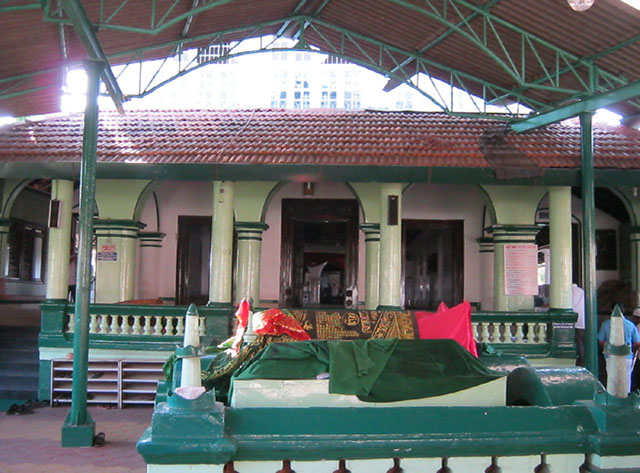
Zeenath Baksh Masjid, Bunder, Mangalore
This historic mosque is referred to as “Juma Masjid” and “Beliye Palli”. It is right in the middle of ever-bustling Bunder, the old port of commerce locality sandwiched between Golikatte Road and Port Road, just a stone’s throw from the Gurpur river and North Wharf to its west. Here, a wide range of commodities and condiments were—and are still—traded. The area seems in chaos with old dilapidated buildings amid newer ones and narrow lanes choked with heavy traffic of all descriptions and gutters. One’s olfactory senses will be tested with multiple oriental aromas of spice, coffee, areca, pepper, cardamom, chilies, garlic, ginger, rice, pulses, onions, potatoes… and all kinds of condiments, retail and wholesale—and of course, rotting garbage.
A trader, M M Kini, opposite the mosque, is a licensed dealer in arms and ammunition—it is an old family business. This unique and antique mosque is around the corner from the Bunder Police Station and the famous old renovated Bombay Lucky Restaurant, well known to local folks. The Kanara Chamber of Commerce and Industry (KCCI) is located a few yards opposite.
Bunder, the old port of Mangalore since ancient times, is the backbone of history, communication, and commerce, with thriving seaports and even the Lakshadweep Islands with which it shares a long history. The multi-religious business people around are of a very friendly and easy-going enthusiastic nature. A visit here is like going back in time and also tripping over the new order of life and faith.
The Masjid Zeenath Baksh in Bunder is said to have been established in Mangalore in 644 A.D. It was first established in Mangalore by Habeeb bin Malik, and the first Qadhi (Qazi) appointed was Hazarath Moosa Bin Malik, son of Malik Bin Abdullah. This mosque was probably inaugurated on Friday, the 22nd of the month of Jumadil Awwal (fifth month of the Islamic calendar) in the year 22 of Hijra (644 A.D.).
That this sacred Masjid was established by the holy men of Arabia, who were said to be kith and kin of the “Sahabas” (associates) of Prophet Hazarath Mohammad Rasulallah, makes it about 1400 years old—about a thousand years before the Portuguese brought Christianity here.
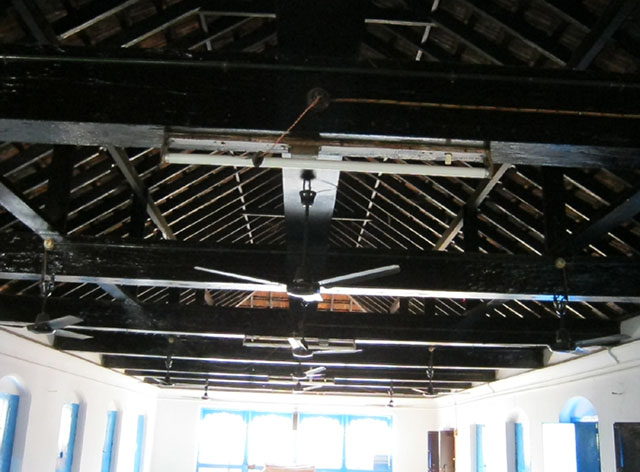
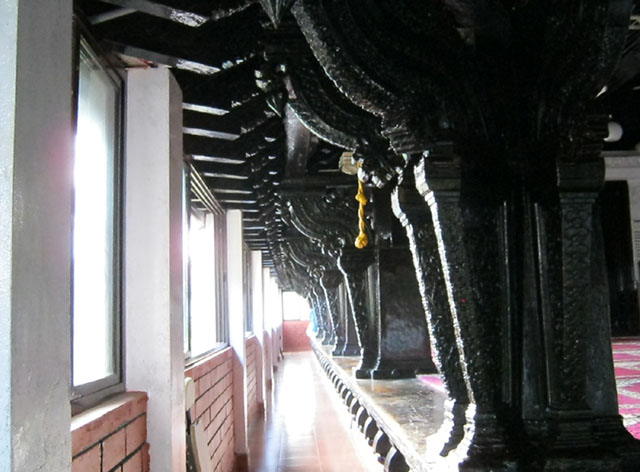
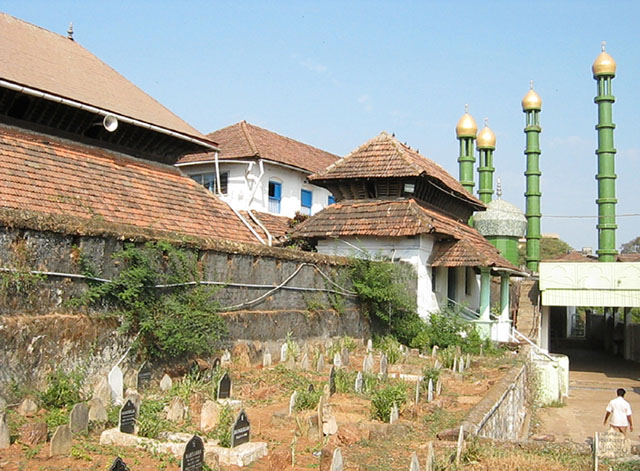
The Zeenath Baksh Mosque is indeed unique. The front portion (with a prayer hall on two levels) is no doubt added on in the 19th century (later too), and the tile roof has Basel Mission tiles. Another structure constructed later has four minarets and a typical dome and houses the 90-plus-year-old tomb of Hazrath Sheikuna Muhammed Moula Jalal Masthan Al Bhukhari, a saintly Khazi laid to rest here. Many young people come here to pray and find their lives changing with renewed goodness. Also, some of his kin’s tombs can be seen.
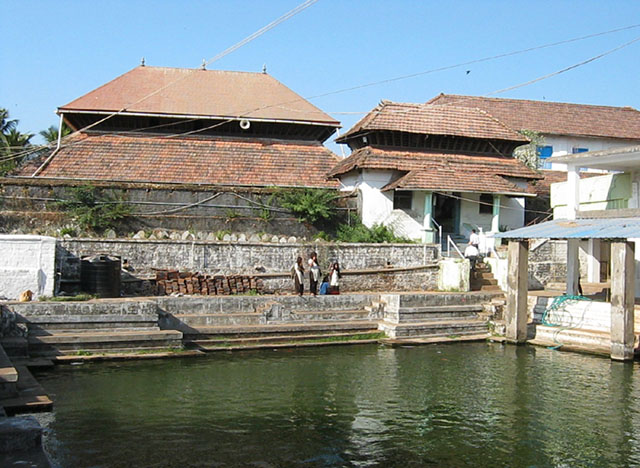
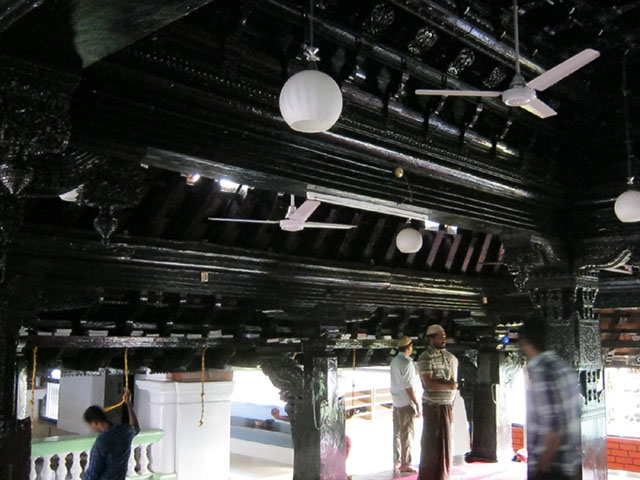
The inner ancient original mosque dates back centuries perhaps, and this old legend of a “Masjid” in the 1780s is said to have been refurbished and renovated systematically by the great Tiger of Mysore, Tipu Sultan, who is well known for such philanthropy. Anyone with a basic knowledge of layouts in the region cannot fail to recognise that this great monument, which spreads over a large area, has many characteristics of a temple—the large water tank (below ground level), the shape of the tiled roof (old Malabar), and the hand-carved woodwork (characteristically local).
Tipu added beautifully carved bulky rosewood pillars and also a carved ceiling—the huge carved works are majestic. The mosque was renamed after Tipu’s daughter, Zeenat Baksh. The prayer hall is on a plinth with an open colonnade running around the building under heavy overhanging eaves with carvings. The renovation coexists in harmony with the older, more ancient staccato structure.
The water tank in the center of the premises has granite steps and provides water for the ablutions or ‘Wuzu’ prescribed before ‘Namaz’. This Juma Masjid is well frequented by devotees for regular five-times Namaz and to visit the tombs. There is also a burial ground that partly encircles the mosque. One can see men and women frequenting this holy place; on festival occasions, this mosque can hold about 2000 people for the Namaz or prayer assembly. During Ramadan fasting and festivals, the religious spirit is at a peak and exemplary.
Tipu Sultan has also built a Masjid at Mangalore 2 km away from this mosque. It is presently called “Idgah Masjid” at the top of the hill (now called Light House Hill, in the town center near Aloysius University gate). Muslims from all over the district gather here and offer prayers on festive days of Eid-ul-Fitr and so on. Subsequently, in 1920, Mangalore Bail family constructed a large assembly hall or Jamath Khana. There are a good number of Muslims in Mangalore, and their concentration in this area is phenomenal.
Present Activity of the Masjid:
Considering the needs of the economically weaker people of the community, the management committee of the mosque has made initiatives to extend free service in various ways for the needy people of the community. Funds are raised from benevolent donors of the community for the purpose of marriages, education, medical relief, shelter, and other social basics. Also, the management committee of this mosque looks after the burial of destitutes free of cost. Efforts are on by the leaders for establishing and running schools and colleges from KG to PG for the benefit of the wider community who are rapidly marching forward in all spheres of activity.
“He is the One GOD; the Creator, the Initiator, the Designer. To Him belong the most beautiful names. Glorifying Him is everything in the heavens and the earth. He is the Almighty, Most Wise.” (Quran, 59:24).
The current perception of Islam and the followers of religion and culture in Kanara and the coastal areas, in the light of new developments and issues that rule, calls for a closer look at the history and practice of Islam in this region. Muslim groups are generally labelled as “minority” and weak, but it must be clearly understood that the population is significantly strong, and their presence here can be traced back to the 7th century A.D., while Christianity is from the 16th century practically, though it is credibly said that Christianity landed in Kerala in the first century (53 A.D.), even before it reached Europe.
There are many facets that Muslims have dominated here for centuries and still do. Their sway is very significant and ancient and needs serious consideration of the rights and values guaranteed by tradition and the Indian Constitution. Islam is now an indelible part of this region, India, and the world over. They cannot be labelled as aliens and are part and parcel of the mainstream.
The Muslim community here, in view of all aspects, is a strong, rooted, and recognised community. It can be observed that the Muslim community’s progressive principles here are indeed very forward, and their outlook is advancing, influenced by the Middle East and Western standards and good education and industry. Many prominent properties and businesses are owned by them. Families are largely active; elders in the families are secure and cared for, and women seek good education. The entire community is enterprising, hard-working, cooperative, and presents a happier picture generally. Religion-wise, they are fervent and keep the tenets strong even in the face of hurdles. The world over, it is seen they are going from strength to strength, and leaderships have to be transparent.
(dated October 16th, 2025 / source : daijiworld.com / by Ivan Saldanha-Shet )
Islamic Monuments of Mangalore: Part 2 / October 23rd, 2025
Mangalore and coastal Karnataka is steeped in multifaceted History and colour, many sources have facilitated the common person of interest to be aware and enjoy the depth of information. Daijiworld has been very generous and it is appreciated. Hindu, Muslim, Christian ……..and many more allow interesting facts and figures in and around mangalore / Canara since ages and fascinates. In the previous episode (Part 1 of 2) we noted the arrival and monument of Islam at Bundar, the original area of Kudla or Mangaluru at present. The matter would not be complete if a brief look at ancient contemporary Islamic monuments are not highlighted. No history is the sole property of any one in particular and is not esoteric in practicality. So, we continue and hope it will round off the interest and study of this history, let us have observations and comments.
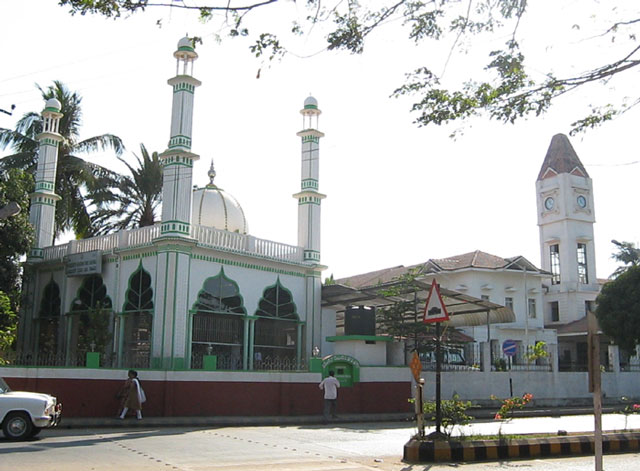
KUTCHI MEMON MASJID. BUNDER. Mangalore : This is another ancient Masjid just near and on the way to Zeenath Baksh Masjid right opposite to famed ‘Bombay Lucky Restaurant’; the ‘Kanara Chamber of Commerce and Industry (KCCI) is in the backyard of this Masjid. It is also referred to as ‘Katchi Palli’. It is a wonder that this Mosque is credited with many firsts. Traditionally each of these many Masjids in Mangalore have their own section of regular devotees. Reliable sources say that Kutchi Memon Masjid was basically constructed in 1839 and is now 174 years old going on to be 175 years. The force behind this sacred work were Patels from Kutch in North Gujarat, traders who settled in the area and were masters in the spice trade, they spoke Kutchi language and gradually were assimilated into the Kanara culture, the cause of this development are the historical sea routes to Mangalore from the Arabian Sea. To and fro activity is still very visible it appears.
The wonders at this religious center are : It was the first to get power supply and the fourth in Mangalore to be electrified in the British era, in 1930s , the first to use loud speakers for the ‘azaan’, call to pray and in Urdu, the first where the ‘qutba’ (Friday Sermon) was delivered in Urdu and so on.
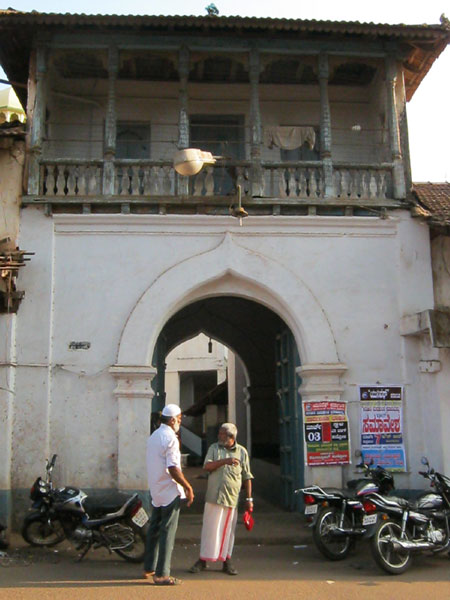
There has been development in the precincts of the masjid but the original structure on about 20-25 cents remains still very original. The new extension was first made in 1983 and plans to expand are ongoing. The unique gate way into the masjid has a picturesque oriental architecture. Indeed this area called Bunder is a wonder with many historic monuments still standing the test of time like sentinels spelling out the historical times gone by and hoping for better times for those who are to come.
Woman Saint’s Dargah in the Heart of M’lore : Hazrath Saidani Bibi Sahiba, the only dargah dedicated to a woman saint in Dakshina Kannada has become a refuge of hope without reference to religion, caste, creed or language. Located near A B Shetty circle, on the periphery of the prominent ‘Big Maidan’ (as it was then known) now, Nehru Maidan of Mangalore. This dargah (memorial tomb shrine) is visited by people of all faiths. Most of the people come here with a ‘harake’ (vow) as there is a strong belief that prayers are answered here. Hazrath Saidani Bibi, it is said, was a saintly lady, hailing from a ‘Fouji’ (Military) family during the regime of Tipu Sultan. She was buried in the military area (the present location of dargah on the edge of the City Police HQ – formerly the military barracks), though burial grounds were available, such was her reputation. People say that she was buried in the military area due to high respect and regard the local people of Mangalore particularly the warrior class had for her. Later, her close relatives were buried beside her. Now are seen three other tombs apart from that of Sayyadani Bibi in the dargah. Scores of people of all castes and creeds visit this place every day, giving alms to the poor that sit at this place, an accepted practice.
Another astonishing aspect of this dargah is that it is cared for and protected by retired or serving police officers of Mangalore. Hazrath Saidani Bibi Sahiba Dargah Management Committee is in the forefront of it’s maintenance. This dargah was frequently visited by the police staff and public, the tomb is adjacent to the police headquarters. In 1972, the then Dakshina Kannada SP K U Balakrishna Rau and the then Assistant SP H T Sangliana entrusted the administration of the dargah to Muslim police personnel. A committee was formed for the better administration of the dargah and in the year 1983 the old ‘Mazahar’ (tomb of the saint) was renovated. The dargah was built on land belonging to the Police department, and the property was later handed over to the Wakf Board. Indeed goodness knows no boundaries and so does harmony.
BEARY COMMUNITY IN MANGALORE: The origin of the ‘Beary’ Community is very ancient. It is known that there were many rich traders, from the Malabar coastal belt, connected with the traders of the Arab lands. Arab merchants have been visiting the coastal regions for business purposes even before the time of Muhammad (puh). Now most local Muslims in this region are part of the Beary Community.
The Beary (also known as Byari) is a community concentrated mostly along coastal Dakshina Kannada and Udupi districts in the Southern state of Karnataka. It is an ethnic group, having its own unique traditions and distinct cultural identity and language. The Beary community holds an important place as also Nawayaths of the Uttara Kannada district (who speak a type of Konkani). Bearys incorporate the local Tulu culture of undivided South Kanara and diverse traditions of the Moplahs of Malabar. The Beary community of Kanara or Tulunadu is one among the earliest Muslim inhabitants of the coast, with a clear history of more than 1350 plus years. Muslim Arab traders had a cordial relationship with the rulers of the western coastal belt of India. This is attested to also by the writing of Ibn Battuta, the intrepid North African traveller who passed through India in 1342AD. Lakshadweep too had connections with Mangalore since early times.
The word ‘Beary’ is said to be derived from the Tulu word ‘Byara’, which means trade or business. Since the major portion of the community was involved in business activities, particularly trading, the local Tulu speaking majority called them Beary or Byari, other reasons exist. According to the census of 1891, South Kanara in the Madras Presidency of British India had 92,449 Muslim businessmen consisting of 90,345 Bearys and 2,104 Nawayaths involved in business activities. The first Muslim missionaries to Mangalore can be traced to Malik Bin Deenar, an Arab trader said to be the kin of Sahabas (companions of Prophet Muhammad). He is said to have visited Malabar and landed near Manjeshwar on the northern Malabar coast, very close to Mangalore. He constructed the first Masjid in Kasargod, the Malik Dinar Masjid ( his shrine can still be seen).
Beary Language: Called ‘Beary Basse’ is spoken by the Muslim communities mainly along the Coastal Dakshina Kannada, Udupi and in some parts of Kasaragod district by the Bearys (Byaris). Beary is a language of mixed idioms, phonology and grammar of bothe Tulu and Malayalam. It is considered a dialect since Kannada alphabets are used in writing and is also known as ‘Mappila Bashe’ because of Bearys’ close contact with Mappilas of Malabar. Due to the intensive influence of Tulu for centuries, it is today considered as a language close to Tulu as well. Surrounded by the Tulu speaking community, the impact of Tulu on the phonological, morphological and syntactical structure of the dialect is evident. Beary Bashe can be related to Malayalam, Tulu or Perso-Arabic origin with Arabic influehttps://www.daijiworld.com/chan/exclusiveDisplay?articlesID=6784nce. ‘Beary Basse’ also has words related to Tamil and Malayalam.
The Bearys produced rich literary work using both Beary Bashe and Kannada language. The literature comprises Beary poetry, research articles on Bearys, historical analysis of Muslims, essays, stories and other fields of literature. “English-Kannada-Beary” dictionary is now available. The Bearys have also produced a number of magazines and periodicals from Mangalore and other places of the region. Some periodicals have become popular and a few of them have become a part of Beary history. Generally Kannada script is used to produce Beary literature which is quite popular and abundant in all possible forms. There is a lot of vergin content on electronic media too now, and the future is very bright.
(Part 2 concludes this history)
source: http://www.daijiworld.com / Daijiworld.com / Home> Karnataka / by Ivan Saldanha-Shet / part One October 16th and part Two October 23rd, 2025
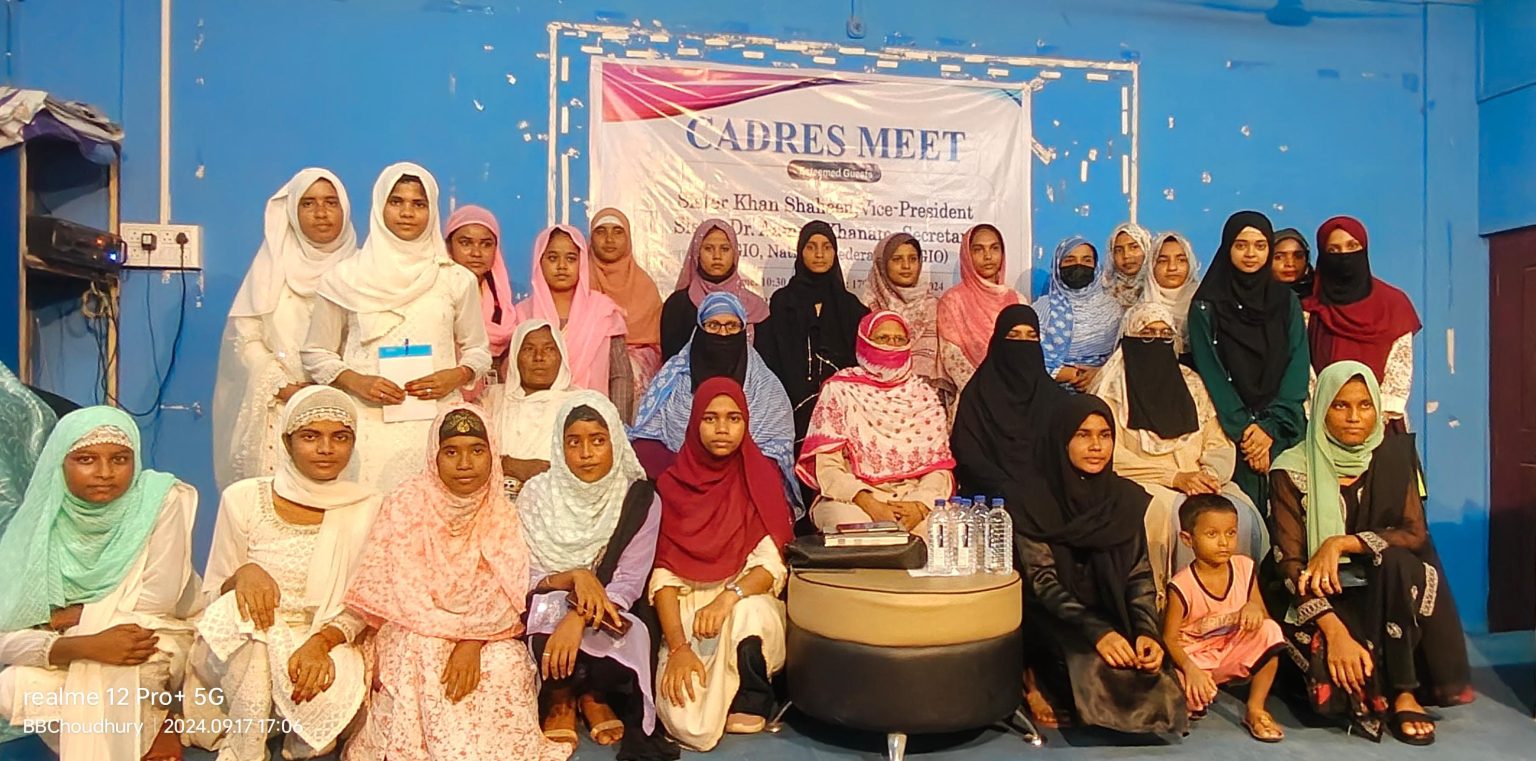
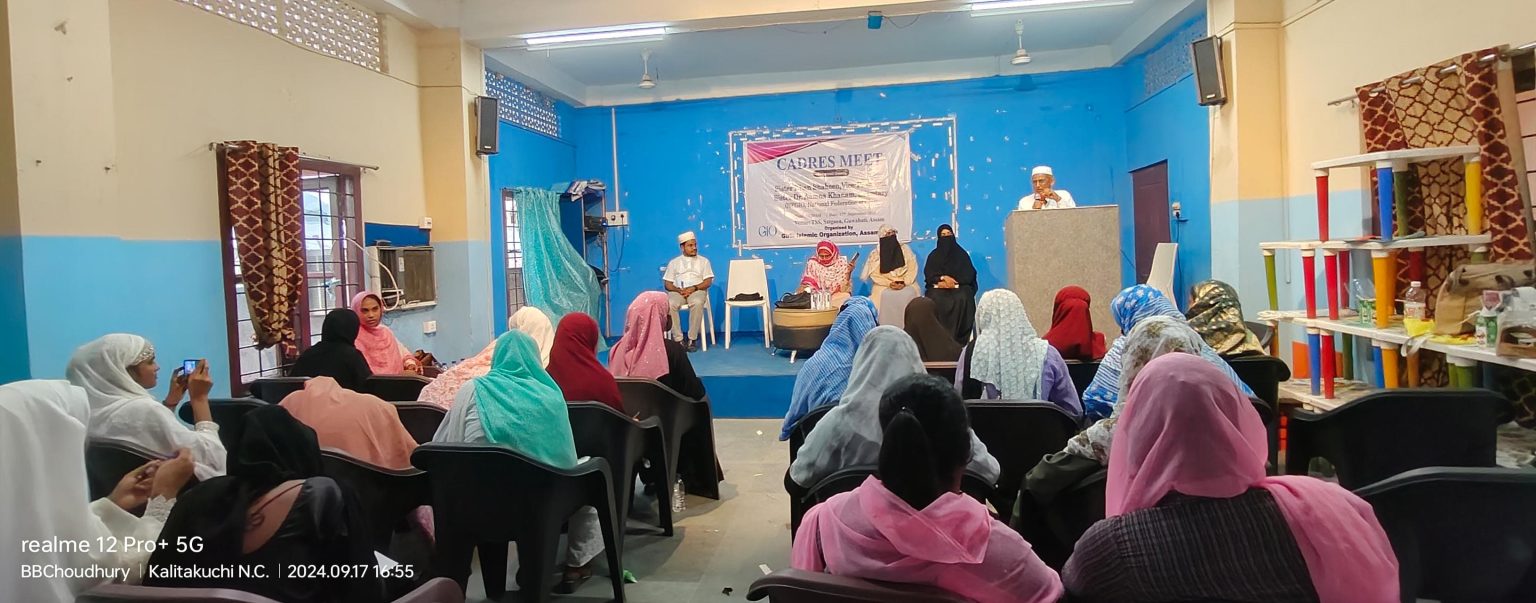
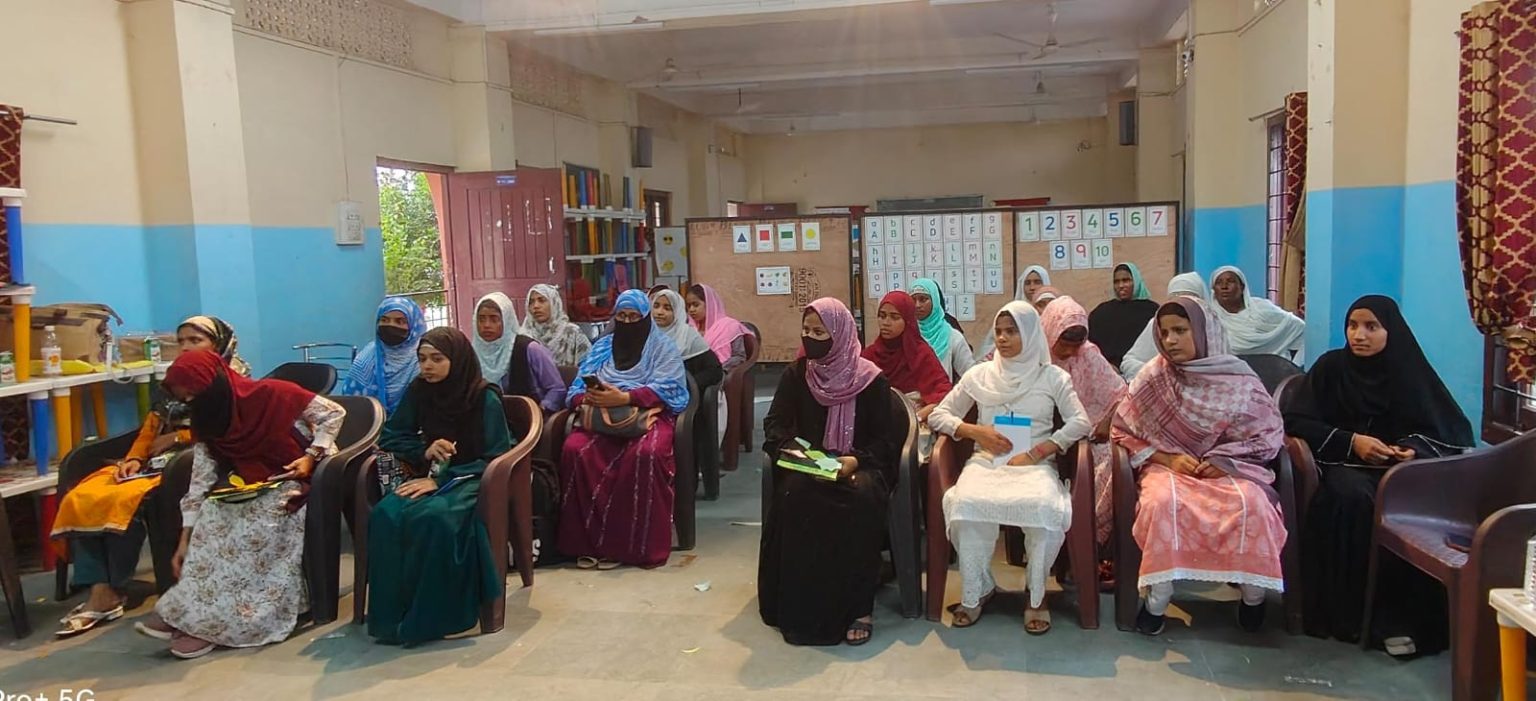
In a milestone for the Girls Islamic Organisation (GIO), the first-ever cadre meet for GIO Assam North took place in Guwahati, marking a new chapter in the organization’s efforts to empower young women in the region.
Under the patronage of Zahida Batul, Secretary of JIH Assam North Women’s Wing, GIO has been making strides in Assam over the past few years. The event commenced with the recitation of the Quran by Sumiya Begom, setting a spiritual tone for the day-long program.
Zahida Batul, the GIO Assam North Coordinator, delivered the inaugural speech, emphasizing the organization’s commitment to fostering leadership among young women. The gathering featured an invaluable address on the “Purpose of Life” by Khan Shaheen, Vice-President of the National Federation of Girls Islamic Organisation (NFGIO).
Dr. Aamna Khanam, Secretary of NFGIO, followed with a presentation on “GIO: Aims and Objectives & Organisational Setup,” outlining the structure and mission of the GIO.
Khan Shaheen further introduced the NFGIO, detailing its functions and activities, which aim to promote education and empowerment for girls across the nation.
Dr. Aamna Khanam also delivered a speech on the “Etiquette of Organisational Life,” highlighting the importance of discipline and collaboration within the GIO framework.
The open session featured esteemed guests, including Prof. Zohurul Islam Mullah, Ameer-e-Halqua; and Bazlul Basit Choudhury, Halqa Office Secretary and HRD Secretary, who delivered valuable insights.
Ameer-e-Halqua JIH Assam North congratulated the newly elected Convener and Core Committee Members, encouraging them to lead with dedication and vision.
Following detailed discussions, an Ad-hoc Coordination Committee for GIO Assam North was formed to advance the organization’s objectives.
The committee includes:
Convener: Jubaida Khatun (Tezpur) – MA in Political Science and Sociology, currently a lecturer at a private college.
Co-convener: Sujana Sultana (Guwahati) – Bachelor of Optometry, working in primary eye care.
Core Committee Members:
Selima Akhtara (Goalpara) – MA (Double), M.Ed., currently principal of a private HS school.
Jinnatara Yeasmin (Darrang) – BDS First Year student.
Sumaiya Begom (Hojai) – HS Final Year student.
The concluding remarks were delivered by Khan Shaheen, who reiterated the importance of unity and proactive engagement in the community.
This historic gathering not only strengthened the foundation of GIO in Assam but also ignited a sense of purpose among the participants, paving the way for future initiatives aimed at empowering girls across the region.
source: http://www.radiancenews.com / Radiance News / Home> Latest News> Report / by Radiance News Bureau / September 29th, 2024
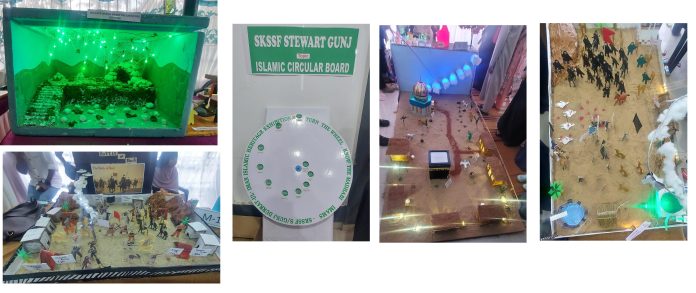
An Islamic Heritage Exhibition titled “Durrat-ul-Iman” was organised by the SKSSF Stewart Gunj Unit in South Andaman between 17 to 19 October, with the active participation of all Madrassas under ARJM . The event served as a vibrant platform for students to present creative and educational displays reflecting Islamic history, knowledge, and spirituality.
The exhibition featured a range of thematic models and interactive setups, including an artificial Qabr (grave) designed by youth members, a matching board circuit highlighting the teachings and details of the four Imams of Islam, a quiz corner, a selfie point, and a video presentation on “The Signs of Qayamat.”
Among the exhibits, the Isra-wal-Meraj display drew particular attention for its detailed depiction of the Prophet’s journey from Mecca to the heavens. Visitors praised the effort and imagination that went into the presentation, which combined learning with deep spiritual reflection.
The exhibition was organized to foster Islamic education, encourage creativity among students, and strengthen community engagement through faith-based learning. With overwhelming response from people, the exhibition was widely appreciated by the public for its innovative displays and spiritually enriching atmosphere.
source: http://www.radiancenews.com / Radiance News / Home> Latest News> Report / by Radiance News Bureau / October 23rd, 2025
It was a hot, restless afternoon in New Delhi – the kind where the sun presses down with such fury that even the breeze seems to hide. The air was thick with chants, placards, and purpose. Students from across the capital’s universities had gathered in protest – a voice of defiance against the rising wave of mob lynchings sweeping through India, backed by extremist ideologies. Amid the sea of young faces, I noticed a small group that stood out. They were not university students in jeans and t-shirts, but madrasa students in simple white kurtas and skullcaps, holding banners of peace and justice.
They had come all the way from Deoband, a quiet town that has long been a lighthouse of Islamic learning, to stand shoulder to shoulder with victims’ families. Among them was a young scholar whose calm presence carried a certain gravity: Moulana Mehdi Hasan Aini Qasmi.
Our meeting was brief, just a few words exchanged, a handshake perhaps, but something about him stayed with me. I didn’t know then that this quiet madrasa graduate would one day become the face of a remarkable educational revolution in India.
The Seeds of Brotherhood
Two years later, in 2018, the Students Islamic Organisation of India (SIO) held its grand All India Conference in New Delhi, themed “Reclaiming Dignity | Designing the Future.” Among the audience of fiery youth and intellectuals, Mehdi Hasan was invited as a representative of madrasa students – being the President of the Abna-e-Madaris (Old Boys’ Association of Deoband).
When he spoke, his words carried the depth of tradition and the urgency of modern times. After the session, we found ourselves in a long conversation about faith, education, and the future of Muslim youth. That day, a brotherhood was born – one that would travel far beyond Delhi’s conference halls.
Soon, he invited me to Deoband. What began as a visit turned into a revelation. We walked through the majestic gates of Darul Uloom Deoband, met students immersed in their studies, and discussed the evolving role of Islamic education in a rapidly changing India. It was there I saw the spark – Mehdi’s vision was clear: to bridge the gap between traditional Islamic scholarship and the demands of modern society.
From Streets to Seminars
Between 2019 and 2020, our journey turned into a mission. Together, we travelled across India – from the quiet corners of Tripura to the bustling lanes of Telangana – addressing crowds, organising awareness drives, and speaking against hate, Islamophobia, and discrimination.
Then came the storm – COVID-19. India went silent. The streets emptied. Institutions shut their doors. But we refused to stop. Our activism simply changed form. While the world was locked down, we were reaching out – distributing relief, helping stranded students, and connecting youth through virtual spaces.
One late-night discussion during those months became the turning point.
“If people have time,” I said thoughtfully, “why can’t we bring madrasa education online? Why can’t we empower teachers who have no income now? Why can’t we teach our youth skills to survive?”
That one why became a revolution.
Over the next two years, the spark spread like wildfire. Under Mehdi’s leadership, IIAD organised over ten national workshops across India, reaching thousands of students from Aurangabad to Delhi. These workshops covered topics far beyond theology – from Education to Entrepreneurship and Islamic Thought to Social Leadership.
One such event, the Aurangabad Education Expo, became a milestone in connecting madrasa students with mainstream educational opportunities. Through these sessions, IIAD began to carve a new narrative for Islamic learning – one that embraced progress without compromising on principles.
The Birth of an Idea
Our first online programme, “Education to Entrepreneurship,” was meant to be a small initiative – a bridge between learning and livelihood. But the response was beyond imagination. Hundreds of madrasa students and teachers joined from every corner of India.
We realised we had touched a nerve – there was a hunger for knowledge, a thirst for relevance. In 2022, we organised an offline workshop in Bidar at Shaheen Group of Institutions for madrasa students. To our surprise, several attendees were already running small businesses – many of whom had attended our first online sessions back in 2020.
One night, Moulana Mehdi and I sat in deep conversation till Fajr. The sky turned from ink to gold as we reached a decision that would change everything: to start a full-fledged online institute for Islamic education and leadership and the name finalised was “India Islamic Academy Deoband” and now it is a brand in Madaris Circles.
But Mehdi had already taken the first step. Before our official launch, he had begun teaching small groups online – offering a Basic Islamic Foundation Course (3 months) and an Advanced Islamic Studies Course (6 months). Within weeks, the response exploded. Students from across India – and even abroad – joined.
And then, in 2021, the dream took shape.
Multi-Dimensional Mehdi
Many madrasa teachers benefited from IIAD’s programmes and became self-sustained, empowered to teach and earn through digital platforms. Watching this transformation unfold, I became deeply impressed by Moulana Mehdi Hasan’s multifaceted personality.
As a student, he had marched with his friends in protests; later, he organised them. As a social activist, he raised his voice fearlessly and even faced police cases. Through his advocacy work within Muslim organisations, he united madrasa youth under a shared purpose – to stand up for justice, particularly during the anti-CAA movement, where he became a leading voice representing madrasa student unions.
During the pandemic, the COVID-19 crisis his alumni group at Darul Uloom Deoband established a help-desk that handled thousands of calls, distributed oxygen cylinders and fought misinformation – reinforcing his role as a frontline community leader, he turned compassion into action as a social worker, extending relief to the needy.
As a writer and journalist, he penned articles and books that shaped public discourse in Urdu media. And as an entrepreneur, he became the very example he urged others to follow – transforming his vision for empowering madrasa students into a thriving digital institution.
The Rise of IIAD – India Islamic Academy Deoband
The official launch of India Islamic Academy Deoband (IIAD) was not just the founding of an institution; it was the dawn of a new era. For the first time, a madrasa-based initiative had embraced technology to take classical Islamic education to every home.
The story of IIAD began in 2017, when a vision was realised – to bridge authentic Islamic scholarship with modern accessibility. What started as a modest initiative soon blossomed into a movement that redefined faith-based learning for the digital era.
By 2019, IIAD proudly celebrated the first wave of scholars graduating from its inaugural Aalim programme, ready to serve their communities with knowledge and integrity. The academy’s turning point came in 2021, when it launched its Global Digital Campus – a state-of-the-art online learning platform that connected students and scholars across continents.
And by 2024, that vision had grown into a vibrant global community – a growing Ummah of over 5,000 students from diverse countries, all united by the pursuit of knowledge and purpose.
The journey of IIAD stands as a testament to how faith, when paired with foresight and innovation, can transform education and empower generations.
What began with few offline and online courses soon expanded into a vast ecosystem. Today, IIAD offers 15 specialised courses – blending Islamic scholarship with modern subjects like media, leadership, and entrepreneurship. The courses are taught in Urdu and English.
From the official website, one can see how IIAD evolved with a clear mission – to empower the next generation of Muslim scholars, entrepreneurs, and thought leaders. The vision was simple yet revolutionary: “To make Islamic learning accessible, practical, and globally relevant.”
But Mehdi’s ambition didn’t stop there.
The Expanding Vision
He founded the Abna-e-Madaris Educational Trust, a platform that supports social and educational initiatives across India. Through it, he organised relief programmes, training sessions, and mentorship circles for youth.
He also launched Deoband Dastak, an online Urdu news portal that amplifies the voices of the unheard and highlights stories of reform within the madrasa ecosystem. His pen became his sword – through articles, opinions, and books – shaping discourse and reclaiming narratives.
Now, as IIAD moves forward, the academy is preparing to launch a course on Artificial Intelligence for Madrasa Students and a Crash Course on Entrepreneurship, opening doors that were once unimaginable in traditional settings.
To further strengthen academic and intellectual pursuits, Moulana Mehdi established another pioneering platform – the Deoband Educational and Research Foundation (DERF). The foundation aims to promote rigorous scholarship, interfaith dialogue, and academic research rooted in Islamic tradition while engaging contemporary challenges. Through DERF, Mehdi envisions nurturing a new generation of Muslim researchers who can think critically, write powerfully, and contribute meaningfully to global discourse.
A Bridge Between Two Worlds
What makes Moulana Mehdi Hasan Aini Qasmi truly remarkable is not merely what he built – but what he bridged.
For centuries, madrasa and modern education were seen as parallel lines – never meeting. But through his courage, vision, and relentless work, Mehdi made them intersect. He became the bridge, connecting heritage with progress, theology with technology, tradition with transformation.
From joining protests as a young activist to leading educational innovation as an entrepreneur, his journey is not just a personal success story; it is a blueprint for a generation.
Today, when I see students from humble madrasa backgrounds speaking about startups, media literacy, and AI ethics, I see his reflection in every one of them.
He has proven that change doesn’t always come from power or privilege. Sometimes, it begins with a simple idea shared between two friends – on a sleepless night – under a sky just beginning to brighten.
Humanitarian Impact
Beyond education and activism, Mehdi Hasan’s compassion flows into the heart of social service. Through his initiatives and trusts, hundreds of struggling families found hope. 300 families had their kitchens lit through ration kits during Ramadan-ul-Mubarak; 100 families were gifted festive joy on Eid al-Fitr; and 50 Imams and Mu’azzins were honoured with Eid gifts. During Eid al-Adha, 200 households were provided Qurbani meat and essentials, while 15 destitute women received full maternity care with dignity.
Each month, 15 orphaned madrasa students are sponsored, 50 talented youth receive scholarships, and teachers of five Makatib-e-Qurani are paid regular salaries, ensuring that the flame of knowledge never dims.
Even during disasters, his team reached out, sending 100 blankets and supplies to flood victims in Punjab, a testament to his unshakeable belief that service to humanity is service to faith.
And that, perhaps, is the story of Moulana Mehdi Hasan Aini Qasmi – a madrasa graduate who dreamed beyond walls, taught beyond classrooms, and built bridges where there were once only divides.
source: http://www.radiancenews.com / Radiance News / Home> Entrepreneurship> Features> Focus / by Syed Azharuddin / October 23rd, 2025
Recently, Home Minister Amit Shah claimed during an election campaign that the Muslim population in India is growing uncontrollably. He presented statistics to support this claim. Later, he said this increase is happening due to infiltrators and asked the audience, “Will you allow infiltrators to vote?” People responded, “No.” In Bihar, the Election Commission had claimed that there were many infiltrators in the state, but when the Election Commission published the SIR report, not a single infiltrator was found. The claim proved hollow. India’s census data over the past seven decades tells a different story.
Between 1951 and 2011, India’s Muslim population grew in absolute numbers from 3.54 crore to 17.23 crore. However, during the same period, the fertility rate has been continuously declining. The Muslim population growth rate decreased from 32.77% in the 1950s to 24.67% by 2011. Data from the National Family Health Survey (NFHS) confirms this trend. According to NFHS-2 (1998–99), the fertility rate among Muslims was 3.59, which fell to 3.09 in NFHS-3 (2005–06), then to 2.61 in NFHS-4 (2015–16), and further to 2.36 in NFHS-5 (2019–21). This decline is clear, continuous, and quite complex. Why did it drop from 3.59 to 2.36? The current fertility rate is unknown because the government has neither conducted a census in recent years nor released any updated data. In reality, Muslims in India are facing economic stagnation and backwardness, yet their fertility rate continues to fall.
This declining fertility rate among Indian Muslims presents an interesting paradox. It has occurred despite the community’s limited economic progress compared to other communities. The 2006 Sachar Committee Report and subsequent studies have repeatedly shown that Muslims remain economically and educationally disadvantaged. They face lower access to education, fewer employment opportunities, and higher poverty levels than national averages. Yet their fertility rate continues to decline, suggesting that this change is being driven by broader social and economic factors rather than economic prosperity alone.
Improved public health across the country has been a major factor. After independence, government efforts expanded vaccination, maternal healthcare, and access to clean drinking water to most people, including economically weaker sections. These government initiatives dramatically reduced child mortality, which was one of the key drivers of large family sizes in the past. When parents are more confident that their children will survive, they tend to have fewer children. Alongside this, there has been gradual progress in education among Muslims, particularly in female literacy, which has grown considerably since 1951 in several regions such as Kerala, Tamil Nadu, and Maharashtra. Even modest educational gains, especially for women, play a decisive role in shaping family planning decisions and promoting smaller families.
The economic environment also influences this change. As living costs rise and employment opportunities shrink, families across all communities are rethinking the size of their households. Among Muslims, urban migration has brought exposure to new social trends, increased living expenses, and housing shortages, creating problems. Now many families feel that raising and educating multiple children is becoming increasingly difficult in the current economy. Ironically, economic insecurity and limited opportunities discourage larger families, not because of affluence, but due to a sense of resource scarcity.
In addition to these socio-economic factors, the reach of media, mobile phones, and social awareness campaigns has extended to almost everyone, regardless of income or education level. Information about health, contraception, and family planning circulates freely through television, social media, and community networks, influencing social attitudes about ideal family size. As families become more aware of these issues, they tend to adopt modern reproductive behaviors (fewer children).
However, the reasons for declining fertility rates are different for different communities in India, and experts continue to debate the exact mix of factors responsible. In the case of Muslims, the declining fertility rate may also be linked to the uncertainty and insecurity that Muslims have experienced in recent years. Several social scientists have observed that the ruling political party’s creation of a climate of fear, legislation against Muslims, the use of bulldozers, the Waqf Amendment Bill, and debates around the proposed Uniform Civil Code generate apprehensions among Muslims. Analysts also point to the impact of negative portrayals in sections of the mainstream media and the use of religious polarization in political campaigns, which according to them have contributed to creating a sense of alienation. Moreover, concerns have been raised about the limited inclusion of Muslims in policy frameworks focused on education, employment, and business sectors. Living under prolonged social and political pressure, many Muslim families may have become more cautious and less optimistic about expanding their households. Therefore, their demographic change may not reflect prosperity or modernity but rather a cautious adaptation to an environment perceived as uncertain or exclusionary.
Demographic experts and social scientists should engage in an open, data-driven debate on the causes behind the declining fertility rates among Indian Muslims, as this trend raises complex social and political questions that go beyond mere numbers. While census and NFHS data clearly show a consistent decline in fertility over the decades, the underlying reasons remain contested. Some experts attribute it to improved health facilities, educational progress, and urban issues, while others argue that deepening economic insecurity, social marginalization, and limited representation in development policies are equally responsible.
A national dialogue among demographers, economists, sociologists, and policymakers is urgently needed to examine how socio-economic factors, Muslim perceptions, and policy frameworks are influencing demographic behavior within the country’s largest minority community, and what this means for the nation’s inclusive development.
*The author is associated with the Welfare Party of India.
source: http://www.indiatomorrow.net / India Tomorrow / Home> National Interest / by Sheikh Saleem / October 22nd, 2025
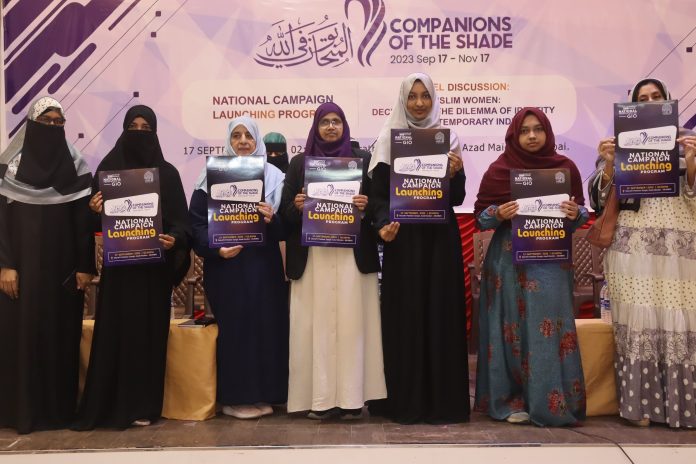
The National Federation of Girls Islamic Organisation (NFGIO) organised a national campaign titled “Connecting Hearts Eternally in Relishing Islamic Sisterhood’ (CHERISH)” with the theme المتحابون في الله which translates to ‘those who love each other for the sake of Allah’.
Mumbai :
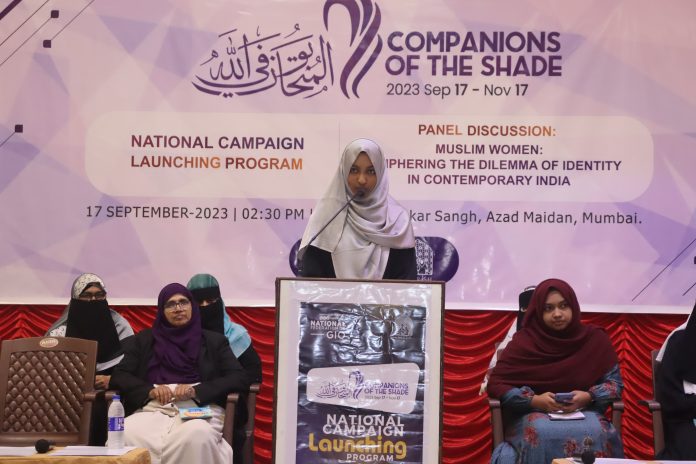
The National Federation of Girls Islamic Organisation (NFGIO) organised a national campaign titled “Connecting Hearts Eternally in Relishing Islamic Sisterhood’ (CHERISH)” with the theme المتحابون في الله which translates to ‘those who love each other for the sake of Allah’. The launching program of the campaign was held at Marathi Patrakar Sangh here Sunday.
The program commenced with the soulful recitation of the verses from the Holy Quran by Uzma Sagri (Regional In-charge, GIO Mumbai Region), followed by the welcoming words by Anamtha Ahmed (General Secretary, GIO MSZ).
Sister Samar Ali (General Secretary, NFGIO) shed light on the aims and objectives of the campaign.
Advocate Sumaiya Roshan, National President NFGIO addressing the program
The launching program was inaugurated by Adv. Sumaiya Roshan, (President, NFGIO), detailing the core intentions planned to be achieved through the campaign.
Adv. Sumaiya explained the goal of the campaign as to establish a secure and encouraging community for Muslim sisters. They must unite to confront the world’s obstacles and thrive with their steadfast faith. Unfortunately, in present times, practising and expressing one’s faith can be arduous and often unaccepted. This leaves many Muslim women feeling alienated from society.
Through sisterhood, women can discover and embrace their authentic selves as creations of the Almighty. They can find their purpose in life and ways to achieve it. The Almutahabbuna Fillah – Companions of the Shade campaign aims to promote righteous friendships among sisters. These friendships go beyond selfish worldly needs and are blessed by Allah. They can be a means of earning His pleasure and becoming successful in both this life and the Hereafter.
The phrase Almutahabbuna Fillah means “those who love each other for the sake of Allah.” It is narrated that on the Day of Judgement, there will be no shade except for the shade of Allah. Among the seven types of people who will be under His shade are two people who love each other for the sake of Allah.
The program further had felicitation addresses by Mrs. Rahmathunnissa A., National Secretary, JIH. She mentioned the contributions put forth by the Girls Islamic Organization from its formation in 1984 in developing and enhancing a healthy society. The organization has been working towards the goal of enhancing the community and developing them to serve for the betterment of the whole of humanity.
It was followed by the address of Mr. Mohammed Zafar Ansari, Secretary, JIH Maharashtra, followed by the concluding address of Khan Shaheen Jattu, Vice President, NFGIO.
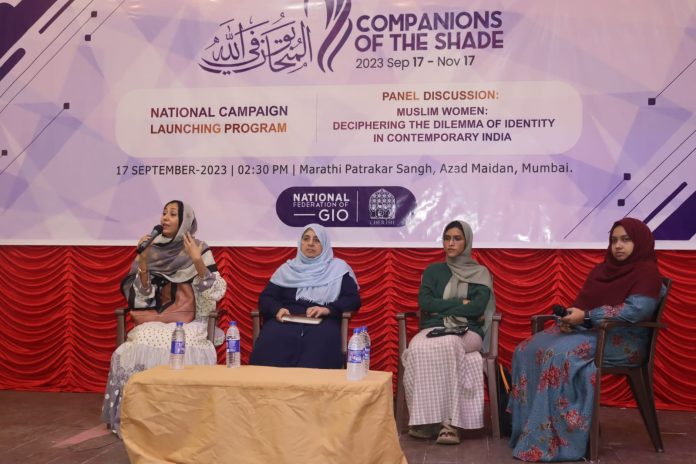
The panel discussion held with Advocate Huriya Patel, Uzma Naheed, Haniya Anwar and Samar Ali
A panel discussion titled “Muslim Women: Deciphering the Dilemma of Identity in Contemporary India” was conducted with Samar Ali as the moderator as part of the event. Samar stated the aim of the discussion as to bring forth powerful and socially engaging Muslim women icons and establish the idea of empowerment through their presence in the public sphere.
The panellists included Mrs. Uzma Nahid (Executive Director, Iqra Education Foundation), Adv. Huriya Patel (Advocate, Bombay High Court) and Ms Haniya Anwar (Student leader, TISS Mumbai).
Uzma Nahid encouraged the audience to be revolutionary thinkers and to focus on getting educated and enlightened on the necessity of financial development for the overall empowerment of women.
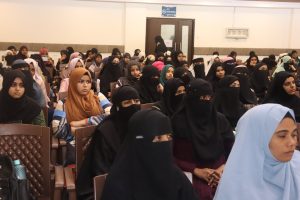
The audience listening to the discussion at Marathi Patrakar Sangh, Mumbai
Adv. Huriya Patel mentioned the lack of legal awareness among the women community and pointed out the importance of embracing one’s identity and beliefs without compromising values and ethics to build successful career platforms.
Haniya Anwar inspiringly brought forth the challenges faced by Muslims in general and women with visible Muslim identity in particular on Indian campuses. She shared her experience faced while contesting for the post of Equal Opportunity Cell of Students Union, TISS Mumbai.
The panel discussion was concluded by Mrs. Rahmathunnissa A., who highlighted that if one is ready to change the society, nothing can stop them.
The program concluded with a vote of thanks by Aamna Khanam (Secretary, NFGIO) who thanked everyone for their enormous support for the historical event.
source: http://www.radiancenews.com / Radiance News / Home> Latest News / by Aaliyah Rumane / September 20th, 2023
The legendary educationist of Kashmir whose door-to-door campaigning inspired generations of Kashmiri girls resurfaced in their recent academic feat.
IN his celebrated anthology, The Veiled Suite: The Collected Poem, Agha Shahid Ali details his grandmother’s “bleeding heart”—which ensured the educational empowerment of the masses in the valley.
Shahid’s poem, Prayer Rug in her memory, became a token introduction of “the lady with a lamp” — Begum Zaffar Ali.
this year my grandmother also a pilgrim in Mecca she weeps
as the stone is unveiled she weeps holding on to the pillars
Beyond the poem, however, there’s a staggering profile of the grand old lady of Kashmir—whose educational service made her legend.
“Firmly determined, my mother-in-law, Begum Zaffar Ali, was a self-made lady, who spent her life relentlessly advocating for women education and empowerment in the valley,” recalls Dr. Shaheena Agha, at her Rajbagh residence.
In the sweeping accolades being showered on the lockdown-hit girls whose recent grades once again made them the shining stars of Kashmir’s dented academia, Begum Zaffar Ali found a glorious mention for inspiring generations of girls in the valley.
“My mother-in-law was one of the first Kashmiri girls whose grit made her a beacon of educational excellence,” Shaheena continues.
“An untiring activist, Begum Zaffar helped Kashmiri women in one way or another. I take inspiration from her.”
In her 60s, Shaheena first met Begum Zaffar as a 26-year-old woman, when she married the celebrated educationist’s eldest son, Agha Nasir Ali, in 1986.
“It was an evening of mutual admiration and love,” she talks about the first interaction with her mother-in-law. “By then, she had already retired, but I was instantly moved by her illustrious persona.”
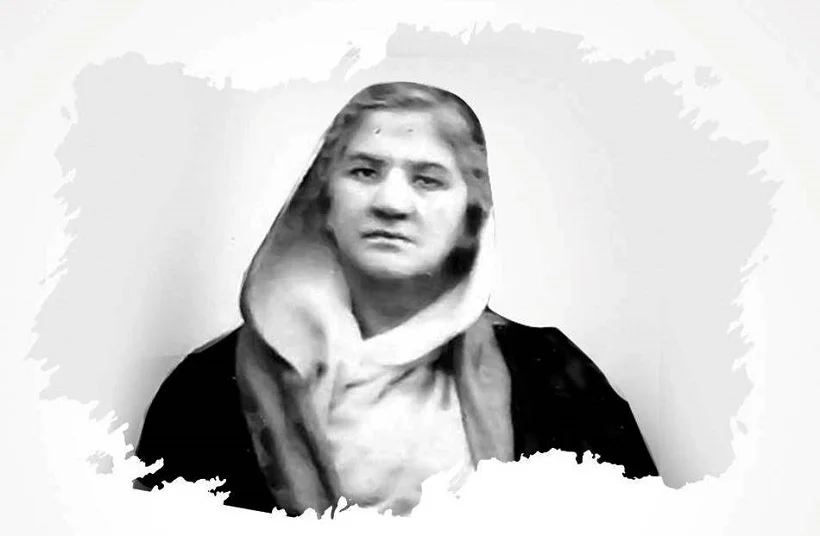
Begum Zaffar can be easily identified as one of the most influential and meticulous women of her times. Her life, Shaheena says, was that of extraordinary persistence and intellect which brought girl education to the forefront and dispelled illiteracy and ignorance.
“As a champion of women rights, her tireless and unwavering contribution to social changes and reforms pertaining to girl education in the valley and upliftment came at a time when society was predominantly patriarchal and orthodox in its outlook and question of women liberation and education were still widely restricted,” Shaheena says.
Begum Zaffar Ali was born in 1900 in the distinguished Agha family of Srinagar with her maiden name, Syyeda Fatima Hussain. She was the eldest daughter of Khan Bahadur Aga Syed Hussain, the first matriculate of Kashmir.
Along with her siblings, she was homeschooled by a European Home Governess. While pursuing her education, she was married to her cousin, Agha Zafar Ali Qazalbaash, a scion of Afghan family. She continued her education after marriage.
While being a mother to three, she went ahead taking revolutionary strides and efforts which would go on to change the face of women’s emancipation and education in the valley and inspire thousands of young girls for years to come.
“She brought an era of renaissance and regeneration in the lives of the Kashmiri women,” says Nusrat Mehmood, a senior college lecturer who calls Begum her inspiration. “Her passionate, non-conforming and unorthodox life will continue to rekindle the spirit of excellence in people like me.”
In 1925, Begum Zaffar was invited to teach in a Girls Missionary High School run by Miss Mallinson and Miss Bose in old Srinagar’s Fateh Kadal area.
“During those times, being a teachress was seen as a stigma but nevertheless she joined the school to serve the cause of education,” lecturer Mehmood continues.
“Her door-to-door campaigning for education in an era of subjugation and poverty makes Begum one of the most unsung educationists of the world. Her academic pursuits and ambitions to bring social changes heralded a new hope.”
Such was the zeal and determination of Begum Zaffar that she simultaneously started philanthropy work towards the poor girl of the school and looked after their hygiene and overall development.
“She even encouraged both young and elderly women to seek education and personally volunteered to teach them,” says Mubashir Hussain, a social activist from Srinagar.
“Through the good offices of her father who was then Home and Judicial Minister in Maharaja’s regime, grants were sanctioned for the schools. Begum managed to get an extra sum of Rs 10 sanctioned for the maintenance of girls every month besides meals.”
Impressed by her progress in studies, her children’s home tutor encouraged her to sit for the matriculation examination as she, by then, had been teaching girl students of tenth standard for five years.
Begum Zaffar was reluctant initially as no woman from the valley till then had passed the matric exam. She finally broke the jinx by becoming the first matriculate woman of Kashmir in 1930 and went on to complete her graduation in Domestic Science and Liberal Arts from Lady Mclegon College, Lahore in 1938.
“Back then, parents were still debating whether to give only religious teachings to their girl child or give them modern education,” says Rameez Kashani, a history lecturer.
“To uplift Kashmiri women and free them from their ignorance and religious and social conservatism, Begum Zaffar led the movement of women emancipation in the valley where she could encourage girls to come forward and educate themselves.”
Later she was appointed as the Inspector of Schools in Kashmir and was the first Muslim in her administrative capacity, who went on delivering lectures in colleges and social gatherings.
As a great orator and popular figure, Begum Zaffar was a key member behind the foundation of Teachers Club and Ladies Club, whose members included Tara Devi, queen of Kashmir’s last monarch, Hari Singh.
“The club was central to bringing reform changes and participation in the lives of the Kashmiri women,” Kashani says.
Before the bloodcurdling fall of 1947, Begum Zaffar had served as the secretary of the All India Women’s Association but later resigned due to her displeasure with the association’s nationalist fervour.
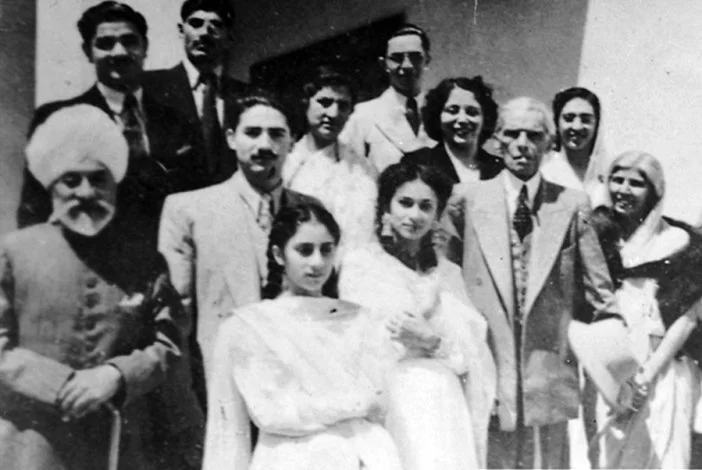
Back in 1944, she had famously hosted Mohammad Ali Jinnah and his sister, Fatimah Jinnah at Srinagar. She had organised a meeting of Kashmiri women with the stalwart’s shadow sibling at present day Lawns of Secretariat.
Begum Zaffar Ali with Mohammad Ali Jinnah in this pre-47 pic.
In her lifetime, Begum Zaffar held various offices and with her intellectual ability and leadership, she was the first Muslim in Kashmir to become a director in the Department of Education.
In her later days, she was also member of the Social Welfare Advisory Board, Jammu and Kashmir, and even became a legislator.
At personal level, Begum’s three sons went on to have distinguished public profiles. Her two sons, Agha Nasir Ali and Agha Shaukat Ali were civil bureaucrats.
While Agha Nasir retired as Labour Secretary of India in 1977, Agha Shaukat Ali, moved to Pakistan and joined Civil Services. Her youngest son Agha Ashraf Ali followed her footsteps and went on to become a top academician and educationist of the valley.
“It was Begum Zaffar Ali whom Sheikh Abdullah approached to convince her son, Agha Shaukat Ali to come back from Pakistan and join his cabinet,” Shaheena says. “During her lifetime, she longed to meet the same son when he moved to Pakistan. But New Delhi never granted a visa to her for meeting her son in the neighbouring country.”
When the same government awarded Padma Shri to her in recognition of her outstanding contribution to the field of social welfare in 1987, Begum famously declined the award in a televised Doordarshan interview.
“The Indian state excesses and gross human rights violations in Kashmir was the reason behind the non-acceptance,” historian Kashani says.
In her later years, the top educationist had been shuttling between Srinagar and Washington, to be with her exiled son.
In 1999, when she was staying with Agha Shaukat in the United States, the whole family, including her great grandchildren, had planned to celebrate her birthday as she was turning 100 year old.
“But sadly,” Shaheena says, “she passed away a month short of her illustrious century!”
source: http://www.kashmirobserver.net / Kashmir Observer / Home> In Depth> Special Report / by Rakshanda Afrin / March 11th, 2021
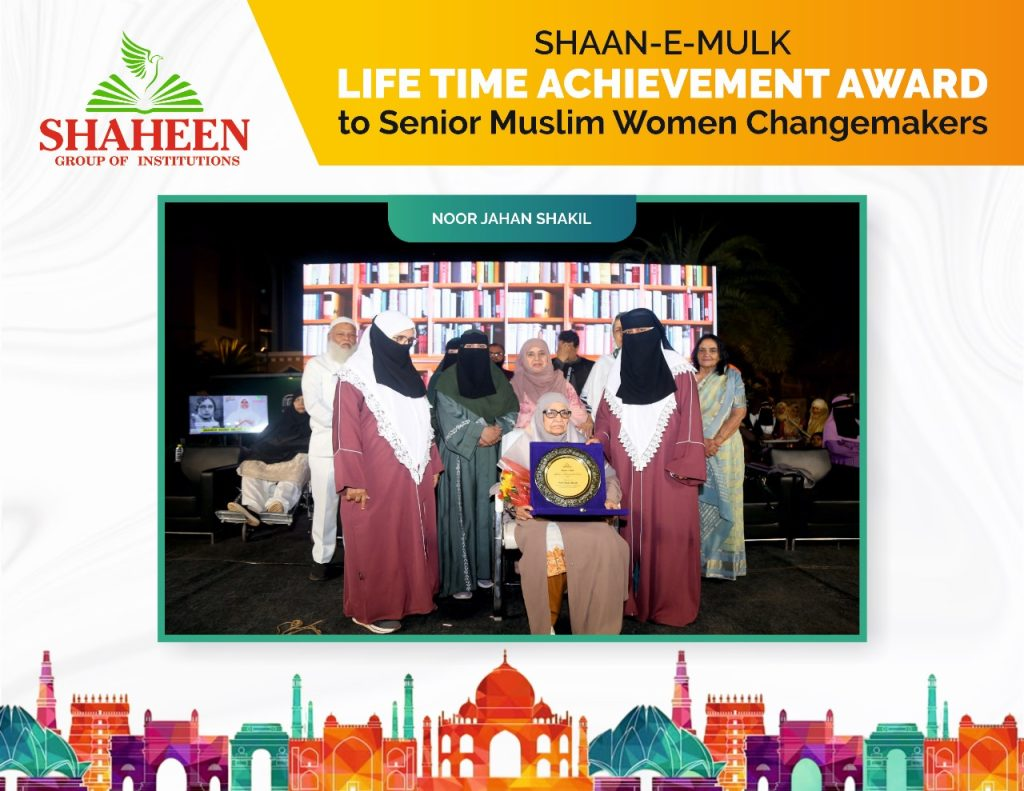
On India’s 76th Republic Day, Shaheen Group of Institutions, Bidar, organized the “Shaan-e-Mulk” Lifetime Achievement Award to honor five distinguished women for their contributions to education, business, humanitarian services, and healthcare.
Dr. Abdul Qadeer, Chairman of Shaheen Group, emphasized the vital role of women in society, stating, “Women are the backbone of families and communities, yet their contributions often go unrecognized. It is crucial to celebrate their achievements and inspire future generations.
Honorees
The award was presented to:
Ms. Shaukat Begum (Institutional Development)
Ms. Noor Jahan Shakeel (Humanitarian Services)
Dr. Rana Noor Siddiqui (Education & Research)
Ms. Uzma Naheed (Entrepreneurship)
Dr. Noor Jahan Sagheer (Healthcare)
The event, attended by thousands of female students, showcased academic performances and aimed to challenge stereotypes, inspire young women, and foster community pride.
Key attendees included Managing Director Abdul Haseeb, Academic Director Abdul Muqeet, and directors Shaista, Wafa, Zakia, Meher Sultana, Afra Naaz, and Munir Deshmukh.
source: http://www.thehindustangazette.com / The Hindustan Gazette / Home> Education / by The Hindustan Gazette / January 29th, 2025
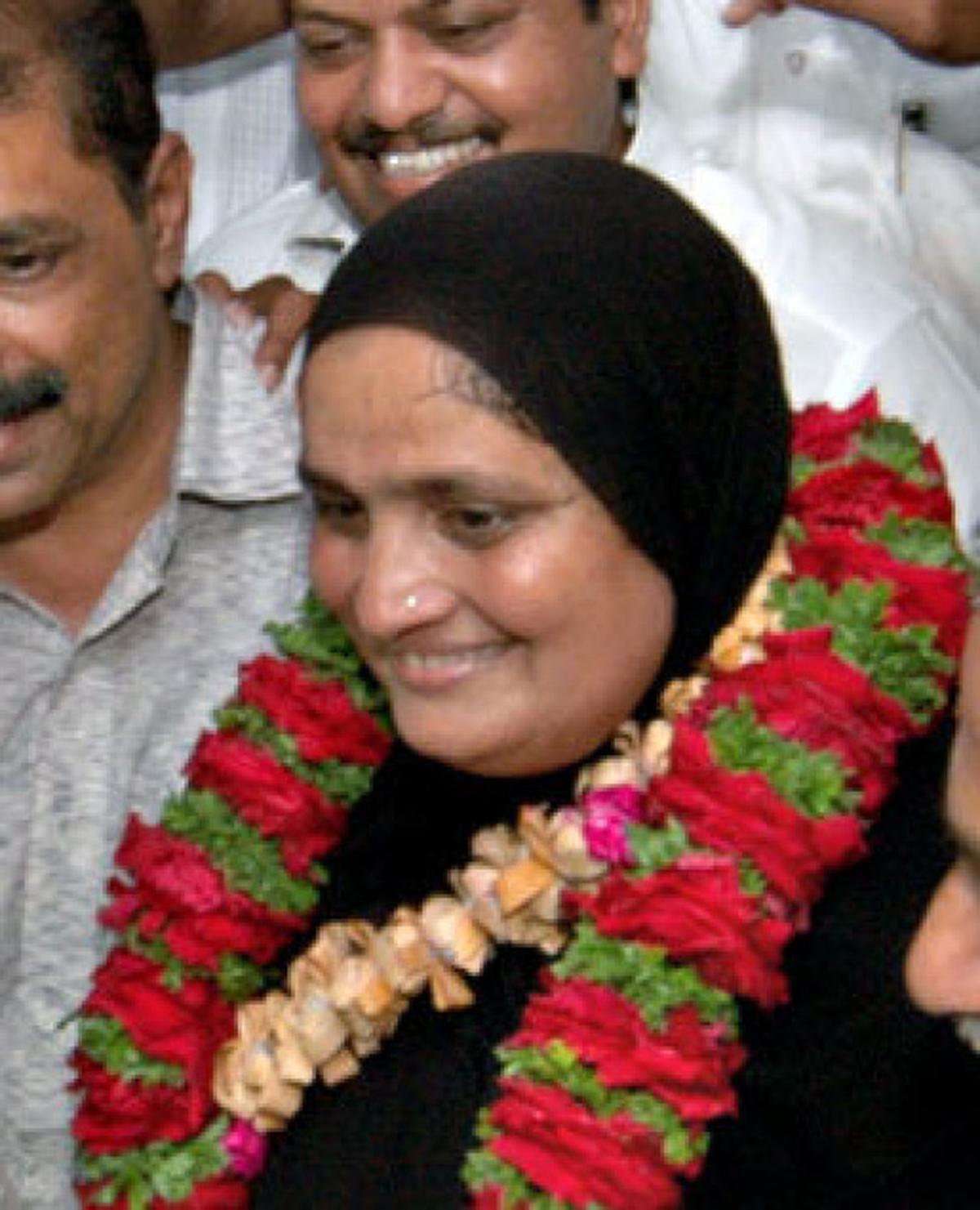
Gulzaar Banu of Congress being offer a bouquet by B.Ramanath Rai, MLA (second left) and Vijayakumar shetty fomer MLA (second right) after she was elected unopposed as the new Mayor of Mangalore City Corporation surrounded and greeted by Congress councillors and and supporters in Mangalore on March 07, 2012. Photo: R.Eswarraj
The ruling Bharatiya Janata Party (BJP) in the council of Mangalore City Corporation faced an embarrassment on Wednesday as a councillor from the Opposition Congress was elected Mayor unopposed.
Rejection of the nomination papers of the official nominee from the BJP led to this fiasco. However, a BJP candidate was elected Deputy Mayor.
M. V. Jayanthi, Regional Commissioner, Mysore, who was the Election Officer, rejected the nomination papers of the BJP candidate Roopa D. Bangera on the grounds that she had not submitted her caste certificate in the prescribed format within the given time. There was no dummy candidate of the BJP in the fray. Hence, the Opposition Congress candidate Gulzaar Banu (49) was declared unopposed.
Ms. Banu became the first Muslim Mayor of Mangalore.
The Government had reserved the post of Mayor to a woman councillor from Backward Caste 2 A category.
In the 60-member House, the BJP 35 councillors, the Congress 21, the Janata Dal (Secular) and the Communist Party of India (Marxists) one each. There are two Independent councillors.
Thus, the BJP had 36 votes (including Mangalore South MLA N. Yogish Bhat) on Wednesday. But it could not get its candidate elected against the Congress which had 21 votes. After the Election Officer announced that Ms. Banu had been elected unopposed as the Mayor, Mr. Bhat left the council hall while the other BJP councillors continued to participate in the meeting. Ms. Bangera’s ward (Kadri North) falls under the limits of Mangalore City South Assembly constituency represented by Mr. Bhat. In the election held for the post of Deputy Mayor later, Amitakala of the BJP defeated S. Appi of the Congress by a margin of 14 votes. Ms. Amitakala secured 35 votes and Ms. Appi 21 votes.
The Election Officer conducted the election to four standing committees of the council which went on smoothly.
After the election process was completed by about 5 p.m. all BJP councillors, including the Deputy Mayor, and officials walked out of the meeting presided by the new Mayor. Only one official was present at the meeting.
The Congress councillors alleged that outgoing the Mayor Praveen did not hand over the Mayor’s gown to Ms. Banu. Independent councillor Mariyamma Thomas, an advocate, told The Hindu that there was no provision in the Karnataka Municipal Corporations Act, 1976, to move a no-confidence motion against the Mayor. Hence the BJP could not overthrow the new Mayor.
source: http://www.thehindu.com / The Hindu / Home> News> Cities> Mangaluru / March 08th, 2012