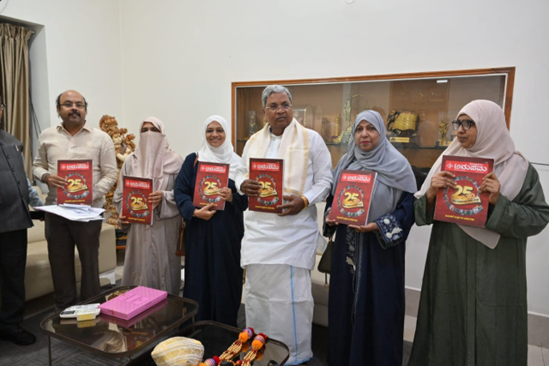
Anupama, the state’s only women’s monthly Kannada magazine run entirely by Muslim women, has completed 25 years. To mark this milestone, Chief Minister Siddaramaiah released a special silver jubilee issue, reflecting on its 25-year journey of success, in Bengaluru on Thursday.
Speaking at the event, the Chief Minister congratulated the team, saying, “There are only a handful of Muslim women in journalism. In such a scenario, it is highly commendable that the Anupama Women’s Monthly, run by women from the Muslim community and has successfully completed 25 years.”
Shahnaz M., the editor of Anupama, also spoke at the occasion. “The implementation of the ‘Guarantee’ schemes for women in the state has brought about significant changes in their lives. On behalf of the Anupama team and all women, I extend my gratitude to the government led by CM Siddaramaiah for their commitment to women’s development,” she stated.
The event was attended by Naseer Ahmed (Political Secretary to the CM), MLA Dr. Yathindra Siddaramaiah, BMTC Vice-Chairman Niket Raj Maurya, and Anupama’s sub-editors Samina Uppinangady, Sajida Momin, and Kulsum Abubakkar. Other notable attendees included S.M. Muthalib, Faisal Ismail, and Saleem Bolangadi.
source: http://www.radiancenews.com / Radiance News / Home> Latest News> Report/ by Radiance News Bureau / January 10th, 2026
Jamia Hamdard (Deemed to be University) today signed a Memorandum of Understanding (MoU) with Gyan Bharatam, a flagship programme of the Ministry of Culture, Government of India, aimed at strengthening national efforts for preservation, conservation, digitization, translation, and research on India’s manuscript heritage.
With the signing of this MoU, Jamia Hamdard has been officially designated as a Cluster Centre, entrusted with leading manuscript-related activities for its own collections as well as coordinating and supervising up to twenty (20) Cluster Partner Centres across the country.
The MoU was signed by Shri Inderjeet Singh, Director, Ministry of Culture, Government of India, and Dr. Sarfaraz Ahsan, Registrar (Officiating), Jamia Hamdard, in the presence of Dr. Akhtar Parvez, University Librarian, Jamia Hamdard; Professor Anirban Dash, Project Director; and Mr. Bharat Kumar, Under Secretary, Gyan Bharatam, Ministry of Culture, Government of India.
On the occasion, Dr. Akhtar Parvez, Dr. Sarfaraz Ahsan, Professor M.A. Sikandar, Director, Centre for Distance & Online Education, Jamia Hamdard and Prof. Riaz Umar, Member, Executive Council of Jamia Hamdard formally presented the duly signed MoU to Prof. (Dr.) M. Afshar Alam, Vice-Chancellor, Jamia Hamdard.
During an interaction with the senior officials of the university, Professor (Dr.) M. Afshar Alam, Hon’ble Vice-Chancellor, Jamia Hamdard, stated that “this collaboration with the Ministry of Culture is a moment of great pride for Jamia Hamdard. Our selection as a Cluster Centre reflects the trust reposed in our institutional capabilities. We remain fully committed to preserving, digitizing and promoting India’s manuscript heritage, while creating world-class scholarly resources that meaningfully connect our civilizational past with contemporary research needs.” Prof. Alam conveyed his profound appreciation to Shri Vivek Aggarwal, Secretary, Ministry of Culture, Government of India, for his gracious support and for the prompt action taken in designating Jamia Hamdard as a Cluster Centre for manuscript heritage.
Dr. Akhtar Parvez underlined that, as a Cluster Centre under Gyan Bharatam, Jamia Hamdard will undertake the systematic survey and cataloguing of manuscripts; preventive and curative conservation; capacity-building workshops; digitization of manuscripts and their integration with the National Digital Repository; transliteration, translation, and preparation of critical editions; as well as research, publications, exhibitions, and extensive outreach activities.
This partnership marks a transformative step for Jamia Hamdard, positioning the University at the forefront of manuscript studies, digital humanities, and cultural preservation. The establishment of the Cluster Centre will not only expand research and training opportunities for scholars and students but will also contribute to national and international access to rare and invaluable knowledge traditions. Jamia Hamdard looks forward to working closely with Gyan Bharatam to advance the shared vision of safeguarding India’s manuscript heritage for future generations.
source: http://www.indiatomorrow.net / India Tomorrow / Home> Education / by India Tomorrow / December 16th, 2025
Book Distribution and Certificate Distribution Ceremony Enthusiastically Held at Nishat Urdu Library
Islampur:
“To make human life prosperous, profound, and radiant, as well as to give the right direction to life, it is essential to imbibe the thoughts of great personalities, and these thoughts are acquired only through the reading of books,” asserted Senior Journalist and Executive Editor of Weekly Shodhan, Shahjahan Magdum. He was speaking as the keynote speaker at the book distribution ceremony and the certificate distribution programme for the free basic computer course organised at Nishat Urdu Library here.
The programme, held on December 11, was presided over by social activist Jameer Nadaf, while Prof. Nazim Shaikh was present as the Chief Guest.
The ceremony began in a very auspicious atmosphere with a melodious recitation of the Holy Qur’an by students of the Madrasa.
Following this, the anchor, Mr. Altaf Momin, introduced the guests to the audience in his fluent style and presented a brief overview of the educational and social journey of the Nishat Library.
In his keynote address, Shahjahan Magdum underscored the importance of reading culture. He stated that everyone gathered there was inspired by the noble teachings of Islam and Prophet Muhammad ﷺ. With the noble intention that the Prophet’s message of humanity and his teachings should reach all communities in the Marathi language, he donated Islamic books and copies of the Marathi translation of the Holy Qur’an to the library.
He guided the audience by referencing inspiring articles and thoughts based on the lives of great personalities. Mentioning that his relationship with Nishat Library is not just formal but old and emotional, he assured all possible help for the library’s future progress and needs. He praised the institution’s office bearers, stating that Nishat Library is performing the sacred duty of preserving and growing the reading culture in the city and surrounding areas. He thanked trustees Abid Momin, Anis Momin, and other office bearers for the invitation.
While delivering the introductory remarks, Anis Momin, the Secretary of Nishat Library, presented an account of the institution’s 40-year penance. Narrating the inspiring history since the library’s inception, he mentioned that keeping the reading culture alive in Urdu, Marathi, and English languages and running a library in a city like Islampur for the last four decades was a major challenge. He detailed how difficult this task was and how the institution reached this stage by overcoming obstacles. He gratefully noted that many prestigious citizens, donors, and especially Urdu medium students consistently contributed to this journey. He explained that the library not only makes books available for reading but also fulfills its social responsibility by conducting free computer classes and various socially useful activities.
In his presidential address, Jameer Nadaf explained the significance of reading. Stating that reading changes a person’s vision and makes them complete, he proposed a significant concept for the better utilisation of the library. He suggested that a grand ‘Kavi Sammelan’ (Poets’ Meet) bringing together Urdu and Marathi literature should be organised in Islampur city. He also appealed that, not limiting the scope to just reading, other educational and social programmes should be organised with the cooperation of all communities. He assured that he would personally take the initiative and provide appropriate cooperation for such activities.
Chief Guest Prof. Nazim Shaikh provided valuable guidance to the students. He said that they have been blessed with a home of knowledge in the form of Nishat Library, and students should make the best use of it. He urged students from all sections of society, especially the needy, to take advantage of the ongoing free computer classes as well as coaching classes for Marathi, English, and Mathematics to build their careers. Prof. Shaikh is always striving for the development of Nishat Library and to fulfill the educational needs of Urdu medium students.
Delivering a message of social harmony, Sambhaji Brigade Sangli District President Umesh Shewale highlighted the progressive thoughts of Chhatrapati Shivaji Maharaj, Rajarshi Shahu Maharaj, Mahatma Jyotirao Phule, and Dr. Babasaheb Ambedkar. Citing history, he clarified that Chhatrapati Shahu Maharaj worked for the upliftment of not just the Bahujan society but people of all castes and religions. Significantly, Shahu Maharaj had performed a historic and important task of religious harmony by providing funds for the Marathi translation of the Qur’an in those times. On behalf of Sambhaji Brigade, he reminisced about the work of Lokshahir Annabhau Sathe of the Samyukta Maharashtra movement.
Sambhaji Brigade Islampur City President Ajit Havaldar emphasised his and his family’s harmonious and affectionate relations with the Muslim community. He mentioned that since it was a Nishat Library programme, he attended specifically as a book lover. He testified that his and his organisation’s cooperation would remain for any constructive work of the society in the future. On this occasion, Umesh Suryagandh also provided enlightening guidance to the audience and profusely praised the social work of Nishat Library.
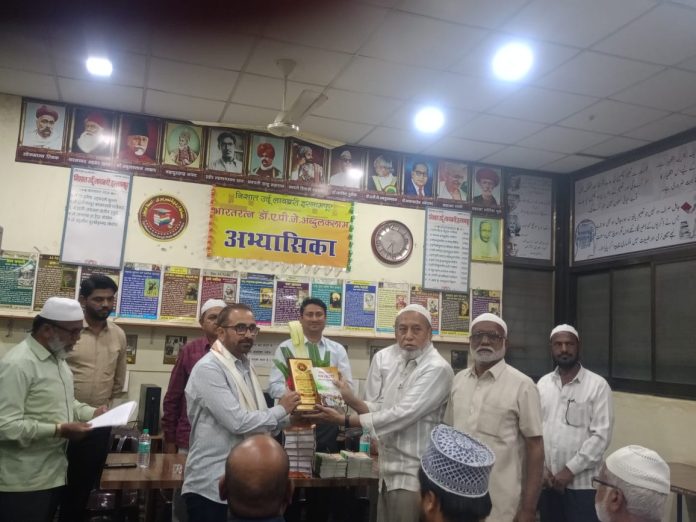
Taking the opportunity of this ceremony, valuable books were donated to the library. Through the efforts of Shahjahan Magdum, 10 copies of the Marathi translated Holy Qur’an and 250 books on various subjects were handed over from the Islamic Marathi Publication Trust (Mumbai). Similarly, on behalf of Sambhaji Brigade Islampur, 8 volumes of selected literature of Lokshahir Annabhau Sathe were donated, and Shakirbhai Tamboli donated 100 copies of his self-authored book “OBC Reservation Sub-Quota: Ibadat Bhi, Zimmedari Bhi” to the library.
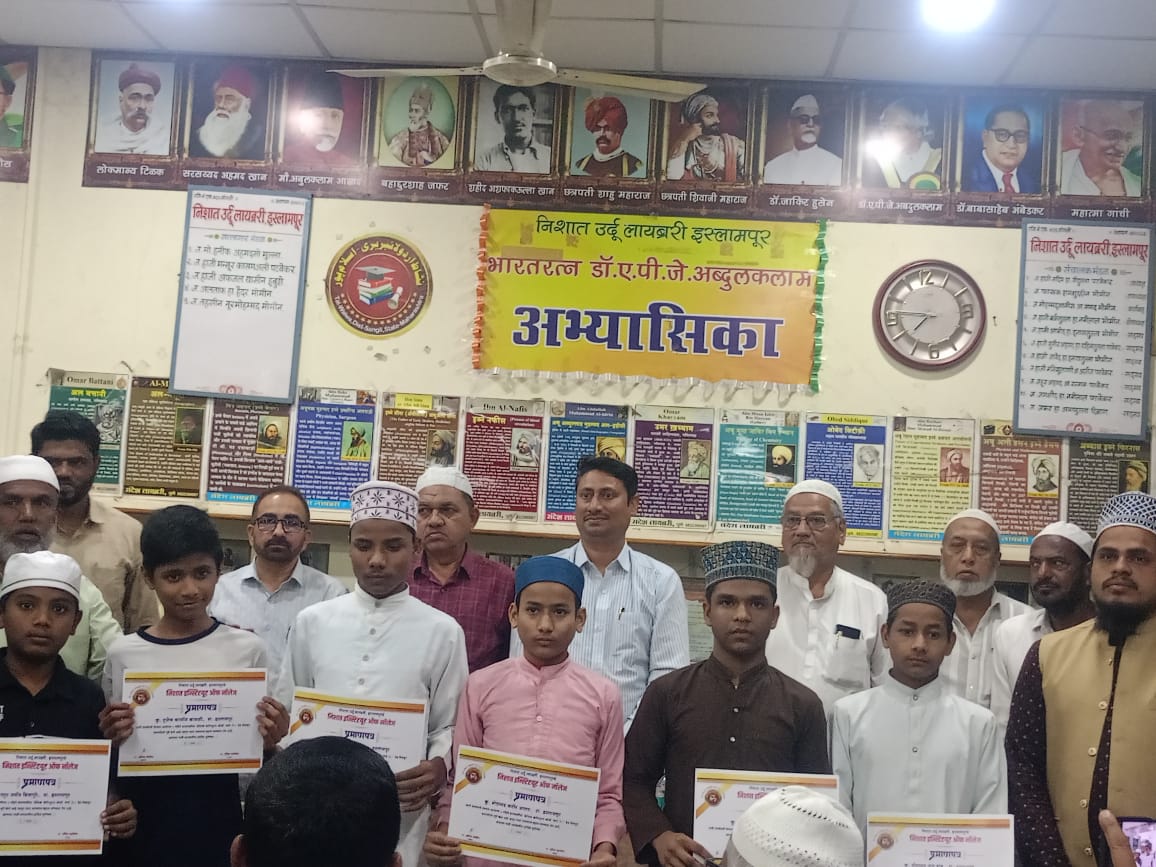
On this occasion, member students of the library were honoured with certificates at the hands of dignitaries for successfully completing the Free Basic Computer Training Course. In this programme, Chief Guests Shahjahan Magdum, Jameer Nadaf, and Prof. Nazim Shaikh were felicitated with bouquets, mementos, shawls, and books.
Haji Saif Mulla proposed the vote of thanks. The programme was attended in large numbers by reader members as well as Institution President Javed Momin, Nadeem Patwekar, Barkatulla Momin, Zahur Patwekar, Akil Momin, Shahnawaz Mulla, Nasimulgani Patwekar, Zafar Diwan, Nazir Bijapure, Maulana Ajmal Raza, Yashwant Dhumale, Deepak Todkar, and other dignitaries. Anis Momin, Abid Momin, Librarian Arman Patel, and Clerk Khushi Shanediwan took special efforts to make the programme a success.
source: http://www.radiancenews.com / Radiance News / Home> Latest News / by Radiance News Bureau / December 13th, 2025
In 1936 he joined Indore Fine Art College where he trained under Devlalikar Sahab. Later he switched to Mumbai where he took admission in the JJ School of Art. The rest is history.
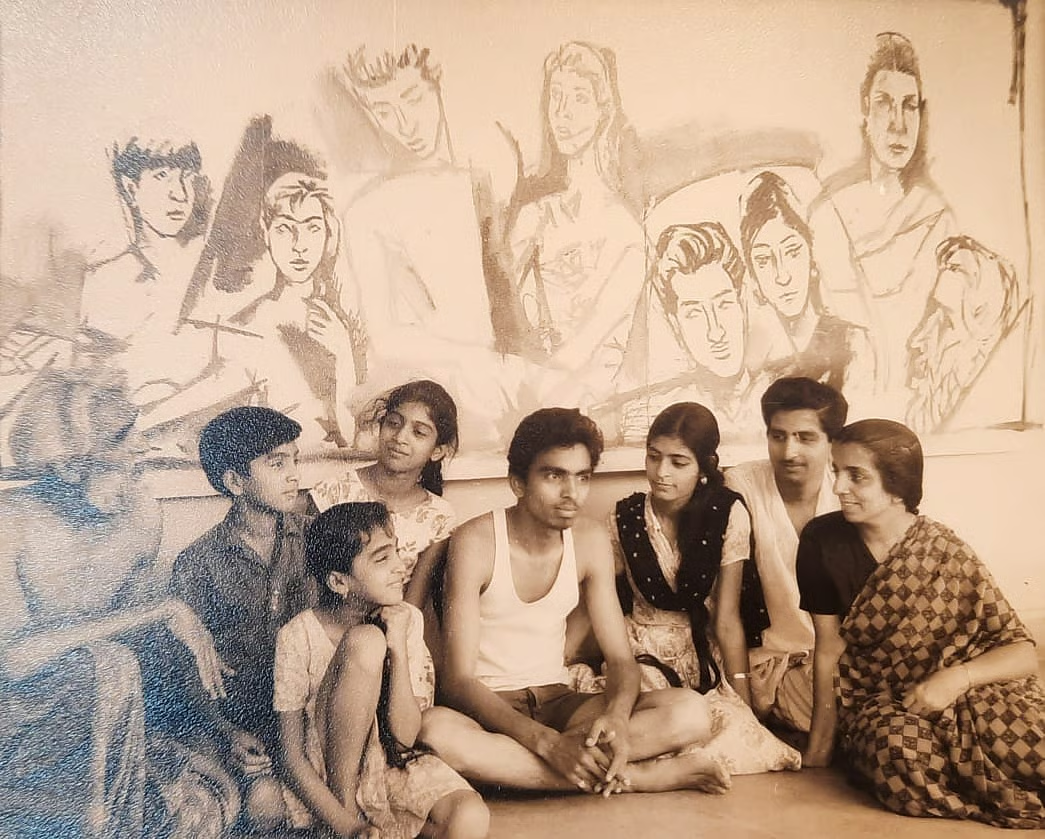
Husain made portrait of his family members and clicked a photograph. | The Zafar Ansari museum of achieves
Indore (Madhya Pradesh):
Maqbool Fida Husain is too well known to need an introduction, and most people are also aware of his connection with Indore. However, not very commonly known is the fact that his penchant for drawing horses started when he was a young lad in Indore.
While talking to Free Press, historian Zafar Ansari said, “Husain lived in Indore at a very young age in Chhawni area near Chhawni Bohra Mosque. When Husain was a teenager his Nana (maternal grandfather), who worked as a timekeeper in the Malwa Mill, wanted to make him a draftsman, but Husain was not interested. At one point he went to a Madrasa for becoming Alim but not much came of it.
His grandfather also bought him a camera and he got trained under the renowned photographer Ramchandra Rao and Pratap Rao but Husain did not show much interest in that art form. He started his painting career in Kagzipura area where he used to make Bada ghoda and Chhota ghoda.
His love for painting horses started here and it remained throughout his life as a professional painter.”
In 1936 he joined Indore Fine Art College where he trained under Devlalikar Sahab. Later he switched to Mumbai where he took admission in the JJ School of Art. The rest is history.
source: http://www.freepressjournal.in / The Free Press Journal / Home> Indore / by Staff Reporter / June 09th, 2023
The second day of Bahar-e-Urdu, celebrating fifty years of the Maharashtra Urdu Sahitya Academy, lit up the Dome SVP Stadium, Worli, with a grand tribute to Urdu’s eloquence, intellect, and emotion. The day began with an Open Mic Mushaira, where young poets Kayam Shah, Ahad Saeed, Payal Pandey, Zain Lakhimpuri, Riyaz Aasi, Shaukat Ali, Adnan Shaikh, Mayank Verma, Imran Ataai and Maqsood Aafaque filled the hall with youthful passion and heartfelt verse.
Two scholarly sessions followed. In “Maharashtra Mein Urdu Adab,” moderated by Dr. Tabassum Khan, papers were presented by Dr. Shaikh Ahrar Ahmad (Thane) and Dr. Quazi Naveed Siddiqui (Aurangabad), with insights from Dr. Abdullah Imteyaz Ahmad (Mumbai) and Prof. Shahid Naukhez (Hyderabad). The next, “Modern Technology and Urdu,” moderated by Mohammad Irfan Raza, featured Dr. Mohd. Tabish Khan (Bhiwandi), Dr. Liaqat Ali (Delhi), Dr. Parvez Ahmad, and Dr. Mahmood Mirza, highlighting Urdu’s growing digital presence.
The evening’s Tamseeli Mushaira brought poetic icons to life, with Zahid Ali Sayyed, Manzoor Islam, Sajid A. Hameed, Raziya Baig, Noman Khan, Nuzhat Parveen Akil Kagzi, Talha Bi Saver Hashmi, Mohsin Husnuddin Shaikh, and Khan Shadab Mohammed portraying legendary poets including Mirza Ghalib, Tahir Faraz, Anjum Rehbar and Obaid Azam Azmi.
A mesmerizing Dastangoi by Fouzia Dastango and a soulful Sufi performance by Jhelum Singh — featuring “Nitt Khair Manga,” “Mere Dholna,” and “Dama Dam Mast Qalandar” — enchanted the audience.
The evening celebrated those who continue to serve Urdu through literature, education, and creativity. Awards were presented in the following categories: Award for Emerging Writers, Layout Designing Award, Award for Urdu Journalism, Special Award, Educational Service Award, University and Degree College Level Award, School Level Award and Best Book Award.
Each award was a reminder of the many different ways Urdu is being nurtured—on the page, in the classroom, and in the community.
The evening also honoured poets, writers, journalists, educators, and designers for their contributions to Urdu, culminating in a spellbinding Qawwali by the Sabri Brothers.
Bahar-e-Urdu’s second day was not merely an event; it was a living celebration of heritage, intellect, and artistry — a reminder that Urdu does not just belong to history books, but to every voice that dares to sing, speak, and dream in its melody. As the festival prepares for its final day, one truth resounds through every ghazal, every word, and every applause — Urdu lives on, radiant as ever, in the hearts of those who love it.
(Disclaimer: The above press release comes to you under an arrangement with NRDPL and PTI takes no editorial responsibility for the same.). PTI PWR
This is an auto-published feed from PTI with no editorial input from The Wire.
source: http://www.m.thewire.in / The Wire / Home> PTI PR NEWS / by PTI / October 08th, 2025
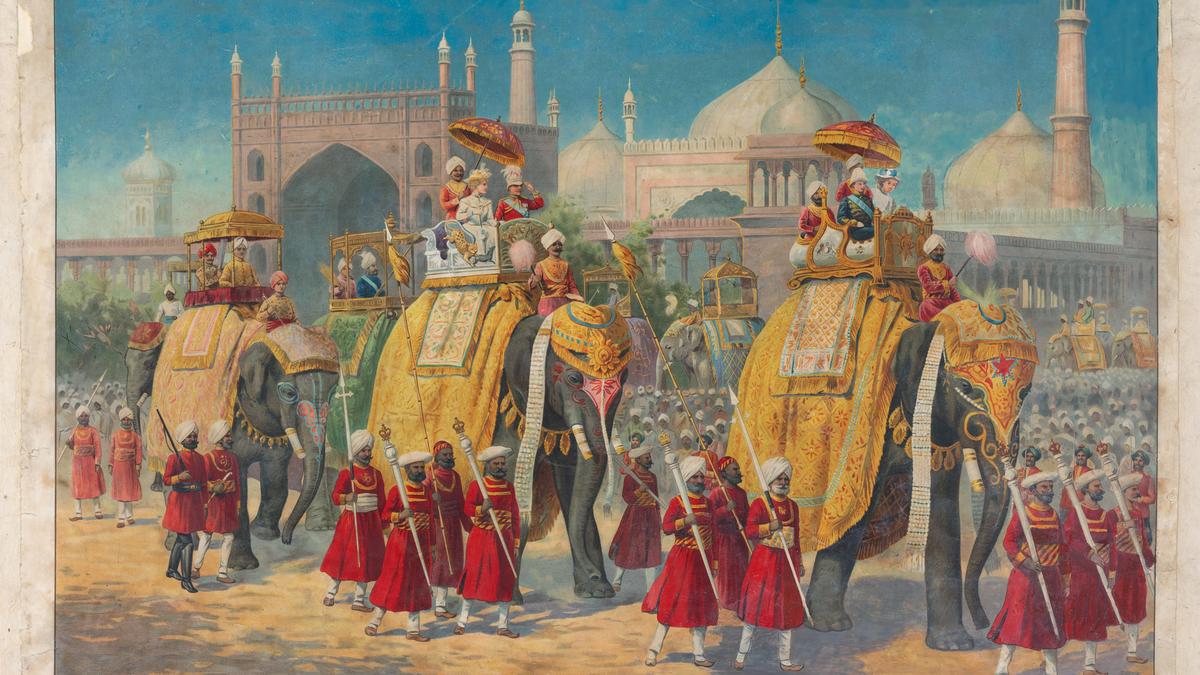
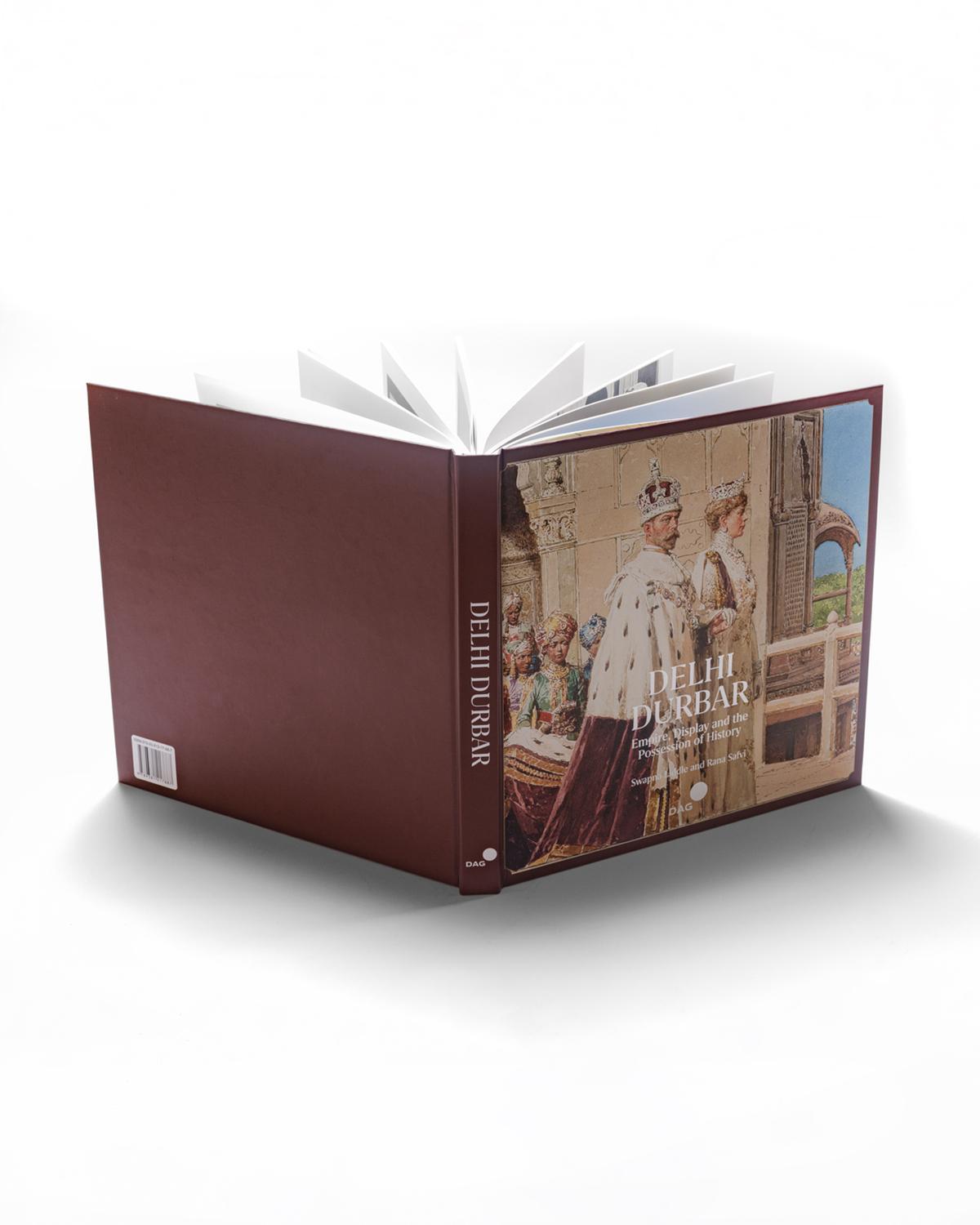
Curated by noted historians Rana Safvi and Swapna Liddle, DAG also launched a book, Delhi Durbar: Empire, Display and the Possession of History, co-authored by the duo.
The Imperial Durbar (1903) | Photo Credit: Special Arrangement
In an important contribution to a facet of Delhi’s rich history, DAG is hosting an exhibition drawn from its archives of the city’s resplendent durbars. Curated by noted historians Rana Safvi and Swapna Liddle, DAG also launched a book, Delhi Durbar: Empire, Display and the Possession of History, co-authored by the duo.
“The British Delhi Durbars have been the subject of much recent scholarly study and re-evaluation,” writes Ashish Anand, the CEO and managing director of DAG. “The objects in this exhibition bring them materially present, through works by some of the leading artists and photographers of the period.” The essays give readers an insight into the city that was. We also get rare visuals of Delhi, its monuments, and its three durbars — all of which were landmarks in British-ruled India.
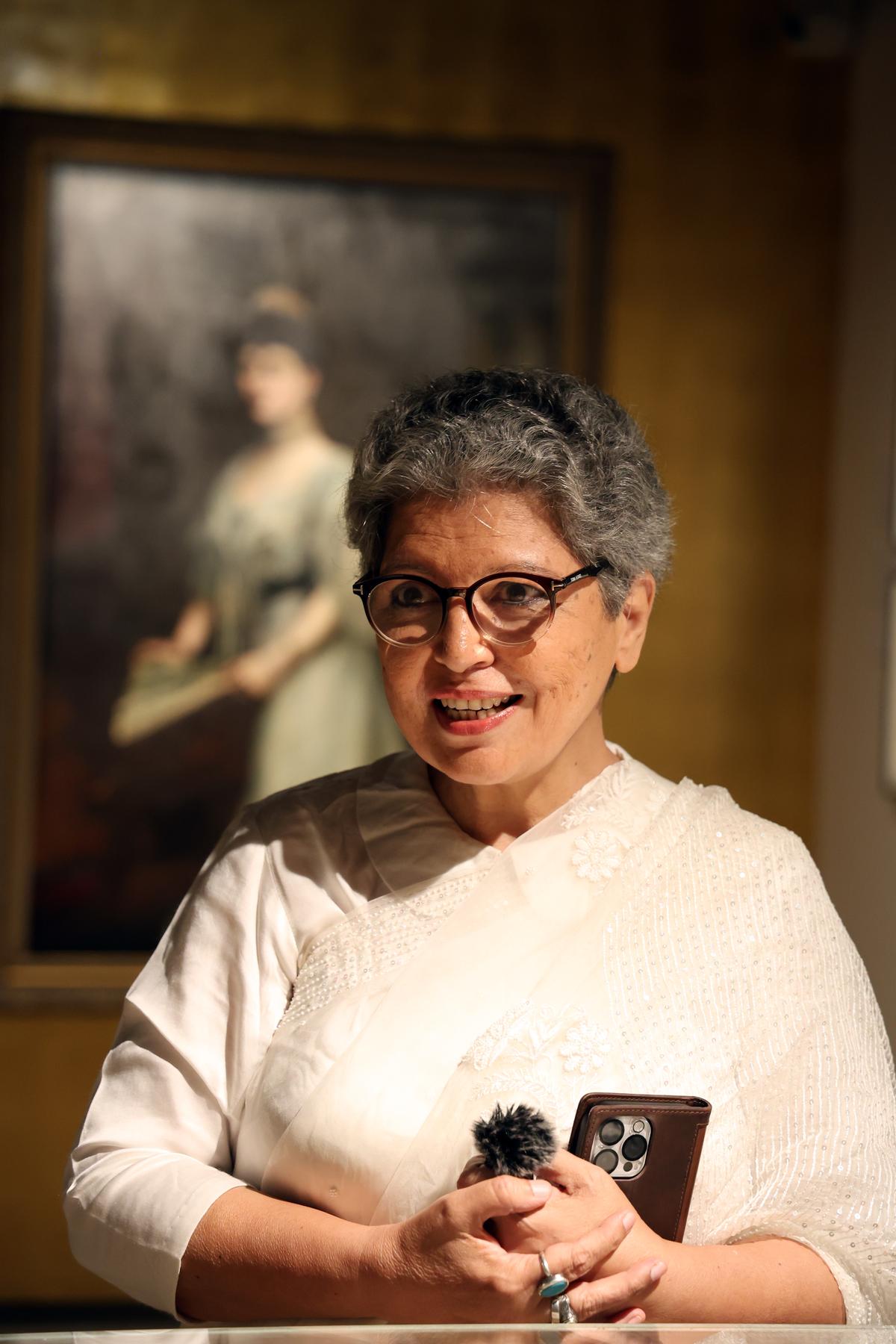
Safvi speaks to Magazine about the project. Excerpts:
Companion of the Most Eminent Order of the Indian Empire | Photo Credit: Special Arrangement
Question: Can you shed some light on the DAG project?
Answer: This exhibition was conceived by Giles Tillotson, senior vice president – exhibitions at DAG. It is the first exhibition that has been drawn from the DAG archives.
Q: With all the attention on the Central Vista project and the new Parliament, how important is it to revisit Delhi’s history?
A: Every ruler negotiates his/ her idea of kingship. If we read the history of Delhi, kings starting with the Tomara dynasty built cities and citadels to perpetuate their memory. While the Mughal city of Shahjahanabad played a pivotal role in the three Delhi durbars, the last one saw King George announce the shifting of the British capital from Calcutta to Delhi. He also laid the foundation for a new city. This is known today as Lutyens’ Delhi.
Q: The book talks of three durbars. How different were each?
A: While all three durbars were unique, there was a thread of continuity. They were all held in the Coronation Park in Delhi and close to the Ridge where the British had fought the Indian forces in the Uprising of 1857. [They] appropriated some Mughal symbols in a bid for continuity and so that Indians could relate to them.
The first durbar, held just 20 years after the Uprising, was called the Imperial Assemblage and was meant to announce the assumption of the title of Kaiser-e-Hind by Queen Victoria with pomp and splendour. It was also meant to legitimise and popularise British rule, using many of the idioms of the Mughal empire, including the word ‘durbar’, which Indians were familiar with.
The second, held in 1903, was to celebrate the coronation of King Edward VII. This durbar envisaged by the viceroy Lord Curzon was a grandiose event with the viceroy and 48 Indian princes riding on elephants through the city in a ceremonial procession. An art exhibition was conceived by Lord Curzon, in his own words, to ‘show that India can still imagine and create, and do’.
The third durbar of 1911 was the first in which the British monarch himself was present with his consort Queen Mary. It announced the reversal of the highly unpopular partition of Bengal and was also used to announce the shifting of the imperial capital in India from Calcutta to Delhi.
Historian Rana Safvi | Photo Credit: Special Arrangement
Q: The historic Jama Masjid was under British occupation for almost five years after the Uprising of 1857. Why and how did it become a vantage point for the durbar in 1903?
A: After the fall of Delhi, Jama Masjid was confiscated by the British; it was used as a mess and horses were tied along its corridors. In 1862, it was returned to Muslims for worship. The Jama Masjid has always been a symbol of Mughal magnificence and of Muslim togetherness.
Q: Can you elaborate on the demolition of Masjid Akbarabadi during the Uprising? It doesn’t always find a place in our textbooks…
A: When the city of Shahjahanabadwas being built, members of royalty as well as nobility were encouraged to build and add to it. Three mosques were built by three wives of Mughal emperor Shah Jahan. Fatehpuri Begum built the Fatehpuri mosque, Sirhindi Begum the Sirhindi mosque and Akbarabadi Begum the Akbarabadi mosque.
After the fall of Delhi, when the British army was victorious, the city and its people were punished for their ‘rebellion’. While many notables of Shahjahanabadwere killed or driven out of the city, the monuments and buildings were taken over. Fatehpuri mosque’s compound and galleries were auctioned and bought by Lala Chunnamal Ki Haveli and Akbarabadi Masjid was demolished. There is a beautiful description of Akbarabadi mosque in Syed Ahmed Khan’s Asar-us-Sanadid.
Delhi Durbar: Empire, Display and the Possession of History | Photo Credit: Special Arrangement
Q: Does the Coronation Durbar of 1911 mean the British had accepted the primary place of Delhi in India’s history?
A: Delhi’s importance can be seen from the fact that all three durbars were held here. Delhi was associated with Indraprastha, the legendary capital of the Pandavas, and was the city from where the Tomaras, Delhi Sultans and the Mughals ruled. Delhi’s grand history and traditions were used in the durbars. In the 1911 durbar, King-Emperor George V and Queen Mary even gave a jharokha darshan from the Red Fort’s Musamman Burj to Indians in the Mughal tradition.
ziya.salam@thehindu.co.in
source: http://www.thehindu.com / The Hindu / Home> Entertainment> Art / by Zia Us Salam / September 29th, 2023
Archeological Survey of India says the monument, which residents claim is the Akbarabadi Mosque demolished by the British in 1857, is definitely a ‘contemporary’ of the 17th century Red Fort.
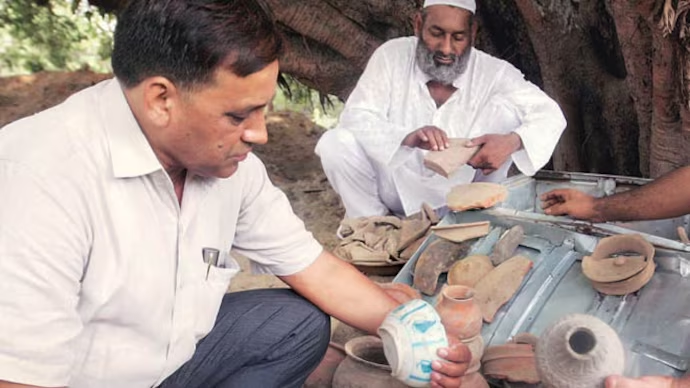
Archaeologist D.N. Dimri(l) shows the artefacts unearthed from the site at Matia Mahal, Old Delhi.
Remains of a historical monument, unearthed a few steps from Jama Masjid, belong to the golden age of Mughal Empire.
Archeological Survey of India said the monument, which residents claim is the Akbarabadi Mosque demolished by the British in 1857, is definitely a “contemporary” of the 17th century Red Fort, though whether it was a mosque or not will be known only after a detailed survey of the area.
The site in Matia Mahal, near Daryaganj, has been drawing visitors in hordes since the past three weeks after the first proofs of the historical structure – pottery and carved stones – were discovered in the area.
On Wednesday, a 10 metre wide wall was discovered a few feet under the ground. Residents claimed the wall was a part of the boundary of the main prayer enclosure, supposed to be about 85 metre wide.
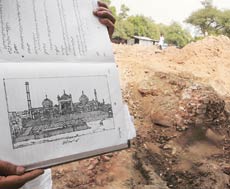
A sketch of the lost Akbarabadi Mosque. ASI officials said the discovery of the site is “indeed remarkable”.
“What we have here is a structure definitely of the time of the Red Fort. It is important due to its proximity both to the Jama Masjid and the Red Fort. The articles discovered from the site – Chinese porcelain, glaze pottery – belong to the period of the Mughals. What the structure exactly is will be known only after detailed survey,” superintending archaeologist Dr D.N. Dimri said.
But residents are confident that evidence of the structure being a mosque is present in the archives.
“We have maps clearly showing the structure of the Akbarabadi mosque in a book authored by the great scholar Sir Syed Ahmad Khan. There are illustrations of the mosque in the development plan of this area, issued by the Delhi government,” Matia Mahal MLA Shoaib Iqbal said.
source: http://www.indiatoday.in / India Today / Home> News> India> North / by Mail Today Bureau / published by AtMigration / July 07th, 2012
The Urdu literary world mourns the demise of one of its gentle giants, Azizuddin Aziz Belgaumi, the celebrated Na’at poet, ghazal writer, teacher, and literary guide, who returned to his Lord on the morning of Friday, November 28, shortly after the Fajr prayer in Bengaluru.
Azizuddin Aziz was not merely a poet; he was a custodian of spiritual emotion, a voice that blended devotion, beauty, and sincerity in every syllable.
He was renowned for his Na’ats – soulful, tender, and overflowing with love for Prophet Muhammad ﷺ. His unique style of recitation, coupled with his soothing voice, made his poetry beloved among Urdu lovers across the region and beyond.
His iconic Na’ats, including:
اہلِ ستم کے پتھر کھا کر گل برسانے والے ہم
دعوتِ ہدایت کی ایک حسیں شفق لے کر میرے مصطفیٰ آئے
had gone viral among Urdu audiences, each line steeped in deep reverence and spiritual longing.
On his final night in this world, he once again recited “Dawat-e-Hidayat ki ek haseen shafaq lekar mere Mustafa aaye” on special request at a mushaira organized by Idara-e-Adab-e-Islami Hind, Karnataka. The audience responded with extraordinary affection, as if witnessing a sacred farewell.
By the next morning, he left this world – a departure many lovingly regard as a sign of divine acceptance.
Azizuddin Aziz’s published works reflect his emotional depth and mastery of language. His poetry collections include:
حرف و صوت
سکون کے لمحوں کی تازگی
دل کے دامن پر
نقد و انتقاد
زنجیرِ دست و پا
ذکر میرے حبیب کا
These works capture the freshness of spiritual experience, the fragrance of emotion, and the honesty of a heart in constant remembrance.
Azizuddin Aziz worked with Doordarshan Bangalore Urdu, where he interviewed prominent literary personalities. His conversations reflected both scholarship and humility, making him a respected voice representing Urdu culture on national media.
He served for a time as a teacher and later as the Principal of Zubaida College, Shikaripur, shaping young minds with the same warmth and refinement that characterised his poetry.
As an educator, he was loved for his gentle discipline, cultured manner, and his ability to ignite a love for language among students.
He also served as editor of several literary magazines, contributing significantly to Karnataka’s Urdu literary landscape. His editorial vision was marked by sincerity, high standards, and a deep respect for classical tradition.
Early on November 28, he experienced severe chest pain at his residence in Bengaluru. Despite attempts to rush him to the hospital, he breathed his last at home. He leaves behind his wife, three sons, two daughters, and a large community of admirers, students, and peers.
May Allah accept every word of love he wrote for His Beloved Prophet ﷺ. May He grant Azizuddin Aziz a lofty place in Jannat-ul-Firdous, and grant patience, strength, and peace to his grieving family. His voice has returned to silence – but his Na’ats will continue to illuminate gatherings, his ghazals will continue to warm hearts, and his legacy will remain a torch of devotion and grace.
Inna lillahi wa inna ilayhi raji’un. Most certainly we belong to Allah, and most certainly we will return to Him.
source: http://www.radiancenews.com / Radiance News / Home> Focus> Obituary / by Radiance News Bureau / by Mohammed Talha Siddi Bapa / November 29th, 2025
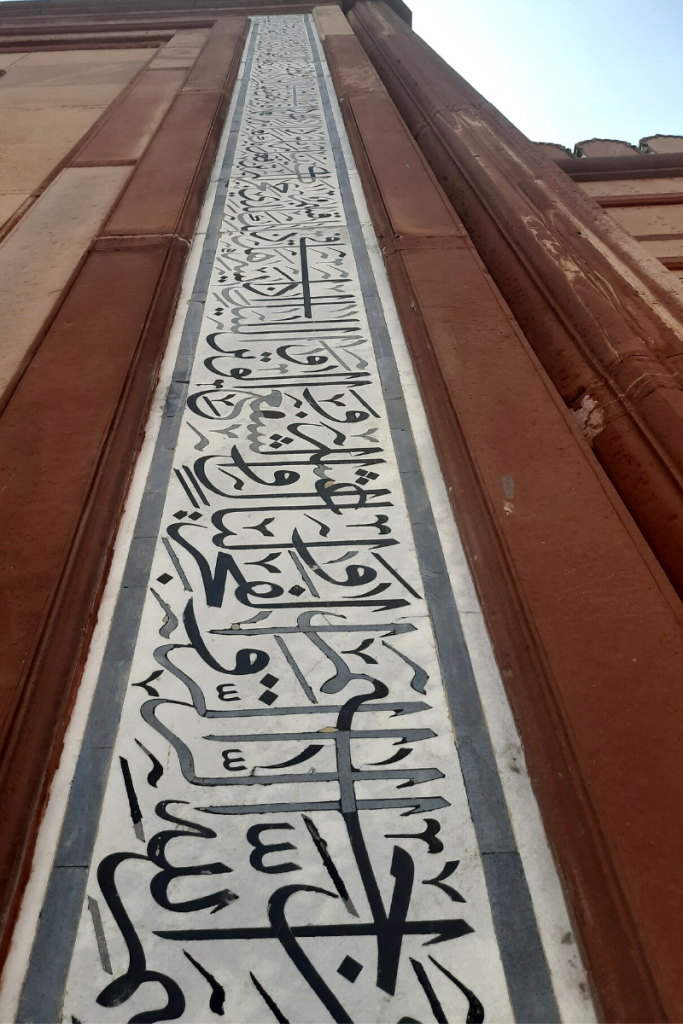
The imposing walls of both the Taj Mahal and Aligarh Muslim University’s Jama Masjid have Quranic verses crafted onto white marbles in black paint.
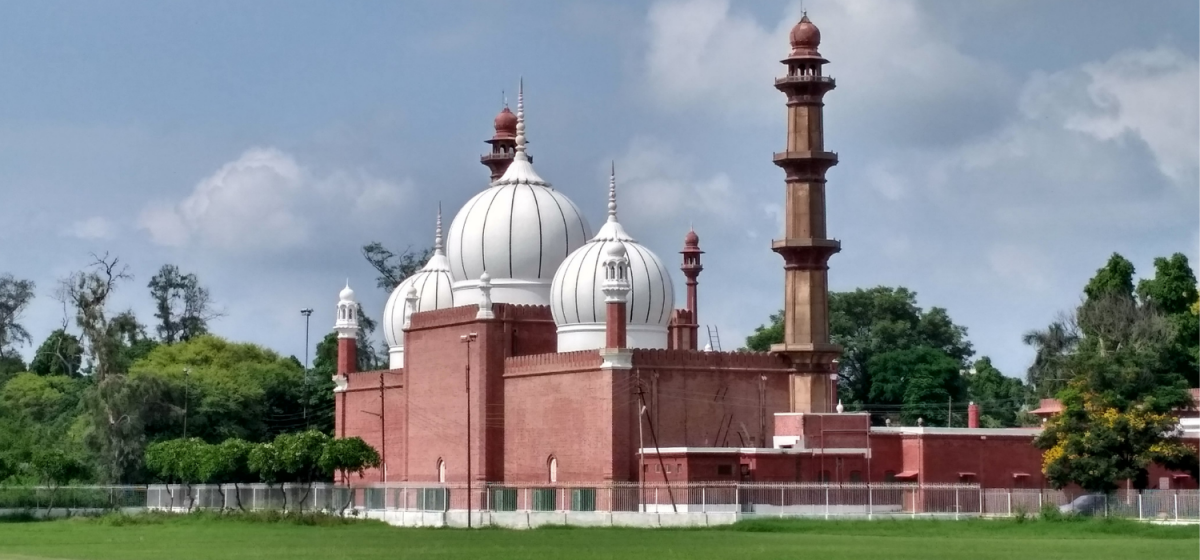
Jama Masjid on Aligarh Muslim University campus. Photo: Author provided.
Constructed nearly 250 years apart, the Taj Mahal in Agra and Jama Masjid at the Aligarh Muslim University (AMU) have an interesting connection.
The construction of the Taj Mahal began in 1632 and was completed in 1653, while the construction of Jama Masjid at AMU began in 1879 and was completed in 1915.
While the Taj Mahal, which is the tomb of Mughal emperor Shahjahan and his wife Mumtaz Mahal, attracts millions of visitors every year, AMU’s Jama Masjid is the main mosque of the university. AMU’s Jama Masjid is, perhaps, the last enduring symbol of the Mughals, constructed when the Mughals lost their kingdom during British rule.
A surprising connection
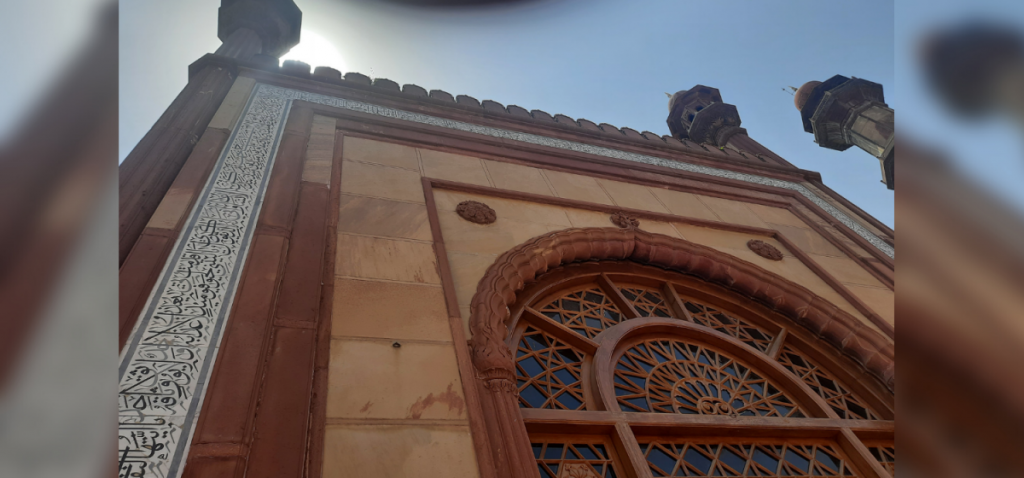
As one enters the Taj Mahal, beautiful calligraphy adorns all four corners. Several verses from the Holy Quran crafted in black calligraphy on white marble can be seen. This is a unique form of calligraphy, and expert artisans from Persia were involved in creating it. Similar calligraphy can be seem inscribed at the tomb of Mughal King Akbar at Sikandra, Agra, and also at the AMU Jama Masjid.
A closer look at the white marble with Quranic verses in black colour adorning the walls of Jama Masjid in Aligarh Muslim University. Photo: Special arrangement.
In fact, it is believed that the artisan responsible for the calligraphy at the Taj Mahal also brought his expertise to AMU’s Jama Masjid.
Since there is a difference of nearly 250 years between the construction of both architectural wonders, it is interesting to study how this was possible.
During Shah Jahan’s regime, several buildings were constructed, including the Taj Mahal and Delhi’s historic Jama Masjid. The calligraphist used was the same.
Professor Nadeem Ali Rezavi of the Centre of Advanced Studies, Department of History, Aligarh Muslim University, says that the master calligraphist in most of the buildings constructed during Shah Jahan’s regime is the same person.
“His name was Abdul Haq, and later due to his craftsmanship, his rank was elevated. He was given the title of Amanat Khan. In fact, he even signed the bands on this calligraphy with dates,” says Rezavi.
Still, there is a gap of over two centuries between these two buildings, Taj Mahal and AMU’s Jama Masjid.
The connection between the two monuments becomes clear with the involvement of Akbarabadi, one of Shah Jahan’s queens. Her original name was Aiza-un-Nisa. She, in 1650, commissioned the construction of a mosque situated in Daryaganj, Delhi, during the same period. In that mosque, Quranic calligraphy was done by the same artisan in black paint on white marble. This was around the same time as when the Taj Mahal was built.
After nearly two centuries, the Daryaganj mosque was demolished by the Britishers following the 1857 revolt. This was when Britishers gained control over the Red Fort, and the last Mughal emperor Bahadur Shah Zafar was sent in exile to Rangoon. They destroyed many buildings which were supposed to have harboured the rebels. At the site of the destroyed Akbarabadi Mosque, a park was developed and came to be known as Edward Park in 1911, which is now called Subhash Park.
During the same period, Sir Syed Ahmed Khan, the founder of the Mohammadan Anglo Oriental College (which later became AMU) felt the oppression against Muslims after the revolt. He nurtured the idea of setting up an educational institution to try and uplift the community.
A visionary man, Sir Syed had the taste for collecting things, particularly artefacts which had archaeological and historical importance. He was aware of the demolition of the Akbarabadi Mosque in Delhi.
As per the AMU Gazette, the scraps generated at the demolished Akbarabadi mosque were sold to a dealer and later purchased by Sahabzada Suleman Jah Bahadur. These remains were thus sold after over 200 years. These were presented to Sir Syed Ahmed Khan, who planned to use them in the Jama Masjid of the educational institution.
A closer look at the white marble with Quranic verses in black colour adorning the walls of Jama Masjid in Aligarh Muslim University. Photo: Special arrangement.
The white marbles with black calligraphy now present in the Jama Masjid of AMU depict Surah Fajr from the Holy Quran. Thus centuries apart, the two buildings carry the work of the same artisan.
“Even if you compare, it is the same thing and the only difference is in the scale. The artisans are the same who have shown their skills in the construction of the Taj Mahal,” says Prof. Rezavi.
Thus AMU’s Jama Masjid is, perhaps, the last enduring symbol of the Mughals, constructed when the Mughals lost their kingdom during the British rule. On the other hand, the domes of AMU’s Jama Masjid employed techniques of the Mughal era: they are “true domes” as they were built using lime mortar and vousseurs (wedge cornered stones/bricks).
“It is a brick structure, guava-shaped, carrying white marble with black stripes. This is the last true dome. After this, the particular technology faded out, and the buildings constructed after them have concrete domes,” said Rezavi.
Later, in 2016, AMU authorities began the conservation of the Jama Masjid. Now revived at the cost of Rs 90 lakh, the Jama Masjid has a Hauz in the courtyard, three domes, seven arches and two lofty minarets cornered by a Cricket Pavilion at its rear end. Sir Syed, the founder of the institution, was also buried in the same compound.
Faisal Fareed is a senior Lucknow-based journalist.
This article went live on June fifth, two thousand twenty one, at zero minutes past seven in the morning.
source: http://www.thewire.in / The Wire / Home> History / by Faisal Fareed / June 05th, 2021
The band is set to make its World Premiere debut at the Tanweer Festival on 21 November in Sharjah, United Arab Emirates.
Rahman earlier dropped the teaser of the band on his Instagram account, which shows the band members dressed in purple, with headscarves covering their hair | By special arrangement
New Delhi:
Academy and National Award-winning composer A R Rahman announced the launch of Rooh-e-Noor, a six-member all-women band, formed under the leadership of his daughter, Khatija Rahman. The band has been launched under Rahman’s KM Musiq audio label, with Kannika Urs heading the project.
Rooh-e-Noor is set to make its World Premiere debut at the Tanweer Festival on 21 November in Sharjah, United Arab Emirates.
Apart from Khatija, the ensemble comprises musicians Pooja Tiwari, Sana Aziz, Shaoni Mojumdar, Amina Rafiq, and Shifa Ruby. Tiwari and Mojumdar are the vocal trainers, Rafiq and Ruby will lead music supervision, and production will be carried out by Sana Aziz, Sarthak Kalyani and Nakul Abhyankar. Rooh-e-Noor means “Soul of Light”, and it has been created to focus on the idea that women’s voices are transformative and can heal, inspire, and uplift.
“Rooh-e-Noor isn’t just a band, it’s a light that connects hearts. Each of these women carries the confidence of modern artistry. Their collective voice is pure, powerful, rooted, and futuristic,” said AR Rahman.
Rahman earlier dropped the teaser of the band on his Instagram account, which shows the band members dressed in purple, with headscarves covering their hair. Khatija is the only member who has also opted to wear a hijab in the video.
A rare sight in the music industry
All-girl bands in India are still few in the music industry. Music producer Mikey McCleary created the band W.I.S.H in 2021, which released their first single Lazeez last year. The last time a girl band took over the Indian music scene was in 2002 when Viva was created.
But soon after its launch, band member Seema Ramchandani left, and the remaining members continued without her for another year.
Rahman’s band—a new step in the world of Indian girl bands, for its distinctive aesthetic—seeks to bring reimagined classics, film compositions, and spiritual renditions.
The teaser shows the girls performing the whirling dervish, a Sufi form of devotional dance. Earlier, Rahman spoke of his own spiritual journey as well as embracing Sufism and its influence on his life and music.
(Edited by Saptak Datta)
source: http://www.theprint.in / The Print / Home> Features> Around Town / by Shubhangi Misra / February 19th, 2025