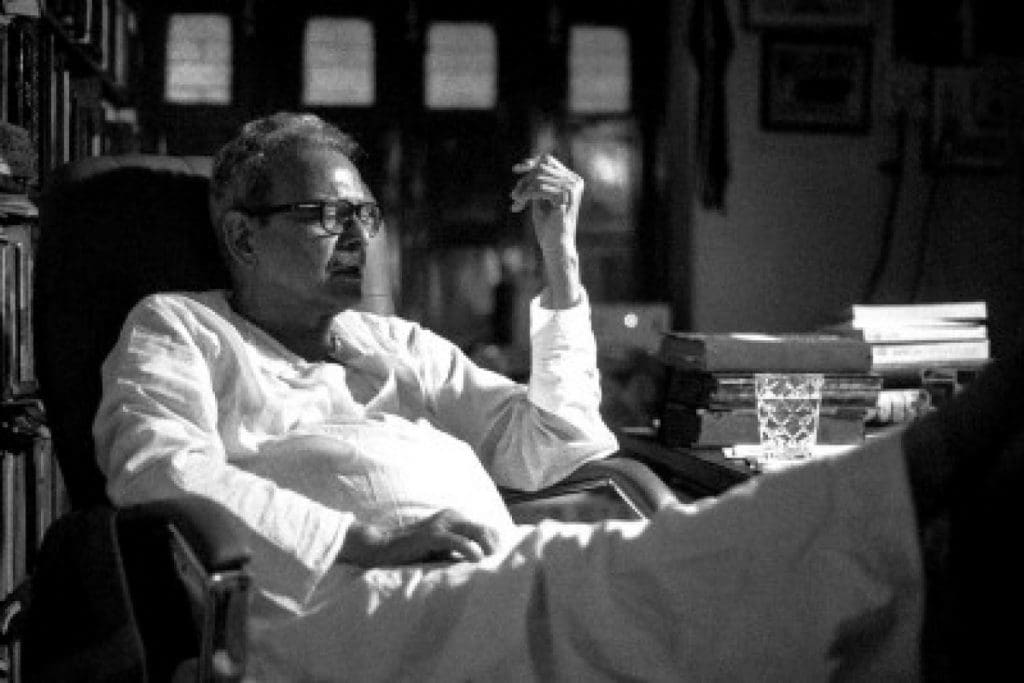
Category Archives: Bharat Ratna, Padma Vibhushan, Padma Bhushan, Padma Shri Award (since January 01st, 2024)

Historian revisits Maulana Azad: A secular nationalist and nation-builder

Mecca, (Ottoman-SAUDI ARABIA / Kolkata, WEST BENGAL / DELHI :

Abul Kalam Ghulam Muhiyuddin (November 11, 1888-February 22, 1958), better known as Maulana Azad, was a writer-activist-statesman.

Historian S Irfan Habib speaks on Maulana Azad on his birth anniversary at an event organised by the Maulana Azad College alumni association in Calcutta on Tuesday / The Telegraph

Historian S. Irfan Habib, while delivering his Maulana Abul Kalam Azad memorial lecture titled “Revisiting Maulana Azad in Contemporary India” on Tuesday, rued how in today’s India, anytime he posts anything on social media on the freedom fighter, 80 per cent of the comments comprise hateful abuse.

“Full of abuse… 80 per cent of the comments. And from people who have no idea of who he was, what he stood for, and what he did for India,” said Habib, whose lecture on the Maulana on the icon’s 137th birth anniversary was organised by the Maulana Azad College alumni association to mark the college’s centennial.

Abul Kalam Ghulam Muhiyuddin (November 11, 1888-February 22, 1958), better known as Maulana Azad, was a writer-activist-statesman.

One of Mahatma Gandhi’s most trusted lieutenants and the youngest president of the Indian National Congress, he made crucial contributions to the freedom movement. He was also Independent India’s first education minister.

“I will speak about those issues relevant for today’s India. What he did for education, how he defined nationalism — today all those who have no idea of what nationalism is are nationalists — and how he defined Islam…. Islam too is in danger when we see what we believers have done to our own faith,” said Habib, former Maulana Azad Chair at the National University of Educational Planning and Administration, New Delhi.

Maulana Azad’s family moved from Mecca to Calcutta when he was two. He spent several decades of his life in this city, his residence on 5 Ashraf Mistry Lane of Ballygunge now a museum.

November 11 is celebrated as National Education Day to recognise his contribution in establishing the education foundations of India — from the Indian Institutes of Technology, the University Grants Commission, the All India Council for Technical Education, the Council of Scientific and Industrial Research, the Indian Institute of Science, and the Sahitya Akademi, the Sangeet Natak Akademi and the Lalit Kala Akademi, besides the Indian Council for Cultural Relations.

“Patriotism, nationalism and humanism, the difference between them Maulana tried to look at. In this (the belief in the culmination in humanism) he was very close to Gurudev Rabindranath Tagore, and he actually writes about it, that he believes in the idea of nationalism which was pitched by the idea of Tagore’s humanism and universalism,” said Habib.

“True relationship is only one, where the entire earth is one’s native land. This is necessary is today’s India, where we indulge in othering among own citizens, in the name of religion, caste, language, all sorts of issues, all sorts of divisive tools we use to divide Indians, while Maulana says mankind is one family and all humans are brothers, this is the idea of humanity of nationalism which Maulana left behind,” he added.

Habib underscored how the Maulana began as a pan-Islamist, speaking against the subjugation of Muslim nations by imperialist powers — a sentiment expressed strongly in his papers Al-Hilal and Al-Balagh, and it was because of his role as a fiercely upright journalist that the British Raj viewed him as one of the most dangerous persons in India.

Habib stated that after the Maulana was released from exile in Ranchi in 1920, he was torn between reading and writing in seclusion, or public life and the freedom struggle. It was soon after coming out of exile that the Maulana met Gandhi on January 18, 1920, for the first time.

“The meeting seemed to have had a profound impact on both… and they remained inseparable for the rest of his (Gandhi’s) life,” he said.

According to Habib, the Maulana fought on multiple fronts, not only against the British, but also Hindu and Muslim communalists.

“Maulana stressed on indivisible or composite nationalism, where he went back to early Islamic history, when the Prophet (Muhammad) created the first Muslim nation in Medina by aligning with the Yehudis (Jews). He saw no reason why Muslims could not join hands with Hindus and others in nation-forming…. He was appalled with communalists busy with sectarian campaigns when the need was to fight the British as a composite nationalist group,” Habib said.

“Maulana stood for a united India and remained steadfast in this resolve till the end. We are amid polarising politics where religion has become a distinct marker of identity…. The majoritarian nationalism being flaunted today runs contrary to the idea of composite nationalism espoused by Maulana all his life,” he added. “Maulana found the demand for Pakistan absurd as he was conscious of the fact that religion cannot be a binding factor for a nation.”

source: http://www.telegraphindia.com / The Telegraph Online / Home> West Bengal / by Meghdeep Bhattacharyya / November 12h, 2025

Irshad Mirza: Famous leather exporter of Kanpur, Irshad Mirza passes away, industry mourns

Kanpur, UTTAR PRADESH :

Irshad Mirza, a prominent Kanpur leather industrialist and chairman of Mirza International, has passed away at the age of 95. Irshad Mirza had been ill for a long time. His death has sent shockwaves through Kanpur and the industry.

Kanpur: 

Irshad Mirza, chairman of Mirza International, the country’s largest leather exporter, passed away at the age of 95. Irshad Mirza was ill for the past several years. He breathed his last on Sunday in a private hospital in Kanpur. As soon as the news of Irshad Mirza’s death spread outside the hospital, a crowd of people gathered at his residence in Civil Lines.

Irshad Mirza’s contribution to the leather industry can never be forgotten. He has been honored with several awards including Padmashree. Irshad Mirza was also called the pride of Kanpur. Irshad Mirza has also got his name registered in Forbes magazine.

Irshad Mirza founded Mirza International in 1979. Mirza International manufactures leather, finishing, and tanning. The leather produced by Irshad Mirza’s company was in high demand abroad. The leather produced by the company is exported abroad. He was also the former chairman of the Minority Commission. During this time, he contributed to the betterment of society. Irshad Mirza

His passing has caused a wave of mourning in Kanpur and the industry. He had a strong influence not only in the industry but also among social workers, political parties, and leaders. He also worked extensively for the betterment of society in Kanpur. He also taught how to work in the leather industry.

source: http://www.navbharattimes.indiatimes.com / Nav Bharat Times / Home> Hindi News (translated)> State> Uttar Pradesh> Kanpur / by Abishek Shukla / December 04th, 2022

‘Karnataka’s Kabir’ and Padmashri Ibrahim Sutar passes away

Mahlingpur , KARNATAKA :

The recipient of Padmashri award for communal harmony had earned the sobriquet of ‘Karnataka’s Kabir’

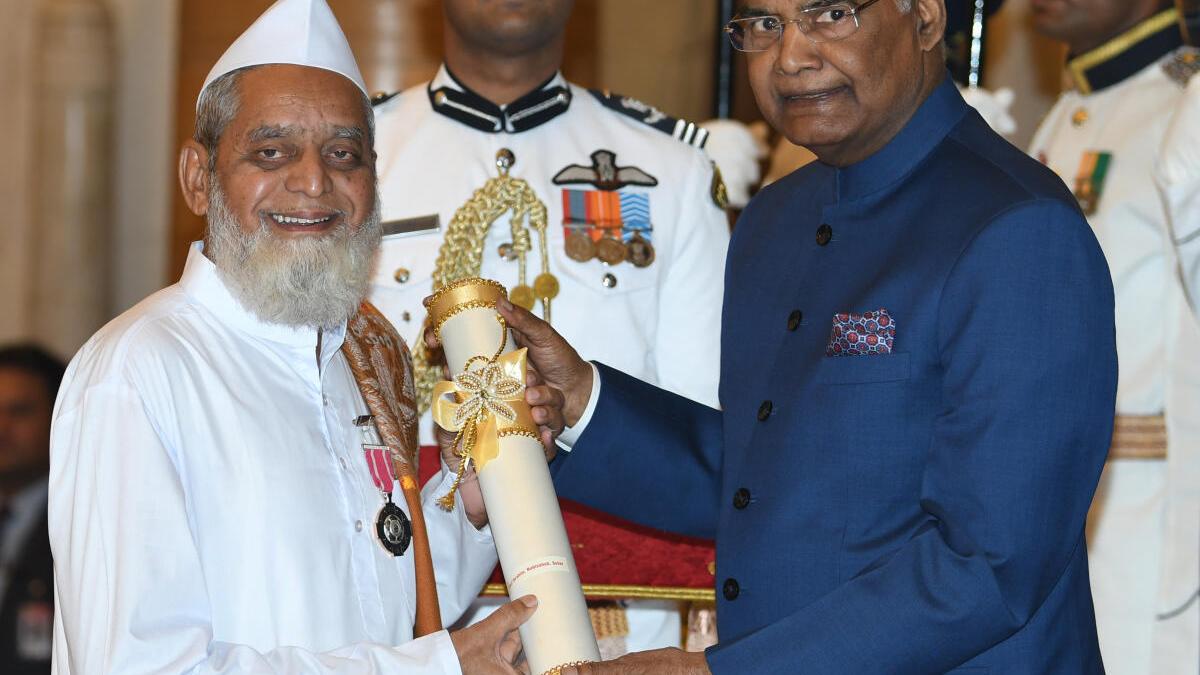
‘Karnataka’s Kabir’ Ibrahim Nabisaheb Sutar is presented the Padmashri award by President Ram Nath Kovind at Rashtrapati Bhawan, in New Delhi on April 2, 2018.

Ibrahim Sutar, polyglot folk singer, who toured India spreading the message of Hindu-Muslim unity, died in Mahalingpur in Bagalkot district on February 5. He suffered a massive heart attack around 6.30 in the morning. He died a few minutes later, family sources said. He was 82. He leaves behind his wife, son and two daughters.

The recipient of Padmashri award for communal harmony had earned the sobriquet of ‘Karnataka’s Kabir’.

The founder of ‘Bhavaikyate Bhajana Mela’ began his career as a Harikathe bhajan singer going around villages and towns. He regaled audiences with stories from Hindu and Islamic scriptures always leaving with a message of harmony, and need for ethics in personal life. He sang songs and gave lectures, quoting from multiple scriptures without the need to read from notes. He was equally well-versed in Kannada and Urdu.

In his later life, he emerged as a public speaker, visiting schools, colleges and Lingayat mutts to speak on vachana and dasa literature. He was honoured with the Karnataka Rajyotsava award in 1995, and the Padmashri in 2018.

Born in a poor weaver family in Mahalingpur, he dropped out of primary school to work as an assistant to a weaver. He developed a spiritual bent of mind early in life. He began attending lectures in the Sri Basavananda Swami mutt and participating in bhajans in Sadhu Maharaj temple. He was a member of the mosque committee that went around villages, asking the faithful to wake up early during the month of Ramzan. He studied Hindu and Islamic scriptures with equal zeal and developed a team of bhajan singers. The ‘Bhavaikyate Bhajana Mela’ performed across Karnataka and Maharashtra.

A routine performance was in the question–answer format interspersed with songs of dasa saints and vachanas . One of the team members came up with a question that sounded very ordinary, but had deep spiritual undertones, like: ‘Who is important in life – god or guru?’ Sutar used anecdotes from the Ramayana and Mahabharata, Islamic scriptures and stories from the life of prophets to give his opinion, that was directed at the audience, rather than the team member who kept asking questions.

source: http://www.thehindu.com / The Hindu / Home> News> India> Karnataka / by Special Correspondent / February 05th, 2022

Beacon of Education Reemerges In Gritty Grades of Kashmiri Girls

JAMMU & KASHMIR :

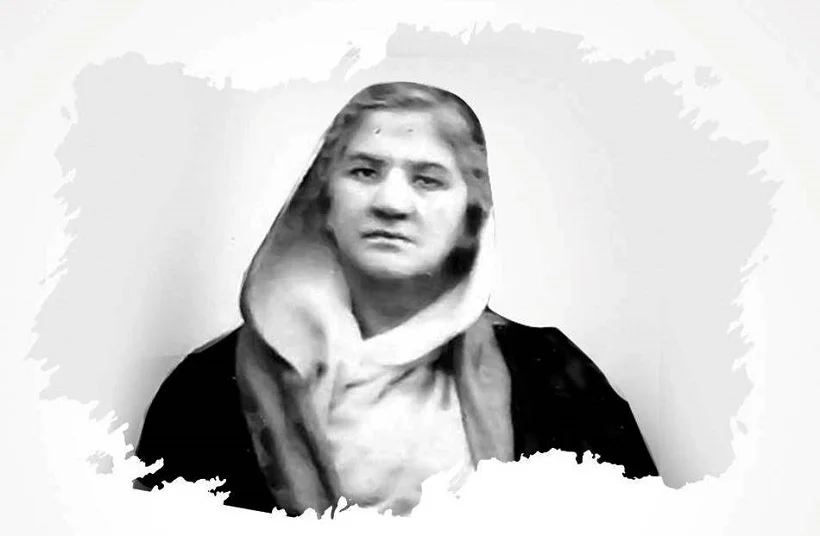
Begum Zaffar Ali

The legendary educationist of Kashmir whose door-to-door campaigning inspired generations of Kashmiri girls resurfaced in their recent academic feat.

IN his celebrated anthology, The Veiled Suite: The Collected Poem, Agha Shahid Ali details his grandmother’s “bleeding heart”—which ensured the educational empowerment of the masses in the valley.

Shahid’s poem, Prayer Rug in her memory, became a token introduction of “the lady with a lamp” — Begum Zaffar Ali.

this year my grandmother
also a pilgrim
in Mecca she weeps

as the stone is unveiled
she weeps holding on
to the pillars

Beyond the poem, however, there’s a staggering profile of the grand old lady of Kashmir—whose educational service made her legend.

“Firmly determined, my mother-in-law, Begum Zaffar Ali, was a self-made lady, who spent her life relentlessly advocating for women education and empowerment in the valley,” recalls Dr. Shaheena Agha, at her Rajbagh residence.

In the sweeping accolades being showered on the lockdown-hit girls whose recent grades once again made them the shining stars of Kashmir’s dented academia, Begum Zaffar Ali found a glorious mention for inspiring generations of girls in the valley.

“My mother-in-law was one of the first Kashmiri girls whose grit made her a beacon of educational excellence,” Shaheena continues.

“An untiring activist, Begum Zaffar helped Kashmiri women in one way or another. I take inspiration from her.”

In her 60s, Shaheena first met Begum Zaffar as a 26-year-old woman, when she married the celebrated educationist’s eldest son, Agha Nasir Ali, in 1986.

“It was an evening of mutual admiration and love,” she talks about the first interaction with her mother-in-law. “By then, she had already retired, but I was instantly moved by her illustrious persona.” 

Begum Zaffar can be easily identified as one of the most influential and meticulous women of her times. Her life, Shaheena says, was that of extraordinary persistence and intellect which brought girl education to the forefront and dispelled illiteracy and ignorance.

“As a champion of women rights, her tireless and unwavering contribution to social changes and reforms pertaining to girl education in the valley and upliftment came at a time when society was predominantly patriarchal and orthodox in its outlook and question of women liberation and education were still widely restricted,” Shaheena says.

Begum Zaffar Ali was born in 1900 in the distinguished Agha family of Srinagar with her maiden name, Syyeda Fatima Hussain. She was the eldest daughter of Khan Bahadur Aga Syed Hussain, the first matriculate of Kashmir.

Along with her siblings, she was homeschooled by a European Home Governess. While pursuing her education, she was married to her cousin, Agha Zafar Ali Qazalbaash, a scion of Afghan family. She continued her education after marriage.

While being a mother to three, she went ahead taking revolutionary strides and efforts which would go on to change the face of women’s emancipation and education in the valley and inspire thousands of young girls for years to come.

“She brought an era of renaissance and regeneration in the lives of the Kashmiri women,” says Nusrat Mehmood, a senior college lecturer who calls Begum her inspiration. “Her passionate, non-conforming and unorthodox life will continue to rekindle the spirit of excellence in people like me.”

In 1925, Begum Zaffar was invited to teach in a Girls Missionary High School run by Miss Mallinson and Miss Bose in old Srinagar’s Fateh Kadal area.

“During those times, being a teachress was seen as a stigma but nevertheless she joined the school to serve the cause of education,” lecturer Mehmood continues.

“Her door-to-door campaigning for education in an era of subjugation and poverty makes Begum one of the most unsung educationists of the world. Her academic pursuits and ambitions to bring social changes heralded a new hope.”

Such was the zeal and determination of Begum Zaffar that she simultaneously started philanthropy work towards the poor girl of the school and looked after their hygiene and overall development.

“She even encouraged both young and elderly women to seek education and personally volunteered to teach them,” says Mubashir Hussain, a social activist from Srinagar.

“Through the good offices of her father who was then Home and Judicial Minister in Maharaja’s regime, grants were sanctioned for the schools. Begum managed to get an extra sum of Rs 10 sanctioned for the maintenance of girls every month besides meals.”

Impressed by her progress in studies, her children’s home tutor encouraged her to sit for the matriculation examination as she, by then, had been teaching girl students of tenth standard for five years.

Begum Zaffar was reluctant initially as no woman from the valley till then had passed the matric exam. She finally broke the jinx by becoming the first matriculate woman of Kashmir in 1930 and went on to complete her graduation in Domestic Science and Liberal Arts from Lady Mclegon College, Lahore in 1938.

“Back then, parents were still debating whether to give only religious teachings to their girl child or give them modern education,” says Rameez Kashani, a history lecturer.

“To uplift Kashmiri women and free them from their ignorance and religious and social conservatism, Begum Zaffar led the movement of women emancipation in the valley where she could encourage girls to come forward and educate themselves.”

Later she was appointed as the Inspector of Schools in Kashmir and was the first Muslim in her administrative capacity, who went on delivering lectures in colleges and social gatherings.

As a great orator and popular figure, Begum Zaffar was a key member behind the foundation of Teachers Club and Ladies Club, whose members included Tara Devi, queen of Kashmir’s last monarch, Hari Singh.

“The club was central to bringing reform changes and participation in the lives of the Kashmiri women,” Kashani says.

Before the bloodcurdling fall of 1947, Begum Zaffar had served as the secretary of the All India Women’s Association but later resigned due to her displeasure with the association’s nationalist fervour.

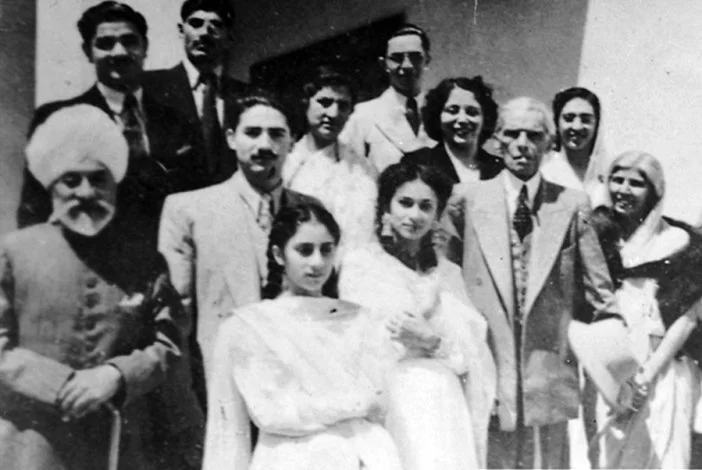
Back in 1944, she had famously hosted Mohammad Ali Jinnah and his sister, Fatimah Jinnah at Srinagar. She had organised a meeting of Kashmiri women with the stalwart’s shadow sibling at present day Lawns of Secretariat.

Begum Zaffar Ali with Mohammad Ali Jinnah in this pre-47 pic.

In her lifetime, Begum Zaffar held various offices and with her intellectual ability and leadership, she was the first Muslim in Kashmir to become a director in the Department of Education.

In her later days, she was also member of the Social Welfare Advisory Board, Jammu and Kashmir, and even became a legislator.

At personal level, Begum’s three sons went on to have distinguished public profiles. Her two sons, Agha Nasir Ali and Agha Shaukat Ali were civil bureaucrats.

While Agha Nasir retired as Labour Secretary of India in 1977, Agha Shaukat Ali, moved to Pakistan and joined Civil Services. Her youngest son Agha Ashraf Ali followed her footsteps and went on to become a top academician and educationist of the valley.

“It was Begum Zaffar Ali whom Sheikh Abdullah approached to convince her son, Agha Shaukat Ali to come back from Pakistan and join his cabinet,” Shaheena says. “During her lifetime, she longed to meet the same son when he moved to Pakistan. But New Delhi never granted a visa to her for meeting her son in the neighbouring country.”

When the same government awarded Padma Shri to her in recognition of her outstanding contribution to the field of social welfare in 1987, Begum famously declined the award in a televised Doordarshan interview.

“The Indian state excesses and gross human rights violations in Kashmir was the reason behind the non-acceptance,” historian Kashani says.

In her later years, the top educationist had been shuttling between Srinagar and Washington, to be with her exiled son.

In 1999, when she was staying with Agha Shaukat in the United States, the whole family, including her great grandchildren, had planned to celebrate her birthday as she was turning 100 year old.

“But sadly,” Shaheena says, “she passed away a month short of her illustrious century!”

source: http://www.kashmirobserver.net / Kashmir Observer / Home> In Depth> Special Report / by Rakshanda Afrin / March 11th, 2021

Punjab Police ex-DGP, prisons, Mohd Izhar Alam passes away

BIHAR / Chandigarh, PUNJAB :

Alam died after a cardiac arrest at a private hospital in Mohali; last rites at Sirhind on Wednesday.

Mohd Izhar Alam, a former DGP, prisons, of Punjab Police, was inducted into the Shiromani Akali Dal after his retirement. His wife, Farzana Nissara Khatoon, is a former SAD MLA from Malerkotla. (HT file photo)

Mohammad Izhar Alam, 73, a former director general of police, prisons, died after a cardiac arrest at a private hospital in Mohali on Tuesday.

He is survived by wife Farzana Nissara Khatoon, a former Shiromani Akali Dal MLA from Malerkotla, three sons and two daughters.

The 1972-batch Indian Police Service officer was a Padma Shri awardee.

He had a controversial stint during the decade of militancy in Punjab.

Despite opposition, former chief minister Parkash Singh Badal inducted Alam into the SAD on November 18, 2009, and appointed him chairman of the Punjab Wakf Board.

In the 2012 assembly elections, Farzana won the Malerkotla seat on the SAD ticket, defeating Razia Sultana of the Congress.

Chief minister Captain Amarinder Singh also mourned the former DGP’s death.

The last rites will be performed in Sirhind on Wednesday.

source: http://www.hindustantimes.com / Hindustan Times / Home / by HT Correspondent / July 06th, 2021

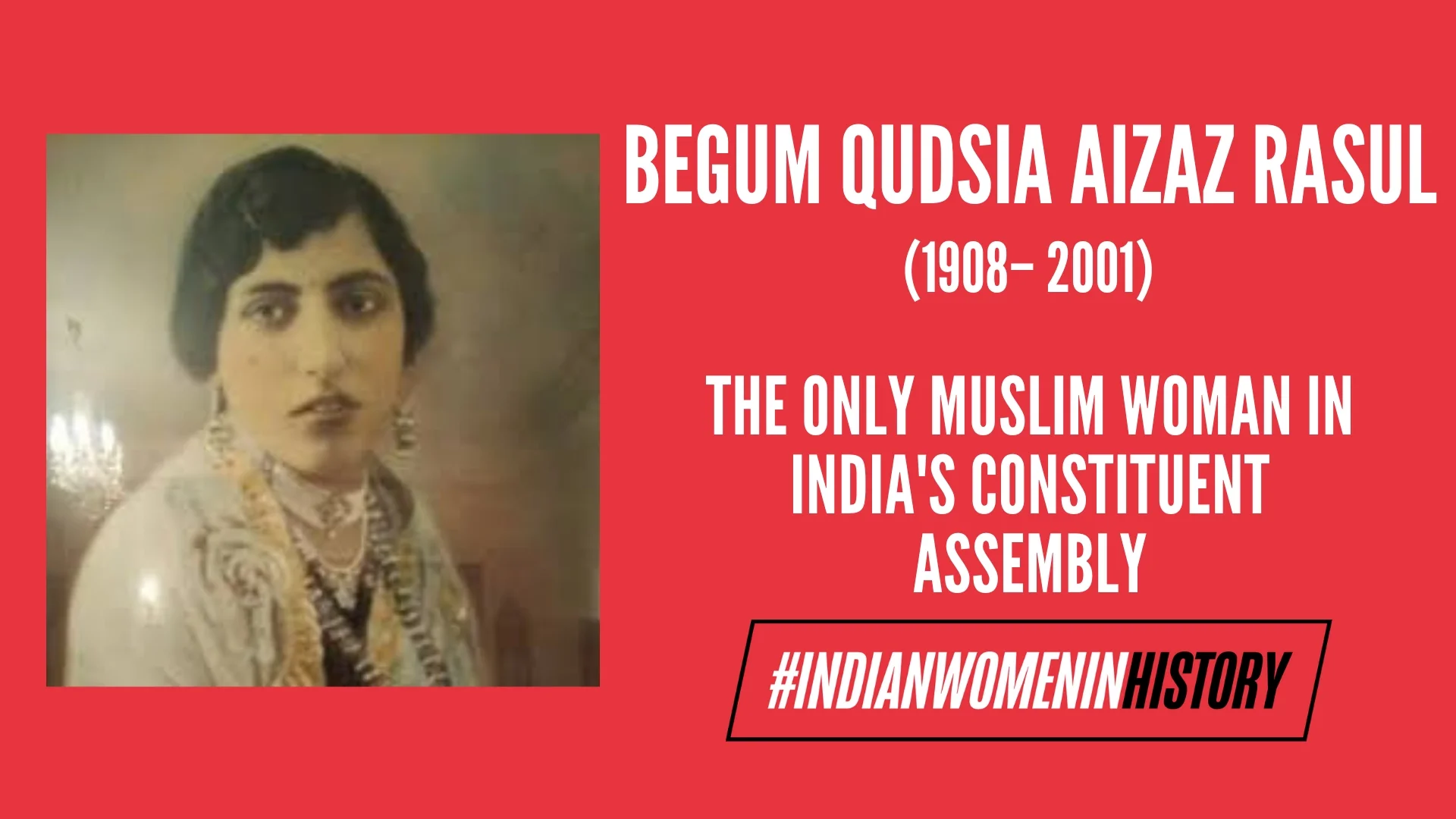
Begum Qudsia Aizaz Rasul: The Only Muslim Woman In India’s Constituent Assembly | #IndianWomenInHistory

Lucknow, UTTAR PRADESH :

Begum Qudsia Aizaz Rasul was one of the 28 Muslim League members to join the Constituent Assembly of undivided India, and she was the only Muslim woman to be a part of the assembly.

Begum Qudsia Aizaz Rasul was born to the royal family of Malerkotla (situated in erstwhile united Punjab) on 4th April,  1908. Her father was Nawab Zulfiqar Ali Khan. Qudsia had a progressive upbringing and was encouraged from a very early age to lead a modern life, as opposed to several stringent restrictions imposed upon other contemporary Muslim women, such as that of the purdah.

She got married at quite an early age to Nawaab Aizaz Rasul from the erstwhile province of Awadh. Her husband held the position of a taluqdar,  or a landowner. Qudsia had political exposure both before and after marriage, and her formal political participation took place after she got married.

Image Source: Wikivividly

Political Career

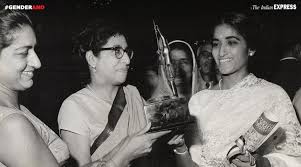
Qudsia, along with her husband, joined the Muslim League in mid-1930s, soon after the passing of the Government of India Act in 1935. This was also her official entry into electoral politics, as she contested in the elections of 1937 from the U.P. legislative assembly, where she successfully held her seat till 1952. Aizaz was one of the very few female candidates to have contested and won from a non-reserved constituency during the pre-independent times.

She was the first Indian woman to achieve such feats, and this was truly commendable and noteworthy at a time when most formal political positions were almost implicitly reserved for men.

As an MLA, she also held several important posts, such as the Leader of Opposition (1950 to 1952) and the Deputy President of the Council (1937 to 1940). She was the first Indian woman to achieve such feats, and this was truly commendable and noteworthy at a time when most formal political positions were almost implicitly reserved for men. Moreover, to rise to prominence at a politically significant province such as the U.P. indeed made Qudsia Aizaz Rasul a trailblazer.

Image Source: Indian Express

She is well known for her progressive, anti-feudal stances, such as the abolition of the zamindari system. Qudsia was a strong advocate for the abolition of communal electorates as well, as she believed it divided the society more than it united – which was counterproductive for the Indian electoral candidates at a time when there was an urgent need of a united Indian front to oppose the colonial rulers. She went on to create a strong and convincing case for the abolition of electoral reservations for religious minorities during her tenure as a member of the Constituent Assembly.

Qudsia was one of the 28 Muslim League members to join the Constituent Assembly of undivided India, and she was the only Muslim woman to be a part of the assembly. Her contributions in the assembly debates remain monumental till date and have been recorded in many official sources.

Her contributions in the assembly debates remain monumental till date, and have been recorded in many official sources.

After the dissolution of the League, she joined the Indian National Congress, and served as a member of the Rajya Sabha from 1952 to 1958. Later, she became a member of the legislative assembly of Uttar Pradesh from 1969 to 1989.

Other Achievements

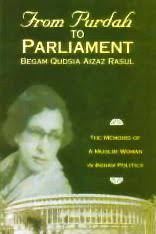
Begum Qudsia Aizaz Rasul is also well known for her autobiography, titled From Purdah to Parliament: A Muslim Woman in Indian Politics. It provides excellent insights into the intersectional aspects of organised politics as it functions in our country. Other than this, she also wrote a travelogue titled Three Weeks in Japan.

Besides her literary prowess, Qudsia had also served as the President of the Indian Women Hockey Federation for over fifteen years, and went on to become the President of the Asian Women’s Hockey Federation.

Begum Qudsia Aizaz Rasul was awarded the Padma Bhushan in 2000 for immense, invaluable contributions to the field of social work.

References

1. From Purdah to Parliament: Begum Aizaz Rasul (A Review) by Radhika Bordia
2. Begum Aizaz Rasul: The only Muslim woman to oppose minority reservations in the Constituent Assembly by Christina George

source: http://www.feminisminindia.com / Feminism in India – FII / Home / by Ekata Lahiri / February 15th, 2019

Sarangi maestro Ustaad Sultan Khan is no more

Jodhpur, RAJASTHAN :

The Padma Bhushan awardee, who hailed from Jodhpur, died of kidney failure in Mumbai.

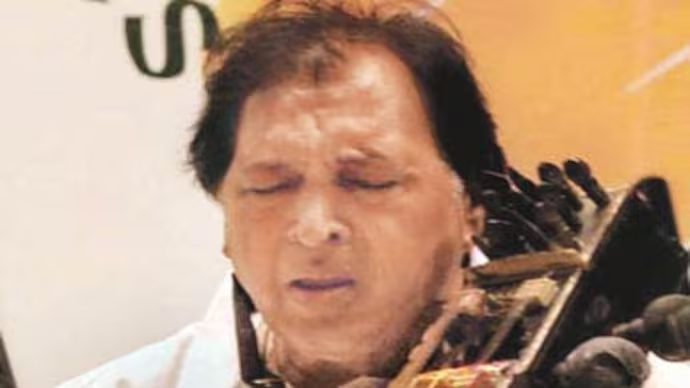
Sarangi maestro and classical singer Ustad Sultan Khan, the soulful voice behind hits such as Piya basanti re and Albela sajan, passed away in Mumbai on Sunday after kidney failure.

The Padma Bhushan awardee, 71, who hailed from a family of sarangi players in Jodhpur, was on dialysis for the past three months and died on his way to the hospital, family sources said.

Khan is survived by his second wife Bano, son Sabir – also a well-known sarangi player – and two daughters. His funeral will take place in Jodhpur on Monday.

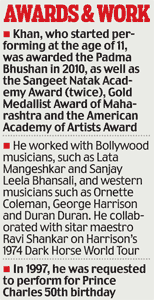
Credited for reviving the sarangi, Khan is famous for his extraordinary control over the instrument and his husky voice. He started performing at the age of 11, and later collaborated at the international level with sitar maestro Ravi Shankar, on George Harrison’s 1974 Dark Horse World Tour.

Khan’s was a family of sarangi masters from Rajasthan. He was initially tutored by his father, Ustad Gulab Khan. Later, he trained under Ustad Amir Khan, a classical vocalist of the Indore gharana. After establishing himself as a sarangi player, Khan worked with Bollywood musicians, such as Lata Mangeshkar and Sanjay Leela Bhansali, apart from collaborating with western musicians, such as Ornette Coleman, George Harrison and Duran Duran.

Apart from the Padma Bhushan, Khan won numerous musical awards, including the Sangeet Natak Academy Award (twice), the Gold Medallist Award of Maharashtra and the American Academy of Artists Award in 1998.

Khan was also a member of the Indian fusion group Tabla Beat Science with Zakir Hussain and American bassist Bill Laswell.

The news of Khan’s death came through a post by music composer Salim Merchant (of Salim-Sulaiman fame) on Twitter.

“I lost my ustad – Ustad Sultan Khan, my guru my friend my idol. He passed away this afternoon. We will never have a sarangi maestro like him,” he tweeted.

Eminent sarod player Amjad Ali Khan also condoled his death, saying it was a great loss to the music world. “I am deeply saddened at his demise. He gave a different meaning and dimension to the sarangi ,” he said.

Among the other musicians who expressed grief were music director Vishal Dadlani, and singers Shreya Ghoshal, Abhijeet Sawant and Shaan. “Just heard about the loss of our dear ustad sa’ab :(I had the gr8 fortune and honour of working with him. Too saddened,” Ghoshal tweeted.

Actors Akshay Kumar, Rahul Bose and Dia Mirza also wrote on Twitter. “This has not been a good year what with so many great personalities leaving us. My thoughts and prayers with his (Khan’s) family,” Akshay said.

“He played on the soundtrack of my directorial feature, Everybody Says I’m Fine! Ustad Sultan Khan saab had a huge heart and an impish sense of humour,” Bose recalled.

source: http://www.indiatoday.in / India Today / Home> News> West / by India Today Online, Mumbai / November 28th, 2011

Shamsur Rahman Faruqi, My Awe-Inspiring Friend and Father

Prayagraj (formerly Allahabad), UTTAR PRADESH / NEW DELHI :

Shamsur Rahman Faruqi with Baran Farooqi. Photos courtesy: Baran Farooqi

Abba was the magician who introduced me to the wide and varied wonders of the world, taught me everything about life and its customs and kept me enamoured of his extraordinary personality. I was awe- struck by his learning, his cool, confident air and the way and adulation he commanded sat comfortably on his shoulders.

And may there be no sadness of farewell 

When I embark;

Alfred Lord Tennyson

Yeh meri akhiri bimari hai (this is my last illness),” spoke Abba with a wry smile on his face. He was addressing Dr Nandani Sharma, a homeopath in Shivalik, Malviya Nagar (New Delhi), whom we were all very fond of and trusted. That evening we had taken him there since he had expressed a desire to actually see her and not consult her over a video call to ask about the chances of curing the fungal infection which had invaded his eye during his stint at Fortis Escorts hospital where he had been hospitalised after having tested Covid positive. None of us had imagined that it was a matter of just a few days before he would be gone, transited peacefully and in full preparation of “seeing his pilot face to face.” Dr Nandani assured him that he still had long to live and accomplish some more as she was confident her medicines would be able to control the fungus. This conversation had taken place in her driveway as Abba was not able to walk since he had returned from hospital and so it was decided that instead of him having to go into her clinic, he would be seated on his wheelchair near the car and she would examine him. We returned upbeat from Dr Nandani’s place but it was as if Abba knew better than Dr Nandani this time. He had been sent the summons and he had answered them with acceptance and great sporting spirit. So, he laughed at our jokes in his weak strength and held out his hands or arms to embrace whenever he saw me or my sister or my daughters enter the room. He would kiss my hands and softly caress my head if he happened to be sitting, bolstered by the electrically operated bed we had arranged, half a dozen pillows and bolsters around him.

Of late, in fact, right from the time he would send voice notes from the hospital, he would often repeat, “I love you” or “know that I love you.” Of course, we had never had any doubts about this ever because Abba was the master of expression. A vocal person, he taught me how I need to say “thank you” even to my own parents if they got me something and to house helps and friends for services rendered or acts of kindness. I once overheard him reproaching my mother for never doing salam to him first when he got home from office or smilingly extending her hand of welcome. Always cheerful and smiling when he came home from office, he expected everyone else at home to be as smiling and welcoming as he was. Each time any of us would enter his room for something, he would beam aaiye aaiye (do come in) and show his pleasure. He used to call me “funny face” sometimes, which didn’t seem very amusing to me but I knew I was supposed to show a sense of humour and not sulk over little things. I finally asked him one day, “Why do you call me funny?” He answered that funny faces are those who are delightful and make him feel happy and full of mirth. Once, when I made him fill out my columns of questions like, who is your best friend, what’s your favourite colour, what are you scared of and so on, (this was a raging activity in my school those days that you took autographs of people in your autograph book for no reason and also made them fill columns which were made in a double page of a register.) I remember almost all his answers to this day but I’ll speak of only a couple, to the question, “If you had a wishing wand, what would you wish me to be?” he had answered “Queen of Sheba.” I immediately understood this is something divinely great and luminous and so on, since I didn’t really know who queen of Sheba was at that time. In the answer to the question, “what are you scared of?” he had answered “centipedes,” making me aware that he was human and vulnerable in his own way.

I have wandered far from what I was initially talking about — his illness and his demeanour during those days. After stretching out his hands and making me sit close, he told me one day that the time for him to leave this world had come and that I should allow him to go. That the ceaseless struggle that we were putting up to withhold him was futile and he was convinced about his departure. He needed to go back to his spacious and open house where his favourite pet dog Bholi and others were, and he wanted the birds to sing near his window before he ceased to breathe. On those nights when he was awake and not faint with weakness, I would sit by him and read out his WhatsApp messages to him and also make him listen to the voice notes people had sent. He chose to respond to one or two voice notes or emails and messages every day. He would speak the voice notes himself and dictate the written messages or emails. He once made me write a mail to CM Naim sahib though there wasn’t one from him that day and also to Frances Pritchett, informing them about his health. One of the voice notes that he sent to Amin Akhtar (a relative of ours who has been assisting him in his library-cum-office and miscellaneous affairs for many years) was about the local graveyard which Abba’s efforts had helped restore and put in order after his return to Allahabad after retirement. He asked Amin to go to my mother’s grave and convey his salam there. He also asked Amin to see if it was still possible if he could be laid to rest right next to her, but in case anyone objected, he reminded Amin, he had chosen a remote corner of the graveyard for himself as a second choice. Amin responded next day tearfully that he had carried out his instructions and that there was no question of anyone objecting to his burial next to his wife. He had written the ayat he would like to be written on his tombstone and given it to Amin many years back already. I felt heart-broken at these conversations but I, too, knew that they must happen and not be left unfinished, for the day of parting may come if it had to, and there was nothing anyone would be able to do about it. 

I marvel at Faruqi’s (as he would like to refer to himself, sometimes  even calling himself “saala Faruqi” or “Fraudie”), courage and foresight for the way he bore his illness. He was also very kind and forbearing towards us, always succumbing to our pleas for making him eat or drink something despite being terribly averse to both ideas. Every time he would ask when we were planning to go back to Allahabad with him, and my sister or I would give a date a week or two away, he would nod patiently and agree. Ever since Ammi passed away, Abba had been careful to hand over all that she had left behind as money or property to both of us, saying this belongs to you both as she was your mother. But when it came to caring for us and endowing us with gifts or maintaining the large house, he acted as the perfect father. Never once did he ask us to bear any financial burden of any kind, be it the property Ammi left behind — he continued to pay property tax for it — or other charities that she was used to doing at her native village. 

Unselfish by nature, and generous towards the world and its people, he once told me that he had spent his life with the aim to be of help to any number of human beings he came across in the journey of his life, particularly during his career in civil service. I have never known or seen, nor do I ever hope to see, another more good-hearted person who is also competent, capable and one of the greatest literary minds of the century. Abba loved exploring new things and enjoy them if the children so wanted. Any new joke, and we wanted to share it with him, a new piece of machinery or a gadget and he would be curious to know about it, any adventurous outing, and he would want to be a part of it. In fact, most of the interesting outings in my and my daughters’ lives were either planned by him or planned for him. It was just last winter that we all went to Kochi together to explore the backwaters of Kerala and spend some part of winter there to avoid the low temperatures up North. As he grew older, he had begun dreading the winters, as they confined him to his room and restricted his hours in the study. There were arrangements to keep his room, his study, and even his bathroom warm, but the cold got to him since he was finicky about wearing “inners” and heavy quilts bothered his frail body with their weight.

Apart from travelling to new places and exploring places of historical interest or natural beauty, Abba had a penchant for stylish and tasteful clothes and good food (which he always ate very little of, but wanted to be served in good quantity). However, he had this little thing in his head about what are supposedly “manly” dishes and which foods are meant to be consumed only by women. Consequently, I never saw him relishing anything even slightly sour. He was supremely dismissive of achar and chutneys or chaat of any kind. Even remotely foul-smelling vegetables were banned in our house, not to speak of home-made sirka or ghee being extracted from malai. I once witnessed a bitter exchange he had with my mother for having gotten mooli achar prepared in the courtyard of our house. This was even worse than cooking sabzi out of the mooli! Like any other subversive spouse, Ammi would sneak such things into the house and eat them secretly when he was in office. 

Abba was a great animal lover, too. As children, having animals and birds around us was as natural as breathing and it must never have occurred to us that in the eyes of the world, we qualified as “animal lovers.” At any given time in our lives, there were always dogs, cats, turtles, mynahs, peacock chicks or grown peacocks, pigeons, partridges, quails and finches and other singing birds. Abba would often send a tid-bit or two to his pets (I said “send” because the house was really so huge in area that things had to be delivered from one place to another) and tell the person he had chosen for the task, “greet him with my salam and say that Faruqi sahib has sent this. We knew a lot about birds, which ones could be tamed or caged and which couldn’t be bred in captivity. He also had a collection of coffee-table type books on birds and animals and some of the exciting times of my childhood were certainly made of browsing through those books. Sea creatures like starfish, octopus or dolphins intrigued me greatly and I was enamoured by pictures of the mighty ocean. I longed for a trip to a coastal town but my wish was deferred for quite some time as my parents had already been to places like Bombay and Calcutta many times and were more focussed on the hills or animal and bird sanctuaries. 

Abba played his favourite musical records of ghazals and classical ragas in the mornings which were spent enjoying three to four cups of bed tea. The tea, which would be brewed in an elegant tea pot and had a bitter aroma, would cool gradually as he read the morning papers. The music would continue to play up until he was almost ready for breakfast. Gradually though, I, too, developed a taste for singers like Farida Khanum, Iqbal Bano, Mehdi Hassan, Kishori Amonkar, and artists like Hari Prasad Chaurasiya, Ustad Bismillah Khan and other such maestros. My sister and I were also subjected to regular doses of mushairas and seminars which we had to duly attend along with our parents; I was still wearing frocks at that time. By the time I grew up, I had sat on the laps of many a great Urdu writer, poet or artist. I grew particularly familiar with Naiyer chacha (Naiyer Masud), Shamim chacha (Shamim Hanfi), Shahryar chacha and Balraj Komal uncle. The critic Khalil-ur-Rahman Azmi was someone I don’t clearly remember but I recall Abba grieving over him so much that Ammi had to chide him about moping a couple of times.

Abba was the magician who introduced me to the wide and varied wonders of the world, taught me everything about life and its customs and kept me enamoured of his extraordinary personality. I was awe- struck by his learning, his cool, confident air and the way and adulation he commanded sat comfortably on his shoulders. He lived a life of grace and élan. Once, when on one of our usual summer holiday road trips, when we were touring Uttar Pradesh and Himachal, there was an incident which impacted me for the rest of my life. It so happened that the road we were on was broken severely, blocked, you may say, so Abba decided to take a detour through another path, which was on the lower side of the road, beside the fields. It was a water-logged path but he estimated that our Ambassador car would be able to successfully wade through it. But to our chagrin, the car got stuck in the slush beneath and water began to enter the car at a high speed! The car seemed to be floating in the water, I began to bawl loudly saying, “Hum doob jayenge, hum doob jayenge, (I’m going to drown, I’m going to drown).” I got one of the most unexpected and loud scoldings of my life from him at that time, “Abey tu apne liye ro rahi hai sirf! Aur baqi tere ma baap aur behen? (Stop crying and saying such a selfish thing! Why are you worried about only yourself drowning and not your parents and your sister?)”. I wiped my eyes and looked at him, bewildered. It was a lesson I have remembered to this day — unselfishness and courage. 

So close, so friendly and participative and yet so distinguished and awe-inspiring! They don’t make men like you any longer, Abba. I conclude my piece again from the poem quoted above. Abba would sometimes teach us English poetry, too, apart from Urdu and Persian. Abba had read out the poem to me many, many years ago and explained it to me. Alfred Lord Tennyson’s “Crossing the Bar” was one of his top favourite poems of the English language. I remember his voice almost choking at the sombre grandeur and sonority of the poem:

For tho’ from out our bourne of Time and Place

The flood may bear me far,

I hope to see my Pilot face to face

When I have crost the bar.

Perhaps, the very same lines were echoing in his mind when he breathed his last, in full control of his senses, aware and courageously ready for the journey across.

source: http://www.thepunchmagazine.com / The Punch Magazine / Home> Non fiction – Essay / by Baran Farooqi / February 28th, 2021

Padshah of Urdu; People mourn death of Shemsur Rehman Faruqi

Prayagraj (formerly Allahabad), UTTAR PRADESH :

Legendary Urdu poet and critic Shamsur Rahman Faruqi passed away on Friday at his Allahabad home, a month after recovering from COVID-19.

His daughter Mehr Farooqi tweeted about her father’s demise: “We reached Allahabad and father transitioned peacefully,” she wrote.

“It’s not just the world of Urdu, I feel I’ve been orphaned again,” historian Rana Safvi sent her condolences.

Writer and historian William Dalrymple took to Twitter to mourn the demise of Faruqi, calling him “one of the last great Padshahs of the Urdu literary world.”

Sanjiv Saraf, the founder of Urdu festival Jashn-e-Rekhta, also condoled the death of “the century’s most iconic figure in the realm of Urdu literature”.

“His demise has left us bereaved as an entire generation of literature lovers mourn this loss. I extend heartfelt condolences to his family and loved ones,” Saraf said.

“Shamsur Rehman Farooqui’s demise is a big loss to the world of scholarship, and adab. His work built many bridges across India’s diverse traditions. He was immensely valuable to us in so many ways and will be sorely missed, ” said CPIM general secretary Sitaram Yechury.

“Am just gutted. Shamsur Rehman Faaroqui saheb has passed away. Innalillahi wa inna ilayhi rajeeon. May allah grant him jannat..aameen,” wrote journalist Rana Ayyub.

“His modernist style had irked the traditionalists and contemporaries in the sixties, seventies. But he wasn’t just a critic and theorist, whenever he took to fiction, he created magic. And, his Allahabad home had been the nucleus of Urdu literary world, for over half-a-century,” wrote journalist Shamsur Rehman Alavi in a condolence note.

Legendary

A profile of his on Caravan Magazine alluded to his immense and immeasurable contribution to Urdu literature.

Shemsur Rehman began writing in 1960. Initially he worked for the Indian postal service (1960–1968), and then as a chief postmaster-general and member of the Postal Services Board, New Delhi until 1994. He was also editor of his literary magazine Shabkhoon and part-time professor at the South Asia Regional Studies Center at the University of Pennsylvania.

An expert in classical prosody and ‘ilm-e bayan (the science of poetic discourse), he has contributed to modern literary discourse with a profundity rarely seen in contemporary Urdu critics. His most recent books, The Mirror of Beauty (translated into English from the Urdu Kai Chaand The Sar-e-Aasmaan in 2006), and The Sun That Rose From The Earth (Penguin India, 2014), have been highly critically acclaimed. He is the recipient of numerous honors and awards. Most recently he was awarded the prestigious Saraswati Samman for his work She`r-e Shor-Angez, a four-volume study of the eighteenth-century poet Mir Taqi Mir.

He was awarded the Saraswati Samman, an Indian literary award, in 1996. The Government of India awarded him the civilian honour of Padma Shri in 2009.

source: http://www.maktoobmedia.com / Maktoob Media / Home> India / by Maktoob Staff / September 25th, 2020