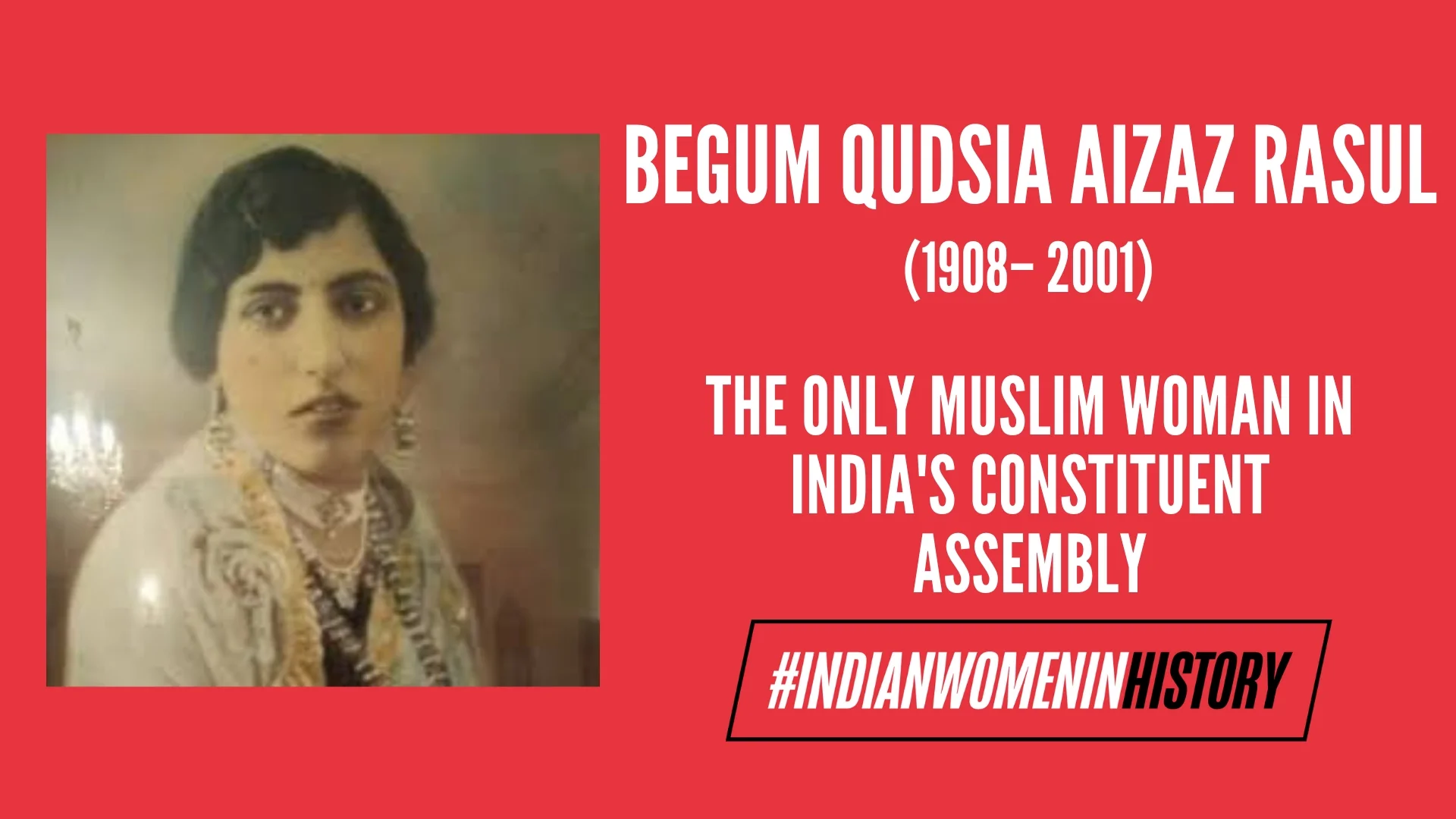
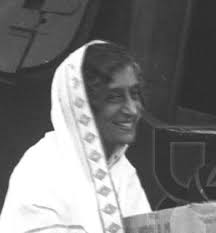
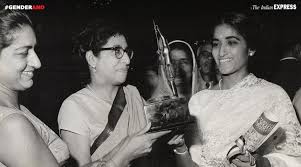
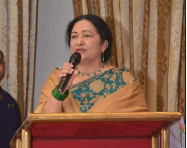
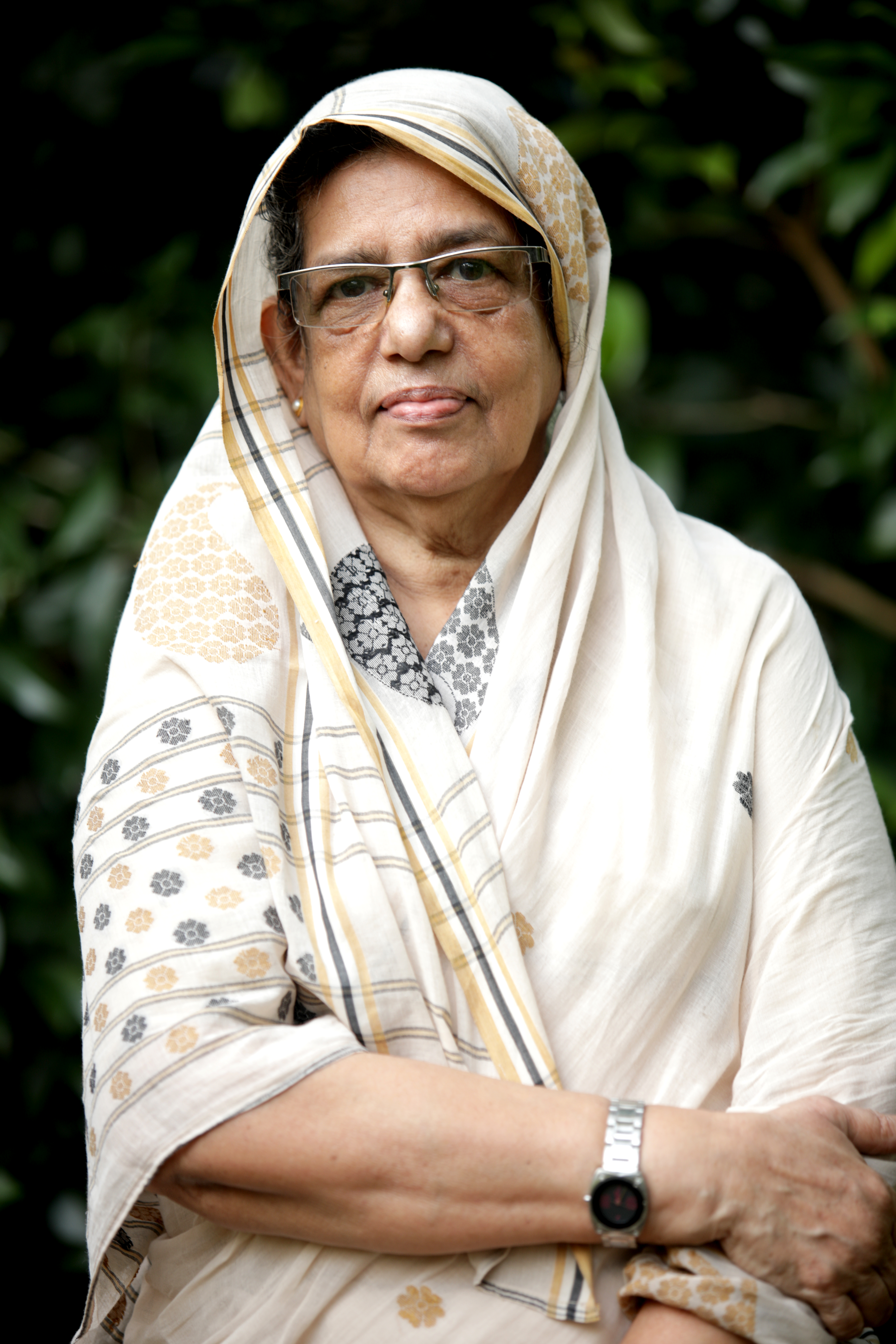
Begum Qudsia Aizaz Rasul was one of the 28 Muslim League members to join the Constituent Assembly of undivided India, and she was the only Muslim woman to be a part of the assembly.
Begum Qudsia Aizaz Rasul was born to the royal family of Malerkotla (situated in erstwhile united Punjab) on 4th April, 1908. Her father was Nawab Zulfiqar Ali Khan. Qudsia had a progressive upbringing and was encouraged from a very early age to lead a modern life, as opposed to several stringent restrictions imposed upon other contemporary Muslim women, such as that of the purdah.
She got married at quite an early age to Nawaab Aizaz Rasul from the erstwhile province of Awadh. Her husband held the position of a taluqdar, or a landowner. Qudsia had political exposure both before and after marriage, and her formal political participation took place after she got married.
Qudsia, along with her husband, joined the Muslim League in mid-1930s, soon after the passing of theGovernment of India Act in 1935. This was also her official entry into electoral politics, as she contested in the elections of 1937 from the U.P. legislative assembly, where she successfully held her seat till 1952. Aizaz was one of the very few female candidates to have contested and won from a non-reserved constituency during the pre-independent times.
“
She was the first Indian woman to achieve such feats, and this was truly commendable and noteworthy at a time when most formal political positions were almost implicitly reserved for men.
“
As an MLA, she also held several important posts, such as the Leader of Opposition (1950 to 1952) and the Deputy President of the Council (1937 to 1940). She was the first Indian woman to achieve such feats, and this was truly commendable and noteworthy at a time when most formal political positions were almost implicitly reserved for men. Moreover, to rise to prominence at a politically significant province such as the U.P. indeed made Qudsia Aizaz Rasul a trailblazer.
She is well known for her progressive, anti-feudal stances, such as the abolition of the zamindari system. Qudsia was a strong advocate for the abolition of communal electorates as well, as she believed it divided the society more than it united – which was counterproductive for the Indian electoral candidates at a time when there was an urgent need of a united Indian front to oppose the colonial rulers. She went on to create a strong and convincing case for the abolition of electoral reservations for religious minorities during her tenure as a member of the Constituent Assembly.
Qudsia was one of the 28 Muslim League members to join the Constituent Assembly of undivided India, and she was the only Muslim woman to be a part of the assembly. Her contributions in the assembly debates remain monumental till date and have been recorded in many official sources.
“
Her contributions in the assembly debates remain monumental till date, and have been recorded in many official sources.
“
After the dissolution of the League, she joined the Indian National Congress, and served as a member of the Rajya Sabha from 1952 to 1958. Later, she became a member of the legislative assembly of Uttar Pradesh from 1969 to 1989.
Other Achievements
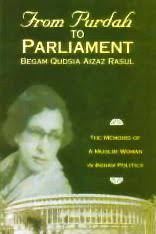
Begum Qudsia Aizaz Rasul is also well known for her autobiography, titled From Purdah to Parliament: A Muslim Woman in Indian Politics. It provides excellent insights into the intersectional aspects of organised politics as it functions in our country. Other than this, she also wrote a travelogue titled Three Weeks in Japan.
Besides her literary prowess, Qudsia had also served as the President of the Indian Women Hockey Federation for over fifteen years, and went on to become the President of the Asian Women’s Hockey Federation.
Begum Qudsia Aizaz Rasul was awarded the Padma Bhushan in 2000 for immense, invaluable contributions to the field of social work.
The Padma Bhushan awardee, who hailed from Jodhpur, died of kidney failure in Mumbai.
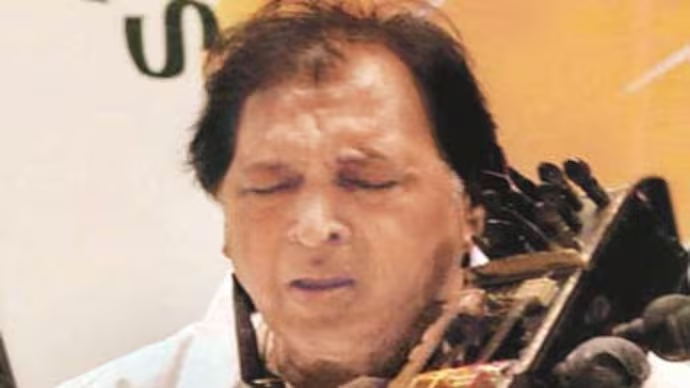
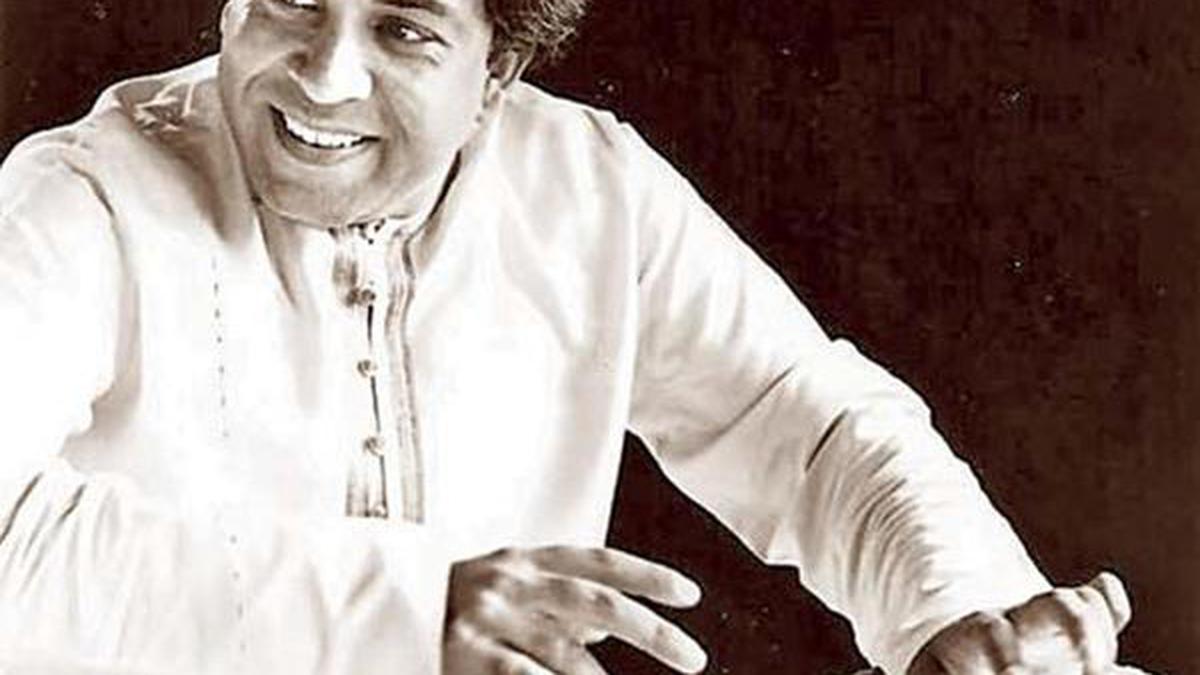
Sarangi maestro and classical singer Ustad Sultan Khan, the soulful voice behind hits such as Piya basanti re and Albela sajan, passed away in Mumbai on Sunday after kidney failure.
The Padma Bhushan awardee, 71, who hailed from a family of sarangi players in Jodhpur, was on dialysis for the past three months and died on his way to the hospital, family sources said.
Khan is survived by his second wife Bano, son Sabir – also a well-known sarangi player – and two daughters. His funeral will take place in Jodhpur on Monday.
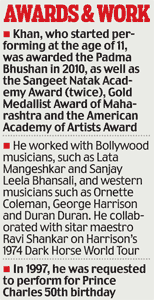
Credited for reviving the sarangi, Khan is famous for his extraordinary control over the instrument and his husky voice. He started performing at the age of 11, and later collaborated at the international level with sitar maestro Ravi Shankar, on George Harrison’s 1974 Dark Horse World Tour.
Khan’s was a family of sarangi masters from Rajasthan. He was initially tutored by his father, Ustad Gulab Khan. Later, he trained under Ustad Amir Khan, a classical vocalist of the Indore gharana. After establishing himself as a sarangi player, Khan worked with Bollywood musicians, such as Lata Mangeshkar and Sanjay Leela Bhansali, apart from collaborating with western musicians, such as Ornette Coleman, George Harrison and Duran Duran.
Apart from the Padma Bhushan, Khan won numerous musical awards, including the Sangeet Natak Academy Award (twice), the Gold Medallist Award of Maharashtra and the American Academy of Artists Award in 1998.
Khan was also a member of the Indian fusion group Tabla Beat Science with Zakir Hussain and American bassist Bill Laswell.
The news of Khan’s death came through a post by music composer Salim Merchant (of Salim-Sulaiman fame) on Twitter.
“I lost my ustad – Ustad Sultan Khan, my guru my friend my idol. He passed away this afternoon. We will never have a sarangi maestro like him,” he tweeted.
Eminent sarod player Amjad Ali Khan also condoled his death, saying it was a great loss to the music world. “I am deeply saddened at his demise. He gave a different meaning and dimension to the sarangi ,” he said.
Among the other musicians who expressed grief were music director Vishal Dadlani, and singers Shreya Ghoshal, Abhijeet Sawant and Shaan. “Just heard about the loss of our dear ustad sa’ab :(I had the gr8 fortune and honour of working with him. Too saddened,” Ghoshal tweeted.
Actors Akshay Kumar, Rahul Bose and Dia Mirza also wrote on Twitter. “This has not been a good year what with so many great personalities leaving us. My thoughts and prayers with his (Khan’s) family,” Akshay said.
“He played on the soundtrack of my directorial feature, Everybody Says I’m Fine! Ustad Sultan Khan saab had a huge heart and an impish sense of humour,” Bose recalled.
source: http://www.indiatoday.in / India Today / Home> News> West / by India Today Online, Mumbai / November 28th, 2011
Prayagraj (formerly Allahabad), UTTAR PRADESH / NEW DELHI :
Shamsur Rahman Faruqi with Baran Farooqi. Photos courtesy: Baran Farooqi
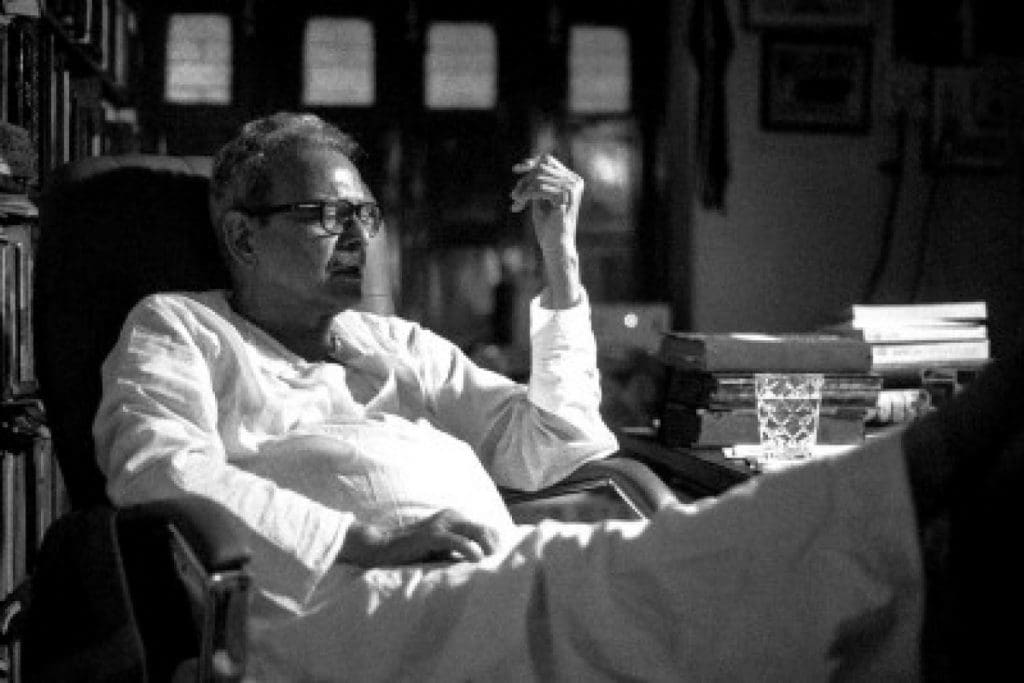
Abba was the magician who introduced me to the wide and varied wonders of the world, taught me everything about life and its customs and kept me enamoured of his extraordinary personality. I was awe- struck by his learning, his cool, confident air and the way and adulation he commanded sat comfortably on his shoulders.
And may there be no sadness of farewell
When I embark;
Alfred Lord Tennyson
“Yeh meri akhiri bimari hai (this is my last illness),” spoke Abba with a wry smile on his face. He was addressing Dr Nandani Sharma, a homeopath in Shivalik, Malviya Nagar (New Delhi), whom we were all very fond of and trusted. That evening we had taken him there since he had expressed a desire to actually see her and not consult her over a video call to ask about the chances of curing the fungal infection which had invaded his eye during his stint at Fortis Escorts hospital where he had been hospitalised after having tested Covid positive. None of us had imagined that it was a matter of just a few days before he would be gone, transited peacefully and in full preparation of “seeing his pilot face to face.” Dr Nandani assured him that he still had long to live and accomplish some more as she was confident her medicines would be able to control the fungus. This conversation had taken place in her driveway as Abba was not able to walk since he had returned from hospital and so it was decided that instead of him having to go into her clinic, he would be seated on his wheelchair near the car and she would examine him. We returned upbeat from Dr Nandani’s place but it was as if Abba knew better than Dr Nandani this time. He had been sent the summons and he had answered them with acceptance and great sporting spirit. So, he laughed at our jokes in his weak strength and held out his hands or arms to embrace whenever he saw me or my sister or my daughters enter the room. He would kiss my hands and softly caress my head if he happened to be sitting, bolstered by the electrically operated bed we had arranged, half a dozen pillows and bolsters around him.
Of late, in fact, right from the time he would send voice notes from the hospital, he would often repeat, “I love you” or “know that I love you.” Of course, we had never had any doubts about this ever because Abba was the master of expression. A vocal person, he taught me how I need to say “thank you” even to my own parents if they got me something and to house helps and friends for services rendered or acts of kindness. I once overheard him reproaching my mother for never doing salam to him first when he got home from office or smilingly extending her hand of welcome. Always cheerful and smiling when he came home from office, he expected everyone else at home to be as smiling and welcoming as he was. Each time any of us would enter his room for something, he would beam aaiye aaiye (do come in) and show his pleasure. He used to call me “funny face” sometimes, which didn’t seem very amusing to me but I knew I was supposed to show a sense of humour and not sulk over little things. I finally asked him one day, “Why do you call me funny?” He answered that funny faces are those who are delightful and make him feel happy and full of mirth. Once, when I made him fill out my columns of questions like, who is your best friend, what’s your favourite colour, what are you scared of and so on, (this was a raging activity in my school those days that you took autographs of people in your autograph book for no reason and also made them fill columns which were made in a double page of a register.) I remember almost all his answers to this day but I’ll speak of only a couple, to the question, “If you had a wishing wand, what would you wish me to be?” he had answered “Queen of Sheba.” I immediately understood this is something divinely great and luminous and so on, since I didn’t really know who queen of Sheba was at that time. In the answer to the question, “what are you scared of?” he had answered “centipedes,” making me aware that he was human and vulnerable in his own way.
I have wandered far from what I was initially talking about — his illness and his demeanour during those days. After stretching out his hands and making me sit close, he told me one day that the time for him to leave this world had come and that I should allow him to go. That the ceaseless struggle that we were putting up to withhold him was futile and he was convinced about his departure. He needed to go back to his spacious and open house where his favourite pet dog Bholi and others were, and he wanted the birds to sing near his window before he ceased to breathe. On those nights when he was awake and not faint with weakness, I would sit by him and read out his WhatsApp messages to him and also make him listen to the voice notes people had sent. He chose to respond to one or two voice notes or emails and messages every day. He would speak the voice notes himself and dictate the written messages or emails. He once made me write a mail to CM Naim sahib though there wasn’t one from him that day and also to Frances Pritchett, informing them about his health. One of the voice notes that he sent to Amin Akhtar (a relative of ours who has been assisting him in his library-cum-office and miscellaneous affairs for many years) was about the local graveyard which Abba’s efforts had helped restore and put in order after his return to Allahabad after retirement. He asked Amin to go to my mother’s grave and convey his salam there. He also asked Amin to see if it was still possible if he could be laid to rest right next to her, but in case anyone objected, he reminded Amin, he had chosen a remote corner of the graveyard for himself as a second choice. Amin responded next day tearfully that he had carried out his instructions and that there was no question of anyone objecting to his burial next to his wife. He had written the ayat he would like to be written on his tombstone and given it to Amin many years back already. I felt heart-broken at these conversations but I, too, knew that they must happen and not be left unfinished, for the day of parting may come if it had to, and there was nothing anyone would be able to do about it.
I marvel at Faruqi’s (as he would like to refer to himself, sometimes even calling himself “saala Faruqi” or “Fraudie”), courage and foresight for the way he bore his illness. He was also very kind and forbearing towards us, always succumbing to our pleas for making him eat or drink something despite being terribly averse to both ideas. Every time he would ask when we were planning to go back to Allahabad with him, and my sister or I would give a date a week or two away, he would nod patiently and agree. Ever since Ammi passed away, Abba had been careful to hand over all that she had left behind as money or property to both of us, saying this belongs to you both as she was your mother. But when it came to caring for us and endowing us with gifts or maintaining the large house, he acted as the perfect father. Never once did he ask us to bear any financial burden of any kind, be it the property Ammi left behind — he continued to pay property tax for it — or other charities that she was used to doing at her native village.
Unselfish by nature, and generous towards the world and its people, he once told me that he had spent his life with the aim to be of help to any number of human beings he came across in the journey of his life, particularly during his career in civil service. I have never known or seen, nor do I ever hope to see, another more good-hearted person who is also competent, capable and one of the greatest literary minds of the century. Abba loved exploring new things and enjoy them if the children so wanted. Any new joke, and we wanted to share it with him, a new piece of machinery or a gadget and he would be curious to know about it, any adventurous outing, and he would want to be a part of it. In fact, most of the interesting outings in my and my daughters’ lives were either planned by him or planned for him. It was just last winter that we all went to Kochi together to explore the backwaters of Kerala and spend some part of winter there to avoid the low temperatures up North. As he grew older, he had begun dreading the winters, as they confined him to his room and restricted his hours in the study. There were arrangements to keep his room, his study, and even his bathroom warm, but the cold got to him since he was finicky about wearing “inners” and heavy quilts bothered his frail body with their weight.
Apart from travelling to new places and exploring places of historical interest or natural beauty, Abba had a penchant for stylish and tasteful clothes and good food (which he always ate very little of, but wanted to be served in good quantity). However, he had this little thing in his head about what are supposedly “manly” dishes and which foods are meant to be consumed only by women. Consequently, I never saw him relishing anything even slightly sour. He was supremely dismissive of achar and chutneys or chaat of any kind. Even remotely foul-smelling vegetables were banned in our house, not to speak of home-made sirka or ghee being extracted from malai. I once witnessed a bitter exchange he had with my mother for having gotten mooli achar prepared in the courtyard of our house. This was even worse than cooking sabzi out of the mooli! Like any other subversive spouse, Ammi would sneak such things into the house and eat them secretly when he was in office.
Abba was a great animal lover, too. As children, having animals and birds around us was as natural as breathing and it must never have occurred to us that in the eyes of the world, we qualified as “animal lovers.” At any given time in our lives, there were always dogs, cats, turtles, mynahs, peacock chicks or grown peacocks, pigeons, partridges, quails and finches and other singing birds. Abba would often send a tid-bit or two to his pets (I said “send” because the house was really so huge in area that things had to be delivered from one place to another) and tell the person he had chosen for the task, “greet him with my salam and say that Faruqi sahib has sent this. We knew a lot about birds, which ones could be tamed or caged and which couldn’t be bred in captivity. He also had a collection of coffee-table type books on birds and animals and some of the exciting times of my childhood were certainly made of browsing through those books. Sea creatures like starfish, octopus or dolphins intrigued me greatly and I was enamoured by pictures of the mighty ocean. I longed for a trip to a coastal town but my wish was deferred for quite some time as my parents had already been to places like Bombay and Calcutta many times and were more focussed on the hills or animal and bird sanctuaries.
Abba played his favourite musical records of ghazals and classical ragas in the mornings which were spent enjoying three to four cups of bed tea. The tea, which would be brewed in an elegant tea pot and had a bitter aroma, would cool gradually as he read the morning papers. The music would continue to play up until he was almost ready for breakfast. Gradually though, I, too, developed a taste for singers like Farida Khanum, Iqbal Bano, Mehdi Hassan, Kishori Amonkar, and artists like Hari Prasad Chaurasiya, Ustad Bismillah Khan and other such maestros. My sister and I were also subjected to regular doses of mushairas and seminars which we had to duly attend along with our parents; I was still wearing frocks at that time. By the time I grew up, I had sat on the laps of many a great Urdu writer, poet or artist. I grew particularly familiar with Naiyer chacha (Naiyer Masud), Shamim chacha (Shamim Hanfi), Shahryar chacha and Balraj Komal uncle. The critic Khalil-ur-Rahman Azmi was someone I don’t clearly remember but I recall Abba grieving over him so much that Ammi had to chide him about moping a couple of times.
Abba was the magician who introduced me to the wide and varied wonders of the world, taught me everything about life and its customs and kept me enamoured of his extraordinary personality. I was awe- struck by his learning, his cool, confident air and the way and adulation he commanded sat comfortably on his shoulders. He lived a life of grace and élan. Once, when on one of our usual summer holiday road trips, when we were touring Uttar Pradesh and Himachal, there was an incident which impacted me for the rest of my life. It so happened that the road we were on was broken severely, blocked, you may say, so Abba decided to take a detour through another path, which was on the lower side of the road, beside the fields. It was a water-logged path but he estimated that our Ambassador car would be able to successfully wade through it. But to our chagrin, the car got stuck in the slush beneath and water began to enter the car at a high speed! The car seemed to be floating in the water, I began to bawl loudly saying, “Hum doob jayenge, hum doob jayenge, (I’m going to drown, I’m going to drown).” I got one of the most unexpected and loud scoldings of my life from him at that time, “Abey tu apne liye ro rahi hai sirf! Aur baqi tere ma baap aur behen? (Stop crying and saying such a selfish thing! Why are you worried about only yourself drowning and not your parents and your sister?)”. I wiped my eyes and looked at him, bewildered. It was a lesson I have remembered to this day — unselfishness and courage.
So close, so friendly and participative and yet so distinguished and awe-inspiring! They don’t make men like you any longer, Abba. I conclude my piece again from the poem quoted above. Abba would sometimes teach us English poetry, too, apart from Urdu and Persian. Abba had read out the poem to me many, many years ago and explained it to me. Alfred Lord Tennyson’s “Crossing the Bar” was one of his top favourite poems of the English language. I remember his voice almost choking at the sombre grandeur and sonority of the poem:
For tho’ from out our bourne of Time and Place
The flood may bear me far,
I hope to see my Pilot face to face
When I have crost the bar.
Perhaps, the very same lines were echoing in his mind when he breathed his last, in full control of his senses, aware and courageously ready for the journey across.
source: http://www.thepunchmagazine.com / The Punch Magazine / Home> Non fiction – Essay / by Baran Farooqi / February 28th, 2021
“It’s not just the world of Urdu, I feel I’ve been orphaned again,” historian Rana Safvi sent her condolences.
It's not just the world of Urdu, I feel I've been orphaned again.💔 Go well Sir. Allah Jannat mein jagah ata farmaaye Inna Lillahi wa inna ilayhi raji'un pic.twitter.com/zhcGb6nqWO
Writer and historian William Dalrymple took to Twitter to mourn the demise of Faruqi, calling him “one of the last great Padshahs of the Urdu literary world.”
Sanjiv Saraf, the founder of Urdu festival Jashn-e-Rekhta, also condoled the death of “the century’s most iconic figure in the realm of Urdu literature”.
“His demise has left us bereaved as an entire generation of literature lovers mourn this loss. I extend heartfelt condolences to his family and loved ones,” Saraf said.
“Shamsur Rehman Farooqui’s demise is a big loss to the world of scholarship, and adab. His work built many bridges across India’s diverse traditions. He was immensely valuable to us in so many ways and will be sorely missed, ” said CPIM general secretary Sitaram Yechury.
Shamsur Rehman Farooqui’s demise is a big loss to the world of scholarship, and adab. His work built many bridges across India’s diverse traditions. He was immensely valuable to us in so many ways and will be sorely missed. Heartfelt condolences. pic.twitter.com/CKy0Dan0Lq
“Am just gutted. Shamsur Rehman Faaroqui saheb has passed away. Innalillahi wa inna ilayhi rajeeon. May allah grant him jannat..aameen,” wrote journalist Rana Ayyub.
“His modernist style had irked the traditionalists and contemporaries in the sixties, seventies. But he wasn’t just a critic and theorist, whenever he took to fiction, he created magic. And, his Allahabad home had been the nucleus of Urdu literary world, for over half-a-century,” wrote journalist Shamsur Rehman Alavi in a condolence note.
His modernist style had irked the traditionalists and contemporaries in the sixties, seventies. But he wasn't just a critic & theorist, whenever he took to fiction, he created magic. And, his Allahabad home had been the nucleus of Urdu literary world, for over half-a-century.
A profile of his on Caravan Magazine alluded to his immense and immeasurable contribution to Urdu literature.
Shemsur Rehman began writing in 1960. Initially he worked for the Indian postal service (1960–1968), and then as a chief postmaster-general and member of the Postal Services Board, New Delhi until 1994. He was also editor of his literary magazine Shabkhoon and part-time professor at the South Asia Regional Studies Center at the University of Pennsylvania.
An expert in classical prosody and ‘ilm-e bayan (the science of poetic discourse), he has contributed to modern literary discourse with a profundity rarely seen in contemporary Urdu critics. His most recent books, The Mirror of Beauty (translated into English from the Urdu Kai Chaand The Sar-e-Aasmaan in 2006), and The Sun That Rose From The Earth (Penguin India, 2014), have been highly critically acclaimed. He is the recipient of numerous honors and awards. Most recently he was awarded the prestigious Saraswati Samman for his work She`r-e Shor-Angez, a four-volume study of the eighteenth-century poet Mir Taqi Mir.
He was awarded the Saraswati Samman, an Indian literary award, in 1996. The Government of India awarded him the civilian honour of Padma Shri in 2009.
source: http://www.maktoobmedia.com / Maktoob Media / Home> India / by Maktoob Staff / September 25th, 2020
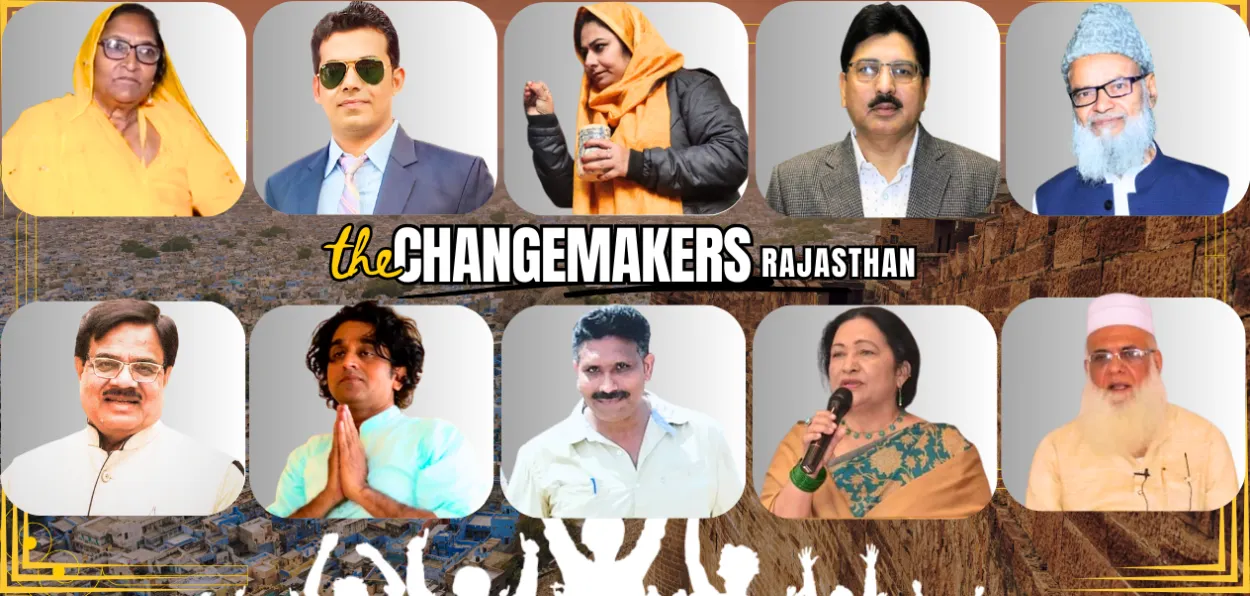
Rajasthan is known for its sandy deserts, historical monuments, especially forts, vibrant culture, and above all, its brave people, some of whom are inspiring others and changing society for the better. Under our series ‘The Changemakers’, Awaz-The Voice, brings you ten such personalities of Rajasthan, who have done extraordinary and pioneering work. Batool Begum: A living legacy of musical heritage.
Batool Begum: Woman who took traditional music to the world
One name that resonates in the streets of Jaipur is that of Batool Begum. Born in Kerap village of Nagaur district, Rajasthan, this extraordinary singer is a living legacy of Indian classical music. Batool developed a deep passion for music in her childhood. Despite facing social and economic challenges, she continued her singing.
Her melodious voice and her passion for music not only earned her recognition as an artist but also proved that talent can break all barriers. Her art is a source of inspiration for her community and the entire Rajasthan.
Abdul Salam Johar: A lac bangle maker who received global recognition
The vibrant spirit of India’s Pink City, Jaipur, doesn’t only emanate from its colours and people but also from the traditional handicrafts that are made and sold here. Bangles worth lakhs are made in these streets, which are a symbol of the traditional beauty and hard work of thousands of its people.
Abdul Salam Johar is one such artist who not only preserved the traditional art of the State but also brought about a social change in a major way. Coming from the Manihar community, Johar was born in a family with little means, but his dreams were extraordinary. Seeing the struggles of his grandfather Hafiz Mohammad Ismail and parents Haji Abdul Aziz and Hajjan Qamar Jahan, he made hard work, dedication, and social service the main mantra of his life.
He began his journey from his ancestral shop ‘Indian Kangan and Colour Store’ located in Tripolia Bazaar of Jaipur, and today his wares are being sold under brands ‘Johar Design’, ‘Johar King’ and ‘Indian Crafts’ in the global markets. He is not only a successful entrepreneur, but also a social reformer who took his community and traditional art to new heights.
Abdul Latif ‘Arco’: A confluence of business and social service
Abdul Latif, who lives in Chini ki Burj in the capital Jaipur, and is known as ‘Arko’ in Rajasthan, is one such special personality. Born in a small village of Chomu in 1946, Abdul Latif’s father, Rahmatullah, and mother, Hafijan, taught him hard work, honesty, and the passion to help people, which became the basis of his life.
His company, Abdul Razzaq & Company (ARCO), is today a big name for social service along with electric motors, fans, and coolers. Apart from this, his hotel, ARCO Palace, is a symbol of his hard work and foresight. Abdul Latif’s story is not just of a businessman, but of a person who chose to work as a changemaker by combining his business and social responsibilities.
Qazi Nishat Hussain: A new voice breaking stereotypes
The voice rising from a small office located in the narrow streets of Johri Bazaar in Jaipur, the capital of Rajasthan, is today inspiring society to change. This voice is of Nishat Hussain, Rajasthan’s first Muslim female Qazi, social worker, and a strong advocate of the rights of Muslim women.
Her life journey is an example of courage, struggle, and change, which not only made thousands of women aware but also gave them a new direction to live.
Born in Sitabari Mohalla of Karauli district, Nishat’s childhood was spent in an environment of communal harmony. His family was the only Muslim family in the neighbourhood. There were three temples in front of her house. She says, “We did not know who was a Hindu and who was a Muslim.” In a backward area like Karauli, where girls’ education was not given importance, Nishat created history. She became the first Muslim girl in the district to pass the tenth standard, that too as the only Muslim student among 1200 girls. Today, she has become a torchbearer of the rights of Muslim women.
Captain Mirza Mohtasim Baig and Ruby Khan: An Inspiring couple in social service
An inspirational couple, Captain Mirza Mohtasim Baig and his wife Ruby Khan, hail from Jaipur. Captain Mirza is the first Muslim pilot of Rajasthan and has been operating national and international flights for the last 25 years. At the same time, his wife Ruby is an active social worker and politician.
Both believe that if one wants to bring change in society, then he has to take the initiative. Together, they had organised medical camps, documentation camps, free ration distribution, and offered financial help to families in the marriage of their daughters. The couple is an epitome of change brought about by spirited people.
Dr. Arif Khan: The village scientist who created history
Thirty-four years ago, a child was born in the small village of Masani in the Hanumangarh district of Rajasthan. Today, he is Dr. Arif Khan, a scientist who has brought laurels to India. In his village, most of the people toiled in the fields. His father, Advocate Farid Khan, wanted his son to become a doctor. His mother and grandfather also had the same dream. But there were few schools in Masani, and the path to making dreams come true was difficult. Still, Arif had a passion to do something extraordinary in his life.
With his hard work and dedication, he became a bio-scientist and brought glory to his family and village. His research on milk and food products brought a wave of change. His story proves that if the intentions are strong, then even a boy from a small village can become a scientist and make the country feel proud.
Mainuna Nargis: First Shia Muslim woman in art conservation
In a vast country like India, art conservation is important since it not only preserves history but also connects future generations to our heritage. Mainuna Nargis, the country’s first and so far the only Shia Muslim woman art conservator, does the same work. Born in Bahjoi, a small town in Moradabad district of Uttar Pradesh, Maimuna’s childhood was ordinary, but her dreams were extraordinary. Rajasthan has now become Mainuna’s second home.
Her father, a Policeman in UP, always encouraged her. After studying Fine Arts from Aligarh Muslim University (AMU), she did a diploma in Museology, which became the most decisive turning point in her life. Maimuna’s story is not just of professional success, but a story of passion, struggle, and self-confidence, which revived the broken pieces of history.
Yoga Guru Naeem Khan: Global journey from music to yoga
The life journey of Yoga Guru Naeem Khan, who rose from the streets of Jodhpur, the cultural capital of Rajasthan, to spread his spiritual aura on international platforms, is a unique example. He rose from a common man to a global yoga guru and presented yoga as a universal energy beyond religion, culture, and boundaries.
Naeem Khan was born in a family where music was in every breath. His grandfather, Ustad Umardin Khan, was the court musician of the Jodhpur royal family, while his maternal uncle was Padma Bhushan-awarded Sarod player Ustad Sultan Khan. However, with changing times, that traditional flame of music started to fade. Naeem and his brother got involved in business, but yoga gave Naeem a new direction, and he took it to a global platform.
Syed Anwar Shah: A man who introduced girls to education
Thirty years ago, a dream was born in a small room in Jaipur, which has today become the light of education for thousands of girls. This is the story of Syed Anwar Shah, whom people fondly call Master Anwar Shah. He not only dreamt of his daughter’s education, but also made it a means of progress for the daughters of society.
Today his educational institution, Al-Jamia-tul Alia, is spreading the message of knowledge and Islamic ethics not only in Jaipur, but also in the whole of India and abroad. After completing his M.A. in Public Administration from Rajasthan University in 1980, he dedicated his entire life to the welfare of society and the service of education. In 1995, when his daughter Alia was born, he decided to set up an institution for the education of girls, which would impart both worldly and divine teachings.
Today, his effort has become a boon for thousands of families.
Padma Shri Shakir Ali: Patron of Miniature Painting
It’s no exaggeration to say that Jaipur is the art capital of Rajasthan. And in the field of miniature painting, the name of Syed Shakir Ali comes to the fore spontaneously. This genre of painting is an identity of the state of Rajasthan.
Padma Shri awardee Syed Shakir Ali is not only a great practitioner of this art, but he is also the guardian of that heritage, which is an integral part of the cultural identity of Rajasthan. Born in 1956 in Jalesar village of Uttar Pradesh, Shakir Ali’s family soon settled in Jaipur, where his art got a new direction.
Today, he has given recognition to this traditional art of Rajasthan not only in India but also on international platforms.
source: http://www.awazthevoice.in / Awaz, The Voice / Home> The Changemakers / by Aasha Khosa, ATV / September 14th, 2025
Much before I became an admirer of Ustad Zakir Hussain, I was a devoted fan of Ustad Shafaat Ahmed Khan. The reason was simple. Growing up in New Delhi, I had the chance to see the tabla maestro regularly when I was a teenager, often with luminaries like santoor monarch Pandit Shivkumar Sharma, flautist Pandit Hariprasad Chaurasia and sarod maestro Ustad Amjad Ali Khan.
After moving to Mumbai, I continued to attend Khan’s shows, and interacted with him twice as a music journalist. It came as a huge shock when he passed away on July 24, 2005, at the untimely age of 51, after a bout of hepatitis. Among classical music lovers, memories of Khan’s music remains fresh. Coming Wednesday, on his 14th death anniversary, Pancham Nishad is organising a tribute concert at the Veer Savarkar auditorium, Shivaji Park. It will feature vocalist Sanjeev Chimmalgi and tabla maestro Swapan Choudhuri, whose performance was a highlight of the Ustad Allarakha birth centenary celebrations on April 29.
I first heard Khan perform in 1977 when I was 14, at the Shri Ram Centre, New Delhi. He was accompanying Shivkumar Sharma on Raag Bhoopali. It was the first time I heard the santoor and the experience was magical. I didn’t understand the technicalities, but was totally enraptured. Both Sharma and Khan became my heroes. The same show also featured violinist N. Rajam and vocalists Rajan and Sajan Mishra, with different tabla accompanists. So imagine my joy. I told my parents to take me to more concerts, and very often, Khan would perform.
Senior aficionados often talked about Khan representing the Delhi gharana, and Hussain being associated with the Punjab school. It made no difference to me, until I started writing about them. I also had the good fortune of seeing tabla players like Kishen Maharaj, Anindo Chatterjee and Suresh Talwalkar perform.
My first meeting with Khan took place in the early 2000s, when he was to perform at the Gunidas Sangeet Sammelan at Nehru Centre, Worli. While the interview was formal, he was delighted to see an ardent admirer like me. “People normally try to find fault in my technique. You are different,” he had joked. The second encounter was at Sharma’s birthday celebrations in 2004. It was a select gathering of about 25 people. This was where I discovered what a fantastic mimic Khan actually was.
He narrated hilarious incidents about musicians. One of them was about a senior instrumentalist who was yelled at by an elderly foreign lady at the Amsterdam airport because he was humming the notes of Raag Bageshri a tad loudly.
When Sharma pointed out that he was mimicking those not present at the party, prompt came the reply, “If I mimic you, you won’t let me play at your shows. My career will finish,” stated Khan clearly.
source: http://www.thehindu.com / The Hindu / Home> Entertainment> Music / by Narendra Kusnur / July 18th, 2019
Wangat Village (Ganderbal District),JAMMU & KASHMIR :
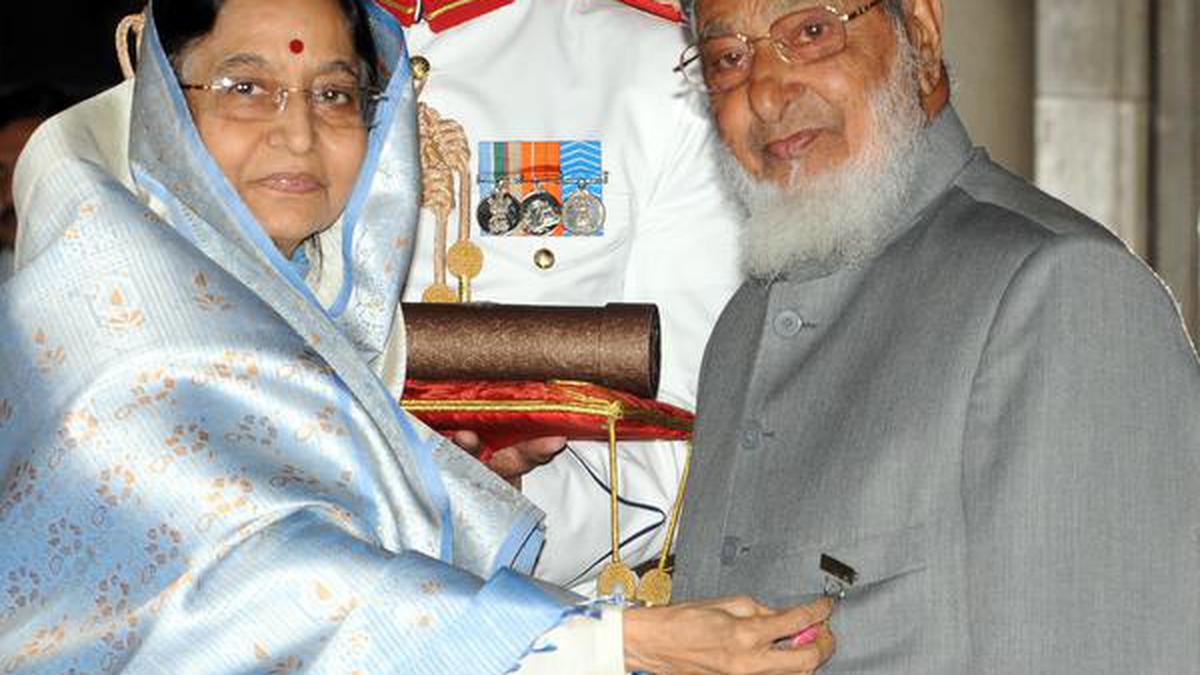
Former President Pratibha Patil presenting the Padma Bhushan Award to gujjar leader Mian Bashir Ahmed, during the presentation of Padma Awards at Rashtrapati Bhavan in New Delhi on May 10, 2008
A former minister in Sheikh Mohammad Abdullah’s cabinet, he was honoured with the Padma Bhushan for his extraordinary service for the Gujjar-Bakarwal community and other downtrodden groups.
Veteran Gujjar leader and Padma Bhushan awardee Mian Bashir Ahmed, a resident of Ganderbal district of Jammu and Kashmir, passed away on Saturday night after a prolonged illness. He was 98.
Ahmed, a resident of village Wangat in Kangan area of the central Kashmir district, breathed his last at about 10 pm, family sources said.
His Nimaz-e-Jinazah (funeral prayers) will be performed on Sunday at Mizar Shrief Baba ji Sahib Larvi located at Baba Nagari Wangat, they said.
Ahmed was the son of top Gujjar leader and saint Mian Nizam Din Larvi and father of former Minister and National Conference (NC) leader Mian Altaf Ahmad.
Born in November 1923, Mian Bashir Ahmed was a minister in Sheikh Mohammad Abdullah’s cabinet. Later, he left politics and started working for Islamic Sufi tradition and to help downtrodden people.
In 2008, he was honoured with the Padma Bhushan award for his extraordinary service for the Gujjar-Bakarwal community and other downtrodden groups.
Condolences to his family poured in from various quarters.
“Just heard about the sad demise of Mian Bashir Sahib, a spiritual leader & a mass leader revered by many especially in the Gujjar community. His demise will be deeply felt by many of us. My condolences to my colleague Mian Altaf Sb & his family,” NC vice president Omar Abdullah said in a tweet.
His party said Ahmed’s death has felt a void that cannot be filled.
“Grieved over the passing of Mian Bashir Ahmad Laaravi, a renowned spiritual leader & political figure. His death has felt a void that can’t be filled. Our condolences go out to Mian Altaf Laaravi, the entire family & Bashir Sb’s admirers. May Allah grant him a place in Jannat,” the NC wrote on Twitter.
Jammu and Kashmir Pradesh Congress committee (JKPCC) expressed profound grief over his passing, describing it as a great loss to the UT.
In his condolence message, JKPCC president Ghulam Ahmad Mir expressed deep sorrow over the passing of the eminent religious scholar, socio-political figure, saying Ahmed was known for his spirituality and social work he rendered to the people of Jammu and Kashmir.
“Saddened to learn about the passing away of Mian Bashir Saheb. I have no words to express my grief,” Mir said.
He expressed deepest condolences to Mian Altaf and other members of the bereaved family and Ahmed’s followers.
Praying for the eternal peace to the departed soul, the JKPCC president said, adding that Ahmed’s guidance and teachings shall continue to inspire generations.
Jammu and Kashmir Peoples Conference chairman Sajad Lone described Ahmed as an inspirational leader.
“Deepest and heartfelt condolences to the family of Mian Bashir Sahab. An inspirational leader, defined by simplicity who had a humbling effect on people he interacted with. May his soul rest in peace,” Lone said.
source: http://www.thehindu.com / The Hindu / Home> News> India> Other States / by PTI / August 15th, 2021
Among the change makers from Kerala are pioneers and achievers in various fields of life. They have either been trying to bring about changes in society or the fields of business. They have used music, literature, and sometimes love to bring humanity closer, to spread joy and peace.
The list includes social activists, singers, spiritual mentors, lawyers, teachers, and even IAS officers.
Ayisha Abdul Basith
Ayisha sings Naat or Islamic devotional songs, and at the age of 20, she has enthralled listeners in over 80 countries. Born in Kerala, Ayisha has migrated to Abu Dhabi, where she is pursuing spiritual music as a way to universal peace and joy, as she puts it.
Safna Nazruddin
She dreamt of becoming someone who could help the disadvantaged sections of society. Safna Nazruddin thought being an IAS officer would help her achieve that goal.
And she took her dream so seriously that at the age of 23, she became Kerala’s youngest Muslim IAS officer.
PC Musthafa
He wanted to pull his family out of their poverty. Growing up in rural Wayanad, watching his father toil in the fields as a farm labourer, he wanted to change his parents’ lives for the better.
When he completed his studies at IIM, he started small with his cousins in a 500 square feet room, selling 100 packets of idli batter to 30 shops in Bangalore.
Today, he is the king of idli batter supplying in more than 10 countries outside India and reigning over a 4000 crore business.
VP Suhara
VP Suhara has been fighting for changes in the Muslim personal law and is one of the petitioners appealing for equality of gender in the matter of succession rights.
She says she is not very optimistic, but she is not ready to give up her fight.
Kadeeja Mumtaz
Kadeeja is a novelist who won the Sahitya Academy award for her novel. But today she has taken to activism on a full-time basis, and her main preoccupation is with bringing different religious communities together to improve mutual understanding and communication.
Advocate Sukkur
Advocate Sukkur did the unthinkable when he remarried his legally wedded wife just to make a point to all his fellow Muslims.
He wanted to tell them that they can overcome the barriers to succession rights of their daughters by remarrying their spouses under the Special Marriages Act.
Noor Jaleela
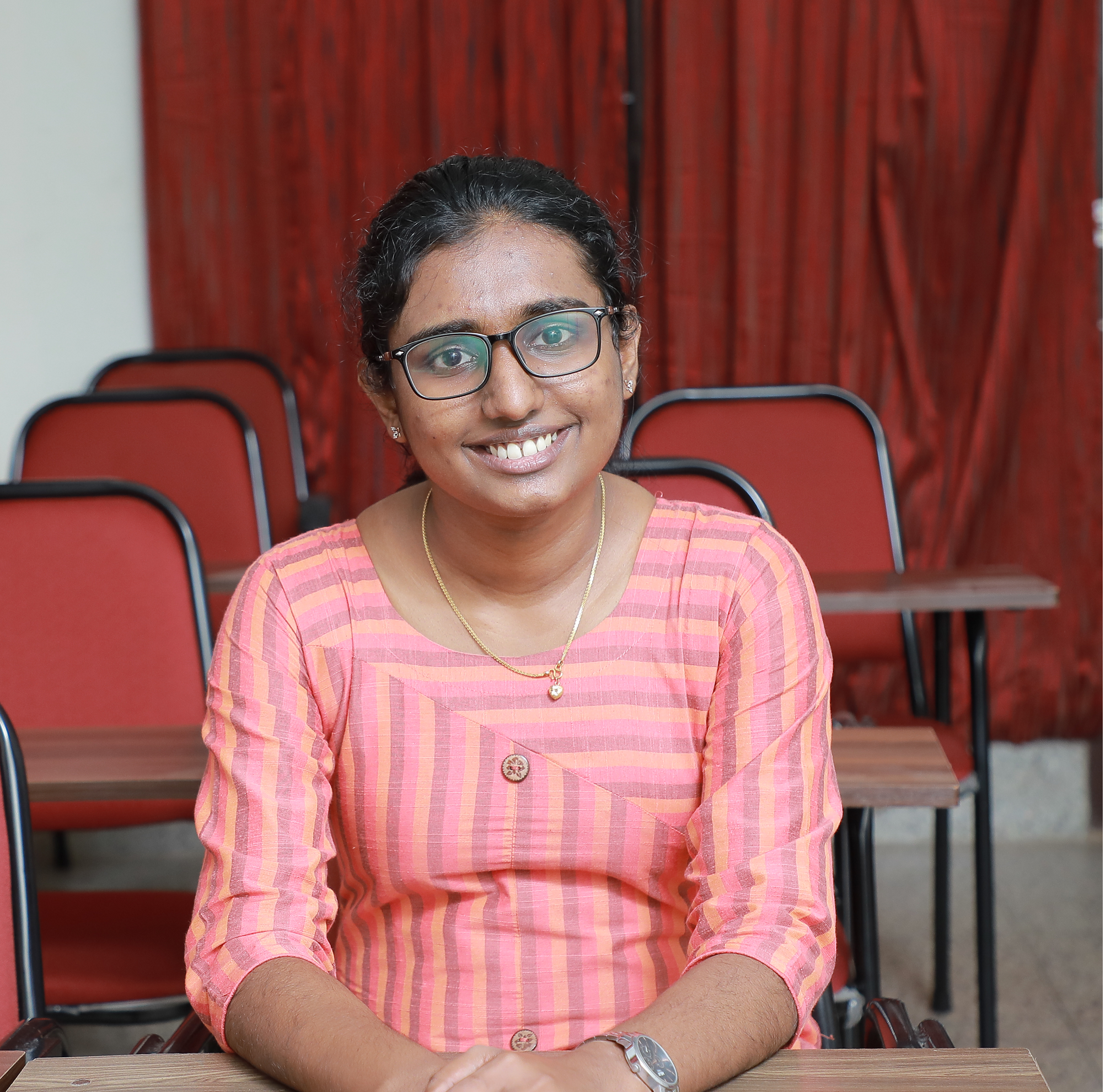
Noor means light, and the luminous smile on Noor Jaleela’s face echoes her name. She was born without her four limbs. But her smile does not betray any such disability. She has been a model for courage and creativity in the worst circumstances.
She has been an influencer and also an artist, and a singer.
Padma Shri Mumtaz Ali
Mystic and spiritual mentor Padmashri Mumtaz Ali, or Sri M as his followers call him, hails from Thiruvananthapuram and heads a spiritual group called Satsang Foundation. His spiritual pursuits and his work among the people as a symbol of the oneness of humanity and the divine have made him transcend all man-made boundaries and divisions.
He has become an example of universal oneness and love as his life’s work and teachings appeal to people of different nationalities and religions. He asks them to continue following their religion while practising meditation and other spiritual pursuits to realise themselves.
Hadiya Hakeem
Can a football mean anything other than a game? Well, Hadiya Hakeem has turned a football into a statement for the empowerment of women.
She is a freestyle football performer born in Kozhikode who has overcome all possible barriers of gender, nationality, and religion through her talents and her hard work in excelling in a unique kind of performance.
Onampally Faisy
Progressive scholar and Sanskrit enthusiast Onampally Faisy has tried to transcend boundaries by promoting interfaith education in his madrassa. A well-known scholar from Thrissur in Kerala, he has been working towards building bridges of understanding and communication between Muslims and other communities in Kerala.
Since he believes in becoming the change he wants, he started teaching holy texts of other religions in his madrassas in order to remove the veil of ignorance and bring communities closer.
source: http://www.awazthevoice.in / Awaz, The Voice / Home> The Changemakers / by Sreelatha Manon / August 17th, 2025
Obaid Siddiqi, one of the most outstanding scientists of modern India, died in a freak accident in Bangalore on July 26. While he was out on a walk on July 21, a moped being driven by a young person of the neighbourhood rammed into him, and caused severe brain damage from which he could not recover.
He leaves behind his wife, Asiya Siddiqi, who is herself a very distinguished historian, and four gifted children: Yumna, whose area is English literature, Kaleem, who is a scientist, Diba, a promising photographer, and Imran, also a scientist whose work on seed-cloning has the potential to revolutionize agriculture in developing countries and questions the rush to Bt for raising yields.
But I want to talk not about the family that Obaid and Asiya raised but about the family of siblings and their spouses that surrounded Obaid, the larger family, as it were, to which he belonged. It was such a remarkable family, it so captured within itself all that is salutary in the development of modern India, that its individual members are worth recalling.
There were two sons, including Obaid, and five daughters, born to his parents. The youngest daughter, Imrana, married to the well-known social activist, Anubrata (Dunu) Roy, was a paediatrician at the All India Institute of Medical Sciences who turned to academic work in the social sciences and became one of the founders of the Centre for Social Medicine and Community Health at the Jawaharlal Nehru University. This centre, of which Binayak Sen was once a faculty member, remains to this day an unparalleled institution in India.
She was for decades our neighbour on the JNU campus. She was not just a close friend but one who epitomized what friendship should be, and it is through her that I came to know the remarkable Siddiqi family. Being a doctor in residence, in the early years of JNU when the campus had meagre medical facilities, she was the informal physician for every household, cheerfully available day and night; and she saw my family, especially my two children, through numerous medical emergencies. Because of her unbounded generosity, we called her “the Florence Nightingale of the JNU campus”; but that was unfair to her, since she was also a highly skilled medical practitioner, unlike Florence, and combined her expertise with a radical social philosophy.
One of her older sisters, Maimoona, was married to Ali Ashraf, a founder of the communist party in Bihar, and the first to translate the Communist Manifesto into Urdu. (Maulana Azad had earlier translated and published only some extracts in his newspaper.) Maimoona was herself a communist activist, and, together with her husband, worked at the party headquarters in Bombay bringing out its Urdu newspaper, and lived in the famous party commune set up by its general secretary, P.C. Joshi. In later years, she taught Urdu first at the Patna College and subsequently at the Aligarh Muslim University.
Ali Ashraf’s friend, Ziaul Hasan, also a very early member of the communist party in Bihar, married another of the Siddiqi sisters, Tahira, and also lived for long at the Bombay party commune while working for the party’s Urdu newspaper. B.T. Ranadive, then in ‘disgrace’ following the collapse of his 1948 line, was at the same commune and comrades were somewhat circumspect about socializing with him; but the Hasans struck up a deep friendship with him. Ziaul Hasan was then sent to Srinagar to work with Sheikh Abdullah, when the latter sought the help of the communists for carrying out land reforms in the state. Jammu and Kashmir, as is well-known, was the first state in India, even before Kerala and West Bengal, to implement radical land redistribution. He and his family lived with Imrana on the JNU campus for some years when he was working as a journalist on the staff of the Patriot newspaper, and my discussions with him on several evenings, when he would be reminiscing about the commune or berating me for my sectarian understanding, are a treasured memory.
Yet another of the sisters, Sayera, a highly distinguished economist who taught at the Aligarh Muslim University, was the first person, after the nationalist writers of the colonial period, to make an estimate, and a meticulous one at that, of the magnitude of “the drain of surplus” from India to Britain. A life-long communist, she married a fellow student against whom she had once taken disciplinary action as the All India Students Federation leader on the AMU campus. This fellow student, belonging to the AISF, was Irfan Habib, the famous historian and pre-eminent Marxist intellectual of the country.
The last sister, Shaista, was attached to the medical college at AMU and built from scratch its department of obstetrics and gynaecology. The other brother, Aslam, also belonged to the AMU faculty, to the department of engineering. He was asked to set up the university’s computer centre; he did so and served as its director for some time.
Obaid Siddiqi belonged to this family. All the traits that characterized the family, the generosity, the brilliance, the gentleness, the self-effacing commitment to work, the contempt for careerism, and the disdain for fame and status, were concentrated, as it were, in him. And he also shared the family’s social commitment and passion for effecting a revolutionary transformation in the country. Irfan Saheb once remarked to me that Obaid Siddiqi must have been the only Fellow of the Royal Society in its entire history who had spent time in jail for communist activities. That was during the “BTR period”, following the party’s Calcutta congress, when Obaid was an activist of the AISF at the AMU.
His passions included Urdu poetry (he was chancellor of the Urdu University at Hyderabad), Persian, and above all, music. He learned to play the sarod from Annapoorna Devi, and played it beautifully. He was meticulous about doing riyaz everyday, and later took lessons from the Dagar brothers who became his good friends.
I met Obaid Siddiqi occasionally on the JNU campus when he stayed overnight at Imrana’s place, having come for some meeting from Mumbai where he was then located at the Tata Institute of Fundamental Research. But I got to know him better when he came to deliver the Krishna Bharadwaj Memorial Lecture at the Centre for Economic Studies and Planning of JNU. The topic was “Do animals think?” and Obaid Siddiqi gave, in very simple language to a packed and overflowing audience, an account of his internationally acclaimed research into the neurology of the Drosophila fly. His answer to the provocative question of the title of the lecture was that while “thinking” was too ambitious a term to describe what animals did, several very elementary forms of it, suggesting a more developed consciousness beyond mere instinct, appeared to characterize them. The discussion that followed the lecture carried over into dinner and long afterwards into the night.
I met him a little more frequently when we both served on the research council of the National Institute of Science, Technology and Development Studies of the CSIR. But I got a chance for closer interaction at the convocation of the Kalyani University in 2003. By then he had moved to Bangalore where the TIFR was setting up an off-shoot for research on biology; he had been asked to head it and had already gathered around him a brilliant group of young researchers. Kalyani University was conferring an honorary doctorate on him, and on Sunil Gangopadhyay and Ganesh Pyne; and I had been asked to deliver the convocation address. We were lodged together at the same guest house for the event.
His acceptance speech was brief but extraordinarily illuminating. It was based on research work done at the Indian Statistical Institute, Calcutta, and highlighted the fact that the Indian population, barring small numbers inhabiting remote regions, was remarkably racially mixed, and hence far less diverse than commonly supposed. His interest in the area had possibly been stimulated by his radicalism, which approved a scientific finding that undermined any racial segregation of the population; but he referred only to the scientific finding itself.
Obaid Siddiqi was a compelling speaker, without flourishes, but with a solid command over facts and a meticulousness of reasoning that did not allow one’s attention to stray. His using the brief Kalyani speech to present what he thought was interesting rather than his own research is indicative of an attitude that values scientific advance over personal achievement, and sees knowledge as interconnected. He shared this perception of interconnectedness of knowledge with his friend, another great scientist from the subcontinent, Abdus Salam; it lifted him above the normal run of scientists into an outstanding intellectual. His death is a huge loss to the country.
_________________
The author is Professor Emeritus, Centre for Economic Studies, Jawaharlal Nehru University, New Delhi / Prabhat Patnaik The Author Is Professor Emeritus, Centre For Economic Studies, Jawaharlal Nehru University, New Delhi
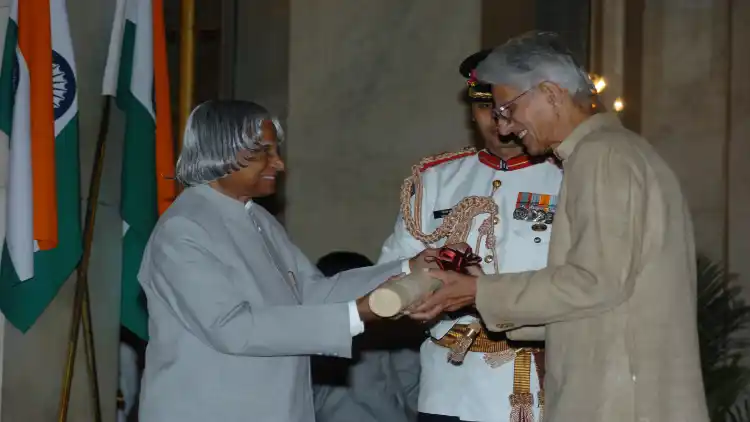
Obaid Siddiqui receiving Padma Vibhushan from the President
Genes and DNA are the words we hear frequently on our Televisions and other media. Genetic mapping has revolutionised the way humans understand organisms in general and themselves in particular. The past few decades have witnessed developments in biotechnology and genetics leading us to understand and treat diseases hitherto thought curable. Very few among us know that one of the important men who laid the foundation of this revolution was an Indian, Obaid Siddiqui.
Born on this day in 1932 in Basti, Uttar Pradesh, Obaid Siddiqui completed his Masters in Botany from Aligarh Muslim University (AMU) in 1953. Initially, he joined AMU as an agricultural scientist, after his Masters, and later moved to Indian Agriculture Research Institute (IARI), New Delhi. At IARI Siddiqui had prepared a testbed for wheat crossbreeds. But a devastating hail storm destroyed the crop and ruined his year-long labour. A frustrated Siddiqui, who had a keen interest in genetics, an emerging field at the time, wrote a letter to Professor Guido Pontecorvo at Glasgow asking him for a research opportunity with him. Pontecorvo accepted him and Siddiqui started his PhD at Glasgow on microbial systems – a paradigm shift from Botany.
During his PhD, Obaid made some path-breaking observations, which revolutionised the field of Genetics. Two very important observations made by him were:
His studies were the first reports of fine mapping of a gene.
He pointed out the concentration of mutational sites in a small part of genes.
Obaid Siddiqui with Semour Benzer
So, when he submitted his PhD thesis in 1961 Siddiqui had already revolutionised the sciences in general and genetics in particular. Considering the fact that he shifted from Botany to a different field makes his achievement even more stellar.
The same year Siddiqui moved to Pennsylvania to work with Alan Garen as a postdoctoral fellow. Here, he discovered the suppressors of “nonsense” mutations. In simpler words, he discovered why a few mutations in a gene would not express themselves and remain suppressed. The discovery was a logical result of his earlier pioneering work in mapping of genes. Another important impact of this discovery was the finding of “nonsense” codons, the stop signal of genes. Har Gobind Khorana, Robert Holley, and Marshall Nirenberg received the 1968 Nobel prize for identifying “nonsense” codons and they personally acknowledged the role of Siddiqui in their research.
Siddiqui did not pursue his study of Codons further which got others a Nobel Prize because his heart was not in the USA. Siddiqui wanted to return to India to serve his motherland. This selfless patriot left the lucrative opportunities and told Alan Garen, in 1962, that he wanted to return to India.
Garen asked renowned physicist Leo Szilard to write to Homi Bhabha asking him to arrange a position for Siddiqui in India. Ignoring the opposition from fellow scientists in India, Bhabha showed confidence in Siddiqui and gave him the responsibility of establishing a molecular biology unit at Tata Institute of Fundamental Research (TIFR).
Obaid ASiddiqui with Wife Asiya Siddiqui
At TIFR, Siddiqui nurtured a younger crop of scientists and also brought Indians working in foreign labs back to India. With one of his students, P. Vijay Sarathy, Siddiqui showed that recombinant bacteria inherit DNA of bi-parental origin thus laying the foundation of principles of lateral gene transfer. In layman’s language his findings are the basis of the now well-known principle that genes pass from one generation to another.
With his other students like Kavita Arora and Veronica Rodrigues, Siddiqui showed that taste and smell of Drosophila have a genetic basis and thus opened a new field of chemosensory neurogenetics. These findings led others to research the role of genes on sensory perceptions, learning and memory.
Siddiqui was not a man who would compartmentalize his intellect to one branch of science. He contributed to fields as diverse as plants, Drosophila, bacteria, and genetics. He did not stop at research. He was an institution builder and established the National Centre for Biological Sciences in 1992 in Bangalore. Siddiqui was known for nurturing young minds by giving them the freedom to question.
Moreover, Siddiqui was a man who believed that sciences cannot operate in isolation of society. Scientists have a social responsibility and Siddiqui understood this. He stood for Human Rights, campaigned against communalisation and took part in social movements. Not only a music lover of Hindustani Music, Siddiqui was an established Sarod artist.
Obaid Siddiqui was awarded the second-highest civilian award, Padma Vibhusahan, by the Government of India. He was the true son of the soil who left lucrative offers in a foreign land to establish a research culture in India. His students are now serving the nation, which includes the present Principal Scientific Advisor of India, Professor Vijay Raghavan.
source: http://www.awazthevoice.in / Awaz, The Voice / Home> Stories / by Saquib Salim / July 26th, 2021