Bihar is on top of the list of Sahitya Akademi Awardee for 2020. Three litterateurs including Anamika of Muzaffarpur figure in the coveted national list. She is the first woman in the country to receive the Sahitya Akademi Award in Hindi for her poetry collection.
The 80-year-old Kamalkant Jha, who hails from Jayanagar in Madhubani, would get the award for his story collection ‘Gachh Rusal Achhi’ published in Maithili language.
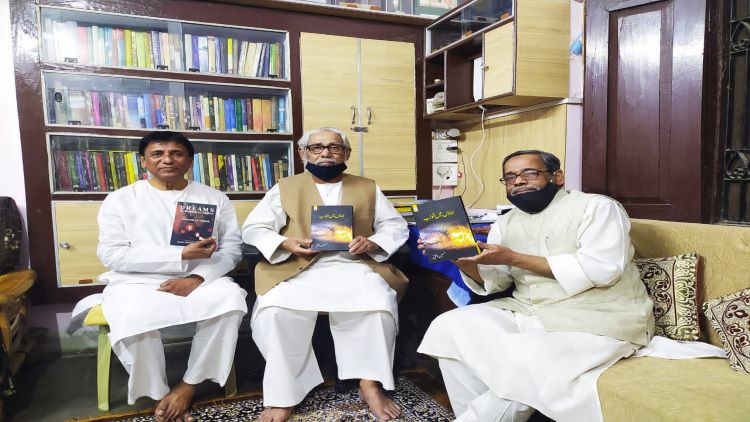
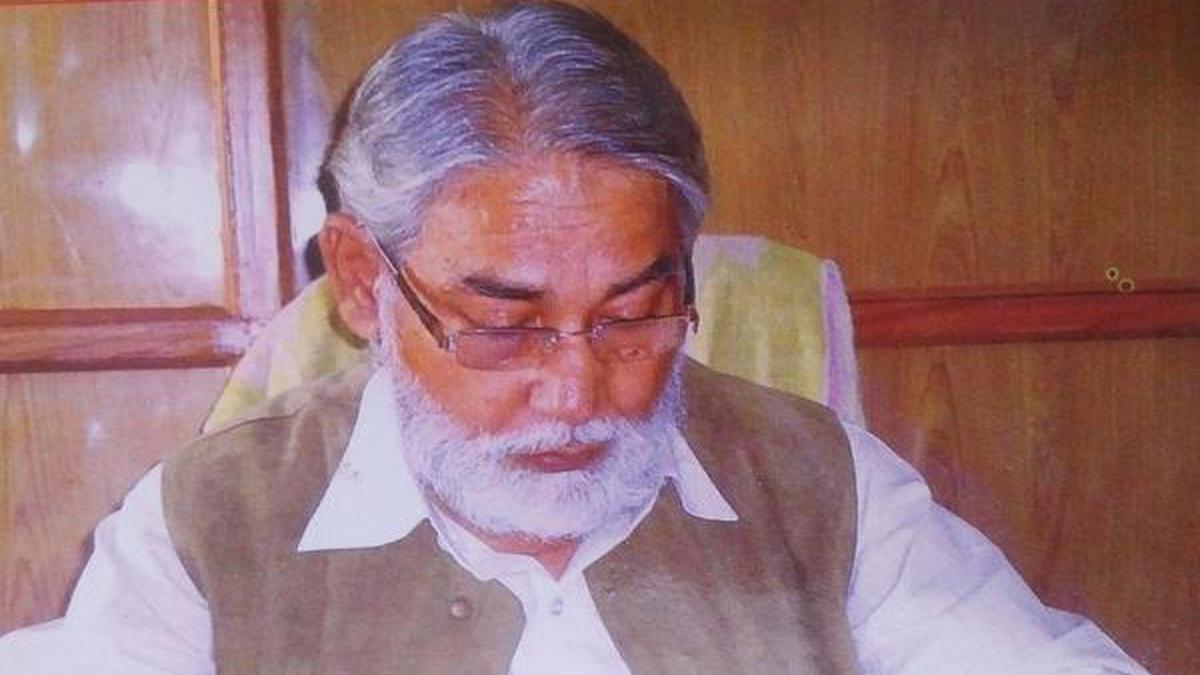
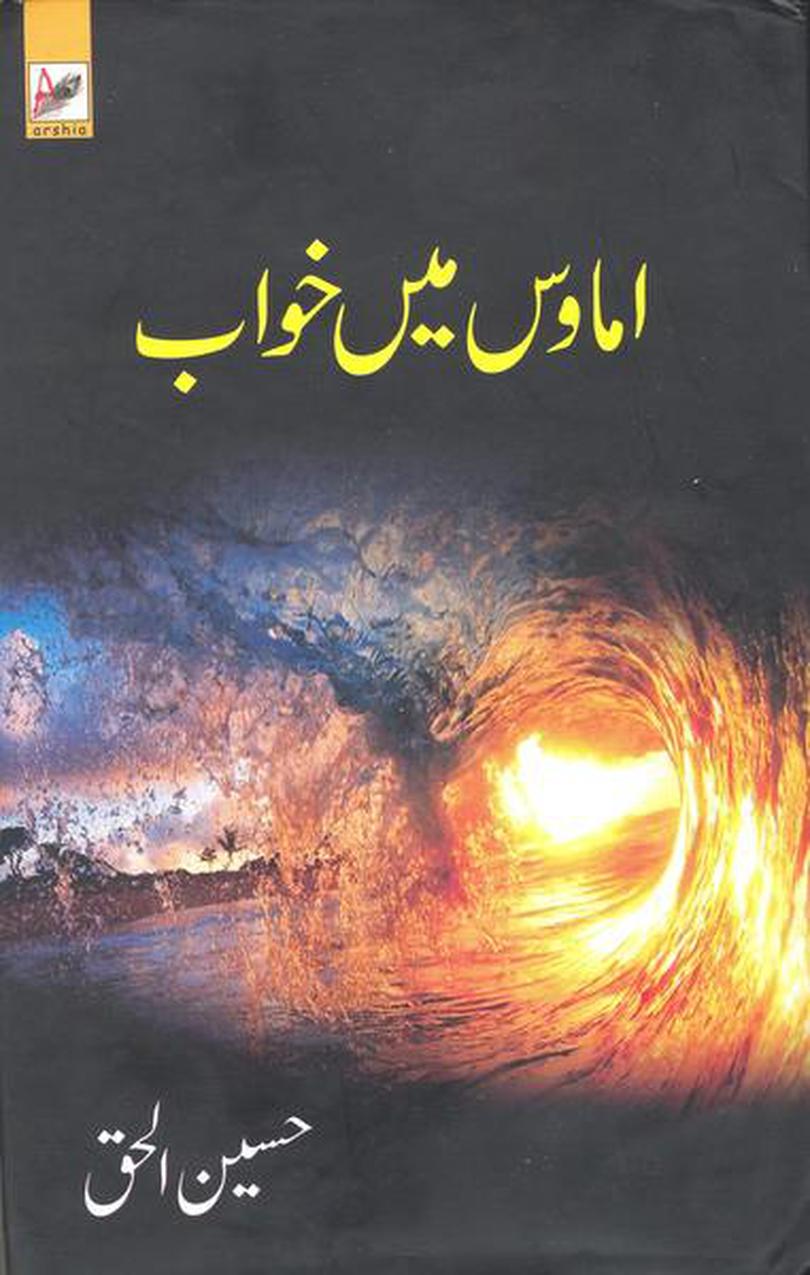
The most discussed award is that of the famous storyteller Hussain-ul-Haq of Urdu, who lives in New Karimganj. He was awarded the Sahitya Akademi Award for his novel Amavas Mein Khwab. (Dreams in dark night).
Chief Minister Nitish Kumar has congratulated Hussain-ul-Haq for getting Sahitya Academy Award. In a message to all three, the Chief Minister said it was a matter of great pride for Bihar that three of Bihar’s writers were named to receive the Sahitya Akademi Award. The entire Bihar is proud of them,” he said.
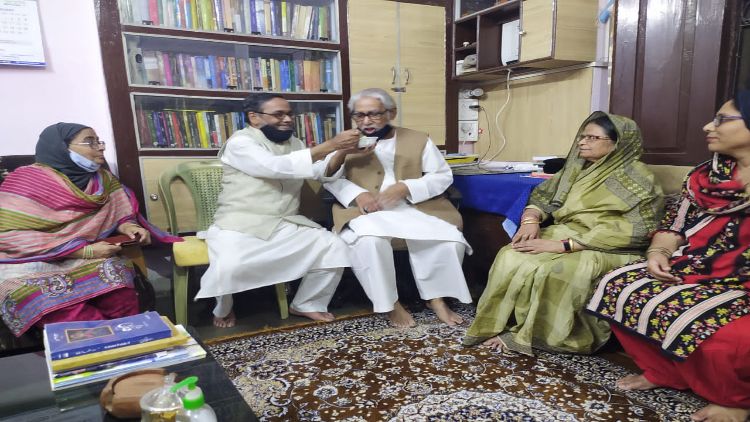
Hussain ul Haq has not been keeping good health. He returned home from Delhi where he had gone for treatment. This honour has brought cheers to the family. They shared happiness by distributing sweets.
Haq’s younger brother Dr Ain Tabish is Head of the department of English in Mirza Ghalib College, Gaya. Tabish told Awaz-the Voice, “Bhaiya receiving this honor is a big day for the family. It will inspire young writers and also make people realise that writing on social issues is relevant.”
Hussain ul Haq’with family and his books
Born in Sasaram in 1949, Hussain ul Haq’s writings are mostly on human bond and the middle-class society. According to Ahmed Sagir, a young writer who is close to Haq, in 1991, Hussain ul Haq’s first novel ‘Bolo Mat Chup Raho’ (Don’t speak; keep quiet) made waves. His second novel,‘Farat’ published in 1994, got him more limelight and recognition. For some reason, Hussein-ul-Haq didn’t write for a long period. The third novel ‘Amavas Mein Khawab’ hit the stand in 2071 and it sold like hotcakes. It made a great impact in the world of Urdu literature. He has been awarded the Sahitya Akademi Award for this novel. The novel is based on a story about the changing socio-political environment in the time period between 1930 and 1950.
Hussain-ul-Haq has a deep affinity with Sufism. His family is the successor to the legacy of a great Sufi Saint and also the caretaker of his tomb – khanquah. His father, Maulana Anwarul is a well-known personality of Sasaram. Hussain ul Haq says he has imbibed the thinking and the way of understanding things from his father.
Though the family is settled in Gaya, their relationship with Sasaram remained intact. The influence of Khanqahi culture and Sufiism has played role in Haq’s focus on human bonds in his writing.
Hussain ul Haq, who retired as head of the Urdu department and proctor of Magadh University has also published eight story collections, three novels, and half a dozen other books.
After Abdul Samad, Mazhar Imam, Ilyas Ahmed Gaddi, Professor Jabir Hussain he is the fifth Urdu writer from Bihar to receive the Sahitya Akademi Award.
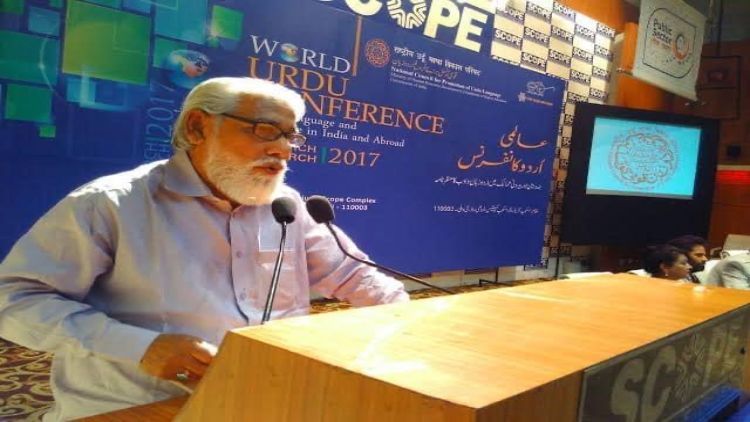
Hussain ul Haq’speaking at a function
Friday brought in a lot of happiness in the Haq family. In the morning, the first news came that Hussain ul Haq has been awarded the Shamim Nikhat Memorial Fiction Award in UP and he will be honored on 13 March at Lucknow. The organisation confers writers with a sum of Rs 50,000 and a memento. Haq will skip the award due to his ill health.
By the evening came the news of the Sahitya Academy Award filling the home with happiness and joy.
Ain Tabish says this award will have a big impact in the Urdu world as the message that writing based on serious issues and principles is still valued today.
Sahitya Akademi Award is the top award for Indian literature and is given away for 20 Indian languages. Among the recipients of this award are senior Congress leader and former Union Minister of Karnataka Veerappa Moily.
source: http://www.awazthevoice.in / Awaz, The Voice / Home>Story / by Seraj Anwar, Patna / March 13th, 2021
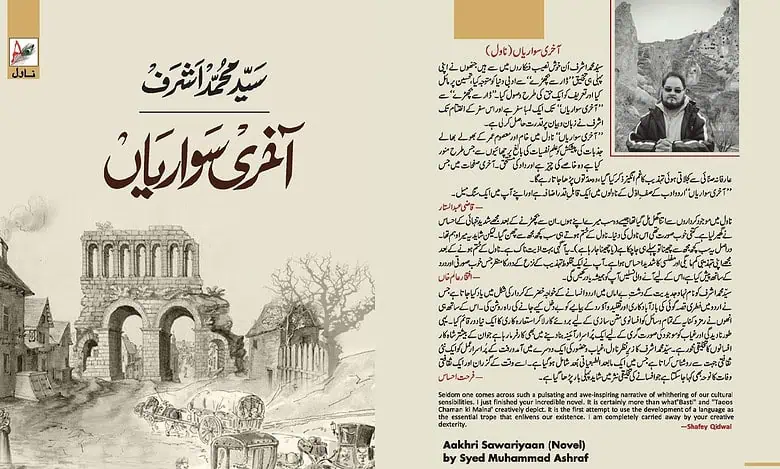
The novel, Akhri Sawarian (The Last Rides), by Syed Mohammed Ashraf woven around a well-knit plot, captures the reader’s attention at its outset. Written in first person, it begins with the anguish and curiosity carefully embedded in the structure of the narrative through introducing an enigmatic ancestral memoir comprising a travelogue which constantly keeps us on tenterhooks till its magical mystery is unraveled at the end.
In the course of the illusive journey of the protagonist who is glued to the chariot of time is seen passing through, and rejoicing the tremendous hues associated with the blossoming of socio-cultural life of the vast Indian society. The narrator, a master craftsman, despite being aware of the futility to remain entangled to his ancestor’s fascination to Central Asia’s mighty ruler Emir Timur, cannot abruptly circumvent from this central trope as it is the only peg to hang on to the storyline. However, his full attention is diverted to main predilections i.e., the celebration of the confluence of ethnicity and the portrayal of cultural bonds of fraternity between individuals of different creeds and diverse identities. The stunning visual effects of a vast thriving society characterized by its homogeneity, valor and wisdom promises a prominent place in the annals of India’s multi-cultural history.
Ardent lover of Nature
The narrator is an ardent lover of Nature and its splendid ethereal beauty especially in rustic environment. He is always found in its realm freely mingling with simple human beings, birds and animals and enjoying the fragrance of the wild fruits and flowers.
Jammu, an innocent charming girl from a destitute family being kept in the landlord’s family and the protagonist nursing a clandestine liaison with her despite his tender age, seems to be natural, especially when the girl herself appears to be smitten with his innocent gestures.
Nevertheless, forced by the destiny when she is married to an old man with two grown up siblings from the previous marriage, she doesn’t bemoan her fate. She rather keeps her spirit high and does everything for the children except succumbing to her husband’s libidos. Her bold stand in the face of repression and her desire to a dignified existence is remarkable. Noting its poignant narration, it is reminiscent to a story by Tagore though in a different situation, depicting the absurdity of child marriage in ancient times.
Here he is looked after by the innocent girl in a spirit which only a mother or sister can afford to display. Akhri Sawarian is neither a didactic novel nor has any edifying quality. However, keeping in view, the protagonist’s own code of conduct, self esteem and ethical parameters though much less than Premchand, he is definitely a critical insider who despite having amorous tendencies never ventures to trespass a certain moral barrier in his relationship. Here the narrator unlike any other feminists seems to be more realistic, conscious and sympathetic to the cause of women empowerment.
Enriched with inter-textual references, frequent flashbacks, tropes and motifs, this novel, a fine example of cultivated aesthetic and literary taste, never deviates from its path and primary aim of retrieving and showcasing the glimpses of a culturally fascinating and vibrating Indian society.
Strategies are many
There are several strategies converged in the plot and the texture right from the time of conception to structuring the narrative to justify the projection of a particular view of life in the novel. One of them is to ensure the protagonist growing up and not attaining abrupt maturity so as to be able to witness and be a part in his childhood of the generally pastoral serenity, its soothing ambiance and the panoramic view.
The nuanced and incisive description of abject impoverishment, onslaught of maladies, the convergence of the people on mass scale at special occasions, empathy, quarrels on ordinary things, yearnings, deprivations, simplicity in attires and imaginations and a firm belief in rituals and sacraments bring forth the clear picture of a society.
Now in the last stage of the fast changing scenario, we come across a stage where we see the protagonist albeit in a new Avatar. Sitting in the carriage drawn by the galloping horses in the dust of time, surmounting hurdles, passing through rough terrain, lesser known places and locations. Through this arduous journey, we are transported to a completely different and highly perturbing level of existence where the protagonist is now capable to comprehend the purpose of life. Though distraught and shattered, he is seen in this mist, conversing with his better half who is helping her husband to navigate through the ravaging river of time. This phase is marked by the presence of sharpening intelligence and probing glances of our hero’s life companion. She becomes instrumental in decoding the mystery surrounding the small purse and the great grandfather’s travelogue. It is a great redeeming factor in settling an intriguing paradox. It also opens the possibility of a plethora of other wounds to be inflicted by the arrows of time in the days to come. Now as the story proceeds on the predictable lines, a depressingly brooding protagonist seated as usual in his moving coach, now in familiar locations, though initially reluctant, relents willy-nilly to his equally subdued and stressed wife’s persuasions to shed some light and unfold the long held mystery around the ancestral box, being the life threatening crux of the problem.
She exclaims: Your great grandfather’s old wallet has become the tormenting scabbard of Timur. It has kept you since your childhood on the tenterhooks.
This leads to the opening of a Pandora’s Box of hazardous historical events, fancies and hallucinations spread over a long period of time. During recounting the chain of events, one is struck with disbelief to see the pathetic scenes of the fettered skeleton of the last Mughal emperor; Bahadur Shah Zafar perched in a bullock cart passing through the rugged surface all the way to be incarcerated in Rangoon. In the meanwhile the wheel of chariot moves forward to the delight of the chronicler to a tempestuous journey undertaken by the protagonist’s great grandfather in his younger days to Samarkand, in murky past and his illusory encounter with a bed ridden and mutilated legendary despot Emir Timur.
In the technique of sub-plot along with the main story there is also a rare moment when the narrator to his utter bewilderment, suddenly discovers that his great grandfather is being gifted with the snippet of the royal sword’s scabbard and a relic by the mighty hands of none other than Timur himself. After revealing this secret to his wailing and sobbing wife, he seems to be all the more desperate to be under the spell of lunacy that needs immediate medical attention. This part of the narrative culminating to the final closure becomes more interesting because of the protagonist’s realization of the social polarization, simmering discontent and unintelligible contradictions in the society at large. He, who had never envisaged such dreadful lurking images earlier, gets traumatized.
By way of ensuring tranquility and spiritual solace, he is led during a frosty winter night to a secluded corner in Mehrauli at Delhi. However, owing to mental inconsistency, delusion, persisting gloominess and strange feelings, lying in his beloved wife’s lap he looks around with his eyes wide open as a shudder runs down his spine with the constantly blowing freezing gusty winds.
The narrator in order to epitomize his idea of a synthetic national identity has frequently employed the analogy of “Assorted Fragrance” which signifies India’s century’s old multi-cultural and ethnic diversities.
The hanging clouds of haze and fog appeared to him like gigantic civilizational legacies being snatched and driven away by the thugs on the wings of time. With little hope to see them again, shivering with high fever in the freezing atmosphere, he is weeping profusely and bemoaning as he is fully disillusioned with the new found realities of time and feels himself completely misfit to reconcile with the changed vocabulary of social etiquette replaced with tardiness of behaviors and degrading moral bonding. Sitting beside the citadel of a vast and magnificent cultural repository, he murmurs to himself in utter chaos and suffocation, the couplet of Mirza Ghalib.
Mauj-e-Khoon, Neelay Samandar Ka Safar Karti Hui,
Dajla Roshan Kabhi Is Rang say Ganga Roshan
Blood laden waves passing through the blue oceans
It’s colour, blazing Tigris often Ganges
Notwithstanding the fact that the narrator is fully aware of the implicit subversion of our ethos and a perceptible indiscretion in people to people relations, he doesn’t necessarily commit himself to pinning down the obvious reasons or casting aspersion on anyone for wrecking-havoc in the society. He prefers instead to deal with the effects rather than the reasons of the turmoil, thereby restricting himself to merely lamenting and bemoaning the loss of the mosaic of cultural identity.
Even against the backdrop of the shifting sands of the historic realities in the subcontinent, the narrator riding high on the back of the unbridled horse of the time, though in pensive, mood is still ready in bardic fashion to go extra miles to see a new sun rising from the dusty horizon. Worries and tensions writ large on his countenance, an anguished protagonist with an indomitable flickering spirit, at times appears engrossed in the futile act of thwarting the course of the tidal waves and the next moment sitting on the threshold of humanity awaiting a miraculous return of the caravan lost in the wilderness. Contemplating in melancholic mood, he mutters in a state of soliloquy wondering about a formidable humanity vanishing with little hope to emerge again from the whirl pool .of the ravaging river of time. It’s reflective of his amazingly unwavering resilience to cope with the harsh reality of the moment with fortitude but with little hope.
However, it is not to be forgotten that the awe inspiring picturisation of mental images, enormous capacity to traverse through the wide spectrum of human emotions and tantalizing depiction of the fictional realities of life are definitely the outcome of a highly skilled, sharply focused and a calibrated mind of the artist which has found full expressions in this novel in terms of its unconventional craftsmanship, terrific sense of impish humor, irresistible quest for wit and irony taking precedence over many other devices and attributes of linguistic and literary manifestations.
Akhri Sawarian is another post-partition trail blazer of Syed Mohammed Ashraf though tragic at the core shall stay in our thought and imagination.
Qazi Obaidur Rahman Hashmi is a distinguished Adjunct Professor of Urdu at Jamia Millia Islamia in Delhi. His dedication to Urdu literature and education is highly appreciated.
source: http://www.siasat.com / The Siasat Daily / Home> Featured News> Books / by Qazi Obaidur Rahman Hashmi / June 27th, 2024
Hussainul Haq’s novel “Amawas Mein Khwab” initiates a new debate on the Hindu-Muslim relationship.
REFLECTING REALITY Hussainul Haq
At a time when people cherish to be lied to, what can scare away the spectre of an unprecedented assault on the very idea of truth? Is truth a sociological reality or an unachievable ethical reality? Does the narrative of homogeneity set in motion by new information technology produce a kind of immodesty that allows us to recognise falsehood but we still treat it as if were a reality? Does our intent on peddling fantasy as a fact correspond to “Suspended Disbelief” that Coleridge found essential for literature? These frightening and unsettling questions thrown up by the post-truth period are impeccably sewn together in a novel of a celebrated Urdu novelist and short story writer Hussainul Haq and his latest novel has been doing rounds in the Urdu knowing circles of the subcontinent.
His recently published novel, “Amawas Mein Khwab” (Dreaming in the last night before the new moon), poignantly tells a tale of Ismael Rajai, who lost all his family members in a communal riot but a marked Indian passion for free-flowing of inter-personal relationship unencumbered by religious and cultural affinity and uncontaminated by self-interest enabled him to begin a new life. Ismael, lived in Bombay, Bhiwandi and Patna, and is exposed to many cultures and as a power loom owner, teacher, a friend of a landlord, a father and a thinking human being, he tries to understand why common people do the uncommon to transform themselves. His stint as a lecturer at a college in Bihar provides him with a space where several mediations are carried out. Arousal of mass-hysteria in the name of caste and religion acquaints him with the aggressive and self-destructive potential of conflict and disharmony. His tantalising journey of a new life transcends inadequacies and presents a higher level of synthesis where being apart and being together emerge a reality as audaciously as they can.
The book cover
Ismael’s struggle reveals new insight and a fresh perspective on several issues plaguing the country.
Believable narrative
At a time when religious passions are running high and the concept of peaceful existence is being threatened, the novelist initiates a new debate on Hindu-Muslim relationship. Direct intervention of a well known scholar or a reference to a widely acclaimed text lends credibility to the narration and the reader takes pleasure in passages that are explicitly historical.
One of the characters of the novel asserts: During the reign of Mohammad Bin Qasim, the religious places of Christians, Jews and Hindus were treated equally. Quran describes Sabaen (an ancient nation of star worshippers) as people of the book though there was hardly any mention of book related to them. Even in the time of the second caliph, Zoroastrians were given the status of people of the book and why this status still eludes Hindus?
For his doctoral thesis, Ismael chooses a topic that baffles his friend Anil Sharma. Anil finds the topic “Muslims’ Contribution in Ancient India” inadmissible but Ismael argues: “One has to concentrate on the culture, language and ideologies that dominated India before Mohammad Bin Qasim. In what way, the arrival of Mohammad Bin Qasim and saint, Ali Hajveri, affected the culture. Did anyone notice a creative interaction at epistemological or ideological level, if yes, what are the traces, this question has tremendous research potential?”
“Yes, it is a fertile topic, but you have to work hard,” Anil nodded.
Ismael, living a comfortable life in Bihar, lost his life in a blast and it spells doom for his life. His daughter Nayela landed up at a brothel and the son Quidar finally got whatever he longed for. The novel ends with a positive note and Hussainul Haq creates an autonomous space which has its own logic of unfolding of interpersonal relationship involving cooperation and conflict and it also reveals dark underpinnings for our dreams for a strong nation.
For Hussain, humanity is undoubtedly grasping breath but he is courageously on the side of rational and truth loving liberals who want to understand what instils a strong sense of grief and chaos in us. Hussain’s elegant prose illuminates conflict of nostalgia, loneliness and social consciousness astutely and he makes it clear that we tend to lie to ourselves with a bad conscience and the ever-increasing ethical relativism and blooming narcissism reflected in selfies is nothing but an act of self-deception.
Hussainul Haq’s new novel turns attention to the episodes of real life that outstrips fiction and his novel is a testimony to what Philip Roth says: The culture tosses up figures almost daily that are the envy of any novelist.
source: http://www.thehindu.com / The Hindu / Home> Books> Authors> Going Native / by Shafey Kidwai / February 16th, 2018
The sudden demise of veteran bureaucrat and author Shehzad Mohammad Khan, widely known as S.M. Khan, has left many in shock and grief. Social media is flooded with tributes, with admirers remembering him as a person of “utmost humility and generosity,” reports the ATV.
S.M. Khan passed away on Sunday at the age of 67 after a brief illness. He is survived by his wife and three children. His last rites took place today in his hometown of Khurja in Uttar Pradesh’s Bulandshahr district, according to family sources.
Khan’s passing marks the end of an era in the Indian Information Service (IIS) and public relations field, where he set benchmarks for loyalty and dedication throughout his illustrious career.
Born on June 15, 1957, in Khurja, S.M. Khan completed his education at Aligarh Muslim University and the University of Wales, England. Joining the IIS in 1982, he held several critical roles over the years.
One of his most prominent assignments was serving as the spokesperson for the Central Bureau of Investigation (CBI) between 1989 and 2002. During this time, he skilfully handled media communications for high-profile cases such as the Harshad Mehta financial scandal, Bofors scandal, and Rajiv Gandhi assassination case.
From 2002 to 2007, Khan served as Press Secretary to President Dr. A.P.J. Abdul Kalam. His tenure included managing the President’s media relations and accompanying him on national and international tours. Inspired by Dr. Kalam, Khan authored Awami Sadar (The People’s President), which shed light on lesser-known aspects of the former president’s life.
Khan also played a pivotal role in shaping Indian media through his work as the Director General (News) of Doordarshan, where he oversaw coverage of significant events such as National Film Awards and Dada Saheb Phalke Award. Additionally, he served as Director of the Directorate of Film Festivals (DFF), representing India at prestigious platforms like the Cannes and Berlin Film Festivals.
Beyond his professional achievements, Khan was deeply involved in fostering interfaith harmony as a trustee of India Islamic Cultural Centre (IICC). Elected Vice President of the IICC in 2019, he dedicated himself to promoting mutual understanding across communities.
S.M. Khan maintained a strong bond with his alma mater, Aligarh Muslim University, serving as a member of its Court and the Executive Council. His efforts in promoting education and cultural understanding continue to inspire many.
His passing is a significant loss to the nation, leaving behind a legacy of excellence, humility, and dedication.
source: http://www.radiancenews.com / Radiance News / Home> Obiturary / by Radiance News Bureau / November 19th, 2024
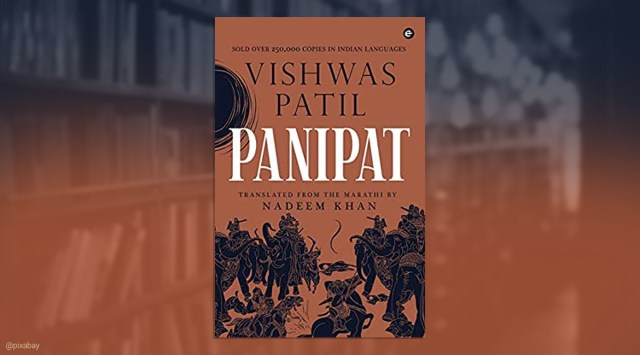
Khan, whose last worked on the translation of Patil’s Panipat, a voluminous Marathi language classic published in 1988, said translating into English from any of the Indian languages is like moving into a different culture as idioms, emotional framework and cultural resonances change with language.
In 2018, Khan had translated two novels of Dongare, a Sahitya Akademi Yuva Puruskar winner who is regarded as an avant garde writer in regional literature.(Source: Amazon.in | Designed by Gargi Singh)
Being true to the word and spirit of the original work while making it resonate with the English reader is always a challenge, says writer Nadeem Khan, who has been translating the works of celebrated Marathi authors such as Prabhakar Narayan and Vishwas Patil.
Khan, whose last worked on the translation of Patil’s Panipat, a voluminous Marathi language classic published in 1988, said translating into English from any of the Indian languages is like moving into a different culture as idioms, emotional framework and cultural resonances change with language.
“My job is only to convey those ideas and themes in another language with the greatest probity and as attractively as possible,” Khan told PTI in an email interview. According to Khan, authors use different dialects of the language to describe their characters but it is tricky to transform something that has word-play involved, like in the case of another celebrated Marathi writer Avadhoot Dongare.
“Hence, being true to the word and spirit of the original work and yet making it resonate with the English reader is always a challenge. But my good fortune has been that I have grown up reading great works of translation of Tagore, Ismat Chughtai, Manto, Rajinder Singh Bedi, Vijay Tendulkar and that helped me find the right strategy for my work,” Khan said.
In 2018, Khan had translated two novels of Dongare, a Sahitya Akademi Yuva Puruskar winner who is regarded as an avant garde writer in regional literature. They were published in a single book titled, The Story of Being Useless + Three Contexts of a Writer. While translating Patil’s Panipat, the 69-year-old retired English professor had “serious difference of opinion” with the author, who is also his friend.
“I could so clearly see why it was such a big hit with the Marathi readers, but I also knew that a verbatim translation would take it nowhere among the English readers. The novel was a thrilling historical narrative, well-researched, but it appealed to the self-regard of the Marathi readers. So, my challenge was to retain all its epic qualities, its thrill and yet ensure that it targeted the universal admiration for integrity and courage,” Khan said.
Khan said he wanted the book to stand apart as an original historical-thriller in English while also carrying the aroma of the soil in which it was located. Comparing the styles of Marathi writeres such as late Prabhakar Narayan alias Bhau Padhye, Patil and Dongare, Khan, who lives in Amravati, Maharashtra, said each translation comes with a unique set of challenges.
“The texture of their language is very different, their readership is different, their well-springs and motivations are different. With Padhye, obviously, I didn’t have the facility of consulting him, but I found myself very comfortable with his philosophical and literary orientation and derived a different pleasure in offering him to the English readers.” Dongare, he said, has already made a name for himself in the world of regional literature.
“When I read his novels, I was absolutely sure that he had to be made available to a wider discerning readership. He was experimenting with the language and with the narrative style. “Translating him required me to catch and project the culture in which his characters were operating, very often the culture of the Pune streets, and to find the adequate register in English. It was quite challenging, and therefore very rewarding too.”
Khan said he tweaks the original writing to make it more English-reader-friendly but only after consulting with the original author as they have the last word. “I never allow myself to forget that the original work is theirs, the ideas are theirs, the themes are theirs, the messages are theirs, in fact, the reputation at stake is theirs, it’s their neck on the block…Their complete agreement with my effort is of paramount importance.”
source: http://www.indianexpress.com / The Indian Express / Home> News> Books & Literature / by PTI / January 06th, 2021
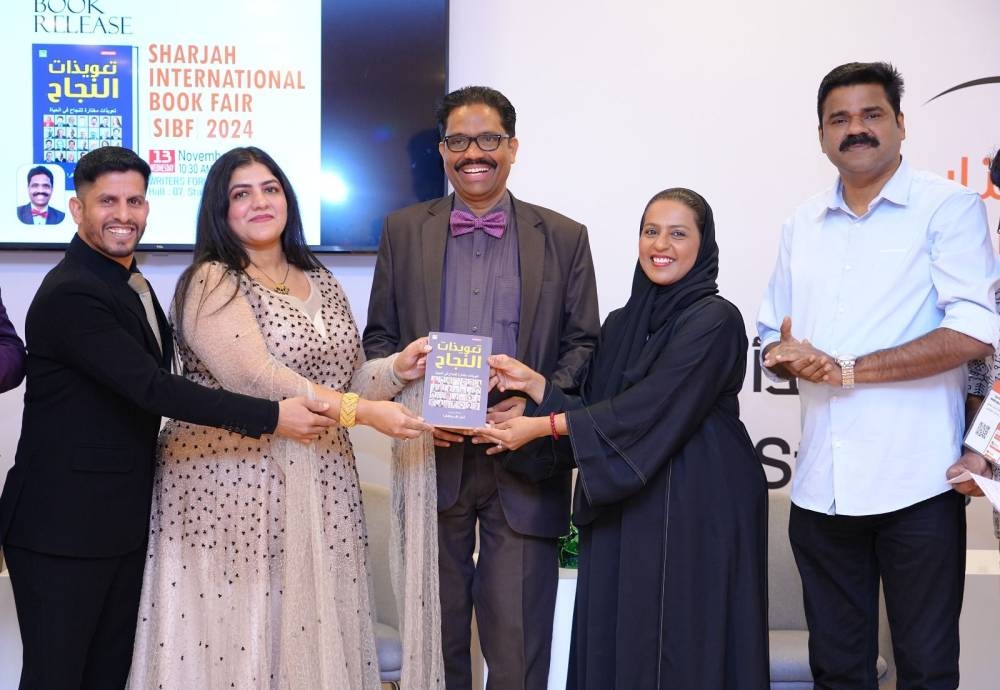
‘Taeweedatu Nnajah’ (Success Mantras), a motivational book in Arabic by Doha-based Indian author Dr Amanulla Vadakkangara, has made debut at the 43rd Sharjah International Book Fair, drawing a diverse audience of multinational readers.
Dr Mariyam Shinasi, a prominent author and cultural figure from the UAE, officially released the book at the Writers Forum on Wednesday.
She praised Dr Amanulla’s efforts in crafting an inspirational work in Arabic, commending the unique accomplishment of a non-Arab author publishing a motivational text in the language and showcasing it at one of the world’s leading book fairs.
“Indians in general, and Keralites in particular, have shown a keen interest in Arabic language and literature. Publishing a motivational book by a non-Arab is indeed commendable,” Dr Shinasi remarked.
At the event, the first copy of the book was received by NVBS CEO Benazir Manoj, and Founder and Chief Coach Manoj Sahib Jan.
Several notable personalities attended the launch, including Saleem Ayyanath, Lipi Akbar, and the author himself.
The book has been published by Lipi Books from Calicut, India.
source: http://www.qatar-tribune.com / Qatar Tribune / Home> Nation / by Tribune News Network / November 17th, 2024
Perinthalmanna(Malappuram) KERALA / Edinburgh, SCOTLAND :
Malayali scholar Mahmood Kooria has been awarded the prestigious Rs 84 lakh Infosys Science Prize for his groundbreaking research on Islam and the Indian Ocean region. The award recognises his exceptional contribution to the study of history, culture, and Islamic law.
Dr mahmood kooria (file image)
Professor Mahmood Kooria, a distinguished academic from Kerala, has been awarded the prestigious Infosys Science Prize 2024 for his groundbreaking contributions to the study of Muslims in the Indian Ocean region, including Kerala. The award, which recognises excellence in scientific and social research, honours Kooria’s work in humanities and social sciences.
A landmark achievement for Kerala
Kooria, a native of Perinthalmanna in Malappuram, is currently a professor at the University of Edinburgh. At just 36 years old, he is the youngest recipient of the Infosys Science Prize.
The award acknowledges his extensive research on the history of sailing across the Indian Ocean and his unique approach to studying the history of Kerala from a global perspective.
In a statement to Mathrubhumi, Kooria expressed joy and surprise, saying, “this is totally unexpected, and I am very happy. This award is a recognition for ocean studies and Kerala studies.”
Prize details and award ceremony
The Infosys Science Prize includes a gold medal, a citation, and a cash award of USD 1 lakh (approximately Rs 84 lakh). The award will be presented to Kooria at a special ceremony in Bengaluru on January 11, 2025.
Focus on Indian Ocean history and Kerala’s role
Kooria’s work offers fresh insights into the history of the Indian Ocean region, particularly focusing on Kerala’s crucial role in global trade, cultural exchanges, and the development of Islamic law. His research delves into how the legal traditions of various religious communities shaped the political, cultural, and economic transformations across the Indian Ocean coast.
Professor Kooria’s research also explores the historical role of animals such as elephants, horses, and donkeys in shaping key events, including the Malabar Rebellion. His innovative approach to integrating animals into historical narratives is a notable contribution to contemporary academic thought.
Kooria’s work on this subject was published in Mathrubhumi Weekly and later compiled into a book by Mathrubhumi Books.
A leading scholar of Islamic Studies in the Indian Ocean
Kooria is widely regarded as one of the leading scholars of Islamic discourse in the Indian Ocean region. His research highlights the critical role of Islamic law in influencing the region’s political, cultural and economic exchanges. His work also covers the broader impact of Islamic legal traditions on the development of diverse communities along the Indian Ocean littoral, including the cultural and commercial interactions between different religious groups.
Earlier, Kooria was awarded the National Research Fellowship by the Dutch government, worth Rs 2 crore.
Recognition from Infosys Science Foundation
The Infosys Science Foundation, which recognises exceptional contributions in science and research, announced the winners in a statement led by President Kris Gopalakrishnan and Trustees N. R. Narayana Murthy, K. Dinesh, Dr. Pratima Murthy, Mohandas Pai, S. D. Shibulal, and others.
source: http://www.english.mathrubhumi.com / Mathrubhumi.com / Home> News> Kerala / November 15th, 2024
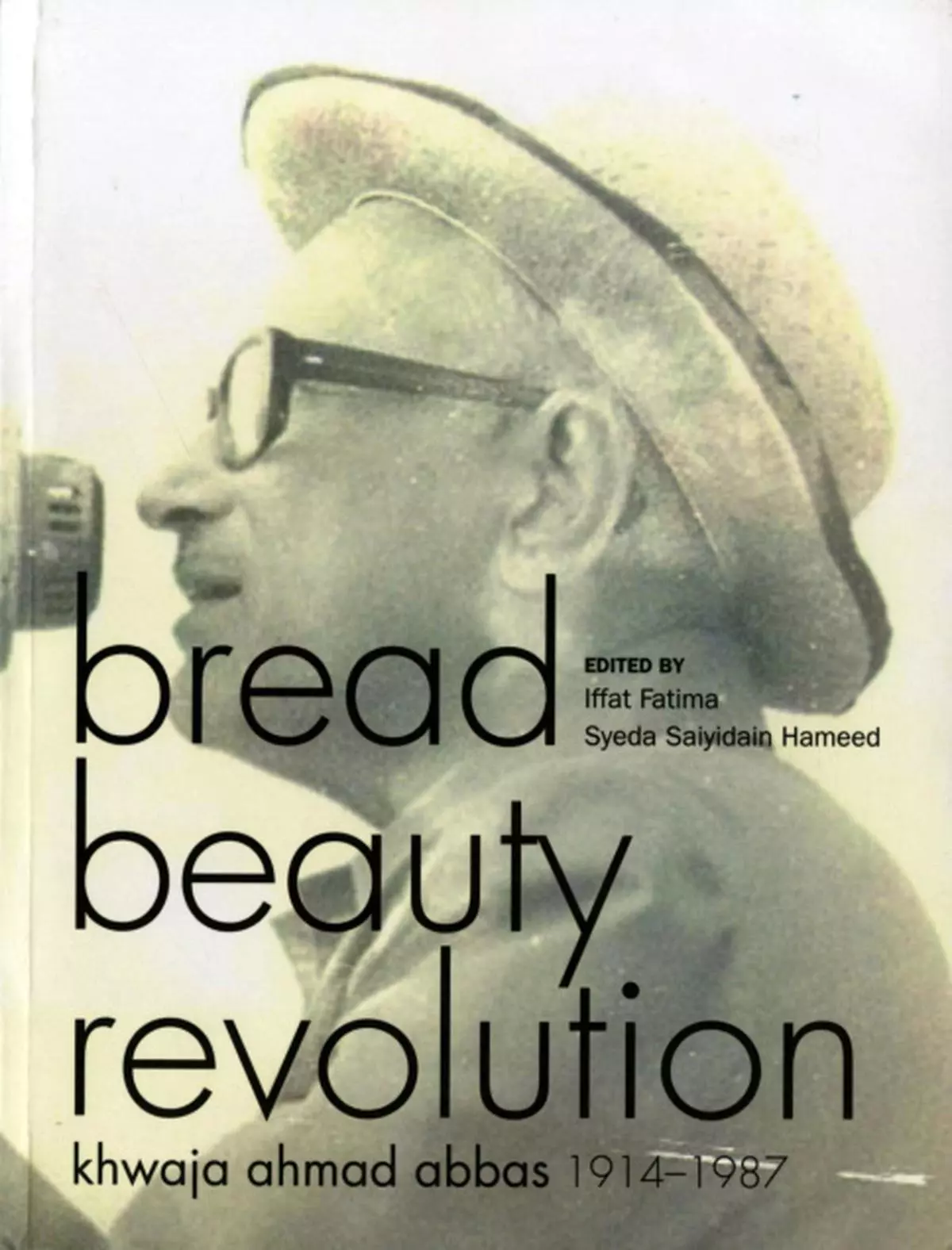
This commemorative volume is a timely and necessary reminder of the greatness of an extraordinary writer, film-maker and social commentator.
FL19 BK ABBAS 1
KHWAJA Ahmad Abbas wore many hats and distinguished himself in each of the roles he chose. As a pioneer of progressive cinema, a consummate writer of short stories and novels that depicted the human condition and a committed journalist whose Last Page column acquired legendary status, he blazed new trails and fashioned his own path.
Abbas was an important figure from a critical past. His body of work deserves to be studied and his life remembered by millennials and generations to come.
This commemorative volume, a celebration of the man on the occasion of his 100th birth anniversary, arrives as a reminder of the humanism that characterised his life and work. Lavishly produced and deftly edited by Iffat Fatima, an independent filmmaker from Kashmir, and Syeda Saiyidain Hameed, the social and women’s rights activist, educationist and writer, this book from the Khwaja Ahmad Abbas Memorial Trust provides invaluable insights into his mind and personality.
A man of many talents
Despite his many talents, or likely because of them, Abbas could never be boxed into any creative category. And he was well aware of it. As Syeda Saiyidain Hameed informs the readers in her marvellous introduction to the compendium, Abbas himself would often ask his readers: “Who am I? Writers say I am a journalist; journalists say I am a film-maker; film-makers say I write short stories.” The editors of this volume, who recognised that the only way to appreciate Abbas fully is to study him in totality, have paid a perfect tribute to his oeuvre by dividing the volume into 10 sections that feature selections from his writings, focus on his cinema through his interviews and conversations, talk about his beginnings and early life and adventures, and reveal the man behind the mighty pen through reminiscences and tributes by actors and associates.
The nature of the public adulation of Abbas also kept changing over the decades during which he was active. For one generation he was the man who collaborated with Raj Kapoor to unveil some of the finest examples of high-quality mainstream Indian cinema, such as Awara and Shree 420 , while another celebrated him as the writer of powerful and poignant stories such as Sardarji , a lamentation of the violence and mayhem the country witnessed in the wake of Partition. And much before Independence, his was a significant voice writing about the marginalised sections of society. Abbas slipped in and out of the many roles he had chosen to play with a rare finesse, much like a thespian.
Abbas was fortunate to have inherited a long tradition of intellectualism and reformist ideals from both sides of the family. His mother’s grandfather, Maulana Altaf Husain Hali, was a poet who used verse as a tool against social evils and as an instrument of reform within the Muslim community. Abbas began carrying forward the torch early on, even as a college student, when he published Aligarh Opinion , a handwritten weekly newspaper that he personally peddled on a bicycle.
This was the start of his life in journalism which would eventually see him pen one of the longest-running columns in the history of news in Blitz , a weekly tabloid founded by R.K. Karanjia.
Reading the compendium is like taking a train journey back in time, to a world far removed from the present. Be it Abbas’ harrowing first-person account of what he saw in Calcutta (now Kolkata) during the Bengal Famine—which inspired him to make the groundbreaking film Dharti ke Lal (1945)—or his active involvement with the Indian People’s Theatre Association (IPTA), his cinematic endeavours or his first meeting with Jawaharlal Nehru, the reader is taken on a walk-through of events, institutions and happenings that are now the staple of history textbooks.
A particularly striking example is his narration of the celebratory procession of people in Bombay (now Mumbai) on August 15, 1947, where he was one among the hundreds of thousands rejoicing in their new-found status as citizens of a free country.
“It was an inspiring sight to see a famous poet like Josh Malihabadi, a film celebrity like Prithviraj Kapoor with his film star son Raj, a dancer of international fame like Zohra Sehgal, and a front-rank writer like Krishan Chander, singing and dancing in the streets to celebrate this happy occasion….Today, they had come in the midst of the people, as singers of their songs, not to sing about the people, but to sing with the people; not to dance a symbolic representation of life on the stage, but to dance the dance of freedom with the people in the streets.”
The collection also offers a peek into his personal life; his own accounts of life as a newly married man and the banter between him and his wife Mujji (Mujtabai Khatoon) are straight out of the myriad Muslim socials that Bollywood was famous for a long time ago. The scenes from his marriage tragically culminate in the death of his wife.
Describing the day his wife died in an elegiac memorial, elegant yet heart-breaking, Abbas says: “It looked like her—but it was not her. For that life that was always bubbling with intelligence and compassion was no longer in her. I collapsed near the bed where she lay inert. It was not her—but something resembling her—like the lifeless photograph of a beloved person. When I returned after burying her I walked alone and knew that henceforth I would have to get used to walking alone.”
Pathbreaking cinematic efforts
Although acclaimed for his association with Raj Kapoor and, of course, for introducing Amitabh Bachchan to the silver screen in Saat Hindustani , Abbas deserves a special chapter in the history of Indian cinema for his breathtaking corpus of work that saw him don the mantles of producer, director and screenwriter at once and also established him as a pioneer whose films broke new ground. He took on challenging issues and translated his thoughts on to the screen, with varying degrees of success.
Only a man ahead of his times could make a film like Hamara Ghar (1964), a film about a group of children marooned on an island where the protagonist is a motherless Dalit boy.
As Ahmer Nadeem Anwer, who played the lead role of Sonu at the age of 10, says in an essay on the film: “It is this boy who embodies the defiance of those who shall not accept their exclusion from education, work, self-respect—or even recreation and pleasure.” The film, along with several others, is testimony to Abbas’ willingness to take risks and make the cinema that he wanted to make.
Collaboration with Raj Kapoor
Abbas liked to describe himself as a communicator. “I want to communicate my ideas, my impulses, my ideologies to other people. That is my basic interest in writing, in films and in drama.”
It is a moot point which vehicle of communication served his purpose best, but one could not make a better choice than his cinematic collaborations with Raj Kapoor, especially from the early days of the showman’s career, such as his directorial debut, Awara , Shree 420 and Jagte Raho .
These films manifest the distilled brilliance of a mind that displays an unparalleled skill in weaving riveting stories for the big screen. His phenomenal grasp of the medium and Raj Kapoor’s showmanship resulted in timeless classics.
Abbas himself considered Awara to be the best of his collaborations with Raj Kapoor.
It is another story that the two would later go on to make Mera Naam Joker , which Raj Kapoor considered his magnum opus but viewers thought otherwise.
The monumental failure of the film devastated him, driving him into debt and depression, and it was Abbas who helped him bounce back by writing the iconic teenage romance called Bobby , which turned out to be Raj Kapoor’s biggest blockbuster.
Nehru: A love story
It was love at first sight, as Abbas confesses, recollecting the first time he saw Jawaharlal Nehru, at the Aligarh railway station. The essay about the entire episode is a fascinating recollection of an awestruck student meeting his idol in flesh and blood and the resulting conversation, which culminates in Nehru signing his autograph book with the message: “Live dangerously.” Abbas certainly seemed to have taken it to heart, as his life demonstrated. He lived dangerously all his life, always true to himself and never wavering from his convictions, never hesitating to helm a project even at the risk of grave financial loss.
He firmly stood up for what he thought was right and did not shy away from opposing what he felt was wrong, irrespective of ideology.
His ability to introspect and accept criticism separated him from other giants of the screen or the world of letters of his time.
In his tribute, Amitabh Bachchan writes: “Mamu Jaan’s [Abbas] socialism was not just restrained to the books or columns he read, believed and wrote about. He practised it too in the way he lived and conducted his life, and in the way he made his films. I was a newcomer in the illustrious star cast of Saat Hindustani , but his treatment to all was universal. In his eyes we were all equals, and we were treated with the sameness that he followed and believed in.”
My sons, Morad and Yavar, were born in 1968 and 1972, respectively, and my daughter, Ayesha, in 1974. When I was pregnant with Morad, my husband said to me that he hoped for a girl in my image. But I gave birth to a robust ten-pound son! My male gynaecologist, Dr Beck’s remark is my first recollection when I regained consciousness from the Caesarean section, “Congrats, you have a little football player!” A Canadian could not have given a greater compliment. Later I realised that my husband’s desire to have a daughter had no firm basis. Holding his firstborn, he declared to all in the hospital room that from now he wanted only sons!
When I first set my eyes on Morad, I had just come out of general anaesthesia in the maternity ward of the University of Alberta Hospital. I saw his face and I can still feel my own gasp. His face was my mirror. He was lying, neatly bundled beside me. It had been a breach delivery. It took eight days for the stitches to heal before I could be discharged from the hospital. Hameed brought us home, both mother and child, wrapped and bundled. A memory that lingers is placing him on a white sofa before a large bay window overlooking the front lawn in which the grass had begun to turn brown. It was October 12, 1968.
Over the years, how did I see my older son? Introspective, and sensitive, he used to tease me by saying that his sensitivity was the result of his regressive genes! He was thoughtful, gentle, and he always had the right words for the right moment. One summer in Delhi, my children and I were at the Jamia Qabristan to recite Fatiha at their grandparents’ graves. As we waited in the drizzle for Mohammad Yunus, who was like family, to arrive to recite Fatiha for his son, Adil Shahryar, Morad must have felt the immediacy of death. “The land on which peoples’ marble is placed,” he said to me, “is incredibly fertile.” He remarked how lush and green the place was. Death, Morad said, was just a flash in this evergreen process of incarnation and reincarnation.
I think of another side of Morad: to put away his clothes, to pay his bills, to open his cheques, and to eat his packed lunches may not always happen. But he can pick up the brush and carefully clean the cobwebs. He has beautiful hands and a mane of dark curly hair. Tall like Yavar, a little stooping (which Hameed continually checked). Always a smile and word of encouragement for those around him.
“Mother, I was just thinking about you,” he said once as I came in, sweaty, rushed, and irritated.
“About me? What?”
“How beautiful you look and how much I love you.”
Sitting in my father’s home in Delhi years later, I wrote about my children in my diary. At the end of the piece on Morad, I wrote: I hope people can appreciate his quality and I hope I don’t fall into the trap of wanting to protect him. A man who has just finished studying five months of human anatomy. A man who has been running from work to school for two years. Surely, he doesn’t need his mother in that sense. Am I pig-headed?
My second son, Yavar, was born on Canada’s Dominion Day on July 1, 1972. Morad was the firstborn but Yavar was equally the joy of our life. He grew into a responsible young man, as well as a poet and an artist. One year, when I was away in India, he was invited to deliver his class valedictory address in Grade 12. He wore his father’s sherwani and delivered a beautiful speech. Why didn’t I return for the event? It remains one of the deepest regrets of my life. Through handwritten letters exchanged with him and with my sister I learnt how hard he had worked all year. Cleaning the house, mowing the lawn, hauling the garbage, washing dishes, folding laundry, and shovelling snow. Then he would sit down and compose a beautiful poem, play his guitar, paint, act, or run a marathon for the city. Initially, he had considered a career in community medicine or public health, but then he was accepted for a joint Master’s degree in law at the North Patterson School of Carleton University and the University of Ottawa. So he became a lawyer.
In 2009, I timed my return to Canada so that I could be in Ottawa for Yavar’s birthday. He received me at the train station since I had flown directly from Delhi to Toronto and taken the train from there. We drove straight to his office where I asked him about the landmark case he was fighting. Abousufian Abdelrazik was a Sudanese Canadian who was arrested in Sudan, while he was visiting his ailing mother in 2003. He was denied re-entry to Canada based on a United Nations anti-terrorism listing. The Federal Court of Canada later concluded that this arrest likely took place at the request of the Canadian Security Intelligence Service (CSIS). Though never charged, Abdelrazik was beaten, threatened, and tortured during two periods of detention totalling a year and a half. Blocked from returning to his home in Montreal, Abdelrazik went public with his story and took refuge in the Canadian Embassy in Khartoum, where he remained a virtual prisoner for fourteen months. Finally, a groundswell of public support from across Canada and a Federal Court ruling forced the government to issue permission. It was his lawyer, Yavar Hameed, my son, who fought the case with unswerving grit. He flew to Khartoum and returned home with his client.
That night I wrote in my diary: Yavar is on the brink of something big, something which will make him rise to great heights one day. I am so proud of him. His name will be up there with global crusaders for human rights.
From his office, we drove to his apartment which was across the street from the hospital where I had worked when I first stepped on Canadian soil in 1967, General Hospital on Bruyere Street. It has another name now and looks nothing like it was thirty years ago, but its sight revived some precious memories. Looking around Yavar’s well-kept apartment, I was happy to see that my three gifts were beautifully displayed. Three carpets that I had given him over the years: one from Peshawar, a Killam, one from Baku in Azerbaijan, and the third from Bokhara in Uzbekistan. The next morning, Yavar drove me to the airport. I wrote in my diary, “I am going to Edmonton with a heavy heart; it is always painful to leave Yavar.” I told him, “Yavar, you will become our torchbearer towards better climes and hemispheres. I will arrange my work so I can spend a few months with you every year.” Happiness flushed his face. At the end of my life, I say with regret that it never happened.
Excerpted with permission from A Drop in The Ocean: The Story of My Life, Syeda Saiyidain Hameed, Speaking Tiger Books.
source: http://www.scroll.in / Scroll.in / Home> Book Excerpt / by Syeda Saiyidain Hameed / October 03rd, 2024
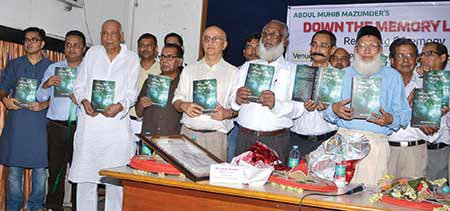
“Down Memory Lane II”, the second in the autobiographical series of books authored by Abdul Muhib Mazumder, former Minister and Advocate General of Assam, was launched in presence of a host of dignitaries at the Guwahati Press Club on 29 July.
The book has been edited by Abdul Wadud Aman, a lawyer and civil rights activist and published by the Centre for Minority Studies, Research & Development (CMRD) Assam.
At the outset, a citation on behalf CMRD was presented to Mazumder by Anowar Hussain, working president while a sorai was handed over by Zamser Ali, general secretary of CMRD.
Mazumder addressed the audience on this occasion saying, “I am tempted to make an appeal to the readers to enter into a discussion on the subjects dealt with by me which have a pronounced effect on social restructuring of our polity.” He appealed to the legal fraternity, in particular, who were present at the event in good numbers, to take up the issues, discuss them, analyse them and suggest solutions acceptable to all sections of people and the polity to pave way for emergence of a resurgent Assam.
Harsh Mander, Director of the Centre for Equity Studies & Special Commissioner to the Supreme Court of India in the Right to Food case, was the chief guest. Along with other dignitaries on the dais, he released the book. In his address, Mander said that he was born in Shillong and has had a long association with the North East. He has been visiting the region regularly to bring succour to the victims of natural and man-made calamities. He appealed to the youth of the region to stand by the side of the oppressed and the persecuted and raise their voice whenever their human rights are violated.
Others who addressed the event included Justice Aftab Hussain Saikia, former Chief Justice of J&K High Court; Justice DN Choudhury, former Justice of Gauhati High Court; Prof Abdul Mannan of Gauhati University; Ram Chandra Saikia, President of the Gauhati High Court Bar and Chinmoy Choudhury, Advocate General of Assam.
Incidentally, except for Prof Abdul Mannan, all the above mentioned personalities were students of Mazumder when he taught law at Gauhati University and were his junior colleagues when they started practice at Gauhati High Court.
(Nurul Islam Laskar — nurul.laskar@gmail.com)
source: http://www.milligazette.com / The Milli Gazette / Home> News> Community News / by Nurul Islam Laskar / August 29th, 2016