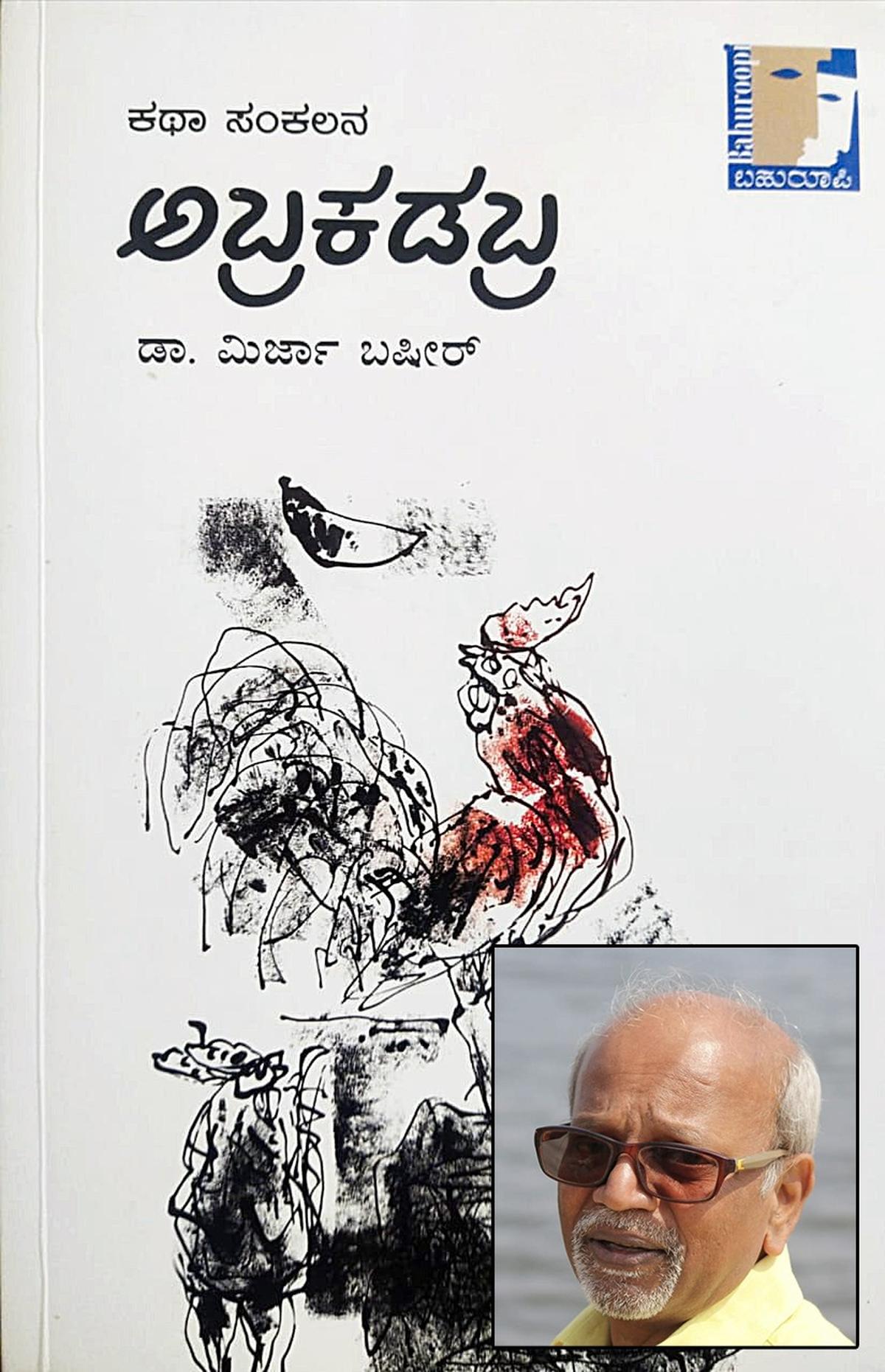
Abrakadabra, a collection of stories by writer Mirja Basheer. | Photo Credit: SPECIAL ARRANGEMENT
The Karnataka Muslim Lekhakara Sangha, Mangaluru, has chosen Abrakadabra, a collection of stories by writer Mirja Basheer, for the Muslim Sahitya Prashasthi for 2023.
The award presented in memory of the late U.T. Fareed, former MLA of the erstwhile Ullal Assembly constituency, comprises ₹10,000 purse and a citation. It will be presented to the author at a function in Tumakuru in December, according to president of the sangha U.H. Umar.
In all, 32 applications had been received for the award. A three-member committee chose ‘Abrakadabra’, he said in a release.
Dr. Basheer, retired veterinary doctor, hails from Challakere in Chitradurga district.
Presently, he lives in Tumakuru. He worked in the Veterinary Department for 34 years.
Some of the other literary works of Dr. Basheer are Batteyellada Oorinalli, Jinni and Haruva Hakki mattu Iruve and Gange Baare Gowri Baare. His stories were included as lessons in some college text books in Karnataka and in the class IX Kannada textbook in Kerala. Some of the stories have been translated into Telugu
source: http://www.thehindu.com / The Hindu / Home / by The Hindu Bureau, Mangaluru / November 29th, 2024
The Aligarh Muslim University (AMU) alumnus Zeyad Masroor Khan has won the prestigious Crossword Book Award-2024 in the nonfiction category for his gripping and coming of age memoir City on Fire: A Boyhood in Aligarh.
The awards ceremony took place at Mumbai on Sunday. The Crossword Book Award, established in 1998, honours and promotes Indian writing in English. Honours were bestowed in six diverse categories – fiction, non-fiction, children’s books, business and management, mind, body and spirit, and translations.
The winning authors received a cash prize of Rs 50,000 each.
The short list in non-fiction category included some of the best writings such as Sudha Bharadwaj’s From Phansi Yard, Sohini Chattopadhyay’s The Day I Became a Runner, Zeyad Masroor Khan’s City on Fire: A Boyhood in Aligarh, Yamini Narayanan’s Mother Cow Mother India, and Arati Kumar-Rao’s Marginlands.
In his review of the book, Prof Mohammad Asim Siddiqui, wrote: “Though Aligarh has found a worthy mention in many recent memoirs penned by writers having some association with Aligarh, like Naseeruddin Shah, an alumnus of AMU, wrote a chapter on ‘Aligarh University Absurdists’ in his excellently-written memoir And Then One Day (2014), his brother Zameer Uddin Shah, vice chancellor of AMU from 2012 to 2017, talked about his efforts to make AMU a top-ranked university and his spats with some political leaders during his tenure in his memoir The Sarkari Mussalman (2018), and Muzaffar Ali credits AMU’s poetic culture and its celebrated Urdu poets for influencing his visualisation of subjects in his films in his autobiography Zikr: In the Light and Shade of Time (2023), Aligarh city is missing in these memoirs.”
Prof Sidddiqui noted that “Zeyad Masroor Khan’s City on Fire fills this gap. It vividly describes life in Aligarh city, particularly Muslim localities such as Uper Coat, Bhujipura, Nuner Gate, Babri Mandi, Mian Ki Sarai, Thakurwali Gali, Haddi Godam, Sarai Sultani and Shah Jamal inside out to debunk many myths about them”.
Sahitya Akademi award winning author Professor Shafey Kidwai congratulated Mr. Zeyad Masroor Khan on winning this prestigious award. “Zeyad Masroor Khan’s spectacular success should inspire other young writers, particularly those coming from Aligarh Muslim University,” he added.
Prof Shaheena Tarannum, Chairperson, Department of English, congratulated Mr. Khan on winning the prestigious award.
Notably, Zeyad Masroor Khan studied BA English at AMU, and now works as a journalist, writer and documentary film-maker.
Each category of the award was judged by a separate jury, and the non-fiction jury consisted of TCA Raghavan, Anuradha Sengupta, and Kaveree Bamzai.
source: http://www.radiancenews.com / Radiance News / Home> Pride of the Nation> Awards> Latest News / by Radiance News Bureau / December 10th, 2024
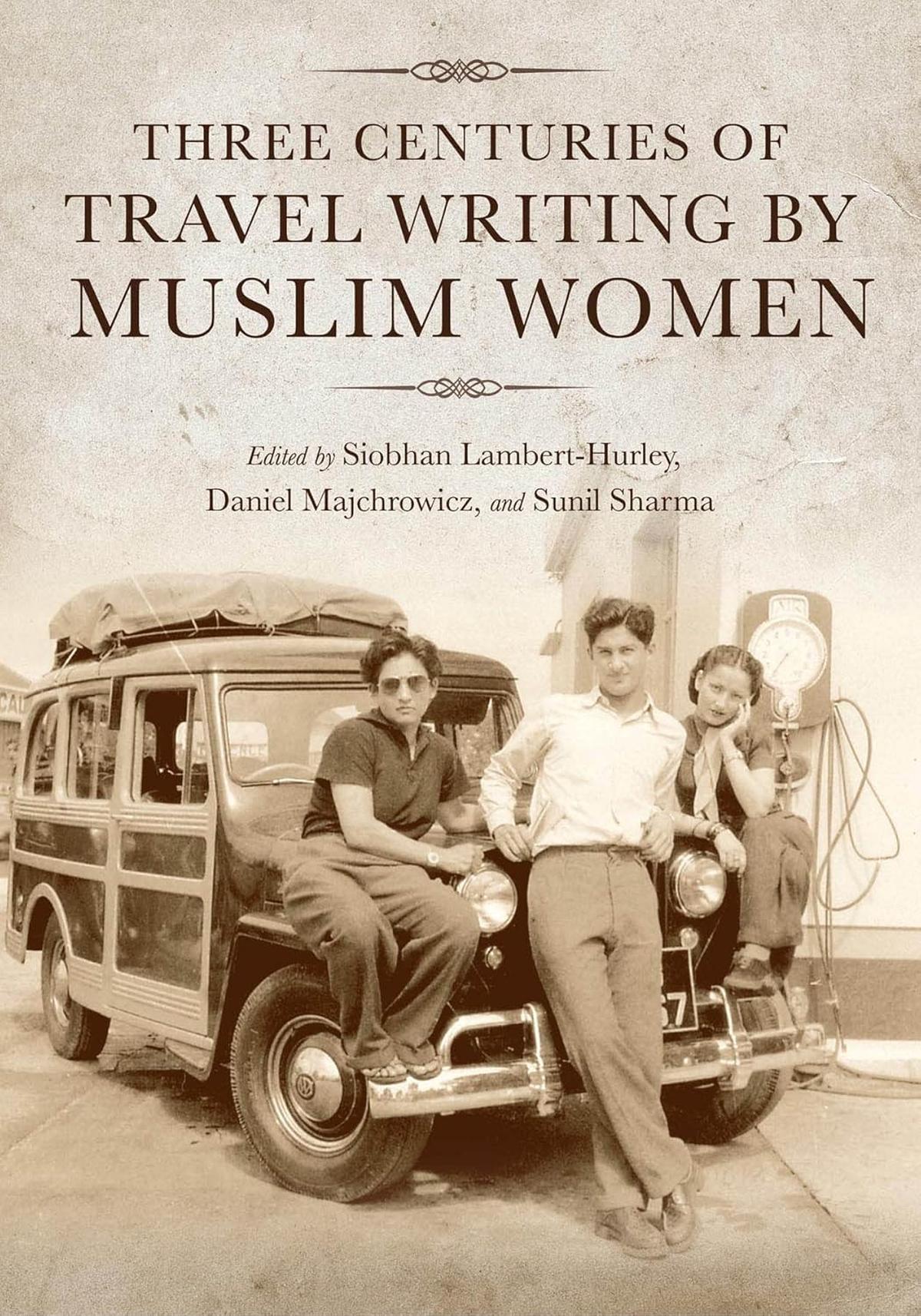
In 45 essays, three editors gather multiple travel accounts by Muslim women who, alone or chaperoned, veiled or unveiled, travelling for work or pleasure, bust every stereotype. Apart from records of the new and the unexpected, there are also observations about all aspects of life, including religious and social practices.
For representative purposes. | Photo Credit: AFP
I began reading Three Centuries of Travel Writing by Muslim Women (Zubaan Books) chronologically, hoping rather ambitiously to read it from cover to cover, one essay at a time. That was a mistake, I think. The book is better served, and savoured, if the reader were to dip into it in no particular order. Each essay is so precisely contextualised by the immaculate ‘Introduction’ prefacing each entry and followed by ‘Further Reading and ‘Notes’ that even a casual reader can dip into this richly documented, beautifully translated volume of disparate writings and partake of the spirit behind it.
For the more serious reader/researcher, there is of course the scholarly introduction by Siobhan Lambert-Hurley and Daniel Majchrowicz who edited the book (along with Sunil Sharma). They write: “On the face of it, the premise of this volume is simple: a comparative study of travel narratives by Muslim women who travelled the world before the ‘jet age’ transformed modern mobility. Yet in our contemporary moment, the very juxtaposition of these terms — Muslim, women, travel mobility — instantly raises a number of questions.”
Colonialism, gender, travel, religion, money come together in unexpected ways throughout this book. What is more, these accounts by educated and “privileged” Muslim women also contain descriptions — sometimes empathetic, occasionally derisive — of other Muslim women they meet during their travels who are poor and disadvantaged and, being illiterate, could not have recorded their experiences or left written records of their lives. So, apart from records of the new and the unexpected, there are also observations about the different practices of child-rearing, food, cooking habits, dress, religious and social practices.
Multiple voices
These first-hand accounts, originally written in Urdu, Persian, Arabic, Turkish, Chaghtaai Turki, Punjabi, Bengali, Indonesian, German and English, span the 17th to 20th centuries thus presenting an array of experiences and impressions. Written variously as conventional travelogues (Halide Edib, Zainab Cobbold), excerpts from autobiographies (Salamah Bint Said/Emily Ruete, Huda Shaarawi), diary entries (Muhammadi Begum, Begum Hasrat Mohani), written for limited circulation as magazine articles (Rokeya Sakhawat Hossain, Shams Pahlavi), recorded for family and friends (Begum Sarbuland Jung, Ummat al-Ghani Nur al-Nisa), or with a pronounced political overtone (Suharti Suwarto, Melek Hanim) quite naturally, therefore, present different voices and concerns. Chatty, informal, informed when the writing is for herself or her family members; or formal, structured, detailed, sometimes even didactic when she knows what she is writing is meant for public consumption.
Travel as life
There are 45 accounts in all, grouped under four headings: Travel as Pilgrimage, Travel as Emancipation and Politics, Travel as Education, and Travel as Obligation and Pleasure. While large numbers of Indian women have written haj accounts, there is only one Indian in the second section, Shareefah Hamid Ali, who represented India at the United Nations and travelled by air. Several Indian Muslim women chose to travel for education, sometimes their own, or their husband’s or sons’. There is Mehr-al-Nisa from Hyderabad who joined her doctor husband in Ohio to train as an x-ray nurse, and Zaib-un-Nisa from Karachi writing an account of her 60 days in America as a member of the U.S. Department of State-sponsored Foreign Leader Exchange Programme where she crosses the breadth of the United States in a hired car with her husband.
Safia Jabir Ali, daughter of the esteemed Tyabji clan, married Jabir Ali who travelled extensively for business from their home in Burma to Europe.
Her memoir, written in Urdu, is brimful with an easy confidence: “I had to travel by myself from Bombay to Marseilles, and that was the first time I had occasion to depend entirely on myself and spend more than three weeks among entire strangers. However, as probably some of you know by experience, on board the steamer, one gets to know people very soon. I was lucky in being able to travel on the Loyalty, the steamer of an Indian company where there were a good many Indian passengers, and some of us soon became great friends.”
Connecting the dots
The last part, ‘Travel as Obligation and Pleasure’, has by far the most interesting experiences: Mughal Princess Jahanara’s mystical meeting in Kashmir; Salamah Bint Said, a princess of Zanzibar, who flees her home to unite with her German lover in Hamburg, converts to Christianity and takes the name Emily Ruete; and Rokeya Sakhawat Hossain’s pleasure trip to the Himalayas, among others.
While most women travelled with a male (husband, father, son, brother), some travelled alone: “Safia Jabir Ali travelled alone from Bombay to meet her husband in post-First World War Britain, Sediqeh Dowlatabadi from Tehran in 1923 to study at the Sorbonne in Paris, Selma Ekram from ‘Stamboul’ to New York in 1924 on the promise of work, Muhammadi Begum with her infant child from Bonn to Oxford in the mid-1930s, and Herawati Diah en route to study at Barnard College in New York in 1937.”
Alone or chaperoned, veiled or unveiled, travelling for work or pleasure, these accounts by Muslim women bust every stereotype. In one voice, these women seem to be saying: “only connect”.
Rakhshanda Jalil is a translator and literary historian.
source: http://www.thehindu.com / The Hindu / Home> Books / by Rakshanda Jalil / December 12th, 2024
I first met Asad Rahmani in the late 1990s, when he was the director of the prestigious BNHS (Bombay Natural History Society), and did a few conservation-linked stories after talking to him. But I had been hearing a lot about him before that from my friend Rajat Bhargava, who had been mentored by Rahmani at AMU (Aligarh Muslim University), and would sing his praises day in and out. Rahmani encouraged Rajat to do research on the Finn’s Baya and later on the Green Munia.
It was Rajat who alerted me about Dr Rahmani’s memoirs Living with Birds. I owe him thanks because it is a captivating read – not only is it a fascinating personal history of an unusual man and the milieu he grew up in, but also packs in so much about conservation, the importance of science, birds, their habitat and the challenges they faced. Through Rahmani’s birding trips, the reader also gets to armchair travel to a great many places from Kashmir to Lakshadweep.
In wildlife circles, Rahmani is synonymous with the endangered Great Indian Bustard, a bird for which he undertook a padayatra. His love for bustards even took him abroad to Morocco and later to Saudi Arabia, where as an expert he was called to see if he could be part of a team to find the Arabian bustard, which had been declared extinct in 1977.
Idyllic childhood
The early part of the book is devoted to his childhood, which sounds idyllic, growing up as he did in large homes in several UP towns ranging from Meerut, Rampur, Badaun, and Saharanpur as his father was a district judge.
His early days reminds you of Gerald Durrell’s My Family and Other Animals, what with six siblings, two German Shepherds, a mountain goat (the Himalayan goral), parakeet, fish, poultry, toads, larvae that turn into dragonflies, and many more. Rahmani had his nose buried in books or spent time observing the natural world and doing accidental experiments. For instance, he rescued a peahen’s eggs and placed them under a domestic hen and the confusion that ensued when the pea-chicks hatched and mama hen had a hard time is really funny.
From a young age Rahmani could stand up to authority, and make his own decisions — evident when he refused to accompany his family when they were invited to dinner at the Nawab of Rampur’s palace (his Left-leaning sensibility was offended), or when he stood his ground against his father who wanted him to study engineering and even wasted a year, before being allowed to take up biology, or the way he took on a warden at AMU for shooting a peacock. An atheist, he also went through a hippie phase (minus the drugs) when the movement was at its peak in India.
The conservation work
If the childhood chapters are fascinating the meat of the book – Rahmani’s conservation work on birds and their habitats – is pure gold. You get a ringside view of the discussions and exchanges between him and stalwarts like JC Daniels, Dr Salim Ali and many others. Rahmani is generous in the way he highlights the works of several conservationists, and also affectionately his students. Yes, Rajat figures and I chuckled to see Rahmani did not spare some of his exasperating habits. His admiration for Indira Gandhi also shines through as he highlights how no other PM was as concerned about wildlife as her.
You get a whole bunch of fascinating information on the Floricans (the Lesser and the Bengal), the swiftlet, the hornbill, etc. The chapter on the vulture crisis especially resonated with me as I remember the huge discussions when the raptors declined in Delhi and surrounding areas.
Parallely, you get a picture of the big events in India. The way Rahmani links the events, the fear of Skylab falling, the solar eclipse of 1980 when everyone fearfully stayed indoors while he himself went into the field to see how birds responded to the eclipse is compelling. When Indira Gandhi was assassinated, Rahmani and Salim Ali were in Nannaj, chasing the Great Indian Bustard where news reached them, and he describes the anguish that Salim Ali felt very movingly.
A word about the publishers is in order. This book is published jointly by Juggernaut and Indian Pitta, India’s first dedicated book imprint for bird and nature lovers and conservationists. The deft touch of Anita Mani, the founder of Indian Pitta is evident. While this book will enthral bird lovers, there is much in it to fascinate the general reader too.
Title: Living with Birds: The memoir of One of India’s Greatest Ornithologists / Author: Asad Rahmani / Publisher: Juggernaut/ Indian Pitta / Price: ₹599
source: http://www.thehindubusinessline.com / Business Line, The Hindu / HOme> Books> Book Review / by Chitra Narayanan / December 01st, 2024
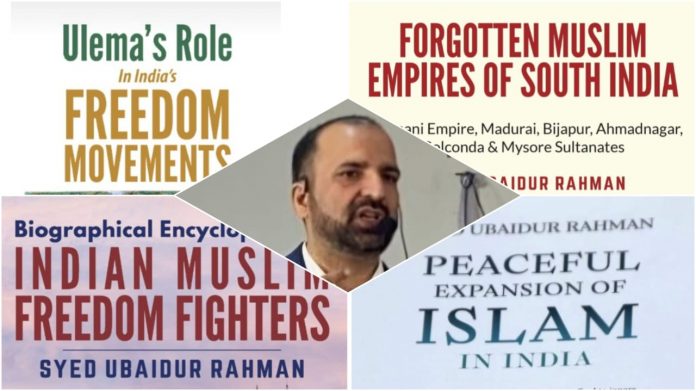
Syed Ubaidur Rahman, a Delhi based historian and author, has been single-handedly trying to resurrect Indian Muslim history over the past decade. He is a man with a mission, and that mission is to preserve the Indian Muslim history.
Over the past ten years, he has authored at least six books on medieval Indian history dealing with different aspects of the history. His books include, ‘Biographical Encyclopedia of Indian Muslim Freedom Fighters’, ‘Forgotten Muslim Empires of South India’, ‘Ulema’s Role in India’s Freedom Movement’ and his recently published book ‘Peaceful Expansion of Islam in India’. The latest book has become a talking point across India and beyond, as it debunks the fallacious notion of forced conversion of the local population to Islam. He proves, through meticulous research, that Islam came to South India, much before its arrival in the North and spread thanks to the efforts of Arab and Persian merchants besides Sufis who came in large number and settled throughout India.
Moin Qazi, while discussing the work of Syed Ubaidur Rahman, in his detailed essay in Transcend says, “A Muslim historian Syed Ubaidur Rhahman has brought a new secular perspective that presents the Muslim view boldly…He is the right person with the zeal and appetite to resurrect the vast culture of the South. His research will undoubtedly help in redefining the landscape of Muslim history. It is a tenacious task, but Ubaidur Rahman is a scholar of deep commitment to the cause”.
In order to create awareness about the Muslim history of India, Syed now offers at least three courses on different aspects of medieval and late medieval history of India, particularly the period dealing with the Muslim rule in Delhi and different parts of the country. His ‘3-month course on Indian Muslim History’ begins with the arrival of Islam and the conquest of Sind by Muhammad bin Qasim, followed by Mahmud of Ghazni and his conquests, Muhammad of Ghur and the establishment of Delhi Sultanate. It deals with different dynasties of the Delhi Sultanate and the spread of Islamic rule to South India during Alauddin Khalji and Muhammad bin Tughluq.
This course also covers Mughal rule as well as different Muslim ruling dynasties in Kashmir, Bengal, Malwa, Khandesh, Gujarat, Sharqis of Jaunpur, Bahmanis of Gulbarga/Bidar, the successor Deccani Sultanates of Ahmadnagar, Bijapur and Golconda as well as Nizam of Hyderabad and Mysore Sultanate of Hyder Ali and Tipu Sultan. This course, that is covered in 24 sessions and conducted on Zoom, attracts participants from around the world.
He also runs another month long (8 session) course focusing on South Indian Muslim History. The history of South Indian Muslims has been completely ignored by both the historians and the Muslim community, notwithstanding the fact that in much of the Deccan and South India, Bahmani Sultanate ruled for close to two hundred years. The successor Deccani Muslim states ruled for another 200 years and Muslim dynasties, including Nizams, Nawabs of Carnatic, Mysore Sultans, continued to rule the region for a very long time.
Syed has just introduced another course that deals with India’s freedom movement and Muslim role. This course covers Muslims’ extremely important role in India’s first war of independence of 1857 against the British colonial rule. Muslims played leadership role in it. It will also cover Moplah Revolt, Reshmi Rumal Tehrik, Naval Mutiny of 1946 and also discuss thousands of Muslim prisoners who were imprisoned in the feared Cellular Jail of Andaman and Nicobar, remembered by most people as Kala Pani.
When asked as to why he has launched such courses, 48-year old Delhi based Syed says, “as history is being re-written in the country, and medieval history dealing with the Muslim period is being slowly erased from course books, it was imperative to teach our young generation about our history and heritage and our great past.
Thankfully, as opposed to people’s disheartening views, the courses have gone on to become a huge hit with people from around the country and beyond trying to enroll for the three courses, alhamdulillah. I am surprised as reputed scholars, professors, experts of Persian and even Chagatai languages enroll in our course from around the world. I am sure these courses and related efforts will prove help bring about long-term change”.
***
(Syed Ubaidur Rahman can be reached at 91-9818327757. Email: syedurahman@gmail.com. He tweets at https://x.com/syedurahman)
source: http://www.muslimmirror.com / Muslim Mirror / Home> Indian Muslims> Interviews / by Special Correspondent / August 07th, 2024
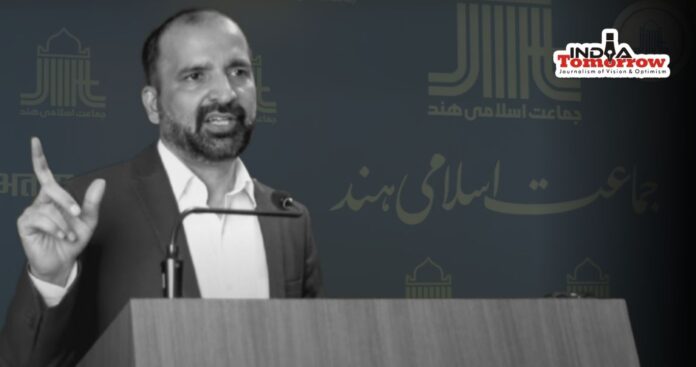
In a programme at the Jamaat-e-Islami Hind (JIH) headquarters on the theme of “Rewriting History: Fact or Fiction,” historian and author Syed Ubaidur Rahman raised alarm over ongoing efforts to “rewrite” India’s historical narrative—efforts, he asserts, led by right-wing ideologies seeking to diminish the legacy of Muslim rule in India.
Syed Ubaid whose latest book ‘Peaceful Expansion of Islam in India’ was published earlier this year, began by asking, “What is history? And more importantly, what is its role in shaping the future? It is alarming that in this era, when Muslims have little interest in history, some forces are working tirelessly to distort the historical truth.”
He pointed out that the rise of the right wing elements had led to a systematic campaign to dilute nearly a thousand years of Muslim rule in India. “Their basic objective is clear: to erase the history of Muslim influence, whether in architecture, education, science, or culture—from India’s curriculum,” Ubaid emphasized, saying that this was part of a broader strategy to make the history of the Muslim community “invisible.”
Syed Ubaid stated, “Muslims have impacted all aspects of life in India. There was a period of almost 1000 years of Muslim rule during which architecture, education, science, language, food, and every aspect of life were influenced. Today, these very aspects are under attack by these elements. They not only want to rewrite political history but also wish to rewrite all these aspects.”
Weekly Ijtema || Rewriting History: Fact or Fiction || Syed Ubaidur Rahman / source: youtube / jamaat-i-islami hind
Raising a question about why they want to rewrite Indian history, Ubaid referenced Audrey Truschke, a respected historian of South Asian history at Rutgers University, USA who had critiqued the right-wing narrative. Truschke explained that Hindutva ideologues aim to claim Hindus as the only indigenous group in India, excluding Muslims and other minorities. “In their history, India’s past is framed as a glorious Hindu golden age followed by an era of Muslim oppression,” Truschke writes, “This narrative distorts the complex and multi-layered history of India.”
Syed Ubaid emphasized that political and religious identities are often conflated.
Syed Ubaid explains, “Audrey has written that there was no difference between the Muslim rulers and Hindu rulers in terms of religion, neither side attacked the other because of religion. Historian Khaleeq Ahmad Nizami has clearly written in his book that Muslim rulers had no religious or political intent or religious connotation behind their actions.”
Syed Ubaid remarked, “Earlier, the narrative was that Aurangzeb was hateful and tyrannical. But over time, they started painting all Muslim rulers with the same brush, whether it was Akbar, Alauddin Khilji, or any other Muslim ruler, they began targeting them all.”
Highlighting the growing tendency to remove crucial elements of history from school textbooks, Syed Ubaid said, ‘The revision of textbooks is not new. This has been a long-standing agenda of theirs.”
He lamented the sweeping changes that have been made to the school syllabus, stating, “About 30% of school syllabi have been altered. Specifically, content related to the Mughals, political science textbooks, secular ideas, Gandhiji and his assassination, the Delhi Sultanate, all of these aspects have been significantly altered or reduced.”
Highlighting significant changes to the history curriculum, especially in Class 7, where children are first introduced to historical narratives, Syed Ubaid pointed out that the achievements of Mughal kings, such as Humayun, Shah Jahan, Akbar, Jahangir, and Aurangzeb, which had previously been presented in a two-page chart in the history textbook Our Past Too, were removed. Ubaid also mentioned the removal of a chapter on Akbar’s plural politics, which had once depicted the Mughal emperor in a positive light.
Syed Ubaid said, “the Mughals, who had ruled India for almost 350 years, from 1526 to 1857, have been a primary target in these revisions.” He criticized the effort to dilute the significance of the Mughals in textbooks, asserting that while the Mughal rule weakened toward the end, regional rulers such as the Marathas, Rohillas, Tipu Sultan, and Hyder Ali continued to govern with the Mughal imperial mandates.
Refuting the claim that the Mughals were given disproportionate importance in history textbooks while regional kingdoms were underrepresented, Syed Ubaid pointed out that the Vijayanagara Empire in South India and the Kakatiya dynasty from the 15th and 16th centuries were well-documented in textbooks.
However, he observed that regional Muslim kingdoms, such as the Bahmani Empire in the Deccan and the Gujarat Sultanate, both of which played significant roles during the same period, received much less attention in the current syllabus. Despite their rich heritage, these Muslim kingdoms are scarcely mentioned.
Ubaid emphasized that these changes are not confined to schoolbooks but extend to university curricula as well.
Syed Ubaid said, “even at the Aligarh Muslim University, once renowned for its medieval history department, professors are struggling as much of the material has been cut. Senior historian from the AMU, Prof.Irfan Habib has also noted that the entire Delhi Sultanate is now covered in just one sub-unit in unit one at the graduation level.
Citing Prof. Irfan Habib, he noted, “In the revised syllabus, Khilji, Tughlaq, and the invasion of Taimur are now condensed into a single unit. Unit 2 omits significant figures and events, such as Akbar, and instead focuses on figures like Hemu, Vikramaditya, Rana Pratap, Rani Durgavati, and Chand Bibi. Mughals like Jahangir and Shah Jahan have been removed.” Ubaid’s concerns about the erasure of Muslim contributions to India’s history went beyond textbooks.
He criticized the ongoing attempts to rename cities founded during the Muslim rule, such as Faizabad, Aurangabad, Ahmedabad, and Ahmednagar.
Warning that these efforts to distort historical narratives are part of a broader trend, where online platforms will increasingly present biased versions of history, he said, “In the future, when you search for history on platforms like Google or Amazon, you will find only materials based on misrepresentations and backing their narratives.”
Ubaid concluded his speech with a call to action: “We must not allow the erasure of history to continue. We need to encourage our children to read books rooted in historical accuracy, to understand our past, and to defend the truth. We should foster an interest in history and make an effort to include such books in our personal libraries. Just as Muslims teach foundational religious texts to their children, we must ensure historical books are part of their education.”
Beginning his speech, Syed Ubaid outlined four key phases of Muslim history in India: the early arrival of Islam through traders especially in causal India, the establishment of the Delhi Sultanate, the rise of regional sultanates, and the powerful legacy of the Mughal Empire.
source: http://www.indiatomorrow.net / India Tomorrow / Home> Education / by Anwarulhaq Baig / December 03rd, 2024
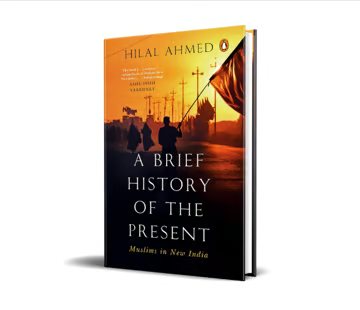
Hilal Ahmad addresses contemporary issues like the Gyanvapi mosque and the figure of Aurangzeb. He notes that these controversies are not new, but they resurface whenever right-wing politics gains prominence.
A Brief History Of The Present: Muslims In New India, By Hilal Ahmed Photo: Amazon
Religious polarisation and the rise of majoritarianism in India over the past decade have become a critical concern for scholars in Indian and South Asian studies. The rise of the Hindu right has posed significant challenges to minorities in general and the Muslim minority in particular. Hilal Ahmed, in his book ‘A Brief History of the Present: Muslims in New India’, analyses this Muslim minority question and how it came into being.
The first chapter of this book, titled “Muslimness and Intellectual Politics,” explores the concept of ‘Muslimness’ in two ways: one is explaining Indian Islam as a lived religion while the other is Muslimness as a religious minority in purely statistical terms. The first provides it real-life meaning while the second looks at the Muslim identity in the national or Global question lens.
Further in the chapter, Ahmad explains the nature and ethics of a researcher, addressing himself as Muslim by religion but as researcher who is bound to follow ethics. He quotes Irena Akbar, saying ‘A Muslim must speak as a Muslim’ and then puts up his view as a Muslim researcher, ‘I do not want to give up my identity as Muslim, yet, at the same time, I do not want to talk only Muslim. I follow intellectual politics which encourages me to have a political stand without compromising with the established procedures and ethics of being an academician’.
In the second chapter, “What is New in New India?”, Hilal Ahmad explores the historical changes since 2014 and how they have reshaped Muslim politics in India. He argues that the concept of ‘New India’ is a well-formulated ideological framework, with the current regime promoting initiatives like Swachh Bharat, accessible Bharat, and cashless economy (p. 18). However, Ahmad argues its hollowness in the sense regime takes the credit of such grand initiates yet government takes no responsibility for providing employment. For instance, Prime Minister Modi once remarked that selling pakoras is also a form of employment. Ahmad questions whether this is the reality of New India, where unemployment is rampant, and inflation remains high.
The slogan ‘Sabka Saath, Sabka Vikas’, introduced by Modi in 2014, is scrutinized (p. 20). Ahmad hypothetically argues if it was merely a political move, as actions on the ground suggest otherwise. He highlights how political speeches have often targeted specific communities and promoted fringe elements that commit crimes against minorities, particularly Muslims. Under the guise of cow protection, groups like the BJP-backed Gau Rakshak Dal have been involved in the lynching of Muslims and Dalits. Ahmad questions whether this is truly the vision of New India that began in 2014, signaling the start of a new era.
In the third chapter, titled “New India and the Muslim Historical”, Hilal Ahmad explores how Muslim history is being reinterpreted in the context of New India. He further explains the Modi’s classification of past that India’s history is often divided into three periods: the first is the era of ‘slavery’, beginning roughly 1000 to 1200 years ago; the second is the period of struggle and liberation; and the third, the present, is described as Amrit Kaal (p. 37).
Ahmad delves into the evolving dynamics between so-called liberal Hindus and Hinduism, noting a shift in the stance of secular Hindus. Those who once championed pluralism, secularism, and socialism are now silent in the face of rising Hindu communalism. He argues that there is nothing inherently wrong with liberal intellectuals embracing Hinduism as an important identity marker, but he warns that this intellectual shift is dangerous as it subtly excludes Muslims under the guise of opposing an imagined anti-Hindu sentiment.
For example, Ahmad points to Pavan Kumar Varma, an Indian diplomat and author. Varma once praised the Mughal empire in his book “Ghalib: The Man, The Times”, but in a later work, “The Great Hindu Civilization: Achievement, Neglect, Bias and the Way Forward” (2021), he argues that the arrival of Islam in India disrupted the ‘unadulterated flow’ of the pure Hindu past (p. 41). Ahmad highlights this shift among liberal Hindus, who are becoming more aligned Hindutva, while remaining silent on issues facing minorities. He also notes that this silence is not limited to liberal Hindus but extends to so-called liberal Muslims as well.
In the fourth chapter, titled “New India and the Muslim Cultural”, Hilal Ahmad addresses contemporary issues like the Gyanvapi mosque and the figure of Aurangzeb (p. 65). He notes that these controversies are not new, but they resurface whenever right-wing politics gains prominence. While these issues may have little direct impact on the daily lives of ordinary citizens, the BJP has made them a central part of its political agenda to garner Hindu votes.
Ahmad explains how Hindutva groups, such as the RSS and VHP, claim that many historical monuments, like the Gyanvapi mosque, were originally Hindu temples that were demolished by Muslim rulers. These narratives are strategically used to reinforce communal divides and fuel the BJP’s political ambitions.
In the fifth chapter, titled “New India and Muslim Religion”, Ahmed explores the concepts of religiosity, Muslim self-consciousness, and the rise of Islamophobia or what he terms ‘Muslim politicophobia’. He explains how the growing extremism of Hindutva has fostered a sense of collective identity among Muslims. Ahmed differentiates between Islamophobia, which refers to an intense dislike or fear of Islam or prejudice against Muslims—a notion rooted in Western discourse—and Muslim politicophobia, a more specific phenomenon in India. The fusion of global anti-Islam sentiment with India’s own brand of anti-Muslim communalism has created a new political consensus, which Ahmed refers to as ‘Muslim politicophobia’ (p. 76).
In the sixth chapter, titled “New India and the Muslim Liberals”, Ahmed explores the question of who qualifies as a liberal Muslim. Many creative individuals—artists, authors, academics, and journalists—who speak out against illiberal tendencies and religious extremism as a moral responsibility are referred to as liberal Muslims. The term has two popular interpretations. One refers to individuals who uphold liberal, egalitarian values while maintaining their cultural and religious identity as Muslims.
Ahmed raises several key questions regarding liberal Muslims: What is their sociological position, particularly in relation to the highly diverse and heterogeneous Muslim identity? How has the rise of Hindutva challenged their status and legitimacy in public life in recent years? And what qualifications are now required to be considered a “good Muslim” within the Hindutva-dominated discourse? The notion of the ‘liberal Muslim’ is, in fact, a byproduct of India-specific, market-friendly liberalism. Ahmad Argues that it is important to note that this category has always been fluid and open-ended, encompassing progressive Muslims, socialist Muslims, cultural Muslims, and secular Muslims. (p. 94)
In the seventh chapter, titled “New India and the Muslim Social”, Ahmed delves into the Pasmanda discourse, BJP’s strategies, and Muslim caste dynamics. He points out that the discourse surrounding Pasmanda Muslims is not a recent creation of the BJP’s political strategies. Muslim intellectuals have long discussed how the BJP has attempted to divide Muslims along lines of caste, sect, and differences between Shias and Sunnis. Ahmed highlights how the BJP frames its narrative to gain votes from Dalit Muslims (Pasmanda).
In the second section of the chapter, Ahmed discusses BJP’s professionalism, noting that the “politics of professionalism” often goes unnoticed in public debates. While Hindutva ideology is frequently overstated as the primary driving force behind BJP’s politics, the party’s electoral strategies and mobilization tactics extend beyond Hindutva rhetoric. This creates the impression that the BJP is strictly pursuing a vision of ‘cultural nationalism’ in overtly Hindu terms, while its political maneuvers are more nuanced and professional.
In the eighth chapter, titled “New India and the Muslim Political”, the author examines Muslim political attitudes, distinguishing between political participation as interaction and political participation as instrumental action. He maps out the various dimensions of Muslim political behavior in contemporary India.
In his concluding remarks, Ahmed brings together the key insights of the book, offering a comprehensive understanding of the political status of Muslims in New India. He emphasizes that, despite the BJP’s ongoing efforts, the party still manages to secure only 8-9% of the Muslim vote. Ahmed presents his arguments in a coherent manner that ties together the broader themes of the book, making it a valuable resource for academics, everyday readers, and politicians alike who wish to understand the minorities issues facing New India.
(Haider Ali did his masters form Jamia Millia Islamia, Mohammad Asif is pursuing his Ph.D. from Jamia Millia Islamia)
source: http://www.outllookindia.com / Outlook / Home> Books / by Haider Ali & Mohammed Asif / November 09th, 2024
Sabsit Village (Bagnan Town, Howrah District) , Kolkata, WEST BENGAL :
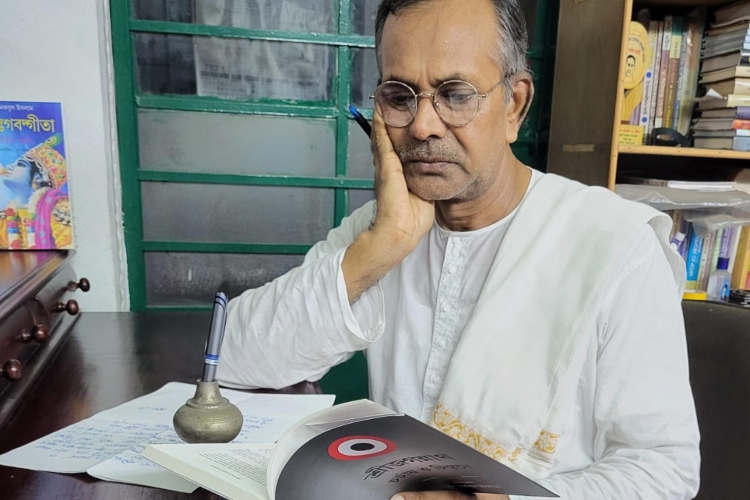
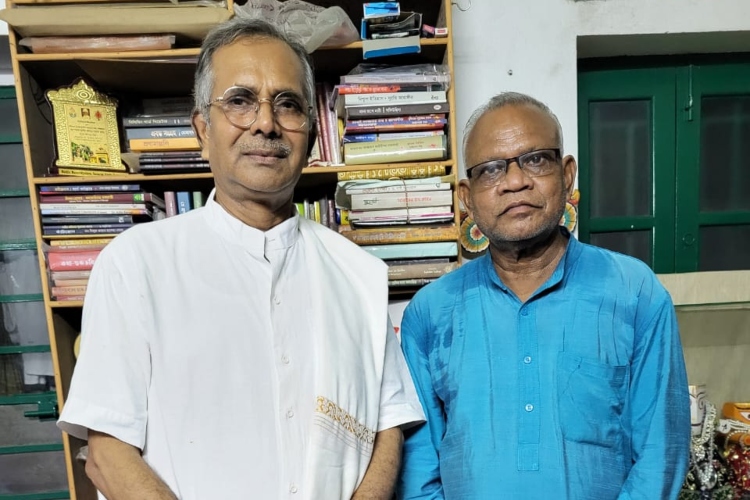
Prof Sheikh Maqbool Islam with his latest book on Lord Jaganath
Meeting Professor Sheikh Maqbool Islam is like sitting in the cool shade of a Banyan tree. In my first meeting with this Kolkata academic in his mid-fifties, my feeling was akin to that of a traveler who finds shade on the banks of a cool river in the middle of his journey on a hot day.
Professor Sheikh Maqbool, Bengali language professor of St. Paul’s College of Kolkata is an expert on Shrimad Bhagwat Gita, the ancient scripture of Hindus as well as the Holy book in Islam the Quran, and of the Christians the Bible.
Besides he is an expert on Bhagwan Jagannath of Puri (Odisha), who is the reigning deity of the Eastern States.
Prof Islam feels he is a born Sufi as he is the son of Sheikh Sajad Ali, a Sufi, and his mother Hazra Khatun. However, growing up he never imagined that one day he would write as many as 65 books.
Sheikh Maqbool Islam in his study
Prof Sheikh Maqbool Islam’s mother tongue is Bengali but he knows Hindi, Hindustani, Bengali, Oriya, Assamese, and English languages.
He says, “When I was two and a half years old, I met Sufi saints in my village. My father Sheikh Sajad Ali was himself a Sufi, so Sufi saints and scholars visited our house.”
“In the village, we had many Sufis and a large number of Vaishnav people. So when I was four and a half years old, I gradually started getting influenced by both. At this age, I also came to know about Shri Jagannath Bhagwan of Puri (Odisha).”
He says, “As I grew up, my mind opened up. I started knowing a little bit about all religions and cultures. “It felt as if I was finding the path to freedom from illusion.”
Prof Islam was born in the Sabsit village of Bagnan town of Howrah district, which is two and a half hours from Kolkata.
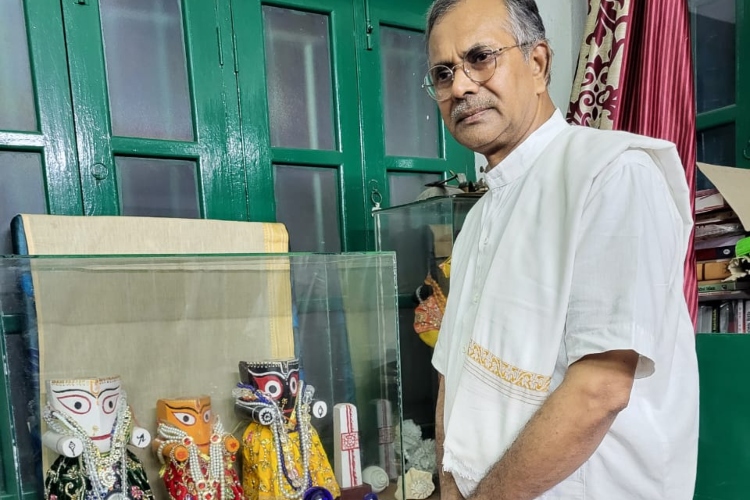
Prof Sheikh Manzoor Islam with Lord jaganath and other deities in his study
He came to the city (Calcutta) in 1985 holding the hands of his father.“I have been living near Howrah station since 1985. I studied all through in Calcutta.”
The author of 65 book, Prof Sheikh Maqbool Islam says he has Surdas (the 16th-century devotional poet who was blind)), Tulsidas, (Author of the epic Ramcharitramans, the story of Lord Ram in the Awadhi language) and Meerabai (the 16th century Saint who is known for her devotion to Lord Krishna close to in his heart.
Some of his most widely read books include ‘Gita-Quran Comparative Study’, ‘Tattva Chinta of Folk Culture’, and research subject ‘Lok Sangeet Vigyan’ .
He holds a D.Litt in ‘India-Odia Cultural Relations’ from Utkal University of Odisha in the year 2015, then PhD in ‘Comparative Study of Bangla-Odia Folk Literature’.
Professor Sheikh Maqbool Islam has also been a ‘Senior Research Fellow’ at the Asiatic Society of Calcutta. It is the largest center of oriental studies in our country.
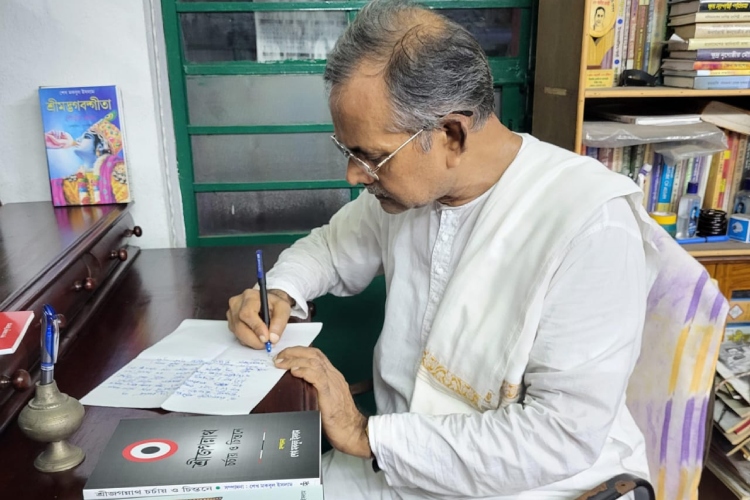
Professor Sheikh Maqbool Islam in his study
Since 1997, he has been working as an Associate Professor at Calcutta’s oldest St. Paul’s Cathedral Mission College. He teaches Bengali language and literature in this college, which was established in 1865.
Professor Sheikh Maqbool Islam believes that the fight over religion is meaningless. The main reason for this is the lack of culture.
He says, “It is very important to have a culture to create brotherhood. It needs to be understood properly, otherwise we will keep fighting.”
Prof Sheikh Maqbool Islam, who has traveled to the Philippines, Thailand, Malaysia, Sri Lanka, Bangladesh, and Nepal, has received many awards.
He was awarded Odisha’s highest honour ‘Navakalevara Award’ in the year 2015 for his research work on Lord Jagannath.
Prof Islam was given this award by Puri’s Shankaracharya Swami Nischalananda Saraswati.
Prof Sheikh Manzoor Islam with the author
He says, “He has a total of 14 books on Jagannath.’ Among these books, ‘Shri Jagannath: Bengali Manas and Lokayat Jeevan’ is the most popular. Professor Sheikh Maqbool Islam has also done research work on Ramakrishna Paramhansa and Sri Chaitanya.
Professor Islam is doing a new research on the spread of Vaishnavism in South Asia and South East Asia
He considers Jagannath, Sri Chaitanya, Tulsidas, and Guru Granth Sahib as his idols, and is currently researching ‘How did Sri Jagannath and our Vaishnavism reach South Asia and South East Asia?’
These countries include the Philippines, Cambodia, Thailand, Indonesia, Malaysia, Sri Lanka, Bangladesh, Nepal, Myanmar, Singapore and Japan. He says, “I have been to some of these countries. Some are still left. I have been engaged in research for a long time.”
Prof Sheikh Maqbool Islam eats vegetarian food. Leaving his library with countless books, I remembered the following lines of Iqbal Sajid:
Suraj Hoon, Zindgi ki ramak choor jauga; Mein Doob bhi gaya tou shafak chod jaonga
(I am the Sun, I will leave behind the joy of life. Even if I set, I will leave behind the dawn)
source: http://www.awazthevoice.in / Awaz, The Voice / Home> Story / by Jayanarayan Prasad, Kolkata / August 18th, 2024
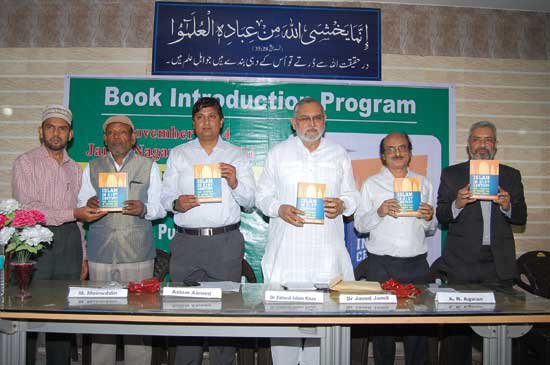
In a book introduction programme held here on 2 November, the author of the book “Islam in 21st Century: The Dynamics of Change and Future-making”, Abdul Rashid Agwan anticipated that Muslims will play their constructive role in the third millennium as effectively as they played it in the past two millennia, especially during the current century.
The author based his optimism on extensive data he collected regarding recent developments in the Muslim World. He underlined that during the past decade or so the average literacy rate of Muslim countries has increased from 40 percent to 72 percent, the number of universities has gone up from 500 to 2137, the graduation enrolment rate and the rate of science research publications have been improving faster there than in other parts of the world. He also mentioned that the average GDP growth in OIC countries was 6 percent during the last decade in spite of serious turmoil in parts of the Muslim World. He argued that powered by the increasing strength on many fronts and aided by sound vision and proper strategies, Muslims can shape a better future not only for themselves but also for the mankind at large.
Agwan further argued that the western strategies of oil wars and terrorism have not yielded much for the USA-led countries. They have rather caused the USA huge revenue loss, economic recession, failure in diplomacy, loss of credibility, widespread impoverishment of veterans who fought in Afghanistan and Iraq, revival of Russian clout in global affairs, total absence of America from Afghanistan’s mine auction. This was called “a decade from hell” by Time magazine. Agwan further mentioned that the situation has so much gone contrary to the western aspirations that the current century is gradually turning into an Asian Century rather than an American Century as envisaged under a unipolar world.
Journalist and author, Dr Zafarul-Islam Khan said in his presidential remarks that in spite of the positive growth story of many Muslim countries, the gap in terms of quality between the West and the Muslim world is still very wide and this calls for Muslims’ accelerated endeavours on all fronts of human development. He felt a dire need of promoting think-tank activities in the Muslim World and emphasised on innovation and science-research output. Dr Khan was critical regarding lack of freedom in many Muslim countries and wished that the Muslim leadership should rise to the occasion and generate a better environment for development and progress.
While presenting his keynote address on the occasion, well-known author Dr Javed Jamil welcomed the publication of this thought-provoking analysis of the present day standoff between the West and the Muslim World and also for coming out with some wise proposals as a roadmap. Dr Jamil aspired that academics should undertake deeper studies regarding the anti-human policies of the western world and make the global society aware about their pernicious impact on human life at large.
A written note of Dr Mohammad Rafat, professor in physics in Jamia Millia Islamia, was read out during the presentations. He stated that the given book could be included among those few works which have focused on the issue of change and future-making. He expected that Muslims will take proper initiatives and make conscious efforts in this fast-changing world and play their guiding role in future.
Advocate Aslam Ahmed Jamal, the assistant general secretary of All India Educational Movement, appreciated views of the author regarding the nature of change and stated that the book can make a prompting impact on the mind of educated Muslim youths who are serious to contribute some way in shaping human future.
Mohammad Moinuddin, former assistant registrar of Jamia Millia Islamia, briefed the audience about various academic and social contributions of Abdul Rashid Agwan and appreciated that he wrote the book while bed-ridden for more than two years recovering from a crippling condition called paraplegia, which speaks of his optimism and also of the book that inculcates hope and optimism in its readers towards the realization of a better world not only for Muslims but also for the mankind at large.
The publisher of the book, Gloriords Publications, Shahabuddin Yaqub, wished that Muslims would develop deeper faith on God and deliver their best in future without bothering about the vicissitudes of time. He reminded that the very advent of Islam was from a wretched land sandwiched between two contemporary super-powers, Rome and Persia, which were reluctant to rule Arabia but became its early causalities within a few decades. Therefore, he said, physical conditions are not that much important for the believers as regards future-making than the depth of their faith and commitment.
(For more information about the book, visit islamin21stcentury.com)
source: http://www.milligazette.com / The Milli Gazette / Home> National> News / by The Milli Gazette / November 28th, 2014
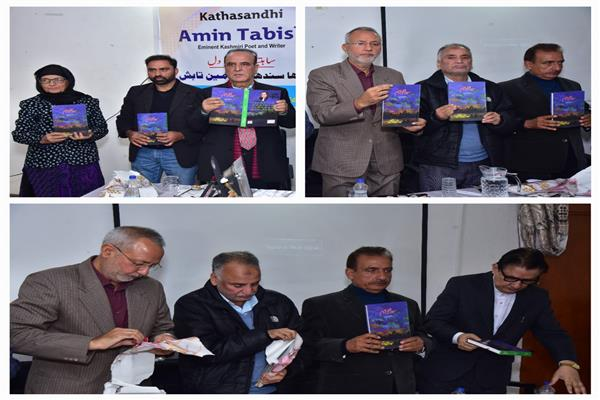
Sahitya Akademi New Delhi organised Grand Literary Function today (19 Nov 2024) at Muslim Eduational Trust Baghat Barzulla Srinagar about Dr. Syed Amin Tabish, his journey of life including his contributions to Literature, Health care and Research.
Prof Mushtaq Sidiqi fr VC IUST was the Chief Guest and Mohammad Rafi Fr District Development Commissioner was the Guest of Honour. Prof Farooq Fayaz, Prof Shad Ramzan, Abdal Mehjoor and Mohammad Amin Bhat were also in the presidium.
Aafiya Geelani, Principal Muslim Educational Trust welcomed the Guests.
Prof. Shad Ramzan presented the key note address. Among other things he praised the wisdom, scientific acumen and poetic excellence of Dr Tabish.
Prof.Tabish in his address spoke at length about his journey of life, from childhood till date.
He said “a tough life needs a language – that is what literature offers – a language powerful enough to say how it is. It is not a hiding place. It is a finding place.” He also spoke about poetry in digital age – creativity, innovation, professional practice and intellectual progress.
He emphasized the need of providing students innovative web- based solutions to literature.
He spoke about most crucial issues confronting the society like drug addiction, misuse of mobile phones by children and limits of screen time, increasing gaps between parents and children, road traffic accidents of teenagers.
He said that the Universe has 200 billion stars, two trillion galaxies and 13 lac creations. Human being is just one out of them. He said that everyone has to qualify to another world of heaven.
Dr. Tabish stressed the need of promoting our mother tongue. Out of 7000 languages in the world, 230 are spoken in Europe, 2200 in Asia including 415 in India. 3000 languages are in danger of vanishing. Languages are living and dynamic. When a language dies, a world dies with it, he said.
Dr. Tabish also responded to various questions asked by some intellectuals in audience.
Prof. Mushtaq Sidiqi appreciated the contributions of Dr Tabish to literature and Healthcare in general and as an Author of 16 books in particular. He hailed the administrative skills and integrity of Prof Tabish. He also said that science has limitations while God doesn’t.
Dr Amin Tabish’s latest book “Sourmali Shaam” a collection of poems was released/launched on the occasion.
Among others who were present, included the reputed authors, writers and poets Abdal Mehjoor, Rukhsana Jabeen, Shamshad Kralwari, Ahmad Ali Fayaz, Wali Waheed, Shakeelu Rahman, Shaukat Shafi, Saududin Saadi, Mohiudin Andrabi, Prof Nelofer Nehvi, Mohamad Yousuf Shaheen Shaheen, Arshad Sauleh, Dr Shahnwaz Hamid of SKIMS, Dr Wahid Raza, Imtiaz Bogami, Sarim Iqbal, Shahi Mumtaz, Rehana Kouser, Gulal Kasmiri, Sahil Dar, etc. Dr. Rouf Adil conducted the programme.(KNS).
source: http://www.knskashmir.com / Kashmir News Service / Home> J & K / by KNS Desk, Srinagar / November 19th, 2024