Category Archives: Books (incl.Biographies – w.e.f.01 jan 2018 )

Repository Of Historic Islamic Manuscripts And Rare Artefacts Cries For Attention At Rajasthan’s Arabic-Persian Research Institute

Tonk, RAJASTHAN:

Jaipur:

A repository of historic Islamic manuscripts, documents, books and rare artefacts is crying for attention at the Rajasthan Government’s Maulana Abul Kalam Azad Arabic & Persian Research Institute (APRI) in Tonk. A significant project for the conservation and digitisation of manuscripts has come to a standstill following a change of guard at the institute.

Tonk, situated 103 km south of Jaipur, was the only Muslim princely state in the erstwhile Rajputana before Independence. It was considered a major centre of art and culture, as the Nawabs patronised the scholars and invited them to inhabit the town. As a result, many poets, artists and historians came to live in Tonk and made it a hub of intellectuals and professionals. In addition, the Islamic religious preachers established a culture of Quranic sermons and teachings in the town.

The APRI, established as an independent Directorate of the Rajasthan Government in 1978, boasts of a rare collection of historiography, orientology and Islamic studies and has over 8,000 hand-written volumes. Researchers from India and abroad have been visiting the institute to study manuscripts belonging to the medieval period. Besides, prominent people, such as the Vice-Presidents, Governors and Union Ministers, have visited the institute and seen its rich collection.

In the treasure trove of historical books, the main attractions include a 17th-century copy of the Holy Quran in bold Naksh calligraphy, autographed by Mughal Emperor Aurangzeb, Hamail Shareef (commentary on the Holy Quran) of 11th century and Unwan-ul-Sharaf of 19th century, comprising five subjects with a single running text. The APRI also has the world’s largest copy of the Holy Quran, prepared in Tonk in 2014.

Most of the rare books and manuscripts in the institute are those shifted from the Saeedia Library of the erstwhile Tonk princely state after 1961 when it was established as the district office of the Rajasthan Oriental Research Institute. The books were collected by Mohammed Ali Khan, the third Nawab of Tonk, who was deposed by the British and exiled to Varanasi.

The collection of books in the APRI may be ranked equal to those in the famous Raza Library in Uttar Pradesh’s Rampur and Khuda Baksh Oriental Library in Patna. The copies of famous books of the Mughal era, Shahjahannama and Tuzuk-i-Jahangiri, are also in its collection. In addition, the institute has about one lakh judgements of Tonk’s Adalat Sharah Shareef (canonical courts), which have been published in several volumes. Besides, there are documents related to Rajasthan’s political and cultural history with special reference to the Tonk state.

The project for the conservation and digitisation of these books and manuscripts was launched four years ago, but it slowed down during the covid pandemic. It picked up pace after the pandemic when the task was assigned to the Patna-based Heritage Consortium in view of the expertise required to deal with the fragility of papers and ink used in the books. A 20-member team was engaged in testing the material of books and their treatment with the appropriate chemical elements.

The local youths were also given a fortnight-long training to join the conservation work with the de-acidification of papers, consolidation of ink, flattening of folios and stitching and binding of books. As a result, the team working at the institute completed the preservation of 80,000 folios after a sluggish pace during the pandemic. In the tedious work, the experts could conserve only 10% of the APRI’s collection, but they also preserved the threads and glue used in the books for research in future.

The digitisation project in the institute adopted the meta data format prescribed by the National Mission for Manuscripts and the National Archives of India. The digitisation was carried out by the APRI staff with the state-of-the-art scanners, while the State Government-owned Rajcomp Info Services Limited was also involved in the exercise.

All of these activities have reached a standstill with the recent change of guards at the institute. Syed Sadiq Ali, the new Director of APRI, who took over on February 22, said the State Government’s Art & Culture Department had appointed a Curator to review the conservation and digitisation work and decide on its continuation. The move followed the appointment of a committee on the project in December 2022, when the Director’s post was vacant.

Even as the art and culture experts have expressed concern over the conservation project having been halted, the APRI is organising a series of events, seminars and festivals to promote the Khattati (calligraphy) art and Chaar Bayt (four stanzas) performances. Ali, a retired Associate Professor in Urdu Department at the Government Post-Graduate College, Tonk, has evinced interest in holding the events regularly.

A five-day calligraphy art festival, organised from March 15 to 19, witnessed the participation of a large number of experts and different days were devoted to Chaart Bayt, Mushaira, Ghazal rendition and Qawwali singing. Similarly, a three-day seminar on Insaniyat Ka Paigham (message of humanity) was organised between March 15 and 17 with the participation of 40 experts from across the country. These events elicited a huge response and witnessed the enthusiastic participation of students, researchers and the public.

Ali pointed out that the international researchers also regularly visited the institute since he took over as the Director. They included a research team from France and individual researchers on Islamic manuscripts from Jordan and Iran. Ali said the classes in Arabic and Persian languages, which were stopped earlier, would be restarted, an extension lecture series would be organised during the Rajasthan Mahotsav in March-end, and all the vacancies in the APRI would be filled up shortly.

Former Vice-President Mohammed hamid Ansari at APRI, Tonk

The institute also plans to establish a museum on its premises to display rare manuscripts and artefacts in different sections. Chief Minister Ashok Gehlot announced the construction of a Publication and Museum Block in the APRI while replying to the debate on the Finance and Appropriation Bill in the State Assembly on March 17.

Former Vice-President Mohammed Hamid Ansari during his visit to APRI, Tonk.

source: http://www.indiatomorrow.net / India Tomorrow / Home> Education / by India Tomorrow Correspondent / March 27th, 2023

Hafiz Karnatki plays important role in expanding repository of Children’s Literature

KARNATAKA:

Despite the unprecedented popularity of J.K. Rowling’s fantasy novel series, “Harry Potter’ and Jeffry Kinney’s Wimpy Kid series, it is widely believed that the book faces an existential crisis as the dazzling visual culture will soon make it archaic.

The readership of books on different themes in various genres has stagnated. However, contrary to this, young adult literature seems to be a thing of feathers as it judiciously juxtaposes the elemental art of storytelling with poetic sensibilities. If it is short stories or novels, one can find easy-to-understand text structures,   different focalizations and multiple narrators with strong moral bearings. In the era of book decline culture, the popularity of children’s literature in verse and prose goes beyond geographical boundaries and language barriers.

It is heartening to note that the celebrated Urdu poet Hafiz Karnataki has provided the “sweet spot” to Urdu publishing. It did not happen in the famous centres of Urdu literature and culture –Delhi, Lucknow, Hyderabad, Patna and the like; this remarkable feat was achieved by a poet who lives in Karnataka.   Recently his hundredth book, Baagh e-Atfal (The Garden of Children), was launched in the presence of eminent Urdu authors and poets, including Khaleel Mamoon, Professor Irtiza Kareem, Professor Ejaz Ali Arshad,  Dr Shaista Yusuf, Dr  Dabeer Ahmad, Dr  Abdullah Imtiyaz, and many others during a three-day national conference on children literature held in Shikaripur, Karnataka.

Hafiz  Karnatki, a recipient of the prestigious   Sahitya academy award for children’s literature(Urdu ), is an accomplished poet who uses various verse genres such as Ghazal, Rubaiyee, Masnavi, Nazam and others with equal ease. His evocative and multi-sensory verses covering a plethora of themes indicate the ever-increasing range of creative dexterity. He meticulously rendered the life history of the Prophet in verse for children. He made it a point to explain the moral and ethical contribution of the Prophet to humanity. Perhaps he is the first Urdu poet who blazed a new trail in Urdu’s age-long tradition of hagiography by composing it in verse fully alive to children’s cognitive level and expectations. His two books, Hamare Nabi and Zikre  Nabi, impeccably summarise the life and teachings of the Prophet.

Hafiz Karnataki is fully committed to fulfilling children’s cultural and literary aspirations and produced nursery rhymes, limericks,  short poems and long poems on single topics in a fresh idiom. He gives   credit to children for  his  creative sharpness and cerebral outpourings.” I always strive to stitch up a warm and ceaseless dialogue with young minds, keeping me fresh and mentally alert. Their appreciation and feedback unfailingly hone my writing. As long as this conversation is continued, my literary pursuits bear more fruits,” Hafiz unassumingly asserts.

At the insistence of his young admirers and living up to their expectations, a teacher turned poet  Hafiz Karnatki, who has written forty-six books in prose and sixty in verse, started composing much – admired genre of Urdu poetry, Ghazal for children. He compiled six collections of ghazals titled Massod Ghazlen, Nanhi Munni Ghazlen, Bachoon ki Ghazleyen, Ghazal Saaz,  Shaane ghazal, and Jan e Ghazal. The poet went further ahead and started meticulously setting ghazals to the tunes and Raags cherished by the children by using Urdu prosody. His verses drawing sustenance from religion, traditions, convictions,  cultural, literary and linguistic sensibilities got tremendous applause,  and his poems are popular on social media. His latest collection of exclusive poems praising God, Allaho Ahad, has just hit the stand. His hundredth book,  Baagh-e-Atfal, carries more than one hundred succinct and didactic poems,  zeroes on the topics that directly impact day-to-day life. A distinct tilt towards universal human values and moral framework binds through poems that poignantly harp on different themes. It looks incredible that a person fully trained in traditional knowledge and a scholar of oriental learning has a penchant for new technology. New information technology is an empowering tool that opens its door to all and ushers in a new era of equality. The Internet has subverted the concept of entitled and privileged living, and now everyone is equal as far as the use of technology is concerned. The collection is replete with poems on the tools that shape our lives. Google, Facebook, Twitter, Instagram and others surface repeatedly. Spelling out how  Instagram lends a  helping hand to its users, Hafiz saheb says, “Tehzeeb bhi yahan hain tammadun ke saath saath/ har shai yahan milegi Tawaazun  ke saath saath (One can find culture and civilization simultaneously here/Everything is available here proportionately). Why Twitter has become the handiest medium, Hafiz poetically reasons out, “Jo baat Dil mein na rakh sakho bol do yahan /aik aik kar ke greyhen khol do yahan (pour out whatever you can not keep it to yourself/ Untie the knots one by one here).

The latest collection of the remarkably prolific poet Hafiz Karnatki  is braced for making an invaluable contribution to children’s literature, and his efforts deserve accolades from all quarters

Shafey Kidwai, a prominent bilingual critic, is a professor of Mass Communication at AMU, Aligarh

source: http://www.siasat.com / The Siasat Daily / Home> Featured News / by Shafey Kidwai / March 23rd, 2023

Book on inspiring tales of Muslim women from Karnataka out

Bengaluru, KARNATAKA:

“Rising Beyond The Ceiling was born out of the need to change the stereotypical narrative about Muslim women in India,” said Fatehally.

(L to R) Zoya Fatehally, Margaret Alva, Farah Usmani and Aiman Ansari at the book launch

Bengaluru:

 Recently, Rising Beyond the Ceiling launched their hardcover edition of Rising Beyond The Ceiling Karnataka publication, after releasing an e-book version of the same in November 2022. With 100 stereotype-shattering stories of inspiring Muslim women from Karnataka, the book is authored by Dr Farah Usmani and co-authored by Dr Zoya Fatehally and Aiman Ansari. Former Governor of Goa, Gujarat, Rajasthan and Uttarakhand, Margaret Alva was the chief guest while director Saad Khan hosted the evening’s launch party.

“Rising Beyond The Ceiling was born out of the need to change the stereotypical narrative about Muslim women in India,” said Fatehally. “The need to change the narrative behind the stereotype about Indian Muslim women not contributing to the nation much and how Muslim women are known for getting  married and having a lot of kids and not working was one of the inspirations that drew to author such a book,” said Aiman Ansari, the co-author. 

source: http://www.newindianexpress.com / The New Indian Express / Home> Cities> Bengaluru / by Express News Service / March 01st, 2023

Book on Indo-Kuwait Relations by late Dr Abdul Qadir Shams launched in Delhi

NEW DELHI / INDIA:

Hindustan aur Kuwait (Tarīkhī, Ilmì aur Thaqafatī Rishte’ by Dr Abdul Qadir Shams launched in Delhi.

New Delhi:

Hindustan aur Kuwait (Tarīkhī, Ilmì aur Thaqafatī Rishte) i.e. India and Kuwait: Historical, Academic and Cultural Relations in Urdu, a book crafted out of the doctoral thesis of late Dr Abdul Qadir Shams Qasmi (1972-2020) originally titled ‘Ulūm-e-Islamī ki Tahqīq-o-Isha’at mein Wazārat-e-Auqaf Kuwait ka Kirdar by Mohammad Khalid Azmi (residing in Kuwait) was launched at Hotel River View, Jamia Nagar, New Delhi on Saturday, 25 February, 2023. The launch programme witnessed a good number of participants from media, academia and other spheres.


The participatns appreciated Khalid Azmi for his timely efforts to turn the thesis into a book with helpful additions to focus on the bilateral role of India and Kuwait in the academic and cultural domains.

The event was presided over by Prof Akhtarul Wasey, Islamic scholar and former president of Maulana Azad University, Jodhpur. Academics and media persons including Dr Raziul Islam Nadwi, Professor Iqtidar Mohammad Khan, Maulana Asghar Ali Imam Mehdi Salafi, Dr Waris Mazhari, Dr Khalid Mubashshir, Dr Mohammad Ajmal, Suhail Anjum, Siraj Naqvi shared their views.


Dr Shahabuddin Saqib Qasmi, senior sub-editor, Urdu daily Inquilab, conducted the event, organised by Qari Zafar Iqbal Madni of Jamiatul Qasim Darul Uloom -il Islamia, Supaul, Bihar.

Mufti Mohammad Ansar Qasmi of Jamiatul Qasim presented vote of thanks.

It should be noted that author and senior journalist, Dr Abdul Qadir Shams Qasmi, had died of cardiac arrest on 25 August, 2020, during Covid-19.

source: http://www.muslimmirror.com / Muslim Mirror / Home> Books / by Manzar Imam / February 27th, 2023

JKIFTS awards Faheem Ul Islam for book ‘Beyond The Boundaries’

Achan Village (Pulwama District), JAMMU & KASHMIR:

Srinagar :

J & K Innovative Foundation for Transforming Society(JKIFTS) on Wednesday awarded a Certificate of Appreciation to Faheem Ul Islam, a young Kashmiri author for authoring book titled “Beyond The Boundaries”.

Appreciating the efforts of young author, Chairman JKIFTS Dr Tasaduk Hussain Itoo said that Faheem is an inspiration to youth and a great public speaker besides an author.

Hailing from Achan village of Pulwama district, Faheem Ul Islam is presently pursuing his bachelor’s (Hons) in political sciences at Aligarh Muslim University.

He has authored the Book “The Midnight Silence” in 2020 and for that Faheem was also awarded.

Pertinent to mention Faheem’s second book titled “Beyond The Boundries” was released recently on International Mother Languages Day in Aligarh, Uttar Pradesh in the auspicious presence of dignitaries including Padma Shri Awardee, Professor Hakim Zillur Rahman, Former Treasurer Aligarh Muslim University. 

source: http://www.risingkashmir.com / Rising Kashmir / Home / February 24th, 2022

Translating India: How Ka’i Chand The Sar-e Asman became The Mirror of Beauty

INDIA:

In a new Translating India series, ten noted translators will share their experiences of translating from their respective languages. In this first part, Urdu critic and writer, Shamsur Rahman Faruqi writes about how he translated his Urdu novel into English.

Shamsur Rahman Faruqi translated his Urdu novel Ka’i Chand The Sar-e Asman, which was about the mother of the famous poet Dagh, into English. It was published in 2014 as The Mirror of Beauty.(Facebook)

My name is Ka’i Chand The Sar-e Asman. In English, somewhat arbitrarily, I am called The Mirror of Beauty. I am an Urdu novel, a little above 850 pages long. My English avatar is nearly a thousand pages worth of prose of a somewhat quaint register, or registers.

I was somewhat horrified when an author approached me with the proposal to translate me into English. I said: “I hope you aren’t going to do to me what the Bard did to Bottom in A Midsummer Night’s Dream as he casually turned him into a donkey — “Bless thee, Bottom, bless thee. Thou art translated!”

“No, no,” he cried with a tight voice. “Do you doubt my proficiency…?”

“Yes, that too could bear some scrutiny, but my doubt mainly springs from the nature of the beast.”

“You believe I created a monster,” he fumed, somewhat red-faced.

“Do not misunderstand me. In fact, you know very well what you created, and I am quite comfortable with it. Let me remind you…”

“Yes, I know,” he said somewhat testily. “I made you somewhat exotic. I wrote you in about ten different styles, or registers. In general, you are highly Persianised; Arabic is just round the corner almost everywhere. Your narrative language is mostly archaic, so also the dialogues. Most of your women speak what is now called Begamati Zaban, that is, they use words which only women used. You have courtly language in play on almost all occasions in life, from speaking of love to being belligerent, even warlike. Irritatingly, or most piquantly-spicily, your pages are peppered with poetry in Persian or Urdu.”

“Yes, and the professional and technical details, some of them almost untranslatable,” I said.

“Yet you seem to be missing the chief point here,” he said, with his nose in the air.

“And pray, what’s that?” I must confess that I was somewhat nettled by his superior air.

Read the curtain raiser to the Translating India series here.

“Incompatibility,” he said. “English and Urdu are incompatible, and just not grammatically. Urdu’s a genius, especially in the creative modes, is given to elaboration, intensification, abstraction. And Urdu has many more words for emotions; English for all its vastness is remarkably destitute in this area. Take ‘love’, for instance. How many words can you think of in English, including Latinisms and archaisms, to convey the idea of love? Well, just one, or maybe another two or three if you stretch the matter. Urdu has at least 18 words to express the emotion of love. Apart from love too, Urdu’s language of formal discourse has numerous words expressing the same idea with different degrees of intensity or emphasis or nuance. English and Urdu make strange bed-fellows, almost always.”

I felt dispirited. So I will remain hidden behind Urdu’s veil, almost like Lucy, who though fair as a star, lived unknown. But I brightened at the thought that I won’t suffer the mutilation that almost all translations turn out to be. So I said: “Well, then you are saved the trouble of undertaking this back-breaking job, I hope?”

“No”, he smiled his artful, almost crafty smile. “You forget that I am the author, not just some hack pulling an ancient rickety cart of translation.”

“So?”

“First thing,” said he, “As author-translator, I can take liberties, within reasonable limits. I am aware that I am the author of the Urdu novel, I am not composing an original novel in English. But I’ll not let the Urdu text hang too heavy on my translator’s intuitions. Like all translators I’ll give up certain things (like the 18 or so words for love), but will also add certain things.

‘When I sit down to do the English version, I am able to visualise the spirit of the Urdu and almost see it passing into the English words that came to me as I put them then on the page.’

“Most importantly, I’ll exchange the archaic Urdu with a deliberately archaic, passionately and shamelessly 19th century English. I will not permit the entry of a word or usage which came into the language after the time of Victoria, that is, mid to late 19th century. The flavour of the specialised languages and registers of Urdu I’ll give up in favour of translating literally all Urdu words and phrases and make them sound natural to the narrative. I will render the ‘excesses’ of the Urdu into English.”

“And what will you do about the poetry?”

“Well, I am the author, and thus share a bit of the original author’s persona when I quote his poetry.”

It seemed to me that he bared his teeth, somewhat like a dog teasing and enjoying a favourite bone.

“I will translate faithfully, but I’ll use a compromise language – a little modern, a little archaic – to suit the environment of the narrative. And remember, the poetry that I have quoted (and I even wrote some of it, under the names of Dagh, or his mother) is entirely in harmony with the narrative. So, without doing violence to the original, I should produce passable English poems, effective and genuine in their own right.”

“I fear your labours may result into transcreation of some sort,” I said somewhat timidly.

“Transcreation? I defy transcreation. You either translate or create. When I am done, you open any page of the translation, you will recognise the relevant Urdu text instantly.”

“That is something that most translators from Urdu have despaired of,” I said. “How do you hope to do it?

“For one thing, I am fully steeped into the Urdu – its moods, its inner complications, its special characteristics. And I have lived with you for a long time before you came into existence. When I sit down to do the English version, I am able to visualise the spirit of the Urdu and almost see it passing into the English words that came to me as I put them then on the page.”

“But you haven’t even started, how do you know you can do it?”

“Come back after a couple of years and see for yourself.”

A recipient of Saraswati Samman (1996) and Padma Shri (2009), Shamsur Rahman Faruqi is a leading Urdu critic and theorist. The views expressed are personal.

source: http://www.hindustantimes.com / Hindustan Times / Home> Books / by Shamsur Rahman Faruqi, IANS – Indo Asian News Service / February 10th, 2018

‘Dust of the Caravan’ is a Muslim woman’s unique personal and political memoir

INDIA:

An excerpt from Anis Kidwai’s memoir, translated from the Urdu by Ayesha Kidwai.

Author Anis Kidwai (second from right, middle row) with members of the family and family retainers.

Amongst the dream-like memories there is also one of an evening in which my Bua has my younger brother in her arms and I am walking alongside them. At a short distance from the house, I see a dirty bundle of clothes lying on the road and I give it a kick. The bundle groans loudly, and my Bua exclaims, “Hai! What are you doing?! You don’t kick a human child, do you?” She sits down besides it and starts speaking to it. In response, the bundle of rags unjumbles. At first, two pairs of arms and legs, burning hot, appear, and soon we are on our way home, a dirty young girl tottering along with us.

The girl was quite a bit older than me, but I went about the house preening – she was my “discovery”, the one I had found and brought home.

Her fever came down with medicines the very next day and my mother herself stood by and supervised as one of the women servants gave her a bath with water, soap, and besan. The grime and dirt were rubbed off of her with potshards. With a kurta from one person, a paijama from another, a pink orhni draped on her, that pitch-black girl was soon transformed into a comely one with large eyes and golden skin the colour of wheat.

Just a few days of a regular diet brought out her beauty even more, and within a month, this twelve- or thirteen-year-old girl was always to be found teasing and flirting with the other servants. We named her Nargis. I was very happy and pleased with her and kept her by my side always.

One day, Nargis accompanied me to the part of the house where the cousins who were living with us for their studies, resided. I don’t know what exactly happened, but soon little pebbles started flying around, and peals of laughter bubbled in the air. I felt compelled to go report to my mother that Nargis was throwing stones. The next I knew, Nargis was given a few slaps and ordered never to even think of making her way to that side of the house ever again. And shortly after, she was sent off to my nānī’s home for education and training.

It was one year later that she returned. In her colourful gharara, shining with gold trim and embroidery, and the red dupatta she wore around her shoulders, she was now a married woman. A dim-witted young man was by her side, and he was at once engaged by our family, and sent off to Aligarh to serve Rafi sahab.

Once I said to Nargis, “Your husband is calling you.” My words were greeted with a loud snort and a gob of spit. She detested him.

And though she stayed with us and grew more beautiful by the day, she never gave that husband of hers a second look. The truth was that she had eyes only for one manservant of ours, handsome in his beplumed turban. Eventually, one night, Nargis disappeared altogether.

It was only three years later that she returned. We all surrounded her, delighted to see her. She now swore by Our Father and Jesus Christ and wore a skirt. The Christian missionaries had inducted her into Jesus’s flock of sheep and had taught her to say, “Oh Heavenly Father, let your will be fulfilled on earth as it is in heaven, and give us our daily bread.”

We brothers and sisters pleaded with her, “Nargis come back to us!” And to our delight, she agreed. However, now her manner was quite brazen. After a year or so of revelry, she decamped with the magnificently turbaned manservant. The next year this esteemed employee was sighted in the mela at Dewa, dressed in saffron robes, now a self-declared pir, but Nargis never returned. And we never got any further news of her.

For everyone else, Nargis soon became long-forgotten, but her memory has always remained in my heart. Today when I am concerned with the education, reform, and improvement in the lives of the girls in the Women’s Service Home, I think of Nargis again. If only we had afforded her some ease and facilities, her ruined life could have been repaired.

One day, my mother told me that I was to go to visit an aunt, whose husband was a senior lawyer in the city.

She had visited us a short while ago and had said that she wanted her daughters to meet me. Since her elder daughter was ill, they couldn’t visit us, so I must go to them, she said.

To be invited as a guest was a matter of great pride and fulfilment for me. I got ready quickly and sat in the palanquin. I was escorted by one uncle and Ramzan Baba carrying his big staff. Arriving in such pomp made me stand up tall as I alighted at my destination.

My aunt received me outside in the veranda. She hugged me affectionately repeatedly, expressed her delight that I had come, and then took me inside saying, “Let me take you to Habiba’s room. She is bedridden with a boil on her leg and cannot walk.”

Habiba was with her two younger sisters, two or three daughters of maidservants and perhaps also a couple of girls who were her relatives. I was invited with great informality to sit on her bed and conversation began. Confidences about themselves, information about their neighbours, stories about their villages, romantic sagas of passion, tales of spectres and demons, black magic, gossip about debauched men… oh lord, how much information these girls had! That was the day that I came to understand what a simpleton I was in comparison.

Ghost stories were forbidden in my home, and I had never even seen philtres and potions. The information that a ḍāyan bewitches men into states of utter foolishness, that certain female ghosts speak through their noses and have their feet on backwards, made my hair stand on end. Habiba was just one year older than me, yet she had seen all these things with her own eyes!

But when the girls started talking about how the Munshi has kept his second wife in his house, I couldn’t restrain myself any longer.

What was odd or scandalous in this – where else was he supposed to keep her? Outside? My foolish questions elicited peals of laughter. But I couldn’t bring myself to believe in the truth of what they said – no man could really have two wives.

Habiba’s insistence was that every man had a randi (prostitute). Her father also had one. She doesn’t come to the house, but we go to hers. But what was a ranḍi like? My question once again induced hysterical laughter.

“What’s she like? You don’t know? You are such an innocent fool!’’

A fool I certainly was, because when I returned home with this treasure trove of new knowledge, I reported it all to my mother, and even repeated a few of the observations the girls had made. My mother was exceedingly displeased. It was perhaps because of this that I wasn’t ever allowed to visit them again, although I was always eager to meet those girls of a thousand tales.

Excerpted with permission from Dust of the Caravan, Anis Kidwai, translated from the Urdu by Ayesha Kidwai.

source: http://www.scroll.in / Scroll.in / Home> Book Excerpt / by Anis Kidwai / February 18th, 2021

The Hindu Lit for Life 2023 | In conversation with Shrayana Bhattacharya, author of Desperately Seeking Shah Rukh

NEW DELHI:

Shrayana Bhattacharya will speak at The Hindu Lit for Life in Chennai on February 25, 2023.

Shrayana Bhattacharya’s Desperately Seeking Shah Rukh: India’s Lonely Young Women and the Search for Intimacy and Independence is one of those interdisciplinary books that defy easy categorisation. 

It is primarily a book about Indian women, their aspirations, their systemically undervalued labour, and the other socio-economic inequities they continue to be subjected to. The narrative just happens to be strung together by Shah Rukh Khan fandom. Like the projectionist of yore bounced images off a wall for our viewing pleasure, these women project their hopes and desires onto their favourite star’s movies.

As the author, who will be a part of  The Hindu Lit for Life in Chennai on February 25, says in the preface, “My primary interest is to shed light on the trajectories of a few Indian women as they travelled from the 1990s into the 2020s with a film star for companionship. These journeys are as far from feminist principles as Shah Rukh’s films are. Their politics may not live up to progressive ideals. But the messy beliefs on display serve as important guides to understand the lived experiences of Indian women without active Twitter handles, those considered too ordinary to find mention in the news.”

The book has recently been translated to Hindi as well. “I remember when the book was first released in November 2022, the way it was discussed was quite funny,” says Bhattacharya, an economist with the World Bank. “The people who’ve blurbed the book are well-known economists. Despite that, some people thought the book was erotic fan fiction. Perhaps because they saw Shah Rukh’s name on the cover? It took them a while to register that the book is actually about gender and economics, and that the actor is an entry point, a research method.”

Channelling SRK’s fandom

The ‘research method’ bit was especially important because it became a way for Bhattacharya to connect with the young women (especially those belonging to villages or really small towns) she was interviewing. Also, the author feels, her own status as a single woman, living alone and earning her own money, became a point of connection for some. But the one thing that was a constant was the instant likeability of the Shah Rukh fandom. With time and patience and slow, unhurried engagement, she began to win them over.

Shahrukh Khan fan club members at a theatre in Guwahati on the day of the release of ‘Pathaan’, January 25, 2023. | Photo Credit: PTI

“These women connected with me because I could speak the language of Shah Rukh Khan,” Bhattacharya says. “I am a believer in slow, laboured, gradual engagement. And I’m very clear about the fact that this is how I want to write my next book as well. I want it to be longitudinal. When I met these women, it was for a research project but I wasn’t tied to a deadline and that difference in approach is significant.”

What of the man himself, then? With Pathaan, Khan has just scored the biggest hit of his career. His fan clubs have never been more vocal and there’s every chance that his next film,  Jawan, which sees him teaming up with Tamil stalwarts Vijay Sethupathi and Nayanthara, will be an even bigger success. According to Bhattacharya, most of the fan videos shot around  Pathaan feature mostly men, and when she watched the movie herself at a 7 a.m. show in Saket, the hall had “maybe five or six women”.

The matinee idol

“I just want to clarify that there’s a large — though not as vocal — Shah Rukh fan base among women and while they’re happy at his success, they also hope he will do a romantic film again soon. Someone recently told me that Shah Rukh’s scenes with Dimple Kapadia are how you know he’s an irrepressible matinee idol — no man in the Indian defence establishment would have been okay with a woman wielding that much power!”

Significantly,  Pathaan also shows the superstar acknowledging his age and the fact that younger, perhaps hungrier competitors are circling the throne. However, as the post-credits scene with Salman Khan makes it clear, the King is in no mood to slow down just yet.

“I particularly enjoyed the little hat-tips to middle age in  Pathaan,” Bhattacharya says. “The coffees and the back pain and the painkillers. I’ve always said that Shah Rukh Khan exists to make South Asian men feel bad about themselves and even at 58 or 60, he will continue to do that.”

The writer and journalist is working on his first book of non-fiction.

The Hindu Lit for Life 2023 is, Powered by Life Insurance Corporation of India, Jewellery Partner: joyalukkas, Banking Partner : Indian Bank Associate Partners: Nitte Meenakshi Institute of technology, Hindustan Group of Institutions , State Bank of India & VFS Global Realty Partner: Casagrand, Knowledge Partner: SSVM Institutions Bookstore Partner: Higginbothams & Gift Partner : Anand Prakash

Registration link : bit.ly/THLFL23

Click here to register for The Hindu Lit For Life.

source: http://thehindu.com / The Hindu / Home> Books / by Aditya Mani Jha / February 17th, 2023

RSS Chief Mohan Bhagwat Launches Muslim Scholar’s Book “The Meeting of Minds”

Lt-Gen Zamiruddin Shah, Ramlal, Dr Krishna Gopal, Shahid Akhtar, Dr Mohan Bhagwat , Dr Khwaja Iftikhar Ahmed, Dr Indresh Kumar, Gen V K Singh

Ghaziabad :

“There is a need to guard against fear-mongering that the Rashtriya Swayamsevak Sangh is against minorities or that Islam is in danger in India. I believe that the DNA of the people of India is the same and that both Hindus and Muslims are one entity,” said Dr Mohan Rao Bhagwat, Sarsanghchalak, RSS, on Sunday at the Kitaab book launch event where he unveiled Dr Khwaja Iftikhar Ahmed’s book – “The Meeting of Minds: A Bridging Initiative”.

The book launch at Ghaziabad was organized by Prabha Khaitan Foundation of Kolkata in association with Muslim Rashtriya Manch and presented by Shree Cement.

“When people speak about the need for Hindu-Muslim unity, we say we are already one, we are not separate,” Bhagwat said.

Leading professors, scholars, students and eminent personalities from across the globe attended the event that was streamed live. “This is a historic moment as intellectuals meet at one point. The book, which took me eleven months to write, is an honest straight forward account of economics, politics, emotional and many other aspects that determine our national interest; and the fate of tomorrow’s India. We need dialogue and not deadlock, there should be trust and brotherhood among Hindus and Muslims and together we shall make India the `Vishwa Guru’,” said author Dr Khwaja Iftikhar Ahmed who is revered scholar, philosopher and academic.

“Honesty, integrity and credibility are the hallmarks of any relationship and would guide all the future actions and initiatives. He lamented that secular politics of today has brought us to a dead end. If there is no organisation, there is no ideology; if there is no ideology, there are no ideologue; if there are no ideologue, there is no direction; if there is no action and instead of response people react,” said, Dr Khwaja, whose book is now available in English, Hindi and Urdu.

Dr Khwaja lavished praised on Prime Minister Narendra Modi, “We are lucky to have one of the most decisive prime minister ever. He calls a spade a spade and takes firm decisions.”

Dr Mohan Bhagwat said that political parties cannot act as tools to either help unite people or deepen the divide but can influence it. Allaying fears that a majoritarian sentiment is gaining ground in India, he said when atrocities take place against the minorities, voices in protest come from the majority itself. “If anyone says that Muslims should not stay in India then he is not a Hindu,” Bhagwat said.

Alluding to violence against minorities by alleged cow vigilantes, Bhagwat said that though cows are revered in India, violence in the name of cow protection cannot be condoned. “Law should take its course. They should investigate without partiality and punish the guilty. Anyone who is involved in lynching is not a Hindu,” he said.

Kitaab is an initiative of Prabha Khaitan Foundation which provides a forum for book launches by connecting intellectuals, book lovers and litterateurs with authors. Eminent authors like Shashi Tharoor, Vikram Sampath, Salman Khurshid, Kunal Basu, Vir Sanghvi, Vikas Jha, Luke Kutinho, Jeffrey Archer,Devdutt Patnaik, Anupam Kher, Ram Madhav, Guru Prakash Paswan, Sanjaya Baruand others have earlier had book launching sessions at Kitaab.

source: http://www.punekarnews.in / Punekar News / Home> Nation / July 05th, 2021

New book ‘Forgotten Muslim Empire of South India’ creates ripples among history buffs

DELHI :

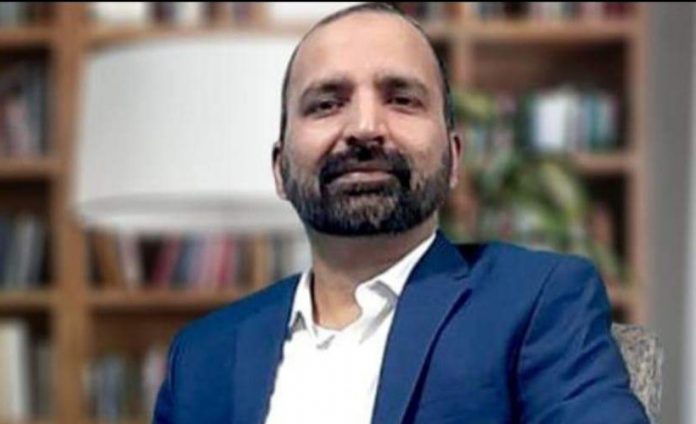
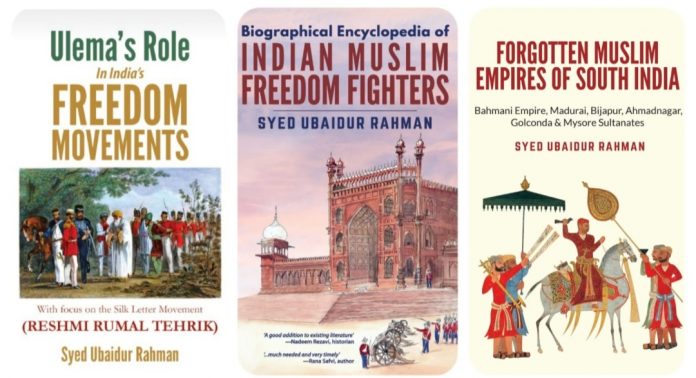
Delhi-based author Syed Ubaidur Rahman’s latest book is making waves among academics and history buffs these days. His book, ‘Forgotten Muslim Empires of South India: Bahmani Empire, Madurai, Bijapur, Ahmadnagar, Golconda and Mysore Sultanates’ that was released earlier this month has caught the imagination of a large number of people.

While the Muslim history in north India is well documented, the history of Muslims in the Deccan hasn’t caught the same attention. This is the reason that while hundreds of books have been penned on the Mughals and the Delhi Sultanate’s rule in different languages, if you try to lay your hands on the Muslim rule elsewhere, there is very little available on the ruling dynasties and their rule in other regions including South India.

Syed Ubaidur Rahman’s latest book tries to correct this mistake and bring back the Muslim sultanates of the Deccan and south India into focus. The voluminous book of 664 pages, it contains a more than three hundred fifty page chapter on the Bahmani Empire alone.

When asked as to why he wrote so much on the Bahmani Sultanate, the author says, “Bahmani Sultanate, towards the end of the 14th century was the pre-eminent power not just in South India, but across the Indian subcontinent. However, despite its resplendent and great past, there is not much literature available on the Bahmani Sultanate that was the most powerful empire from mid fourteenth century till the end of the fifteenth century. It has been relegated to the margins of history in our school syllabus and even in our history books. In this book, I have made an effort to bring it back to common imagination and make it a talking point”.

The author goes on to add that “The Bahmanis and the latter day sultanates in the region had a transformative impact over the populace, both Muslims and Hindus. Not much is written about how the Bahmani sultans spread education across the region and established schools and colleges in every major towns of their realm that not just provided free education to the pupils but took care of all their needs including food and lodging. Muhammad Shah II, during his peaceful reign of close to two decades, ensured that schools and colleges were established in almost every part of the sultanate with hostel facilities. The building of Mahmud Gawan’s university is still standing tall in Bidar, the second capital of the Bahmani empire”.

Chapters on Bijapur’s Adil Shahi Sultanate, Ahmadnagar’s Nizam Shahi Sultanate, Golconda’s Qutb Shahi Sultanate, besides Madurai and Hyder Ali and Tipu Sultan’s Mysore Sultanates are also thoroughly engaging, detailed and informative.

The book is a must read for history buffs, especially the ones who are concerned with preserving Indian Muslim history in the country.

***

Name of the book: ‘Forgotten Muslim Empire of South India’

Author: Syed Ubaidur Rahman

664 pages, Price Rs 1295, Contact: 9818327757 (WhatsApp)

source: http://www.muslimmirror.com / Muslim Mirror / Home> Books> Indian Muslims / by Staff Correspondent / February 20th, 2023