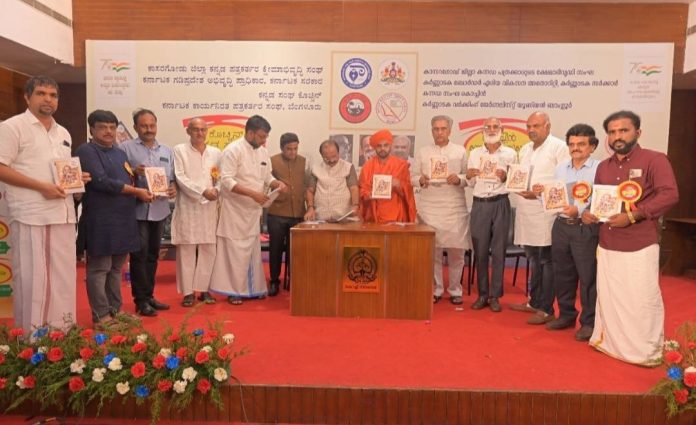
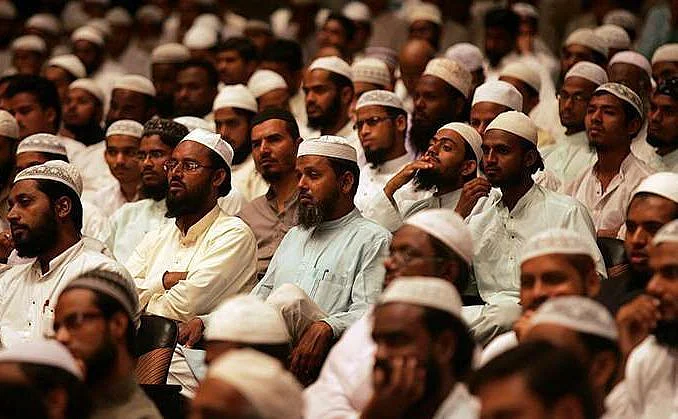
Vidhana Parishad Speaker Basavaraja C.Horatti releasing Book on ‘Contribution of Muslims in Kannada literature’
Basavaraja C.Horatti, Hon’ble Speaker of Vidhana Parishad of Karnataka Government has released a new book in Kannada, Kannada Sahityadalli Muslim Samvedane which means ‘Contribution of Muslim Writers to Kannada Literature’.
The book was released at a colourful function at the ‘Cochin Kannada Cultural Festival 2023’ which was promoted by joint auspices of Kannada Sangha Cochin, Kasaragod District Kannada Journa lists Association, Karnataka Border Area Development Authority, and Karnataka Working Journalists Association.
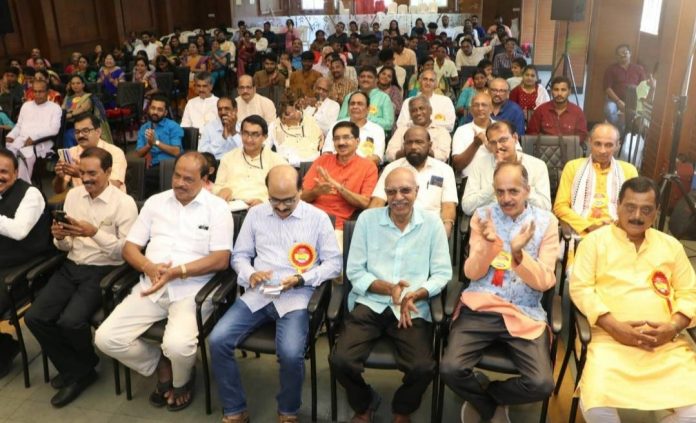
Kannada speaking masses in Ernakulum and various parts of kerala and Karnataka attended the festival in large.
The convention featured symposium, many cultural programs and a parade.
source: http://www.muslimmirror.com / Muslim Mirror / Home> Indian Muslim> Literature / by Muslim Mirror Network / May 08th, 2023
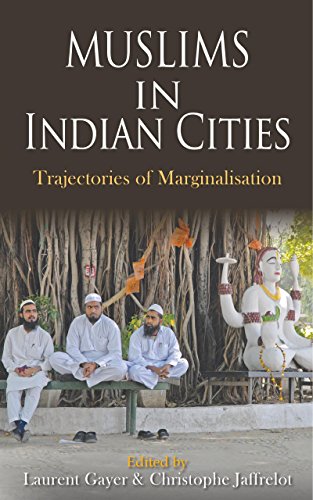
Muslims in Indian Cities: Trajectories of MarginalisationEdited by Lauren Gayer and Christophe Jaffrelot (London: Hurst & Company.
This book puts together researches on Muslims in India in a dozen Indian cities bringing out their sociological as well as topographical profiles. Various case studies in the volume locate Muslims in Indian cities and examine the ‘ghettoisation thesis’ and look into the Muslim localities and the way they relate to the wider reality of their city. The studies employ both qualitative and quantitative methods; some provide ethnographic profiles of the urban settlements. The profiles outline the marginalization of Indian Muslims in terms of economic deprivation aggravated by physical insecurity and their increasing socio-spatial segregation.
The studies clarify that Muslims in India do not form an internally homogenous block. The research is able to disaggregate the community in terms of caste and class as well as in terms of urban/rural divide. The Dalit Christians, the Dalit Muslims are not officially recognized and therefore do not benefit from the state’s affirmative action extended through reservations. The charitable donations in the form of zakāt lead to some redistribution, but this does not replace or make up for state intervention.
The ‘Unwanted in My City’—the making of a ‘Muslim Slum’ in Mumbai (Qudsiya Contractor) is an account of the formation of a Muslim Slum as a peripheral life space in Shivaji Nagar in terms of the ethnography of everyday life. The focus is laid on how the blurring of the boundaries between the everyday spatial practices of the state and the Hindu right takes place via the experiences of the people. The paper further describes how these exclusionary practices are countered by the Muslim community.
There is an unintended (not so negative) consequence of the process of ghettoization in the ‘riot-city’ of Ahmedabad (Christophe Jaffrelot and Charlotte Thomas). It placed Muslims in a majority position, where they could elect their representatives and, secondly, the regrouping of Muslims from different backgrounds has endowed the local commoners with a local elite who could campaign around safety and organize themselves for self-help development involving education. This account has parallels in the city of Ramganj, Jaipur (Gayatri Jai Singh Rathore), where the lower class were able to mobilize themselves to address issues in the field of education and politics by starting up schools and creating their own political party. Such mobilization could earn official recognition as well as gains in education and political awareness.
The account of the Shiʿa of Kashmiri mohalla, Lucknow (Gilles Verniers) highlights how the draining away of the new Shiʿi elite has contributed to the marginalization of those who stay behind. This transformation may be interpreted against the backdrop of the Shiʿa–Sunni divide. Those who emigrate escape their minority status and disperse without identity within the wider population. Another city, Aligarh, also riot-prone on account of the Hindu–Muslim divide, has a heterogeneous Muslim population and defies simple conclusions regarding its residential pattern. In some sense, Aligarh’s Muslim population in Shah Jamal is compared with Ahmedabad. Aligarh represents the political and economic domination of the Hindu community, yet the city connects symbolically with Islam and the Indian Muslim community. The interface between the majority and the minority communities of the town is susceptible to political violence. Each round of communal conflict is followed by further fragmentation of the old city: Hindus living in Muslim-dominated areas and Muslims living in Hindu-majority localities emigrate, thereby supporting the communal segregation of the town.
The story of Muslims being pushed to the social periphery in Bhopal (Christophe Jaffrelot and Shazia Wulbers) resulted in the marginalization of Urdu and forced the old elite to join new professions, but they failed to remain well-represented in the elite groups. This decline is analysed in relation to the influx of Hindu newcomers and the rise to power of the Hindu nationalists, which spurred the communal riot in 1992. Against the background of Muslims’ suffering discrimination in the job market, they also harbour a feeling of victimization which confines them within the old city. This produces a situation where the Muslims in the walled city lag behind, while the mainstream population expands southward in Bhopal.
One variation upon the above account is to be found in Hyderabad (Neena Ambre Rao and S. Abdul Thaha), where Muslims seem to be ‘landlocked in the walled city’. In the background of its characteristic history, its economic and intellectual elites have left the scene. The political elite, however, seems to persist as the old city became a stronghold of the MIM (Majlis-e-Ittehadul Muslimeen) which has a decisive influence in the municipal elections. The riots during the 1980s to 90s stimulated the unmaking of the Hindu–Muslim mix areas, thus the old city became communally ‘pure’ in its Muslim population. The old city, being high on communal security, decays on account of its poor living conditions and lack of government provisions. The emerging elite that pledges to represent the people is hardly able to keep its promises regarding the improvement of the area. However, a growing awareness is built around the importance of education, leading to the emergence of the newly educated middle class. These changes in various directions internally produce a tension: on the one hand, MIM dominates politically, and on the other hand, Muslims suffer discrimination outside the old city. This situation awaits a proper assessment.
The account (by Laurent Gayer) of Abul Fazl Enclave in South Delhi shows that the middle-class Muslims who opt to settle in the area, represent a case of self-segregation rather than ghettoization. The area offers, in the perception of the community, greater physical and residential security. Living in a mixed locality, outside, evokes the issue of security in the experience of the community. This needs to be seen in the wider context of the experience of risk. At the same time parents send their children to schools outside the locality, in an attempt to follow a ‘counter-segregative’ strategy. This calls for a multifaceted interpretation in the making of an enclave in the locality.
The story of Muslims in Cuttack in the State of Orissa is different from the usual account, where Muslims feel unsafe and insecure in communally sensitive areas. The Muslim communities in Cuttack are able to coexist with non-Muslims through the practice of an age-old tradition of bhaichara (brotherhood). In spite of the feelings of security and stability, a majority of Muslims of Cuttack are socially marginalized. The account of Cuttack outlines its history as well as the emergence of syncretic cultural traditions at the popular level. At the same time, the story of backwardness and under-representation of Muslims in various spheres of society directs attention to the dynamics of internal reasons for social inequality, a case of a minority within the minority. One such section of the community, the Muslim butchers (qasai), engage in community initiatives and organize themselves against the apathy of the state as well as the caste hierarchy of the community. An interesting exception to the story of marginalized Muslim localities in urban India is brought out from Kozhikode, in the state of Kerala. Radhika Kanchana points out how the enclave of the Muslim community is part of the city’s foundational design and the medieval practice of spatial groupings of different communities on the basis of occupation and social status. The locality of Kuttichira remains a Muslim cluster without the negative tag of decline or marginalization. Here, Muslims choose to extend into the city’s mixed localities without leaving their specific cultural and geographic identity.
Aminah Mohammad-Arif’s account of Muslims in Bangalore, in relation to the data gathered from Shivaji Nagar, questions the notion of a ‘ghetto’ insofar as different communities belonging to different classes respond to different interests and do not exhibit a common pattern arising out of a self-conscious choice of living in ghetto. This is influenced by Shivaji Nagar’s religious diversity that spawns interactions across the communal divide.
In conclusion, the editors discern complex patterns in the state of marginalization among India’s urban Muslims. Ghettoization has its own dynamics. Socially, a new middle class is emerging along traditional economy lines but also beyond, say in the areas of agribusiness, information technology, pharmaceuticals, real estate, etc. Successful Muslim entrepreneurs hail from the lowest sections of Muslim communities. In some places ‘petro-dollar’ colonies have emerged. The trajectories of marginalization represent different patterns of segregation: mixed areas, enclaves, slums and ghettos. These patterns are formed along the lines of voluntary and enforced segregation. The element of choice becomes difficult to interpret especially where considerations of insecurity and discrimination are taken into account.
The collection of essays is helpful in providing a contemporary account of India’s urban Muslims and the extent to which the patterns respond to the way the Indian state, the majority community and the dynamics of the internal urge to move upward intertwine. The diverse accounts add to the social mosaic of Muslims in India. The volume is an important reference for researches on Muslims in contemporary India.
by: Mohammad Talib, Journal of Islamic Studies, Volume 26, Issue 1, January 2015, Pages 88–91
source: http://www.academic.oup.com / Oxford Academic – Journal of Islamic Studies / by Mohammad Talib / September 29th, 2014
Wealth of Muslim community and government spending on the rituals of Islam for centuries would have been better utilized for establishing universities and technical and research institutes.
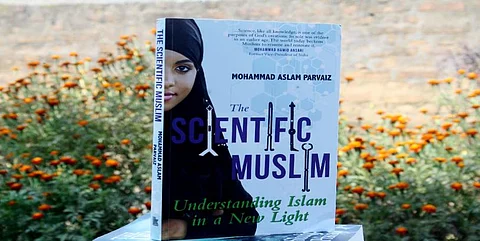
Title: The Scientific Muslim: Understanding Islam in a New Light
Author: Mohammad Aslam Parvaiz
Publishers: Konark Publishers
Pages: 184
Price: Rs 595
These are undoubtedly troubled times for India. Never before were the minorities, Muslims in particular, made to face such vicious communal hostility. The Hindu rightwing is at its aggressive best, combining facts with fiction to attack almost everything Muslims hold dear – their prayers, festivals, dress, even cuisine. Muslims are constantly provoked. If they respond even verbally, they face more wrath. It could not have been worse.
Hats off to Mohammad Aslam Parvaiz for coming out with his book on the problems Islam faces now. No, this is not a book about how to deal with Hindutva forces; far from it. A man of science, Parvaiz complains that Muslims across the world have jettisoned Islam’s true nature by sticking to parts of the Quran while ignoring much of what it says on how one must lead one’s life.
As a student of spirituality, I am convinced that the book will make waves in India and much of the Islamic world.
Ignoring Quran
The Quran, the author says, tells people how to lead a peaceful and meaningful life. While it asks those who read it to understand and explore nature, these intellectual pursuits are almost missing in those who claim the Quran to be their guidebook.
Parvaiz moans that Muslims born in Muslim households are taught to ‘read’ Quran without understanding it. Over the last many centuries, Muslim society has cherry-picked certain verses of Quran as binding on them. These include five-time prayers, fasting during Ramzan, offering ‘zakat’ and making a pilgrimage to Mecca. The Quran, he says, is much more. By deserting the Quran, “we ‘Muslims’ have deserted Islam”.
This is the main reason the Muslim society seems to have turned its back to scientific principles in which it once excelled, giving a tough competition to Europe. A sizeable section of Muslims even feels that contemporary education churns out atheists. The result? Ignorance about Quranic teachings coupled with limited ‘religiosity’ has led to the curriculum which is followed in most madrasas today.
In the process, Muslims are widely misunderstood by others. Non-Muslims think a Muslim must be one who sports a beard and a skull cap, goes to a mosque to pray five times a day and slaughters animals to eat. But these are visible symbols. Parvaiz contends that the one who follows the guidance given in the Quran and grooms himself accordingly is alone a true Muslim.
Also, some Muslim rulers had a knack of not tolerating any criticism about themselves or their religious beliefs. Consequently, wars and persistent battles rendered the once-prized academic atmosphere unfavourable.
Based on the Quran, Muslims must draw a road map for acquiring knowledge in every sphere and put it to the service of humanity. Parvaiz details what all the Quran says for human betterment. For instance, it underlines that one must meet his needs judiciously and avoid extravagance. As long as the Muslim followed the divine way, they ruled over the world and promoted justice, equity, peace and public welfare. When they began to neglect the Quranic system, it led to their disgrace and humiliation.
Islamic decline
Unfortunately, Muslims are at present unable to understand or act on the Quran. According to the author, the wealth of the Muslim community and government spending on the rituals of Islam for centuries would have been better utilized for establishing universities and technical and research institutes.
The absence of these is a key reason for the decline of Muslims as a productive part of the society or country where they live. “Their love for wealth, progeny and glory have made them indifferent to patronizing knowledge… It is time that we transcend sectarianism and shed false notions about our understanding of Islam and our intellectualism.”
According to the author, one reason why Muslims were hooked to a ritualistic lifestyle is because of the birth of a plethora of confusing and contradicting literature based on different sects that began to flourish. Slowly, Islam began to get diluted.
Also, some Muslim rulers had a knack of not tolerating any criticism about themselves or their religious beliefs. Consequently, wars and persistent battles rendered the once-prized academic atmosphere unfavourable. Muslim mobs in 1857 plundered the library of Delhi College, tearing apart books on English and science; Arabic and Persian books were looted.
Parvaiz without doubt has complete faith in the Quran. Yet he tears to shreds those who he feels are following it selectively, ignoring all that it has said about how to be in tune with Divine creations. “Soulless rituals cannot provide any food for thought. These may arouse our sentiments. Yet they cannot produce those Muslims who may lead communities of the world.”
He goes on: “Today, Muslim localities are notorious for their filth and rubbish. We throw all rubbish outside our homes and shops. The drainage system is rotten. We encroach upon roads, making life difficult for everyone. We erect all sorts of barriers on roads. We generate various forms of disorder. The industrial smoke coming out of small- scale work units in every house and alley adversely affect the entire atmosphere. All this amounts to disobeying God’s commands.” (It is another matter that much of what the author says about Muslim neighbourhoods can be said to be true for areas populated by other communities in India too.)
Way forward
Parvaiz explains what needs to be done. “Water, air, earth and all that is inside the planet are God’s signs. As Muslims we should not even think of disrespecting or destroying these signs.” His complaint is not directed at one section or country of Muslims. “No group, community or country of Muslims has ever prepared its progress model which is in accordance with the Quranic principles of justice, equity and selfless service.”
God, he says, has subjected everything to His laws. Indeed, all creatures who abide by divine commands can be called believers. Lip service and verbal claims alone will not and cannot help Muslims discharge their duty towards God. In real life, humans who are blessed by God seek to hold and hoard resources provided to them. Ownership and monopoly, he warns, are satanic concepts.
Parvaiz feels that the time has come to free Muslim educational agenda from religious and sectarian bias. Muslims should welcome all beneficial branches of knowledge. Character development has to be encouraged. One needs to train and produce Muslims who will follow Islam in full and not confine it to only a mosque or prayers.
“Islam will be their guide and mentor in every activity of life. This is the Muslim community which lost its way one thousand years ago.”
Non-Muslims too must read this eye-opener of a book as much as Muslims.
(The reviewer is a veteran journalist and author)
(Published under an arrangement with South Asia Monitor)
source: http://www.thenewsagency.in / The News Agency / Home> News Pops> India / by M R Narayan Swamy / April 28th, 2022
Indian Muslims are having their own ‘spring’. It may not have the shape of an organised movement, and we may not see people going around waving banners or picketing ‘mullahs’, but it is genuine, widespread, and it looks like it is here to stay.
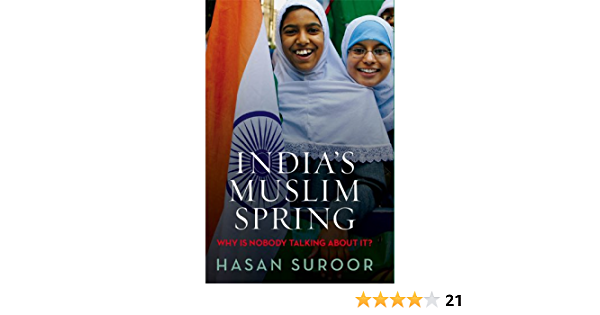
pic: Amazon
Editor’s note: Firstpost contributor Hassan Suroor has written a book that looks at the Muslim community in India today. He explores and dismantles the stereotypes and holds up a mirror to their reality. Here’s an excerpt from Suroor’s India’s Muslim Spring: Why is Nobody Talking About It?
Let me confess that this is not the book I set out to write. The book I had in mind was about the unchanging face of Muslim fundamentalism in India. But barely a few weeks into research, I discovered I was completely on the wrong track. The big story staring me in the face was quite the opposite— far from flourishing, Muslim fundamentalism was actually dying a slow death. As I travelled across the country and spoke to people, I found that over the past decade there had been a profound change in the Muslim mindset. Today’s Indian Muslim, I discovered, was altogether a different species—educated, aware, wiser, less sectarian and more pragmatic ….
Away from the sensational headlines about Islamic extremism, a quiet revolution is taking place. The Muslim discourse has moved on from an obsessive focus on sectarian demands (does anyone remember the last big debate on Muslim Personal Law, for example?) to the more secular bread-and-butter issues. Where once the dinner table talk in Muslim households was unremittingly negative and pessimistic (it was all about how Muslims were being ‘crushed’ and trampled upon, and had no future in India), today it is about change and looking forward. There is a new optimism abroad that is hard to miss. What is significant is that the change is being urged upon not by the usual suspects—the agnostic left-wing Muslim intellectuals…— but by ‘gold-plated’ practising Muslims, deeply conscious of their Muslim identity and unapologetic about flaunting it.
There is a new generation of Muslims who want to rid the community of its insular and sectarian approach by concentrating on things that affect their everyday lives: education, jobs, housing, security. They despair of mullahs and self-styled Muslim ‘leaders’. And they speak a language that is modern and forward-looking. Their interpretation of Islam stresses inclusion and tolerance. They abhor the use of violence in the name of Islam. They may not be wildly enthusiastic about the western notion of free speech and … some even tend to share the conspiracy theories about Salman Rushdie’s alleged motives [behind writing The Satanic Verses], but they condemn the campaign of intimidation and harassment to which he has been subjected in the name of ‘defending’ Islam and the Prophet. They are embarrassed by such antics which, they say, bring shame to the community and, indeed, Islam itself. There is a feeling of having been let down by previous generations—their parents, grandparents—who they believe were too timid to challenge the fundamentalists. ‘We want to draw a line under all that and move on,’ is a common refrain.
Notably, it is the young women, often in ‘hijab’, who are driving the change. Contrary to the stereotyped image of the ‘Muslim woman’, they are educated, articulate, conscious of their rights and have aspirations that are no different from those of any other modern Indian woman. I found them more progressive in many respects than their male peers. And their struggle is greater as they are engaged, simultaneously, on two fronts—challenging the male Muslim orthodoxy and fighting for a wider change in the community that they hope would alter the prevailing negative perceptions of Muslims.
Paradoxically, at one level this is also perhaps the most religious post-independence generation of Indian Muslims … . More Muslim youth wear beards today than ever before and young Muslim women proudly show off their ‘hijabs’. … Yet, it is also the most open-minded and self-confident generation; and—most importantly—optimistic about its future in India. India is their home and this is where they see their future.
‘It is the best place in the world,’ is a phrase that I heard over again and again. For all the talk of Muslim ‘alienation’, today’s young Muslims are remarkably well-integrated … . Today’s young see no contradiction in being proud practicing Muslims and proud secular Indians. They find it insulting to be asked whether they regard themselves as Muslims first or Indians first. To them the question smacks of the questioner’s own prejudices. On the Muslim street, it is dismissed as a ‘bogus’ debate contrived to force Muslims to choose between their religion and their country—a choice that Hindus are not asked to make.
‘It is a false choice that we are asked to make. Call me an Indian Muslim or a Muslim Indian, it makes no difference. When I’m abroad and people ask me my nationality I simply say I’m an Indian, but when they ask me my religion I say I’m Muslim. It’s as simple as that. There is no question of one taking priority over the other,’ said Ishrat Jahan, a hotel executive.
… Indian Muslims are having their own ‘spring’. It may not have the shape of an organised movement, and we may not see people going around waving banners or picketing ‘mullahs’, but it is genuine, widespread, and it looks like it is here to stay. The media has largely ignored the change that is sweeping India’s Muslim community and continues to play up the extreme voices because they make ‘news’. Yet, five or ten years from now, it might realise that it missed the biggest story of its time unfolding right under its nose.
Living through the worst phase of Indian Muslim fundamentalism from the 1970s through to the 1990s, I never thought I would live to write its obituary. The depressing prospect of having to live the rest of my life in a climate of competitive Muslim-Hindu fundamentalism, feeding on each other in a toxic double act, was one reason why at an age when many migrants contemplate returning ‘home’, I decided to take a break from India and moved to Britain. I simply couldn’t take it anymore.
At one extreme, there was the creeping ‘Hindutva-isation’ of India with a resurgent Hindu Right flexing its muscles, and at the other, a wave of Muslim fundamentalism dragging the whole community into a long dark tunnel of isolation… . With such friends, Muslims didn’t need external enemies. … The Babri Masjid fiasco was as much the doing of chest-thumping Muslim ‘leadership’ as it was a calculated act by the right-wing Hindu middle class, to humiliate Muslims. Arbitrary ‘fatwas’ based on the most regressive of interpretations of Islam were commonplace. I heard of more fatwas in the 1990s than I had in the previous half century. Those who didn’t agree with the fundamentalist view were denounced, portrayed as closet ‘RSS stooge’, and hounded.
That was then. A decade later, there is a sea change, thanks to the coming of age of a new generation of Muslims—less excitable and wiser—having learnt from the follies of their predecessors. And certainly more realistic about their place in a Hindu-majority India. All you need to do is to get out a bit more, talk to people, listen to the voices around you, and you’ll discover how refreshing the air smells today … .
India’s Muslim Spring: Why Is Nobody Talking About It?, by Hasan Suroor (Rupa, Rs 395).
source: http://www.firstpost.com / First Post / Home> Living / by Hassan Suroor / January 24th, 2014
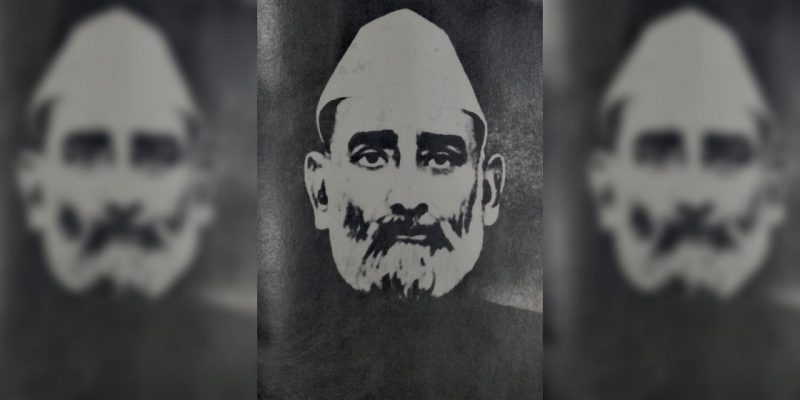
Abdul Bari is not a name that many Indians remember, but Munawwar, a committee member of the Tata Motor Workers’ Union in Jamshedpur, Jharkhand, holds the name in high esteem.
“I don’t see a leader like Abdul Bari [coming up] in the near future,” he said. “It is because of his efforts that we still get high tea at just six paisa.”
“Once, Bari went to the Tatas and he was offered tea. He asked them to first offer it to the workers, and then made an agreement which is still benefitting us. Upma, aloo chaap, samosa all for six paisa in the company’s canteens.”
Asked how they pay six paisa when currency that small no longer exists, he says, “We get token of Rs 2 or more and keep using it for weeks.”
Munawwar visits Bari’s grave every year on March 28, the death anniversary of the pre-independence labour leader, to offer flowers. This duty, he says, was assigned to him by the Tatas.
Thinking of labour in the days of capital
Despite the large numbers of workers who struggle to earn a square meal a day, major political parties remain hostile towards them. In the 55-page Congress manifesto, the words ‘worker’ or ‘workers’ appear 15 times; in the BJP’s 45-page manifesto, the words appears only five times – four while referring to Asha and anganwadi workers. ‘Labour’ figures 21 times in the Congress manifesto, and only twice in the BJP’s.
The Congress does talk about ending the workers’ exploitation and improving working conditions. The party’s manifesto details new schemes and promises to implement old ones related to organised, unorganised and contractual labour. But it is anyone’s guess how schemes that have been on hold for so long will suddenly spring to life.
Dilip Simeon, a founding member of the Association of Indian Labour Historians and former professor of history at Ramjas College, says that nobody talks about labour now because “in today’s context, the labour movement is influenced by communal sentiments”.
“If labour is with the BMS [Bharatiya Mazdoor Sangh] and Shiv Sena, then this is the weakness of the movement; if the labour movement wants to regain its power, then it has to face this challenge.”
Before independence, Simeon says, regardless of community, “leaders came together to advance the struggle of workers in India. Abdul Bari, Maneck Homi and Hazara Singh were their leaders. A Muslim, a Parsi and a Sikh could all be leaders of a workers’ movement.”
“Abdul Bari was so trusted that workers would start their protest first and then ask –what’s our demand?”
Bari was born in 1882, in Bihar’s Shahabad district. He was a student at Patna University in 1919 and was later appointed as a professor of history there, before he started studying law.
He quit to join the Khilafat movement, and actively participated in Gandhi’s civil disobedience movement and salt satyagraha. Bari did not restrict himself to the cause of one social group; he supported several political parties, including the Socialist Party and Swaraj Party, in parallel with the Congress. In addition, he was the voice of the labour movement in India and president of the Jamshedpur Tata Workers’ Union.
What Gandhi said about Bari
The journalist Afroz Alam Sahil has written a book on Abdul Bari, Professor Abdul Bari: Azaadi ki Ladaai Ka Ek Krantikaari Yodhha (Professor Abdul Bari: A Revolutionary Warrior of the Freedom Struggle). The author reveals several stories which won’t be found Indian history books. One such story is around Bari’s mysterious murder, and Gandhi’s reaction to it.
According to a report published by the Times of India on March 31, 1947, Bari was shot dead in the evening of March 28 while on his way home from Khushrupur, 24 miles from Patna. He was then the president of the Bihar Provincial Congress Committee. Following his death, a complete strike was observed, and Tata closed all its plants except essential ones.
Gandhi, in a speech on March 29, 1947, mentioned that he was struck by Bari’s simplicity and honesty. Gandhi added that he was planning to be more closely associated with Bari, and make an appeal to keep his short temper in check as it was not befitting of the highest office in Bihar. Gandhi referred to Bari in the same speech as “a very brave man with the heart of a fakir”. He declared that Bari’s death was the result of an altercation that had ensued between Bari and one Gurkha member of the anti-smuggling force, who was a former member of the Indian National Army.
The author mentions in this book that Bihar’s first Prime Minister (Premium) Barrister Muhammad Yunus had disclosed in an interview to the Orient Press of India that Bari had threatened to disclose the names of some prominent Congress leaders who were involved in the Bihar carnage – just three days before he was killed.
Yunus also said that Gandhi’s statement was given in haste. In his speech, Gandhi had told the audience that there was no politics of any kind in the death, and that it would be unjustified to associate the whole Indian National Army with Bari’s killing just because of one man’s actions.
In another incident discussed in the book, Gandhi arrives at Fatuaha station near Patna in the early morning of March 5, 1947. He travelled from Calcutta to Patna. Bari, chief minister Srikrishna Sinha and others welcomed him on the platform. As soon as Gandhi saw Bari, he laughed and said, “How is it that you are still alive?”
“This book is an attempt at bringing back his identity not just as a leader of the labour movement but a prominent leader of the freedom struggle of India,” the author says. “Professor Bari was one of the biggest leaders of the labour struggle in India. But limiting his role to even that would be unjust, because he was present in every chapter of the independence movement….The speciality of Abdul Bari is that he questioned his own party Congress when it came to the rights of workers.”
In a speech, Bari said, “We are in Congress to serve the poor of this country not to respect Gandhi, Rajendra Babu and Shri Krishna Babu…Lakhs of Indians who walk with them are not there to make them kings but to achieve freedom for this country.”
According to Sahil, “He criticised Gandhi and Rajendra Prasad many times because he was wholeheartedly committed to this struggle. He wanted to organise an all India conference for workers. He had formed the All India Mazdoor Sevak Sangh. He mentioned this in a letter written by him to Sardar Vallabh Bhai Patel on 22 June 1946.”
Why commemorate leaders like Bari today? Sahil has the answer. “Today when Muslim youth talk about Muslim representation, they must read more about Bari, the symbol of Hindu-Muslim unity, in order to understand their own political history and determine how it influences their future.”
Afshan Khan is a Delhi-based freelance journalist.
source: http://www.thewire.in / The Wire / Home> Analysis> Labour / by Afshan Syed (headline edited) / May 01st, 2019
Guru Dutt’s masterpiece ‘Pyaasa’ (1957), just before its soulful dirge on relationships, shows two poets reciting ‘shers’.
The elder one later also politely reprimands a guest for his snide remark at the “servant” (Dutt), who had begun humming “Jaane woh kaise log the..”, declaring: “Mian, shayri koi daulat-mando ke jagir thodi hai”. Though unnamed, his appearance, sher, and comment were enough to identify him.
Urdu Poetry and Social Reach
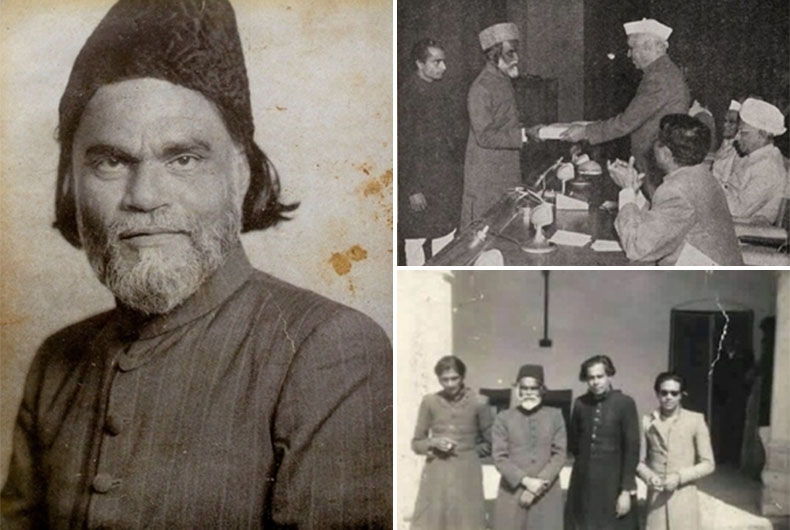
The unnamed actor was representing Ali Sikandar ‘Jigar Moradabadi’, who, in his heyday, was so known by his persona – an intense gaze but an air of absent-mindedness too, groomed beard but slightly unkempt long hair, traditional garb and courtly behaviour, as well as poetry, that he could be shown without being named.
‘Jigar’ is seen as the last standard-bearer of the classical ghazal, or the ghazal’s classical tradition, but was rather a ‘bridge’, between its highpoint in the mid-19th century and its transition to the 20th century and beyond.
He was also a connecting link between Urdu poetry and its widening social reach as the dialogue the character utters shows – and is followed by him encouraging Dutt to continue:
“Tum kuch keh rahe the, barkhurdar. Chup kyun ho gaye. Kaho, kaho..”
Jigar Moradabadi – Real Life
This was true in real life too – a young Jigar took instruction from Nawab Mirza Khan ‘Dagh Dehlvi’ – who had participated in mushairas with Ghalib and Zauq – and himself later, mentored poets like Asrar-ul-Hasan Khan ‘Majrooh Sultanpuri’, Jan Nisar Akhtar, and others.
And then like many contemporaries, he did not write for films, yet his work willy-nilly figured in them. While “Kaam aakhir jazba-e-beikhtiyar aa hi gaya/Dil kuch is surat se tadpa unko pyaar aa hi gaya” was used in ‘Pyaasa’, in ‘Daag’ (1952), the Hasrat Jaipuri-written “Ham dard ke maaron ka, itna hi fasana hai/Peene ko sharaab-e-gam, dil gam ka nishana hai” seemed inspired by his “Ham ishq ke maaron ka itna hi fasana hai/Rone ko nahi koi hasne ko zamana hai”.
Then, ‘Be-Raham’ (1980) used this sher – along with most of its ghazal which begins: “Ik lafz-e-mohabbat ka adna yeh fasana hai/Simte to dil-e-aashiq phaile to zamaana hai”. Another master sher in this is “Yeh ishq nahi aasan itna hi samajh lijiye/Ek aag ka darya hai aur dub ke jaana hai.”
Before that, Shyam Benegal’s ‘Junoon’ (1979), the 1857 drama starring Shashi Kapoor, used his ghazal, “Ishq ne todi sar par qayamat.”
How Jigar’s Prime Couplets became popular in films?
But, the prime example was how the prime couplet of ‘Jigar’ became most known to film buffs after actor Raj Kumar made it a dialogue, delivered in his bombastic, drawling style: “Ham ko mita sake yeh zamaane mein dam nahi/Ham se zamana khud hai zamaane se ham nahi.”
Born in April 1890 in Moradabad, ‘Jigar’ was the son of Syed Ali Nazar, who worked in the Law Department and was inclined to poetry too, being a disciple of Khwaja ‘Wazir Lakhnavi’.
After elementary education, including in English, he worked as a salesman for a local spectacles dealer. Later, he turned to poetry full-time, settling in the town of Gonda, where he found in noted poet Asghar Hussain ‘Asghar Gondvi’ a mentor of sorts. He was a familiar face in mushairas all over the country till the mid-1950s, when he began slightly distancing himself from shayri, ahead of his death in September 1960.
‘Jigar’, as mentioned, was a paladin of the classical tradition, and as such, his shayri usually dwelt on love and other facets of the human condition. As he said:
“Un ka jo farz hai vo ahl-e-siyasat jaane/Mera paigham hai mohabbat jahan tak pahunche.”
Yet, while he used the usual tropes associated with the topic, he imparted his own stamp on them with his own stylistic variations.
One of these was paradox. Take:
“Atish-e-ishq woh jahannum hai/Jis mein firdaus ke nazaare hai”, or “Kamaal-e-tishnagi hi se bujha lete hai pyaas apni/Isi tapte huye sahra ko ham darya samajhte hai”, or even “Mohabbat mein yeh kya maqam aa rahe hai/Ki manzil pe hai aur chale jaa rahe hai” and “Usi ko kehte hai jannat usi ko dozakh bhi/Woh zindagi jo haseenon ke darmiya guzre”.
“Abad agar dil na ho to barbad kijiye/Gulshan na ban sake to bayaban banaiye” is another example.
Then, ‘Jigar’ frequently resorted to some deft wordplay and situations: “Tere jamaal ki tasveer khinch doon lekin/Zabaan mein aankh nahi aankh mein zabaan nahi”, “Suna hai hashr mein aankh use be-parda dekhegi/Mujhe dar hai na tauheen-e-jamal-e-yaar ho jaaye”, and “Aghaaz-e-mohabbat ka anjaam bas itna hai/Jab dil mein tamanna thi ab dil hi tamanna hai.”
Vivid imagery was another strength: “Baithe huye raqeeb hai dilbar ke aas-paas/Kaaton ka hai hujum gul-e-tar ke aas-paas” and “Har taraf chaa gaye paigham-e-mohabbat ban kar/Mujh se achhi rahi qismat mere afsanon ki.”
And ‘Jigar’ could use rhetorical devices, like repetition to good effect, as in: “Dil hai kadmon par kisi ke sar jhuka ho ya na ho/Bandagi to apni fitrat hai Khuda ho ya na ho”, “Kabhi un mad-bhari aankho se piya tha ik jaam/Aaj tak hosh nahi, hosh nahi, hosh nai” and sometimes, alliteration: “Hai re majbooriyan mahroomiyan nakaamiyan/Ishq aakhi ishq hai tum kya karo ham kya karen.”
At other times, he could be engagingly simple: “Garche ahl-e-sharab hain ham log/Yeh na samjho kharab hain ham log”, or “Pehle sharab zeesht thi ab zeesht hai sharab/Koi pila raha hai piye ja raha hoon main.”
And a philosophical outlook can always be discerned. It may be active like: “Kya husn ne samjha hai kya ishq ne jaana hai/Ham khaak-nashinon ki thokar mein zamana hai” and “Apna zamana aap banate hai ahl-e-dil/Ham vo nahi jin ko zamana bana gaya”, or a bit resigned: “Jo un pe guzarti hai kis ne use jaana hai/Apni hi musibat hai apna hi fasaana hai”, “Maut kya ek lafz-e-bemaani/Jisko mara hayat ne maara”, and “Yeh misraa kaash naqsh-e-har-dar-o-deewar ho jaaye/Jise jina ho marne ke liye taiyar ho jaaye.”
There is much more to enjoy in the extensive corpus of ‘Jigar’, whose own epitaph could be: “Hami hab na honge to kya rang-e-mahfil/Kise dekh kar aap sharmaiyega.”
source: http://www.ummid.com / Ummid.com / Home> International / by Vikas Datta / IANS / April 16th, 2023
Nadvi has been the president of the All India Muslim Personal Law Board for the last 21 years.
President of the All India Muslim Personal Law Board Maulana Rabe Hasni Nadvi. (Photo | Twitter)
Lucknow :
President of the All India Muslim Personal Law Board Maulana Rabe Hasni Nadvi died here on Thursday after a prolonged illness.
Senior executive member of the board Maulana Khalid Rasheed Farangi Mahali told PTI that Maulana Rabe Hasni Nadvi died around 3.30 pm at the Lucknow-based Islamic Educational Institute Nadwatul Ulama (Nadwa).
Mahali said Nadvi had been brought to Lucknow from his ancestral home in Raebareli four days ago as he was suffering from pneumonia.
He is survived by three daughters.
Nadvi has been the president of the All India Muslim Personal Law Board for the last 21 years.
His farewell prayers will be held at 10 pm in Nadwa and the body will be laid to rest in Raebareli on Friday.
source: http://www.newindianexpress.com / The New Indian Express / Home> Nation / by PTI / April 13th, 2023
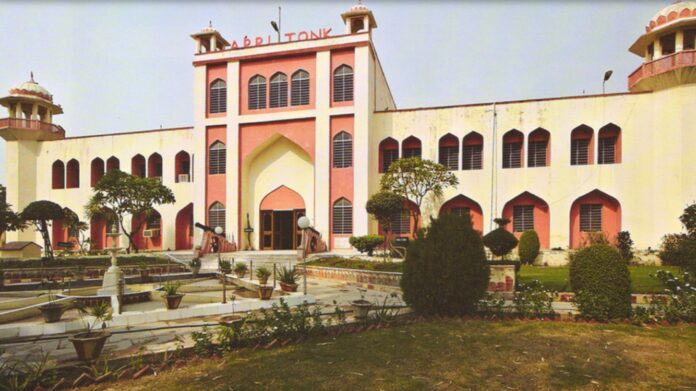
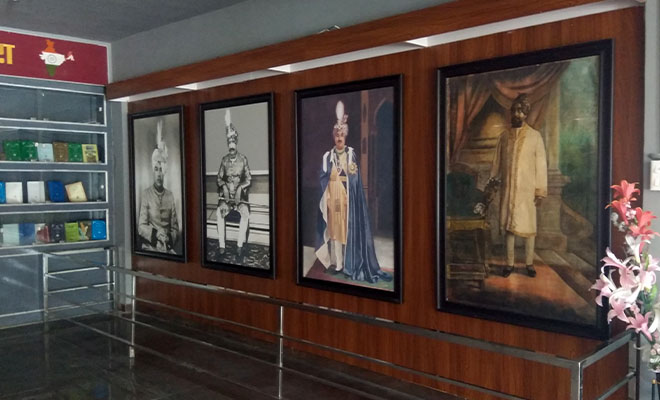
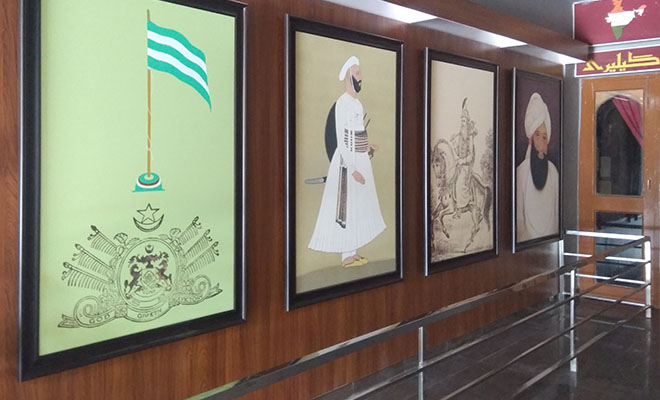
A repository of historic Islamic manuscripts, documents, books and rare artefacts is crying for attention at the Rajasthan Government’s Maulana Abul Kalam Azad Arabic & Persian Research Institute (APRI) in Tonk. A significant project for the conservation and digitisation of manuscripts has come to a standstill following a change of guard at the institute.
Tonk, situated 103 km south of Jaipur, was the only Muslim princely state in the erstwhile Rajputana before Independence. It was considered a major centre of art and culture, as the Nawabs patronised the scholars and invited them to inhabit the town. As a result, many poets, artists and historians came to live in Tonk and made it a hub of intellectuals and professionals. In addition, the Islamic religious preachers established a culture of Quranic sermons and teachings in the town.
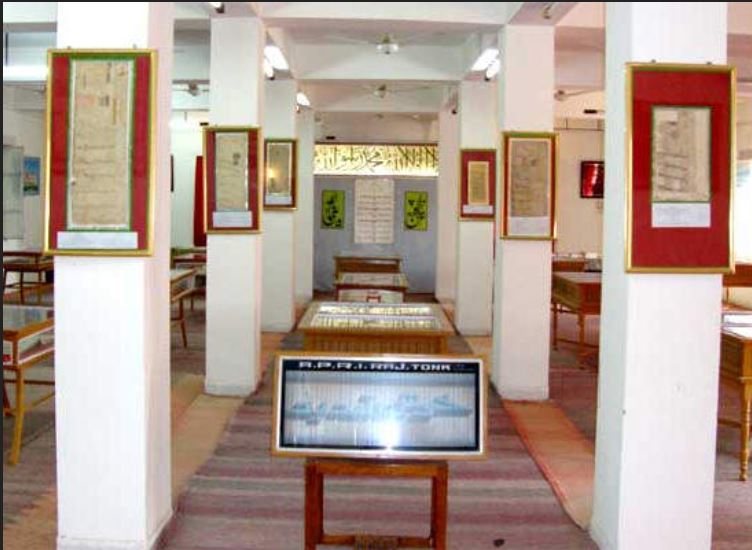
The APRI, established as an independent Directorate of the Rajasthan Government in 1978, boasts of a rare collection of historiography, orientology and Islamic studies and has over 8,000 hand-written volumes. Researchers from India and abroad have been visiting the institute to study manuscripts belonging to the medieval period. Besides, prominent people, such as the Vice-Presidents, Governors and Union Ministers, have visited the institute and seen its rich collection.
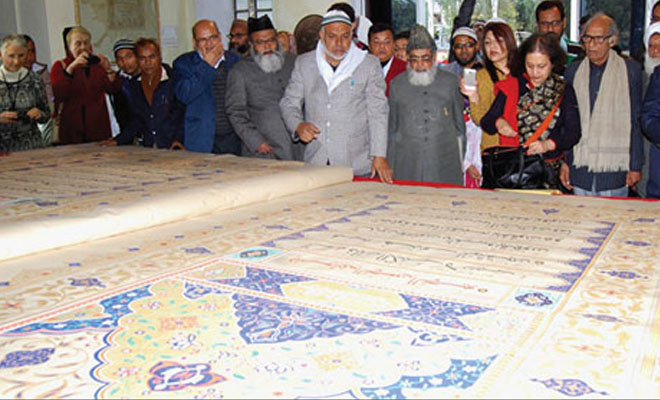
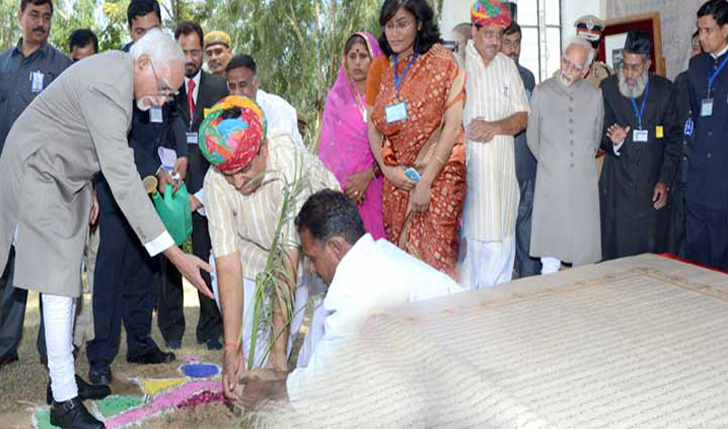
In the treasure trove of historical books, the main attractions include a 17th-century copy of the Holy Quran in bold Naksh calligraphy, autographed by Mughal Emperor Aurangzeb, Hamail Shareef (commentary on the Holy Quran) of 11th century and Unwan-ul-Sharaf of 19th century, comprising five subjects with a single running text. The APRI also has the world’s largest copy of the Holy Quran, prepared in Tonk in 2014.
Most of the rare books and manuscripts in the institute are those shifted from the Saeedia Library of the erstwhile Tonk princely state after 1961 when it was established as the district office of the Rajasthan Oriental Research Institute. The books were collected by Mohammed Ali Khan, the third Nawab of Tonk, who was deposed by the British and exiled to Varanasi.
The collection of books in the APRI may be ranked equal to those in the famous Raza Library in Uttar Pradesh’s Rampur and Khuda Baksh Oriental Library in Patna. The copies of famous books of the Mughal era, Shahjahannama and Tuzuk-i-Jahangiri, are also in its collection. In addition, the institute has about one lakh judgements of Tonk’s Adalat Sharah Shareef (canonical courts), which have been published in several volumes. Besides, there are documents related to Rajasthan’s political and cultural history with special reference to the Tonk state.
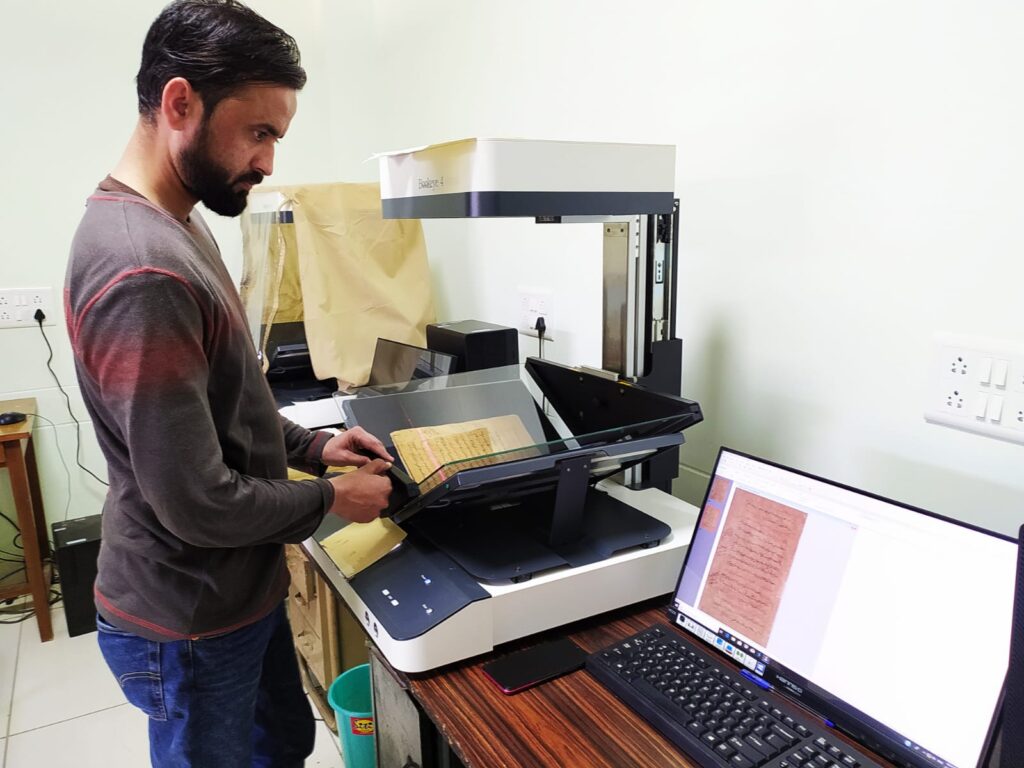
The project for the conservation and digitisation of these books and manuscripts was launched four years ago, but it slowed down during the covid pandemic. It picked up pace after the pandemic when the task was assigned to the Patna-based Heritage Consortium in view of the expertise required to deal with the fragility of papers and ink used in the books. A 20-member team was engaged in testing the material of books and their treatment with the appropriate chemical elements.
The local youths were also given a fortnight-long training to join the conservation work with the de-acidification of papers, consolidation of ink, flattening of folios and stitching and binding of books. As a result, the team working at the institute completed the preservation of 80,000 folios after a sluggish pace during the pandemic. In the tedious work, the experts could conserve only 10% of the APRI’s collection, but they also preserved the threads and glue used in the books for research in future.
The digitisation project in the institute adopted the meta data format prescribed by the National Mission for Manuscripts and the National Archives of India. The digitisation was carried out by the APRI staff with the state-of-the-art scanners, while the State Government-owned Rajcomp Info Services Limited was also involved in the exercise.
All of these activities have reached a standstill with the recent change of guards at the institute. Syed Sadiq Ali, the new Director of APRI, who took over on February 22, said the State Government’s Art & Culture Department had appointed a Curator to review the conservation and digitisation work and decide on its continuation. The move followed the appointment of a committee on the project in December 2022, when the Director’s post was vacant.
Even as the art and culture experts have expressed concern over the conservation project having been halted, the APRI is organising a series of events, seminars and festivals to promote the Khattati (calligraphy) art and Chaar Bayt (four stanzas) performances. Ali, a retired Associate Professor in Urdu Department at the Government Post-Graduate College, Tonk, has evinced interest in holding the events regularly.
A five-day calligraphy art festival, organised from March 15 to 19, witnessed the participation of a large number of experts and different days were devoted to Chaart Bayt, Mushaira, Ghazal rendition and Qawwali singing. Similarly, a three-day seminar on Insaniyat Ka Paigham (message of humanity) was organised between March 15 and 17 with the participation of 40 experts from across the country. These events elicited a huge response and witnessed the enthusiastic participation of students, researchers and the public.
Ali pointed out that the international researchers also regularly visited the institute since he took over as the Director. They included a research team from France and individual researchers on Islamic manuscripts from Jordan and Iran. Ali said the classes in Arabic and Persian languages, which were stopped earlier, would be restarted, an extension lecture series would be organised during the Rajasthan Mahotsav in March-end, and all the vacancies in the APRI would be filled up shortly.
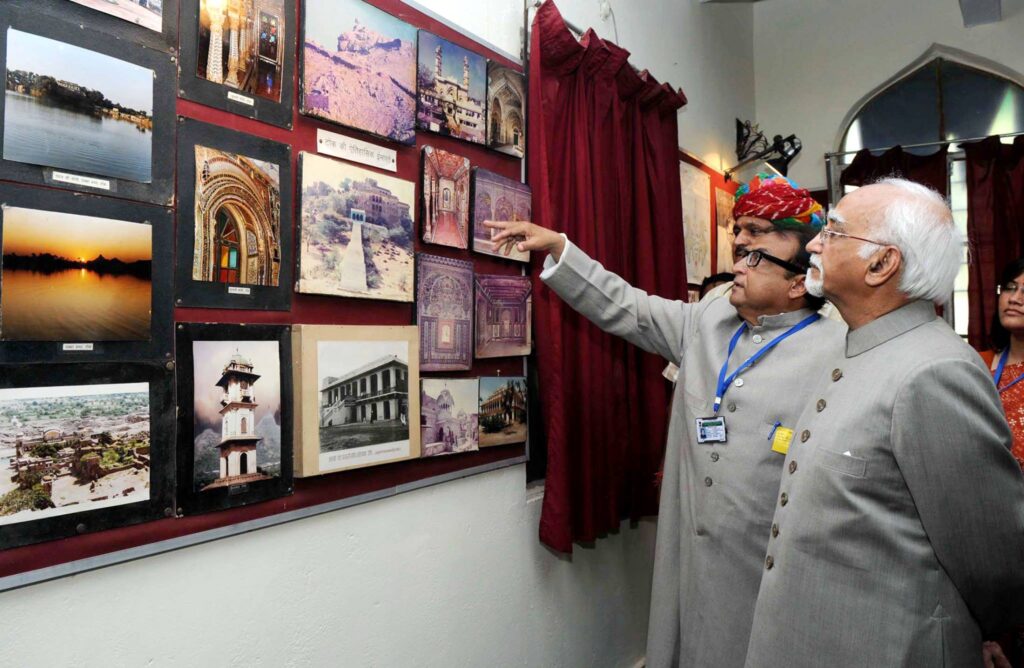
Former Vice-President Mohammed hamid Ansari at APRI, Tonk
The institute also plans to establish a museum on its premises to display rare manuscripts and artefacts in different sections. Chief Minister Ashok Gehlot announced the construction of a Publication and Museum Block in the APRI while replying to the debate on the Finance and Appropriation Bill in the State Assembly on March 17.
Former Vice-President Mohammed Hamid Ansari during his visit to APRI, Tonk.
source: http://www.indiatomorrow.net / India Tomorrow / Home> Education / by India Tomorrow Correspondent / March 27th, 2023
Despite the unprecedented popularity of J.K. Rowling’s fantasy novel series, “Harry Potter’ and Jeffry Kinney’s Wimpy Kid series, it is widely believed that the book faces an existential crisis as the dazzling visual culture will soon make it archaic.
The readership of books on different themes in various genres has stagnated. However, contrary to this, young adult literature seems to be a thing of feathers as it judiciously juxtaposes the elemental art of storytelling with poetic sensibilities. If it is short stories or novels, one can find easy-to-understand text structures, different focalizations and multiple narrators with strong moral bearings. In the era of book decline culture, the popularity of children’s literature in verse and prose goes beyond geographical boundaries and language barriers.
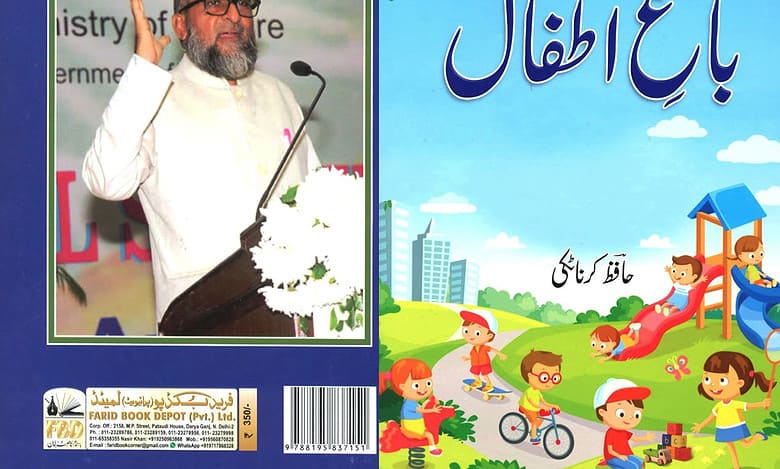
It is heartening to note that the celebrated Urdu poet Hafiz Karnataki has provided the “sweet spot” to Urdu publishing. It did not happen in the famous centres of Urdu literature and culture –Delhi, Lucknow, Hyderabad, Patna and the like; this remarkable feat was achieved by a poet who lives in Karnataka. Recently his hundredth book, Baagh e-Atfal (The Garden of Children), was launched in the presence of eminent Urdu authors and poets, including Khaleel Mamoon, Professor Irtiza Kareem, Professor Ejaz Ali Arshad, Dr Shaista Yusuf, Dr Dabeer Ahmad, Dr Abdullah Imtiyaz, and many others during a three-day national conference on children literature held in Shikaripur, Karnataka.
Hafiz Karnatki, a recipient of the prestigious Sahitya academy award for children’s literature(Urdu ), is an accomplished poet who uses various verse genres such as Ghazal, Rubaiyee, Masnavi, Nazam and others with equal ease. His evocative and multi-sensory verses covering a plethora of themes indicate the ever-increasing range of creative dexterity. He meticulously rendered the life history of the Prophet in verse for children. He made it a point to explain the moral and ethical contribution of the Prophet to humanity. Perhaps he is the first Urdu poet who blazed a new trail in Urdu’s age-long tradition of hagiography by composing it in verse fully alive to children’s cognitive level and expectations. His two books, Hamare Nabi and Zikre Nabi, impeccably summarise the life and teachings of the Prophet.
Hafiz Karnataki is fully committed to fulfilling children’s cultural and literary aspirations and produced nursery rhymes, limericks, short poems and long poems on single topics in a fresh idiom. He gives credit to children for his creative sharpness and cerebral outpourings.” I always strive to stitch up a warm and ceaseless dialogue with young minds, keeping me fresh and mentally alert. Their appreciation and feedback unfailingly hone my writing. As long as this conversation is continued, my literary pursuits bear more fruits,” Hafiz unassumingly asserts.
At the insistence of his young admirers and living up to their expectations, a teacher turned poet Hafiz Karnatki, who has written forty-six books in prose and sixty in verse, started composing much – admired genre of Urdu poetry, Ghazal for children. He compiled six collections of ghazals titled Massod Ghazlen, Nanhi Munni Ghazlen, Bachoon ki Ghazleyen, Ghazal Saaz, Shaane ghazal, and Jan e Ghazal. The poet went further ahead and started meticulously setting ghazals to the tunes and Raags cherished by the children by using Urdu prosody. His verses drawing sustenance from religion, traditions, convictions, cultural, literary and linguistic sensibilities got tremendous applause, and his poems are popular on social media. His latest collection of exclusive poems praising God, Allaho Ahad, has just hit the stand. His hundredth book, Baagh-e-Atfal, carries more than one hundred succinct and didactic poems, zeroes on the topics that directly impact day-to-day life. A distinct tilt towards universal human values and moral framework binds through poems that poignantly harp on different themes. It looks incredible that a person fully trained in traditional knowledge and a scholar of oriental learning has a penchant for new technology. New information technology is an empowering tool that opens its door to all and ushers in a new era of equality. The Internet has subverted the concept of entitled and privileged living, and now everyone is equal as far as the use of technology is concerned. The collection is replete with poems on the tools that shape our lives. Google, Facebook, Twitter, Instagram and others surface repeatedly. Spelling out how Instagram lends a helping hand to its users, Hafiz saheb says, “Tehzeeb bhi yahan hain tammadun ke saath saath/ har shai yahan milegi Tawaazun ke saath saath (One can find culture and civilization simultaneously here/Everything is available here proportionately). Why Twitter has become the handiest medium, Hafiz poetically reasons out, “Jo baat Dil mein na rakh sakho bol do yahan /aik aik kar ke greyhen khol do yahan (pour out whatever you can not keep it to yourself/ Untie the knots one by one here).
The latest collection of the remarkably prolific poet Hafiz Karnatki is braced for making an invaluable contribution to children’s literature, and his efforts deserve accolades from all quarters
Shafey Kidwai, a prominent bilingual critic, is a professor of Mass Communication at AMU, Aligarh
source: http://www.siasat.com / The Siasat Daily / Home> Featured News / by Shafey Kidwai / March 23rd, 2023
“Rising Beyond The Ceiling was born out of the need to change the stereotypical narrative about Muslim women in India,” said Fatehally.
(L to R) Zoya Fatehally, Margaret Alva, Farah Usmani and Aiman Ansari at the book launch
Bengaluru:
Recently, Rising Beyond the Ceiling launched their hardcover edition of Rising Beyond The Ceiling Karnataka publication, after releasing an e-book version of the same in November 2022. With 100 stereotype-shattering stories of inspiring Muslim women from Karnataka, the book is authored by Dr Farah Usmani and co-authored by Dr Zoya Fatehally and Aiman Ansari. Former Governor of Goa, Gujarat, Rajasthan and Uttarakhand, Margaret Alva was the chief guest while director Saad Khan hosted the evening’s launch party.
“Rising Beyond The Ceiling was born out of the need to change the stereotypical narrative about Muslim women in India,” said Fatehally. “The need to change the narrative behind the stereotype about Indian Muslim women not contributing to the nation much and how Muslim women are known for getting married and having a lot of kids and not working was one of the inspirations that drew to author such a book,” said Aiman Ansari, the co-author.
source: http://www.newindianexpress.com / The New Indian Express / Home> Cities> Bengaluru / by Express News Service / March 01st, 2023