Hindustan aur Kuwait (Tarīkhī, Ilmì aur Thaqafatī Rishte’ by Dr Abdul Qadir Shams launched in Delhi.
New Delhi:
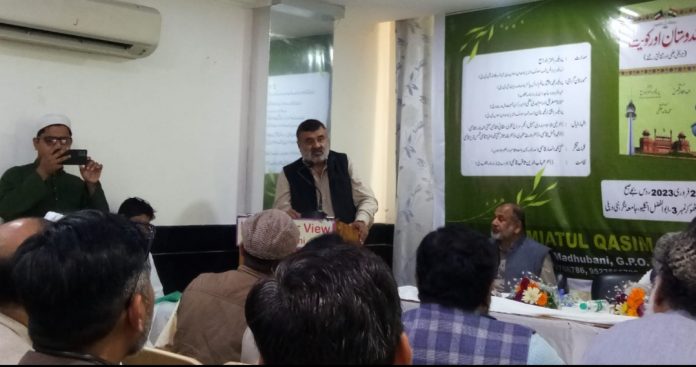
Hindustan aur Kuwait (Tarīkhī, Ilmì aur Thaqafatī Rishte) i.e. India and Kuwait: Historical, Academic and Cultural Relations in Urdu, a book crafted out of the doctoral thesis of late Dr Abdul Qadir Shams Qasmi (1972-2020) originally titled ‘Ulūm-e-Islamī ki Tahqīq-o-Isha’at mein Wazārat-e-Auqaf Kuwait ka Kirdar by Mohammad Khalid Azmi (residing in Kuwait) was launched at Hotel River View, Jamia Nagar, New Delhi on Saturday, 25 February, 2023. The launch programme witnessed a good number of participants from media, academia and other spheres.
The participatns appreciated Khalid Azmi for his timely efforts to turn the thesis into a book with helpful additions to focus on the bilateral role of India and Kuwait in the academic and cultural domains.
The event was presided over by Prof Akhtarul Wasey, Islamic scholar and former president of Maulana Azad University, Jodhpur. Academics and media persons including Dr Raziul Islam Nadwi, Professor Iqtidar Mohammad Khan, Maulana Asghar Ali Imam Mehdi Salafi, Dr Waris Mazhari, Dr Khalid Mubashshir, Dr Mohammad Ajmal, Suhail Anjum, Siraj Naqvi shared their views.
Dr Shahabuddin Saqib Qasmi, senior sub-editor, Urdu daily Inquilab, conducted the event, organised by Qari Zafar Iqbal Madni of Jamiatul Qasim Darul Uloom -il Islamia, Supaul, Bihar.
Mufti Mohammad Ansar Qasmi of Jamiatul Qasim presented vote of thanks.
It should be noted that author and senior journalist, Dr Abdul Qadir Shams Qasmi, had died of cardiac arrest on 25 August, 2020, during Covid-19.
source: http://www.muslimmirror.com / Muslim Mirror / Home> Books / by Manzar Imam / February 27th, 2023
Achan Village (Pulwama District), JAMMU & KASHMIR:
Srinagar :
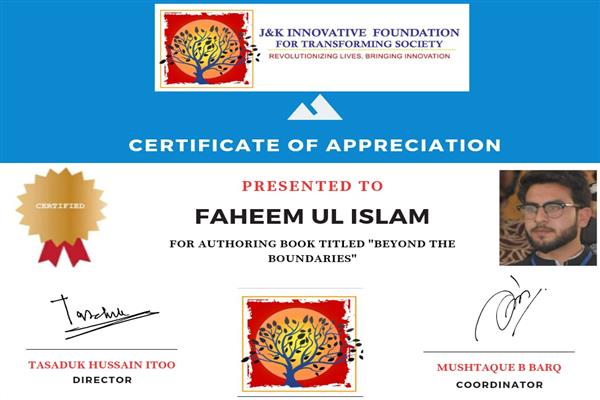
J & K Innovative Foundation for Transforming Society(JKIFTS) on Wednesday awarded a Certificate of Appreciation to Faheem Ul Islam, a young Kashmiri author for authoring book titled “Beyond The Boundaries”.
Appreciating the efforts of young author, Chairman JKIFTS Dr Tasaduk Hussain Itoo said that Faheem is an inspiration to youth and a great public speaker besides an author.
Hailing from Achan village of Pulwama district, Faheem Ul Islam is presently pursuing his bachelor’s (Hons) in political sciences at Aligarh Muslim University.
He has authored the Book “The Midnight Silence” in 2020 and for that Faheem was also awarded.
Pertinent to mention Faheem’s second book titled “Beyond The Boundries” was released recently on International Mother Languages Day in Aligarh, Uttar Pradesh in the auspicious presence of dignitaries including Padma Shri Awardee, Professor Hakim Zillur Rahman, Former Treasurer Aligarh Muslim University.
source: http://www.risingkashmir.com / Rising Kashmir / Home / February 24th, 2022
In a new Translating India series, ten noted translators will share their experiences of translating from their respective languages. In this first part, Urdu critic and writer, Shamsur Rahman Faruqi writes about how he translated his Urdu novel into English.
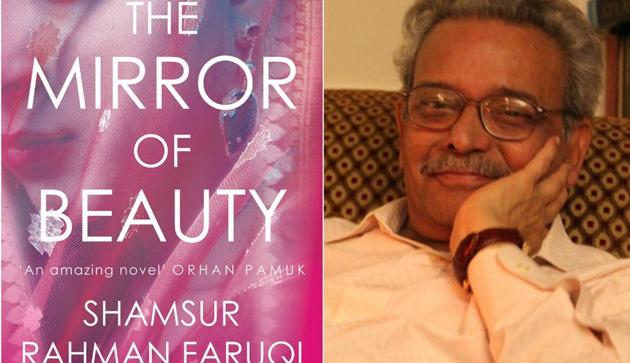
Shamsur Rahman Faruqi translated his Urdu novel Ka’i Chand The Sar-e Asman, which was about the mother of the famous poet Dagh, into English. It was published in 2014 as The Mirror of Beauty.(Facebook)
My name is Ka’i Chand The Sar-e Asman. In English, somewhat arbitrarily, I am called The Mirror of Beauty. I am an Urdu novel, a little above 850 pages long. My English avatar is nearly a thousand pages worth of prose of a somewhat quaint register, or registers.
I was somewhat horrified when an author approached me with the proposal to translate me into English. I said: “I hope you aren’t going to do to me what the Bard did to Bottom in A Midsummer Night’s Dream as he casually turned him into a donkey — “Bless thee, Bottom, bless thee. Thou art translated!”
“No, no,” he cried with a tight voice. “Do you doubt my proficiency…?”
“Yes, that too could bear some scrutiny, but my doubt mainly springs from the nature of the beast.”
“You believe I created a monster,” he fumed, somewhat red-faced.
“Do not misunderstand me. In fact, you know very well what you created, and I am quite comfortable with it. Let me remind you…”
“Yes, I know,” he said somewhat testily. “I made you somewhat exotic. I wrote you in about ten different styles, or registers. In general, you are highly Persianised; Arabic is just round the corner almost everywhere. Your narrative language is mostly archaic, so also the dialogues. Most of your women speak what is now called Begamati Zaban, that is, they use words which only women used. You have courtly language in play on almost all occasions in life, from speaking of love to being belligerent, even warlike. Irritatingly, or most piquantly-spicily, your pages are peppered with poetry in Persian or Urdu.”
“Yes, and the professional and technical details, some of them almost untranslatable,” I said.
“Yet you seem to be missing the chief point here,” he said, with his nose in the air.
“And pray, what’s that?” I must confess that I was somewhat nettled by his superior air.
Read the curtain raiser to the Translating India series here.
“Incompatibility,” he said. “English and Urdu are incompatible, and just not grammatically. Urdu’s a genius, especially in the creative modes, is given to elaboration, intensification, abstraction. And Urdu has many more words for emotions; English for all its vastness is remarkably destitute in this area. Take ‘love’, for instance. How many words can you think of in English, including Latinisms and archaisms, to convey the idea of love? Well, just one, or maybe another two or three if you stretch the matter. Urdu has at least 18 words to express the emotion of love. Apart from love too, Urdu’s language of formal discourse has numerous words expressing the same idea with different degrees of intensity or emphasis or nuance. English and Urdu make strange bed-fellows, almost always.”
I felt dispirited. So I will remain hidden behind Urdu’s veil, almost like Lucy, who though fair as a star, lived unknown. But I brightened at the thought that I won’t suffer the mutilation that almost all translations turn out to be. So I said: “Well, then you are saved the trouble of undertaking this back-breaking job, I hope?”
“No”, he smiled his artful, almost crafty smile. “You forget that I am the author, not just some hack pulling an ancient rickety cart of translation.”
“So?”
“First thing,” said he, “As author-translator, I can take liberties, within reasonable limits. I am aware that I am the author of the Urdu novel, I am not composing an original novel in English. But I’ll not let the Urdu text hang too heavy on my translator’s intuitions. Like all translators I’ll give up certain things (like the 18 or so words for love), but will also add certain things.
‘When I sit down to do the English version, I am able to visualise the spirit of the Urdu and almost see it passing into the English words that came to me as I put them then on the page.’
“Most importantly, I’ll exchange the archaic Urdu with a deliberately archaic, passionately and shamelessly 19th century English. I will not permit the entry of a word or usage which came into the language after the time of Victoria, that is, mid to late 19th century. The flavour of the specialised languages and registers of Urdu I’ll give up in favour of translating literally all Urdu words and phrases and make them sound natural to the narrative. I will render the ‘excesses’ of the Urdu into English.”
“And what will you do about the poetry?”
“Well, I am the author, and thus share a bit of the original author’s persona when I quote his poetry.”
It seemed to me that he bared his teeth, somewhat like a dog teasing and enjoying a favourite bone.
“I will translate faithfully, but I’ll use a compromise language – a little modern, a little archaic – to suit the environment of the narrative. And remember, the poetry that I have quoted (and I even wrote some of it, under the names of Dagh, or his mother) is entirely in harmony with the narrative. So, without doing violence to the original, I should produce passable English poems, effective and genuine in their own right.”
“I fear your labours may result into transcreation of some sort,” I said somewhat timidly.
“Transcreation? I defy transcreation. You either translate or create. When I am done, you open any page of the translation, you will recognise the relevant Urdu text instantly.”
“That is something that most translators from Urdu have despaired of,” I said. “How do you hope to do it?
“For one thing, I am fully steeped into the Urdu – its moods, its inner complications, its special characteristics. And I have lived with you for a long time before you came into existence. When I sit down to do the English version, I am able to visualise the spirit of the Urdu and almost see it passing into the English words that came to me as I put them then on the page.”
“But you haven’t even started, how do you know you can do it?”
“Come back after a couple of years and see for yourself.”
A recipient of Saraswati Samman (1996) and Padma Shri (2009), Shamsur Rahman Faruqi is a leading Urdu critic and theorist. The views expressed are personal.
source: http://www.hindustantimes.com / Hindustan Times / Home> Books / by Shamsur Rahman Faruqi, IANS – Indo Asian News Service / February 10th, 2018
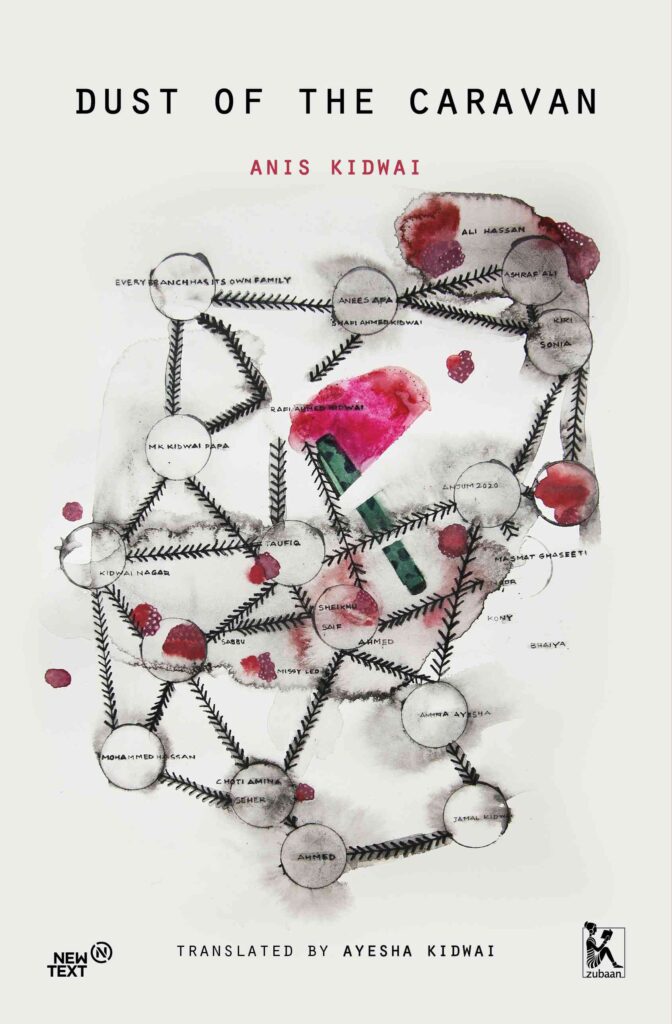
An excerpt from Anis Kidwai’s memoir, translated from the Urdu by Ayesha Kidwai.
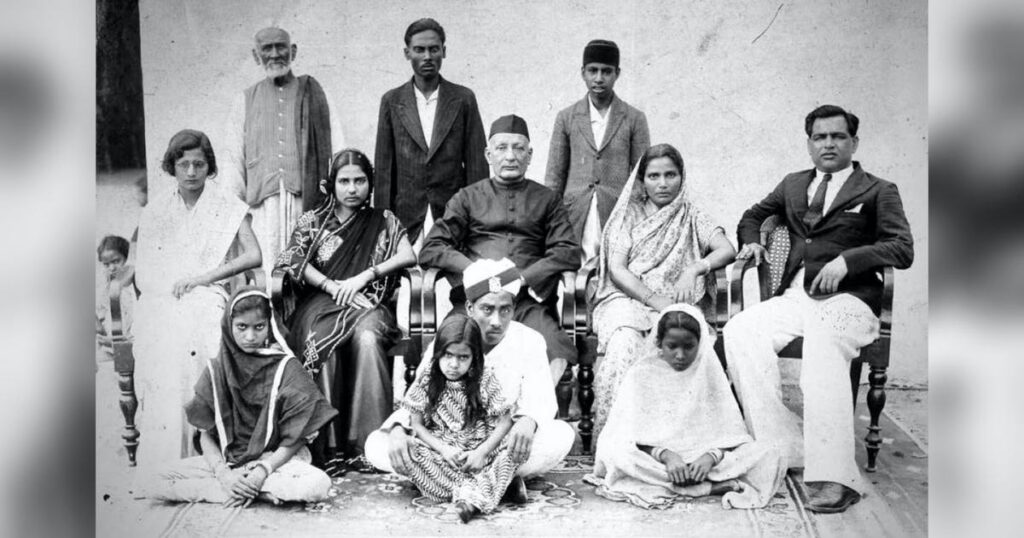
Author Anis Kidwai (second from right, middle row) with members of the family and family retainers.
Amongst the dream-like memories there is also one of an evening in which my Bua has my younger brother in her arms and I am walking alongside them. At a short distance from the house, I see a dirty bundle of clothes lying on the road and I give it a kick. The bundle groans loudly, and my Bua exclaims, “Hai! What are you doing?! You don’t kick a human child, do you?” She sits down besides it and starts speaking to it. In response, the bundle of rags unjumbles. At first, two pairs of arms and legs, burning hot, appear, and soon we are on our way home, a dirty young girl tottering along with us.
The girl was quite a bit older than me, but I went about the house preening – she was my “discovery”, the one I had found and brought home.
Her fever came down with medicines the very next day and my mother herself stood by and supervised as one of the women servants gave her a bath with water, soap, and besan. The grime and dirt were rubbed off of her with potshards. With a kurta from one person, a paijama from another, a pink orhni draped on her, that pitch-black girl was soon transformed into a comely one with large eyes and golden skin the colour of wheat.
Just a few days of a regular diet brought out her beauty even more, and within a month, this twelve- or thirteen-year-old girl was always to be found teasing and flirting with the other servants. We named her Nargis. I was very happy and pleased with her and kept her by my side always.
One day, Nargis accompanied me to the part of the house where the cousins who were living with us for their studies, resided. I don’t know what exactly happened, but soon little pebbles started flying around, and peals of laughter bubbled in the air. I felt compelled to go report to my mother that Nargis was throwing stones. The next I knew, Nargis was given a few slaps and ordered never to even think of making her way to that side of the house ever again. And shortly after, she was sent off to my nānī’s home for education and training.
It was one year later that she returned. In her colourful gharara, shining with gold trim and embroidery, and the red dupatta she wore around her shoulders, she was now a married woman. A dim-witted young man was by her side, and he was at once engaged by our family, and sent off to Aligarh to serve Rafi sahab.
Once I said to Nargis, “Your husband is calling you.” My words were greeted with a loud snort and a gob of spit. She detested him.
And though she stayed with us and grew more beautiful by the day, she never gave that husband of hers a second look. The truth was that she had eyes only for one manservant of ours, handsome in his beplumed turban. Eventually, one night, Nargis disappeared altogether.
It was only three years later that she returned. We all surrounded her, delighted to see her. She now swore by Our Father and Jesus Christ and wore a skirt. The Christian missionaries had inducted her into Jesus’s flock of sheep and had taught her to say, “Oh Heavenly Father, let your will be fulfilled on earth as it is in heaven, and give us our daily bread.”
We brothers and sisters pleaded with her, “Nargis come back to us!” And to our delight, she agreed. However, now her manner was quite brazen. After a year or so of revelry, she decamped with the magnificently turbaned manservant. The next year this esteemed employee was sighted in the mela at Dewa, dressed in saffron robes, now a self-declared pir, but Nargis never returned. And we never got any further news of her.
For everyone else, Nargis soon became long-forgotten, but her memory has always remained in my heart. Today when I am concerned with the education, reform, and improvement in the lives of the girls in the Women’s Service Home, I think of Nargis again. If only we had afforded her some ease and facilities, her ruined life could have been repaired.
One day, my mother told me that I was to go to visit an aunt, whose husband was a senior lawyer in the city.
She had visited us a short while ago and had said that she wanted her daughters to meet me. Since her elder daughter was ill, they couldn’t visit us, so I must go to them, she said.
To be invited as a guest was a matter of great pride and fulfilment for me. I got ready quickly and sat in the palanquin. I was escorted by one uncle and Ramzan Baba carrying his big staff. Arriving in such pomp made me stand up tall as I alighted at my destination.
My aunt received me outside in the veranda. She hugged me affectionately repeatedly, expressed her delight that I had come, and then took me inside saying, “Let me take you to Habiba’s room. She is bedridden with a boil on her leg and cannot walk.”
Habiba was with her two younger sisters, two or three daughters of maidservants and perhaps also a couple of girls who were her relatives. I was invited with great informality to sit on her bed and conversation began. Confidences about themselves, information about their neighbours, stories about their villages, romantic sagas of passion, tales of spectres and demons, black magic, gossip about debauched men… oh lord, how much information these girls had! That was the day that I came to understand what a simpleton I was in comparison.
Ghost stories were forbidden in my home, and I had never even seen philtres and potions. The information that a ḍāyan bewitches men into states of utter foolishness, that certain female ghosts speak through their noses and have their feet on backwards, made my hair stand on end. Habiba was just one year older than me, yet she had seen all these things with her own eyes!
But when the girls started talking about how the Munshi has kept his second wife in his house, I couldn’t restrain myself any longer.
What was odd or scandalous in this – where else was he supposed to keep her? Outside? My foolish questions elicited peals of laughter. But I couldn’t bring myself to believe in the truth of what they said – no man could really have two wives.
Habiba’s insistence was that every man had a randi (prostitute). Her father also had one. She doesn’t come to the house, but we go to hers. But what was a ranḍi like? My question once again induced hysterical laughter.
“What’s she like? You don’t know? You are such an innocent fool!’’
A fool I certainly was, because when I returned home with this treasure trove of new knowledge, I reported it all to my mother, and even repeated a few of the observations the girls had made. My mother was exceedingly displeased. It was perhaps because of this that I wasn’t ever allowed to visit them again, although I was always eager to meet those girls of a thousand tales.
Excerpted with permission from Dust of the Caravan, Anis Kidwai, translated from the Urdu by Ayesha Kidwai.
source: http://www.scroll.in / Scroll.in / Home> Book Excerpt / by Anis Kidwai / February 18th, 2021
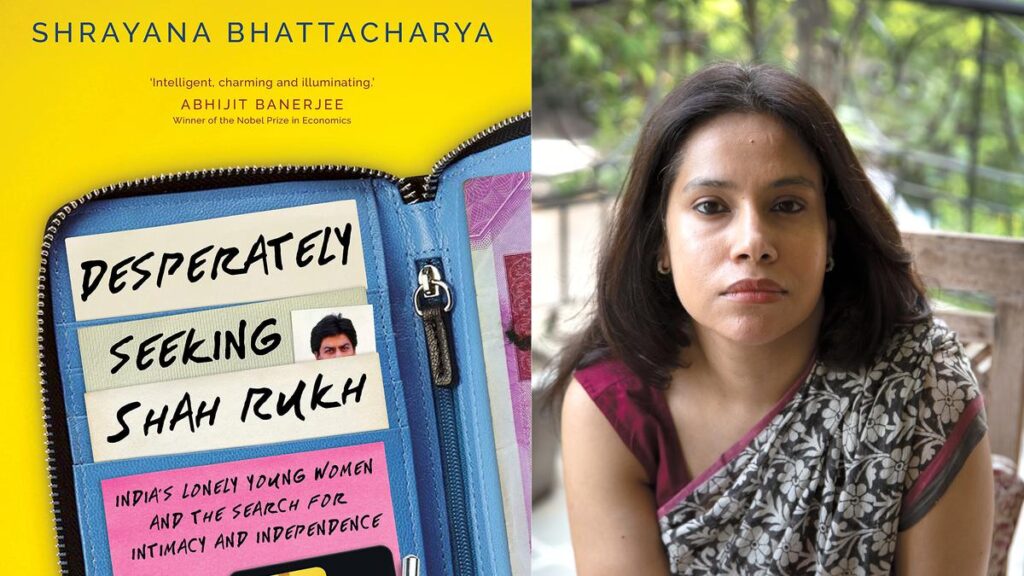
Shrayana Bhattacharya will speak at The Hindu Lit for Life in Chennai on February 25, 2023.
Shrayana Bhattacharya’s Desperately Seeking Shah Rukh: India’s Lonely Young Women and the Search for Intimacy and Independence is one of those interdisciplinary books that defy easy categorisation.
It is primarily a book about Indian women, their aspirations, their systemically undervalued labour, and the other socio-economic inequities they continue to be subjected to. The narrative just happens to be strung together by Shah Rukh Khan fandom. Like the projectionist of yore bounced images off a wall for our viewing pleasure, these women project their hopes and desires onto their favourite star’s movies.
As the author, who will be a part of The Hindu Lit for Life in Chennai on February 25, says in the preface, “My primary interest is to shed light on the trajectories of a few Indian women as they travelled from the 1990s into the 2020s with a film star for companionship. These journeys are as far from feminist principles as Shah Rukh’s films are. Their politics may not live up to progressive ideals. But the messy beliefs on display serve as important guides to understand the lived experiences of Indian women without active Twitter handles, those considered too ordinary to find mention in the news.”
The book has recently been translated to Hindi as well. “I remember when the book was first released in November 2022, the way it was discussed was quite funny,” says Bhattacharya, an economist with the World Bank. “The people who’ve blurbed the book are well-known economists. Despite that, some people thought the book was erotic fan fiction. Perhaps because they saw Shah Rukh’s name on the cover? It took them a while to register that the book is actually about gender and economics, and that the actor is an entry point, a research method.”
Channelling SRK’s fandom
The ‘research method’ bit was especially important because it became a way for Bhattacharya to connect with the young women (especially those belonging to villages or really small towns) she was interviewing. Also, the author feels, her own status as a single woman, living alone and earning her own money, became a point of connection for some. But the one thing that was a constant was the instant likeability of the Shah Rukh fandom. With time and patience and slow, unhurried engagement, she began to win them over.
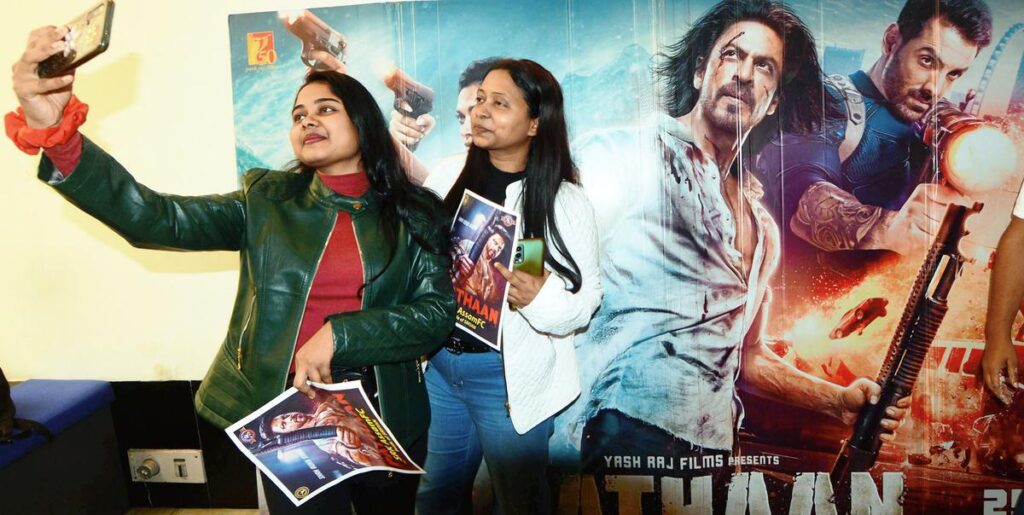
Shahrukh Khan fan club members at a theatre in Guwahati on the day of the release of ‘Pathaan’, January 25, 2023. | Photo Credit: PTI
“These women connected with me because I could speak the language of Shah Rukh Khan,” Bhattacharya says. “I am a believer in slow, laboured, gradual engagement. And I’m very clear about the fact that this is how I want to write my next book as well. I want it to be longitudinal. When I met these women, it was for a research project but I wasn’t tied to a deadline and that difference in approach is significant.”
What of the man himself, then? With Pathaan, Khan has just scored the biggest hit of his career. His fan clubs have never been more vocal and there’s every chance that his next film, Jawan, which sees him teaming up with Tamil stalwarts Vijay Sethupathi and Nayanthara, will be an even bigger success. According to Bhattacharya, most of the fan videos shot around Pathaan feature mostly men, and when she watched the movie herself at a 7 a.m. show in Saket, the hall had “maybe five or six women”.
The matinee idol
“I just want to clarify that there’s a large — though not as vocal — Shah Rukh fan base among women and while they’re happy at his success, they also hope he will do a romantic film again soon. Someone recently told me that Shah Rukh’s scenes with Dimple Kapadia are how you know he’s an irrepressible matinee idol — no man in the Indian defence establishment would have been okay with a woman wielding that much power!”
Significantly, Pathaan also shows the superstar acknowledging his age and the fact that younger, perhaps hungrier competitors are circling the throne. However, as the post-credits scene with Salman Khan makes it clear, the King is in no mood to slow down just yet.
“I particularly enjoyed the little hat-tips to middle age in Pathaan,” Bhattacharya says. “The coffees and the back pain and the painkillers. I’ve always said that Shah Rukh Khan exists to make South Asian men feel bad about themselves and even at 58 or 60, he will continue to do that.”
The writer and journalist is working on his first book of non-fiction.
The Hindu Lit for Life 2023 is, Powered by Life Insurance Corporation of India, Jewellery Partner: joyalukkas, Banking Partner : Indian Bank Associate Partners: Nitte Meenakshi Institute of technology, Hindustan Group of Institutions , State Bank of India & VFS Global Realty Partner: Casagrand, Knowledge Partner: SSVM Institutions Bookstore Partner: Higginbothams & Gift Partner : Anand Prakash
Lt-Gen Zamiruddin Shah, Ramlal, Dr Krishna Gopal, Shahid Akhtar, Dr Mohan Bhagwat , Dr Khwaja Iftikhar Ahmed, Dr Indresh Kumar, Gen V K Singh
Ghaziabad :
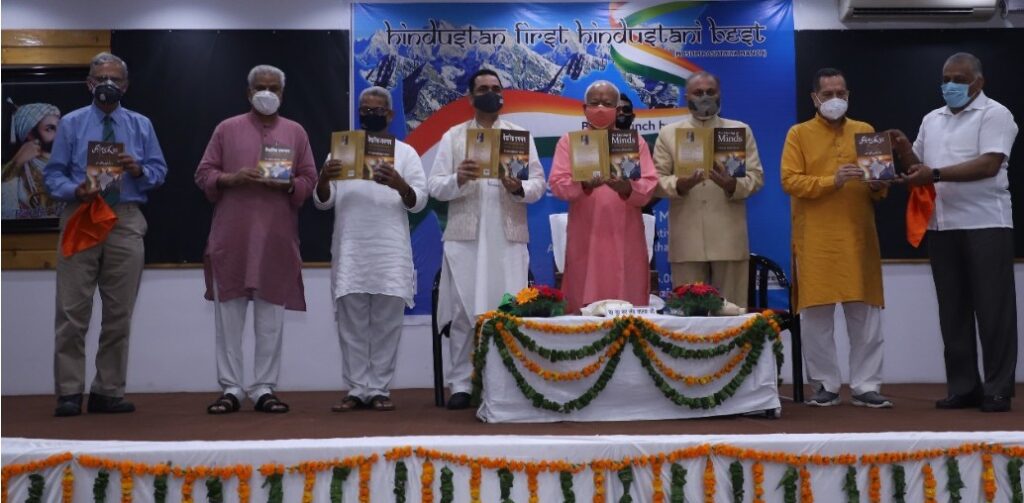
“There is a need to guard against fear-mongering that the Rashtriya Swayamsevak Sangh is against minorities or that Islam is in danger in India. I believe that the DNA of the people of India is the same and that both Hindus and Muslims are one entity,” said Dr Mohan Rao Bhagwat, Sarsanghchalak, RSS, on Sunday at the Kitaab book launch event where he unveiled Dr Khwaja Iftikhar Ahmed’s book – “The Meeting of Minds: A Bridging Initiative”.
The book launch at Ghaziabad was organized by Prabha Khaitan Foundation of Kolkata in association with Muslim Rashtriya Manch and presented by Shree Cement.
“When people speak about the need for Hindu-Muslim unity, we say we are already one, we are not separate,” Bhagwat said.
Leading professors, scholars, students and eminent personalities from across the globe attended the event that was streamed live. “This is a historic moment as intellectuals meet at one point. The book, which took me eleven months to write, is an honest straight forward account of economics, politics, emotional and many other aspects that determine our national interest; and the fate of tomorrow’s India. We need dialogue and not deadlock, there should be trust and brotherhood among Hindus and Muslims and together we shall make India the `Vishwa Guru’,” said author Dr Khwaja Iftikhar Ahmed who is revered scholar, philosopher and academic.
“Honesty, integrity and credibility are the hallmarks of any relationship and would guide all the future actions and initiatives. He lamented that secular politics of today has brought us to a dead end. If there is no organisation, there is no ideology; if there is no ideology, there are no ideologue; if there are no ideologue, there is no direction; if there is no action and instead of response people react,” said, Dr Khwaja, whose book is now available in English, Hindi and Urdu.
Dr Khwaja lavished praised on Prime Minister Narendra Modi, “We are lucky to have one of the most decisive prime minister ever. He calls a spade a spade and takes firm decisions.”
Dr Mohan Bhagwat said that political parties cannot act as tools to either help unite people or deepen the divide but can influence it. Allaying fears that a majoritarian sentiment is gaining ground in India, he said when atrocities take place against the minorities, voices in protest come from the majority itself. “If anyone says that Muslims should not stay in India then he is not a Hindu,” Bhagwat said.
Alluding to violence against minorities by alleged cow vigilantes, Bhagwat said that though cows are revered in India, violence in the name of cow protection cannot be condoned. “Law should take its course. They should investigate without partiality and punish the guilty. Anyone who is involved in lynching is not a Hindu,” he said.
Kitaab is an initiative of Prabha Khaitan Foundation which provides a forum for book launches by connecting intellectuals, book lovers and litterateurs with authors. Eminent authors like Shashi Tharoor, Vikram Sampath, Salman Khurshid, Kunal Basu, Vir Sanghvi, Vikas Jha, Luke Kutinho, Jeffrey Archer,Devdutt Patnaik, Anupam Kher, Ram Madhav, Guru Prakash Paswan, Sanjaya Baruand others have earlier had book launching sessions at Kitaab.
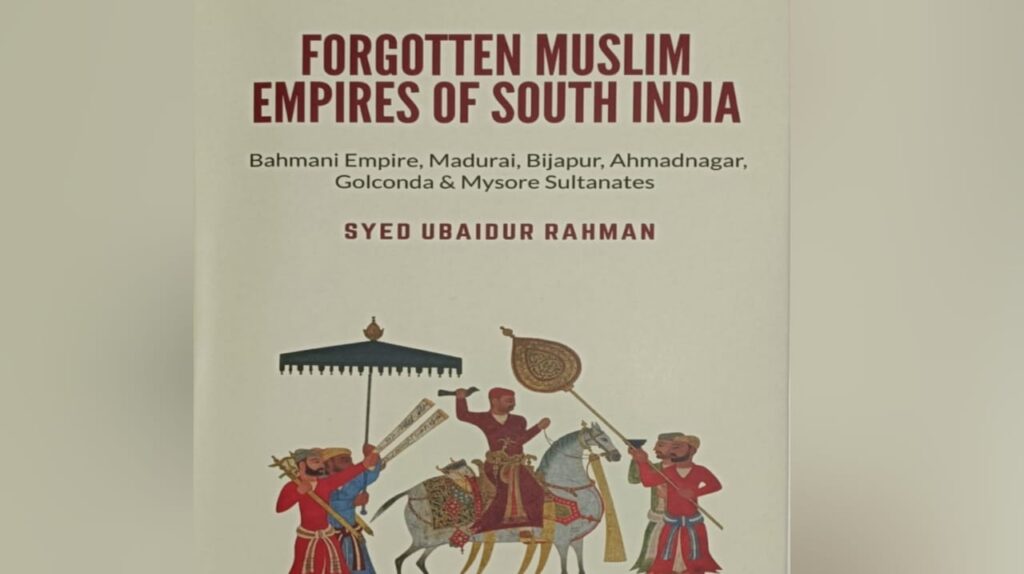
Delhi-based author Syed Ubaidur Rahman’s latest book is making waves among academics and history buffs these days. His book, ‘Forgotten Muslim Empires of South India: Bahmani Empire, Madurai, Bijapur, Ahmadnagar, Golconda and Mysore Sultanates’ that was released earlier this month has caught the imagination of a large number of people.
While the Muslim history in north India is well documented, the history of Muslims in the Deccan hasn’t caught the same attention. This is the reason that while hundreds of books have been penned on the Mughals and the Delhi Sultanate’s rule in different languages, if you try to lay your hands on the Muslim rule elsewhere, there is very little available on the ruling dynasties and their rule in other regions including South India.
Syed Ubaidur Rahman’s latest book tries to correct this mistake and bring back the Muslim sultanates of the Deccan and south India into focus. The voluminous book of 664 pages, it contains a more than three hundred fifty page chapter on the Bahmani Empire alone.
When asked as to why he wrote so much on the Bahmani Sultanate, the author says, “Bahmani Sultanate, towards the end of the 14th century was the pre-eminent power not just in South India, but across the Indian subcontinent. However, despite its resplendent and great past, there is not much literature available on the Bahmani Sultanate that was the most powerful empire from mid fourteenth century till the end of the fifteenth century. It has been relegated to the margins of history in our school syllabus and even in our history books. In this book, I have made an effort to bring it back to common imagination and make it a talking point”.
The author goes on to add that “The Bahmanis and the latter day sultanates in the region had a transformative impact over the populace, both Muslims and Hindus. Not much is written about how the Bahmani sultans spread education across the region and established schools and colleges in every major towns of their realm that not just provided free education to the pupils but took care of all their needs including food and lodging. Muhammad Shah II, during his peaceful reign of close to two decades, ensured that schools and colleges were established in almost every part of the sultanate with hostel facilities. The building of Mahmud Gawan’s university is still standing tall in Bidar, the second capital of the Bahmani empire”.
Chapters on Bijapur’s Adil Shahi Sultanate, Ahmadnagar’s Nizam Shahi Sultanate, Golconda’s Qutb Shahi Sultanate, besides Madurai and Hyder Ali and Tipu Sultan’s Mysore Sultanates are also thoroughly engaging, detailed and informative.
The book is a must read for history buffs, especially the ones who are concerned with preserving Indian Muslim history in the country.
***
Name of the book: ‘Forgotten Muslim Empire of South India’
Discussions and debates, critiques and readings, held at haunts of Urdu books and writing around the country have been interrupted rudely.
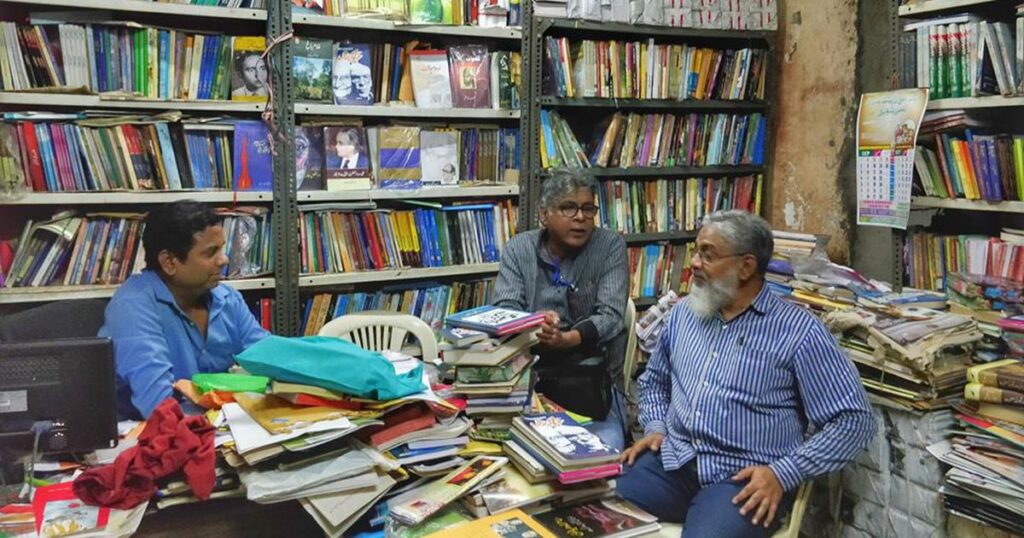
(From left) Shadab Rashid, Urdu drama writer Aslam Parvez, and Shakeel Rasheed at Kitabdaar | Mahtab Alam
In Malegaon
On the first Saturday of every month, the textile city of Malegaon in northern Maharashtra used to become home for lovers of Urdu literature, who meet to discuss, debate and critique new writings in the language, mostly by local writers. Organised under the aegis of Anjuman Muhibban e Adab (Association of Literature Lovers), the gathering began at around 9 pm, and went on till midnight.
Between 30 and 50 people – both writers and readers – would come together, a number that would at times go up to as many as 100 or even 150. Asif Iqbal Mirza, the secretary of the Anjuman, said the practice began 25 years ago on the suggestion of local journalist and editor Samiullah Ansari, who published new Urdu fiction in his weekly, Hashmi Awaz.
Over the years, the publication had emerged as a popular local magazine for young and budding writers to publish their works. The weekly, now in its 35th year of publication, had a considerable fan following and readership at the time. Ansari then suggested that admirers of the magazine form a group comprising readers as well as writers.
The group was initially named Anjuman Muhibban e Hashmi Awaz (Association of Admirers of Hashmi Awaz), but within a few years, its following grew to encompass more than just the readers of the magazine, and in 1998 it was rechristened Anjuman Muhibban e Adab, Malegaon. “Ansari sahib formed the Anjuman so that writers could get their new works critiqued by readers before getting them published in the weekly,” Mirza ssid.
Back then, Mirza himself wrote for a local children’s newspaper called Khair Andesh. But his association with the Anjuman helped him grow into a prolific Afsana Nigar, a short story writer. He was 17 when the group was formed; in the past 25 years, he has written and published more than 200 short stories in different publications.
Apart from Anjuman Muhibban e Adab, there are two more literary groups in Malegaon that held regular meetings until the lockdown was declared in March. No such meetings have been held since then. “Unlike earlier, we now have enough time to read and write. But the irony is we don’t have the opportunity to discuss and publish them,” said Mirza, who also runs a printing business. Several local publications had to halt their issues, including Hashmi Awaz, owing to the lockdown.
According to Mirza, although social media outlets such as WhatsApp and Facebook have, to some extent, helped to keep in touch with fellow writers and readers, the literary life of Malegaon has come to a standstill, since a large number of local writers and readers came from the working class and worked in local looms. “The year 2020 is the silver jubilee of my literary career. I had plans to publish a collection of my short stories, but thanks to the pandemic, that will not happen this year,” Mirza said with a great sense of despair.
In Mumbai
Both readers and writers have felt a deep loss during the pandemic. His love of books took Shakeel Rasheed, editor of the Urdu daily Mumbai Urdu News, to various bookshops in and around the Mohammad Ali Road area of Bombay. “Visiting bookshops was a part and parcel of my life. I feel a deep loss when I don’t visit them,” he said. For him, bookstores are not just spaces to buy books, but they also served as addas for readers and writers. As soon as some relaxations were in place, he rushed to the stores. “Par ab pahle wali baat nahi rahi,” said Rasheed. “Things are not as they were before.” The pandemic has made it more difficult to meet new people.
Shadab Rashid’s Kitabdaar publications and bookstore in Temkar Street of Nagpada was one such adda for Urdu writers in Mumbai, as was Maktaba Jamia on Sandhurst Road West. Today, Kitabdaar and a few other bookshops have opened their stores for a few hours every few days, while Maktaba Jamia remains closed. “Due to lack of public transport and fear of the pandemic, people cannot come to Kitabdaar,” Shadab said. He also edits the quarterly literary magazine Naya Waraq, founded by his late father and noted journalist and writer Sajid Rasheed.
Shadab Rashid said the lockdown brought significant hardships and losses to Urdu publishers and distributors. “It is not that people don’t want to read Urdu books anymore – the problem is they cannot buy them,” he said. “I have received lots of online orders, but I cannot fulfill them because I rely on postal services as they are the cheapest means of delivery, but the services are not fully functional yet.” His online Urdu bookshop kitabdaar.com is one of the few digital distribution platforms for Urdu books exclusively in India. Another such platform, urdubazaar.in, was recently launched from Delhi.
Owing to the discontinuation of physical interactions between readers and writers, people have lost touch with each other, since not all Urdu writers are active on social media, Shakeel Rasheed told me. “We have lost many good writers during this period and found out about their demise several days later,” he added. “Moreover, we could not participate in their last journeys.”
In Hyderabad
Another writer recounted similar thoughts after the death of noted Urdu satirist Mujtaba Hussain in Hyderabad on May 27. Hussain was awarded the Padma Shri in 2007 for his contributions to Urdu literature, but in December 2019, he announced he was returning the award to protest the enactment of the contentious Citizenship Amendment Act. “[T]he democracy for which I fought is under attack now and the government is doing that,” he had said, “that’s why I don’t want to associate the government with me.”
In Hyderabad, another centre of Urdu writing, literary activities have come to a similar halt due to the pandemic. Publications like Shagoofa, a monthly magazine of satirical writing, have been temporarily discontinued since the lockdown.
In Delhi
In Delhi, too, the pandemic has left an adverse impact on Urdu writing. Khan Rizwan, a poet and a known “addebaaz” from Delhi, loved participating in and organizing adabi addas (literary gatherings). He misses visiting the Nai Kitab book store, located in one of the many bylanes of Jamia Nagar, which is one of the famous addas for Urdu lovers in the city. Run by veteran writer and publisher Shahid Ali Khan, Nai Kitab is a haven for young and old writers alike, Rizwan said, as Shahid sahib treated them alike. “It is not just a bookshop but an institution where one got to meet noted writers and lovers of Urdu literature,” he said.
Rizwan would visit the shop at least twice a week, and meet a new literature enthusiast or writer, or find out about a new book or risala /parcha (journal/magazine). “I miss the black tea and chips that Shahid sahib served us with love and affection,” he recalled. “He is a storehouse of information, and several veteran writers were his friends, so he would tell us stories all the time.”
I couldn’t agree more with Rizwan. I have been visiting Nai Kitab once every few months for more than a decade now, and on each of my visits, after asking khabar-khairyat, Shahid sahib would say, “Achcha aap bahut dino baad aayen hain, ye nayi kitaabein aayi hai dekh lein (Since you’ve come after a long time, here are some new books).” Last year, when I visited the bookshop around this time, he directed me towards dozens of books written by noted Urdu satirist Fikr Taunsvi and Shaukat Thanvi. I immediately bought all of them, as they were usually out of print and seldom available.
As the person in charge of the Maktaba Jamia, the publication division of Jamia Millia Islamia in Bombay, Shahid Sahib befriended writers and poets like Jan Nisar Akhtar, Meena Kumari, Sahir Ludhianvi and Jagan Nath Azad. Some of them were regular visitors to the Maktaba Jamia. Though he moved to Delhi after serving the Maktaba for several decades, he did not stop hosting literature lovers. He then founded Nai Kitab publishers and a quarterly journal by the same name.
It was in 2007 at his bookshop that I first chanced upon Shamsur Rahman Faruqi’s celebrated novel Kai Chand The Sare Aasman, later translated into English as The Mirror of Beauty by the author himself. The novel went on to become a major critical and commercial success.
Faruqi was also associated with the Nai Kitab journal as chairperson of its advisory council and would visit the shop once in a while. The journal eventually stopped publication owing to Shahid sahib’s failing health, but he continued with the bookstore as it was like “oxygen for him”, he had once told me.
Waiting for freedom
Some writers have managed to turn the lockdown into a creatively productive period. “Personally, the pandemic has proved as a blessing in disguise as I read books I wanted to for years and finish other important work, such as recording videos of Urdu literature lectures,” says Khalid Mubashir, a poet and assistant professor of Urdu literature at Jamia. He quickly added, however, this was not common, as most writers and poets were stuck at home, either because of their age or in fear of the pandemic. “Moreover, not all writers have access to technology and books like I do. I am fortunate enough to have friends who helped me with technology to do something substantial during this period.”
Mubashir’s videos, as many as 60 of them, are each about 30 minutes long, and cover the history, evolution and development of Urdu and its literature in the subcontinent. Though the lectures are prepared keeping in mind the need and syllabus of Urdu literature students, ordinary Urdu lovers can also benefit from them. All lectures are available on the YouTube channel Safeer e Adab.
Similarly, although younger poets like Mohammed Anas Faizi from old Delhi have been trying to keep Urdu literature gatherings going by using social media, online addas do not have the feel and impact of offline and in-person gatherings. “Technology and social media can only help to a certain extent. Online gatherings, mushairas and addas cannot substitute for the real ones, no matter how well they are done,” he said.
With apologies to Faiz Ahmad Faiz, what the Urdu writers, poets and addebaaz seem to be telling the pandemic is:
Gulon Mein Rang Bhare Baad e Nau Bahar Chale Chale Bhi Jao Ki Gulshan Ka Karobar Chale
Mahtab Alam is a multilingual journalist and until recently was the executive editor of The Wire Urdu. His Twitter handle is @MahtabNama.
This series of articles on the impact of the coronavirus pandemic on publishing is curated by Kanishka Gupta.
source: http://www.scroll.in / Scroll.in / Home> Publishing and the Pandemic / by Mahtab Alam / July 14th, 2020
At the Battle of Malegaon, Muslim soldiers in the Maratha army defied the British army for a full month when they had no hope of victory as the Chhatrapati and Peshwa had already surrendered.
These battles, says Colonel Anil A Athale (retd), are in contrast to the colonial mindset driven narrative of Muslim separatism.
The current politics of both communities ensures that the heroes of Malegaon — or for that matter personalities like Ibrahim Khan, who led the Maratha artillery at the battle of Panipat in 1761 — are forgotten.
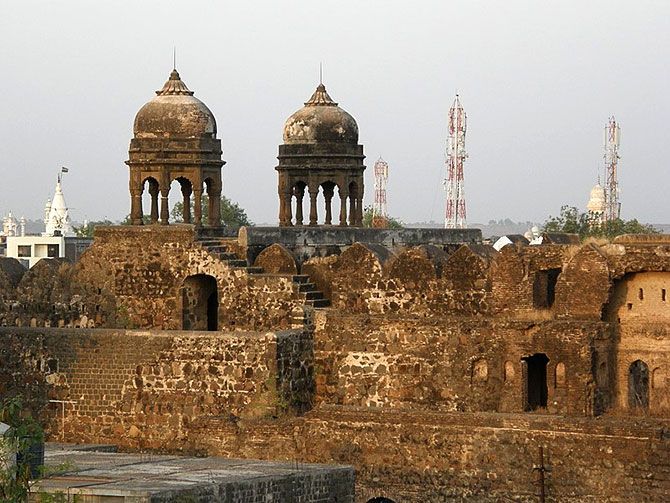
IMAGE: The Malegaon fort. Kind courtesy: Wikipedia
On January 1, 2018, the bicentenary of the defence of Koregaon by a small British force — that had a number of Mahar troops — was observed with great fanfare.
The British — the victors in the third Anglo-Maratha war — erected a pillar to commemorate the event.
During the same war, Muslim troops of the Marathas defied British forces for a full month from May 15, 1818 to June 13, 1818.
Since the Marathas were on the losing side, this saga of bravery was obliterated from history by the British.
As we approach the bicentenary of that event it is time to remember the brave soldiers of the Maratha army who continued to fight even when they had no hope since the Chhatrapati had already been captured by the British and Poona and Satara were under British occupation.
The loyalty to the Maratha flag by its Muslim soldiers even in a hopeless situation deserves to be remembered.
My own research in 1990 began with a question posed by the late Major General D K Palit, a military history scholar of repute.
The question he posed was this: How is it that the Marathas — who spiritedly fought a 22 year-long guerilla war against the mighty Mughal empire — succumbed to the British without a fight?
It is this quest for truth that led me to research the story of the Anglo-Maratha struggles of the 18th and 19th century.
The Battle of Malegaon fought in May-June 1818 was the last major attempt at resistance by the Marathas.
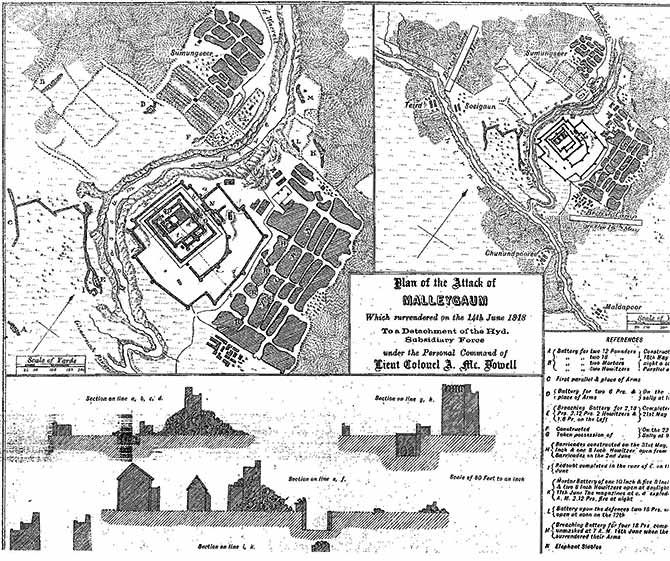
On May 15, 1818, a brigade strength force under Lieutenant Colonel A MacDowell reached the vicinity of Malegaon fort.
The British expected that this show of force would be sufficient to overawe the defenders of the Malegaon fort.
The British were in for a nasty surprise.
In response to summons to surrender, the defenders fired on the British camp leading to panic.
The quadrangular fort of Malegaon is located near the bend in the Musam river so as to cover two side of the fort, Malegaon town being on the other sides.
The fort had two lines of defence built of masonry surrounded by a seven feet wall and a 25 feet deep 16 feet wide ditch.
The outer wall had watch towers built of mud and stone. The inner fort or the citadel was 60 feet high with 16 feet wide ramparts.
On May 16, Colonel MacDowell reached the west bank of the river and began work to erect barriers of breastwork to deploy guns for the final assault.
At 8 am the British began bombardment of the fort with 20 guns, an assortment of 12 pounders (the biggest calibre gun then in India), 8 pounders and mortars.
The defending soldiers sortied out of the fort, destroyed the batteries and killed two British officers and several soldiers.
At the same time 7 guns from the fort opened devastating fire on the British lines on the west bank of the river.
The ding dong battle continued for six days.
On May 22, after particularly heavy shelling from the fort, the British were forced to abandon the breastwork for the guns and retreated.
On May 26, the British — through constant bombardment — succeeded in creating a breach in the inner wall of the fort.
The next day the British launched a three pronged attack after a bombardment lasting nearly two hours.
One column was led by Major Greenhill and consisted of a native battalion of 1,000 soldiers with 100 Europeans to directly go into the fort through the breach.
Another column of 800 sepoys under Lieutenant Colonel Stewart crossed the river downstream to outflank the fort from the west.
The third column consisting of 300 sepoys and 50 Europeans under Major Macbean went towards the river gate.
Each column had pioneers with tools, mines and ladders to tackle the fortification.
But the defenders of the Malegaon fort proved equal to the challenge.
The attacking British were met with a hail of bullets and gunfire. The attempt to scale the inner wall failed. Many of the engineer officers leading the attack suffered injuries.
Both the columns led by Majors Greenhill and Macbean were ordered to withdraw.
Only Lieutenant Colonel; Stewart’s column met with some success and he occupied part of the town.
The stalemate continued till June 4.
On that day another column under Major Watson arrived from Ahmednagar with a battalion of native infantry and a large number of siege guns.
For nine days, till June 13, the fort was subjected to heavy bombardment by the British guns.
On June 13, at 3 pm, the fort garrison accepted surrender and the Union Jack was hoisted in place of the Maratha saffron jari patka flag.
The next morning the garrison of 300 men marched out of the fort and surrendered their arms.
The British strength at Malegaon numbered over 2,000 troops. During the battle the British casualties numbered 11 officers and 220 soldiers (killed or wounded).
Thirty Maratha defenders died while 60 Maratha soldiers were wounded.
The British record states that in the end they used 36 guns, fired over 8,000 shells and used 35,500 pounds of gunpowder.
The British were so impressed with the valour and chivalry of the defenders that they permitted the surrendered soldiers to keep their daggers.
Historian N C Kelkar notes in his Marathi book Marathe ani Ingraj that at one stage the desperate British sent a message to the Muslim soldiers of the Maratha army that since the Chhatrapati had already surrendered, they should do likewise.
The doughty defenders replied that they were indeed aware that their king was in British captivity, but they were yet to receive instructions from him to surrender and therefore would keep fighting.
The devotion to duty and loyalty to their king was of the kind seen later only during World War II when many Japanese soldiers continued to fight even after Japan surrendered.
There is neither any victory pillar nor are the names of these brave soldiers engraved anywhere.
Even two hundred years after the event and the departure of British 70 years ago, the Muslim heroes of battle of Malegaon remain unknown, forgotten and unsung.
Two hundred years ago, the third Anglo-Maratha war fought in 1817 and 1818 ended in the Maratha Chhatrapati and Peshwa (prime minister) surrendering to the English.
After having defeated the Holkars and Shindias in early 1817, the British turned to the conquest of Maharashtra proper.
The full story of the Maratha struggle with the British has for long been swept under the carpet. In its place a modern myth of the British having directly taken over India from the Mughals or accidently acquired an empire has gained currency.
Ignoring the Marathas and their role in ruling most of north and central India was part of the grand colonial project of disinformation that sought to then play up Mughal-Rajput rule.
I recall an interesting news report some years ago, datelined Aligarh, where an Aligarh Muslim university ‘scholar’ had discovered that a major battle between the Marathas and the English had indeed taken place in Aligarh in 1803!
The worthy had, of course, never heard of the second Anglo-Maratha war that took place in 1803-1804 with battles at Delhi, Lassawari near Agra, Aligarh, Shekohabad etc.
The British had sound reasons to whitewash the Maratha period of our history.
Since the Marathas formed a formidable alliance with the Muslims, Jats and Sikhs in resisting the British, they posed a potential threat.
The distortions continued post-Independence as writing and teaching history was hijacked by the left-leaning Delhi elite. But those who ignore the Maratha or Sikh epoch fail to answer a simple question.
The Marathas fought three wars with the British, so did the Sikhs, the Gorkhas and Tipu Sultan in the south. Is there any mention of the Anglo-Mughal wars, even in the doctored historical narrative?
Note: The information about the Battle of Malegaon is based on a British Indian Army General Staff Publication (Simla 1910), Maratha and the Pindari War pages 89-91.
Colonel Anil A Athale (retd) is a military historian. This article is based on extracts from his forthcoming book, The Story of the Mighty Marathas and their Empire.
source: http://www.rediff.com / rediff.com / Home> News / by Colonel Anil A Athale (retd) / April 10th, 2018
Urdu Library in Malegaon turned 100 this year and the library, which has helped many Ph. Ds in their research work, is all set to get University affiliation for research work.
Exceptions are always there, but contrary to general perception, Malegaon, since its instigation, comprised literate and intellectual people by and large. And with two libraries sustaining 100-year, it only confirms this notion.
When it comes to any good library it is the book-collection, not the infrastructure, which is counted but a visit to Urdu Library in Malegaon depicts how beautiful combination of book-collection and infrastructure increases one’s thrust for library.
Founded in October 1903, this 100-year old Library-cum-Research Center, the first kutubkhana, Urdu Library, in Nashik district, is a magnificent two-storey building with separate sections for women and children. Started with just 325 books, it has more than 30,000 systematically arranged books today. Rarely available Kalmi–Nuskhe, hand-written books, and 1901-1950 magazines, are the gleaming-trinkets on the shelf, which any library can envy and aspire for.
How the management has maintained this library with a very small budget is surprising. Khalid Umar Siddiquee, the chairman, said, “Along with the existing splendid structure, the 100-year old visit-book portraying the details of the visiting-dignitaries and the expressions written by them, are enough to show what we have achieved in hundred years.” Although the library always lacked the funds, they persisted with the policy of extending full support for Research Work and free membership to the students up to SSC level, he added.
Reading under an ideal milieu always gives a clutching effect and Urdu Library is again on top to provide this. The ideal reading room, combined with the collection of systematically arranged rare books, transformed this library into wannabe-Ph. D’s paradise. Doctors after doctors have acknowledged the support they had received from the library in completing their thesis.
_______
“Despite small budget, Urdu Library extends full support for Research works and offers free membership to students up to SSC level.
______
Dr. Ilyas Waseem Siddiquee, renowned laureate of the city observes, “Although I had visited several libraries in various cities, nowhere I found the kind of rare books that is available here in Urdu Library. To research and for doctorate on Literature, this is perhaps the only library in Maharashtra.”
When they received five-lakh grant from the state, it was, as if they have found some khazana for the library. With this money whole library was renovated in such a way that it is giving totally different look. The amount also helped in computerizing the library and implementing the bar-code system.
Mohd. Saeed, the librarian since past twenty-three years said, “The library is the first fully computerised library in Malegaon and the implementation of bar-code system has helped in easing the daily library routine.”
With the computersation, the library has started its course towards becoming first fully functional DIGITAL LIBRARY, the dream venture of the management, with many more projects to follow very soon.
source: http://www.ummid.com / Ummid.com / Home / by Aleem Faizee