One of the oldest places in Uttar Pradesh is Sambhal in District Moradabad, has a long list of people in its history who confronted with British and posed great resistance with their historic acts of gallantry. Abdul Qaiyyum, Lala Prem Pal, Qari Abdul Haq, Maqsood Turki, Chaudhary Riyasat Ali, Lala Chandulal, Lala Roop Kishor, Maulvi Noorul Hasan, Sheikh Abdul Raheem, Chetan Swaroop, Radhey Lal Poddar, Munshi Moinuddin, Ml. Sultan Ahmad,Maulvi Abdul Waheed are prominent among such people.
The exact date of birth of Maulana Ismail Sambhli is not known however, he might have taken birth in 1899 at Mohallah Deepa Sarai. He belonged to the Sarwar Waley family of Turk community. His father, Munshi Kifayatullah was considered among the educated people of the area and was famous with the nickname ‘Munshiji’. His grandfather’s name was Sarwar Husain who was a native to village Mundha in J. P. Nagar. Later he shifted to Sambhal. His family surname, Sarwar Waley was due to his grandfather’s name.
He received primary education at Madrasatul Mohammadia, Deepa Sarai and was admitted to class VI to continue further education in English against his mother’s wish. She wanted him to get Arabic education and finally her will prevailed. Meanwhile, his father passed away and he was sent to his elder brother at Bahawalpur where he had the honour to receive education from Maulana Farooq Ahmad, Sheikhul Hadees and Head, Jamia Usmania.
Maulana Farooq Ahmad was the disciple of Shaikhul Hind Maulana Mahmoodul Hasan and relative of Maulana Mansoor Ansari who was put on exile on the pretext of abetting and participating in the freedom movement. He was extremely unhappy with British and a staunch supporter of freedom struggle. It was his company that helped instill a sense of nationalism in the heart of Maulana Ismail Sambhli and inspired him to participate in the freedom struggle.
After completing education at Bahawalpur, Maulana Ismail Sambhli returned back to his native place, Sambhal and continued with his education at Madrasa Sirajul Uloom. In the meantime the barbaric incident of Jalianwala Bagh took place that put the whole of India on fire. A protest strike was observed in Sambhal as well and a mass gathering of all communities was organized at the gardens of Gul Chhatar. Maulana Ismail Sambhli delivered a very inspiring lecture at the mass convention. Maulana was the youngest among all orators yet his oration impressed the public most and thus his national and political life began. Maulana gained popularity as Raees-ul Muqarrareen (master orator).
When the British defeated Turkey, the resulting loss and the sense of defeat made the Muslims furious. On November 22, 1919 the Khilafat Committee was founded and the Jamiatul Ulema-e-Hind took birth in Delhi. The Khilafat Movement was pronounced through out the country. Just months after the sad demise of Sheikhul Hind Maulana Mahmoodul Hasan, Maulana Ismail Sambhli took admission in Darul Uloom Deoband where his nationalist ideas and concepts received firmness. He started partaking in the nationalist activities with much vigour and zeal and despite him being a student he was arrested on February 22, 1921 for his radical ideas and inflammatory speeches. After two – three days his case was heard at Moradabad Jail and he was sentenced to two years’ rigorous imprisonment. Then the political detainees were generally subject to extreme brutalities. Maulana and his companions borne all types of atrocities. They were put under penal servitude, were imprisoned in small cages and were compelled to sleep handcuffed. Precisely, they were put to all types of brutalities but did not tender apology. Finally, he was released after the term of his punishment was over. Back to home he concentrated on completing his education. After completing courses at Darul Uloom Deoband he joined Jamia Qasmia Madrasa Shahi, Moradabad as a teacher in later 1924. The country’s condition had changed by the time, Khilafat had come to an end, there were communal disturbances through out the country and Congress had suspended its Civil Disobedience Movement. Mahatma Gandhi was imprisoned for six years. People were feeling let down but Maulana Sambhali kept moving ahead with full confidence.
In 1930 when Congress proclaimed for complete freedom. On March 13 Mahatma Gandhi commenced his famous Dandi march in violation of the laws of salt. A Civil Disobedience Movement was also commenced.
The Britishers put the nationalist people to extreme brutalities. They were mercilessly beaten, shot by guns and imprisoned. The Jamiatul Ulema sense the need of the hour and vowed to support Congress in its Civil Disobedience Movement. It established a Daira-e-Harabia (Circle of War). Mufti Kifayatullah, Maulana Ahmad Saeed, Maulana Husain Ahmad and Maulana Mubarak Husain Sambhli were arrested one by one. Maulana Mohammad Ismail Sambhli was the seventh in this order to be arrested and was sentenced to six months’ rigorous imprisonment.
When the time came for Provincial Assembly elections, the Muslim League Parliamentary Board came to existence. On behalf of Maulana Ahmad Saeed, Nazim of Jamiatul Ulema Mohammad Ali Jinnah was given the right to nominate members to the parliamentary board. Mr. Jinnah nominated 22 members from 56 out of which 20 were of Jamiatul Ulema and two of Ahrar. The Provincial Boards were under the control of Central Board. Maulana Ismail Sambhli was admitted to UP Board. He was also declared candidate from Sambhal of Moradabad and Tehsil Bilari constituencies. Those days the land lords, nawabs, kings and English title holders enjoyed great immunity and British supported people were considered prominent in the society. The nationalists participated in the election to defeat the pro-British candidates.
In 1939, the war in Europe started and the Indian government without taking the members in confidence sent the Indian army to war. The Congress opposed the move and boycotted the Assembly. It convened its session at Ramgarh on March 20-21, 1940 under the president ship of Maulana Abul Kalam Azad. The Civil Disobedience Movement was pronounced in the session and finally in the last of 1940 the non-violent civil disobedience movement commenced. A programme was chalked out for individual speeches. Maulana Ismail Sambhli was arrested in Moradabad during the movement and was sentenced for nine months’ imprisonment. In August 1942, Congress gave the famous ‘Leave India’ slogan. Mahatma Gandhi was arrested and sent to Sabarmati Jail. There were arrests every where in the country. Maulana Ismail Sambhli was again arrested in Sambhal and was put under house arrest at Moradabad Jail for indefinite period. Later he was released after one year.
In 1946, when elections were declared, the tussle between Congress and Muslim League was at its peak. Maulana Sambhli was elected, remained MLA till 1952.
Maulana Ismail Sambhli did not participate in the 1952 elections and stationed at Delhi as the Nazim-e-Ala of Jamiatul Ulema. He served Jamiat for four years and remained busy in social and political affairs. In 1957 he resigned from Jamiat and returned to Sambhal.
In 1962, he was appointed as Sheikhul Hadees at Madrasa Imdadia, Moradabad and served there for about three years.. In 1974, he shunned the idea of service and returned back to Sambhal and engaged himself in the literary work only to complete the half hatched books. “Maqalat-e-Tasawwuf”, “Akhbarul Tanzeel” (the Quranic prophesies) and “Taquleed-e-Aimma” are some important books authored by him.
Meanwhile he went to Mawana, Meerut and taught Quran’s translation for eight months. In his last age, he spent a few Ramadhan months in Bombay delivering lectures on the translation and analysis of Quran every night after Taraweeh. He fell sick in the last Ramadhan of his life yet, and after returning to Sambhal he breathed his last on 23rd November 1975 after one and half months’ prolonged illness. (deoband.net)
source: http://www.milligazette.com / The Milli Gazette / Home> News> Family & Kids / by Mohammad Najeeb Qasmi / May 22nd, 2016
A family of Bani Israel (Sons of Israel), running one of the oldest madrasas in India may sound unbelievable. But in Sambhal district of West Uttar Pradesh, a nondescript locality, Hilali Sarai, boasts of such a seminary run by a family that has roots in ancient Israel.
Madrasa Sirajul Uloom, named after Maulana Siraj Ahmed Israili, who was a renowned aalim of his time and among few Islamic scholars who backed Sir Syed Ahmed Khan, the founder of a modern madrasa (later Aligarh Muslim University), is run by Mohammed Mian Israili Qasmi, the representative of living generation of his family.
The madrasa is affiliated to UP Madrasa Board and runs both traditional Dars-e-Nizami syllabus and modern curriculum prescribed by the board that includes compulsory study of maths, english, hindi and science. Such madrasas are also called ‘model madrasas’ as they are following the government model of madrasa modernisation.
The Israili family traces its lineage to the Jewish companion of Prophet Muhammed, Abdullah bin Salam, who had converted to Islam during the lifetime of the Prophet. Nevertheless, the family has been maintaining its Bani Israel cultural identity all through history.
“The historical records say that our ancestor Abu Ishaque Abul Aja’ib Shah Muhammad Hilali came to India during the time of Mughal Emperor Akbar when the latter started Deen-e-Ilahi and a horde of Islamic scholars descended from Arabia to guide the ‘misguided’ Emperor.
Historian Abdul Qadir Badayuni has mentioned Shah Hilali. He initially settled in Fatehpur Sikri near Agra and later on the insistence of Akbar himself, he moved to Sambhal. Thus, this place came to be known as Hilali Sarai. He had established his maktab (school) here, as was the tradition of the time that scholars used to start learning centres wherever they settled. Since then, our family has been running an educational house here,” says Mian Israili Qasmi, detailing the family history of the Israilis.
A research paper in the Interdisciplinary Journal of Jewish Studies by researcher on Jews in South Asia, Navras Jat Aafreedi, proves the authenticity of Mian Israili’s claim.
“There is a Sunni Muslim clan called Bani Israil in Sambhal (District Mo-radabad) and Aligarh in Uttar Pradesh, members of which consider themselves to be descendants of a Jewish sahaabi (companion of the prophet Muhammad) Hazrat Abdullah Ibn-i-Salaam. They claim that their ancestors settled in India a millennium ago to propagate Islam. Members of this clan generally use Israili as their last name. They reside, in both Sambhal and Aligarh, in a locality, each called Bani Israil Mohalla or Mohalla Bani Israilaan. Many from this clan migrated to Pakistan after its creation in 1947…” writes Aafreedi.
Similarly, one more scholar Joshua M. Benjamin, the author of The Mystery of Israel’s Ten Lost Tribes and the Legend of Jesus in India (2001), mentions having met an Aligarh Muslim University Professor with the Hebrew sounding name Shimoni Israili, a member of this clan.
Similarly classical historian Abdul Qadir Badayuni, writer of notable Muntakhab-ut-Tawarikh, the history of early Mughal period, mentions Shah Hilali Israili as a renowned Islamic scholar of Mughal period. Shah Hilali in Sambhal in fact taught him in the same maktab, which is today Sirajul Uloom.
Narrating more history of the madrasa, Mian Israeli says that as the Mughal rule went into sunset, the madrasa was patronised by Nawab of Hyderabad. The patronage lasted till the fall of Nawab’s Nizamat after the Partition of India.
“Meanwhile, one notable change took place. When Maulana Siraj Ahmed Israeli refused to sign a fatwa against Sir Syed Ahmed Khan, he became very pleased with Maulana and offered him to join as faculty in newly opened Mohammedan Anglo Oriental (MAO) College. Maulana didn’t go himself but sent his son Maulana Khalil Ahmed Israeli to join the college as Professor of Arabic. Maulana Khalil was later conferred the title of Shamsul Ulema (a coveted honour) by the Colonial British government for this contribution in the field of education. While at MAO college, Maulana established the madrasa in a formal registered body in 1902. Since then, it’s been running in a similar fashion,” says Mian Israeli.
Mian Israeli maintains that the madrasa has always maintained a progressive outlook and has guided the Muslim community in very practical way.
“The scholars and patrons of the madrasa have always taken the lead in advising Muslims of siding with rationality and minimising both personal and social conflict. That’s you will not find any controversy ever attached with this seminary. In fact, the stellar history of the madrasa has remained obscured because we haven’t chased limelight and few curious minds have cared to know the silsila (lineage) of scholarship,” says Mian Israili.
Mian Israili lists Moulana Muhammad Manzoor Nomani, Moulana Muhammad Hayat Sambhli, Ghazi Muhammad Aazam, and freedom fighter politician Maulana Ismail Sambhali, among others as part of the blood-line.
Maulana Ismail Sambhali was a noted figure of Jamiat Ulema- e Hind, a body of Indian Islamic scholars who were against division of India on religious lines. Maulana Ismail even fought 1946 election against Muslim League candidate and was among the chosen few who won on the Congress ticket from a reserved Muslim seat.
Maulana Manzoor Nomani, however, however, adopted a different way. He is credited to have turned Syed Abul Ala Maududi, who was a progressive and modern Muslim journalist-writer, into Maulana Maududi, a hardcore religious figure and both of them floated Jamaat- e-Islami. Manzoor Nomani also emerged as one of the tallest Islamic scholars of India in 20th century, and is regarded as an authority on Hadith. Unlike Maududi, he didn’t go to Pakistan and got himself attached with Lucknow-based seminary Nadwatul Ulema. In late 1970’s and 1980’s, his books on Ayatollah Khomeini and Islamic Revolution created a storm in the Indian Muslim community and they are said to be one of the causes of sectarian violence in Lucknow.
Mian Israili did not comment on Nomani’s views, as “they were personal to him”. “As I said, our seminary has always propagated the route of bridging gaps and persuading people to come closer rather than splitting apart. People can do anything in their individual capacity and scholarship,” says Mian Isarili.
He insists that the seminary must be viewed through his views on burning subjects such as triple talaq, halala, etc. So, what are his views? “I think the arbitrary manner of triple talaq is absolutely contrary to the spirit of Quran and is malignant. Halala is haram,” he stresses.
Coming back to the history of the madrasa, Mian Israili says that after the end of Hyderabad’s Nizamat, the madrasa was recognised by the government of India. “However, it was only in 1990’s that it was properly affiliated to the UP-Madrasa Board and it started getting government aid as slated for the seminaries,” says Mian Israil.
According to him, as part of the Madrasa Board, the seminary has to teach compulsory subjects like hindi, maths, english and science. “As part of the Board affiliation, the government also appoints 12 teachers for primary and junior high school level. All these teachers have to have knowledge of Urdu as compulsory as the medium of the madrasa is Urdu,” he says.
When reminded that how come the students taught in Urdu medium compete with those being taught in Hindi or English mediums, he says that keeping this in mind, the teachers are urged to teach Science and Maths in English so that students who want to pursue further studies in a science subject and they might join other schools. Only those who want to pursue religious studies and languages such as Arabic and Persian may stay in the seminary.
“Most of our students pass out after Class 8 and opt for mainstream education in regular government and private schools. Only those boys and girls who want to pursue Theology and languages go for further classes,” says Mian Israili.
According to Israili, there are around 800 students enrolled with the madrasa. Out of them, 250 are girls. The madrasa has residential facilities for 50 students.
“For a modern madrasa, the basic requirement is resources. As being a government-aided institution, we certainly get some teachers on government pay scale, but we don’t get other facilities like building, hostel, classroom, ground and other facilities. For that, we have to depend on chanda (collection and donation from the community),” says Mian Israili.
source: http://www.daijiworld.com / DaijiWorld.com / Home> National-World / by Mohammed Anas / March 15th, 2022
The legendary educationist of Kashmir whose door-to-door campaigning inspired generations of Kashmiri girls resurfaced in their recent academic feat.
IN his celebrated anthology, The Veiled Suite: The Collected Poem, Agha Shahid Ali details his grandmother’s “bleeding heart”—which ensured the educational empowerment of the masses in the valley.
Shahid’s poem, Prayer Rug in her memory, became a token introduction of “the lady with a lamp” — Begum Zaffar Ali.
this year my grandmother also a pilgrim in Mecca she weeps
as the stone is unveiled she weeps holding on to the pillars
Beyond the poem, however, there’s a staggering profile of the grand old lady of Kashmir—whose educational service made her legend.
“Firmly determined, my mother-in-law, Begum Zaffar Ali, was a self-made lady, who spent her life relentlessly advocating for women education and empowerment in the valley,” recalls Dr. Shaheena Agha, at her Rajbagh residence.
In the sweeping accolades being showered on the lockdown-hit girls whose recent grades once again made them the shining stars of Kashmir’s dented academia, Begum Zaffar Ali found a glorious mention for inspiring generations of girls in the valley.
“My mother-in-law was one of the first Kashmiri girls whose grit made her a beacon of educational excellence,” Shaheena continues.
“An untiring activist, Begum Zaffar helped Kashmiri women in one way or another. I take inspiration from her.”
In her 60s, Shaheena first met Begum Zaffar as a 26-year-old woman, when she married the celebrated educationist’s eldest son, Agha Nasir Ali, in 1986.
“It was an evening of mutual admiration and love,” she talks about the first interaction with her mother-in-law. “By then, she had already retired, but I was instantly moved by her illustrious persona.”
Begum Zaffar can be easily identified as one of the most influential and meticulous women of her times. Her life, Shaheena says, was that of extraordinary persistence and intellect which brought girl education to the forefront and dispelled illiteracy and ignorance.
“As a champion of women rights, her tireless and unwavering contribution to social changes and reforms pertaining to girl education in the valley and upliftment came at a time when society was predominantly patriarchal and orthodox in its outlook and question of women liberation and education were still widely restricted,” Shaheena says.
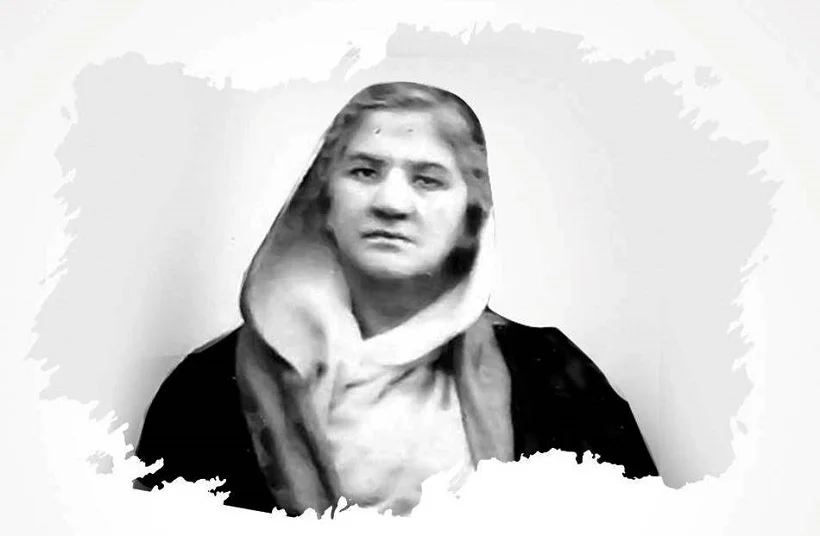
Begum Zaffar Ali was born in 1900 in the distinguished Agha family of Srinagar with her maiden name, Syyeda Fatima Hussain. She was the eldest daughter of Khan Bahadur Aga Syed Hussain, the first matriculate of Kashmir.
Along with her siblings, she was homeschooled by a European Home Governess. While pursuing her education, she was married to her cousin, Agha Zafar Ali Qazalbaash, a scion of Afghan family. She continued her education after marriage.
While being a mother to three, she went ahead taking revolutionary strides and efforts which would go on to change the face of women’s emancipation and education in the valley and inspire thousands of young girls for years to come.
“She brought an era of renaissance and regeneration in the lives of the Kashmiri women,” says Nusrat Mehmood, a senior college lecturer who calls Begum her inspiration. “Her passionate, non-conforming and unorthodox life will continue to rekindle the spirit of excellence in people like me.”
In 1925, Begum Zaffar was invited to teach in a Girls Missionary High School run by Miss Mallinson and Miss Bose in old Srinagar’s Fateh Kadal area.
“During those times, being a teachress was seen as a stigma but nevertheless she joined the school to serve the cause of education,” lecturer Mehmood continues.
“Her door-to-door campaigning for education in an era of subjugation and poverty makes Begum one of the most unsung educationists of the world. Her academic pursuits and ambitions to bring social changes heralded a new hope.”
Such was the zeal and determination of Begum Zaffar that she simultaneously started philanthropy work towards the poor girl of the school and looked after their hygiene and overall development.
“She even encouraged both young and elderly women to seek education and personally volunteered to teach them,” says Mubashir Hussain, a social activist from Srinagar.
“Through the good offices of her father who was then Home and Judicial Minister in Maharaja’s regime, grants were sanctioned for the schools. Begum managed to get an extra sum of Rs 10 sanctioned for the maintenance of girls every month besides meals.”
Impressed by her progress in studies, her children’s home tutor encouraged her to sit for the matriculation examination as she, by then, had been teaching girl students of tenth standard for five years.
Begum Zaffar was reluctant initially as no woman from the valley till then had passed the matric exam. She finally broke the jinx by becoming the first matriculate woman of Kashmir in 1930 and went on to complete her graduation in Domestic Science and Liberal Arts from Lady Mclegon College, Lahore in 1938.
“Back then, parents were still debating whether to give only religious teachings to their girl child or give them modern education,” says Rameez Kashani, a history lecturer.
“To uplift Kashmiri women and free them from their ignorance and religious and social conservatism, Begum Zaffar led the movement of women emancipation in the valley where she could encourage girls to come forward and educate themselves.”
Later she was appointed as the Inspector of Schools in Kashmir and was the first Muslim in her administrative capacity, who went on delivering lectures in colleges and social gatherings.
As a great orator and popular figure, Begum Zaffar was a key member behind the foundation of Teachers Club and Ladies Club, whose members included Tara Devi, queen of Kashmir’s last monarch, Hari Singh.
“The club was central to bringing reform changes and participation in the lives of the Kashmiri women,” Kashani says.
Before the bloodcurdling fall of 1947, Begum Zaffar had served as the secretary of the All India Women’s Association but later resigned due to her displeasure with the association’s nationalist fervour.
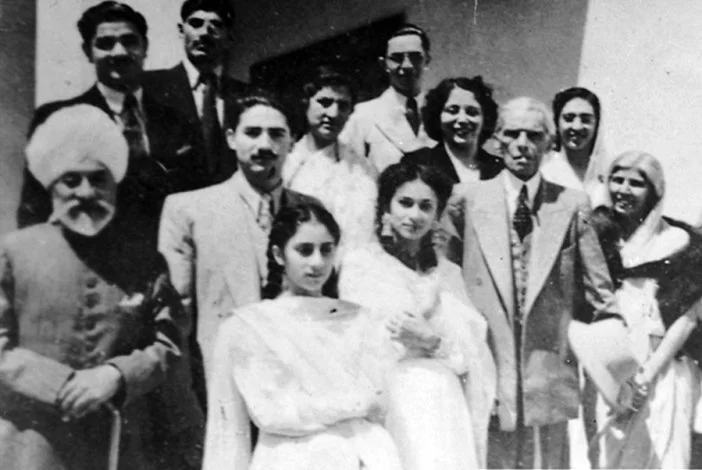
Back in 1944, she had famously hosted Mohammad Ali Jinnah and his sister, Fatimah Jinnah at Srinagar. She had organised a meeting of Kashmiri women with the stalwart’s shadow sibling at present day Lawns of Secretariat.
Begum Zaffar Ali with Mohammad Ali Jinnah in this pre-47 pic.
In her lifetime, Begum Zaffar held various offices and with her intellectual ability and leadership, she was the first Muslim in Kashmir to become a director in the Department of Education.
In her later days, she was also member of the Social Welfare Advisory Board, Jammu and Kashmir, and even became a legislator.
At personal level, Begum’s three sons went on to have distinguished public profiles. Her two sons, Agha Nasir Ali and Agha Shaukat Ali were civil bureaucrats.
While Agha Nasir retired as Labour Secretary of India in 1977, Agha Shaukat Ali, moved to Pakistan and joined Civil Services. Her youngest son Agha Ashraf Ali followed her footsteps and went on to become a top academician and educationist of the valley.
“It was Begum Zaffar Ali whom Sheikh Abdullah approached to convince her son, Agha Shaukat Ali to come back from Pakistan and join his cabinet,” Shaheena says. “During her lifetime, she longed to meet the same son when he moved to Pakistan. But New Delhi never granted a visa to her for meeting her son in the neighbouring country.”
When the same government awarded Padma Shri to her in recognition of her outstanding contribution to the field of social welfare in 1987, Begum famously declined the award in a televised Doordarshan interview.
“The Indian state excesses and gross human rights violations in Kashmir was the reason behind the non-acceptance,” historian Kashani says.
In her later years, the top educationist had been shuttling between Srinagar and Washington, to be with her exiled son.
In 1999, when she was staying with Agha Shaukat in the United States, the whole family, including her great grandchildren, had planned to celebrate her birthday as she was turning 100 year old.
“But sadly,” Shaheena says, “she passed away a month short of her illustrious century!”
source: http://www.kashmirobserver.net / Kashmir Observer / Home> In Depth> Special Report / by Rakshanda Afrin / March 11th, 2021
Prof. Ziaur Rahman Siddiqui, Department of Urdu, AMU
Aligarh:
In a proud moment for the global Urdu community, Prof. Ziaur Rahman Siddiqui, Department of Urdu, Aligarh Muslim University (AMU), has been nominated for the prestigious Nishan-e-Urdu 2023–24 award by Urdu Markaz, New York (USA).
The award, to be formally presented in New York on Sir Syed Day, honours individuals for their outstanding contributions to the promotion and enrichment of the Urdu language.
Mr. Raees Warsi, Founder and President of Urdu Markaz, New York, remarked, “Prof. Siddiqui’s nomination recognises his remarkable work in Urdu scholarship, research, criticism, and pedagogy.”
Prof Siddiqui is the author of more than two dozen books and over a hundred research and critical papers, blending intellectual depth with literary artistry.
source: http://www.radiancenews.com / Radiance News / Home> Pride of the Nation> Awards> Latest News / by Radiance News Bureau / October 13th, 2025
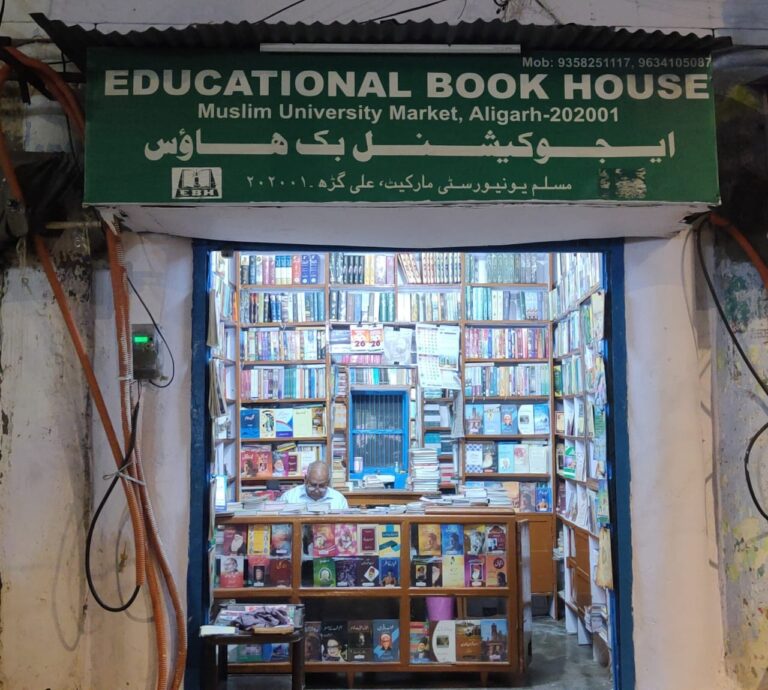
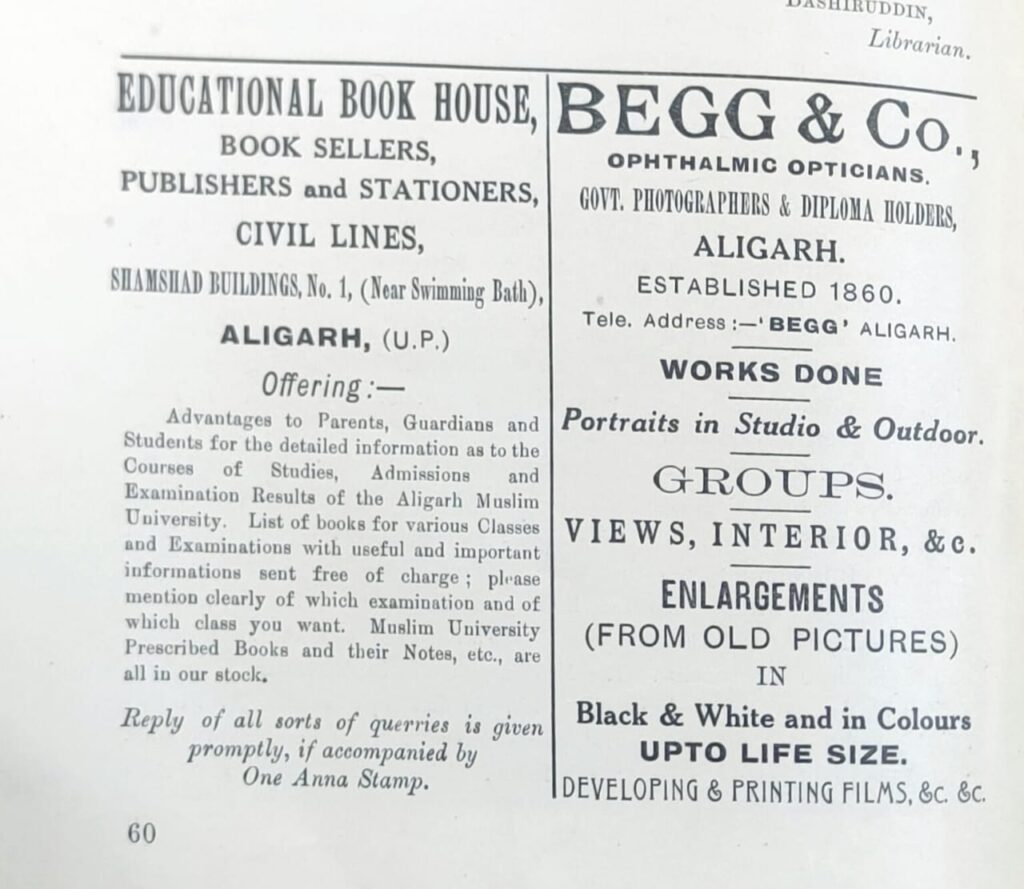
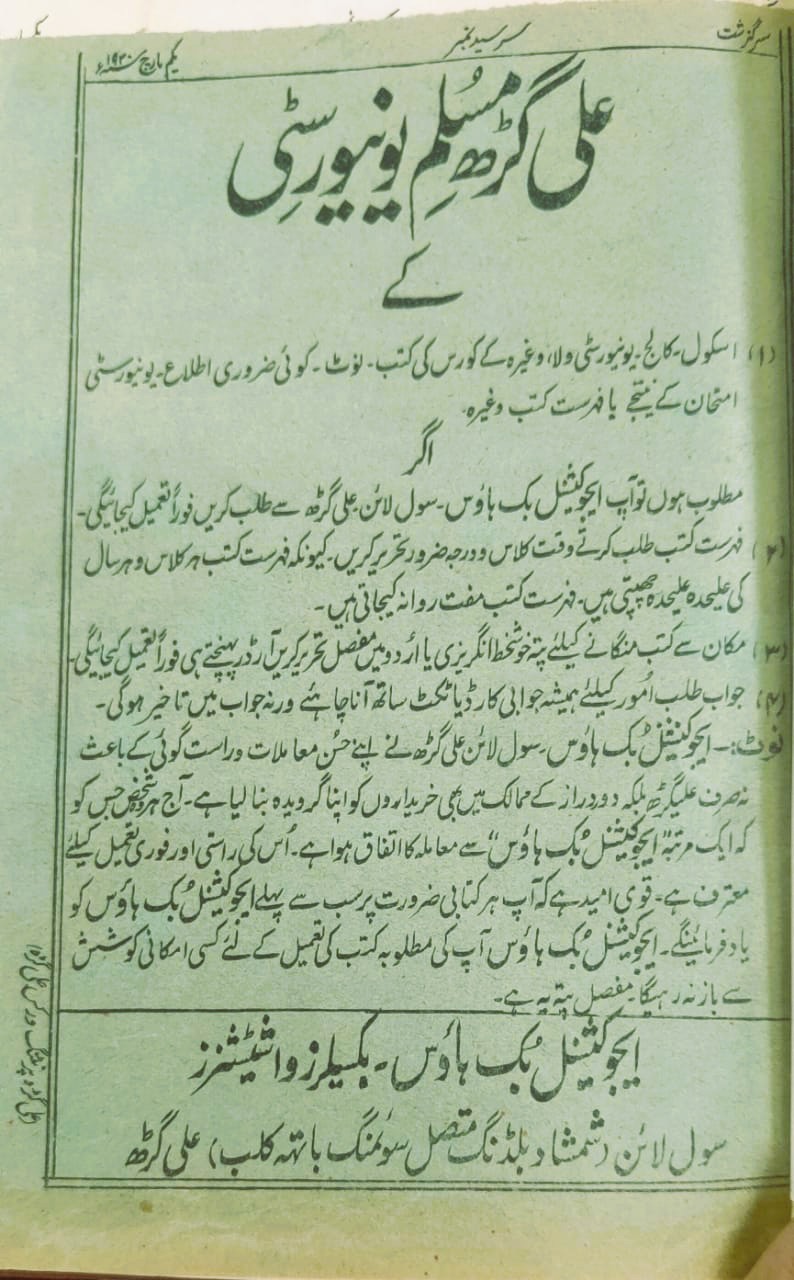
Responding to this need, Abdul Shaheed Khan, an alumnus of MAO College Aligarh from Meerut, opened a small stationery shop in 1925, named this establishment “Educational Book House”, marking the beginning of a new chapter in Aligarh’s literary landscape.
Aligarh Muslim University, renowned as a beacon of knowledge and service to the nation, has nurtured multiple institutions dedicated to education and culture since its inception. Among these, the Educational Book House (EBH) stands out as a distinguished establishment, symbolizing a century of dedication to the dissemination of literature and learning.
Established in 1925, EBH is more than an ordinary bookstore; it holds a revered position among bibliophiles, scholars, and literary circles both nationally and internationally. Over the past hundred years, EBH has played a pivotal role in spreading the literary and academic works of Aligarh across a broad audience, ensuring its legacy endures today. Its contribution to the development and promotion of Urdu language and literature is of profound importance in the history of book publishing
Historical Roots of Book House at Aligarh:
The story of Book house in Aligarh is intertwined with the visionary efforts of Sir Syed Ahmad Khan (1817-1898) and his pioneering movement to elevate Muslim education in India. As early as 1888, Sir Syed aimed to establish a bookstore in Aligarh to serve the students and teachers of his educational institutions. He launched a campaign to establish a bookstore in Aligarh and even raised funds for this purpose. An advertisement in the Aligarh Institute Gazette dated 7th July 1888 announced the opening of a bookshop: “Aik Tijarti Dukan Kitabon aur Stationary yani Saman Nosht wa Khwand Kay Farokht Ke Aligarh Mein” – a commercial shop for books and stationery in Aligarh. (see AIG, 7th July 1888)
This initial venture was called the “College Book Depot” which quickly became a vital hub for literature, academic materials, and stationary. It functioned as a bridge connecting scholars, students, and the wider community, fostering a culture of learning and intellectual curiosity in Aligarh. The original depot thrived under the stewardship of Mir Wilayat Hussain (1862-1949) but faced decline after his retirement in 1920, eventually closing down. (see Aap Beeti ya MAO College Ke Kahani, Mir Wilayat Hussain Ki Zubani, Sir Syed Academy, Aligarh, 2024, p.126).
The Birth of EBH
The establishment of Aligarh Muslim University in 1920 created a renewed demand for a dedicated bookstore that could cater to the needs of students and faculty alike. Responding to this need, Abdul Shaheed Khan (1898-1968), an alumnus of MAO College Aligarh from Meerut, opened a small stationery shop in 1925 near Fuller Road, close to Tasweer Mahal. He named this establishment “Educational Book House”, marking the beginning of a new chapter in Aligarh’s literary landscape. His vision was to provide affordable and accessible academic books and stationery, supporting the educational aspirations of students and teachers.
Abdul Shaheed Khan, Founder EBH
Moving to Shamshad Market:
In 1928, Sahibzada Shamshad Ahmed Khan (1888-1954), son of eminent educationist and vice-chancellor of AMU, Sahibzada Aftab Ahmed Khan (1867-1930), built a bustling commercial complex known as “Shamshad Building” in civil line Aligarh near AMU. This market was designed to serve the needs of the university community and local residents, housing shops for tailoring, groceries, milk, bread, bicycle repairs, and more. A mosque was also constructed within the complex, serving as a spiritual and community center.
Recognizing the importance of proximity and accessibility, Sahibzada Shamshad Ahmed Khan requested Abdul Shaheed Khan to relocate EBH to this new marketplace. The bookstore shifted there in 1929, anchoring itself within a vibrant hub of activity. This move significantly increased EBH’s visibility and accessibility, making it a central point for students and scholars seeking academic and literary materials.
The Aligarh Magazine (1929-30) praised Shamshad Market as a vital institution, emphasizing how it simplified the lives of students by providing essential books and stationery close to their place of study. In an editorial note, editor write:
“The Shamshad building has undoubtedly rendered an invaluable service to the student community of the University, for all the requirements of the students are to be found in the shops contained in the building and they have no more to worry themselves by running down to the city to fetch even the most ordinary things of everyday use. Sahibzada Shamshad Ahmad Khan deserves the thanks of all those whose life has been made easy and pleasant by the erection of this splendid building and we most cordially congratulate him on this.” (see Editorial Notes, Aligarh Magazine, 1929-30, p.11)
According to renowned historian Prof. Iftikhar Alam Khan, in his authoritative work “Muslim University Ki Kahani, Imarton Ke Zubani 1920 to 1947”, the Shamshad Building was constructed in 1929 at a cost of Rs. 30,000, financed by Sahibzada Shamshad Ahmed Khan’s mother. The building housed 18 shops, including EBH, and was a bustling center of commercial and cultural activity.
EBH’s shop within this complex charged the highest rent—Rs. 31—indicating its prominence and importance in the market. Its strategic location made it an essential resource for students, teachers, and literary enthusiasts, solidifying its reputation as a hub of education and culture. (See “Muslim University Ki Kahani, Imarton Ke Zubani 1920 to 1947”, EBH, Aligarh, 2006, pp. 161-165)
Early Contributions to Literature and Publishing:
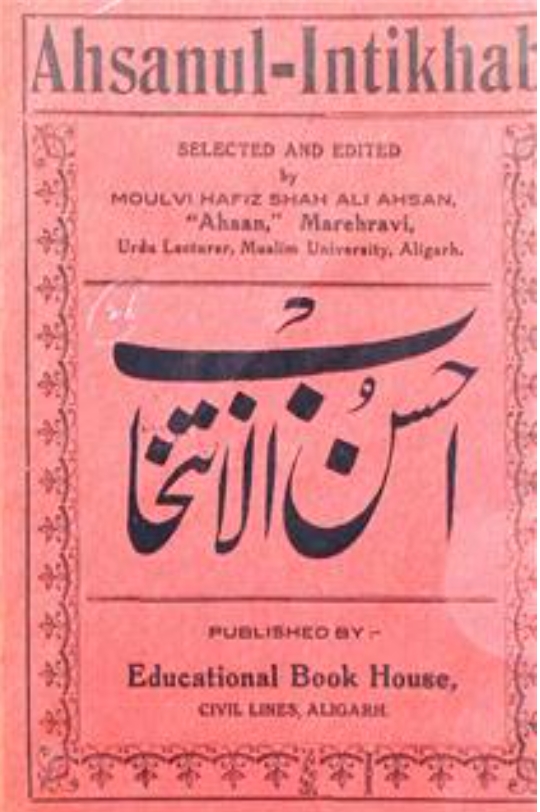
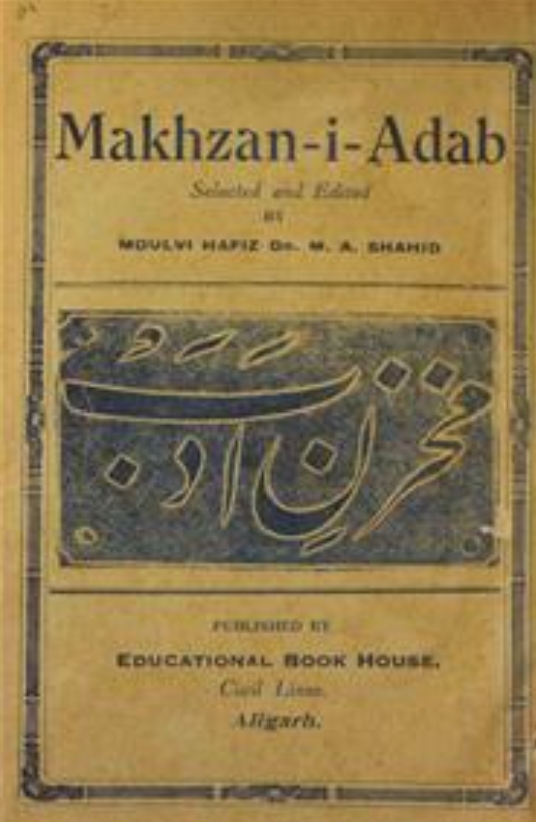
Even before India’s independence, EBH distinguished itself as a publisher committed to a broad spectrum of subjects. Unlike many publishers focused solely on literature or religion, EBH ventured into publishing works on children’s psychology, social sciences, philosophy, history, linguistics, and sciences. Its publications catered to the academic community and the general public, fostering a culture of knowledge dissemination. Notable early publications included: “Kainat Adab” by M. A. Hameed Alig (1935) editor Nazara Meerut, “Ahsan-ul-Intikhab’’ by Ahsan Marehrawi, “Makhzan Adab” by M. A. Shahid, “Sukhna Nau”, “Husn-e-Intikhab’’ by Abdul Jaleel Kidwai, “Delhi Ka Ek Madar Akhiri Mushaira” by Mirza Farhatullah Beg, “Dastan Rani Ketki Aur Kanwar Uday Bhan Ki” by Syed Inshallah Khan Insha, “Bachhon Ki Tarbiyyah” by Musarrat Zamani, “Al-Aqeedah Al-Hasna” by Molvi Sham and Maulana Abdussalam etc.
These works reflected EBH’s commitment to educational and literary growth, providing resources that supported scholarly pursuits and cultural development.
Post-Independence Challenges and Resilience:
The partition of India in 1947 was a tumultuous period that resulted in massive migrations and upheavals. Many families left their ancestral homes, but Abdul Shaheed Khan chose to remain in Aligarh. His son Asad Yar Khan says that just after independence many of his father’s relatives and friends asked him, he also migrate to Pakistan, but Professor Rashid Ahmed Siddiqui and Dr. Aale Ahmad Suroor advised him to continue his work from here, thus his father put this idea out of his mind.
His dedication ensured that EBH continued serving the community, moving from Shamshad Market to the Conference Market in 1951 to accommodate expanding operations.
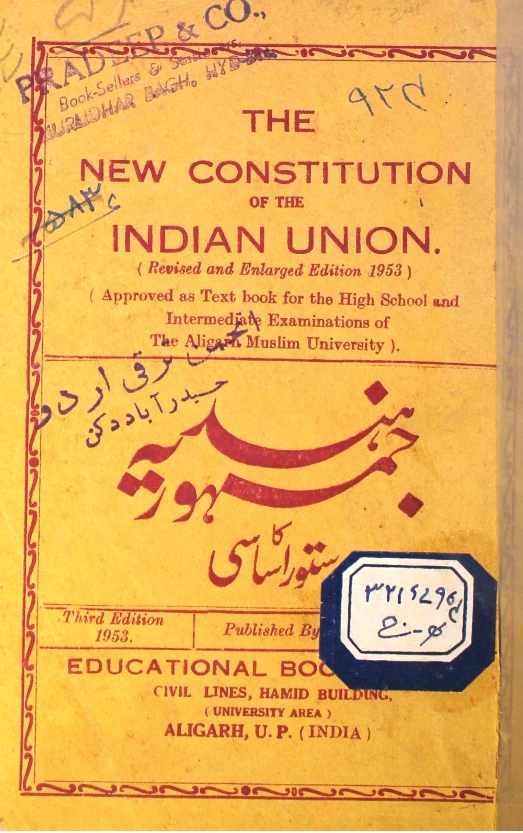
In this period, EBH expanded its publishing activities further. It published influential titles on Indian politics and governance, including Dr. Hashim Kidwai’s“Jhamooriya Hind” (1951), which analyzed India’s political system and constitution. Apart from Jhamooriya Hind, some of his titles are: Mubadiat Ilm Madniat (1951), Duniya Ke Hukoomatain(1961), Mubadi Siyasiyat (1971), Tareekh-e-Afkar siyasi (1982), Usool-e-Tammaddun, Usool-e-Siyasiyat (1988).
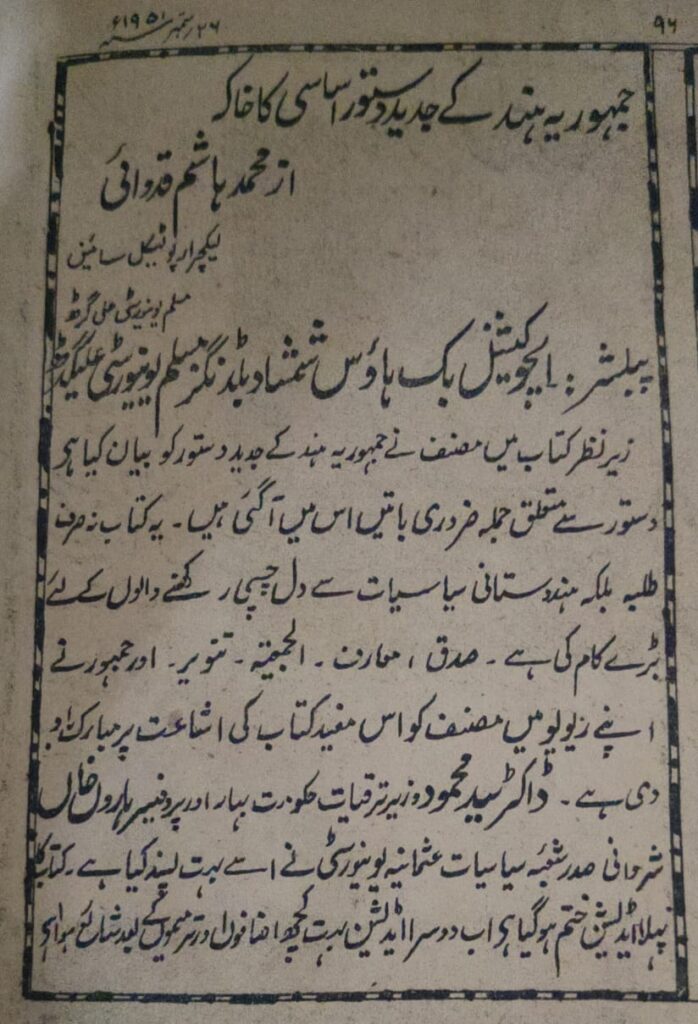
An Advertisements of book highlighted the importance of such works for students, scholars, and policymakers appeared in Weekly Jhamoor Aligarh dated 26th December 1955 states:
“In the book under consideration, the author has described the modern constitution of the Republic of India, all the essential things related to the constitution have been included in it. This book has done a great job not only for students but also for those interested in Indian political science. Sadq, Maarif, Jamiyat, Tanveer and Jamhur in their reviews congratulated the author for publishing this useful book. Dr. Syed Mahmood, Minister for Development, Government of Bihar, and Professor Haroon Khan Sherwani, Head of the Department of Political Science, Osmania University, have liked it very much.”
Supporting Urdu Education and Literature:
A vital aspect of EBH’s mission was promoting Urdu language and education. The bookstore provided textbooks for institutions such as Jamia Osmania, Hyderabad, Aligarh Muslim University and Jamia Urdu, Aligarh and collaborated with teachers from Aligarh Muslim University to develop curricula that emphasized Urdu literature and linguistics.
This support helped to sustain and foster Urdu’s growth as a language of scholarship and culture across the region.
Asad Yar Khan
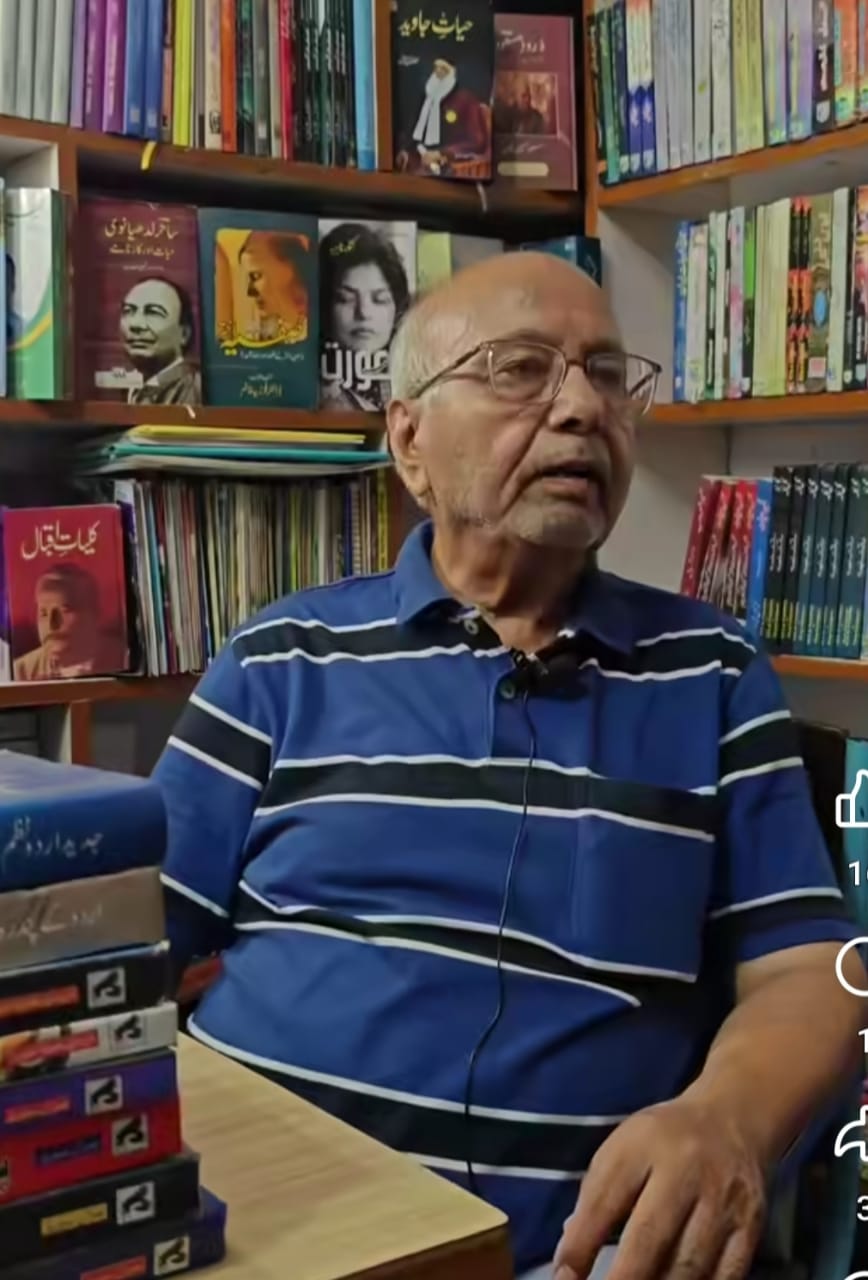
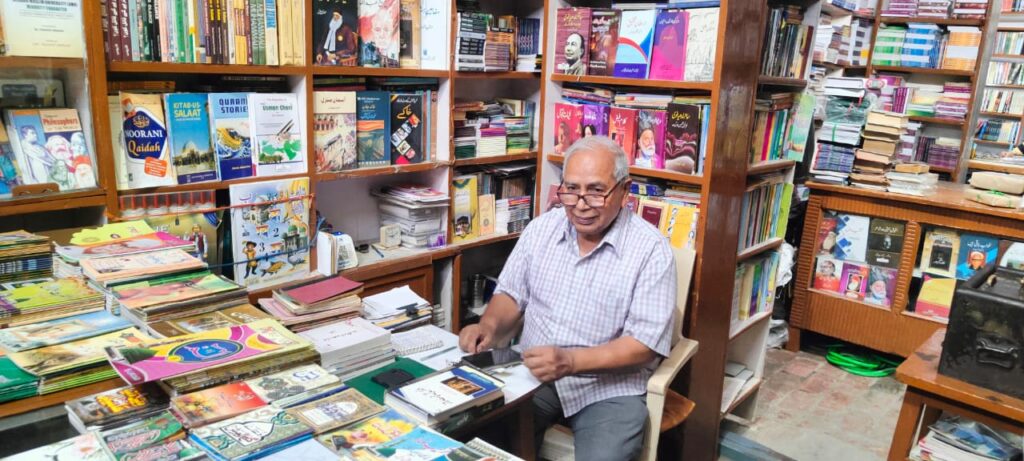
Following the death of Abdul Shaheed Khan in 1968, his sons, Asad Yar Khan (b. 1941, famously known as Kaptan Sb. as he served the Captain of Horse Riding in AMU several years) and Ahmed Saeed Khan (b.1948, affectionately Bhayya of all known people), inherited the legacy. Under their leadership, EBH grew into one of the most respected Urdu publishing houses in the subcontinent. They enhanced the quality of printing, expanded their catalog to include works of eminent poets, scholars, and political thinkers.
Ahmed Saeed Khan
Works of Prominent literary figures such as Iqbal, Faiz Ahmed Faiz, Khalifa Abdul Hakeem, and Ghulam Sarwar published and promoted through EBH, significantly contributing to the Urdu literary renaissance.
It also published works of Wazir Agha, Abu Lais Siddiqui, Hassan Askari, Masood Hussain Khan, Akhtar Ansari, Syed Abdullah, Khaliq Ahmed Nizami, Muhammad Hashim Kidwai, Vaqar Azeem, Majnoon Gorakhpur, Ateeq Ahmad Siddiqui, Ibadat Barelvi, Raza Ali Abidi, Qurratul ain Haidar, Aal-e-Ahmad Suroor, Khurshid-ul-Islam, Abdul Qadir Sarwari, Waheed Quraishi, Athar Parvez, Zaheer Ahmad Siddiqui, Khadeeja Mastoor, Ziauddin Alvi, Abdul Mughni, A.A. Hashmi, Rasheed Hasan Khan, Masood Hasan Khan, Masood Hassan Rizvi, Shaharyar, Manzar Abbass Naqvi, Mirza Khalil Beg, Abul Kalam Qasmi, Iftikhar Alam Khan, Asghar Abbas, Surraya Hussain, Sagheer Afrahim etc.
The Literary Magazine “Alfaaz”: A Cultural Milestone:
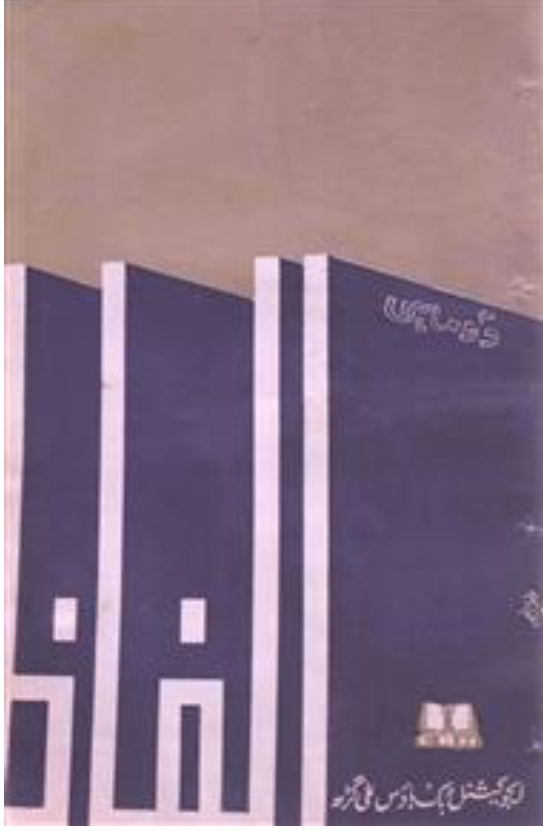
In 1975, Asad Yar Khan launched “Alfaaz”, a literary magazine dedicated to Urdu literature. Edited initially by Abul Kalam Qasmi, Alfaaz became a vital platform for poetry, literary criticism, and cultural dialogue. It provided a space for emerging writers and established intellectuals to exchange ideas, debate, and showcase their work.
The magazine’s editorial board included notable scholars such as Khurshid-ul-Islam, Khalil-ur-Rehman Azmi, and Naseem Qureshi. Over nearly two decades, Alfaaz played an essential role in nurturing Urdu literature, fostering new talent, and preserving the cultural heritage of Urdu language and thought.
Personal Reflections:
The author’s personal association with EBH began in 1995, when as a seventh-grade student, he first visited the bookstore to buy storybooks and magazines. Over the years, this relationship deepened, leading to interactions with notable scholars, poets, and literary figures, including Professor Hashim Kidwai, Professor Mushir-ul-Hasan, Professor Qazi Abdul Sattar, Manzoor Hashmi, Professor Abul Kalam Qasmi, Qurban Ali (BBC Hindi), Tariq Hasan (Prominent Journalist), Mirza Masood Beg (Prominent Linguists) and many others.
In 2016, EBH published the author’s book on Aligarh’s journalism, “Aligarh Ke Urdu Sahafat”, a testament to their ongoing support for young writers and scholars.
Celebrating a Century of Service:
Today, as EBH celebrates its hundred years of existence, it stands as an integral part of Aligarh’s intellectual and cultural heritage. The dedication and honesty of Late Abdul Shaheed Khan and later his sons have made EBH a symbol of Urdu literature’s resilience and growth. Their efforts to promote Urdu, support education, and foster literary excellence have left an indelible mark on the Urdu circle.
A Legacy for the Future:
It is hoped that EBH continues to serve as a beacon of literary and educational excellence, nurturing new talents, publishing significant works, and promoting the Urdu language. As it celebrates a century of remarkable service, the entire community extends heartfelt congratulations and best wishes for its future endeavours.
The Educational Book House’s journey over the past hundred years stands as a shining example of dedication to knowledge, culture, and language. Its legacy is a reflection of the enduring power of literature to unite, educate, and inspire. May EBH continue to flourish and illuminate the path of learning for many more generations to come.
source: http://www.heritagetimes.in / Heritage Times / Home / by Dr Asad Faisal Farooqui / July 27th, 2025
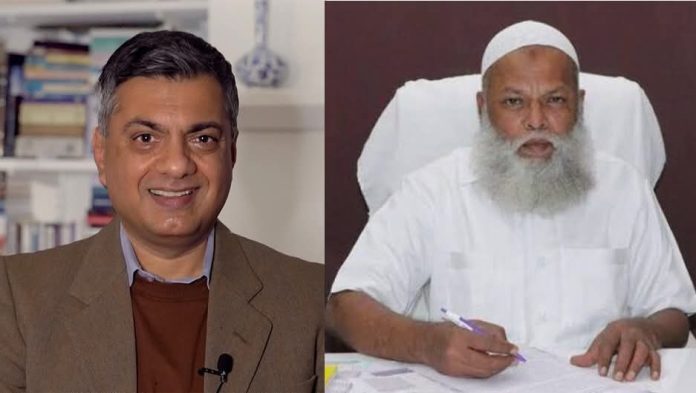
Prof. Faisal Devji (L) and Dr Abdul Qadeer to receive Sir Syed Excellence Awards
Aligarh:
Aligarh Muslim University (AMU) has announced the recipients of the 2025 Sir Syed Excellence Awards, which will be presented during the Sir Syed Day Commemorative Ceremony on October 17, marking the birth anniversary of AMU founder, Sir Syed Ahmad Khan.
Prof. Shafey Kidwai, Director, Sir Syed Academy, and convener of the jury informed that the International Sir Syed Excellence Award will be conferred upon Professor Faisal Devji, Beit Professor of Global and Imperial History, Balliol College, University of Oxford. Widely regarded as a leading scholar of South Asian studies, Islam, globalisation, and ethics, Prof. Devji holds a Ph.D. and M.A. in Intellectual History from the University of Chicago and a B.A. (Double Honours) in History and Anthropology from the University of British Columbia.
Born in Tanzania, Prof. Devji has taught at institutions, including Yale, Cornell, Harvard, and the University of Chicago. His acclaimed works include Waning Crescent: The Rise and Fall of Global Islam, Muslim Zion: Pakistan as a Political Idea, and The Impossible Indian: Gandhi and the Temptation of Violence. His influential essay Apologetic Modernity explores the 19th-century Muslim engagement with modernity, particularly through the lens of Sir Syed Ahmad Khan and the Aligarh Movement.
The National Sir Syed Excellence Award will be presented to Dr. Abdul Qadeer, Chairman of the Shaheen Group of Institutions, for his transformative contributions to education among marginalised communities. Founded in 1989, the group now educates over 20,000 students with a faculty of 500+ across 13 Indian states. It operates schools, PU and degree colleges, and offers coaching for NEET, JEE, UPSC, as well as runs Hifz-ul-Quran Plus and Madrasa Plus programmes.
The awards, carrying cash prizes of ₹2,00,000 (international) and ₹1,00,000 (national), recognise exceptional contributions in Sir Syed Studies, South Asian Studies, Urdu Literature, Medieval History, Social Reform, Communal Harmony, Journalism, Interfaith Dialogue, and related fields.
Awardees were selected by a distinguished jury chaired by Prof. Azarmi Dukht Safavi and comprising Prof. Anisur Rehman, Prof. A.R. Kidwai, Prof. Imtiaz Hasnain, and Prof. Shafey Kidwai, with final approval by AMU Vice Chancellor Prof. Naima Khatoon.
source: http://www.radiancenews.com / Radiance News / Home> Pride of the Nation> Awards> Latest News / by Radiance News Bureau / October 09th, 2025
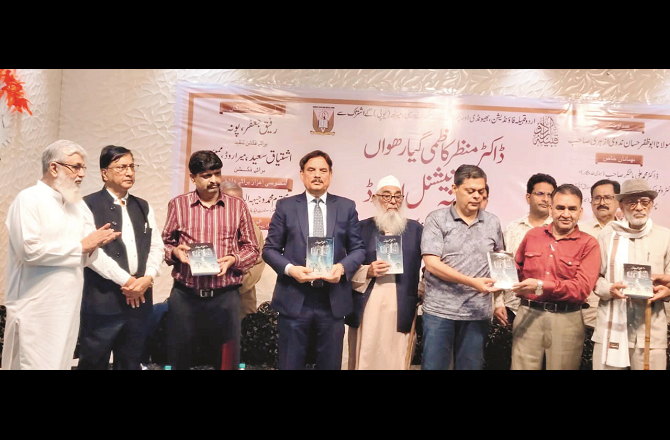
Renowned Urdu author Shama Akhtar Kazmi launched her latest works, “Aitraf Nama” and “Naqosh Pindar”, during the Dr. Manzar Kazmi National Award Function. The event was jointly organized by the Urdu Qabeela Foundation and the Department of Urdu at Chaudhary Charan Singh University.
The books were released by Dr. Vinod Kumar Tripathi (IRS), who served as the chief guest. The ceremony was presided over by Maulana Abu Zafar Hassan Nadvi Azhari and attended by distinguished literary figures including Prof. Aslam Jamshedpuri, Rafi Jafar, Darraj Kamankar, Mohammad Wajihuddin, Fayyaz Ahmed Faizi, Shakeel Rashid, Akhtar Kazmi, and Irfan Arif.
The event celebrated Shama Akhtar Kazmi’s enduring contributions to Urdu literature, highlighting her ability to blend personal reflection with literary insight. Both books were described as a reflection of Kazmi’s literary depth and engagement with Urdu heritage, showcasing her skill in addressing contemporary themes while maintaining classical literary elegance.
Speakers emphasized the importance of initiatives that preserve and promote Urdu literary traditions, noting that events like these strengthen cultural continuity and encourage younger generations to engage with Urdu literature. The launch also served as a platform for scholars and enthusiasts to discuss the evolving role of Urdu writing in modern India.
Through her work, Kazmi has reinforced the relevance of Urdu as a medium for both intellectual discourse and creative expression. The successful launch of “Aitraf Nama” and “Naqosh Pindar” demonstrates the continued vitality of Urdu literary culture and the role of dedicated authors in sustaining its prominence.
source: http://www.radiancenews.com / Radiance News / Home> Latest News / by Radiance News Bureau / October 11th, 2025
Lover of wildlife, celebrated hunter, sharp-shooter, tranquillising expert and more…
Dwindling forest covers, rampaging rogue elephants, man-eating tigers and man-animal conflict are all very frightening realities in today’s world, especially in our country. The Forest Departments across the country are faced with these huge challenges. In spite of their best efforts, the problems persist.
However, the solutions by a few who have grown up understanding wildlife like the back of their hand are hardly taken.
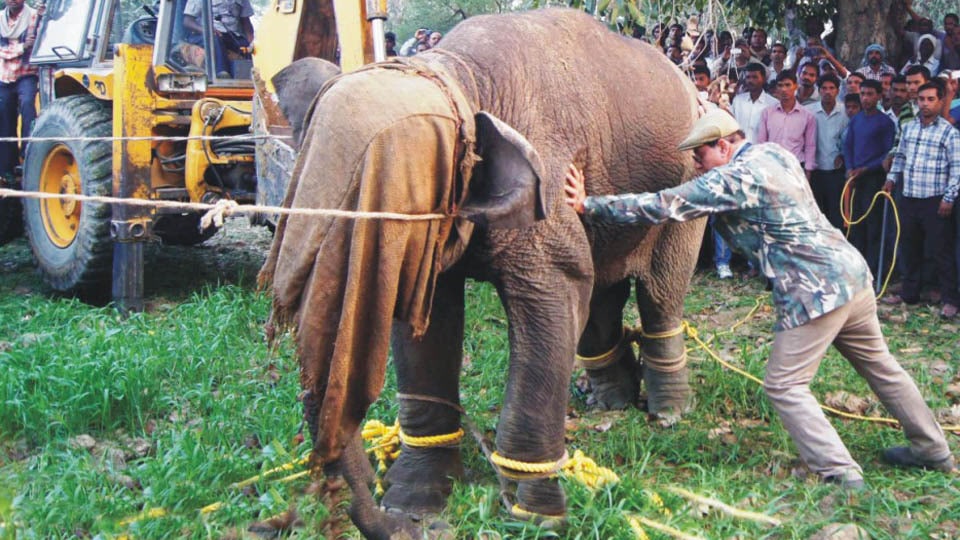
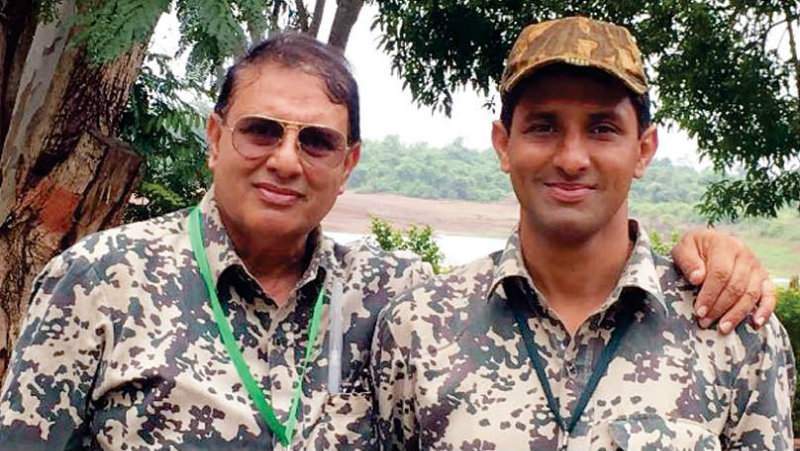
One such Wildlife Conservationist is Nawab Shafath Ali Khan from Hyderabad, who had been invited by the Jharkhand government last month to put down a rogue elephant that had killed 15 people. He is the most celebrated hunter and the only tranquillising and culling expert in the country.
He also runs a chain of resorts in Masinagudi, Tamil Nadu.
Star of Mysore Features Editor N. Niranjan Nikam travelled all the way to meet the Sharp-Shooter at his den in the midst of the jungle at the Safari Land Resorts in Masinagudi.
The Nawab opened his heart out for nearly two hours in this exclusive interview and spoke about royalty, how to manage forests, man-animal conflict, radio-collaring, culling, animal right activists and his anguish about the villagers and forest-dwellers. Excerpts…
Star of Mysore (SOM): You are not only a Nawab at heart but also a real Nawab from Hyderabad. How much of ‘Nawabipan’ is still there in you?
Nawab Shafath Ali Khan: Well, in well-bred horses the genes carry on in the blood. So I am a Nawab. But I devoted my life to the cause of poor Indians who suffer silently, like forest-dwellers, tribals, aborigines, having lost their lives and property to wild animals.
SOM: You are the most celebrated hunter in the country. Where did it all begin?
Shafath Ali Khan: Hunting was a family ritual. And my grandfather Nawab Sultan Ali Khan Bahadur was Advisor to the British Government on man-animal conflict. I grew up at a time when the Wildlife Protection Act came into being and from controlled hunting the transition to a total ban on hunting was introduced in the country. With the royalty and nobility hanging up their hunting rifles there was a vacuum of traditional knowledge of tracking animals that had generated over generations. I tried to fill this vacuum and worked for saving India’s wildlife as a Conservationist. Hunting is a tool of conservation and all advanced countries across the world are practicing and encouraging controlled hunting and their wildlife is growing.
SOM: You are the only authorised tranquillising expert and culling officer in the country. When there is a Forest Department, which has a rich history, what are the Officers doing?
Shafath Ali Khan: As I said, traditional knowledge acquired over generations cannot be found in textbooks. The art of reading pug marks, identifying it as a tiger or tigress just by seeing it or coming to conclusions about the height of an elephant by measuring the circumference of pad mark of the forefoot is traditional knowledge. Rulers had Shikaris who managed their forests with a vested interest of hunting. The rulers’ passion for hunting not only saved trees and grasslands but also kept a check on excess animal population. Unfortunately, after Independence forest management came into the hands of Officers who were bereft of ground realities. Large scale deforestation started and wildlife mismanagement reached its apex. Certain species grew in numbers beyond controllable figures like wild boar and blue bull. Across the country, tiger population reduced due to habitat destruction and revenge killings.
Large scale destruction is caused by elephant herds that have strayed considerable distances away from protected areas into agriculture fields. Neglected National Parks are overridden with noxious weeds like lantana and parthenium forcing our precious wildlife outside protected areas.
This is the crux of man-animal conflict that has frustrated farmers and forest-dwellers; giving them no option but to poison or electrocute elephants. According to project elephant figures, there were 15,700 elephants in the country in 1980 and today we have over 32,000. The forest cover on the other hand has reduced. The think-tanks who manage wildlife in the country did not plan this explosion in elephant population resulting in excessive man-animal conflict that we face today.
SOM: As a boy of 19 years you were in Mysore Race Club (MRC) as Assistant Secretary. How did this happen?
Shafath Ali Khan: My grandfather was India’s senior-most Handicapper (a person appointed to fix or assess a competitor’s handicap, especially in golf or horse-racing) and my father was Senior Stipendiary Steward and Secretary of Bangalore Turf Club (BTC).
High taxation on horse-racing was killing the industry and both BTC and MRC were finding it difficult to even pay salaries to their staff. My father Nawab Arshad Ali Khan started off-course betting between BTC and RWITC (Royal Western India Turf Club) in 1977 and this gave a new lease of life to the racing industry across the country.
Jawa motorcycle factory Founder Farookh Irani whom I always called Uncle Irani, Chairman of MRC, in consultation with my dad, started off-course betting between BTC and MRC and soon the fortunes of MRC blossomed. MRC was setting up photo-petrol cameras to record the races and I was sent, raw out of school, to Mysore to identify where the twin towers of the cameras had to be installed. I was already a National Champion in Equestrian sports and a top rider in the country. When I finished identifying the setting up of photo-petrol camera towers, having worked under Uncle Irani for a week, he decided to absorb me under MRC and I had the good fortune of learning from him. I was there for three years.
The crux of the man-animal conflict today is that old, weak and handicapped species are pushed out of the forest by the younger and stronger animals. These animals before they could create havoc were eliminated. The village folks were happy, revenge killing was never heard of and we didn’t have elephants straying into private lands like Hassan and Coorg like we are facing today.
Star of Mysore (SOM): The fight between humans and elephants, in other words man-animal conflict is resulting in shocking number of deaths. Planters in Kodagu are facing the heat with their crops being destroyed because of huge elephant menace there. What do you think can be done about this?
Nawab Shafath Ali Khan: The problem is not only in pockets of Karnataka but across the country. Any wild animal requires space. We cannot comprehend compressing them into smaller forest areas. With the number of elephants increasing in the country, the land to animal ratio has gone haywire. National Parks are not being de-weeded and cleared of noxious weeds; to provide enough fodder to the elephants and to restrain them within the parks. Hungry elephants are forced to stray out into agricultural lands for their survival.
Elephant is wise to the fact that nutritional value is found more in sugarcane, bananas, paddy and jackfruit compared to what it gets in barren government-controlled forests. So the Department is putting animals under tremendous pressure. This pressure is changing the metabolism of elephants making them aggressive, attacking people and raiding crops with impunity.
This man-made pressure on elephants and tigers have changed their psychological persona and they are also attacking humans. We have left the problems drift so much that it’s hard to find a win-win situation at this point of time. Anyway my thinking after spending 40 years in the field is that 70 per cent of our wild elephants are outside the forests. This is a very alarming figure. There is no shortage of fund as far as Forest Department is concerned. We are sitting on Rs. 35,000 crore of CAMPA (Compensation Afforestation Fund Management and Planning Authority) Funds. The States can utilise this money and have an elephant-proof trench all around government protected forests. All stray elephants outside this trench will be herded in or translocated.
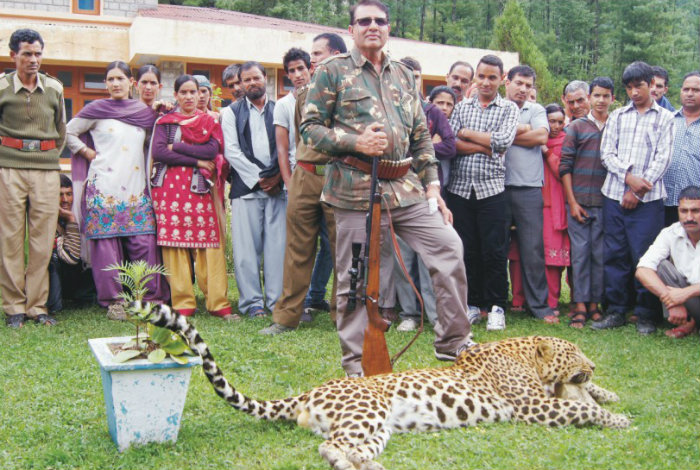
The carcass of the man-eating leopard stretched out on the lawns of Thunag Rest House in Himachal Pradesh.
Wildlife management and human habitations have to be compartmentalised. Solar powered borewells have to be erected every 5-km radius within the National Parks. Clean and sufficient drinking water should be provided to the animals. However, the hard decision that we need to take but from which we have drifted for decades is, how many animals can survive in the relatively small National Parks and buffer areas.
Excess animals sadly will have to be culled not only for their own survival but also to maintain a healthy forest. Overgrazing and over-browsing is casting tremendous pressure on our precious forests.
SOM: There is a story that late Srikantadatta Narasimharaja Wadiyar fell in love with the Land Rover you were driving and bought it. Is this true?
Shafath Ali Khan: Yes, it is true. We were all fond of cars and I had a Land Rover that I had maintained in immaculate condition. The Prince (as Srikantadatta Narasimharaja Wadiyar was called by many who were close to him) fell in love with it and wanted to buy it. But, I was reluctant to sell it. Soon, the Prince and the Princess (Pramoda Devi Wadiyar) came to attend my wedding and the Prince brought a Convertible Red Triumph Sports Car which he gifted to me at the wedding. Now, I had no option but give my Land Rover to him. He enjoyed the Land Rover and I and my wife, newly-married, thoroughly enjoyed the Convertible Sports Car. Prince was very close to me and I was one of the few who had access to the gun rack that was just beside his bedroom. I had the pleasure and honour of cleaning and repairing those beautiful rifles which belonged to the late Highness Jayachamaraja Wadiyar.
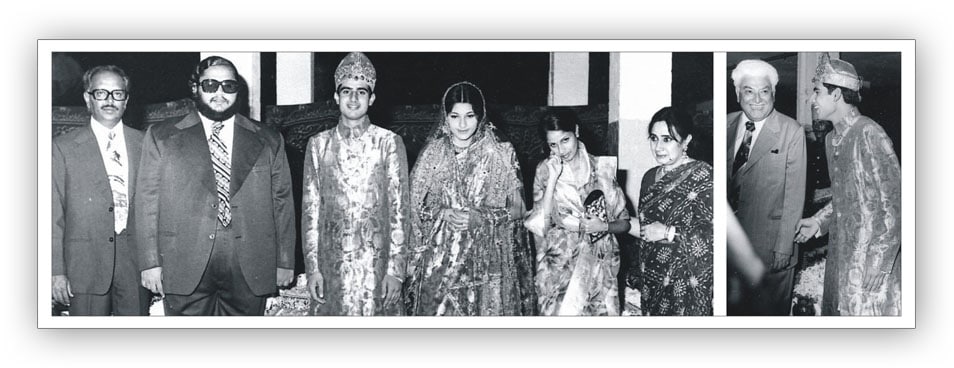
The young bridegroom Nawab Shafath Ali Khan (third from left) seen with (from left) late Sirdar K.B. Ramachandra Raj Urs, late Srikantadatta Narasimharaja Wadiyar, bride Begum Shaheen Khan, Pramoda Devi Wadiyar and the Nawab’s mother Begum Arshad Ali Khan at his wedding reception in Bangalore Turf Club (BTC) in 1976. Picture right shows Jawa Factory Founder F.K. Irani greeting Nawab Shafath Ali Khan at the wedding.
SOM: Isn’t there a contradiction when you say nobility indulged in hunting but they also protected forests?
Shafath Ali Khan: It was a paradox that controlled hunting that had a code and a strict set of rules where only males of deer were shot subsequent to the breeding season. Old rogue elephants and dying tigers beyond breeding age were painlessly shot using high-powered rifles in the hands of our expert shooters. Survival of the fittest is the law in the jungle.
The crux of the man-animal conflict today is that old, weak and handicapped species are pushed out of the forest by the younger and stronger animals. These animals before they could create havoc were eliminated. The village folks were happy, revenge killing was never heard of and we didn’t have elephants straying into private lands like Hassan and Coorg like we are facing today.
Wildlife management was much better balanced compared to what it is today. Across the world animal population have reduced or gone haywire wherever government imposed total ban on hunting.
Meet Nawab Shafath Ali Khan- 3 (September 08th, 2017)
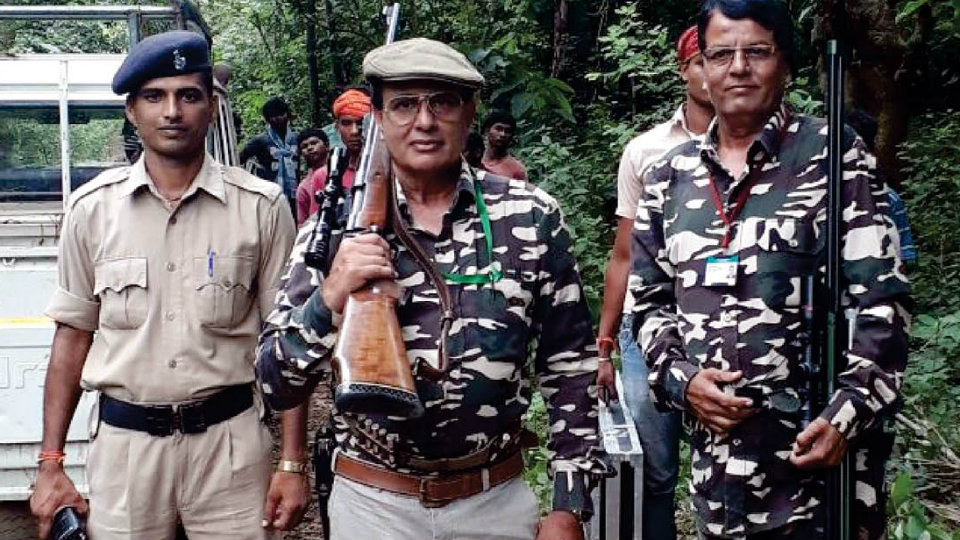
When Star of Mysore Features Editor N. Niranjan Nikam travelled all the way to meet the Sharp-Shooter at his den in the midst of the jungle at the Safari Land Resorts in Masinagudi, Tamil Nadu, Nawab Shafath Ali Khan and his son Asghar Ali Khan, drove this writer in the jungle in their American Jeep M-38 A1, a 1952 model four-wheeler late in the evening and it was a hair-raising experience as the young driver at the wheel negotiated the tough, lovely, Blue Nilgiri Hills range.
Both of them are attuned to every sight and sound in the forest even as the Nawab spotted two elephants and a calf at quite a distance instinctively. Later, the Nawab sat in his unique restaurant and for nearly two hours spoke freely in this exclusive interview about royalty, how to manage forests, the officials in the department, man-animal conflict, his views on radio collaring, culling, animal right activists and his anguish about the forest-dwellers and the villagers living in the fringes of the forest.
Star of Mysore (SOM): How much of preparation goes when you shoot man-eating tigers and rogue elephants?
Nawab Shafath Ali Khan: Bascially physical fitness and mental alertness are the major factors. A hunter is a complete man. He knows how to repair his vehicle, stitch his shoes in the forest, carry out minor repair to his weapons and who could read the forest, pick up the slightest sound and check the direction of the wind. Patience has to be in abundance. I don’t remember how many nights I have spent on a tiny machan on a tree in freezing cold and rainy night.
Tracking rogue elephants one has to walk 10-20 kms a day and this can be quite taxing. Preparing for these operations has become a way of life for me. I live on the most wildlife rich area of the sub-continent where I see wild elephants, tiger, leopard and sloth bear in my morning and evening walk. This keeps my mind alert and greatly helps in dangerous and close encounters with dangerous beasts that I have to tranquillise or eliminate as per government orders.
When Star of Mysore Features Editor N. Niranjan Nikam travelled all the way to meet the Sharp-Shooter at his den in the midst of the jungle at the Safari Land Resorts in Masinagudi, Tamil Nadu, Nawab Shafath Ali Khan and his son Asghar Ali Khan, drove this writer in the jungle in their American Jeep M-38 A1, a 1952 model four-wheeler late in the evening and it was a hair-raising experience as the young driver at the wheel negotiated the tough, lovely, Blue Nilgiri Hills range. Both of them are attuned to every sight and sound in the forest even as the Nawab spotted two elephants and a calf at quite a distance instinctively. Later, the Nawab sat in his unique restaurant and for nearly two hours spoke freely in this exclusive interview about royalty, how to manage forests, the officials in the department, man-animal conflict, his views on radio collaring, culling, animal right activists and his anguish about the forest-dwellers and the villagers living in the fringes of the forest.
SOM: There is no scientific basis in culling and it is not very successful in Africa as you claim, criticise a few. How do you react to this?
Shafath Ali Khan: There is no place for sentiment and religious connotation in wildlife management. I have been asked this question in several national workshops that I have attended. But when I ask them for an alternate solution no doable common sense approach has come forth.
I basically don’t like culling or shooting. I am now an authorised tranquilliser and resource person for six States and run an NGO ‘Wild Life Tranquil Force.’
SOM: What do you do here in the NGO?
Shafath Ali Khan: We are training front-line forest staff and veterinarians of six States in the country. I don’t see any alternative to scientific culling as far as our country is concerned. As an advisor and culling officer to Forest Department of Bihar, I have conducted several experiments to arrest the exploding population of blue bulls. Bihar is a fertile State with Ganges and several rivers flowing. The Gangetic plains are rich in crops. Overpopulation of the blue bulls from the forest, which consist of only 5 percent has found its way into agricultural fields causing as much as 35 percent damage to the farmers.
If at all there is a substitute to culling, it would have been adopted long ago and population controlled. Today UP, Jharkhand, Haryana, Rajasthan, Gujarat, Maharashtra, and Uttarakhand are reeling under the problem of overpopulation of wild boar and blue bulls and no solution is in sight.
Animal right activists might have a vested interest. These organisations get funds from abroad and with politicians and muscle power they arm-twist the senior forest officers to do what they want them to do rather than what is in the interest of the country. They are often bulldozed to falling in line and let matters drift.
Don’t be surprised if the price of Dal becomes Rs. 600 a kg as blue bulls, antelopes deliver two calves annually and wild boar sow delivers anywhere up to 19 piglets in a span of three months. There are virtually no carnivores to control this population explosion outside the forest. So, what are we heading for is anyone’s guess.
Shafath Ali Khan with his son Asghar Ali Khan.
SOM: As a wildlife conservationist, what is your view on radio collaring of tigers and other animals?
Shafath Ali Khan: In my opinion it is an utter failure. The reason why I say this is, it affects the breeding of tigers. Because when the tiger mounts a tigress, he starts biting on the top of her neck and it is a natural instinct. When the radio collar is there, the tiger bites into the radio collar and finds something hard and abnormal and it withdraws. I have seen this phenomenon physically.
In Siriska Tiger Reserve, when they introduced tigers with radio collar there was no breeding at all and I had predicted this 30 years ago.
Each radio collar weighs almost 1.5 Kgs and when a wild tiger is all of a sudden burdened with it then his entire movement and body language changes. This famous tiger Jay, which was tranquillised and radio collared, his home range, which was 38 sq. metres before the radio collaring, increased to 58 sq.mtrs.
SOM: Why is that?
Shafath Ali Khan: When you have something implanted in an animal, then its entire movement changes and it may come closer to human habitation also.
Also, the battery life which is supposed to last one year, never lasts that long. For instance, in this tiger Jay in Umed Sanctuary in Maharashtra, the battery ran out in two months and it disappeared. It was a pretty tiger and later it even died.
Then each radio collar costs about Rs. 3.5 lakh to Rs. 5 lakh and the cost involved in catching a wild tiger is another Rs. 5 lakh. With all this operation, it does not come cheap.
There is my own experience of a leopard that I tranquillised in Gundlupet in Muntipara village. This leopard had a radio collar, which had gone dead long time back. This animal entered a house and but for my early intervention, the girl living in that house would have been dead. It was a problematic leopard which was caught, radio collared and released and it again entered human habitation. The biggest problem of radio collaring is it gives the Forest Department a false sense of temerity to release the animal that should not be released. As a result the lives of villagers and poor forest dwellers are shackled.
SOM: Have you had any near-death-like experiences as a sharp-shooter in all these years?
Shafath Ali Khan: The most memorable day in my life was on Dec.17, 1976, when I was called by Van Ingen and Van Ingen (the famous taxidermists in the country) to shoot a rogue elephant that had killed 12 people. Since, late Uncle Joubert Van Ingen (who, at the age of 100, had written a foreword to the book ‘Man-Eaters And Wildlife Challenges’ by the Nawab. He dictated the foreword at one breath without a single mistake!) thought he was too old to trace the rogue elephant, he requested the Forest Department to invite me to shoot it at H.D. Kote. I traced the elephant and shot it and this incidence is rich in my memory.
The other near-death-like experience I can recall was just last month, on Aug. 11, 2017, when I was invited by the Jharkand Government to put down a rogue elephant that had killed 15 people and we tracked it for three days in most difficult terrain and thick impenetrable jungle, the rogue tusker turned around and came for us.
My two trackers fled leaving the Veterinarian Dr. Ajay Kumar and me. I saw the 10-foot tall tusker from hardly 10 metres coming for us like a railway engine with a loud trumpet. He raised his head to grab me with his trunk covering the forehead which is the only vital spot to shoot at that close range. A wrongly placed shot would have ended me in a fraction of a second. I took him at 9 metres and shot him in the mouth. The heavy bullet from .458 Magnum brought him to his knees. But he tried to get up in a fraction of a second. Working the bolt fast I fired the second shot in between the eyes and brought him down painlessly and death was instantaneous.
I often strive hard to see that the animal is put out with least pain and agony. Shooting, for me is the last option, when all other remedies have exhausted.
SOM: What about the experience of shooting a man-eating tiger?
Shafath Ali Khan: In July 2017, I was invited by the Maharashtra Government to tranquillise a man-eating tigress that had claimed four human lives. I darted from a distance of 15 metres when she was galloping away. But the most hair-raising incidence was shooting a man-eating tigress in 2009 in UP, where I tracked her for 35 days and nights and shot her when she charged from a distance of six metres.
SOM: Asghar Ali Khan, your son is also an authorised shooter. So, the family tradition continues?
Shafath Ali Khan: Asghar, is an authorised shooter and a crack shot. He has a .470 double rifle on his licence and helps me in dangerous tranquillising operation. But he along with my wife Shaheen keep the fire burning and looks after our chain of resorts in the Nilgiris. Often when a long drawn operation is coming to a conclusion, I summon him to join me as a backup.
SOM: Running Safari Land Resort must be a great experience for you and your family?
Shafath Ali Khan: Definitely yes. The very thought of living in a deep jungle arouses a sense of bliss within me. Forests and wildlife are very close to my heart. Riding in the jungle every morning is a thrill that I have no words to explain. Safari Land has given what no other luxurious Palace in the world can give us.
SOM: But are you related to the Nizam family of Hyderabad?
Shafath Ali Khan: Yes, yes. We are from the royal family of Hyderabad. We were equal to the Nizams, like you had the Maharajas and Ursus in Mysuru. The Nizam married into our family, our daughters were given in the Nizams family. So we were equals.
SOM: How long do you think you can carry this crusade of yours as a hunter and sharp- shooter?
Shafath Ali Khan: My priorities are no longer shooting. Having worked for several assignments for the past four decades, I have been involved in 24 dangerous operations and have culled thousands of animals. No one in the country has shot as many animals as I have done. My priority is not shooting or culling any more. My focus is to help those five crore people who are living in 1,87,000 villages and the forests across the country in most adverse conditions. Since I have worked, stayed and eaten with them, I know what it means by hunger.
Several interior villagers are living in a state of anarchy, in constant fear of wild elephants that raid the villages, break their huts, and eat away their rations. Women with infants in their arms run in the middle of the night to the next village 3 kms away. There is no one to wipe their tears. This is fresh in my mind from Jharkhand. I sometimes wonder whether the Constitutional rights, the right to life and liberty is guaranteed only for the elite and not my brothers and sisters who suffer in silence.
My passion now is to work for them, get them the due compensation, get the government to erect solar fencing to protect them. I don’t charge the government for service and time that I give. Tears of gratitude from underprivileged forest-dwellers when I shoot down a rogue elephant or a man-eating tiger, give me energy to work for them for another 100 years.
[Concluded]
source: http://www.starofmysore.com / Star of Mysore / Home> Feature Articles / by N Niranjan Nikam (3 part feature articles) / September 18th, 2017
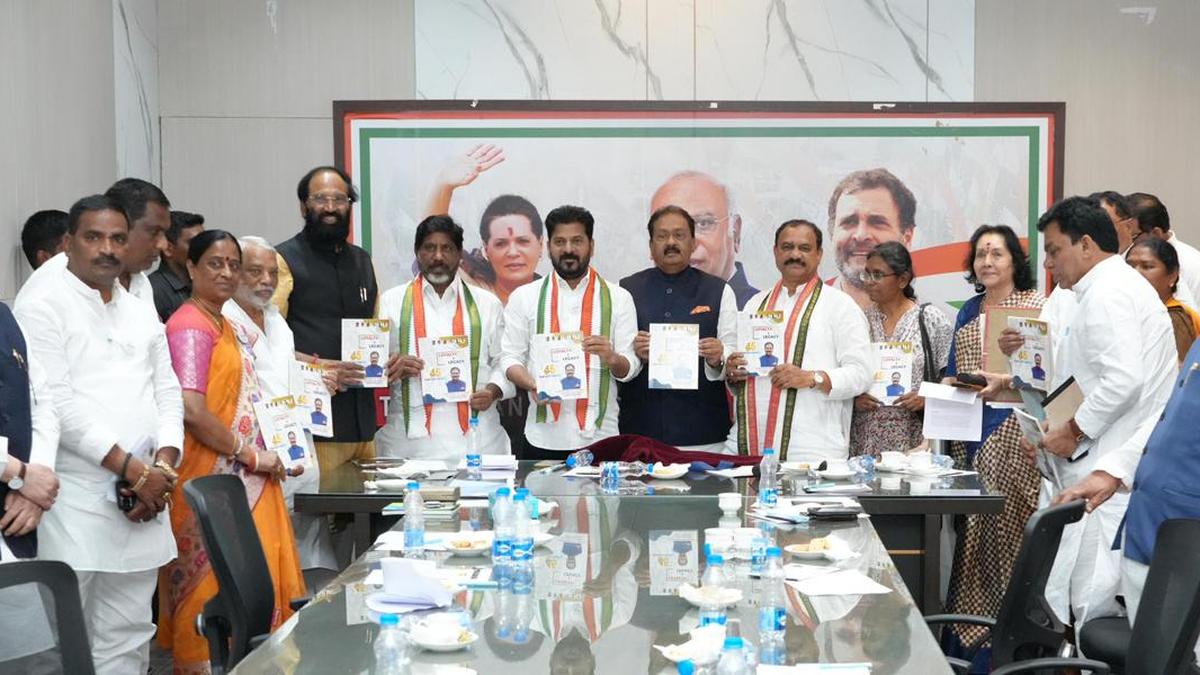
Chief Minister A. Revanth Reddy releasing a book titled “Loyalty & Legacy: 45 Years with Congress Party” chronicling the political journey of Congress veteran Mohammed Ali Shabbir, in Hyderabad on Sunday.
Hyderabad :
Chief Minister A. Revanth Reddy, on Sunday, released a book titled “Loyalty & Legacy: 45 Years with Congress Party” on the enduring political journey of senior Congress leader and Telangana Government Adviser Mohammed Ali Shabbir.
The book is a detailed chronicle of Mr. Shabbir’s life in politics, spanning more than four decades in which he remained loyal to the Congress party. It narrates how he began his journey as a Youth Congress leader and NSUI activist inspired by former Prime Minister Indira Gandhi.
Mr. Shabbir served at various levels from municipal councillor to APCC vice-president and convener of the Political Affairs Committee (PAC), to Minister, legislator, Opposition leader, and finally as a government Adviser.
His career has been closely linked with the leadership of the Gandhi family. He served as a Minister twice, under three Chief Ministers. The book records how, in just 58 days after returning to power in 2004, the Congress government issued an order granting 5% reservation for Muslims, and later readjusted to 4% after judicial scrutiny.
source: http://www.thehindu.com / The Hindu / Home> News> India> Telangana / by The Hindu Bureau / August 24th, 2025
Bomb Blast Acquit Turned Advocate Abdul Wahid Shaikh Awarded PhD at MGM University, Aurangabad
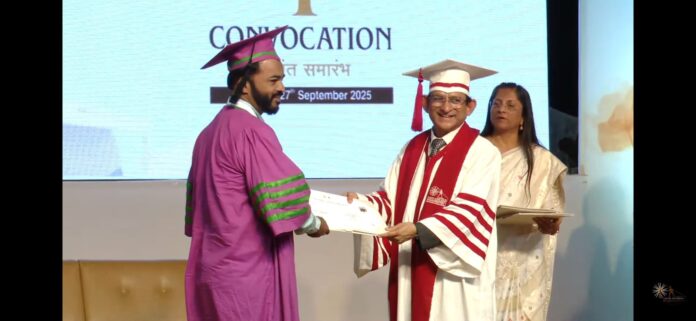
Advocate Abdul Wahid Shaikh, noted lawyer, prison rights activist, and the first person person acquitted in the 2006 Mumbai train blast case, was conferred with a Doctor of Philosophy (PhD) degree at MGM University, Aurangabad. The degree was presented by Vice Chancellor Prof. Dr. Vilas Sakpal during a formal convocation ceremony.
Dr. Shaikh’s doctoral research, titled “Prison Literature: Post-Independence”, brings focus to the writings emerging from Indian prisons, highlighting voices of resistance, resilience, and injustice. His work underscores how incarcerated individuals have shaped Urdu literature and contributed to broader narratives of social justice in post-independence India.
Speaking on the occasion, Dr. Shaikh said:“This PhD is not just an academic milestone, but a continuation of my struggle for prison justice. Prison literature is the voice of the silenced, the testimony of those behind bars, and a mirror to our society’s conscience.”
As General Secretary of the Innocence Network, Dr. Shaikh has long campaigned for the release of wrongfully imprisoned individuals and advocated for humane prison reforms. His latest academic achievement strengthens his commitment to legal activism and adds a scholarly dimension to his work.
Faculty members, scholars, students, and well-wishers attended the convocation, applauding Dr. Shaikh’s perseverance and his contribution at the crossroads of academia, activism, and law.
His achievement is a landmark—demonstrating how an exoneree can turn personal suffering into intellectual strength and contribute meaningfully to the pursuit of justice and the rights of the incarcerated.
source: http://www.muslimmirror.com / Muslim Mirror / Home> Positive Story / by Muslim Mirror Special Correspondent / September 29th, 2025